←ⓘ Jump to a preselected date. Or, scroll down to view more.
President Madison signs the Enabling Act of 1816
The act authorizes the people of the Indiana Territory to form a constitution and state government.
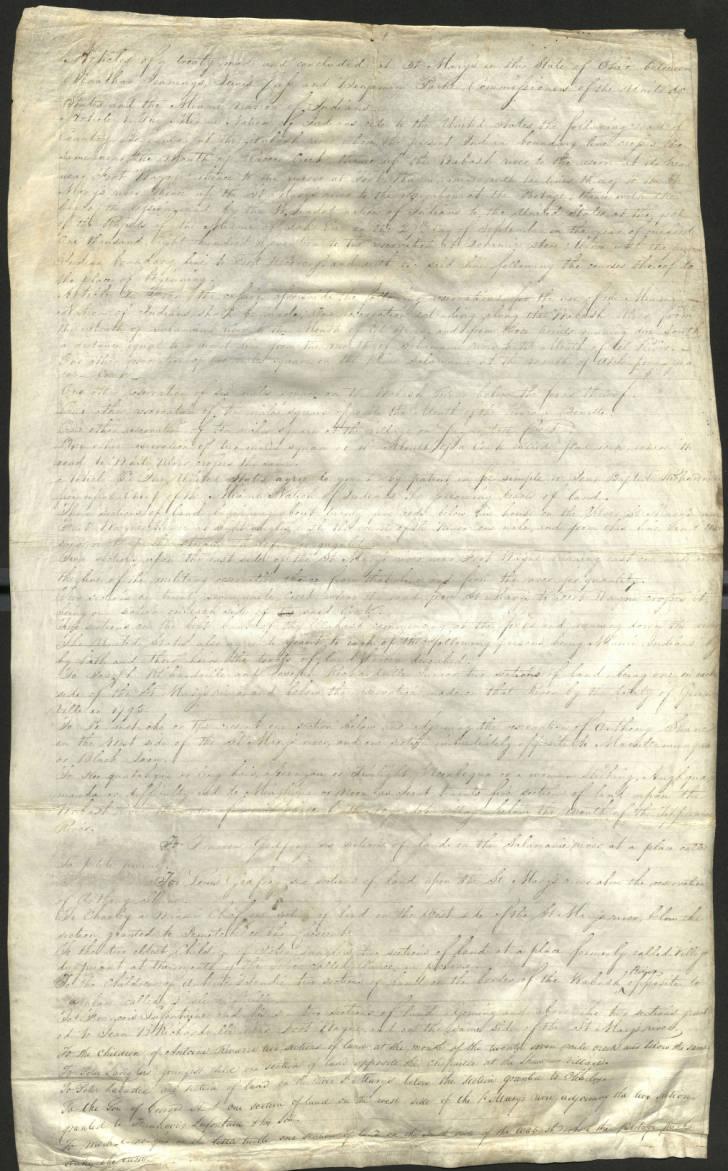
Treaty of St. Mary’s (Ohio) signed
In St. Mary’s, Ohio, the Miami, Delaware, Wea, and Potawatomi tribes ceded their land in the middle of Indiana (dubbed the New Purchase) to the U.S. in exchange for cash, salt, sawmills, and other goods. It continued the process of Indian removals begun by the Treaty of Greenville in 1795.
Pictured: Miami Treaty of St. Mary’s, 1818
Credit: Rare Books and Manuscripts, Indiana State Library
View Source
Ute Perkins builds the first cabin
Perkins builds the first cabin in the area along a small creek near present-day Michigan Road, now known as Pogue’s Run, but moves to Rush County. George Pogue takes over Perkins’ cabin when he comes to the area in March 1820.
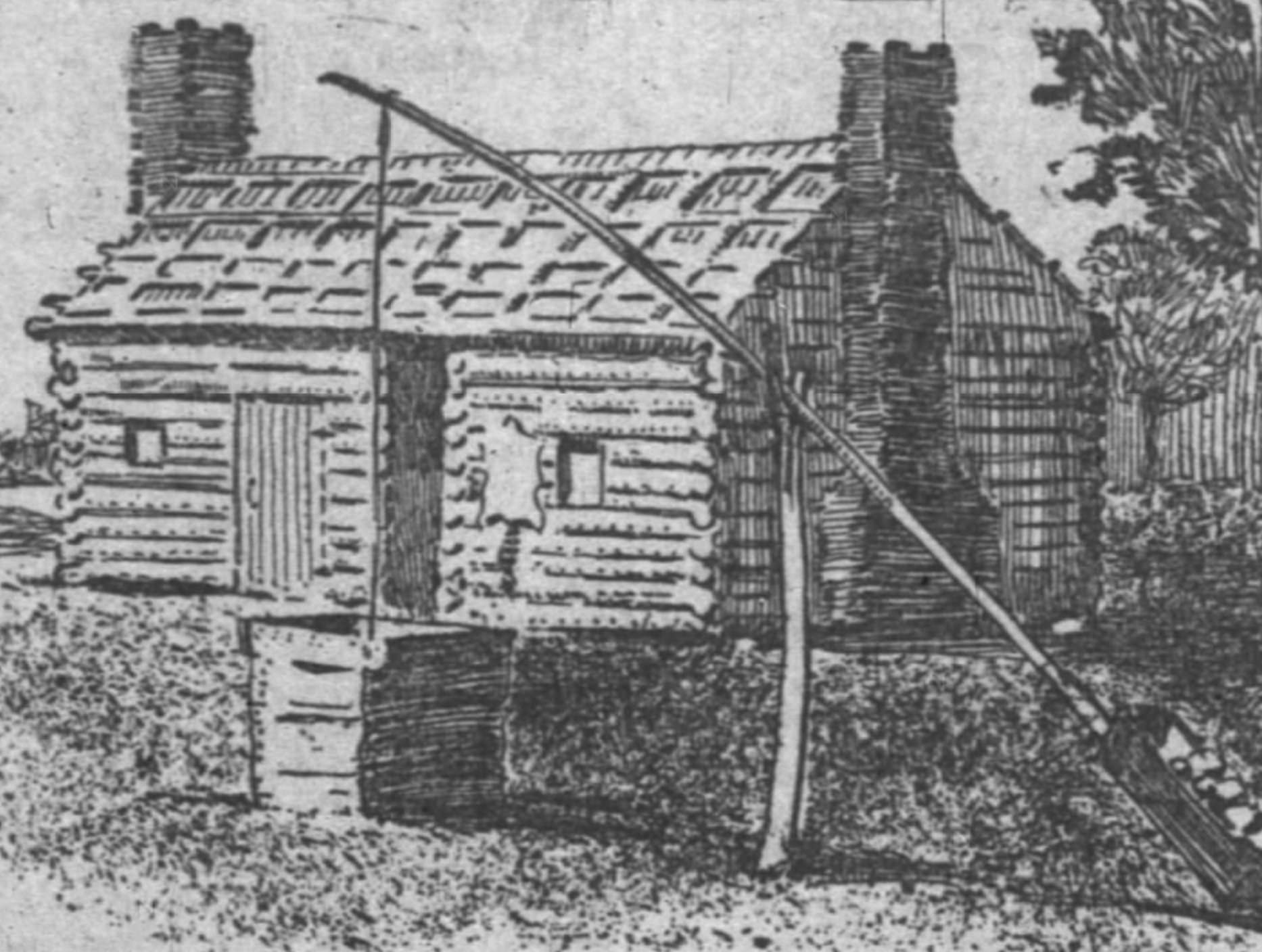
John McCormick settles on the east bank of White River, near present-day Washington Street
John McCormick and family leave Connersville on February 18th, searching for a new homestead. After eight days, McCormick chooses the west bank of the White River as his new home.
Pictured: McCormick cabin, ca. 1820s
Credit: Indianapolis News
View Source
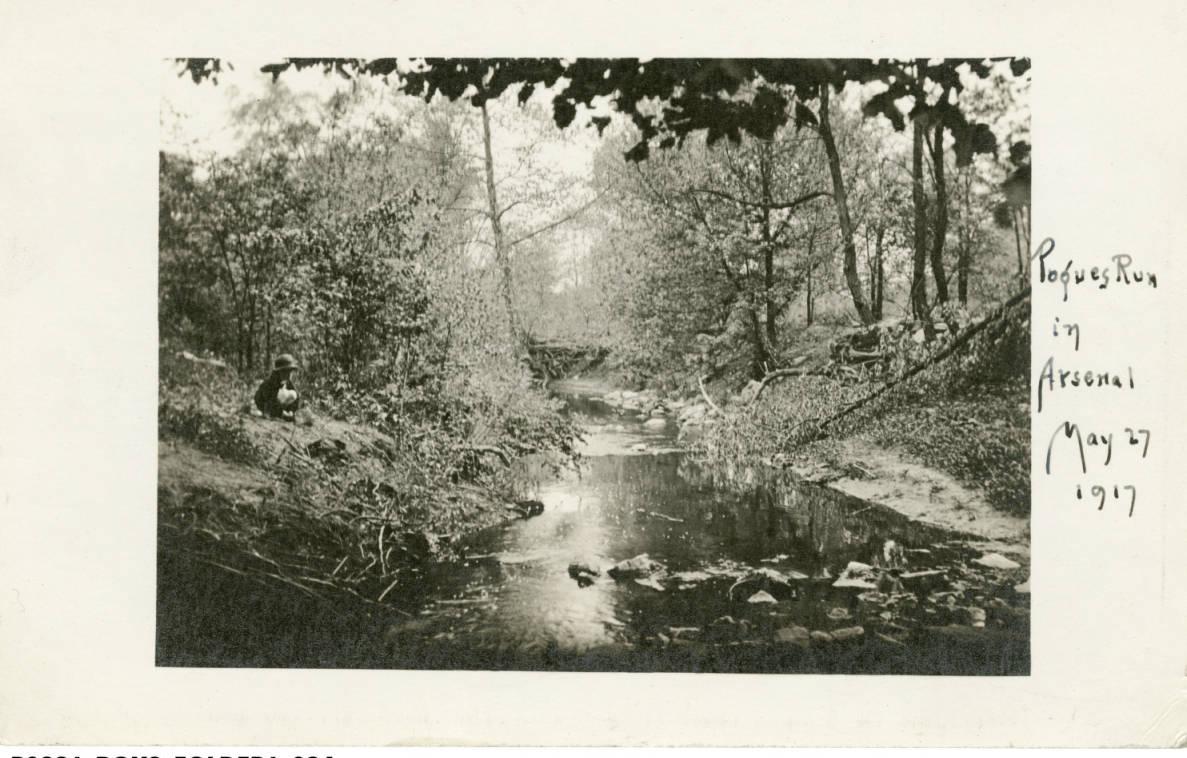
George Pogue settles on the bank of a small creek, near present-day Michigan Road
George Pogue and family are the second group to settle in the future city of Indianapolis. Pogue, a blacksmith from Connersville, settles near the creek that now bears his name, Pogue’s Run.
Pictured: Pogue’s Run, shown here in 1917, is named after George Pogue who was the first to settle on the creek’s banks.
Credit: Indiana Historical Society
View Source
Site for new state capital at White River and Fall Creek chosen
The capital selection committee convenes at John McCormick’s cabin and chooses the site at the confluence of White River and Fall Creek for Indiana’s new state capital.
Wesley Chapel becomes the first church
Reverend William Cravens organizes the first church after a Methodist gathering at Isaac Wilson’s log cabin during the summer of 1821.
Joseph C. Reed opens the first school
In the spring of 1821, Joseph C. Reed becomes the first teacher after he established a school in the small community cabin at Kentucky and Washington streets.
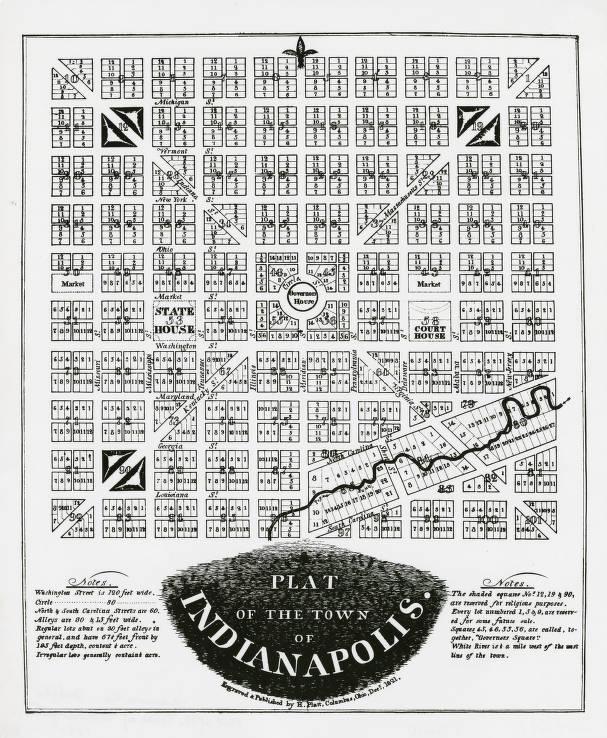
Commissioner appoints Alexander Ralston and Elias Pym Fordham as surveyors of the capital city
Christopher Harrison, the commissioner overseeing the layout of Indianapolis, selects Alexander Ralston and Elias Pym Fordham to survey the four-square-mile tract of land that makes up the new capital.
Pictured: Elias Pym Fordam and Alexander Ralston surveyed the area that Ralston platted as “the Mile Square” in 1821.
Credit: Bass Photo Co Collection, Indiana Historical Society View Source
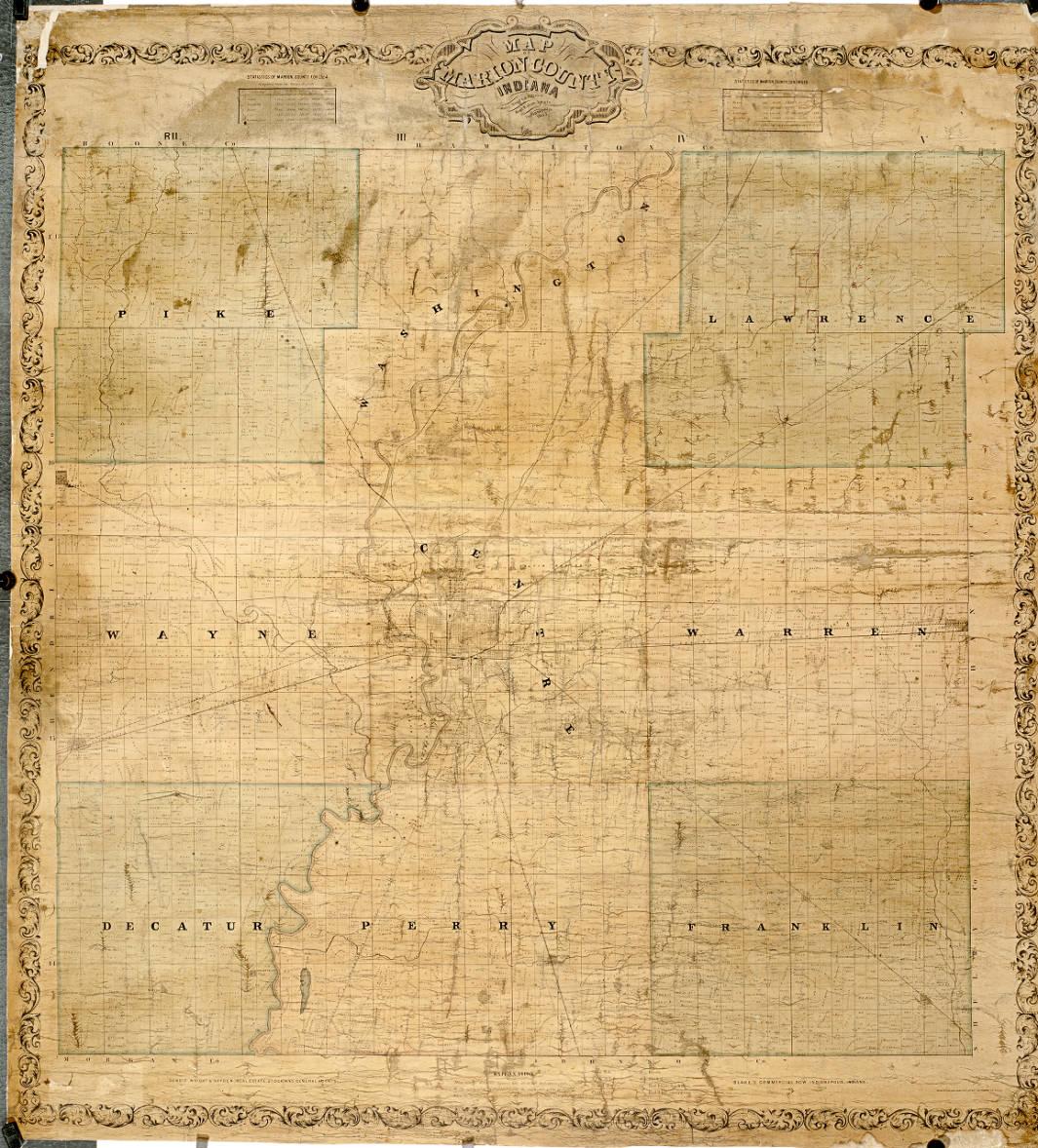
Marion County created
The General Assembly passes an act to create Marion County. In addition, it provides $8,000 to build a courthouse. The next day, Governor Jennings appoints Hervey Bates as sheriff.
Pictured: Marion County Map, 1855
Credit: Indiana Historical Society
View Source
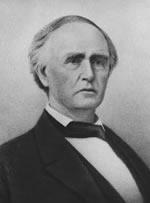
Indiana ratifies the location of the new capital
The Indiana General Assembly approves the location suggested by the selection committee as the state’s permanent capital. The new capital is named Indianapolis, a term coined by Judge Jeremiah Sullivan. It means “City of Indiana.”
Pictured: Judge Jeremiah C. Sullivan is responsible for giving Indianapolis its name.
Credit: Wikimedia Commons View Source
Malaria epidemic strikes
Heavy rainfall creates conditions for the spread of malaria, claiming the lives of 72 residents, or 1 of 8 people living in Indianapolis.
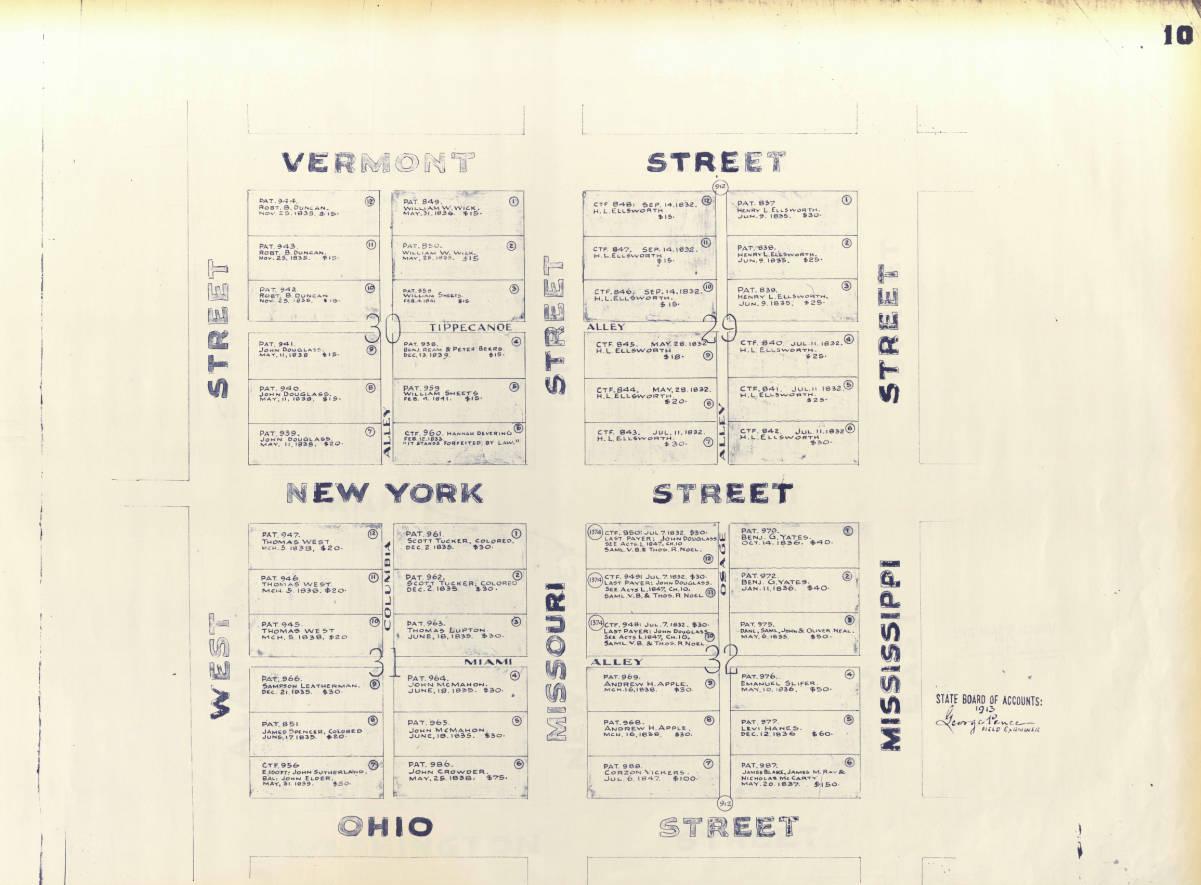
First city lots go on sale
Major Thomas Carter serves as auctioneer in Matthias Nowland’s cabin. The sale lasts for seven days and results in the sale of 314 lots for $35,596 total.
Pictured: Downtown Indianapolis mile-square donation lands, 1831
Credit: Map Collection, Indiana Division, Indiana State Library
View Source
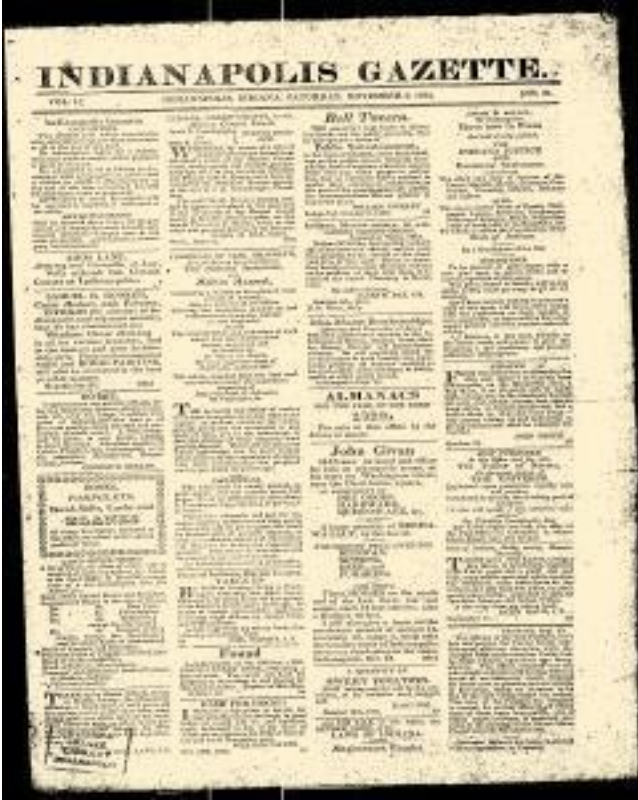
Indianapolis’ first newspaper begins publication
Nathaniel Bolton publishes the Gazette, making it the first newspaper in Indianapolis. The newspaper is issued at irregular intervals at first and is politically neutral.
Pictured: Indianapolis Gazette, Nov. 22, 1822
Credit: Indianapolis Gazette, Newspaper Archive View Source
First postmaster appointed
Samuel Henderson, one of the first settlers in Indianapolis, becomes postmaster of the town’s first post office.
First Marion County election
The first election in Marion County has 336 voters (224 in Indianapolis). Votes are cast for two associate judges, a county clerk, a county recorder, and three county commissioners.
First meeting of Marion County commissioners
The newly elected county officers meet for the first time and divide the county into 13 townships for administrative purposes.
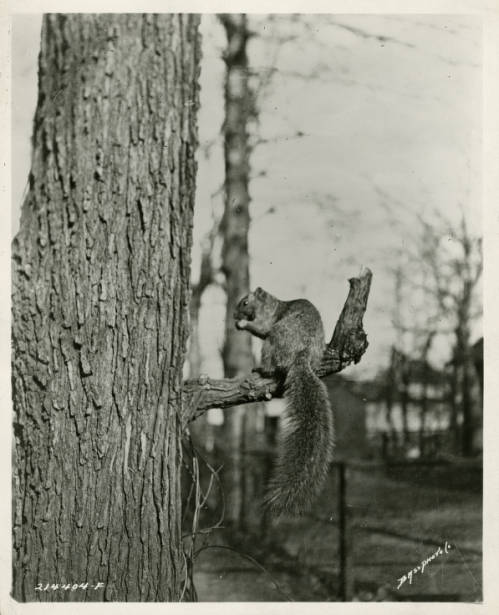
Great Squirrel Migration
Thousands of gray squirrels move across Central Indiana and Indianapolis. These migrations are common at this time and are of concern because they destroy cornfields.
Pictured: Squirrel on a Tree, ca. 1905-1930
Credit: Bass Photo Co Collection, Indiana Historical Society View Source
First Baptist Church organizes
Having first met in a log schoolhouse in August 1822, the First Baptist Church officially organizes.
First general store opens
Nicholas McCarty opens the first general store in Fall 1823. Located on the southwest comer of Washington and Pennsylvania streets, it become known as “McCarty’s Corner.”
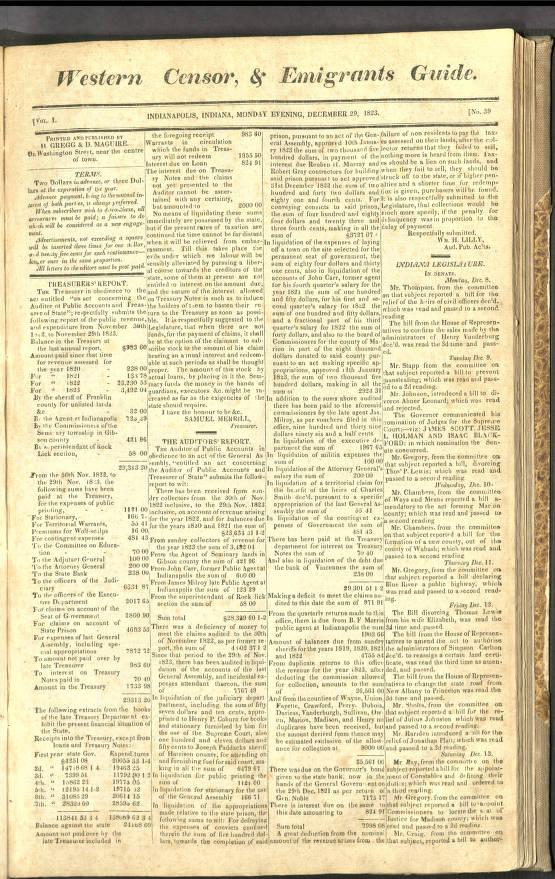
Second newspaper begins publication
Harvey Gregg and Douglass Maguire begin the town’s second newspaper, The Western Censor and Emigrant’s Guide, publishing it out of Gregg’s house.
Pictured: The Western Censor & Emigrants Guide was a weekly newspaper published in Indianapolis, Indiana.
Credit: Indianapolis-Marion County Public Library
View Source
First Presbyterian Church founded
The First Presbyterian congregation completes its formal constitution after having gathered in a schoolhouse for multiple months.
First theatrical production
A traveling theatrical group presents the first theatrical production on New Year’s Eve, “The Doctor’s Courtship” and “Jealous Lover”. The performances take place in the dining room of Thomas Carter’s tavern, the Rosebush Tavern.
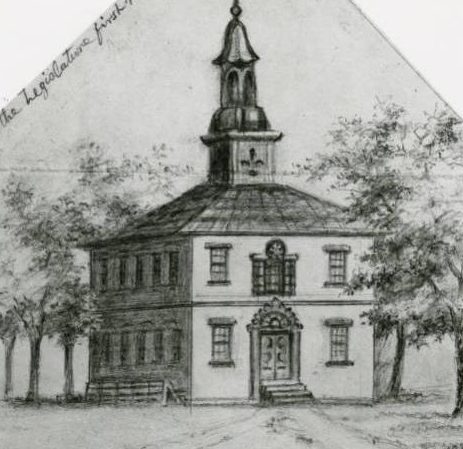
Marion County Courthouse opens
John Baker and James Paxton complete construction on the courthouse in Fall 1824. It serves as both the courthouse and the first State House in Indianapolis.
Pictured: Sketch of the first Marion County Courthouse by Christian Schrader, ca. 1820s.
Credit: Bass Photo Co Collection, Indiana Historical Society. View Source
Indianapolis becomes state capital
The General Assembly makes Indianapolis the seat of the state government. The law will not become effective until January 1, 1825.
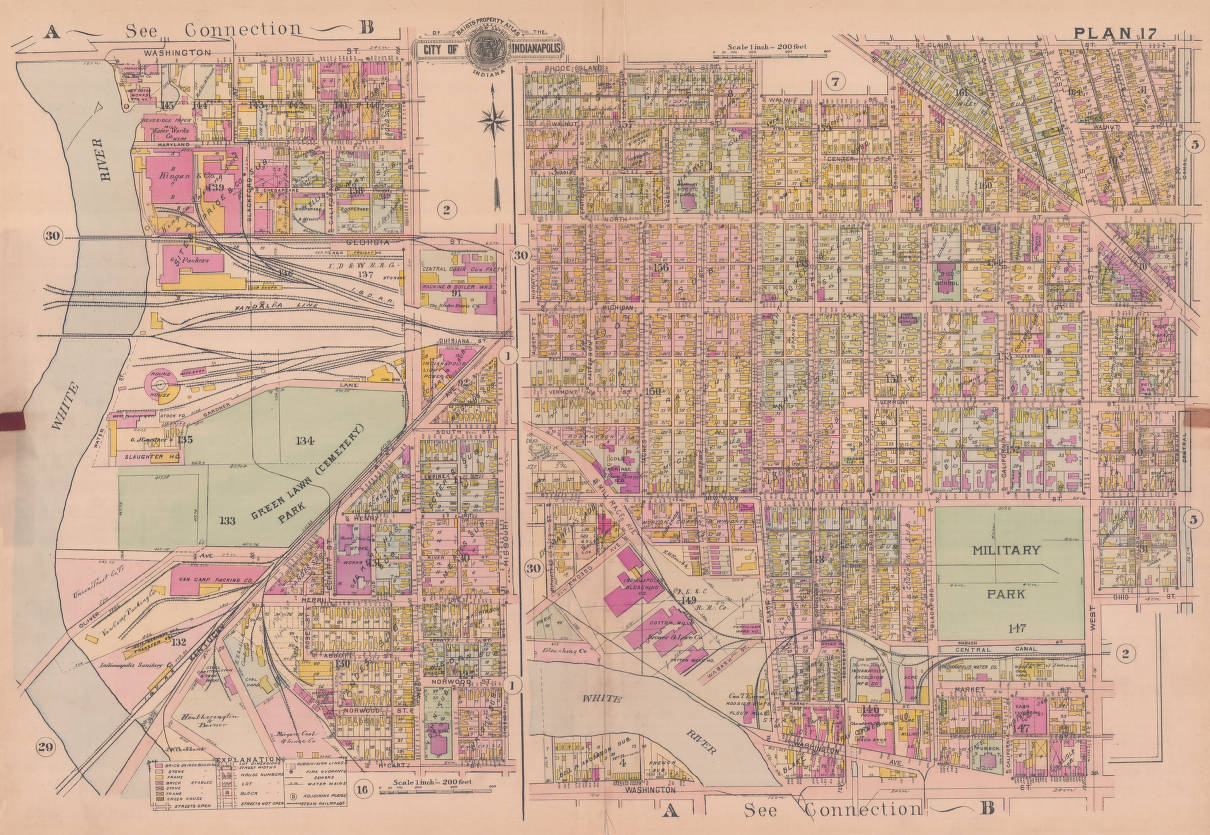
First cemetery established
Seventy-one Indianapolis citizens sign a charter to designate the area on the west side of Kentucky Avenue near the White River as the town’s official cemetery. It had served as a burial ground from 1821.
Pictured: Indianapolis Baist Atlas showing Greenlawn Cemetery, 1908
Credit: Indiana University Indianapolis View Source
Indiana General Assembly meets in new state capital
The Indiana General Assembly has its first session in Indianapolis after officially moving from Corydon on January 1, 1825.
Indiana Journal begins publication
John Douglass and Douglass Maguire publish the first issue of the Indiana Journal with a focus on political issues.
Indiana State Library opens
The state library opens with the secretary of state acting as librarian. The General Assembly establishes it to provide library service to the legislature, state government officials, and other governmental personnel.
First volunteer fire company organizes
A volunteer fire department organizes several months after the first recorded fire. The department uses a church bell for alarms and has only ladders and buckets to fight fires.
Indianapolis Sabbath School Union established
Three years after the first “union sunday school” takes place, Indiana Sabbath School Union, established at Charlestown, forms three branches, one of which is in Indianapolis.
Governor’s residence erected on Governor’s Circle
Although designated as the governor’s house, no governor takes up residence there. It serves several other functions before being demolished in 1857. Governor’s Circle later become known as Monument Circle.
U.S. Congress donates ground for militia training
First used in 1822 to celebrate the city’s first Independence Day, Congress donates the land that is current day Military Park to Indiana for militia training.
Temperance Society of Marion County organizes
Indianapolis residents gather at the Methodist meetinghouse and organize the Temperance Society of Marion County. Members of the new society pledge to discontinue alcohol use unless needed medicinally.
Landmark decision against slaveholder’s right to transport enslaved peoples through a free state
Marion County circuit court judge Bethuel F. Morris rules that an enslaved woman and her three children passing through Indiana with their owner are free because slavery is prohibited by the state constitution. The case is one of the first such decisions in the nation, and it is highly controversial in Indiana.
Population: 1,900
The population in 1830 totals 1,900 residents, the majority of which are recorded as white (1,836).
Two women’s academies open
On the same day, both the Indianapolis Female School and Miss Hooker’s Female School open, becoming the town’s first schools for young women. Both are short-lived.
The steamboat Robert Hanna arrives from Cincinnati
The steamboat reputedly is the only one ever to ascend the White River to Indianapolis. The vessel runs aground on its return trip, dashing hopes about the navigability of the waterway.
Indianapolis incorporates as a town
The Town of Indianapolis incorporates, and the local government is placed under the direction of five trustees to be elected on September 29.
Central Christian Church organizes
John O’Kane, a Virginia evangelist and “Campbellite,” establishes the Church of Christ (Central Christian Church). Early leaders include Butler Smith, John Sanders, and Zerelda Wallace (wife of Governor David Wallace).
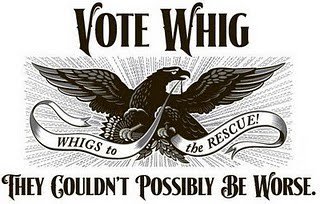
Whigs form a local political organization
The formation of a local Whig organization comes as the state begins to split along national divisions. Though Indiana leaned Democrat, Whigs become the leading party in Indianapolis.
Pictured: A voting poster used by the Whig Party in 1834.
Credit: Public domain via Wikimedia Commons
View Source
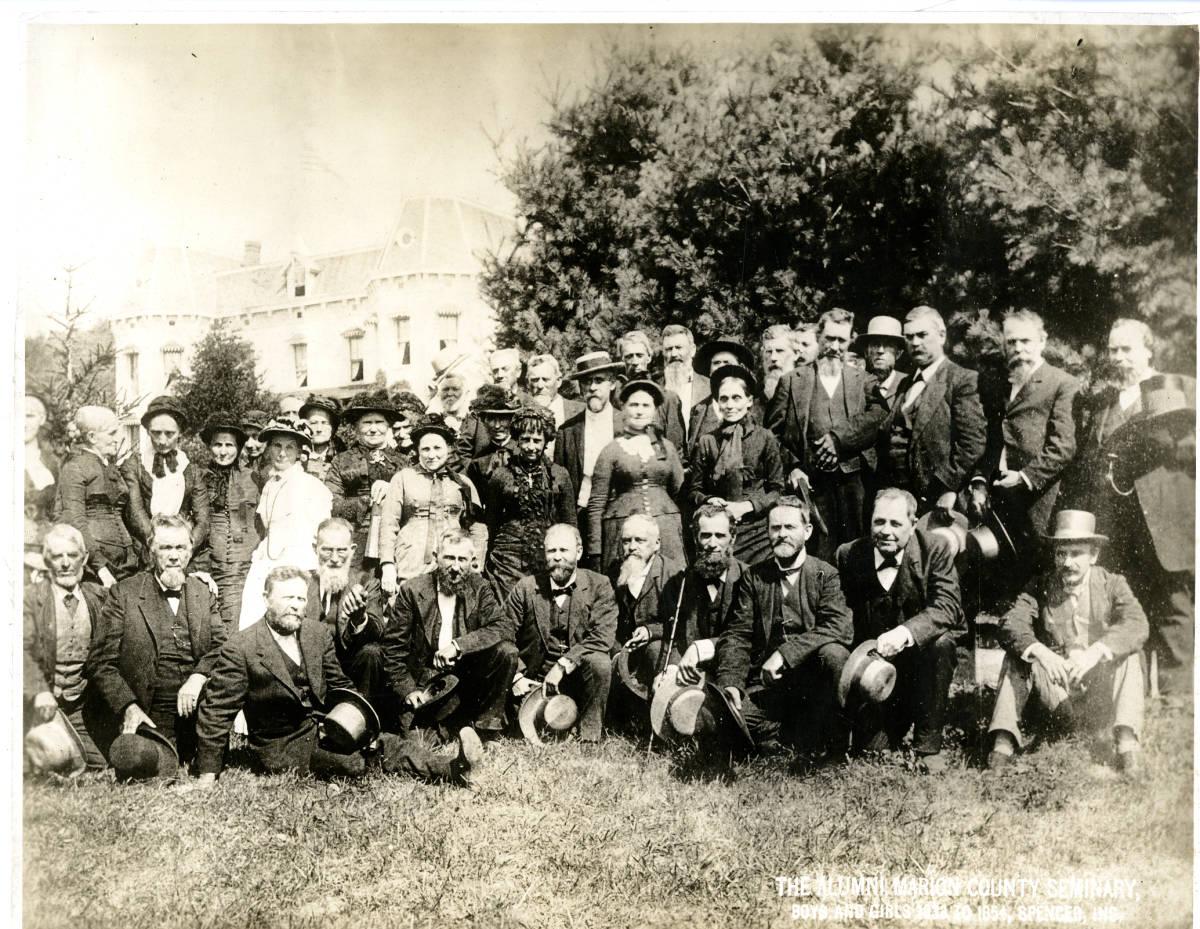
Marion County Seminary opens
The Marion County Seminary building officially opens under the leadership of Ebenezer Dumont. The seminary, a public academy, becomes known as one of the leading schools in central Indiana.
Pictured: Portrait of alumni of the Marion County Seminary from the classes of 1833 to 1854.
Credit: Oversize Photograph Collection, Rare Books and Manuscripts, Indiana State Library
View Source
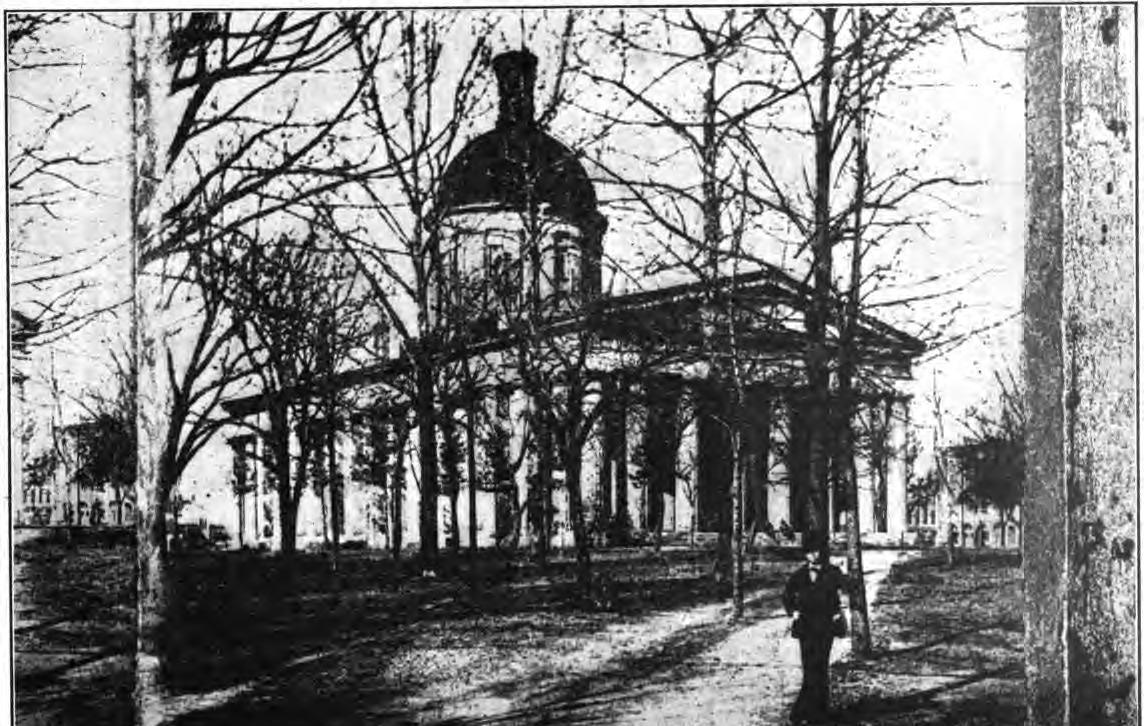
Third State House completed
The firm of Ithiel Town and Alexander Jackson Davis finish construction on the new State House. The Greek Revival-style building is completed at a cost of approximately $60,000.
Pictured: The third Indiana State House, complete in 1835.
Credit: Public domain via Wikimedia Commons
View Source
First Catholic Mass
Rev. Claude Francis of Logansport offers the first Catholic Mass in Indianapolis at Powers Tavern on West Washington Street.
First annual fair of the Marion County Agricultural Society
After forming in June, the Marion County Agriculture Society plans the first Marion County fair, which is held on October 30–31 at the Courthouse Square.
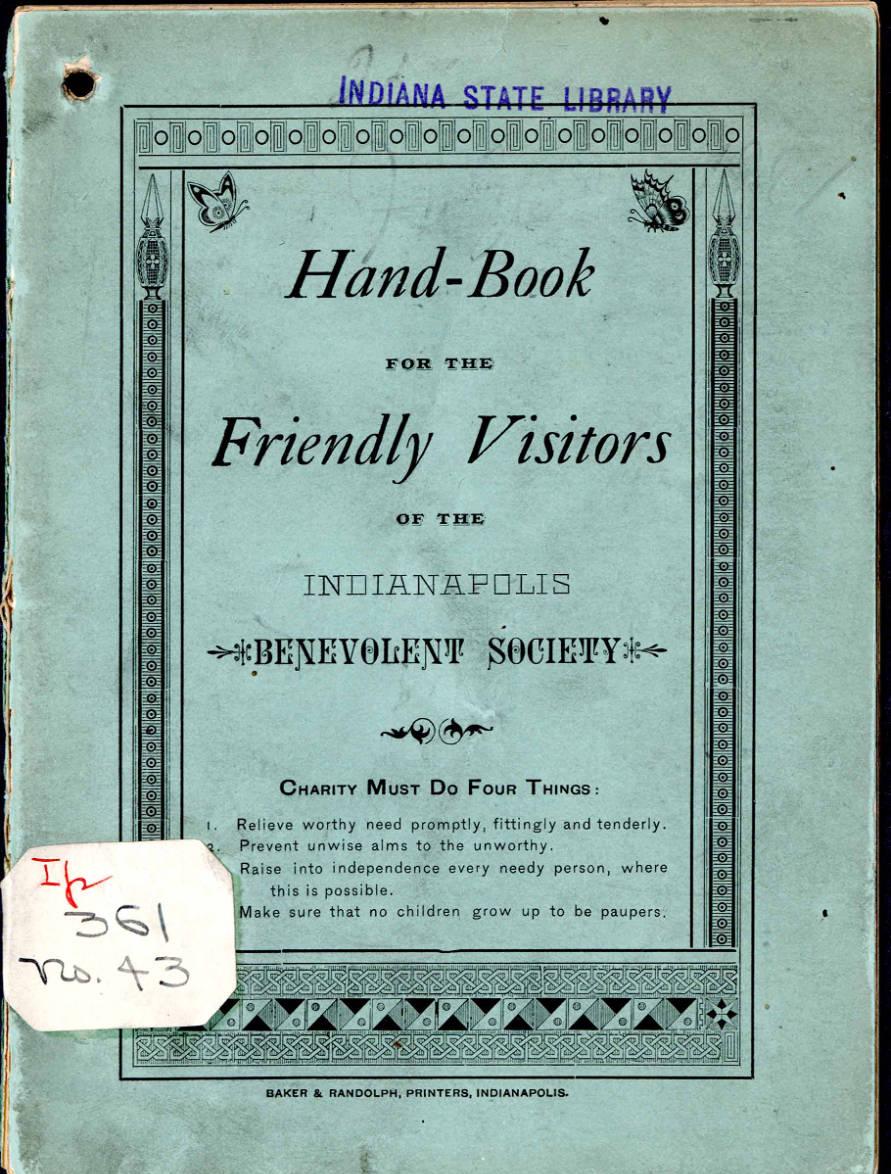
Civic leaders form the Indianapolis Benevolent Society
The organization declares that its mission is “to give temporary aid to meet the needs of individuals and families on a community-wide basis without regard to race or creed.”
Pictured: This is the hand-book for the visitors of the Indianapolis Benevolent Society from 1881.
Credit: Indiana Division, Indiana State Library
View Source
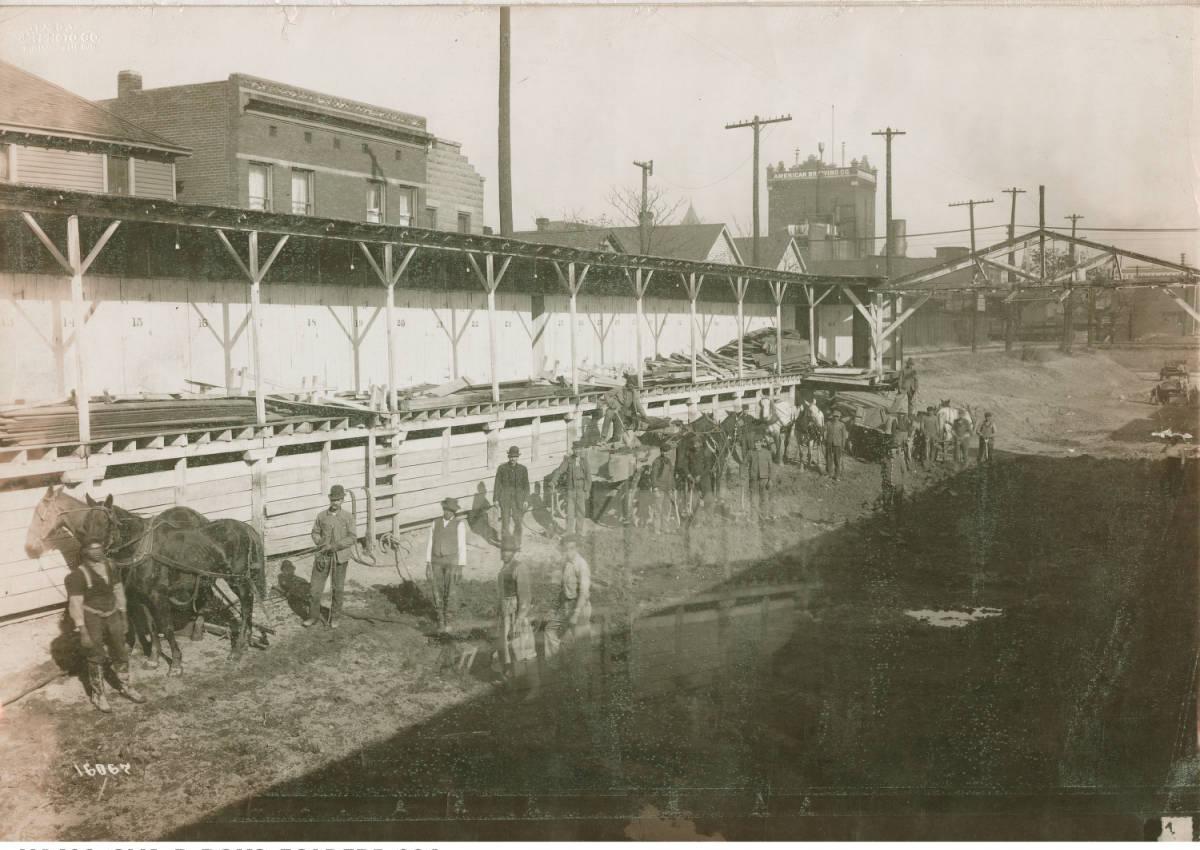
Construction on the Central Canal begins
Construction begins on the first few miles of the canal, which promises to improve transportation through Indiana. The canal project is funded through the Mammoth Internal Improvements Bill of 1836.
Pictured: Workers are shown here building the Indiana Central Canal.
Credit: Indiana Historical Society
View Source
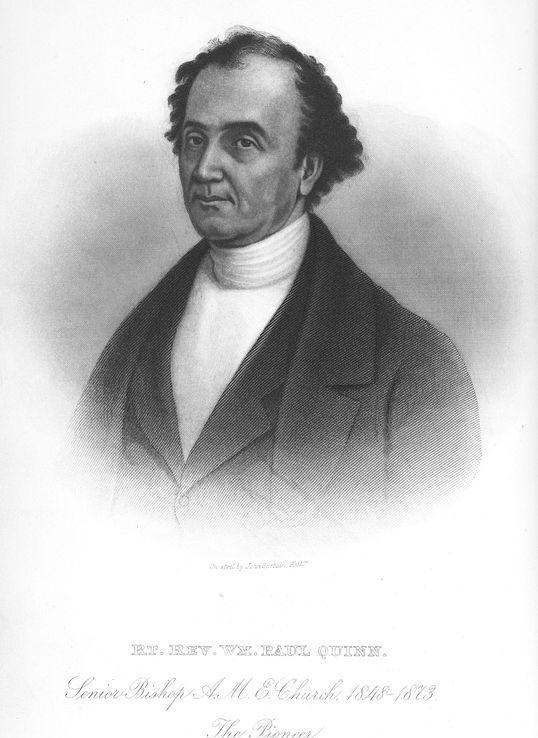
African Methodist Episcopal congregation organizes
A group of Black Methodists in Indianapolis forms Bethel AME (African Methodist Episcopal) Church. A founder of the denomination, William Paul Quinn serves Indianapolis and other AME stations as pastor. A church building is constructed on Georgia Street, between Senate Avenue and the Central Canal in 1841.
Pictured: William Paul Quinn, n.d.
Credit: Public domain via Wikimedia Commons
View Source
First Catholic parish organizes
Father Vincent Bacquelin organizes the town’s first Catholic parish, Holy Cross. In November, the Diocese of Vincennes purchases land south of Military Park to build a church, which is built in 1840.

Two communities established north of the Central Canal
In April of 1837, Jacob Coil plats Broad Ripple north of the canal. In June, James and Adam Nelson establish a competing community, Wellington, on the south bank.
Pictured: Plat of Broad Ripple, 1837
Credit: Indiana State Archives
View Source
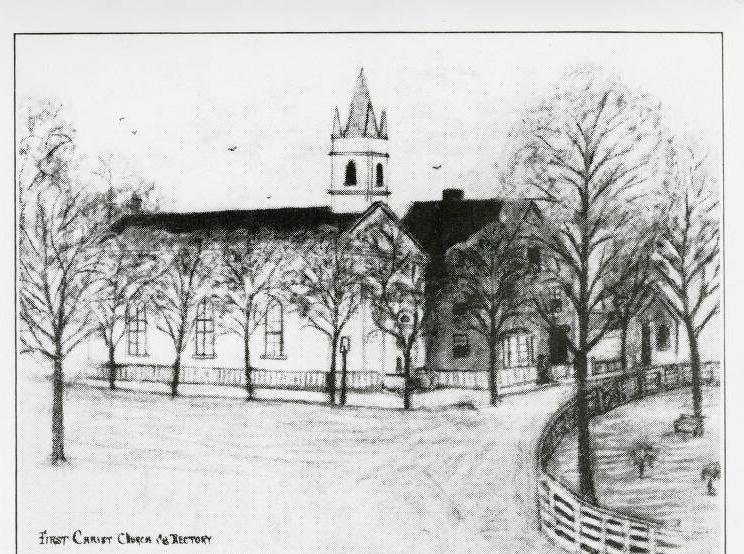
Episcopalian parish of Christ Church forms
Thirty people sign an agreement to organize the parish, which later becomes known as Christ Church Cathedral. The congregation occupies its first building on the Circle on November 18, 1838.
Pictured: Drawing of the first Christ Church Episcopal on the Circle, ca. 1850
Credit: Bass Photo Co Collection, Indiana Historical Society View Source
General Assembly reincorporates Indianapolis
The legislature passes a reincorporation act with a new charter that provides a town council with taxing, licensing, and legislative powers. It also increases the number of wards to six.
Second Presbyterian Church organizes
Fifteen members who depart the “Old School” First Presbyterian Church establish the new congregation. Henry Ward Beecher becomes its first pastor.
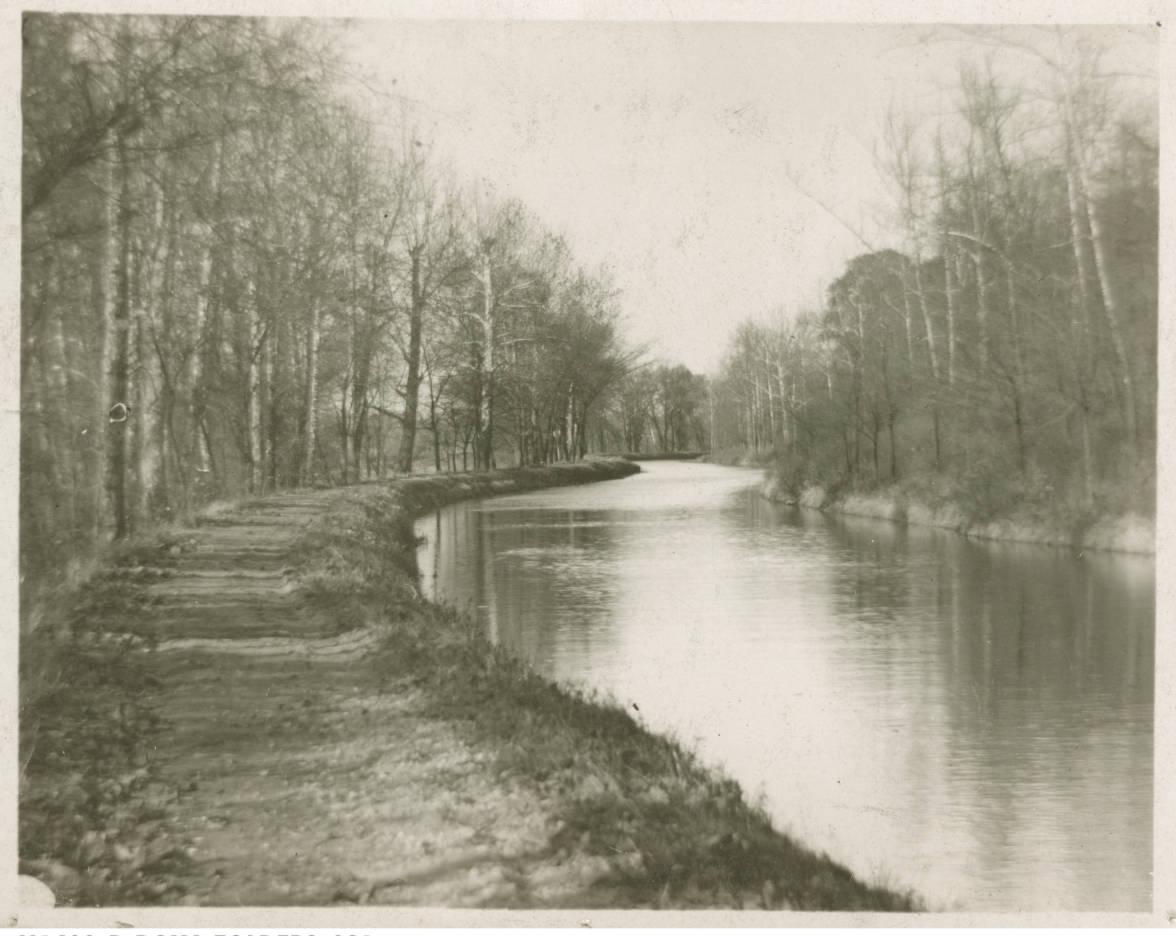
Nine miles of Central Canal opens
Because of financial difficulties caused by the Panic of 1837, the state’s creditors take over the Central Canal. Construction stops by the end of the year but not before a completed section opens for traffic.
Pictured: A view of Central Canal from the 1910s.
Credit: Indiana Historical Society
View Source
Population: 2,692
The population in 1840 totals 2,692 residents, the majority of which are recorded as white (2,570).
Zion Evangelical Protestant Lutheran and Reformed Zion Church holds first meeting
German immigrants found the church, which does not offer services in English until 1928.
Jacob and George Chapman purchase precursor to Indiana Sentinel
The newspaper is called the Indiana Democrat (1830) when the Chapmans purchase it. They rename it, and the Sentinel becomes the leading newspaper of the Indiana Democratic Party.
St. Paul’s Evangelical Lutheran Church organizes
Eighteen members meet in the home of Anton Friederich Bade to found the congregation. The first church building, considered the “mother church” by the town’s German Lutherans, is located at Alabama Street.
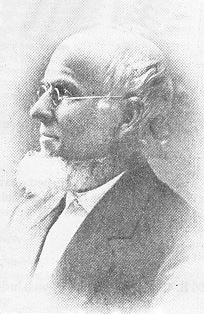
Indiana State Asylum for the Deaf and Dumb opens
William Willard leads the opening of the Indiana School for the Deaf in October 1843. The school is the sixth school for deaf students founded in the United States and is the first to provide free tuition.
Pictured: William Willard, n.d.
Credit: Public domain via Wikimedia Commons View Source
Marion County Library forms
The Marion County Library forms as a subscription library under the provisions of the 1816 Indiana constitution. It is housed in the basement of the county courthouse.
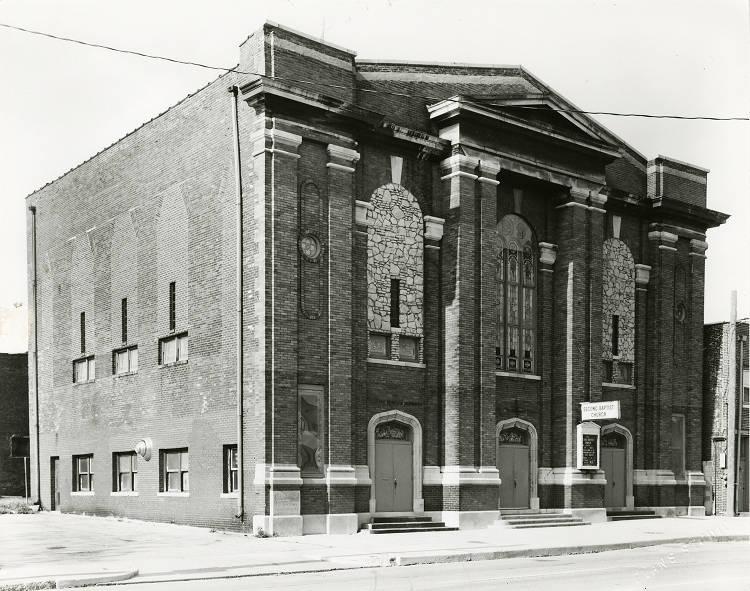
Second Baptist Church established
African American Baptists form a congregation of their own, the Second Baptist Church. Its structure on Missouri Street between New York and Ohio streets becomes a target for arson when racially charged violence erupts during the 1851 Indiana Constitutional Convention. The congregation rebuilds at the same location in 1853.
Pictured: Second Baptist Church’s third building, built around 1870
Credit: Indiana Historical Society
View Source
Flooding damages property
The city experiences intense flooding at the end of the year, as it had earlier at the beginning of the year. In both instances, the flooding damages landscape and property, sweeping away whole structures.
Indianapolis incorporates as a city
Voters endorse a new charter by an overwhelming majority of 449 to 19, making Indianapolis an incorporated city.
Samuel Henderson becomes first mayor
Samuel Henderson, the first postmaster and president of the Town Council, wins election as the first mayor. Residents also vote for a special tax levy to fund free schools.
Smallpox scare causes City Council to secure land for hospital
With the arrival of smallpox on June 12, the city common council appoints a board of health and a committee to identify land suitable for a hospital. Although property is purchased, the idea of a hospital is abandoned when the disease subsides.
Madison and Indianapolis Railroad arrives
Madison and Indianapolis Railroad, the first steam railroad completed in Indiana, begins operations in 1847. The railroad arrives at Indianapolis in October.
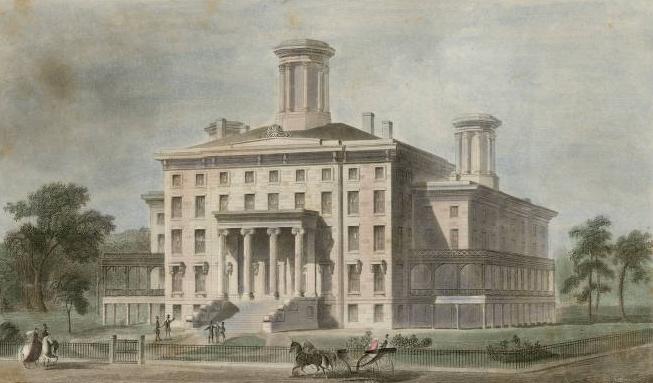
Indiana School for the Blind opens
The school for the blind officially opens in a private residence on the southwest corner of Illinois and Maryland streets while its building is constructed.
Pictured: The Indiana School for the Blind, ca. 1850s
Credit: Indiana Historical Society View Source
Indiana Volksblatt begins publication
In October 1848, Julius Boetticher begins the Indiana Volksblatt (Indiana Peoples Paper), the first German-language newspaper in the city. The weekly paper is a conservative publication.
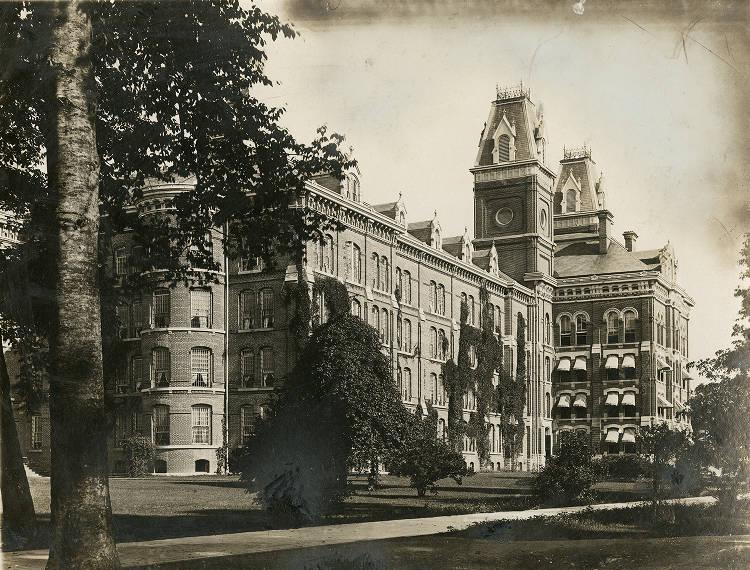
Indianapolis Hospital for the Insane opens
The hospital admits its first five patients. It expands to admit 300 patients within ten years. It becomes Central Indiana Hospital in 1889, then Central State Hospital in 1929.
Pictured: Central State Hospital, n.d.
Credit: Indiana Historical Society View Source
First Jewish residents arrive
Polish-born merchant Alexander Franco and English-born clerk Moses Woolf are the first Jewish people to arrive and settle in Indianapolis.
Indiana Central Medical College opens
Indiana Central Medical College, the first proprietary medical school, opens in November 1849 and is located on East Washington Street. It closes in 1852, and another medical school does not appear in Indiana until 1869.
Horatio Cooley Newcomb becomes mayor
Newcomb wins the election of 1849. At the age of 27, he is the youngest mayor in the city’s history.
Credit: Indiana State LibraryView Source
Population: 8,091
The population in 1850 totals 8,091 residents, the majority of which are recorded as white (7,686).
Mechanics Mutual Protection organizes
Local, skilled artisans form the Mechanics Mutual Protection, a union precursor, and call for increased wages, improved educational opportunities, and better health care.
State constitutional convention drafts proposal to prevent migration of African Americans into state
Voters statewide overwhelmingly approve the measure. Marion County votes 2,509 to 308 in favor. The measure subsequently becomes Article 13 of the 1851 state constitution.
Indianapolis Turngemeinde opens
Located on West Washington Street, the Indianapolis Turngemeinde promotes physical fitness, freethought, liberal politics, and German language and culture.
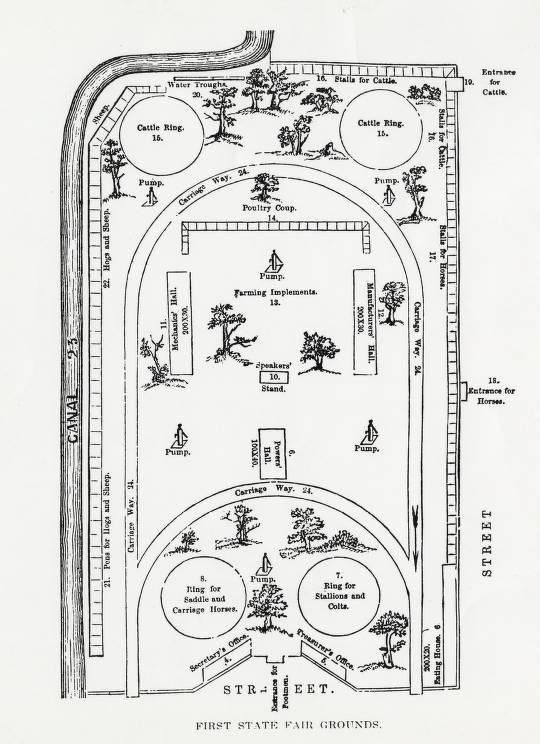
First Indiana State Fair opens at Military Park
Created as a venue for exchanging ideas to improve agricultural productivity, the state’s first fair runs October 20-22. Around 30,000 people pay admission to see exhibits featuring agricultural products.
Pictured: Layout of Indiana’s first state fair held at Military Park, 1852
Credit: Bass Photo Co Collection, Indiana Historical Society View Source
Indianapolis Board of Trade created
Thirty-six of the city’s leading businessmen and boosters form the first Indianapolis Board of Trade, the forerunner of the Chamber of Commerce.
First free schools open
Funded by tax revenues, 2 men and 12 women serve as teachers at the first free schools. Average attendance increases from 340 students in April to 700 in May.
First public high school opens
Indianapolis High School, the city’s first public high school, is only open for five years. It closes in 1858 when the Indiana Supreme Court declares local taxation for schools unconstitutional.
Voters approve a new city charter
The new charter establishes a common council of 14 members elected from 7 wards and a mayor elected citywide.
Trial of John Freeman
Reverend Pleasant Ellington wrongfully accuses John Freeman of being his runaway enslaved person. Leading citizens come to Freeman’s defense, but he spends nine weeks in jail before the suit is dismissed when Ellington’s evidence proves false.
Union Station opens
Designed by architect Joseph Curzon, the country’s first union station–a central station that accommodates many independent rail lines–commences operation with five tracks.
Paid police department established
The common council passes an ordinance establishing a new police department. The department consists of 14 officers, two from each of the city’s wards.
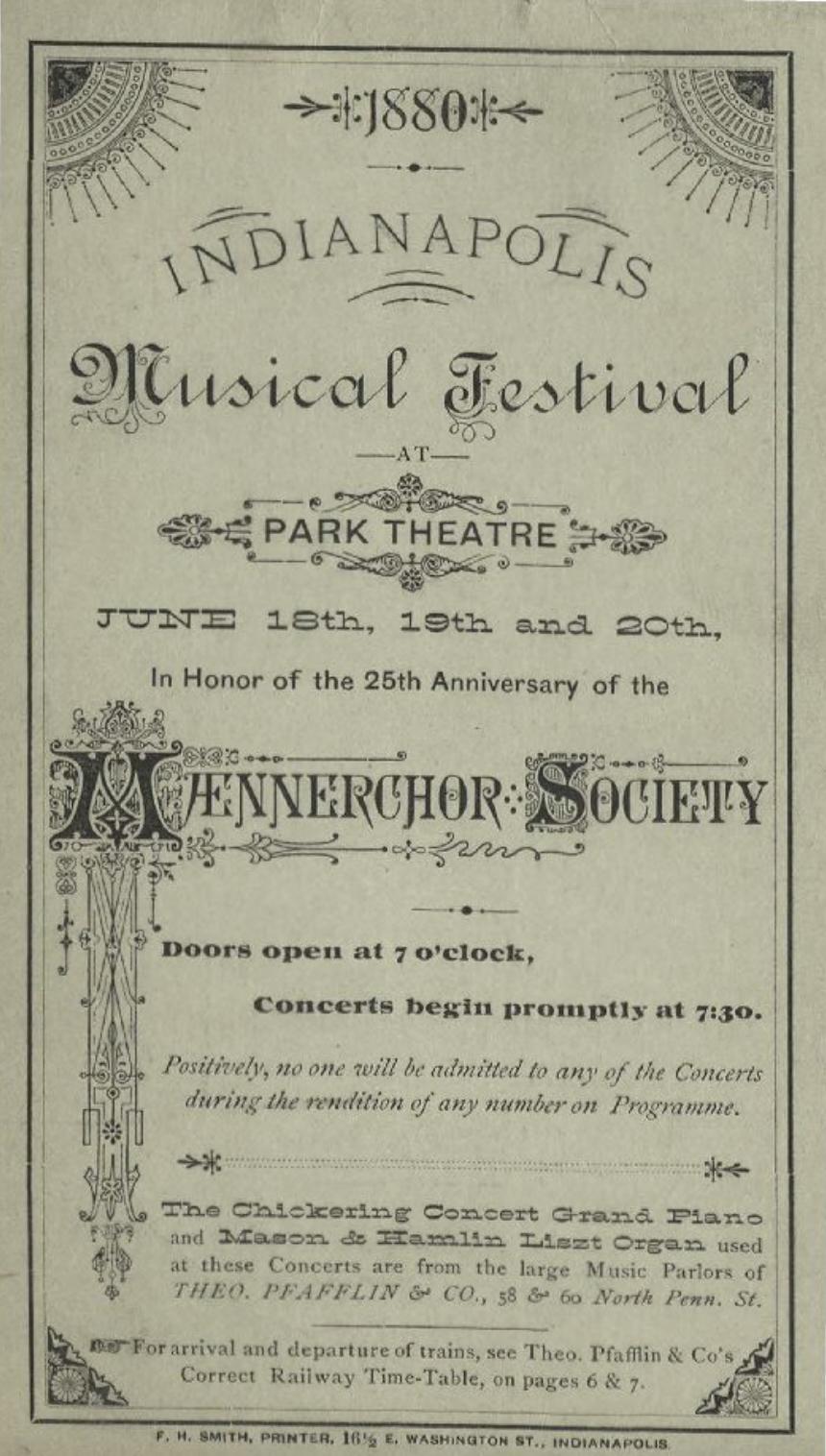
Maennerchor singing society organizes
Seven young German American men who enjoy singing organize the Maennerchor. The group develops into an amateur music society of distinction, influencing the musical culture of Indianapolis.
Pictured: Indianapolis Music Festival at Park Theatre honoring the 25th Anniversary of the Maennerchor Society, 1880
Credit: Indiana University Indianapolis
View Source
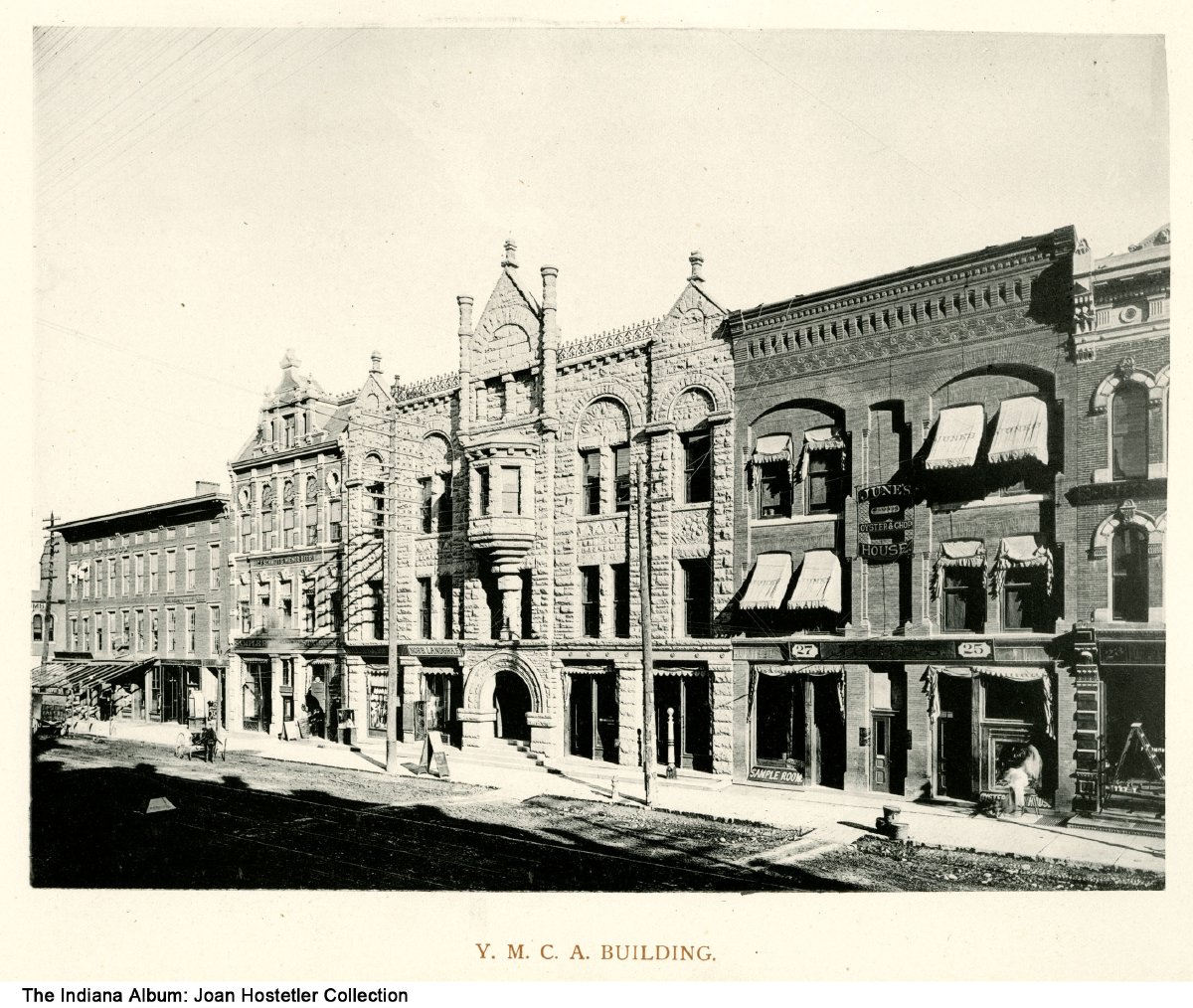
Indianapolis branch of YMCA formed
A small group of evangelical Protestants organizes the Indianapolis Young Men’s Christian Association (YMCA), a branch of the international organization. Early programming includes public lectures on Christian themes, interdenominational services, and charity work. It opens its own building at 33-37 North Illinois Street in 1871.
Pictured: Y. M. C. A. Building, ca. 1888
Credit: The Indiana Album: Joan Hostetler Collection View Source
Indianapolis Widows’ and Orphans’ Asylum incorporates
The Indianapolis Widows and Orphans Friends’ Society, (later the Children’s Bureau of Indianapolis) incorporates and erects a children’s orphanage, which is later renamed the Indianapolis Orphans’ Asylum.
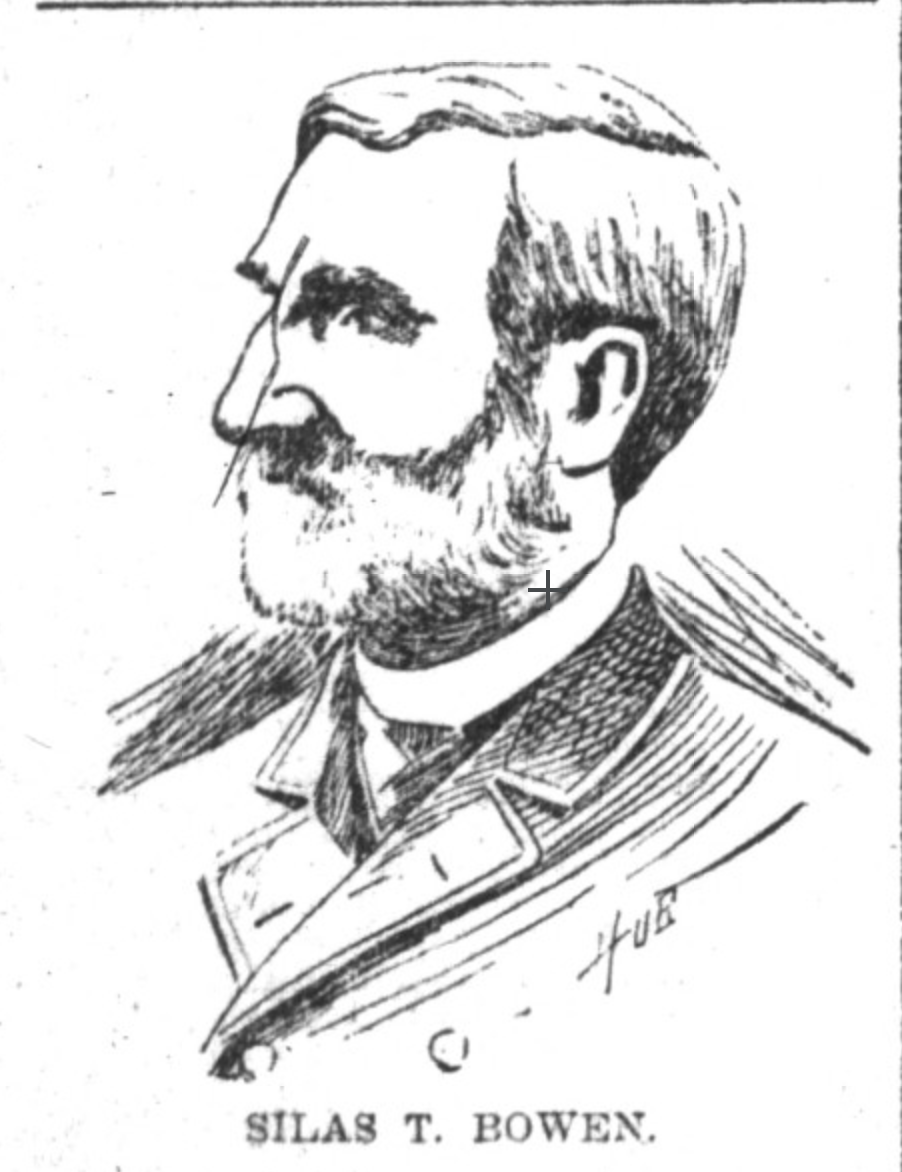
Public schools hire the first superintendent
Silas Bowen, who is also head of the booksellers-publishers Bowen, Stewart & Co., becomes the first Indianapolis public school superintendent. He receives an annual salary of $400 for one-third time.
Pictured: Silas Bowen, 1895
Credit: Indianapolis News
View Source
North Western Christian University opens
Chartered five years prior, the university finally opens its doors, becoming one of the first universities in the country to admit students regardless of race or gender.
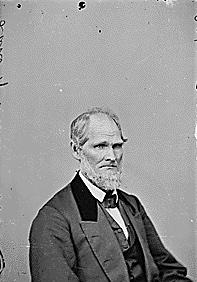
Republican Party holds first state convention
The newly formed Republican Party holds its first state convention in Indianapolis. The event begins with a parade down Washington Street.
Pictured: Henry S. Lane was a key figure in the creation of the Indiana Republican Party and chaired the first state convention.
Credit: National Archives
View Source
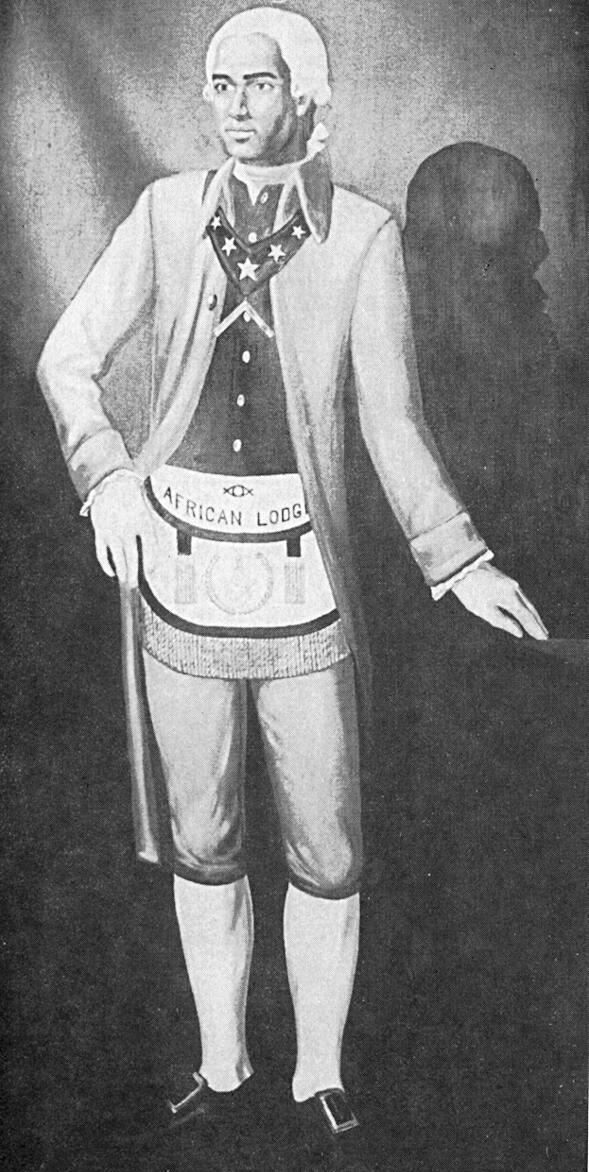
Prince Grand Hall of Indiana organizes
Prince Grand Hall of Indiana, an African American fraternal group, organizes in Indianapolis. Membership doubles between 1857 and 1865.
Pictured: Portrait of Prince Hall, n.d.
Credit: Public domain via Wikimedia Commons View Source
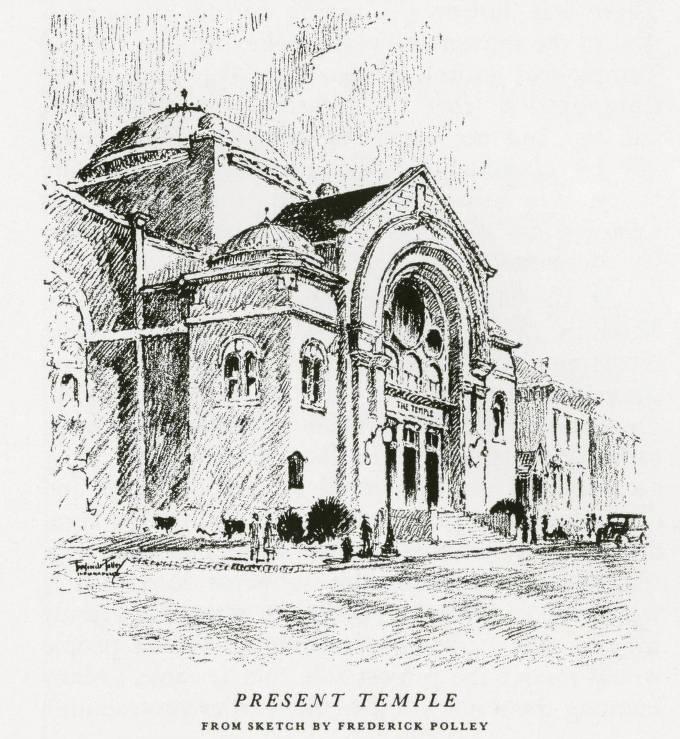
Indianapolis Hebrew Congregation established
Fourteen German Jewish immigrants organize the Indianapolis Hebrew Congregation (IHC) which adheres to Reform Judaism, the most liberal of American Jewish religious movements. IHC’s first home, the Market Temple, is built at 435 East Market Street between 1865 and 1868.
Pictured: Indianapolis Hebrew Congregation Temple (1899-1957), ca. 1930
Credit: Indiana Historical Society View Source
First history of Indianapolis published
Local attorney Ignatius Brown publishes a history of the city, which appears in the 1857 city directory. It was the first historical sketch of Indianapolis.
First school for African American children opens
Indianapolis’s public schools do not allow African American children to attend. Bethel African Methodist Episcopal Church founds the city’s first formal school for Black children.
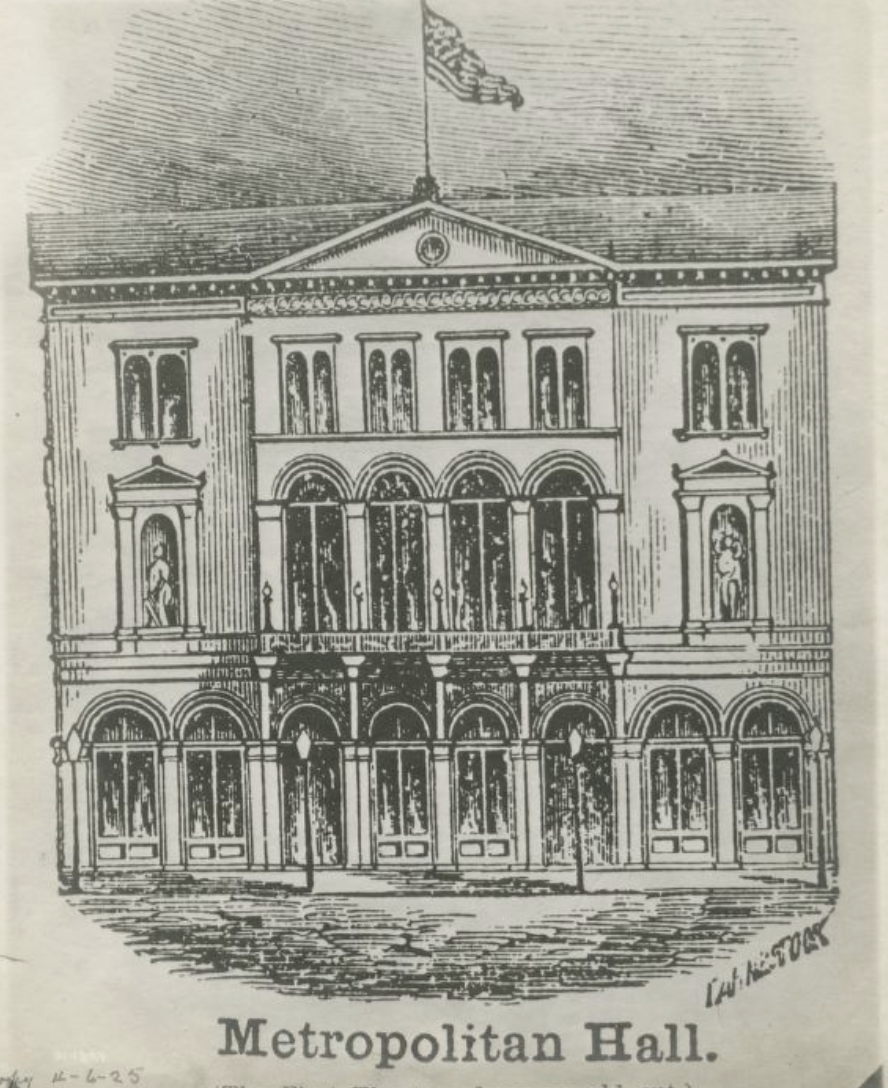
First theater opens
The Metropolitan opens as Indianapolis’ first purpose-built theater complete with gallery, vaulted ceilings, and frescoes. It is later renamed the Park.
Pictured: A drawing of the Metropolitan theater building.
Credit: Bass Photo Co Collection, Indiana Historical Society
View Source
Public schools close
Indiana Supreme Court overturns tax-supported free public education, deeming it unconstitutional. Indianapolis public schools struggle for funding and suspend operations.
First Catholic school opens
The Sisters of Providence establish St. John Academy, the first Catholic school in Indianapolis, with 80 students. The school, located on the corner of W. Georgia Street and S. Capitol Avenue, remains in operation until 1959.
First paid fire department authorized
The Common Council votes to establish the city’s first paid fire department. The city’s volunteer fire companies are disbanded.
State Fair finds new location
Having outgrown Military Park, the State Fair opens on approximately 30 acres purchased by the state in what is called Otis Grove (later Herron-Morton Place). The new facilities offer “increased attractions for all visitors.”
Population: 18,611
The population in 1860 totals 18,611, the majority of which are recorded as white (18,113).
Street lights added to city streets
The city purchases and installs lamps along 8.5 miles of street—the first public street lighting. Property owners had paid to illuminate two city blocks seven years prior.
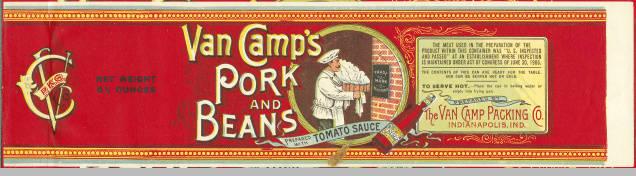
Van Camp Packing Company secures its first major contract
Gilbert Van Camp opens a canning business in the Fruit House Grocery Building. The company obtains its first major contract when it sells pork and beans to the Union army.
Pictured: Van Camp’s Pork and Beans can label, 1913.
Credit: Indiana Historical Society
View Source
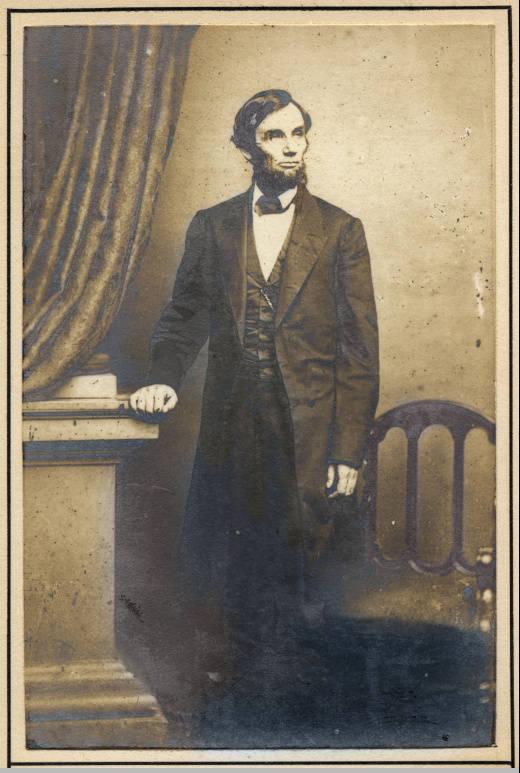
Abraham Lincoln visits Indianapolis
Abraham Lincoln visits Indianapolis during his trip to Washington, D.C., for his inauguration. Speaking at the Bates House, he states that his primary duty is the preservation of the Union.
Pictured: Abraham Lincoln, 1861
Credit: Indiana Historical Society View Source
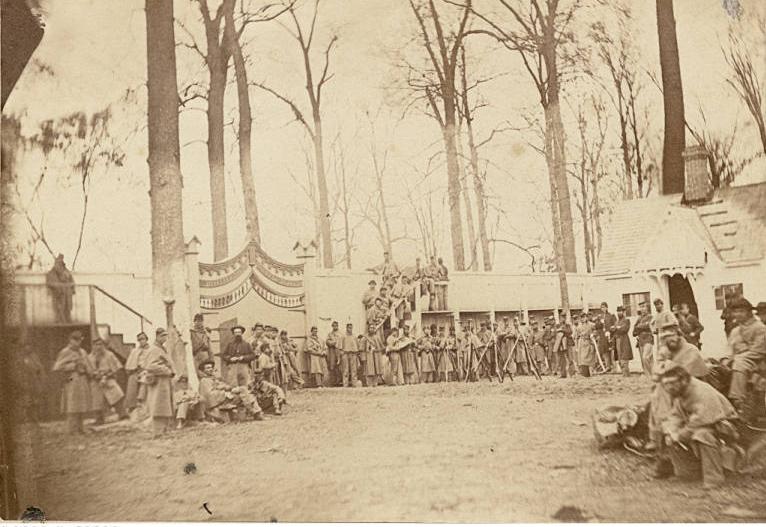
First soldiers arrive at Camp Morton
The State Fairgrounds become Camp Morton, a military rendezvous camp to manage volunteers. Two months later, Private John Hollenbeck becomes the city’s first casualty of the Civil War.
Pictured: Entrance to Camp Morton, ca. 1864-1865
Credit: Indiana Historical Society View Source
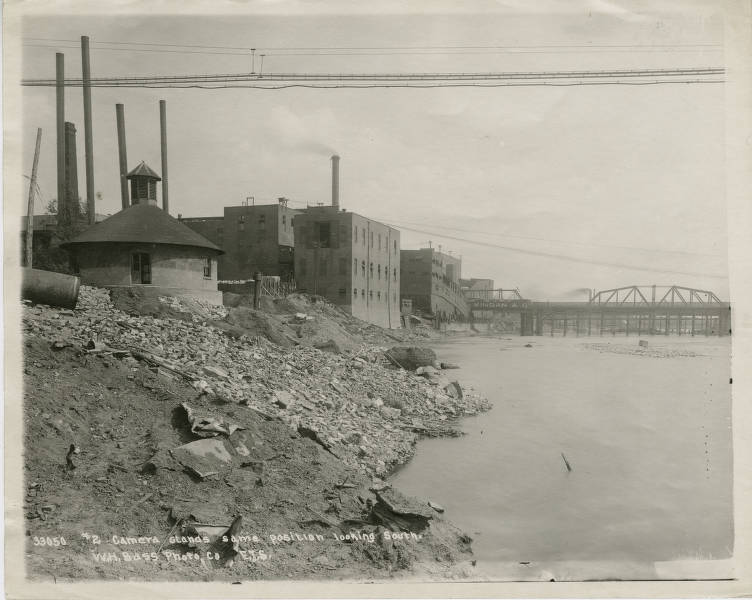
Kingan and Company opens
Irishman Samuel Kingan opens Kingan and Company at Maryland and Blackford streets along White River. The meatpacking plant, owned by a Belfast, Ireland company, employs many Irish workers, some of which are recruited from Ireland.
Pictured: Kingan and Company, seen from the Washington Street bridge following flood damage in 1913.
Credit: Bass Photo Co Collection, Indiana Historical Society View Source
Camp Morton converts to a prison for Confederate soldiers
Gov. Morton responds to the need for prisoner of war accommodations by converting Camp Morton into a prison camp. Within a month, some 3,700 prisoners-of-war arrive.
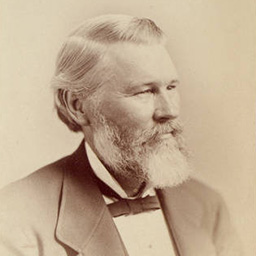
Dr. Richard J. Gatling receives a patent for his Gatling Gun
An Indianapolis physician and real estate broker, Gatling becomes famous for his early rapid-firing weapon or machine gun (U.S. Patent No. 36,836).
Pictured: Richard Jordan Gatling, ca. 1860s
Credit: Indiana Historical SocietyView Source
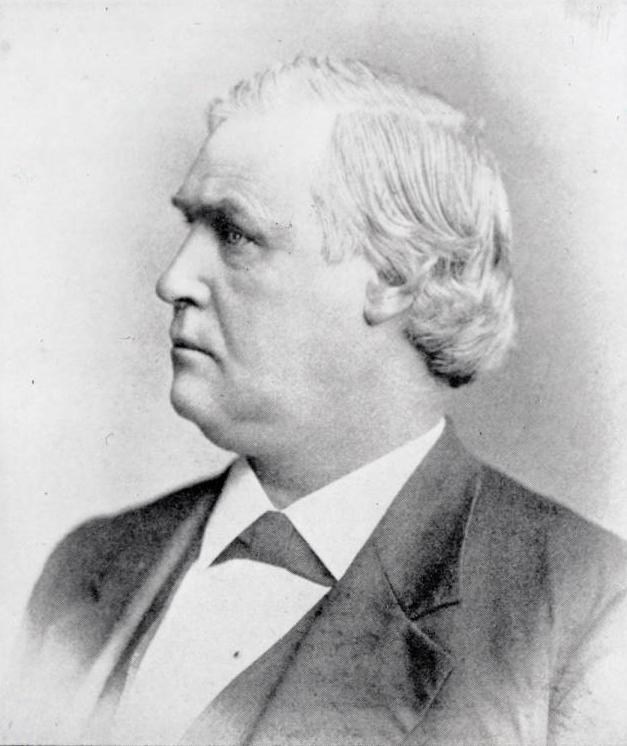
John Caven becomes mayor
Elected to office a record five times, the first three unopposed, Caven serves longer than any other mayor until William H. Hudnut III (1976-1991).
Pictured:
Credit: Indiana Historical Society View Source
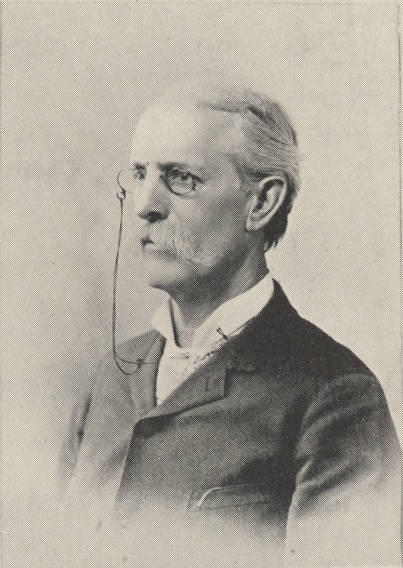
Abraham C. Shortridge becomes school superintendent
Shortridge reopens the city’s schools and urges the school board to hire female teachers to avoid paying as much for salaries.
Credit: Public domain via Wikimedia CommonsView Source
Battle of Pogue’s Run
As Democrats leave their state convention by train, armed soldiers overtake them and confiscate their weapons. The soldiers discard them into Pogue’s Run.
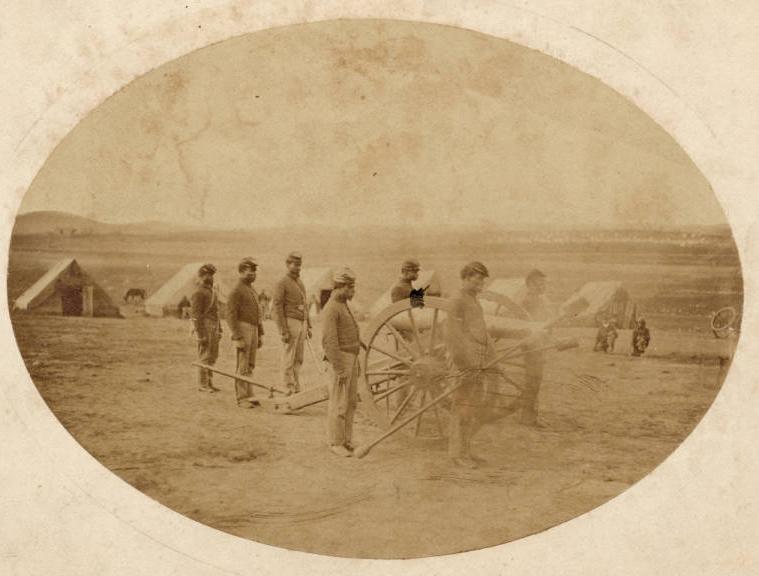
Twenty-eighth Regiment U.S. Colored Troops musters into the U.S. Army
Indiana’s only Black Civil War regiment organizes and trains at Camp Frémont, near Fountain Square in December 1863, before official mustering. In 1864-1865, its troops engage in the Siege of Petersburg, necessary to take the Confederate capital, Richmond, Virginia.
Pictured: African American soldiers from an unknown regiment, ca. 1864-1865
Credit: Indiana Historical Society View Source
Dedication of Crown Hill Cemetery
Crown Hill Cemetery takes over as the new principal burial ground for the city, the previous being Greenlawn Cemetery. Lucy Ann Seaton becomes the first interment on June 2.
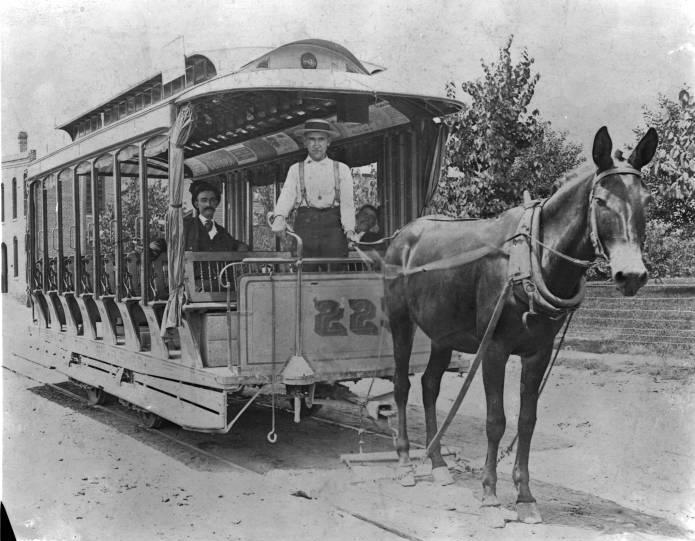
Mule-drawn streetcars begin service
The 12-seat mule-drawn streetcars run along a one-mile line between Union Station and Military Park. Other lines open along Virginia, Massachusetts, and Fort Wayne avenues.
Pictured: Mule-drawn streetcar, ca. 1890s
Credit: Bass Photo Co Collection, Indiana Historical Society View Source
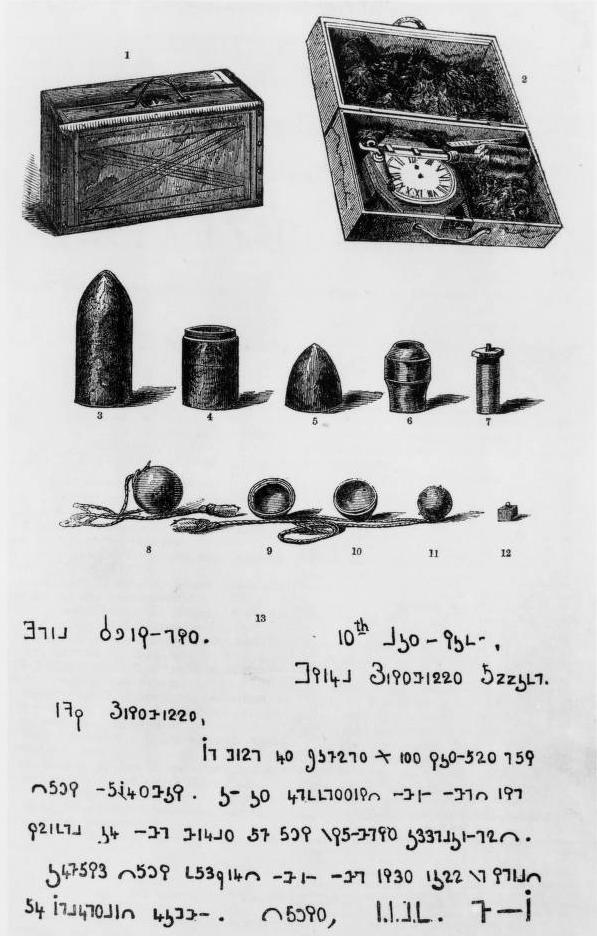
Military commission finds Lambdin P. Milligan and others guilty in landmark Civil War treason trial
A partisan military commission sentences Milligan and four other Democrats to be hanged. The U.S. Supreme Court overturns this verdict in a decision known as Ex parte Milligan.
Pictured: A coded message used as evidence in the case of treason against Lambdin P. Milligan and other Confederate sympathizers in Indianapolis, 1864
Credit: General photograph collection, Rare Books and Manuscripts, Indiana State Library View Source
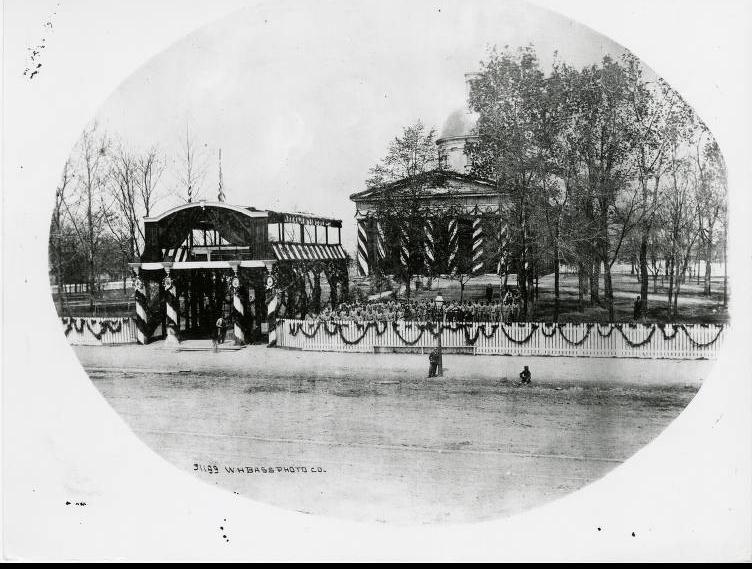
Lincoln’s funeral train arrives at 7 a.m.
A procession led by Governor Oliver P. Morton and Major General Joseph Hooker accompanies the president’s body to the State House where public viewing lasts from 8 a.m. until 10 p.m.
Pictured: Indiana Statehouse Draped for Lincoln’s Funeral, 1865
Credit: Bass Photo Co Collection, Indiana Historical Society View Source
Täglicher Telegraph begins publication
The Democratic newspaper begins publication as a weekly but becomes the city’s first daily German-language newspaper in 1866. It merges with the Tribüne to become the independent Telegraph and Tribüne in 1907.
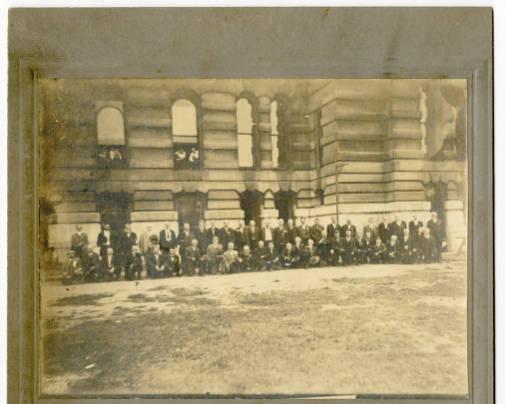
Grand Army of the Republic (GAR) holds its first national encampment
With Gov. Morton’s encouragement, Indiana serves as the unofficial national headquarters of the GAR for several months. The organization holds its first annual meeting, called an “encampment,” in the city.
Pictured: Grand Army of the Republic encampment in front of the Indiana Statehouse, n.d.
Credit: General photograph collection, Rare Books and Manuscripts, Indiana State Library
View Source
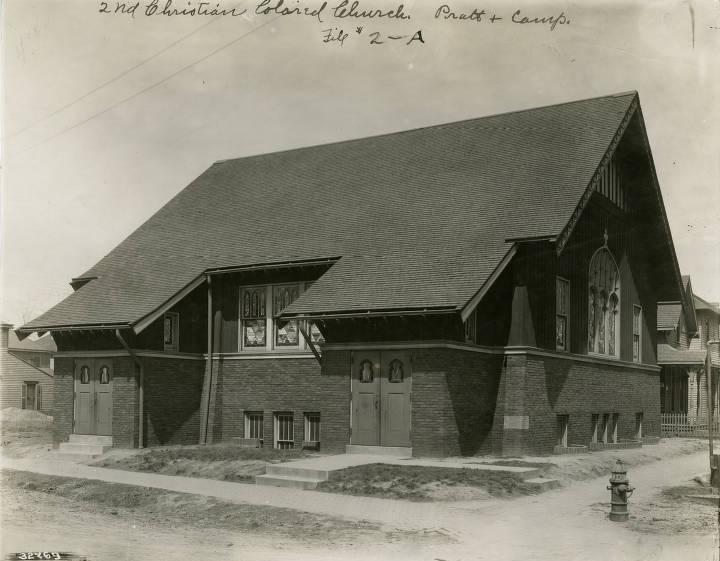
African American Christian Church established
The congregation receives its first full-time minister in 1867 and later becomes known as Second Christian Church, the city’s first African American Christian Church (Disciples of Christ) congregation. It changes its name to Light of the World Christian Church in 1984.
Pictured: Second Christian Church, 1913
Credit: Bass Photo Co Collection, Indiana Historical Society
View Source
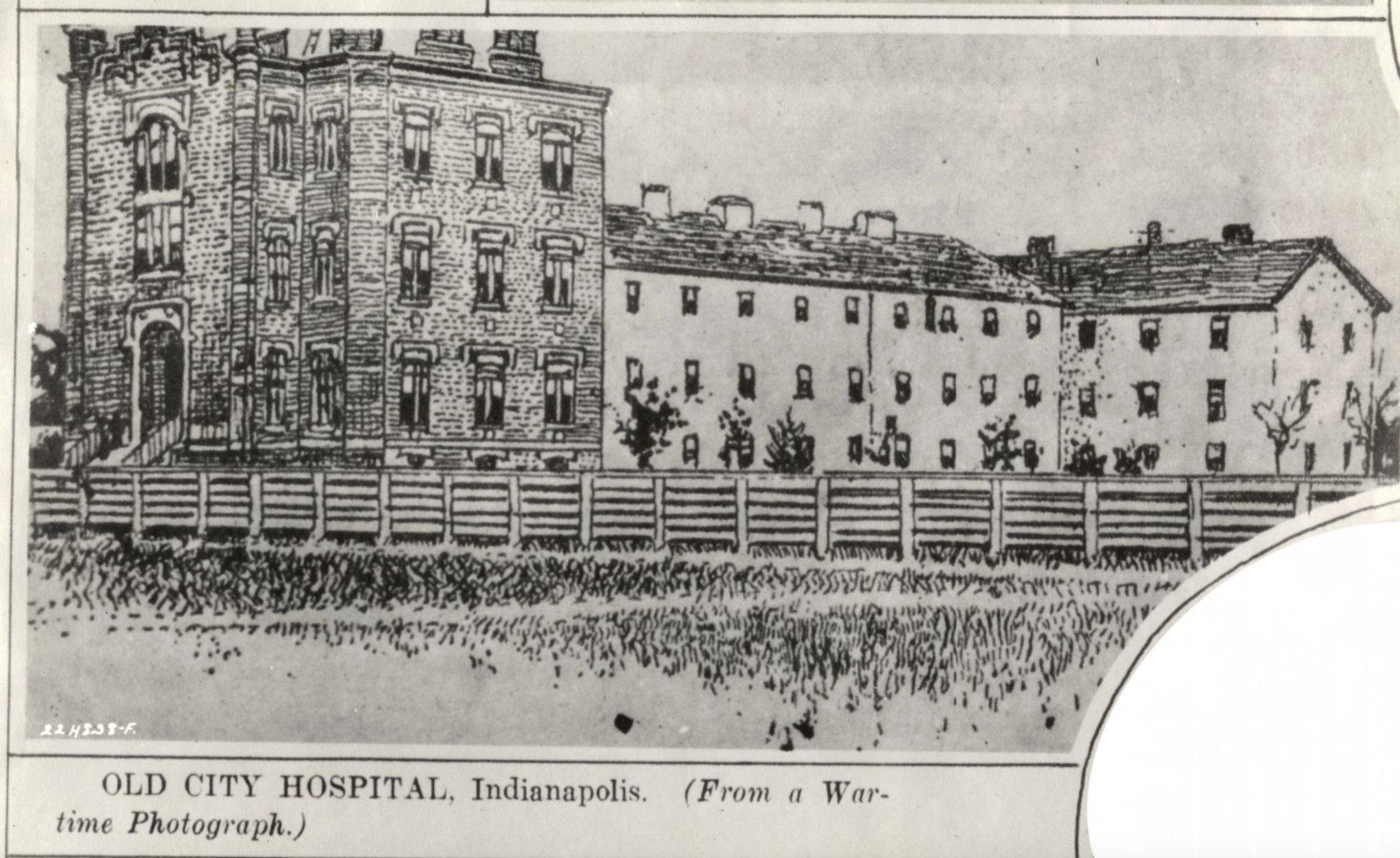
Indianapolis City Hospital opens as a 75-bed charity hospital
The City Hospital officially opens in 1859 as a Civil War military hospital. At the war’s end, the federal government gives the hospital to Indianapolis.
Pictured: Old City Hospital, ca. 1860s
Credit: Indiana Historical Society View Source
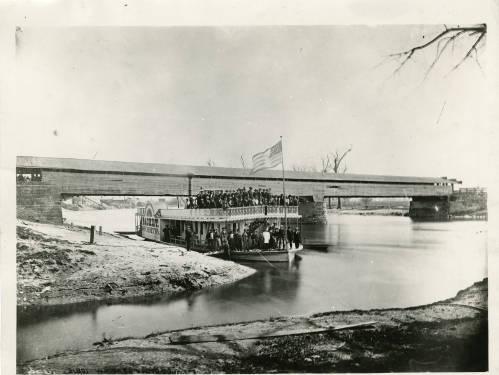
The Governor Morton steamboat sinks
The Indianapolis and White River Steamboat Company launched the Governor Morton on July first. The steamboat made several trial trips up the White River but eventually sank at its moorings.
Pictured: Steamboat “Governor Morton” near West Washington Street Bridge, ca. 1860s
Credit: Bass Photo Co Collection, Indiana Historical Society
View Source
Governors Circle renamed Circle Park
The City Common Council orders the Circle to be regraded, benches and sidewalks added, and renamed Circle Park.
Indianapolis Home for Friendless Women organizes
Jane Chambers McKinney Graydon and Catharine Merrill incorporate the organization in February 1867 as a place to care for orphans, homeless women, and widows.
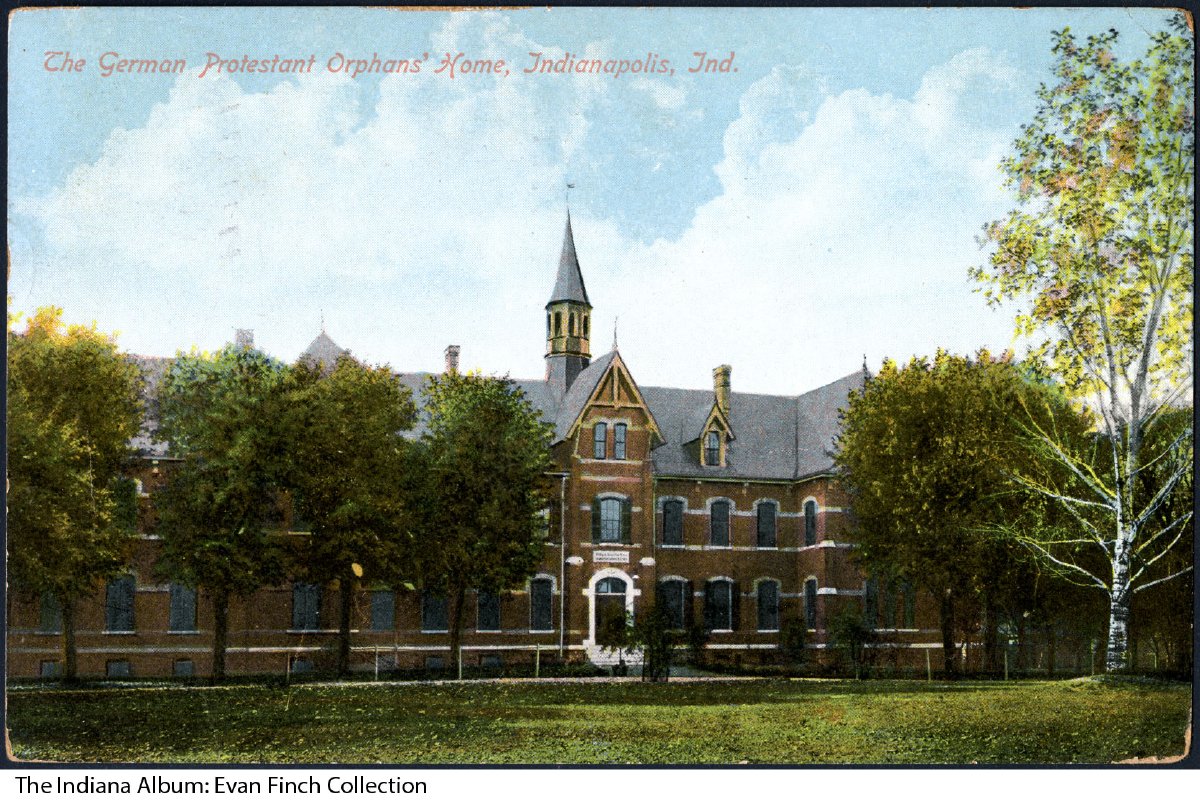
General German Protestant Orphan Home opens
The German General Protestant Orphan Association (later Pleasant Run Children’s Home) is founded by the Germania Lodge Number 3 after visiting a similar home in Cincinnati, Ohio. The home cares for children orphaned by the Civil War.
Pictured: Postcard of the German Protestant Orphans’ Home, ca. 1910
Credit: The Indiana Album: Evan Finch Collection View Source
Two amateur baseball clubs from Indianapolis play the first baseball game in the city
Two amateur clubs from Indianapolis share a doubleheader on the Camp Burnside grounds with a team from Lafayette, as well as with the Washington Nationals.
The Maennerchor hosts the National Saengerfest
The North American Saengerbund’s 15th National Saengerfest begins in Indianapolis. It lasts for four days and includes three concerts, a parade, a grand ball, and a picnic.
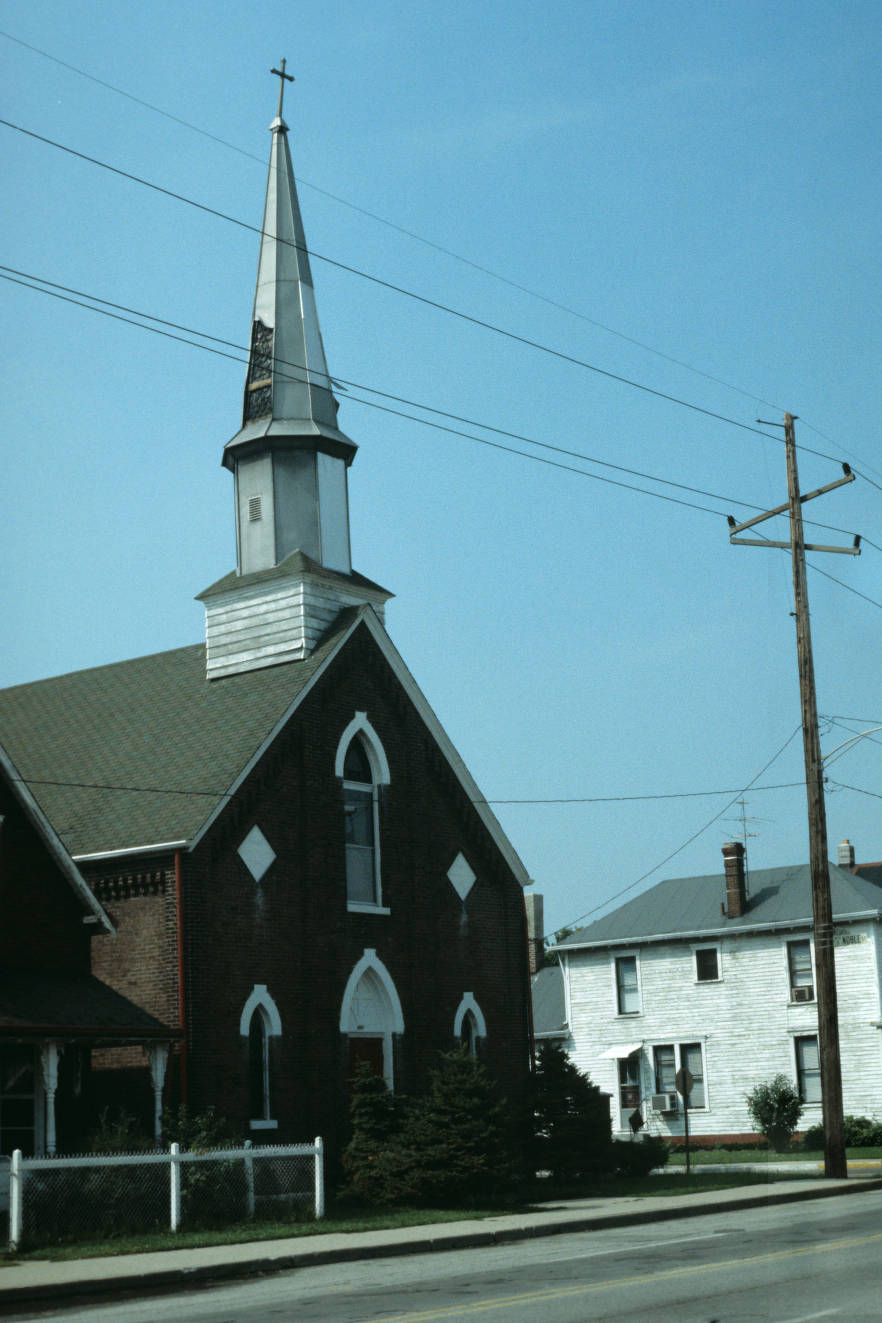
Danish Evangelical Lutheran Church is established
Forty-two Danish immigrants begin what may be the nation’s first Danish Lutheran congregation on the city’s south side, at 701 East McCarty Street. The congregation, later known as First Trinity Lutheran Church, moves to 5321 E. 42nd Street in 1952. The original building is now home to the Church of Christ Apostolic Faith.
Pictured: Trinity Danish Evangelical Lutheran Church in 1978.
Credit: Indiana University Indianapolis View Source
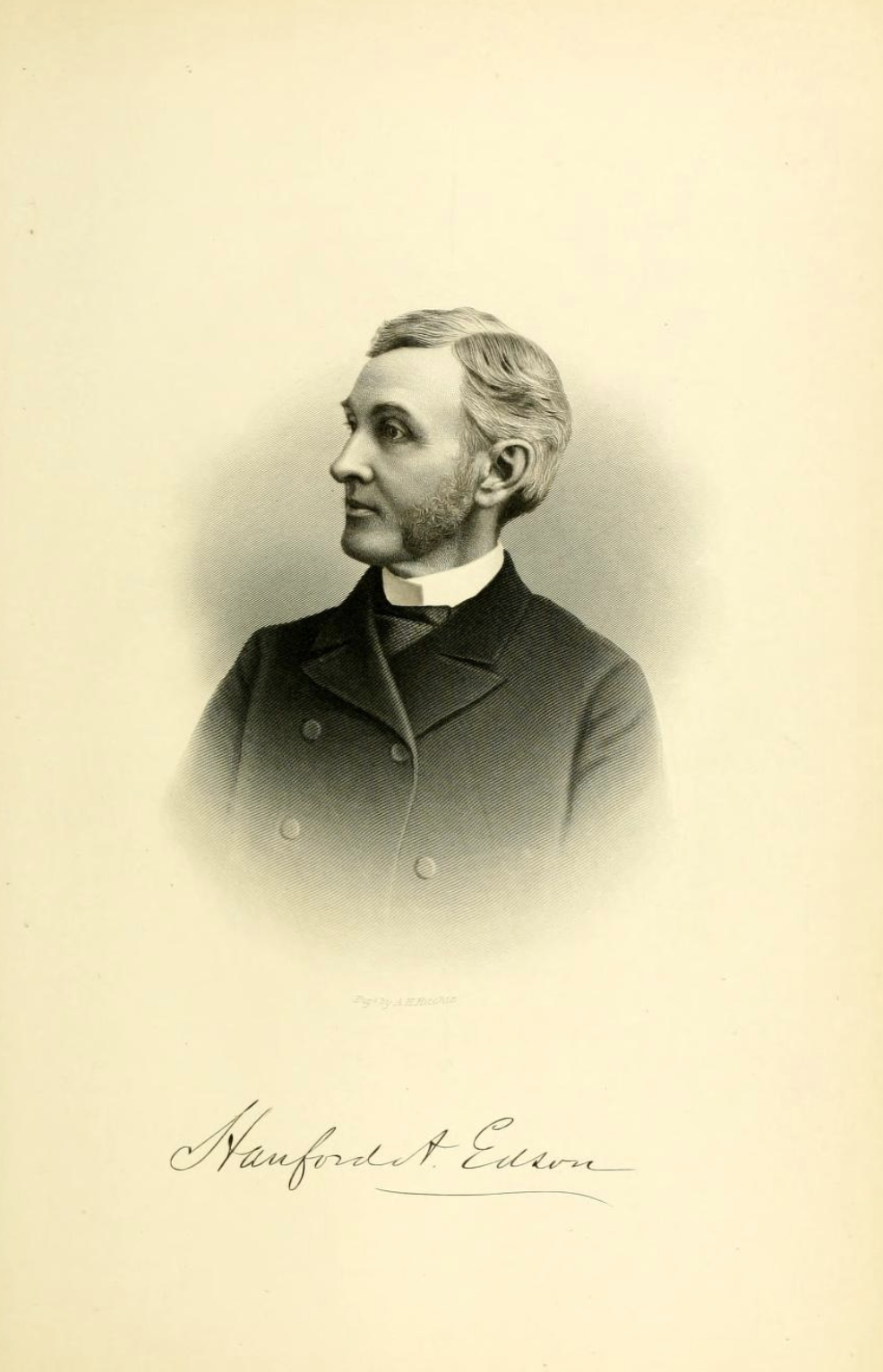
Rev. Hanford A. Edson preaches a sermon on the need for a public library
Edson, the pastor of Second Presbyterian Church, argues that a public library will provide culture and values for residents and commercial growth for the city. His sermon triggers a public library campaign.
Pictured: Rev. Hanford A. Edson, ca. 1880s
Credit: Internet Archive
View Source
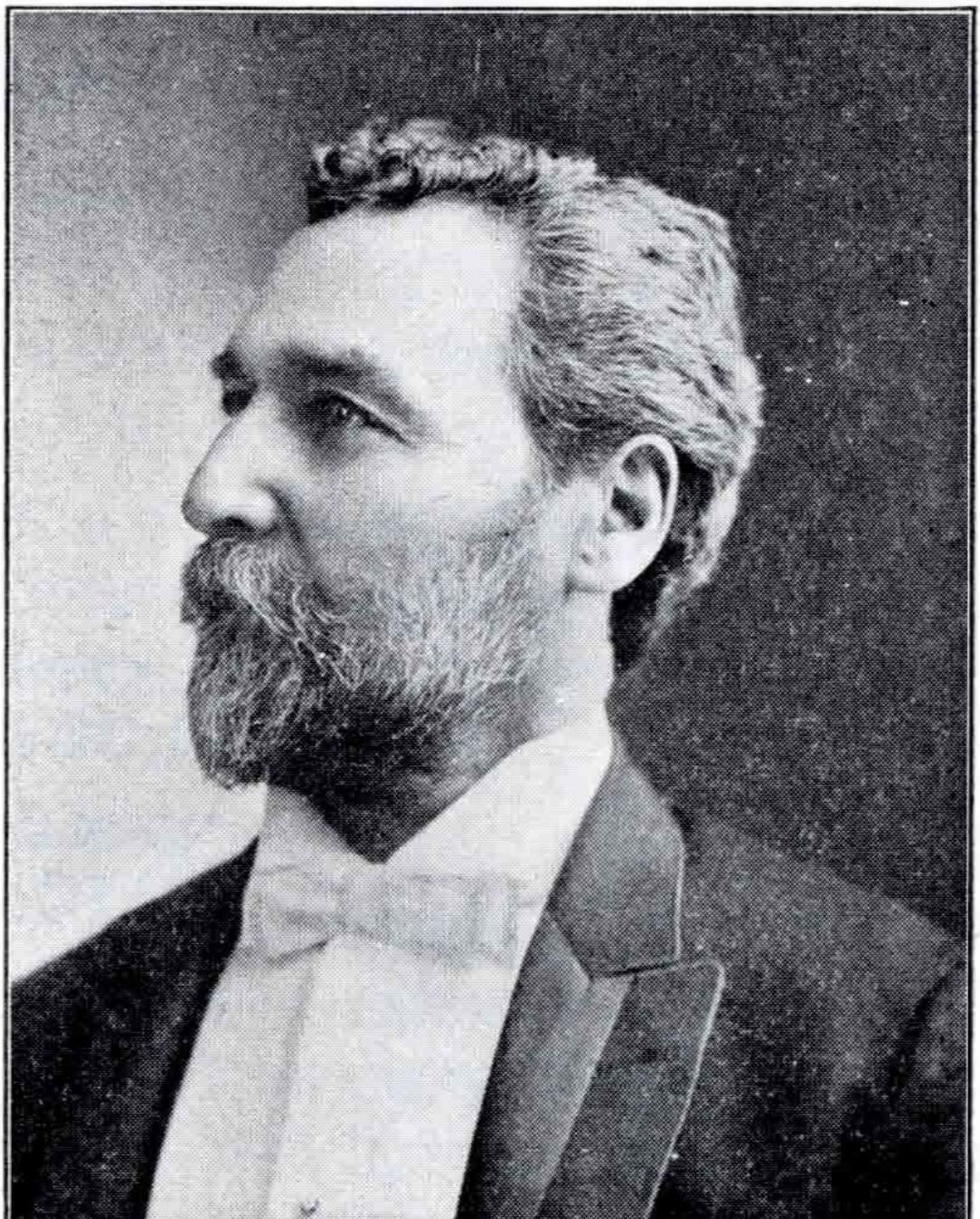
Leon Kahn is first Jewish resident on the Indianapolis Common Council
Kahn becomes the first Jewish resident to take a seat on the Common Council and serves for eight years, until 1881.
Pictured: Leon Kahn, n.d.
Credit: Indiana State Library
View Source
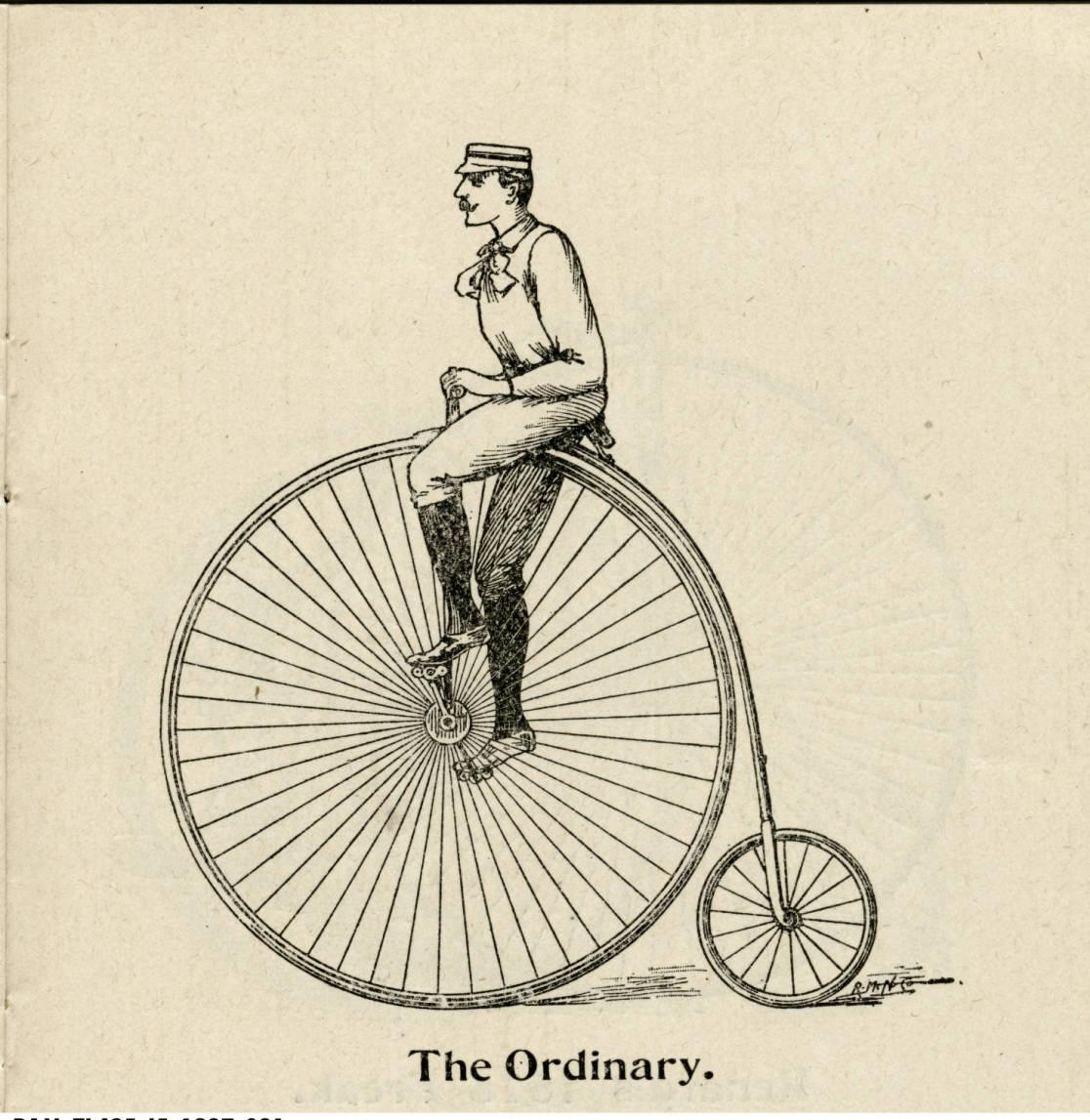
Earliest appearance of the bicycle
Demonstrations of the high-wheel “Ordinary” take place on the Circle. The intent is to popularize cycling as a sport among men, despite the risks of flying headfirst over the handlebars.
Pictured: The bicycle first made its appearance in Indianapolis in 1869 at a demonstration downtown on Monument Circle.
Credit: Indiana Historical Society
View Source
North Western Christian University appoints the second female professor in the U.S.
Ovid Butler endows the chair in the English Department in memory of his daughter Demia, dictating the chair be given to a woman. The position is filled by Catharine Merrill. North Western Christian University is renamed Butler University in 1877.
Indiana adopts separate but equal public schools for African American children
Indiana adopts separate but equal public schools for African American children.
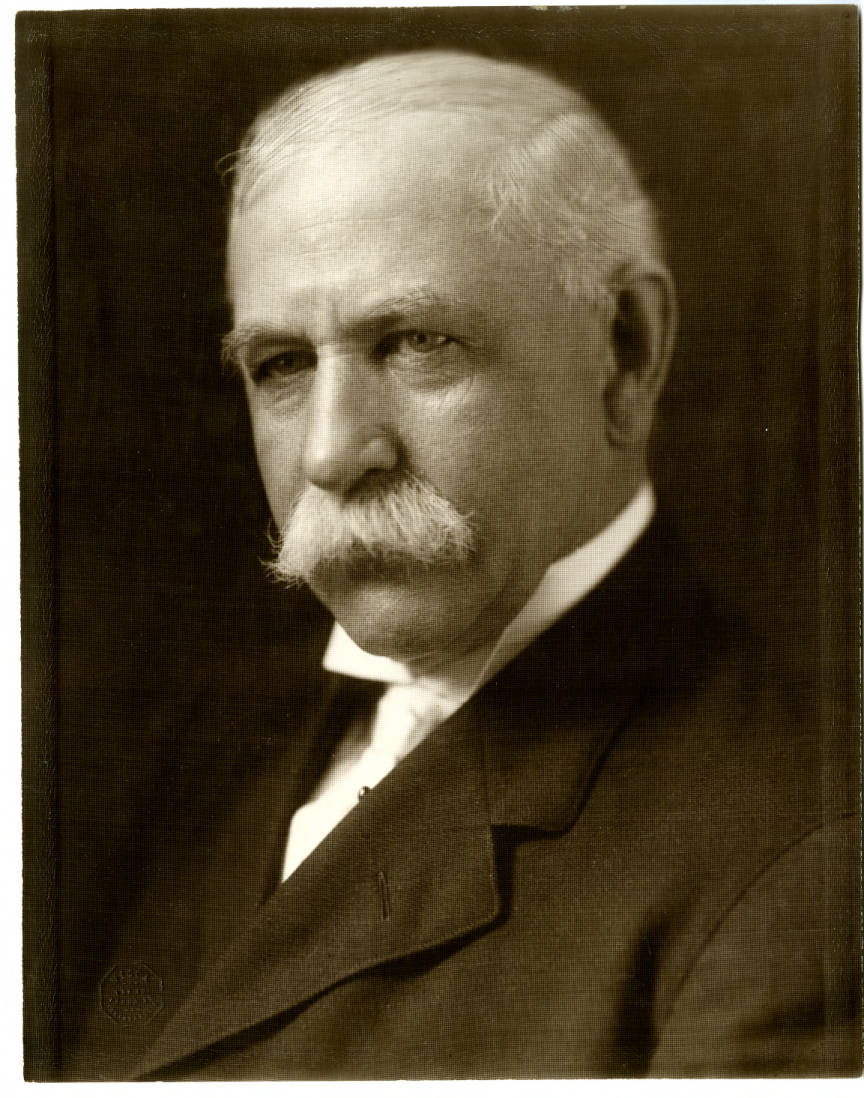
Reporter John Hampden Holliday establishes the Indianapolis News
Reporter John Hampden Holliday establishes the Indianapolis News
Credit: General photograph collection, Rare Books and Manuscripts, Indiana State LibraryView Source
Number of paved streets and sidewalks increases
Indianapolis has nine miles of paved streets, 18 miles of paved sidewalks, three miles of streets illuminated by gas lights, and a sewage system.
Population: 48,244
The population in 1870 totals 48,244, the majority of which are recorded as white (45,309).
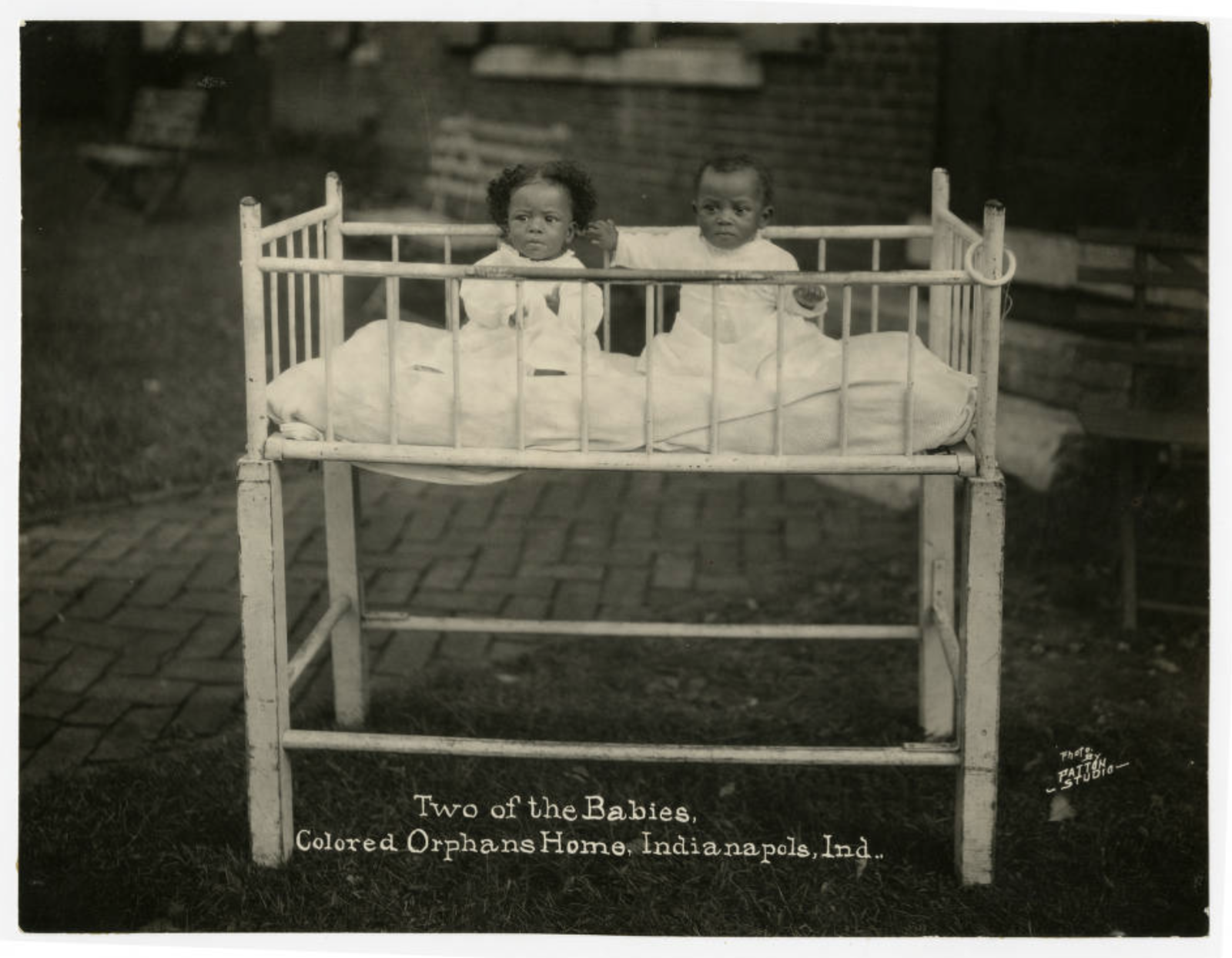
Quakers establish Indianapolis Asylum for Friendless Colored Children
The local Orthodox Friends Meeting, the main branch of the Society of Friends (Quakers), founds the institution which is the only orphanage in the state and one of only a handful in the country to care for African American children.
Pictured: Infants in a crib outside the Indianapolis Asylum for Friendless Colored Children, ca. 1923
Credit: General Photograph Collection, Rare Books and Manuscripts, Indiana State Library View Source
Enos B. Reed starts publication of The People
People is a Sunday weekly dedicated to politics, literature, and society. It is the first Indianapolis newspaper to use woodcut illustrations and becomes known for sensationalized crime and scandal stories.
Town of Nora established
Swedish immigrant Peter Lawson founds the town of Nora, originally centered near current Westfield Boulevard and 86th Street.
Samuel A. Elbert becomes the first African American in Indiana to receive a medical degree
Admitted to Indiana Medical College in 1869, Elbert receives his degree in 1871 and joins the Indianapolis Board of Health the following year.
Collection of climate data begins
The city installs the first weather instruments used to collect climate data at Blackford’s Block at the southeast corner of Washington and Meridian streets.
Water Works Company begins supplying consumers
Chartered the previous year by the city council and predecessor of Indianapolis Water Company. Drawing from two large wells, the company reports 439 customers within a year.
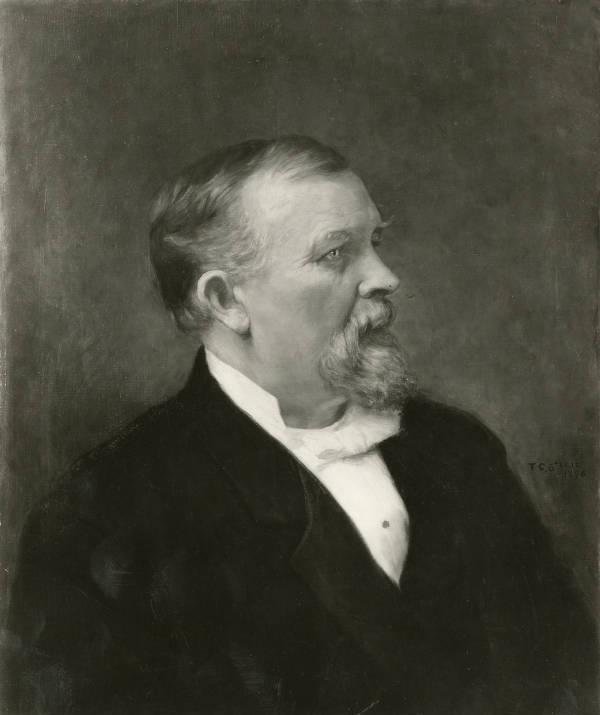
Lyman S. Ayres purchases controlling interest in the N. R. Smith & Company dry goods store
The Indianapolis News announces that the name of the firm will change to N. R. Smith & Ayres and that its store, the Trade Palace, will resume business the next day. Ayres gains full control in 1874.
Pictured: Lyman S. Ayres, ca. 1890s
Credit: Indiana Historical Society View Source
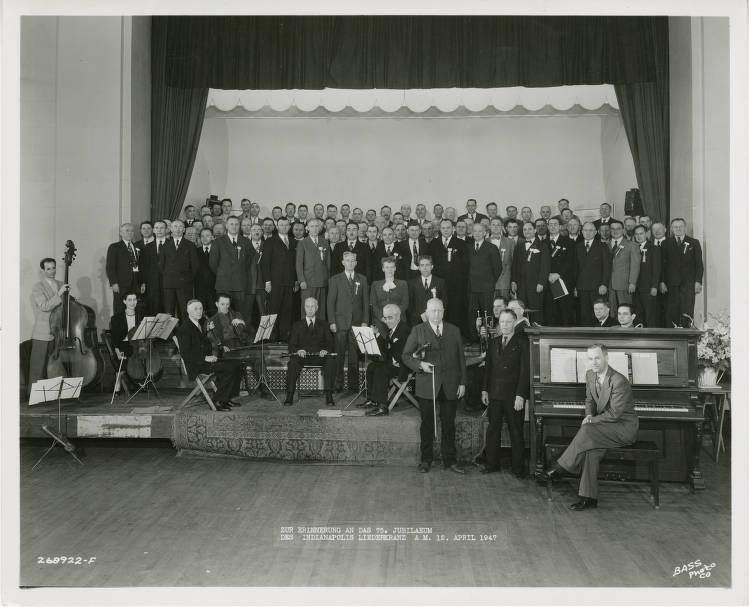
Liederkranz forms
The merger of the male singing sections of two German secret fraternal organizations, the Druiden Lodge and the Rothmaenner (“Red Men”) creates the Indianapolis Liederkranz.
Pictured: Indianapolis Liederkranz (dance band), 1947
Credit: Bass Photo Co Collection, Indiana Historical Society View Source
Indiana Reformatory Institution for Women and Girls opens
Founded in 1869, the institution finally opens with the transfer of 17 women who are incarcerated at the Indiana State Prison in Jeffersonville. The facility is the first of its kind in the U.S.
House of the Good Shepherd opens
The Sisters of the Good Shepherd opens the House of the Good Shepherd on Raymond Street west of Meridian Street. The organization is a home for “erring” women and girls.
Indianapolis Library opens
Located in one room of the high school building at the northeast corner of Pennsylvania and Michigan streets, the library begins with 12,790 volumes ready for 500 registered borrowers.
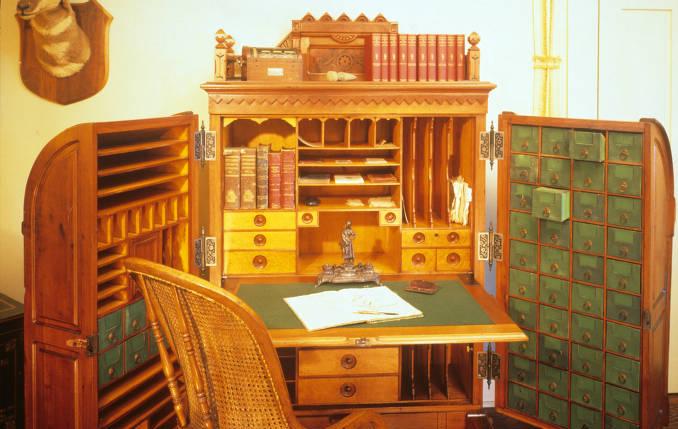
Wooton & Company receives U.S. patent for elaborate desk
Known as the “King of Desks” following the 1876 Centennial Exhibition, such influential figures as Ulysses S. Grant, Joseph Pulitzer, and John D. Rockefeller own Wooton desks. It remains in production until 1898.
Pictured: Wooten Desk, n.d.
Credit: Indiana Historic Architecture Slide Collection, Indiana Landmarks
View Source
North Western Christian University moves to Irvington
North Western Christian University moves to the newly incorporated town of Irvington. Two years later its name changes to Butler University in honor of its longtime leader and benefactor Ovid Butler.
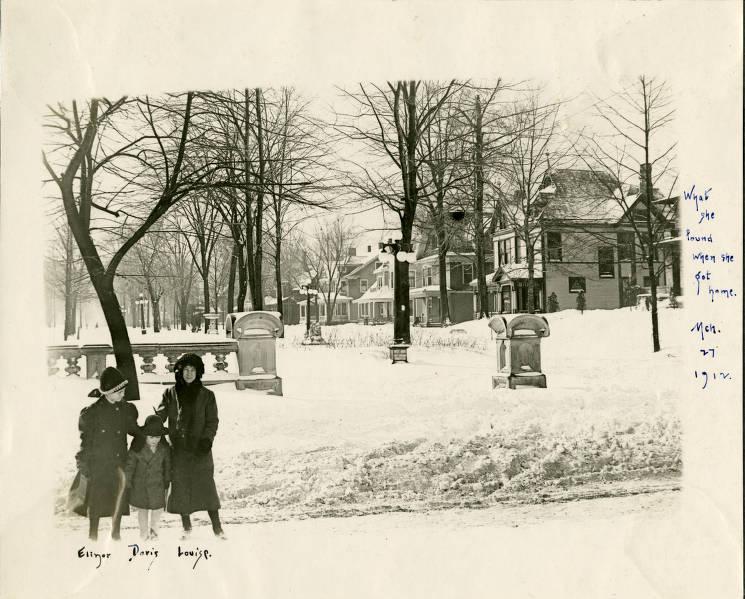
Woodruff Place incorporates as a town
James O. Woodruff leads a successful petition to make Woodruff Place a town. Eventually, residents contract with Indianapolis for police and fire services.
Pictured: Woodruff Place, 1912
Credit: Indiana Historical Society
View Source
Indianapolis fields its own professional baseball team
The Indianapolis Blues forms in summer 1876. The team joins the organized International League the next season.
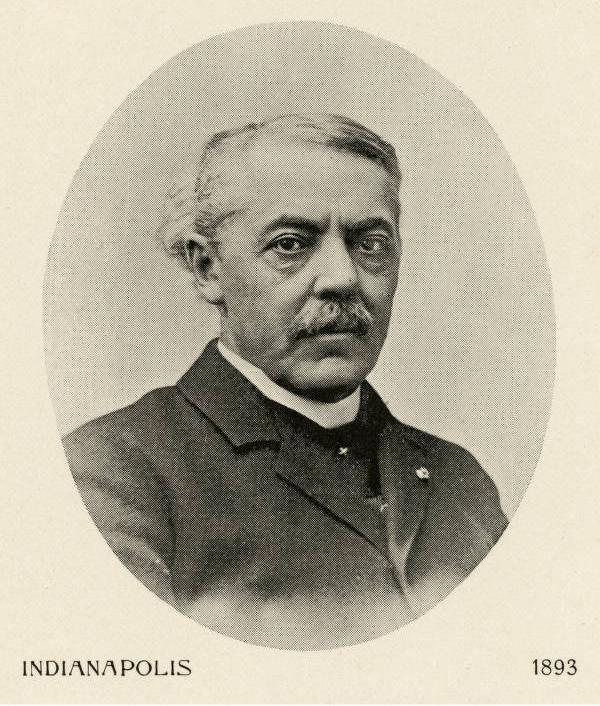
Col. Eli Lilly begins a pharmaceutical manufactory on Pearl Street
Lilly opens a pharmaceutical laboratory in a small two-story building just off Washington Street. His pills, elixirs, and syrups soon begin to sell well in the city and surrounding towns.
Pictured:
Credit: Indiana Historical Society View Source
Indianapolis celebrates the nation’s centennial
The community celebrates the occasion with a large parade, elaborate floats, staged tableaux, commemorative speeches, and balloon lifts.
First telephones installed
The state’s first telephone company, Indiana District Telephone Company, organizes in Indianapolis. Wales & Company, a coal supply firm, becomes the first location to have telephones installed.
Indianapolis Literary Club organizes to advance social, literary, and aesthetic culture
Six men establish the Indianapolis Literary Club . They model the club after the Chicago and Cincinnati men’s literary clubs and the Indianapolis Woman’s Club.
American United Life Insurance established
The Knights of Pythias lodge creates an insurance program, which becomes American United Life Insurance, to serve its current members and to attract new members.
Stockyards open
The stockyards, located along Kentucky Avenue and the Belt Line Railroad just west of the White River, include 12 acres. Before its establishment, meatpackers and retail butchers traded livestock through private yards.
Indianapolis Matinee Musicale founded
Nine young women gather in a parlor to spend a musical afternoon together. They establish the Indianapolis Matinee Musicale, an organization for the study and performance of music.
Indianapolis Equal Suffrage Society established
Local women May Wright Sewall, Laura Donnan, and Zerelda Wallace form their own suffrage association. The society would later be extended into a statewide organization.
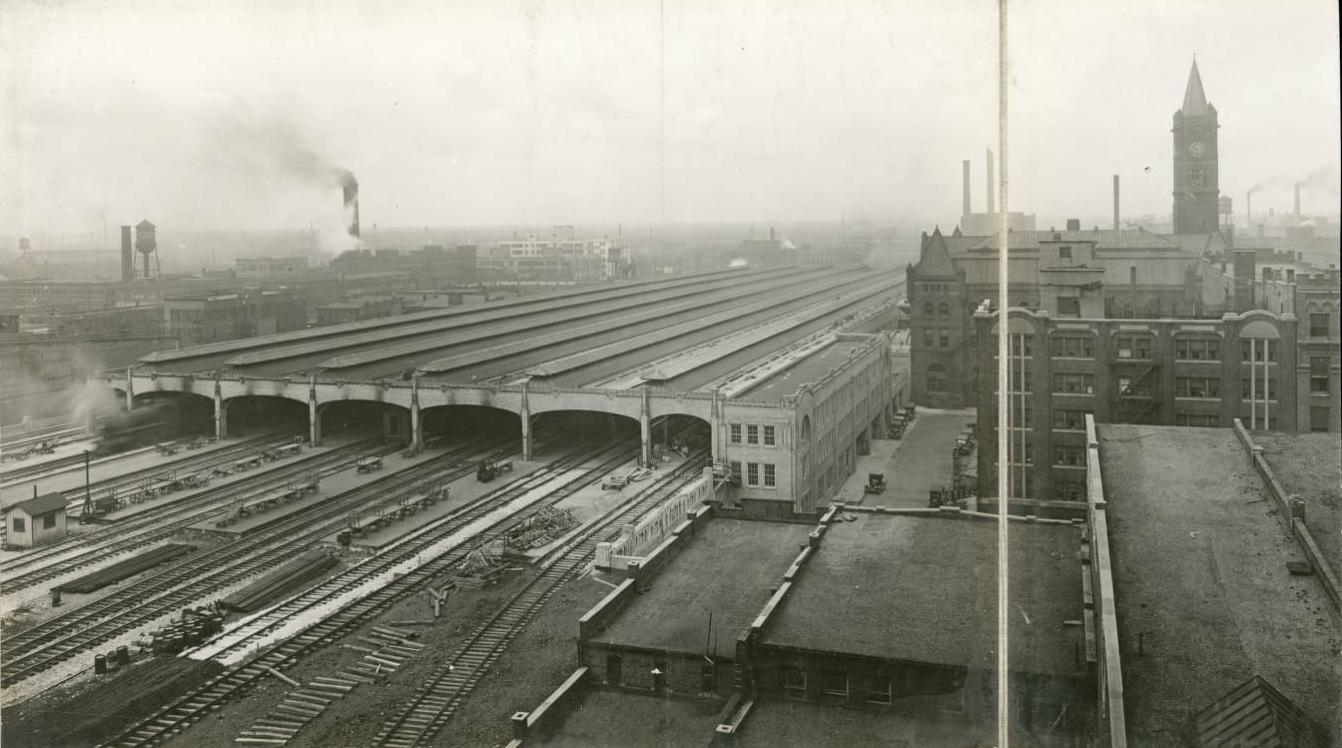
Belt Line Railroad construction completed
Begun in 1873, the 14-mile track completely encircles the city to prevent congestion at Union Station and promote local industrial development.
Pictured: Birds-eye view of Union Station trainsheds, 1921
Credit: Indiana Historical Society View Source
Indiana Tribüne begins publication
Louis D. Hild establishes a Republican, German-language newspaper. The four-page weekly has a circulation of 800.
Bishop Chatard arrives in Indianapolis
Roman Catholic Bishop Francis Chatard moves the historic seat of his diocese from Vincennes to Indianapolis. He sets up residence at St. John’s Church and begins the search for land for a cathedral. In 1961, a new parochial school, Chatard High School, is named for him.
The Indianapolis Bar Assocation founded
Forty prominent Indianapolis attorneys, including future U.S. President Benjamin Harrison and Vice President Charles W. Fairbanks create the organization. Napolean B. Taylor serves as its first president
First telephone exchange established
E. T. and James Gilliland, local manufacturers of telephone equipment, establish Indiana’s first telephone exchange in Indianapolis in March 1879 under the Bell patents.
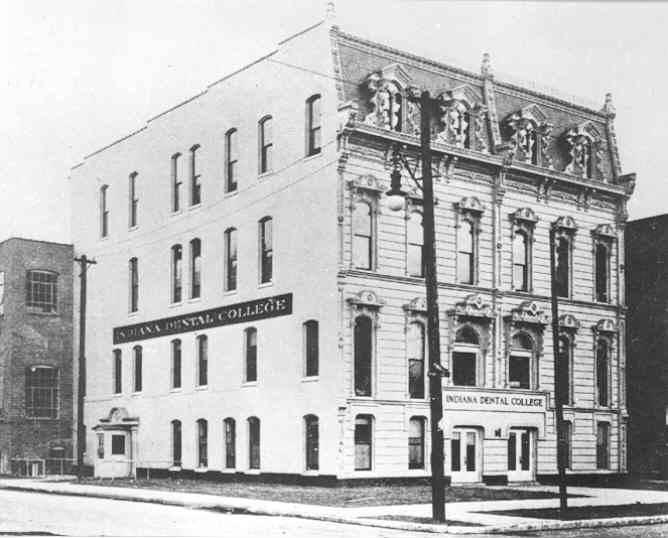
Indiana Dental College organizes
A committee of Indianapolis dentists sponsors the college. The same group of dentists also sponsors the Indiana Board of Dental Examiners.
Pictured: Dental School, n.d.
Credit: Indiana University Indianapolis
View Source
Indianapolis Leader begins publication
In August, the Bagby brothers—Benjamin, James, and Robert—establish the Indianapolis Leader, a four-page weekly newspaper for the city’s Black citizens. It is the first African-American paper in Indianapolis.
Charity Organization Society forms
Rev. Oscar C. McCulloch of Plymouth Church instigates the establishment of the Charity Organization Society. The organization is devoted to providing relief for the poor.
City reaches 211 miles of streets
The city lists 45 miles paved with cobblestone and five miles covered with wood. The remainder is paved with boulders, gravel, or unimproved. Forty miles of streets are illuminated.
Population: 75,056
The population in 1880 totals 75,056, the majority of which are recorded as white (68,538).
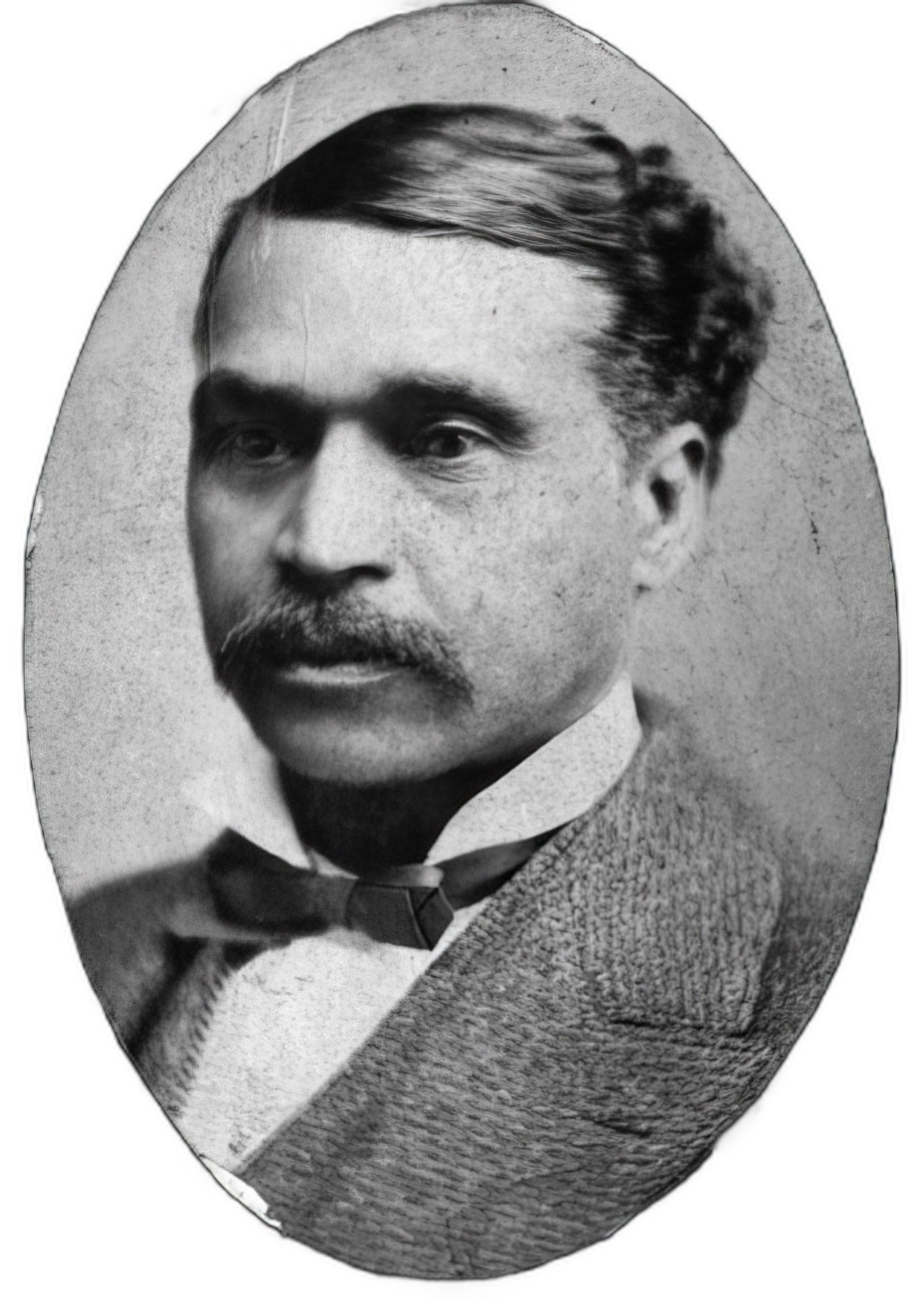
First Black man elected to General Assembly
Known in Indianapolis for his public speaking on civil rights, James S. Hinton is the first Black man elected to represent Marion County in the State House of Representatives.
Pictured: James S. Hinton, n.d.
Credit: Indiana State Library View Source
English Opera House opens
Hamlet is the theater’s premiere production. The first section of the hotel, constructed around the theater, follows in 1884 and a second section in 1896.
Daughters of Charity of the St. Vincent de Paul Society comes to Indianapolis
Bishop Francis Silas Chartard invites the religious order to Indianapolis to establish a hospital. Four sisters set up St. Vincent Infirmary in a three-story house next to St. Joseph Church.
Electric service comes to Indianapolis
The Indianapolis Brush Electric and Power Company, the forerunner to Indianapolis Power and Light Company, becomes the first company to bring electric service to the city.
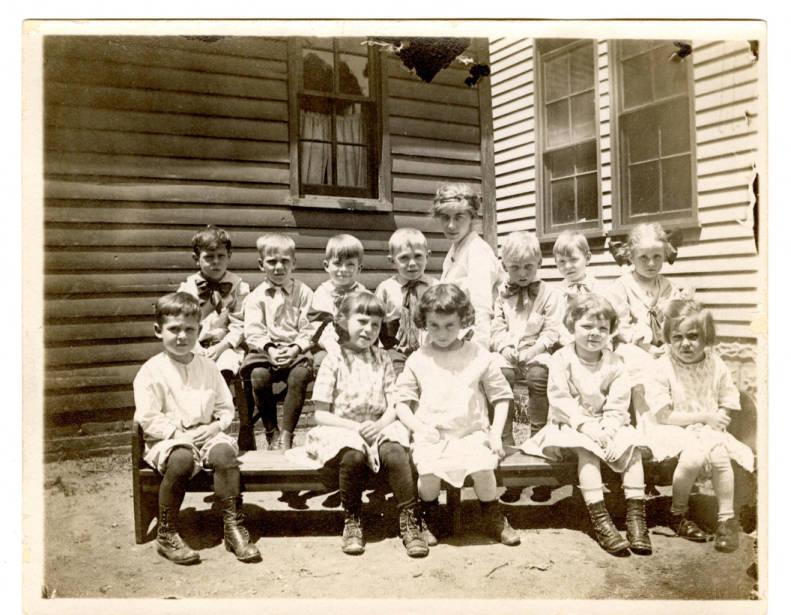
Eliza A. Blaker founds the Indianapolis Free Kindergarten Society
Eliza A. Blaker, a crusader for early childhood education, organizes a free kindergarten in September 1882 to aid the community’s charitable efforts toward its underprivileged children. She becomes its first director.
Pictured: Indianapolis free kindergarten photographs, ca. 1900
Credit: Indiana kindergarten photographs, Rare Books and Manuscripts, Indiana State Library
View Source
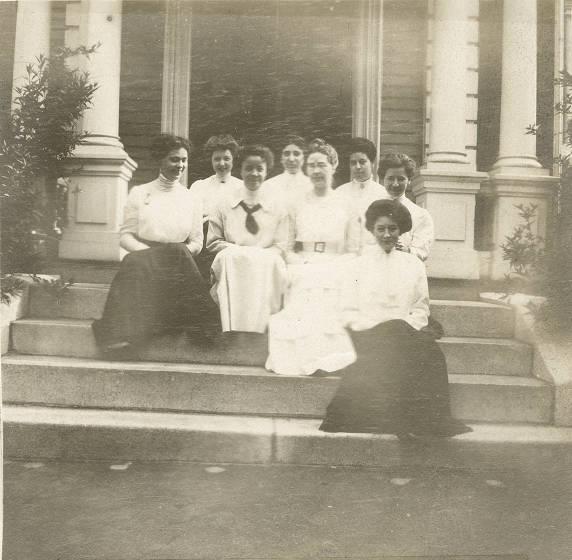
Classical School for Girls opens
May Wright Sewall opens the Classical School for Girls at the southeast corner of Pennsylvania and St. Joseph streets in September 1882. The preparatory school continues until 1907.
Pictured: Friends at Girls Classical School, ca. 1910
Credit: Indiana Historical Society
View Source
Indianapolis Colored World begins publication
Edward E. Cooper and Edwin F. Horn launch the Democratic newspaper, which covers national and local news and reports on the conditions of African American people nationwide.
First nurse training program
Flower Mission Training School for Nurses supplies nursing care for the Indianapolis City Hospital and provides nursing care for the community through a system of district nursing starting in June 1883.
Christ Church Cathedral Choir established
First comprised of only men and boys, the choir through the years earns an international reputation for musical excellence.
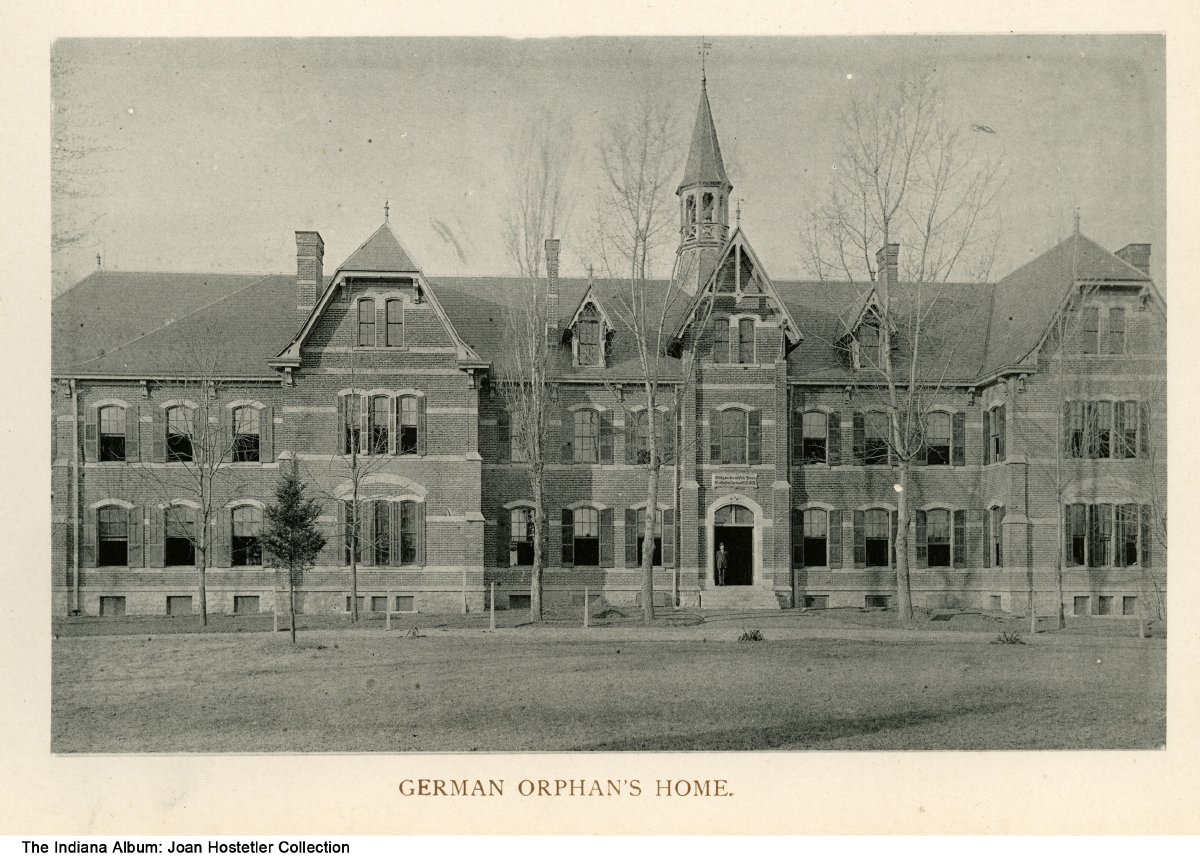
Lutheran Child and Family Services established
Members of the Bible society from St. Paul and Trinity Lutheran churches establish the Evangelische Lutherische Waisenhaus Gesellschaft, an asylum for orphans and aged people.
Pictured: German Orphan’s Home (later Lutheran Child and Family Services), ca. 1885
Credit: The Indiana Album: Joan Hostetler Collection
View Source
Art Association of Indianapolis mounts its first exhibition
Shortly after the organization is incorporated in October, the association holds an exhibition of 453 works by 137 artists. It runs for three weeks at the English Opera House and establishes the Art Association on the city’s cultural scene.
Indiana’s first intercollegiate football game
Butler and DePauw play against each other in the state’s first football game between universities which is held at the 7th Street Baseball Grounds. Butler wins four goals to one.
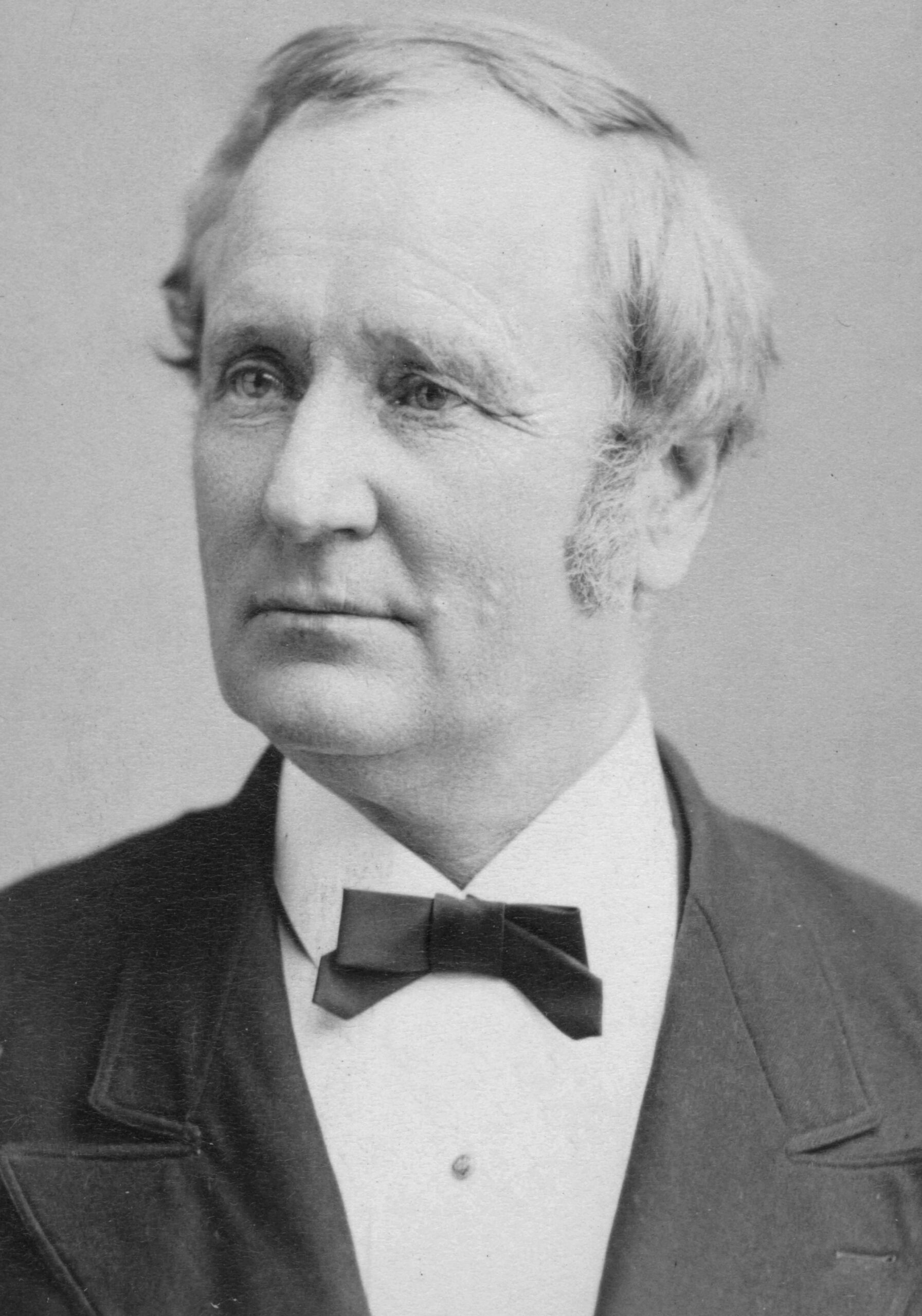
Thomas A. Hendricks elected U.S. vice president
An Indianapolis resident, Hendricks wins election as vice president on a ticket headed by Grover Cleveland, who becomes the nation’s 22nd president. The victory is the first by the Democrats since the Civil War. Nine months into his term, Hendricks dies at his home in Indianapolis.
Pictured: Thomas Andrews Hendricks, ca. 1875
Credit: Jose Mora, Public domain, via Wikimedia CommonsView Source
Saenger chor created
German tradesmen form the society, dedicated to the labor reform movement. The society draws members together in private homes to sing songs of solidarity and justice for the working classes.
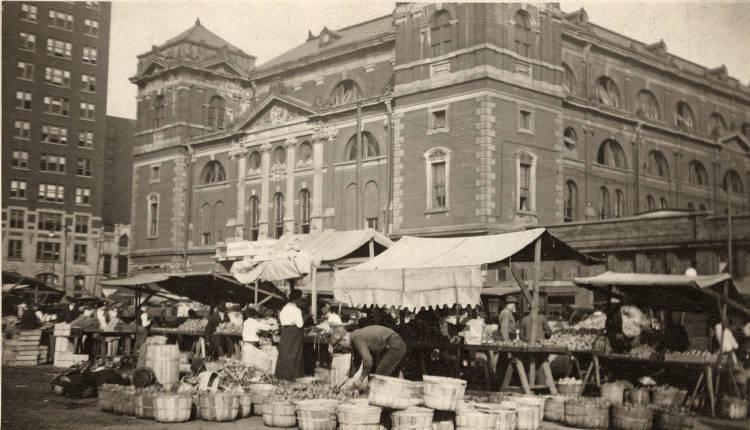
City Market opens
The market occupies the lot originally designated for this purpose in the 1821 plat of Indianapolis. On market day, vendors fill the building and street with their carts and stalls.
Pictured: Tomlinson Hall at Market Time, ca. 1920s
Credit: Indiana Historical Society
View Source
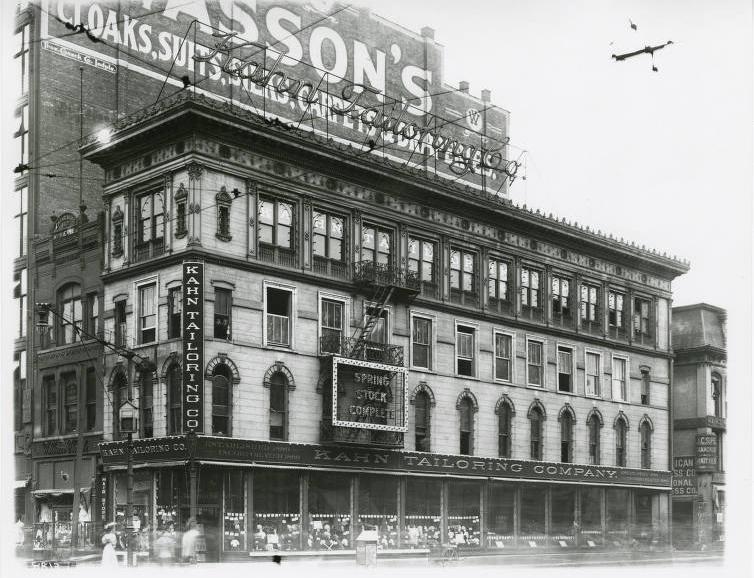
Kahn Tailoring established
Henry Kahn, the son of Alsatian Jewish immigrants, opens a small tailor shop at 14 East Washington Street. Kahn Tailoring becomes a principal manufacturer of uniforms for the U.S. military during World Wars I and II.
Pictured: The Kahn Tailoring Company, 1907
Credit: W.H. Bass Photo Company Collection, Indiana Historical Society View Source
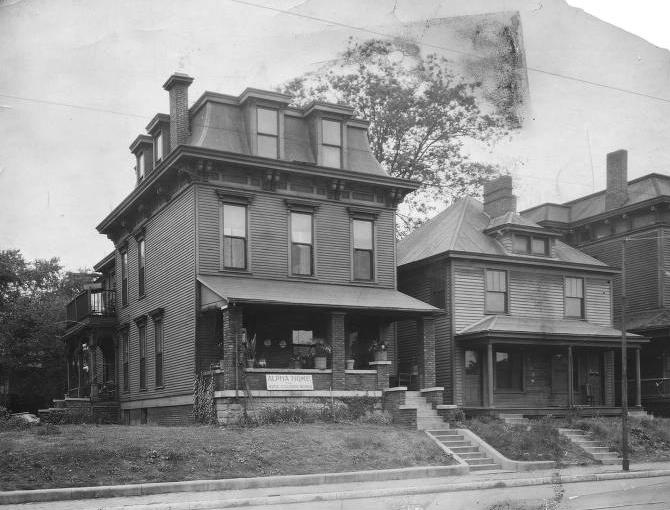
Alpha Home for Aged Colored Women opens
Founded by Eliza Goff, a housekeeper and former enslaved person, the home cares for elderly and infirm African American women with no families or means of caring for themselves.
Pictured: Alpha Home, 1842-1844 N. Senate Ave, ca. 1930
Credit: Indianapolis Recorder Collection, Indiana Historical Society View Source
First Labor Day parade and celebration
The Knights of Labor collaborate with independent trade unions to hold the city’s first Labor Day parade. An estimated 4,000 residents participate.
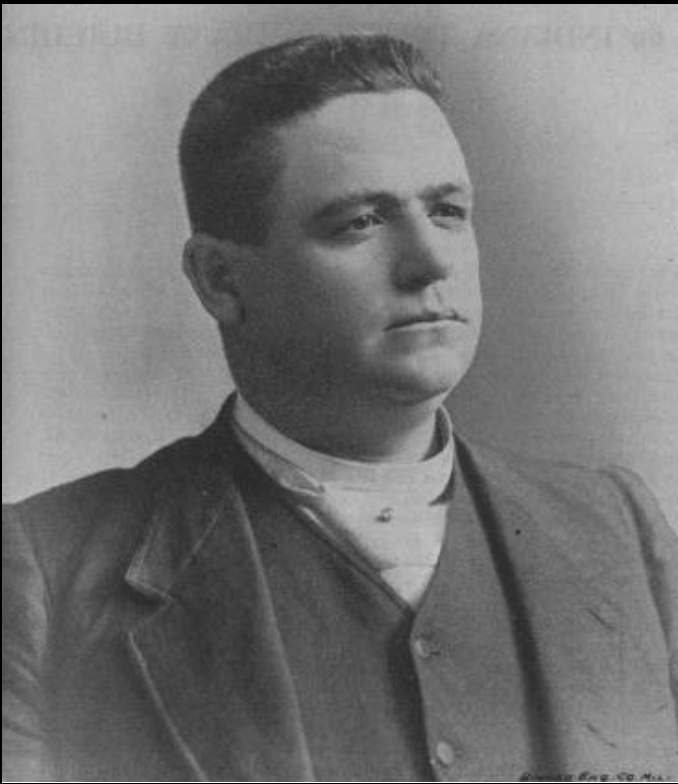
Democratic Party accused of election tampering
Following the municipal election, Democratic Party officials are accused of tampering with tally sheets to secure the election of the Democratic candidate for the criminal court judge. Several of the accused are convicted in 1888.
Credit: Athanatos via Find A GraveView Source
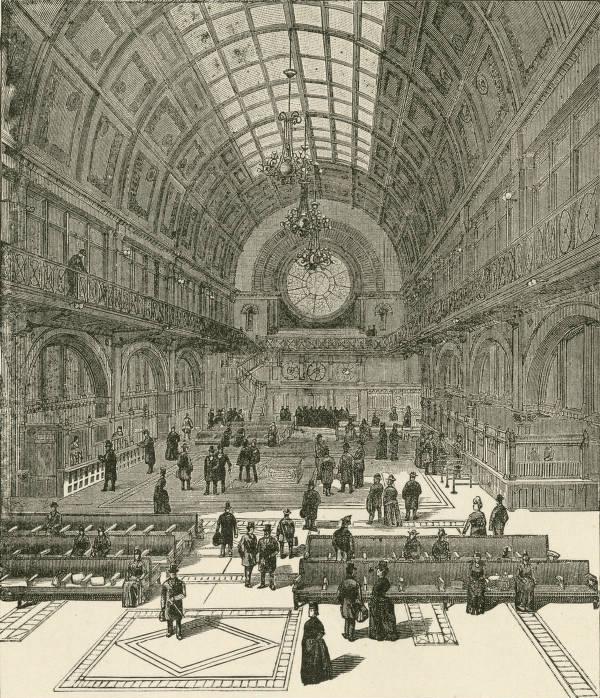
Construction on a new Indianapolis Union Station begins
Pittsburgh architect and engineer Thomas Rodd designs the new Union Station to replace the outmoded old structure. The new building is constructed at 39 Jackson Place.
Pictured: Union Station sketch from “The Industries of the City of Indianapolis” pamphlet of 1889.
Credit: Indiana Historical Society
View Source
The General Assembly begins its first session in the new State House
Designed by architects Edwin May and Adolph Scherrer, the new building consists of a central dome and rotunda, flanked by four-story wings within an enlarged State House grounds. Construction is completed by October 1888.
Jonathon W. Laughner opens Boston Confectionery
Laughner’s confectionery is later remodeled and renamed Laughner’s Dairy Lunch, becoming one of the first cafeteria-style restaurants in the Midwest.
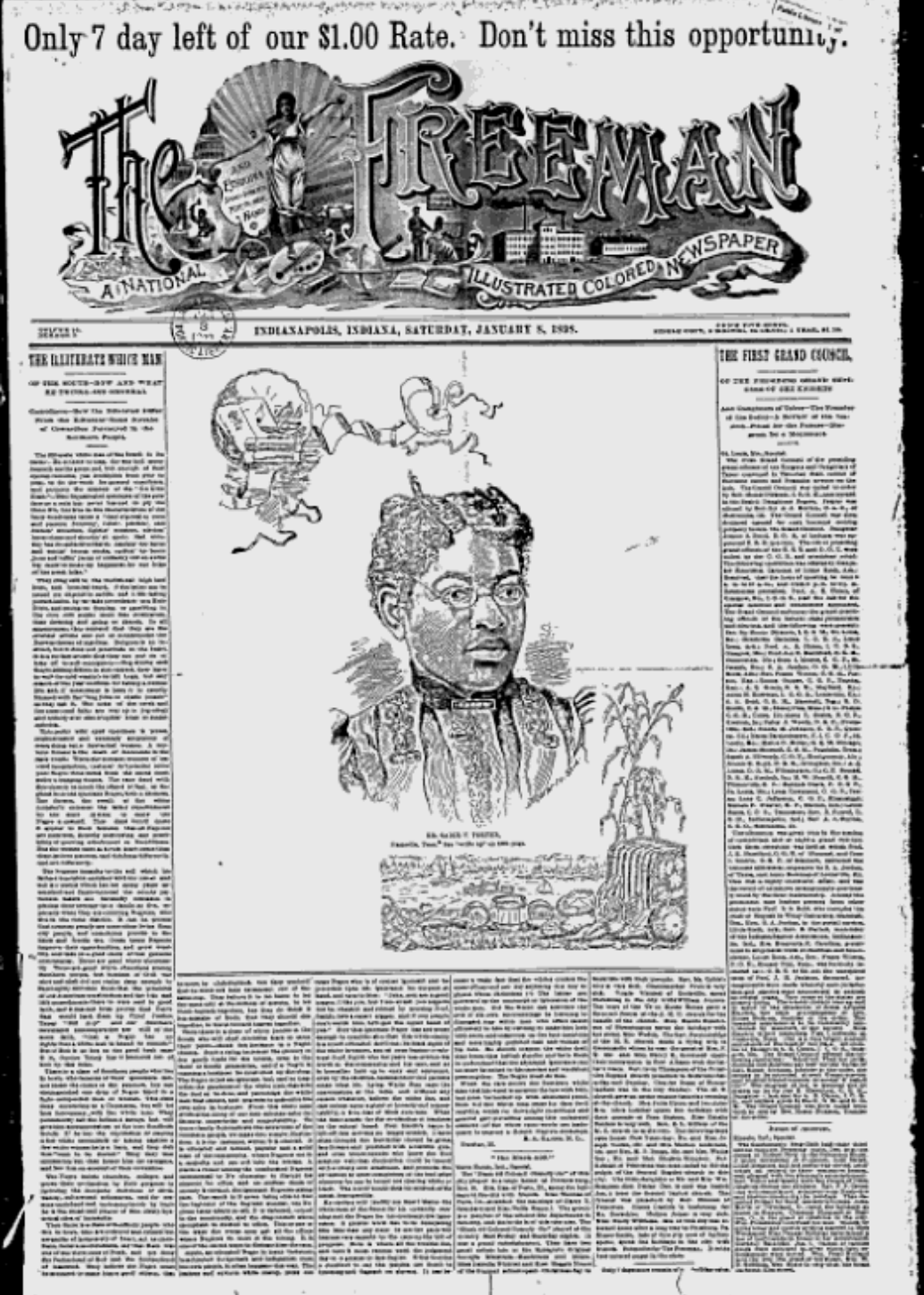
Freeman journal begins publication
Edward E. Cooper, formerly with the Indianapolis World, launches the Freeman, a Democratic-oriented publication, in July 1888. He claims it to be the only illustrated African American journal.
Pictured: The Freeman newspaper header, 1898
Credit: The Freeman
View Source

Construction begins on the Indiana State Soldiers and Sailors Monument
Construction officially begins on the Civil War Memorial using the design submitted by German architect Bruno Schmitz and funds that the General Assembly appropriated for this purpose in 1887.
Pictured: Soldiers and Sailors Monument, 1888
Credit: Indiana Historical Society
View Source
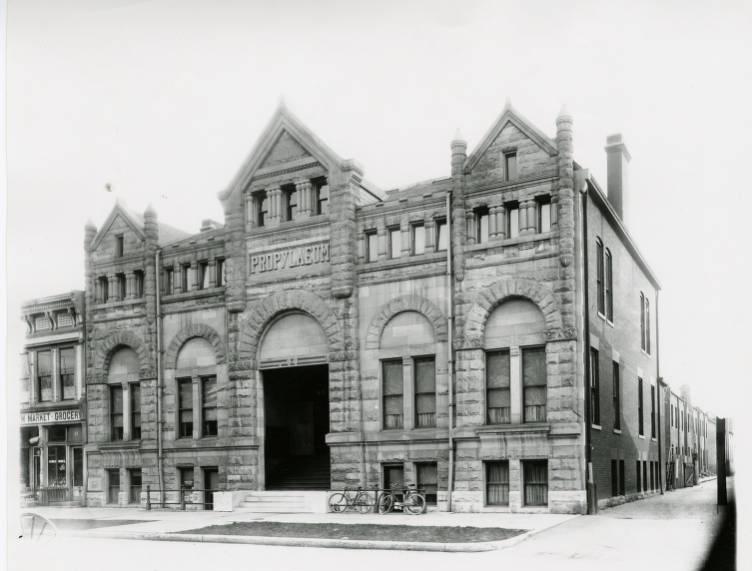
Indianapolis Propylaeum incorporates
The Propylaeum’s Articles of Association provides that stock is acquired, purchased, and held only by women. The building is to be used for cultural and educational pursuits, particularly for women.
Pictured: The original Propylaeum building, dedicated in 1891 and razed in 1928 to make way for the Indiana World War Memorial, 1917
Credit: Bass Photo Co Collection, Indiana Historical Society View Source
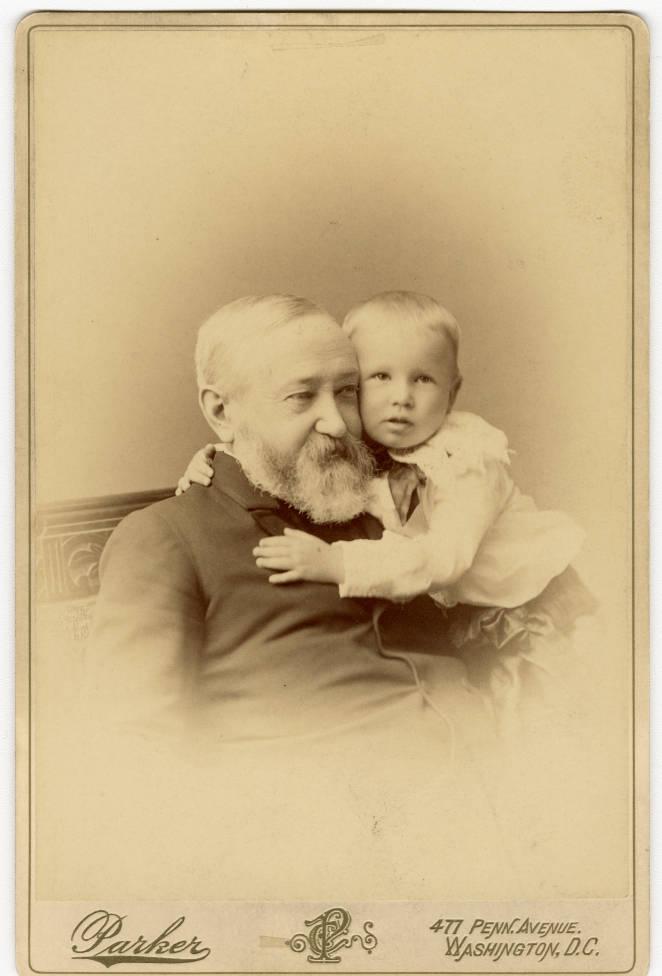
Benjamin Harrison nominated for president
The Republican Party nominates Indianapolis attorney Benjamin Harrison, grandson of President William Henry Harrison, for president. Harrison defeats Grover Cleveland and serves as president from 1889 to 1893.
Pictured: President Benjamin Harrison with his grandson, Benjamin McKee.
Credit: Indiana University Indianapolis
View Source
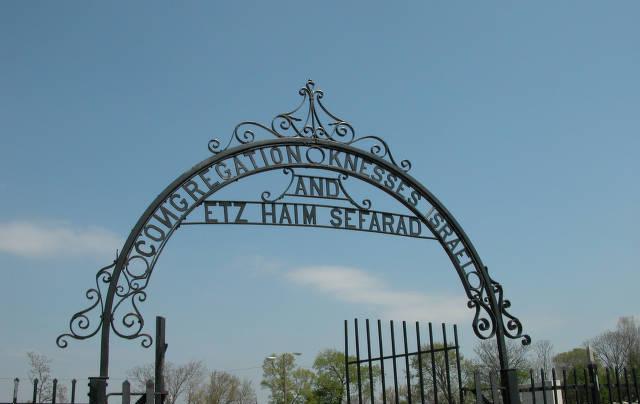
Russian synagogue Knesses Israel established
Jewish immigrants from Russia establish the third Orthodox immigrant synagogue, Knesses Israel. The congregation first resides on Merrill Street near where Lucas Oil Stadium now stands and then at 1021 South Meridian Street. In 1966, the congregation merges with B’nai Torah at 6510 Hoover Road.
Pictured: Entrance to the Jewish cemetery Congregation Knesses Israel & Etz Haim Sefarad Cemetery, 2005
Credit: Indiana Department of Natural Resources, Division of Historic Preservation and Archaeology
View Source
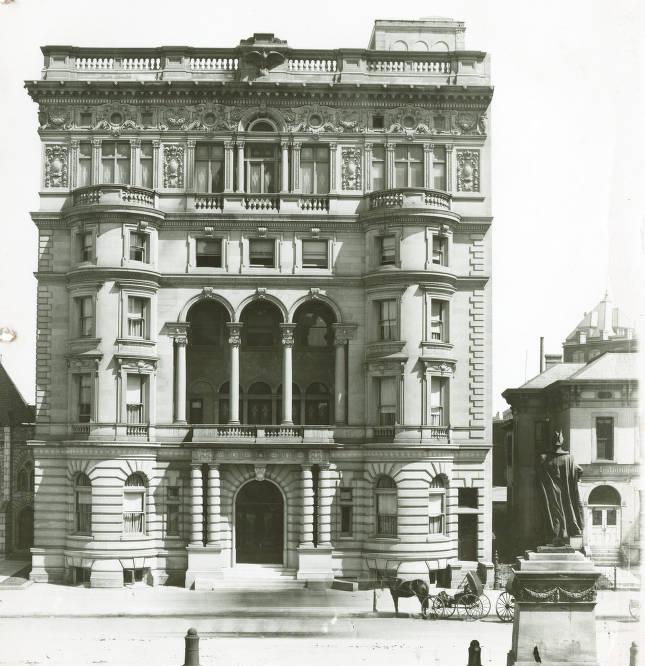
Columbia Club organizes
First established as the Harrison Marching Society to support Benjamin Harrison’s presidential candidacy in 1888, the society acquires a clubhouse and formally organizes as the Columbia Club.
Pictured: This former iteration of the clubhouse was built in 1898 and demolished in the 1920s for a larger structure.
Credit: Indiana Historical Society
View Source
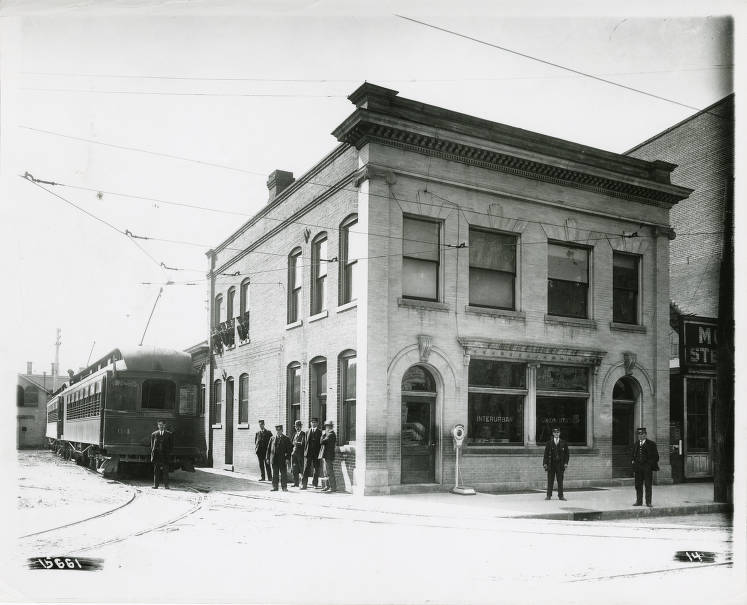
First interurban arrives
Introduced to the state during the 1890s, Indianapolis’ first interurban is the Indianapolis, Greenwood and Franklin Railroad. This line’s inaugural trip from Greenwood arrived in downtown Indianapolis at 11:30 A.M.
Pictured: Interurban Station, interurban drivers, 1909
Credit: Bass Photo Co Collection, Indiana Historical Society View Source
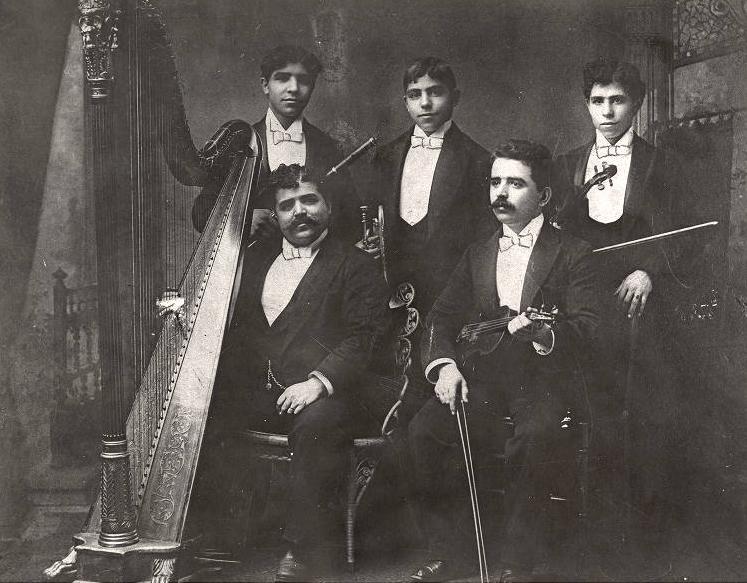
Indianapolis Protective Union organizes
Guy and Domenico Montani, local Italian musicians, help organize the city’s first musicians’ union and the third such union in the country.
Pictured: Montani Brothers Orchestra, 1904
Credit: Indiana Historical Society View Source
Indianapolis Commercial Club established
Col. Eli Lilly, William Fortune, and other businessmen found the Indianapolis Commercial Club, later the Chamber of Commerce. Lilly serves as the first president.
Address numbering system adjusted to cope with continued growth
The city now uses Meridian and Washington streets as the dividing lines. It also eliminates all duplicate street names and erects street name signs.
Population: 105,436
The population in 1890 totals 105,436, the majority of which are recorded as white (96,282).
Thomas Lennox Sullivan becomes the first Indianapolis-born resident to be elected mayor
Sullivan has lived all his life in the downtown area, with the exception of attending Racine College in Wisconsin. His term as mayor is focused on public improvements.
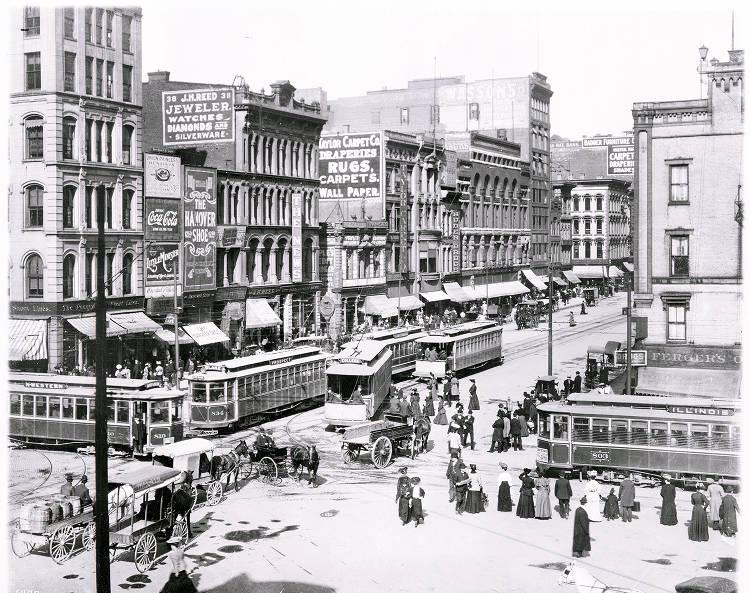
First electric streetcars begin operation
Electric streetcars eliminate the need for mules (and their wastes) and bring clean, quiet, and inexpensive locomotion to the city’s public transportation.
Pictured: Streetcars at the intersection of Illinois and Washington streets, 1906
Credit: Bass Photo Co, Indiana Historical Society View Source
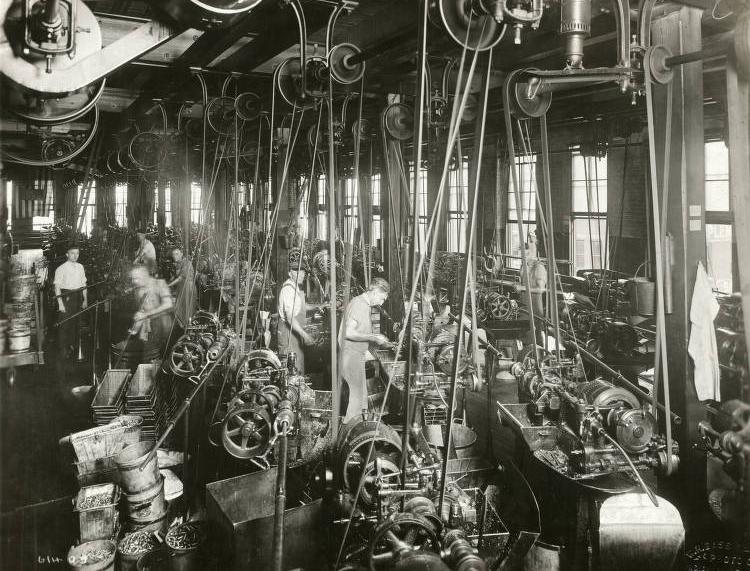
Indianapolis Chain & Stamping Company begins manufacturing
The company, later renamed Diamond Chain, produces blockchain to make drive chains for bicycles. It supplies about 60 percent of American-made bicycle chains by 1900.
Pictured: Workers fabricate chain links at the Diamond Chain Factory, 1917
Credit: Indiana Historical Society View Source
City approves a new charter that serves until 1970
A nine-member, public-private committee drafts a new city charter. It grants unprecedented powers of appointment to the mayor and provides for a board of public works.
Indianapolis Country Club opens
Country clubs become popular social centers for the cultural elite. Indianapolis gets its own country club when the Indianapolis Country Club is established. Membership is restricted to white people only.
American Nonconformist newspaper moves to Indianapolis
The Populist Party newspaper arranges the move to Indianapolis after the Indiana branch of the People’s Party is organized in July 1891.
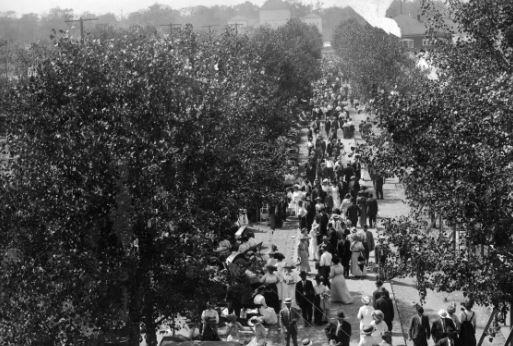
New State Fairgrounds open at East 38th Street and Fallcreek Parkway
Moving from Camp Morton, the new fairgrounds, built by J. F. Alexander and Son on 214 acres, contain 72 buildings, a 6,000-seat grandstand, and a mile race track.
Pictured: Fairgoer stroll along main street at the Indiana State Fair, 1909.
Credit: IndyStar
View Source
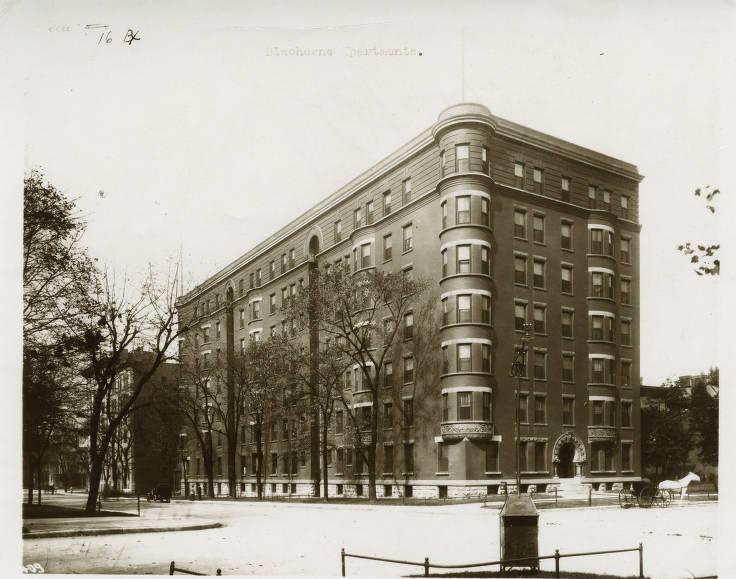
Lew Wallace begins construction of the first major apartment building
Wallace names the building “Blacherne” after the palace in his novel, The Prince of India. The seven-story structure is located on the northwest corner of Meridian and Vermont streets.
Pictured: A view of the seven-story Blacherne Apartment building, 1906
Credit: Bass Photo Co Collection, Indiana Historical Society
View Source
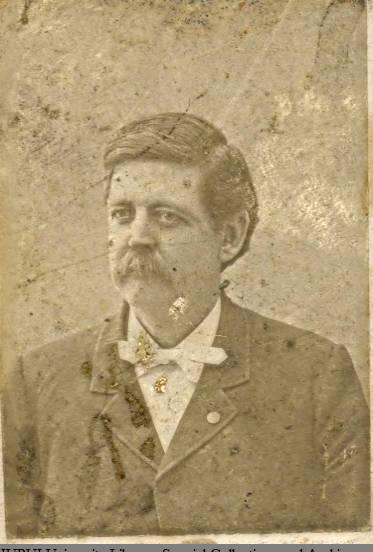
William V. Wheeler opens the Rescue Mission and Home of Indianapolis
Wheeler, a sales manager for Layman & Carey Hardware, opens a small mission on South Street. It is renamed Wheeler Mission Ministries in 1990.
Pictured: William Vincent Wheeler, 1899
Credit: Indiana University Indianapolis
View Source
First basketball game played in Indianapolis occurs at the Illinois Street YMCA
Reverend Nicholas McKay, an associate of Dr. James Naismith, basketball’s inventor, introduces the game to the Crawfordsville YMCA in 1893. The Indianapolis YMCA adopts the game soon thereafter.
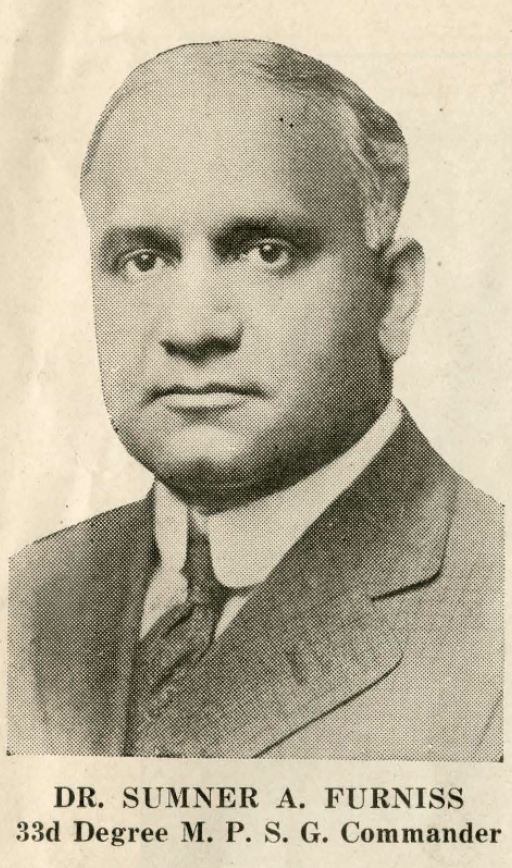
First Black physician at city hospital
Sumner A. Furniss successfully competes for a City Hospital internship, becoming the first African American physician to work at the hospital. He starts his own practice the following year.
Pictured: Dr. Sumner A. Furniss, ca. 1920s
Credit: Indiana Historical Society
View Source
Indianapolis Recorder begins publication
Printshop owner George P. Stewart and attorney William Porter launch the publication as a two-page church directory. In 1897, it is expanded to four pages and adopts the Recorder name.
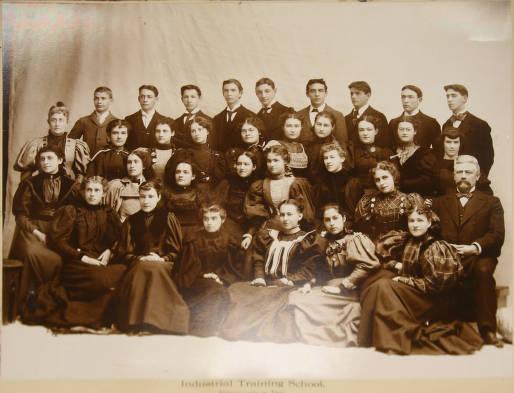
Indianapolis school system opens industrial training school
The school opens as the state’s first public vocational high school. In 1910, it is named Emmerich Manual Training High School in honor of Charles Emmerich, the school’s first principal.
Pictured: Industrial Training School, Class of 1896
Credit: Emmerich Manual High School
View Source
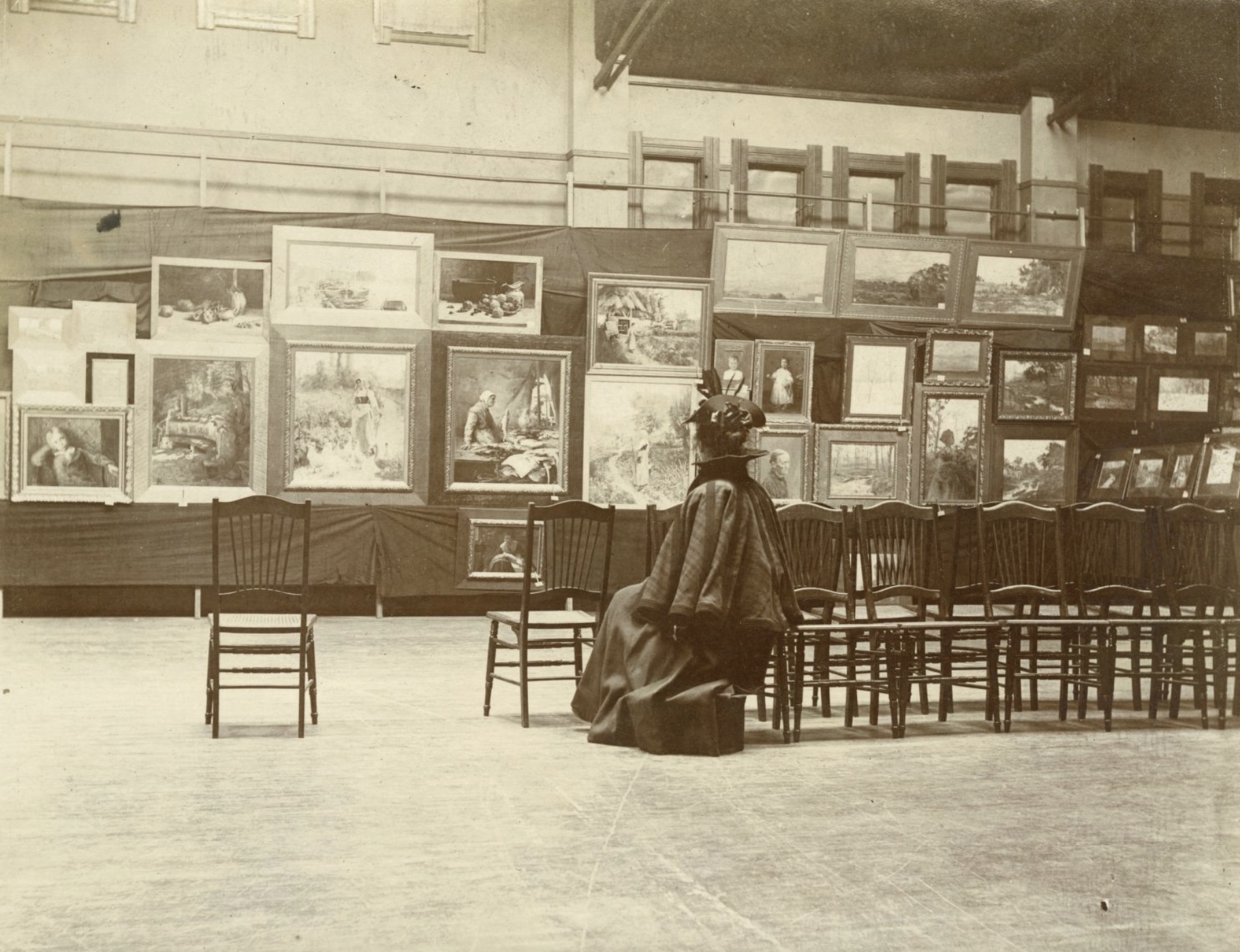
John Herron bequeaths funds to establish a museum and art school
Herron bequeaths $250,000 to the Art Association of Indianapolis with the stipulation that the funds be used to build a museum and art school bearing his name.
Pictured: Herron Art Institute Galleries, ca. early 1900s
Credit: Indiana Historical Society
View Source
Thomas Taggart elected mayor
Taggart, an Irish immigrant, defeats Republicans Preston C. Trusler and becomes mayor of Indianapolis. He serves three terms in office (1895-1901) which are marked by public improvements and fiscal efficiency.
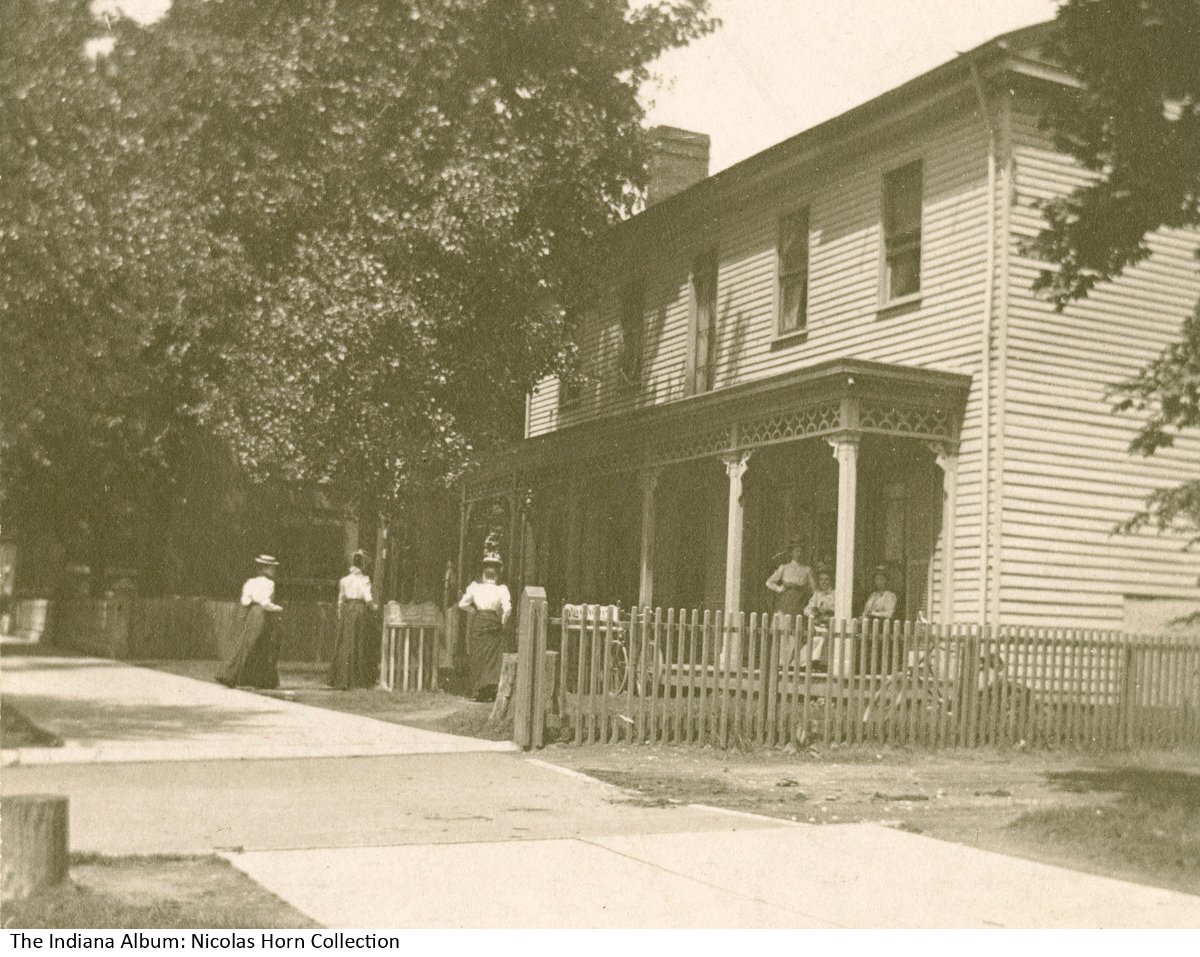
Indianapolis chapter of Young Women’s Christian Association holds first meeting
The Indianapolis YWCA is established to promote the “physical, intellectual, social, and spiritual advancement of young women.” It later affiliates with the national YWCA, which is founded in 1906 as a nonsectarian Christian organization.
Pictured: Women at the Y. W. C. A. headquarters, ca. 1899
Credit: The Indiana Album: Nicolas Horn Collection
View Source
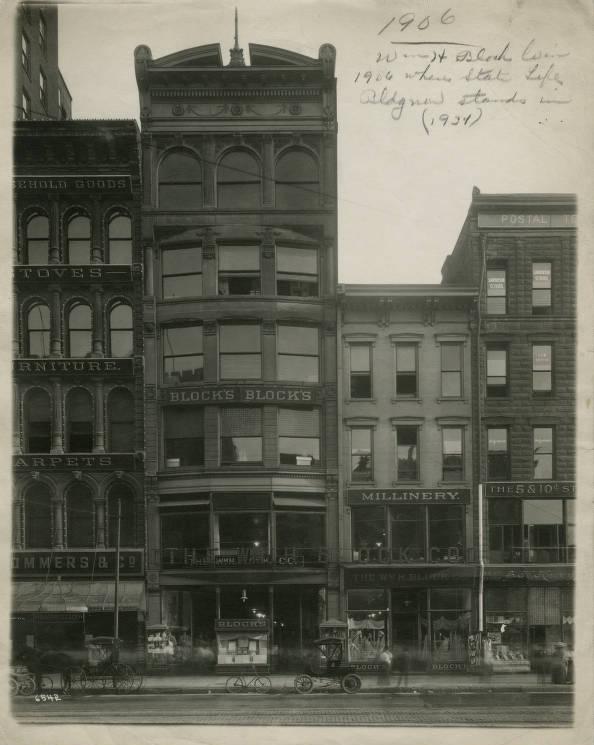
Blocks department store opens
William H. Block opens a small department store at 9 East Washington Street, which in 1907 is incorporated as William H. Block Company.
Pictured: William H. Block Co., Washington Street, 1906
Credit: Bass Photo Co Collection, Indiana Historical Society
View Source
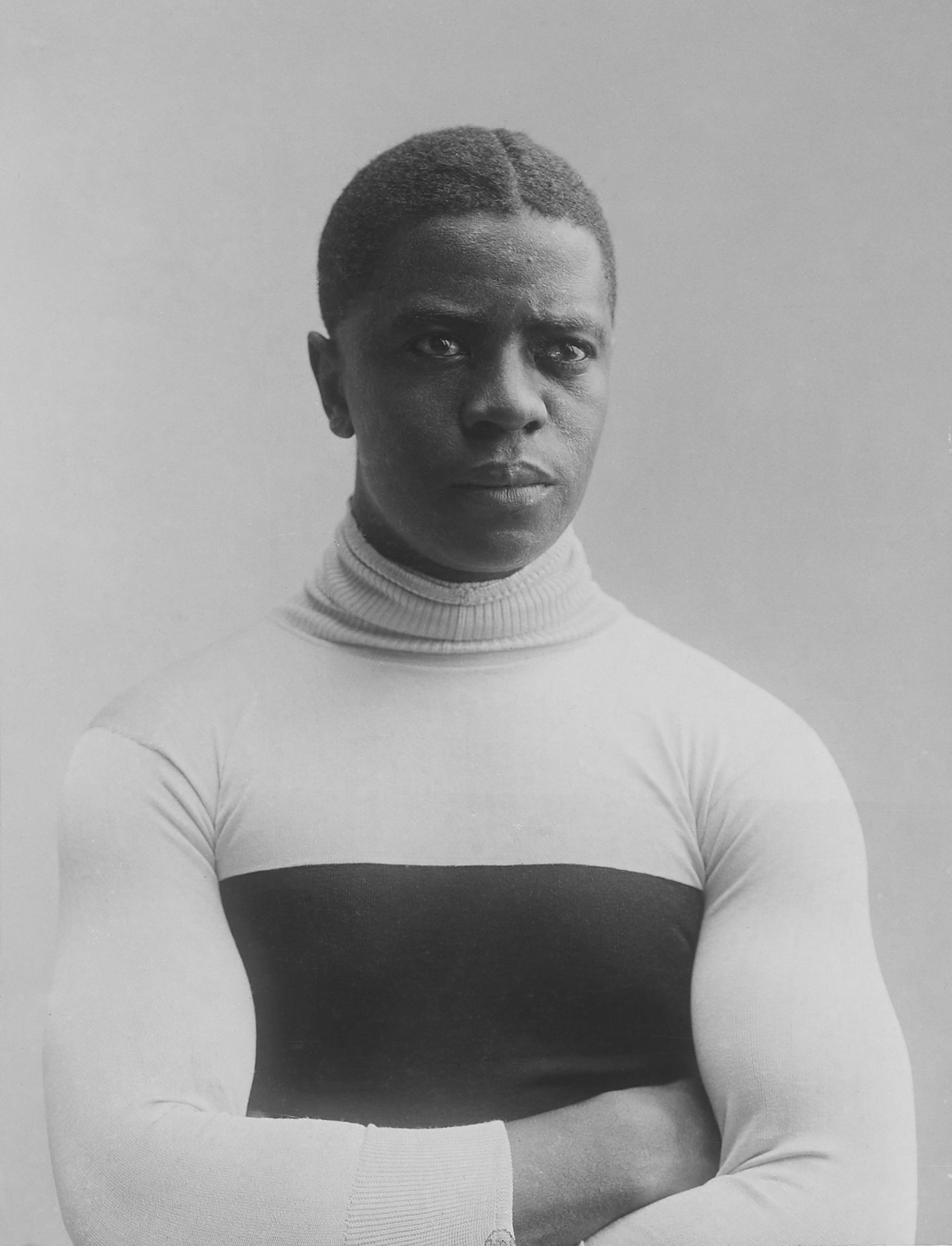
Black cyclist Major Taylor sets records
Taylor sets several unofficial records in August at Indianapolis’ Capital City bike track, which results in numerous death threats. Indianapolis bicycling tracks are subsequently restricted to whites only.
Pictured: Major Taylor, 1906-1907
Credit: Jules Beau, Public domain, via Wikimedia CommonsView Source
The city annexes several towns
The city of Indianapolis annexes West Indianapolis, Brightwood, Haughville, Mount Jackson, Stringtown, and Eastside Terrace.
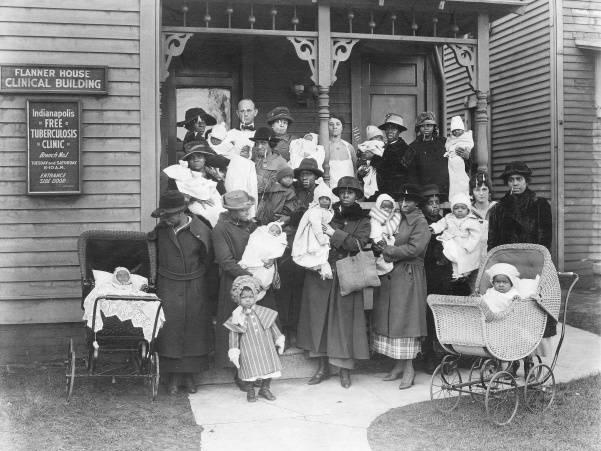
Flanner House established
Frank William Flanner donates a cottage for the creation of the Flanner Guild (later Flanner House), the first settlement house for African Americans in the city.
Pictured: Flanner House Clinical Building, ca. 1920s
Credit: Indiana Historical Society View Source
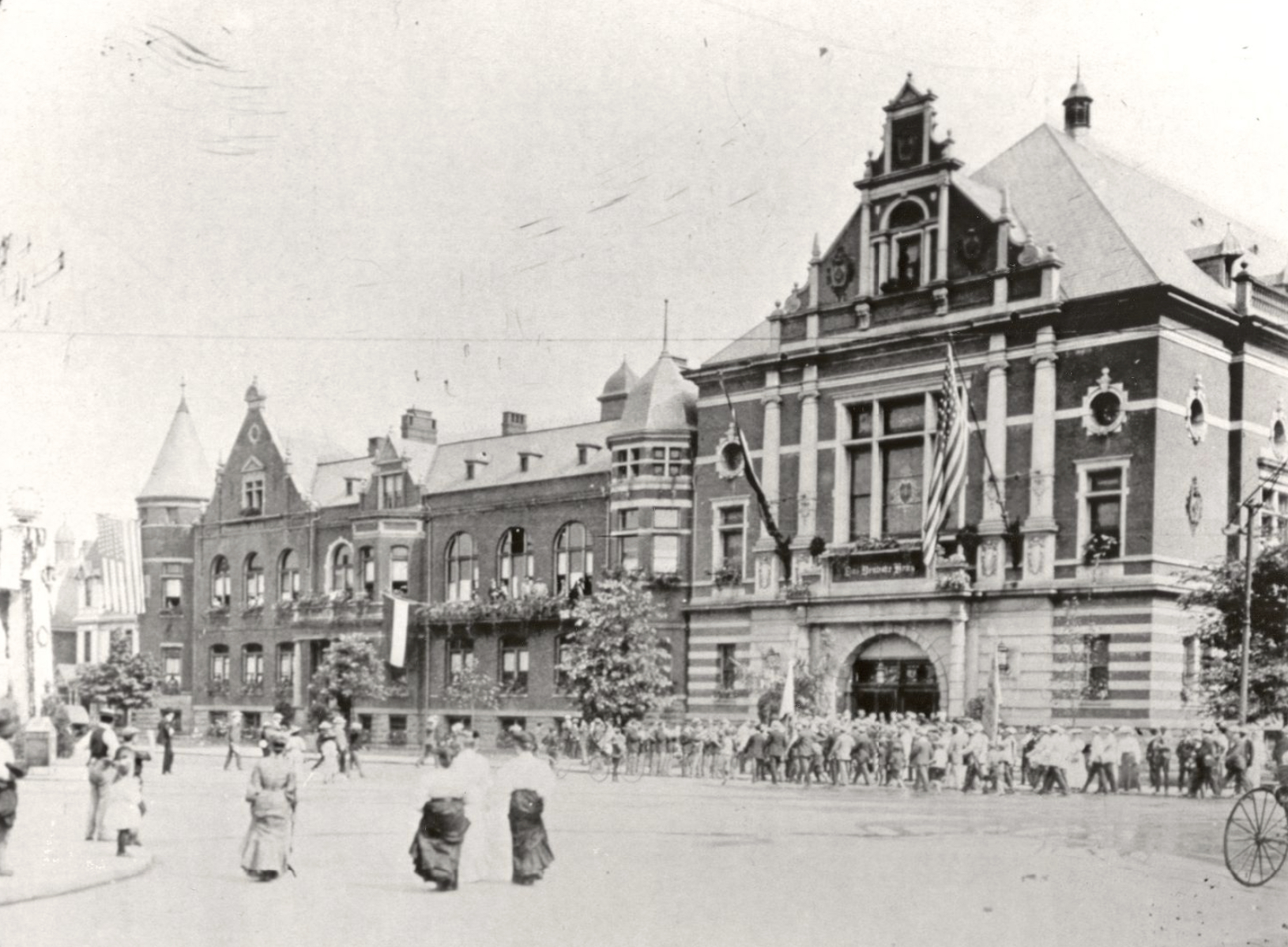
Das Deutsche Haus opens
Herbert Lieber gives the dedication speech, lauding the structure as the “embodiment of the Americanizing process.” Designed by Bernard Vonnegut, the building becomes the center of German American culture.
Pictured: Das Deutsche Haus/Athenaeum, 1905
Credit: Indiana Historical Society View Source
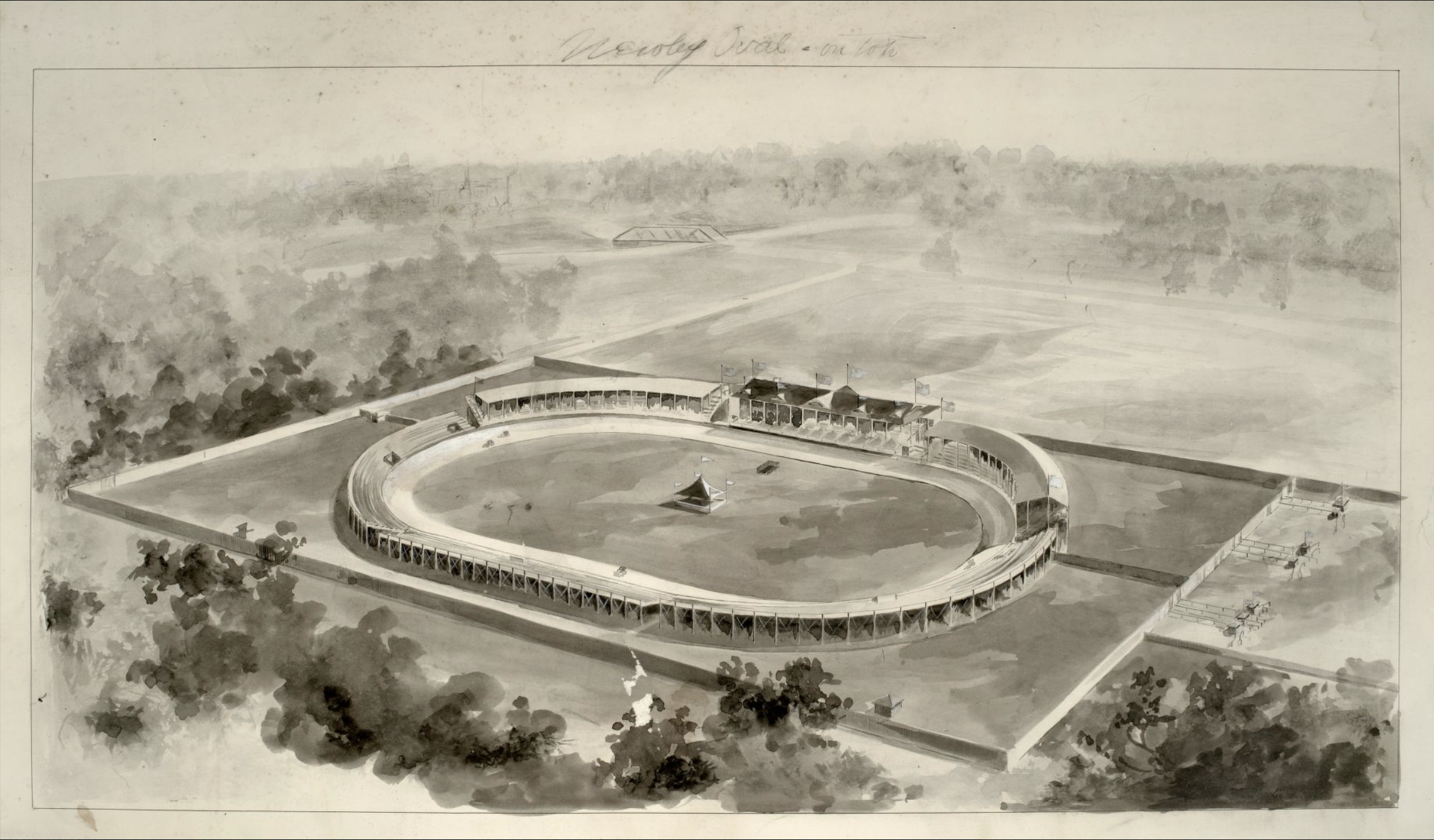
Indiana division of the League of American Wheelmen participate in the Newby Oval inaugural race
The Wheelmen hold its annual meet at the Newby Oval, built by future Indianapolis Speedway owner Arthur C. Newby and local architect Herbert Foltz. The new velodrome is considered one of the best in the nation at the time.
Pictured: Artist’s Rendering of Newby Oval, ca. 1898
Credit: Indiana Historical Society View Source
The Daily Echo begins publication
The publication, the first and longest-running student newspaper in the nation, begins its 72-year existence at Shortridge High School.
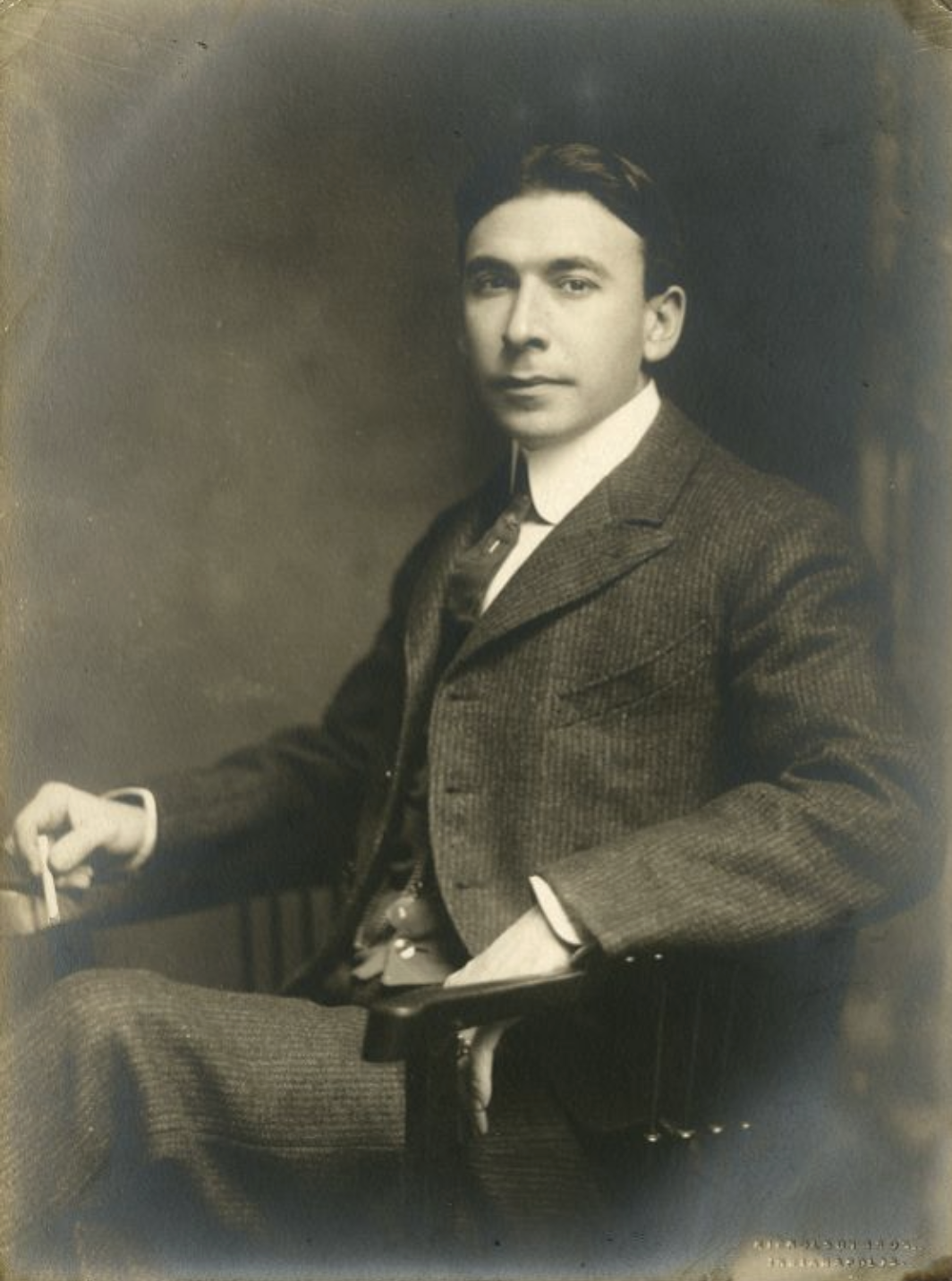
Publication of The Gentleman from Indiana
The author, Indianapolis native Booth Tarkington, becomes an instant success, propelling him into the national limelight. In Indianapolis, the book is less well received, with residents feeling mocked.
Pictured: Booth Tarkington as a young adult, ca. 1895
Credit: Indiana Historical Society
View Source
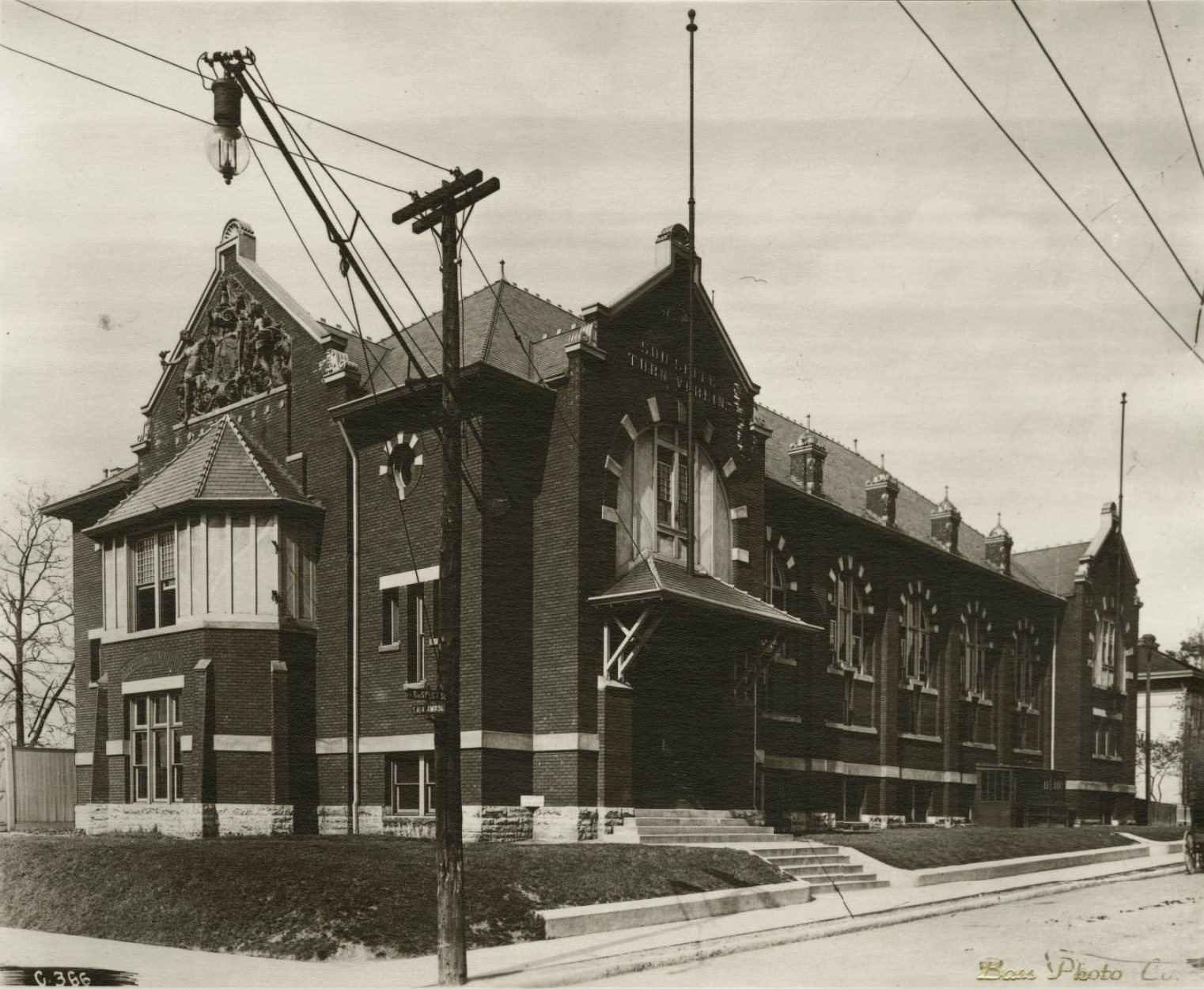
Southside Turnverein Hall opens
The hall, designed by Vonnegut & Bohn and completed in November 1900, contains a gym bordered by a proscenium stage and a bowling alley. The building serves the group of Turners that broke away from the Socialer Turnverein to form its own organization in 1893.
Pictured: Southside Turnverein, 1908
Credit: Bass Photo Co Collection, Indiana Historical Society View Source
John Hook and Edward F. Roesch found first Hook’s Drugstore
The first Hook’s Drug Store opens in October 1900 at 1101 S. East Street in Indianapolis’ German community. The firm eventually grows into the largest drugstore chain in the state.
Population: 169,164
The population in 1900 totals 169,164, the majority of which are recorded as white (153,201).
Social Democratic Party holds national convention
The Social Democratic Party holds its first national convention in Indianapolis and nominates Eugene V. Debs for president and Job Harriman for vice president.
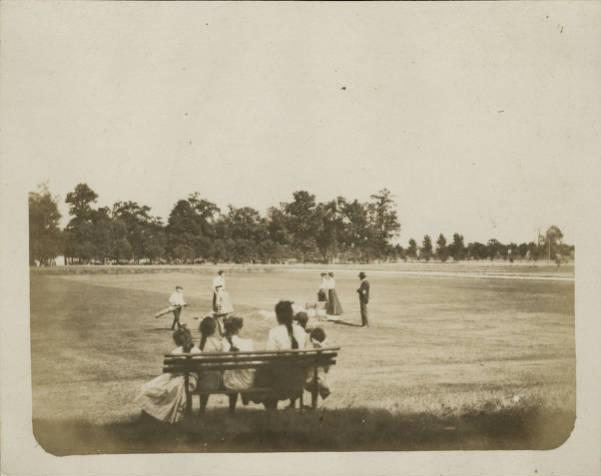
Riverside Park municipal golf course opens
Mayor Thomas Taggart and the Board of Park Commissioners establishes Riverside, the city’s first municipal golf course and the fourth in the nation. It is a segregated course.
Pictured: Golfers at Riverside Park, 1903
Credit: Indiana Historical Society View Source
Day Nursery Association of Indianapolis begins providing day care
Founded in 1899 by the Kings Daughters Society, the organization converts a one-room center near Monument Circle for childcare, becoming the city’s first childcare center.
Socialist Party of America founded
Led by Eugene Debs and leaders of the Social Democratic Party, over 100 men and women meet in the Indianapolis Masonic Hall to found the Socialist Party of America.
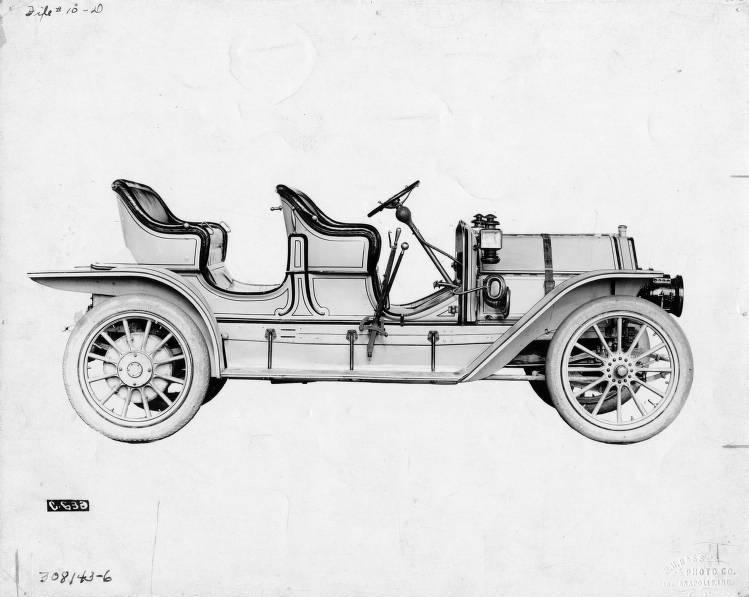
Nordyke and Marmon begins building cars
Nordyke and Marmon, manufacturer of flour-milling machinery, produces its first motor car. The Marmon Automobile, as the motor car is known, features improved lubricated crankshaft and rod bearings.
Pictured: Marmon automobile, 1908
Credit: Bass Photo Co Collection, Indiana Historical Society
View Source
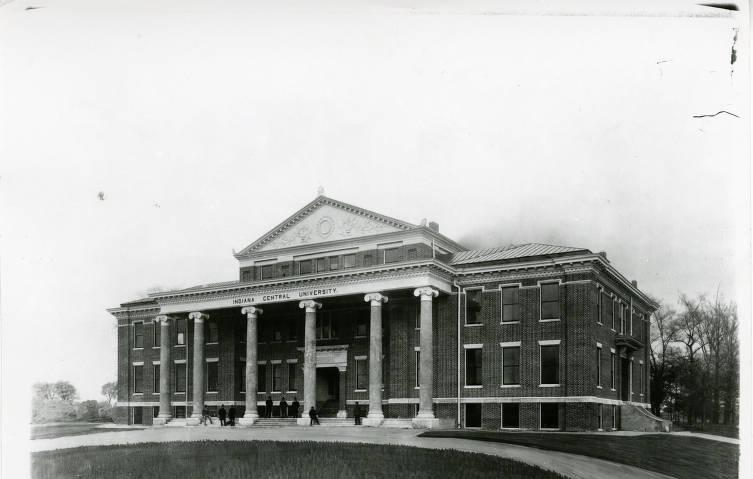
Indiana Central University established
The Church of the United Brethren in Christ establishes Indiana Central University (later University of Indianapolis). The state of Indiana charters the same year.
Pictured: Indiana Central University administration building, 1913
Credit: Bass Photo Co Collection, Indiana Historical Society View Source
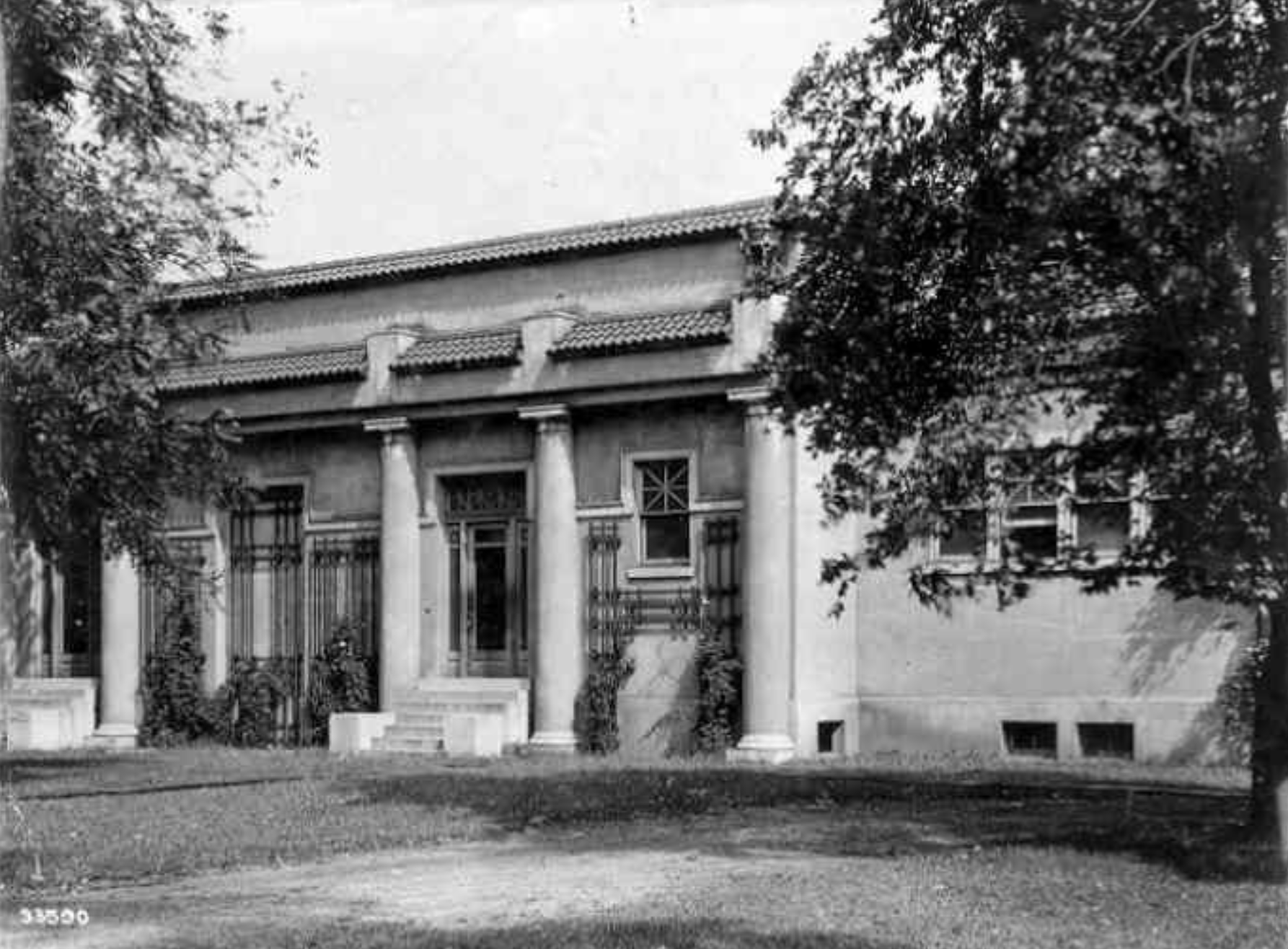
Art Association opens the John Herron Art Institute
Using a bequest left by John Herron, the Art Association of Indianapolis establishes the Institute to operate an art school and museum. The art school opens with 10 pupils and 5 teachers on Talbott Street at T. C. Steele’s former home.
Pictured: The Herron building was built in 1906 and torn down in 1928.
Credit: Indiana State Library
View Source
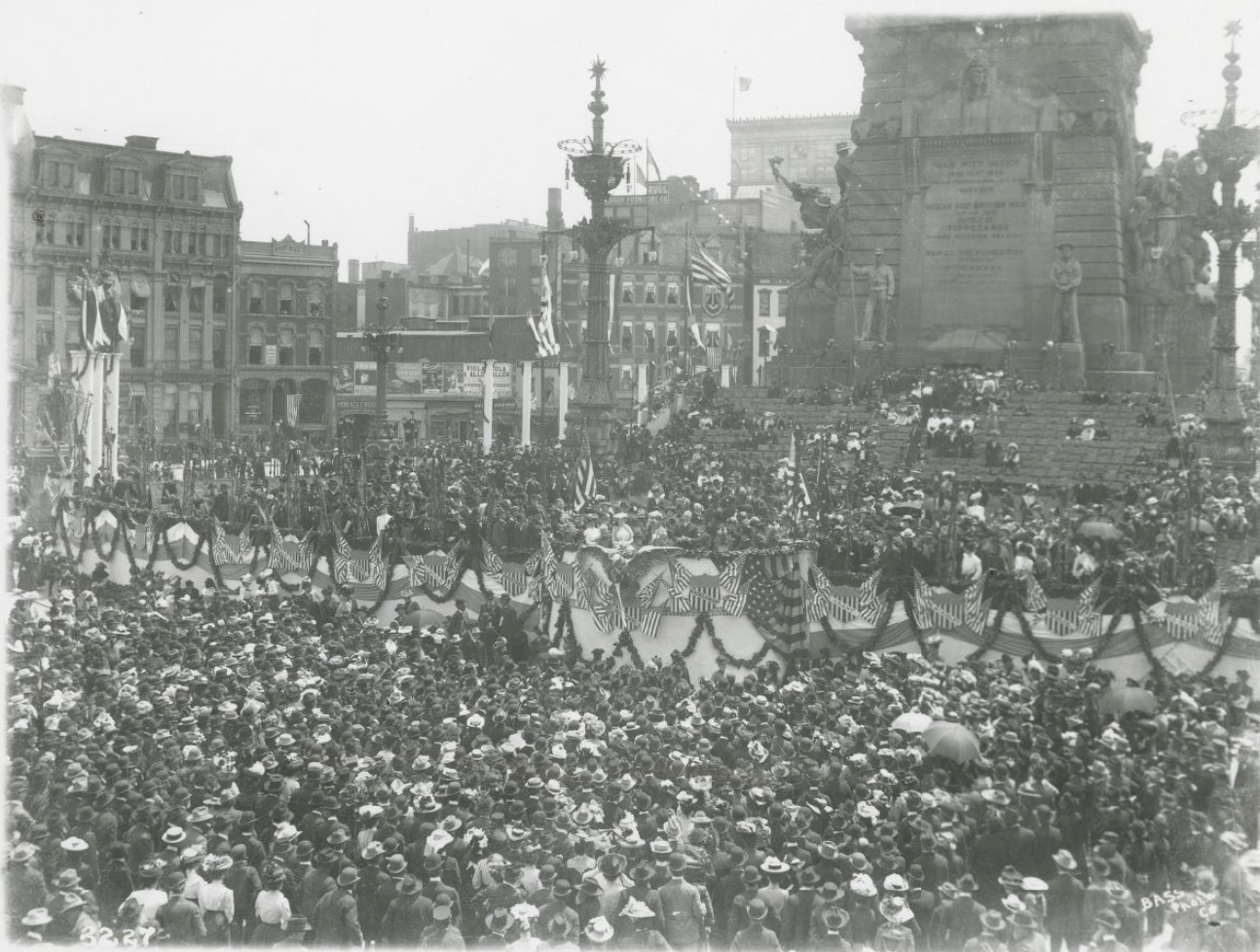
Indiana Soldiers and Sailors Monument dedication
At the gala event, Civil War general and author Lew Wallace serves as master of ceremonies, and Hoosier poet James Whitcomb Riley recites a poem that John Philip Sousa transformed into a march.
Pictured: After nearly 14 years of construction, the Soldiers and Sailors Monument was officially dedicated with a grand event and thousands of spectators.
Credit: Bass Photo Co Collection, Indiana Historical Society
View Source
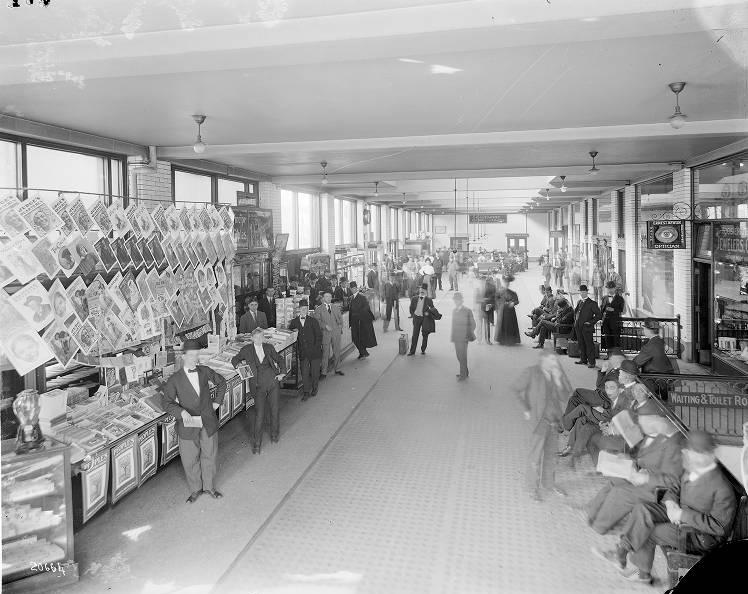
Indianapolis Traction and Terminal Company incorporates
The Indianapolis Traction and Terminal Company incorporates after seven interurban companies sign an agreement for use of the city street railway tracks and the construction of an interurban terminal.
Pictured: Passenger Waiting Room at the Traction Terminal, 1910
Credit: Bass Photo Co Collection, Indiana Historical Society View Source
Woman’s Improvement Club organizes
Lillian Thomas Fox and other prominent African American women found the self-improvement club. It later becomes known for efforts to provide tuberculosis care for African Americans.
Indianapolis Star debuts
The Indianapolis Star debuts as a daily newspaper, the brainchild of Muncie industrialist George McCulloch. In the first two days, the Star distributes 50,000 free copies of the one-cent newspaper.
Indiana High School Athletic Association (IHSAA) founded
At its start, IHSAA denies Black public high schools from participating in basketball leagues and tournaments from 1903 until the 1942-1943 season.
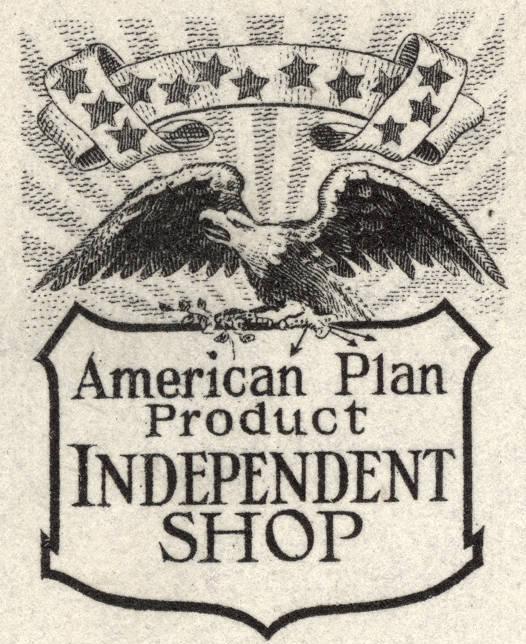
Businessmen establish Associated Employers to combat labor strikes
Indianapolis businessmen create the organization to provide advice and assistance to companies involved in strikes or lockouts. The aim is to destroy union shops.
Pictured: Associated Employers of Indianapolis emblem, 1921
Credit: Indiana Historical Society View Source
Concentrated Acetylene Company organizes
Partners Carl G. Fisher, James A. Allison, and P. C. Avery form Concentrated Acetylene Company to assemble and fill acetylene cylinders used in automobile headlights. The company later becomes Prest-O-Lite Company.
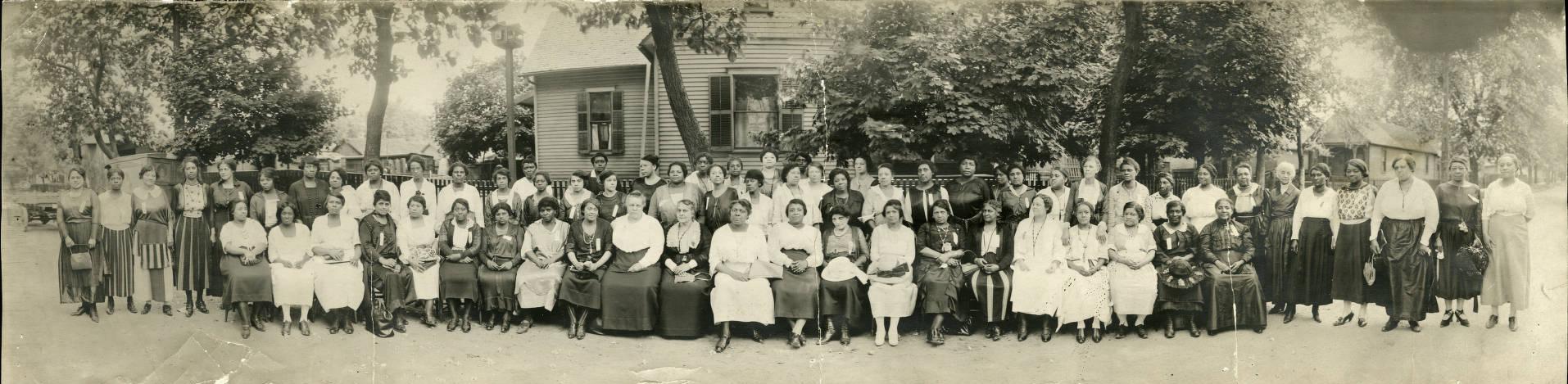
Federation of Colored Women’s Clubs founded
Black women’s organizations from Indianapolis, South Bend, Anderson, Marion, Muncie, and Terre Haute form the Indiana State Federation of Colored Women’s Clubs. The group focuses on the improvement of education, health, living standards, and interracial understanding.
Pictured: Indiana State Federation of Colored Women’s Club, ca. 1927
Credit: Indiana Historical Society View Source
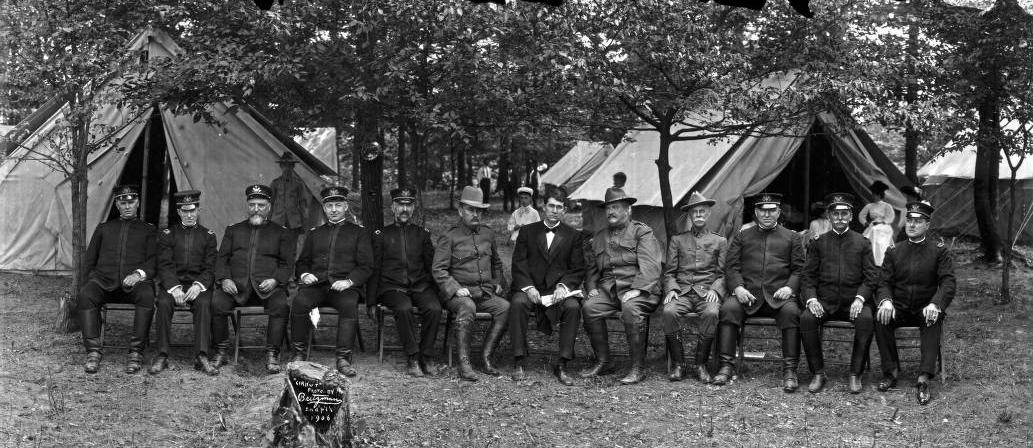
The U.S. Army creates Fort Benjamin Harrison
Established in Lawrence Township, President Theodore Roosevelt and Lt. Col. Russell Harrison request that the military installation be named after President Benjamin Harrison.
Pictured: Indiana governor J. Frank Hanly, in the dark suit, seated with military officers at Fort Benjamin Harrison Camp of Instruction, 1906
Credit: Indiana Historical Society View Source
Max Emmerich becomes the first Olympic gold medal winner from Indianapolis
One of four athletes affiliated with the Socialer Turnverein who participated in the St. Louis Summer Olympic Games, Emmerich wins his gold medal for his participation in the triathlon, consisting of the 100-yard dash, long jump, and shot put.
Publication of The House of a Thousand Candles
Indianapolis author Meredith Nicholson publishes the national bestseller and his most famous novel. The novel is set in Indiana.
Indianapolis Humane Society founded
Nine concerned citizens found the Humane Society of Indianapolis to prevent cruelty to women, children, animals, and other sentient beings.
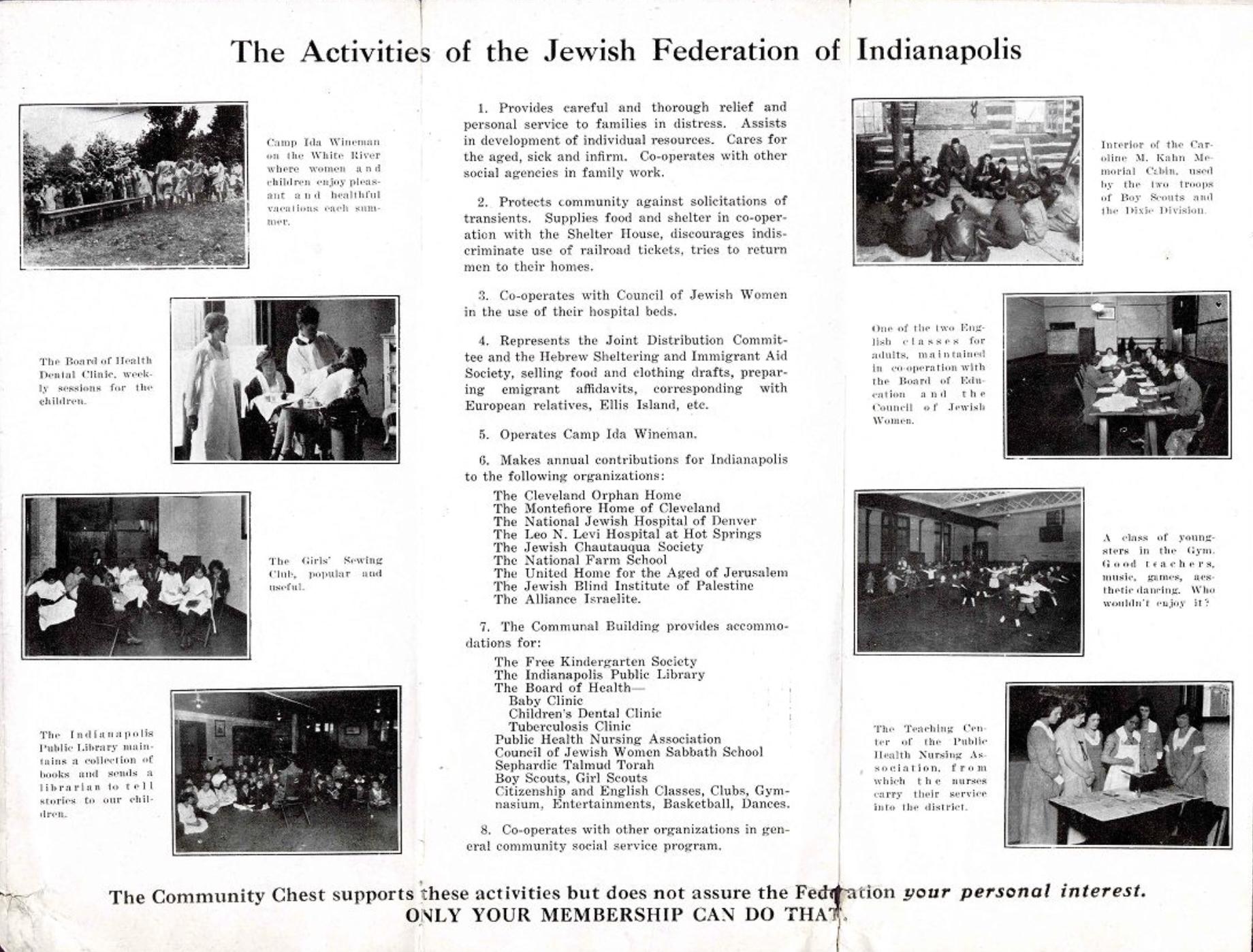
Jewish Federation of Indianapolis forms
Local Jewish leaders, primarily immigrants of German origin, establish the Jewish Federation to coordinate efforts to serve new Jewish immigrants from eastern Europe who were fleeing virulent anti-Semitism.
Pictured: Activities of the Jewish Federation of Greater Indianapolis, n.d.
Credit: Indiana State Library View Source
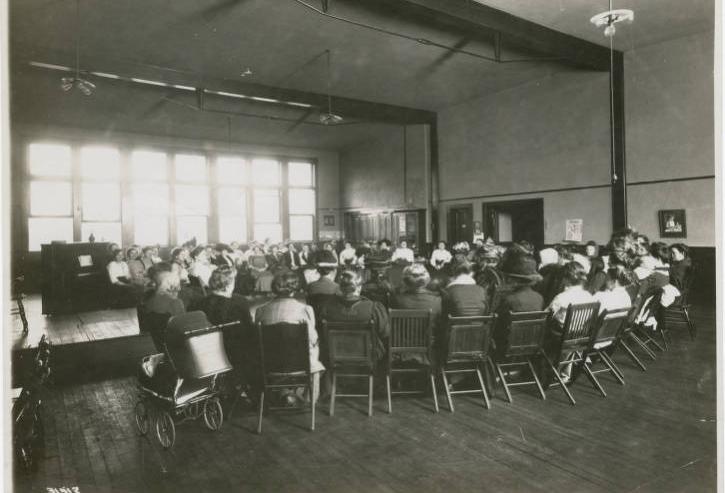
Christamore settlement house established
Anna C. Stover and Edith D. Surbey begin a settlement house at 1718 Arsenal Avenue. It attracts teachers and nurses into a community of women reformers.
Pictured: Women Attending Meeting at Christamore House, 1912
Credit: Bass Photo Co Collection, Indiana Historical Society View Source
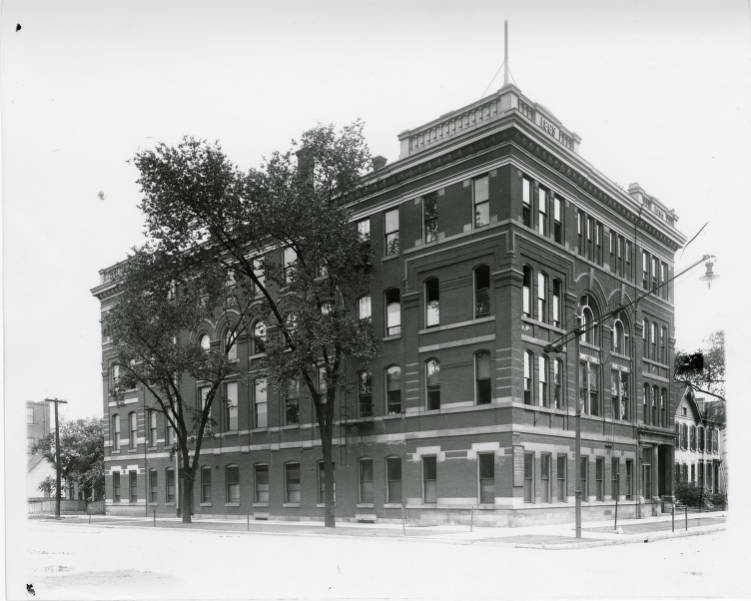
Medical proprietary schools consolidate to become the Purdue School of Medicine
The merger includes the Indiana Medical College, Central College of Physicians and Surgeons, and the Fort Wayne College of Medicine. It begins a conflict between Purdue and Indiana universities over control of medical education that would last until 1908.
Pictured: The Indiana Medical College, 1906
Credit: Bass Photo Co Collection, Indiana Historical Society View Source
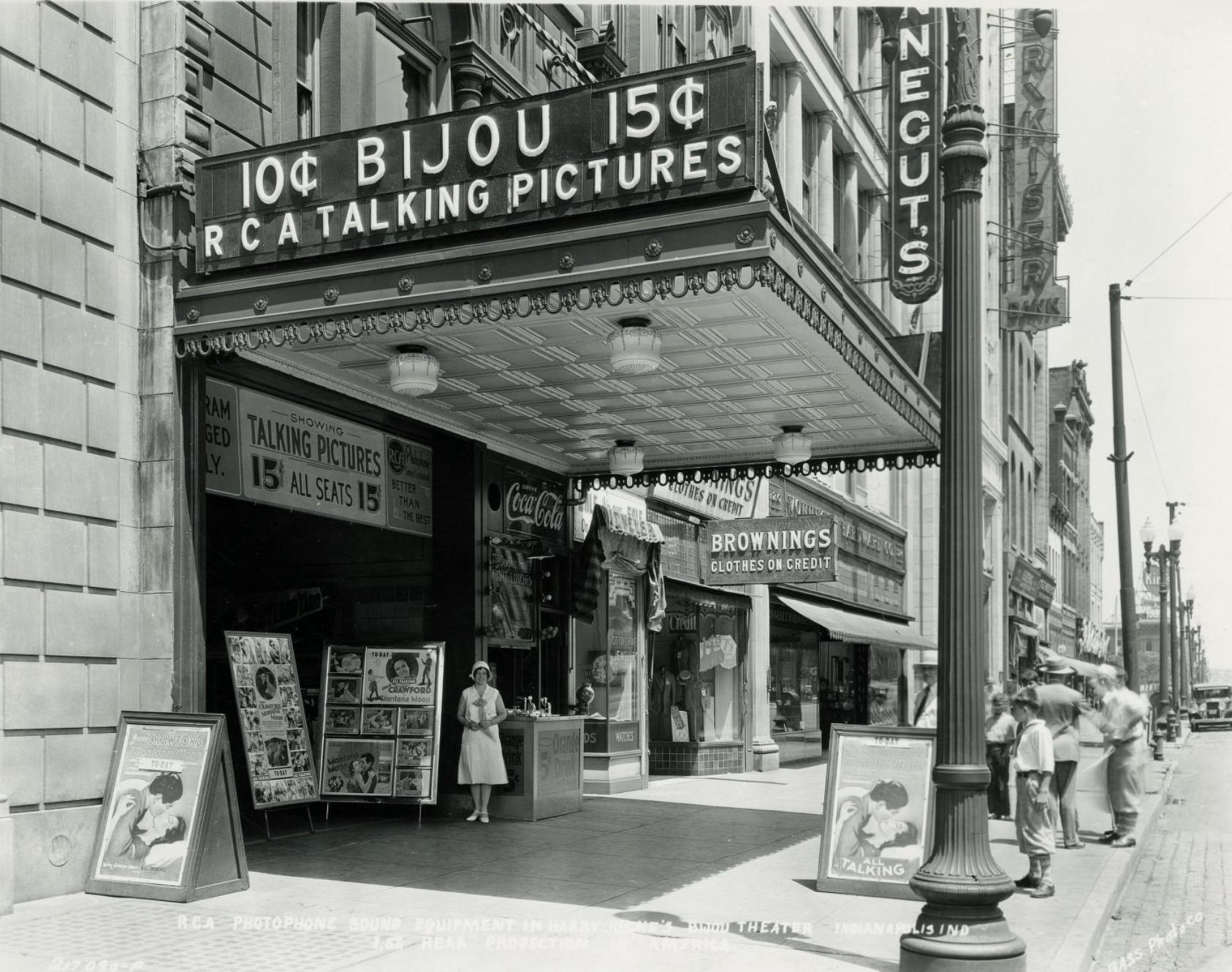
First movie theater opens
The city’s first movie theater—the Bijou, a converted vaudeville house—opens on East Washington Street. Bijou shows half-hour films viewed during the lunch hour.
Pictured: Bijou Theatre, 1930
Credit: Bass Photo Co Collection, Indiana Historical Society
View Source
New York Central Railroad purchases land for repair facility
The New York Central Railroad purchases 640 acres in Beech Grove to construct $5 million locomotive shop and equipment plant. It is touted as the “largest locomotive hospital in the world.”
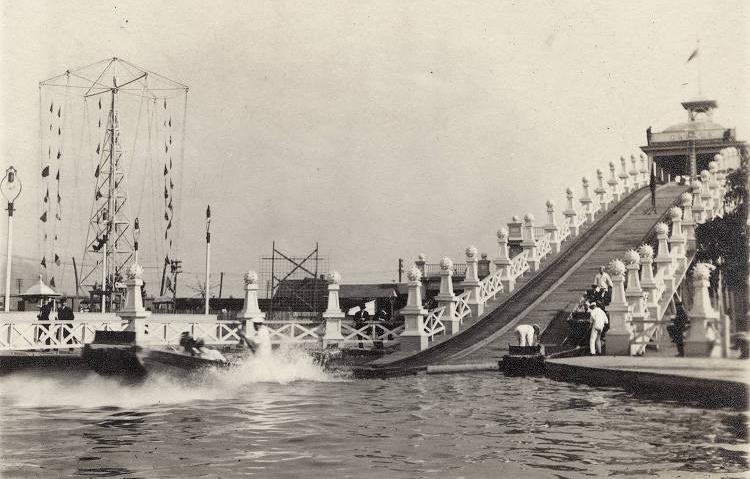
Wonderland Amusement Park opens
On May 16, over 8,000 people attend opening activities at Wonderland Amusement Park on East Washington and Gray streets. White City Amusement Park, located in Broad Ripple, opens ten days later on May 26.
Pictured: The “Shoot the Chutes” waterslide, 1906
Credit: Indiana Historical Society View Source
Dedication of the Cathedral Church of SS. Peter & Paul
The Cathedral Church of SS. Peter & Paul is dedicated for the Catholic Diocese of Indianapolis. The campus will eventually include offices, a school, and a residence in addition to the cathedral.
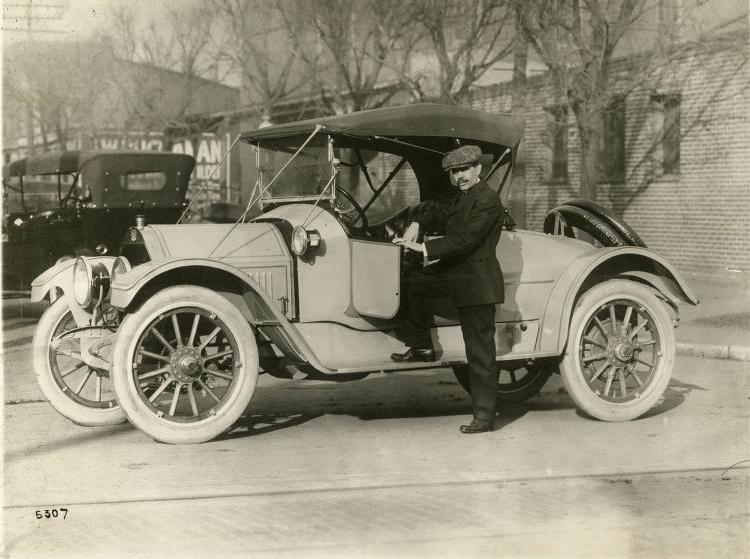
Cole Motor Carriage Company builds the first Cole motor car
Joseph Cole decides to continue automobile production and forms the Cole Motor Car Company in 1909.
Pictured: J.J. Cole posing with a Series Eight Cole roadster, ca. 1910s
Credit: Indiana Historical Society View Source
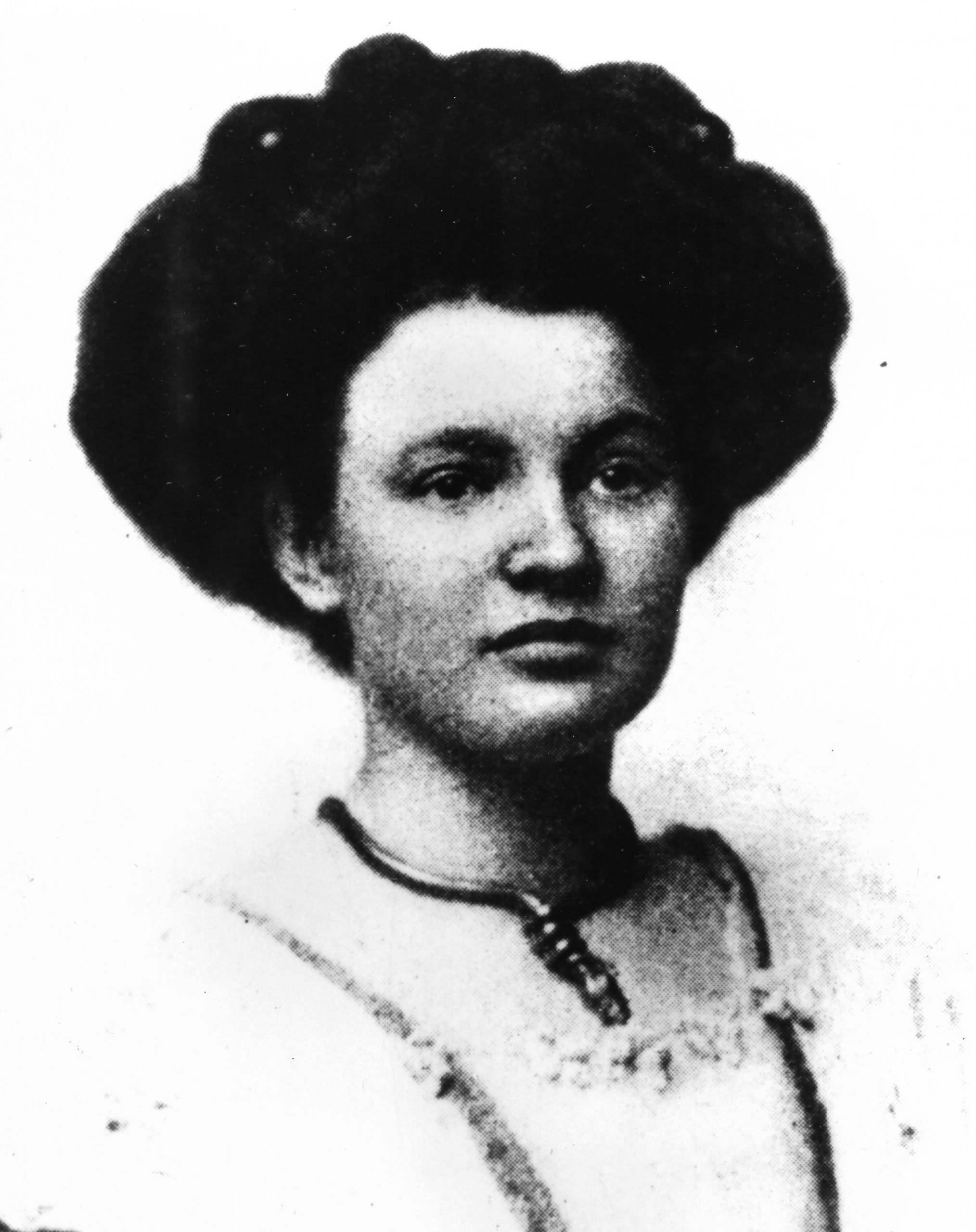
May Aufderheide publishes her first composition
The Indianapolis ragtime pianist-composer publishes “Dusty Rag” in May. She publishes 19 pieces between 1908 and 1912, several of which are financial successes.
Pictured: May Frances Aufderheide, n.d.
Credit: Fair use via Wikimedia Commons View Source
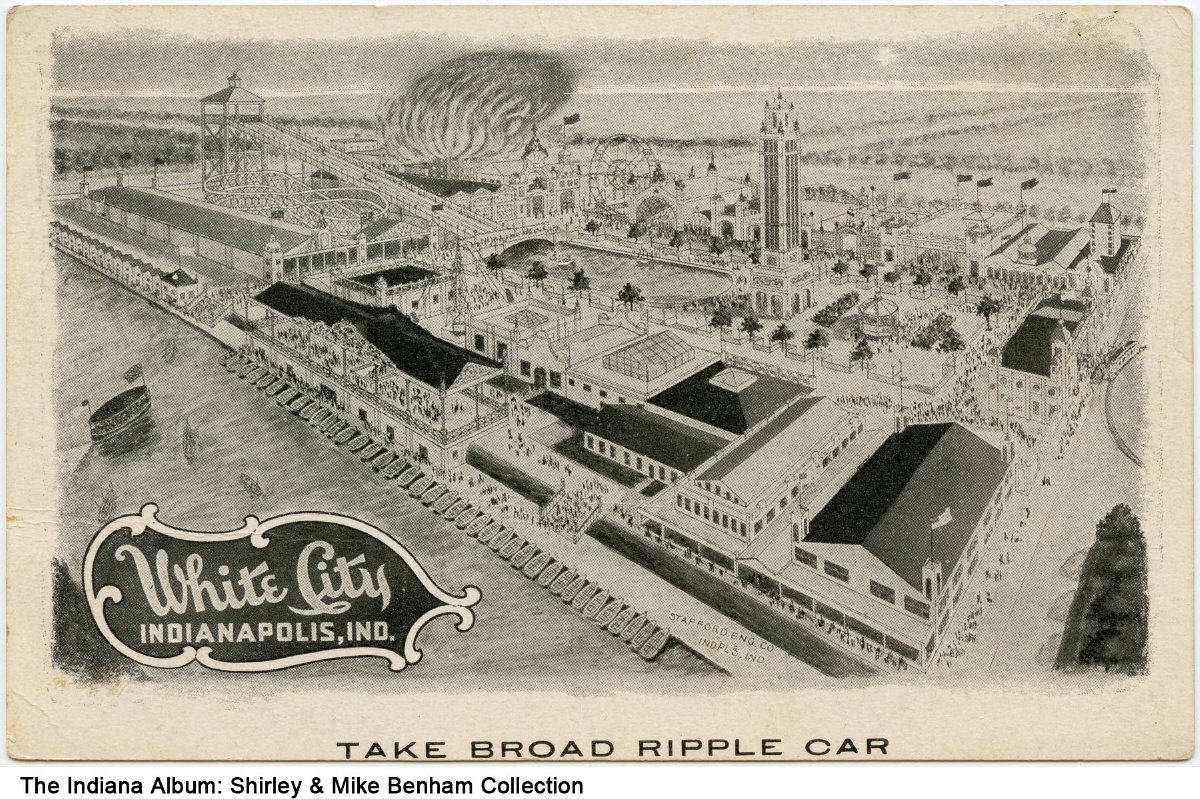
Fire destroys White City Amusement Park
A fire in the “Mystic Cave” attraction at White City Amusement Park in Broad Ripple spreads and destroys the entire park.
Pictured: Birds’-eye drawing of White City Amusement Park, ca. 1907.
Credit: The Indiana Album: Shirley and Mike Benham Collection
View Source
Acme-Evans Milling Company forms
Acme-Evans Milling Company forms with the merger of the city’s oldest milling companies, Evans Milling Company, founded in the 1820s, and Acme Milling Company, established in 1840.
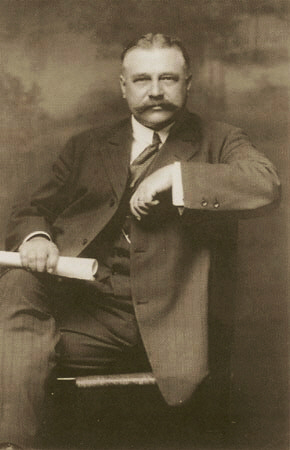
George E. Kessler completes his park and boulevard plan
Landscape architect and urban planner George Edward Kessler creates the plan for the boulevards and parks system for Indianapolis. The plan provides a framework for the expansion of the city.
Pictured: George E. Kessler, 1910
Credit: Public domain via Wikimedia CommonsView Source
The General Assemby authorizes Indiana University to conduct a medical school in Marion County
The authorization officially ends the controversy that began with establishment of a Purdue medical school in 1905. It allows IU to operate its school of medicine legally in Indianapolis for the first time.
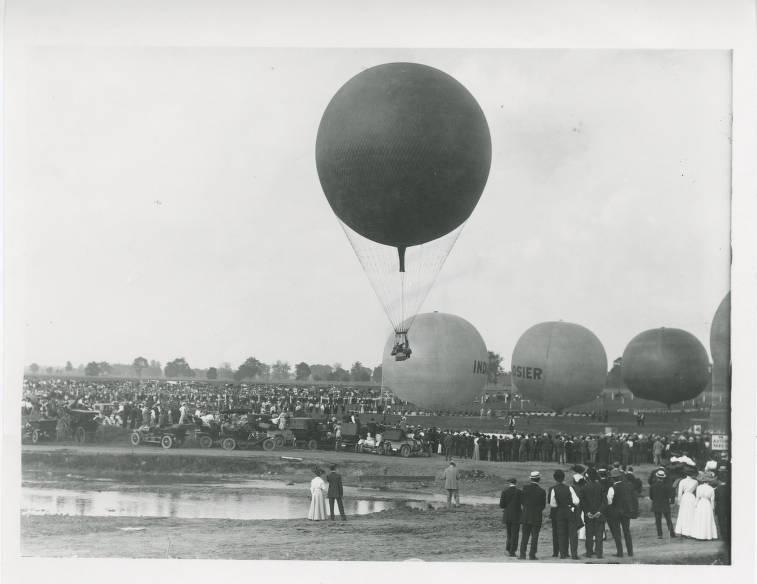
A national gas balloon race takes place at the Indianapolis Motor Speedway
The first race at the speedway is a balloon race with nine competitors. The event draws around 40,000 people to the still incomplete track.
Pictured: Preparing for the National Balloon Race held at the Indianapolis Motor Speedway in 1909.
Credit: Bass Photo Co Collection, Indiana Historical Society
View Source
Lincoln Hospital Association incorporates
African American physicians establish the organization after being barred from treating their Black patients in city hospitals. The hospital opens on December 15 and remains in operation until 1915.
Population: 233,650
The population in 1910 totals 233,650, the majority of which are recorded as white (211,780).
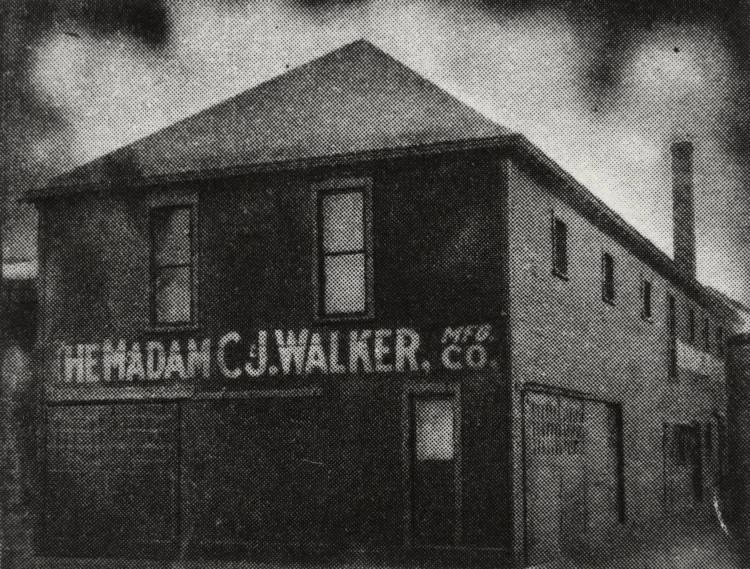
Madam C. J. Walker Manufacturing Company moves to Indianapolis
Madame C. J. Walker moves her successful haircare and product business to Indianapolis. She purchases a home at 640 N. West Street and remodels a stable and warehouse on the property into a factory and office.
Pictured: By 1911, Madam Walker turned the home she purchased at 640 North West Street into her home, office, salon and factory.
Credit: Madam C.J. Walker Collection, Indiana Historical Society
View Source
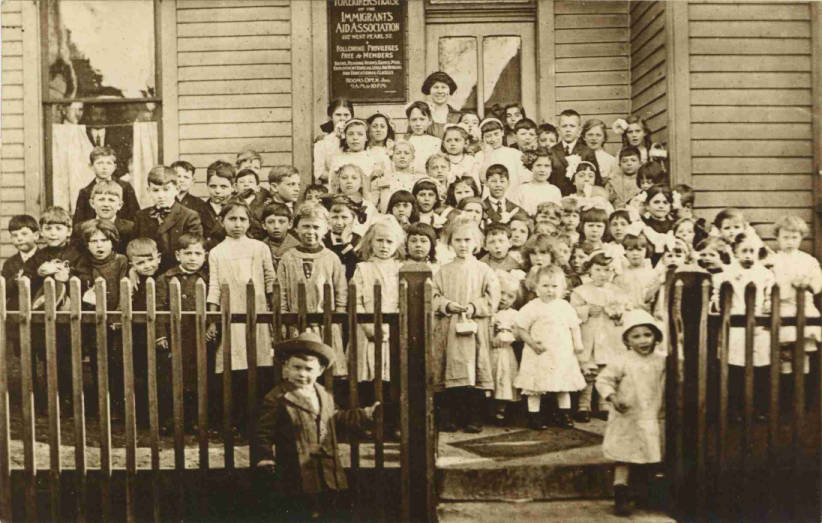
Civic leaders establish Immigrants’ Aid Association
The association opens a settlement house in October 1911 at 617 West Pearl to provide social services and Americanize the immigrants.
Pictured: Immigrant children standing in front of the Immigrant’s Aid Association, ca. 1910s
Credit: Indianapolis Public Library View Source
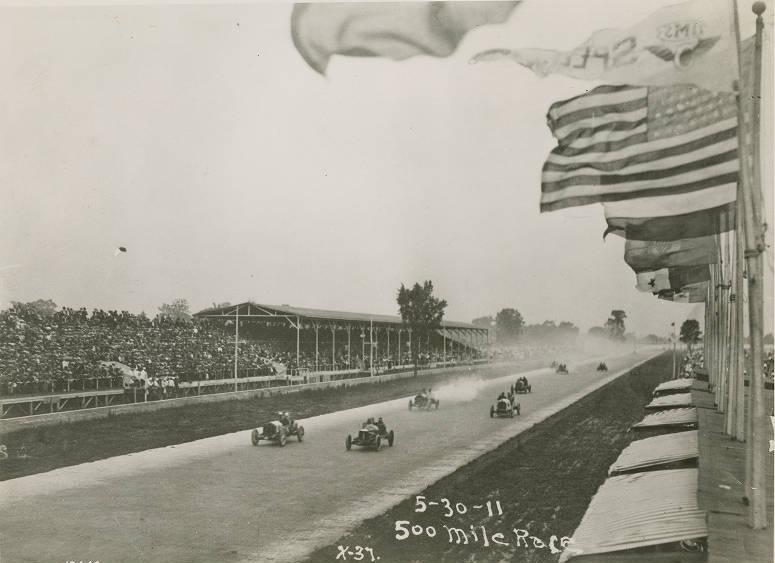
First Indianapolis 500-Mile Race
Forty cars participate in the race with Carl Fisher occupying the pole position. Ray Harroun, driving a locally built Marmon, wins the race in 6 hours and 42 minutes.
Pictured: The inaugural “International 500-Mile Sweepstakes Race,” later called the Indianapolis 500.
Credit: Indiana Historical Society View Source
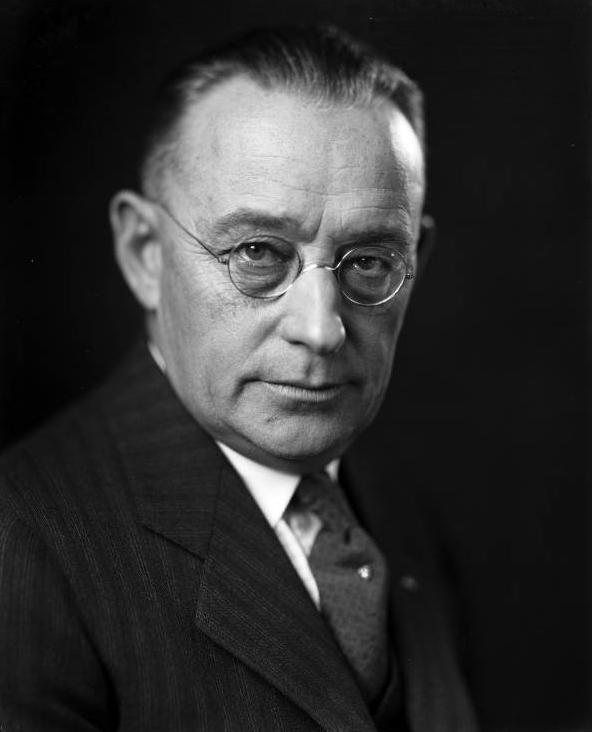
Harry Stutz begins the Ideal Motor Parts Company
Harry Stutz founds the Ideal Motor Parts Company to produce automobiles after Stutz Auto Parts Company has success with the Bearcat. Later the companies merge to form Stutz Motor Car Company.
Pictured: Harry C. Stutz, November 11, 1929
Credit: The Bretzman Collection, Indiana Historical Society View Source
Indianapolis branch of NAACP organizes
Mary Cable organizes the branch and becomes its first president. The organization helps Black citizens access rights guaranteed under U.S. Constitution. Within three years, the branch has 200 members.
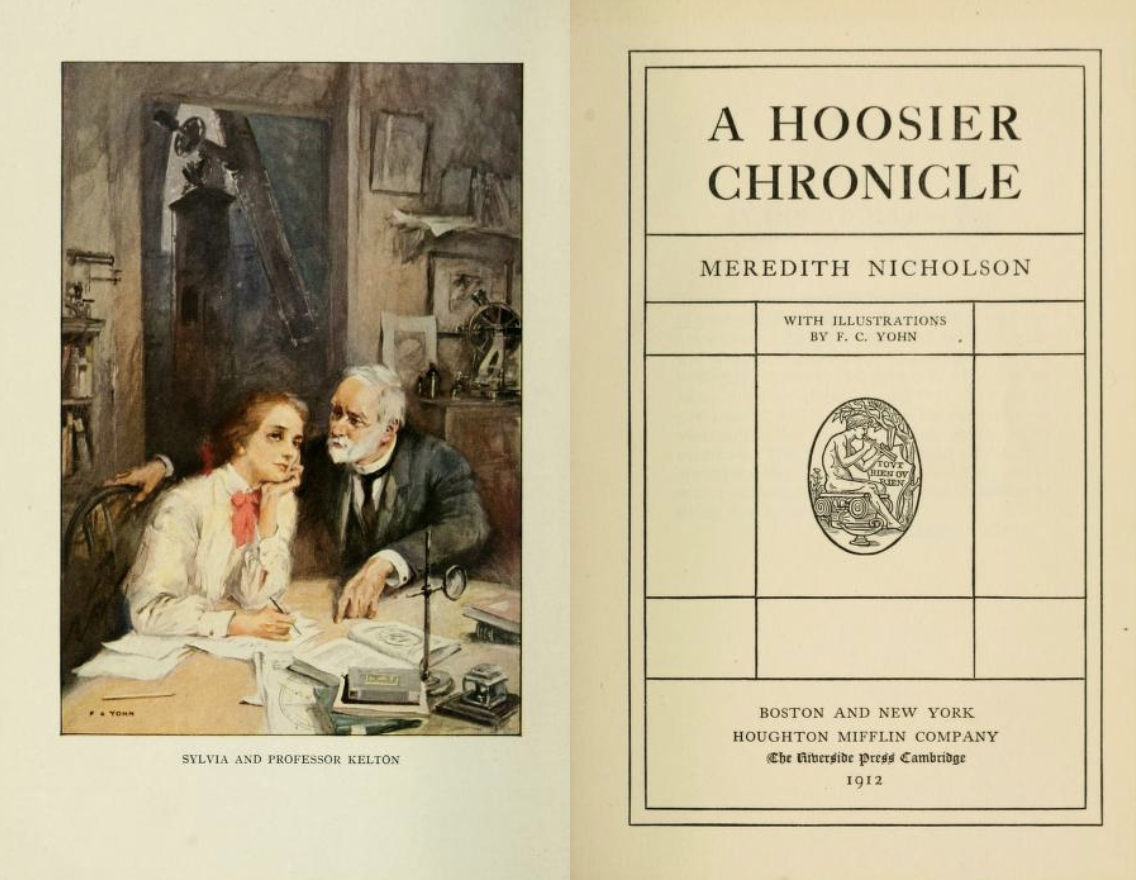
Publication of A Hoosier Chronicle
A Hoosier Chronicle, a novel written by Indianapolis author Meredith Nicholson, explores politics and society in central Indiana, particularly Indianapolis, in the early 20th century.
Pictured: The title page of A Hoosier Chronicle, 1912
Credit: Internet Archive View Source
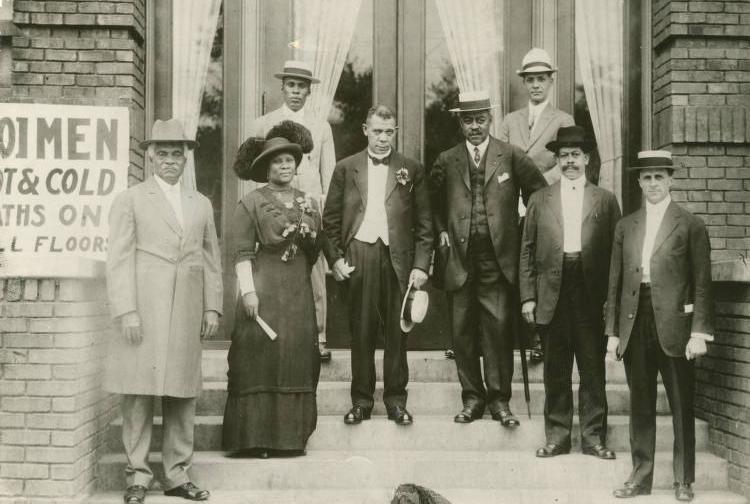
Civic leaders lay the cornerstone of the Senate Avenue YMCA
Senate Avenue YMCA construction begins in October 1912. It offers young African American men a variety of cultural, recreational, religious, and physical exercise programs. It also provides educational classes and dormitory facilities.
Pictured: Madam Walker and Booker T. Washington at YMCA Opening
Credit: Madam C.J. Walker Collection, Indiana Historical Society View Source
Luella McWhirter begins the Woman’s Department Club
Luella Frances Smith McWhirter, along with 10 other women, organizes the club to stimulate spiritual, ethical, artistic, and educational growth among Indianapolis women. The club emphasizes study and community work.
Indianapolis Church Federation organizes
The Indianapolis Church Federation is founded and led by First Baptist’s minister, Reverend Frederick E. Taylor. Many of the leading Protestant churches in the city join to coordinate their various reform efforts. It also creates a committee that seeks to regulate the location of Protestant congregations to lessen competition.
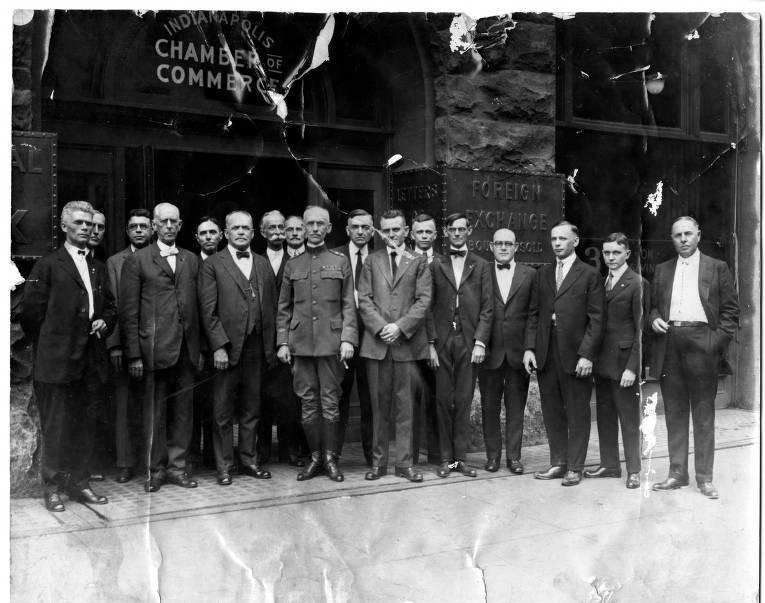
Indianapolis Chamber of Commerce established
The Commercial Club joins with other commercial organizations to form the Indianapolis Chamber of Commerce. The Chamber persuades new industries to come to the city and influences legislation.
Pictured: Indianapolis Chamber of Commerce building, n.d.
Credit: General Photograph Collection, Rare Books and Manuscripts Division, Indiana State Library
View Source
First municipal Christmas tree
Following the practice begun by New York City, Indianapolis erects its first municipal Christmas tree in University Park.
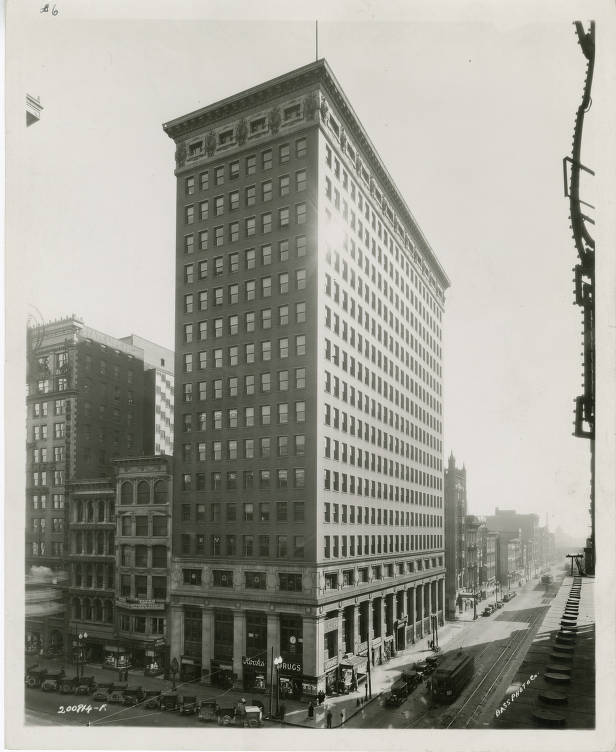
Merchants National Bank building complete
The 17-story Chicago-school building designed by Daniel H. Burnham maintains its status as the city’s tallest building for the next 50 years.
Pictured: Merchants National Bank building, 1927
Credit: Bass Photo Co Collection, Indiana Historical Society View Source
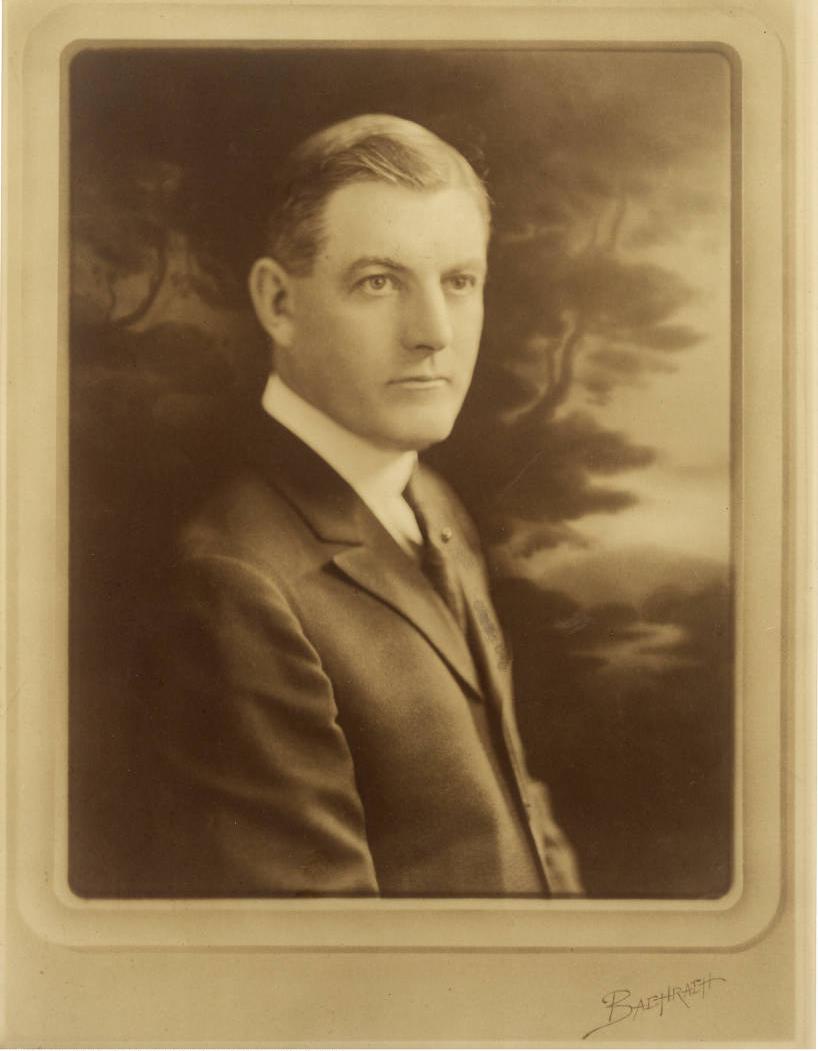
James A. Allison establishes the Allison Speedway Team Company
James A. Allison, founding partner of Prest-O-Lite Company and the Indianapolis Motor Speedway, establishes the machine shop, which later is renamed Allison Engineering Company.
Pictured: James A. Allison, ca. 1920s
Credit: Indiana Historical Society View Source
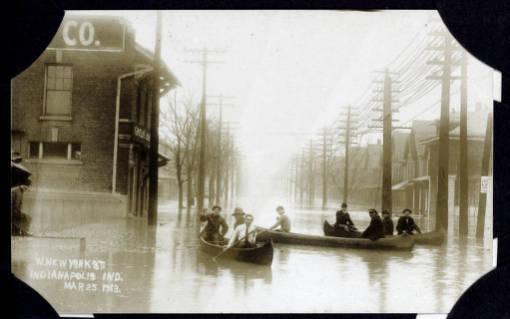
Great flood of 1913
A storm buffets the city with 60-mph winds and six inches of rain over a 24-hour period, causing levees to break. The peak flood stage is estimated at 31.5 feet.
Pictured: West New York Street after the flood of 1913.
Credit: Indiana Historical Society
View Source
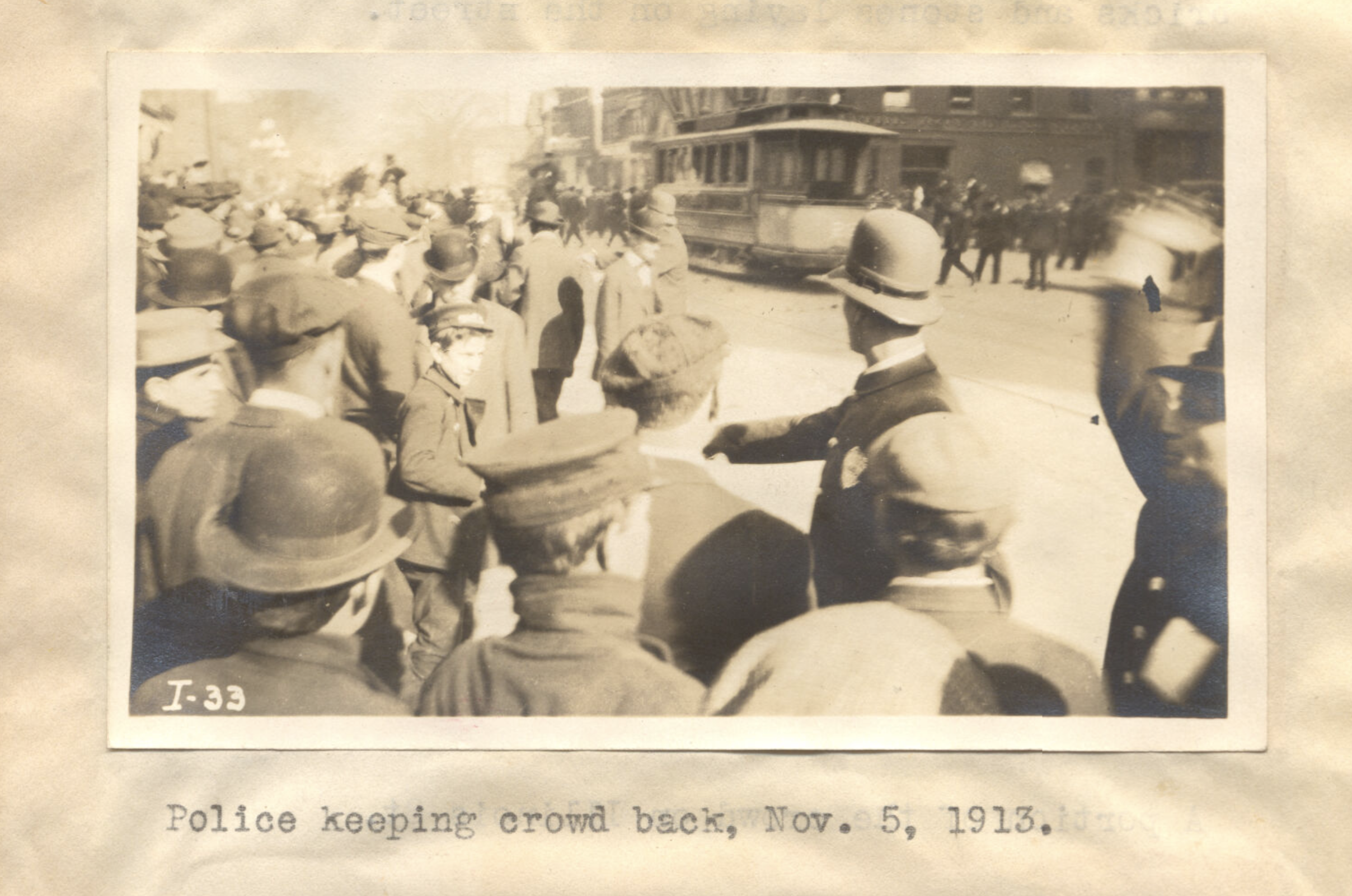
Streetcar Strike of 1913
Eight hundred streetcar operators stop work in the city for eight days to gain union recognition, higher wages, and improved working conditions. Mob activity destroys property and leads to three deaths.
Pictured: Police and crowd at street car strike, 1913
Credit: Indiana University Indianapolis View Source
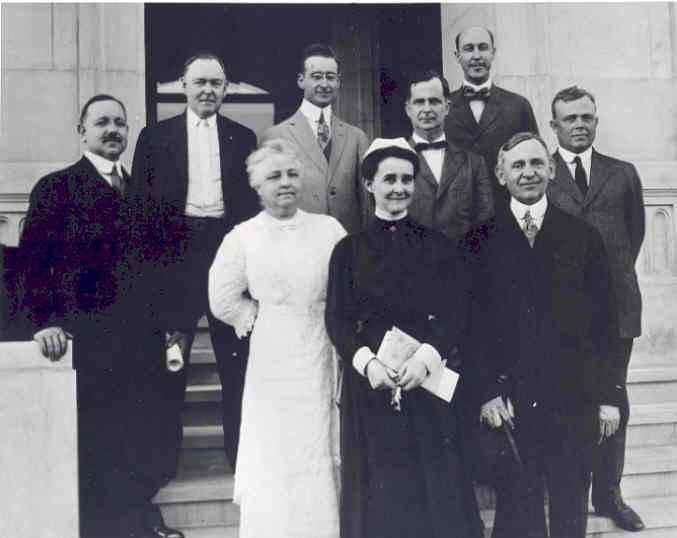
Dedication of Long Hospital
The opening of the hospital marks the beginning of the Indiana University School of Medicine campus along West Michigan Street. The hospital trains physicians, nurses, dietitians, and other medical professionals.
Pictured: Indiana University officials and hospital staff pose at the front door of Long Hospital for its dedication, 1914
Credit: Indiana University Indianapolis
View Source
Indianapolis Boy Scout Council organizes
The Indianapolis council organizes and charters a Boy Scout troop with a membership of 100 boys. F. O. Belzer is the first scout executive leader.
Three local trust companies create the Indianapolis Foundation
Fletcher Savings and Trust Company, Indiana Trust Company, and Union Trust Company adopt a joint resolution of trust to form the Indianapolis Foundation.
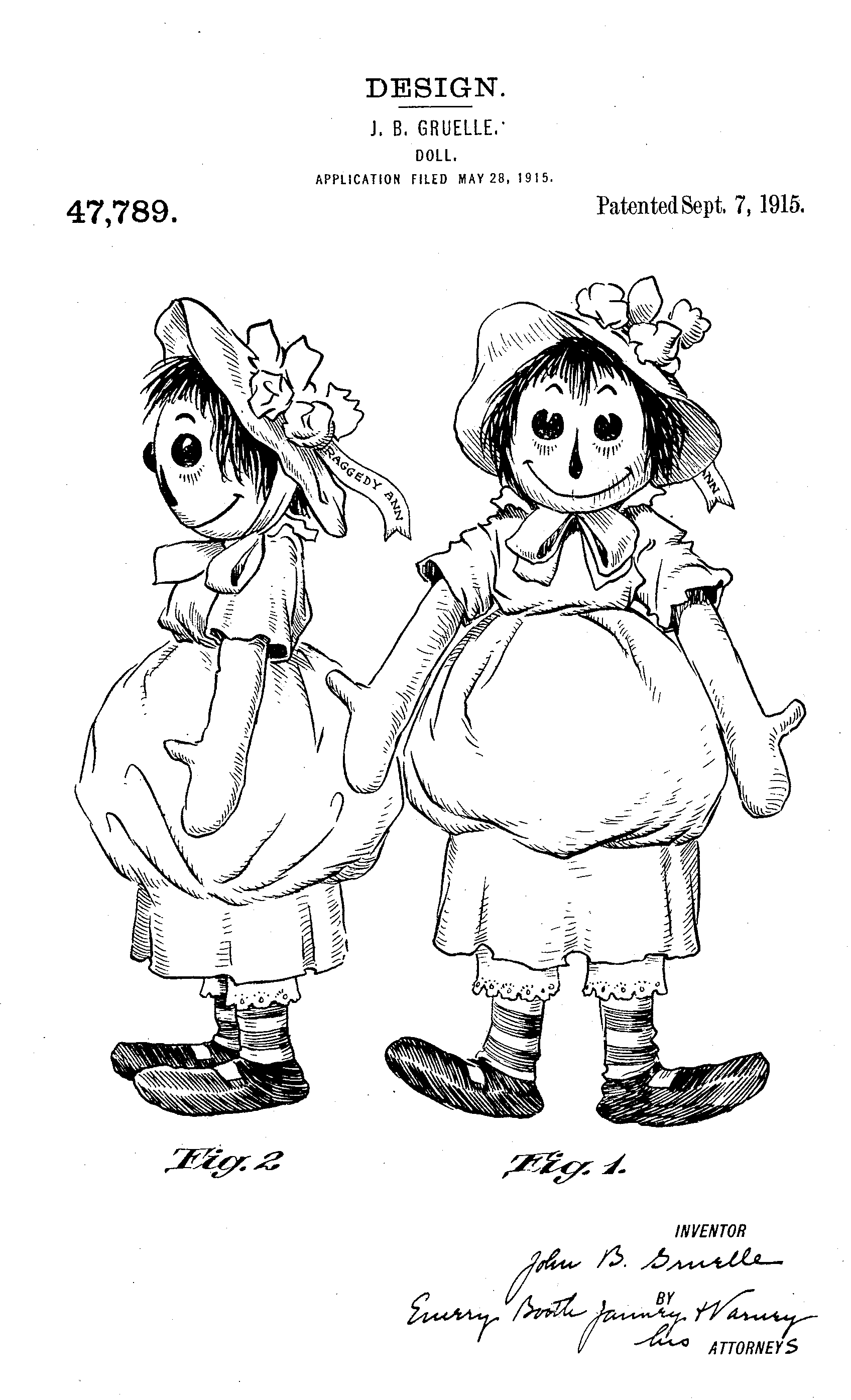
John Barton Gruelle receives patent for the Raggedy Ann doll
Former cartoonist John Barton Gruelle patents his Raggedy Ann doll. Three years later, he publishes Raggedy Ann Stories, followed by a Raggedy Andy volume.
Pictured: Raggedy Ann doll patent, 1915
Credit: Public domain
View Source
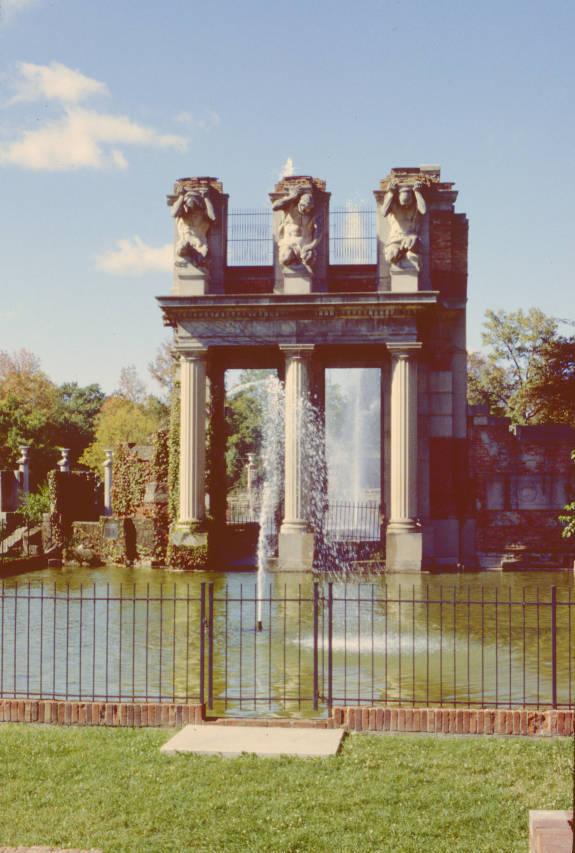
Hollidays deed their 80-acre estate to the city
John Holliday, founder of the Indianapolis News, and his wife Evaline deed their 80-acre estate to the city for use as a public park. The city names the property Holliday Park in their honor.
Pictured: Ruins at Holliday Park, ca. 1950s
Credit: Indiana Historical Society
View Source
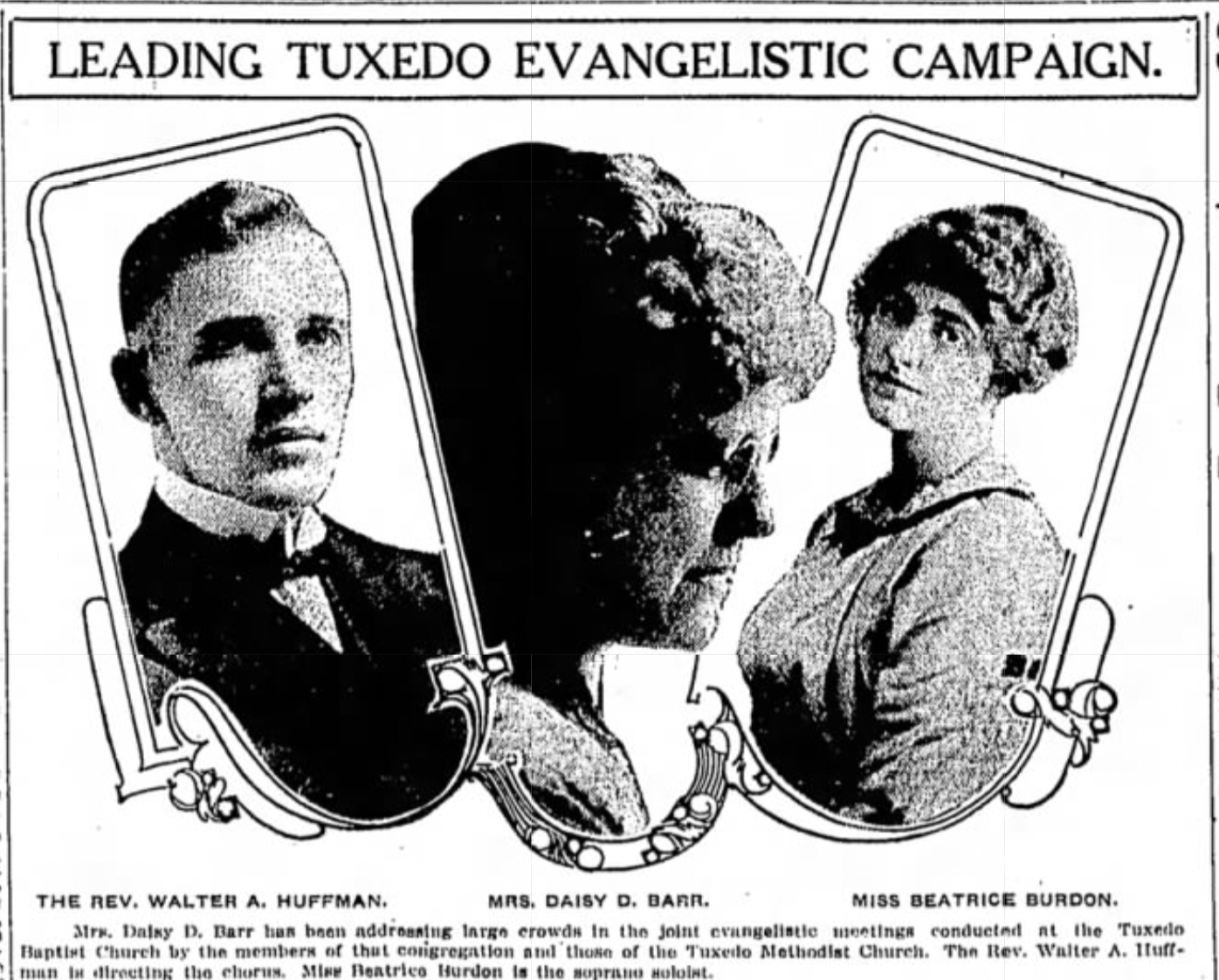
Congregations hold evangelistic campaigns in unison
The Church Federation’s “Indianapolis Plan of Evangelism” enlists all congregations to hold their annual evangelistic campaigns at the same time and to join in a citywide publicity blitz. The campaign ends on Easter Sunday, April 8, 1917.
Pictured: Announcement for evangelistic campaign at Tuxedo Baptist Church, 1916
Credit: IndyStar
View Source
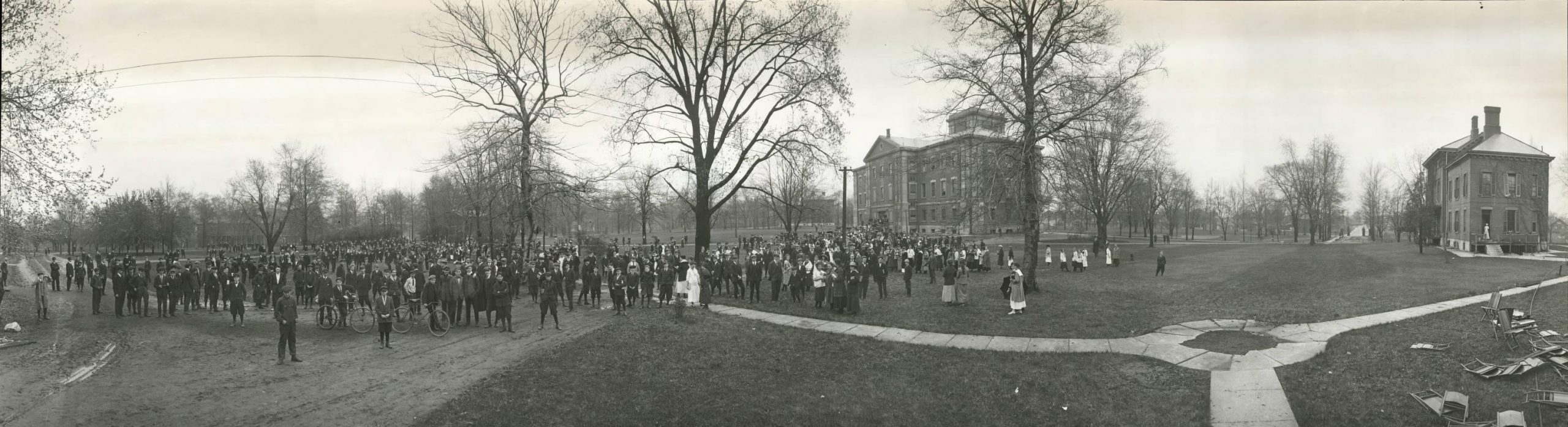
Arsenal Technical High School officially opens as a high school
Following a four-year litigation between the school board and former owners of Winona Institute, the school officially becomes the city’s third high school. It had served as a technical training school since 1912.
Pictured: Arsenal Technical High School campus, ca. 1910s
Credit: Bretzman Collection, Indiana Historical Society View Source
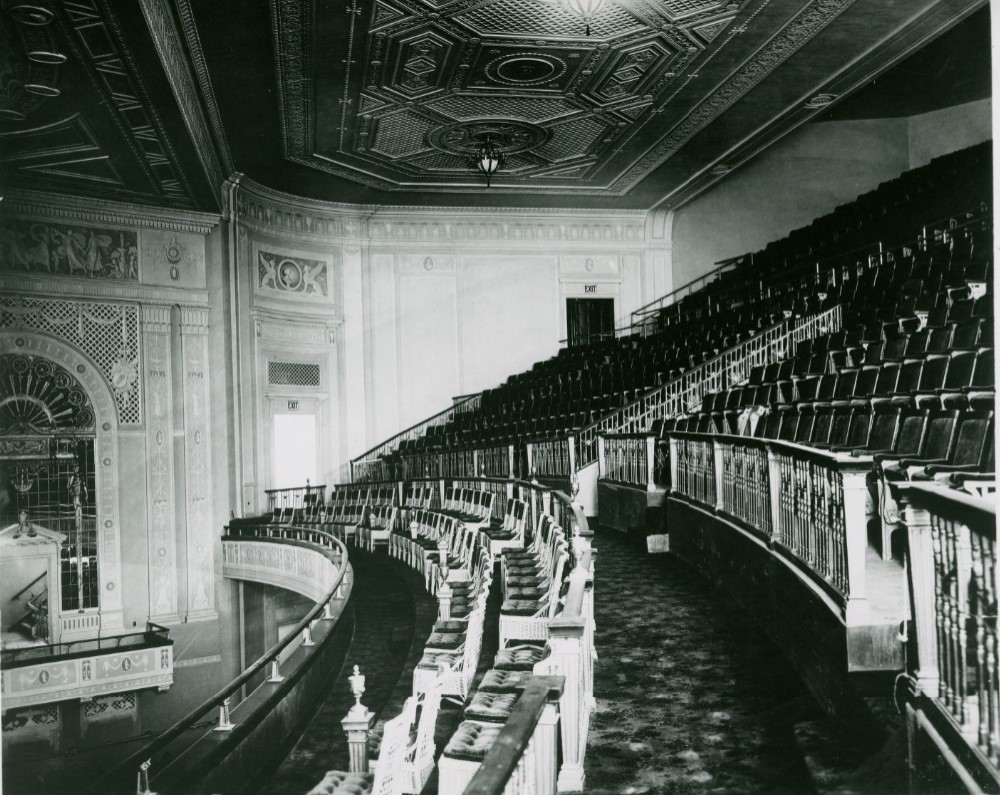
Circle Theatre opens
Led by A. L. Block and Robert Lieber, investors contribute over $500,000 to build a new theater. Circle Theatre opens as Indianapolis’ first building constructed specifically for feature-length motion pictures.
Pictured: View of the Circle Theater Balcony, 1916
Credit: Bass Photo Co Collection, Indiana Historical Society
View Source
Dr. Sumner A. Furniss elected to Indianapolis City Council
Furniss, a member of the Marion County Republican executive committee, becomes the second African American to serve on the City Council.
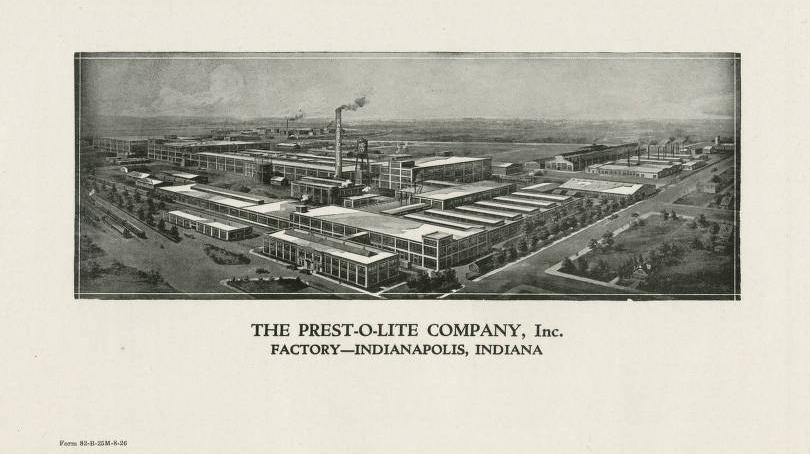
Union Carbide and Carbon Corporation acquires Prest-O-Lite
After Carl Fisher and James Allison sell Prest-O-Lite, the unit continues distributing automotive batteries until 1927 when Electric Auto-Lite Company purchases Union Carbide’s battery interest and the Prest-O-Lite name.
Pictured: Prest-O-Lite Company, Inc., factory, n.d.
Credit: Indiana Historical Society View Source
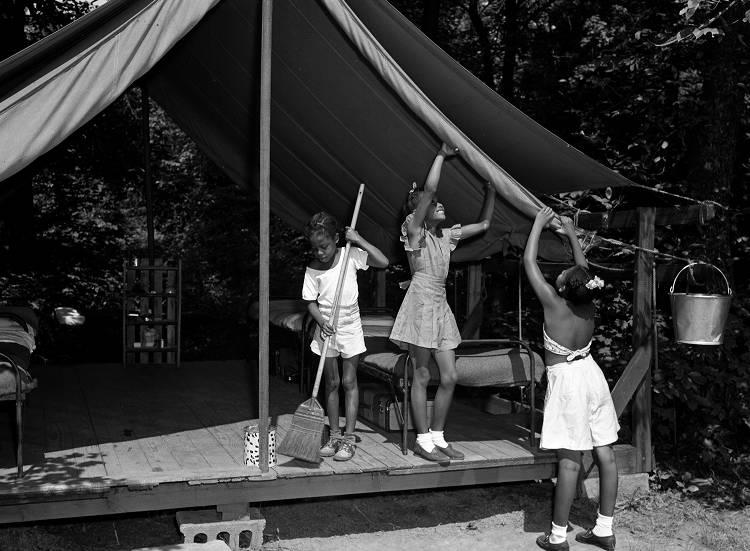
Anna Marie Ridge establishes the first local Girl Scout troop
Ridge organizes the first local troop in Irvington after corresponding with Juliette Low, national founder of Girl Scouts. There are nine troops in Indianapolis by 1919.
Pictured: Girl Scouts maintaining their tent at Camp Dellwood on the westside of Indianapolis in 1947.
Credit: Indiana Historical Society View Source
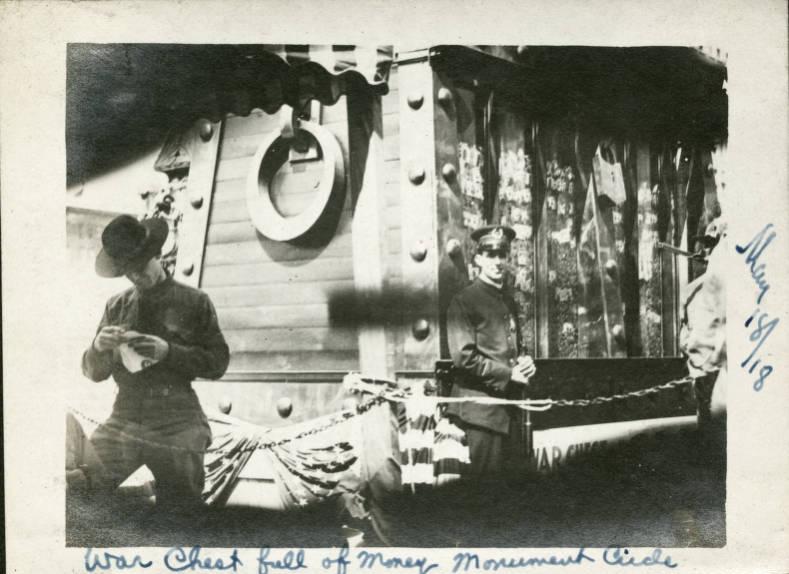
The War Chest established “to provide for all war and benevolent needs”
The Indianapolis War Chest Committee places a giant chest on Monument Circle as part of a fundraising plan. Residents monitor progress by watching the chest filled with cash and coins.
Pictured: The War Chest campaign was created by William Fortune as a more streamlined way to raise funds for local charities and for the war effort.
Credit: Indiana Historical Society
View Source
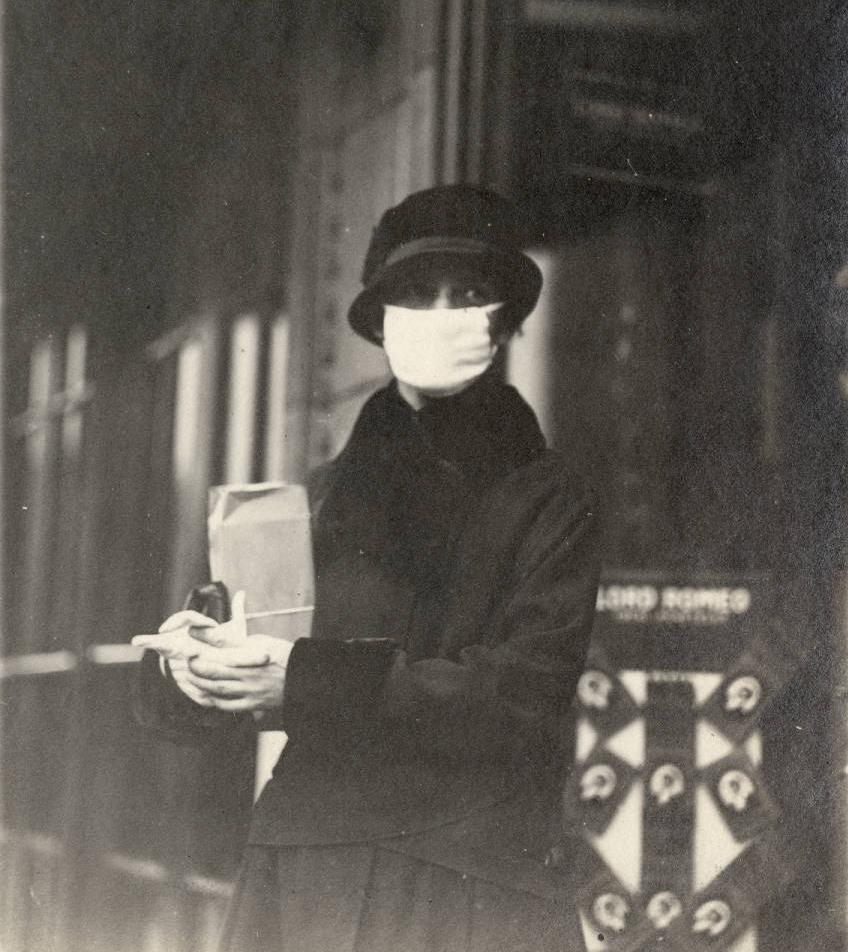
Spanish flu leads to lockdown
The first cases in the city are reported on September 19 and spread quickly, leading to the lockdown. With closures and mask mandates, cases decline. The city reopens December 2.
Pictured: A woman taking precautions during the Spanish flu, 1918
Credit: Indiana Historical Society View Source
Frank Shields, local chemical engineer, manufactures Barbasol
Shields, a former MIT professor, develops the first brushless shaving cream, which he names Barbasol. Workers fill and package the product entirely by hand in Indianapolis.
Pictured: World War II packaging for Barbasol, a standard issue for combat troops, ca. 1941-1945
Credit: J.accurate via Wikimedia Commons View Source
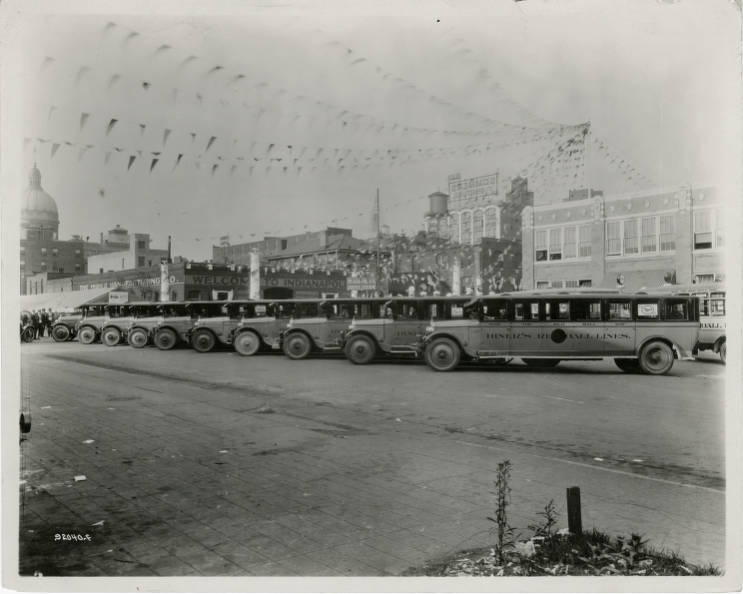
Red Ball Transit founded
Red Ball Transit becomes the nation’s first long distance moving service. Initially serving only Indianapolis and the immediate vicinity, the first branch office opens in Columbus, Ohio, in March 1921.
Pictured: Buses, Hiner’s Red Ball Lines, 1925
Credit: Bass Photo Co Collection, Indiana Historical Society View Source
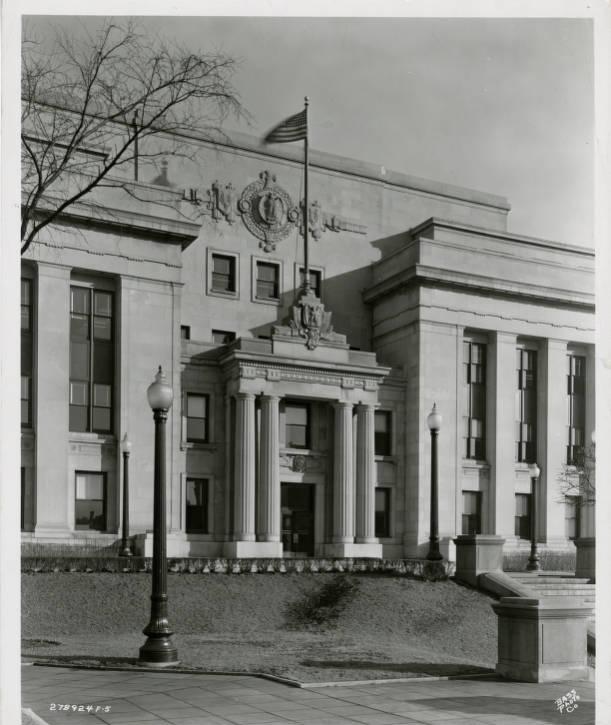
National headquarters of the American Legion locates in Indianapolis
Chartered on September 16, 1919, delegates from around the country select Indianapolis as the Legion’s national headquarters during its first national convention.
Pictured: The American Legion headquarters building, located at 700 N. Pennsylvania Street, was constructed in 1924.
Credit: Bass Photo Co Collection, Indiana Historical Society
View Source
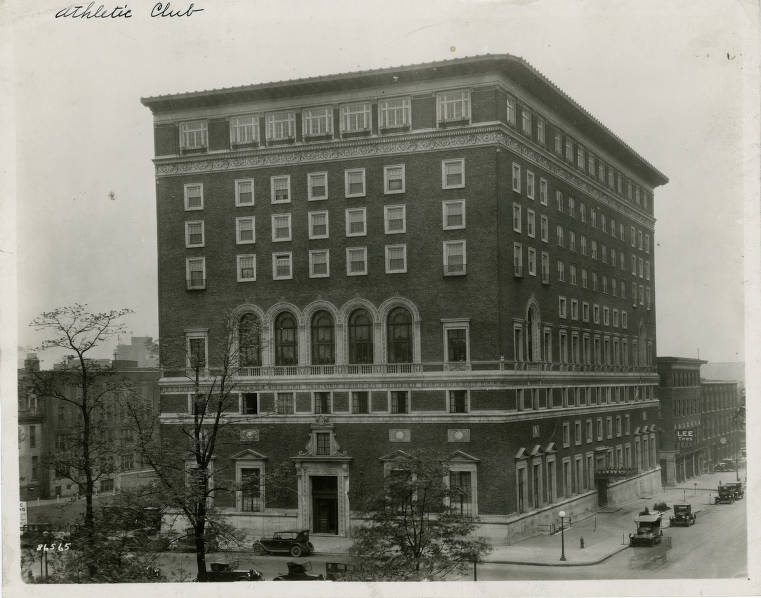
Indianapolis Athletic Club incorporates
A group of Indianapolis businessmen incorporates the club to “promote clean sports, amusement, and sociability” among members. Its building at Meridian and Vermont streets is completed in January 1924.
Pictured: Indianapolis Athletic Club, 1924
Credit: Bass Photo Co Collection, Indiana Historical Society View Source
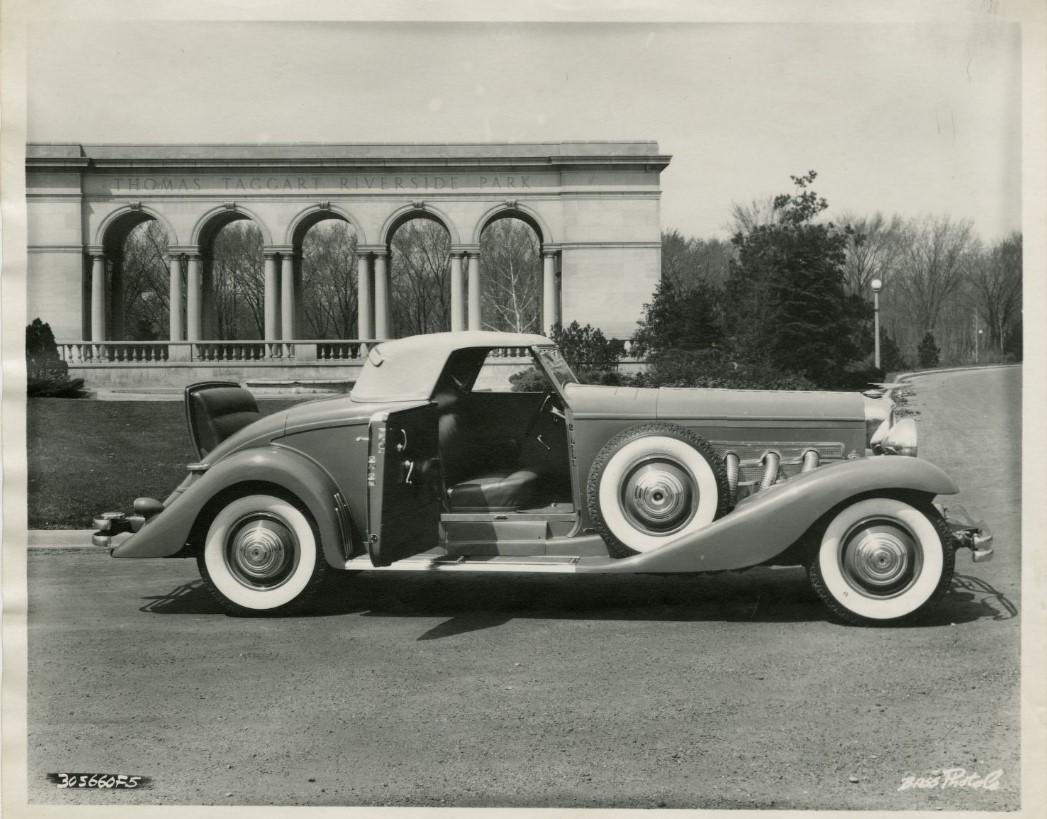
Duesenberg Automobile and Motors Company established
Duesenberg Automobile and Motors Company, Inc., establishes a factory on West Washington Street at Harding Street to build passenger cars. Its automobiles gain a reputation for being luxurious and well-engineered.
Pictured: Duesenberg model photographed in front of the Thomas Taggart Memorial at Riverside Park in Indianapolis, n.d.
Credit: Bass Photo Co Collection, Indiana Historical Society View Source
Population: 314,194
The population in 1920 totals 314,194, the majority of which are recorded as white (279,411).
Community Chest organizes
The precursor to the United Way of Central Indiana, the Community Chest forms to unite fundraising efforts. It also coordinates activities of 40 different community service organizations.
League of Women Voters established
After the 19th Amendment ensures women’s right to vote, the Indianapolis Branch of the Woman’s Franchise League of Indiana disbands and establishes a League of Women Voters of Indianapolis in its place.
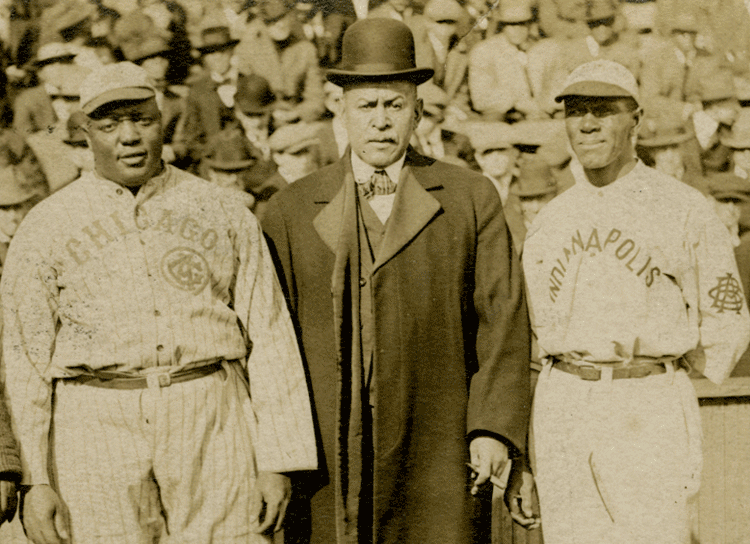
Washington Park hosts first game of the Negro National League
The Negro National League incorporates with teams in six midwestern cities. Indiana’s team is the Indianapolis ABCs, managed by C. I. Taylor, a famed early Black baseball manager.
Pictured: Rube Foster of the Chicago American Giants, J. D. Howard, and C. I. Taylor of the Indianapolis ABCs, 1916
Credit: Public Domain
View Source
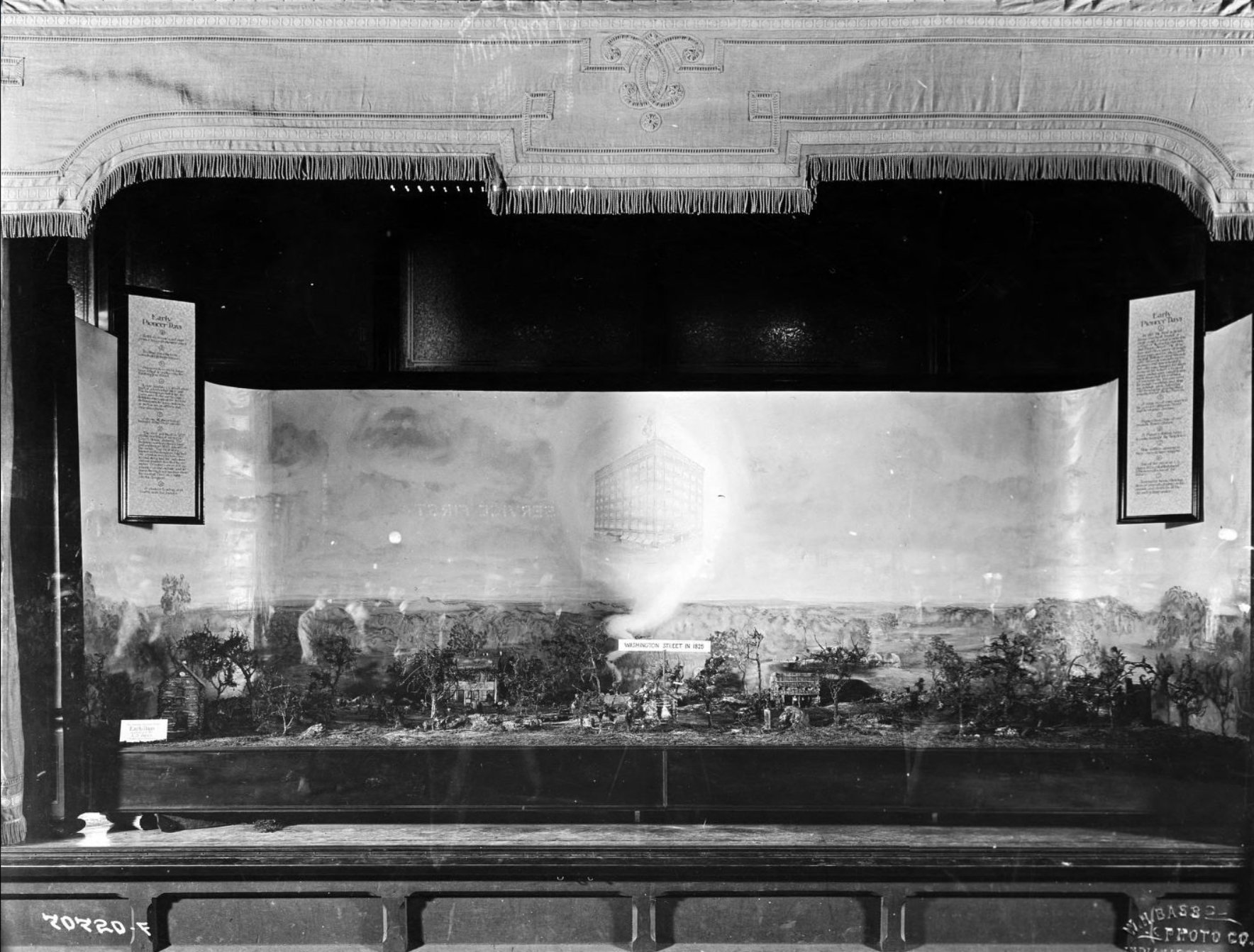
City celebrates centennial
The centennial celebration takes place June 5-10. Festivities begin with a mass meeting at Tomlinson Hall. Other events include musical performances, a street parade, a pageant, and a riverboat display.
Pictured: L.S. Ayres celebrates the Indianapolis centennial with an elaborate window display showing Washington Street as it was in 1825.
Credit: W. H. Bass Photo Company Collection, Indiana Historical Society
View Source
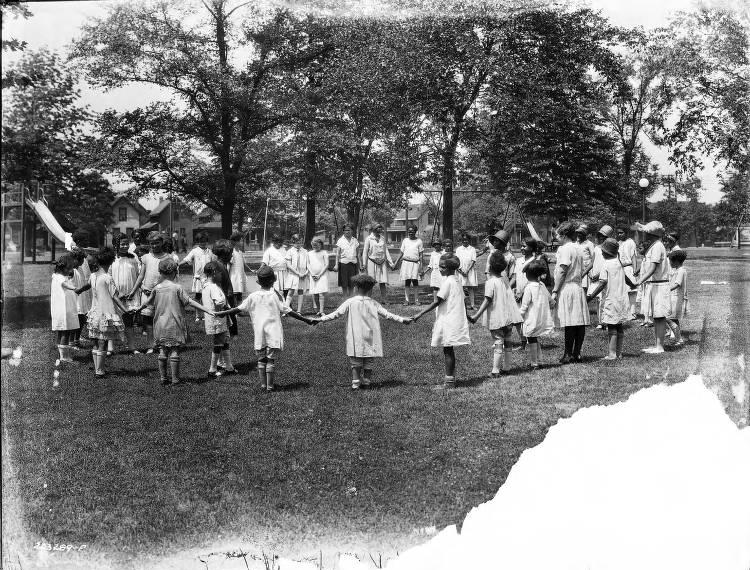
Phyllis Wheatley Branch of the YWCA organizes
This branch seeks to educate and empower the women and girls of Indianapolis’s African American community. It opens in a building that previously housed the Senate Avenue YMCA.
Pictured: Children Playing at the Phyllis Wheatley YWCA, 1927
Credit: Bass Photo Co Collection, Indiana Historical Society
View Source
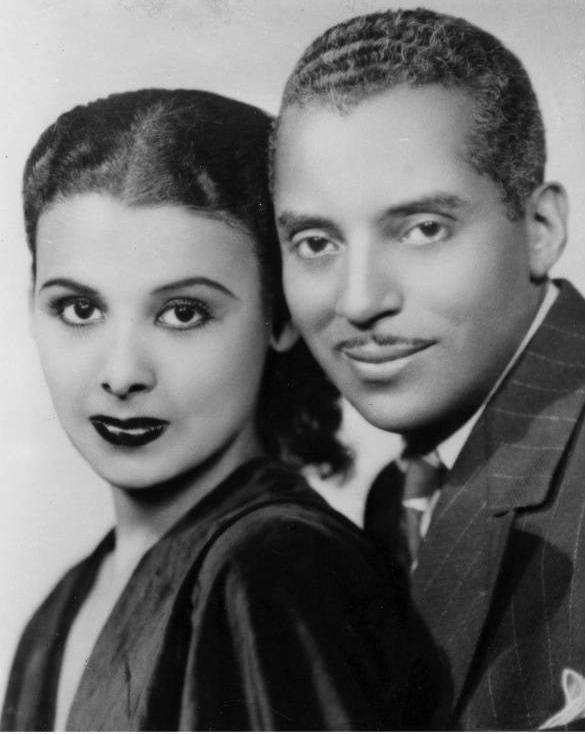
Premiere of Shuffle Along, a musical
Indianapolis native Noble Sissle writes and produces the musical with three other musicians. It marks the revival of African American folk humor, jazz dance, and Ragtime.
Pictured: Noble Lee Sissle with Lena Horne, ca. 1920s.
Credit: Indiana Historical Society View Source
First radio station launches
Francis F. Hamilton begins broadcast of 9ZJ, later WLK, from his garage at 2011 North Alabama Street.
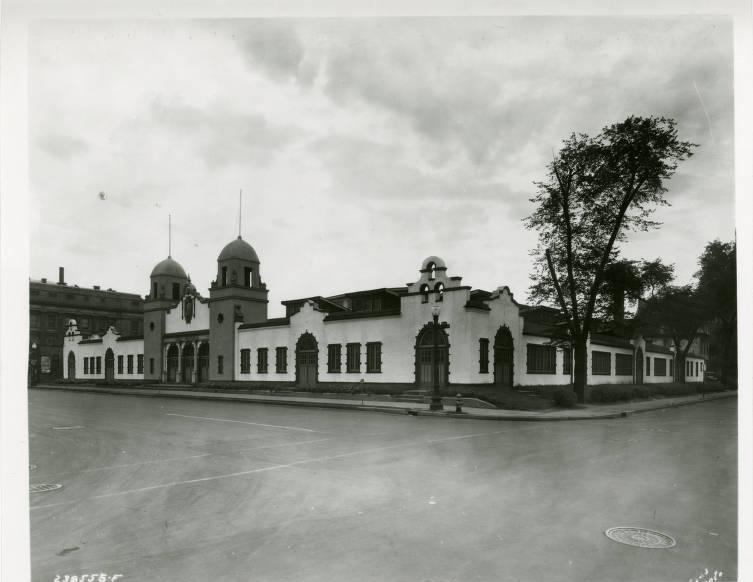
Cadle Tabernacle opens
The 10,000-seat revival and convention center opens as a site for large-scale religious gatherings. During the 1920s, it also hosts Ku Klux Klan rallies, dance marathons, and prize fights.
Pictured: Cadle Tabernacle, the center of revival and evangelistic activity in the city, 1937
Credit: Bass Photo Co Collection, Indiana Historical Society View Source
Frederick Douglass Park opens
Named for abolitionist Frederick Douglass, the Indianapolis Parks Department designates the park as separate and solely for African Americans. This discriminatory policy lasts until the 1960s. Activities at the park include little league baseball, golf, and social events.
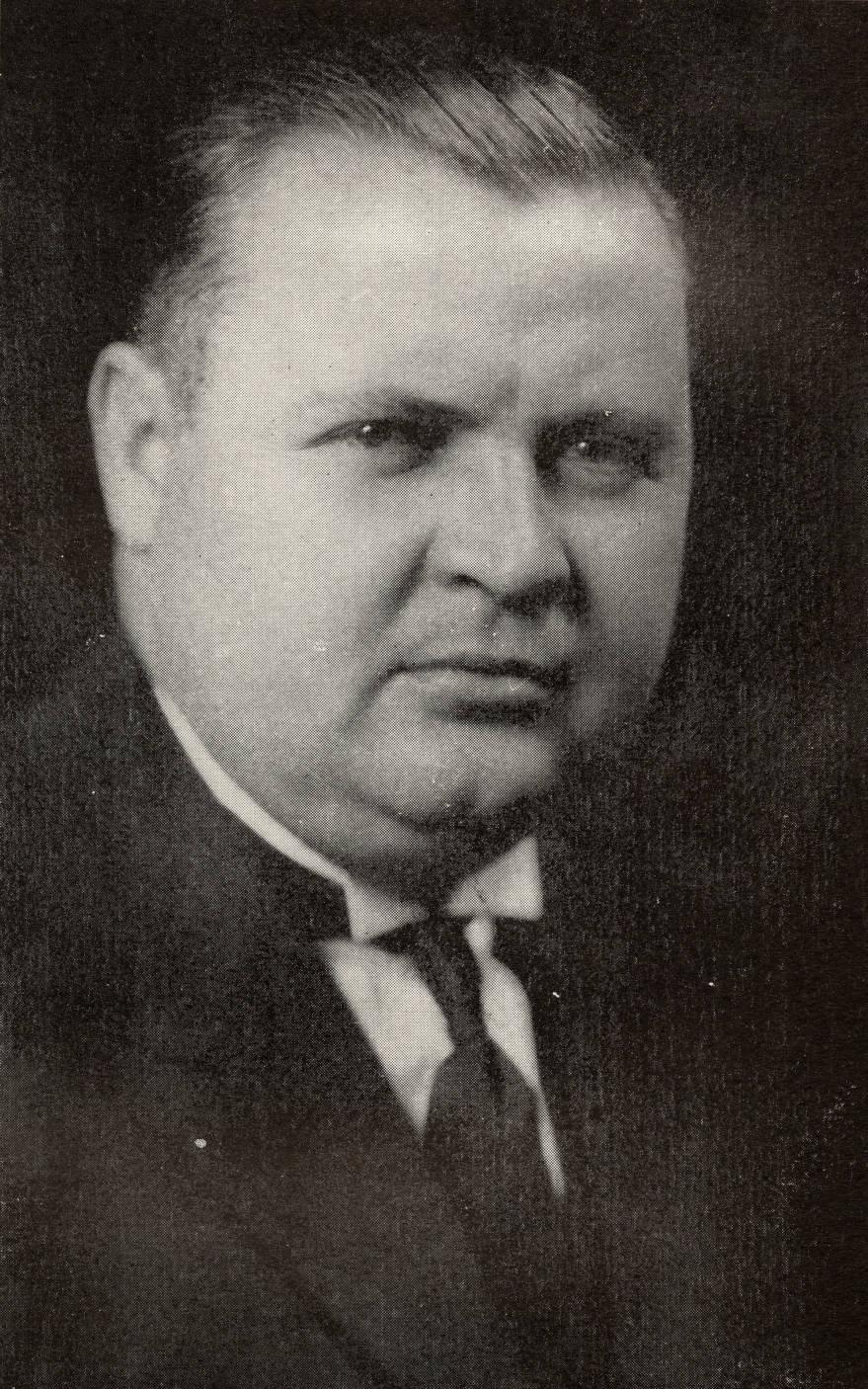
David Curtis Stephenson moves to Indianapolis and becomes Grand Dragon of the KKK
Stephenson reigns over the KKK in Indiana and 22 other northern states. Under his leadership, the Klan grows in numbers and gains extensive political influence in state and local governments.
Pictured: David Curtis Stephenson, Indiana Ku Klux Klan Grand Dragon, 1927
Credit: Indiana Historical Society View Source
First city in Indiana to pass zoning legislation
The Common Council creates a City Plan Commission and passes the city’s first zoning ordinance. This ordinance establishes five types of use districts: residential, apartment, business, and two industrial districts.
Second radio station begins broadcasting
Noble B. Watson begins WOH with a sponsorship by the Hatfield Electronics Company. It is the first station to broadcast the Indianapolis 500-Mile Race.
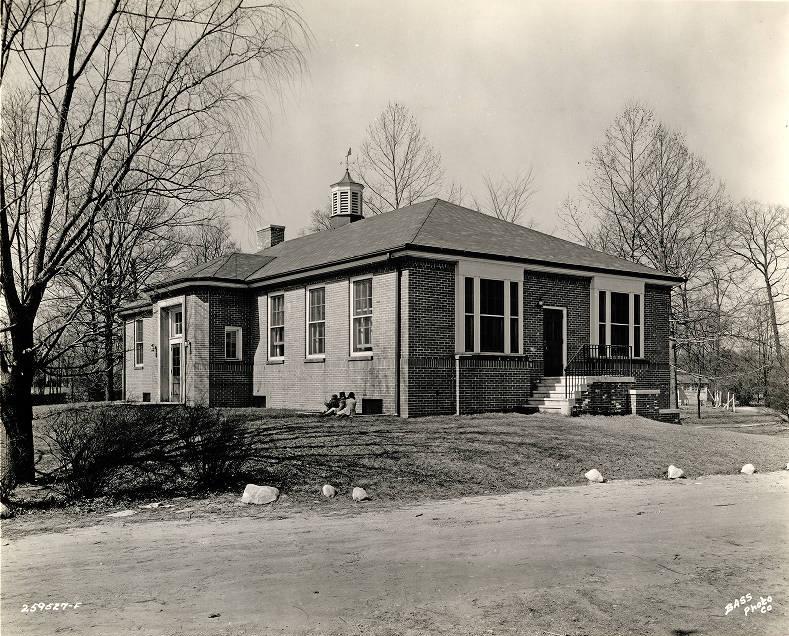
Orchard Country Day School opens
Nine local women establish the experimental school based on the “Organic School Model.” The school, located in the home and apple orchard of Mary Stewart Carey, begins with 20 students.
Pictured: Orchard School, 1943
Credit: Indiana Historical Society
View Source
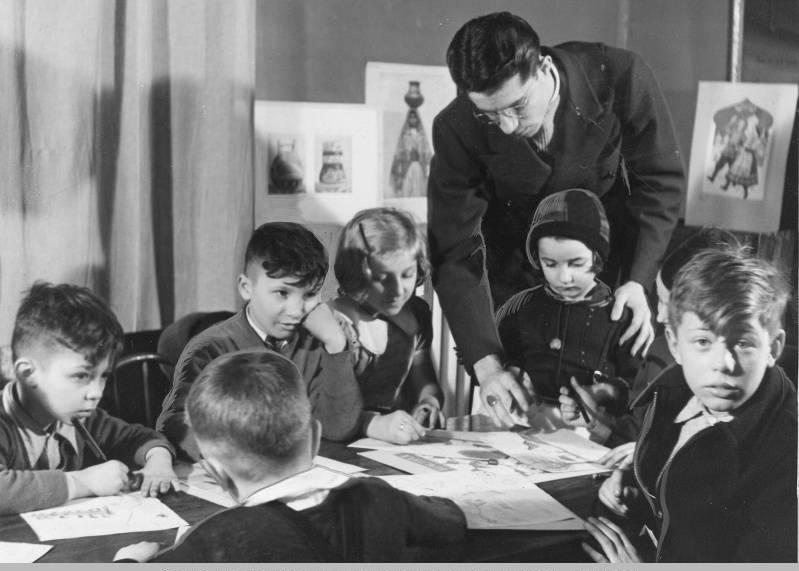
American Settlement created
The settlement forms through a consolidation of the Foreign House, established by the Immigrants’ Aid Association, and the Presbyterian Chapel, which works mainly with Bulgarian and Romanian immigrants.
Pictured: Drawing and Art Appreciation class for children at the American Settlement, 1937
Credit: Indiana University Indianapolis
View Source
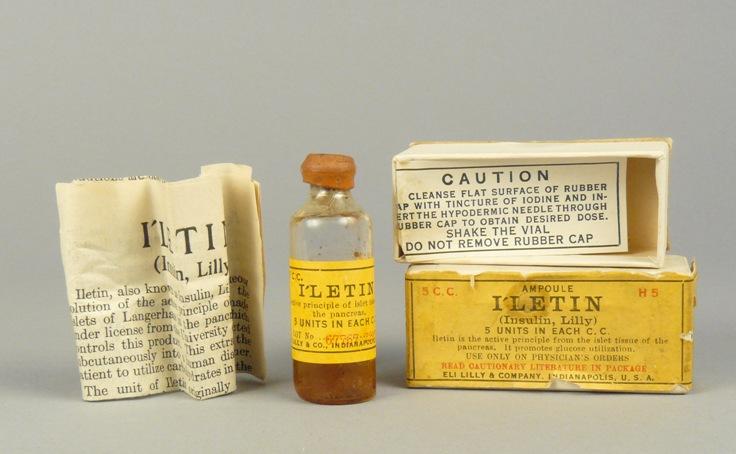
University of Toronto permits Eli Lilly and Company’s general distribution of insulin
Through its collaboration with the University of Toronto, Lilly and Co. develops Iletin, the world’s first commercially produced insulin. The lifesaving diabetes treatment results in a Nobel Prize for the investigators with whom Lilly worked to produce the product.
Pictured: Iletin Insulin, Lilly, 1920s
Credit: National Museum of American History.
View Source
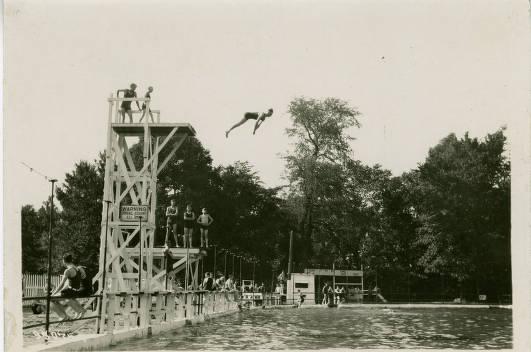
Olympic swimming tryouts in Broad Ripple
Broad Ripple Park hosts the Olympic swimming tryouts from June 5th through June 7th. Johnny Weissmuller, soon-to-be Hollywood Tarzan, wins 100-meter freestyle qualification.
Pictured: Broad Ripple Park swimming pool, divers, 1925
Credit: Bass Photo Co Collection, Indiana Historical Society
View Source
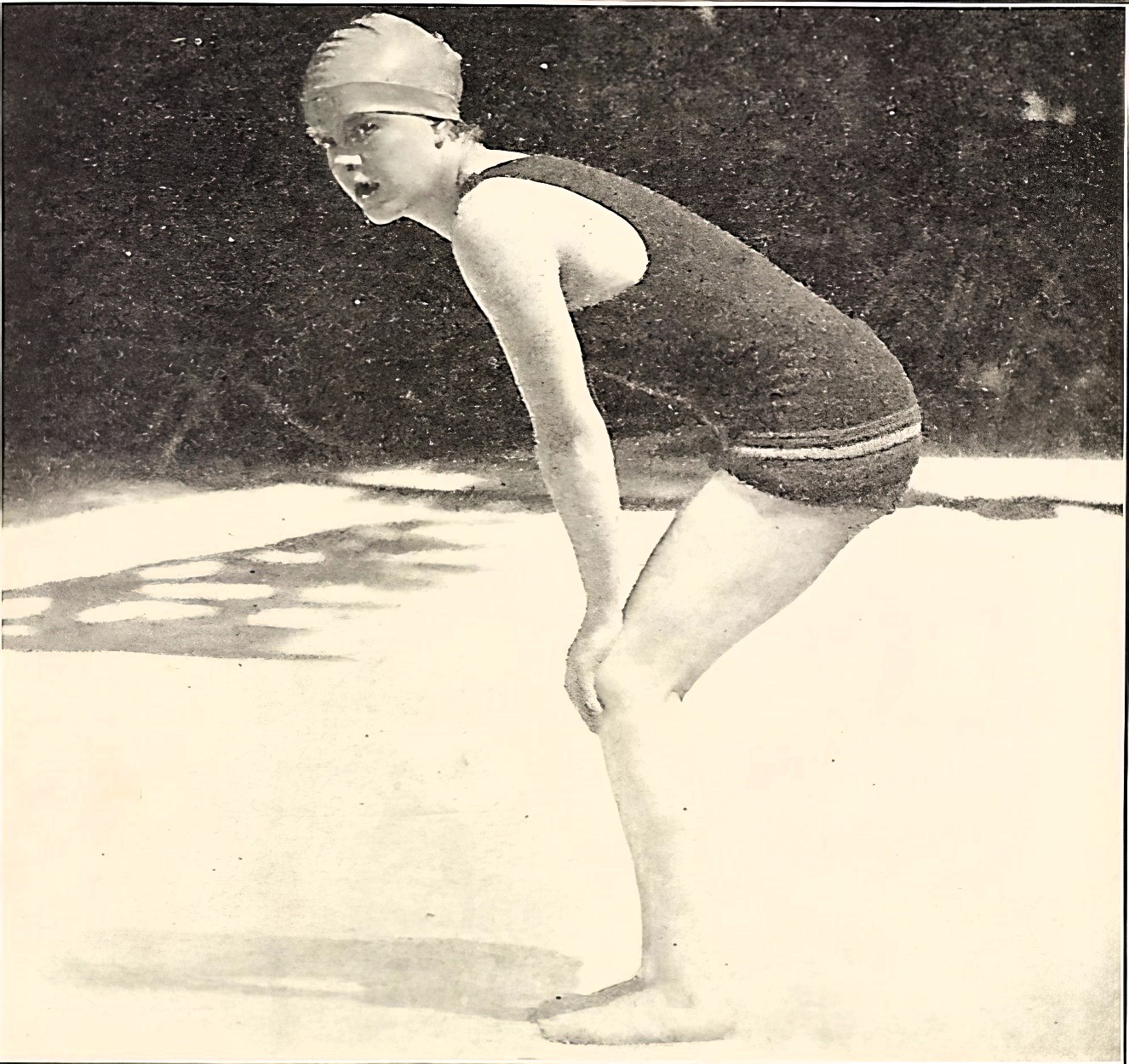
Euphrasia “Fraze” Donnelly becomes the first woman from Indianapolis to win an Olympic Gold medal
Donnelly, a 19-year-old member of the Hoosier Athletic Club swim team, wins the medal in the 4X100-meter women’s freestyle event at the Paris Summer Olympic Games. She and her team members break the world record with a time of 4:58.80.
Pictured: Fraze Louise Donnelly at a pool, ca. 1920s
Credit: Indianapolis Public Library View Source
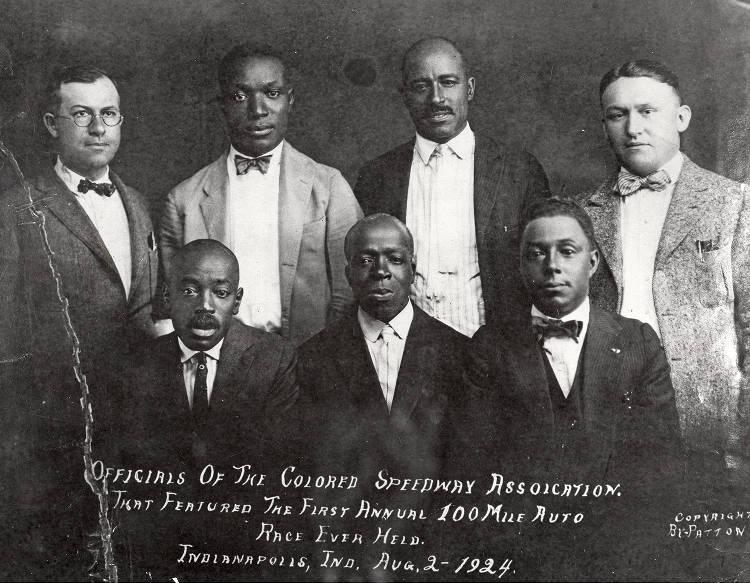
First running of the Gold and Glory Sweepstakes
African American civic leaders Robert Brokenburr, William “Pres” Ruckner, and white promoter Harry S. Earl establish the Colored Speedway Association when Black race drivers are turned away from the Indianapolis 500-Mile Race. They organize the sweepstakes, which runs at the Indiana State Fairgrounds from 1924 to 1936.
Pictured: The Colored Speedway Association Officials, shown here in 1924, established the Gold and Glory Sweepstakes Race.
Credit: Indiana Historical Society View Source
Dedication of James Whitcomb Riley Hospital for Children
The James Whitcomb Riley Hospital for Children, then Indiana’s only children’s hospital, is dedicated on the anniversary of Riley’s birthday. The hospital begins treating patients on November 19th.
Pictured: Occupational Therapy at Riley Hospital, 1929
Credit: Indiana University Indianapolis
View Source
WFBM radio begins broadcasting
Clem Portman, John Tribby, Hobart Ashlock, and Frank Sharp introduces WFBM radio to Indianapolis listeners. The first broadcast features presidential election results.
Pictured: WFBM broadcasting station on the State Fairgrounds, 1937
Credit: Indiana Archives and Records Administration
View Source
Mary Stewart Carey founds The Children’s Museum of Indianapolis
Carey and several other civic leaders found the museum in the Propylaeum’s carriage house. Children and their families donate to its collections.
Pictured: Mary Stewart Carey, ca. 1930s
Credit: Indianapolis Public LibraryView Source
Former Marion County treasurer and Klan member John L. Duvall elected Mayor
Duvall defeats Democrat Walter Myers in November in the race for mayor, marking the triumph of a Klan-sponsored slate of candidates.
Pictured: John L. Duvall wins 1925 mayoral election
Credit: Indianapolis Star.
View Source
Jim Morris, civic and Pacers leader, dies
Trial jury hands down a guilty verdict for Stephenson, Grand Dragon of the Ku Klux Klan, for his role in the death of Madge Oberholtzer, whom he brutally raped. He serves 31 years.
Pictured: Madge Oberholtzer, 1917
Credit: Indiana Historical Society View Source
The Jewish Welfare Fund established
The Jewish Welfare Fund forms to raise funds for local, national, and international Jewish communities. The fund provides relief to individual families as well as to Jewish agencies.
Crispus Attucks High School, an all-Black school, opens
Indianapolis opens Crispus Attucks High School to segregate the city’s public secondary education. Matthias Nolcox becomes the first principal and assembles a staff of African American professionals from around the country.
Pictured: Crispus Attucks High School students, 1939
Credit: Indiana Historical Society View Source
Mayor John Duvall resigns at the insistence of the city council
After being convicted of violating the state’s corrupt practices act, sentenced to 30 days in jail, and fined $1,000, Duvall resigns as mayor.
Walker Theatre initial opening
Completed eight years after the death of Madam C. J. Walker, the finished segments of the theatre building open during Christmas week. The entire building opens in August 1928 during the annual Madam Walker Convention.
Butler University constructs its fieldhouse
Construction of the Butler Fieldhouse (now Hinkle Fieldhouse ) is complete. The college basketball arena becomes “Indiana’s Basketball Cathedral.” Butler’s basketball team and coach Tony Hinkle gain national attention.
Pictured: Butler University, Butler (Hinkle) Fieldhouse, 1929
Credit: Bass Photo Co Collection, Indiana Historical Society
View Source
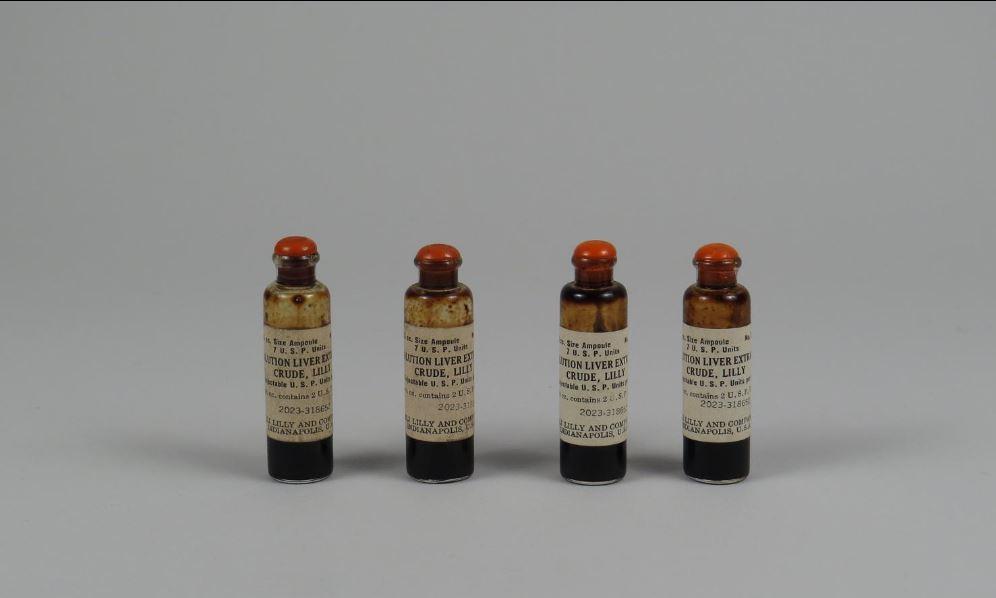
The Indianapolis News announces Eli Lilly and Company product that treats pernicious anemia
Lilly Laboratories develop the liver extract in collaboration with Harvard University scientists. The discovery results in the second Nobel Prize for medicine connected to the company in a decade–the first being for insulin in 1923.
Pictured: Eli Lilly and Company Liver Extract Crude for the treatment of pernicious anemia, ca. 1928
Credit: National Museum of American History
View Source
Indianapolis Times wins Pulitzer Prize for exposé on Ku Klux Klan
The Times receives the Pulitzer Prize for its 1927 series exposing Ku Klux Klan activities in Indiana and helping to break the strength of that organization in the state.
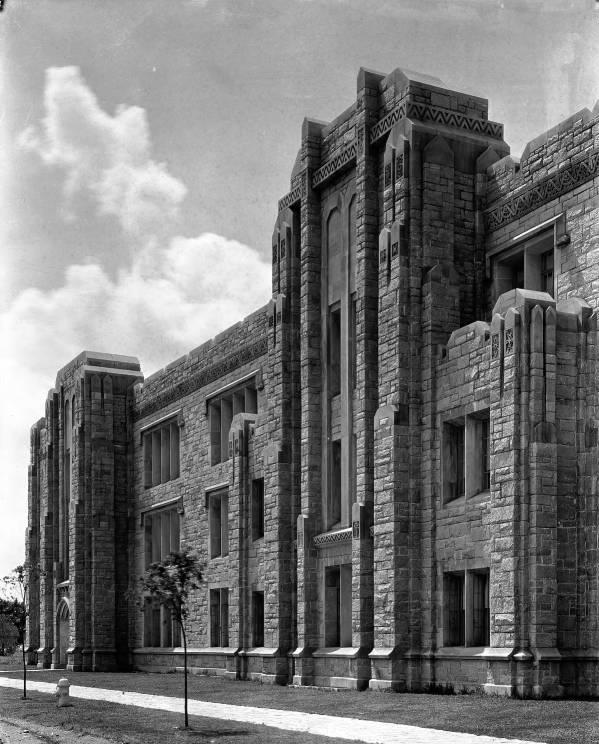
Butler University builds Arthur Jordan Memorial Hall on new campus
Butler University moves to its third campus, the area of former Fairview Park. Arthur Jordan Memorial Hall, funded by Arthur Jordan, becomes the first academic building constructed on the campus.
Pictured: Arthur Jordan Memorial Hall, 1929
Credit: Bass Photo Co Collection, Indiana Historical Society View Source
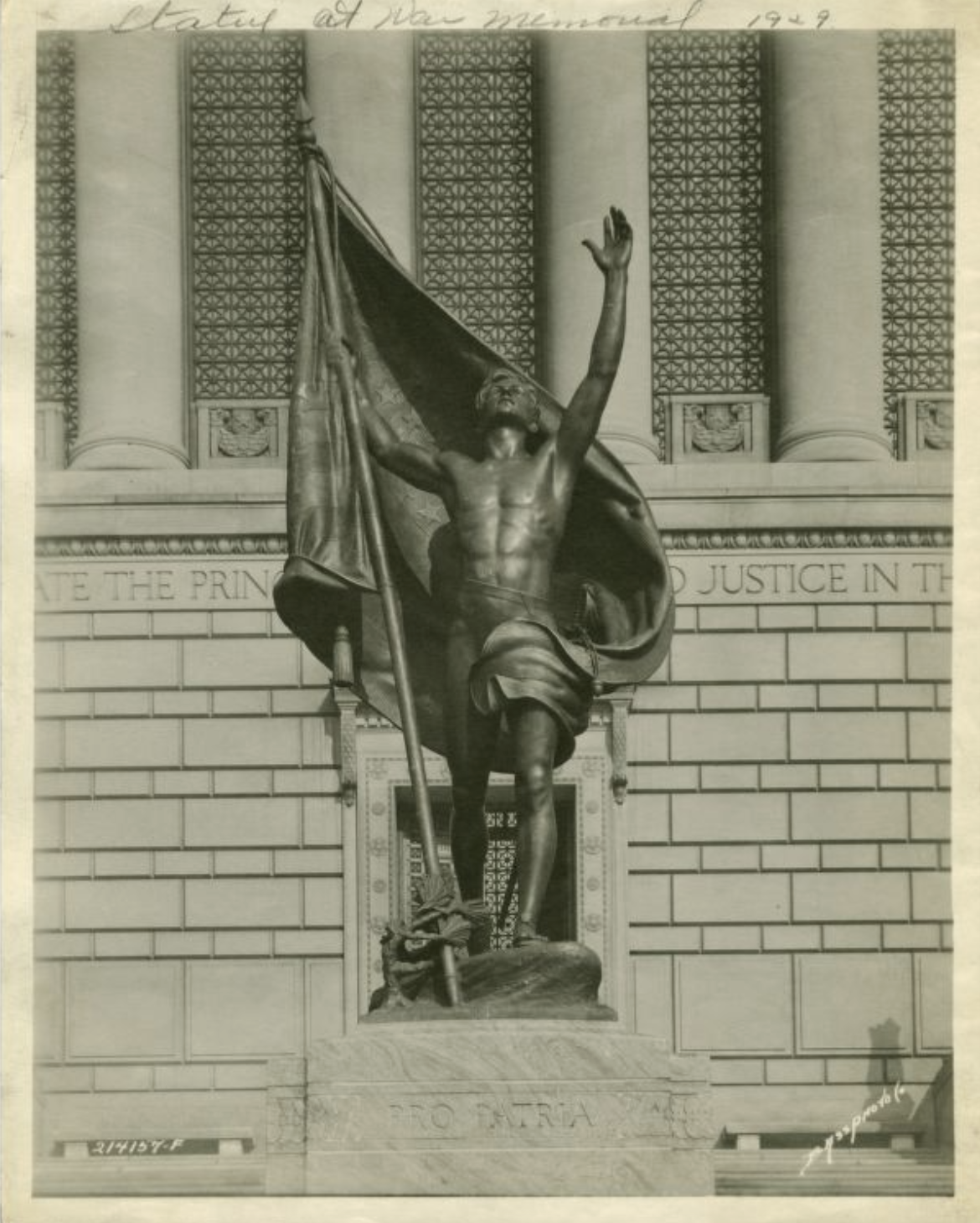
Bronze statue added to steps of Indiana World War Memorial
Pro Patria, the 25-foot-tall, seven-ton statue, is created by New York artist Henry Herring. The work is reputed to be the largest sculptured bronze casting made in America at the time.
Pictured: “Pro Patria” presents the heroic figure of a soldier carrying the flag to victory.
Credit: Bass Photo Co Collection, Indiana Historical Society View Source
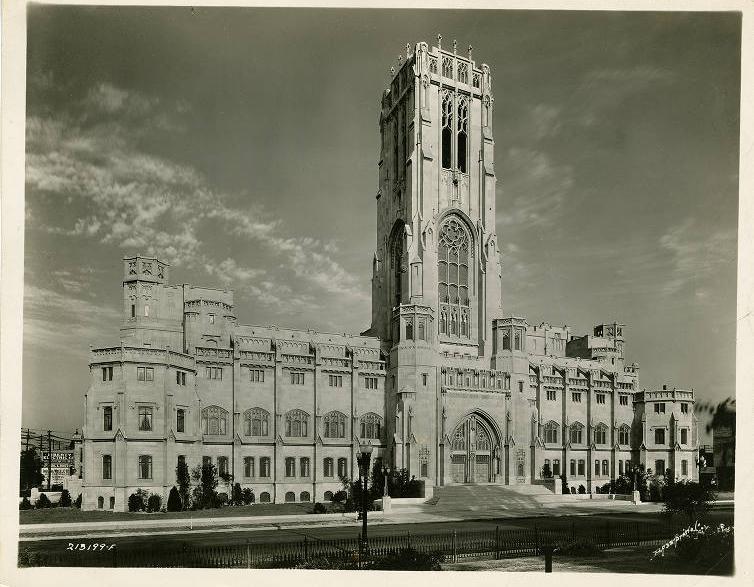
Scottish Rite Cathedral completed after two years of construction
The cathedral is designed by architect George F. Schreiber at a cost of $2.5 million. It serves as the headquarters for the Scottish Rite Valley of Indianapolis, a Masonic organization.
Pictured: The Scottish Rite Cathedral, 1929
Credit: Bass Photo Co Collection, Indiana Historical Society View Source
Goodwill Industries begins at the Fletcher Place Methodist Church
The organization accepts donations of used clothing, shoes, toys, and household items, which are repaired and sold by Goodwill employees to provide income for Fletcher Place residents.
Population: 364,161
The population in 1930 totals 364,161, the majority of which are recorded as white (320,064).
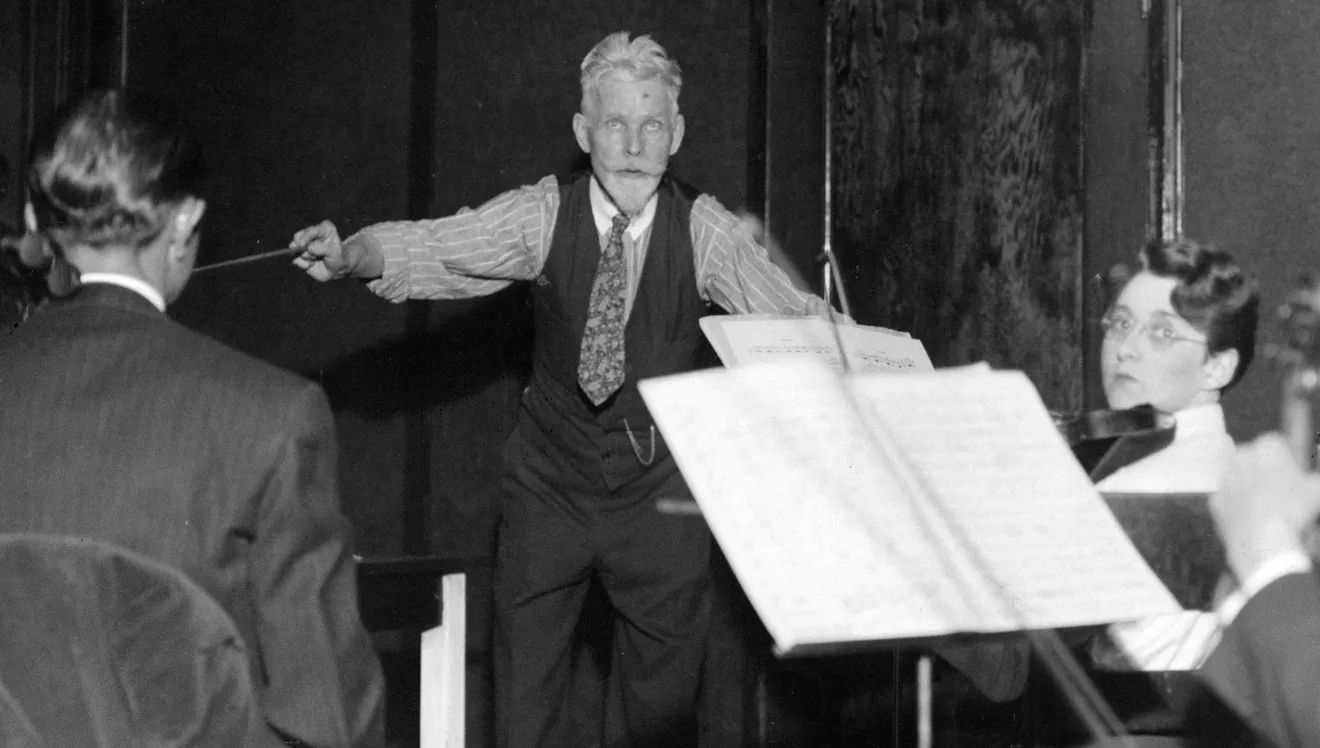
Indianapolis Symphony Orchestra performs first concert
Ferdinand Schaefer, a German immigrant, begins the Indianapolis Symphony Orchestra and serves as the orchestra’s conductor until the 1937–1938 season. The first concert takes place at Shortridge High School.
Pictured: Ferdinand Schaefer rehearses with the Indianapolis Symphony Orchestra for a spring festival concert in 1934.
Credit: IndyStar View Source
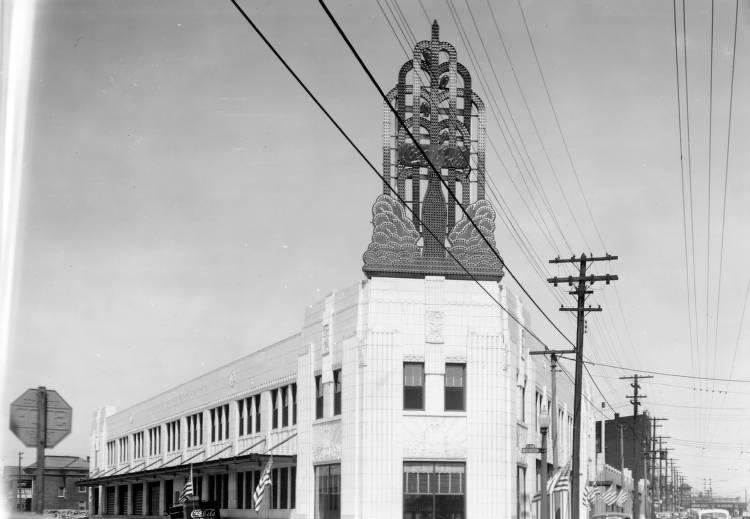
Coca-Cola Bottling Plant opens on Massachusetts Avenue
The Art Deco-style building is designed by Rubush and Hunter and built by William P. Jungclaus Construction Company, opening in September 1931. The factory is the largest Coca-Cola bottling plant at this time.
Pictured: Coca-Cola Bottling Plant, ca. 1935
Credit: Indiana Historical Society
View Source
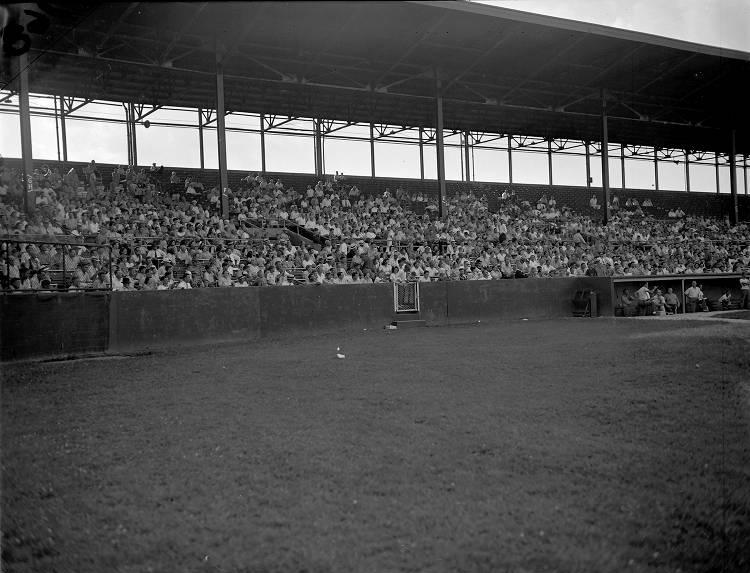
Indianapolis Indians play their first game in the new Perry Stadium
The new 14,500-seat baseball stadium is built on West 16th Street by Norman Perry. The first baseball game is played in front of a crowd of 5,942 spectators.
Pictured: Baseball game at Perry Stadium, ca. 1942
Credit: Indiana Historical Society
View Source
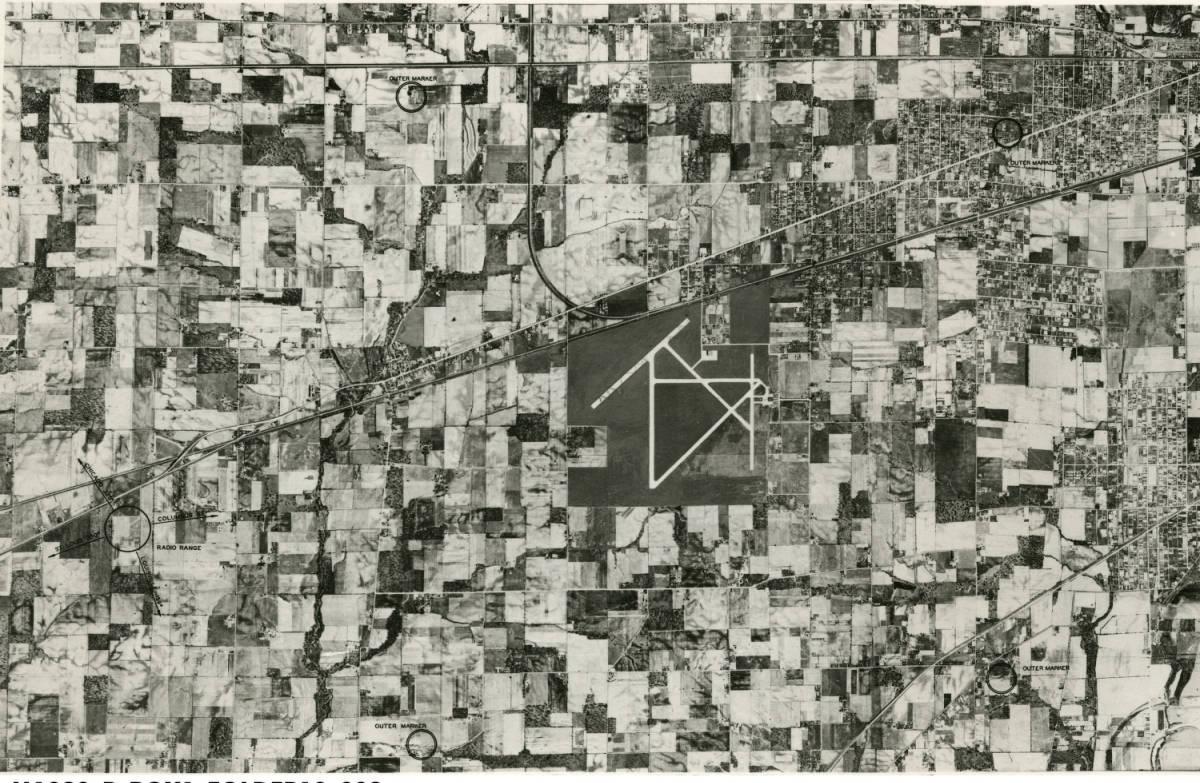
Dedication of Indianapolis Municipal Airport
In 1929, the city purchases land on South High School Road to build a municipal airport. Two years later, the Indianapolis Municipal Airport is built there.
Pictured: Aerial view of Indianapolis Municipal Airport in the 1940s.
Credit: Indiana Historical Society
View Source
The Indiana Birth Control League organizes
The league initially serves only married women with two or more children who are referred by a physician or a social service agency. It later becomes Planned Parenthood of Central Indiana
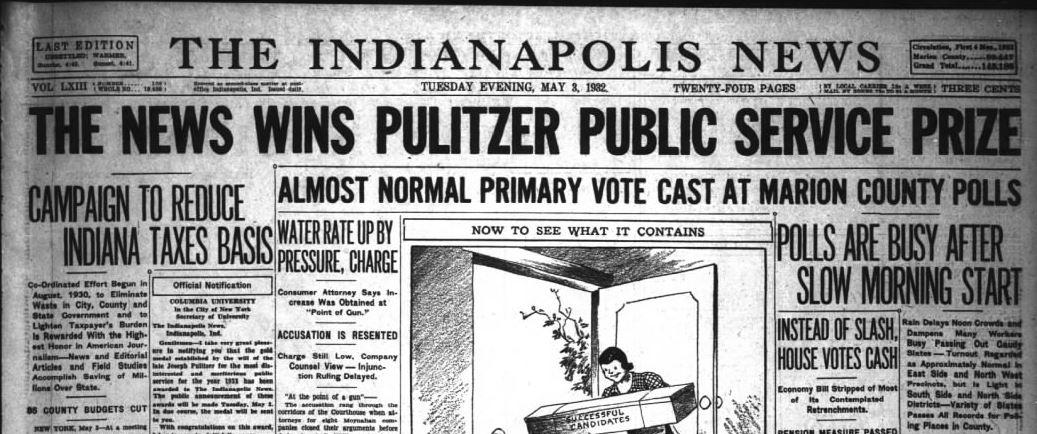
Indianapolis News wins a Pulitzer Prize
The Indianapolis News receives a Pulitzer Prize for a series of stories and editorials that reveal the wasteful spending by city and state government.
Pictured: Indianapolis News wins Pultizer Prize, May 3, 1932.
Credit: Indianapolis News
View Source
First African American Democrat elected to City Council
Dr. Theodore Cable, an Indianapolis dentist, is the first African American to serve as a Democratic city councilman. He is later elected to the Indiana General Assembly.
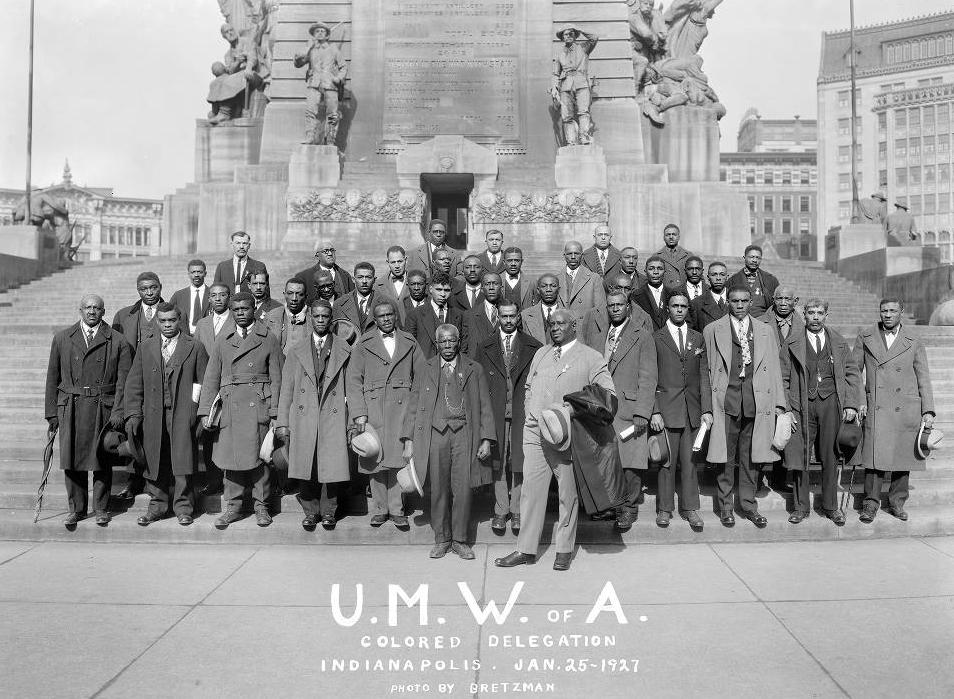
United Mine Workers of America vote to relocate headquarters
During the 1934 convention In Indianapolis, delegates vote to relocate headquarters from Indianapolis to Washington, D.C. The UMWA national headquarters and annual conventions had been in the city since 1898.
Pictured: United Mine Workers of America (UMWA) Colored Delegation, 1927
Credit: The Bretzman Collection, Indiana Historical Society View Source
Major strike occurs at the Real Silk Hosiery Mills
Approximately 800 Real Silk workers go on strike, seeking union-scale wages and the abolition of bonus and penalty systems. The strike is one of the city’s most violent labor strikes and lasts until May 24.
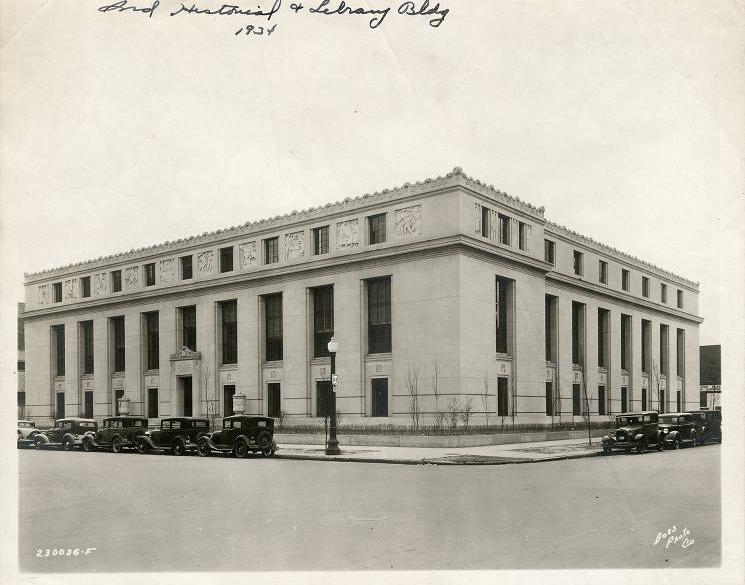
Dedication of the Indiana State Library and Historical Building
Designed by Indianapolis-based architecture firm Pierre & Wright, the building is the first permanent home of the Indiana State Library, Indiana Historical Bureau, and Indiana Historical Society.
Pictured: Indiana State Library Building, former home of the Indiana State Archives, 1934
Credit: Bass Photo Co Collection, Indiana Historical Society View Source
Marian College forms from merger
Two schools run by the Sisters of Saint Francis in Oldenburg, Indiana, merge under the name Marian College to become the city’s first Catholic institution of higher learning. The campus relocates to the Allison estate on the west side of Indianapolis. The college becomes Marian University in 2009.
Pictured: Marian College, Allison Mansion, 1972
Credit: W.H. Bass Photo Company Collection, Indiana Historical Society View Source
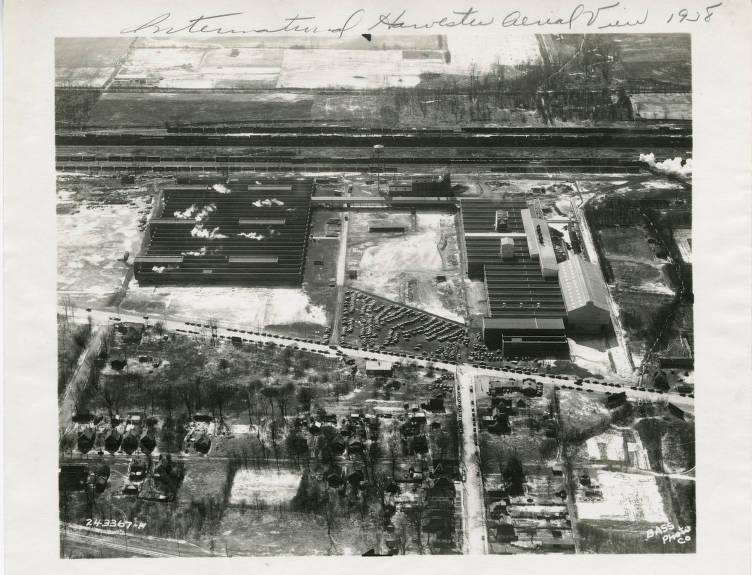
International Harvester builds new engine plant
International Harvester consolidates its motor production by building a foundry and an engine plant on the city’s southeast side. Employing 1,100, the plant produces its first engine in 1938.
Pictured: International Harvester, aerial view, 1939
Credit: Bass Photo Co Collection, Indiana Historical Society
View Source
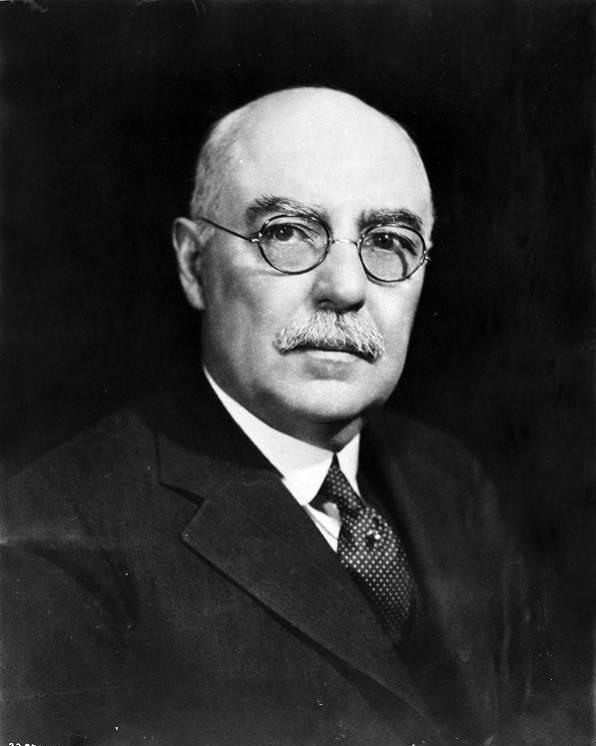
Lilly Endowment established
J. K. Lilly, Eli Lilly, and J. K. Lilly, Jr. found the philanthropic organization with gifts of stock in the family’s successful pharmaceutical business, Eli Lilly and Company. Lilly Endowment later becomes one of the nation’s largest philanthropies.
Pictured: J. K. Lilly, Sr., 1933
Credit: Bass Photo Co Collection, Indiana Historical Society
View Source
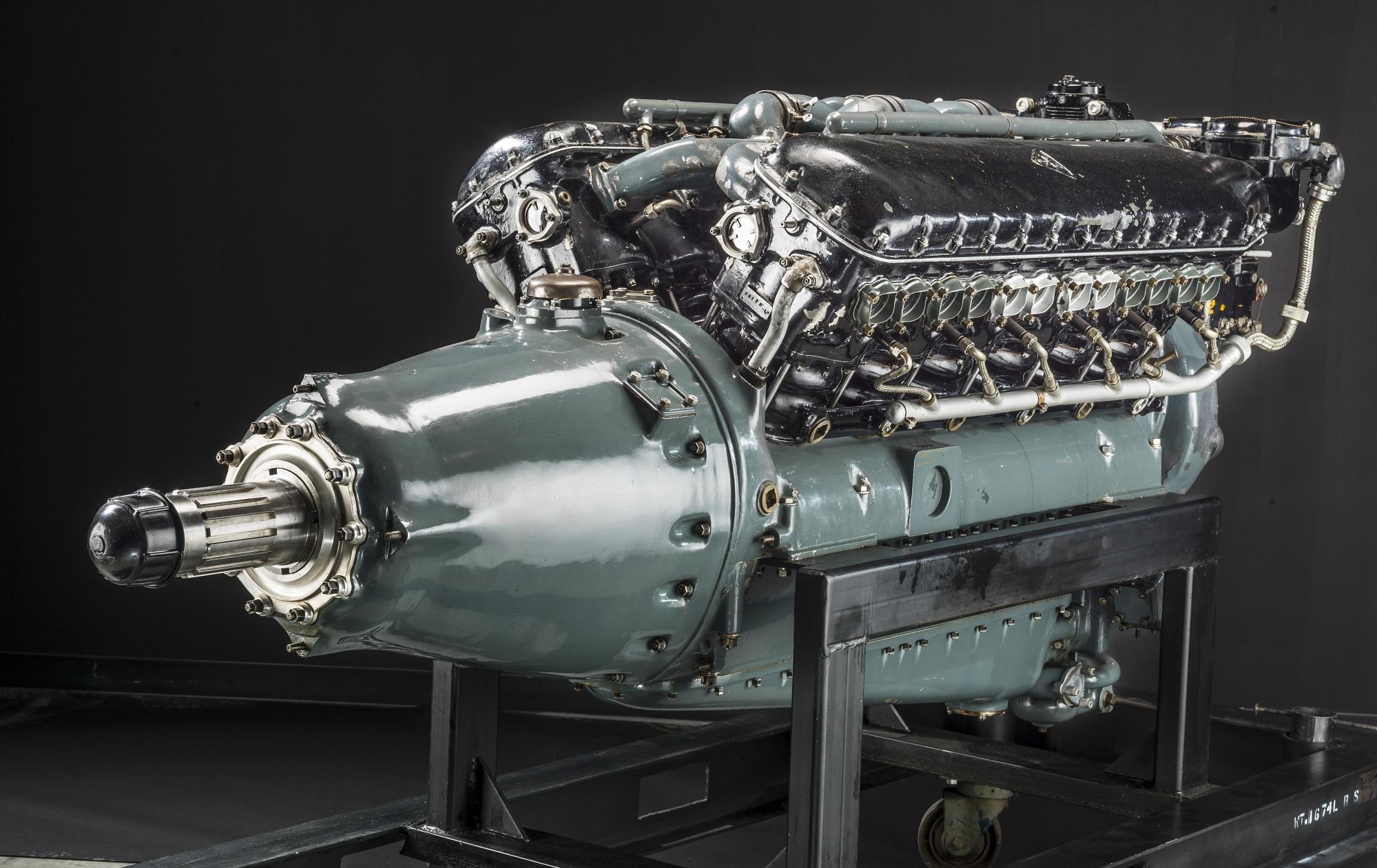
Allison Divisions, General Motors Corporation, develops a 1,000-horsepower airplaine engine
The engine, designated as the V-1710, passes all tests required by the Army Air Corps and becomes the first aircraft in the United States qualifying at 1,000 horsepower.
Pictured: Allison V-1710 (V-1710-C4), V12 Engine
Credit: Smithsonian National Air and Space Museum
View Source
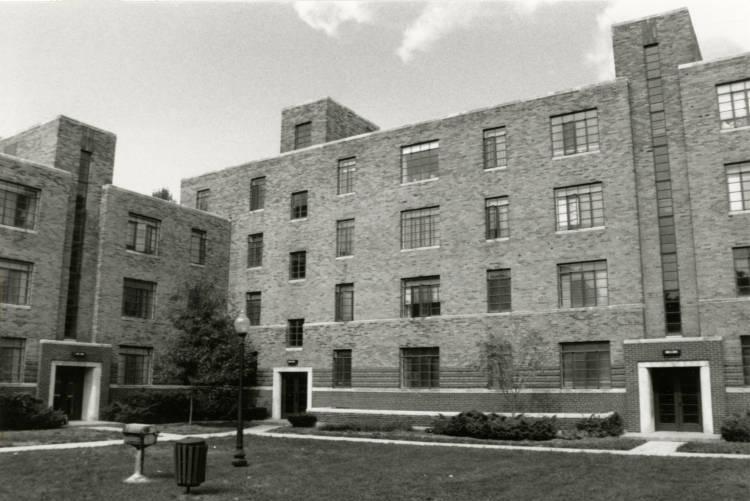
Lockefield Gardens public housing development opens
Beginning during the Great Depression with groundbreaking in 1935, the Public Works Administration’s New Deal plan demolishes 363 houses on 22 acres and replaces them with 748 apartments in 24 buildings, all to be occupied by African Americans.
Pictured: Lockefield Gardens Apartments, ca. 1980s
Credit: City of Indianapolis, Department of Metropolitan Development, Indiana Historical Society
View Source
WIBC radio begins broadcasting
WIBC’s official broadcast debuts on Halloween. Glenn Van Auken’s Indiana Broadcasting Company owns the radio station, and C. A. McLaughlin manages it.
Pictured: Blue Mountain Girls on WIBC, ca. 1940s
Credit: Indiana Entertainment Foundation
View Source
Louis Y. Mazzini develops new test for syphilis
The Mazzini test for syphilis produces faster, cheaper, and more sensitive results for all stages of syphilis than other tests. Used by the U.S. Armed Forces during World War II, Mazzini gives patent rights to the Indiana University Foundation.
Pictured:
Credit: Indiana University Indianapolis View Source
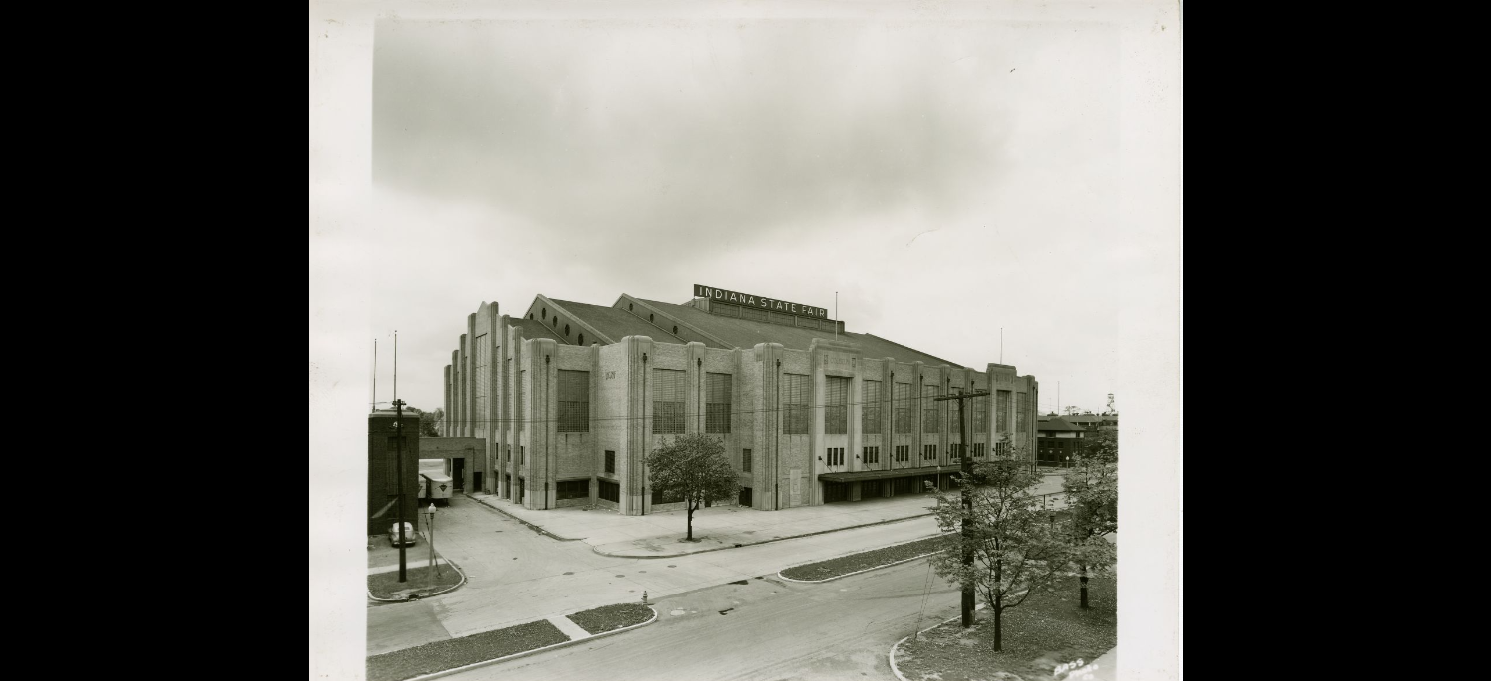
Public Works Administration constructs new coliseum at State Fairgrounds
The federal Public Works Administration construct a second coliseum on the fairgrounds using both federal and local bond money. The new coliseum becomes a prime location for events.
Pictured: View of the Coliseum at the Indiana State Fairgrounds, 1948
Credit: Indiana Historical Society
View Source
City’s first drive-in theater, the Pendleton Pike, opens
Located in the Lawrence Township district, the drive-in can accommodate 500 cars. The theater opens with two showtimes of That’s Right, You’re Wrong.
Pictured: Pendleton Pike drive-in grand opening ad, 1940
Credit: Cinema Treasures
View Source
Robert Lee Brokenburr becomes first African American elected to Indiana State Senate
Brokenburr, an Indianapolis attorney, serves as a Republican state senator for 20 years. During his tenure, he authors bills that prohibit discrimination and an act that establishes the Indiana Civil Rights Commission.
Pictured: Robert Lee Brokenburr, n.d.
Credit: Indianapolis Recorder Collection, Indiana Historical Society View Source
Naval Avionics Center commissioned
The center operates under sole contract by the Lukas-Harold Corporation. Known originally as the Naval Ordnance Plant, the center manufactures the famous World War II Norden bombsight.
Pictured: Enola Gay bombardier Thomas Ferebee with the Norden bombsight on Tinian after the dropping of Little Boy on Hiroshima, Aug. 6, 1945
Credit: Ted H. Lambert, via Wikimedia Commons
View Source
Arcada Campbell Stark becomes first woman elected to Indiana Senate
A Republican, Balz serves as chairwoman of the Senate Public Health Committee and on the Penal Institutions Committee. She focuses on issues such as regulating women’s working hours and wages.
Pictured: Arcada Balz, 1943-1947
Credit: Indiana Historical Society View Source
Ensemble Music Society organizes to encourage public presentations of chamber music
Amateur violinist Leonard Strauss and a core of local music enthusiasts presents the society’s first concert on April 12, 1944, with the Musical Art Quartet. The concert attracts nearly 500 attendees.
Pictured: The Musical Art Quartet is comprised of S. Jacobsen, Bernard Ocko, Marie Roemaet-Rosanoff, and L. Kaufman.
Credit: Wikimedia Commons
View Source
Geist Reservoir completed
Damming Fall Creek floods 1,900 acres, creating the reservoir. It provides additional water supply to the city and becomes a popular fishing and recreation spot.
Pictured: Geist Reservoir Aerial, n.d.
Credit: Indiana Historical Society View Source
Indianapolis becomes a Catholic archdiocese
With the Vatican’s announcement that Indianapolis has been elevated to this status, Joseph E. Ritter becomes the city’s first archbishop.
Pictured: Bishop Ritter, 1942
Credit: Indiana Historical Society
View Source
Little Red Door Cancer Agency begins operations
Cancer carried a social stigma, so those needing assistance were referred to “the little red door.” The name came from the red front door on the World War II barracks that housed the agency, which provided services to cancer patients and their families.
Pictured: Little Red Door workers, 1946
Credit: Indiana Historical Society
View Source
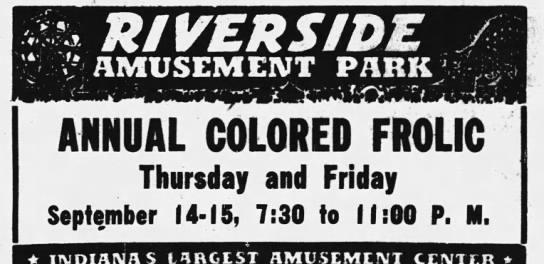
Boycott at Riverside Amusement Park
African American residents hold a boycott to protest the park’s segregationist policies, which do not allow African Americans to enter with the exception of one or two days a year.
Pictured: Riverside Amusement Park advertisement for its ‘Annual Colored Frolic’ day, 1944
Credit: Indianapolis News
View Source
Torpedoes from a Japanese submarine sink USS Indianapolis
Three torpedoes hit the ship days after delivering material for the atomic bomb. Unable to radio for help, it sinks in 12 minutes. Only 316 of the 1,196 men on board survive.
Pictured: The second ship christened USS Indianapolis, 1932
Credit: Indiana Historical Society View Source
Terre Haute businessman Tony Hulman Jr. purchases the Indianapolis Motor Speedway
At the urging of three-time Indianapolis Motor Speedway winner Wilbur Shaw, Hulman purchases the rundown racetrack from Eddie Rickenbacker for $750,000. With Shaw, Hulman revives the facility and the 500-Mile Race.
Pictured: Tony Hulman Jr., Eddie Rickenbacker, and Wilbur Shaw sign the formal papers of transfer for the Indianapolis Speedway, Nov. 15, 1945.
Credit: IndyStar
View Source
First Black lieutenant in police department
George W. Sneed began his career in the Indianapolis Police Department in 1918. An admired and respected officer, he is promoted to the rank of lieutenant.
Pictured: George Sneed, ca. 1910s
Credit: Indianapolis Public Library View Source
Jim Shelton begins the “Pick-A-Pocket Show” on WIBC radio
On the show, contestants guess the answer to questions placed in one of 15 pockets on an apron worn by Shelton. The show broadcasts live at 12:15 p.m. each afternoon.
Pictured: WIBC radio game show, “Pick a Pocket,” ca. 1950s
Credit: Indiana Historical Society View Source
Jewish Welfare Federation forms
The Jewish Federation and Jewish Welfare Fund merge to form the Jewish Welfare Federation of Indianapolis. The new organization conducts annual fundraising campaigns to support local and national Jewish organizations.
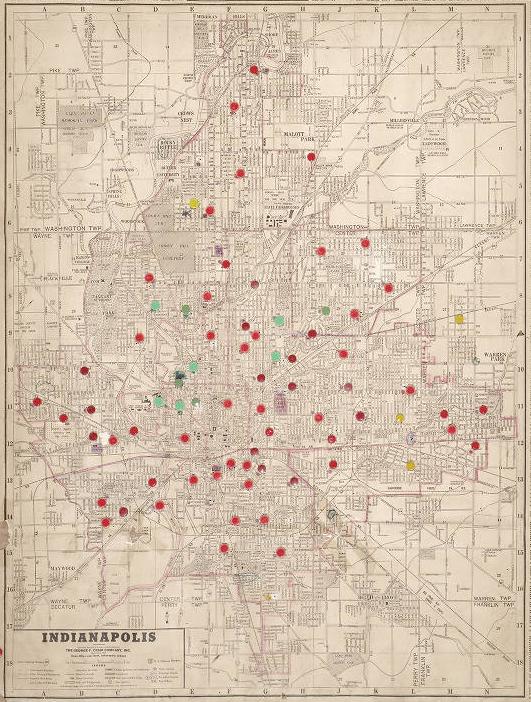
The General Assembly outlaws segregation in Indiana Public Schools
Within a few days of the passage of House Bill 242, the Indianapolis school board passes a resolution to end segregation in IPS. Despite this action, federal courts later find that the school system has perpetuated the practice.
Pictured: School segregation map where red tacks represented white schools, green tacks represented black schools, and yellow tacks represented integrated schools, 1948
Credit: Indianapolis Recorder Collection, Indiana Historical Society View Source
WFBM-TV signs on as the first commercial television station in Indianapolis
Transmitting from a 228-foot tower atop the Merchants National Bank Building, WFBM-TV first airs at 10 A.M. with “Crucible of Speed,” a half-hour history of the Indianapolis Motor Speedway.
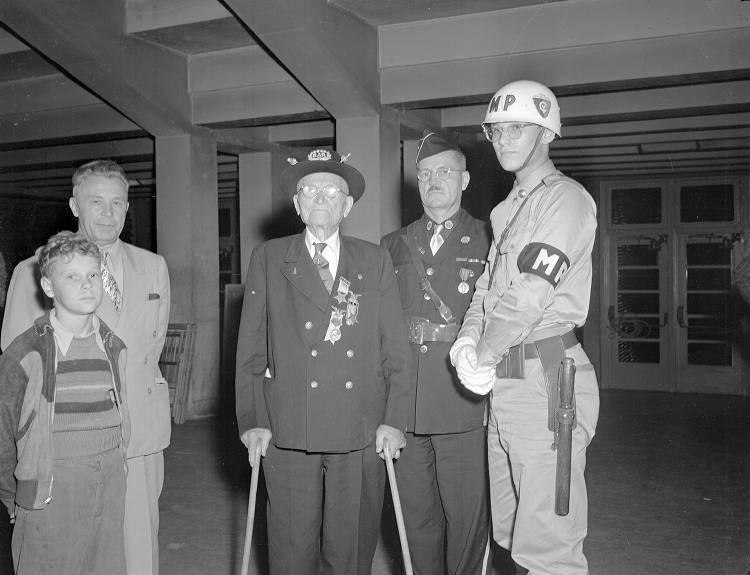
Final encampment of the Grand Army of the Republic
The organization holds the encampment in Indianapolis with six Civil War veterans in attendance, all over 100 years of age and including the sole surviving African American veteran.
Pictured: A veteran of the Civil War is shown in Indianapolis during the final National Encampment of the Grand Army of the Republic (GAR).
Credit: Indiana Historical Society
View Source
Indianapolis Hospital Development Association forms
Civic, medical, business, and industrial leaders create the association to raise funds for the construction of new hospitals and the expansion of existing facilities.
WAJC becomes first nonprofit educational radio station
Licensed to the Arthur Jordan Conservatory of Music, WAJC goes on the air from studios on the third floor of the Lyman Ayres home on Delaware Street.
Health and Hospital Corporation of Marion County established
The Health and Hospital Corporation is formed through the consolidation of the Indianapolis Health and Hospital Board, the Marion County Health Board, and the board of managers of Sunnyside.
Clowes Fund established
Gifts from Edith and George Clowes and their son, Allen Whitehill Clowes, establish the private foundation. It focuses on a range of issues from education to social services.
Rev. Charles Oldham founds Lighthouse Mission
The small gospel mission begins operations on East Washington Street as a nonprofit, Christian, nondenominational rescue mission caring for poor men of the inner city.
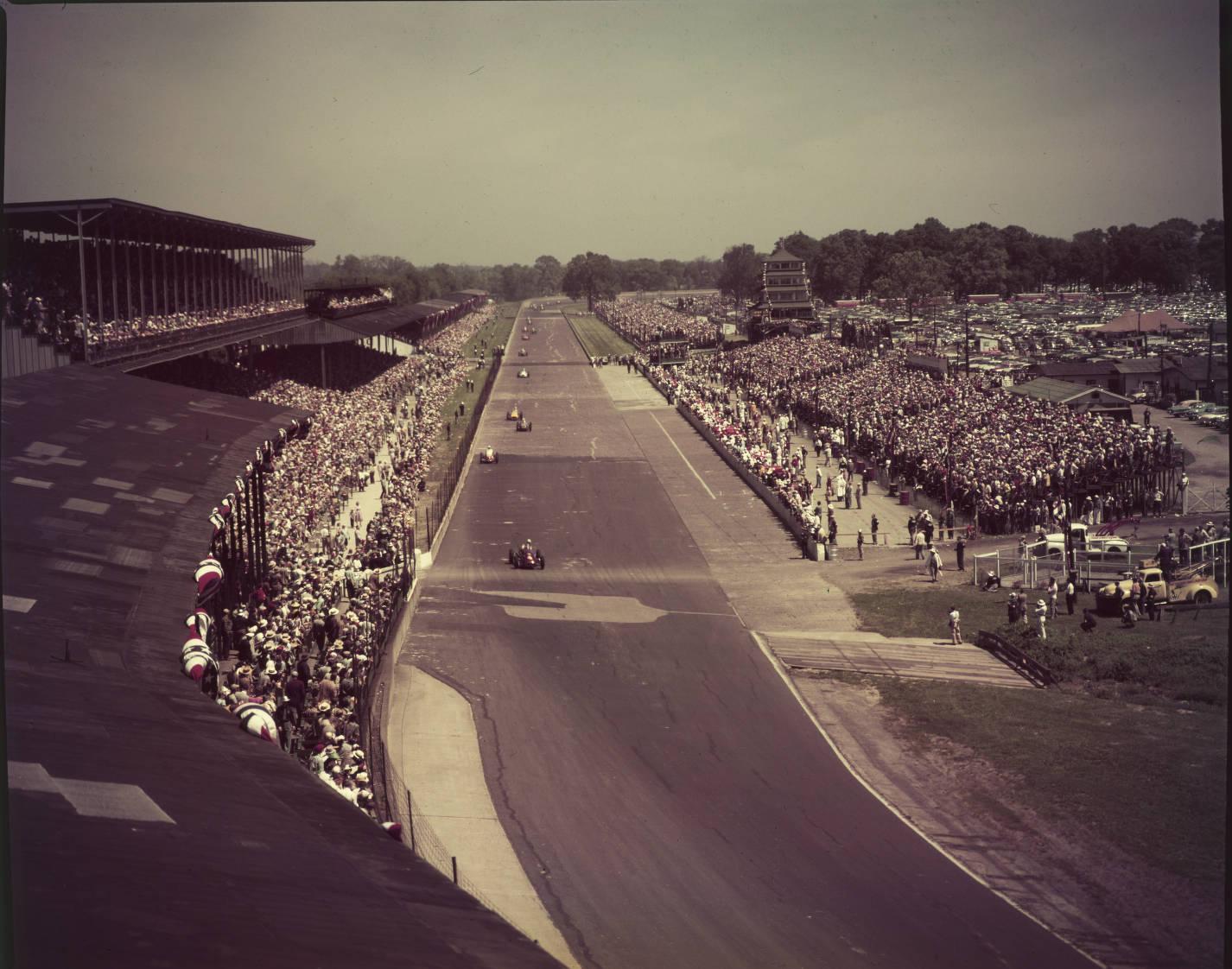
Indianapolis Motor Speedway Radio Network begins annual broadcast of the Indianapolis 500-Mile Race live
WIBC and 26 radio stations establish the radio network. WIBC provides live coverage at the start, finish, and periodically throughout the race to the other radio stations.
Pictured: Early Laps of the Indianapolis 500, 1952
Credit: Indiana University Indianapolis
View Source
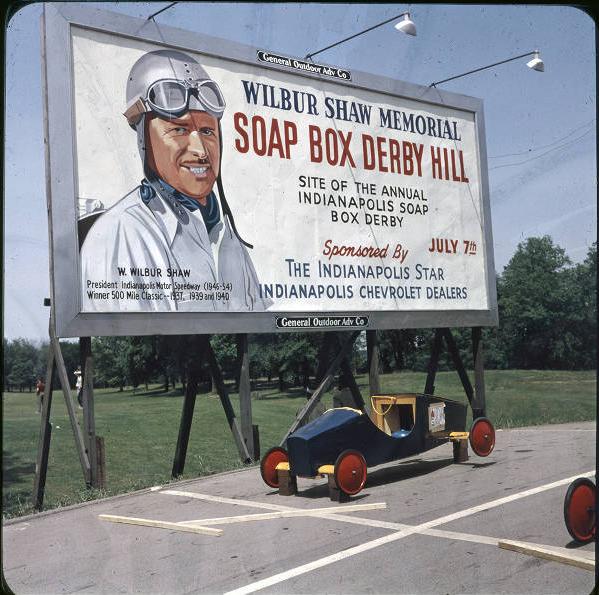
First Soap Box Derby at Wilbur Shaw Memorial Soap Box Derby Hill
The first Soap Box Derby at the new track built for this purpose, located at 30th Street and Cold Spring Road, takes place with 250 participants. The hill, named for the three-time Indianapolis 500 winner, is the longest track in the country.
Pictured: Indianapolis Soap Box Derby signage featuring the likeness of Indy 500 driver Wilbur Shaw, 1956
Credit: Indiana Historical Society View Source
First Noble School opens
Founded by parents of children with developmental disabilities, the school provides formal education and career services for children with disabilities who cannot attend regular schools.
Integration of all city high schools
Despite this, 11 elementary schools remain all Black and 27 schools are all white because of their geographical location. Approximately 65 percent of the city’s students attend integrated schools.
Pictured: High school students, IPS, ca. 1950s
Credit: Indianapolis Public Schools
View Source
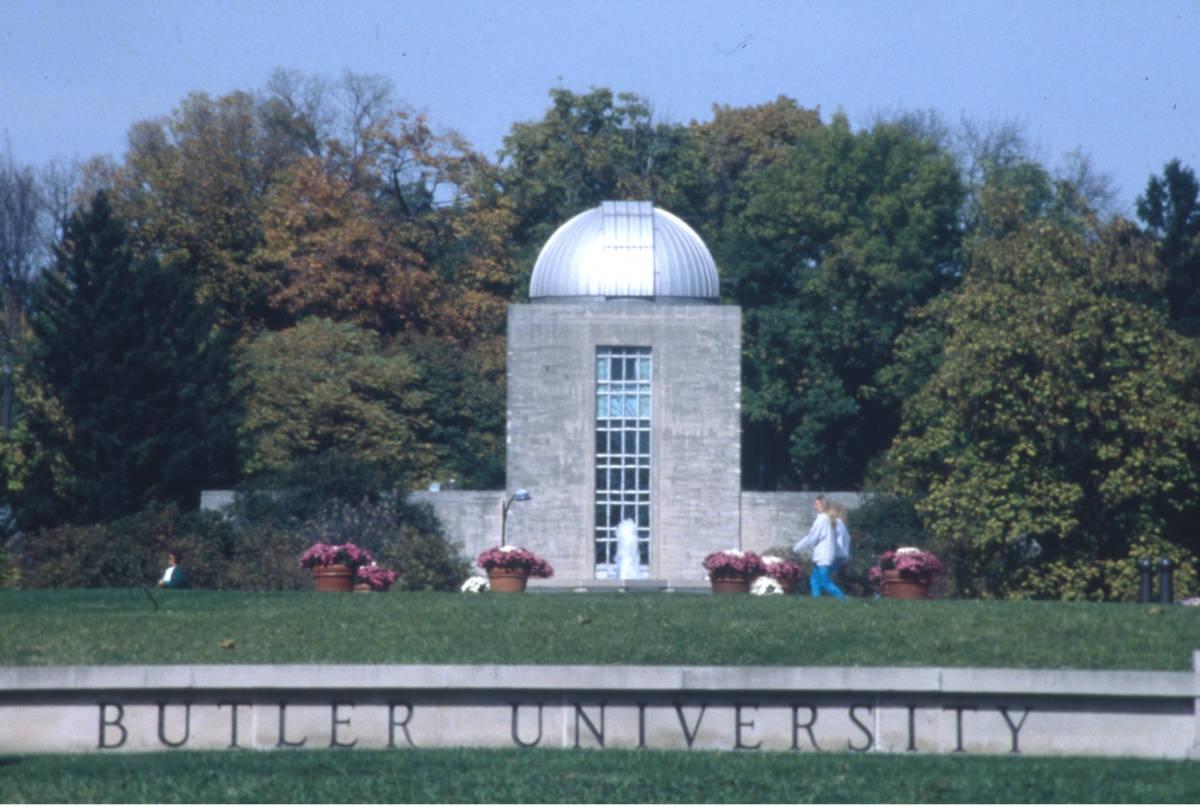
Holcomb Observatory opens at Butler University
The $500,000 observatory and planetarium is the largest in the state, as is its 38-inch Cassegrainian telescope. It takes its name from James Irving Holcomb who funded it.
Pictured: Front view of the Holcomb Observatory at 4600 Sunset Avenue on Butler University Campus, n.d.
Credit: Indiana Historical Society
View Source
Indiana’s first self-park garage opens
The Denison opens at the corner of Ohio and Pennsylvania streets, the site of the old Denison Hotel. This structure is the fifth such garage in the nation.
Pictured: Denison parking garage entrance and ticket attendant, 1957
Credit: Indiana Historical Society View Source
Marian College becomes the first coeducational Catholic college
The school is the first coeducational Catholic college in the state as well as one of only five in the nation. The school also introduces varsity athletics.
Pictured: A female student works with laboratory equipment in a classroom at Marian College, 1972
Credit: W.H. Bass Photo Company Collection, Indiana Historical Society.
View Source
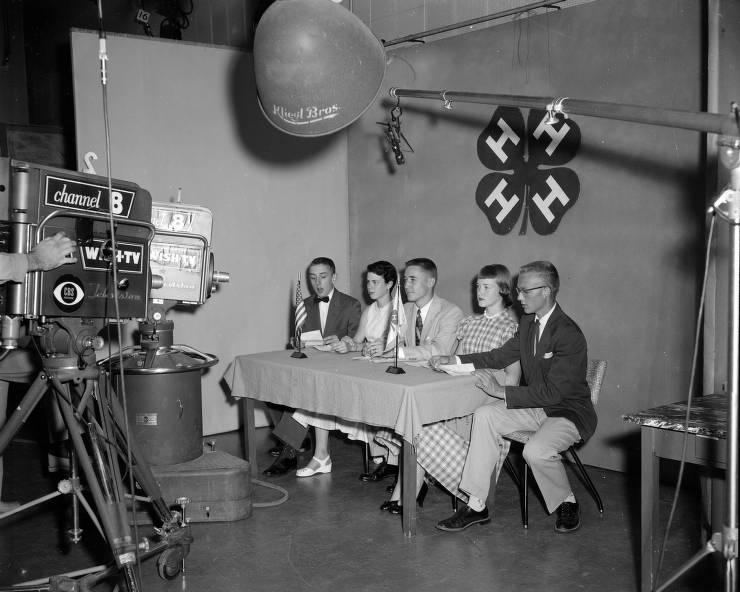
WISH-TV goes on the air
Operating out of the expanded WISH radio studios, WISH-TV begins broadcasting at a maximum power of 316,000 watts. It transmits as Channel 8 from a 1,000-foot television tower at Post Road and Rawls Avenue.
Pictured: 4-H members at WISH-TV, 1955
Credit: Indiana Historical Society View Source
Indianapolis Produce Terminal opens on northeast side
Touted as a “model for the nation,” the terminal is a 23-acre center for the wholesale purchase and sale of produce at a reported rate of 500 tons of fruits and vegetables every day. Designed for speed and efficiency, the terminal prevents large amounts of food waste.
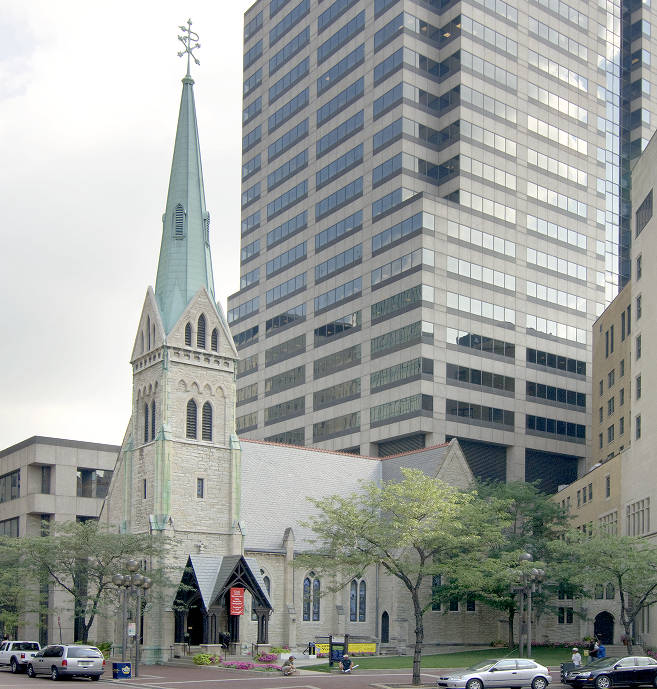
Christ Church designated diocesan pro-cathedral
Christ Church becomes the pro-cathedral, a parish church used as a cathedral, of the Episcopal Diocese of Indianapolis, officially making it Christ Church Cathedral.
Pictured: Christ Church Cathedral, 2008
Credit: Indiana Historical Society View Source
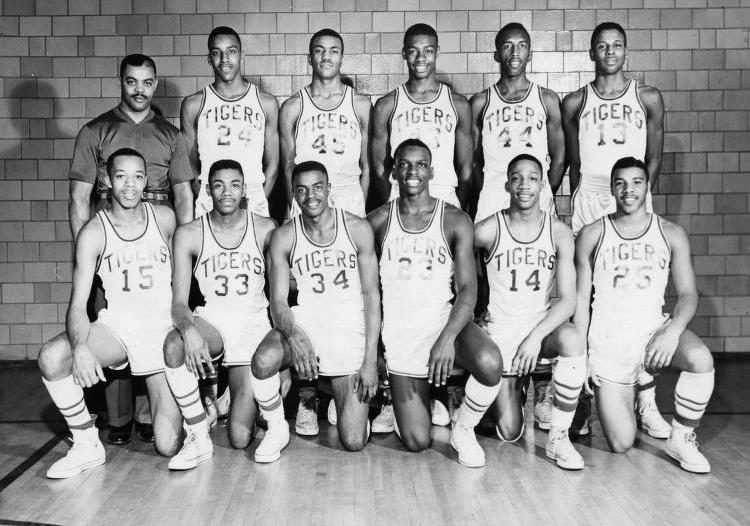
Crispus Attucks High School wins state basketball championship
It is the first Indianapolis high school to win the Indiana State High School Basketball Championship since the early 1900s. The team goes on to repeat chamionships in 1956 and 1959.
Pictured: Crispus Attucks State Basketball Championship team, 1955
Credit: Indianapolis Recorder Collection, Indiana Historical Society View Source
Federal government signs license for Eli Lilly and Company to begin Salk polio vaccine distribution
Lilly becomes the first company to manufacture and distribute the Salk Polio vaccine globally.
Joint police and fire alarm telephone system begins operation
The new telephone system replaces the alarm system that had been in place since the early 20th century. Telephone boxes are located throughout the city. Residents simply lift the phone receiver to contact the fire department or police.
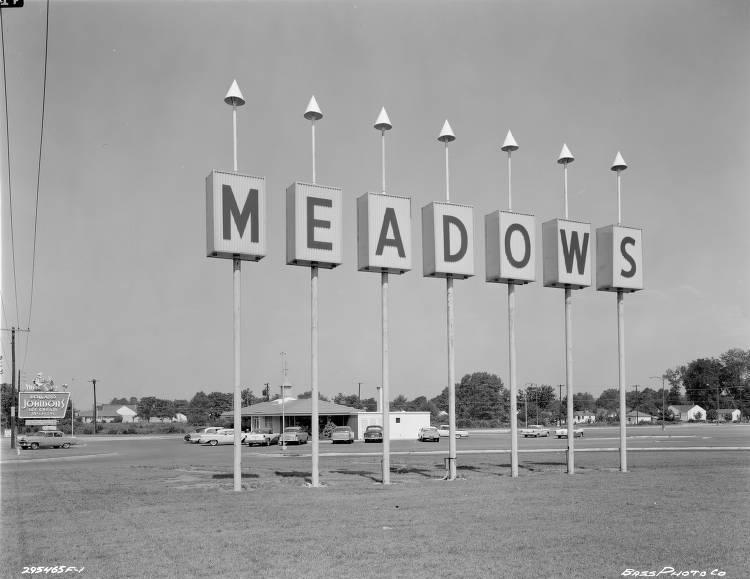
Meadows Shopping Center on 38th Street opens
The city’s first mall, the shopping center offers branches of downtown department stores, a supermarket, retail shops, and parking spaces for 2,000 cars.
Pictured: Sign for the Meadows, 1957
Credit: Bass Photo Co Collection, Indiana Historical Society View Source
WFMS begins broadcasting
Martin R. Williams begins broadcasting Indianapolis’ first commercial FM station. Choosing the call letters WFMS, the station broadcasts classical and popular concert music from the Antlers Hotel.
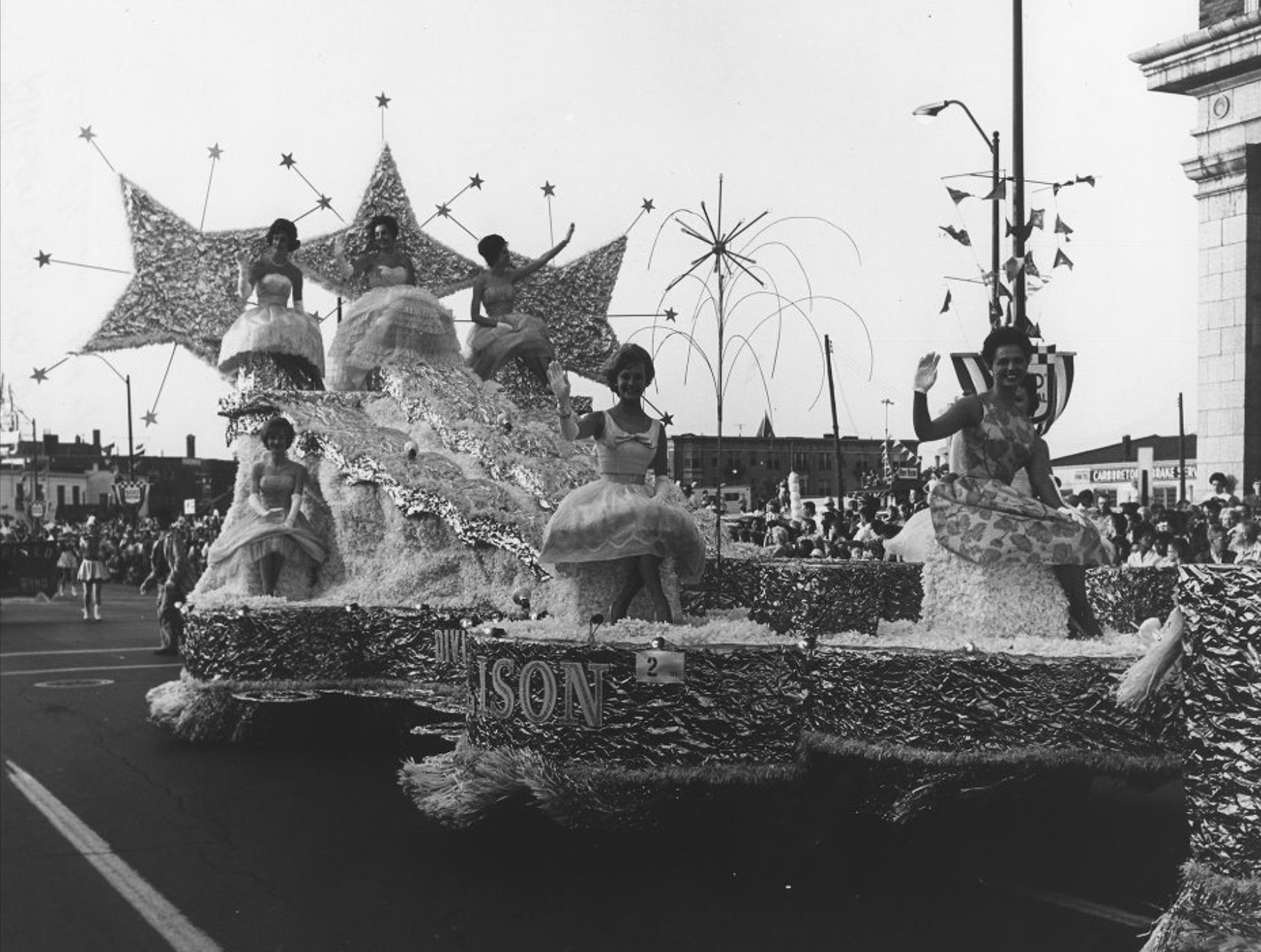
First 500 Festival
Four civic-minded individuals create the first 500 Festival in just 60 days, which includes a parade, ball, and square dance. This community-led endeavor celebrates sports, health, and education.
Pictured: The Allison Division of G.M. parade float makes its way down the street during the Indianapolis ‘500’ Festival Parade in 1957.
Credit: Indiana University Indianapolis
View Source
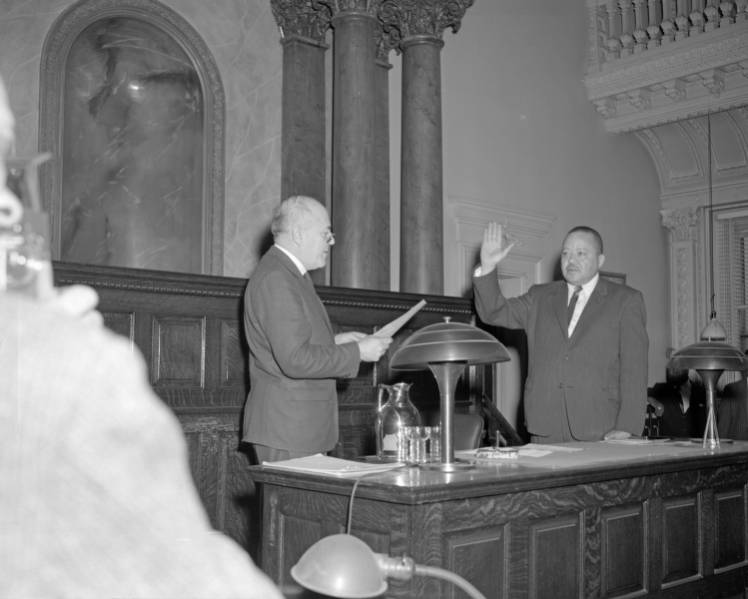
Mercer Mance becomes Marion County Superior Court judge
Mance is the first African American in Indiana to be elected as Marion County Superior Court judge. He serves three terms in this position.
Pictured: Mercer M. Mance was sworn in as the first African American Marion County Superior Court Judge in 1958.
Credit: Indiana Historical Society View Source
First Burger Chef opens
Failing to sell his automated hamburger grill, Frank P. Thomas opens the first Burger Chef at 1300 West 16th Street. He establishes the chain’s national headquarters in Indianapolis.
Pictured: First Burger Chef to open in downtown Indianapolis, 1965
Credit: City of Indianapolis, Department of Metropolitan Development, Indiana Historical Society
View Source
Central Business District plan released
The plan places Interstate-65 through the near northside, along Indiana Avenue, and extending south through Fountain Square. Public opposition builds quickly against this plan due to displacement and devalued property of the neighborhoods in its path.
Tomlinson Hall burns
The hall burns down allegedly after a pigeon drops a lit cigarette on the roof of the building. A single doorway arch stands in the market’s courtyard as a monument to the hall.
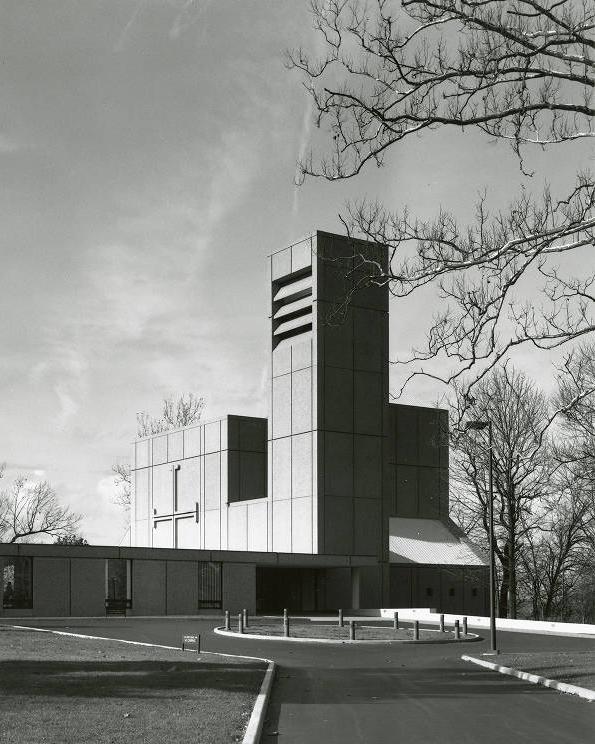
Christian Theological Seminary established
Butler University separates from its School of Religion. The school is renamed Christian Theological Seminary and becomes affiliated with the Disciples of Christ. In 1966, it begins occupying a campus near the university at 1000 West 42nd Street.
Pictured: Sweeney Chapel at Christian Theological Seminary, ca. 1990s
Credit: Indiana Historical Society View Source
John Birch Society established
The John Birch Society is founded by Robert H. W. Welch Jr. and 11 other men. It is a national organization that dedicates itself to protecting the U.S. against communism.
Jazz guitarist Wes Montgomery releases his first album, The Wes Montgomery Trio
Montgomery makes a name for himself while playing in clubs on Indiana Avenue. He records his first album with brothers Monk and Buddy on the Riverside record label.
Pictured: Wes Montgomery, 1959
Credit: Indiana Historical Society
View Source
Billy Graham Crusade comes to Indianapolis
Sponsored by the Indianapolis Church Federation and other faith communities, Reverend Billy Graham comes to Indianapolis, preaching nightly for a month at the Indiana State Coliseum. He returns on May 2, 1980 and June 30, 1999.
Pictured: Evangelist Billy Graham presents a sermon at Monument Circle, Oct. 29, 1959
Credit: Bob Doeppers, Indianapolis News
View Source
Temporary scaffold collapses during the pace lap of the Indianapolis 500
The makeshift scaffold is filled with spectators when it collapses at the start of the race. Two people are killed and around 80 others are injured.
Pictured: Indianapolis 500 scaffolding collapse, 1960
Credit: The Indiana Album: J. Parke Randall Collection
View Source
Mike Troy sets world record in winning a gold medal in Olympics
Troy breaks the world record in the 200-meter butterfly, the second of two gold medal wins—the first for the 4X200-meter freestyle relay. Teammate and fellow Indianapolis native Frank McKinney Jr. also wins gold in the 4X100 men’s freestyle relay.
Pictured: Mike Troy after he set a new national record for the 220-yard butterfly, 1960
Credit: Public domain via Wikimedia Commons
View Source

L. S. Ayres and Company forms new discount division, Ayr-Way Stores
Ayres launches one of the nation’s first discount divisions of a traditional department store. Ayr-Way becomes a forerunner of similar businesses.
Pictured: An Ayr-Way department store in the 1960s.
Credit: Indiana Historical Society
View Source
General Assembly creates the Indianapolis Airport Authority
Created to manage the increase in air traffic, the airport authority administers air transportation in Marion County and the seven surrounding counties.
Pictured: Indianapolis Airport Authority Board Members, 1962
Credit: Indiana Historical Society
View Source
Pope John XXIII names Archbishop Joseph Ritter as Cardinal
At the Vatican, Ritter participates in the election of Pope Paul VI and attends the Second Vatican Council.
Pictured: Archbishop Joseph Ritter, 1934
Credit: Jasper Public Library via Indiana State Library
View Source
Oscar Robertson becomes the first basketball player to appear on the cover of Time magazine
Robertson is an Indianapolis native and a former Crispus Attucks student and basketball star. Within a year of being drafted by the Cincinnati Royals, he is featured in Time magazine.
Pictured: NBA star, Oscar Robertson, 1984
Credit: Indianapolis Recorder Collection, Indiana Historical Society
View Source
Jet operations begin at Weir Cook Municipal Airport
Flights begin when Trans World Airlines inaugurates service to New York City.
Pictured: This picture shows an airplane departing from the Weir Cook Municipal Airport.
Credit: City of Indianapolis, Department of Metropolitan Development
View Source
Brebeuf Jesuit Preparatory School groundbreaking ceremonies
Archbishop Paul C. Schulte officiates the groundbreaking ceremony. Brebeuf Preparatory School, the first Jesuit secondary school in Indiana, officially opens on September 4, 1962.
Pictured: Brebeuf Jesuit Preparatory School, 2019
Credit: Kelly Wilkinson/IndyStar via Imagn Content Services, LLC
View Source
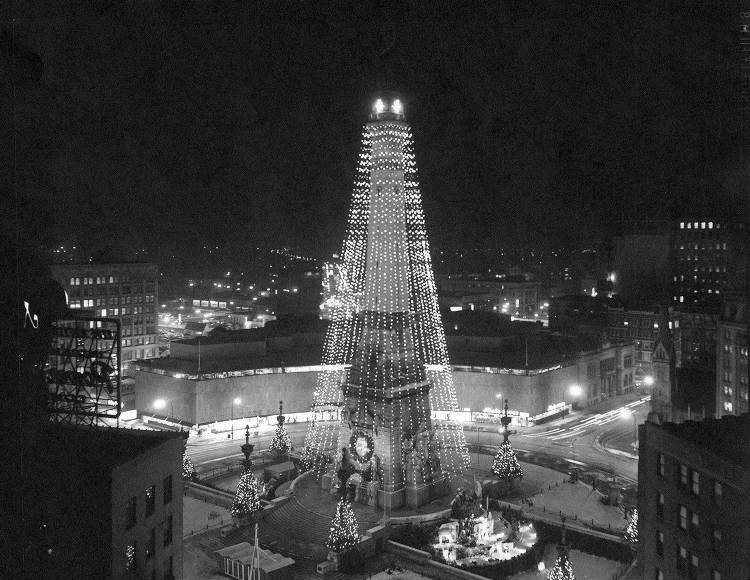
Soldiers and Sailors Monument becomes the “World’s Tallest Christmas Tree”
The Indianapolis Christmas Committee takes on the huge task of decorating the Soldiers and Sailors Monument with thousands of Christmas lights. The city begins touting it as the “world’s tallest Christmas tree.”
Pictured: Aerial night view of the Indiana Soldiers and Sailors Monument decorated for Christmas, ca. 1962
Credit: Indiana Historical Society View Source
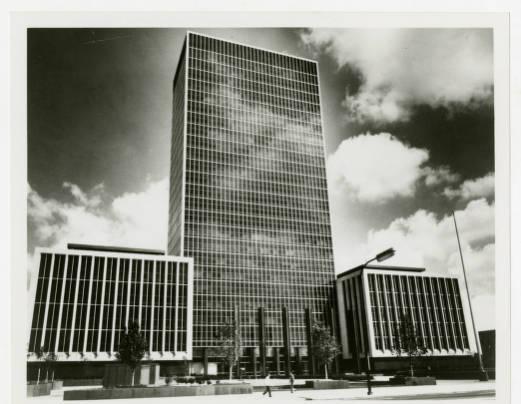
New City-County Building completed
The Indianapolis firm Wright, Porteous and Lowe designs the 28-story structure, which consolidates city and county offices into a single building.
Pictured: The City-County Building of Indianapolis was first built in 1825 and went through several rebuilds and moves until the present building was dedicated in 1962 at 200 East Washington Street.
Credit: General photograph collection, Rare Books and Manuscripts, Indiana State Library
View Source
Woodruff Place accepts annexation by the city
Indianapolis has attempted to annex the town since the 1890s. Woodruff successfully resists annexation in numerous court suits until losing to the City of Indianapolis in the Indiana Supreme Court.
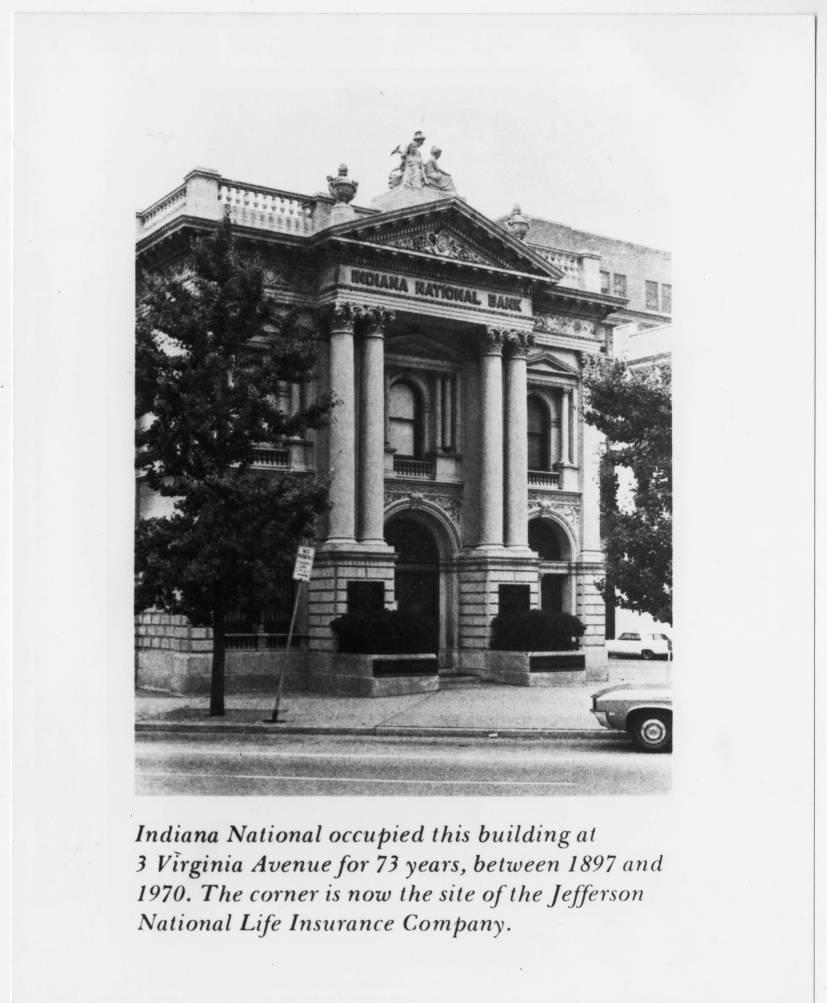
Indiana National Bank tops $1 billion in holdings
After years of growth and many acquitions, the Indianapolis-based bank becomes the first in Indiana to reach this milestone.
Pictured: Indiana National Bank, ca. 1960s
Credit: General photograph collection, Rare Books and Manuscripts, Indiana State Library
View Source
St. Vincent Hospital opens first coronary care and first intensive care units
Nearly a decade after Dr. Arthur Richter opens St. Vincent’s first heart clinic, the hospital opens its coronary care and intensive care units. The two units are the first of their kind in Indianapolis.
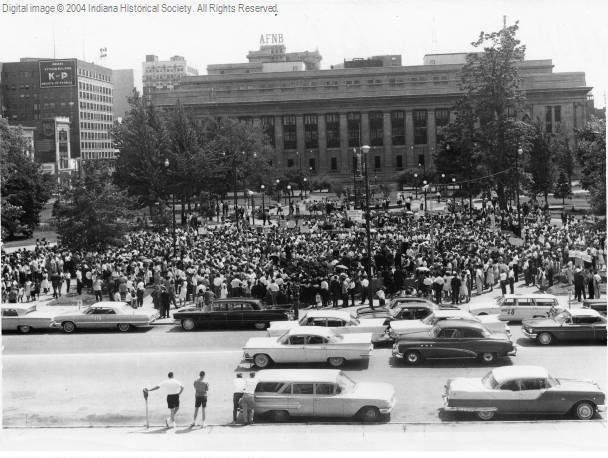
Freedom Rally for Civil Rights
The National Association for the Advancement of Colored People holds a freedom rally in downtown Indianapolis focused on promoting civil rights. Around 2,000 Black and white residents attend.
Pictured: National Association for the Advancement of Colored People Freedom Rally in Indianapolis, 1963
Credit: Indiana Historical Society
View Source
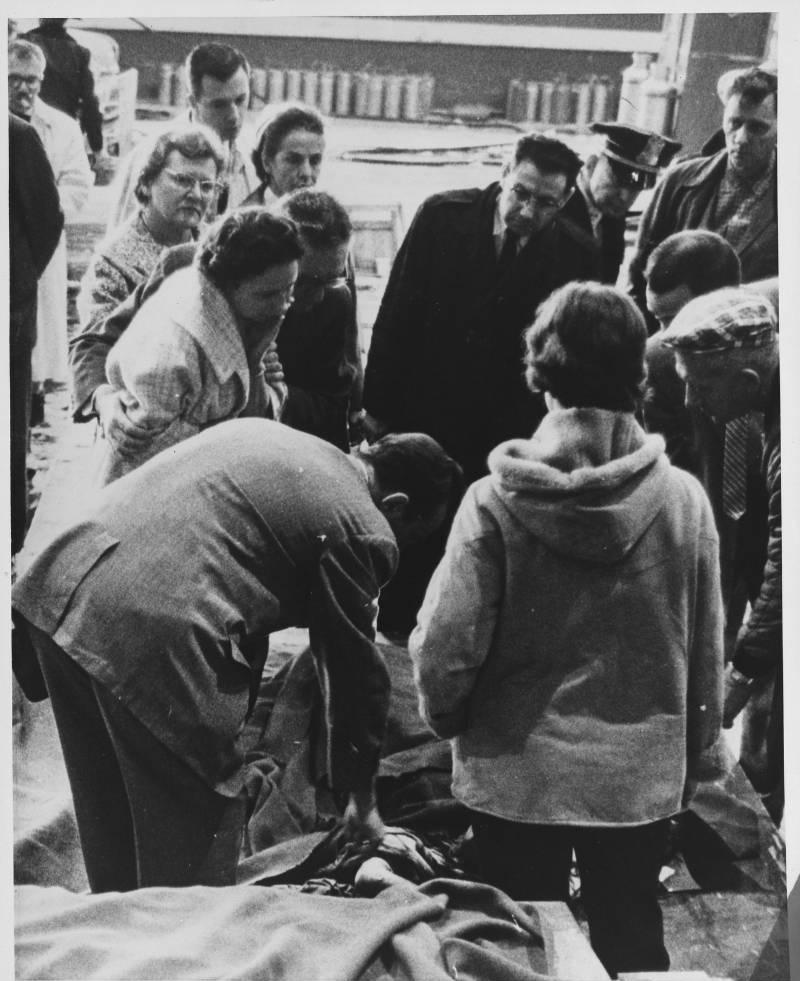
Explosion at the Indiana State Fairgrounds Coliseum
The explosion happens in the middle of the Holiday on Ice performance when a propane tank in the concession area ignites and explodes. An estimated 400 people are injured and 74 are killed.
Pictured: Families identifying victims of Coliseum explosion, 1963
Credit: Indiana Red Cross
View Source
Eli Lilly and Company develops world’s first cephalosporin antibiotic
Cephalosporin compounds have been around since the late 1940s. Eli Lilly and Company modifies it to be potent enough for use as an antibiotic, thus introducing a whole new class of drugs.
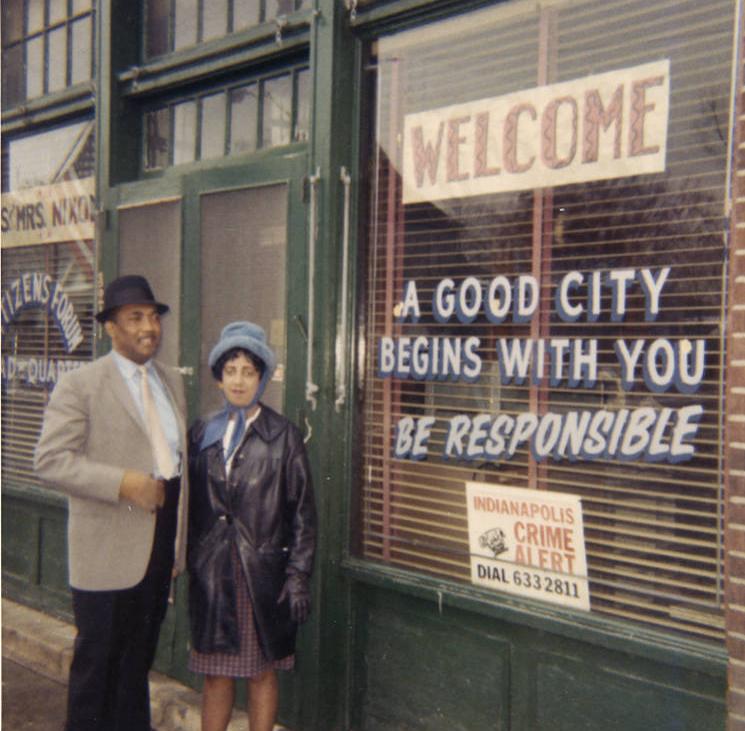
Mattie Coney, a school teacher, founds Citizens Forum
Headquartered in the inner city of Indianapolis, the largely Black organization seeks to improve city neighborhoods through the formation of block clubs and community support.
Pictured: Elmo and Mattie Coney outside of Citizens Forum office at 3211 North Illinois Street, May 1970
Credit: Indiana Historical Society View Source
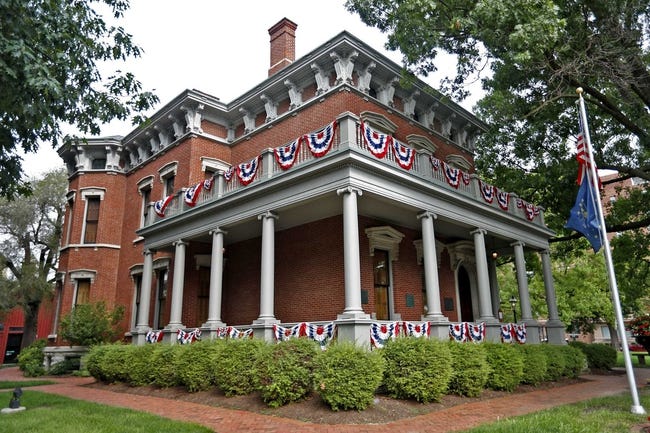
Benjamin Harrison Home becomes a National Historic Landmark
The National Park Service designates the home of Benjamin Harrison, the 23rd president of the United States, as a historic landmark. Architect Herman T. Brandt designed the residence, which was built in 1875.
Pictured: Home to President Benjamin Harrison, 2020
Credit: Kelly Wilkinson/IndyStar via Imagn Content Services, LLC View Source
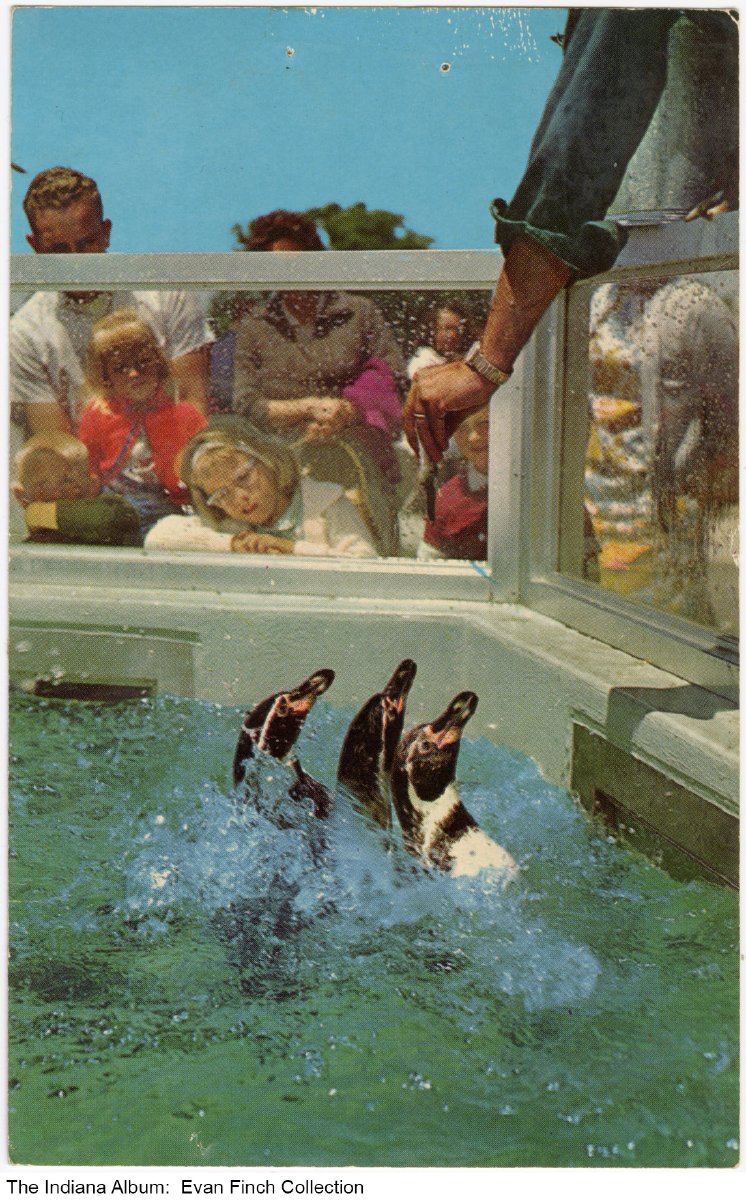
Indianapolis Zoological Society establishes city’s first zoo
The effort to establish a zoo, initiated 20 years earlier by newspaper columnist Lowell Nussbaum, finally succeeds. The zoo is located in Washington Park on East 30th Street.
Pictured: Penguins at the Indianapolis Zoo, ca. 1964
Credit: The Indiana Album: Evan Finch Collection
View Source
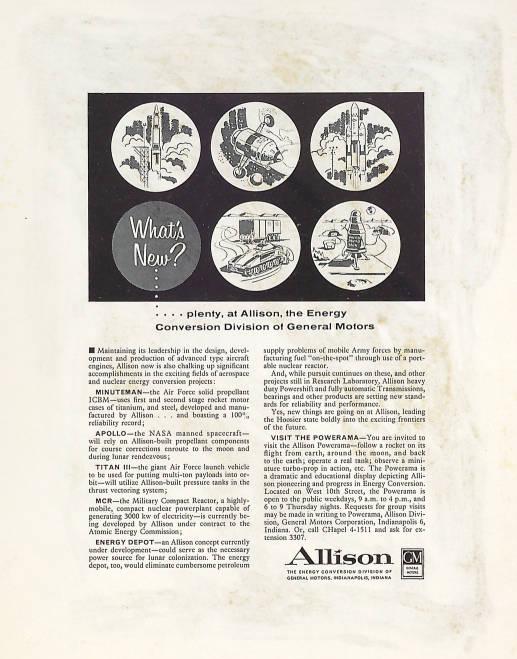
Allison Gas Turbine helps build the lunar excursion module for the Apollo spacecraft
NASA selects Allison to build the descent engine tanks that will allow the LEM to land successfully on the moon.
Pictured: Advertisement featuring Allison’s work with Nasa, ca. 1960s
Credit: Allison Transmission
View Source
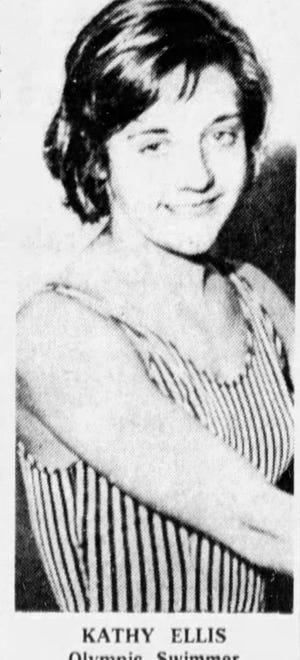
Kathy Ellis wins gold medal and breaks world record
Ellis, a member of the Riviera Club swim team, wins a gold medal in world record time as a member of the women’s 400-meter freestyle relay swim team at the Tokyo Olympics. She goes on to win another gold medal and two bronze medals.
Pictured: Olympic swimmer Kathy Ellis in 1964.
Credit: IndyStar
View Source
Mayor John J. Barton creates the Greater Indianapolis Progress Committee
Democratic Mayor John J. Barton appoints an advisory committee of business and civic leaders that functions as an advisory arm to the mayor’s office. The committee soon becomes known by its acronym, GIPC.
Daisy Lloyd becomes the first African American woman elected as Indiana state representative
Lloyd, an Indianapolis resident since 1952, is elected as a Democrat to the Indiana General Assembly. While serving, she is diagnosed with breast cancer and becomes one of the first to share her experience with it publicly.
The General Assembly creates the Capital Improvement Board
The public agency finances, constructs, operates, and maintains any capital facilities/improvements that serve the commercial, industrial, and cultural interests of Indiana. One of its first projects is to build and maintain an Indianapolis convention and exhibition center.
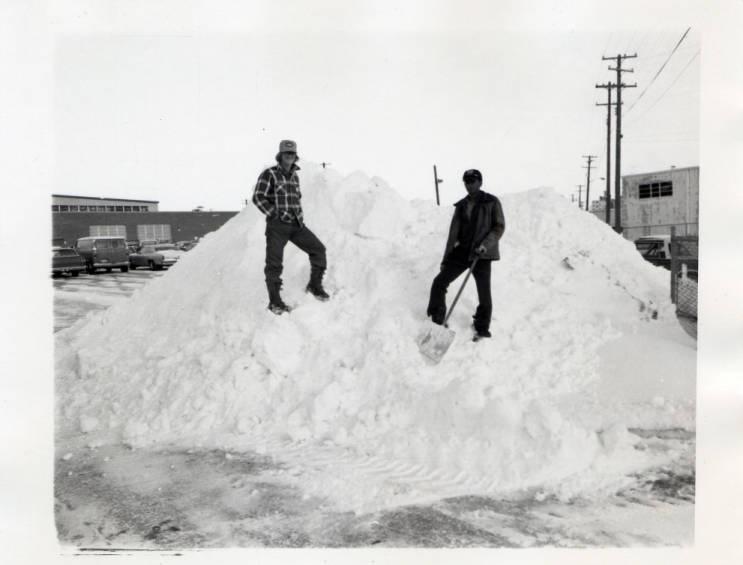
Indianapolis receives a record amount of snow
The 12-inch snowfall prompts Mayor John Barton to call for the city to invest in more snow removal equipment.
Pictured: Indianapolis Water Company snow removal, ca. 1960s
Credit: Indianapolis Special Collections Room, Indianapolis Public Library
View Source
Christ Church Cathedral hosts first annual Strawberry Festival
The Cathedral Women of Christ Church Cathedral organizes the Strawberry Festival to raise funds for charity. The women sell 100 homemade strawberry shortcakes during the festival, selling out in two hours.
Pictured: Christ Church Cathedral Strawberry Festival, 1967
Credit: Indianapolis News
View Source
Indianapolis Times ceases publication
Unable to compete with its two rivals, the Indianapolis Star and Indianapolis News, the paper ceases publication. Its daily circulation of 89,374 ranked third among the city’s newspapers.
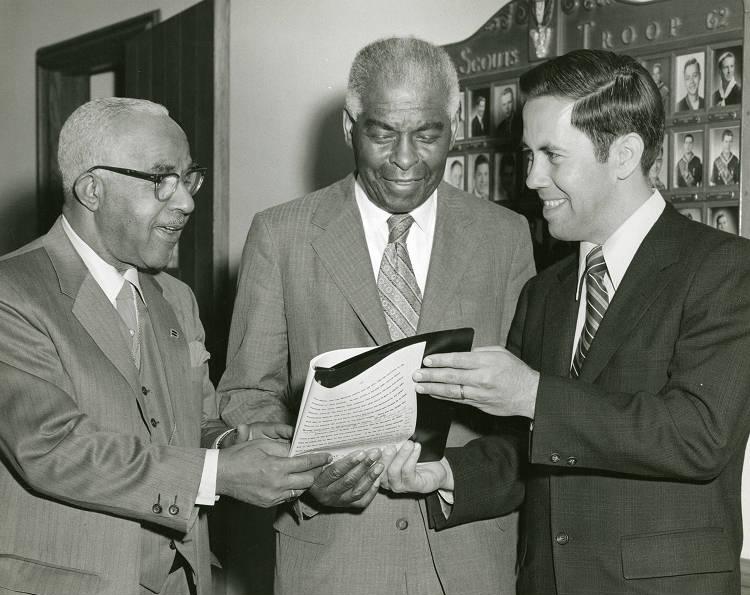
Indianapolis Urban League founded
A branch of the National Urban League, the Indianapolis League is founded in the Fall of 1965 as an interracial community-based social service group focused on civil rights.
Pictured: Urban League Annual Meeting, 1971
Credit: Indiana Historical Society
View Source
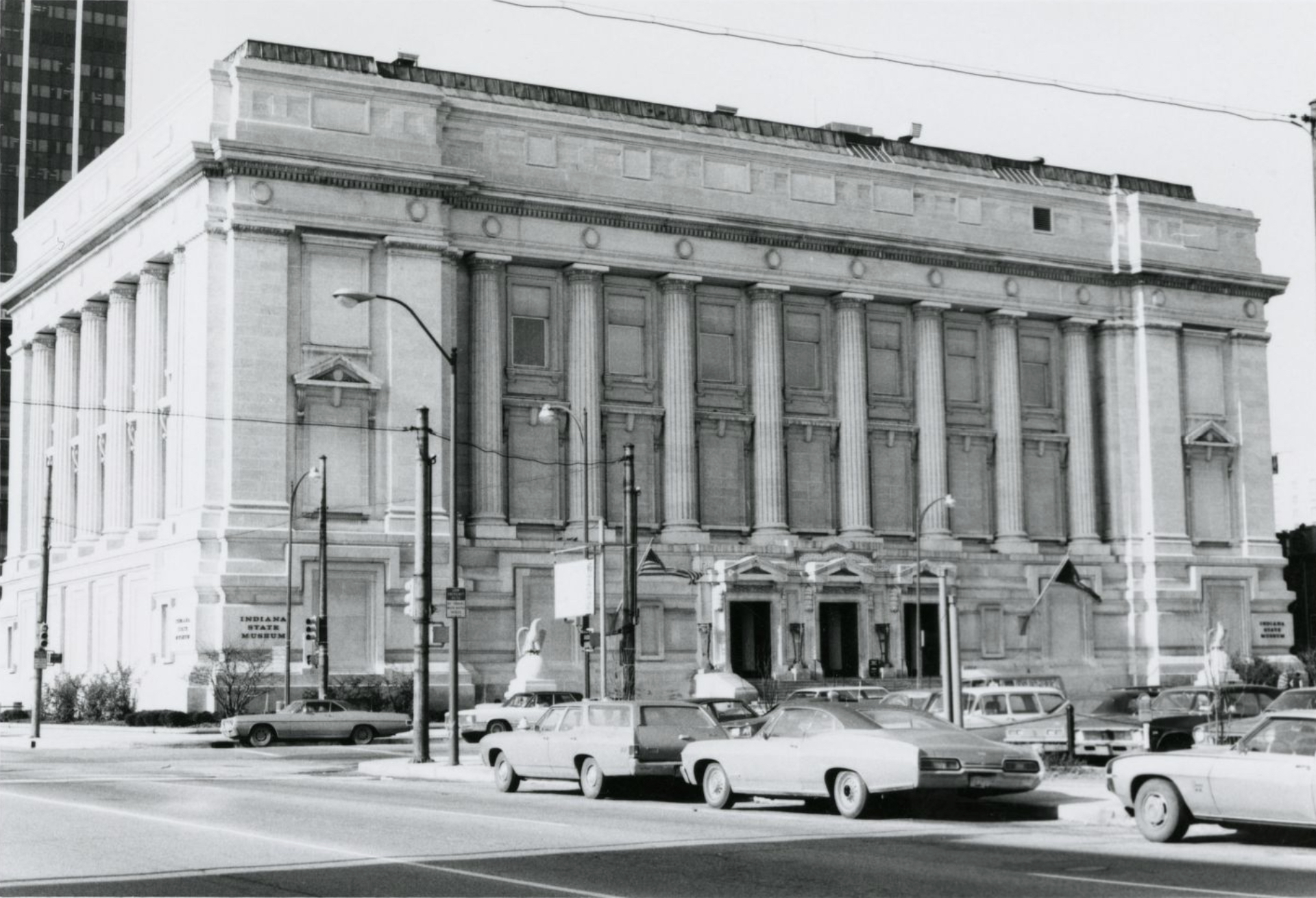
Indiana State Museum opens
Previously housed in various locations, including a basement, the museum finally has its own building—the renovated former Indianapolis City Hall at Alabama and Ohio streets.
Pictured: Indiana State Museum at the former City Hall, ca. 1970s
Credit: City of Indianapolis, Department of Metropolitan Development, Indiana Historical Society
View Source
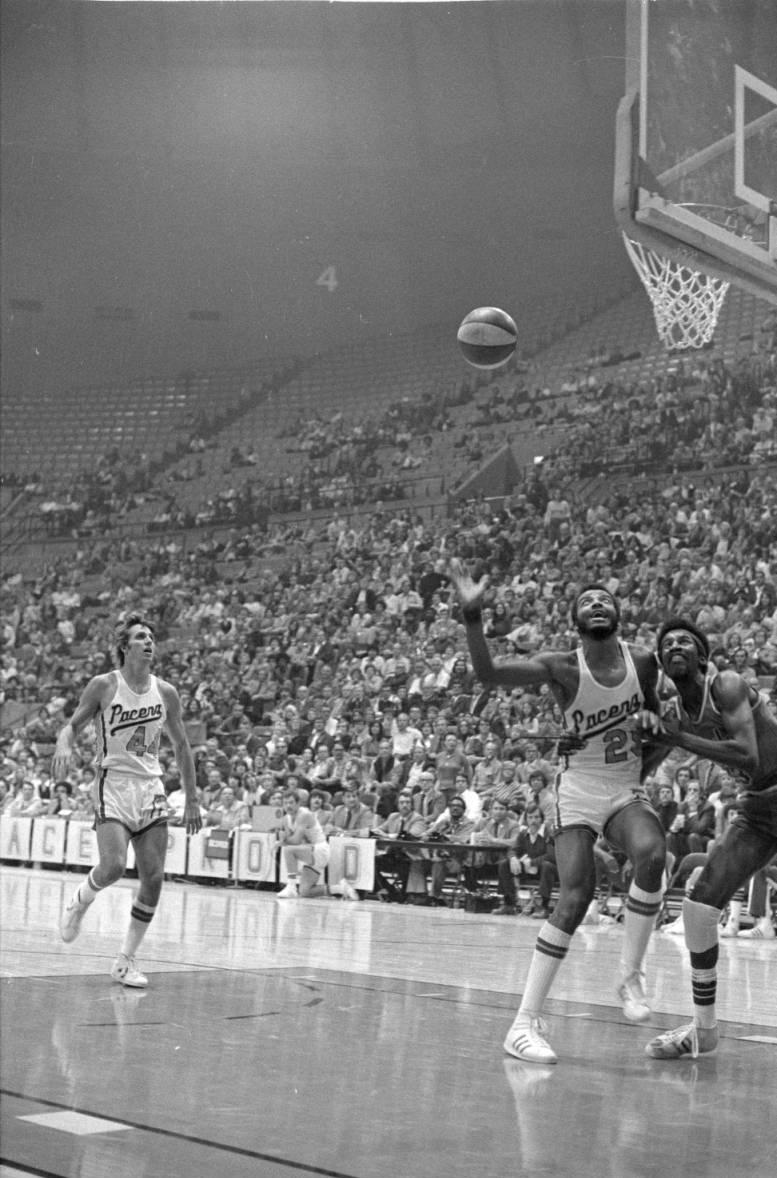
Local businessmen purchase an American Basketball Association franchise—the Indiana Pacers
Several Indiana businessmen purchase a franchise in the proposed American Basketball Association. The franchise later announces it will be known as the “Pacers” because the organization intended to set the “pace” in professional basketball.
Pictured: Players during an ABA Pacers Game in 1975.
Credit: Indiana Historical Society
View Source
Richard G. Lugar becomes the first Republican mayor since 1951
The 35-year-old businessman and former Rhodes scholar defeats incumbent mayor John Barton. Lugar presides over the unification of Indianapolis and Marion County governments and is reelected in 1971.
Pictured: Richard Lugar, 1972
Credit: Indiana Historical SocietyView Source
Indiana Interreligious Commission on Human Equality formed
Founded in Indianapolis and composed of members of the Jewish, Catholic, and Protestant faiths, the Commission designs and implements programs to promote social and racial justice and interreligious dialogue. It remains in operation through 1998.
First Black deputy chief of police
Beginning as a street patrolman in 1934, Spurgeon Davenport is elevated to the rank of deputy chief in the Indianapolis Police Department.
Pictured: Indianapolis Police Dept. Spurgeon Davenport, 1970
Credit: James Ramsey, IndyStarView Source
WTLC-FM debuts as Indianapolis’ only African American owned and operated radio station
WTLC makes its debut on 105.7 FM. The station is the first in Indianapolis to provide 24-hour radio programming for African Americans.
Pictured: Popular WTLC and WXLW disc jockey, Ricky Clark, 1974
Credit: Indianapolis Recorder Collection, Indiana Historical Society View Source
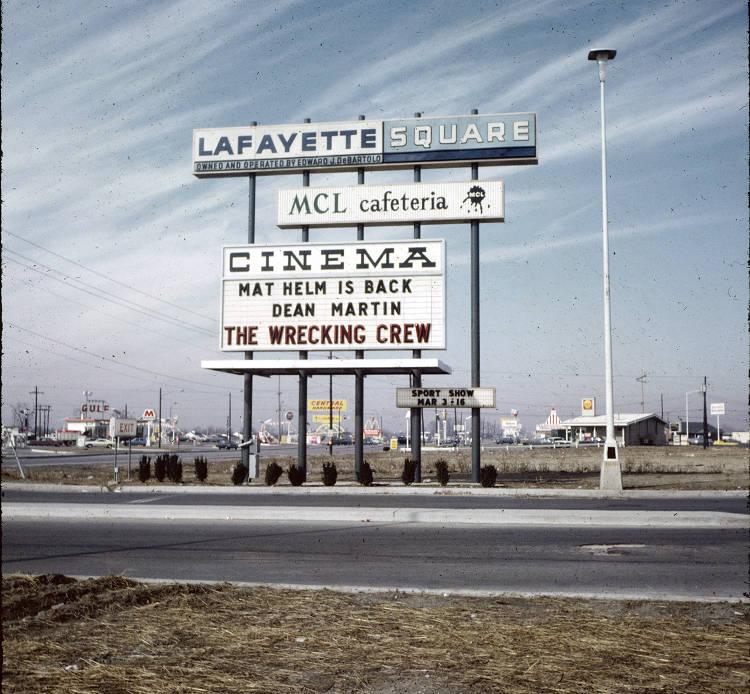
Lafayette Square Mall opens
It is the city’s first enclosed mall with over one million square feet of space. The mall soon features a movie theatre and five anchor stores: J.C. Penney, Sears, G.C. Murphy, Kroger, and William H. Block.
Pictured: Lafayette Square Mall entrance sign, ca. 1960s
Credit: City of Indianapolis, Department of Metropolitan Development, Indiana Historical Society View Source
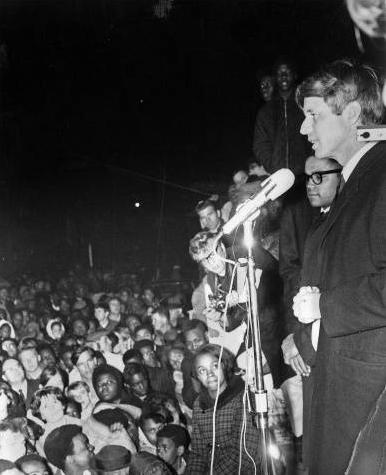
Robert F. Kennedy’s speech on the King assassination
Democratic presidential candidate Robert F. Kennedy, speaking before a mostly African American crowd at 17th and Broadway streets, announces the assassination of Dr. Martin Luther King, Jr. and appeals for calm. The impromptu speech attracts national attention when the city remains free of major civil unrest.
Pictured: Senator Robert F. Kennedy announcing the news of the assassination of Martin Luther King, Jr. to listeners during a Presidential campaign speech in Indianapolis, Indiana, April 4, 1968
Credit: John F. Kennedy Presidential Library and Museum View Source
U.S. Justice Department sues Indianapolis Public Schools for racial discrimination
By August 1971, when the trial concludes, U.S. District Judge S. Hugh Dillin finds IPS guilty of de jure (by law) segregation and orders it to accelerate desegregation efforts. He later imposes a remedy of busing to achieve integration.
Indianapolis-Marion County Public Library becomes a separate municipal corporation
The School Board’s Library District representatives divest the board of its control of the library to merge the city and county library districts. The Marion County Library Board resigns to make way for a new joint city-county library board.
Pictured: Indianapolis-Marion County Public Library Board, 1968
Credit: Indianapolis Public Library
View Source
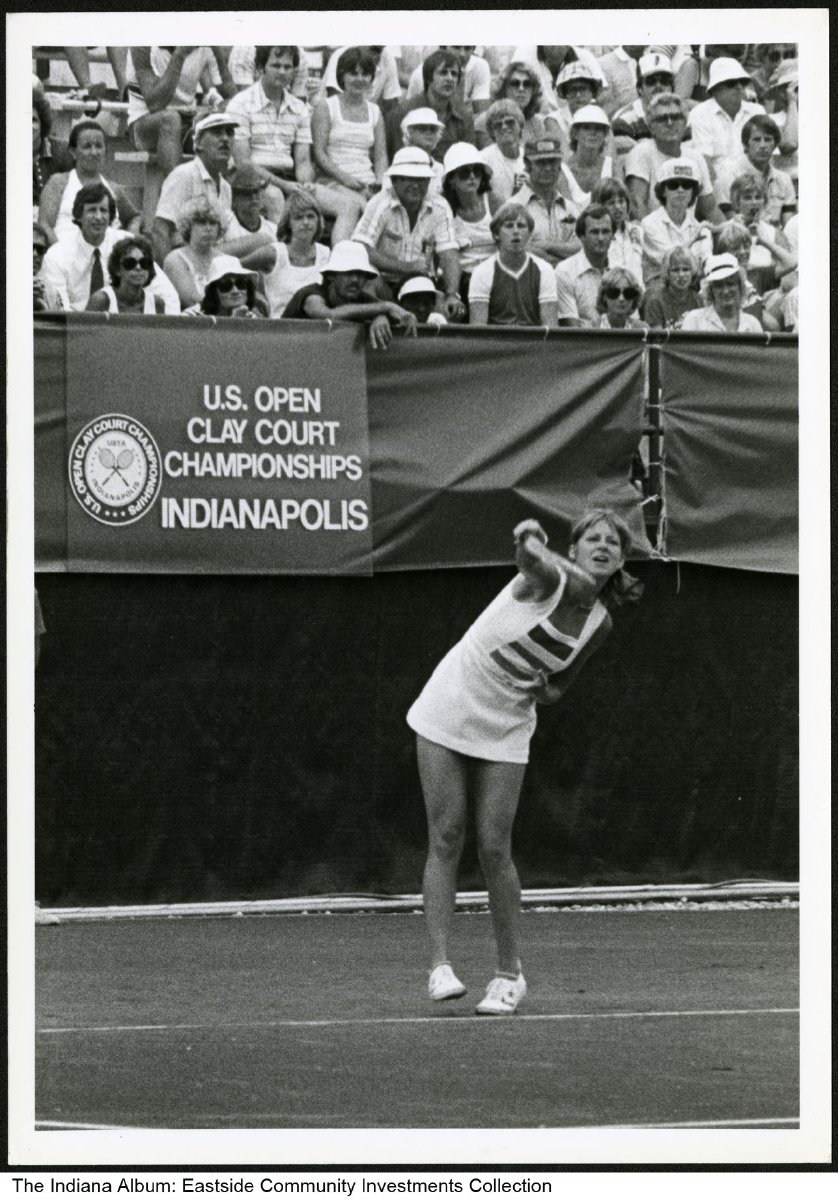
U.S. Clay Court Championships move to Indianapolis
The United States Tennis Association, the sport’s major governing body, relocates the prestigious tournament from Milwaukee to new facilities in Indianapolis.
Pictured: U. S. Open Clay Court Championship game, Indianapolis, Indiana, ca.1980
Credit: The Indiana Album: Eastside Community Investments Collection
View Source
Sikh Satsang of Indianapolis established
The congregation is the first Sikh place of worship, or gurdwara, in Central Indiana. As other gurdwaras open across the city, it becomes the leader in Sikh community outreach efforts and commitment.
Indiana University-Purdue University Indianapolis (IUPUI) created
The trustees of Indiana University and Purdue University merge operations of their Indianapolis extensions to create the urban university. The new university has an enrollment of 13,000 in its first year.
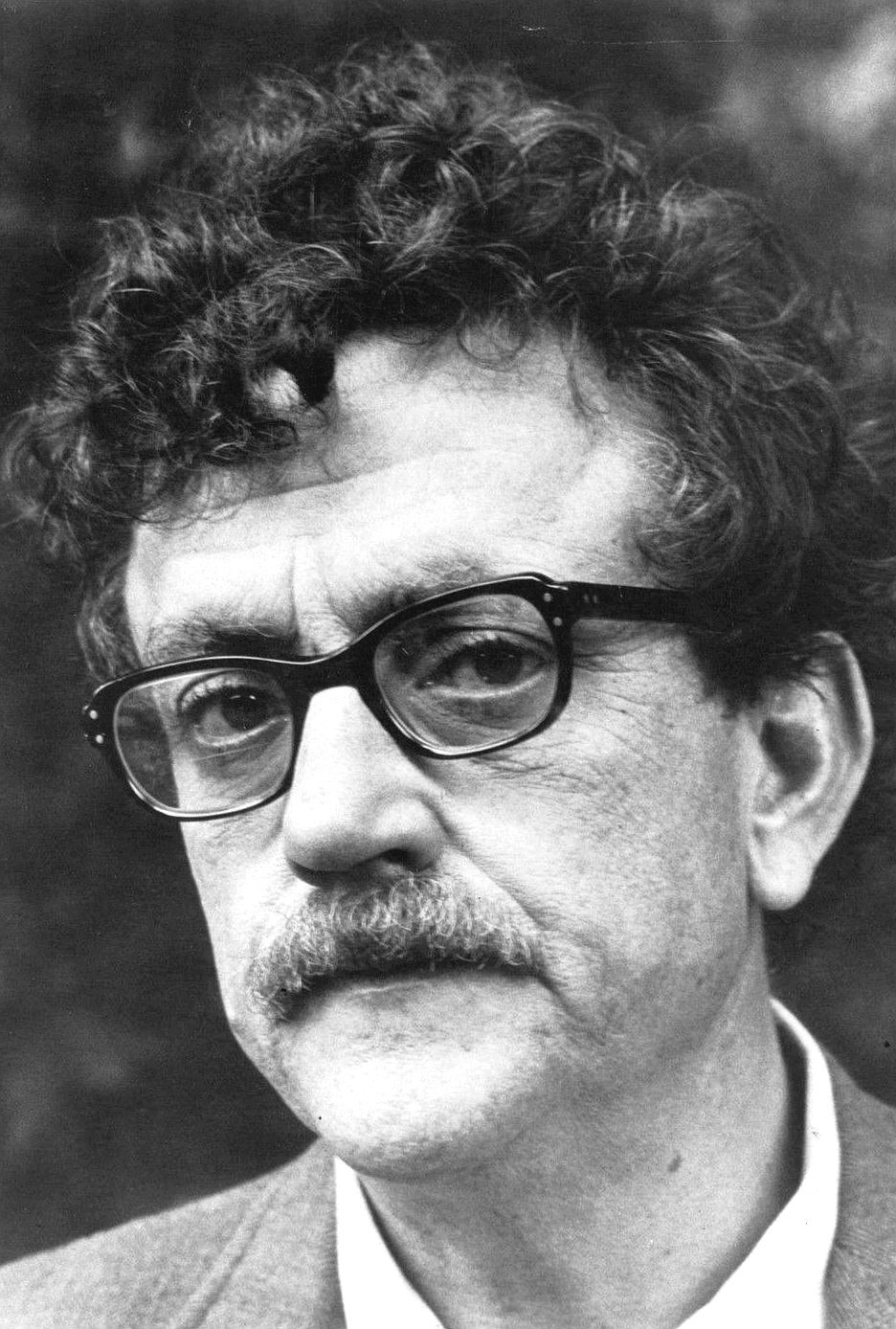
Kurt Vonnegut publishes Slaughterhouse-Five
Vonnegut, an Indianapolis native, suddenly becomes famous with the release of his anti-war book, based on his experience in surviving the firebombing of Dresden during World War II. The book becomes a bestseller and instant classic.
Pictured: Kurt Vonnegut Jr., 1972
Credit: WNET-TV/ PBS, Public domain, via Wikimedia Commons View Source
Civil unrest on Indiana Avenue
The continued displacement and poor police treatment of Black families in Indianapolis results in two days of civil unrest at Lockefield Gardens. The event results in the arrest of over 100 demonstrators, multiple injuries, and damage to nearby businesses. It also brings publicity to issues of local police brutality in Black neighborhoods.
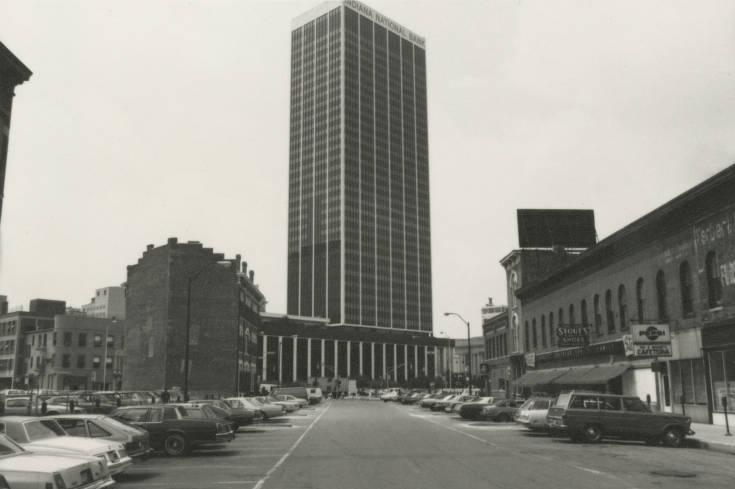
First modern skyscraper built
Indiana National Bank demolishes the Knights of Pythias Building to construct a 33-story aluminum, glass, and marble tower.
Pictured: Indiana National Bank Tower, now known as the Regions Tower, 1981
Credit: City of Indianapolis, Department of Metropolitan Development, Indiana Historical Society View Source
Park Tudor School established
Tudor Hall (1902), a preparatory school for girls, and Park School (1914), a preparatory school for boys, merge to form the new institution.
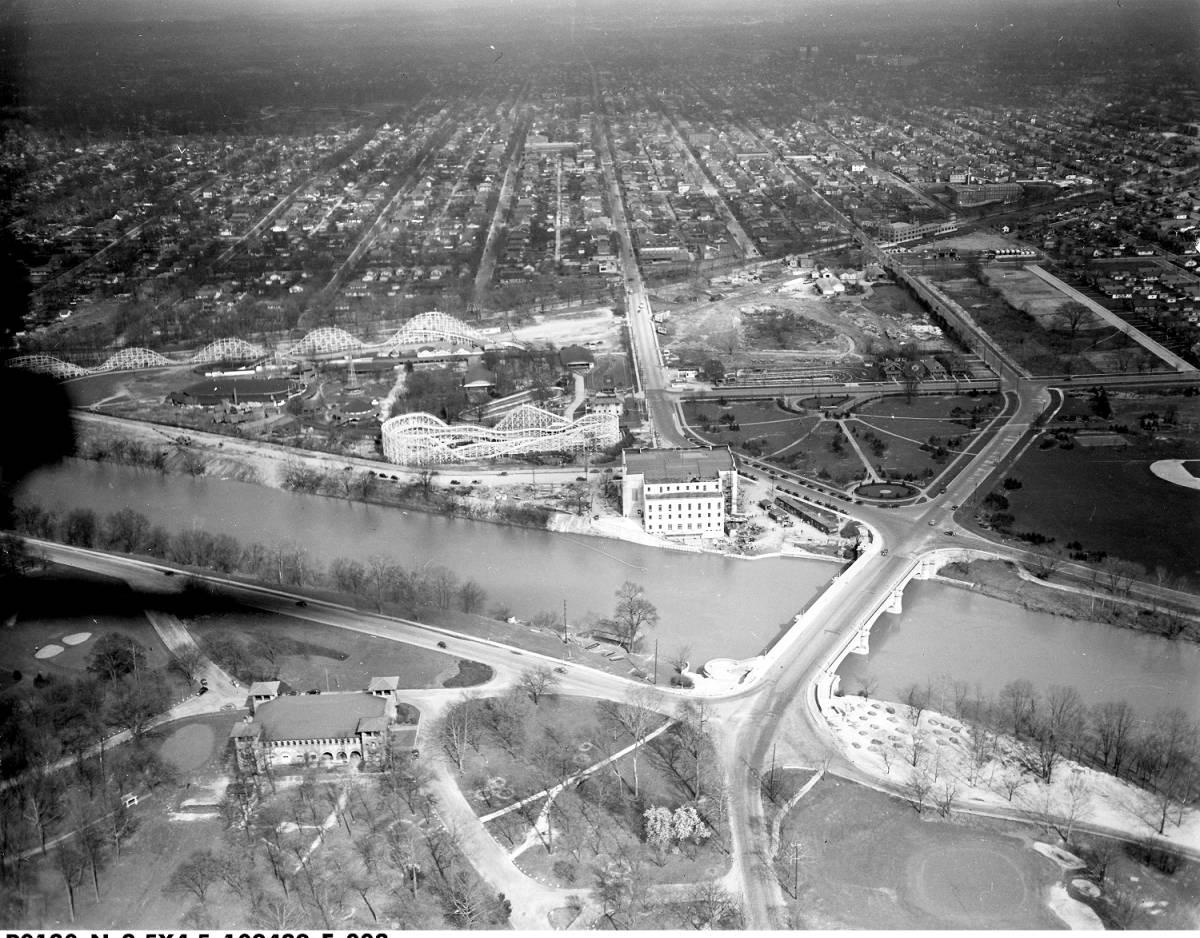
Riverside Amusement Park closes
The high cost of rides, insurance, and the competition from major amusement parks within driving distance of Indianapolis force the closure of the once-popular park. It had been a whites-only venue until the 1960s.
Pictured: The Amusement Park was located at 30th Street between the White River and the Central Canal in Indianapolis and was open from 1903 to 1970.
Credit: Bass Photo Co Collection, Indiana Historical Society
View Source
Marion County and Indianapolis consolidate under Unigov
On March 13, 1969, Governor Whitcomb signs the legislation to unify Marion County and the city of Indianapolis. It becomes effective on January 1, 1970.
Population: 744,624
The population in 1970 totals 744,624. The large jump in population numbers is the result of changes related to Unigov.
Amateur Athletic Union moves to Indianapolis
Desiring to be more centrally located in the United States, the Amateur Athletic Union (AAU) becomes first national amateur sports governing body to locate its national headquarters in Indianapolis.
WFYI-Channel 20 goes on the air
With a budget of $221,000, three black-and-white cameras, and nine employees, WFYI signs on the air, becoming the city’s first non-commercial public station.
Pictured: WFYI fund drive, 1995
Credit: Indiana University Indianapolis View Source
Sunshine Promotions founded
Dave Lucas and Joe Halderman establish Sunshine Promotions to promote local rock concerts in Indiana. The company later builds Deer Creek Music Center, now Ruoff Music Center, a 20,000-capacity amphitheater in Hamilton County.
El Centro Hispano/The Hispanic Center opens
The Hispano-American Association, responding to the needs of the city’s Hispanic population, opens El Centro Hispano/The Hispanic Center with funding and support from the government and several churches.
Year-long sesquicentennial celebration begins
Celebrations to mark the 150th anniversary of the city’s founding begin in January and continue throughout 1971. Mayor Richard G. Lugar launches the festivities at an evening performance of “We Celebrate Our City,” based on Edward Leary’s narrative history.
Pictured: Sesqui-samplings: 150 years of cooking in Indianapolis, 1971
Credit: Indiana University Indianapolis View Source
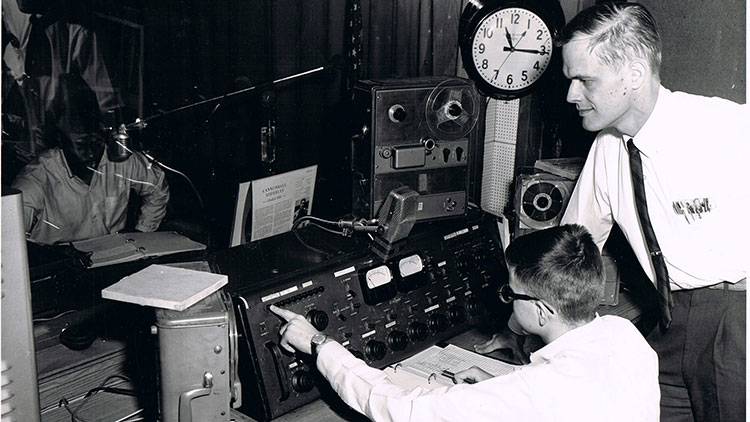
WIAN 90.1 FM becomes a NPR charter affiliate
The Indianapolis Public Schools’ station, established in 1954, receives a grant through the Corporation for Public Broadcasting to bring public radio to Indianapolis in 1971. WIAN (changed to WFYI in 1988) begins airing NPR programming in September.
Pictured: Art Van Allen, station manager from 1958 to 1986, oversees student operations, ca. 1960s
Credit: Elizabeth J. Van Allen
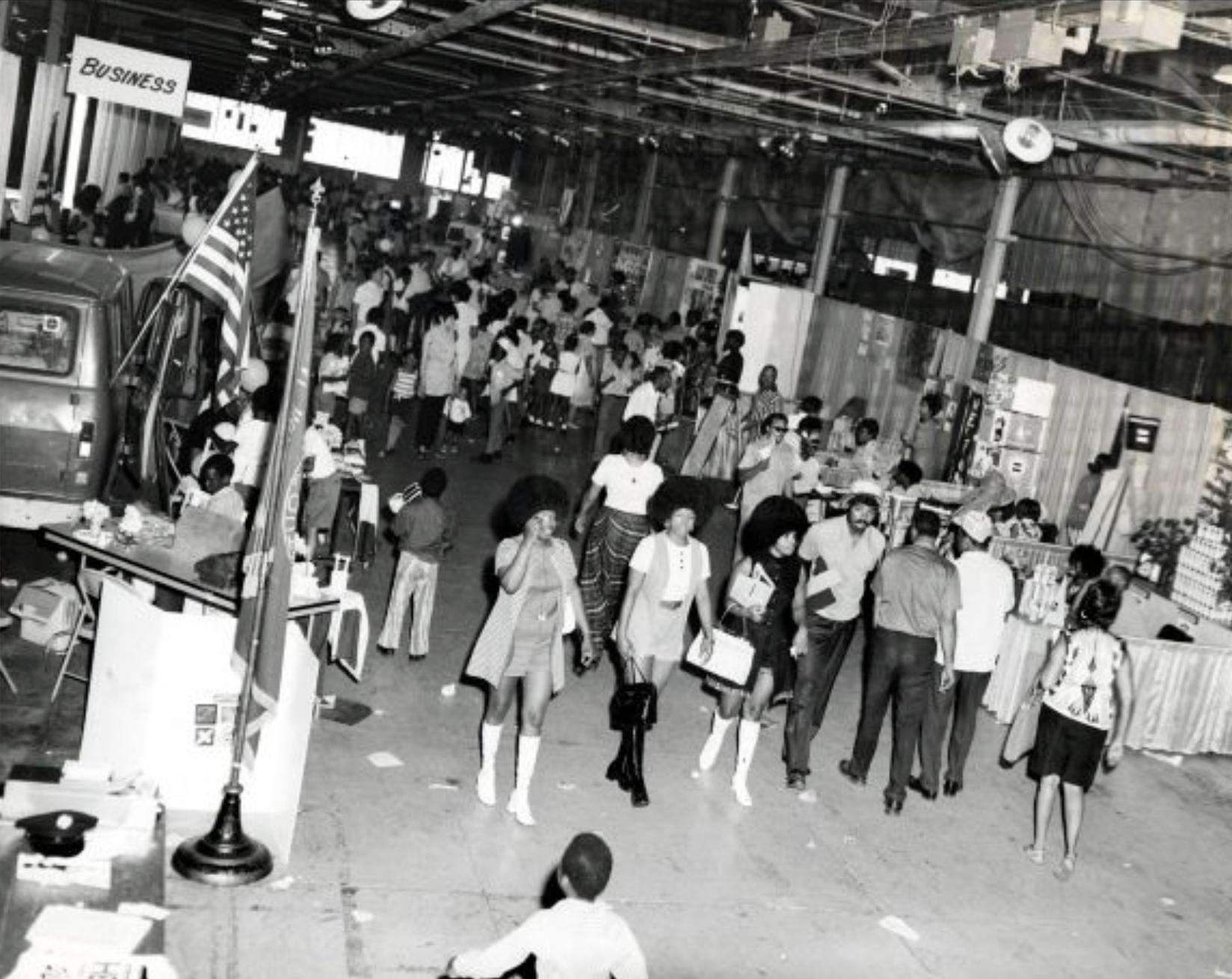
Indiana Black Expo begins
The annual exposition holds its inaugural event, a one-day gathering, at the Indiana State Fairgrounds. It aims to highlight the talents and achievements of African Americans and identify and address their challenges.
Pictured: Crowd at First Indiana Black Expo at the Indiana State Fairgrounds, 1971
Credit: Indianapolis Recorder Collection, Indiana Historical Society View Source
Indianapolis Public Schools found guilty of segregation
U.S. District Judge S. Hugh Dillin finds IPS guilty of segregation and orders it to accelerate desegregation of its staff and some schools.
Indianapolis native sets the women’s marathon world record
Cheryl Pedlow Bridges sets the women’s marathon world record at the Western Hemisphere Marathon in Culver City, California. Her time of 2:49:40 stands for almost two years.
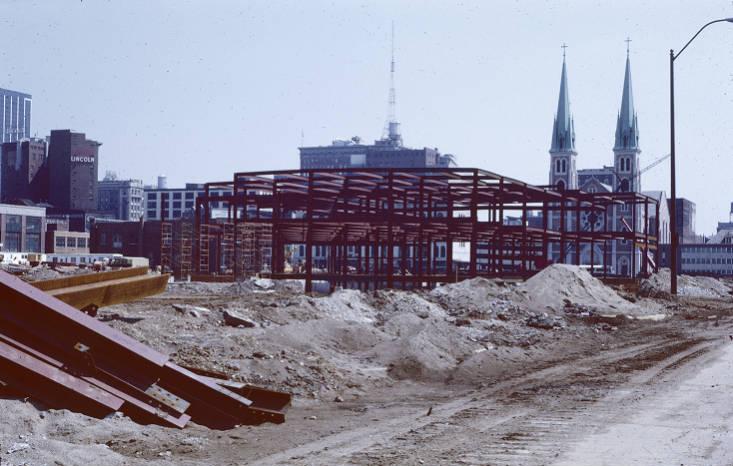
Indiana Convention Center opens
The Indiana Convention Center increases the city’s capacity to host large meetings and events for the tourism industry. It helps revitalize downtown Indianapolis and sets the city on a path to become a major convention site.
Pictured: The convention center, show here under construction, was designed by the architects Lennox, James, and Loebl and completed in 1972.
Credit: City of Indianapolis, Department of Metropolitan Development, Indiana Historical Society
View Source
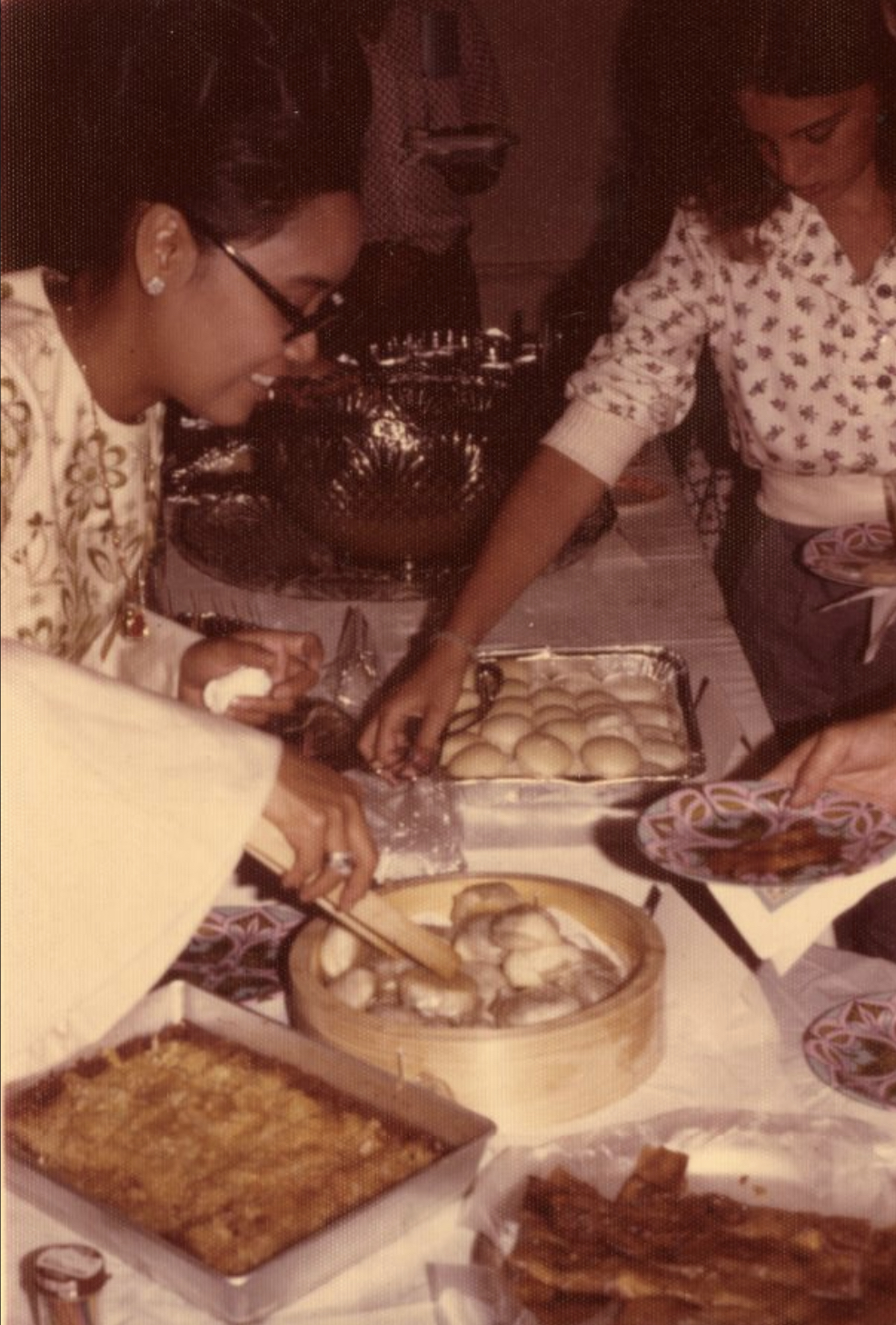
International Center of Indianapolis established
The need for interpreters and translators for the North Atlantic Treaty Organization (NATO) Conference of Mayors in 1973 sparks the formation of the International Center. It later grows to provide services to local ethnic groups.
Pictured: Food and culture meet during one of the programs at the International Center of Indianapolis, 1974
Credit: Indiana University Indianapolis
View Source
The Pyramids, a landmark office complex, opens
College/University Corp. moves into the first of the pyramid-shaped buildings at College Park on the northwest side. The distinctive buildings are designed by Kevin Roche of Connecticut-based Roche Dinkaloo Associates.
Pictured: The Pyramids at College Park, ca. 1990s
Credit: Indiana Historical Society View Source
Castleton Square Mall opens
The mall sits on 104 acres at 82nd street on the far northside of Indianapolis. The 103-store mall complex surpasses Lafayette Square Mall as the state’s largest enclosed shopping mall.
Pictured: Castleton Square Mall, ca. 2010
Credit: Banayote Photo Inc., Indiana Historical Society View Source
Fire destroys the Pendleton Pike Drive-in
The drive-in theatre is the first in the nation to have individual speakers and a wide screen. The fire, likely due to an electrical short, does nearly $100,000 in damage and destroys the theater’s screen.
Indianapolis Ballet Theatre established
Indianapolis Ballet Theatre forms as an outgrowth of the Civic Ballet Society of Indianapolis. Initially performing only for Indianapolis Public School audiences, the ballet programs prove successful and expand.
Pictured: Elaine Bauer and David Brown of the Indianapolis Ballet Theater, performing as part of the Civic Ballet Society of Indianapolis, its forerunner, in 1969.
Credit: The Bretzman Collection, Indiana Historical Society View Source
Keystone at the Crossing center opens with two shopping areas
The center includes the Bazaar and the Fashion Mall. It subsequently expands in 1980, 1982, 1988, and 1993. The Bazaar is razed in 1988.
Pictured: Keystone Fashion Mall Interior, ca. 1980s
Credit: Indiana Historical Society View Source

Indianapolis Public Transportation Corporation (Metro) created
An ordinance of the City-County Council creates the Indianapolis Public Transportation Corporation. It begins service in 1975 after assuming assets of Indianapolis Transit System, Inc., a private corporation.
Pictured: Metro Bus at Glendale Mall, ca. 1970s
Credit: City of Indianapolis, Department of Metropolitan Development, Indiana Historical Society
View Source
Indianapolis/Scarborough Peace Games organize
Indianapolis and Scarborough, Ontario, Canada, agree to conduct an annual amateur athletic competition, the Indianapolis/Scarborough Peace Games, named in honor of the Vietnam Peace Treaty which is signed the same day.
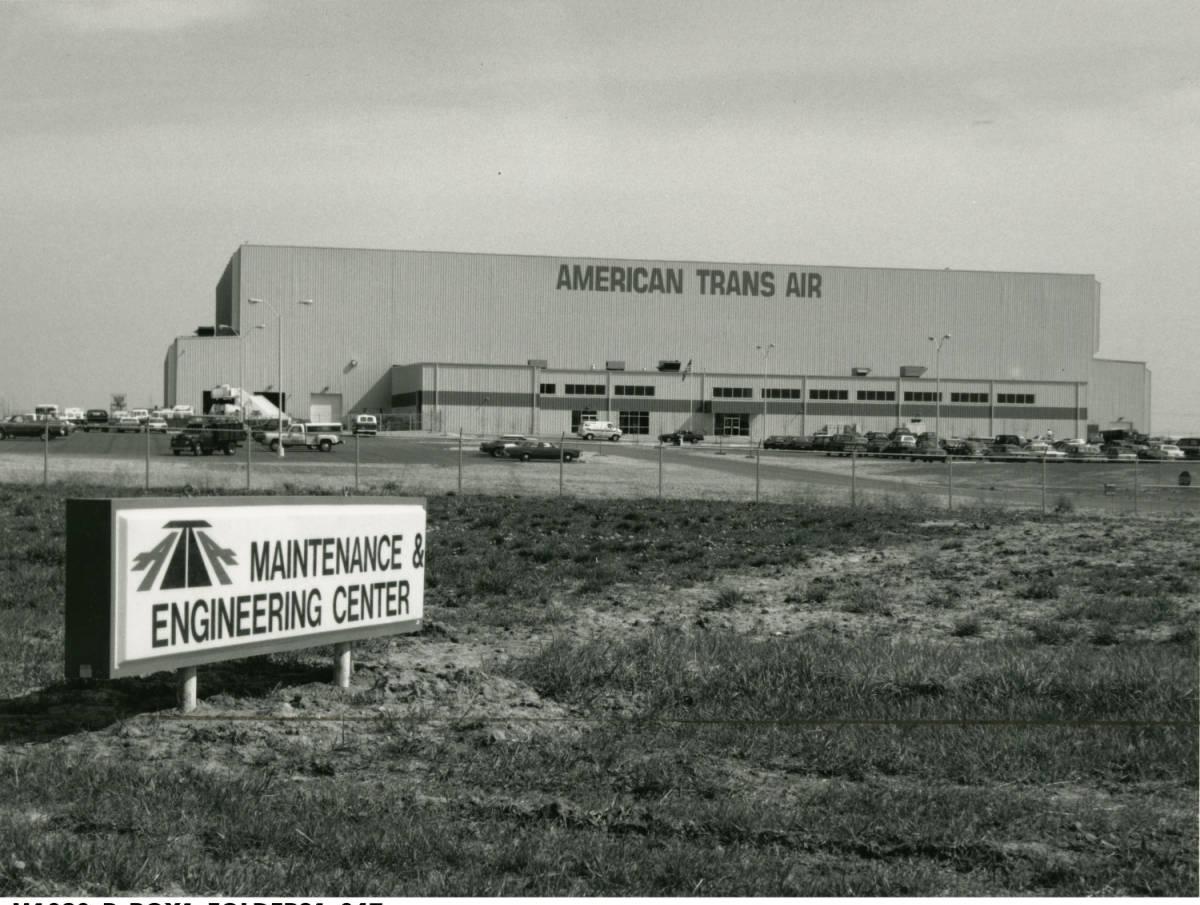
Ambassadair founded
Several Indianapolis businessmen found the locally based air travel club. They incorporate American Trans Air as its air carrier. It becomes the nation’s largest charter airline in the 1990s.
Pictured: The American Trans Air (ATA) Maintenance and Engineering Center at Indianapolis International Airport was established in the 1980s.
Credit: Indiana Historical Society
View Source
Chinese Community Church of Indianapolis established
The congregation, which began as a Bible study in 1968, worships at Meridian Street Methodist Church before moving to 56th and Broadway in 1982 and then to Carmel in 1999.
Propane explosions on East Washington Street create a disaster downtown
Two propane tanks in the W. T. Grant building explode causing a rapidly spreading fire. The explosion causes over $15 million in damages to seven nearby buildings and injures seven people.
The Indianapolis Association of Chinese Americans organizes
The association provides a sense of community to the Chinese in the city. It offers opportunities to showcase Chinese culture and heritage and to integrate with American society.
Boehringer Mannheim Corporation begins its Indianapolis operations
Boehringer acquires the Indianapolis-based Bio-Dynamics and moves its headquarters to Indianapolis in 1975. Boehringer Mannheim Corporation is part of an international group of privately held Boehringer Mannheim companies. It later becomes Roche Diagnostics GmbH.
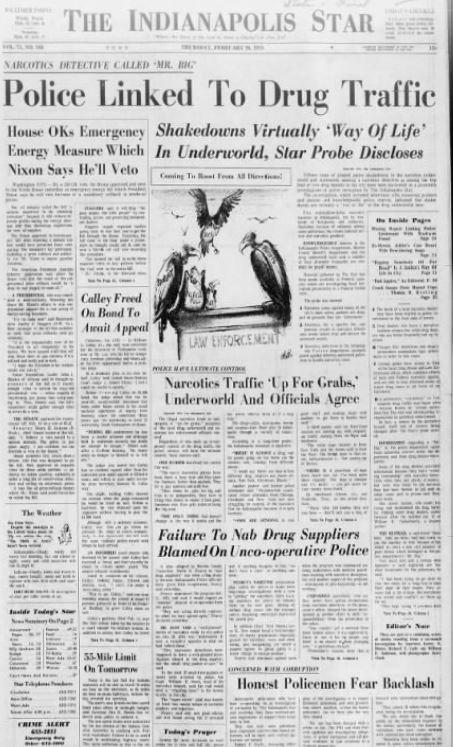
Indianapolis Star begins a series of reports on Indianapolis police corruption
The Indianapolis Star publishes several reports alleging police brutality, political influence, misappropriation of funds, and unsavory connections. The paper is awarded its first Pulitzer Prize in 1975 for its work.
Pictured: Indianapolis Star begins police corruption series, Feb. 28, 1974.
Credit: IndyStar
View Source
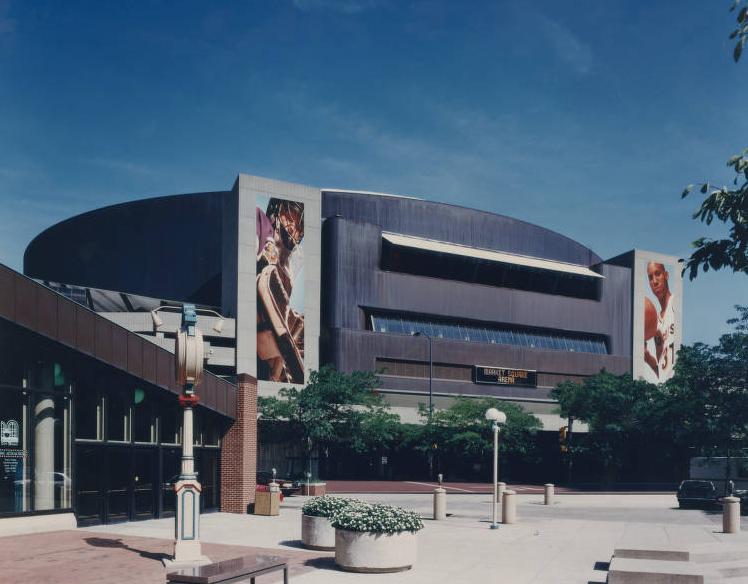
Market Square Arena opens as the nation’s fifth-largest sports arena
Market Square Arena becomes the home of the Indiana Pacers and also hosts concerts, hockey games, and basketball games. It is the fifth-largest sports arena in the United States when it opens.
Pictured: Market Square Arena, ca. 1990s
Credit: Indiana Historical Society View Source
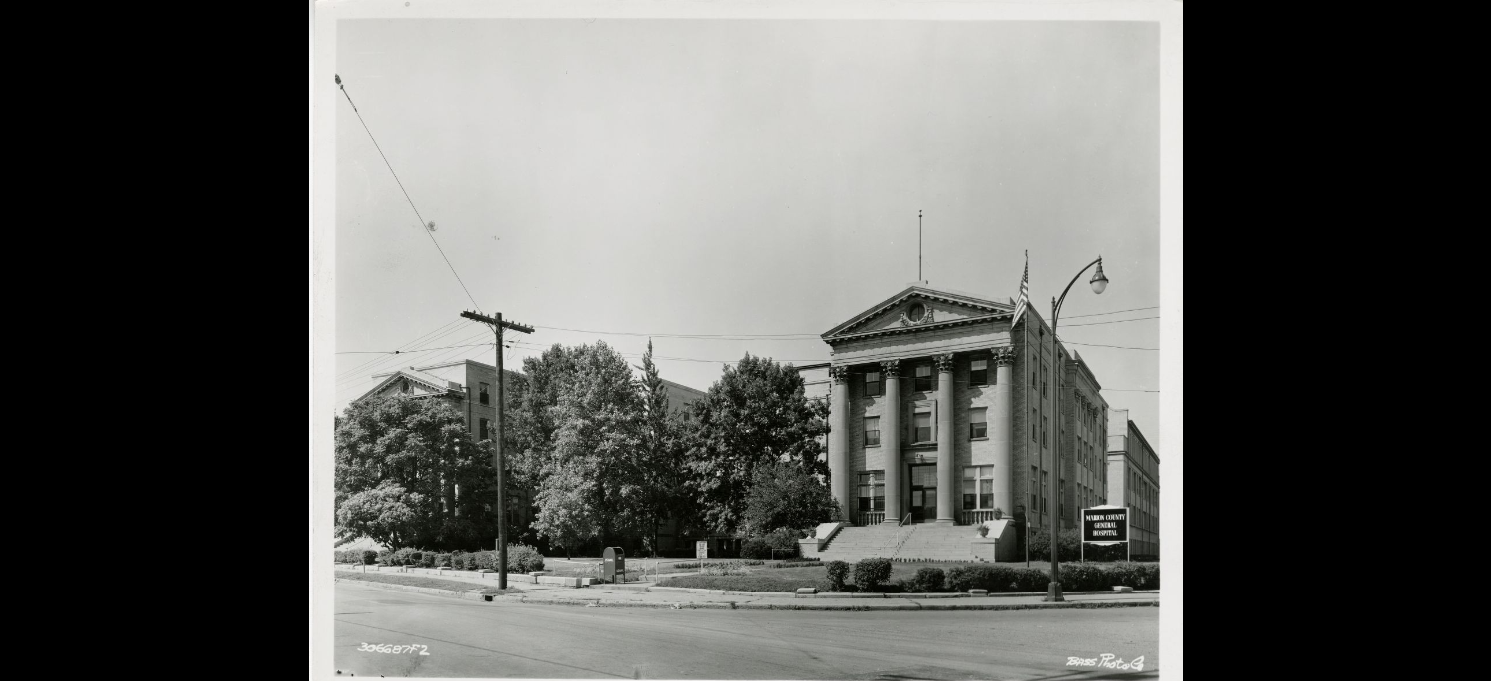
Marion County General Hospital changes name to Wishard Memorial Hospital
To overcome its image as an inferior charity hospital, the institution changes its name to Wishard Memorial Hospital. It also allows Indiana University to manage the facility.
Pictured: Marion County General Hospital, 1961
Credit: Indiana Historical Society
View Source
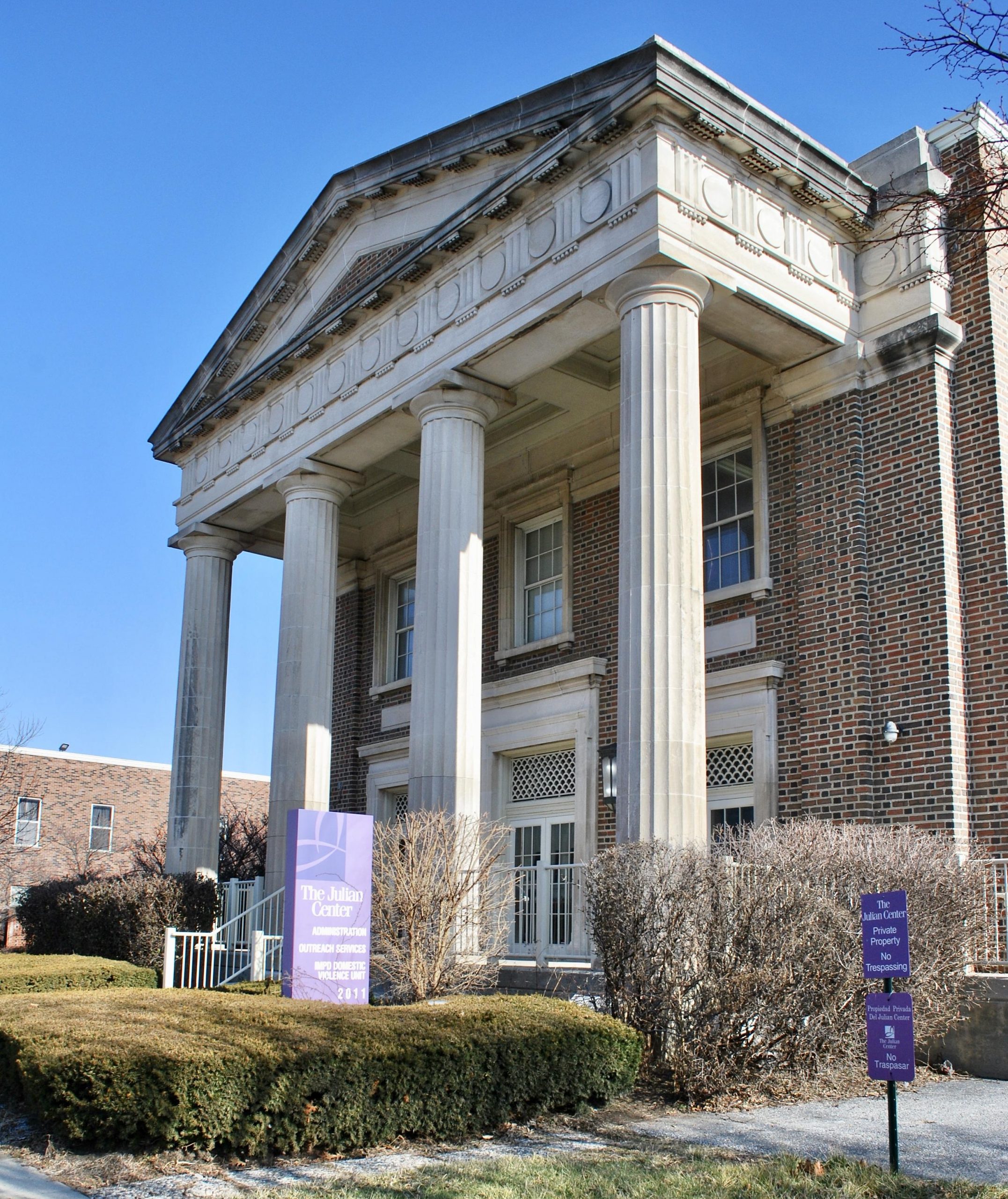
Julian Center opens
The Episcopal Diocese launches the Julian Mission (now Julian Center) to provide information and referrals to women and children of domestic violence.
Pictured: The Julian Center building, 2021
Credit: Kara Chinn
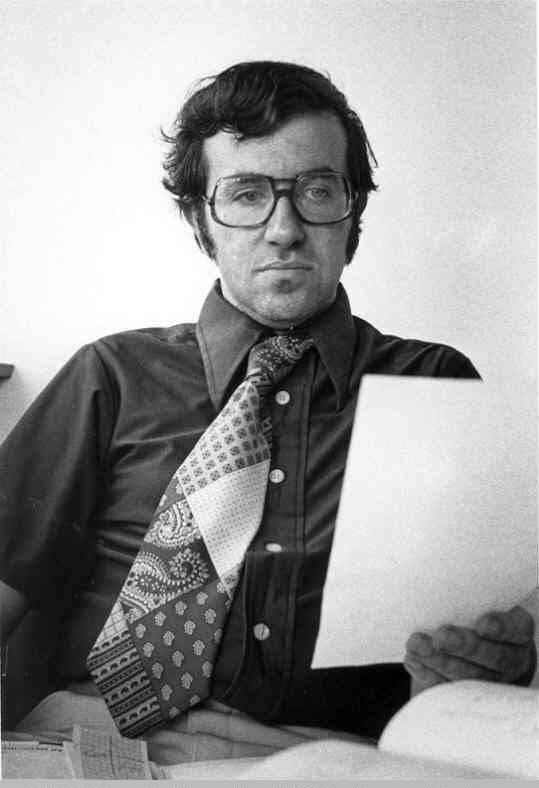
Indiana University School of Medicine announces breakthrough treatment for testicular cancer
Dr. Lawrence H. Einhorn develops and tests a therapy including the drug Cisplatin with two additional drugs. By the end of 1975, he reports that the drugs are effective in killing cancer cells. The treatment becomes famous when Einhorn uses it to cure internationally known cyclist Lance Amstrong.
Pictured: Dr. Lawrence H. Einhorn, 1977
Credit: Indiana University Indianapolis
View Source
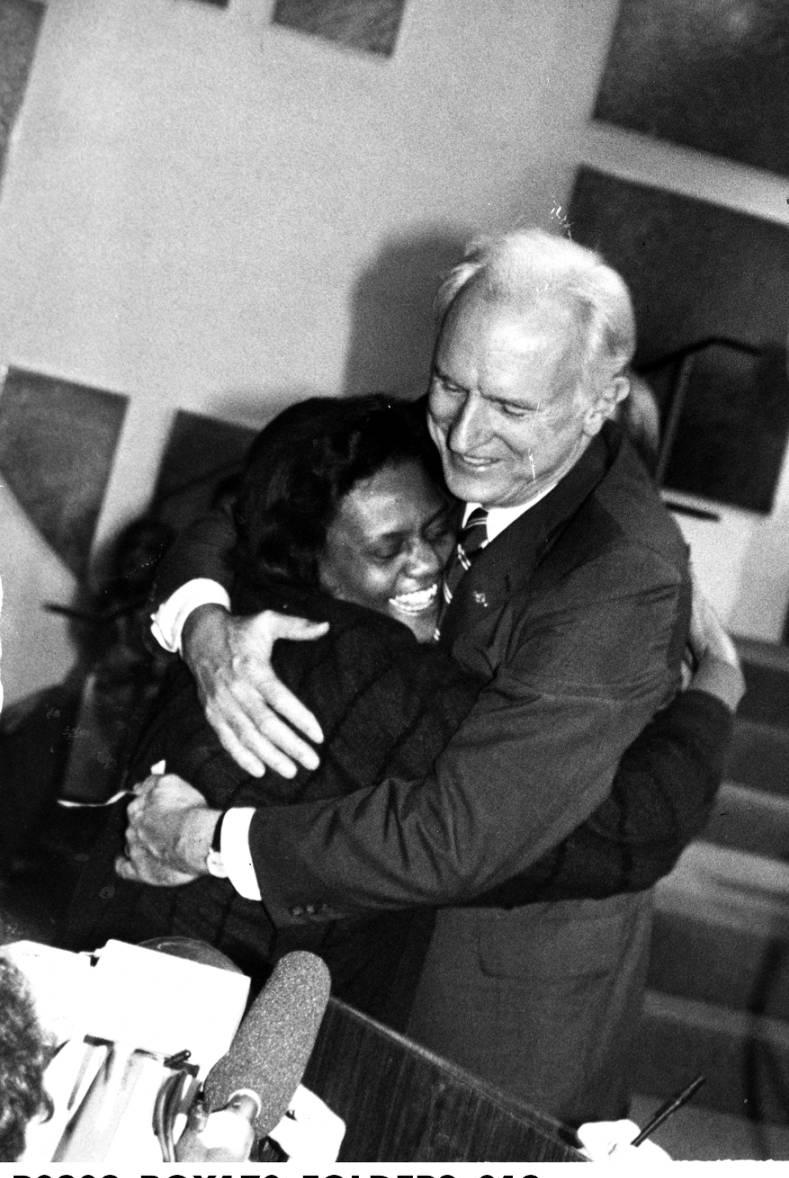
City launches an urban homestead program
A dozen recipients are selected by a random drawing. The winners receive a home for one dollar but must complete any necessary repairs and stay there for five years.
Pictured: Mayor Hudnut and winner of a homestead drawing, 1975
Credit: Indianapolis Recorder Collection, Indiana Historical Society
View Source
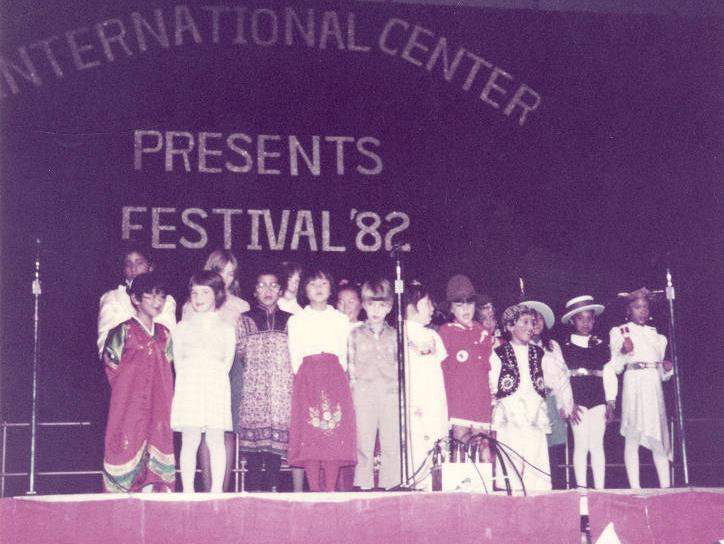
International Festival begins
Under the management of the International Center, the festival begins as part of the nation’s bicentennial. It provides a platform for various ethnic groups to showcase their contributions to the culture, history, and economy of Indiana.
Pictured: The International Festival, 1982
Credit: Jill Kramer, Indiana Historical Society View Source
Eastside Community Investments becomes the city’s first community development corporation
The Near East Side Community Organization founds the organization to refurbish homes in the blighted eastside neighborhood near downtown Indianapolis. It seeks to revitalize the area.
Weir Cook Airport renamed Indianapolis International Airport
Despite strong opposition, the city changes the name of Weir Cook Airport to Indianapolis International Airport to reflect the expanded role of the facility, including the award of Foreign Trade Zone status.
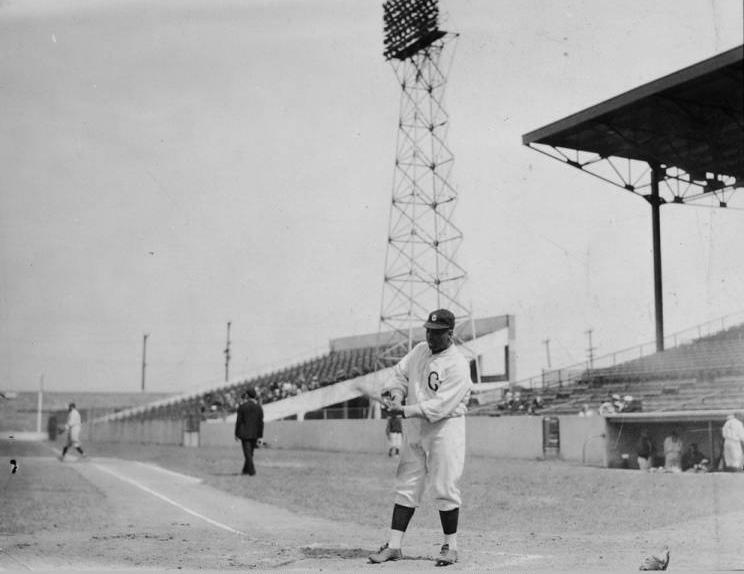
Oscar Charleston posthumously inducted into the Baseball Hall of Fame
Known as “The Hoosier Comet,” the Indianapolis native plays for the Indianapolis ABCs of the Negro National League for several years, starting in 1916. He later manages the famous show team, the Indianapolis Clowns, for their 1954 season.
Pictured: Oscar Charleston, n.d.
Credit: Indianapolis Recorder Collection, Indiana Historical Society View Source
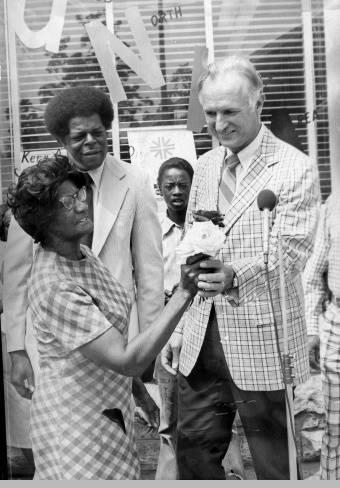
William H. Hudnut III elected mayor
Mayor Hudnut focuses his first term on revitalizing Indianapolis through public-private partnerships. Reelected three times, he is the city’s longest-serving mayor.
Pictured: Mayor Hudnut and a group of Indianapolis residents.
Credit: Indianapolis Recorder Collection, Indiana Historical Society
View Source
Bicentennial Moon Tree planted
A sycamore tree grown from a seed carried to the Moon by astronaut Stuart A. Roosa on Apollo XIV in 1971 is planted on the east side of the Indiana Statehouse.
Pictured: Moon Tree, 2024
Credit: Montoya Barker, Indianapolis Public Library
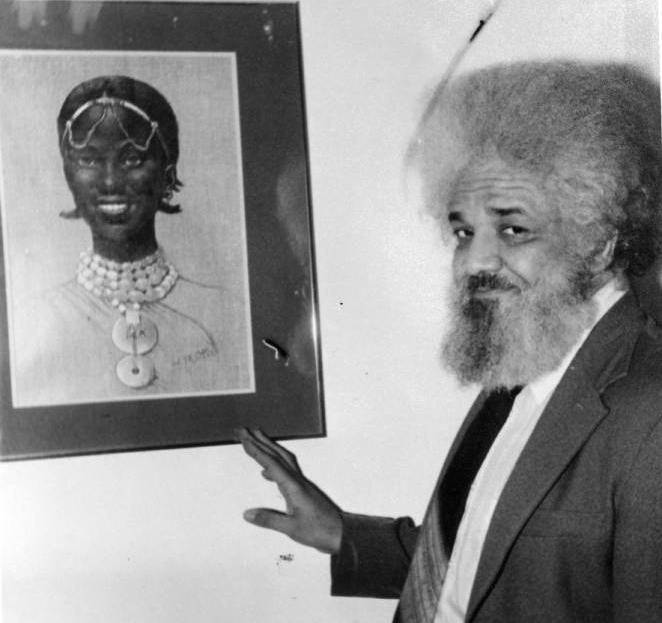
Martin Center opens
Martin Center, an educational institution, opens under the leadership of Father Boniface Hardin, O.S.B. Reflecting increased enrollment and diversity of degree programs, it becomes Martin University in 1990.
Pictured: Father Boniface Hardin inspects art at a Martin Center College exhibition, 1983
Credit: Indianapolis Recorder Collection, Indiana Historical Society View Source
Jacquelyn Means becomes the first woman ordained as an Episcopalian priest
The Diocese of Indianapolis becomes the first Anglican body in the world to ordain a woman priest, Jacqueline Means, at All Saints Church. She is joined days later by Tanya Vonnegut Beck.
Pictured: Rev. Jackie Means, ca. 1980s
Credit: Indianapolis News
View Source
Eli Lilly dies
Lilly leaves a great legacy in Indianapolis. The city, state, and nation recognize him as an entrepreneur, civic leader, and philanthropist.
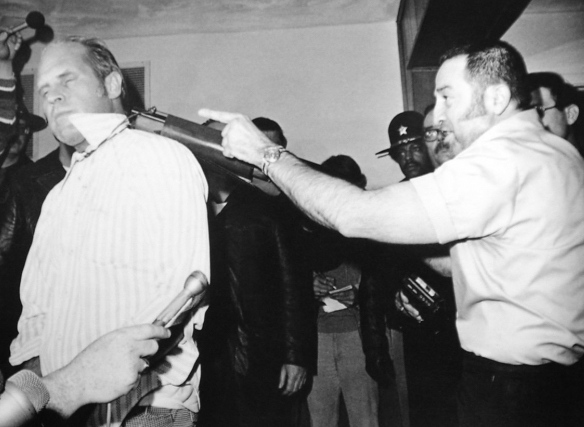
Real estate developer holds man hostage
Tony Kiritsis, a real estate developer, takes Richard O. Hall, president of the Meridian Mortgage Company, hostage with a sawed-off 12-gauge shotgun. Kiritsis is later found not guilty by reason of insanity and commited to an institution.
Pictured: Anthony Kiritsis holds a shotgun to Richard Hall’s head. The photo won a Pulitzer Prize in 1978.
Credit: John H. Blair, United Press International, Public domain, via Wikimedia Commons View Source
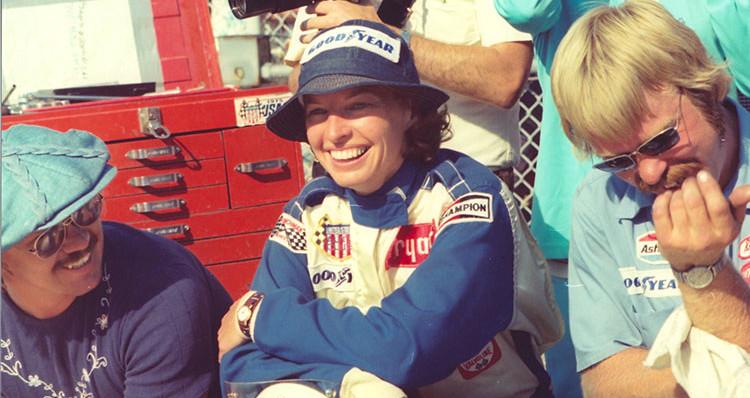
Janet Guthrie becomes the first female driver in the Indianapolis 500
Mechanical troubles force Guthrie to leave the race after 27 laps. In 1978, she qualifies again and finishes ninth in the field.
Pictured: Janet Guthrie with team members at the Indianapolis Motor Speedway, 1977
Credit: WFYI
View Source
Elvis Presley performs his last concert
At Market Square Arena, Presley performs all his hits to a crowd of 18,000 fans. The show receives mixed reviews, and the star takes a break from touring. Presley dies six weeks later.
Corporate Community Council established
Indianapolis businessmen establish the Corporate Community Council to help corporate leaders identify and support significant community needs.
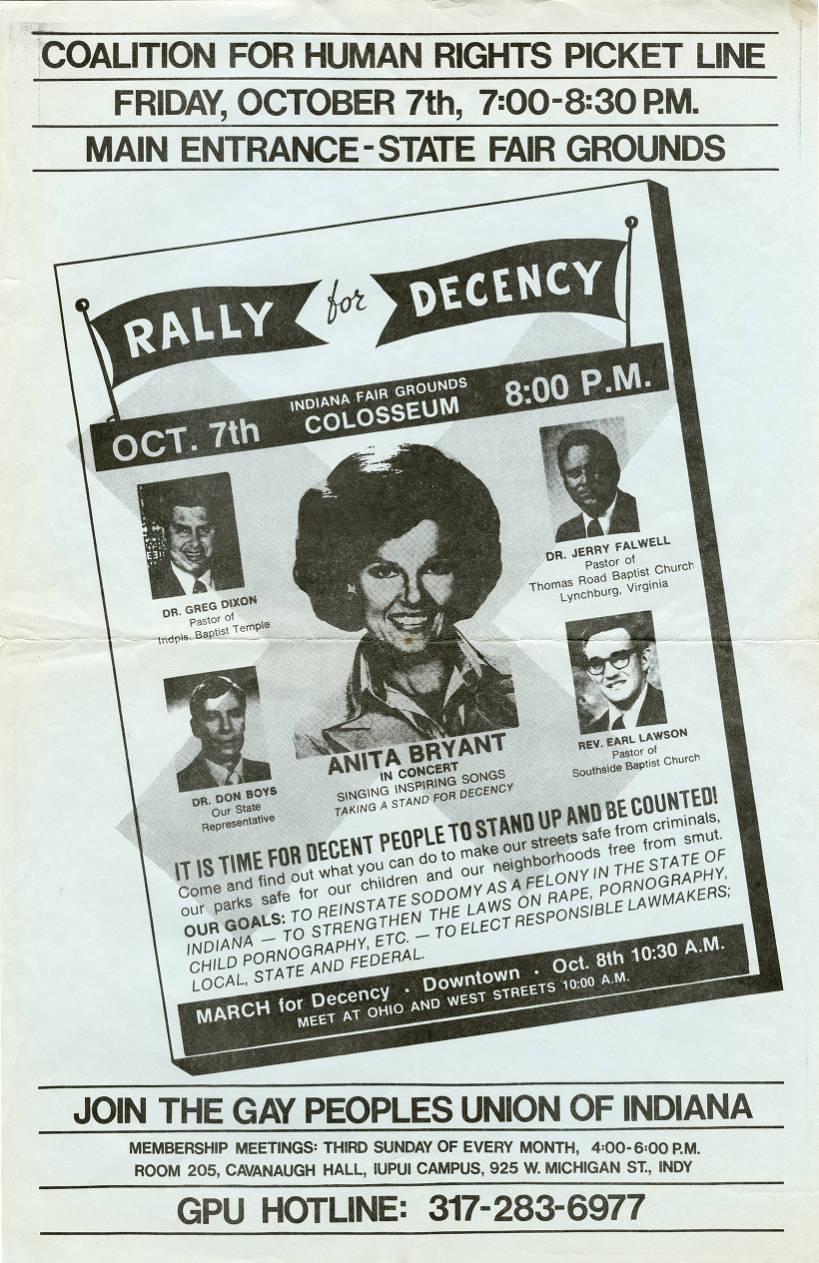
Anita Bryant holds “Rally for Decency” at the Indiana Fair Grounds
Evangelical pop singer and Florida orange juice spokesperson Anita Bryant visits Indianapolis for the “Rally for Decency,” a national conservative Christian-centered campaign to deny equal legal protection for gay Americans.
Pictured: Coalition for Human Rights Picket Line, October 7, 1977
Credit: Bohr/Indy Pride/Gonzalez Collection, Indiana Historical Society View Source
Indiana Writers Center established
Writer and teacher Jim Powell founds the Indiana Writers Center to support local writers. The organization quickly grows from a small community group into a professional nonprofit organization.
Blizzard brings record snowfall
Indianapolis receives a record amount of snow in two days—15.5 inches on January 25-26. The total January snowfall of 30.6 inches sets new monthly record and adds to the city’s greatest seasonal snowfall—57.8 inches.
Pictured: Plowed parking lot in an Indianapolis-area shopping mall following the Blizzard of 1978.
Credit: William Palmer/Indianapolis News, Indiana Historical Society View Source
Burger Chef murders occur
Four young employees of the Speedway hamburger franchise are reported missing. The next day, searchers discover their bodies in a wooded area of Johnson County. The murders remain unsolved.
Pictured: Burger Chef restaurant, ca. 1970s
Credit: W.H. Bass Photo Company Collection, Indiana Historical Society
View Source
Indianapolis Racers team folds
The Indianapolis Racers ends four full seasons as the city’s professional hockey team amid owner mismanagement. In the liquidation of the team’s assets, 17-year old Wayne Gretzky, a future hockey legend, ends his association with Indianapolis.
Pictured: Indianapolis Racers Hockey Game, ca. 1975
Credit: Indiana Historical Society View Source
Indiana Sports Corporation forms
A coalition of government and business leaders create the private, not-for-profit corporation to implement the city’s objective of becoming a national sports capital. It becomes a successful economic development and urban revitalization strategy.
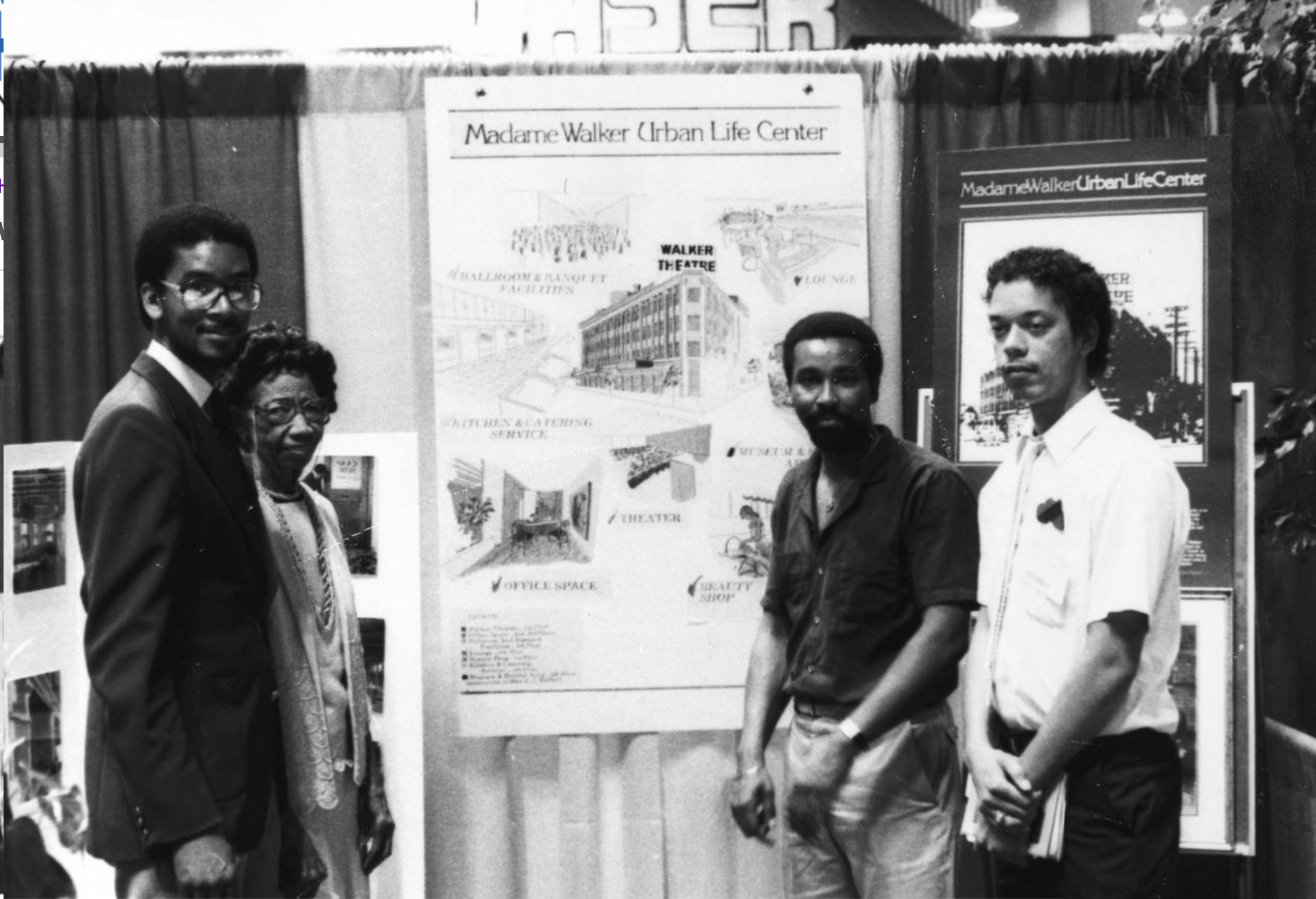
Madam Walker Urban Life Center created
Created as a nonprofit organization, the Madam Walker Urban Life Center, Inc., begins work to save the historic Walker Building from deterioration and demolition.
Pictured: An artist’s rendition of the interior for the Madame Walker Urban Life Center, 1983
Credit: Indianapolis Recorder Collection, Indiana Historical Society
View Source
Indianapolis 1980-2000 Regional Center Plan released
Mayor Hudnut appoints 150 civic leaders to a Greater Indianapolis Progress Committee task force, which creates a plan to stimulate downtown business, office space, industry, and retail development.
Boxing team perishes in plane crash
Amateur boxing coach and Indianapolis resident Thomas “Sarge” Johnson and all 21 U.S. National Boxing Team members die in an airplane crash near Warsaw, Poland.
Pictured: Commemorative statue honoring the U.S. boxing delegation and Thomas (Sarge) Johnson, all killed in a 1980 plane crash, 1984
Credit: Indianapolis Recorder Collection, Indiana Historical Society View Source
Gleaners Food Bank incorporates
Initial organizational funding comes from the Office of Economic Opportunity through Community Action Against Poverty. The goal is to collect and redistribute food for people in need. During its first year, Gleaners distributes 83,021 pounds of food to 35 agencies.
Pictured: Gleaners President John Elliott unveils the organization’s new strategic plan at a press conference on Monument Circle, 2020
Credit: Erica Irish, WFYI View Source
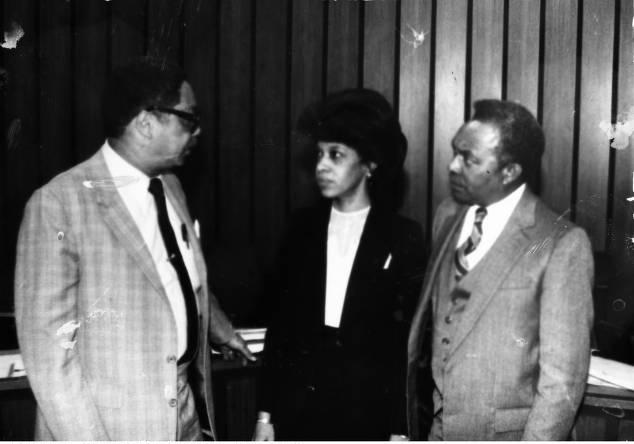
Busing begins in effort to desegregate Indianapolis Public Schools
To speed integration of Indianapolis Public Schools, Judge Hugh Dillin of the United States District Court orders a busing system to transfer African American students within the IPS district to surrounding suburban schools.
Pictured: Sam Jones (left), of the Indianapolis Urban League, explains his position on the busing of Black students.
Credit: Indianapolis Recorder Collection, Indiana Historical Society
View Source
The IPS School Board votes to close Shortridge High School
Dwindling enrollment and the deteriorating condition of the building force the closure of the city’s well-known high school. Parents, alumni, and students lobby to save it without success.
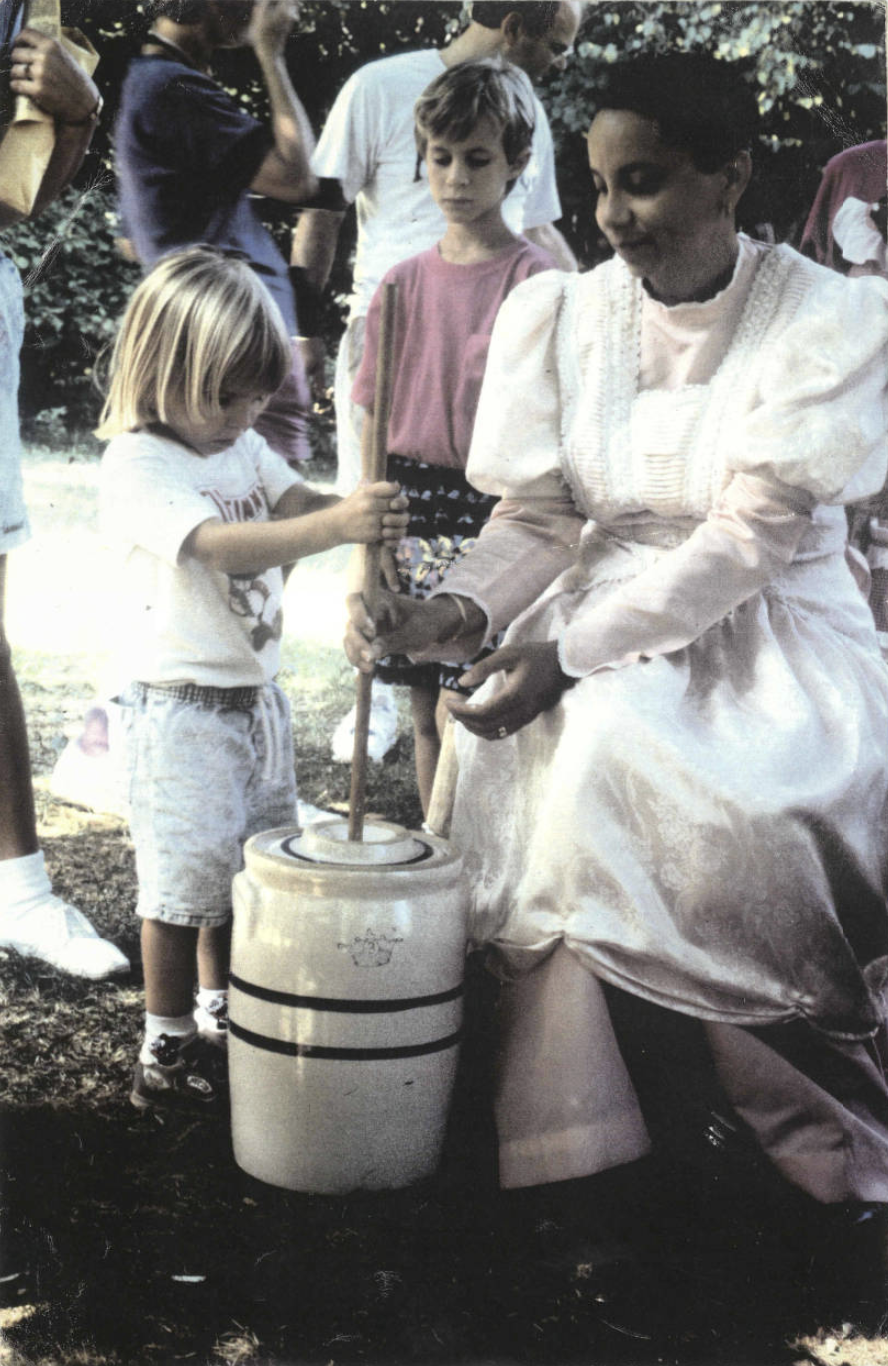
Freetown Village planning begins
Ophelia Wellington conceptualizes Freetown Village out of her desire to teach African American history. The organization begins as a live-action exhibit in the Indiana State Museum, portraying Black history. Freetown actors later travel the Midwest and recreate Indiana’s post-Civil War Black settlements.
Pictured: Freetown village costumed interpreter, ca. 1990s
Credit: Indianapolis Public Library
View Source
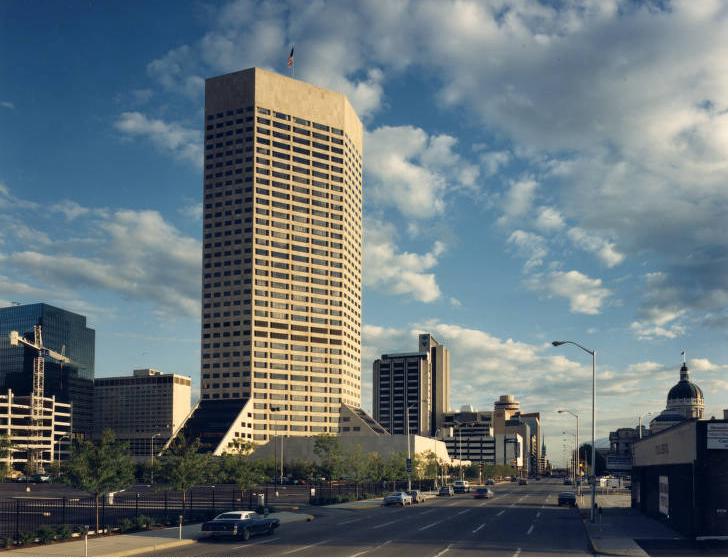
AUL Tower complete
American United Life completes its AUL Tower, a 38-story building that becomes the state’s tallest structure.
Pictured: The American United Life Insurance building, at 200 N. Illinois Street, 1984
Credit: Indiana Historical Society View Source
Indianapolis Taxpayers Association relaunches
It is first established in the 1940s and disbands in 1967. The association resumes activities to monitor appropriation of tax monies for countywide ambulance system.
Indianapolis debuts the first International Violin Competition
Planning for the first quadrennial competition began in 1980 when Cathedral Arts asked Indiana University violinist and teacher Josef Gingold to be the founding jury president of a violin contest based in Indianapolis.
Pictured: Behind the scenes at the first International Violin Competition of Indianapolis, held in 1982.
Credit: Indianapolis Public Library View Source
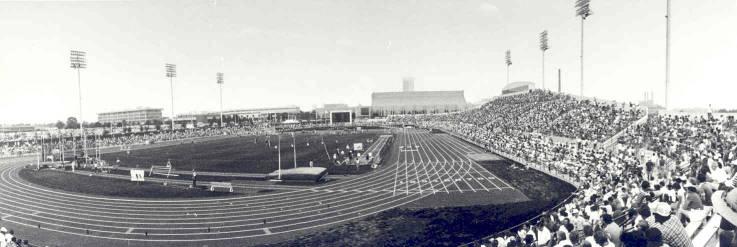
IUPUI hosts the National Sports Festival
The National Sports Festival commences on the IUPUI campus. During eight days of competition, July 23-31, the festival draws an unprecedented crowd of 250,000 spectators to watch more than 2,600 U.S. athletes competing in 33 sports.
Pictured: Track and Field Stadium, July 1982
Credit: Indiana University Indianapolis
View Source
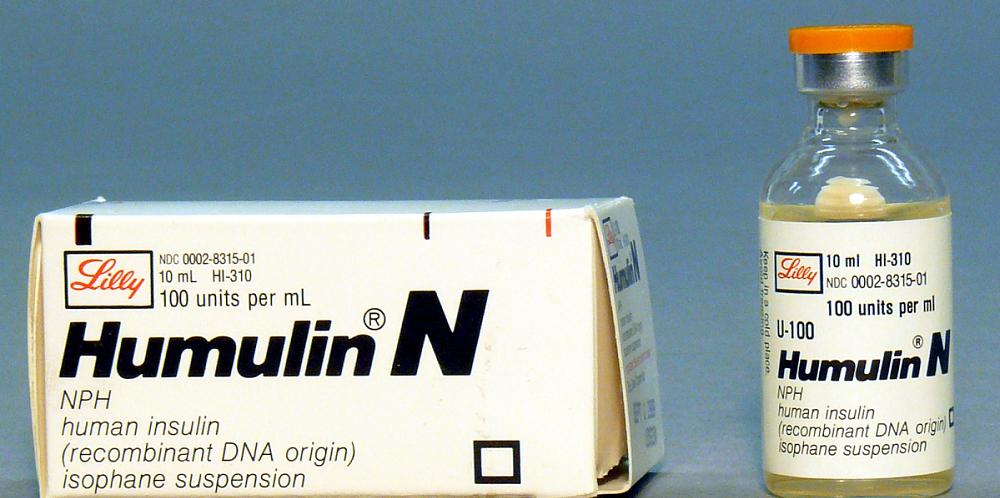
U.S. Food and Drug Administrations approves Eli Lilly and Company’s Humulin, a breakthrough diabetes treatment
The company receives U.S. Food and Drug Administration approval for Humulin, the world’s first pharmaceutical product based on recombinant DNA technology.
Pictured: Humulin package and vial, 1992
Credit: Eli Lilly and Company View Source
IU School of Medicine geneticist discovers Huntington’s Disease markers
Internationally known geneticist, P. Michael Conneally, distinguished professor emeritus at the IU School of Medicine, discovers the genetic markers for Huntington’s Disease.
Pictured: Patrick M. Conneally, n.d.
Credit: Indiana University Indianapolis View Source
Broadcasting personalities Bob and Tom join the staff at WFBQ
Originally known as the “QZoo,” their show later becomes the “Bob and Tom Show,” changing the style of morning radio in the city.
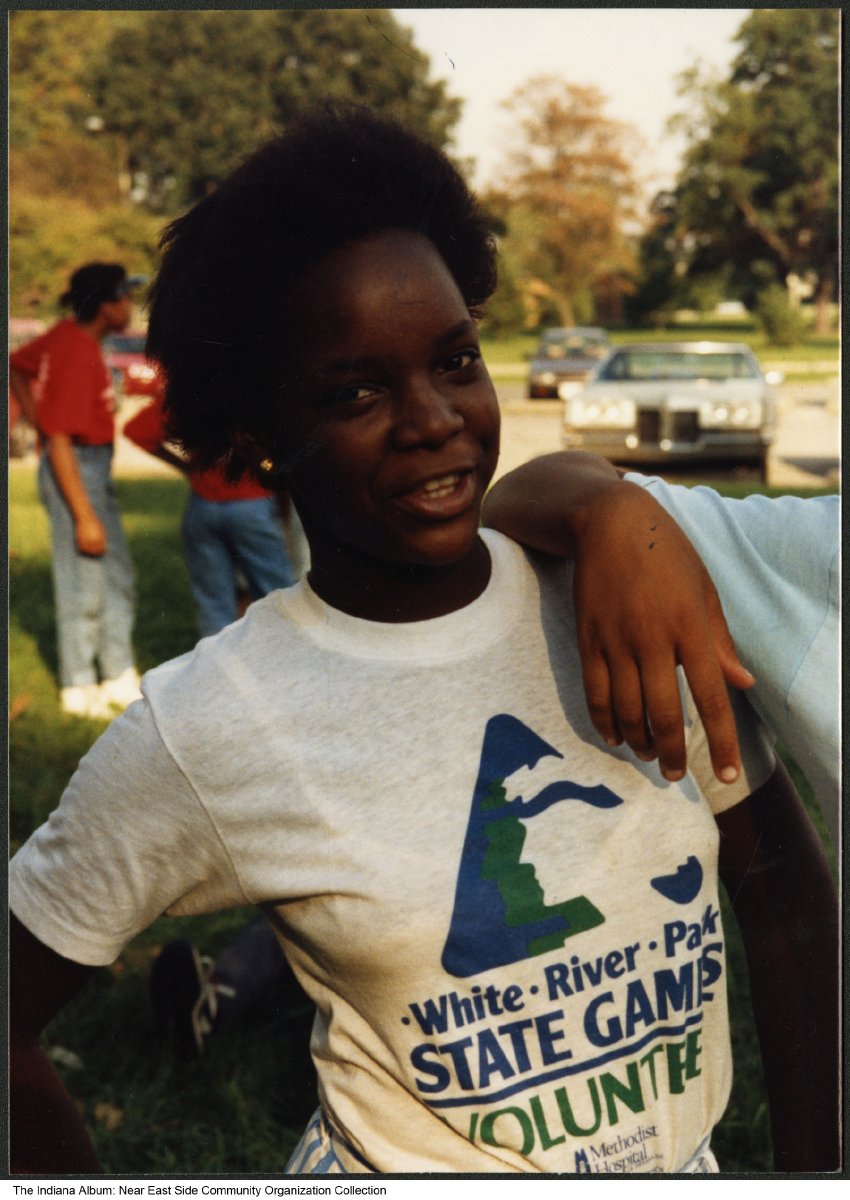
First annual White River Park State Games
The games promote fitness and a healthy lifestyle. The competition also provides residents with an opportunity to compete and develop their athletic skills.
Pictured: White River Park State Games volunteer, ca. 1985
Credit: The Indiana Album: Near East Side Community Organization Collection
View Source
American College of Sports Medicine relocates to Indianapolis
As part of the city’s sports strategy, the organization conducts the official groundbreaking ceremonies for its National Center in Indianapolis.
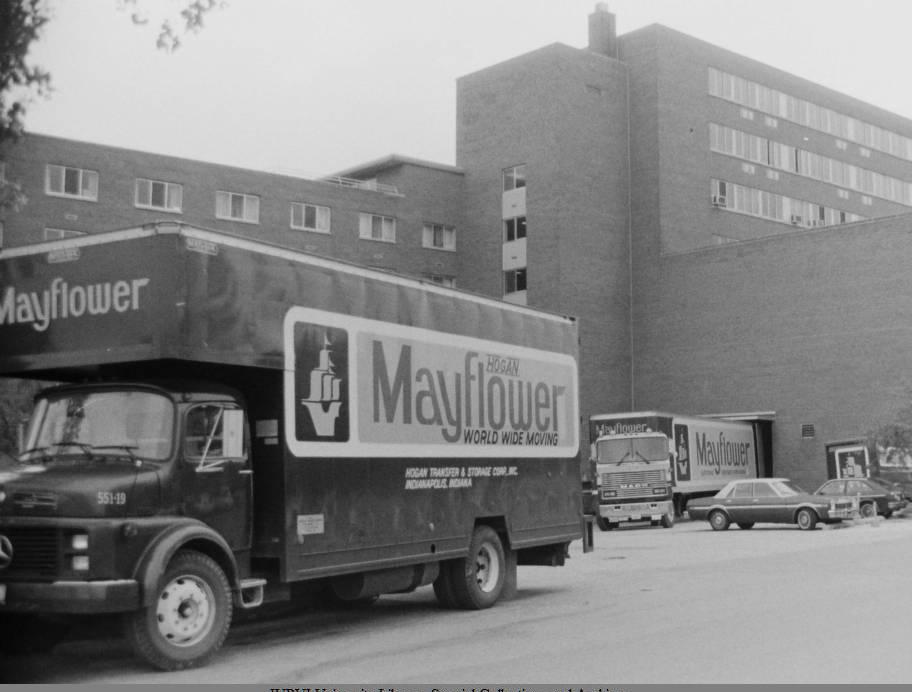
Hudson Institute moves to the city
The public policy research institute relocates its headquarters to Indianapolis from Croton-on-Hudson in New York, backed by strong support from Indiana and Purdue universities. A Lilly Endowment grant of $1.5 million along with $100,000 from the state covers moving costs.
Pictured: Hudson Institute move, 1984
Credit: Indiana University Indianapolis
View Source
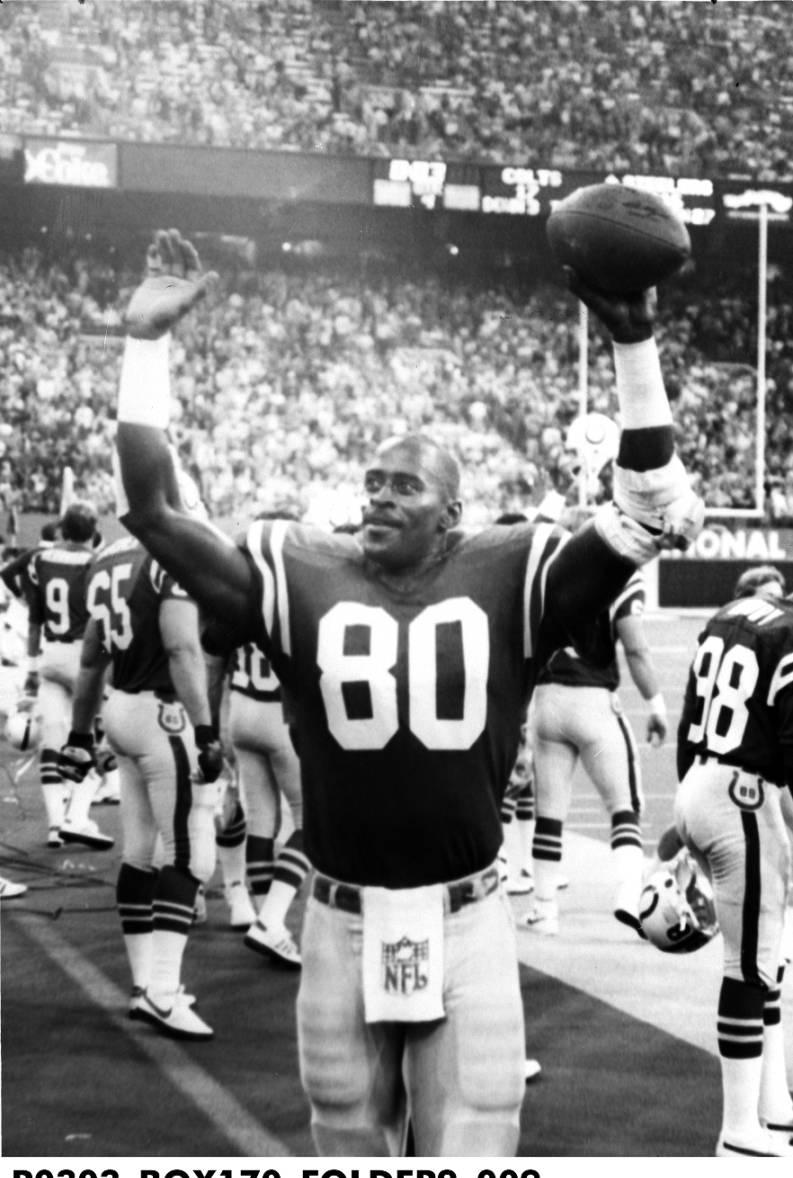
Baltimore Colts become the Indianapolis Colts
The Hudnut administration pushes to bring the team to Indianapolis as part of its urban renewal efforts. The Colts move from Baltimore to Indianapolis, lured by the generous financial incentives and a new stadium.
Pictured: Wide receiver Ray Butler acknowledges the audience after making a touchdown which tied the Colts and the Steelers, leading the Colts to a comeback victory. The game took place in October 1984 at the Hoosier Dome.
Credit: Indianapolis Recorder Collection, Indiana Historical Society
View Source
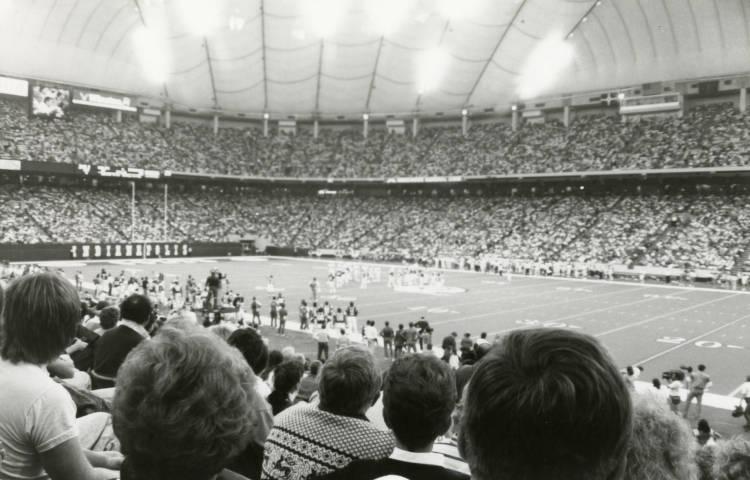
Hoosier Dome celebrates its grand opening
Constructed in conjunction with the Indiana Convention Center expansion, the Hoosier Dome is an important part of the revitalization of downtown Indianapolis.
Pictured: The 61,000-seat stadium was constructed between 1982 to 1984.
Credit: City of Indianapolis, Department of Metropolitan Development, Indiana Historical Society
View Source
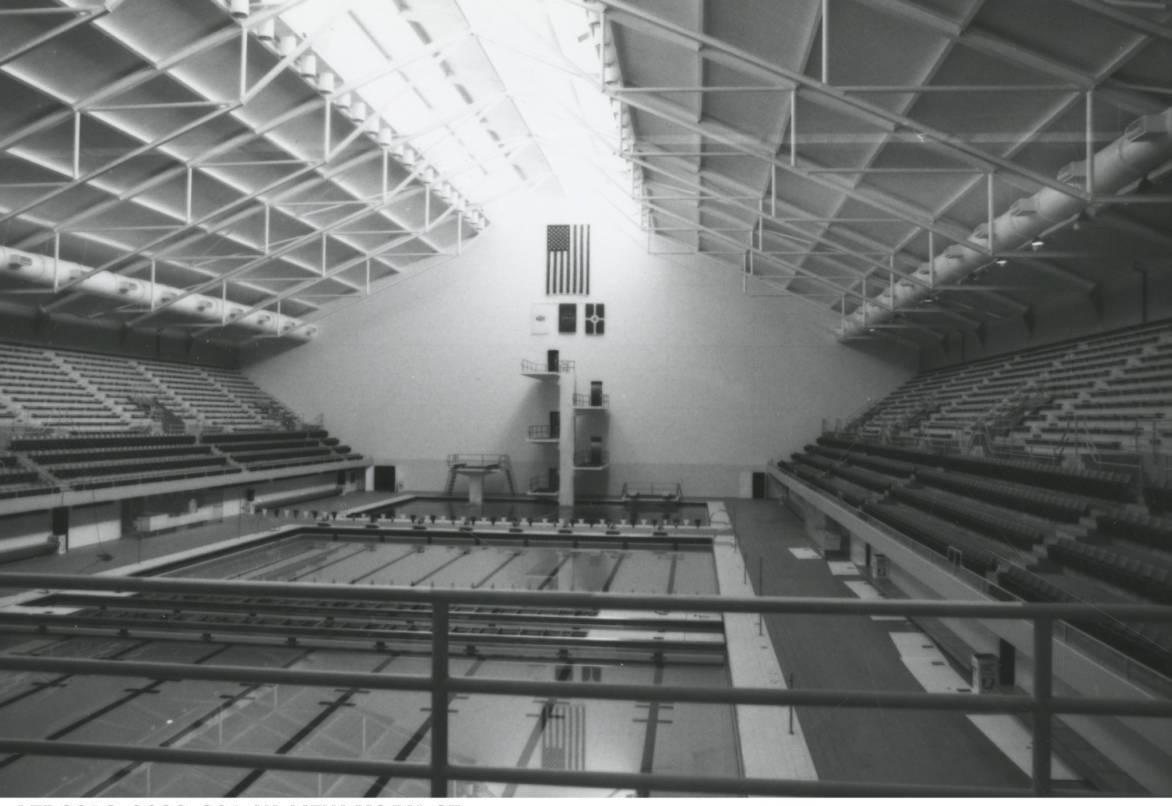
IU Natatorium hosts the Olympic diving trials
The natatorium hosts the Olympic Trials in diving from July 4th through July 8th. It is the city’s first time to serve as host. Qualifications return in 1988 and 1992.
Pictured: IU natatorium, n.d.
Credit: City of Indianapolis, Department of Metropolitan Development
View Source
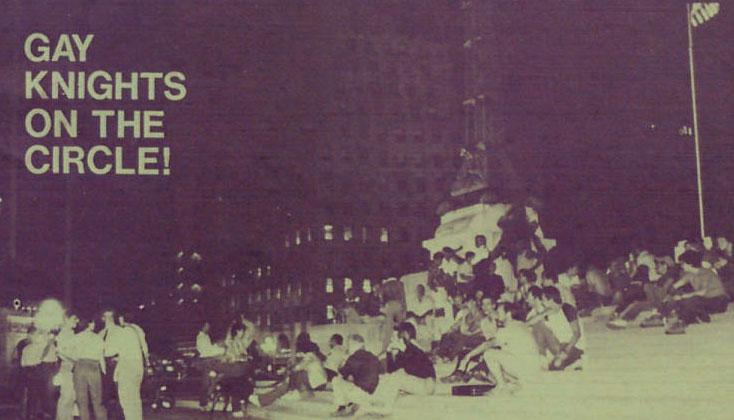
Gay Knights protests on Monument Circle
Starting on Friday, July 20, 1984, hundreds of gay and lesbian Hoosiers began participating in weekly protests against the harassment of gay and lesbian citizens by the Indianapolis Police Department.
Pictured: Gay Knights on the Circle, 1984
Credit: Chris Gonzalez GLBT Archives, Indiana State Library View Source
Court deems city ordinance outlawing pornography unconstitutional
The U.S. District Court in Indianapolis permanently enjoins enforcement of a June, 1984 ordinance that prohibits “all discriminatory practices of sexual subordination or inequality through pornography,” concluding that it violates the First Amendment.
Prelude awards initiated
The awards identify, encourage, and reward Marion County high school students who show great potential in dance, instrumental music, literature, theater, visual arts, and vocal music.
NBA 35th All-Star game held at the Hoosier Dome
43,146 fans pack the Hoosier Dome for the National Basketball Association’s (NBA) 35th All-Star Game. The event sets professional basketball’s one-game attendance record.
Ruth Lilly Poetry Prize established
Ruth Lilly, niece of Eli Lilly, establishes the Ruth Lilly Poetry Prize, an annual $25,000 award for U.S. poets who warrant extraordinary recognition. The nation’s largest poetry prize is raised to $75,000 in 1993.
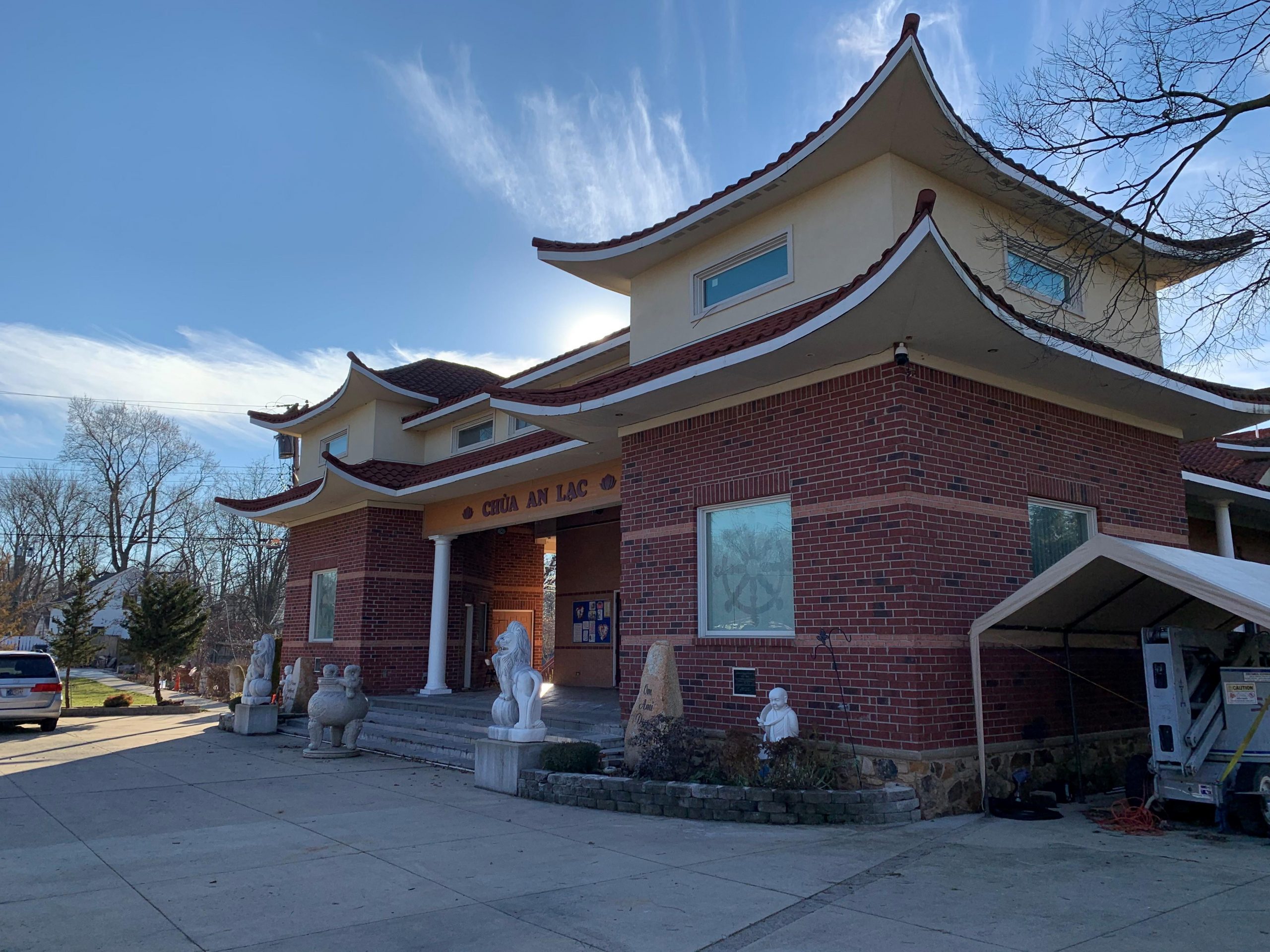
An Lḁc Buddhist Temple founded
A group of Vietnamese Americans establishes the Chùa An Lḁc, or the An Lḁc temple, in two adjacent homes to have a space to practice its form of Buddhism.
Pictured: Front view of the Chùa An Lḁc Vietnamese Buddhist Temple, ca. 2010s
Credit: Chad Bauman
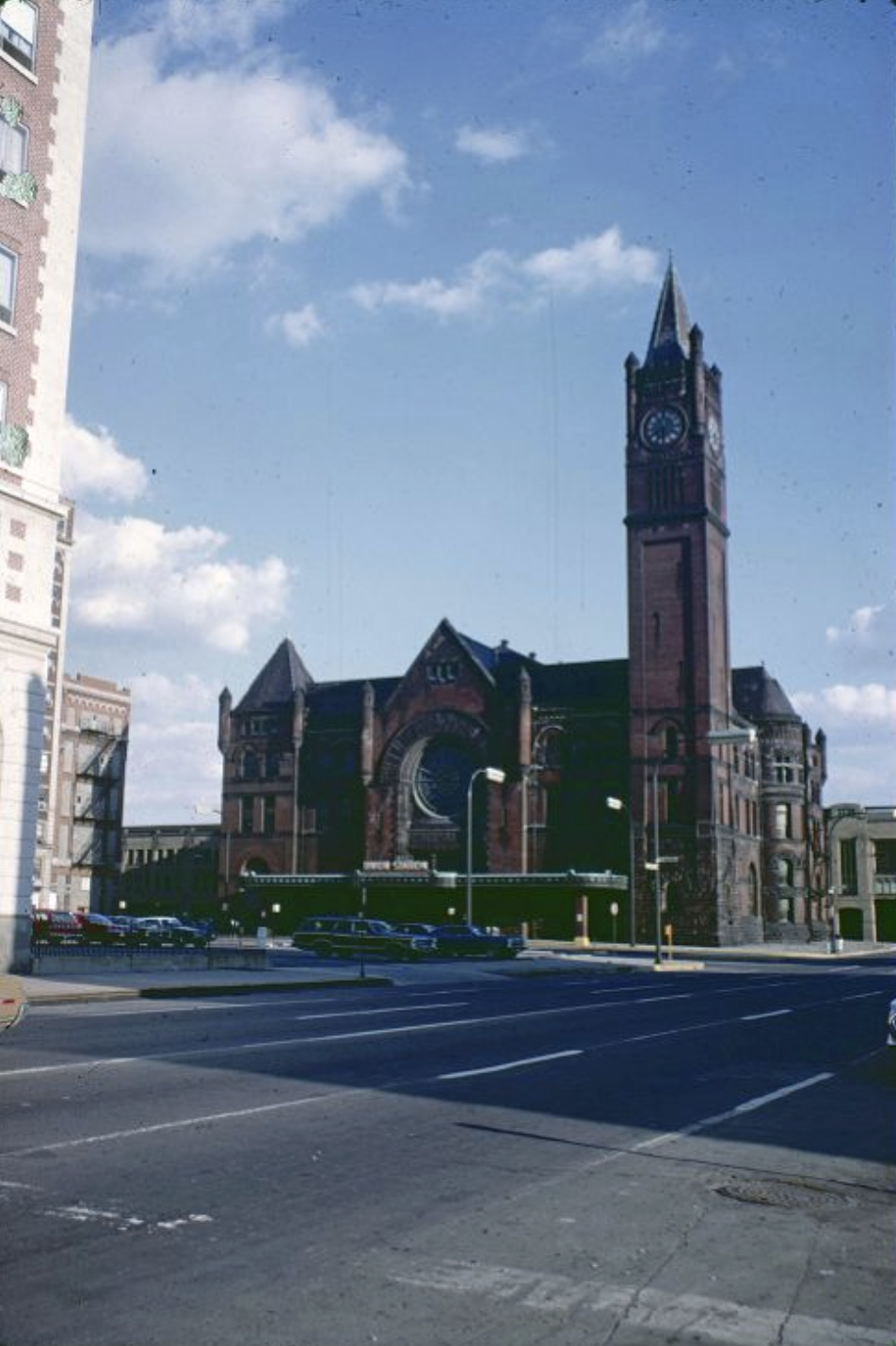
Renovated Union Station opens as a historic site and retail center
Preserving the most significant architectural elements, the $30-million restoration focuses on retaining the experience of a station in its conversion to over 100 restaurants and shops.
Pictured: Union Station, 1970
Credit: Indiana Historical Society
View Source
American Fletcher Corporation merges with Banc One of Ohio
After acquiring several banks in Indiana, American Fletcher Corporation merges into into Banc One Corporation forming Bank One, Indiana.
Indianapolis Indians win the first of four consecutive American Association baseball championships
Resulting from the working agreement between the team and the National League Montreal franchise, the Indians capture four consecutive American Association playoff championships (1986-1989) and two victories in the Triple-A World Series.
Eli Lilly and Company wins approval for Prozac
Belgium becomes the first country to approve use of Prozac. With this new drug, Lilly moves to the forefront of pharmaceutical psychiatric therapy. By 2001, Prozac makes up around 25 percent of the company’s sales.
WIAN NPR radio station becomes WFYI
Indianapolis Public Schools sell the station to Indianapolis Public Broadcasting, owners of WFYI-TV. The call letters are subsequently changed to WFYI-FM.
Pictured: WIAN studio, Hidetaro Suzuki and David Baker, 1983
Credit: Indianapolis Recorder Collection, Indiana Historical Society View Source
Indiana/World Skating Academy and Research Center established
The skating center provides all types and levels of instruction, including competitive training in figure, hockey, and speed skating. Located at Pan American Plaza, it houses one of a few 100-by-200-foot international-sized ice surfaces in the U.S.
First African American fire chief
After 32 years working as a firefighter, Joseph Kimbrew becomes the first Black fire chief in Indianapolis, named to lead Station 1. He holds this position until 1992.
Pictured: Joseph D. Kimbrew, sworn in as Indianapolis Fire Chief, 1987
Credit: Indianapolis Recorder Collection, Indiana Historical Society View Source
Damien Center opens
Christ Church Cathedral and SS Peter and Paul Catholic Cathedral work together to create the Damien Center, which offers support services to those dealing with HIV and AIDS.
Pictured: Reverend Howard Warren, a Presbyterian minister, stands among signs that advocate inclusivity for the LGBT community in the Christian faith. He came out as gay and having AIDS in 1987.
Credit: Mark A. Lee LGBT Photo Collection, Indiana Historical Society View Source
Indiana Pacers draft Reggie Miller
Indiana Pacers president, Donnie Walsh, directs the team to draft Reggie Miller out of UCLA. Miller becomes the All-Star face of the franchise during a Hall of Fame career.
Pictured: Indiana Pacers guard Reggie Miller (31) against the Boston Celtics at Market Square Arena, 1992
Credit: USA TODAY Sports View Source
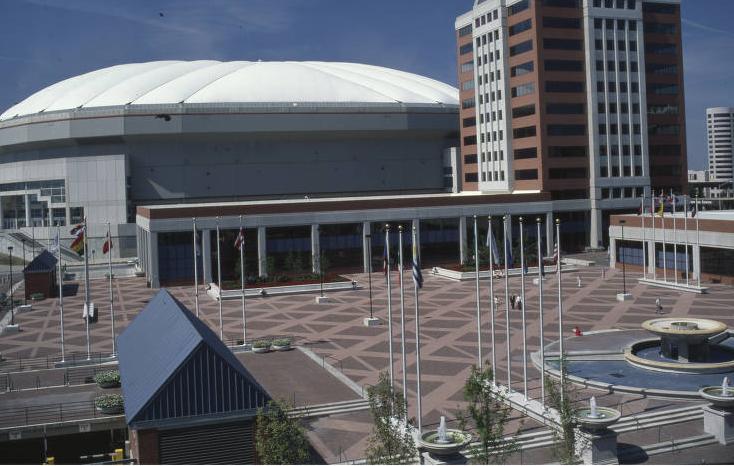
Tenth Pan American Games begin
Indianapolis hosts the international sporting event for athletes from nations of the Americas which takes place between August 7-23.
Pictured: Pan Am Plaza looking west toward the Hoosier Dome, which was imploded in 2008, ca. 1990s
Credit: Indiana Historical Society View Source
Michael Taylor shooting
Michael Taylor is shot and killed while in police custody. Multiple investigations determine Taylor’s death as self-inflicted due to the negligence of the arresting police officers. Taylor’s death puts pressure on Indianapolis police after a decade of high incidences of shootings of Black victims by police.
Pictured: Portrait of Michael Taylor who was killed while in the hands of the Indianapolis Police Department on September 24, 1987.
Credit: Indiana University Indianapolis
View Source
Arts Council of Indianapolis incorporates
The Greater Indianapolis Progress Committee organizes the Arts Council of Indianapolis as the city’s arts advocacy agency. It works to strengthen the relationship of the arts to economic development and the business community.
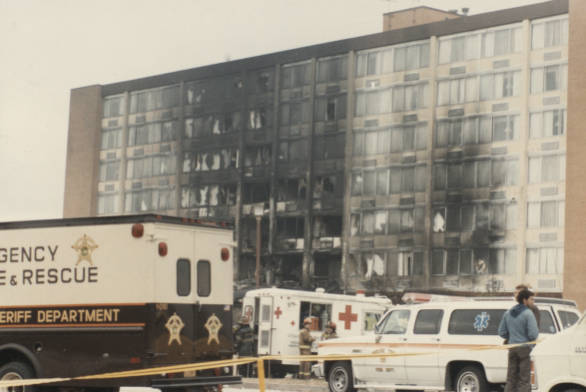
Air Force jet crashes into Ramada Inn
The plane, piloted by Major Bruce Teagarden, suffers engine failure. Despite efforts to land on an airport runway, the jet crashes into the Ramada Inn near Indianapolis International Airport, killing several people.
Pictured: Ramada Inn after airplane crash, 1987
Credit: Indiana University Indianapolis View Source
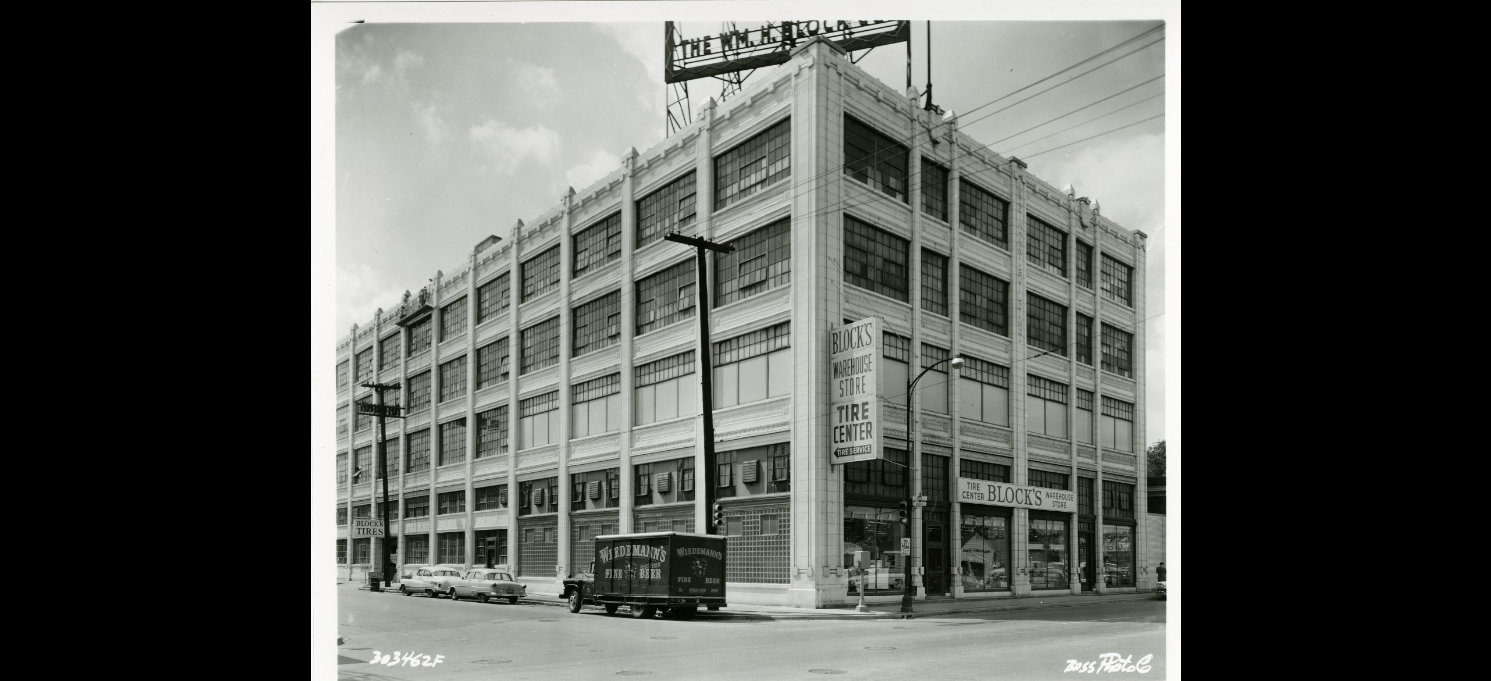
William H. Block Company purchased by Lazarus
All Indiana Block stores become part of the Lazarus department store chain, which is headquartered in Cincinnati. Lazarus operates five Indianapolis locations.
Pictured: William H. Block Warehouse and Warehouse Store, 1960
Credit: Bass Photo Co Collection, Indiana Historical Society
View Source
Indianapolis Zoo relocates along the White River
The Washington Park Zoo closes in November 1987 and by early December, the zoo’s 500 animals are transferred to the new facility in White River State Park.
Pictured: Indianapolis Zoo Entrance, ca. 1980s
Credit: Indiana Historical Society
View Source
Justice Inc. organizes its first LGBTQ+ event in a public space
The Indianapolis Sports Center hosts the 1988 Justice Inc. Pride celebration (earlier Justice Inc. events had been held in private spaces for the safety and anonymity of its attendees). This event features a yard sale, church services, and a roller skating party.
IU professor finds alternative to bone marrow transplants
IU School of Medicine professor Hal Broxmeyer proves that human umbilical cord blood is a potential source of transplantable hematopoietic stem/progenitor cells.
Pictured: Hal E. Broxmeyer’s Pediatric Hematology Lab Staff, n.d.
Credit: Indiana University Indianapolis
View Source
National Institute for Fitness and Sport opens
The major center for health and physical fitness research and education advances the goal to position Indianapolis as a national and international leader in amateur sports and physical fitness.
Pictured: National Institute for Fitness and Sport, 1988
Credit: Indiana University Indianapolis
View Source
Community Leaders Allied for Superior Schools created
Indianapolis business and civic leaders form Community Leaders Allied for Superior Schools (CLASS) to work for educational improvement in the city’s public school system.
DowElanco forms
A joint venture between the Dow Chemical Company and the Elanco division of Eli Lilly and Company creates DowElanco as a biotech and agribusiness company.
Pictured: Dow Agro Sciences (previously DowElanco), n.d.
Credit: Matt Kryger/IndyStar via Imagn Content Services, LLC
View Source
Indianapolis Campaign for Healthy Babies begins
Mayor Hudnut and the City-County Council establish the campaign as a public-private partnership to implement the recommendations of the Marion County Task Force on Infant Mortality aimed at lowering the city’s high Black infant mortality rate.
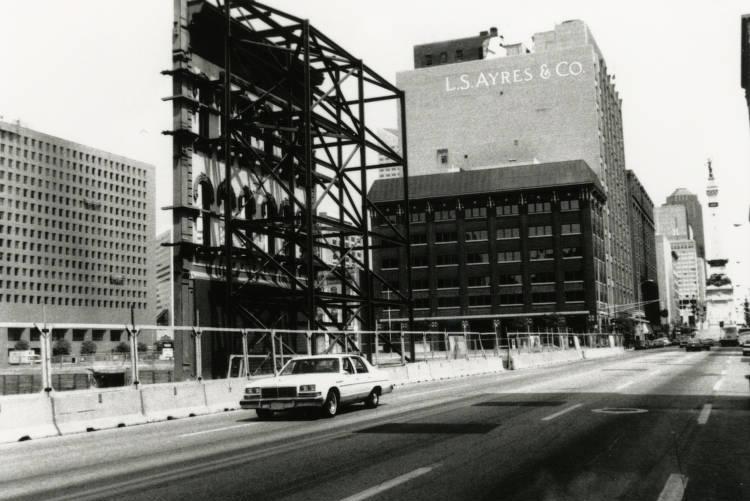
Demolition for the construction of Circle Centre Mall begins
Demolition of numerous historic buildings in the downtown area signals the start of the much-delayed Circle Centre Mall project.
Pictured: The Circle Centre Mall incorporated historic downtown facades such as the House of Crane building which was a cigar business for over 65 years.
Credit: City of Indianapolis, Department of Metropolitan Development, Indiana Historical Society
View Source
Deer Creek Music Center begins operation
Sunshine Promotions of Indianapolis opens the $12 million Deer Creek Music Center, now Ruoff Music Center, located near Noblesville. The first concert, a benefit event, features gospel singer Sandi Patti, an Anderson, Indiana, native.
Pictured: Ruoff Home Mortgage Music Center (formerly Deer Creek Music Center), ca. 1990s
Credit: Indiana Historical Society View Source
Eiteljorg Museum of American Indian and Western Art opens
Located in White River State Park, the museum showcases Native American art and Western American art. It is named for its founder, Harrison Eiteljorg.
Pictured: Eiteljorg Museum of American Indians and Western Art, ca. 1990s
Credit: Indiana Historical Society View Source
Indianapolis Star runs exposé on medical malpractice
Indianapolis Star runs a series on Indiana doctors who continue to practice despite losing multiple malpractice lawsuits and receiving no punishment. The series receives a Pulitzer Prize the next year.
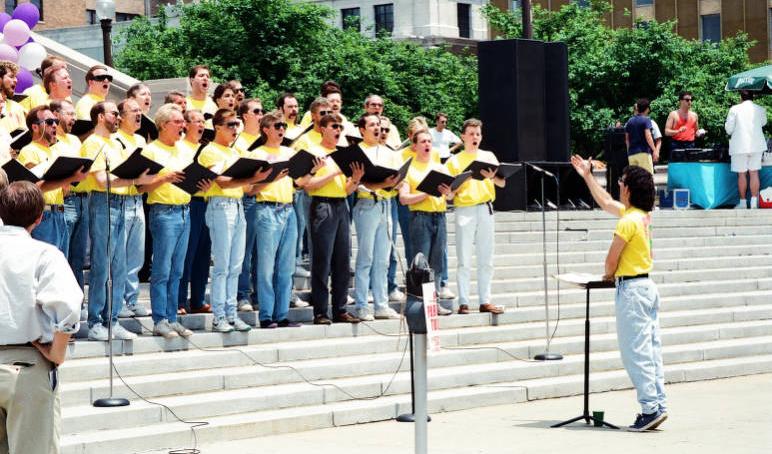
First Circle City Pride Festival kicks off
The Pride Festival takes place at Monument Circle. With 3000 attendees at the festival, it becomes the largest event centered on supporting and celebrating the LGBT community.
Pictured: The Indianapolis Men’s Chorus performed for the Indy Pride festival in 1992.
Credit: Mark A. Lee LGBT Photo Collection, Indiana Historical Society View Source
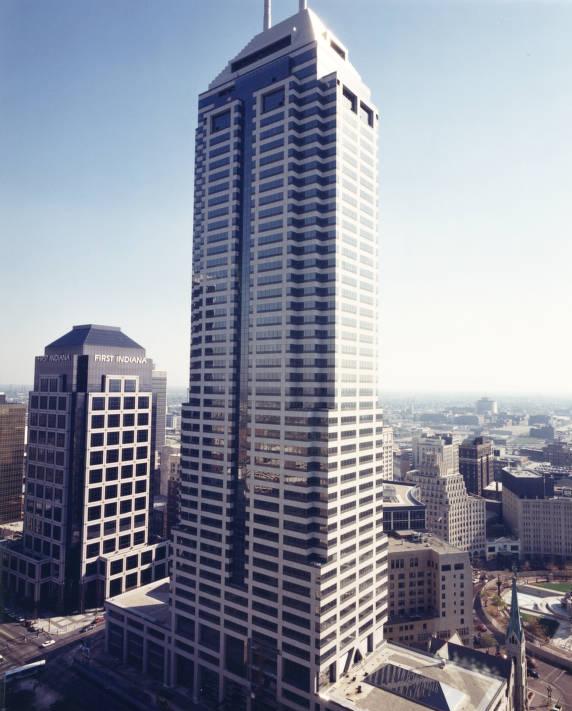
Bank One, Indianapolis, completes 51-story office tower
The tower occupies a full city block between Meridian and Pennsylvania streets. Its 51 stories, 48 of which are designated as office space, makes it the tallest building in Indiana.
Pictured: Salesforce Tower, then known as Bank One Tower, when construction was nearing completion in 1989.
Credit: Indiana Historical Society View Source
Ryan White dies at Riley Hospital for Children
Second Presbyterian Church holds the funeral for the teenage AIDS patient and activist whose battle for acceptance captured international attention. The televised service draws thousands of mourners, including national media and celebrities.
City adopts Regional Center Plan, 1990-2010
The focus of the third regional center plan shifts from buildings and jobs to linking neighborhoods, providing social services, and promoting human relations and the arts to make Indianapolis a more livable city.
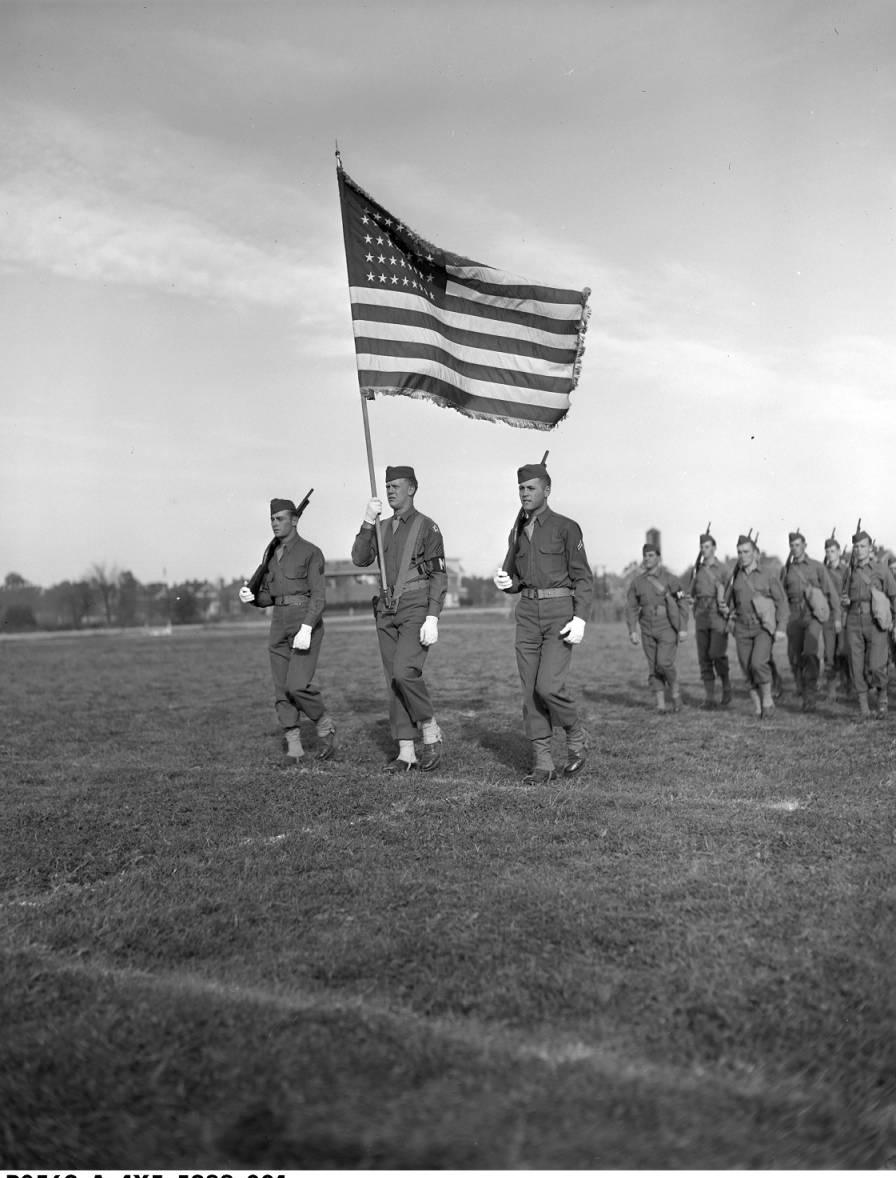
Fort Benjamin Harrison slated for closure
U.S. Department of the Army lists Fort Benjamin Harrison as one of several Army installations to be closed during the 1990s. The plan calls for most of the major activities at the post to move to other locations.
Pictured: Soldiers training at Fort Benjamin Harrison, 1942
Credit: Indiana Historical Society
View Source
Willy T. Ribbs becomes the first African American to race in the Indianapolis 500
Ribb’s participation in the Indianapolis 500 marks the end of the longest-standing color barrier in professional sports.
Pictured: IndyCar Series former driver Willy T. Ribbs during the 102nd running of the Indianapolis 500 at Indianapolis Motor Speedway, 2018
Credit: Mark J. Rebilas-USA TODAY Sports
View Source
National City Corporation acquires Merchants National Bank
The Cleveland-based holding company National City Corporation purchases Merchants National Corporation for $640 million in May 1992. Merchants becomes National City Bank, Indiana, the following October.
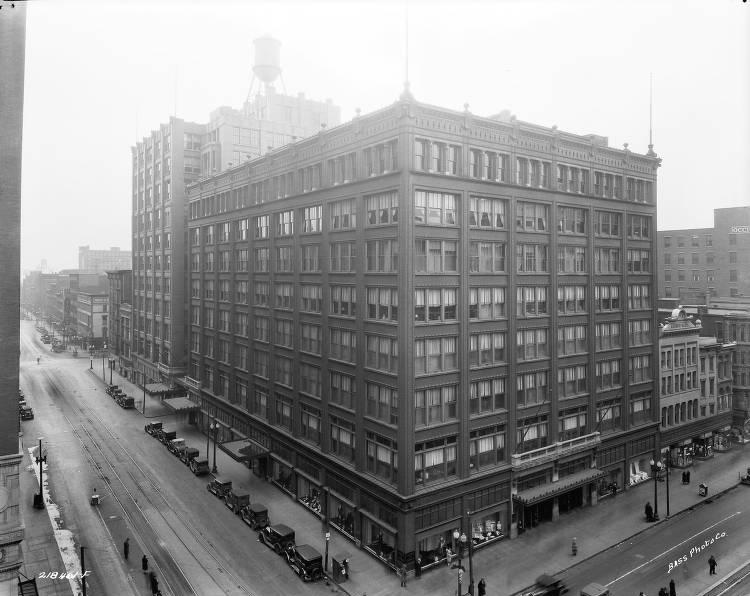
L. S. Ayres and Company closes its downtown store
Several years of financial losses at the downtown store as well as a dispute with the city over the proposed Circle Centre Mall results in the flagship department store shuttering its doors early in 1992.
Pictured: L.S. Ayres department store located at Washington and Meridian Streets in 1930.
Credit: Bass Photo Co Collection, Indiana Historical Society
View Source
James D. Toler becomes chief of the Indianapolis Police Department
The first African American to hold the position of police chief pushes for stronger anti-drug programs and better hiring processes.
Stephen Goldsmith becomes mayor
Stephen Goldsmith becomes mayor of Indianapolis with an expressed vision to create a “competitive city with safe streets, strong neighborhoods, and a thriving economy.” He emphasizes public-private partnerships and governmental efficiency.
Pictured: Mayor Stephen Goldsmith spoke at a FedEx event announcing the expansion of the FedEx National Hub in Indianapolis, 1994
Credit: Indiana Historical Society View Source
Heartland Film Festival holds its inaugural event
Jeff Sparks, then executive director of a children’s home, founds the nonprofit organization to inspire “filmmakers and audiences through the transformative power of film.” Heartland curates and supports a variety of cinema from filmmakers and storytellers from around the world.
United Airlines begins construction on a maintenance facility
United Airlines begins construction of a proposed $800-million aircraft maintenance facility at the Indianapolis International Airport. The Indianapolis maintenance center performs heavy maintenance work on the airline’s fleet of Boeing 737 and 757 aircraft.
Pictured: Evan Bayh speaking at the announcement of the United Airlines Maintenance Center at Indianapolis International Airport, 1991
Credit: Indiana Historical Society
View Source
Plane crash claims the lives of four civic leaders
Two small aircraft collide midair, causing one plane to crash into a residential area on the city’s south side. The accident kills pilot, William R. Mullen, as well as civic leaders, Michael Carroll, John Weliever, Frank McKinney Jr., and Robert Welch.
Lazarus closes its downtown store
Lazarus, which took over five Block stores in Indianapolis in 1988, closes the former William H. Block Company’s main store downtown due to insufficient profits.
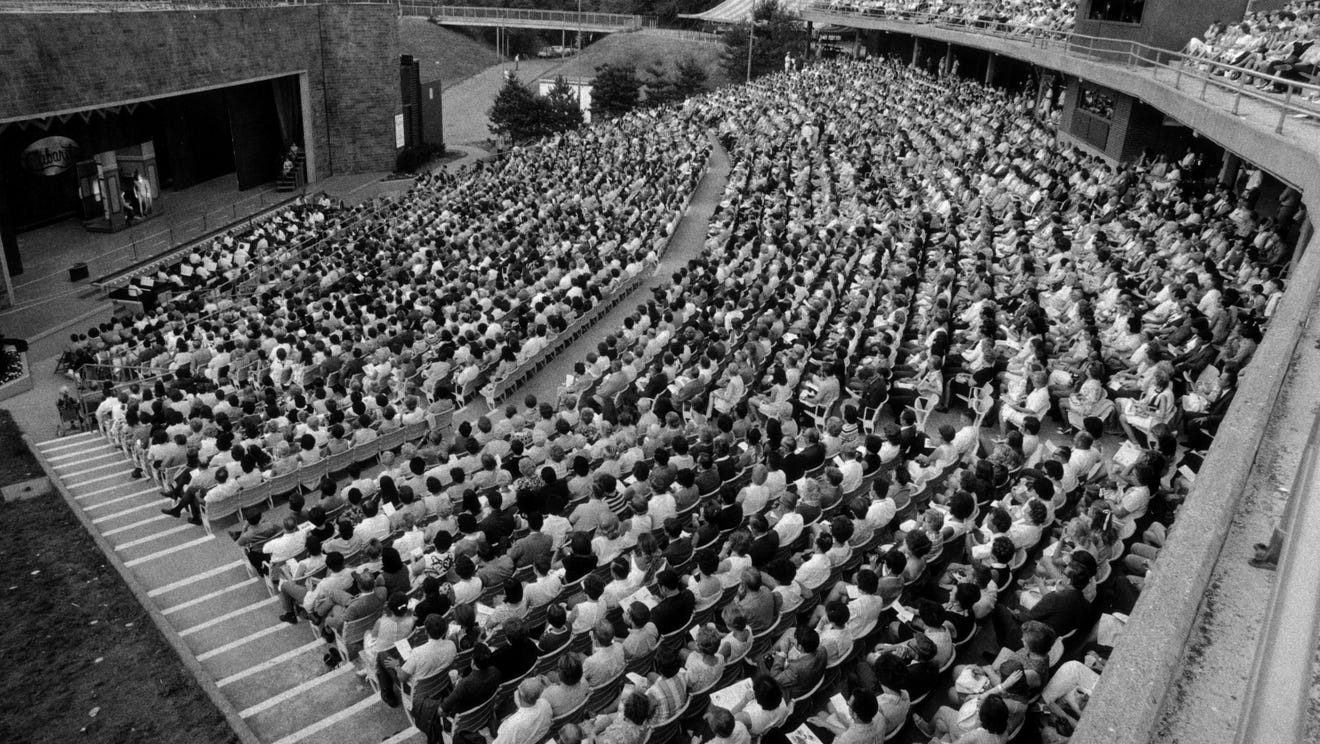
Starlight Musicals close
Just days before the first scheduled performance of the season, the resident, professional music company’s board votes to close due to lagging ticket sales. The company was $300,000 short of its budget. Starlight had offered Broadway musicals to Indianapolis audiences for nearly 50 years.
Pictured: Hilton U. Brown Theatre, home to Starlight Musicals, 1970
Credit: IndyStar View Source
Select Schools program begins
The IPS Board and U.S. District Court Judge S. Hugh Dillin approve the Select Schools reform plan. The goal of the plan, which allows parents to select the school their child attends, is to engage parents and improve academic achievement by fostering competition for students among IPS schools.
Ku Klux Klan holds rally on the steps of the Indiana State House
Forty robed Klansmen rally on the steps of the Indiana State House. Nearly 1,000 people stage counter-demonstrations nearby, resulting in seven injuries.
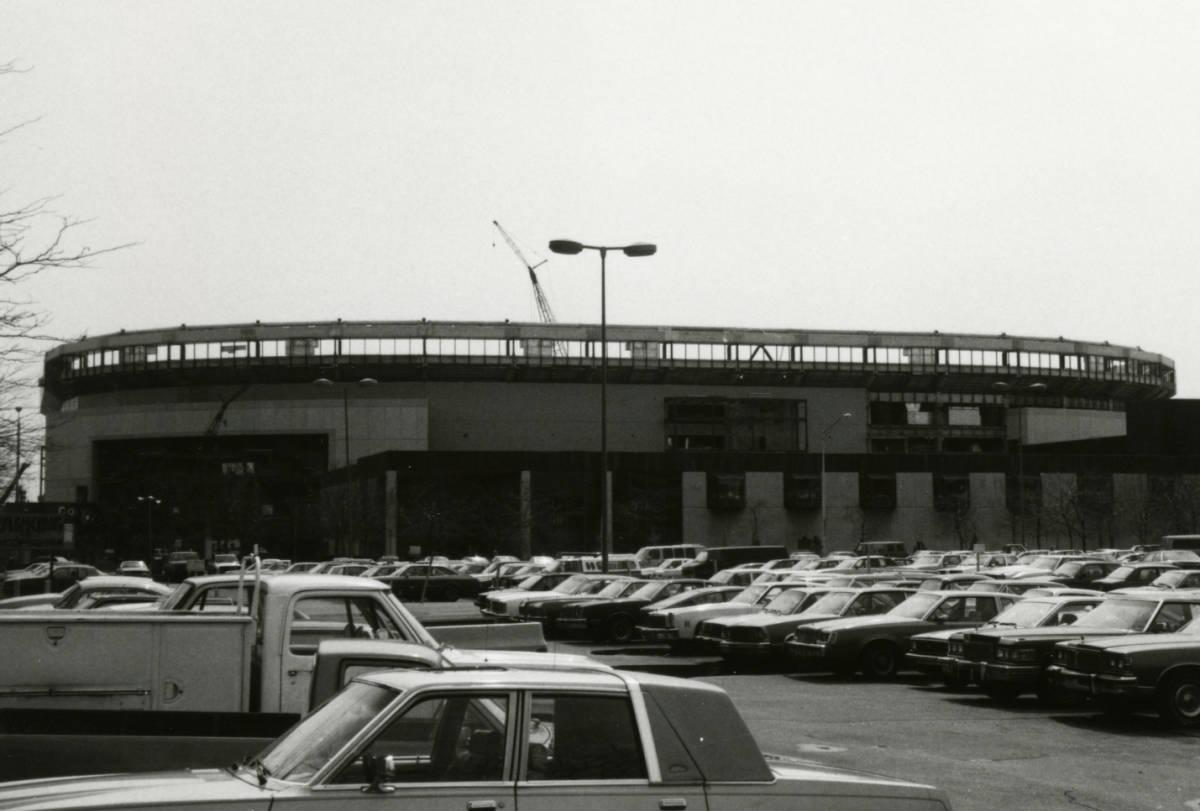
Hoosier Dome renamed as the RCA Dome
The Capital Improvement Board agrees to a controversial 10-year, $10-million deal with Thompson Consumer Electronics to rename the Hoosier Dome the RCA Dome.
Pictured: The RCA Dome under construction which was formerly known as the Hoosier Dome.
Credit: City of Indianapolis, Department of Metropolitan Development
View Source
International School of Indiana opens
Founded as a nonprofit, secular, coeducational independent school, with an emphasis on global learning and foreign language, the school opens in the Butler-Tarkington neighborhood. It enrolls 38 students, pre-school age through grade 3.
Pictured: Chinese immersion class at the International School of Indiana, 2018
Credit: Kelly Wilkinson, IndyStar View Source
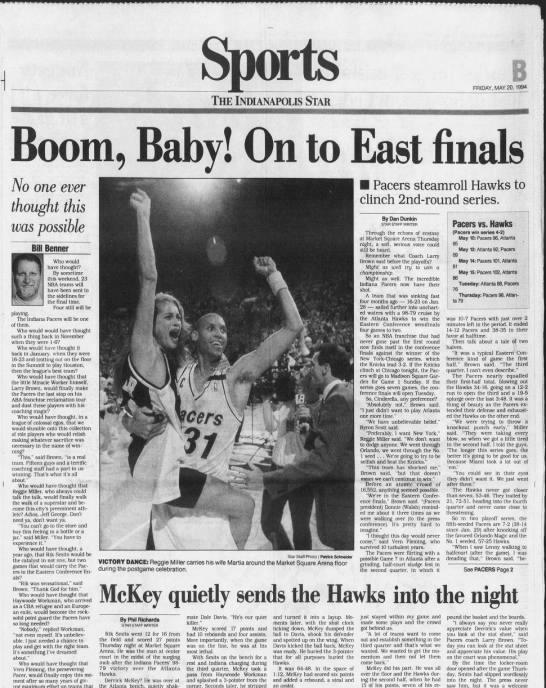
Indiana Pacers reach “Final Four” of the NBA Playoffs
Under new coach Larry Brown, the Pacers reach the Eastern Conference Finals. It is the first time the team moved beyond the initial round of the playoffs.
Pictured: Pacers celebrate victory to move on to Eastern Conference finals, May 20, 1994.
Credit: IndyStar
View Source
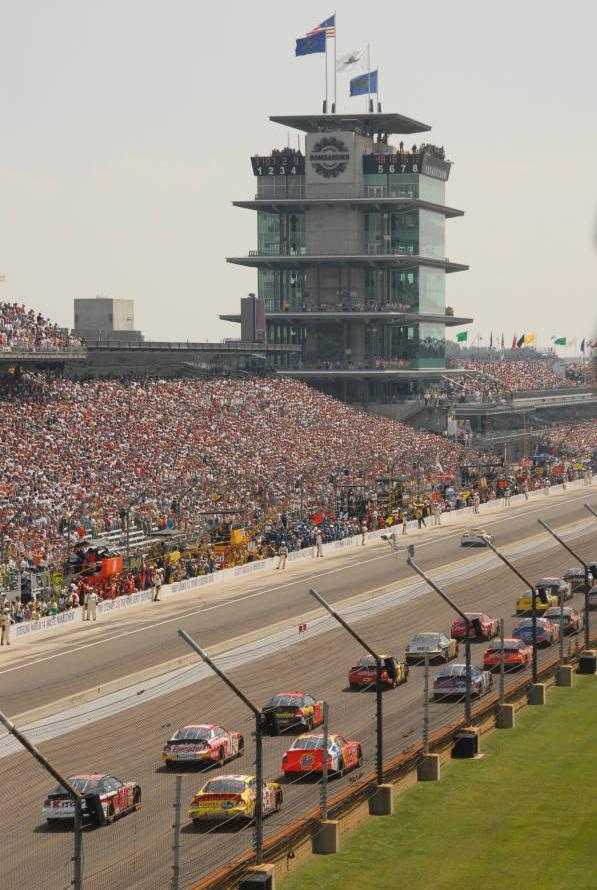
First Brickyard 400 runs at the Indianapolis Motor Speedway
The stock car race becomes NASCAR’s most-attended event, boasting a crowd of more than 250,000 people. Jeff Gordon, who spent the latter part of his childhood in Indiana, wins the inaugural race.
Pictured: Participants, grandstand, and Panasonic Pagoda at the Brickyard 400, 2006
Credit: Banayote Photo Inc., Indiana Historical Society View Source
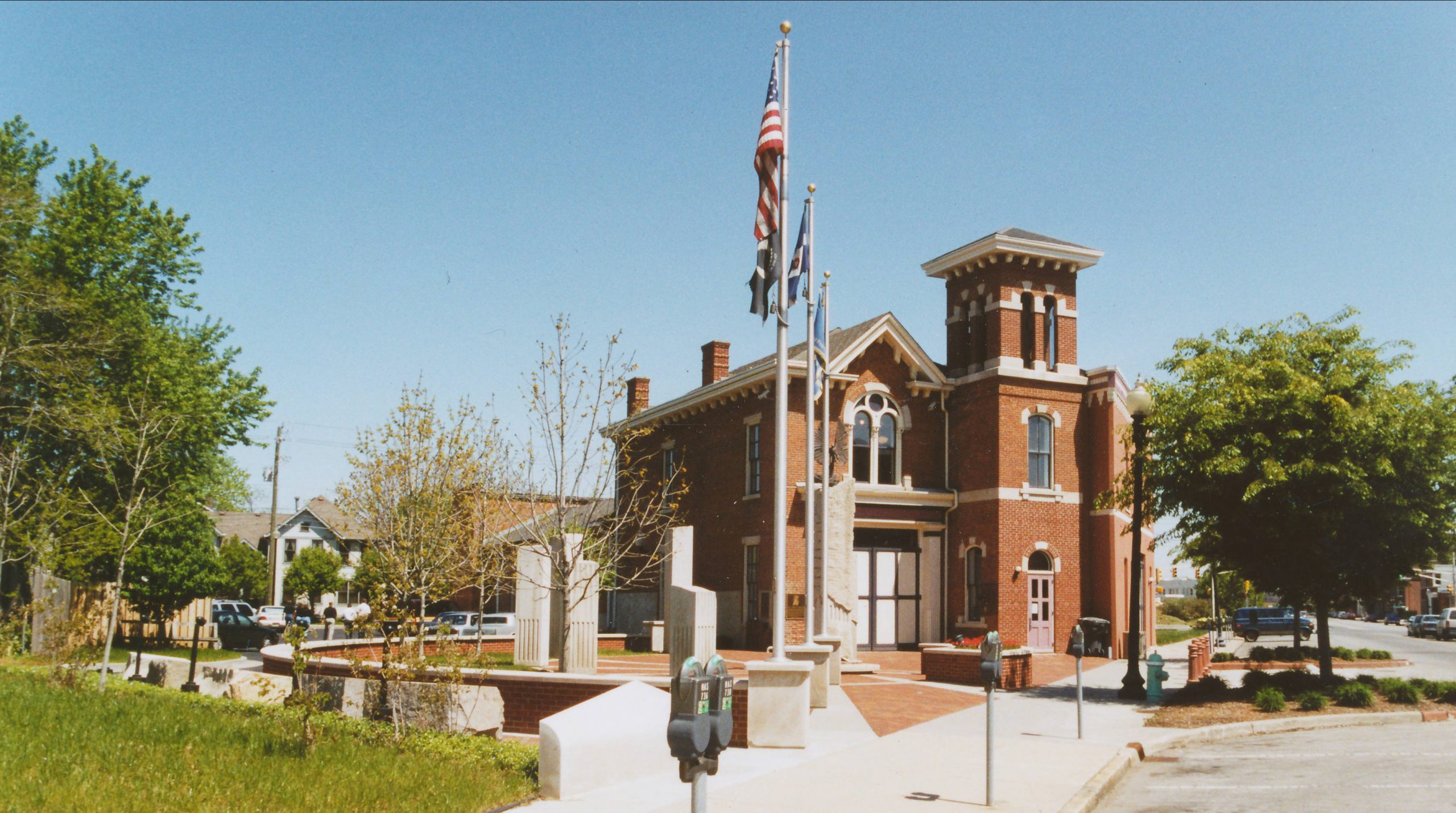
Indianapolis Firefighters Museum opens
The Museum celebrates and preserves the history and contributions of Central Indiana Fire Departments. The Museum opens in the remodeled Fire Station #2, the oldest remaining fire station building in the city.
Pictured: Indianapolis Firefighters Museum, 1996
Credit: Indianapolis Public Library
View Source
Off-track betting opens in Indianapolis
A year after Hoosier Park horse track opens in Anderson, off-track horse betting opens in five cities around the state, including Indianapolis.
Pictured: Hoosier Park Racing & Casino, n.d.
Credit: Indianapolis Star via Imagn Content Services, LLC
View Source
Rolls-Royce acquires Allison Division of General Motors
Rolls-Royce purchases the Allison Engine Company for $525 million. The company uses its new subsidiary to maintain a large presence in the Indianapolis area. It continues to produce power systems for aerospace.
Pictured: Rolls-Royce in Indianapolis wins a contract to build engines for the U.S. Airforce, Sep. 2021
Credit: Kelly Wilkinson, IndyStar
View Source
Fort Benjamin Harrison becomes a state park
U.S. Department of Interior gives Fort Benjamin Harrison to the Indiana Department of Natural Resources for use as a state park.
St. Francis Hospital opens its south Indianapolis campus
To accommodate a growing patient base, St. Francis Hospital opens its south campus at Emerson Avenue and Stop 11 Road.
Baby Face Edmonds wins his first two Grammy Awards
Indianapolis native Kenneth Brian Edmonds wins two Grammy Awards, one for his R&B Song “I’ll Make Love to You” and the other for Male R&B Vocal Performance in “When Can I See You.” He goes on to win his 13th Grammy in 2024 for his work “Snooze” from SZA, tying him with Michael Jackson for most wins.
Pictured: Kenneth “Babyface” Edmonds, 2013
Credit: Angela George, via Wikimedia Commons
View Source
Dedication of USS Indianapolis Memorial
It takes decades before survivors of the USS Indianapolis raise enough money to erect a memorial, which is located at the north end of Canal Walk. The dedication takes place on the 50th anniversary of the tragedy.
Pictured: USS Indianapolis Memorial, Vermont Street, 2006
Credit: Indiana University Indianapolis
View Source
Circle Centre Mall opens
After six years and an investment of $300 million, the construction of Circle Centre Mall is finally complete. The new urban mall opens with much fanfare and marks a major milestone in the revitalization of downtown.
Indianapolis Chinese Community Center incorporates
The community center organizes to provide Chinese families in Indianapolis a place for children to learn Chinese language and culture. Its mission includes teaching Chinese to non-Chinese-speaking families and to promote Chinese culture and heritage.
Pictured: Dragon head of Chinese Dragon Group, at the Indianapolis Chinese Community Center’s annual Chinese School/community center picnic, May 19, 2019.
Credit: Kelly Wilkinson, IndyStar
View Source
Angie’s List, an internet home services company, moves to Indianapolis
Angela R. Hicks Bowman and William Oesterle found the company in Columbus, Ohio, in 1995, and move it to Indianapolis when it acquires the city’s Unified Neighbors service. It provides subscribers with ratings of contractors and service providers.
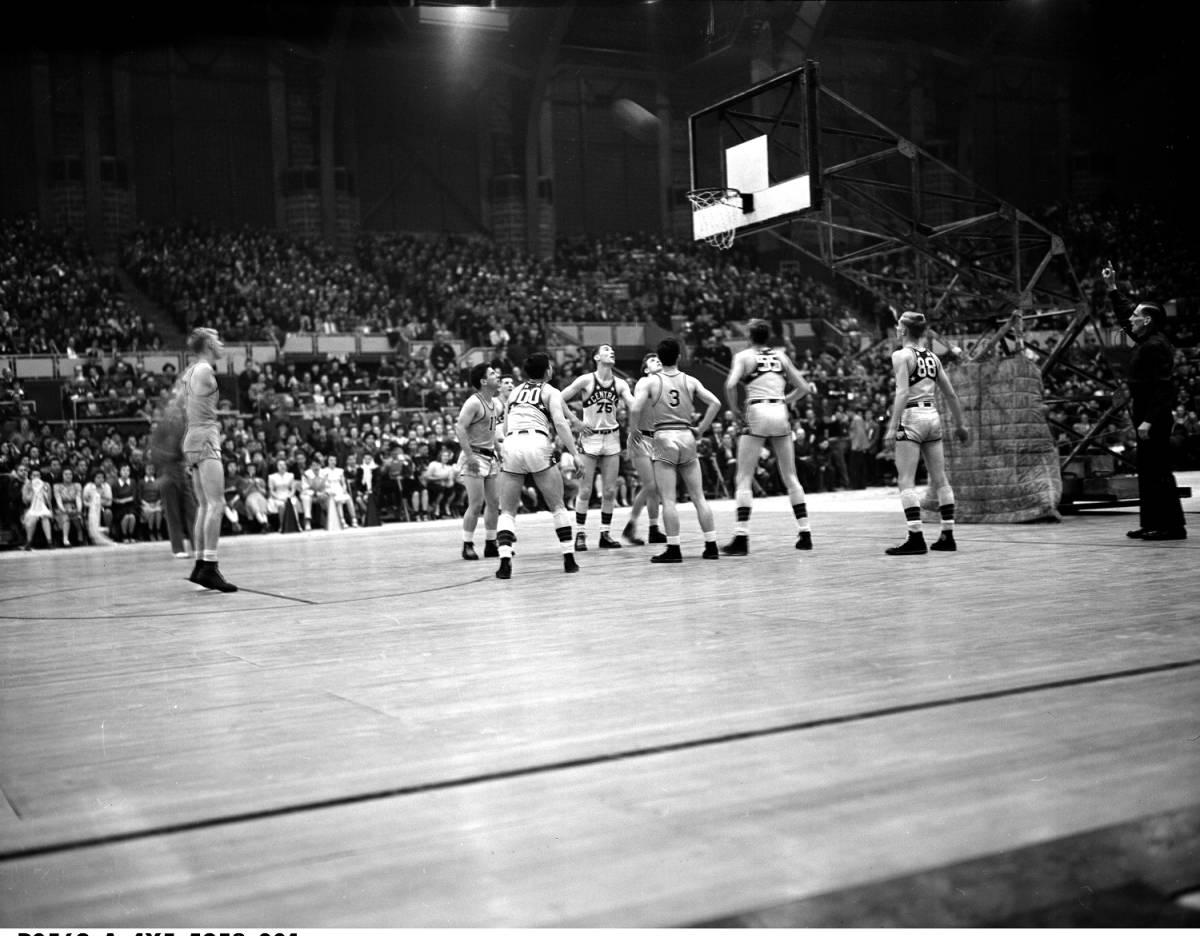
Indiana State High School Athletic Association ends single-class basketball championship
With an increasing issue of mismatched school sizes due to school consolidation, the Indiana State High School Athletic Association decides to eliminate the single-class system after the 1996-1997 season. The decision is controversial.
Pictured: A picture Indiana State High School basketball championship at the Indianapolis Coliseum in 1943
Credit: Indiana Historical Society
View Source
Indianapolis Art Center opens new building
Indianapolis native and internationally known architect Michael Graves designs the building located in Broad Ripple.
Pictured: Indianapolis Art Center front entrance, 2019
Credit: Momoneymoproblemz via Wikimedia Commons
View Source
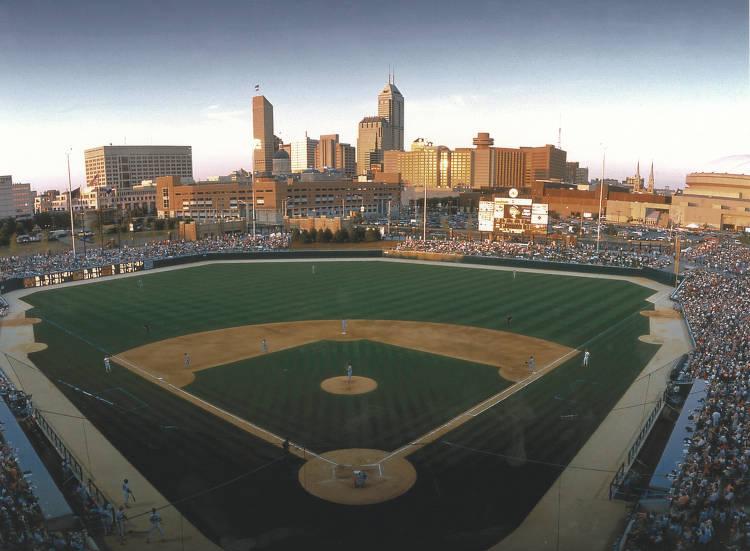
Victory Field hosts it first game
In the inaugural baseball game played at Victory Field, the Indianapolis Indians compete against the Oklahoma City 89ers. Nearly 15,000 spectators watch as the Indians lose to the 89ers with a score of 5-3.
Pictured: Victory Field, ca. 1990s
Credit: Indiana Historical Society View Source
Indianapolis native Maicel D. Malone wins a gold medal at Summer Olympic Games
A track and field athlete, Malone competes in the Atlanta Summer Olympic Games and wins the gold medal for the women’s 4 x 400 meters relay. She completes the relay in 3:20.91. Jaycie Phelps, of Greenfield, also wins gold at the games as a member of the Women’s Gymnastic team.

Spirit & Place Festival launches
The Spirit & Place Festival springs from the Project on Religion and Urban Culture, an initiative of The Polis Center at IUPUI. It brings together the arts, humanities, and religion to frame programs that address issues of concern to Indianapolis. The first festival features a conversation between John Updike, Kurt Vonnegut, and Dan Wakefield at Clowes Hall.
Pictured: Spirit & Place Festival event at Clowes Hall, 2008
Credit: Indiana University Indianapolis
View Source
Clarian Health integrates operations of Riley, Indiana University hospitals and Methodist Hospital
Indiana University’s decision to turn over healthcare management services to Clarian Health allows the IU School of Medicine to develop further as a first-rate medical education institution and assures the economic viability of Indiana University Hospitals for future generations.
Julia Carson becomes first African American and first woman to represent Indianapolis in Congress
A protégé of Democratic congressman Andy Jacobs, Carson begins her first term representing the 7th Indiana Congressional District. She spends her six terms in office focused on issues of concern to the lives of Indianapolis’ working class.
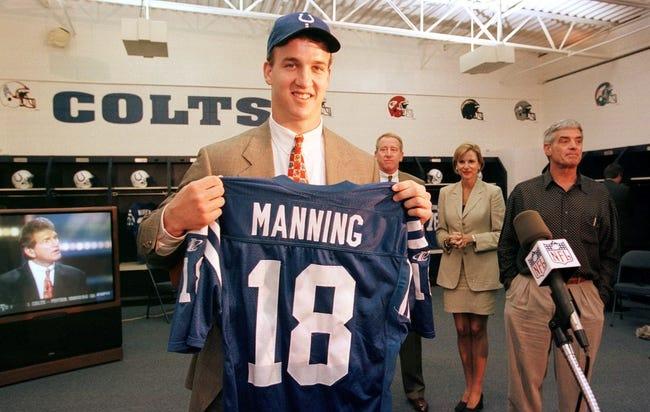
Peyton Manning joins the Indianapolis Colts
The Indianapolis Colts selects Manning as the first pick in the 1998 NFL draft. Manning leads a revival of the football franchise, quarterbacking the team to numerous successful seasons and a Super Bowl win. He also contributes time and money to the Indianapolis community, notably the Peyton Manning Children’s Hospital.
Pictured: Peyton Manning Signs with Colts, 1998
Credit: Matt Kryger/Indianapolis Star
View Source
Mandatory transfers of Indianapolis Public School students begins phase-out period
The 13-year phase-out period of transferring IPS students to certain townships begins after the 7th U.S. Circuit Court rules that desegregation was never meant to be permanent.
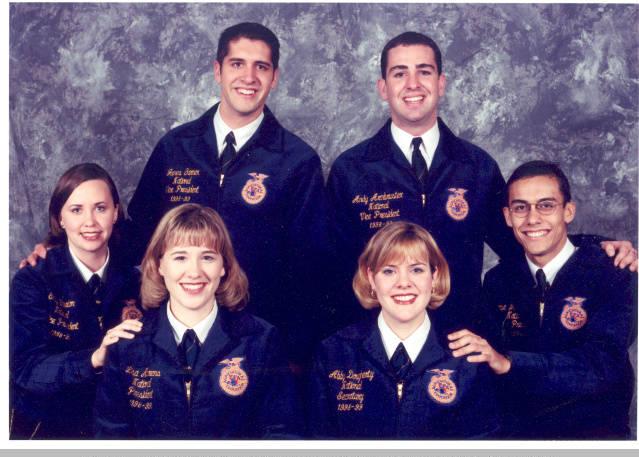
National Future Farmers of America Center opens
The FFA moves its headquarters to Indianapolis. The city also hosts the organization’s annual convention, where members compete for awards in areas such as dairy production, livestock judging, and agricultural sales.
Pictured: National Officers, 1998-99, Back Row: Emily Buxton, VP, Ohio; James Garner, VP, California; Andy Armbruster, VP, Kansas; Jose Santiago, VP, Puerto Rico; Front Row: Lisa Ahrens, President, Iowa; Abby Dougherty, Secretary, Indiana.
Credit: Indiana University Indianapolis
View Source
Central Indiana Corporate Community Partnership forms
The Central Indiana Corporate Partnership succeeds the Corporate Community Council to maximize economic development in Central Indiana. CICP later launches its charitable arm, the CICP Foundation.
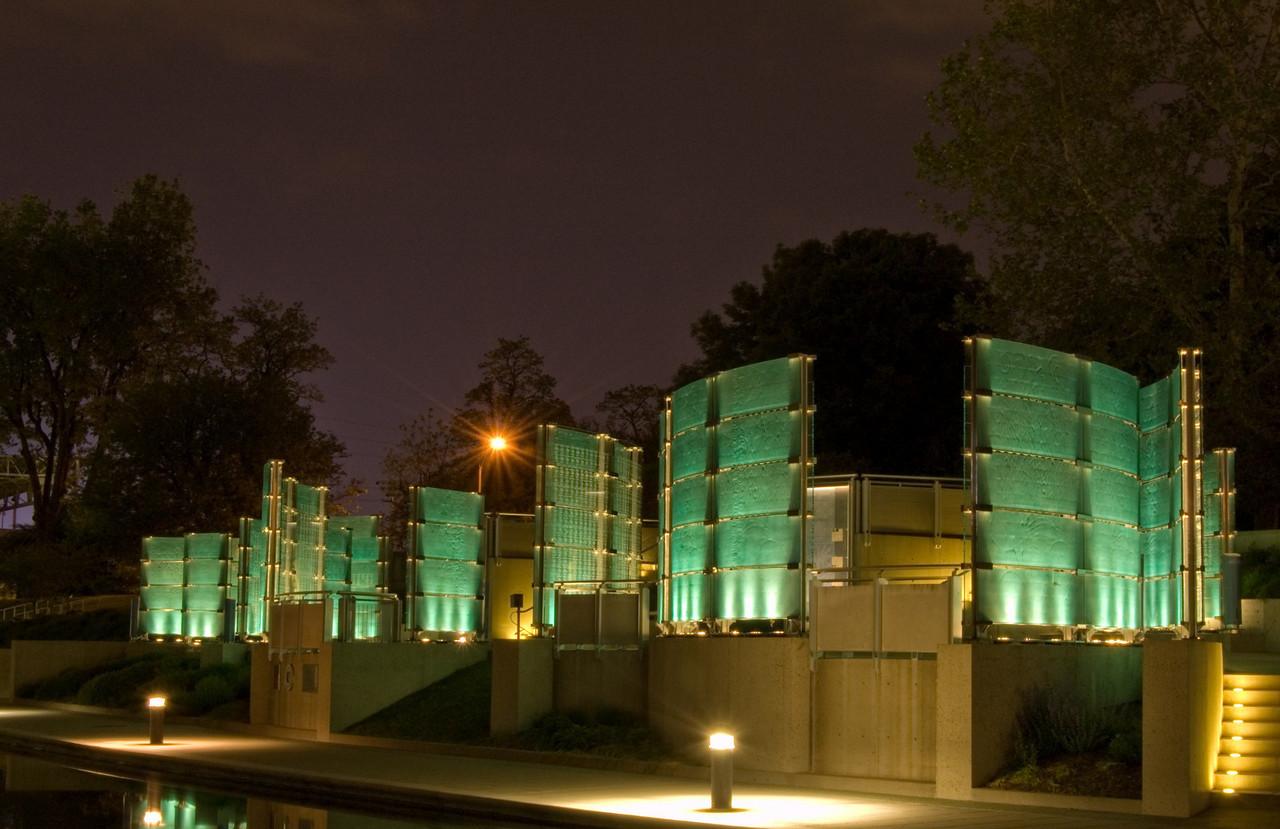
Congressional Medal Of Honor Memorial opens
Designed by Eric Fulford and Anne Reed of Ninebark Studios, the memorial pays tribute to Indiana Medal of Honor recipients, dating to the Civil War. It is located on the north bank of Indiana Central Canal.
Pictured: Congressional Medal Of Honor Memorial, 2007
Credit: Rogerd via Wikimedia Commons
View Source
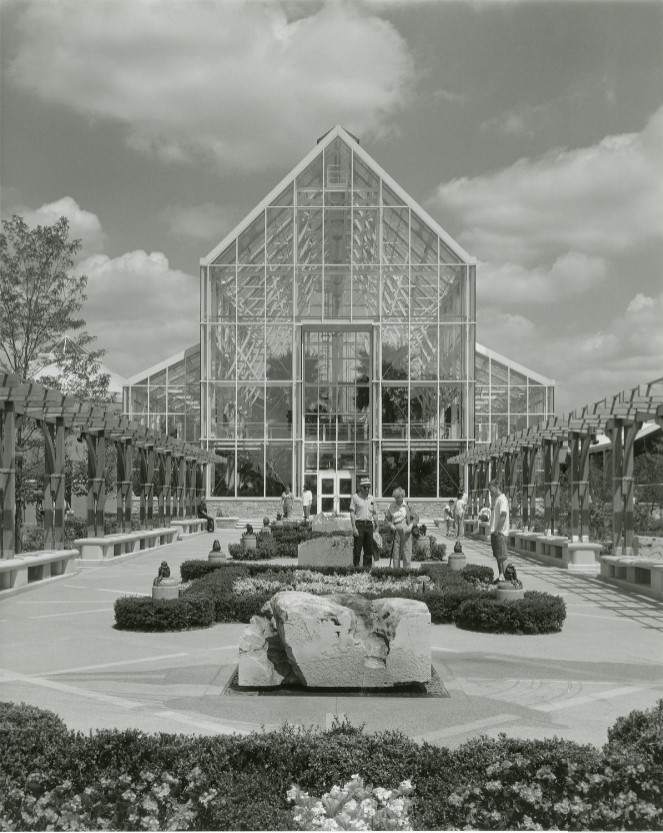
White River Gardens opens
Part of the White River State Park and the Indianapolis Zoo, the gardens showcase more than 16,000 plants, exotic and native. Many species are rare or historic in value.
Pictured: White River Gardens, ca. 1990s
Credit: Indiana Historical Society View Source
First Indy Jazz Fest begins
The Indianapolis Jazz Foundation establishes the annual Indy Jazz Fest—a community celebration of Indianapolis’ rich jazz legacy. The festival takes place over four days and features a long list of local and national jazz stars.
Pictured: Performer at Indy Jazz Fest, 2002
Credit: Indiana University Indianapolis
View Source
The Eugene and Marilyn Glick Indiana History Center opens
The Indiana Historical Society moves out of the Indiana State Library and into its own building along the Indiana Central Canal. The facility is complete with collections vault, conservation labs, a library, and experience spaces.
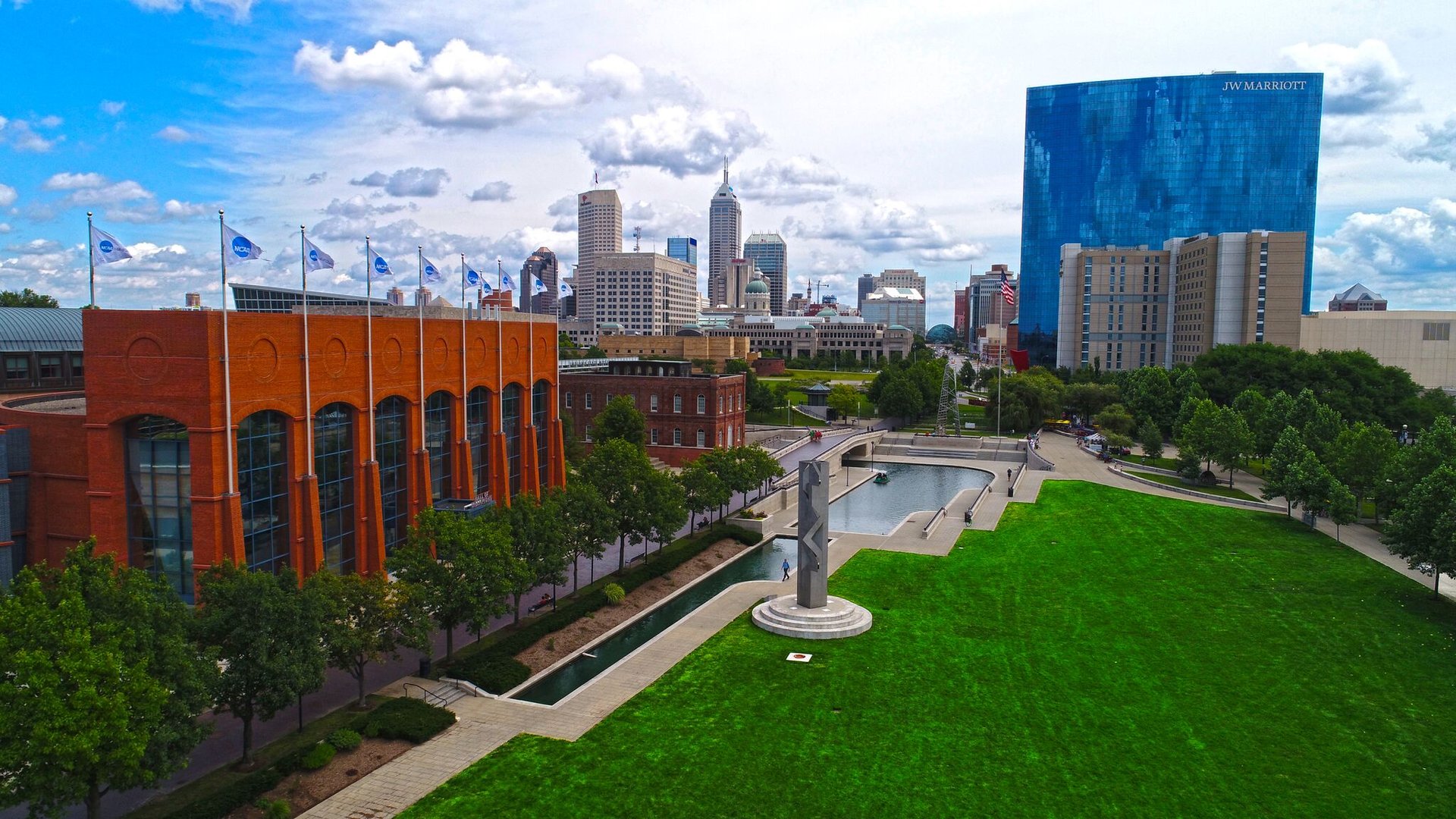
National Collegiate Athletic Association headquarters opens in White River State Park
The three-building complex, designed by internationally known architect and Hoosier native Michael Graves, provides a tourist attraction in White River State Park and a new image for the organization.
Pictured: NCAA Headquarters, 2018
Credit: Visit Indy View Source
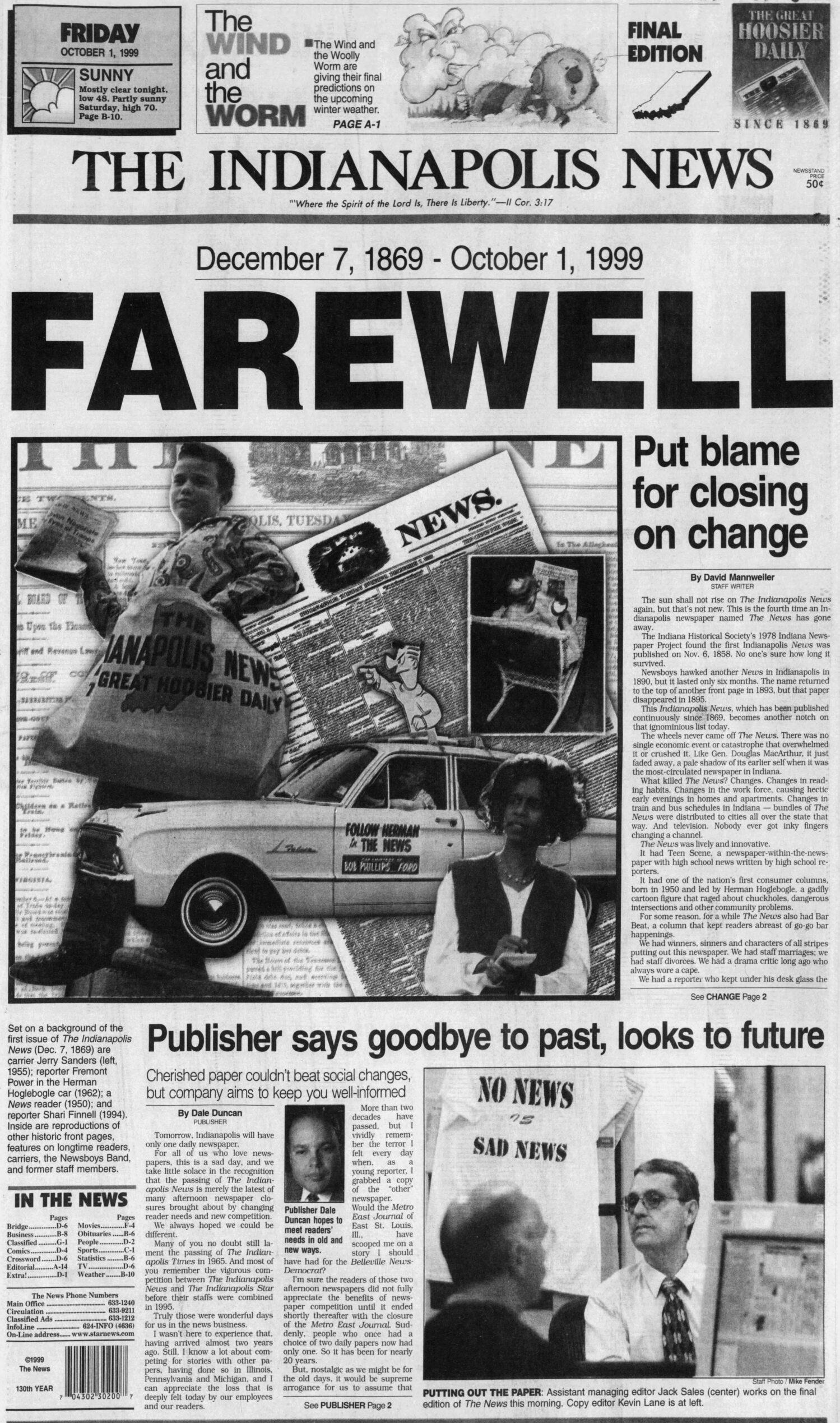
Indianapolis News ceases publication
Indianapolis News’ 130-year run as the city’s evening newspaper and oldest operating newspaper in the state ends due to shifting news preferences and a decline in subscribers.
Pictured: The final edition of the Indianapolis News was released on October 1, 1999.
Credit: Indianapolis News
View Source
Bart Peterson becomes the first Democratic mayor since 1963
Peterson’s administration becomes notable for its advocacy of the arts, educational reform, and initiatives to create a biotech industry hub in the city. His election marks a shift of the city from a Republican to a Democratic stronghold.
Pictured: Mayor-elect Bart Peterson shares a laugh with his newly appointed cabinet, 1999
Credit: The Indy Star-USA TODAY NETWORK View Source
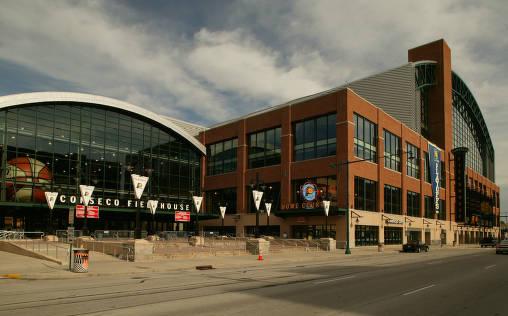
Conseco Fieldhouse opens
Conseco Fieldhouse serves as a replacement for Market Square Arena. It provides the home site for Indianapolis’ two professional basketball teams: the Indiana Pacers and the Indiana Fever. It is now known as Gainbridge Fieldhouse.
Pictured: Conseco Fieldhouse, 2004
Credit: Indiana University Indianapolis
View Source
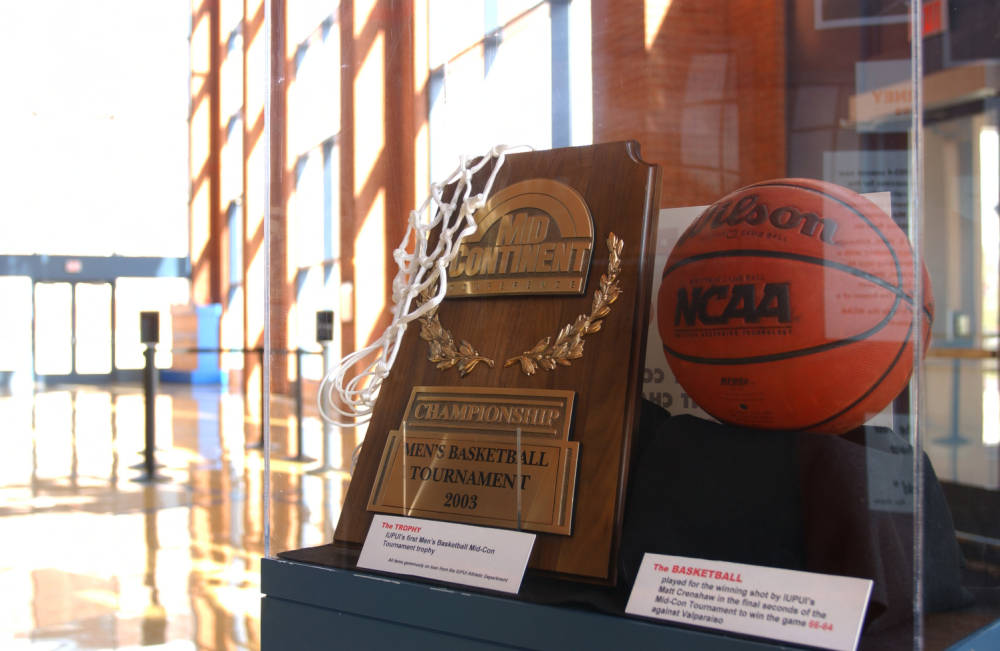
National Collegiate Athletic Association Hall of Champions opens in White River State Park
The Hall of Champions includes a grand hall honoring the heroics of past college athletes as well as a museum area with a theater and Exhibition Center.
Pictured: IUPUI men’s basketball exhibit at NCAA Hall of Champions, 2004
Credit: Indiana University Indianapolis
View Source
First artificially conceived elephant born
Amali, an artificially conceived 201-pound female African elephant, is born to one of five African elephants living at the zoo. In October 2001, the Indianapolis Zoo receives the Edward H. Bean Award from the American Zoo Aquarium Association for its pioneering work in elephant reproduction.
Pictured: Amali with her mother Kubwa, 2000
Credit: Mike Fender, IndyStar
View Source
Indiana Fever wins its inaugural game
The WNBA awards Indianapolis an expansion franchise to begin play in 2000. Anne Donovan, serving as interim head coach for the inaugural season, leads the Fever to win its first game.
Pictured: Indiana Fever guard Briann January (20) brings the ball up court during the second half against the New York Liberty at Madison Square Garden in 2010.
Credit: Jim O’Connor-USA TODAY Sports
View Source
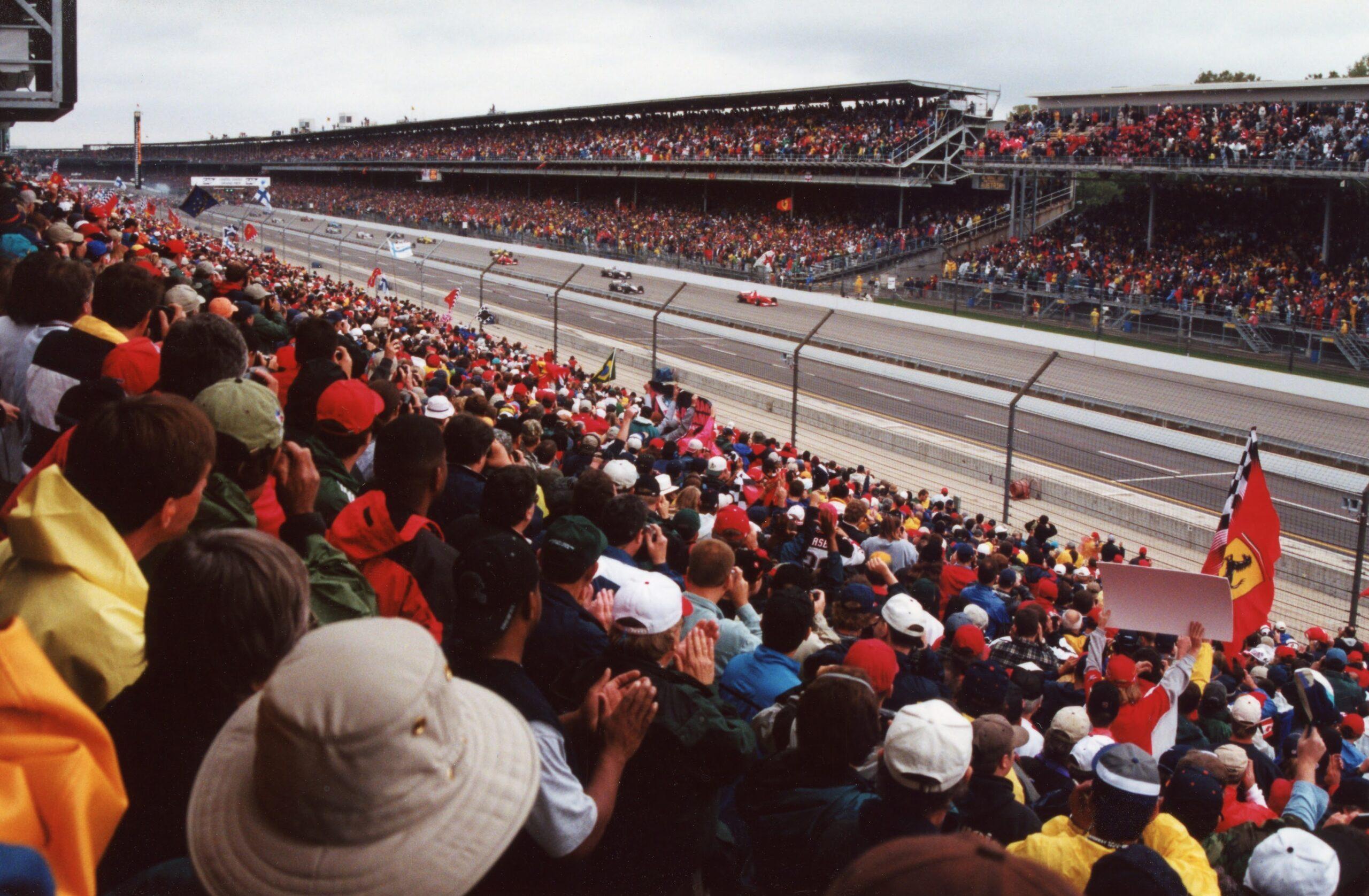
Indianapolis Motor Speedway hosts the first United States Grand Prix
To prepare for the Grand Prix, the Speedway constructs a new road course and pagoda and makes modifications to pits and pit lanes. The Speedway holds the event annually through 2007.
Pictured: The start of the inaugural United States Grand Prix at Indianapolis, Indianapolis Motor Speedway, 2000
Credit: Rdikeman at the English Wikipedia
View Source
Lilly Endowment, Inc. gives $105-million to create a genomics center at Indiana University School of Medicine
With funding from the Lilly Endowment and the Indiana 21st Century and Technology Fund, Howard J. Edenberg leads the center and makes it a major genomic center, providing a variety of genomics services including DNA/RNA analysis and sequencing.
Pictured: Dr. Howard Edenberg, 1988
Credit: Indiana University Indianapolis
View Source
Indianapolis Museum of Contemporary Art established
Created as a “museum without walls,” the contemporary art museum mounts exhibitions around Indianapolis to connect people to inspiring and innovative art.
Pictured: Transaction Boundries, by Artur Silva, was a solo exhibition at IMOCA’s Murphy Art Center space that opened in 2016.
Credit: Michelle Pemberton, IndyStar
View Source
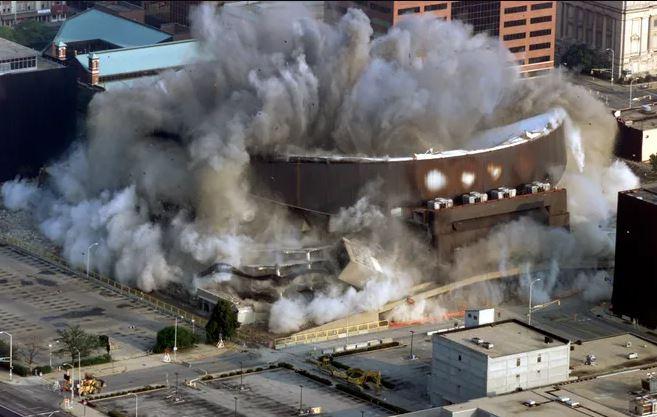
Market Square Arena demolished
The city implodes Market Square Arena, Indianapolis’ primary sports and entertainment venue for 27 years. The site serves as a parking lot before Cummins, Inc. and an apartment complex occupy the location in 2017 and 2018.
Pictured: Aerial view of the Market Square Arena implosion, July 8, 2001.
Credit: Rich Miller, IndyStar
View Source
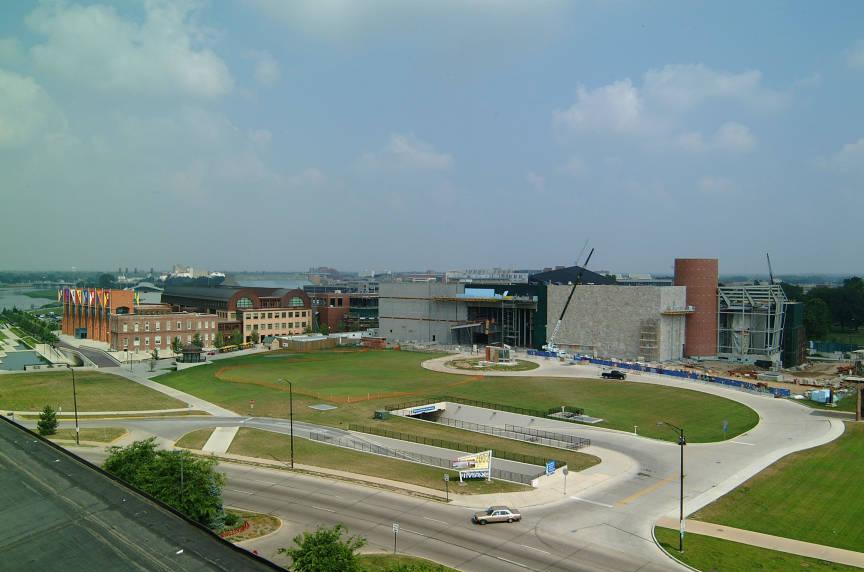
Indiana State Museum opens in White River State Park
Having outgrown its space at the old City Hall, the Indiana State Museum’s board approves a move to White River State Park. The museum’s new location adjoins a preexisting IMAX movie theater.
Pictured: Indiana State Museum, 2001
Credit: Banayote Photo Inc., Indiana Historical Society
View Source
First woman to drive the Indy 500 pace car
Fashion model Elaine Irwin becomes the first woman to drive the Official Pace Vehicle when she paces the start of the 85th Indianapolis 500 in an Oldsmobile Bravada.
21st Century Charter School opens in historic Union Station
After Gov. Frank O’Bannon signs into law legislation to create charter schools in Indiana, the 21st Century Charter School becomes the first of three charter schools to open for the 2002-2003 academic year in Indianapolis.
FIBA World Championship plays in Conseco Fieldhouse
Indianapolis holds the 2002 men’s basketball international world competition from August 29 to September 8. Yugoslavia wins the final game and becomes the champion.
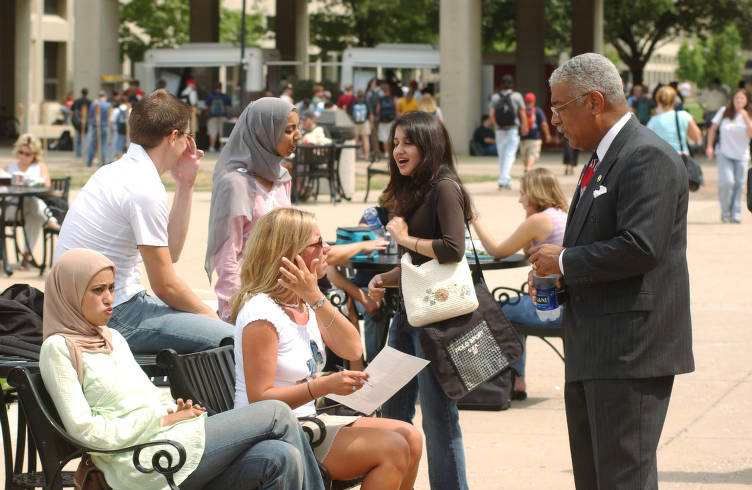
Frank Anderson becomes the first elected African American sheriff
Anderson, an Indianapolis native who attended Shortridge High School, served as U.S. Marshal for the Southern District of Indiana for many years before becoming sheriff. A Democrat, he is the first African American elected to the post in Marion County, as well as the first in Indiana.
Pictured: Frank Anderson campaigning for Marion County Sheriff on IUPUI campus, 2002
Credit: Indiana University Indianapolis View Source
Mexican Consulate opens
The consulate serves 80,000 Marion County residents of Mexican heritage. It focuses on aiding local residents in obtaining ID cards, passports, and visas among other services.
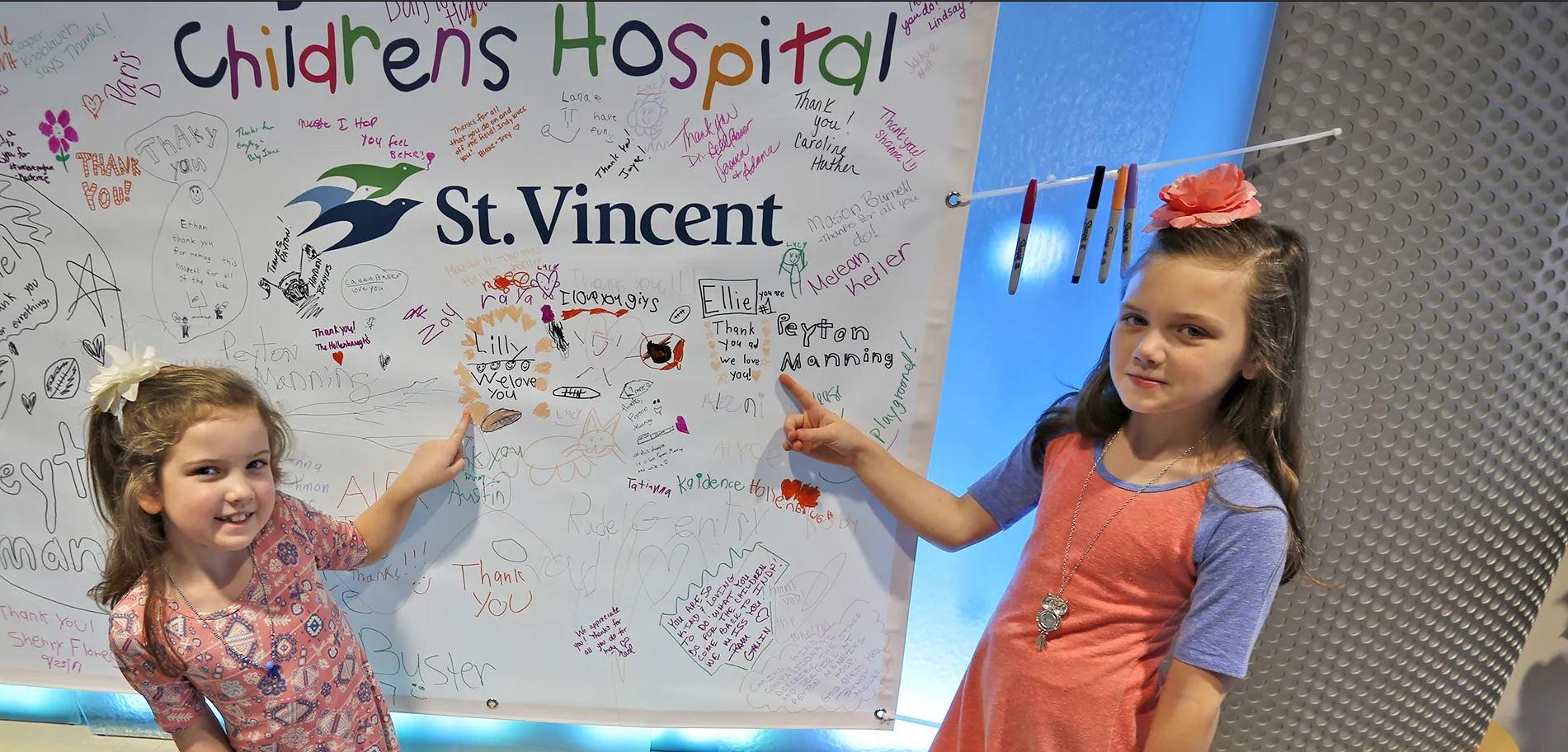
St. Vincent’s Children’s Hospital opens
St. Vincent Children’s Hospital opens as part of the St. Vincent Hospital network, now Ascension. Later known as Peyton Manning Children’s Hospital, it collaborates with pediatric specialists to provide tertiary-level pediatric care at the facility.
Pictured: Peyton Manning Children’s Hospital patients, 2017
Credit: Kelly Wilkinson, IndyStar View Source
Historic Fall Creek YMCA closes
Built as a replacement for the Senate Avenue YMCA in 1959, the Fall Creek YMCA closes due to financial trouble and controversies concerning racial discrimination. It had served the African American community for several decades
Pictured: Sustaining Membership members of the Fall Creek Parkway YMCA, 1984
Credit: Indianapolis Recorder Collection, Indiana Historical Society
View Source
Gen Con moves from Milwaukee to Indianapolis
The tabletop gaming convention moves to the Indiana Convention Center in Indianapolis from Milwaukee to better accommodate the growing number of attendees. Gen Con soon becomes one of Indianapolis’ largest conventions.
Pictured: Gaming on the opening day of the 2019 Gen Con at the Indiana Convention Center in Indianapolis.
Credit: Robert Scheer/IndyStar via Imagn Content Services, LLC
View Source
Deborah Cantwell becomes mayor of Lawrence
Cantwell becomes the first Democrat and first woman to serve as mayor of Lawrence after receiving 57 percent of the vote. She serves one term.
Pictured: “Cantwell defeats Schneider,” 2003
Credit: IndyStar
View Source
Anthem and Wellpoint merge
In a $16.5 billion deal, Anthem and Wellpoint create Indiana’s largest public company and the nation’s largest health benefits firm. Anthem is renamed Wellpoint, Inc.
Big Car Collaborative created
Jim Walker and wife Shauta Marsh cofound Big Car Collaborative, which focuses on socially engaged art and cultural community development. The studio and gallery space features monthly exhibits.
Pictured: Big Car founder Jim Walker at “The Tube” community art space, June 2015.
Credit: Matt Detrich, IndyStar
View Source
Rozelle Boyd becomes first Black City-County Council president
First elected to the City Council (pre-Unigov) in 1965, Boyd serves until 2007, the last three years as the council’s president. He is the longest-serving City-County councilor at the time of his departure.
Pictured: Indianapolis City-County Council Democratic leader Rozelle Boyd, 2003
Credit: CHARLIE NYE / USA TODAY NETWORKView Source
The Hudson Institute leaves Indianapolis
The Hudson Institute Board of Trustees approve a move to Washington, D.C. to consolidate its operations. The board decides that the organization needs to return to its previous focus on national security and foreign policy.
Republican Mitch Daniels elected governor
A North Central High School graduate, Daniels, advisor to President Ronald Reagan and director of the Office of Management, defeats incumbant Democratic governor Joe Kernan.
Pictured: After serving as Governor of Indiana from 2005 to 2013, Mitch Daniels went on to become Purdue University president.
Credit: Jenna Watson/IndyStar, Indianapolis Star via Imagn Content Services, LLC
View Source
Crispus Attucks graduate makes Metropolitan Opera debut
At the age of 40, Angela Brown, who finds her niche in classical music while in college, makes her Metropolitan Opera debut in the title role of Verdi’s Aida.
Pictured: Angela Brown sang at Yuletide Celebration, showcasing the Indianapolis Symphony Orchestra, at Hilbert Circle Theater in 2018.
Credit: Robert Scheer/IndyStar
View Source
Herron School of Art opens on the IUPUI campus
The art school moves into the newly built Eskenazi Hall, a facility that triples the amount of space available to Herron students and includes a library, auditorium, gallery space, and several computer labs. It marks the unification of all IUPUI schools in one location.
Pictured: Student in painting class in Herron, 2007
Credit: Indiana University Indianapolis
View Source
Danica Patrick becomes the first woman to lead Indy 500
The 23-year-old Patrick finishes the 500 in 4th place, the highest for any female participant. She later wins the Indy Japan 300 making her the first woman to win an Indy Racing League event.
Pictured: Danica Patrick, 2008
Credit: Mark J. Rebilas-USA TODAY Sports
View Source
First IndyFringe Festival kicks off
IndyFringe’s inaugural theatre festival launches with over 100 shows performed over 10 days. The festival goes on to become an annual summer event featuring local and national performers.
Pictured: News clipping advertising the IndyFringe festival, 2005
Credit: Journal and Courier, Lafayette, IN
View Source
First Indianapolis Prize awarded
George Archibald, Ph. D. becomes the Indianapolis Zoo’s first recipient of the biennial Indianapolis Prize, which recognizes individuals for their work in the conservation of animal species.
Pictured: George Archibald, Ph. D. was awarded the Indianapolis Prize for his work in the conservation of cranes.
Credit: IndyStar
View Source
Hindu Temple of Central Indiana opens to worshipers
Created to serve the growing Hindu population, the Hindu Temple of Central Indiana is the first traditional Hindu temple in Indiana.
Pictured: Hindu Temple of Central Indiana, ca. 2020
Credit: Chad M. Bauman
Sun Capital acquires Marsh Supermarkets
With slow growth and increased competition, local grocer Marsh Supermarkets sells to Sun Capital, a private equity firm in Florida. SUN purchases the local chain for approximately $88 million.
Indianapolis Police Department merges with division of the Marion County Sheriff’s department
The Indianapolis Police Department and the law enforcement division of the Marion County Sheriff’s Department consolidate to form the Indianapolis Metropolitan Police Department. The merger is part of the Indy Works plan.
Indianapolis Public Central Library opens its new atrium
Demolition of the mid-1970s annex and stacks makes way for the steel and glass tower that surrounds the historic 1917 building. The renovations double the size of the library.
Pictured: This sketch of the atrium of the Indianapolis Central Public Library was completed by Roberta Avidor, a local Indianapolis artist.
Credit: Ken and Roberta Avidor, Indiana Historical Society
View Source
Lucas Oil Stadium opens
Lucas Oil Stadium replaces the Hoosier Dome as the home of the Indianapolis Colts. Largely financed through public subsidies, construction of the building costs approximately $720 million.
Pictured: Lucas Oil Stadium amid its construction, 2007
Credit: Banayote Photo Inc., Indiana Historical Society View Source
Indianapolis Motor Speedway hosts Indianapolis MotoGP
The Indianapolis Grand Prix motorcycle racing event is held at the Indianapolis Motor Speedway as part of the MotoGP World Championship. The event takes place annually until 2015.
Pictured: Valentino Rossi was the MotoGP winner of the Red Bull Indianapolis Grand Prix in 2008.
Credit: christianb_7 via Wikimedia Commons
View Source
New Indianapolis International Aiport opens
The new 1.2-million-square-foot midfield terminal features two-20 gate concourses, 25,000 square feet of restaurants and retailers, and a Civic Plaza that mimics the shape of Monument Circle. The facility garners many awards, including Best Airport in North America.
Pictured: Stuart Gauel, Aiport Authority, TSA worker Lorna Cessna (middle) and Melvin Carraway, General Manager of Field Operations for TSA, take part in the ribbon-cutting ceremony at the Col. H. Weir Cook Terminal, 2008
Credit: Danese Kenon/The Indianapolis Star via USA TODAY NETWORK
View Source
RCA Dome demolished
Closed in August upon the opening of Lucas Oil Stadium as the new home of the Indianapolis Colts, demolition contractors deflate the roof and then later implode the remaining structure. The implosion takes 25 seconds.
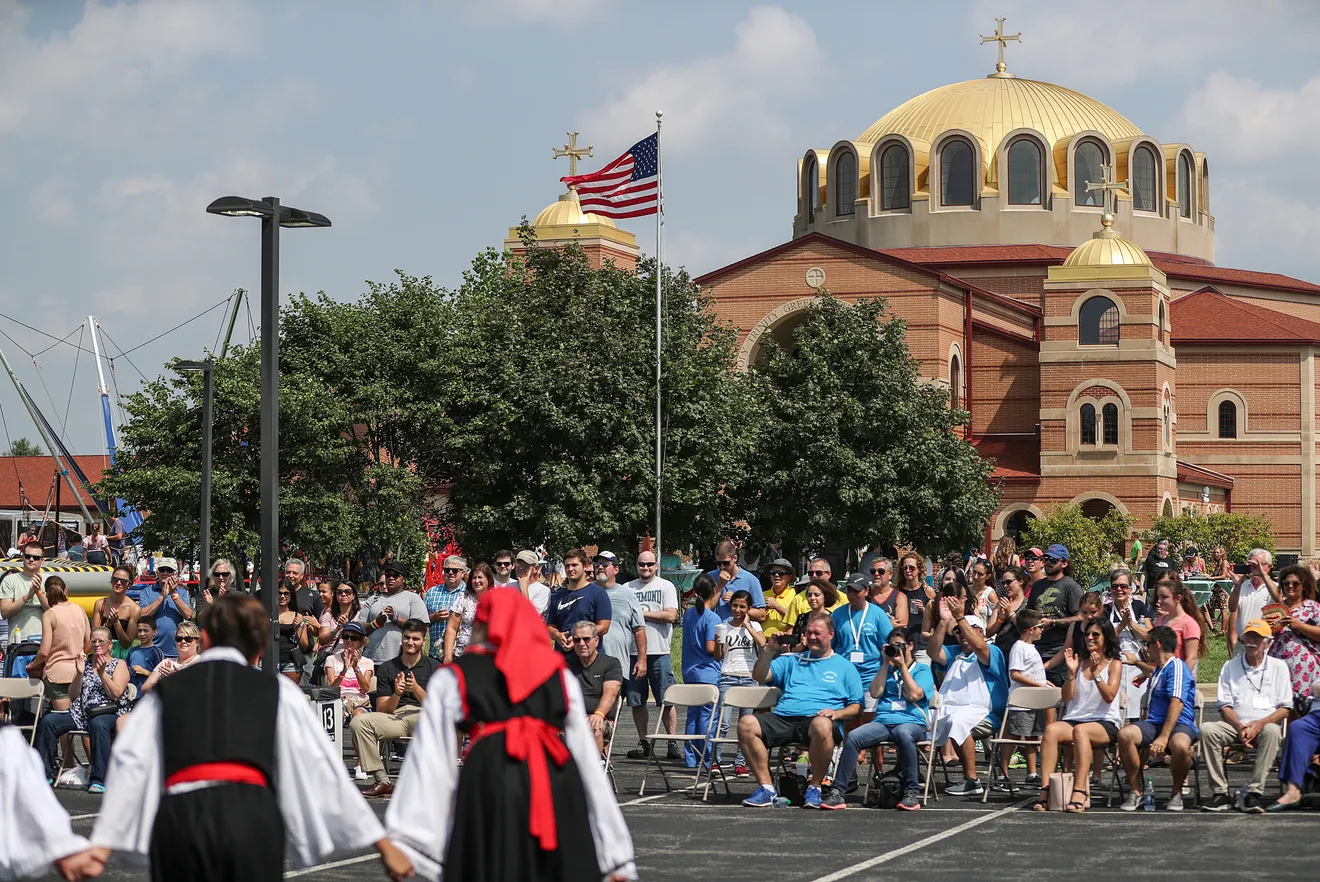
Greek Orthodox Cathedral opens in Carmel
Trinity Greek Orthodox Cathedral carries the distinction of being the “first Triad Byzantine-Design church” constructed in over 1,400 years.
Pictured: Greek Fest at Holy Trinity Greek Orthodox Church, 2018
Credit: Jenna Watson, IndyStar View Source
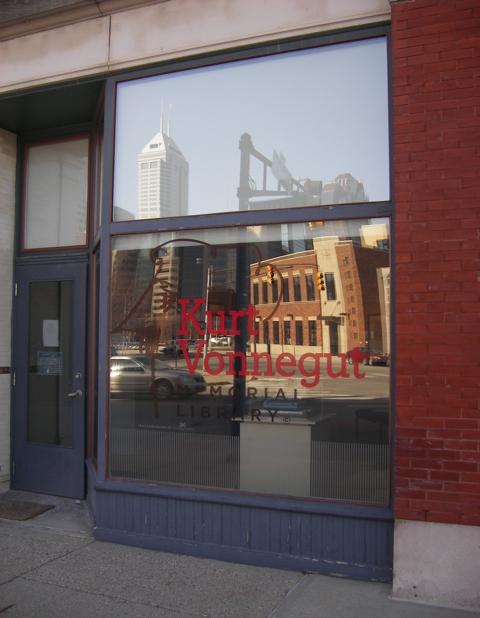
Kurt Vonnegut Museum and Library established
Julia Whitehead founds the museum to commemorate the life and work of critically acclaimed author and Indianapolis native Kurt Vonnegut. The museum opens in 2011 and moves to a new location on Indiana Avenue in 2019.
Pictured: Kurt Vonnegut Memorial Library, 2012
Credit: Rsfitzharris at English Wikipedia
View Source
The Great American Songbook Foundation moves to Carmel
Michael Feinstein created the foundation in 2007 to preserve and promote the music of the Great American Songbook. He moves it to Carmel when he becomes artistic director for the Center for the Performing Arts.
Lafayette Square Mall loses Macy’s
Macy’s becomes the third major anchor store to leave the once-thriving retail center, raising questions about the mall’s future.
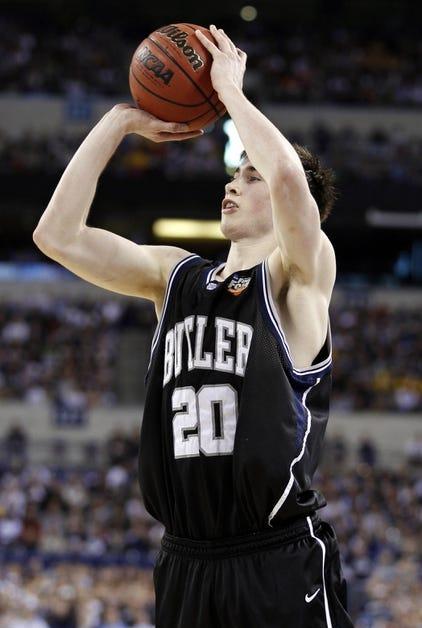
NCAA National Championship held at the Lucas Oil Stadium
The Butler University Bulldogs play against Duke University’s Blue Devils in the NCAA basketball championship game. Butler loses to Duke, 61-59, after Gordon Hayward’s last-second shot barely misses.
Pictured: Butler Bulldogs guard/forward Gordon Hayward, 2010
Credit: Bob Donnan-USA TODAY Sports
View Source
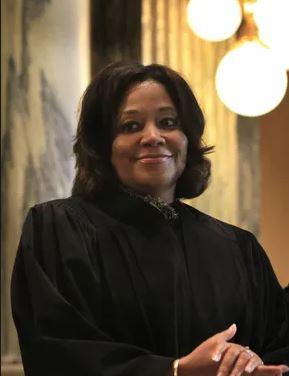
Tanya Walton Pratt becomes the first African American federal judge in Indiana
Tonya Walton Pratt is appointed to the U.S. District Court, Southern District of Indiana. She becomes the first African American chief judge of the court in 2021.
Pictured: Judge Tanya Walton Pratt, 2010
Credit: Charlie Nye, IndyStar
View Source
Clarian Health becomes IU Health
With the name change and drawing on the academic expertise of its downtown campus, IU Health leaders aim to expand the health network’s patient base to the state.
Citizen Energy Group acquires the city’s water and wastewater systems
Citizen Energy Group begins the process of expanding its utility services. As part of this shift in strategy, it acquires Indianapolis’ water and wastewater utilities.
Pictured: Indianapolis waste water treatment plant, 2019
Credit: Matt Kryger/IndyStar, Indianapolis Star via Imagn Content Services, LLC
View Source
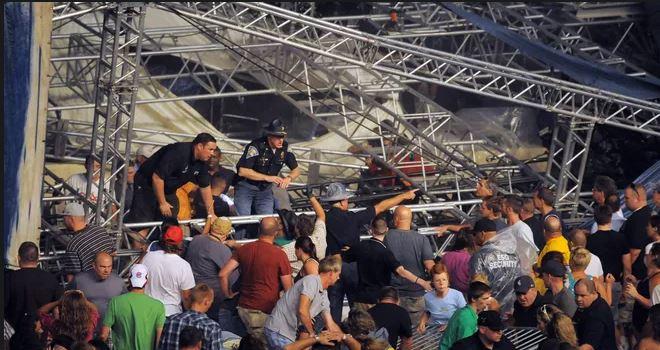
Indiana State Fair stage collapses
A temporary stage structure collapses during a Sugarland concert as winds exceed 60 mph. The accident kills 7 people and leaves 58 people injured.
Pictured: State Fair stage collapse, 2011
Credit: Matt Kryger/Indianapolis Star
View Source
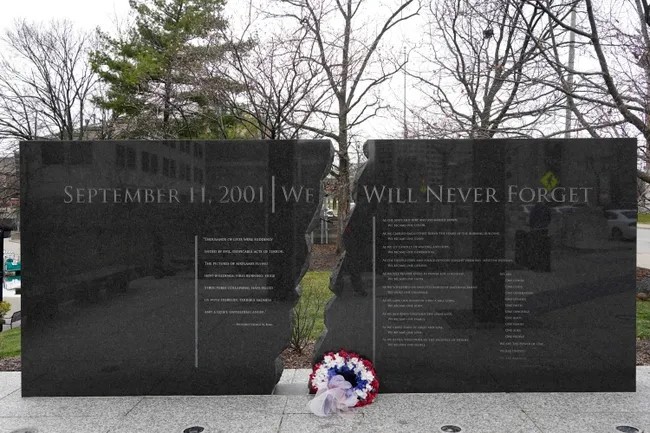
Indianapolis dedicates the Indiana 9/11 Memorial
The city commemorates the 10th anniversary of the tragedy with the dedication of the memorial. The structure contains two steel beams from Ground Zero in New York City.
Pictured: A general view of the Indianapolis Project 9-11 Memorial, 2021
Credit: Kirby Lee-USA TODAY Sports
View Source
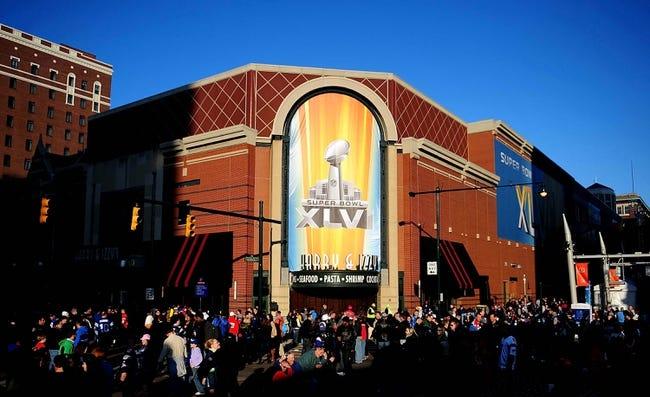
Indianapolis hosts Super Bowl XLVI
Lucas Oil Stadium hosts Super Bowl XLVI, making it the first time a Super Bowl is held in Indiana. The New York Giants beat the New England Patriots, 21–17, to become NFL champions.
Pictured: A crowded Georgia Street in front of Harry & Izzy Grill before the 2012 Super Bowl XLVI between the New England Patriots and the New York Giants.
Credit: Andrew Weber-USA TODAY Sports
View Source
Peyton Manning leaves Indianapolis Colts
Plagued with neck and arm problems, the Colts release Payton Manning. The future Hall of Fame quarterback ultimately signs with Denver, where he leads the Broncos to an NFL title. The Colts take Andrew Luck as the first pick in the subsequent draft.
Pictured: Denver Broncos owner Pat Bowlen (left) and quarterback Peyton Manning (center) and executive vice president for football operations John Elway pose for a photo during a press conference at Broncos headquarters, 2012
Credit: Ron Chenoy-USA TODAY Sports
View Source
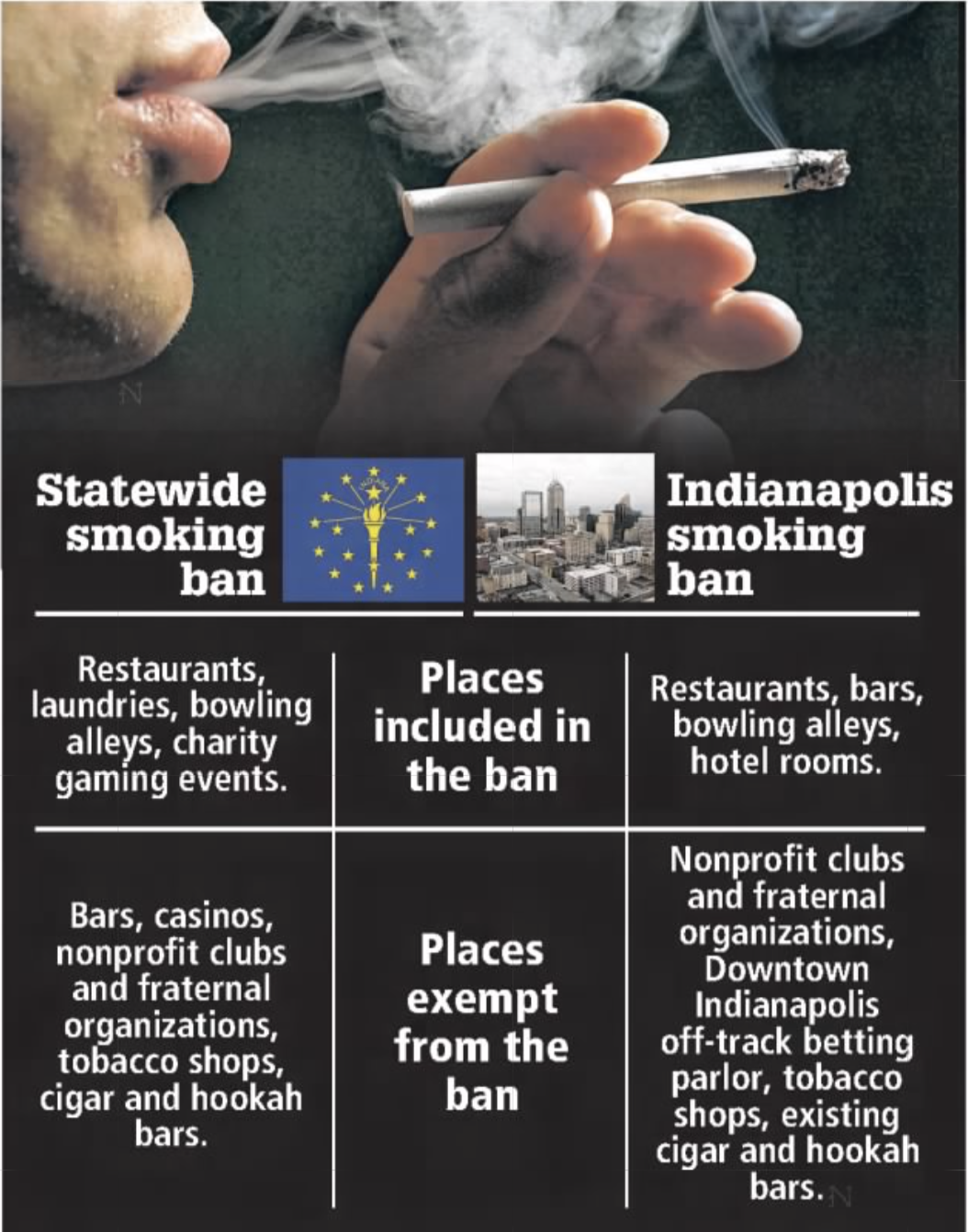
Marion County Board of Health expands Indiana smoking ban
The state and Marion County Board of Health ban smoking in restaurants and other public locations and prohibit smoking within 8-feet of all public entrances to public spaces and public places of employment.
Pictured: Indiana versus Marion County smoking ban chart, 2012
Credit: IndyStar

Diver David Boudia wins gold medal in London Olympics
Boudia, a Noblesville native, wins gold in the men’s 10-meter individual diving event after qualifying in the last spot on the U.S. diving team. He also brings home a bronze medal for the 10-meter synchro diving event.
Pictured: David Boudia practices on the diving boards, 2019
Credit: Nikos Frazier, Journal & Courier
View Source
Indiana Fever wins WNBA Championships
The Indiana Fever capture their first WNBA Championship. Future Hall of Fame player Tamika Catchings is named the WNBA Finals MVP and given the WNBA Defensive Player of the Year Award.
Pictured: Indiana Fever forward Tamika Catchings shoots a free throw in 2012.
Credit: Ed Mulholland-USA TODAY Sports
View Source
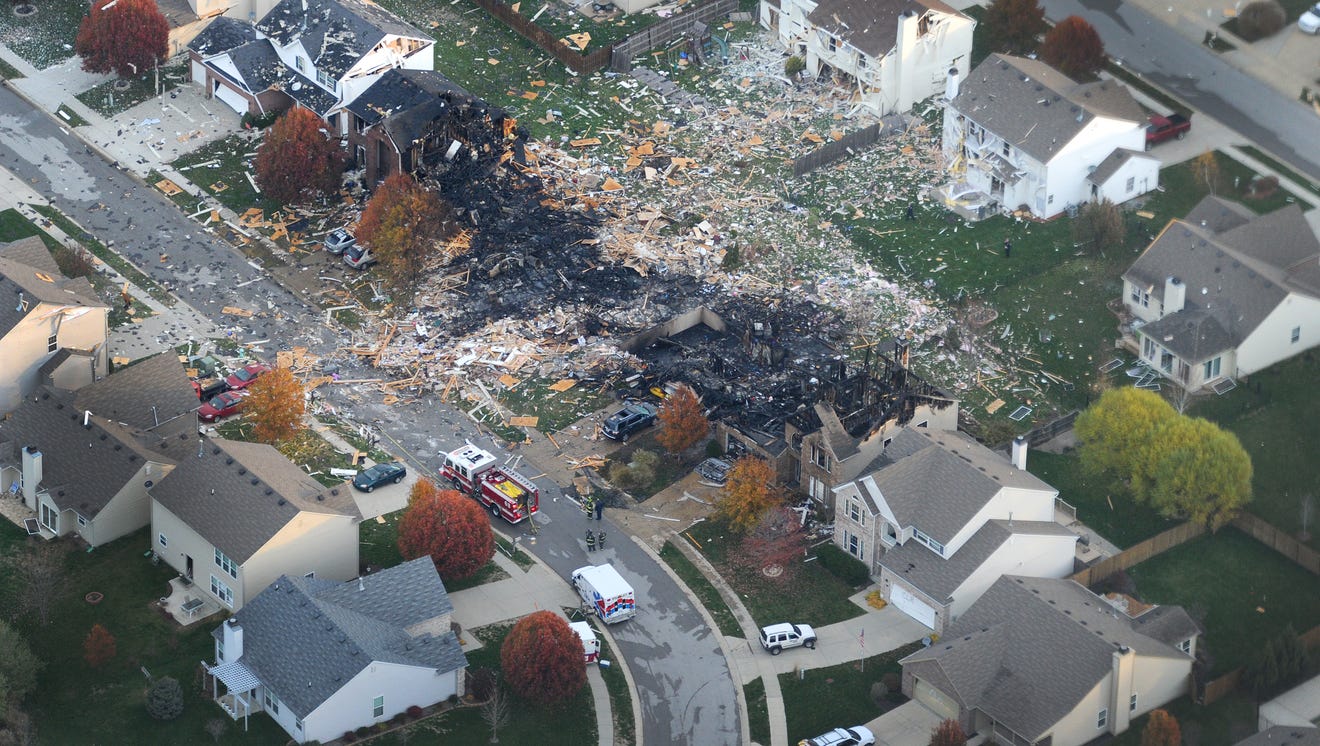
Richmond Hill explosion kills two residents
Monserrate Shirley and three others blow up her home on Indianapolis’ south side in an attempt to collect insurance money. The explosion kills two neighbors and injures at least a dozen residents.
Pictured: Richmond Hill Explosion, 2012
Credit: Matt Kryger, IndyStar View Source
Indy Eleven professional soccer team established
Owner Ersal Ozdemire funds the team, which plays its first match in IU Michael A. Carroll Track and Soccer Stadium at IUPUI on April 12, 2014. The franchise goes undefeated in 2016 to become the North American Soccer League champion.
Pictured: Indy Eleven’s Gordon Wild (10) crosses the ball against FC Tulsas’ Bradley Bourgeois (22) in the second half of the home opener Saturday, May 8, 2021
Credit: Lee Klafczynski/for IndyStar via Imagn Content Services, LLC
View Source
Indianapolis Cultural Trail opens
Six years after the groundbreaking ceremony, the Indianapolis Cultural Trail is complete. The 8-mile urban bike and pedestrian path in downtown Indianapolis connects neighborhoods, cultural districts, and entertainment amenities. It also serves as the downtown hub for central Indiana’s greenway system.
Pictured: Cultural Trail, 2020
Credit: Kelly Wilkinson / The Star, York Daily Record via Imagn Content Services, LLC View Source
Marian University opens medical school
The College of Osteopathic Medicine becomes the first new medical school in Indiana in 110 years when it opens. The school offers greater opportunities for students to enter medical school and to increase the number of doctors practicing in Indiana.
Sidney & Lois Eskenazi Hospital opens
The new 316-bed inpatient and 200-bed outpatient facility replaces Wishard Hospital. Fairbanks School of Public Health at IUPUI remodels the old hospital for its own use.
Pictured: Sidney & Lois Eskenazi Hospital, 720 Eskenazi Ave, 2020
Credit: Michelle Pemberton/IndyStar via Imagn Content Services, LLC View Source
Indiana Pacers Bike Share begins
The city’s public bicycle-sharing system includes stations along the Indianapolis Cultural Trail and 275 bikes. The program expands to include 525 bikes and 50 stations in September 2019.
Pictured: Bike rider heading north on Alabama Street along the Cultural Trail using Pacers Bikeshare, June 30, 2014
Credit: Joe Vitti, IndyStar View Source
The Fault in Our Stars premieres
The feature-length film adaptation of local writer John Green’s book The Fault in Our Stars premieres at the Seattle Film Festival. It later opens number one at the box office. Set in Indianapolis, it features several iconic city locations.
Pictured: Indianapolis premiere of The Fault in Our Stars, 2014
Credit: Brandon David Brungard
Archer Daniels Midland Co. expands in Beech Grove
The expansion of DM Milling, a wholly owned subsidiary of Archer Daniels Midland Company, makes it the third-largest wheat processing plant in the nation.
Pictured: Grain bins at DM Milling in Beech Grove, 2014
Credit: Jeff Swiatek, IndyStar
View Source
Indianapolis Star moves to Circle Centre Mall
After 107 years, the Indianapolis Star moves out of its Pennsylvania Street home and into offices at the Circle Centre mall. The Whitsett Group purchase the old building and converts it into apartments.
US Supreme Court decision upholds Indiana equal marriage rights
The US Supreme Court declines to review cases in five states that had limited marriage to opposite-sex couples. The result upholds lower court decisions that granted equal marriage rights to the Indiana LGBTQ community.
Pictured: The ban on same-sex marriage in five states, including Indiana, is ended by a U.S. Supreme Court decision.
Credit: Kelly Wilkinson, IndyStar, Oct. 7, 2014
U.S. Soccer names Lauren Holiday its Female Athlete of the Year
The award recognizes the Indianapolis native’s soccer career as a two-time Olympic gold medalist (2008, 2012) and member of the FIFA World Cup Women’s All-Star team (2011). Holiday later scores the third goal in the U.S. Women’s 5-2 win over Japan for the 2015 FIFA Women’s World Cup championship.
Indianapolis Black Chamber of Commerce organizes
The Black Chamber of Commerce serves as an information resource for Black-owned businesses. It aims to bolster economic development in the African American community.
Award-winning architect Michael Graves dies
An Indianapolis native who designed 350 buildings around the world, including the Indianapolis Art Center, Graves dies. He is best known to the general public for his tea kettle and pepper mill, designed for Target stores.
Pictured: Michael Graves, 1987
Credit: Bernard Gotfryd collection at the Library of Congress via Wikimedia CommonsView Source
Indianapolis business and political leaders oppose state’s Religious Freedom Restoration Act (RFRA)
The “religious freedom” bill prohibits the government from impeding a person’s ability to exercise their religion. Pence signs the bill into law despite intense opposition from the city’s business and political leaders over concerns that the bill allows discrimination against the LGBTQ community.
L. Steven Taylor cast in a leading role in Broadway’s The Lion King
Taylor, an Arsenal Tech High School alum, takes on the role of Mufasa in Broadway’s The Lion King. He has been a cast member in other roles in the musical since 2006.
Dedication of Indianapolis Mormon Temple
Located in Carmel, the Indianapolis Temple becomes the 148th Mormon temple in operation. The temple serves Mormons in Indiana and eastern Illinois.
Pictured: Mormon Church’s Indianapolis Temple, 2015
Credit: The Church of Jesus Christ of Latter-day Saints via IndyStar.
View Source
Indianapolis reports high rates of violent crime
Indianapolis makes the FBI’s top 10 list for Big Cities with the Highest Violent Crime Rate. The city ranks 9th with a violent crime rate of 1254.66 per capita.
Indianapolis elects Joe Hogsett as mayor
Democrat Joe Hogsett wins the 2015 mayoral election, beating Republican Chuck Brewer with 63 percent of the vote. Democrats take control of all major citywide and countywide elected offices for the first time in 45 years.
Pictured: Mayor Joe Hogsett speaking at the 2016 Drumstick Dash.
Credit: Wikimedia Commons
View Source
Former Subway pitchman Jared Fogle sentenced in sex scandal
Federal Judge Tanya Walton Pratt sentences Fogle, an Indianapolis resident, to 15 years, eight months, in one of the “highest-profile child-porn prosecutions in the country” to date. Fogle is known nationally for his starring role in a successful series of commercials promoting Subway meals.
Pictured: Jared Fogle, 2014
Credit: Anna Hanks via Wikimedia Commons
View Source
Good Bones premiers on HGTV
The pilot of Good Bones airs on HGTV, featuring Karen E. Laine and Mina Starsiak Hawk of Two Chicks and a Hammer Inc., an Indianapolis home rehab company. The show becomes popular and the mother-daughter duo renovates dilapidated homes in Fountain Square, Bates-Hendricks, and the Old Southside.
Jazz artist David Baker dies
Baker headed the Indiana University Jazz Studies program from 1968 to 2013 and was a mentor for many jazz musicians. He is also well-known for his prowess as a jazz musician.
Pictured: Jazz musician David Baker, 1970
Credit: Indianapolis Recorder Collection, Indiana Historical Society View Source
Bethel AME sells its historic building
SUN Development, a management corporation, purchases the 180-year-old church property of Bethel AME, the oldest African American religious congregation in Indianapolis. It turns the location at 414 W. Vermont Street into a hotel while preserving much of the church’s facade. Bethel moves to a new building in Pike Township.
Pictured: The sanctuary of Bethel African Methodist Episcopal Church is shown in 2016, the year it was sold.
Credit: Jenna Watson/IndyStar, Indianapolis Star via Imagn Content Services, LLC
View Source
Julia M. Carson Transit Center opens
The Transit Center serves as the new central transfer point for all IndyGo routes traveling through downtown Indianapolis. It is named for the congresswoman from Indianapolis from 1997 to 2007.
Pictured: The Julia M. Carson Transit Center, located at 201 East Washington Street, 2021
Credit: Jenna Auber
Indianapolis Star uncovers USA Gymnastics sex scandal
Star investigative reporters Marisa Kwiatowski, Mark Alesia, and Tim Evans reveal that USA Gymnastics relied on a policy that enabled predators to abuse gymnasts. The story becomes a national scandal, resulting in high-profile convictions and leading to Congressional investigations in 2021.
Pictured: The Indianapolis Star published their investigation into how USA Gymnastics protected its coaches over its kids, 2016
Credit: IndyStar
View Source
First phase of DigIndy tunnel completed
Begun in 2012, workers finish the first 10 miles of DigIndy. The planned 28-mile network of 18-foot tunnels below Indianapolis is the biggest public works project in the city to date. Its aim is to hold excessive rainfall and prevent overflow sewage from entering the White River.
Pictured: DigIndy tunnel off of West Street and White River Parkway, 2017
Credit: Matt Kryger/IndyStar, Indianapolis Star via Imagn Content Services, LLC View Source
Cummins opens downtown Indianapolis distribution headquarters
The Cummins Indianapolis Distribution Headquarters serves dealers and distributors in approximately 190 countries and territories. Cummins corporate headquarters remain in Columbus, Indiana.
Pictured: 360 Market Square apartment tower and Cummins Indianapolis distribution headquarters, 2018
Credit: Daryl Shook via Wikimedia Commons View Source
Chase Tower officially becomes Salesforce Tower
Salesforce, a software company, consolidates its local workforce in the tallest building in Indianapolis. The company renames the tower after itself.
Jerome Michael Adams becomes surgeon general of the United States
Adams previously served as the Indiana state health commissioner and associate professor of anesthesia at Eskenazi Health. His focus as surgeon general is on addressing the opioid crisis and mental health issues.
Pictured: U.S. Surgeon General Jerome Adams, 2019
Credit: United States Department of Health and Human Services, Public domain, via Wikimedia Commons
View Source
Indianapolis Museum of Art unites campus as Newfields
Newfields becomes the home for the Indianapolis Museum of Art, Fairbanks Park, The Garden, Lily House, and the Elder Greenhouse. Newfields’ Miller House and Garden extends the Newfields brand into southern Indiana.
Pictured: Newfields sign, 2018
Credit: Domenica Bongiovanni, IndyStar
View Source
IKEA opens store in Fishers
The Scandanavian retailer opens its 45th store in the United States in Fishers. The 296,000-square-foot store includes a showroom, self-serve warehouse, market hall, and dining hall.
Pictured: IKEA is a multinational company that specializes in selling ready-to-assemble furniture, kitchen appliances and home accessories, among other useful goods and occasionally home services.
Credit: Kgbo via Wikimedia Commons
View Source
Butler University acquires Christian Theological Seminary campus
The university gains 40 acres of land and buildings when it acquires the Christian Theological Seminary (CTS). The College of Education moves into CTS’s main academic building in the fall of 2018. CTS remains in part of the facility.
Pictured: Debate at the auditorium in the Christian Theological Seminary, 2015
Credit: Robert Scheer / The Star, Indianapolis Star via Imagn Content Services, LLC
View Source
U.S. Senate confirms Alex Azar as Secretary of Health and Human Services
The former Eli Lilly and Company president and executive becomes the 24th secretary of health and human services.
Pictured: Secretary Alex M. Azar II, US Department of Health and Human Services, 2020
Credit: Ken Ruinard / staff, Ken Ruinard via Imagn Content Services, LLC
View Source
Delta Airlines offers nonstop flights to Paris
Delta partners with Air France to bring nonstop trans-Atlantic service from Indianapolis to Paris-Charles de Gaulle. The new flight is the first regularly scheduled service to Europe and reflects the city’s growing international connections.
Pictured: Delta Airlines 767 airplane taking off, 2015
Credit: Mark J. Rebilas-USA TODAY Sports
View Source
Infosys breaks ground on its U.S. Education Center
Infosys, an India-based global leader in technology services, begins construction of a new $245 million education center and residential facility on the site of the former Indianapolis International Airport terminal.
Pictured: People gather for photos with Vice President Mike Pence after the Infosys announcement event, 2018
Credit: Kelly Wilkinson/IndyStar View Source
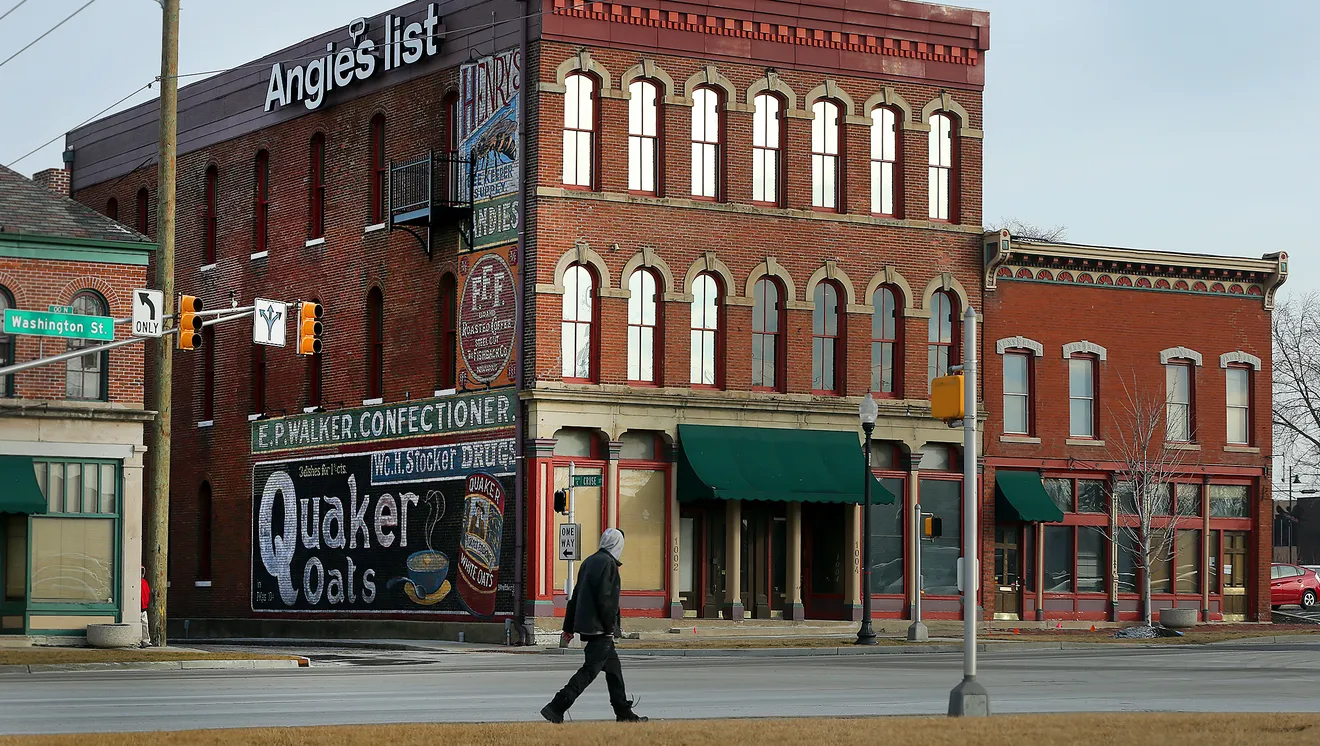
Ball State moves into Angie’s List campus
Ball State University’s master of architecture and master of urban design programs locates at the Angie’s List campus to allow for the extra space needed for lectures, community meetings, collaborations, and future growth.
Pictured: Angie’s List building, 2017
Credit: Matt Kryger, IndyStar View Source
Richard Lugar dies
Lugar serves eight years as mayor of Indianapolis (1968-1976), during which the city-county consolidation—Unigov—was adopted (1970). He then represents Indiana for 36 years as a U.S. senator, becoming the longest-serving senator in the state’s history. He makes his reputation working on agriculture issues as well as the control of nuclear, chemical, and biological weapons.
Pictured: Richard Lugar championed Uni-Gov while the mayor of Indianapolis from 1968 to 1975 and later served in the U.S. Senate from 1977 to 2013.
Credit: Kelly Wilkinson/IndyStar, Indianapolis Star via Imagn Content Services, LLC
View Source
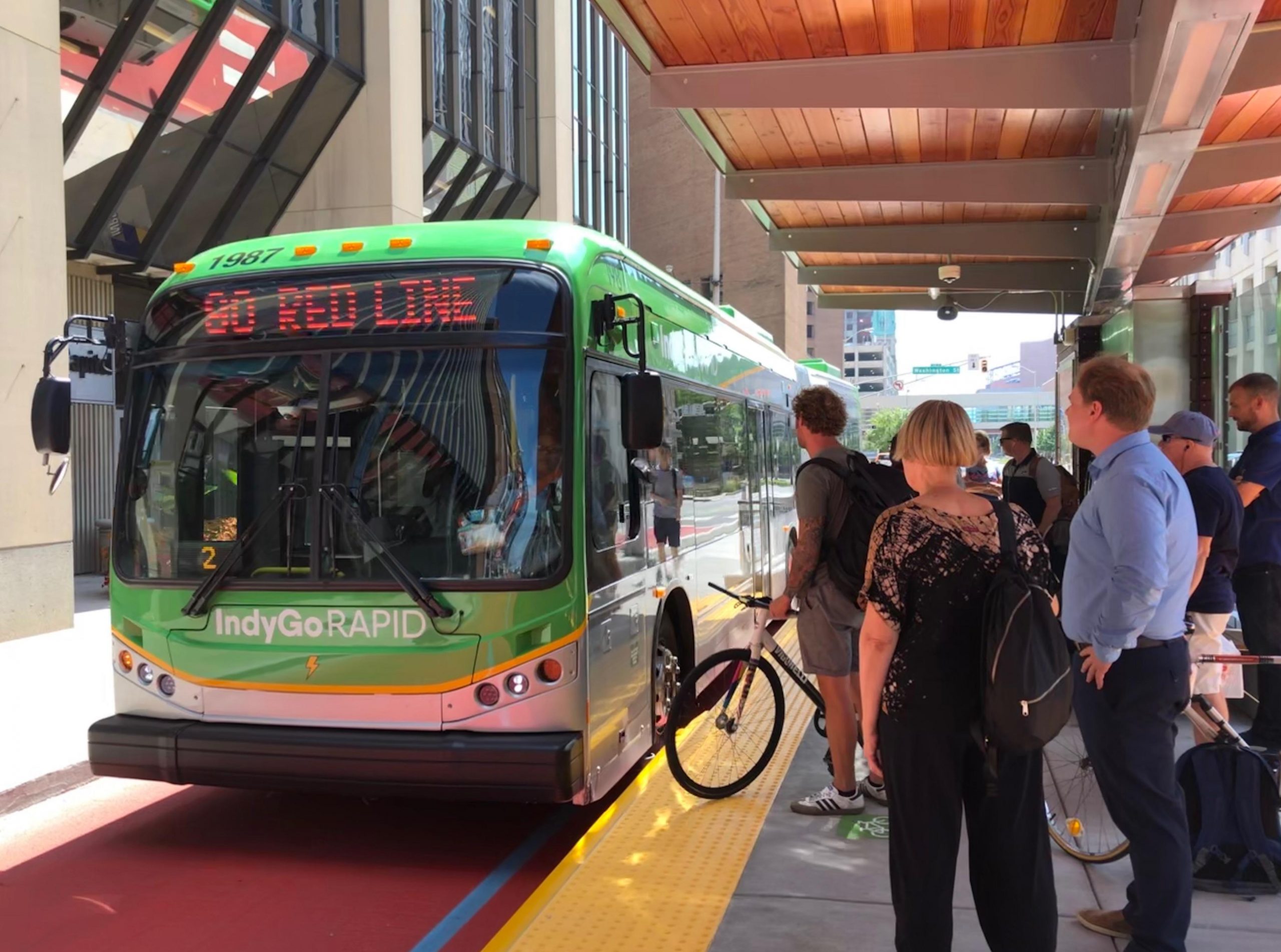
Red Line begins service
Under construction since 2018, service on the Red Line, Indianapolis’ first bus rapid transit system, begins.
Pictured: An IndyGo Red Line on Statehouse Station near the intersection of W. Washington and N. Capitol streets in downtown Indianapolis, 2019
Credit: Momoneymoproblemz, Wikimedia Commons
View Source
Roger Penske purchases the Indianapolis Motor Speedway
The American racing mogul becomes the fourth owner of the Indianapolis Motor Speedway. He acquires its facilities and the IndyCar racing series from longtime owner Hulman and Company.
Pictured: Roger Penske (left) congratulates IndyCar Series driver Helio Castroneves after winning the 105th Running of the Indianapolis 500 at Indianapolis Motor Speedway, May 30, 2021
Credit: Mark J. Rebilas-USA TODAY Sports
View Source
Governor issues lockdown order to quell pandemic
Governor Eric Holcomb issues a stay-at-home order to reduce the spread of the COVID-19 virus. Indiana residents must stay in their homes unless working, care-taking, obtaining necessary supplies, or for health and safety reasons.
Pictured: Gov. Eric Holcomb speaks to the media and others present at the Indiana Statehouse during a press conference to give an update on COVID-19 and its impact on Indiana, March 16, 2020
Credit: Mykal McEldowney/IndyStar, Indianapolis Star via Imagn Content Services, LLC
View Source
Protests erupt in response to the death of George Floyd
Floyd’s murder by an arresting police officer in Milwaukee, WI, results in a series of protests in Indianapolis against racial discrimination. During the first three days, two people are killed, businesses are looted and vandalized, and officers use tear gas, pepper balls, and batons on hundreds of people.
Pictured: Protesters walk the streets during protests downtown, May 2020
Credit: Kelly Wilkinson/IndyStar via Imagn Content Services, LLC
View Source
Indianapolis City-County Council declares racism a public health crisis
After weeks of protests against racial discrimination, the Indianapolis City-County Council votes unanimously to pass a resolution declaring racism a public health crisis in Indianapolis.
Monumental March
Indiana sports celebrities Tamika Catchings, George Hill, LaVall Jordan, and Jeffrey A. Johnson join in on the Monumental March and Voter Registration Rally. The event encourages people to vote and effect change through legislature and public policy.
Pictured: A “Monumental March” and voter registration rally is held in downtown Indianapolis, 2020
Credit: Jenna Watson/IndyStar via Imagn Content Services, LLC
View Source
16 Tech Innovation District opens
City leaders and developers commemorate the opening of 16 Tech, described as a hub of scientific research, technology innovation, and entrepreneurship and the first of its kind in Indianapolis.
Pictured: Community and project leaders cut a ribbon during a ceremony for Innovation Building 1 at the developing 16 Tech Innovation District on the near west side of Indianapolis, August 4, 2020
Credit: Jenna Watson/IndyStar via Imagn Content Services, LLC
View Source
Governor Holcomb announces strategies to improve Indiana racial equity
The strategies include body cameras for state police, a new cabinet position for equity and inclusion in state government, a portal for state-level diversity statistics, a top-down review of the Indiana Law Enforcement Academy, adjusted policies and programs to create more opportunities for people of color, and recruitment of more minority teachers.
IMPD agrees to end use of riot control agents
The police department agrees to no longer use chemical agents such as tear gas and pepper balls on passive resistors as part of settling the suit filed by the ACLU in June.
Pictured: IMPD during Black Lives Matter protests in downtown Indianapolis, 2020
Credit: Michelle Pemberton/IndyStar via Imagn Content Services, LLC
View Source
North Central graduate Ron Klain becomes White House chief of staff
Klain steps into this role under President Joe Biden after serving as his chief of staff when Biden was vice president (2009-2011). He also played this role under Vice President Al Gore (1995-1999).
NCAA Men’s Basketball Tournament begins
With the COVID-19 pandemic, the city hosts all 68 teams in the NCAA Division I tournament in a “bubble” environment and in a variety of venues—a first in NCAA history. Baylor and Gonzaga play in the final game at Lucas Oil Stadium on April 5. Baylor wins, 86-70.
Police reform bill is passed
House Bill 1006 is signed into law by Gov. Eric Holcomb after receiving unanimous support. It requires de-escalation training, establishes a procedure to decertify an officer who commits misconduct, prohibits chokeholds under certain circumstances, criminalizes an officer turning off a body camera, and requires police agencies to request a prospective officer’s employment record from previous employers.
Mass shooting at Fedex facility
A 19-year-old gunman kills eight people and injures several more at the FedEx Ground Plainfield Operations Center near the airport. The gunman takes his own life in the midst of the shooting.
Pictured: Comfort dogs greet attendees of a vigil held for the eight people killed in a mass shooting at the FedEx Ground Plainfield Operations Center, 2021
Credit: Jenna Watson/IndyStar via Imagn Content Services, LLC
View Source
Indianapolis Star wins Pulitzer Prize
The Star wins the Pulitzer for its investigation into police dog bites. The story reveals that the Indianapolis Metropolitan Police Department has had the highest incidence of dog bites among K9 departments in the 20 largest cities in the U.S.
Pictured: Front page of the Indy Star announcing Pulitzer Prize, 2021
Credit: IndyStar View Source
Assessment and Intervention Center becomes first city-owned building to receive LEED certification
The newly built Assessment and Intervention Center on the Community Justice Campus receives a Silver LEED designation. There are nearly 300 privately owned LEED-certified buildings throughout the city as well.
Pictured: The new Assessment and Intervention Center on the Community Justice Campus opened Dec. 1, 2020
Credit: Kelly Wilkinson/IndyStar via Imagn Content Services, LLC
View Source
Bankers Life Fieldhouse renamed Gainbridge Fieldhouse
Pacers officials, along with Mayor Joe Hogsett and Gov. Eric Holcomb, announce the naming rights deal. Gainbridge, an Indianapolis-based online financial services platform, also serves as presenting sponsor of the Indianapolis 500 beginning in January 2019.
Encyclopedia of Indianapolis website launches
A legacy project of the Indianapolis Bicentennial Commission, the digital Encyclopedia of Indianapolis updates and expands upon the original 1994 Encyclopedia of Indianapolis, adding new content to reflect developments in the culture and landscape of Indianapolis since 1994.
Pictured: Staff and volunteers of the Digital Encyclopedia celebrating the launch of the website, 2021
Credit: Beth Van Allen
Fire breaks out at Walmart Fulfillment Center
A large fire broke out at a 1.2 million square foot Walmart Fulfillment Center in Plainfield. Around 1,000 employees were inside at the time, but none were injured. It took over two days and 350 firefighters to fully contain the fire.
Pictured: A massive fire burns inside a Walmart fulfillment center in Plainfield, 2022
Credit: Indianapolis Star View Source
Local student is named National Youth Poet Laureate
Alyssa Gaines, a Park Tudor School graduate and the inaugural 2019 Youth Poet Laureate of Indianapolis, is announced as the National Youth Poet Laureate.
Pictured: Alyssa Gaines, 2022
Credit: Kelly Wilkinson/IndyStar / USA TODAY NETWORK
View Source
Emmis Communications sale of all Indianapolis-based radio stations
In the face of a shrinking radio market, Emmis Communications announces the sale of its Indianapolis radio stations–WIBC, The Fan (93.5 FM and 107.5 FM), B105 (WYXB 105.7 FM), and HANK FM (97.1 FM), to Maryland-based Urban One.
IUPUI announces split
IU and Purdue board of trustees announces that IUPUI will be split into two separate academic institutions. IU will take control over most of the existing campus, and it will become known as Indiana University Indianapolis.
Islamic Life Center breaks ground on new facility in Carmel
The Islamic Life Center, near West 141st Street and Shelborne Road, is the city’s first mosque. The Al Salam Foundation began the process to build the center in 2018. They were met with opposition from Carmel residents despite having the support of the city and religious leaders.
Pictured: People gather at a ground breaking ceremony for the Islamic Life Center, 2022
Credit: Grace Hollars/IndyStar / USA TODAY NETWORK
View Source
Emmis sells Indianapolis Monthly magazine
The magazine was purchased by Emmis in 1988. After over 30 years of ownership, Emmis sells Indianapolis Monthly to Hour Media Group LLC, a publisher of city and regional magazines in the United States.
Pictured: Indianapolis Monthly magazine, 2021
Credit: Indianapolis Monthly
Lilly becomes world’s most valuable drugmaker
Eli Lilly and Co.’s market capitalization, the total value of a company’s outstanding shares of stock, reaches $412.2 billion. It surpasses the larger drugmakers Johnson & Johnson and Pfizer.
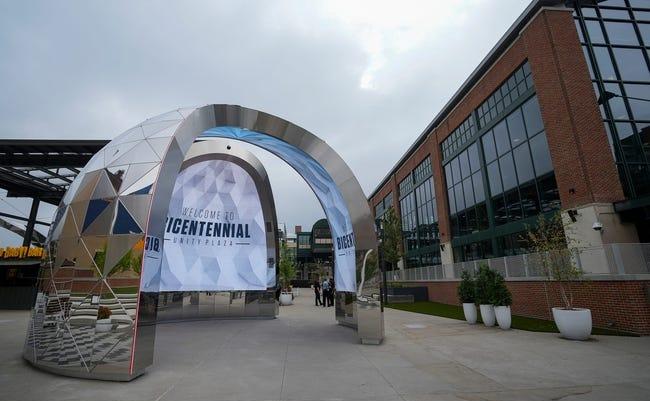
Bicentennial Unity Plaza opens at Gainbridge Fieldhouse
The plaza features public art, a covered basketball court, which can be transformed into an ice-skating rink during winter months, and open spaces for community programming.
Pictured: “Sphere,” an interactive video sculpture designed by Herman Mejia, at Bicentennial Unity Plaza, 2023
Credit: Jenna Watson/IndyStar / USA TODAY NETWORK
View Source
Indiana Republican Party elects first woman chair
The Indiana Republican Party elects political consultant Anne Hathaway as chair, making her the first woman in state party history to fill the role.
Pictured: Anne Hathaway, ca. 2010s
Credit: Indiana GOP
View Source
Zoo announces groundbreaking elephant birth
The birth of the male calf is the first artificially inseminated elephant born to a mother also conceived through the same procedure.
Pictured: One-month-old male elephant calf, new to first-time mother, African elephant Zaraha, 2023
Credit: Kelly Wilkinson/IndyStar
View Source

First woman to serve as CEO of Indiana Chamber of Commerce
Vanessa Green Sinders, who runs her own consulting business providing strategic advice, project and crisis management, and leadership coaching services, is chosen as the next president and CEO of the Indiana Chamber of Commerce.
Pictured: Vanessa Green Sinders, n.d.
Credit: Josh Humble/Courtesy of the Indiana Chamber of Commerce
View Source
First African American mayor in Marion County
Deb Whitfield, a former Lawrence Common Council member and officer in the Indianapolis Metropolitan Police Department, wins the Lawrence mayoral election against Republican candidate David C. Hoffmann to become the first Black mayor in Marion County.
Pictured: Lawrence Mayor, Deb Whitfield, 2023
Credit: Michelle Pemberton, IndyStar
View Source
Mayor Joe Hogsett wins third term
Hogsett’s win to a third term solidifies Marion County as a Democratic Party stronghold. The mayoral race is the costliest in the history of the city, with a total of about $16 million spent on the campaign between Hogsett and his Republican opponent businessman Jefferson Shreve.
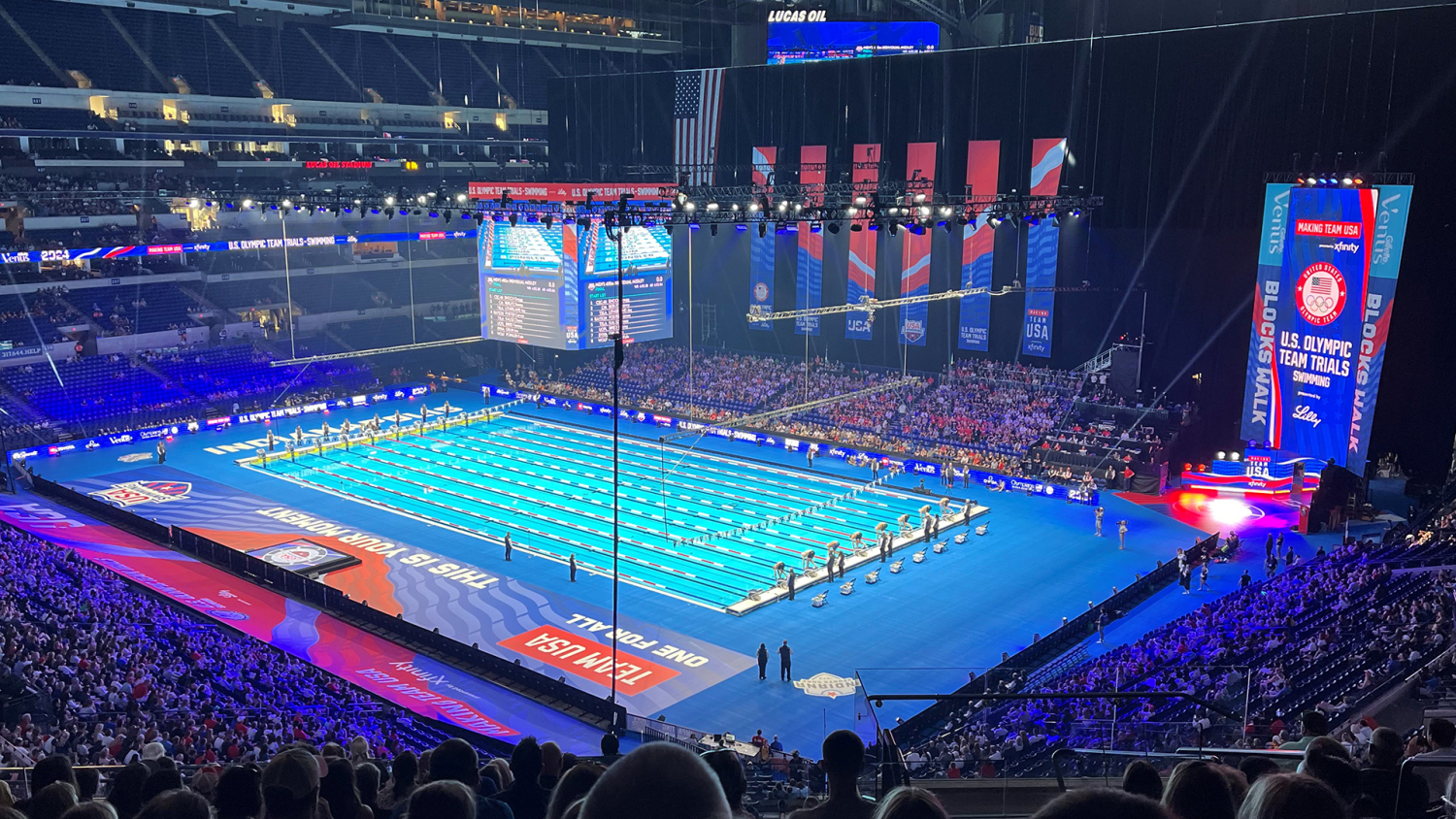
Indianapolis hosts U.S. Olympic Team Swimming Trials
The 2024 U.S. Olympic Team Trials in Swimming is held from June 15 – June 23 at Lucas Oil Stadium. The event marks the 100-year anniversary since Indianapolis hosted the Olympic Swimming Trials for the 1924 Olympic Games in Paris.
Pictured: U.S. Olympic swimming trials at Lucas Oil Stadium, 2024
Credit: Kyle Travers WFYI
View Source
Jim Morris, civic and Pacers leader, dies
Jim Morris is known locally for helping shape Indianapolis development and culture through his work with Senator Richard Lugar, his role as president of the Lilly Endowment, and his role as vice chairman of Pacers. Globally, Morris worked for the UN World Food Programme where he helped address humanitarian issues in South Africa and led the largest food operation in the Programme’s history by bringing food to millions of Iraqis after the U.S.-led invasion of the country.
Pictured: Jim Morris, n.d.
Credit: Indiana University via WFYI
View Source

Help improve this entry
Contribute information, offer corrections, suggest images.
You can also recommend new entries related to this topic.