←ⓘ Jump to a preselected date. Or, scroll down to view more.
Five enslaved Africans brought to settlement in Indiana
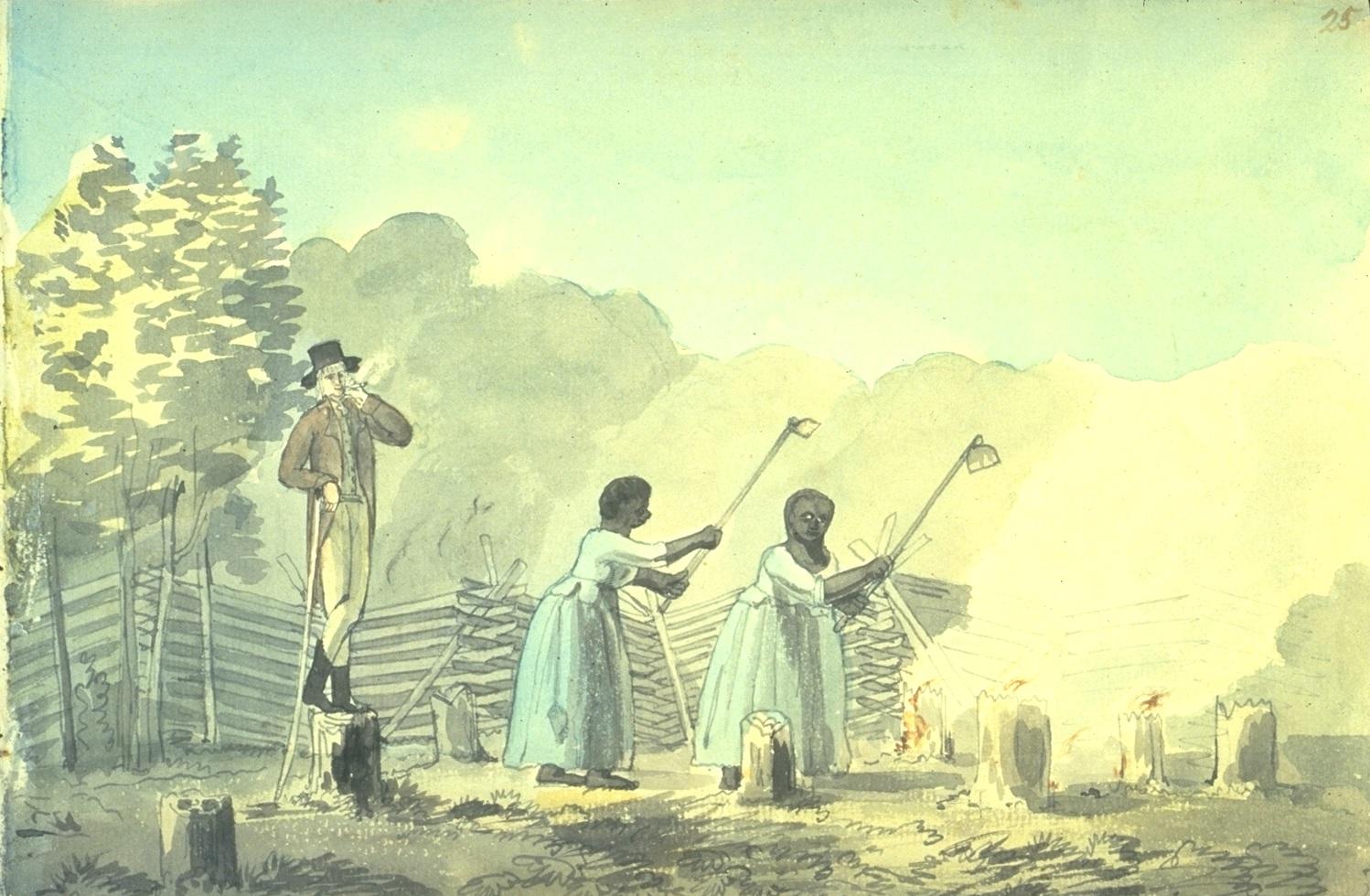
The first Africans arrive in a French settlement in Vincennes, Indiana, where they hunt and farm tobacco and wheat for the population.
Pictured: A white overseer supervises two enslaved women working in a tobacco field, 1798
Credit: Public domain via Slavery Images: A Visual Record of the African Slave Trade and Slave Life in the Early African Diaspora.
View Source
Northwest Ordinance forbids slavery in any territory or state in the Northwest Territory
The territory, which was ceded to the United States by Great Britain in the Peace of Paris, 1783, ending the War for Independence, includes the future state of Indiana.
Indiana territory adopts new law permitting indentured servitude
The law allows slave holders to bring adult slaves owned or purchased outside the territory into Indiana and keep them bound into service through indentured servitude.
Indiana Constitution prohibits slavery
Indiana’s 1816 Constitution prohibits slavery and indentured servitude. These rights are often denied in practice to African Americans and Native Americans.
State v. Lasselle holds that slavery forbidden in Indiana
Indiana Supreme Court rules in State v. Lasselle that “slavery can have no existence” in Indiana. This decision establishes the 1816 Indiana Constitution as the authority for decisions in Indiana courts regarding slavery and involuntary servitude.
Mary Bateman Clark’s case helps end indentured servitude in Indiana
Mary Bateman Clark sues General W. Johnston to end her indentured servitude in an action filed by Attorney Amory Kinney in Vincennes, Indiana. She wins the case on appeal to the Indiana Supreme Court, setting a precedent for future cases and contributing to the end of indentured servitude in Indiana.
Indiana adopts a fugitive slave law
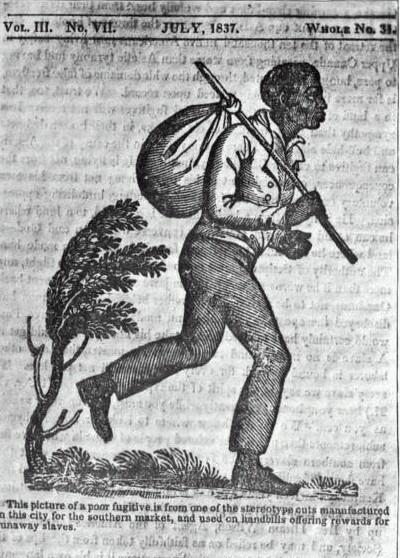
The law outlines the procedure slaveholders and Indiana law officials must follow in claiming “property.” All that is required to arrest alleged fugitives is a warrant, which can be obtained from a clerk at any circuit court in the state.
Pictured: A common image used in runaway slave ads, ca. 1830s
Credit: Public domain via Wikimedia Commons
View Source
Resolution passes for the emancipation of enslaved persons in Indiana
The Indiana General Assembly approves a joint resolution that provides for the gradual emancipation of enslaved persons and foreign colonization.
Indiana Colonization Society established in Indianapolis
Prominent civic leaders, such as Indiana Supreme Court judges Jesse L. Holman and Isaac Blackford and attorney Calvin Fletcher, found the organization that aims to colonize free African Americans in Liberia, but few local African Americans accept the offer to relocate. The group becomes inactive by 1839.
Landmark decision against slaveholder’s right to transport enslaved peoples through a free state
Marion County circuit court judge Bethuel F. Morris rules that an enslaved woman and her three children passing through Indiana with their owner are free because slavery is prohibited by the state constitution. The case is one of the first such decisions in the nation, and it is highly controversial in Indiana.
Roberts Settlement established
Hansel Roberts, Elijah Roberts, and Micajah Walden purchase land in Hamilton County near Quakers and other tolerant whites to establish an independent community of African Americans. The settlement grows to include 300 residents and to encompass over 1,500 acres at its peak in the 1870s.
African Methodist Episcopal congregation organizes
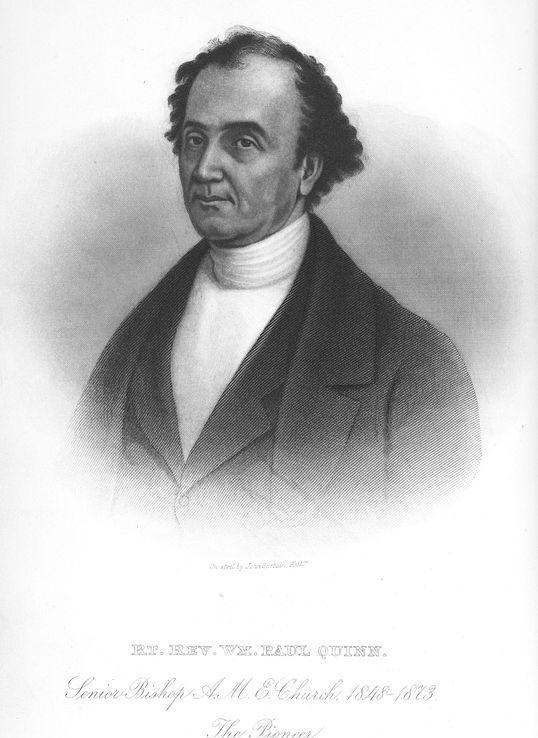
A group of Black Methodists in Indianapolis forms Bethel AME (African Methodist Episcopal) Church. A founder of the denomination, William Paul Quinn serves Indianapolis and other AME stations as pastor. A church building is constructed on Georgia Street, between Senate Avenue and the Central Canal in 1841.
Pictured: William Paul Quinn, n.d.
Credit: Public domain via Wikimedia Commons
View Source
Court defends the right of African American to defend his property
James Overall, an Indianapolis African American, shoots a white gang member while defending his home and family from attack. Seeking legal protection from further attack, a judge affirms Overall’s “natural” right to defend his family and property.
Law prohibiting interracial marriage enacted
The marriage of an Indianapolis couple, a white woman and a mixed-race Black man, sparks outrage and leads to the addition of a state law prohibiting interracial marriage.
Indiana State Convention of Colored Citizens
Prominent Blacks, including J. B. Britton, Turner Roberts, and James Overall, hold the convention to declare opposition to Liberia colonization efforts. It is held at Bethel AME Church.
Lynching of John Tucker
Three drunk white men murder Tucker while walking home after attending an Independence Day celebration at Military Park. Two of the men are arrested, and one is convicted of manslaughter.
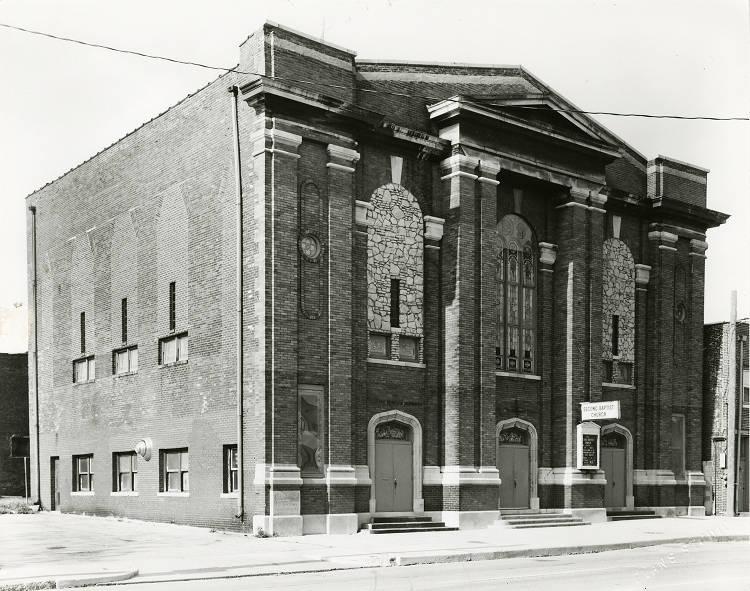
Second Baptist Church established
African American Baptists form a congregation of their own, the Second Baptist Church. Its structure on Missouri Street between New York and Ohio streets becomes a target for arson when racially charged violence erupts during the 1851 Indiana Constitutional Convention. The congregation rebuilds at the same location in 1853.
Pictured: Second Baptist Church’s third building, built around 1870
Credit: Indiana Historical Society
View Source
State Convention of the People of Color
Held at Bethel AME Church, delegates declare that they are entitled to all rights and privileges that other citizens enjoy in opposition to Article 13 of the proposed new state constitution. The article prevents migration of African Americans into the state.
Voters approve the new Indiana Constitution of 1851
Hoosiers statewide overwhelmingly vote for the new constitution, including Article 13 which prevents the migration of African Americans into the state. The constitution becomes effective on November 1, 1851.
Trial of John Freeman
Reverend Pleasant Ellington wrongfully accuses John Freeman of being his runaway enslaved person. Leading citizens come to Freeman’s defense, but he spends nine weeks in jail before the suit is dismissed when Ellington’s evidence proves false.
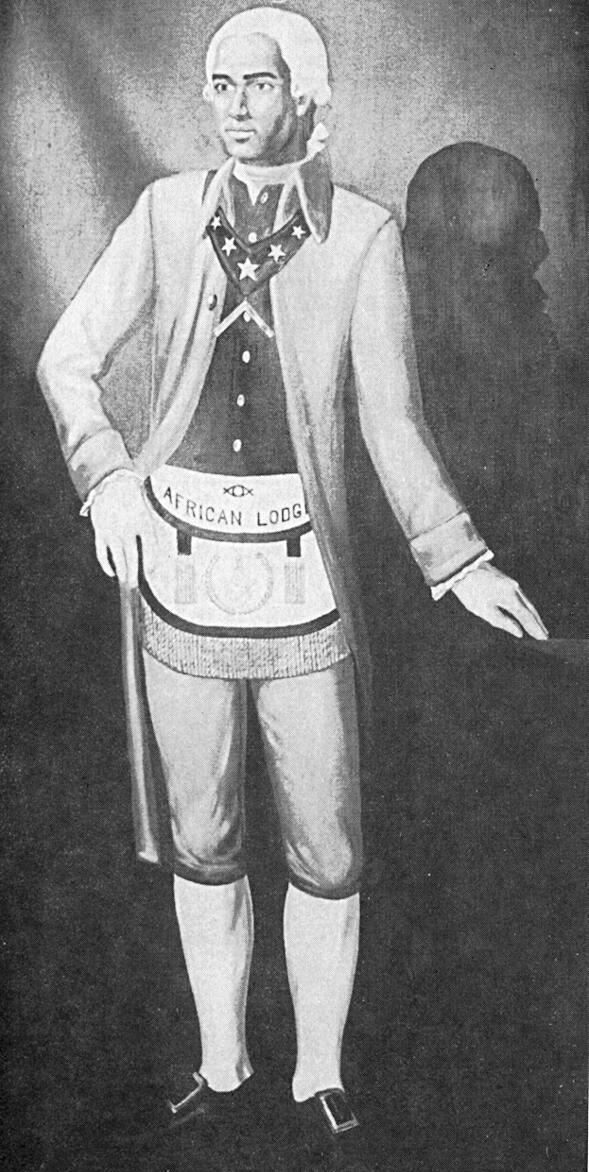
Prince Grand Hall of Indiana organizes
Prince Grand Hall of Indiana, an African American fraternal group, organizes in Indianapolis. Membership doubles between 1857 and 1865.
Pictured: Portrait of Prince Hall, n.d.
Credit: Public domain via Wikimedia Commons View Source
First school for African American children opens
Indianapolis’s public schools do not allow African American children to attend. Bethel African Methodist Episcopal Church founds the city’s first formal school for Black children.
State Convention of the Colored Men of Indiana
Reverend E. Weaver of Bethel AME Church presides over the convention. Delegates petition the Indiana General Assembly for passage of a law to make African Americans competent witnesses in courts of law.
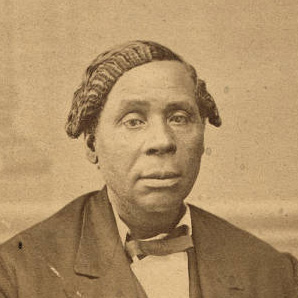
African American church burned by arsonists
Bethel AME, led by pastor Willis R. Revels, burns to the ground. The fire was intentionally set because of the church’s role in the Underground Railroad. The church contracts to build a new brick church at 414 West Vermont Street in 1867-1869.
Pictured: Rev. Willis R. Revels, ca. 1880
Credit: Indiana Historical SocietyView Source
First Black business established
Nancy Bushrod and Samuel G. Smothers establish a grocery store, making them one of the earliest Black business owners in Indianapolis.
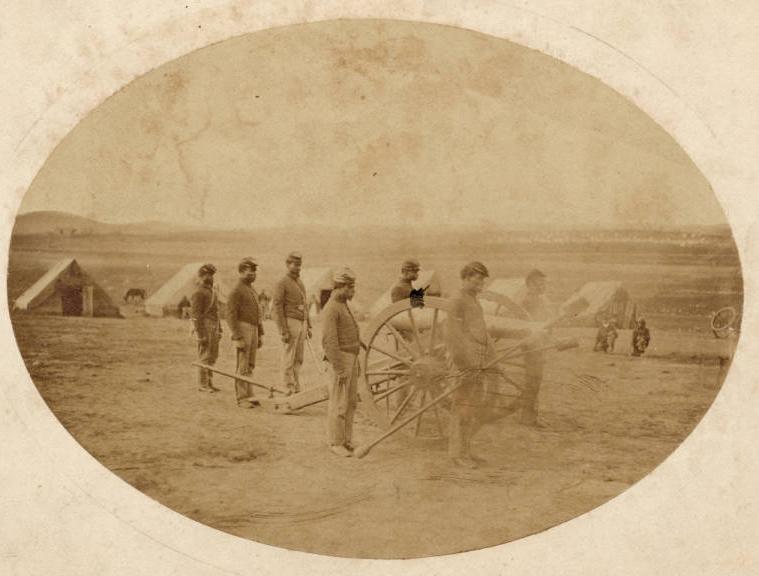
Twenty-eighth Regiment U.S. Colored Troops musters into the U.S. Army
Indiana’s only Black Civil War regiment organizes and trains at Camp Frémont, near Fountain Square in December 1863, before official mustering. In 1864-1865, its troops engage in the Siege of Petersburg, necessary to take the Confederate capital, Richmond, Virginia.
Pictured: African American soldiers from an unknown regiment, ca. 1864-1865
Credit: Indiana Historical Society View Source
Allen Chapel African American Methodist Episcopal Church forms
The church begins as a Sunday School to serve the city’s east side. Samuel A. Elbert, the city’s first Black physician (1871), also establishes a day school for Blacks who live on the east side as part of the church’s mission.
State Convention of the Colored People of Indiana
Around 150 delegates meet at the Bethel AME Church to call the U.S. and Indiana governments to denounce the “unwholesome and tyrannical laws” that have deprived Blacks from the rights guaranteed to other citizens.
Thirteenth Amendment ratified
The amendment to the United States Constitution abolishes slavery and involuntary servitude, except as punishment for a crime.
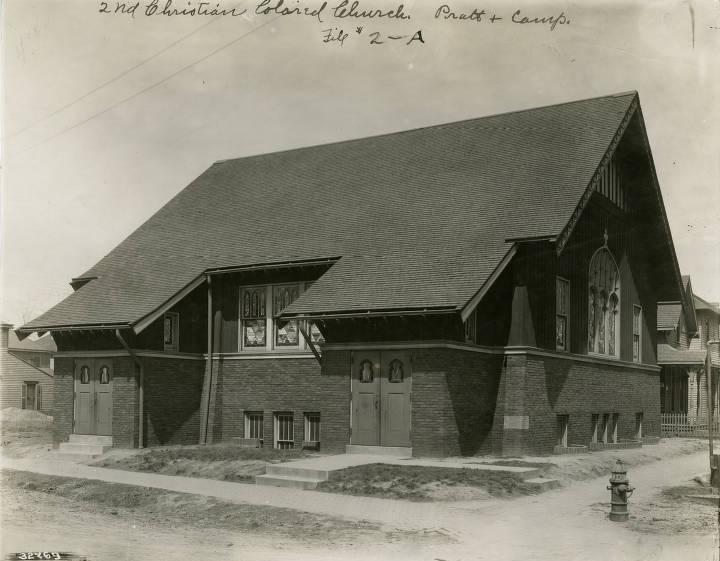
African American Christian Church established
The congregation receives its first full-time minister in 1867 and later becomes known as Second Christian Church, the city’s first African American Christian Church (Disciples of Christ) congregation. It changes its name to Light of the World Christian Church in 1984.
Pictured: Second Christian Church, 1913
Credit: Bass Photo Co Collection, Indiana Historical Society
View Source
Grand Equal Rights League convenes
About 100 delegates call on the Indiana General Assembly to pass legislation to allow African Americans the right to vote.
The Indiana General Assembly ratifies the Fourteenth Amendment
Indiana becomes the 16th state to ratify the amendment that provides full citizenship to all persons born or naturalized in the U.S., including former enslaved persons, and guarantees them “equal protection under the law.”
Mt. Zion Baptist congregation established
A small group of former enslaved and free Blacks form Mt. Zion Baptist Church. They meet in a tool shed donated by banker and landowner Stoughton Fletcher Sr. The congregation moves to 3500 Graceland Ave in 1960, where under the leadership of Reverend R. T. Andrews, it responds to the needs of its community, developing a geriatric center, senior apartment complexes, and a Well Baby clinic.
Baptist Minister Alliance forms
African American Baptist ministers join with the mission to promote their work across the area and to create opportunities for pastoral professional development. It continues to carry out this mission in the 21st century.
Indiana adopts separate but equal public schools for African American children
Indiana adopts separate but equal public schools for African American children.
Indiana General Assembly ratifies 15th amendment
Indiana becomes the 14th state to ratify the amendment that allows all men regardless of “race, color, or previous condition of servitude” to vote.
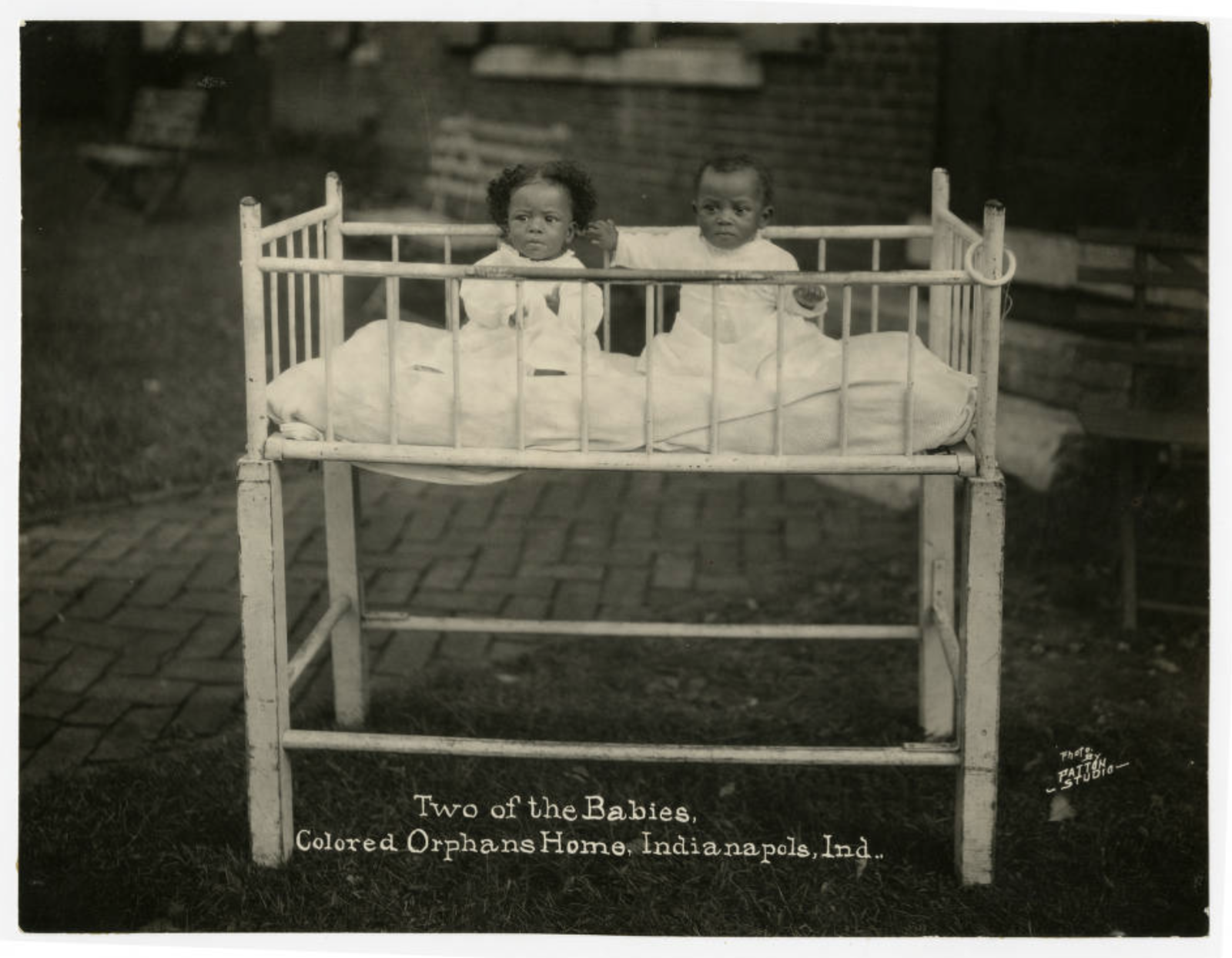
Quakers establish Indianapolis Asylum for Friendless Colored Children
The local Orthodox Friends Meeting, the main branch of the Society of Friends (Quakers), founds the institution which is the only orphanage in the state and one of only a handful in the country to care for African American children.
Pictured: Infants in a crib outside the Indianapolis Asylum for Friendless Colored Children, ca. 1923
Credit: General Photograph Collection, Rare Books and Manuscripts, Indiana State Library View Source
Samuel A. Elbert becomes the first African American in Indiana to receive a medical degree
Admitted to Indiana Medical College in 1869, Elbert receives his degree in 1871 and joins the Indianapolis Board of Health the following year.
Jones Tabernacle AME Zion Church forms
The congregation constructs a building at the corner of North and Blackford streets in 1882 and then moves to Michigan and Blackford in 1920. The church is important to the life of the community surrounding Indiana Avenue and becomes one of the largest congregations in the city.
Cory v. Carter forbids Black students from attending white schools
The Indiana Supreme Court upholds the 1869 school law, strictly forbidding Black and white students from attending the same schools.
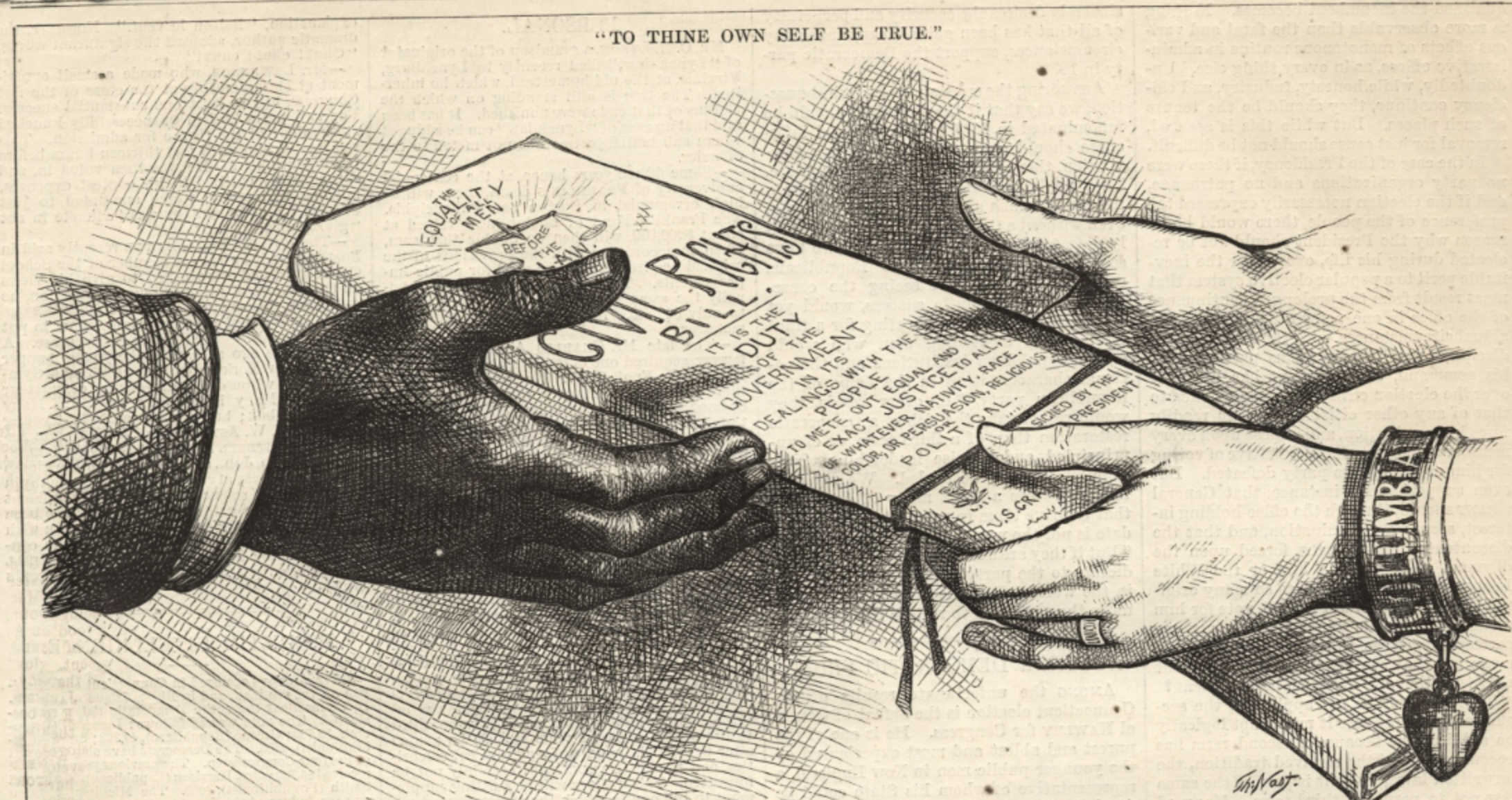
Federal Civil Rights Act guarantees full and equal enjoyment
The Civil Rights Act of 1875 affirms the “equality of all men before the law” and prohibits racial discrimination in public places and facilities such as restaurants and public transportation.
Pictured: Harper’s Weekly celebrated the passage of the Civil Rights Bill of 1875 with a tribute entitled “To Thine Own Self Be True,” 1875
Credit: Harpers Weekly
View Source
First Black student graduates from Shortridge High School
Mary Alice Rann becomes the first of several Black students to graduate from Shortridge prior to the 1927 opening of Crispus Attucks High School.
Grand Body of the Sisters of Charity established
The charity is organized to provide general support to the Black population settling in Indiana from the South after the Civil War. Its work supporting those in need continues until the 1990s.
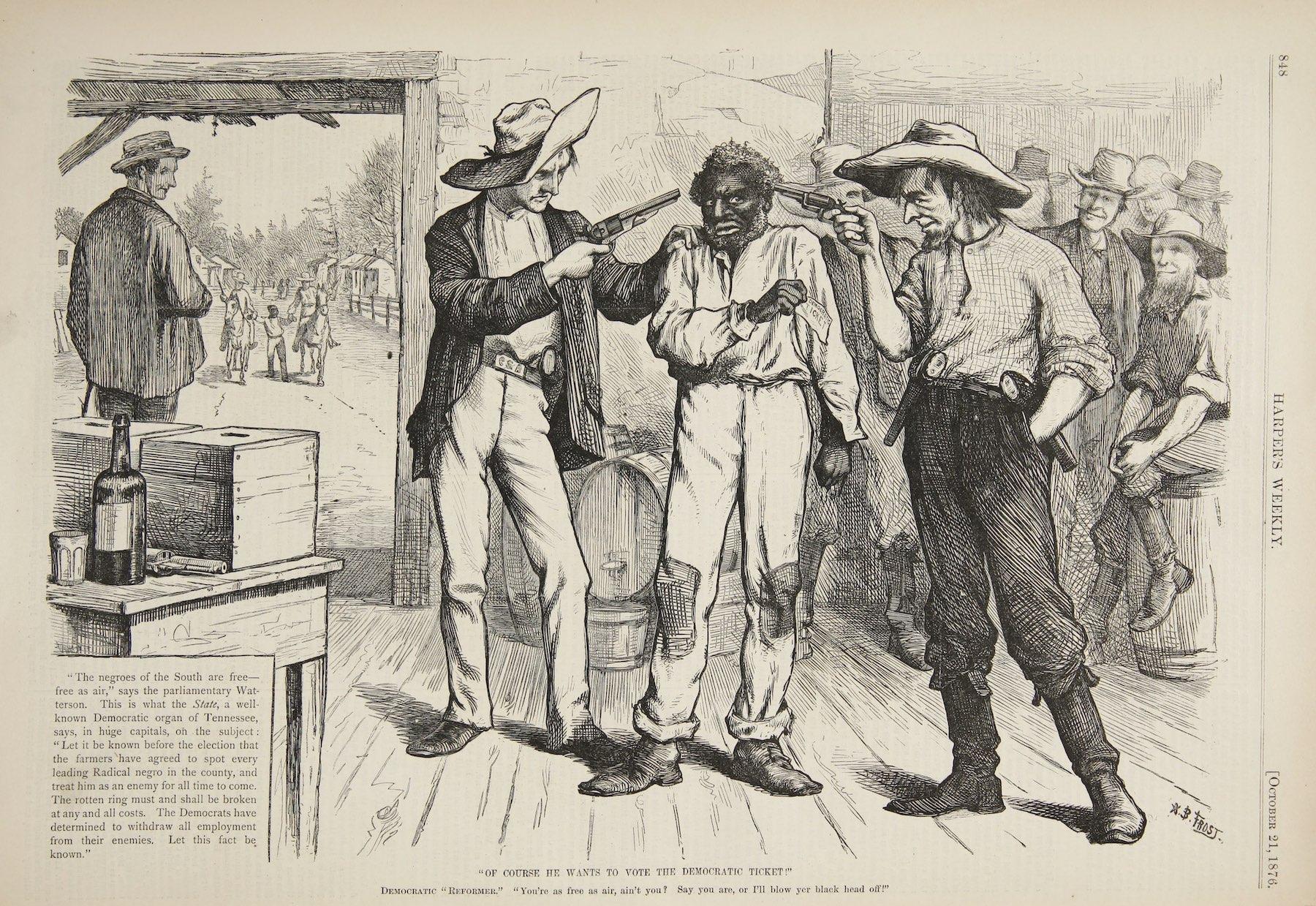
Election Riot
Black citizens are physically intimidated and assaulted by a white mob and rogue police officers trying to suppress the Black vote.
Pictured: Illustration of a Black man being intimidated at the polls, 1876
Credit: Harpers Weekly
View Source
First African American firemen
Chief W. O. Sherwood hires four African Americans to form Hose Company 9, originally located at 31 West Saint Joseph Street. It moves to 441 Indiana Avenue and then, when stations are renumbered in 1922, becomes Station No. 1.
General Assembly passes act for separate schools for African Americans
To clarify the 1869 law, state lawmakers pass a new act that continues to make the organization of segregated schools lawful, but if a township cannot provide the necessary facilities then Black students must attend white schools.
First African American elected to serve on the Indianapolis City Council
Robert Bruce Bagby becomes the first African American to serve on the Indianapolis City Council. He remains on the council until 1879.
Indianapolis Leader begins publication
In August, the Bagby brothers—Benjamin, James, and Robert—establish the Indianapolis Leader, a four-page weekly newspaper for the city’s Black citizens. It is the first African-American paper in Indianapolis.
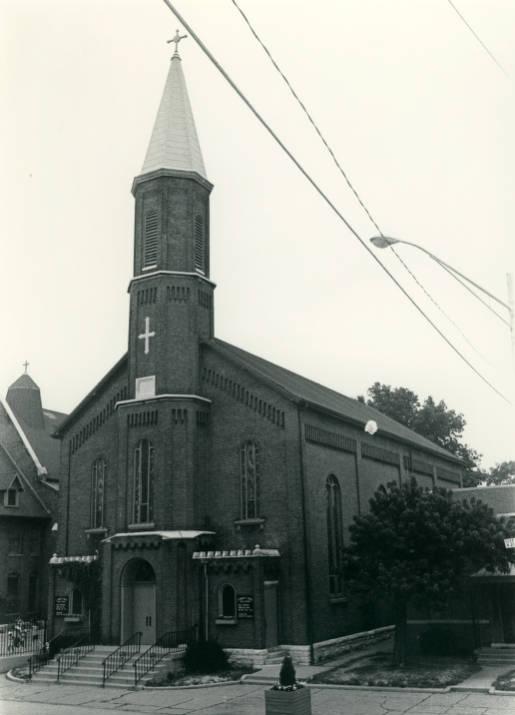
St. Bridget’s Roman Catholic parish opens
Bishop Francis Silas Chatard establishes St. Bridget’s on the near west side. Although founded as an ethnic Irish parish, St. Bridget’s soon serves Black families who live in the area.
Pictured: St. Bridget’s Roman Catholic Church, 1983
Credit: Indiana University Indianapolis
View Source
African American Knights of Labor Union forms in Indianapolis
This nationwide labor union fights for workers’ rights. It is the only union to enlist African Americans and demand equal rights for formerly enslaved people.
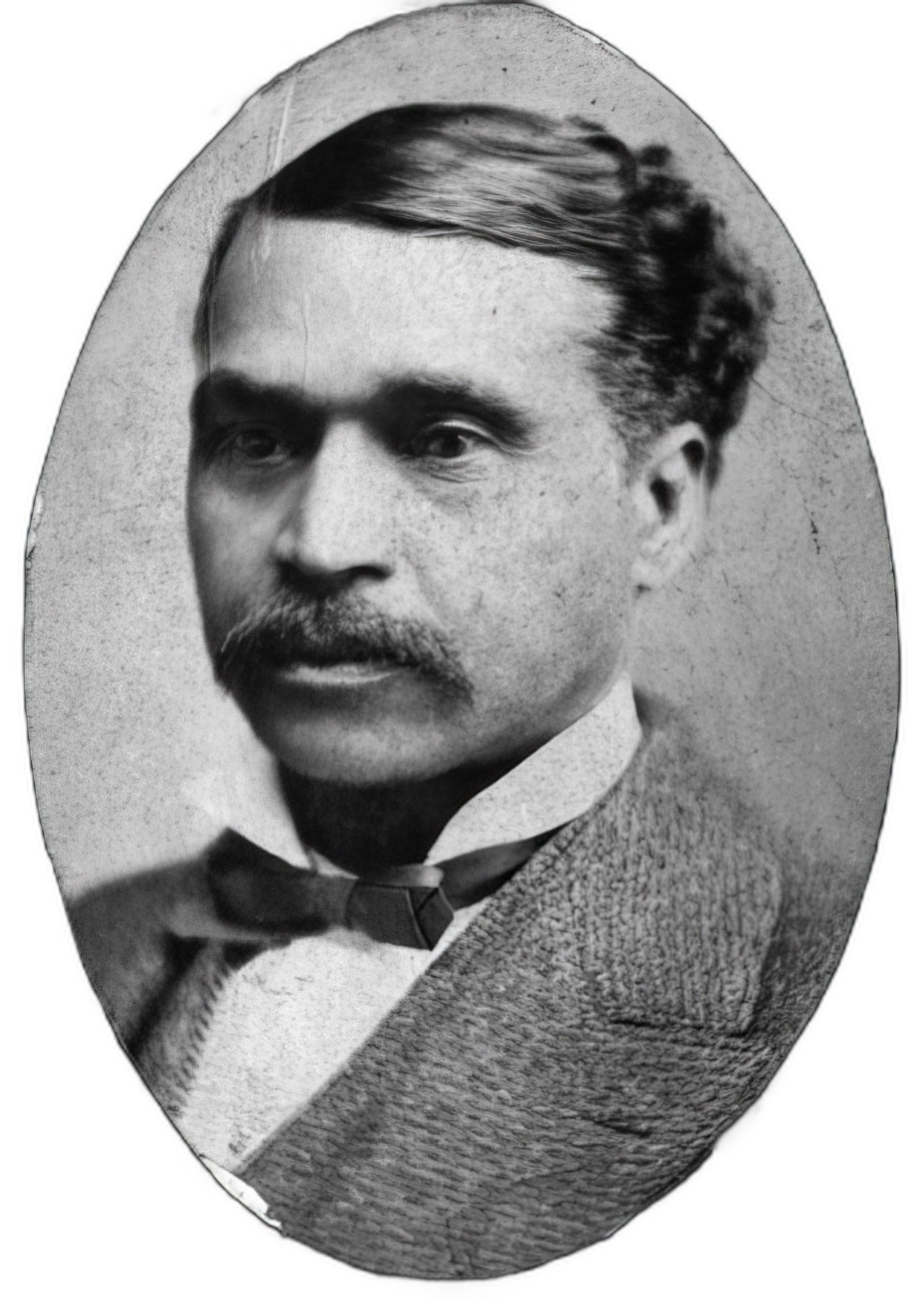
First Black man elected to General Assembly
Known in Indianapolis for his public speaking on civil rights, James S. Hinton is the first Black man elected to represent Marion County in the State House of Representatives.
Pictured: James S. Hinton, n.d.
Credit: Indiana State Library View Source
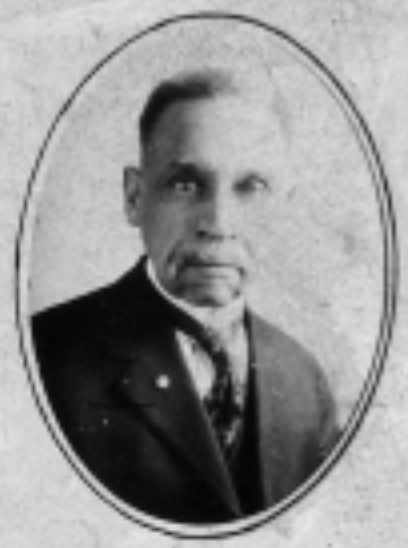
James T. V. Hill becomes the first Black man to earn law degree
Hill is the first Black man to enroll in the Central Law School, a proprietary school organized by former Butler University professors, in 1879. He later establishes himself as the first Black attorney in Marion County and the first Black man to serve on a grand jury in Indiana.
Pictured: James T. V. Hill, 1923
Credit: Indianapolis Recorder Collection, Indiana Historical SocietyView Source
Indianapolis Colored World begins publication
Edward E. Cooper and Edwin F. Horn launch the Democratic newspaper, which covers national and local news and reports on the conditions of African American people nationwide.
Civil Rights Act of 1875 ruled unconstitutional
The United States Supreme Court rules that the act, which forbids discrimination in public spaces, is unconstitutional and not authorized by the 13th or 14th Amendments.
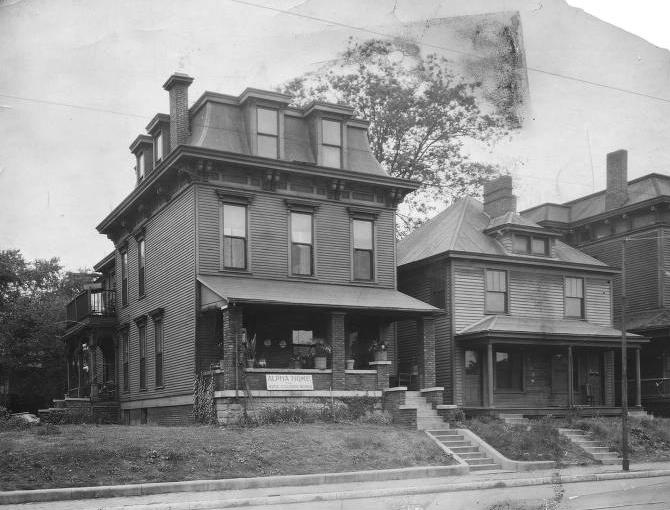
Alpha Home for Aged Colored Women opens
Founded by Eliza Goff, a housekeeper and former enslaved person, the home cares for elderly and infirm African American women with no families or means of caring for themselves.
Pictured: Alpha Home, 1842-1844 N. Senate Ave, ca. 1930
Credit: Indianapolis Recorder Collection, Indiana Historical Society View Source
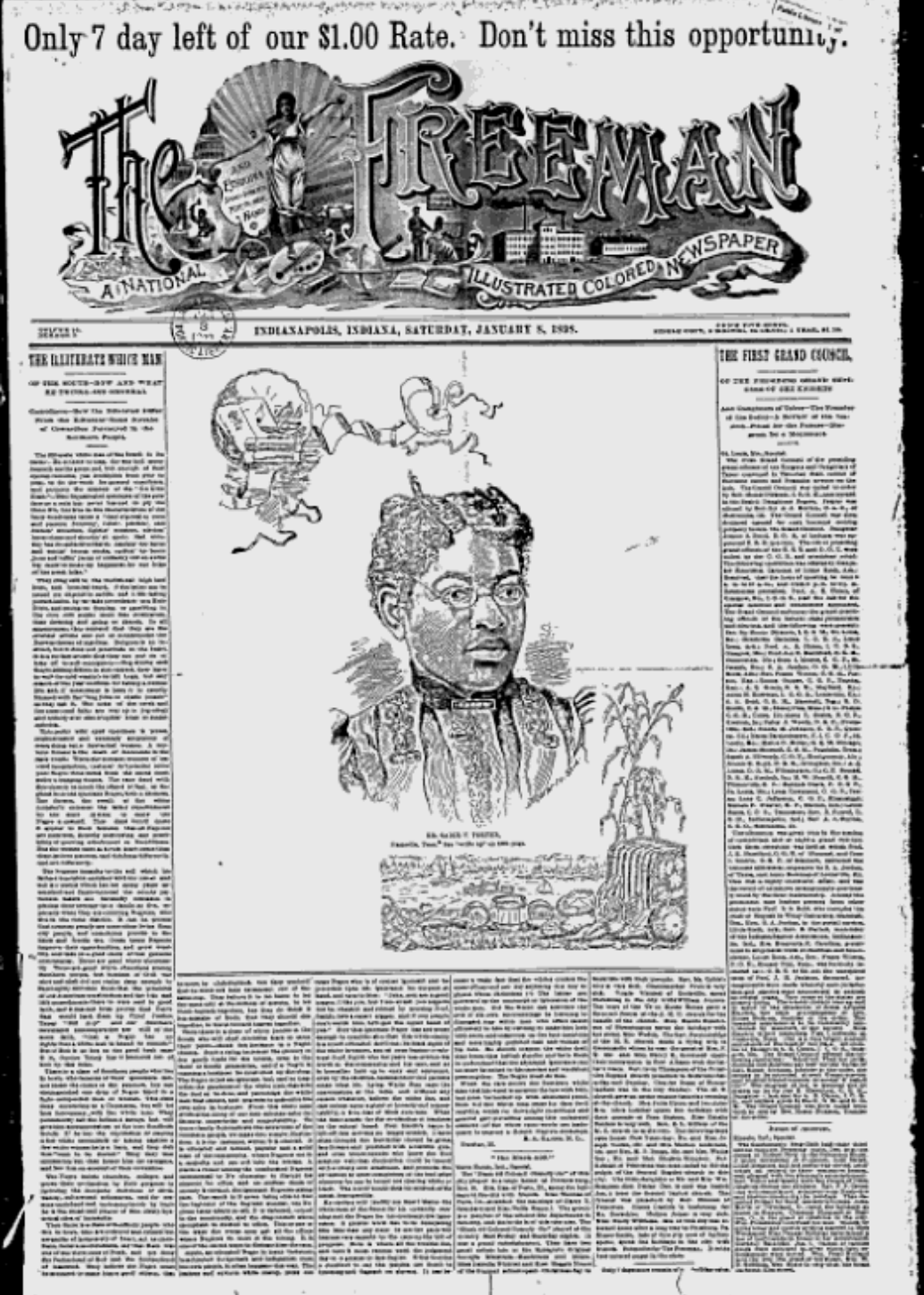
Freeman journal begins publication
Edward E. Cooper, formerly with the Indianapolis World, launches the Freeman, a Democratic-oriented publication, in July 1888. He claims it to be the only illustrated African American journal.
Pictured: The Freeman newspaper header, 1898
Credit: The Freeman
View Source
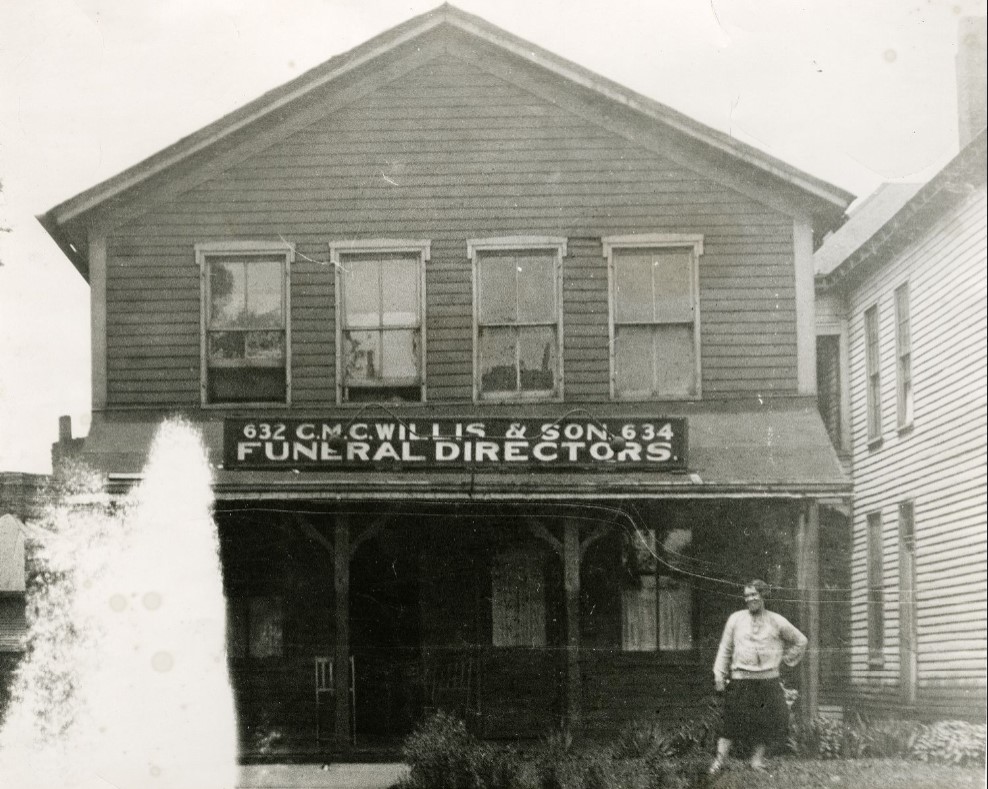
Willis Mortuary established
Cassius M. Clay Willis establishes the first permanent Black funeral home, Willis Mortuary, which remains in business for over a century.
Pictured: C. M. C. Willis & Sons Funeral Directors located at 632-634 N. West Street, ca. 1920
Credit: Indiana Historical Society View Source
St. Bridget’s Catholic Parish opens African American school
Father Daniel Curran, pastor of St. Bridget’s, opens St. Ann’s School, located at 844 Fayette Street, to serve the city’s Catholic Black children. The school remains in operation until 1919 when St. Rita’s Parish opens as the African American Catholic church and establishes its own school.
William D. McCoy named U.S. minister and consul-general to Liberia
President Benjamin Harrison appoints McCoy, an Indianapolis Public School principal, general consul to Liberia. McCoy dies in Monrovia on May 16, 1893.
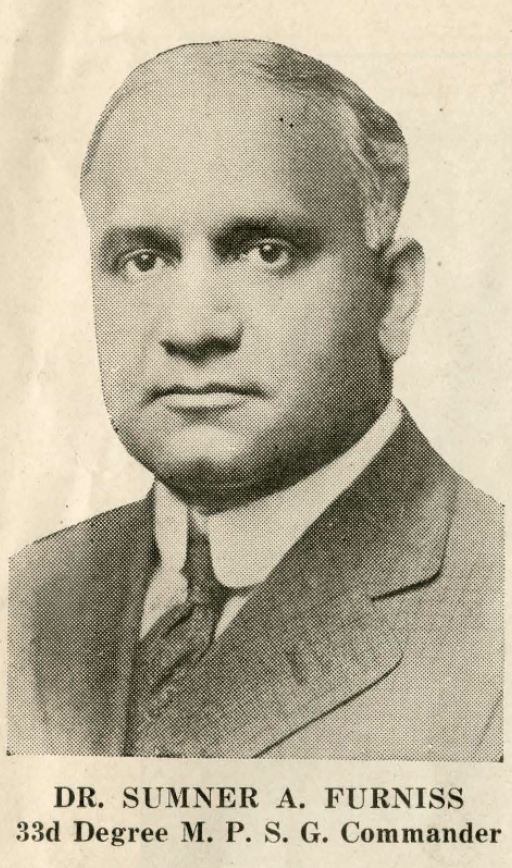
First Black physician at city hospital
Sumner A. Furniss successfully competes for a City Hospital internship, becoming the first African American physician to work at the hospital. He starts his own practice the following year.
Pictured: Dr. Sumner A. Furniss, ca. 1920s
Credit: Indiana Historical Society
View Source
Indianapolis Recorder begins publication
Printshop owner George P. Stewart and attorney William Porter launch the publication as a two-page church directory. In 1897, it is expanded to four pages and adopts the Recorder name.
Plessy v. Ferguson enshrines segregation as lawful
The U.S. Supreme Court rules to uphold a Louisiana state law that allows for “equal but separate accommodations for the white and colored races.” It means that racially segregated facilities do not violate the U.S. Constitution.
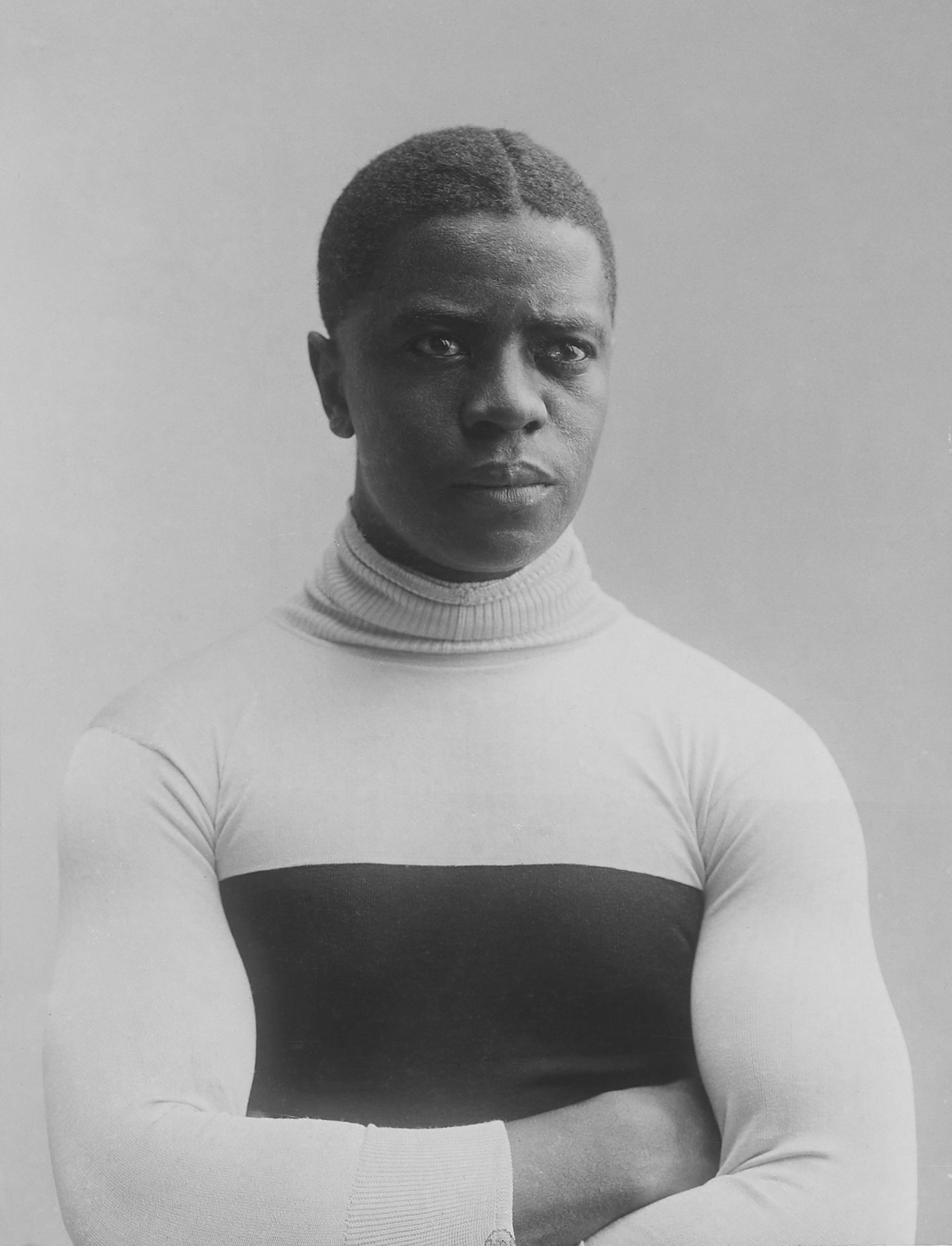
Black cyclist Major Taylor sets records
Taylor sets several unofficial records in August at Indianapolis’ Capital City bike track, which results in numerous death threats. Indianapolis bicycling tracks are subsequently restricted to whites only.
Pictured: Major Taylor, 1906-1907
Credit: Jules Beau, Public domain, via Wikimedia CommonsView Source
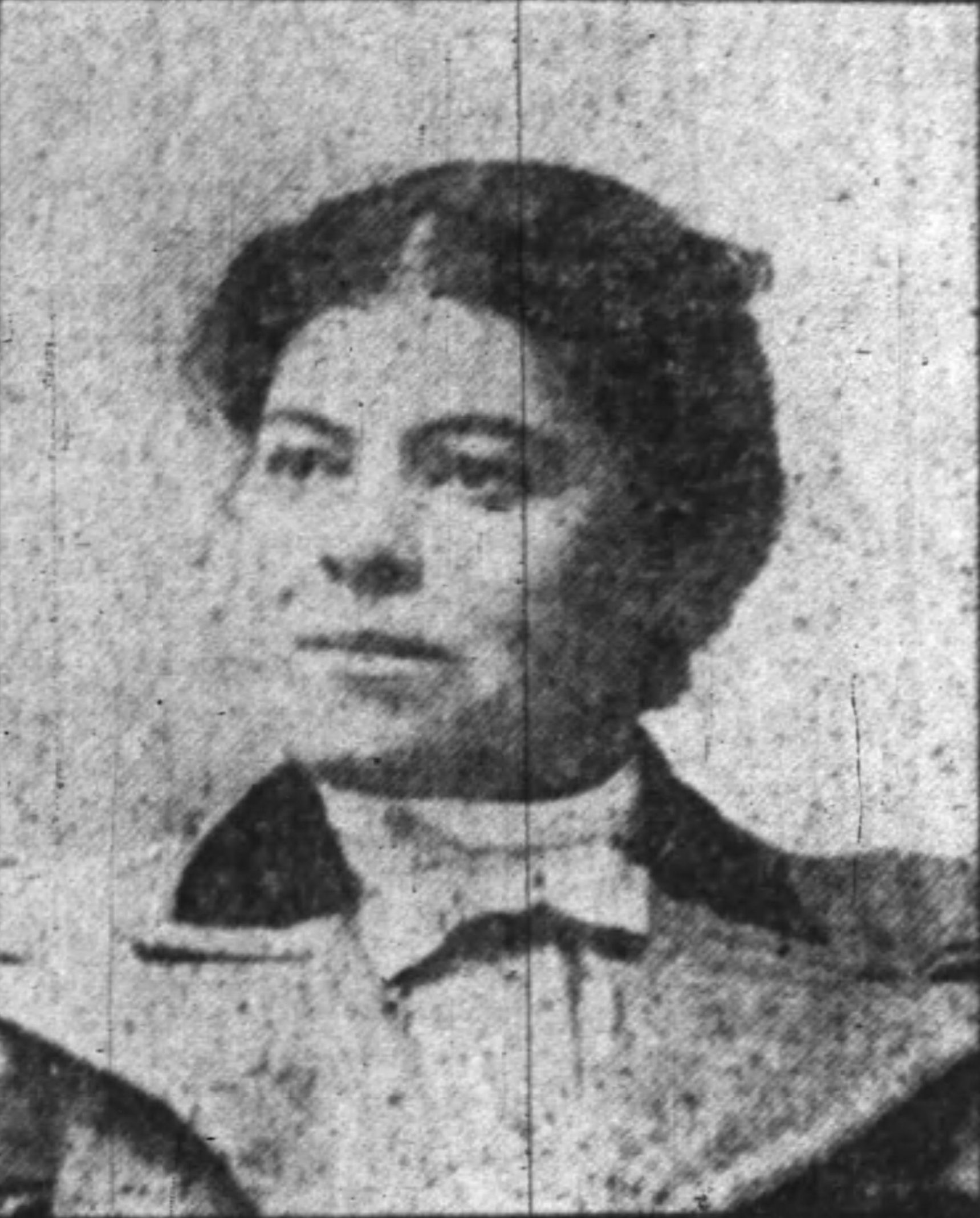
Beulah Wright Porter becomes first woman African American physician
A graduate of the Indiana Medical College, a private proprietary school established in 1869, Porter treats mostly African American women and children. She is instrumental in turning the attention of the Woman’s Improvement Club toward combatting tuberculosis in the African American community.
Pictured: Dr. Beulah W. Porter, 1900
Credit: Indianapolis NewsView Source
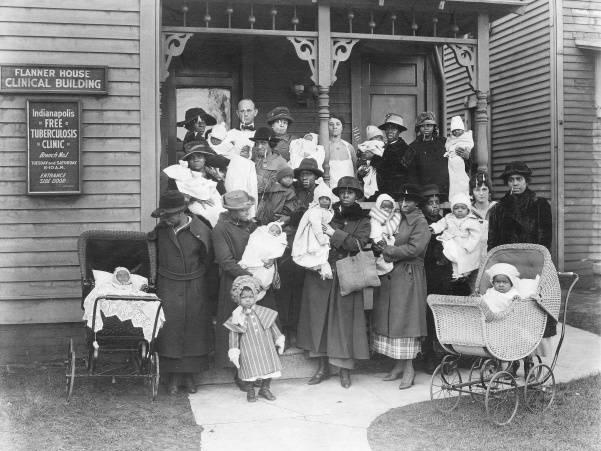
Flanner House established
Frank William Flanner donates a cottage for the creation of the Flanner Guild (later Flanner House), the first settlement house for African Americans in the city.
Pictured: Flanner House Clinical Building, ca. 1920s
Credit: Indiana Historical Society View Source
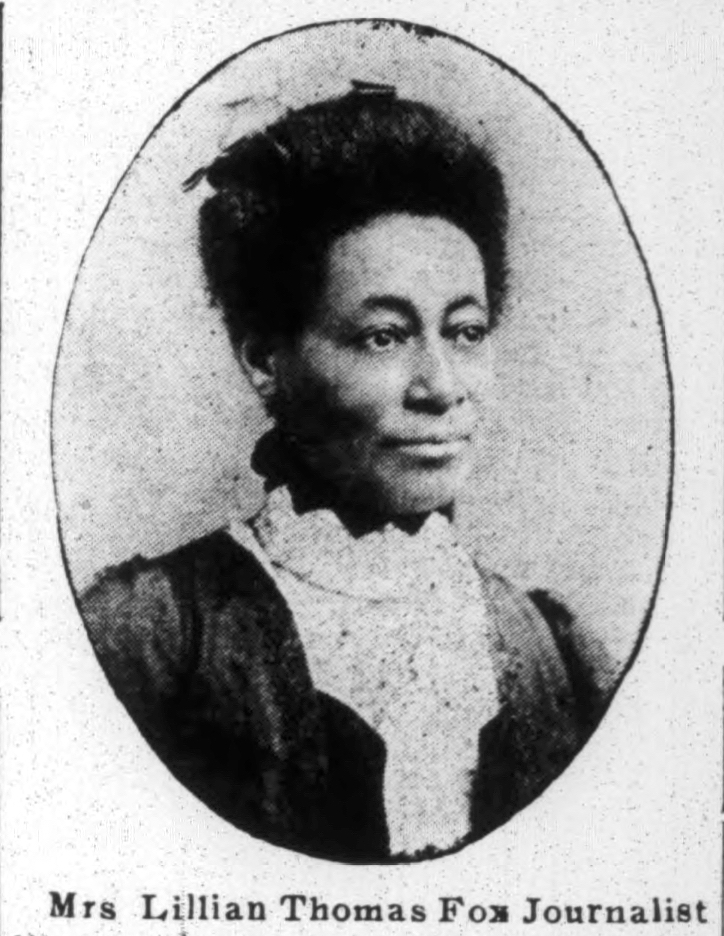
Lillian Thomas Fox begins writing for the Indianapolis News
Fox becomes the first African American to write a regular column for a white newspaper in the state of Indiana.
Pictured: Lillian Thomas Fox, ca. 1905
Credit: Public domain via Wikimedia Commons View Source
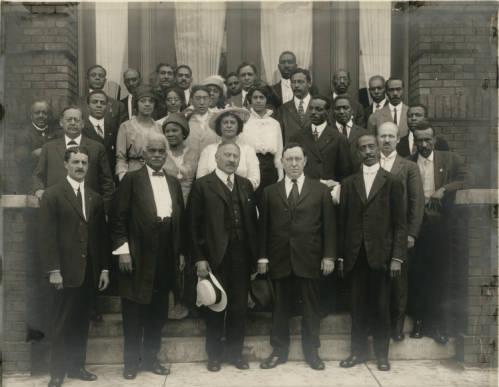
Black leaders form precursor to the Senate Avenue YMCA
Formed in response to Indianapolis YMCA’s denial of Black applicants, it offers adult education, Bible studies, meeting space, and a basketball team. The organization becomes a branch of the city YMCA in 1902 and then moves to a new building on Senate Avenue in 1913.
Pictured: The organization later becomes the Senate Avenue YMCA, shown here in 1914.
Credit: Madam C.J. Walker Collection, Indiana Historical Society
View Source
Bachelor Benedict Club founded
The social club promotes community values and social awareness through meetings and gatherings among accomplished Black men in Indianapolis. The name is changed to Bachelor Benedict Club in 1914 to account for the many married members.
Woman’s Improvement Club organizes
Lillian Thomas Fox and other prominent African American women found the self-improvement club. It later becomes known for efforts to provide tuberculosis care for African Americans.
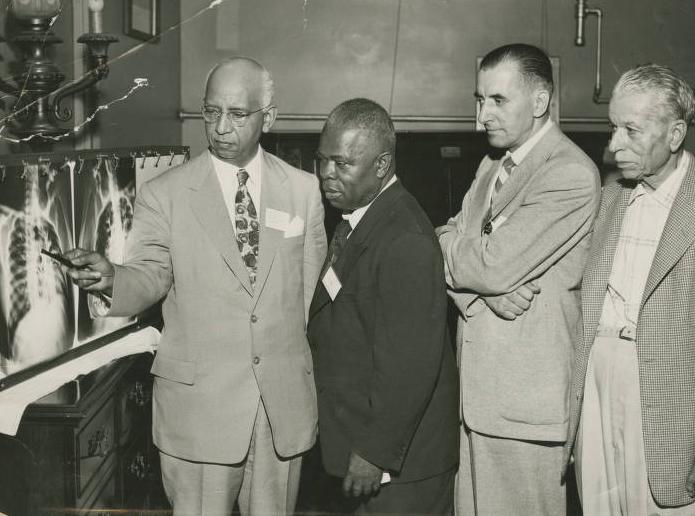
Aesculapian Medical Society organized
A group of Black physicians, dentists, and pharmacists in Indianapolis formed the society. They establish the organization in response to the refusal of the Indianapolis Medical Society and Indiana State Medical Association to admit Black physicians.
Pictured: W. R. Brown and I. B. Johnson of the Aesculapian Medical Society showing X-rays, ca. 1950s
Credit: Indiana Historical Society View Source
Indiana High School Athletic Association (IHSAA) founded
At its start, IHSAA denies Black public high schools from participating in basketball leagues and tournaments from 1903 until the 1942-1943 season.
African American YMCA Monster Meetings begin
The meetings for African American men and boys begin as an evangelical effort but their scheme broadens to include social, political, and economic topics. The forum draws national leaders such as Booker T. Washington, Eleanor Roosevelt, and Martin Luther King Jr. before it dissolves in the late 1960s.
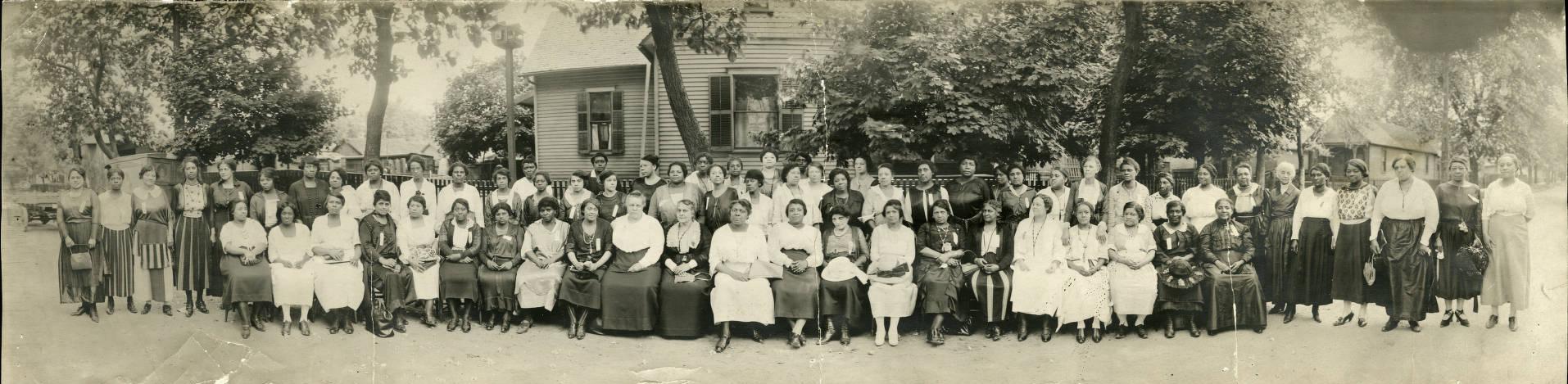
Federation of Colored Women’s Clubs founded
Black women’s organizations from Indianapolis, South Bend, Anderson, Marion, Muncie, and Terre Haute form the Indiana State Federation of Colored Women’s Clubs. The group focuses on the improvement of education, health, living standards, and interracial understanding.
Pictured: Indiana State Federation of Colored Women’s Club, ca. 1927
Credit: Indiana Historical Society View Source
Women’s Improvement Club opens fresh-air camp for Black tuberculosis patients
Dr. Beulah Wright Porter Prices leads the initiative to establish what is believed to be the first fresh-air camp for tuberculosis patients in the U.S. It remains in operation until October 1916.
The Indianapolis ABC’s baseball team forms
Named for the American Brewing Company, the ABC’s begin as an independent team but become a charter member of the Negro National League in 1920.
Black Elks Lodge established
Indiana Elks Lodge #104 becomes the first Black Elks lodge in both Indianapolis and Indiana.
Garfield T. Haywood founds Christ Temple Apostolic Faith Assembly
Haywood’s church quickly becomes the largest Pentecostal church congregation in Indianapolis with over 1,000 members, and the Pentecostal Assemblies of the World denomination moves its headquarters to Indianapolis in 1915.
Lincoln Hospital Association incorporates
African American physicians establish the organization after being barred from treating their Black patients in city hospitals. The hospital opens on December 15 and remains in operation until 1915.
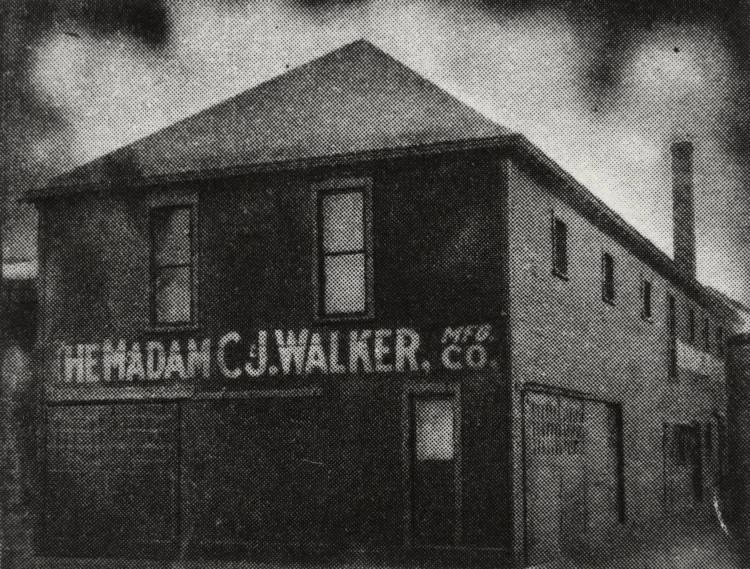
Madam C. J. Walker Manufacturing Company moves to Indianapolis
Madame C. J. Walker moves her successful haircare and product business to Indianapolis. She purchases a home at 640 N. West Street and remodels a stable and warehouse on the property into a factory and office.
Pictured: By 1911, Madam Walker turned the home she purchased at 640 North West Street into her home, office, salon and factory.
Credit: Madam C.J. Walker Collection, Indiana Historical Society
View Source
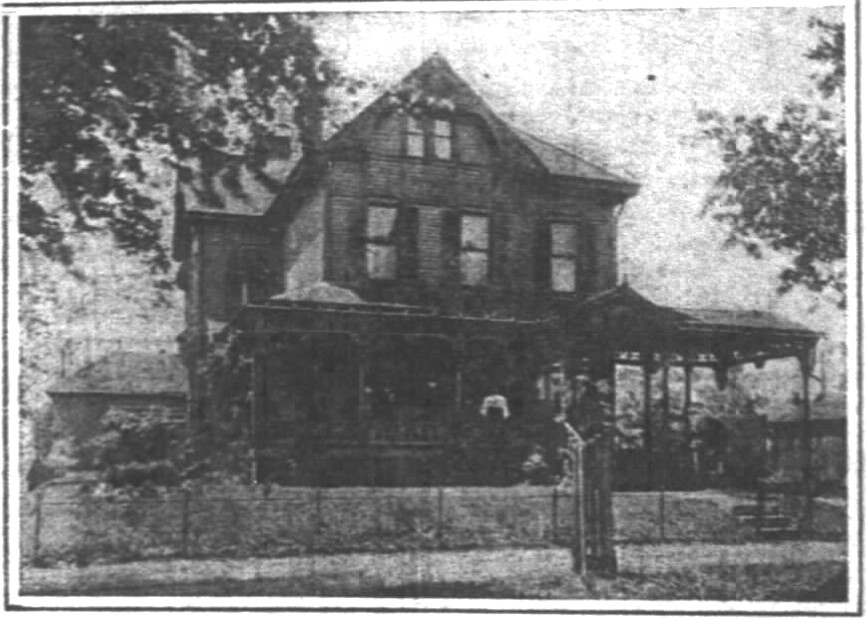
The Grand Body of the Sisters of Charity Hospital opens
The women’s club opens a 14-bed hospital at 15th and Missouri streets, becoming the second to care for the city’s Black community. The organization provides in-patient care and nurse training programs to African Americans until it closes for lack of funds in 1921.
Pictured: Grand Body of the Sisters of Charity hospital, 1911
Credit: Indianapolis News View Source
Dedication of Black Knights of Pythias building
The building, constructed at 701-703 N. Senate Avenue, combines the 11 Indianapolis lodges that have arisen in Indianapolis and provides a central location for the fraternal order in the state.
First Black firefighter falls in the line of duty
Thomas Smith, one of the first four Black firefighters hired for the African American Hose Company, dies when a streetcar hits the hose wagon in which he was riding.
Indianapolis branch of NAACP organizes
Mary Cable organizes the branch and becomes its first president. The organization helps Black citizens access rights guaranteed under U.S. Constitution. Within three years, the branch has 200 members.
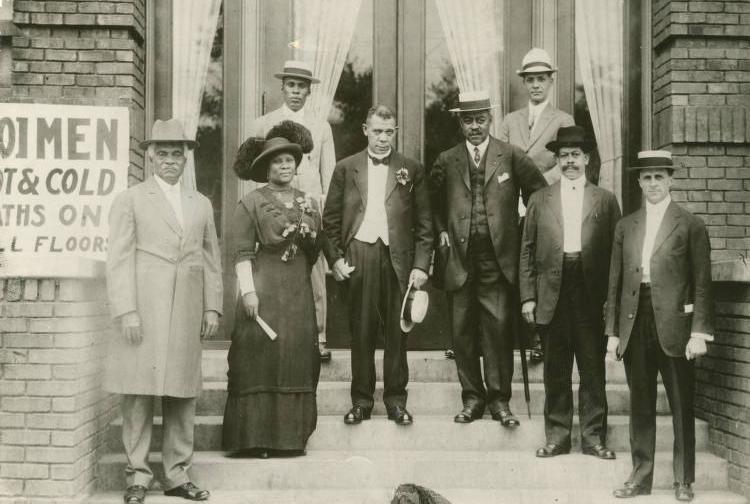
Civic leaders lay the cornerstone of the Senate Avenue YMCA
Senate Avenue YMCA construction begins in October 1912. It offers young African American men a variety of cultural, recreational, religious, and physical exercise programs. It also provides educational classes and dormitory facilities.
Pictured: Madam Walker and Booker T. Washington at YMCA Opening
Credit: Madam C.J. Walker Collection, Indiana Historical Society View Source
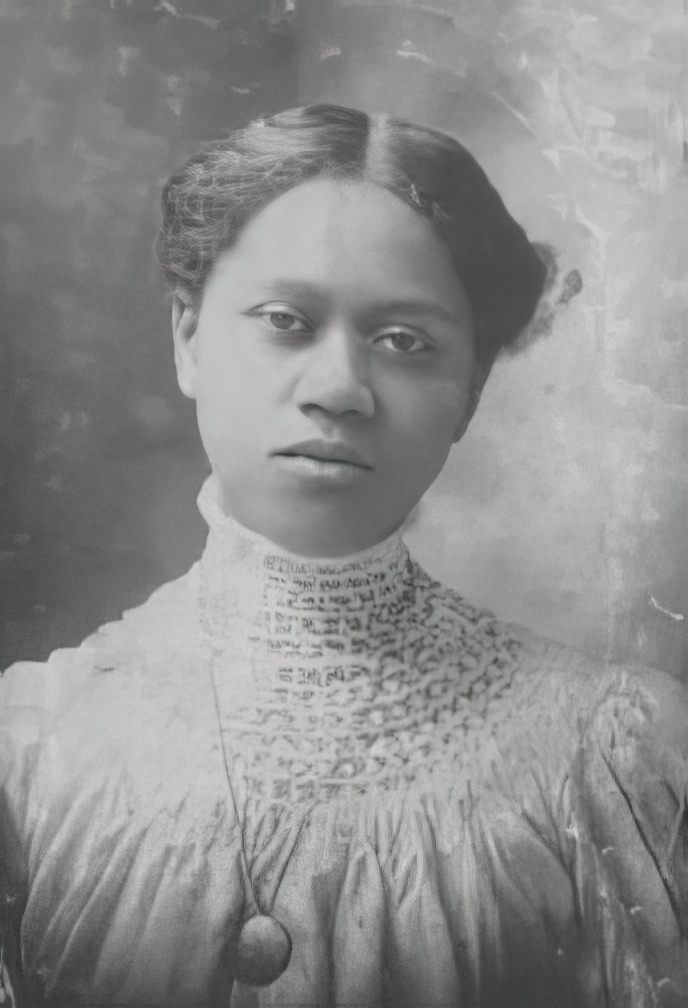
First Black branch of Equal Suffrage Association of Indiana
Carrie Ross Barnes is the president of the branch, which provides Black women a voice that previously has been denied in predominantly white suffrage groups.
Pictured: Carrie Barnes, ca. 1910s
Credit: Susan Ross via IndyStar View Source
St. John’s Missionary Baptist Church established
Beginning with three members, the African American congregation constructs its first building at 17th Street and Martindale Avenue in 1926.
Dr. Sumner A. Furniss elected to Indianapolis City Council
Furniss, a member of the Marion County Republican executive committee, becomes the second African American to serve on the City Council.
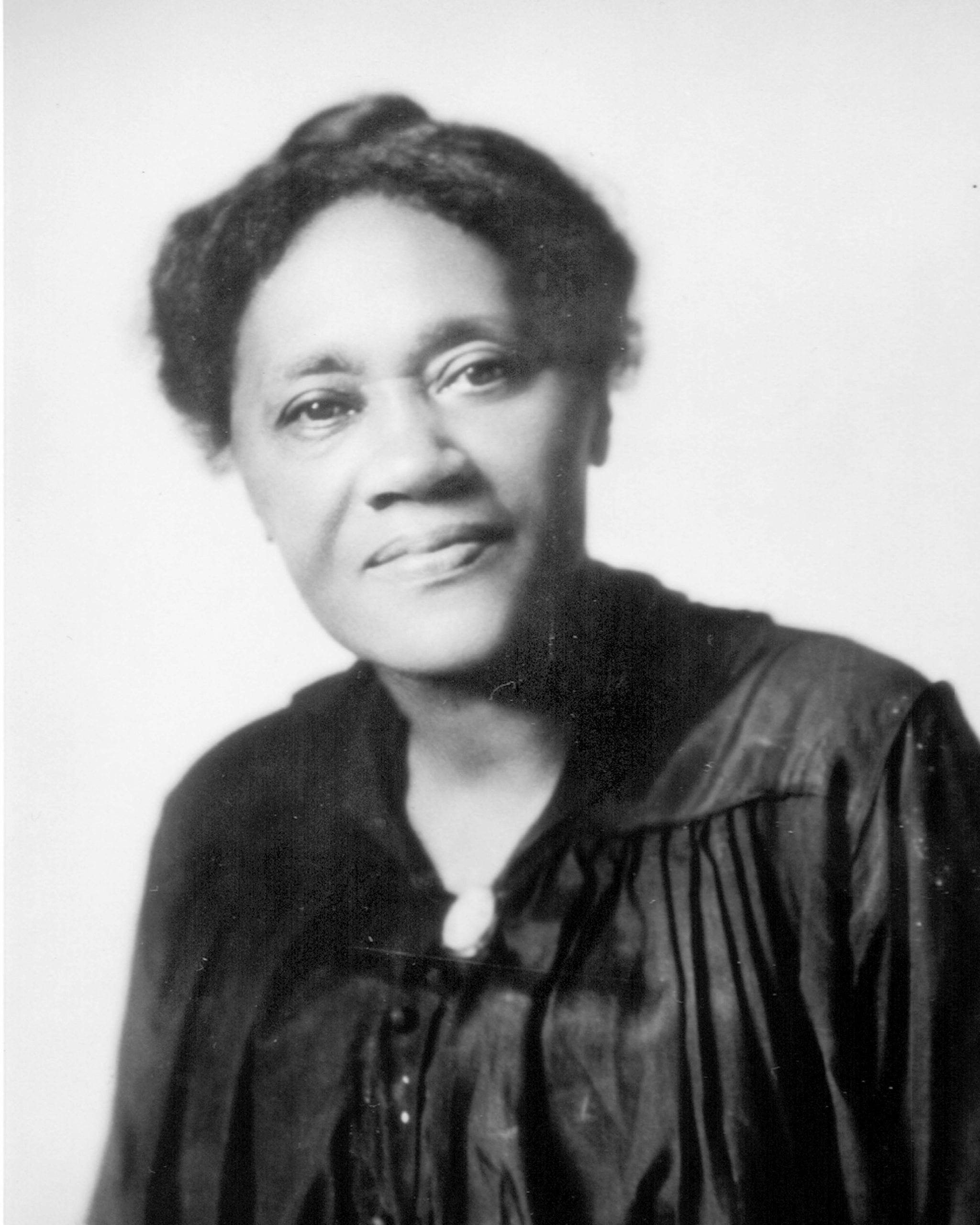
First woman hired to serve on police force
Emma Christy Baker, a Black woman, becomes the first woman to serve as a police officer for the Indianapolis Police Department. She primarily works outside the station, patrolling public places downtown.
Pictured: Emma Christy Baker, ca. 1920s
Credit: Indianapolis Public Library View Source
St. Rita Catholic Church, the diocese’s first African American parish, dedicated
Established by Bishop Joseph Chartrand, the African American church is located at 19th and Arsenal streets in the Martindale neighborhood. A small school also opens in the parish to serve the city’s Black Catholic children.
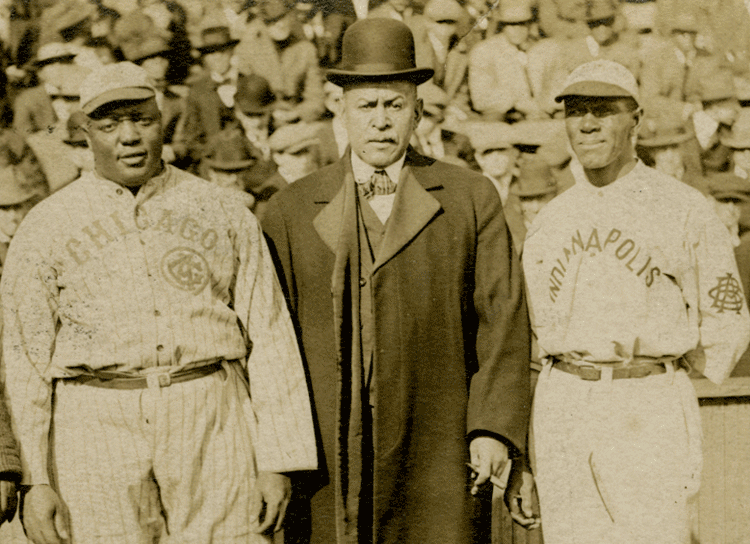
Washington Park hosts first game of the Negro National League
The Negro National League incorporates with teams in six midwestern cities. Indiana’s team is the Indianapolis ABCs, managed by C. I. Taylor, a famed early Black baseball manager.
Pictured: Rube Foster of the Chicago American Giants, J. D. Howard, and C. I. Taylor of the Indianapolis ABCs, 1916
Credit: Public Domain
View Source
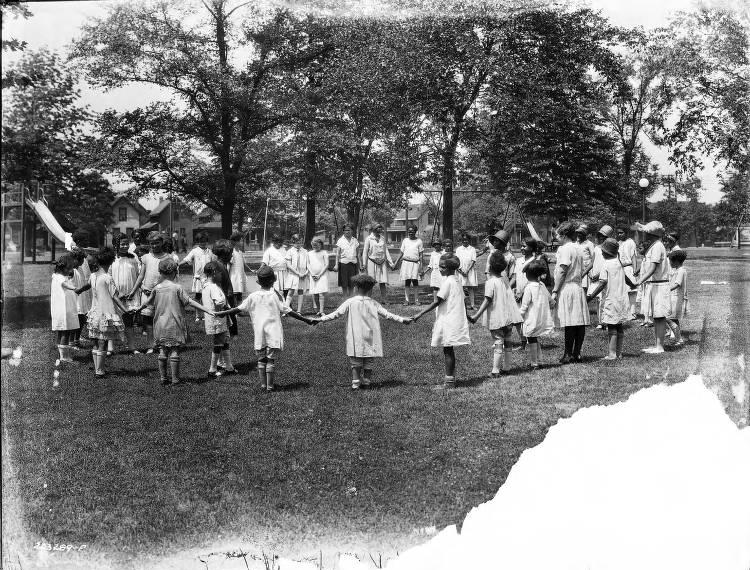
Phyllis Wheatley Branch of the YWCA organizes
This branch seeks to educate and empower the women and girls of Indianapolis’s African American community. It opens in a building that previously housed the Senate Avenue YMCA.
Pictured: Children Playing at the Phyllis Wheatley YWCA, 1927
Credit: Bass Photo Co Collection, Indiana Historical Society
View Source
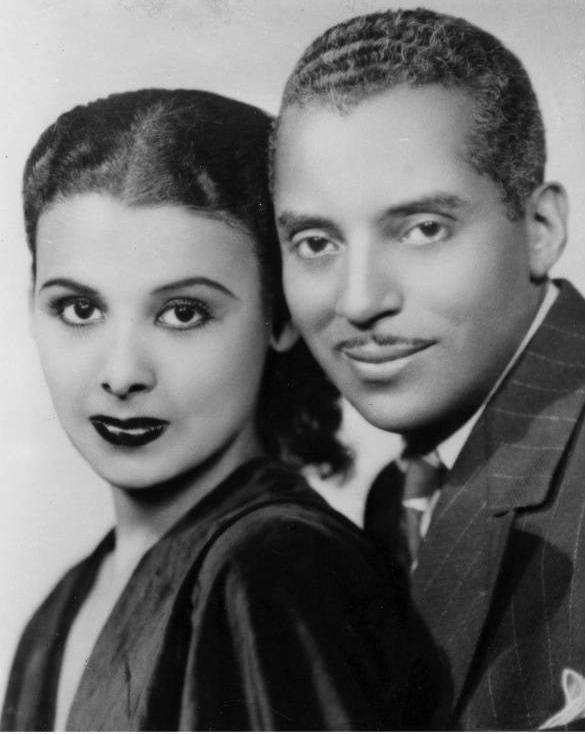
Premiere of Shuffle Along, a musical
Indianapolis native Noble Sissle writes and produces the musical with three other musicians. It marks the revival of African American folk humor, jazz dance, and Ragtime.
Pictured: Noble Lee Sissle with Lena Horne, ca. 1920s.
Credit: Indiana Historical Society View Source
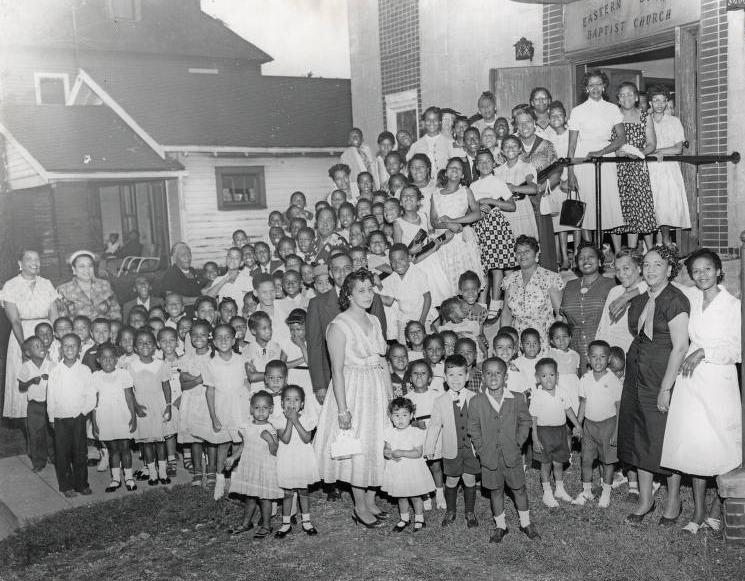
Eastern Star Missionary Baptist Church established
Originally organized as a mission of 12 people, the church opens at the corner of 22nd Street and Columbia Avenue. By the late 20th century, it becomes the largest predominantly African American congregation in Indianapolis.
Pictured: Vacation Bible School at Eastern Star Baptist Church, ca. 1960s
Credit: Indianapolis Recorder Collection, Indiana Historical Society View Source
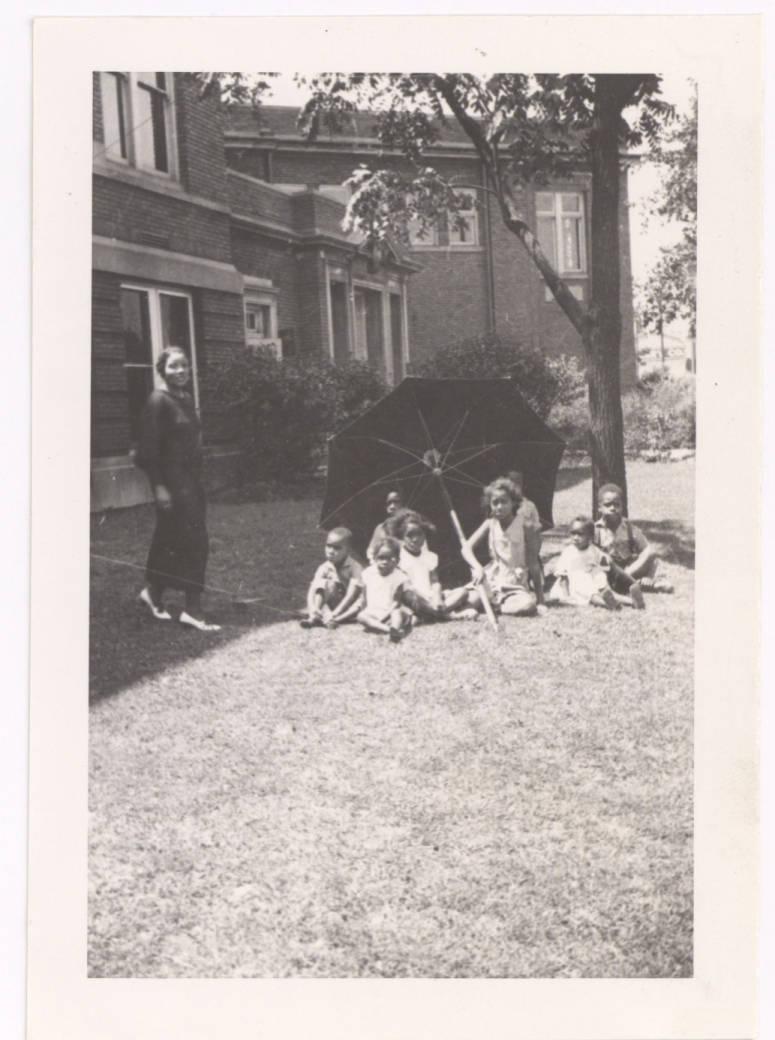
Paul Laurence Dunbar Indianapolis Public Library branch opens
Named for Black poet Paul Laurence Dunbar, the library branch opens inside segregated Indianapolis Public School No. 26. Lillian Childress Hall, the first African American that the Indianapolis Public Library employs, serves as its first director. The branch remains open until 1967.
Pictured: Story Hour Under the Umbrella at Dunbar Library, 1936
Credit: Indianapolis Marion County Public Library
View Source
Frederick Douglass Park opens
Named for abolitionist Frederick Douglass, the Indianapolis Parks Department designates the park as separate and solely for African Americans. This discriminatory policy lasts until the 1960s. Activities at the park include little league baseball, golf, and social events.
Sigma Gamma Rho established
Seven Black women at Butler University found the only Black sorority established on a predominately white campus. The sorority protests discriminatory practices as well as emphasizes sisterhood, service, and scholarship.
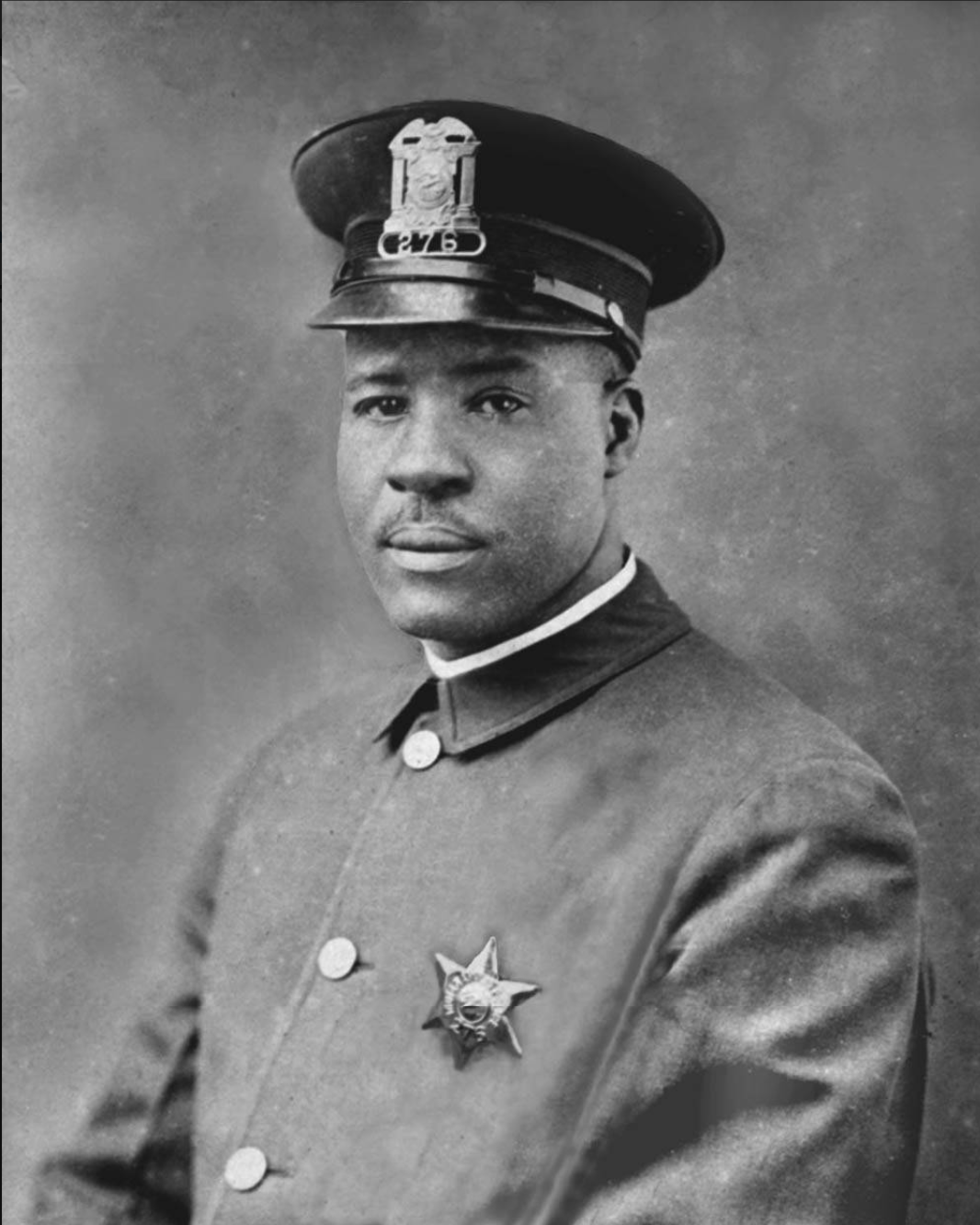
First known Black law enforcement officer killed in the line of duty
Indianapolis officer William Whitfield sustains a gunshot wound while pursuing a suspect. He dies five months later from the injury.
Pictured: William Whitfield, ca. 1910
Credit: Indianapolis Public LibraryView Source
Indianapolis School Board votes for a segregated high school
The school board proposes the construction of a separate public high school for Black students. The city’s Black community, who worry that a segregated high school will result in inferior facilities and educational opportunities for their children, protest the proposal.
School Board establishes new elementary school boundaries resulting in segregation
The school board sets up new boundaries for four Black elementary schools, removing Black children from previously mixed schools and white children from schools in predominantly Black neighborhoods.
Dr. Joseph H. Ward becomes the first African American to lead a major U.S. hospital
Ward, an Indianapolis surgeon, accepts appointment as administrator and chief medical officer of Veterans Hospital #91 at Tuskegee, Alabama. He oversees the 600-bed hospital for the next 12 years.
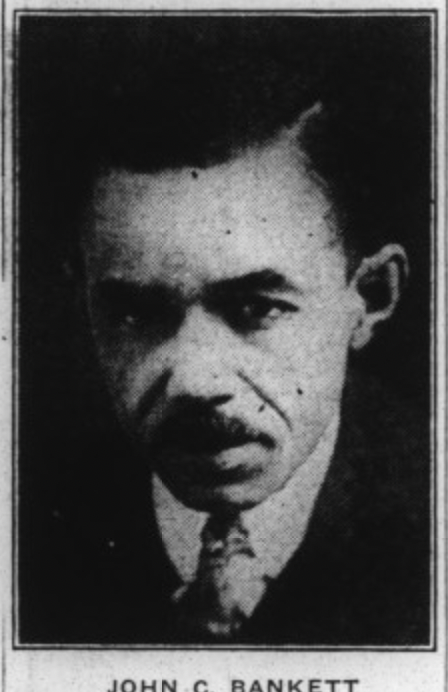
First Black Democrat nominated for the Indiana General Assembly
John Bankett, an attorney in Indianapolis, becomes the first Black Democrat nominated for the Indiana General Assembly. He loses the election to white Republican candidate, Charles Bebinger.
Pictured: John C. Bankett, ca. 1937
Credit: Indianapolis Recorder
View Source
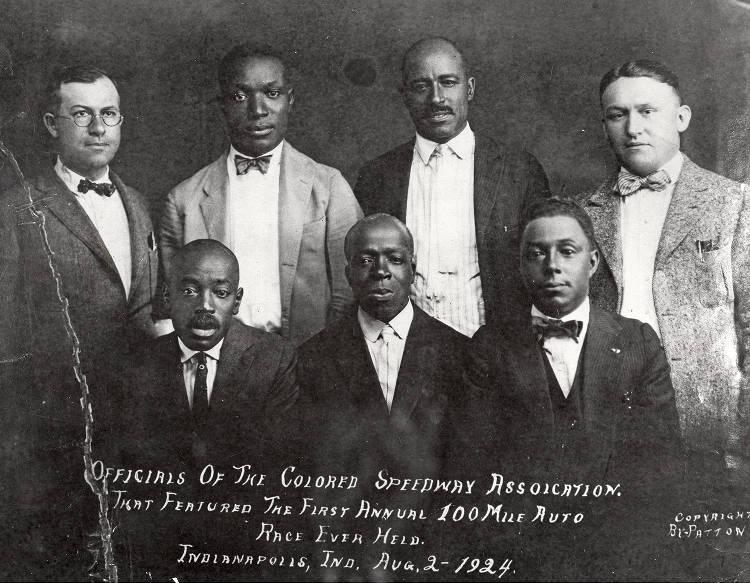
First running of the Gold and Glory Sweepstakes
African American civic leaders Robert Brokenburr, William “Pres” Ruckner, and white promoter Harry S. Earl establish the Colored Speedway Association when Black race drivers are turned away from the Indianapolis 500-Mile Race. They organize the sweepstakes, which runs at the Indiana State Fairgrounds from 1924 to 1936.
Pictured: The Colored Speedway Association Officials, shown here in 1924, established the Gold and Glory Sweepstakes Race.
Credit: Indiana Historical Society View Source
Mt. Vernon Missionary Baptist church begins
Reverend C. C. Bates organizes a Sunday school that becomes Mt. Vernon Missionary Baptist Church. The congregation opens the doors of its first church in 1929.
Marion County Bar Association founded
Excluded from the Indianapolis Bar Association, the organization begins operation as the Marion County Lawyer’s Club. It ensures the professional development of minority attorneys and judges in the city’s legal community.
Mayor Duvall, elected with the support of the Ku Klux Klan, approves new zoning ordinance that negatively impacts Black residents
The Indianapolis City Council, under influence of the KKK, creates residential zoning ordinances preventing Black citizens from living in white neighborhoods.
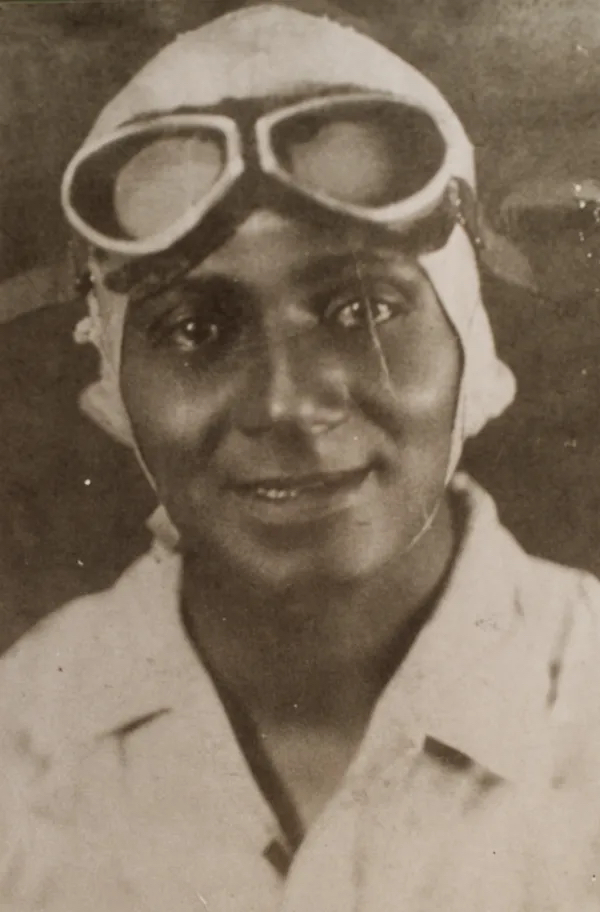
Charlie Wiggins wins his first Gold and Glory Sweepstakes
Wiggins takes the race car he builds while working as a mechanic at an Indianapolis garage to win at the finish line. He comes to dominate the racing series and wins the Indianapolis race again in 1931, 1932, and 1933.
Pictured: Charlie Wiggins, n.d.
Credit: IndyStar View Source
Jury convicts white assailant in killing of a Black Indianapolis police officer
A jury in the Hendricks County Circuit Court finds Gene Alger, an 18-year-old college student, guilty of manslaughter in connection with the killing of IPD officer John Buchanan, the second Black officer to fall in the line of duty. Of the five Black IPD officers killed in Indianapolis to date, Alger is the only assailant to have stood trial.
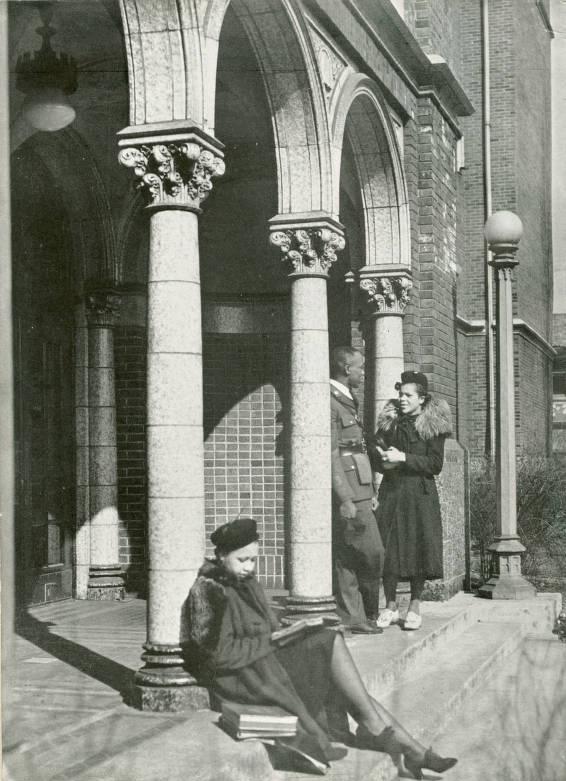
Crispus Attucks High School, an all-Black school, opens
Indianapolis opens Crispus Attucks High School to segregate the city’s public secondary education. Matthias Nolcox becomes the first principal and assembles a staff of African American professionals from around the country.
Pictured: Crispus Attucks High School students, 1939
Credit: Indiana Historical Society View Source
Walker Theatre initial opening
Completed eight years after the death of Madam C. J. Walker, the finished segments of the theatre building open during Christmas week. The entire building opens in August 1928 during the annual Madam Walker Convention.
Thomas Edison Marshall wins the United Golf Association National Championship
Marshall, the Douglass Park golf pro, goes on to win again in 1931 and is runner-up the next year at the national tournament for African Americans played at Douglass Park.
Moorish Science Temple of America, No. 15 established
First located on Indiana Avenue, the Indianapolis Temple is part of a new brand of Islam founded after World War I and the first established and operated by African Americans.
The Ferguson Brothers begin building a jazz club empire
Denver and Sea Ferguson, African American leaders in the jazz and entertainment scene, open the Trianon Ballroom at 244 West Vermont Street, followed by the Cotton Club, also on Vermont Street, in 1933. In 1937, they open the Royal Palm Gardens and Sunset Terrace Ballroom on Indiana Avenue.
Pictured:
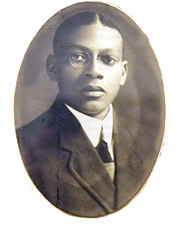
Robert L. Bailey becomes the first African American Indiana assistant attorney general
Bailey, who dedicates his career to civil rights cases, assists Attorney General James Ogden with several important cases. For many years, he is the only Black member of the Indianapolis Bar Association and defends James Cameron in the aftermath of the infamous lynching of Thomas Shipp and Abram Smith in Marion, Indiana, on August 7, 1930.
Pictured: Robert L. Bailey, 1912
Credit: IU Robert H. McKinney School of Law View Source
Douglass Park hosts the National Negro Open Golf Championship
Sea H. Ferguson, an influential Indiana Avenue club owner, serves as national secretary of the United Golfers Association, founded in 1925 as the Black U.S. golfing organization. He brings its tournament to Douglass Park. Indianapolis golfer Lucy Whitehead Williams wins the woman’s championship for the first time.
First African American Democrat elected to City Council
Dr. Theodore Cable, an Indianapolis dentist, is the first African American to serve as a Democratic city councilman. He is later elected to the Indiana General Assembly.
Ella C. Abel earns woman’s National Negro Open Golf Championship title
Douglass Park golfer Ella C. Abel wins the woman’s UGA National Negro Golf Championship in Detroit. She earns her second national title in the event in 1935. Her Indianapolis teammate and competitor, Lucy Williams, retakes the title in 1936, 1937, 1940, and 1946.
Federation of Associated Clubs organized
Founded as a coalition of 9 local African American men’s social clubs, it grows to include representatives from 125 different organizations in the area, which enables them to promote a wide range of activities in education, employment, politics, civic projects.
Bishop Joseph Ritter ends school segregation in Catholic Diocese of Indianapolis
Ritter announces his decision to end segregation in the city’s Catholic schools. He meets opposition not only from groups like the Ku Klux Klan but also from members of his own clergy.
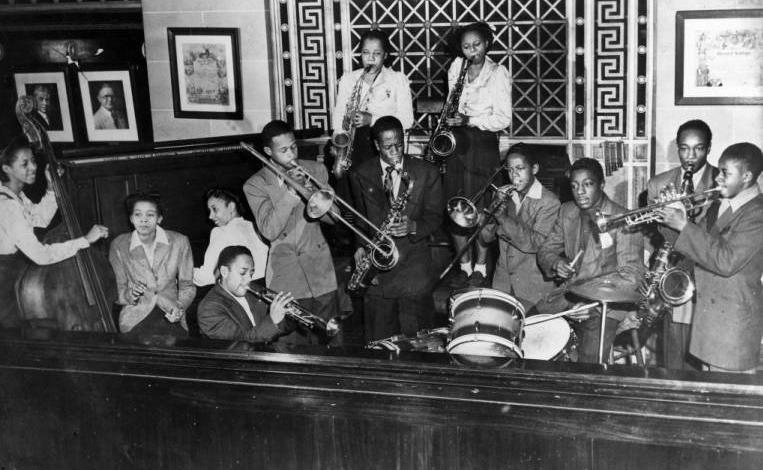
The Hampton family of jazz musicians moves to Indianapolis
After a successful engagement at the Sunset Ballroom on Indiana Avenue, the family moves to Indianapolis and establishes a jazz family dynasty that includes the Hampton Family Band and the Hampton Sisters (Virtue, Aletra, Carmelita, and Dawn).
Pictured: Duke Hampton Family Band, ca. 1938-1950s
Credit: Indiana Historical Society View Source
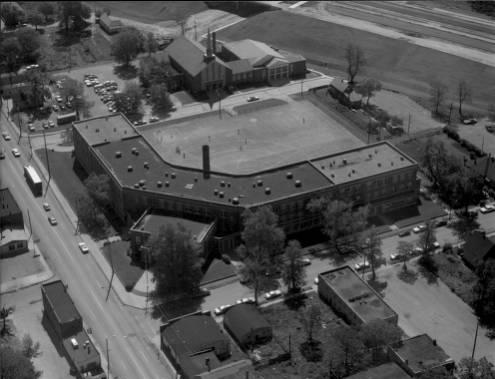
Segregated Indianapolis Public School No. 26 becomes the largest elementary school in Indiana
Enrollment in the school climbs to 1,480 with an addition to alleviate overcrowding at Crispus Attucks High School and new facilities to care for African American students with disabilities.
Pictured: School No. 26, ca. 1960s
Credit: Indianapolis Public Library
View Source
Flanner House carries out first survey of the Black population
The Indianapolis Foundation funds the study that provides a complete “survey of the financial, educational, cultural, and medical” situation of the city’s Black population.
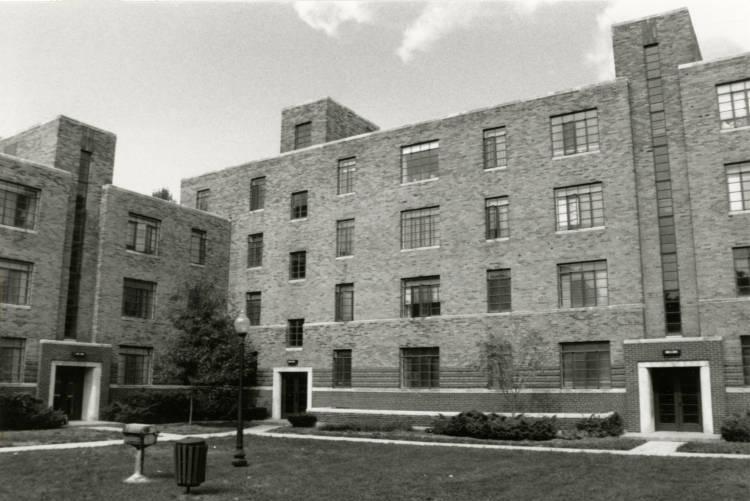
Lockefield Gardens public housing development opens
Beginning during the Great Depression with groundbreaking in 1935, the Public Works Administration’s New Deal plan demolishes 363 houses on 22 acres and replaces them with 748 apartments in 24 buildings, all to be occupied by African Americans.
Pictured: Lockefield Gardens Apartments, ca. 1980s
Credit: City of Indianapolis, Department of Metropolitan Development, Indiana Historical Society
View Source
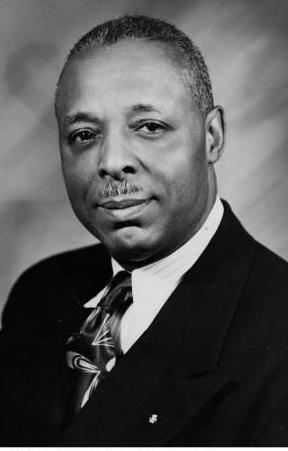
Robert Lee Brokenburr becomes first African American elected to Indiana State Senate
Brokenburr, an Indianapolis attorney, serves as a Republican state senator for 20 years. During his tenure, he authors bills that prohibit discrimination and an act that establishes the Indiana Civil Rights Commission.
Pictured: Robert Lee Brokenburr, n.d.
Credit: Indianapolis Recorder Collection, Indiana Historical Society View Source
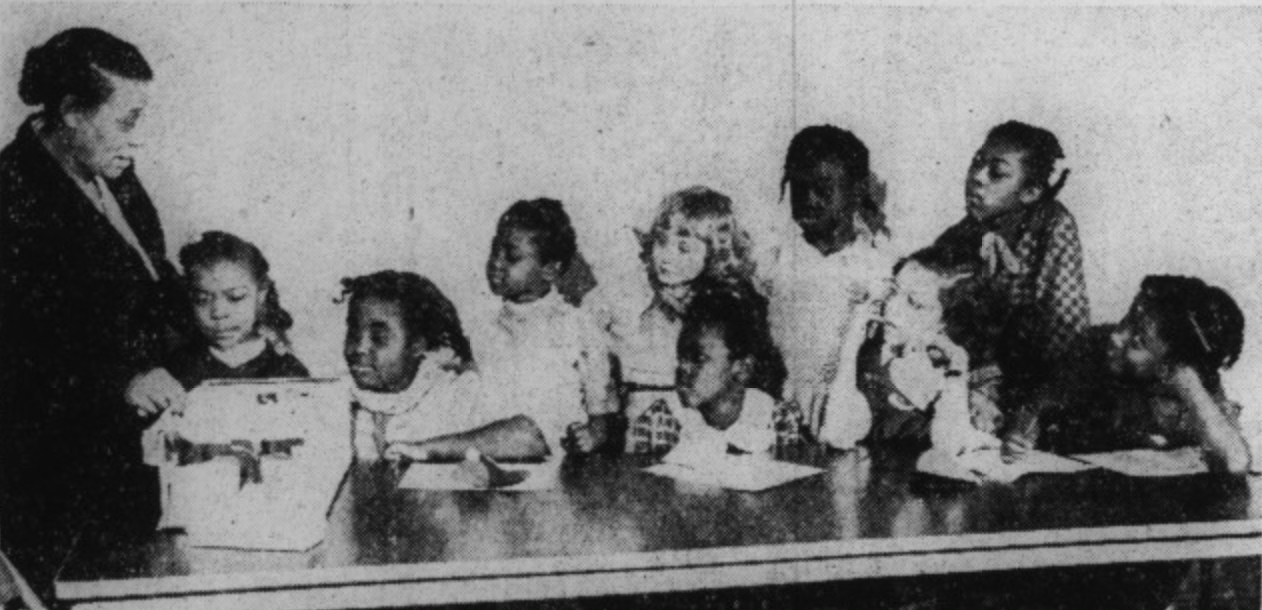
Edna Martin Christian Center founded
Edna Martin, an educator and community leader, begins a daycare that grows to become a faith-based agency aimed at bridging cultural, racial, and economic differences through programs and services for children.
Pictured: Edna Martin instructs a class at the center, 1955
Credit: Indianapolis RecorderView Source
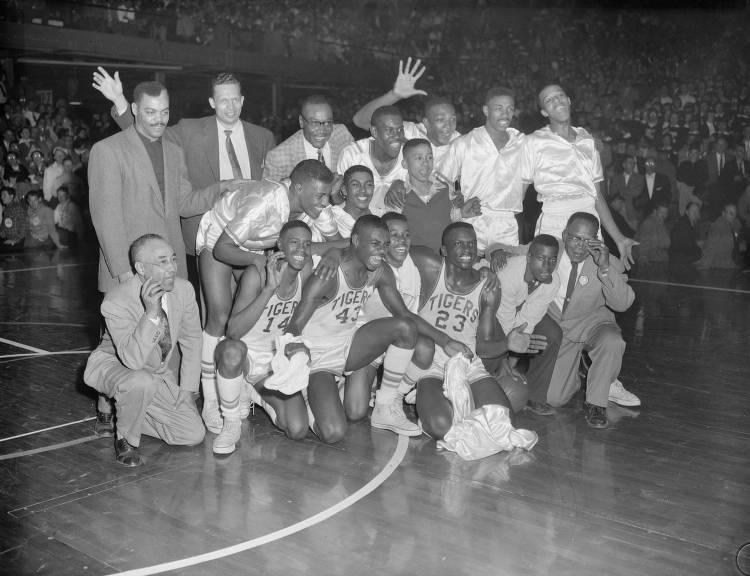
Indiana High School Athletic Association admits African American schools
The Indiana General Assembly passes legislation, introduced by African American state senator Robert Lee Brokenburr, that allows Black and parochial schools to participate in the organization for the first time.
Pictured: Crispus Attucks Basketball Team, State Champions, Mar. 17, 1956
Credit: William Palmer/Indianapolis News, Indiana Historical Society
View Source
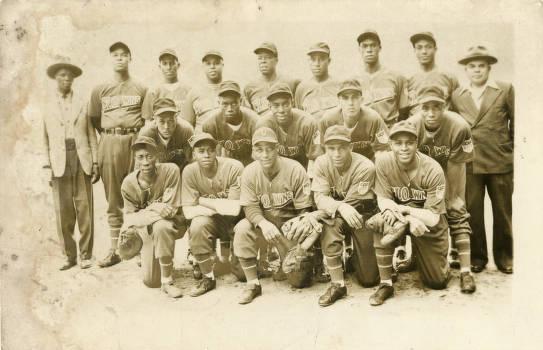
Black baseball team arrives
The Cincinnati Clowns move to Indianapolis and change their name to the Indianapolis–Cincinnati Clowns. Two years later, they decided to stay permanently and drop Cincinnati from their name.
Pictured: Indianapolis Clowns Team, ca. 1943
Credit: Indiana Historical Society
View Source
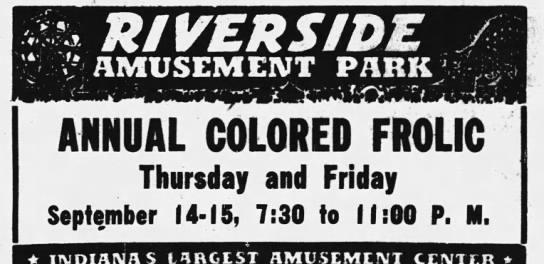
Boycott at Riverside Amusement Park
African American residents hold a boycott to protest the park’s segregationist policies, which do not allow African Americans to enter with the exception of one or two days a year.
Pictured: Riverside Amusement Park advertisement for its ‘Annual Colored Frolic’ day, 1944
Credit: Indianapolis News
View Source
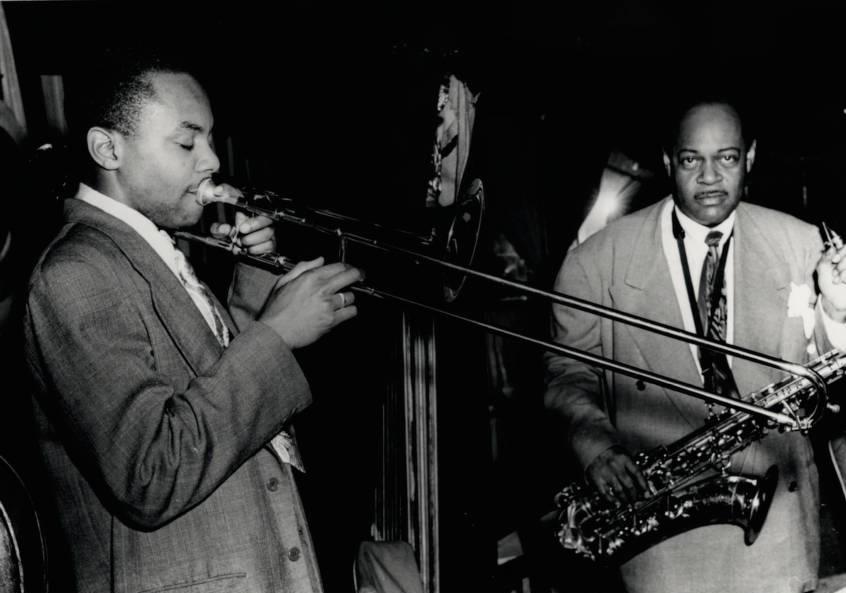
Jazz trumpeter J. J. Johnson tours with Count Basie
National legend Basie recognizes Johnson’s talent, and the trumpeter, who honed his skills at Indiana Avenue clubs, spends a year touring and recording with the jazz musician’s band.
Pictured: J. J. Johnson (left) and Coleman Hawkins, 1950
Credit: Indiana Historical Society
View Source
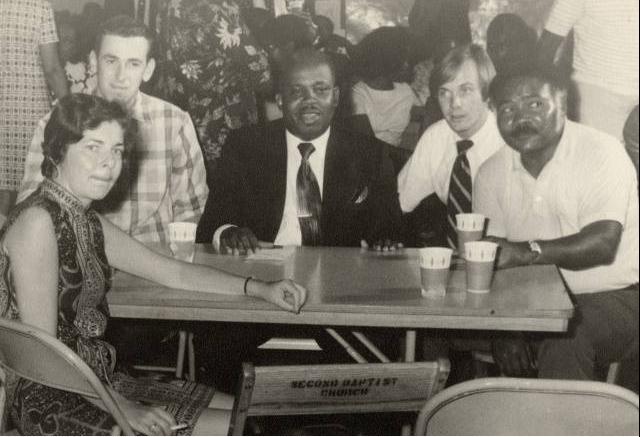
Andrew J. Brown arrives at St. John’s Missionary Baptist Church
Under Brown’s leadership, St. John’s congregation becomes one of the largest and most progressive African American churches in the nation. Brown also becomes an important civil rights leader. In 1986, the city renames Martindale Avenue to Andrew J. Brown Avenue in his honor.
Pictured: Andrew J. Brown (center), pastor of the St. John’s Missionary Baptist Church and leader of the Indianapolis chapter of the Southern Christian Leadership Conference, 1969
Credit: Indianapolis Recorder Collection, Indiana Historical Society View Source
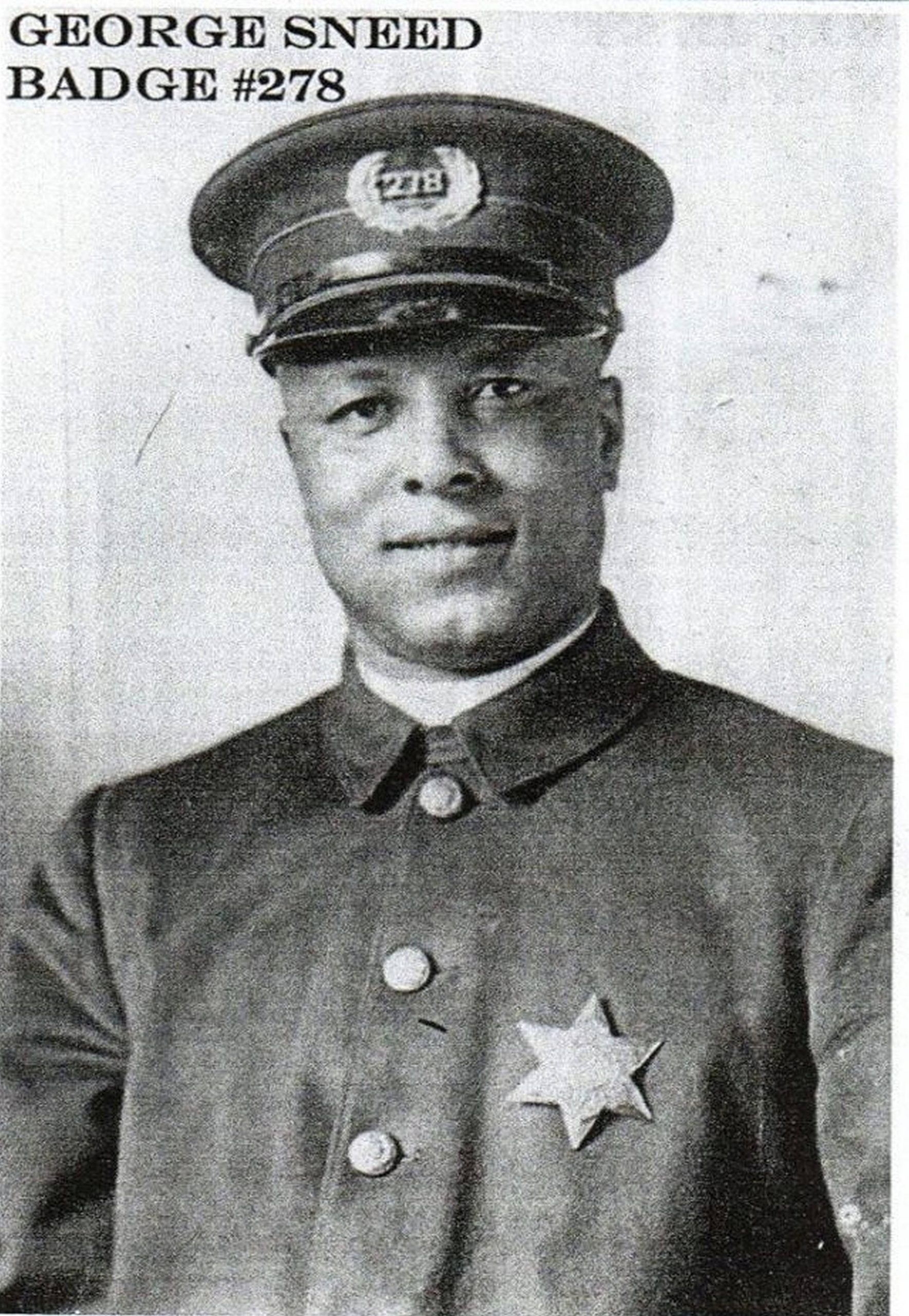
First Black lieutenant in police department
George W. Sneed began his career in the Indianapolis Police Department in 1918. An admired and respected officer, he is promoted to the rank of lieutenant.
Pictured: George Sneed, ca. 1910s
Credit: Indianapolis Public Library View Source
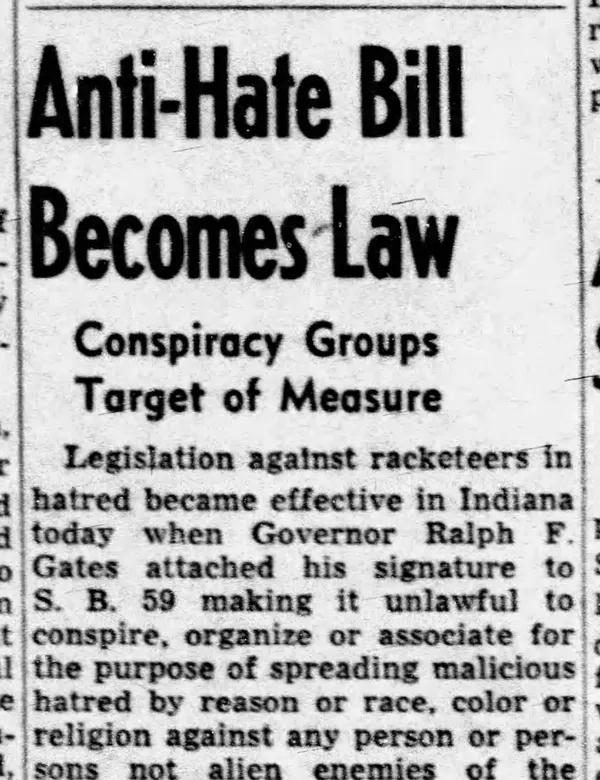
Indiana Anti-Hate law passed
With a rise in KKK activity, Indianapolis resident Henry J. Richardson Jr. chairs a legislative committee to advance an anti-hate bill, which passes the General Assembly. The bill makes it unlawful to spread malicious hatred by reason of race, color or religion.
Pictured: Anti-hate law newsclipping, 1947
Credit: Indianapolis Star
View Source
Andrew W. Ramsey begins writing “Voice from the Gallery”
A foreign language teacher in the Indianapolis Public Schools, Ramsey writes his column for the Indianapolis Recorder on numerous topics of local interest to the African American community, including commentary on civil rights issues.
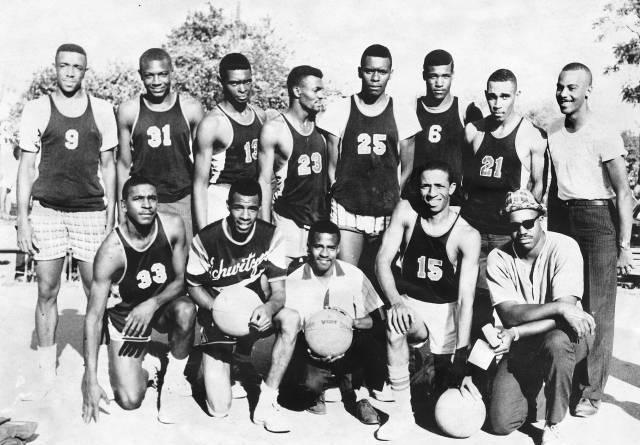
Inaugural Dust Bowl Tournament
James “Bruiser” Gaines, program director of Lockefield Gardens Police Athletic League, organizes the first Dust Bowl Tournament. It is held on a dirt basketball court on Colton Street at the south end of the public-housing complex. The annual August event gains notoriety drawing thousands of spectators.
Pictured: Winners of the Douglass Park Dustbowl Tourney, 1966
Credit: Indianapolis Recorder Collection, Indiana Historical Society View Source
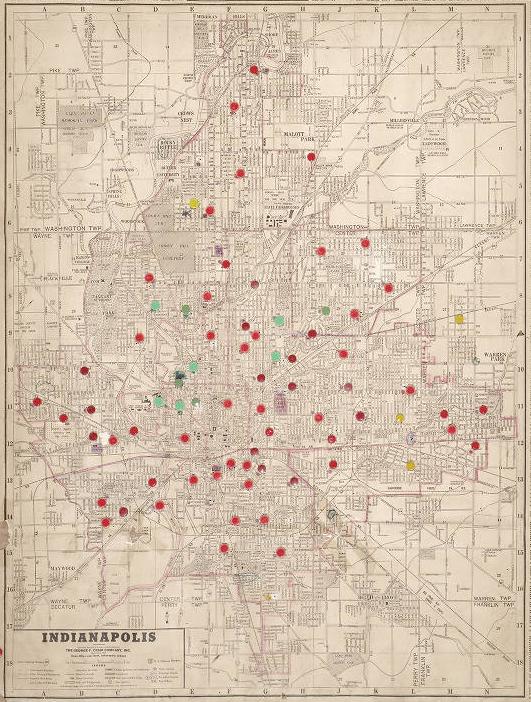
The General Assembly outlaws segregation in Indiana Public Schools
Within a few days of the passage of House Bill 242, the Indianapolis school board passes a resolution to end segregation in IPS. Despite this action, federal courts later find that the school system has perpetuated the practice.
Pictured: School segregation map where red tacks represented white schools, green tacks represented black schools, and yellow tacks represented integrated schools, 1948
Credit: Indianapolis Recorder Collection, Indiana Historical Society View Source
Flanner House Homes project begins
Between 1950 and 1964, Flanner House builds more than 330 homes. The cooperative project, which involves the families who live in the homes, brings national recognition.
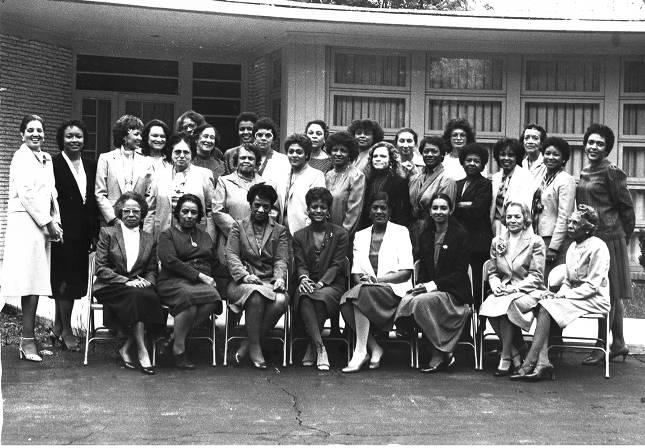
Links Club established
Bessie Simpson, an Indianapolis resident, calls together a group of women to establish a local branch of the club. The Links form as a volunteer service organization working to contribute to the cultural, civic, and social well-being of the community.
Pictured: Indianapolis Chapter of Links, 1983
Credit: Indianapolis Recorder Collection, Indiana Historical Society
View Source
Indianapolis Human Rights Commission organized
Authorized by the City Council, but with no legal authority, the commission helps to integrate hospitals, neighborhoods, parks, businesses, and the city’s fire, police, and sanitation departments.
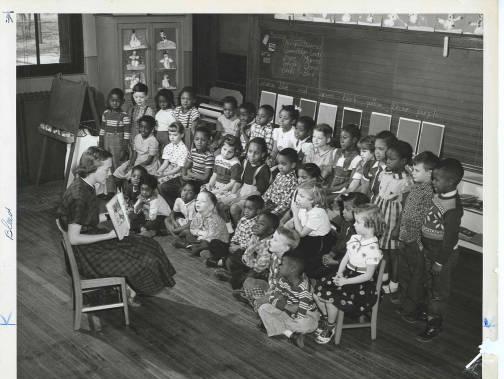
Integration of high schools completed
Even with the integration of the city’s high schools, 11 elementary schools remain all Black and 27 schools are all white because of their geographical location. Approximately 65 percent of the city’s students attend integrated schools.
Pictured: Teacher with integrated class at School No. 41, 1955
Credit: Indianapolis Marion County Public Library
View Source
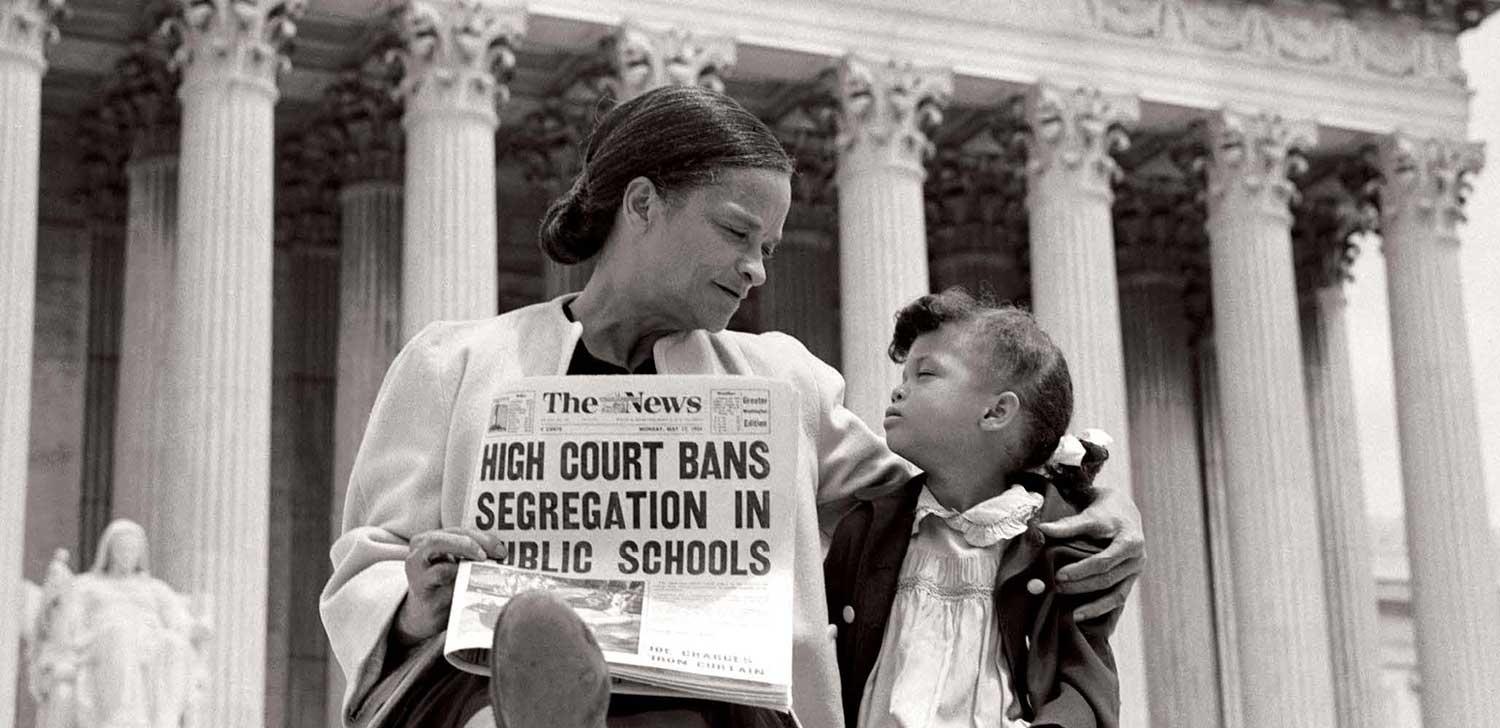
Brown v. Board of Education decision
The U.S. Supreme Court rules segregation in schools to be unlawful, stating that “in the field of public education the doctrine of ‘separate but equal’ has no place. Separate educational facilities are inherently unequal.”
Pictured: Mrs. Nettie Hunt, sitting on the steps of the Supreme Court, holding newspaper, explaining to her daughter Nikie the meaning of the Supreme Court’s decision banning school segregation, 1954
Credit: Library of Congress
View Source
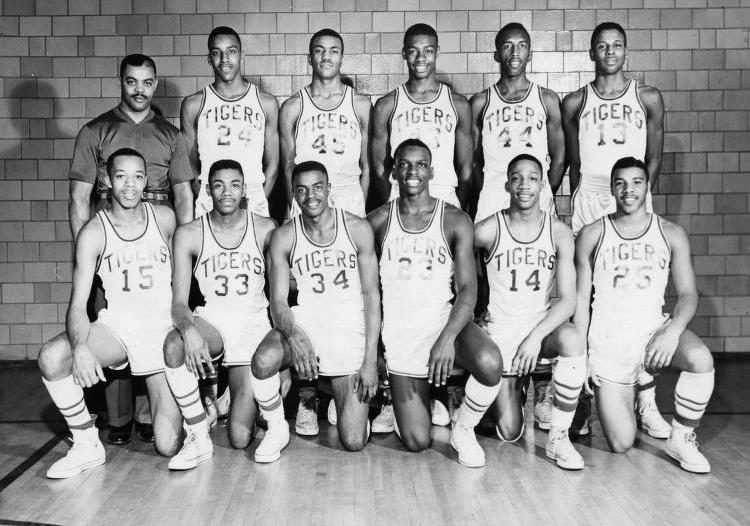
Crispus Attucks High School wins state basketball championship
It is the first Indianapolis high school to win the Indiana State High School Basketball Championship since the early 1900s. The team goes on to repeat chamionships in 1956 and 1959.
Pictured: Crispus Attucks State Basketball Championship team, 1955
Credit: Indianapolis Recorder Collection, Indiana Historical Society View Source
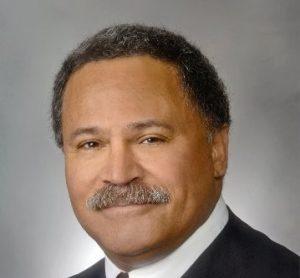
First African American elected to IPS board
Grant Hawkins, a graduate of Indiana University and owner of a janitorial supplies business, is elected to the Indianapolis Public Schools Board of Commissioners. He serves for four years.
Pictured: Grant Hawkins, n.d.
Credit: Indiana University
View Source
Butler-Tarkington Neighborhood Association organizes
Concerned about white flight, this neighborhood association forms to promote unity and integration. Working with local and state governments, it succeeds in encouraging an interracial community that becomes a desirable location for young professional families.
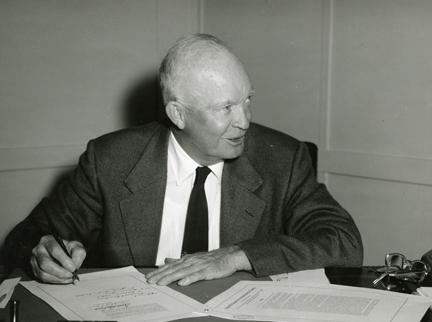
Federal Voting Rights Act signed into law
The act establishes the Civil Rights Section of the Justice Department and a federal Civil Rights Commission to provide legal protection against interference with the right to vote.
Pictured: President Eisenhower signs the Civil Rights Act of 1957
Credit: Public domain via Eisenhower Library
View Source
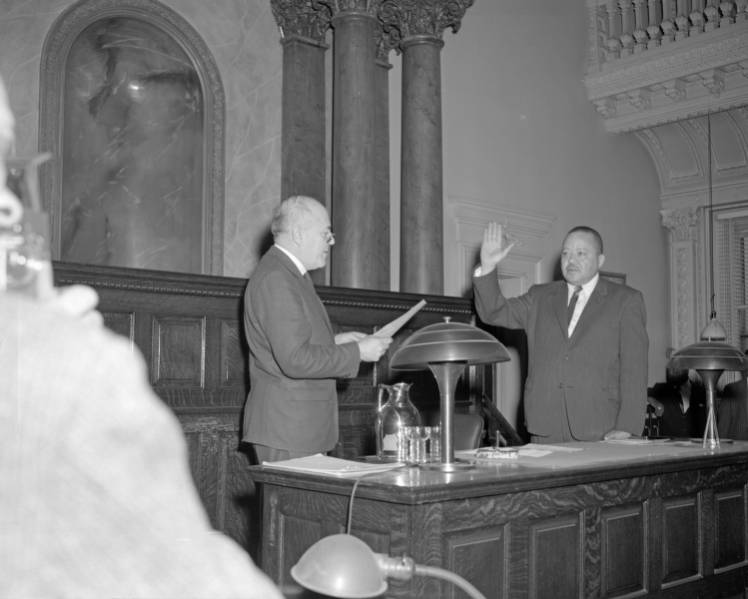
Mercer Mance becomes Marion County Superior Court judge
Mance is the first African American in Indiana to be elected as Marion County Superior Court judge. He serves three terms in this position.
Pictured: Mercer M. Mance was sworn in as the first African American Marion County Superior Court Judge in 1958.
Credit: Indiana Historical Society View Source
Central Business District plan released
The plan places Interstate-65 through the near northside, along Indiana Avenue, and extending south through Fountain Square. Public opposition builds quickly against this plan due to displacement and devalued property of the neighborhoods in its path.
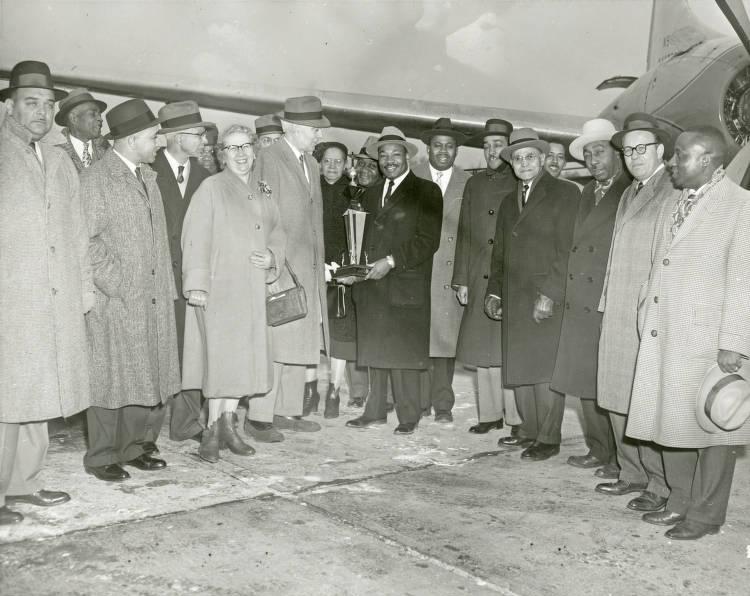
Dr. Martin Luther King Jr. speaks in Indianapolis
Reverend Martin Luther King Jr. holds a speaking event at the Cadle Tabernacle in his first address in Indianapolis. He returns to the city on June 26, 1961, to speak at Mt. Zion Missionary Baptist Church.
Pictured: Martin Luther King Jr. (center) appeared at an Indianapolis YMCA “Monster Meeting,” 1958
Credit: Indianapolis Recorder Collection, Indiana Historical Society
View Source
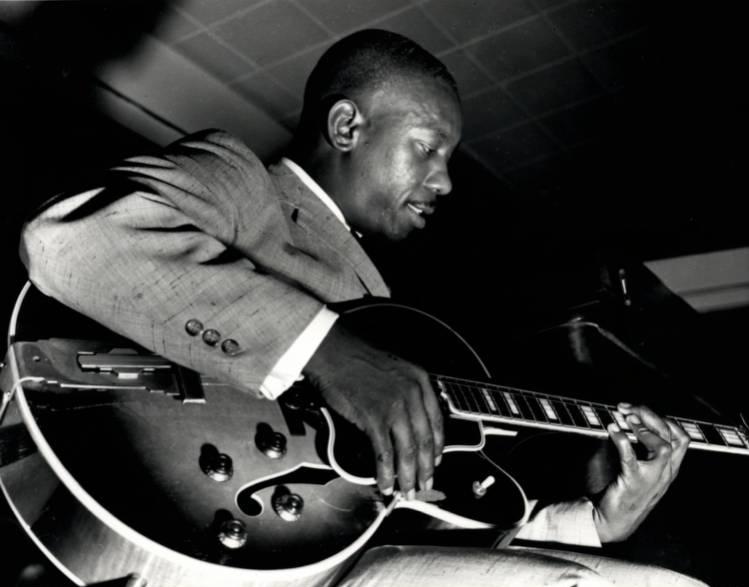
Jazz guitarist Wes Montgomery releases his first album, The Wes Montgomery Trio
Montgomery makes a name for himself while playing in clubs on Indiana Avenue. He records his first album with brothers Monk and Buddy on the Riverside record label.
Pictured: Wes Montgomery, 1959
Credit: Indiana Historical Society
View Source
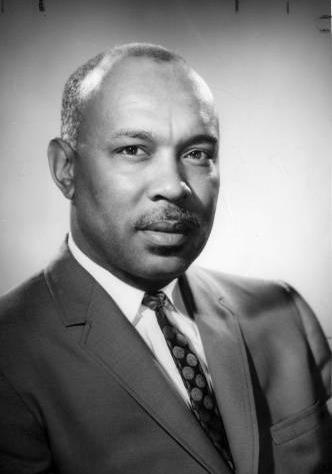
Reverend Mozel Sanders arrives at Mt. Vernon Missionary Baptist Church
Under Sanders’ leadership, the congregation grows significantly. He launches a radio ministry on WTLC, a job training program, and, in 1974, an annual citywide Thanksgiving dinner. The dinner, renamed the Mozel Sanders Thanksgiving Dinner, continues as a major civic effort with over 40,000 meals prepared each year.
Pictured: Rev. Mozel Sanders, 1965
Credit: Indianapolis Recorder Collection, Indiana Historical SocietyView Source
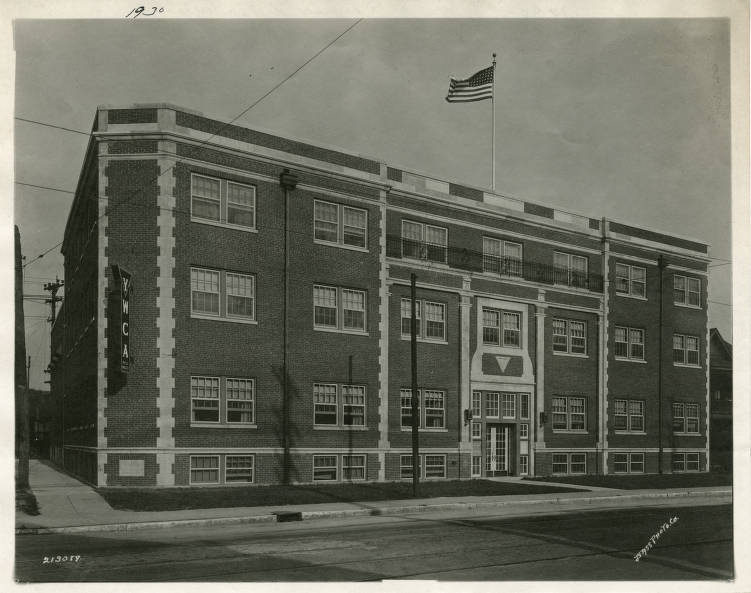
Indianapolis YWCA board votes to integrate and terminate Phyllis Wheatley branch
The Wheatley branch rejoins the Central YWCA branch. The building, located on the southeast corner of Walnut and West Streets, is sold to the Prince Hall Masonic Temple.
Pictured: The Phyllis Wheatley YWCA, 1929
Credit: Bass Photo Co Collection, Indiana Historical Society View Source
Concerned Clergy group established
Reverend C. V. Jetter, Reverend Andrew J. Brown, and Reverend Mozel Sanders launch Concerned Clergy. The ministers are active in the national civil rights movement and work to end Jim Crow laws.
Segregation in the Indianapolis Fire Department ends
Four Black firefighters transfer to two other stations than Station No. 1, and six whites (including a captain and lieutenant) move to what had been the all-Black firehouse, located on Indiana Avenue since 1922.
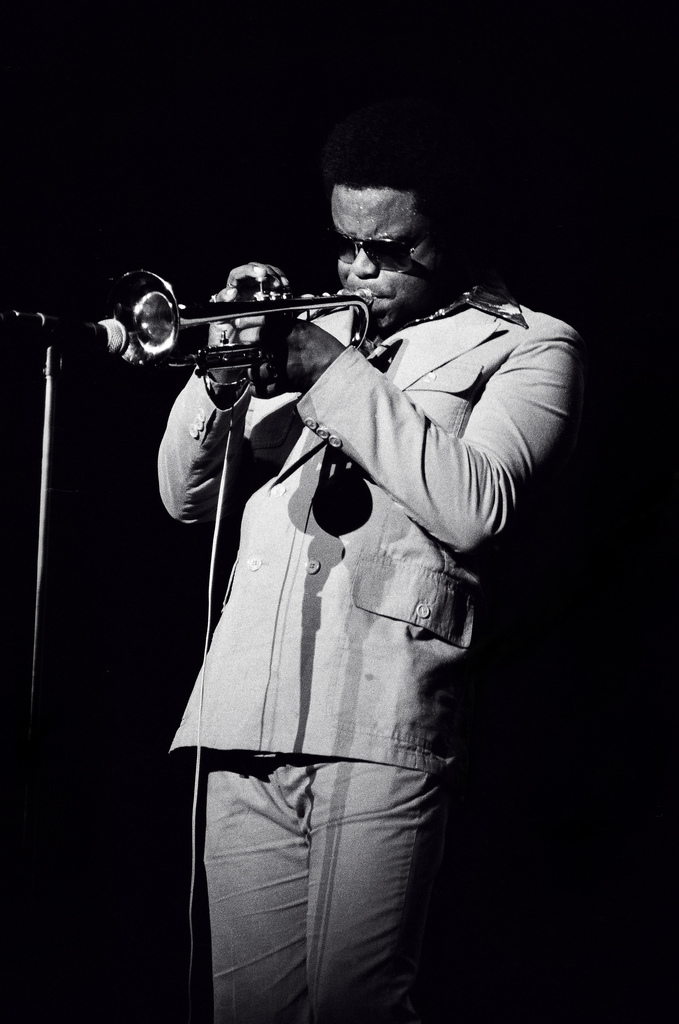
Indianapolis jazz trumpeter Freddie Hubbard records debut album
Blue Note record company signs Hubbard for his debut album, Open Sesame. During the next year, he releases three more recordings—“Goin’ Up,” “Hub Cap,” and “Ready for Freddie.”
Pictured: Freddie Hubbard, 1976
Credit: Tom Marcello Webster, New York, USA via Wikimedia Commons View Source
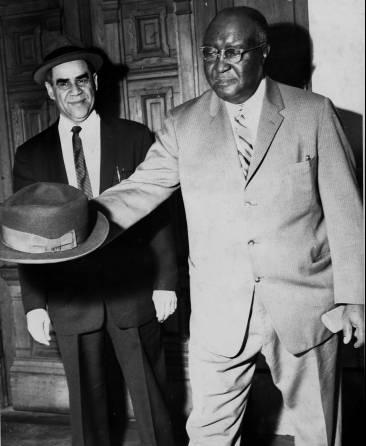
Indianapolis attorney becomes first Black man to run in a presidential primary
Frank R. Beckwith, a local attorney, runs in the presidential primary race against Richard Nixon and several other Republicans. He receives one-third of the votes in Marion County.
Pictured: Frank Beckwith, a resident of Meridian Park, symbolically throws his hat in the ring for the 1960 presidential election.
Credit: Indianapolis Recorder Collection, Indiana Historical Society View Source
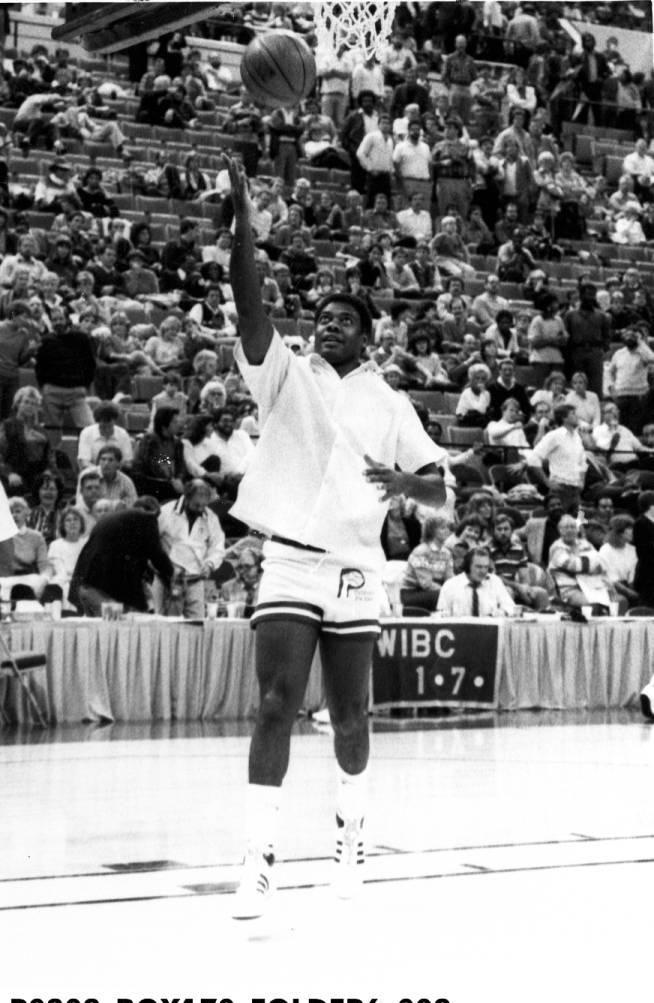
Oscar Robertson becomes the first basketball player to appear on the cover of Time magazine
Robertson is an Indianapolis native and a former Crispus Attucks student and basketball star. Within a year of being drafted by the Cincinnati Royals, he is featured in Time magazine.
Pictured: NBA star, Oscar Robertson, 1984
Credit: Indianapolis Recorder Collection, Indiana Historical Society
View Source
Homes of two African American families on N. Illinois defaced
Vandals deface two homes that Black people own in a previously all-white block of the Butler-Tarkington Neighborhood despite the neighborhood organization’s efforts to promote peaceful integration of the community.
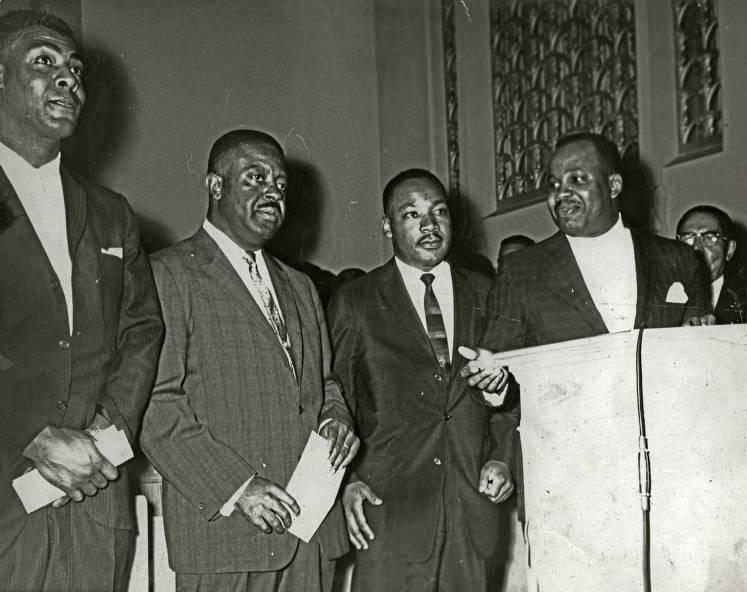
Martin Luther King Jr. preaches at Mt. Zion Missionary Baptist
As part of a mass meeting and membership drive for the local NAACP chapter, King preaches to more than 1,500 attendees.
Pictured: Reverend Kelly Miller Smith, Reverend Ralph Abernathy, Reverend Martin Luther King Jr., and Revered Andrew Brown addressing an NAACP meeting at Mount Zion Baptist Church, 1951
Credit: Indianapolis Recorder Collection, Indiana Historical Society
View Source
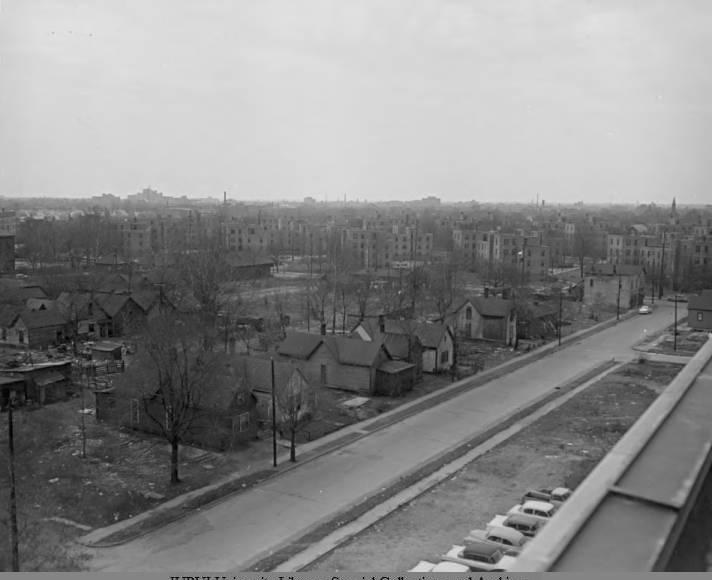
Indiana University purchases property on Indiana Avenue
IU trustees create Hoosier Realty Corporation to buy Indianapolis properties to allow campus consolidation and expansion. This results in the eventual displacement of the area’s mostly Black residents.
Pictured: View of neighborhood looking northeast from Med Science building, ca. 1960
Credit: Indiana University Indianapolis
View Source
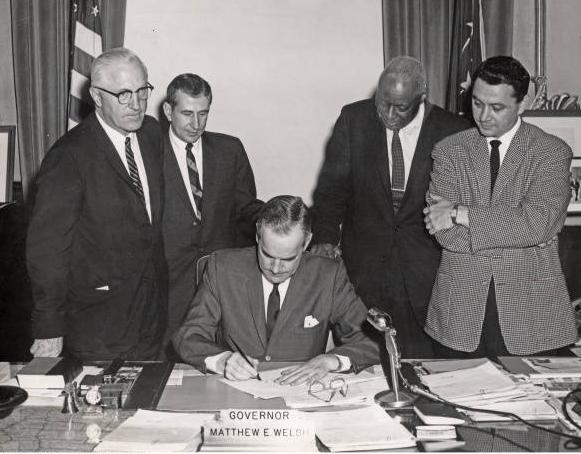
Governor Matthew Welsh orders public places to eliminate discriminatory practices
Welsh issues Executive Order 4-63 making it mandatory to provide equal opportunity for all people in places of public accommodation licensed by any state agency.
Pictured: L. Keith Bulen watching as Matthew Welsh signs a 1963 Civil Rights Bill (SB131).
Credit: Indianapolis Recorder Collection, Indiana Historical Society View Source
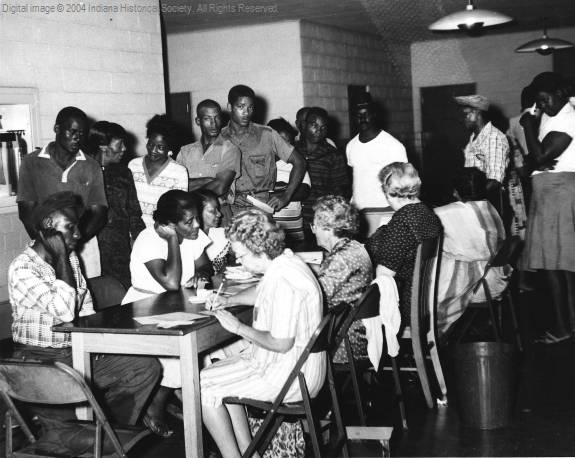
Voter registration drive is organized
The Indianapolis Social Action Council organizes a voter registration drive that runs through September to demonstrate voting Black strength.
Pictured: Voter registration drive, 1963
Credit: Indianapolis Recorder Collection, Indiana Historical Society
View Source
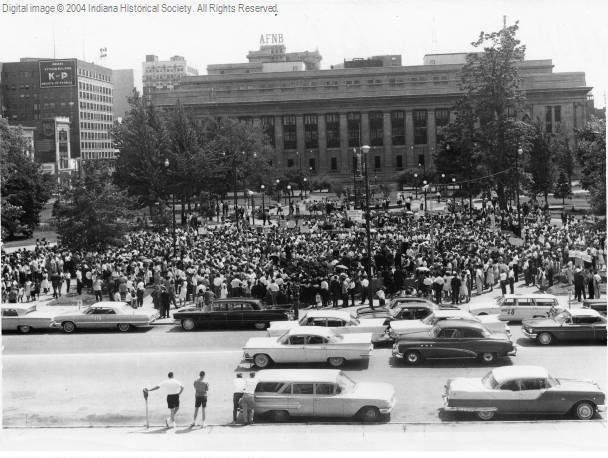
Freedom Rally for Civil Rights
The National Association for the Advancement of Colored People holds a freedom rally in downtown Indianapolis focused on promoting civil rights. Around 2,000 Black and white residents attend.
Pictured: National Association for the Advancement of Colored People Freedom Rally in Indianapolis, 1963
Credit: Indiana Historical Society
View Source
George Roddy becomes the first African American to win Indianapolis Golf Association City title
Roddy, a Crispus Attucks industrial arts teacher, beats Carmel High School graduate Steve Mayhew by one stroke in the 3-day, 36-hole city tournament.
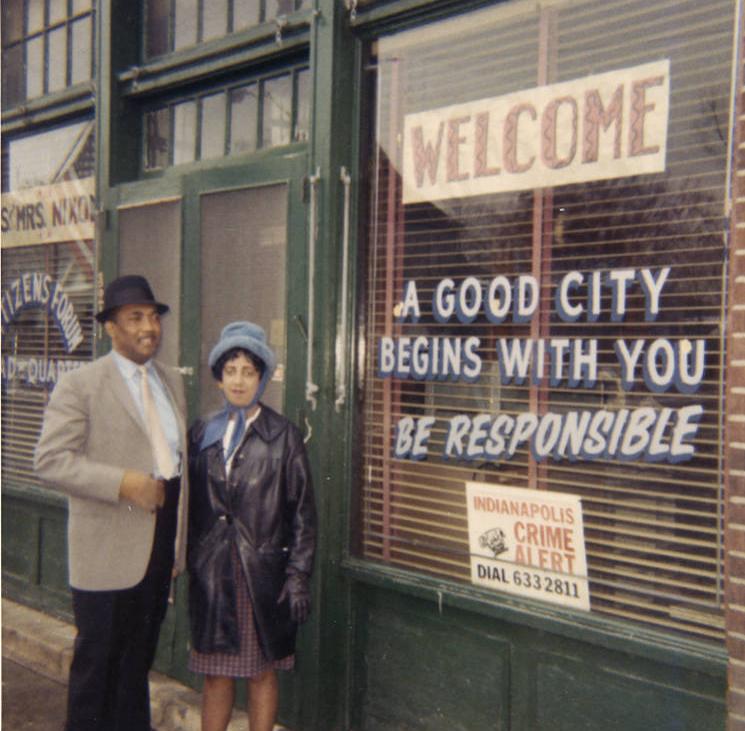
Mattie Coney, a school teacher, founds Citizens Forum
Headquartered in the inner city of Indianapolis, the largely Black organization seeks to improve city neighborhoods through the formation of block clubs and community support.
Pictured: Elmo and Mattie Coney outside of Citizens Forum office at 3211 North Illinois Street, May 1970
Credit: Indiana Historical Society View Source
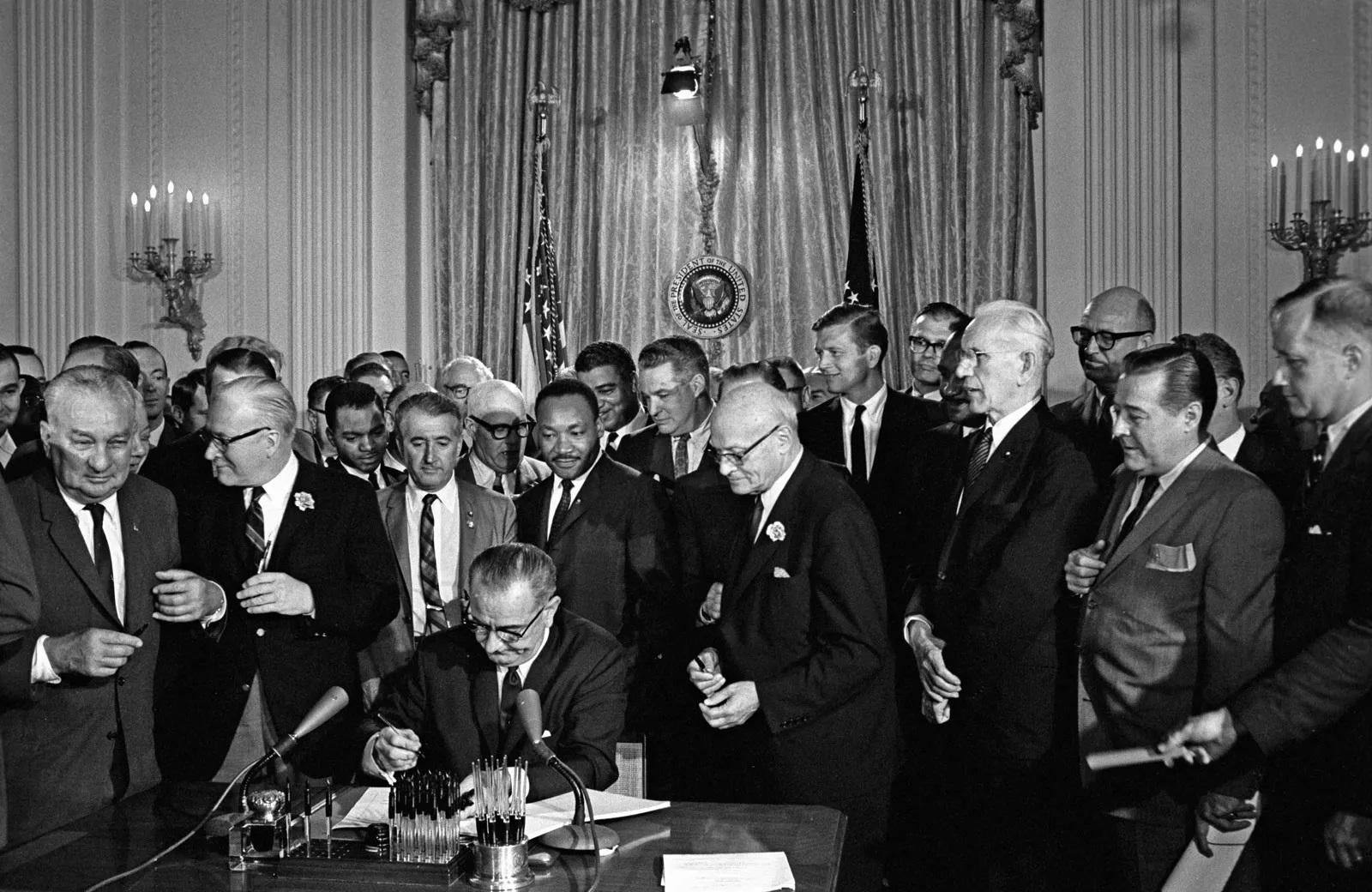
National Civil Rights Act of 1964 passes
Congress prohibits discrimination based on race, color, religion, sex, or national origin. The act outlaws segregation in businesses and public places as well as forbids discriminatory practices in employment.
Pictured: U. S. President Lyndon B. Johnson signing the 1964 Civil Rights Act as Martin Luther King, Jr., and others look on, July 2, 1964
Credit: Lyndon B. Johnson Library and Museum; photograph, Cecil Stoughton
View Source
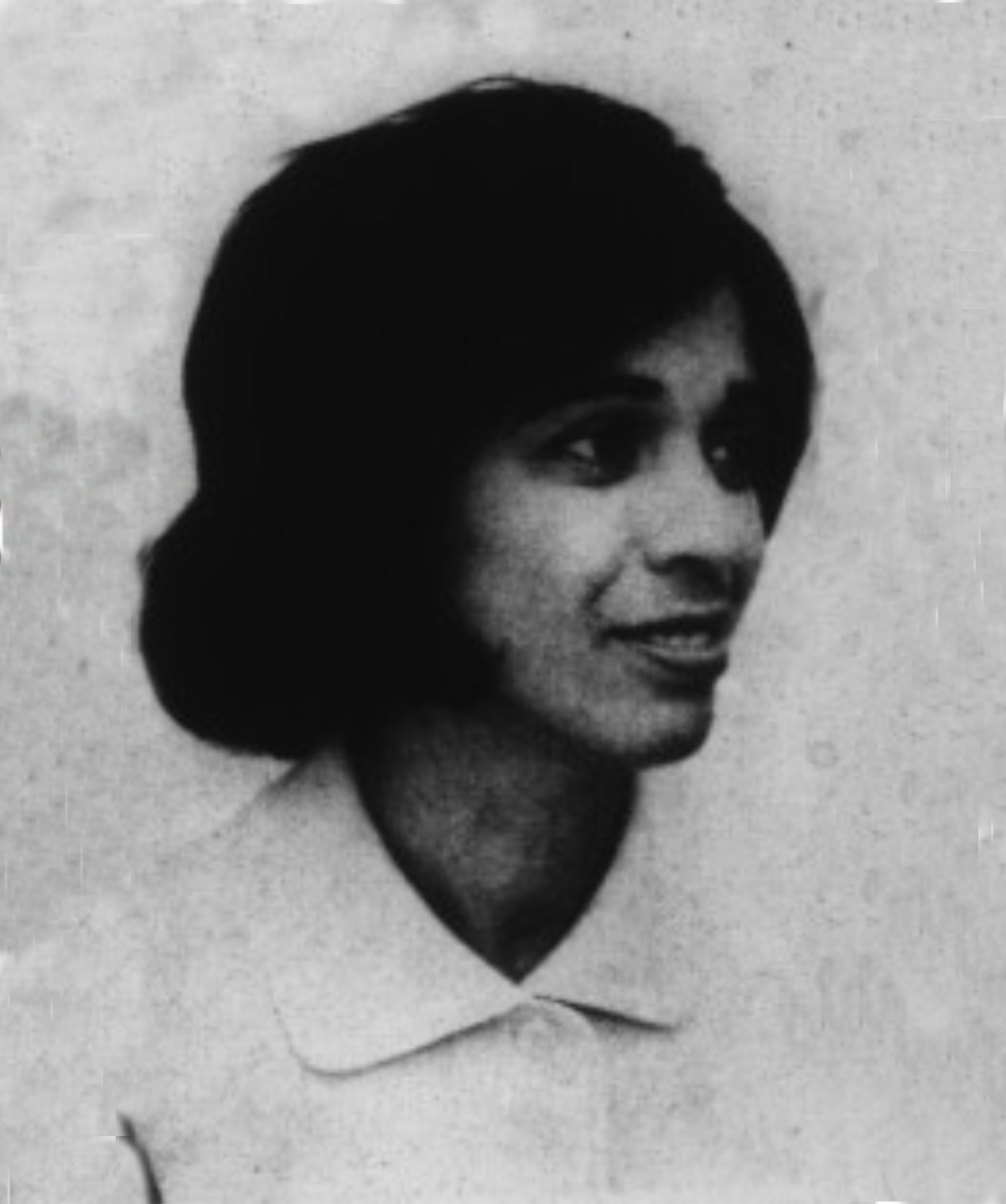
Daisy Lloyd becomes the first African American woman elected as Indiana state representative
Lloyd, an Indianapolis resident since 1952, is elected as a Democrat to the Indiana General Assembly. While serving, she is diagnosed with breast cancer and becomes one of the first to share her experience with it publicly.
Pictured: Daisy Lloyd, 1964
Credit: Indianapolis Recorder View Source
Benjamin A. “Doc” Osborne elected Center Township trustee
Osborne, a chiropractor, begins his first of five consecutive terms (1965-1986) as Center Township trustee, making him the longest serving Black official in Indiana at the time and the oldest active trustee in the state.
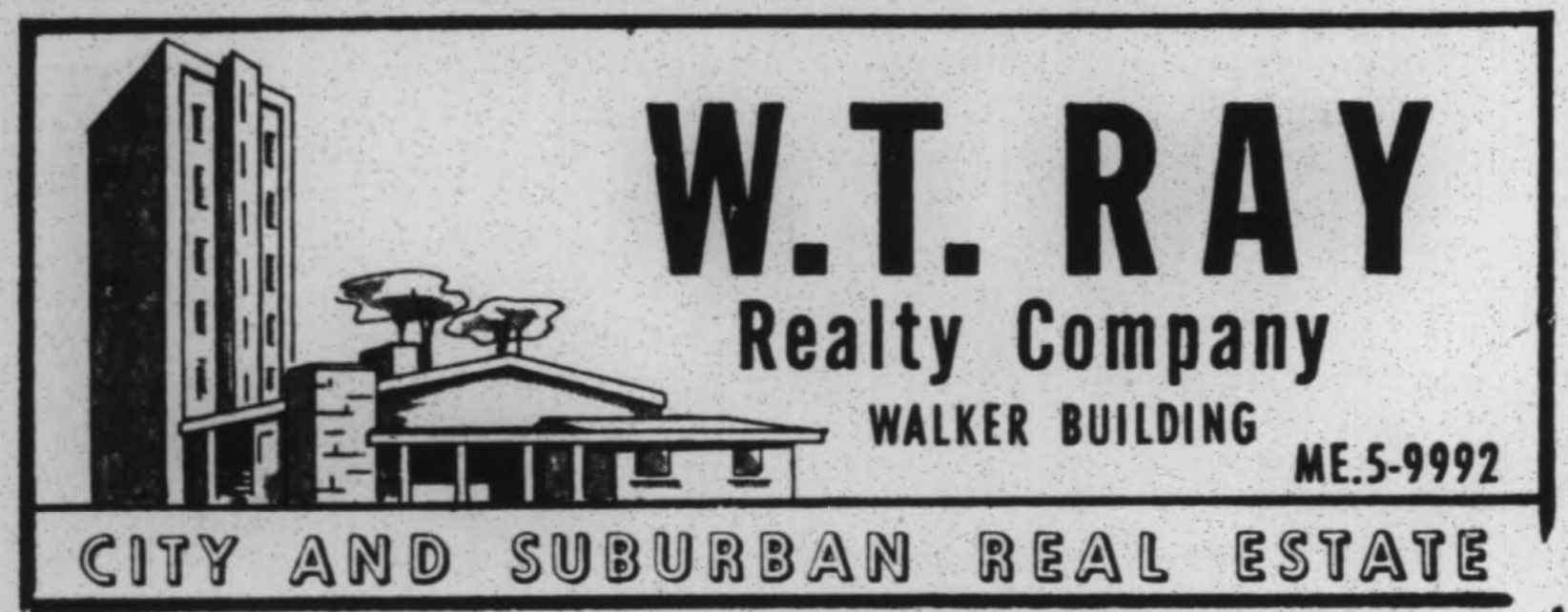
Indianapolis Board of Realtors admits its first Black member
William T. Ray becomes the first accredited Black realtor in Indianapolis and a member of the Indianapolis Real Estate Board. Ray helps end housing discrimination in the northwest suburbs of Indianapolis.
Pictured: W.T. Ray Realty Company advertisement, 1963?
Credit: Indianapolis Recorder? View Source
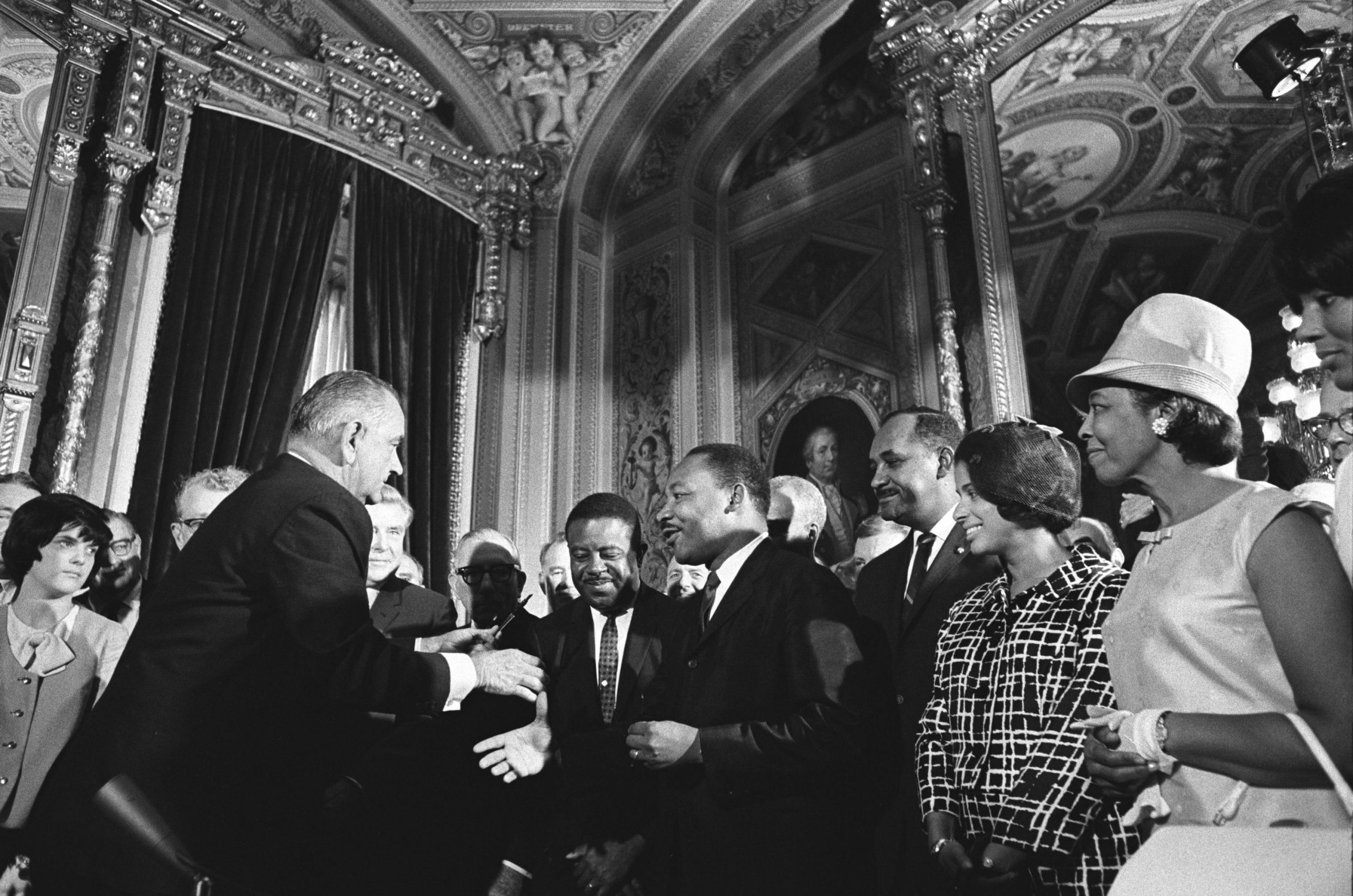
Voting Rights Act of 1965 signed into law
The federal statute outlaws discriminatory voting practices including literacy tests as a prerequisite to voting.
Pictured: United States President Lyndon B. Johnson, Martin Luther King Jr., and Rosa Parks at the signing of the Voting Rights Act, 1965
Credit: Public domain via Wikimedia Commons
View Source
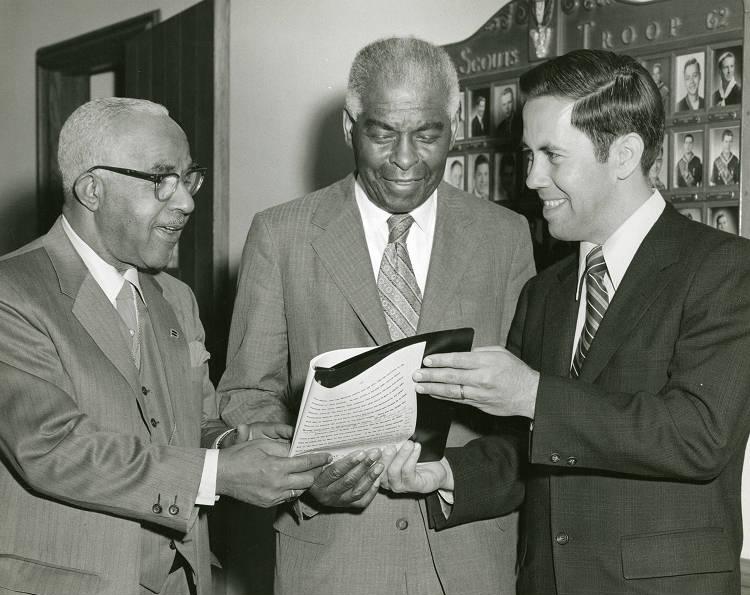
Indianapolis Urban League founded
A branch of the National Urban League, the Indianapolis League is founded in the Fall of 1965 as an interracial community-based social service group focused on civil rights.
Pictured: Urban League Annual Meeting, 1971
Credit: Indiana Historical Society
View Source
Andrew Jacobs Jr. introduces the Homes Before Highways bill
In response to the future construction of Interstate-65, the bill seeks to “prohibit the acquisition of land or construction of public works until adequate and comparable replacement homes and churches are available to the displaced.”
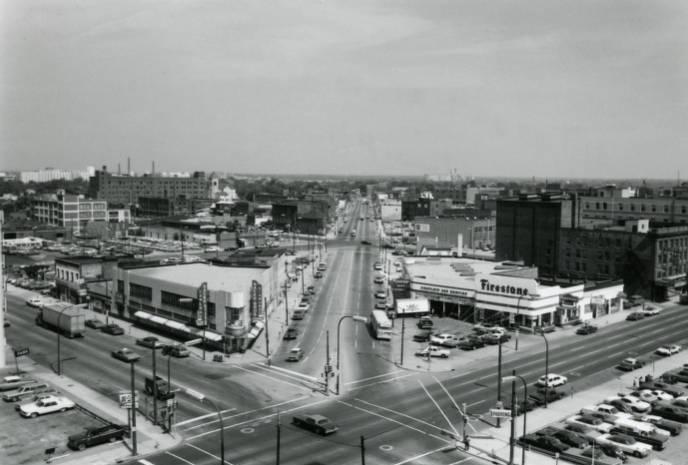
Indiana Avenue Association founded
African American entrepreneurs create the Indiana Avenue Association and begin work on “Operation Avenue,” one of the city’s many early efforts to rebuild urban areas affected by postwar suburbanization.
Pictured: Indiana Avenue aerial, ca. 1975
Credit: City of Indianapolis, Department of Metropolitan Development, Indiana Historical Society
View Source
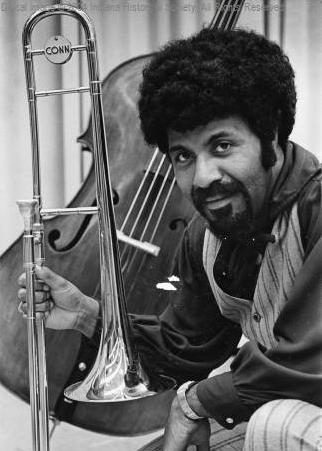
David Baker establishes Jazz Studies program at Indiana University
An Indianapolis native, trombonist, and composer, Baker establishes one of the first jazz studies programs at an American university. It becomes a highly respected and internationally recognized academic jazz program.
Pictured: Jazz musician David Baker, 1970
Credit: Indianapolis Recorder Collection, Indiana Historical Society View Source

Black Panther party organizes in Indianapolis
Fred Crawford is inspired to form a Black Panther chapter in his hometown of Indianapolis after attending Black Panther rallies in California. The chapter maintains 20-25 active members throughout its four-year history.
Pictured: Black Panther party logo, n.d.
Credit: Public domain via Wikimedia Commons
View Source
Black Radical Action Project (BRAP) founded
Civil rights activist Snookie Hendricks leads BRAP, the first Black militant group founded in Indianapolis. The group advocates for civil rights.
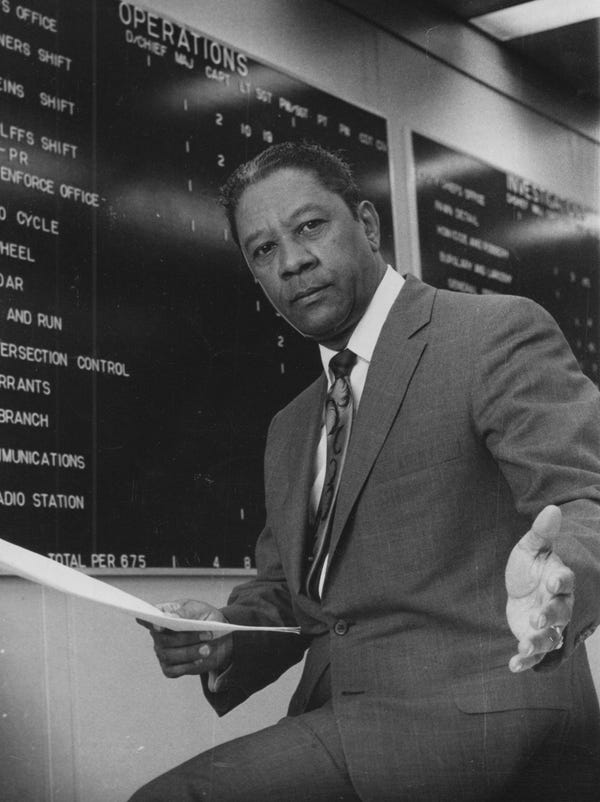
First Black deputy chief of police
Beginning as a street patrolman in 1934, Spurgeon Davenport is elevated to the rank of deputy chief in the Indianapolis Police Department.
Pictured: Indianapolis Police Dept. Spurgeon Davenport, 1970
Credit: James Ramsey, IndyStarView Source
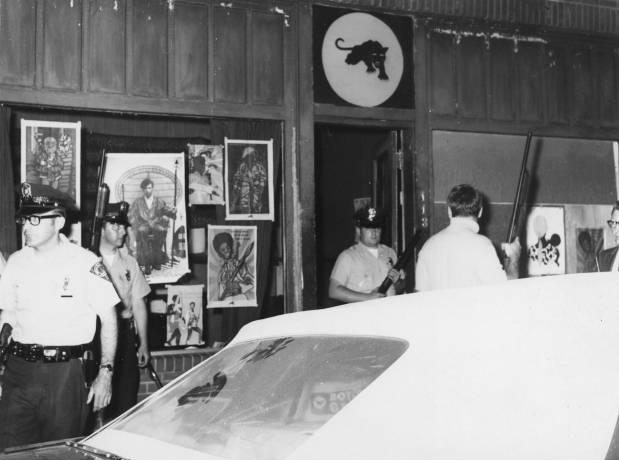
Three members of the Indianapolis Black Panther chapter arrested
Charged in June 1968 with burglary and conspiracy to murder the police chief and head of police vice squad, a jury convicts two of the defendants in March 1969. When it becomes known that an undercover police officer played a role in the burglary, the Black community meets the decision with outrage.
Pictured: Police carrying shotguns are shown during a raid of the Black Panthers Headquarters that was located on West 30th Street, 1968
Credit: Indianapolis Recorder Collection, Indiana Historical Society
View Source
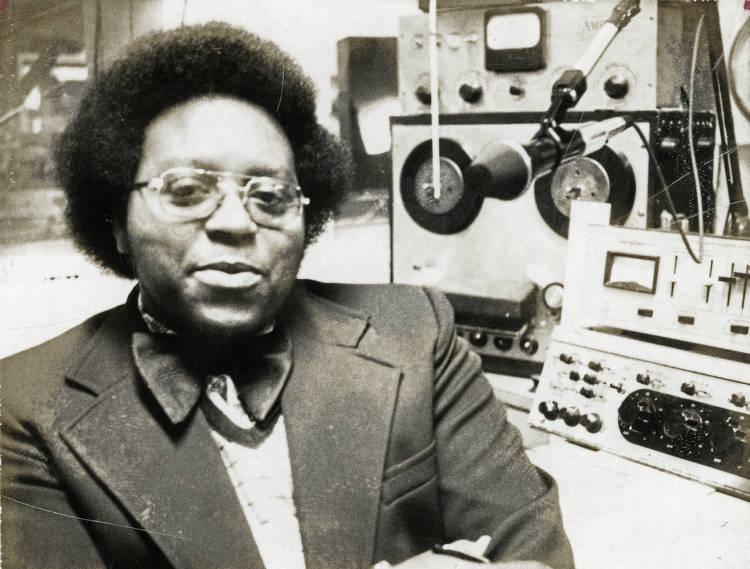
WTLC-FM debuts as Indianapolis’ only African American owned and operated radio station
WTLC makes its debut on 105.7 FM. The station is the first in Indianapolis to provide 24-hour radio programming for African Americans.
Pictured: Popular WTLC and WXLW disc jockey, Ricky Clark, 1974
Credit: Indianapolis Recorder Collection, Indiana Historical Society View Source
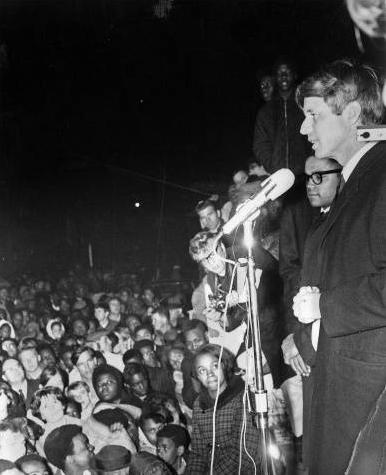
Robert F. Kennedy’s speech on the King assassination
Democratic presidential candidate Robert F. Kennedy, speaking before a mostly African American crowd at 17th and Broadway streets, announces the assassination of Dr. Martin Luther King, Jr. and appeals for calm. The impromptu speech attracts national attention when the city remains free of major civil unrest.
Pictured: Senator Robert F. Kennedy announcing the news of the assassination of Martin Luther King, Jr. to listeners during a Presidential campaign speech in Indianapolis, Indiana, April 4, 1968
Credit: John F. Kennedy Presidential Library and Museum View Source
U.S. Justice Department sues Indianapolis Public Schools for racial discrimination
By August 1971, when the trial concludes, U.S. District Judge S. Hugh Dillin finds IPS guilty of de jure (by law) segregation and orders it to accelerate desegregation efforts. He later imposes a remedy of busing to achieve integration.
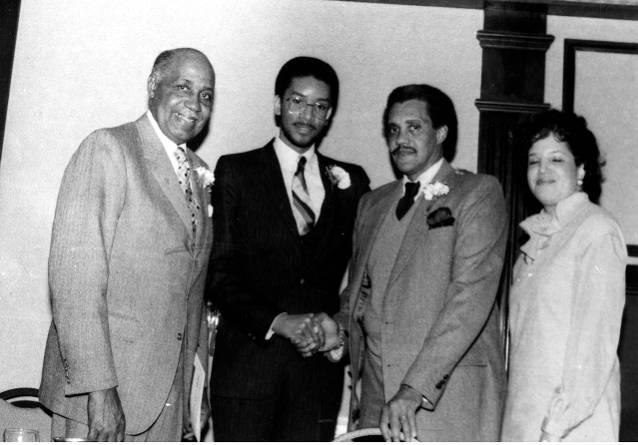
Indianapolis Business Development Foundation incorporated
The foundation provides funding to help minority businesses get started or expand. Within its first 10 years, the organization provides over $1 million in direct loans and helps generate funds from other sources in excess of $5 million.
Pictured: Indianapolis Business Development Foundation Dinner, 1984
Credit: Indianapolis Recorder Collection, Indiana Historical Society
View Source
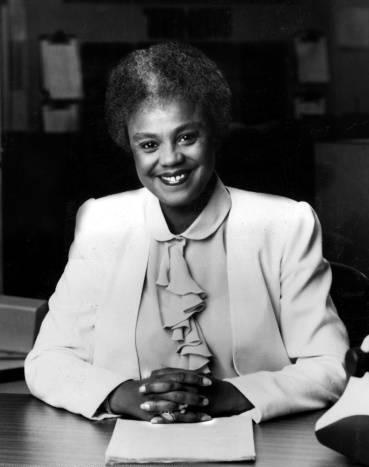
Barbara Boyd becomes first African American woman television journalist
Boyd begins work as a reporter at WFBM (later WRTV) and becomes a household name and role model for African Americans and women. She is the first Black woman to serve as a TV news anchor and remains with the station until 1994.
Pictured: Barbara Boyd, 1987
Credit: Indianapolis Recorder Collection, Indiana Historical Society View Source
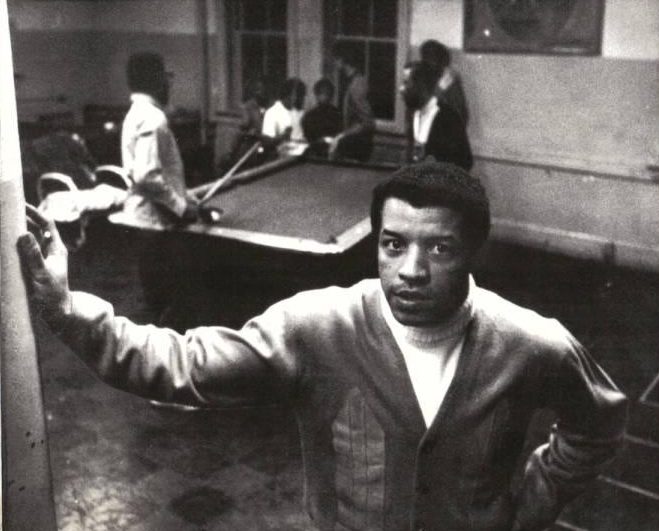
Black police officers form “The Guardians”
Racial issues within the Indianapolis Police Department lead African American officers to form the group. It strives to create a better relationship between police and the community, particularly regarding race, and to address overt acts of discrimination within the police department.
Pictured: Richard Crenshaw, an organizer for the Guardians, ca. 1970s
Credit: Indianapolis Marion County Public Library
View Source
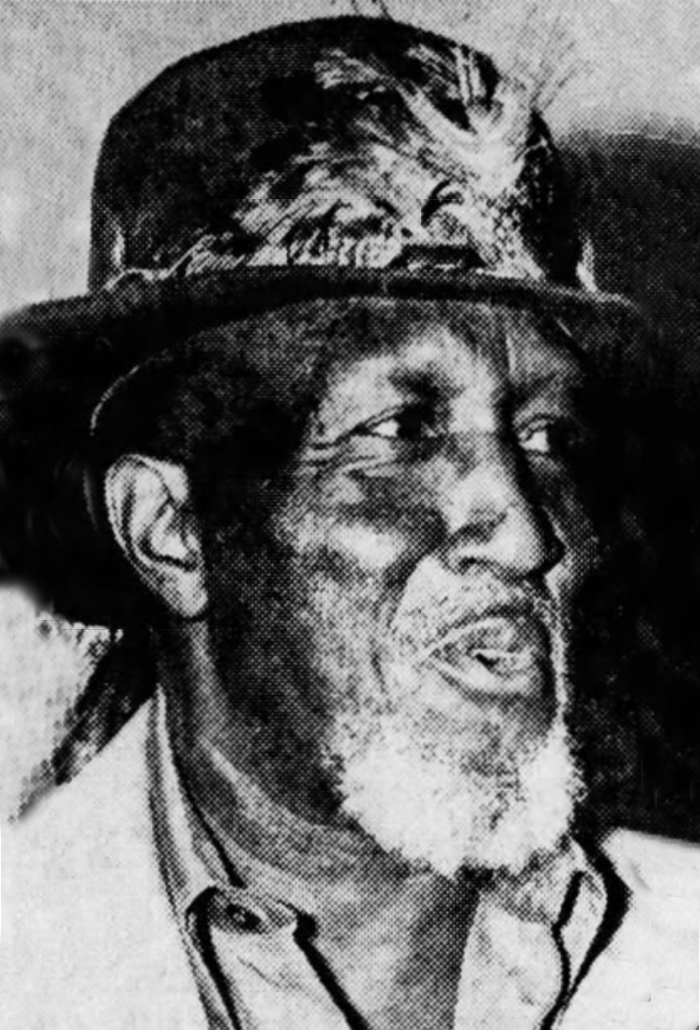
Black Manifesto calls for congregations to pay reparations
Members of the Black Radical Action project, led by Charles “Snookie” Hendricks, interrupt services at local churches to read the “Black Manifesto.” The Manifesto, which originates in Detroit during the National Black Development Conference, calls for congregations to pay reparations to African Americans as compensation for their ancestors’ enslavement.
Pictured: Charles Hendricks, ca. 1980s
Credit: Indianapolis NewsView Source
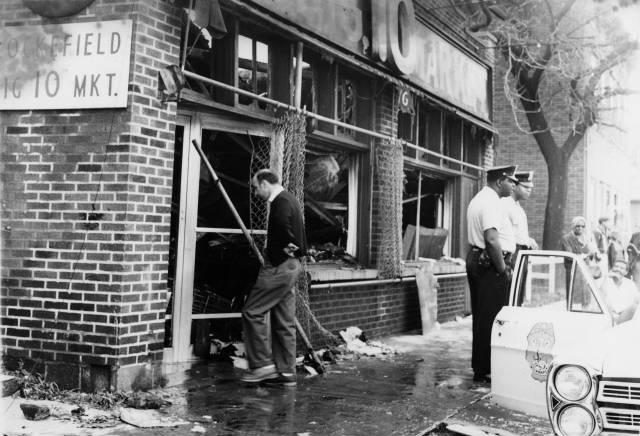
Civil unrest on Indiana Avenue
The continued displacement and poor police treatment of Black families in Indianapolis results in two days of civil unrest at Lockefield Gardens. The event results in the arrest of over 100 demonstrators, multiple injuries, and damage to nearby businesses. It also brings publicity to issues of local police brutality in Black neighborhoods.
Pictured: Lockefield Big 10 Market was just one location that was looted and burned during the unrest, 1969
Credit: Indianapolis Recorder Collection, Indiana Historical Society
View Source
Population: 134,320
The city population totals 744,624, with 134,320 African Americans. The large increase in population overall and among various groups is the result of city-county government under Unigov.
Marion County and Indianapolis consolidate under Unigov
On March 13, 1969, Governor Whitcomb signs the legislation to unify Marion County and the city of Indianapolis. It becomes effective on January 1, 1970.
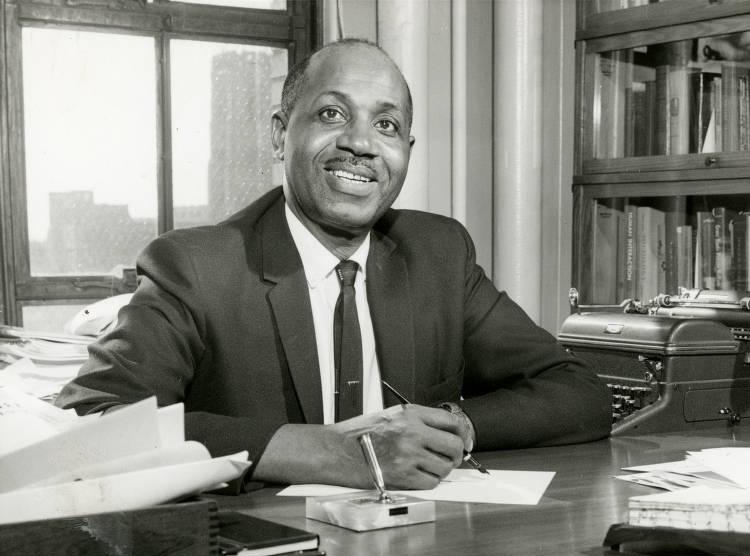
Joseph T. Taylor becomes the first Black dean at IUPUI
Taylor, who had joined the Indianapolis Regional Campus as an associate professor of sociology in 1962, is named dean of the newly established School of Liberal Arts. He remains dean until 1978. Later, the school establishes an annual symposium in his honor.
Pictured: Joseph T. Taylor, 1967
Credit: Indianapolis Recorder Collection, Indiana Historical SocietyView Source
Indianapolis Public Schools begin voluntary busing
Busing begins in Indianapolis school districts in anticipation of federal court order ending segregation. The busing is sporadic and continues for the next two years.
Whitcomb v. Chavis becomes landmark U.S. Supreme Court voting rights decision
The case considers whether Marion County state legislative districts were drawn improperly to minimize the voting strength of Black residents. The Supreme Court rules that an intent to discriminate cannot be proven and, therefore, the redistricting is not unconstitutional.
U.S. Supreme Court upholds busing
The U.S. Supreme Court allows busing for the purposes of desegregation, leading to its widespread implementation. Federal district judge S. Hugh Dillin adopts this remedy for Indianapolis in 1973.
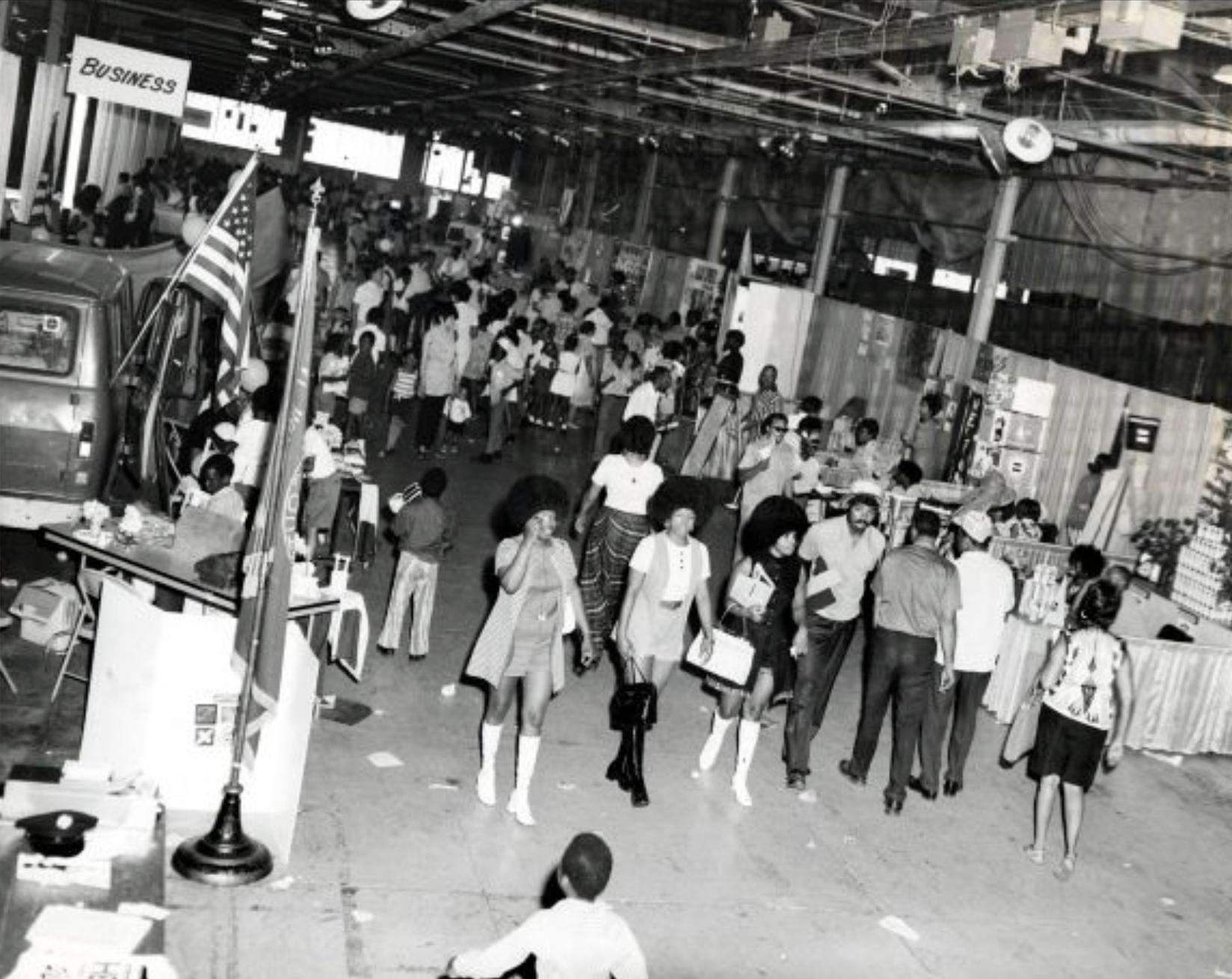
Indiana Black Expo begins
The annual exposition holds its inaugural event, a one-day gathering, at the Indiana State Fairgrounds. It aims to highlight the talents and achievements of African Americans and identify and address their challenges.
Pictured: Crowd at First Indiana Black Expo at the Indiana State Fairgrounds, 1971
Credit: Indianapolis Recorder Collection, Indiana Historical Society View Source
Indianapolis Public Schools found guilty of segregation
U.S. District Judge S. Hugh Dillin finds IPS guilty of segregation and orders it to accelerate desegregation of its staff and some schools.
Janet Langhart becomes first African American to host a daily TV show in Indianapolis
Langhart goes on the air as host of WISH-TV’s Indy Today. When she leaves to join a station in Boston, Alpha Blackburn, a prominent African American Indianapolis entrepreneur and personality, continues the broadcast.
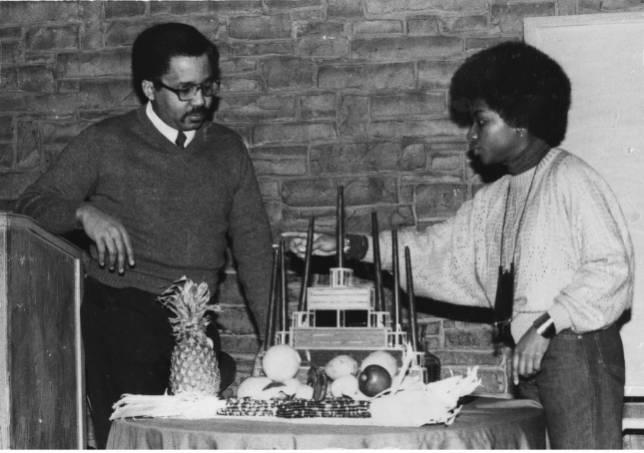
First observance of Kwanzaa in Indianapolis
Six years after the celebration was founded in Los Angeles, Indianapolis poet Mari Evans and others hold the first seven-day Indianapolis Kwanzaa celebration at IUPUI’s Cavanaugh Hall. The celebration, organized by the Indianapolis Kwanzaa Committee, later moves to the Indianapolis Public Library.
Pictured: Fall Creek YMCA Kwanzaa celebration, 1983
Credit: Indianapolis Recorder Collection, Indiana Historical Society
View Source
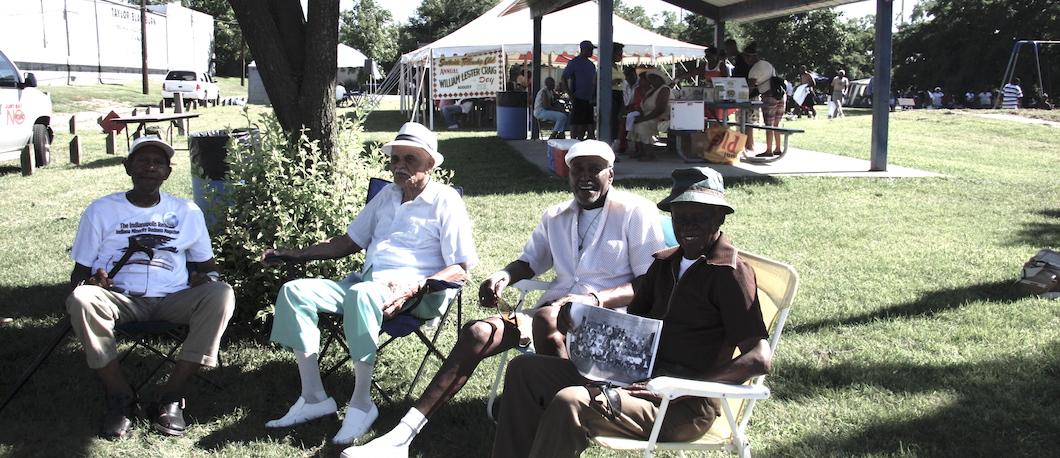
“Neighborhood of Saturday Nights Picnic” begins
Even after being displaced by the interstate, former Black and Jewish residents of the Babe Denny neighborhood launch what becomes an annual community picnic, held each August in Babe Denny Park.
Pictured: Participants in the community picnic in 2019 pose with a photo of themselves at the inaugural picnic in 1975.
Credit: Indianapolis Recorder
View Source
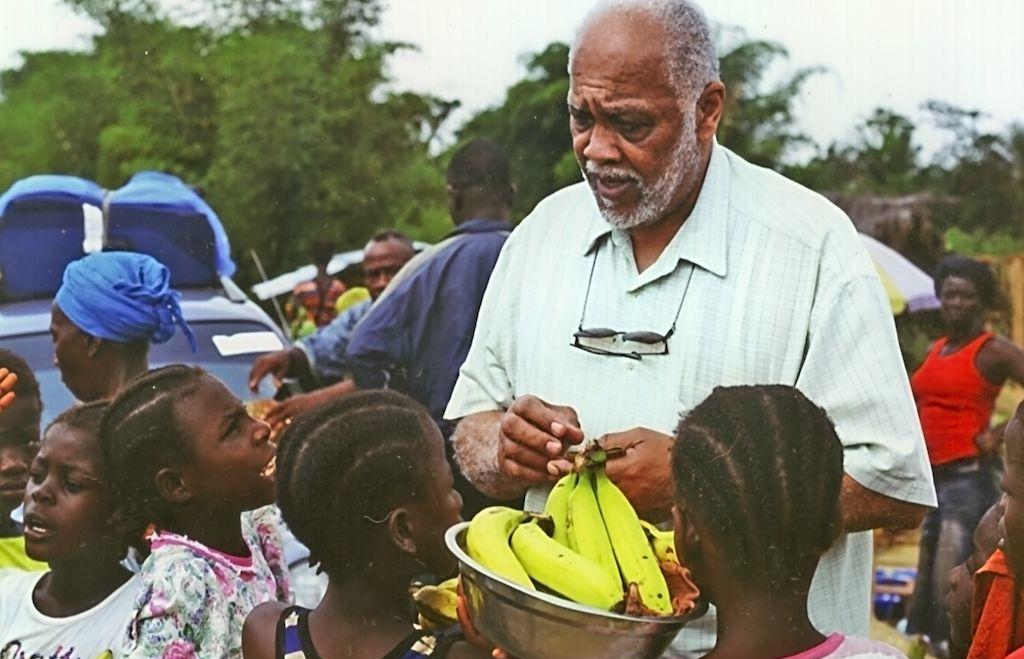
Reverend Frank Alexander named pastor of College Avenue Baptist Church
College Avenue Baptist Church (now Oasis of Hope Baptist Church) welcomes Reverend Frank Alexander as its pastor. He uses his role to engage and foster community in Martindale Brightwood, with the church building apartments and engaging in economic development.
Pictured: Pastor Frank Alexander working with children in Liberia as part of the nonprofit he started, Oasis Mission for Orphans, Disabled and Unaccompanied Children, ca. 1990s
Credit: Indianapolis Recorder
View Source
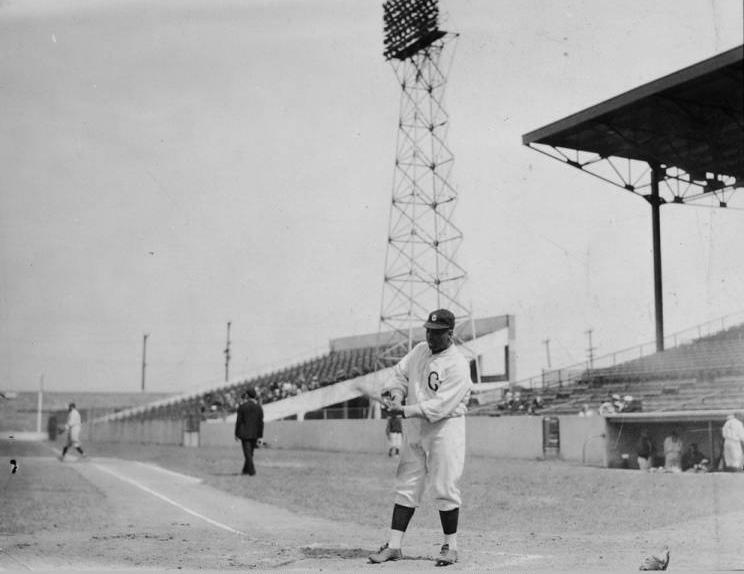
Oscar Charleston posthumously inducted into the Baseball Hall of Fame
Known as “The Hoosier Comet,” the Indianapolis native plays for the Indianapolis ABCs of the Negro National League for several years, starting in 1916. He later manages the famous show team, the Indianapolis Clowns, for their 1954 season.
Pictured: Oscar Charleston, n.d.
Credit: Indianapolis Recorder Collection, Indiana Historical Society View Source
Mayor Hudnut pushes for minority hiring in police department
Hudnut publicly recognizes the disparity between the proportion of Black officers and Black citizens. He promises to close the gap through strong recruitment efforts.
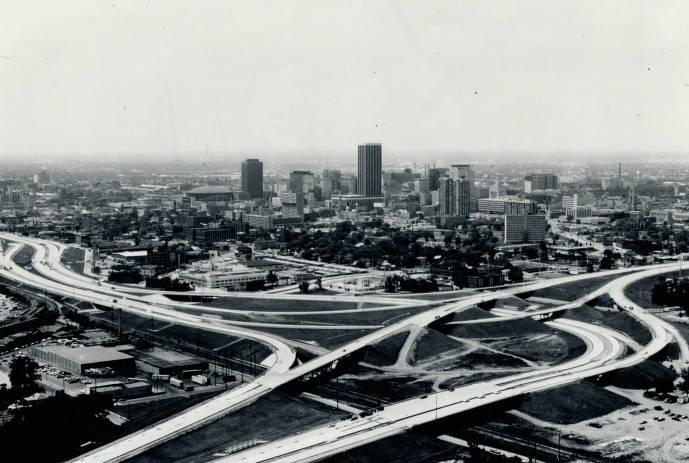
I-65 and I-70 within the I- 465 loop completed
The interstate construction displaces at least 17,000 residents—primarily Black and low-income—and leaves widespread resentment at the inequitable burden placed on these communities.
Pictured: Indianapolis skyline and interstate system, ca. 1975
Credit: Bass Photo Co. Collection, Indiana Historical Society
View Source
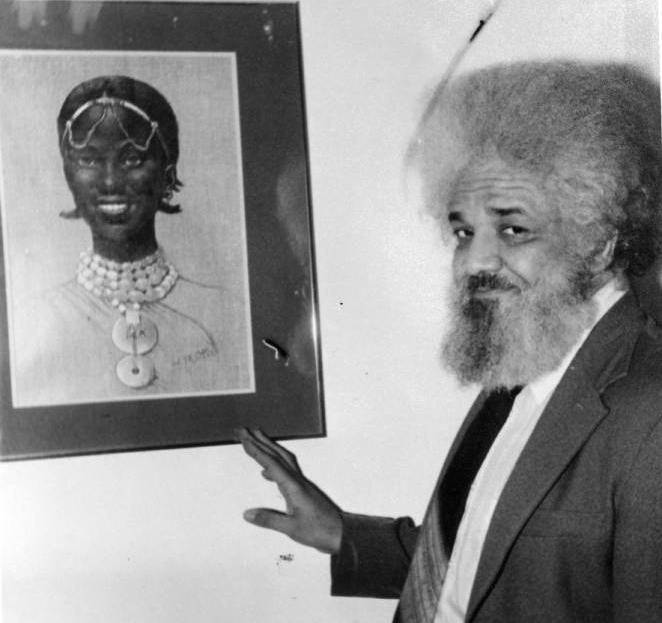
Martin Center opens
Martin Center, an educational institution, opens under the leadership of Father Boniface Hardin, O.S.B. Reflecting increased enrollment and diversity of degree programs, it becomes Martin University in 1990.
Pictured: Father Boniface Hardin inspects art at a Martin Center College exhibition, 1983
Credit: Indianapolis Recorder Collection, Indiana Historical Society View Source
Center for Leadership Development established
The center is established to identify and address the obstacles facing Indianapolis’ Black students. S. Henry Bundles, a prominent Black leader, becomes its first president.
Amos C. Brown begins his Mornings with the Mayor broadcast on WTLC
The radio show features conversations between Brown and Mayor Bill Hudnut. The program continues under the Stephen Goldsmith administration, lasting until 1993. Brown becomes one of the best-known media voices in the Black community.
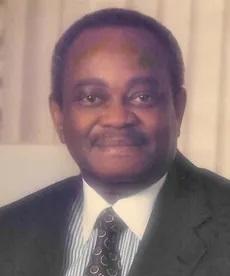
First Black-owned car dealership
Payton Wells Chevrolet opens as the first minority-owned dealership selling new vehicles at 1510 North Meridian Street in downtown Indianapolis.
Pictured: Payton Wells, n.d.
Credit: IndyStar
View Source
Joe Slash becomes the first Black deputy mayor of Indianapolis
Mayor Bill Hudnut selects Slash, a certified public accountant who is new to politics, because of his financial acumen. He later leads the Indianapolis Urban League (2002-2014).
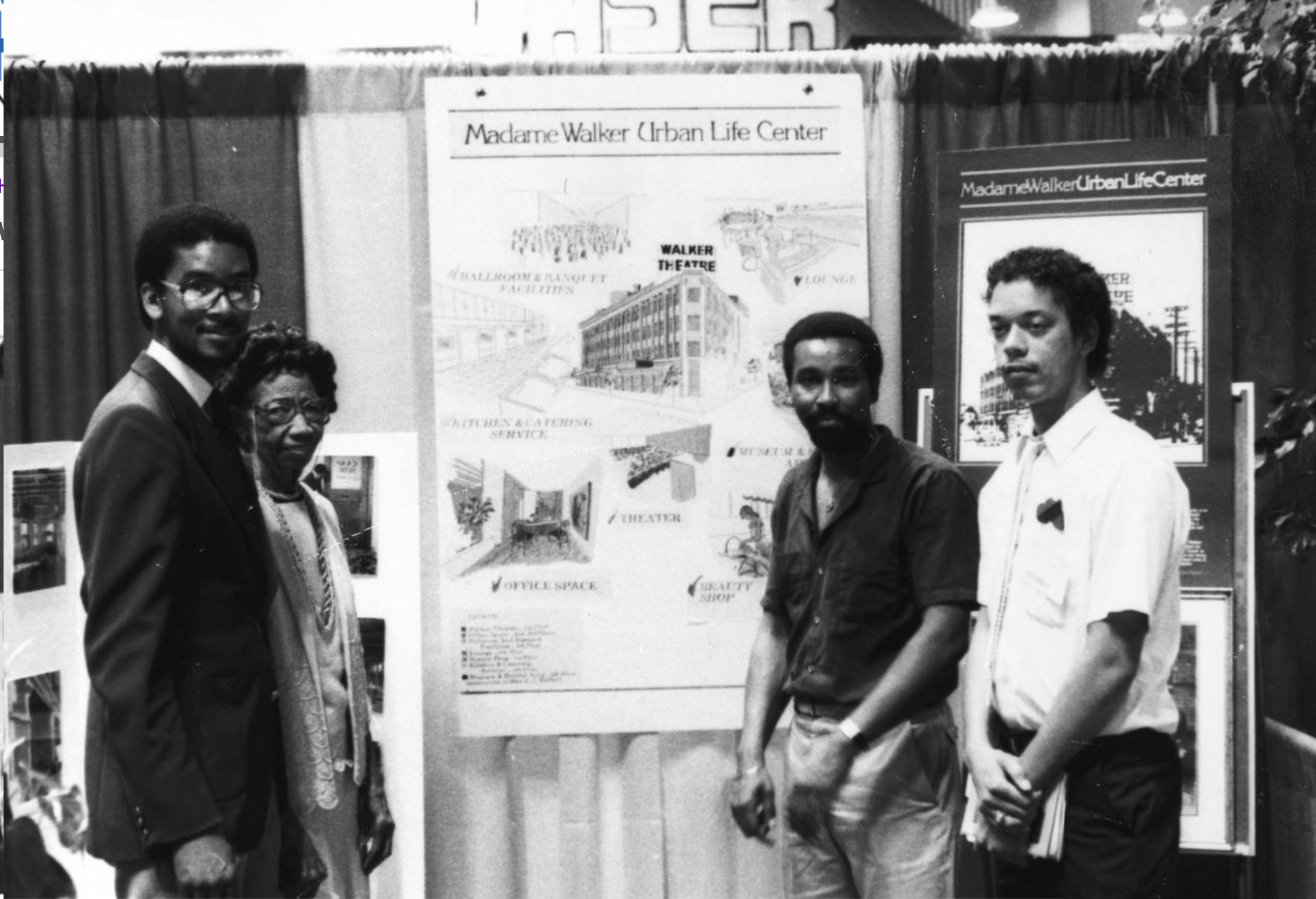
Madam Walker Urban Life Center created
Created as a nonprofit organization, the Madam Walker Urban Life Center, Inc., begins work to save the historic Walker Building from deterioration and demolition.
Pictured: An artist’s rendition of the interior for the Madame Walker Urban Life Center, 1983
Credit: Indianapolis Recorder Collection, Indiana Historical Society
View Source
Tanselle-Adams Commission appointed for Michael Smith shooting
Following the police-action shooting of local Black man Michael Smith, Mayor Hudnut selects Donald Tanselle and Lehman Adams to investigate how to better the relationship between the police and community. New police training procedures are enacted as a result.
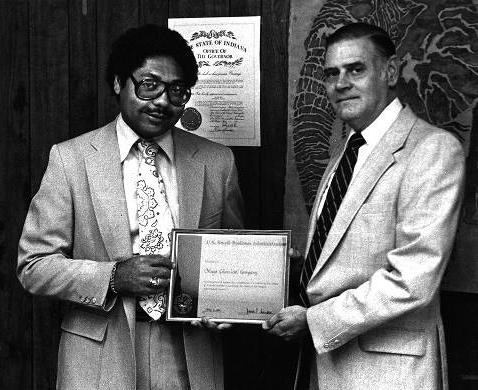
Mays Chemical Company established
Wiliam G. Mays, a chemist, founds the company that becomes one of the largest chemical distributors and the 16th-largest African American industrial service in the country. He purchases the Indianapolis Recorder in 1990 and, with Bill Shirk, launches WAV-TV in 1992, the first over-the-air television station to have Black ownership in the city.
Pictured: William G. Mays (left), 1984
Credit: Indianapolis Recorder Collection, Indiana Historical Society View Source
Riviera Club charged in racial discrimination lawsuit
Rev. Robert Bates files a discrimination suit against the club in 1974 after two Black men are denied membership. The suit is finally heard in federal court in 1980, and as a result, the club agrees to no longer consider race in its membership policies. It also allows Rev. Bates to choose 6 members of its board.
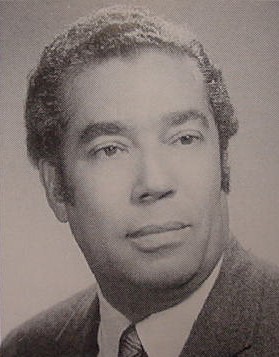
Dr. Frank Perry Lloyd becomes first African American president of Methodist Hospital
Perry becomes president after being one of the first African American doctors on the Methodist Hospital medical staff and its first Black director of medical research (1963). He lays the groundwork for the institution to become a leading center for teaching and research as well as for patient care.
Pictured: Frank Perry Lloyd, ca. 1960s
Credit: Warrick L. Barrett via Find A Grave View Source
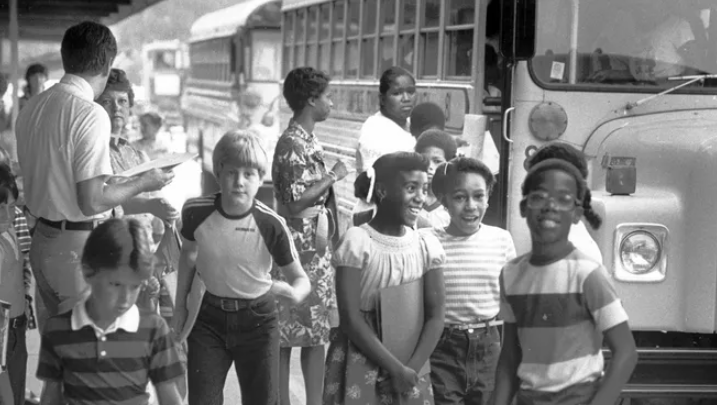
Desegregation case settled, busing begins
At the start of the new school year, around 7,000 Black students are bused to Perry, Wayne, Franklin, Decatur, Lawrence, and Warren townships. Pike and Washington already have significant number of Black students enrolled.
Pictured: Former IPS students arrived at Skiles Test Elementary at Lawrence Township. The cross-district transfer of 5500 black pupils to six township school systems in Marion County was completed as Lawrence Township schools opened and received 454 black pupils, 1981.
Credit: Tim Halcomb, Indianapolis News View Source
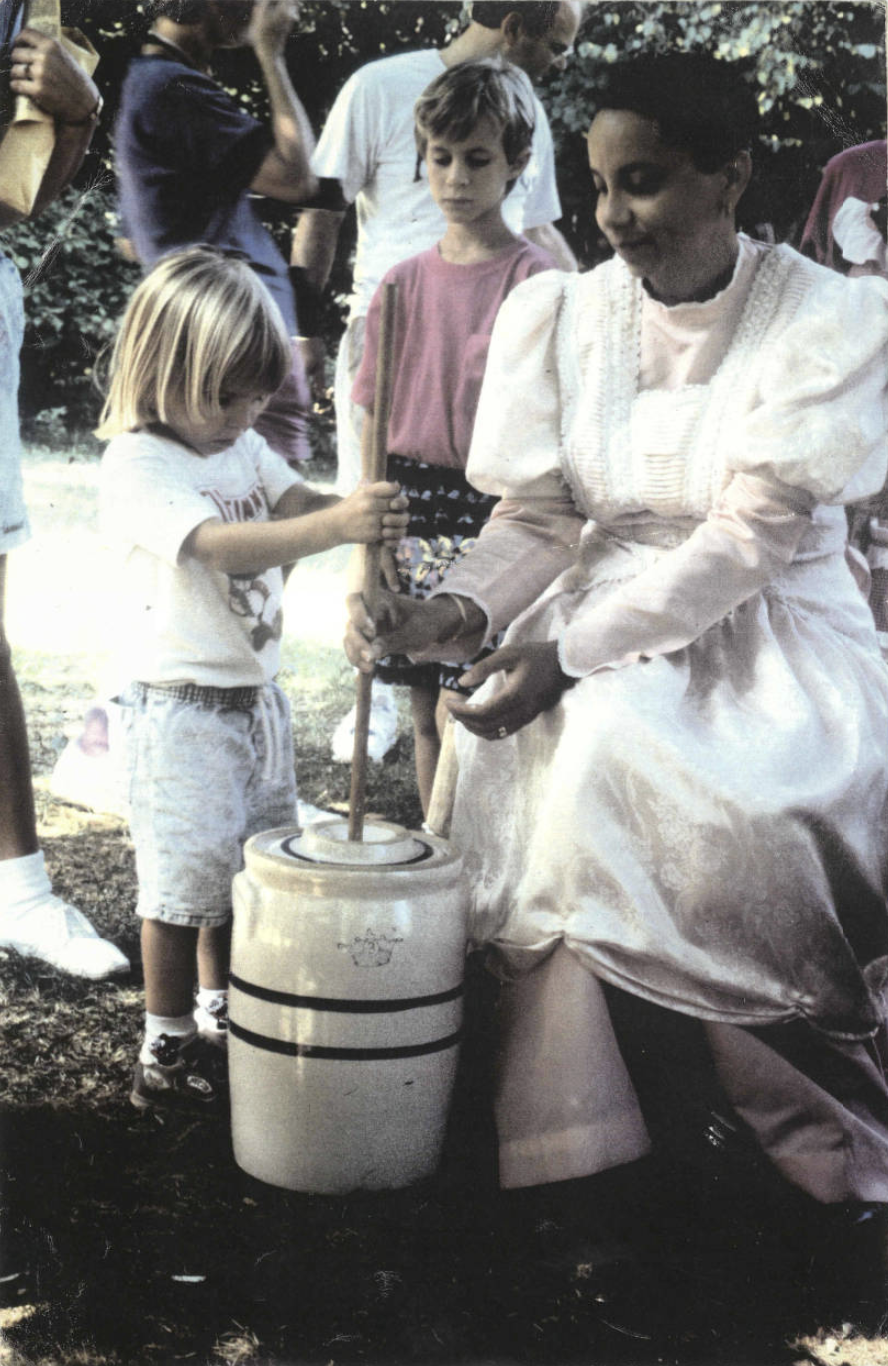
Freetown Village planning begins
Ophelia Wellington conceptualizes Freetown Village out of her desire to teach African American history. The organization begins as a live-action exhibit in the Indiana State Museum, portraying Black history. Freetown actors later travel the Midwest and recreate Indiana’s post-Civil War Black settlements.
Pictured: Freetown village costumed interpreter, ca. 1990s
Credit: Indianapolis Public Library
View Source
100 Black Women of Indianapolis, Inc. founded
Jatrice Martel Gaiter, an attorney, spearheads the creation of the Indianapolis chapter of 100 Black Women. Designed to respond to the needs of Black women in the community, the group focuses on areas of economic development, political action, arts and culture, and professional development.
Lockefield Garden Apartments listed on the National Register of Historic Places
With only 7 original buildings remaining, the apartments are designated as an official Indianapolis historic district.
Pictured: Lockefield Gardens Apartments, ca. 1980s
Credit: City of Indianapolis, Department of Metropolitan Development, Indiana Historical Society
View Source
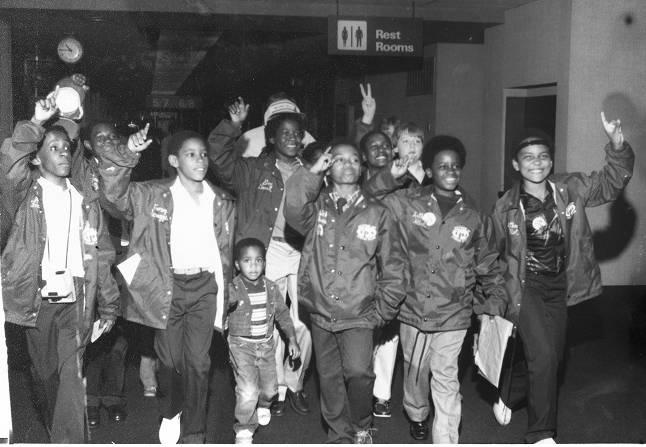
Students from Charity Dye Elementary School 27 win national chess prize
The team, comprised of all Black students with only three years of chess experience, wins the U.S. Elementary School Chess Championship, held in Tennessee. The team goes on to win matches in Japan.
Pictured: School 27 Chess Team, 1983
Credit: Indianapolis Recorder Collection, Indiana Historical Society View Source
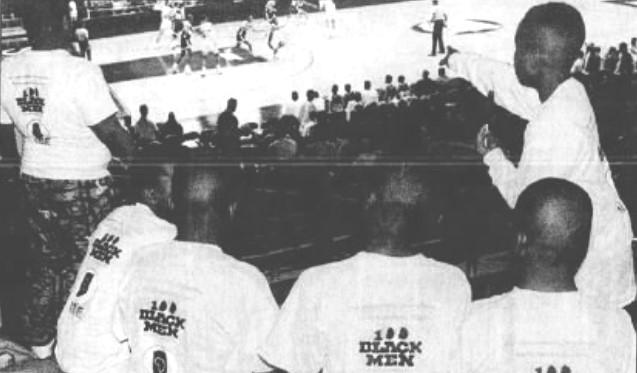
100 Black Men of Indianapolis established
Frank Perry Lloyd and other Black community leaders found the group which provides programs that focus on mentoring, education, and leadership development for the city’s Black youth.
Pictured: IPS students at a basketball game, participating in a program developed by 100 Black Men, 1992
Credit: Susan Plageman, IndyStar
View Source
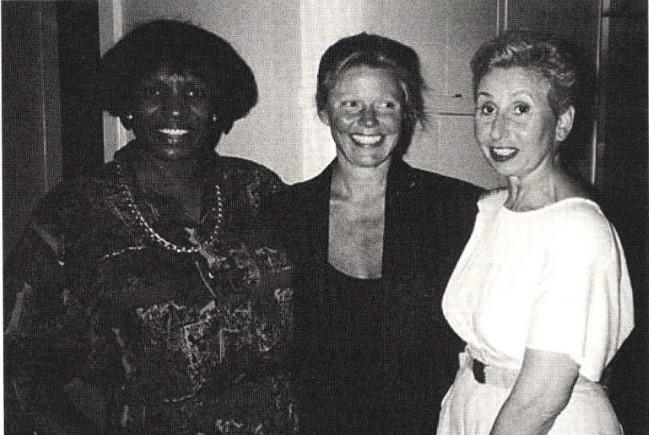
Dialogue Today group organized
In response to a 1984 conflict between the Black and Jewish communities, 50 Black women and 50 Jewish women organize with the mission to better understand one another and to deal with common problems together. The group meets several times a year and holds dinners, book-discussion groups, and visits to each other’s churches and synagogues.
Pictured: Dialogue Today founders, Theresa Guise, Diane Meye Simon, and Carole Stein, ca. 1980s
Credit: Indiana Historical Society
View Source
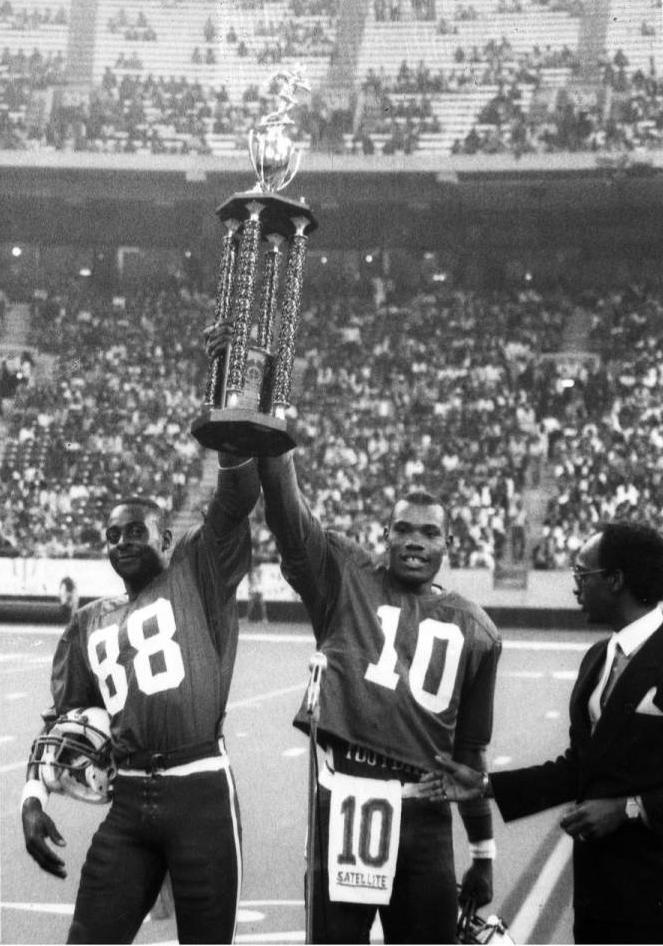
First Circle City Classic
An estimated 40,000 spectators see Mississippi Valley State University defeat Grambling University, 48-36, in what becomes an annual weekend celebration of African American achievements.
Pictured: Members of the Mississippi Valley State University team raise the Circle City Classic trophy, 1984
Credit: Indianapolis Recorder Collection, Indiana Historical Society View Source
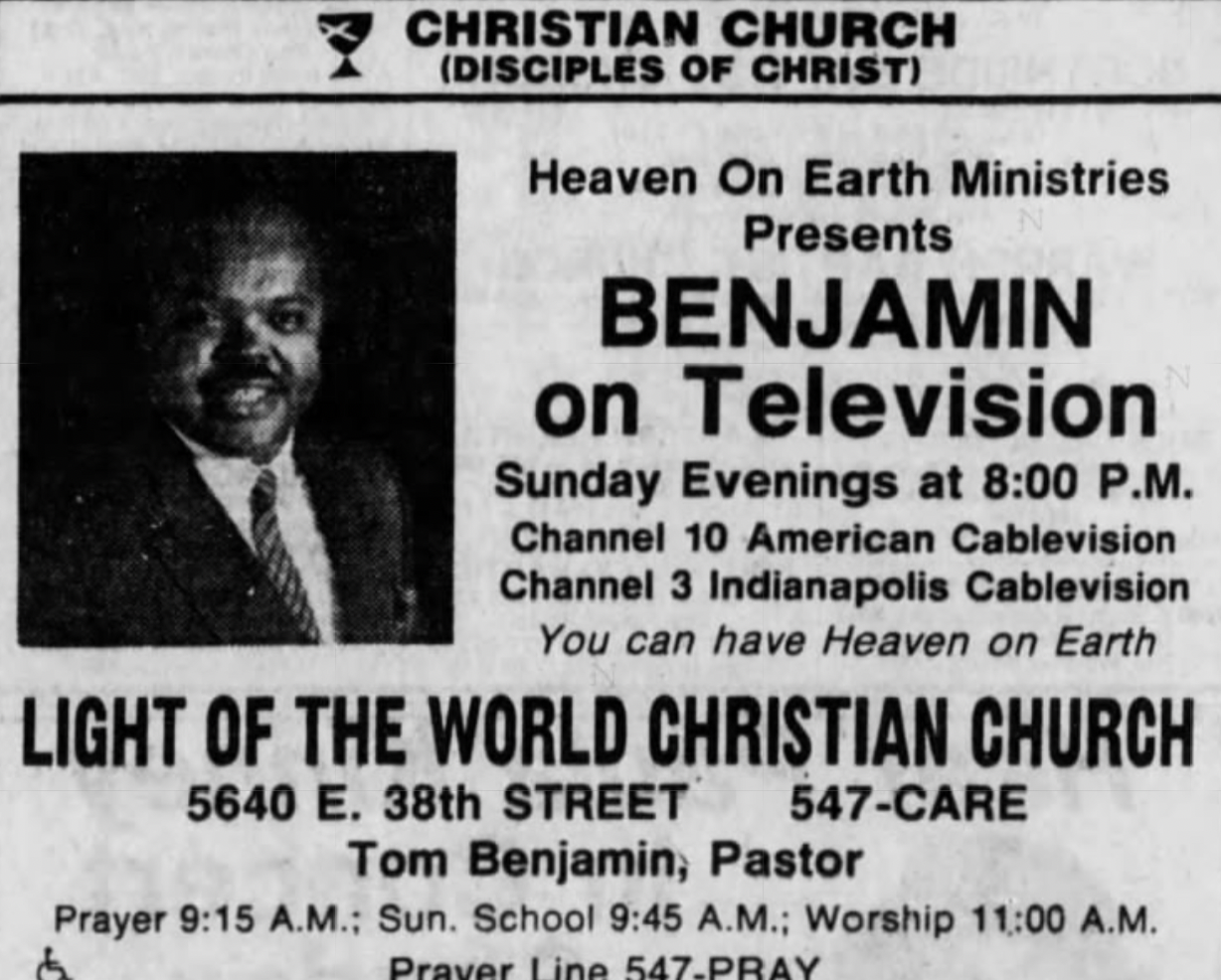
Light of the World Christian Church launches a television ministry
Reverend T. Garrot launches Heaven on Earth Ministries, a television ministry program. By its third year on air, the televised sermons were accessible on the Black Entertainment Network, the Trinity Broadcasting Network, and the Armed Forces Network.
Pictured: Heaven on Earth Ministries advertisement, 1986
Credit: IndyStar
View Source
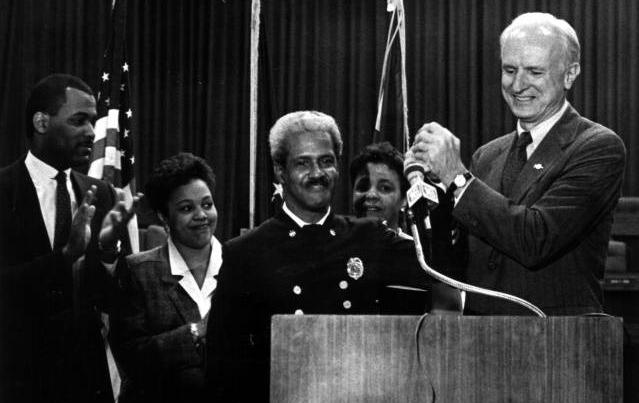
First African American fire chief
After 32 years working as a firefighter, Joseph Kimbrew becomes the first Black fire chief in Indianapolis, named to lead Station 1. He holds this position until 1992.
Pictured: Joseph D. Kimbrew, sworn in as Indianapolis Fire Chief, 1987
Credit: Indianapolis Recorder Collection, Indiana Historical Society View Source
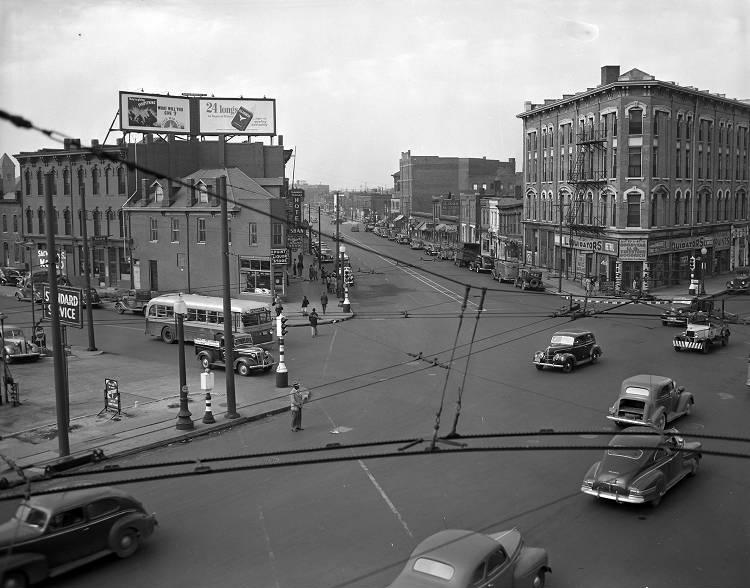
Indiana Avenue Historic District placed on National Register
Indiana Avenue is recognized as a historic district for its significance as the city’s primary area for commercial activity that served the Black community of Indianapolis.
Pictured: Indiana Avenue looking North from New York Street, 1942
Credit: Indiana Historical Society
View Source
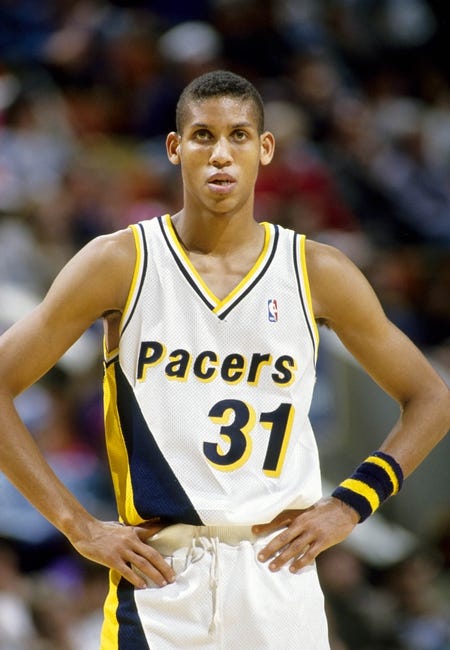
Indiana Pacers draft Reggie Miller
Indiana Pacers president, Donnie Walsh, directs the team to draft Reggie Miller out of UCLA. Miller becomes the All-Star face of the franchise during a Hall of Fame career.
Pictured: Indiana Pacers guard Reggie Miller (31) against the Boston Celtics at Market Square Arena, 1992
Credit: USA TODAY Sports View Source
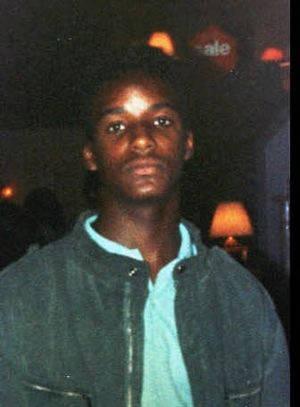
Michael Taylor shooting
Michael Taylor is shot and killed while in police custody. Multiple investigations determine Taylor’s death as self-inflicted due to the negligence of the arresting police officers. Taylor’s death puts pressure on Indianapolis police after a decade of high incidences of shootings of Black victims by police.
Pictured: Portrait of Michael Taylor who was killed while in the hands of the Indianapolis Police Department on September 24, 1987.
Credit: Indiana University Indianapolis
View Source
Eunice Trotter purchases controlling interest in the Indianapolis Recorder
Career journalist, Eunice Trotter ends the Stewart family’s long run as owner and publisher of the Indianapolis Recorder (1895-1988), which is the nation’s 4th-oldest surviving African American newspaper. She is one of only a few African American women to publish a newspaper.
First “Meet the Artists” exhibition
Indianapolis Public Library artist-in-residence Anthony Radford organizes the showcase that highlights the works of the city’s top African American visual artists. It becomes an annual event.
Indianapolis Campaign for Healthy Babies begins
Mayor Hudnut and the City-County Council establish the campaign as a public-private partnership to implement the recommendations of the Marion County Task Force on Infant Mortality aimed at lowering the city’s high Black infant mortality rate.
Kay and Harry Alford establish the Hoosier Minority Chamber of Commerce
The Alfords create the organization to represent the economic interests of the African American community. It becomes a national organization on May 23, 1993, and is renamed the National Black Chamber of Commerce. The organization moves to Washington, D. C. in 1994.
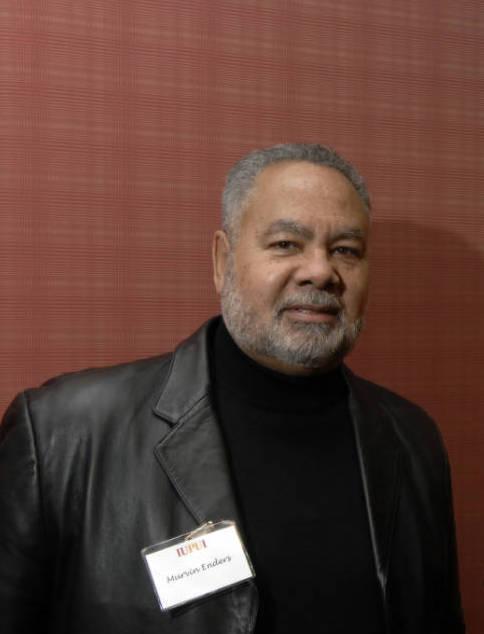
Complaint filed against Highland Club for discrimination
Murvin Enders, a plant manager at Chrysler Corporation, files a complaint with the Indiana Civil Rights Commission after having been denied membership in the Highland Club twice. The club begins accepting Black members the following year.
Pictured: Murvin Enders, 2008
Credit: Indiana University Indianapolis
View Source
First Black man voted superintendent of IPS
Dr. Shirl Gilbert is appointed superintendent of IPS after having served as deputy superintendent. His chief priority is helping socially and economically disadvantaged students.
Pictured: Dr. Shirl E. Gilbert, 1991
Credit: Indianapolis Marion County Public Library
View Source
Willy T. Ribbs becomes the first African American to race in the Indianapolis 500
Ribb’s participation in the Indianapolis 500 marks the end of the longest-standing color barrier in professional sports.
Pictured: IndyCar Series former driver Willy T. Ribbs during the 102nd running of the Indianapolis 500 at Indianapolis Motor Speedway, 2018
Credit: Mark J. Rebilas-USA TODAY Sports
View Source
James D. Toler becomes chief of the Indianapolis Police Department
The first African American to hold the position of police chief pushes for stronger anti-drug programs and better hiring processes.
Ransom Place listed on the National Register of Historic Places
Following its placement on the National Register, the City of Indianapolis makes the historic African American near west side neighborhood one of its official historic districts.
Michael G. Tyson trial begins
Tyson is accused of raping a Miss Black America pageant contestant during his visit to Indiana Black Expo in July 1991. The internationally publicized trial of the heavyweight boxing champion lasts 13 days. The jury returns a verdict of guilty, and Tyson is sentenced to six years in prison followed by four years’ probation.
Pictured: Mike Tyson arrives for court Wednesday morning, January 19, 1992, at the City-County Building in Indianapolis.
Credit: The Indianapolis Star-USA TODAY NETWORK
View Source
Darryl Pinckney wins award for “High Cotton”
In his thinly veiled autobiographical novel, Indianapolis native and acclaimed critic Pinkney writes about a young, middle-class Black man growing up in the northern suburbs of Indianapolis in the 1960s. It wins the prestigious Los Angeles Times Art Seidenbaum Award for First Fiction.
Pictured: Cover of Darryl Pinckney’s book, High Cotton
Credit: Fair Use
William G. “Bill” Mays becomes the first African American chairman of the Indianapolis Chamber of Commerce
Widely recognized as Indiana’s most successful Black businessman, Mays, owner of Mays Chemical, the Indianapolis Recorder, and WAV-TV, serves as Chamber of Commerce chairman from 1993-1994. He also is the first African American appointed to the Indiana Hoosier Lottery Commission and the first to chair the United Way of Central Indiana campaign.
Pictured:
Credit: IndyStarView Source
WRTV airs series “Blacks and Whites: Can we all get along?”
The series captures the experiences of both Black and white female Butler students shopping in Indianapolis malls. They find that white students are greeted promptly and treated courteously, while Black students are not greeted at all and are not helped unless they ask for it.
Select Schools program begins
The IPS Board and U.S. District Court Judge S. Hugh Dillin approve the Select Schools reform plan. The goal of the plan, which allows parents to select the school their child attends, is to engage parents and improve academic achievement by fostering competition for students among IPS schools.
Celebration of Hope
The Church Federation organizes a Celebration of Hope service, bringing together different faith communities to counter a Ku Klux Klan rally. The service becomes an annual event intended to better race relations.
Pictured: Fourth Annual Celebration of Hope, 1997
Credit: IndyStar View Source
Catholic Archdiocese closes St. Bridget parish
St. Bridget closes as membership declines with the movement of the Black population away from the near west side. The church reappears as an independent Catholic church, holding services at St. Phillips Episcopal Church.
Groundbreaking for Kennedy-King Landmark for Peace memorial
President Bill Clinton and the families of Martin Luther King Jr. and Robert F. Kennedy attend the event for the memorial that commemorates the spot where RFK made his famous speech upon hearing the news of MLK’s assassination, April 4, 1968.
IU School of Medicine launches program to attract Black students
As the first Black assistant dean of the school (1994-1999), Dr. George Rawls launches the Medical Science program to increase African American representation among practicing medical practitioners. The graduate program leads to a Master of Science degree.
Metropolitan Youth Orchestra incorporates
Incorporation of the Metropolitan Youth Orchestra formalizes the program that Betty Perry initiated to remedy the lack of classical music training for African American youth.
Pictured: Betty Perry, director of the Metropolitan Youth Orchestra, chats with Kevin Randolph, a former member, who helped with the group, 2006
Credit: Robert Scheer / USA TODAY NETWORK View Source
Baby Face Edmonds wins his first two Grammy Awards
Indianapolis native Kenneth Brian Edmonds wins two Grammy Awards, one for his R&B Song “I’ll Make Love to You” and the other for Male R&B Vocal Performance in “When Can I See You.” He goes on to win his 13th Grammy in 2024 for his work “Snooze” from SZA, tying him with Michael Jackson for most wins.
Pictured: Kenneth “Babyface” Edmonds, 2013
Credit: Angela George, via Wikimedia Commons
View Source
Julia Carson becomes first African American and first woman to represent Indianapolis in Congress
A protégé of Democratic congressman Andy Jacobs, Carson begins her first term representing the 7th Indiana Congressional District. She spends her six terms in office focused on issues of concern to the lives of Indianapolis’ working class.
Pictured: Julia Carson, U.S. House of Representatives, n.d.
Credit: U.S. Congress, Public domain, via Wikimedia Commons View Source
Judge Dillin ends school busing
Indianapolis Public Schools begin the multi-year phase out of forced busing in fall 1999. The practice officially ends with the graduating class in the 2015-2016 school year.
The Sam H. Jones Center opens
The center is the new permanent home of the Indianapolis Urban League and is named for Jones, the organization’s influential first president (1966-2002).
Bill Crawford becomes the first Black legislator to chair Indiana House Ways and Means Committee
Crawford authors three biennial state budgets where he strives to ensure equitable state spending that does not overlook the underserved citizens of Indiana, not just those in his local Indianapolis district.
Frank Anderson becomes the first elected African American sheriff
Anderson, an Indianapolis native who attended Shortridge High School, served as U.S. Marshal for the Southern District of Indiana for many years before becoming sheriff. A Democrat, he is the first African American elected to the post in Marion County, as well as the first in Indiana.
Pictured: Frank Anderson campaigning for Marion County Sheriff on IUPUI campus, 2002
Credit: Indiana University Indianapolis View Source
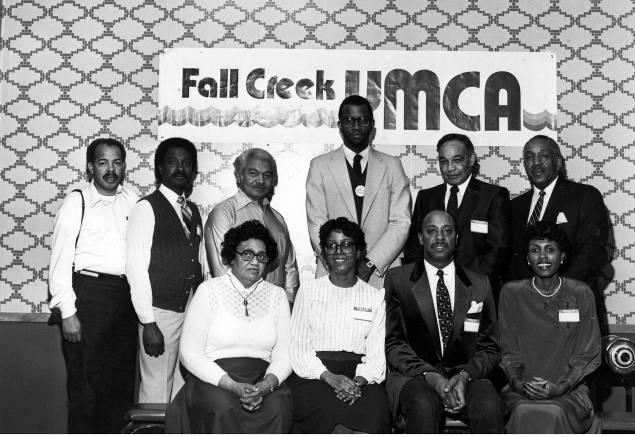
Historic Fall Creek YMCA closes
Built as a replacement for the Senate Avenue YMCA in 1959, the Fall Creek YMCA closes due to financial trouble and controversies concerning racial discrimination. It had served the African American community for several decades.
Pictured: Sustaining Membership members of the Fall Creek Parkway YMCA, 1984
Credit: Indianapolis Recorder Collection, Indiana Historical Society
View Source
Rozelle Boyd becomes first Black City-County Council president
First elected to the City Council (pre-Unigov) in 1965, Boyd serves until 2007, the last three years as the council’s president. He is the longest-serving City-County councilor at the time of his departure.
Pictured: Indianapolis City-County Council Democratic leader Rozelle Boyd, 2003
Credit: CHARLIE NYE / USA TODAY NETWORKView Source
African American Coalition of Indianapolis founded
The non-partisan coalition includes more than 20 African American civic, social, professional, service, and community organizations. It aims to educate and engage Blacks in the local, state, and national political process.
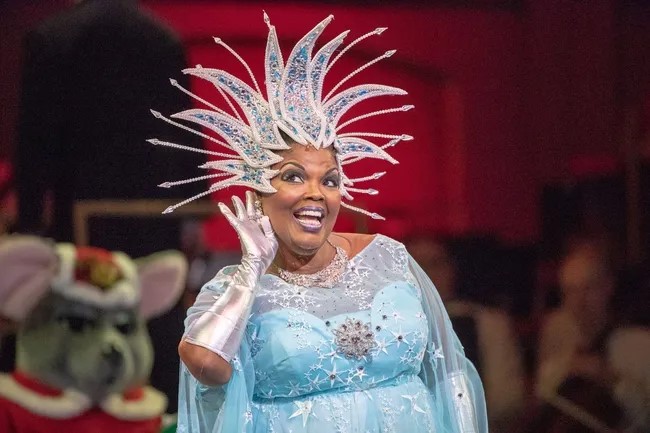
Crispus Attucks graduate makes Metropolitan Opera debut
At the age of 40, Angela Brown, who finds her niche in classical music while in college, makes her Metropolitan Opera debut in the title role of Verdi’s Aida.
Pictured: Angela Brown sang at Yuletide Celebration, showcasing the Indianapolis Symphony Orchestra, at Hilbert Circle Theater in 2018.
Credit: Robert Scheer/IndyStar
View Source
Buffalo Soldiers Motorcycle Club of Indianapolis forms
Named after the historic U.S. Army Black cavalry, the chapter becomes one of the largest in the national organization. It promotes the sport of motorcycling in a positive way by supporting community and charitable causes.
IUPUI names building for Joseph T. Taylor
The university renames the former University Library and new home of University College for Taylor, an African American who was the first dean of the IUPUI School of Liberal Arts. The local chapter of the Association for the Study of American Life also bears his name.
Crawford v. Marion Co. Election Board ruling
The Democratic Party and groups representing minority and elderly citizens argue that the 2005 Indiana law requiring all in-person voters to show a government-issued photo id constitutes an undue burden on the right to vote. The U.S. Supreme Court rules to uphold the law.
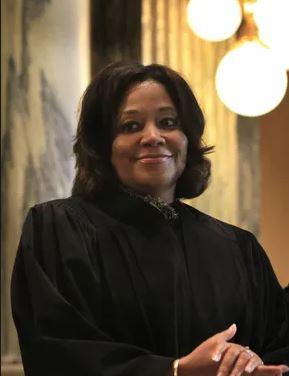
Tanya Walton Pratt becomes the first African American federal judge in Indiana
Tonya Walton Pratt is appointed to the U.S. District Court, Southern District of Indiana. She becomes the first African American chief judge of the court in 2021.
Pictured: Judge Tanya Walton Pratt, 2010
Credit: Charlie Nye, IndyStar
View Source
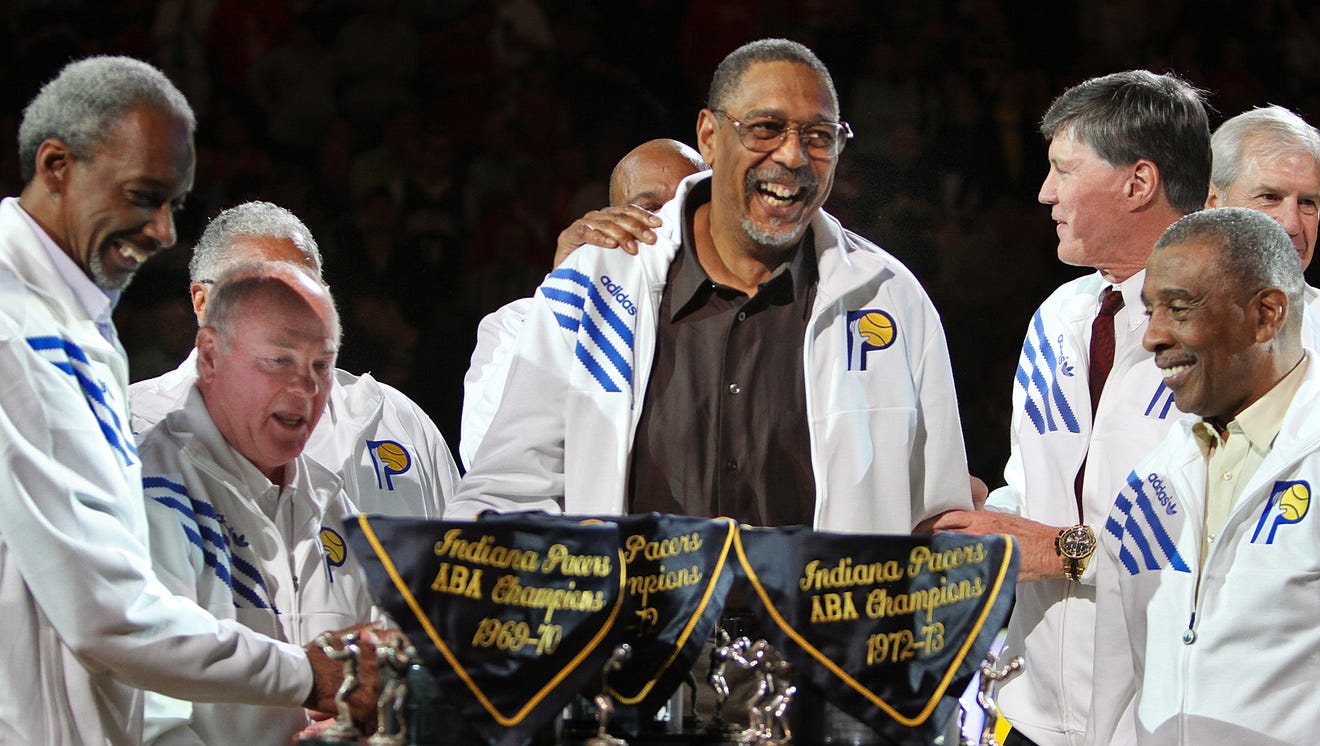
Mel Daniels inducted into Naismith Memorial Basketball Hall of Fame
Daniels, who played for the Indiana Pacers for six seasons (1968-1974), becomes the first member of the team inducted into the national basketball Hall of Fame.
Pictured: ABA legends congratulate Mel Daniels, center, as he is honored for entering the Naismith Hall of Fame, 2012
Credit: Kelly Wilkinson, IndyStar View Source
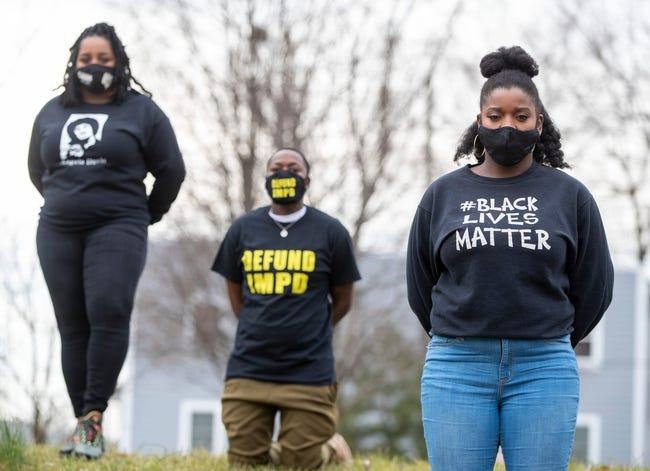
Indy10 Black Lives Matter is founded
A group of 10 Indianapolis residents found Indy10 Black Lives Matter after traveling to Ferguson, Missouri, to protest the fatal shooting of Michael Brown by police.
Pictured: Leah Derray (at right), Kyra Jay (left), and Erika Haskins are all leaders of Indy10 Black Lives Matter.
Credit: Robert Scheer/IndyStar via Imagn Content Services, LLC
View Source
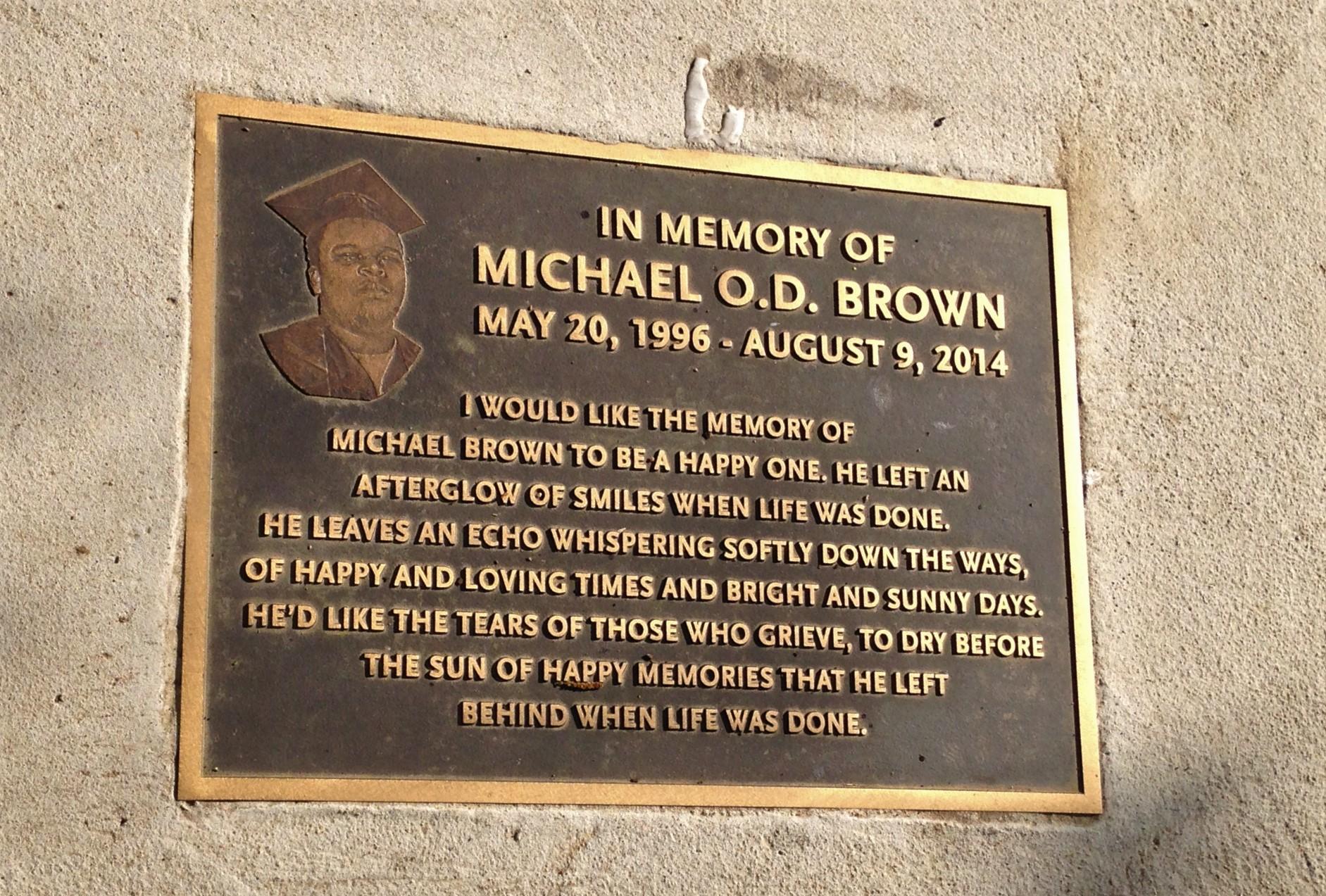
Death of Michael Brown
An 18-year-old African American, Michael Brown, is fatally shot by Ferguson, MO police officer Darren Wilson. Along with other instances of Black men shot by police across the United States, the incident sparks weeks of protests all over the country, including Indianapolis.
Pictured: Plaque of Michael Brown in Ferguson, Missouri on sidewalk where shooting incident occurred.
Credit: LittleT889 via Wikimedia Commons
View Source
Mays Institute on Diverse Philanthropy founded
Established at the Indiana University Lilly School of Philanthropy, the Mays Institute on Diverse Philanthropy honors the life and impact of the life of businessman Bill Mays, along with his wife Dr. Rose Mays. The institute works to strengthen issues of diversity, equity, and inclusion within the philanthropic sector.
Pictured: Coretta McAllister (right) with Susan Batten, CEO and President of Association of Black Foundation Executives and one of the speakers featured in the Diverse Speaker Series, 2019
Credit: Lilly Family School of Philanthropy View Source
Indianapolis Black Chamber of Commerce organizes
The Black Chamber of Commerce serves as an information resource for Black-owned businesses. It aims to bolster economic development in the African American community.
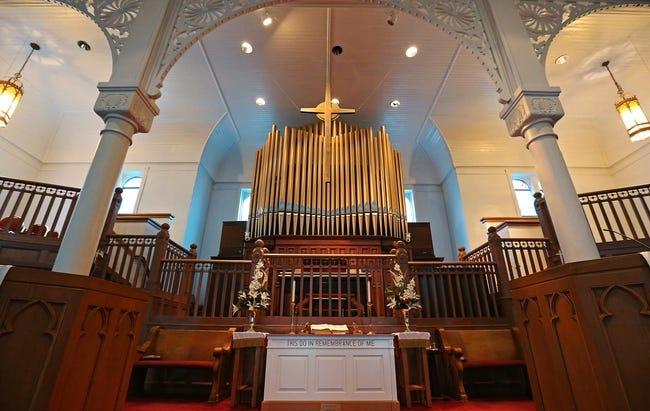
Bethel AME sells its historic building
SUN Development, a management corporation, purchases the 180-year-old church property of Bethel AME, the oldest African American religious congregation in Indianapolis. It turns the location at 414 W. Vermont Street into a hotel while preserving much of the church’s facade. Bethel moves to a new building in Pike Township.
Pictured: The sanctuary of Bethel African Methodist Episcopal Church is shown in 2016, the year it was sold.
Credit: Jenna Watson/IndyStar, Indianapolis Star via Imagn Content Services, LLC
View Source
Jennifer Baskerville-Burrows first Black woman elected an Episcopal diocesan bishop
Jennifer Baskerville-Burrows is the 11th bishop diocesan of the Episcopal Diocese of Indianapolis. Prior to this appointment, she worked in various roles for the Episcopal Church throughout the country.
Pictured: Jennifer Baskerville-Burrows, 2017
Credit: Kelly Wilkinson, IndyStar
View Source
Jerome Michael Adams becomes surgeon general of the United States
Adams previously served as the Indiana state health commissioner and associate professor of anesthesia at Eskenazi Health. His focus as surgeon general is on addressing the opioid crisis and mental health issues.
Pictured: U.S. Surgeon General Jerome Adams, 2019
Credit: United States Department of Health and Human Services, Public domain, via Wikimedia Commons
View Source
WNBA Indiana Fever star Tamika Catchings retires
Catchings plays for the Fever 15 seasons before retiring from the WNBA basketball court. She is an 11-time WNBA All-Star, 12-time All-WNBA Defensive Player, 5-time league championship MVP, and 4-time Olympic gold medalist. She is elected to the Women’s Basketball Hall of Fame in 2020.
Pictured: WNBA former player Tamika Catchings attends the Gatorade National Athlete of the Year Awards at the Ritz-Carlton, 2017
Credit: Kirby Lee-USA TODAY Sports
View Source
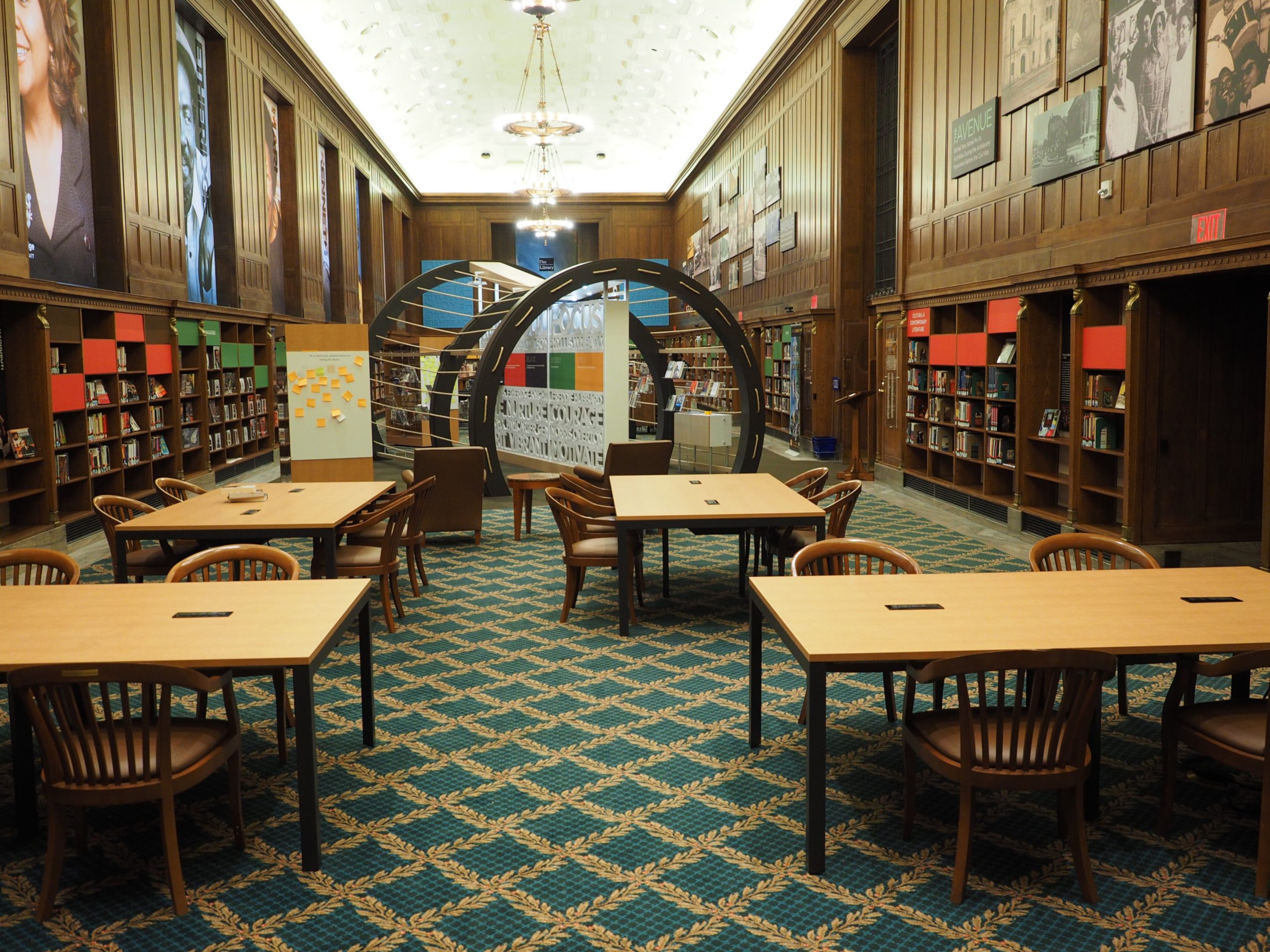
Indianapolis Public Central Library Opens Center for Black Literature And Culture (CBLC)
The center, located in the library’s West Reading Room, features a collection of books, interactive displays, and research tools to aid in exploring the Black experience in Indianapolis.
Pictured: Center for Black Literature & Culture, 2017
Credit: Indianapolis Public Library View Source
Landmark for Peace memorial designated the Kennedy-King National Commemorative Site
The Landmark for Peace memorial, site of Robert Kennedy Jr.’s famous 1968 speech upon the assassination of Martin Luther King Jr., is designated the Kennedy-King National Commemorative Site.
DuJuan McCoy becomes first African American sole owner of Indianapolis television stations
McCoy, an Indianapolis native, purchases WISH-TV and WNDY-TV for $42.5 million and forms Circle City Broadcasting.
IPS appoints first Black woman superintendent
Aleesia Johnson becomes the first Black woman to be named superintendent of Indianapolis Public Schools. Having worked as a teacher, school leader, and administrator in both public charter and traditional district schools, she brings over 16 years of experience to Indiana’s largest school district.
Pictured: Indianapolis Public Schools Superintendent Aleesia Johnson, 2020
Credit: Jenna Watson/IndyStar via Imagn Content Services, LLC
View Source
Newfields controversy over racial insensitivity
Artists and employees call for change following the release of a job description that mentions maintaining the “traditional, core, white audience.” The museum is also criticized for excluding its majority Black neighborhood, for creating a discriminatory culture, and for lack of support to Black artists.
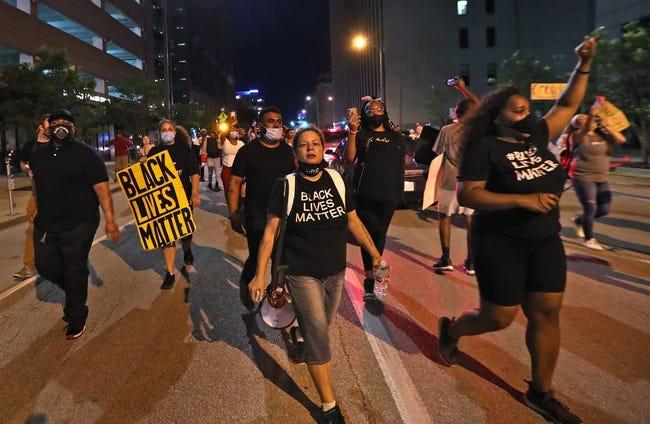
Protests erupt in response to the death of George Floyd
Floyd’s murder by an arresting police officer in Milwaukee, WI, results in a series of protests in Indianapolis against racial discrimination. During the first three days, two people are killed, businesses are looted and vandalized, and officers use tear gas, pepper balls, and batons on hundreds of people.
Pictured: Protesters walk the streets during protests downtown, May 2020
Credit: Kelly Wilkinson/IndyStar via Imagn Content Services, LLC
View Source
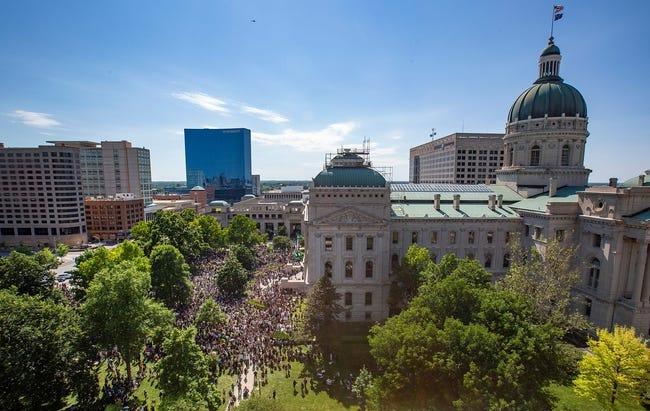
Indy’s largest demonstration against racial inequality and police brutality
An evening protest, organized by Black Women in Charge, becomes the city’s largest demonstration against racial inequality and police brutality in at least 30 years, with over 4,000 protestors in attendance.
Pictured: Thousands participate in a sit-in rally organized by Black Women in Charge at the Indiana Statehouse, 2020
Credit: Jenna Watson/IndyStar via Imagn Content Services, LLC
View Source
Indianapolis City-County Council declares racism a public health crisis
After weeks of protests against racial discrimination, the Indianapolis City-County Council votes unanimously to pass a resolution declaring racism a public health crisis in Indianapolis.
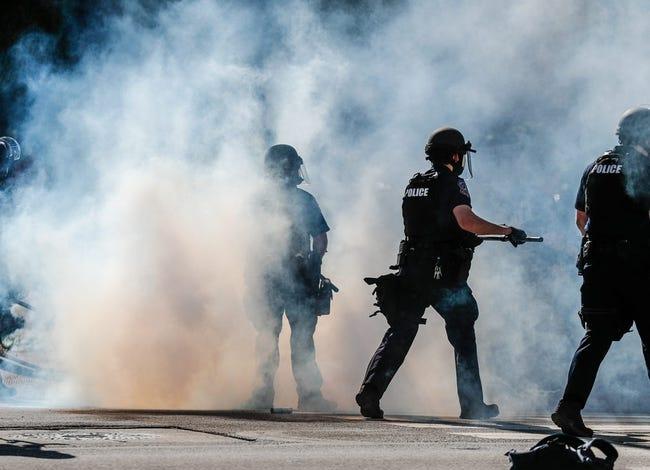
ACLU files lawsuit against City of Indianapolis
The American Civil Liberties Union of Indiana calls for an end to the use of tear gas, pepper balls, and other similar crowd control methods against protestors. It files a lawsuit against the City of Indianapolis over the use of these methods during the protests.
Pictured: IMPD using gas at Black Lives Matter protests in downtown Indianapolis, 2020
Credit: Michelle Pemberton/RedRocketPhoto via Imagn Content Services, LLC
View Source
Juneteenth
Governor Holcomb and Mayor Hogsett signed proclamations declaring June 19 as Juneteenth in the state and city. Juneteenth celebrations include the “Juneteenth Freedom Festival,” “Black Out for Black Lives,” a march for peace ending at an event at Martin Luther King Memorial Park, an Indy Lawyers for Black Lives protest, and the virtual “Juneteenth Celebration” hosted by the Indianapolis Recorder and other community groups.
IPS approves new racial equity measures
The Indianapolis Public Schools Board of School Commissioners approves the Racial Equity Mindset, Commitment & Action policy and the Black Lives Matter resolution. Both are aimed at making changes to policies, practices, and attitudes that perpetuate inequity, racism, and biases.
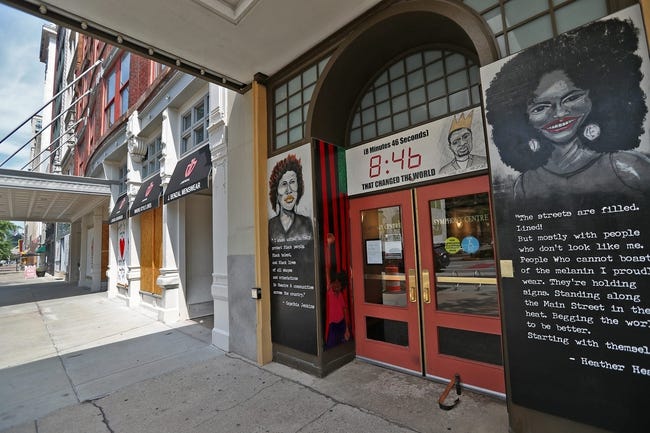
Murals for Racial Justice Project begins
The Murals for Racial Justice Project, an initiative of the Arts Council of Indianapolis, commissions 22 Black artists to create 24 temporary murals on boarded-up storefronts in downtown Indianapolis. The works are later recreated on banners displayed at the Central Library and available for educational use by the community.
Pictured: Murals adorn many downtown businesses, like these at the Symphony Centre on Washington Street, 2020
Credit: Kelly Wilkinson/IndyStar via Imagn Content Services, LLC View Source
Black-owned businesses are boosted
The Downtown Indy Rebuilding and Recovery Committee is formed to help Indianapolis recover from the coronavirus recession and to increase black-owned businesses around the Mile Square. Indy Black Businesses Matter is a 2-part campaign to spotlight Black-owned businesses and increase diversity in the workforce.
Pictured: #blackbusinessesmatter
Credit: Indy Black Businesses Matter
View Source
A Conversation on Race
A virtual town hall, A Conversation on Race: Connecting Central Indiana, is put together through the efforts of Indy10 BLM, RTV6, and Radio One.
City-County Council considers various BLM-related initiatives
Several new proposals are introduced at the Indianapolis City-County Council meeting including the creation of an Indianapolis Commission on African American Males, a Public Safety and Community Recovery Plan for each council district, and changes to the Citizen’s Police Complaint Board process. The council also votes to allow the painting of a Black Lives Matter mural to publicly condemn racism.
Pictured: Vop Osili, president of Indianapolis City-County Council, 2020
Credit: Michelle Pemberton/IndyStar via Imagn Content Services, LLC
View Source
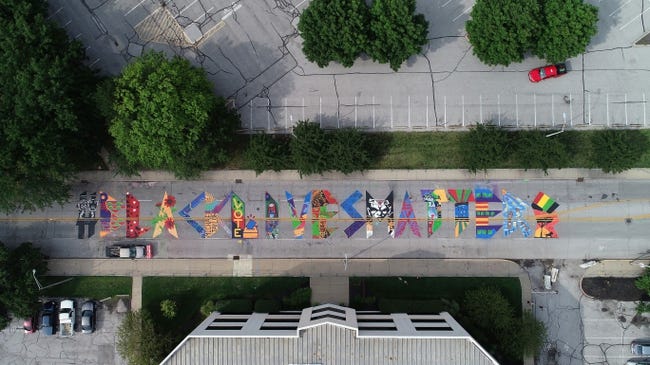
Indy BLM street mural
A block party is organized by Indy10 BLM to celebrate the start of the Black Lives Matter street mural painted on Indiana Avenue between the Walker Theater and the Urban League. Funding for the project, which hires Black artists to complete each of the letters, is provided by the Indianapolis Urban League and the Central Indiana Community Foundation. The street will later be repaved, covering the mural, as part of the planned expansion of the Indianapolis Cultural Trail.
Pictured: Black Lives Matter mural on Indiana Avenue, 2020
Credit: Joe Tamborello & Stephen Beard/IndyStar Drone via Imagn Content Services, LLC View Source
Governor Holcomb announces strategies to improve Indiana racial equity
The strategies include body cameras for state police, a new cabinet position for equity and inclusion in state government, a portal for state-level diversity statistics, a top-down review of the Indiana Law Enforcement Academy, adjusted policies and programs to create more opportunities for people of color, and recruitment of more minority teachers.
Business Equity for Indy Committee is formed
The Business Equity for Indy Committee is formed as a joint venture of the Central Indiana Corporate Partnership and Indy Chamber, with support from the Indianapolis Urban League. It is made up of Indianapolis-based corporate leaders committed to addressing inequities in business opportunities for communities of color.
Indianapolis Art Center launches exhibit, “EIGHTEEN: Black Lives Matter”
The exhibition features the work of the 18 artists that created the Black Lives Matter mural on Indiana Avenue.
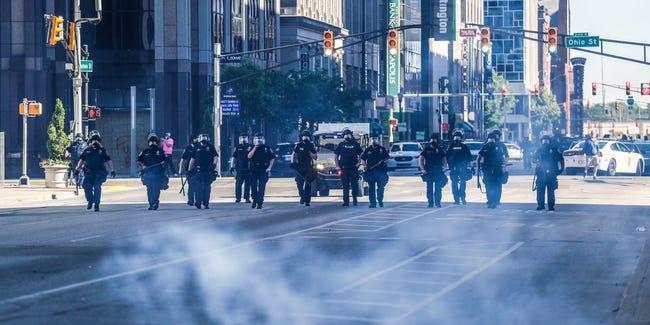
IMPD agrees to end use of riot control agents
The police department agrees to no longer use chemical agents such as tear gas and pepper balls on passive resistors as part of settling the suit filed by the ACLU in June.
Pictured: IMPD during Black Lives Matter protests in downtown Indianapolis, 2020
Credit: Michelle Pemberton/IndyStar via Imagn Content Services, LLC
View Source
18 Art Collective forms
The 18 Art Collective is formed by the artists who painted the Indiana Avenue Black Lives Matter street mural in August 2020. The organization focuses on creating jobs, mentorships, and scholarship opportunities for Black creatives.
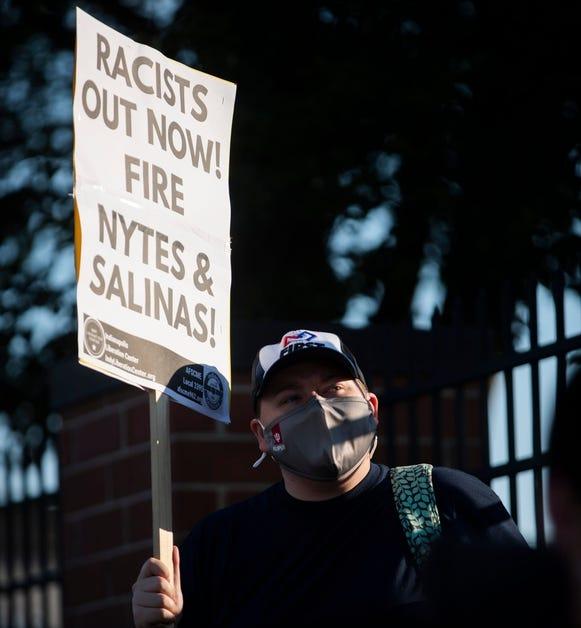
Indianapolis Public Library staff protest racism in the library
A group of Indianapolis Public Library workers call for action, including the resignation of the CEO, after years of incidents of racism and discrimination in the library system continue to go unaddressed.
Pictured: Demonstrator holds a sign during a protest by Indianapolis Public Library employees in Indianapolis, 2021
Credit: Lukas Flippo/IndyStar via Imagn Content Services, LLC
View Source
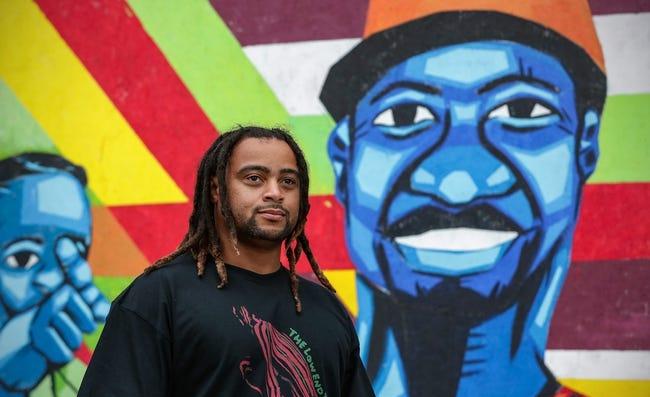
Several Indianapolis organizations host events to showcase Black Lives Matter artists
The Indiana State Museum opens “RESPONSE: Images and Sounds of a Movement,” which features six murals. The Arts Council of Indianapolis hosts “Art & Activism: One Year Later.” The Indianapolis Public Library holds a panel discussion with the previous summer’s mural artists and displays their work.
Pictured: Artist Israel Solomon stands in front of a mural he painted on boarded windows in the 300 block of Mass Ave in Indianapolis, 2020
Credit: Jenna Watson/IndyStar via Imagn Content Services, LLC
View Source
Attorney General Rokita issues opinion categorizing Black Lives Matter as a political organization
Rokita issues the official opinion in response to the question of displaying BLM materials in schools. The Concerned Clergy of Indianapolis, Baptist Minister’s Alliance, and National Action Network of Indiana respond in a letter condemning Rokita’s opinion.
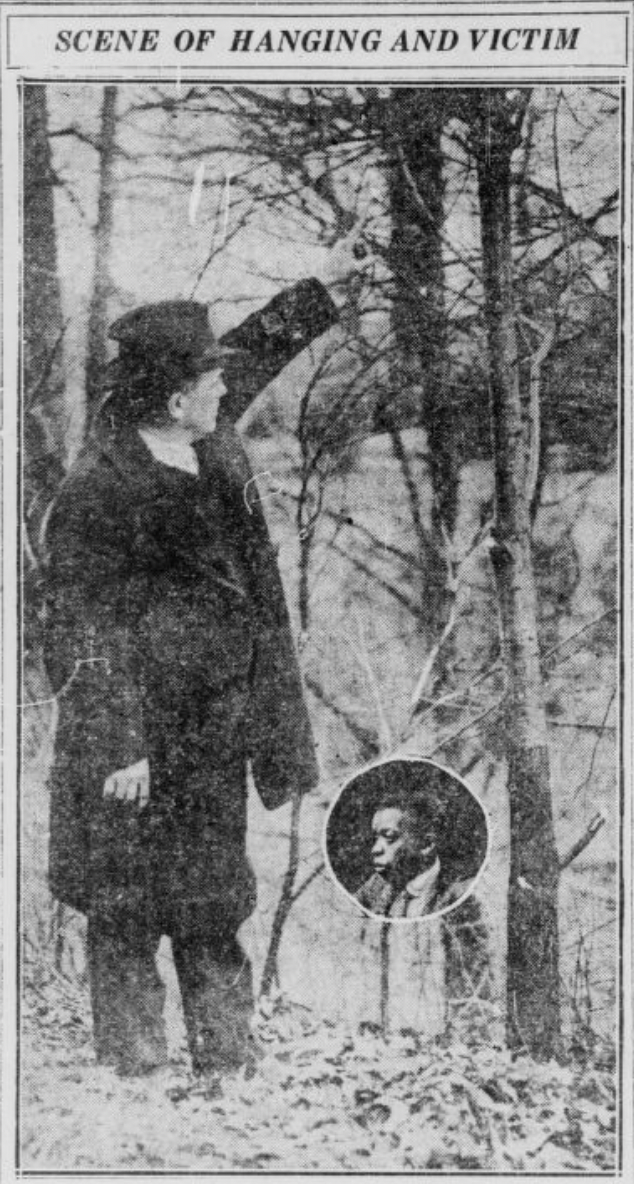
1922 Black lynching victim gets recognition
The Indiana Remembrance Coalition brings to light the 1922 lynching of an Indianapolis Black man, George Tompkins, whose cause of death was originally recorded as a suicide. The group worked with the chief deputy coroner of Marion County to amend Tompkin’s cause of death to homicide.
Pictured: Man points out spot where Tompkins was lynched, ca. 1922
Credit: Indiana Daily Times via Library of Congress View Source
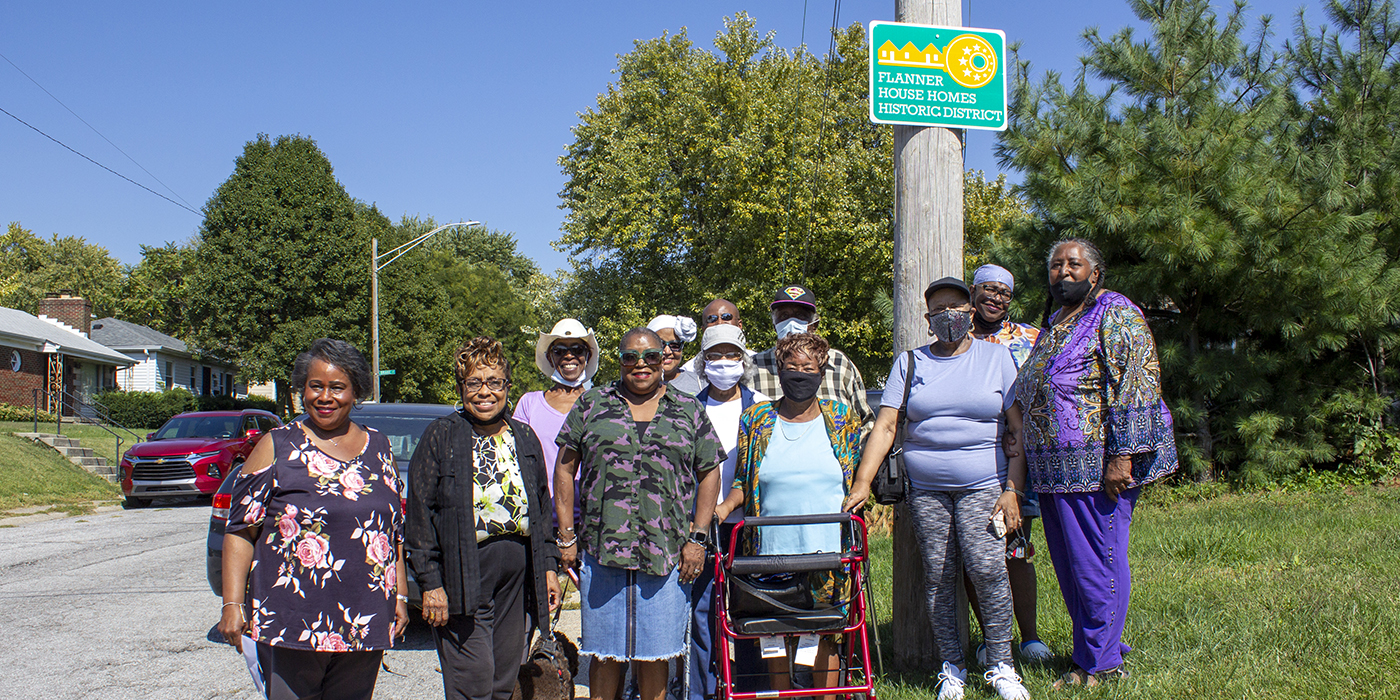
Indiana Landmarks launches Black Heritage Preservation Program
Landmarks expands the work of its African American committee to help identify, save, and celebrate historic African American sites throughout the state of Indiana.
Pictured: Black Heritage Preservation Program helped obtain new signage in the Flanner House Homes neighborhood, recognizing its historic district status.
Credit: Indiana Landmarks
View Source
Research study reveals that Black Lives Matter protests shift public discourse
In a study from Indiana University, researchers find that Black Lives Matter protests increased public attention to incidents of police brutality and resulted in lasting interest surrounding anti-racist ideas including issues such as systemic racism, redlining, criminal justice reform, and white supremacy.
Norwood neighborhood succeeds in battle against city officials
City officials cancel plans to build a morgue and forensic facilities in the historic African American majority neighborhood following protests.
Pictured: Lourenzo Giple, deputy director in the Department of Metropolitan Development speaks during a neighborhood meeting with city representatives regarding a proposed city morgue and forensics lab inside the boundaries of the Norwood neighborhood, 2022
Credit: Michelle Pemberton/IndyStar / USA TODAY NETWORK
View Source
Black authors’ names added to Central Library engravings
The inclusion of 10 Black authors’ names whose works span pre-Civil War to the civil rights movement and beyond are added to the walls of Central Library. The library aims to add additional names of authors of color in the years to come.
Pictured: Inside the Central Library the names of ten Black authors have been added to wall carvings, 2022
Credit: Michelle Pemberton/IndyStar / USA TODAY NETWORK
View Source
Colette Pierce Burnette becomes first African American president and CEO of Newfields
Following the resignation of its CEO after controversy over its stance on issues of diversity and inclusion, Newfields chooses Burnette to lead an action plan that includes a $20 million endowment to acquire works from marginalized artists, increased diversity on its board, and the institution of antiracism training. On November 10, 2023, Burnette abruptly announces her departure from the organization. Newfields provides no explanation for the move.
IndyStar employees protest for new contract
Indianapolis Newspaper Guild protests IndyStar’s parent company, Gannett, over pay inequity and newsroom diversity.
Pictured: IndyStar photojournalist Robert Scheer leads a group of journalists from the paper’s downtown office to Monument Circle, 2022
Credit: Tyler Fenwick, Indianapolis Recorder
View Source
First Black Marion County Democratic Party chair
Myla Eldridge, who served as Marion County clerk, is elected as the new Marion County Democratic Party chair, making her the first Black leader to hold the position.
Pictured: Myla Eldridge, 2022
Credit: Indianapolis Star-USA TODAY NETWORK
View Source
District Theatre announces plans to bolster Black theater
District Theatre establishes a development hub for Black theater artists and technicians and supports the production of six plays by Black Indiana playwrights set around historic Indiana Avenue. Named Black Theatre, the company is independent of DT and is the second Black professional equity theater established in the city.
“We. The Culture: Works by The Eighteen Art Collective” opens at Newfields
The exhibition is a collaboration between Newfields and the 18 artists who originally came together to paint the Black Lives Matter Murals on Indiana Avenue in August 2020. Open through September 24, 2023, it highlights the original works of each of them.
Pictured: Guest-curator Alan Bacon sits in the ‘We. The Culture’ gallery, 2022
Credit: Armond Feffer/IndyStar / USA TODAY NETWORK
View Source
First Black-owned professional equity theater
Naptown African American Theater Collective, the first Black-owned professional equity theater in the city, debuts with Black Book, the 2019 winner of the Kennedy Center Outstanding New Work Production by award-winning playwright and actor Austin Dean Ashford. Phoenix Theater hosts the company’s first season.
First African American mayor in Marion County
Deb Whitfield, a former Lawrence Common Council member and officer in the Indianapolis Metropolitan Police Department, wins the Lawrence mayoral election against Republican candidate David C. Hoffmann to become the first Black mayor in Marion County.
Pictured: Lawrence Mayor, Deb Whitfield, 2023
Credit: Michelle Pemberton, IndyStar
View Source

Help improve this entry
Contribute information, offer corrections, suggest images.
You can also recommend new entries related to this topic.