←ⓘ Jump to a preselected date. Or, scroll down to view more.
Moravian Missionaries arrive
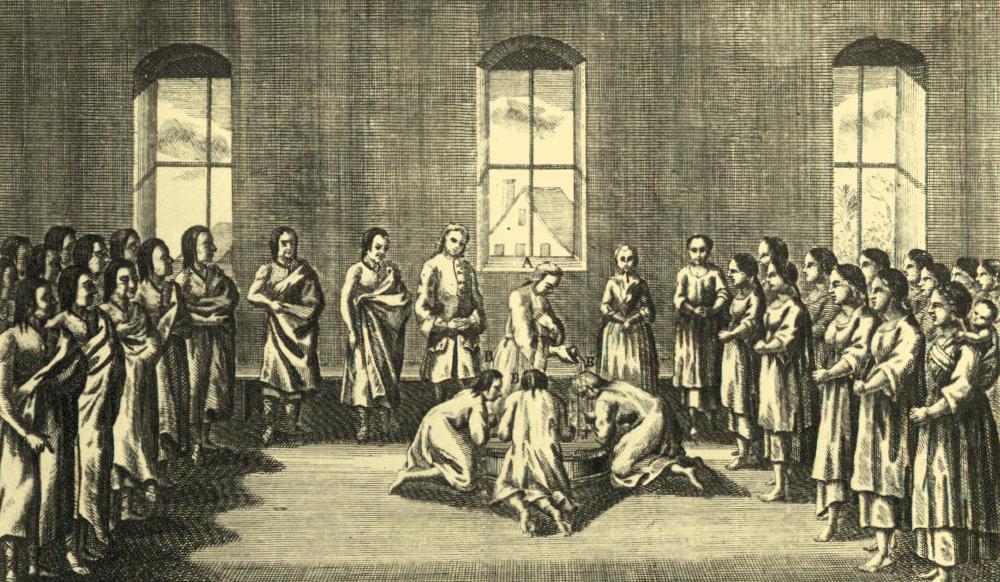
Moravian missionaries arrive at one of the settlements of the Delaware, near the Adena culture mounds and what becomes Anderson. The Moravian mission is to convert Indigenous Peoples to a Protestant version of Christianity. The mission lasts until September 1806.
Pictured: Illustration of Moravian missionaries as they baptize Munsee-Delawares, n.d.
Credit: Wikimedia Commons
View Source
First Christian religious service held
A group of Methodists gathers for a sermon by Resin Hammond, a circuit-riding preacher. It is the first recorded Christian service in Indianapolis history.
First Methodist congregation established
Methodists meet in the log cabin of Isaac Wilson and form Wesley Chapel, led by the Reverend William Cravens, a circuit-riding preacher. Later sites included a hewn log sanctuary on Maryland Street between Meridian and Illinois streets (1825-1829).
Methodist revival held
A meeting held at James Givens farm on the outskirts of Indianapolis attracts large crowds to hear circuit rider James Scott preach. A reported 265 unchurched persons were brought into membership at Wesley Chapel.
First Baptist congregation organized
A group of Baptists begins meeting in Indianapolis and establishes First Baptist Church.
Multidenominational Sunday school begun
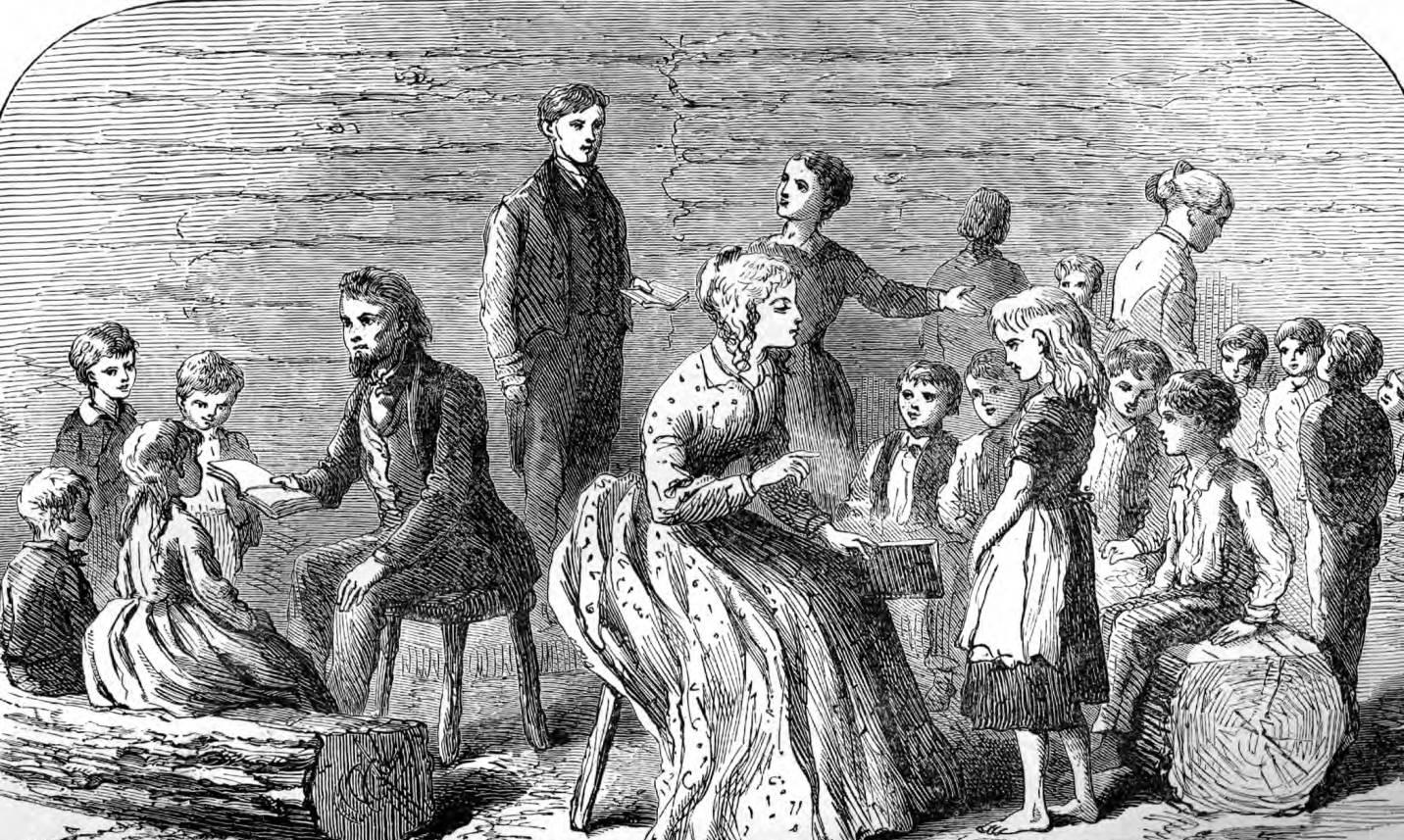
Sunday schools are a way to teach literacy as well as religious concepts. The first Indianapolis Sunday school follows this model, which early settlers have brought with them from elsewhere.
Pictured: Pioneer Sunday School illustration, ca. 1830s
Credit: Ohio History Connection
View Source
First Presbyterian congregation formed
A group of Presbyterians organize the Presbyterian Church of Indianapolis in the carpenter shop of Caleb Scudder, on land where the Indiana State House would later be built. Previously, they shared a preacher with Presbyterians in Bloomington. The church admits its first African American member in 1827.
Indianapolis Bible Society and Indianapolis Tract Society launches
These societies are developed to promote Christian morality and ethics as well as to foster literacy. The Bible Society changes its name sometime during the century to become the Indianapolis and Vicinity Bible Society, reflecting the growing importance of Central Indiana.
Marion County Temperance Union forms
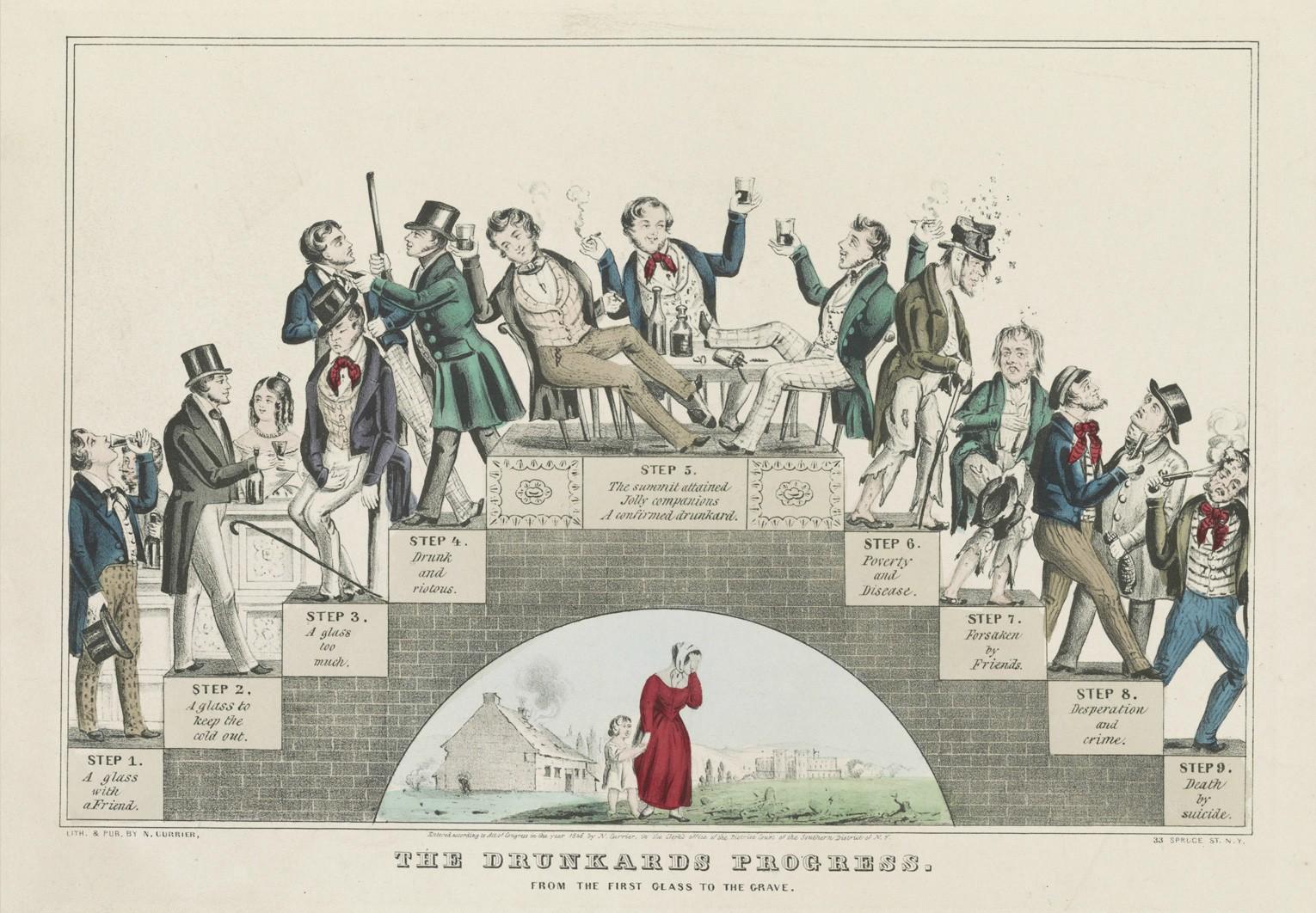
Started by Protestant groups, the union seeks to address what it considers to be the excessive use of alcohol. Many of its members are anti-immigrant and anti-Catholic, because these groups are viewed as primary abusers of alcohol.
Pictured: The Drunkard’s Progress, ca. 1846
Credit: Nathaniel Currier, Public domain, via Wikimedia Commons
View Source
Indianapolis Sabbath School Union opens
Indiana Sabbath School Union forms three branches, one of which is in Indianapolis. The Indiana School is predominantly member-led and interdenominational. Instruction includes secular spellers and readers in addition to the Bible.
Wesley Chapel builds church on Circle
In 1826, the Methodists of Wesley Chapel purchased land on Governor’s Circle. Following the appointment of their first full-time pastor in 1828, their new church opens in 1829 and remains in use until 1846.
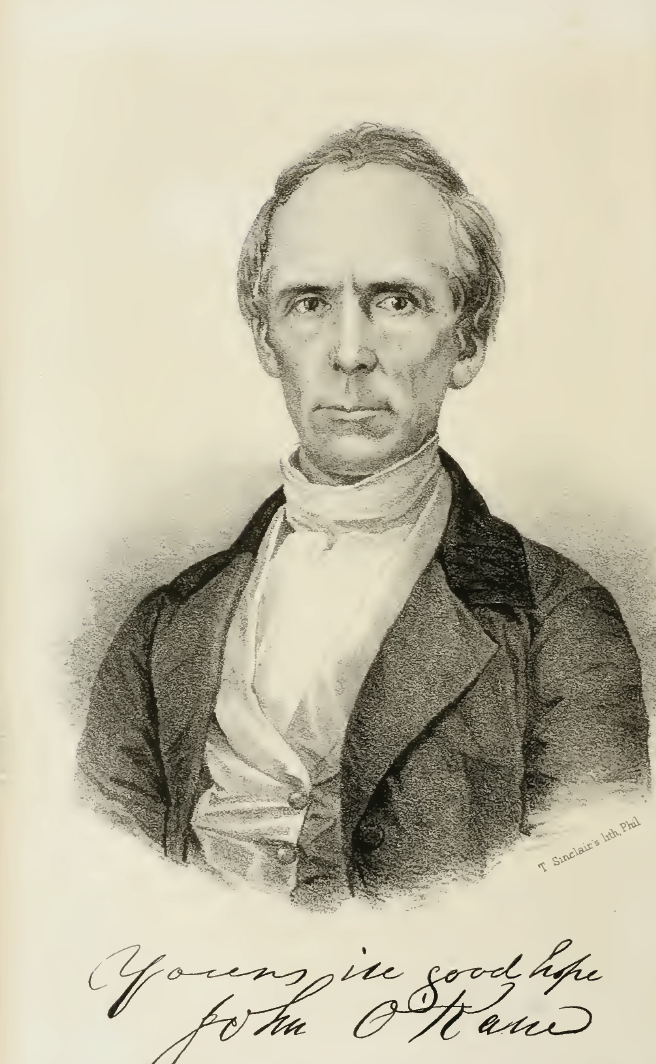
Disciples of Christ congregation formed
Evangelist John O’Kane arrives in the city to organize the Christian Church (Disciples of Christ) congregation as a Campbellite group. Local Protestant churches refuse O’Kane entry into their buildings, fearing he will sway their congregants to the Christian fusion movement. The congregation builds its first house of worship, known as Christian Chapel, on Kentucky Avenue in 1836.
Pictured: Illustration of John O’Kane, n.d.
Credit: Public domain via Find A Grave
View Source
Diocese of Vincennes established
The Roman Catholic diocese includes Indianapolis and in 1898 becomes the Diocese of Indianapolis.
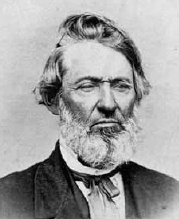
First Mormon meeting noted
William E. McLellin, a missionary of the recently established Church of Jesus Christ of Latter Days Saints, commonly known as Mormons, arrives in Indianapolis and holds a meeting before moving on to Ohio.
Pictured: William E. McLellin, ca. 1830s
Credit: Public domain via Wikimedia Commons
View Source
First Catholic Mass held
Fr. Claude Francis of Logansport offers the first Catholic Mass in Indianapolis at Powers Tavern on West Washington Street. Fr. Vincent Bacquelin forms the first Indianapolis parish known as Holy Cross (later St. John the Evangelist) in November 1837.
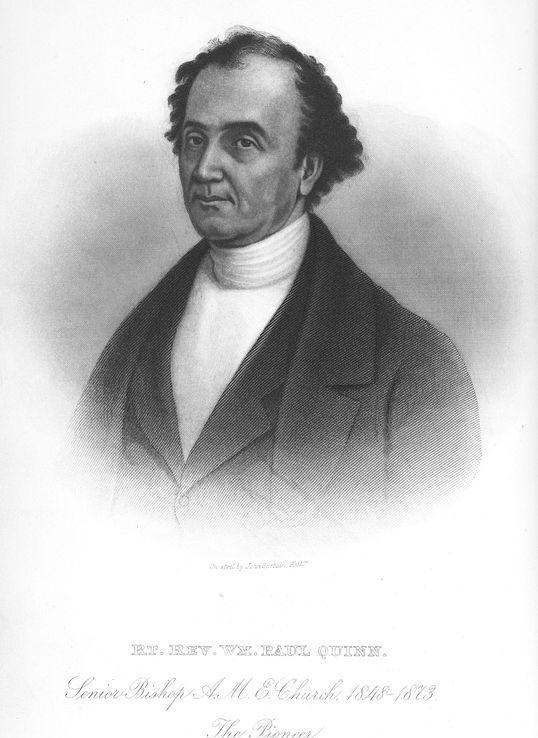
African Methodist Episcopal congregation organizes
A group of Black Methodists in Indianapolis forms Bethel AME (African Methodist Episcopal) Church. A founder of the denomination, William Paul Quinn serves Indianapolis and other AME stations as pastor. A church building is constructed on Georgia Street, between Senate Avenue and the Central Canal in 1841.
Pictured: William Paul Quinn, n.d.
Credit: Public domain via Wikimedia Commons
View Source
Presbyterians establish first religious womens school
The Presbyterians become the first religious group to establish a school for women. Its Indianapolis Female Institute, which continues to operate until 1849, is the third school for women established in the city. The Presbyterians form another school, the Female Seminary, in 1852. Renamed McLean Seminary in 1860, it closes in 1865.
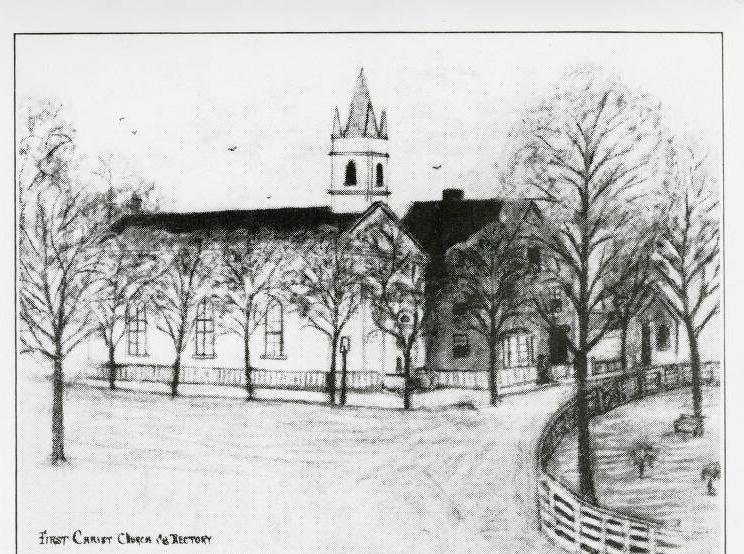
Christ Church established
Although they hold meetings throughout the 1820s and 1830s, Indianapolis Episcopalians finally organize Christ Church as their first official Episcopal parish.
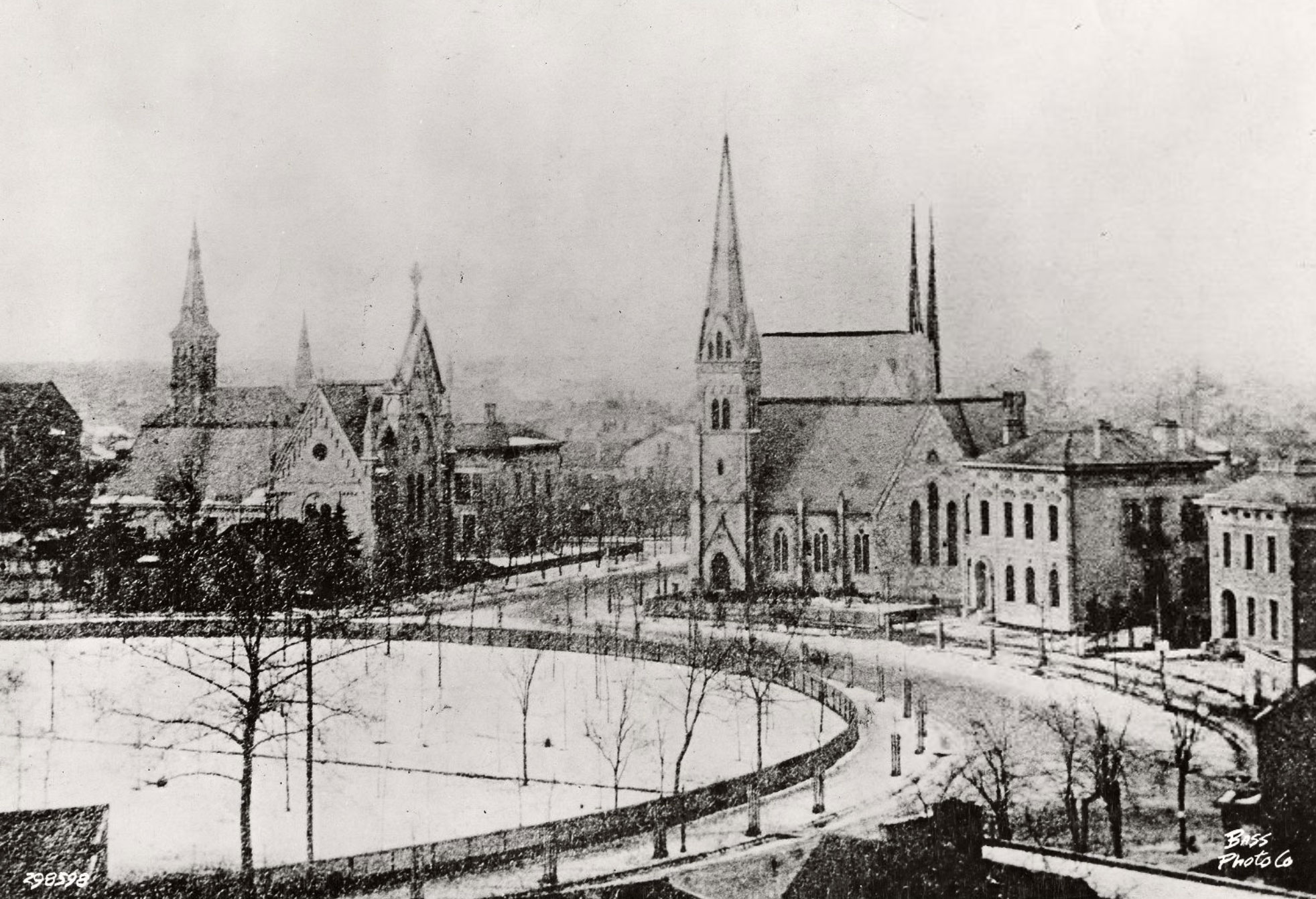
Pictured: Drawing of the first Christ Church Episcopal on the Circle, ca. 1850
Credit: Bass Photo Co Collection, Indiana Historical Society View Source
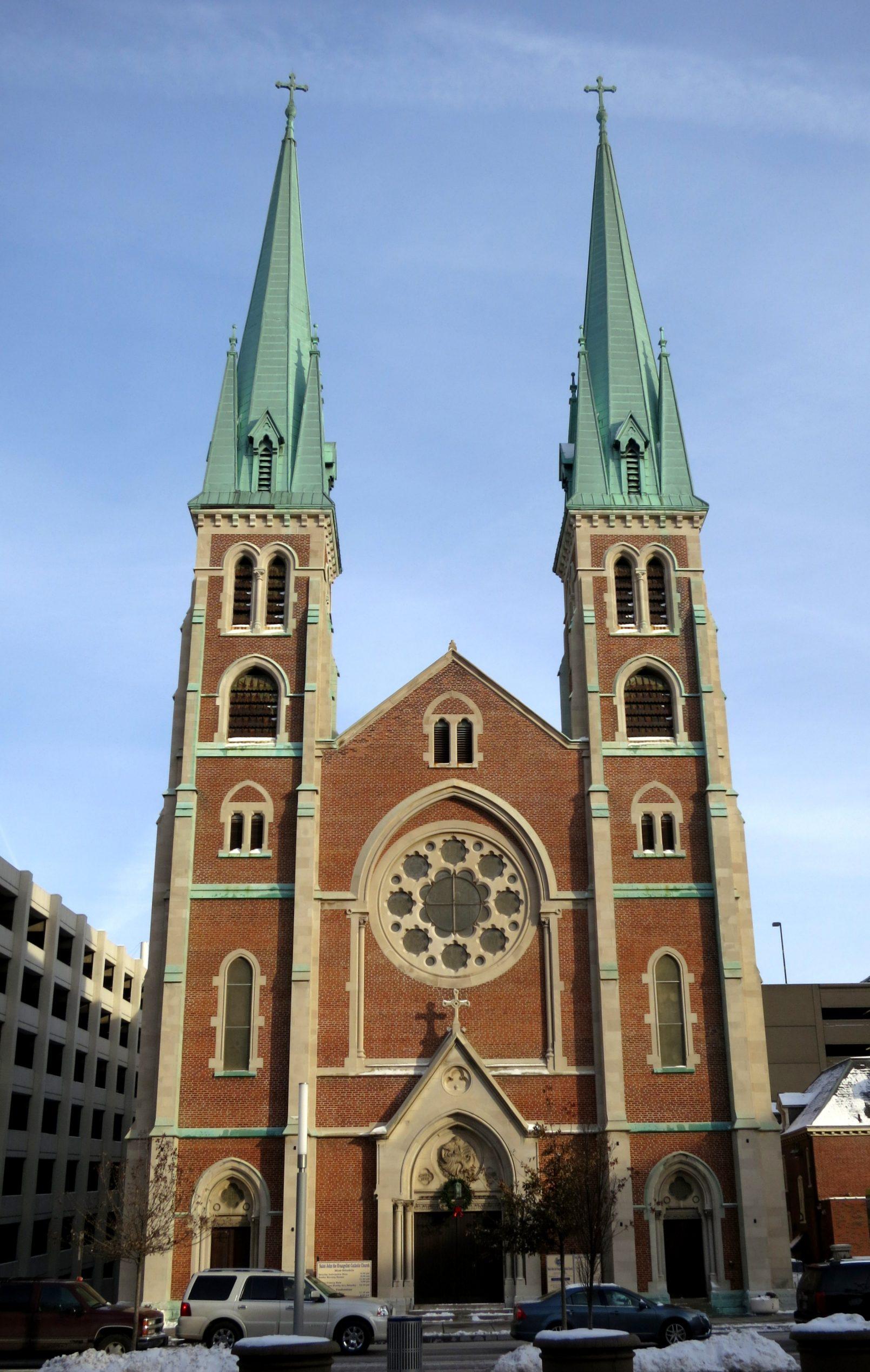
First Roman Catholic church organized
Roman Catholics establish their first church in the city, eventually known as St. John the Evangelist. The church still exists at 126 West Georgia Street.
Pictured: Saint John the Evangelist Church, 2013
Credit: NNheyob via Wikimedia Commons
View Source
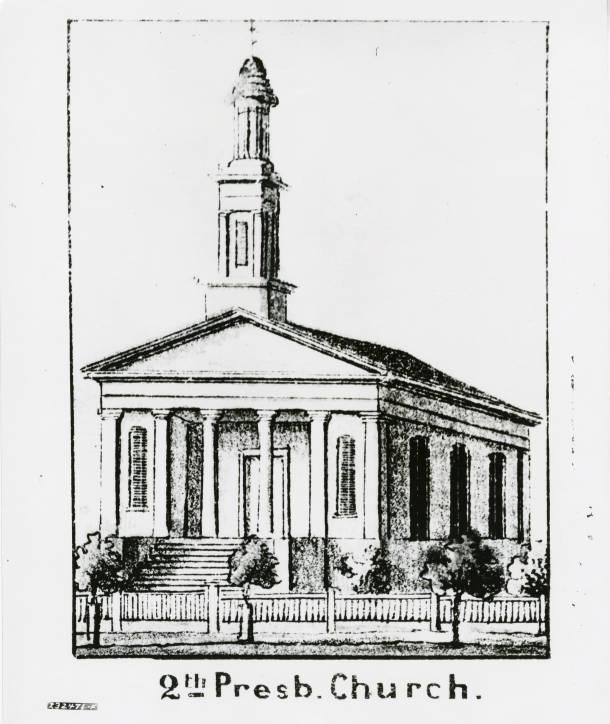
Second Presbyterian Church created after split
A general denominational disagreement over the role of revivals and voluntary associations leads to a division within the First Presbyterian Church. The evangelical or New School Presbyterians defect from the congregation and form Second Presbyterian Church.
Pictured: Second Presbyterian Church drawing, n.d.
Credit: Bass Photo Co Collection, Indiana Historical Society
View Source
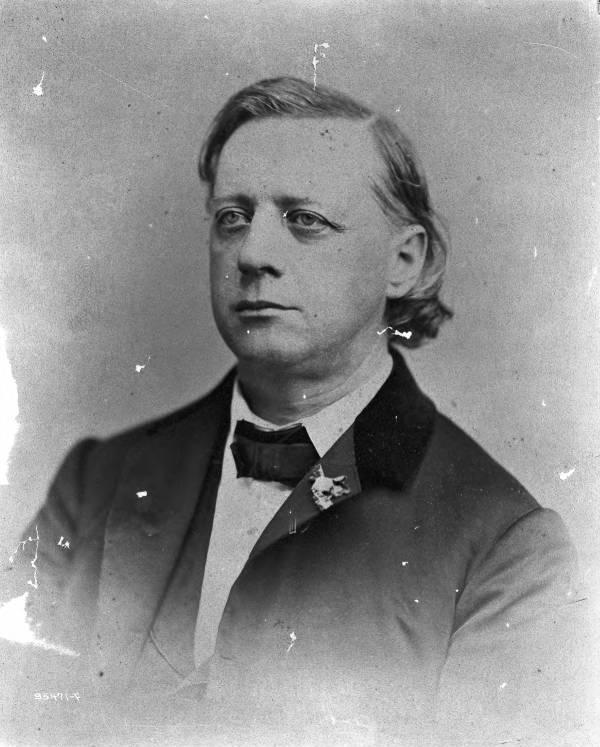
Reverend Henry Ward Beecher becomes minister of Second Presbyterian
Rev. Henry Ward Beecher becomes the first minister for Second Presbyterian. The son of the Rev. Lyman Beecher, a force behind the Second Great Awakening, the younger Beecher becomes known for his captivating sermons. He leaves Indianapolis in 1847 to serve in New York, where he becomes a national figure.
Pictured: Henry Ward Beecher, n.d.
Credit: Bass Photo Co Collection, Indiana Historical Society
View Source
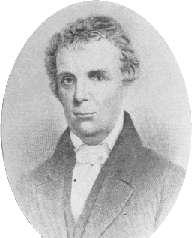
First Indiana state meeting of Disciples of Christ (Christian) Churches
Indianapolis’s Central Christian Church hosts the first statewide gathering of the Disciples of Christ. One of the denomination’s founders, Barton Stone, speaks during the four-day event. The Disciple’s national headquarters are located in the city from 1928 until 1995.
Pictured: Barton W. Stone, ca. 1800s
Credit: Public domain via Wikimedia Commons
View Source
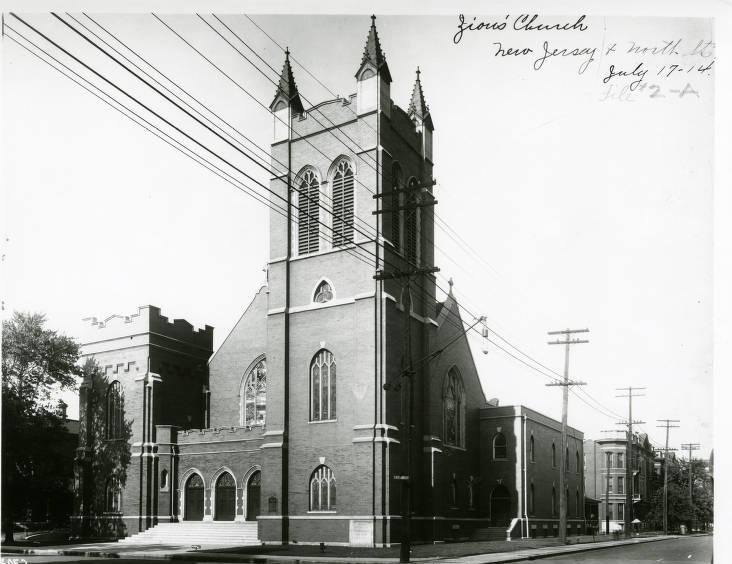
Zion Evangelical Church established
A group of German immigrants organizes the Zion Evangelical Church. The building of the Evangelical Lutheran congregation, located at 32 West Ohio Street, is dedicated on May 18, 1845.
Pictured: The current Zion United Church of Christ building dates from 1913.
Credit: Bass Photo Co Collection, Indiana Historical Society
View Source
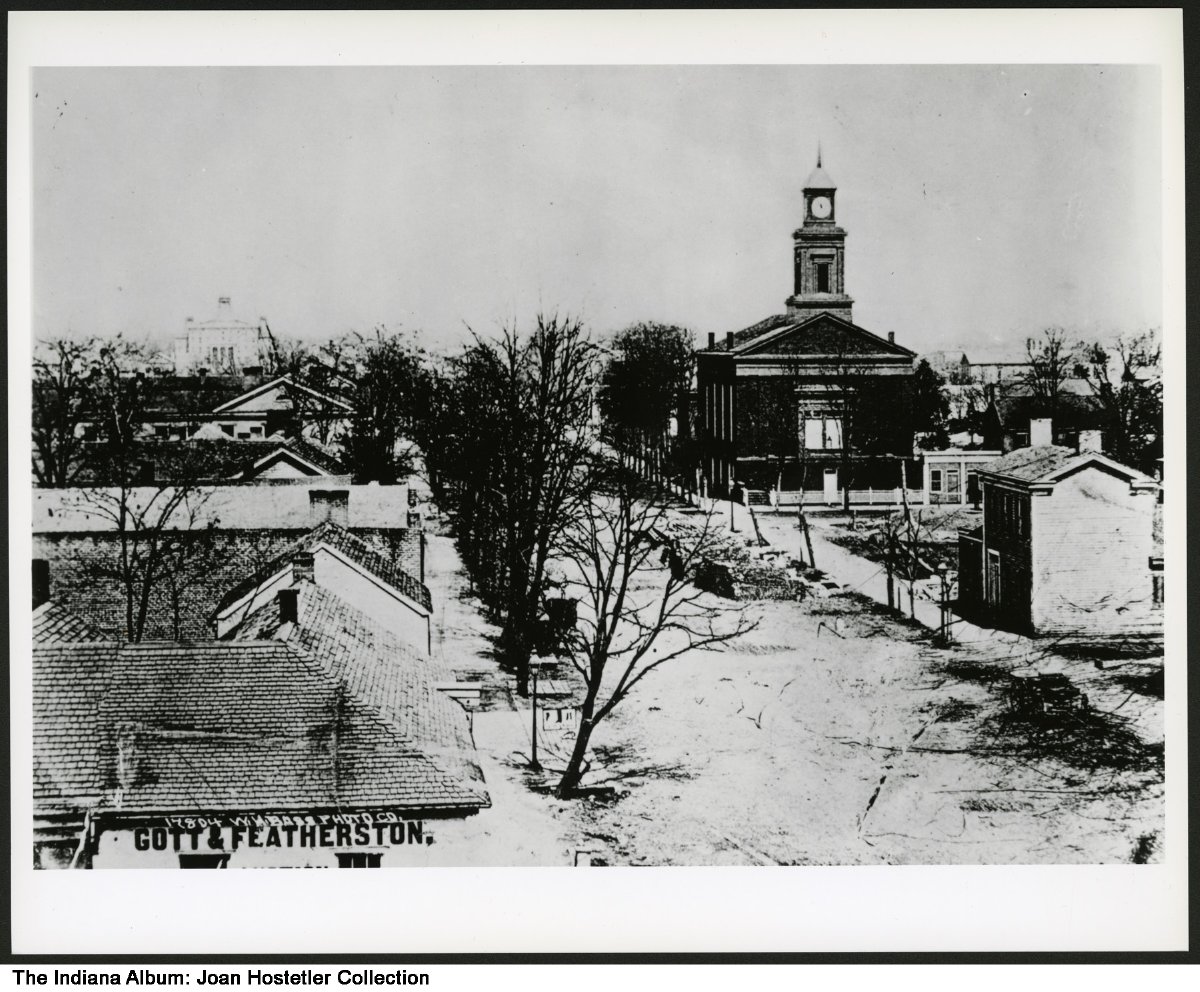
Methodists form Roberts Park Church
Methodist leaders establish a second congregation that opens for services at Pennsylvania and Market Street. Named for Bishop Robert P. Roberts, it becomes known as Roberts Park when it moves to Vermont and Delaware streets in 1876.
Pictured: Roberts Chapel (later Roberts Park Methodist Church) occupied this building, shown here in 1857, until 1868.
Credit: The Indiana Album: Joan Hostetler Collection View Source
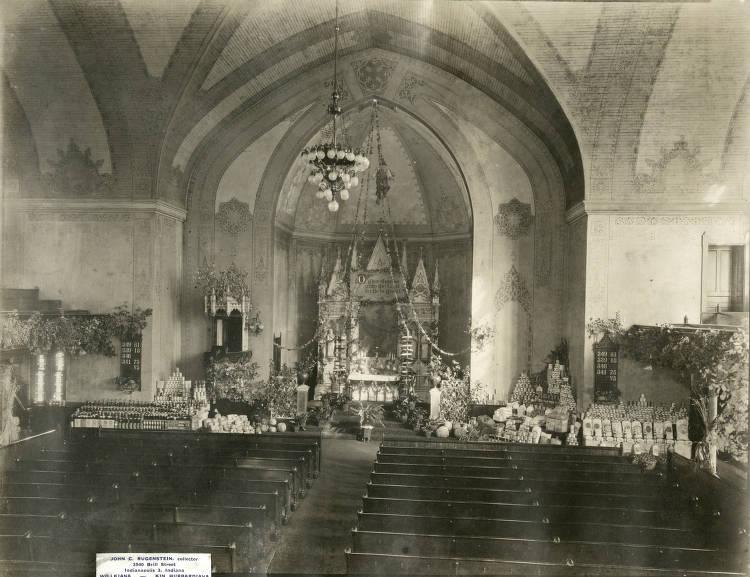
St. Paul’s Evangelical Lutheran Church begins
Eighteen members meet in the home of Anton Friederich Bade, a laborer, to establish the congregation. The first church building is located on Alabama Street.
Pictured: Harvest Festival at St. Paul’s Evangelical Lutheran, 1921
Credit: Indiana Historical Society View Source
Beecher condemns slavery
Second Presbyterian pastor Henry Ward Beecher proclaims slavery a moral evil facing the nation. Increasingly, Protestant denominations (including the Methodists, Baptists, and Presbyterians) split over the issue.
Adventist lecturers draw large crowds
On two consecutive nights, a traveling Adventist lecturer attracts large crowds to the Marion County courthouse. The previous year, another Adventist gave a series of 15 lectures outlining the tenets of a new movement, begun by an American Baptist preacher, William Miller, in upstate New York.
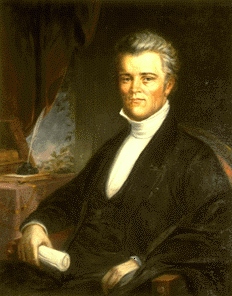
Former Governor’s funeral stirs denominational controversy
Second Presbyterians Reverend Henry Ward Beecher speaks along with Wesley Chapels Reverend Lucien W. Berry for the funeral of former Indiana governor Noah Noble. Methodists and Presbyterians argue about the propriety of the two congregational leaders sharing a pulpit.
Pictured: Noah Noble Portrait, n.d.
Credit: Public domain via Wikimedia Commons
View Source
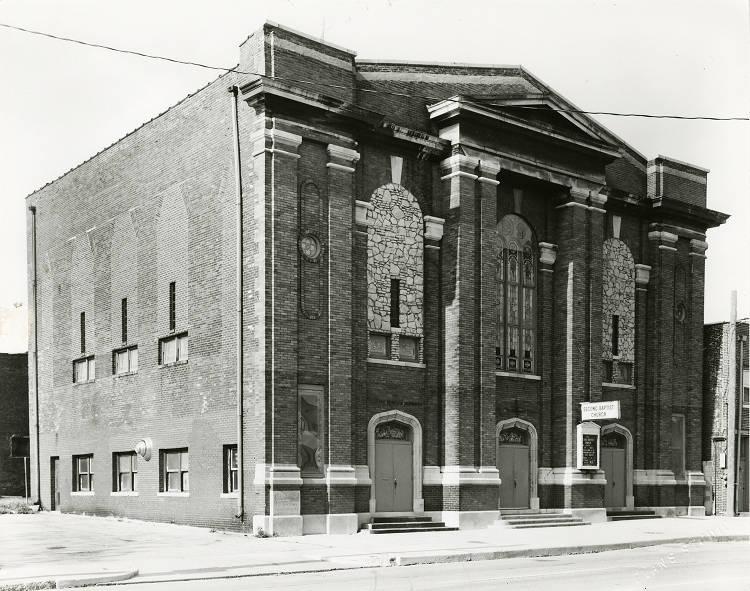
Second Baptist Church established
African American Baptists form a congregation of their own, the Second Baptist Church. Its structure on Missouri Street between New York and Ohio streets becomes a target for arson when racially charged violence erupts during the 1851 Indiana Constitutional Convention. The congregation rebuilds at the same location in 1853.
Pictured: Second Baptist Church’s third building, built around 1870
Credit: Indiana Historical Society
View Source
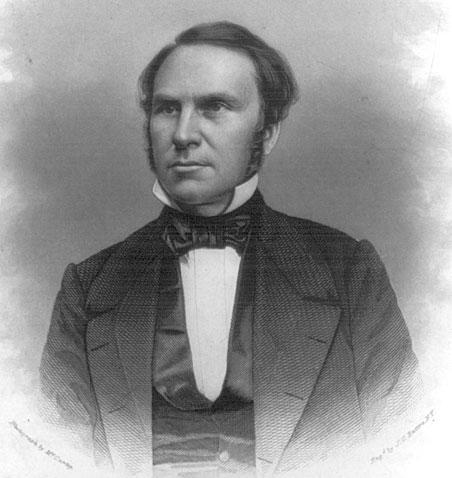
Reverend Phineas D. Gurley leaves First Presbyterian Church
Gurley, who had served as pastor of First Presbyterian Church beginning in 1840, departs Indianapolis to be the minister of First Presbyterian Church in Dayton, Ohio. He goes on to be pastor of New York Avenue Presbyterian Church in Washington, D.C. (1854-1868), where he serves as chaplain of the United States Senate and spiritual advisor to President Abraham Lincoln.
Pictured: Phineas Densmore Gurley, n.d.
Credit: Public domain via Wikimedia Commons
View Source
Third Presbyterian Church is established
Twenty-two charter members form Third Presbyterian Church at Temperance Hall. The church is renamed Tabernacle Presbyterian in 1883 and moves to its current home at the corner of 34th Street and Central Avenue in 1921.
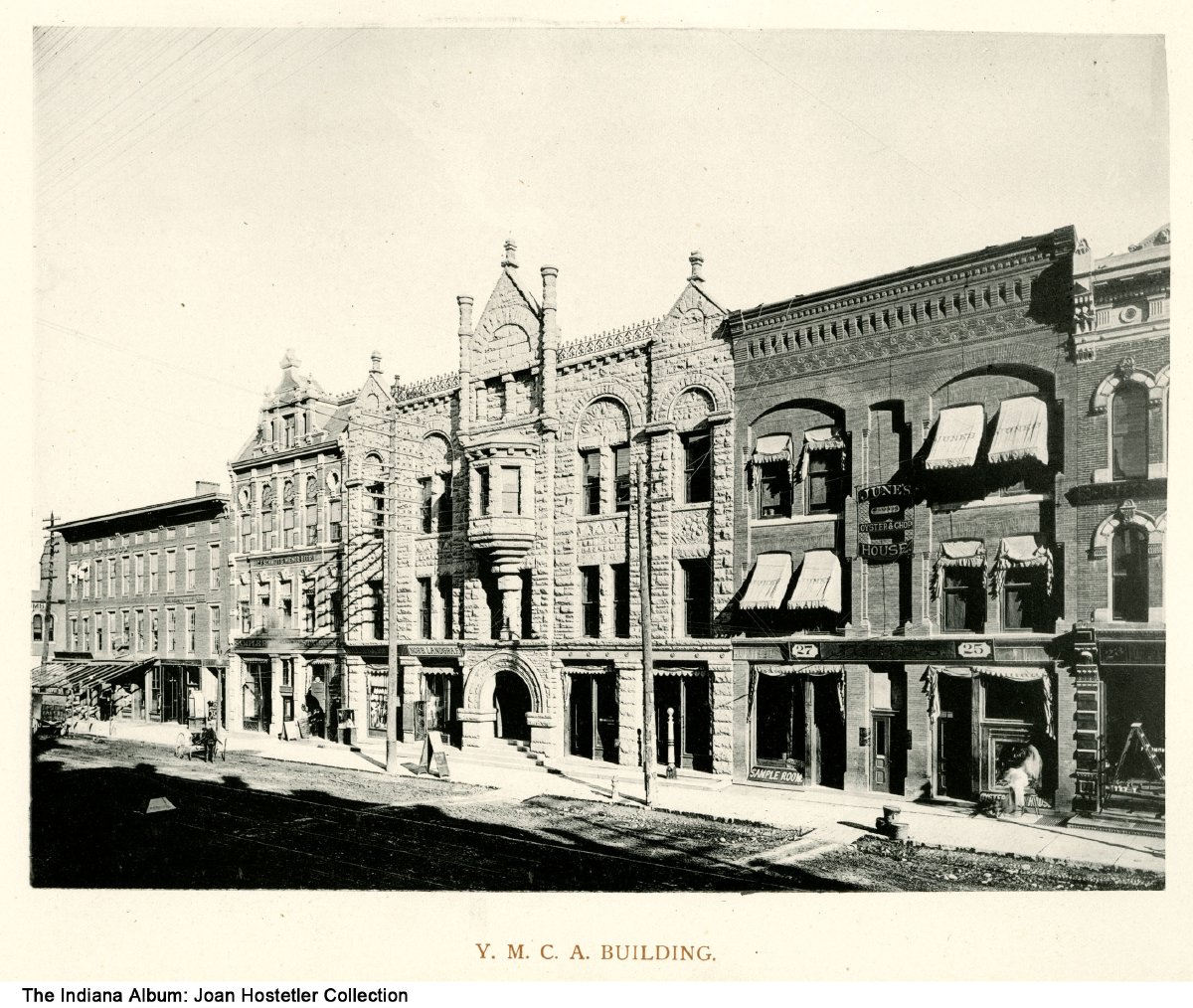
Indianapolis branch of YMCA formed
A small group of evangelical Protestants organizes the Indianapolis Young Men’s Christian Association (YMCA), a branch of the international organization. Early programming includes public lectures on Christian themes, interdenominational services, and charity work. It opens its own building at 33-37 North Illinois Street in 1871.
Pictured: Y. M. C. A. Building, ca. 1888
Credit: The Indiana Album: Joan Hostetler Collection View Source
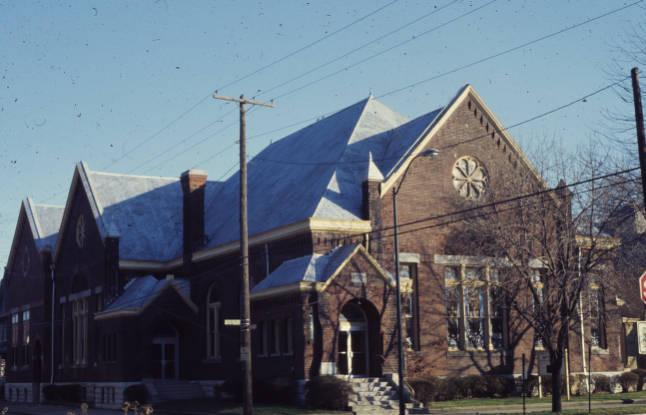
First Friends Church established
Known for their peace testimony and antislavery, the Society of Friends formally organizes its first permanent Meeting in Indianapolis. Quakers had settled in southwestern Hamilton County during the 1830s and established the towns of Bethlehem (now Carmel) and Westfield. A short-lived Meeting had operated in Indianapolis in 1834.
Pictured: Former First Friends Church, 1975
Credit: Indiana University Indianapolis
View Source
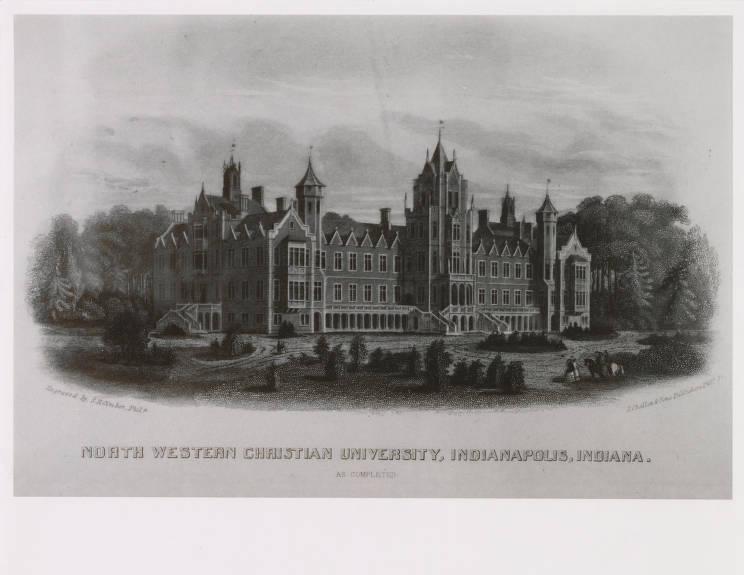
North Western Christian University opens
Classes begin at North Western Christian, affiliated with the Disciples of Christ and located at what is now 13th Street and College Avenue. Unlike most American colleges of the period, the university, later known as Butler, admits both African Americans and women.
Pictured: Northwestern Christian University (later Butler University), n.d.
Credit: Butler University View Source
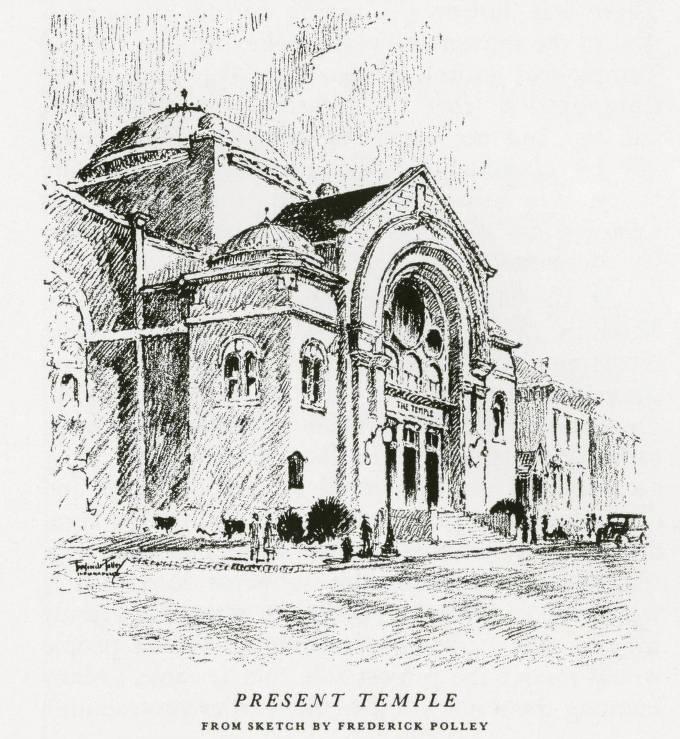
Indianapolis Hebrew Congregation established
Fourteen German Jewish immigrants organize the Indianapolis Hebrew Congregation (IHC) which adheres to Reform Judaism, the most liberal of American Jewish religious movements. IHCs first home, the Market Temple, is built at 435 East Market Street between 1865 and 1868.
Pictured: Indianapolis Hebrew Congregation Temple (1899-1957), ca. 1930
Credit: Indiana Historical Society View Source
First Catholic school opens
The Sisters of Providence establish St. John Academy, the first Catholic school in Indianapolis, with 80 students. The school, located on the corner of W. Georgia Street and S. Capitol Avenue, remains in operation until 1959.
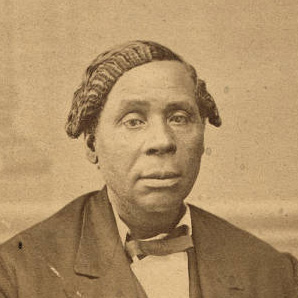
African American church burned by arsonists
Bethel AME, led by pastor Willis R. Revels, burns to the ground. The fire was intentionally set because of the church’s role in the Underground Railroad. The church contracts to build a new brick church at 414 West Vermont Street in 1867-1869.
Pictured: Rev. Willis R. Revels, ca. 1880
Credit: Indiana Historical SocietyView Source
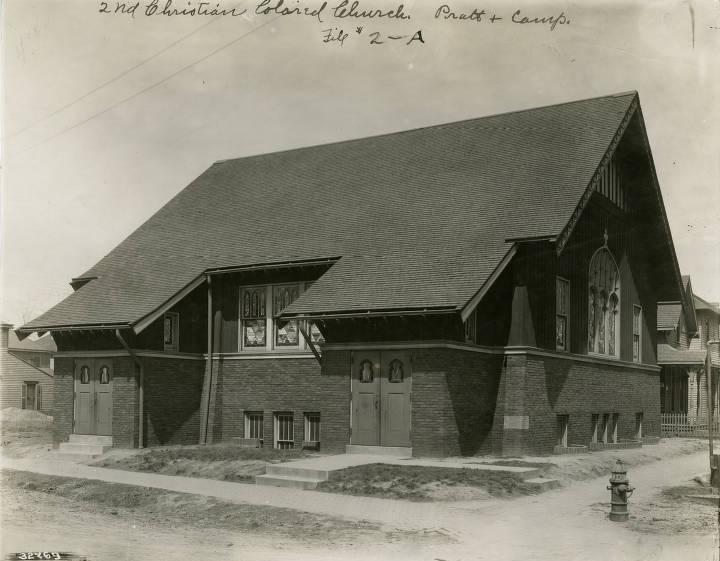
African American Christian Church established
The congregation receives its first full-time minister in 1867 and later becomes known as Second Christian Church, the city’s first African American Christian Church (Disciples of Christ) congregation. It changes its name to Light of the World Christian Church in 1984.
Pictured: Second Christian Church, 1913
Credit: Bass Photo Co Collection, Indiana Historical Society
View Source
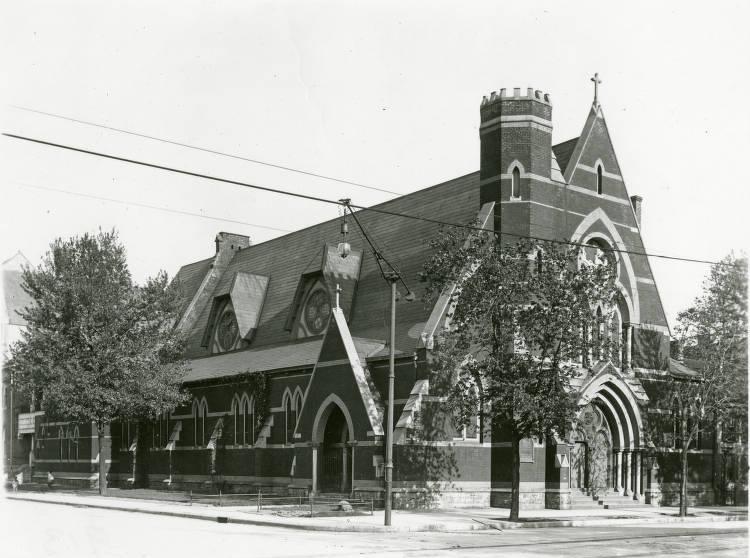
St. Paul’s Episcopal Church established
Civil War Democrats make up most of the membership of the second Episcopal church in the city. Horace Stringfellow, who was forced from Christ Church’s pulpit for suspected pro-Southern leanings, is its pastor.
Pictured: Saint Paul’s Episcopal Church, 1903
Credit: Bass Photo Co Collection, Indiana Historical Society
View Source
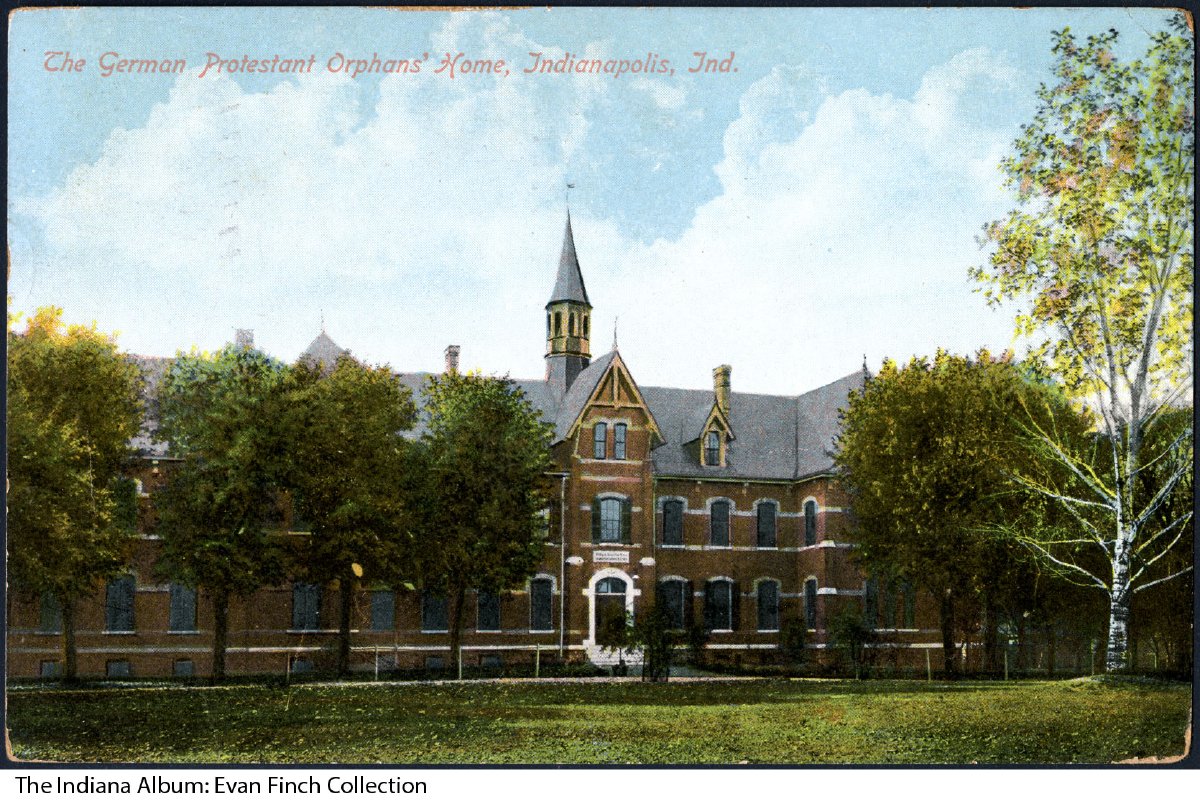
General German Protestant Orphan Home opens
The German General Protestant Orphan Association (later Pleasant Run Childrens Home) is founded by the Germania Lodge Number 3 after visiting a similar home in Cincinnati, Ohio. The home cares for children orphaned by the Civil War.
Pictured: Postcard of the German Protestant Orphans’ Home, ca. 1910
Credit: The Indiana Album: Evan Finch Collection View Source
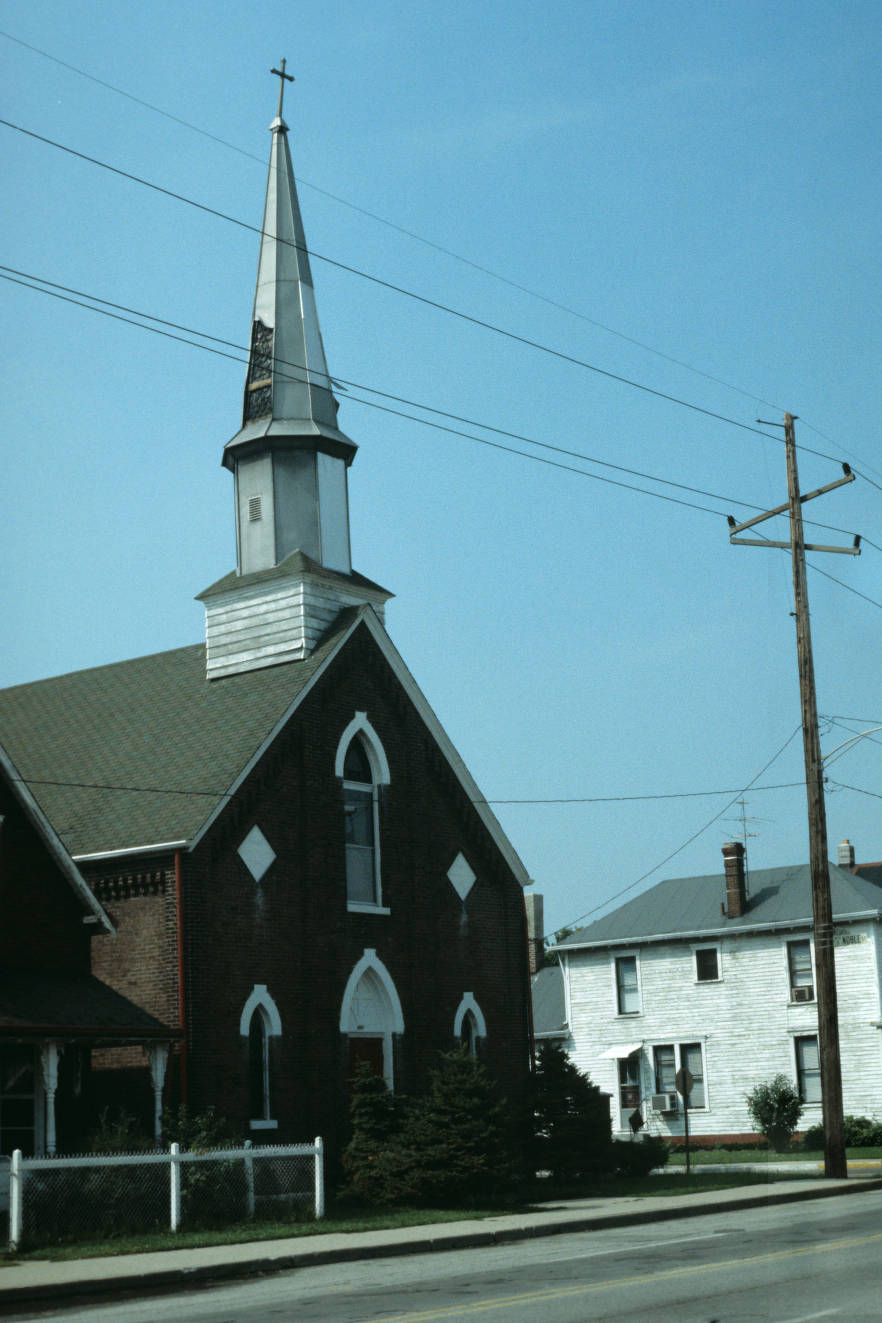
Danish Evangelical Lutheran Church is established
Forty-two Danish immigrants begin what may be the nations first Danish Lutheran congregation on the citys south side, at 701 East McCarty Street. The congregation, later known as First Trinity Lutheran Church, moves to 5321 E. 42nd Street in 1952. The original building is now home to the Church of Christ Apostolic Faith.
Pictured: Trinity Danish Evangelical Lutheran Church in 1978.
Credit: Indiana University Indianapolis View Source
Mt. Zion Baptist congregation established
A small group of former enslaved and free Blacks form Mt. Zion Baptist Church. They meet in a tool shed donated by banker and landowner Stoughton Fletcher Sr. The congregation moves to 3500 Graceland Ave in 1960, where under the leadership of Reverend R. T. Andrews, it responds to the needs of its community, developing a geriatric center, senior apartment complexes, and a Well Baby clinic.
Baptist Minister Alliance forms
African American Baptist ministers join with the mission to promote their work across the area and to create opportunities for pastoral professional development. It continues to carry out this mission in the 21st century.
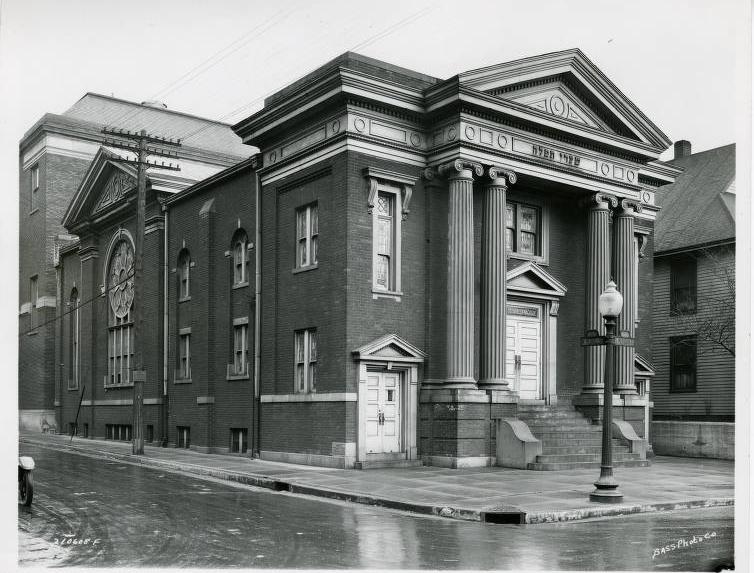
Polish immigrants establish Sharah Tefilla
Jewish immigrants from Poland establish Chevro Bene Jacob (later Sharah Tefilla) on the south side of downtown Indianapolis as one of the earliest Jewish Orthodox synagogues in the city. The congregation merges with Bnai Torah in 1966. In 1992, Shaarey Tefilla, which traces its roots to the original congregation, forms.
Pictured: Sharah Tefilla congregation, 1929
Credit: Bass Photo Co Collection, Indiana Historical Society View Source
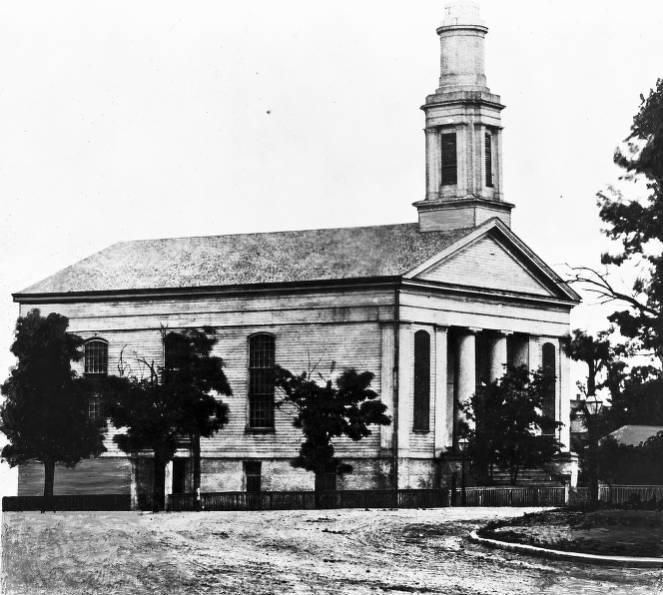
Second Presbyterian leaves the Circle
The Second Presbyterian Church leaves its home on the Circle and moves to a larger building on Pennsylvania and Vermont streets, located on land that later will become Indiana War Memorial Plaza in the 20th century.
Pictured: The first Second Presbyterian Church building located on the Circle, 1926
Credit: Bass Photo Co Collection, Indiana Historical Society View Source
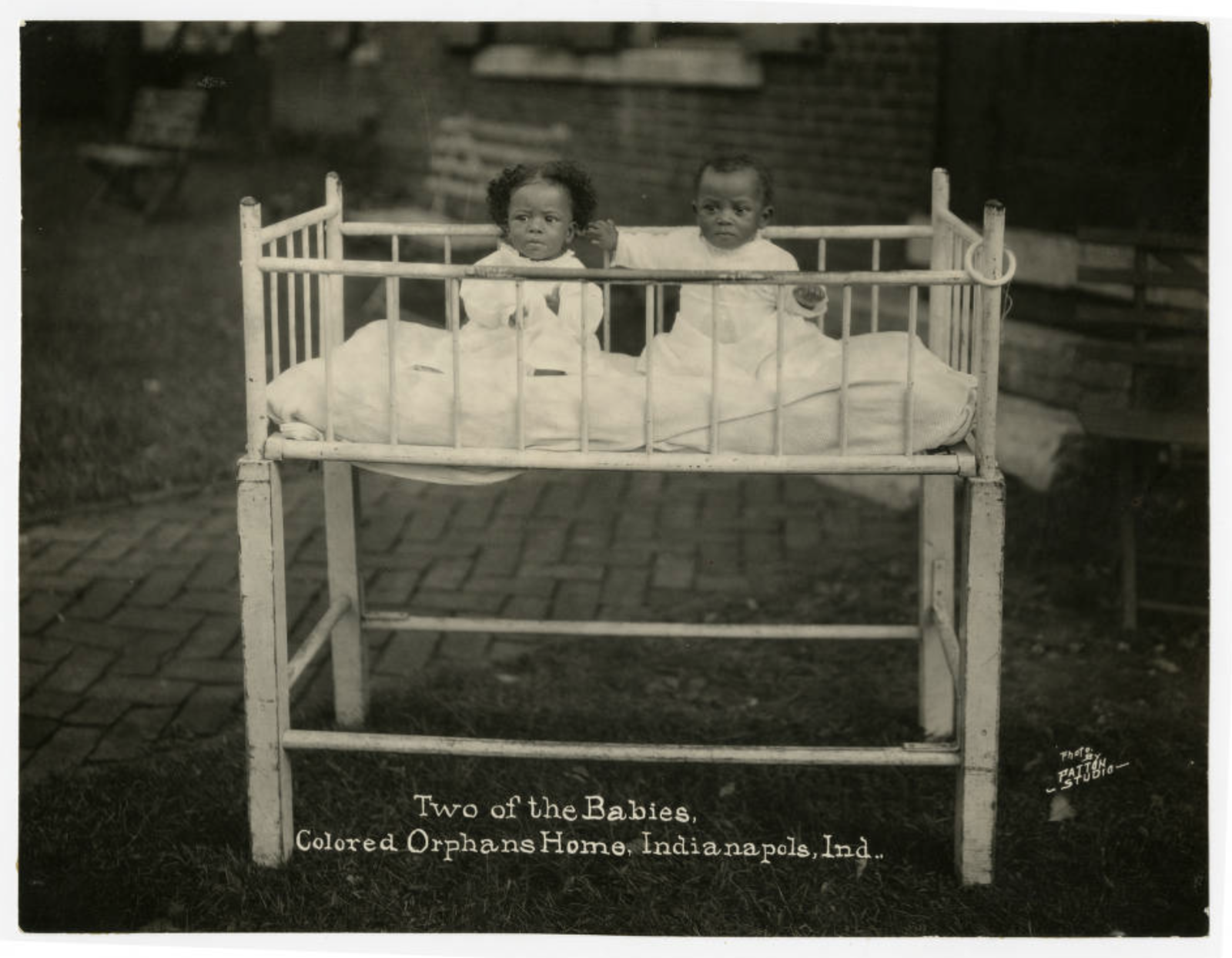
Quakers establish Indianapolis Asylum for Friendless Colored Children
The local Orthodox Friends Meeting, the main branch of the Society of Friends (Quakers), founds the institution which is the only orphanage in the state and one of only a handful in the country to care for African American children.
Pictured: Infants in a crib outside the Indianapolis Asylum for Friendless Colored Children, ca. 1923
Credit: General Photograph Collection, Rare Books and Manuscripts, Indiana State Library View Source
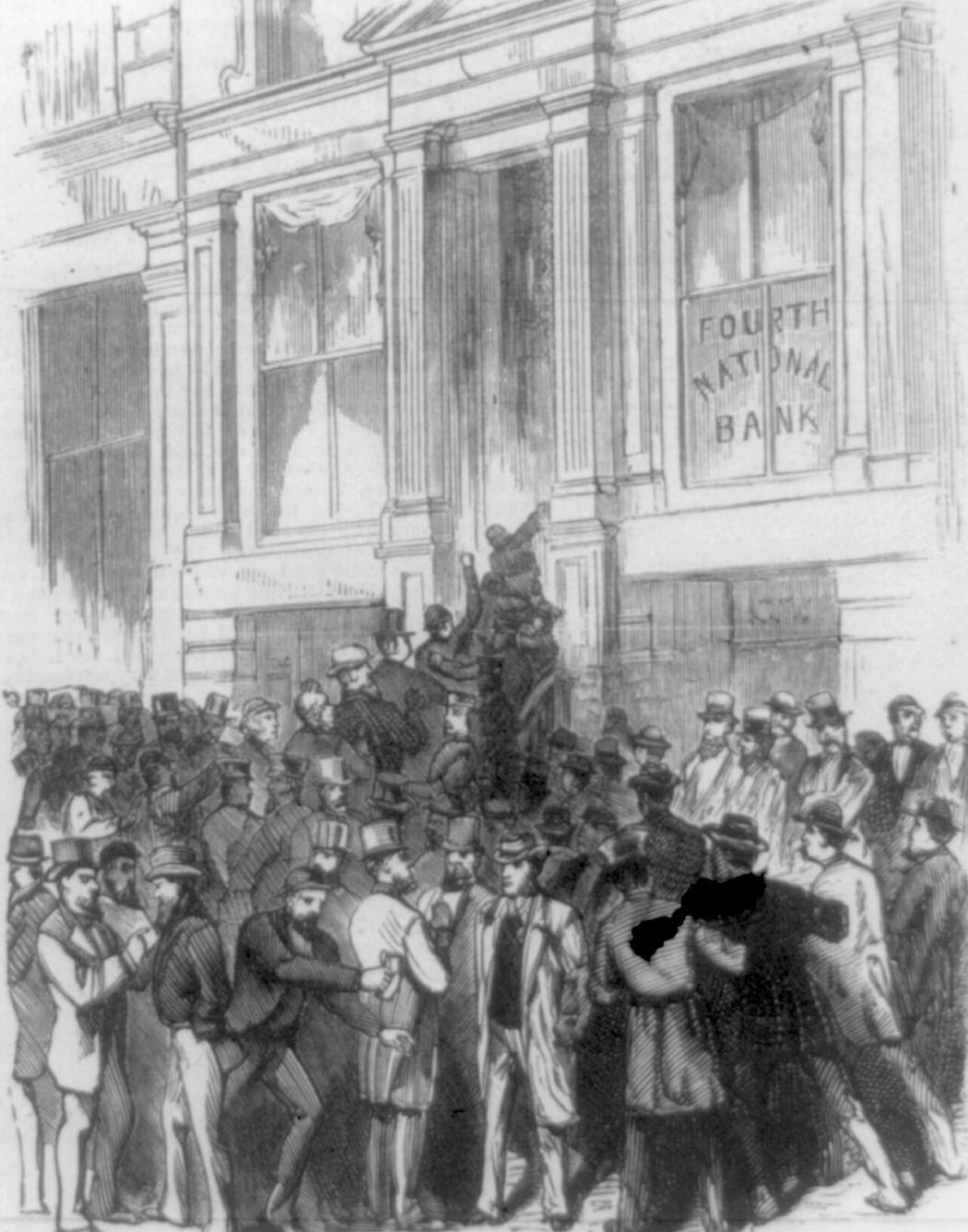
Congregations respond to Panic of 1873
In the midst of the national financial panic, the Little Sisters of the Poor begin providing charity services to the elderly poor, and the House of Good Shepherd is established to take in erring women and girls. Protestant churches form special committees to deal with the economic depression that follows the panic.
Pictured: Illustration of the Panic of 1873
Credit: Public domain via Wikimedia Commons
View Source
Seventh Day Adventists arrive in Indianapolis
The Seventh Day Adventists open a Sunday school and build a church on Central Avenue. The evangelical denomination emerged in 1863 in Battle Creek, Michigan, under the leadership of Ellen White after the splintering of Millerism when the predicted return of Jesus did not occur in 1844 (the Great Disappointment).
Rev. Oscar McCulloch arrives at Plymouth Congregational
Plymouth Congregational welcomes Reverend Oscar McCulloch. An advocate of the social gospel, he inspires the formation of the Indianapolis Charity Organization Society in 1879. The organization operates out of Plymouth Church and coordinates poor relief efforts in the city.
Bishop Chatard arrives in Indianapolis
Roman Catholic Bishop Francis Chatard moves the historic seat of his diocese from Vincennes to Indianapolis. He sets up residence at St. Johns Church and begins the search for land for a cathedral. In 1961, a new parochial school, Chatard High School, is named for him.
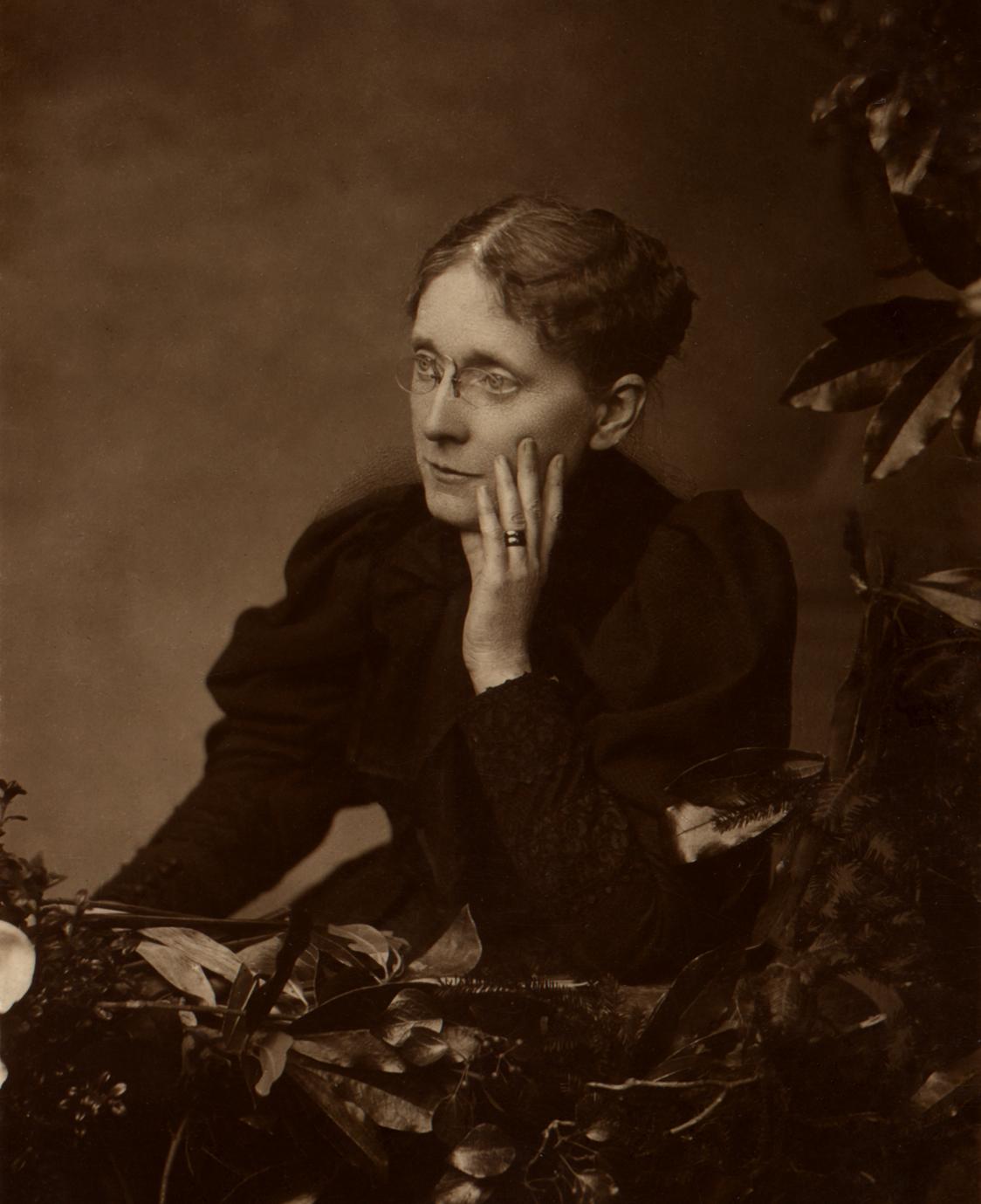
Frances Willard leads the Woman’s Christian Temperance Union
At the annual meeting of the WTCU (Oct. 29-Nov. 3) in Indianapolis, Frances Willard, who goes on to become one of the leaders of the national anti-alcohol movement, is elected president of the organization. The WCTU was allied with Protestant denominations nationally and locally.
Pictured: Frances Willard, ca. 1890s
Credit: Public domain via Wikimedia Commons
View Source
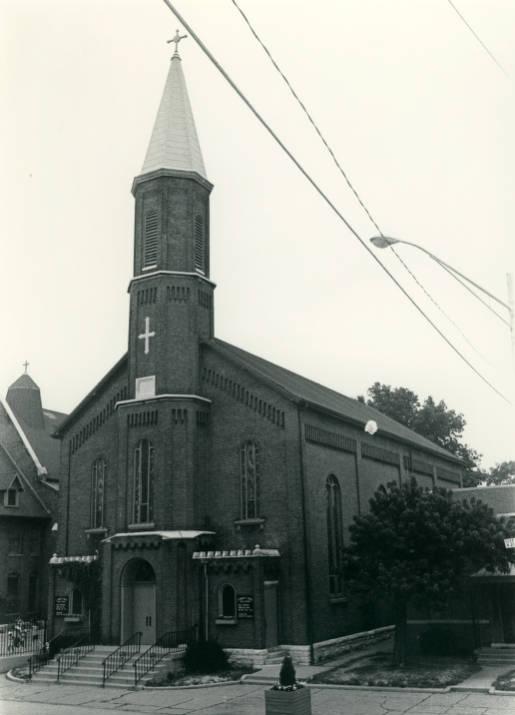
St. Bridget’s Roman Catholic parish opens
Bishop Francis Silas Chatard establishes St. Bridget’s on the near west side. Although founded as an ethnic Irish parish, St. Bridget’s soon serves Black families who live in the area.
Pictured: St. Bridget’s Roman Catholic Church, 1983
Credit: Indiana University Indianapolis
View Source
Revival at Roberts Park Methodist
Roberts Park Methodist hosts noted revivalist Thomas Harrison from March through June. The event spreads to several other congregations and nets 1,200 new members to those churches.
Christ Church Cathedral Choir established
First comprised of only men and boys, the choir through the years earns an international reputation for musical excellence.
Third Presbyterian reorganizes as Tabernacle Presbyterian Church
Third Presbyterian reorganizes and becomes Tabernacle Presbyterian Church as part of an international “tabernacle movement,” which seeks to make the church less formal, thereby more attractive to new members.
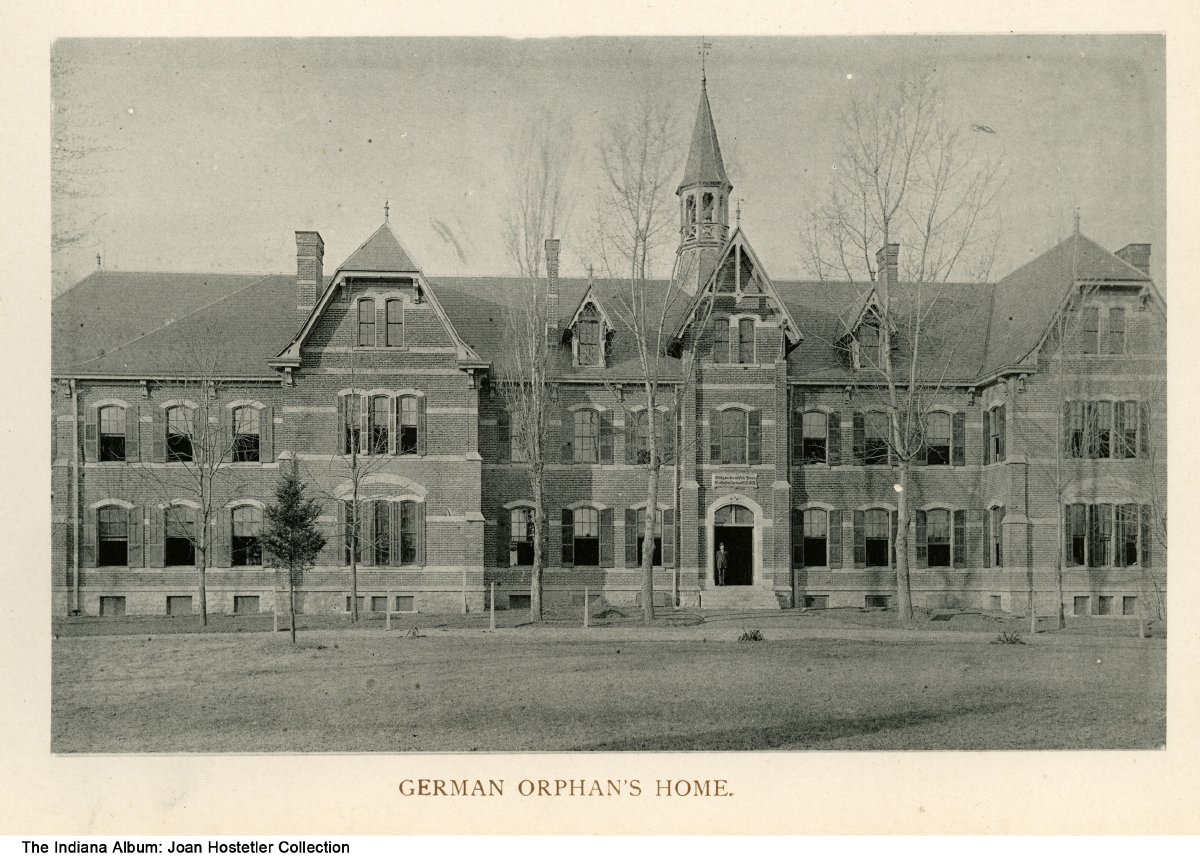
Lutheran Child and Family Services established
Members of the Bible society from St. Paul and Trinity Lutheran churches establish the Evangelische Lutherische Waisenhaus Gesellschaft, an asylum for orphans and aged people.
Pictured: German Orphan’s Home (later Lutheran Child and Family Services), ca. 1885
Credit: The Indiana Album: Joan Hostetler Collection
View Source
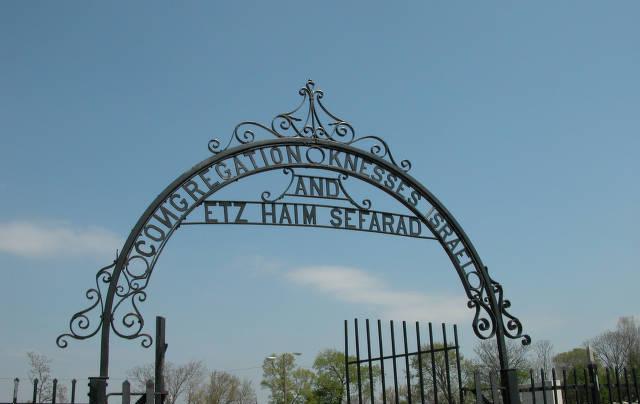
Russian synagogue Knesses Israel established
Jewish immigrants from Russia establish the third Orthodox immigrant synagogue, Knesses Israel. The congregation first resides on Merrill Street near where Lucas Oil Stadium now stands and then at 1021 South Meridian Street. In 1966, the congregation merges with Bnai Torah at 6510 Hoover Road.
Pictured: Entrance to the Jewish cemetery Congregation Knesses Israel & Etz Haim Sefarad Cemetery, 2005
Credit: Indiana Department of Natural Resources, Division of Historic Preservation and Archaeology
View Source
Salvation Army arrives in Indianapolis
The Salvation Army, founded as a Protestant church by William and Catherine Booth in London in 1885, quickly thrives as both an evangelistic and philanthropic organization focusing on meeting the community’s “physical and spiritual needs.”
St. Bridget’s Catholic Parish opens African American school
Father Daniel Curran, pastor of St. Bridget’s, opens St. Ann’s School, located at 844 Fayette Street, to serve the city’s Catholic Black children. The school remains in operation until 1919 when St. Rita’s Parish opens as the African American Catholic church and establishes its own school.
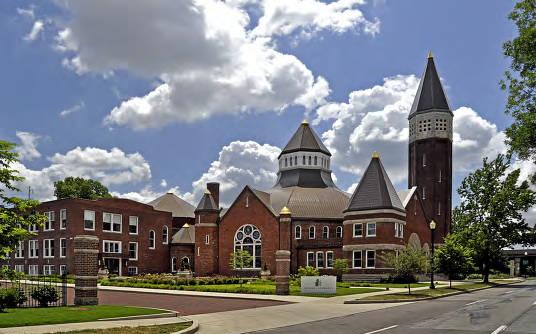
Central Avenue Methodist moves into a new building
Central Avenue Methodist, then the largest congregation of the denomination in Indiana, moves into a Romanesque Revival-style building located at 12th and Central Avenue. It remains there until 1999, after which Indiana Landmarks buys and refurbishes the structure to serve as its headquarters.
Pictured: Central Avenue Methodist Church, n.d.
Credit: Lee Lewellen via Indiana State Library
View Source
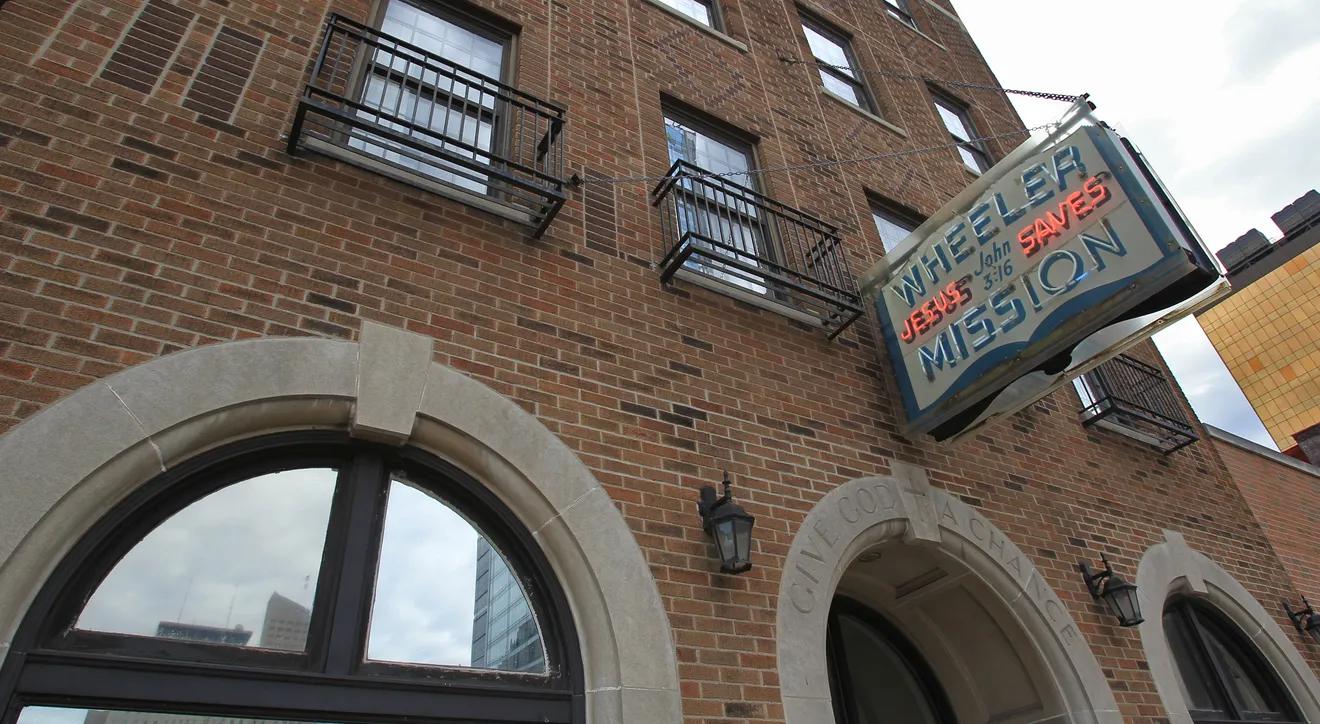
Wheeler Rescue Mission launches
William Wheeler, a local businessman, begins a rescue mission to help people who are destitute. Supported primarily by Protestant churches, it becomes incorporated as the Rescue Mission and Home of Indianapolis in 1905, with Wheeler’s name attached after his death in 1908. Today it operates as Wheeler Mission Ministries and is the city’s largest mission.
Pictured: Wheeler Mission, 2018
Credit: Kelly Wilkinson, IndyStar
View Source
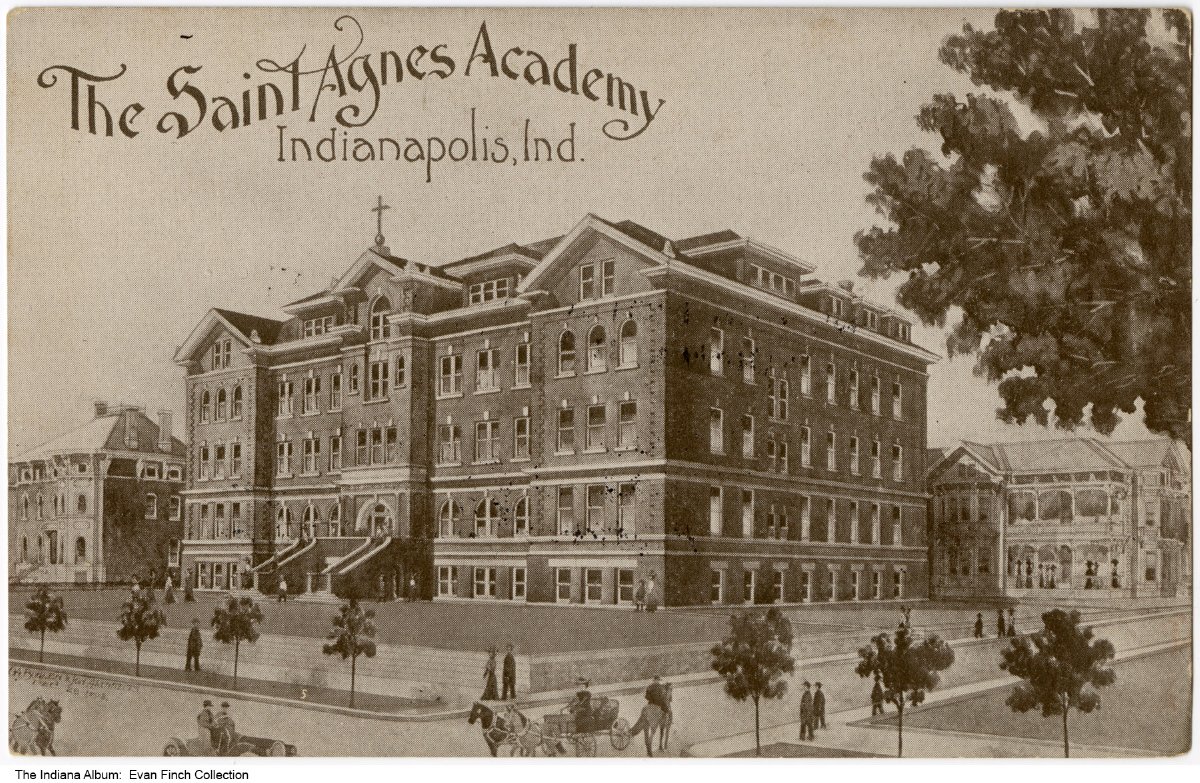
St. Agnes Academy for girls opens
Bishop Silas Chatard establishes St. Agnes as a boarding school for girls. It opens with 12 members of the Sisters of Providence and 3 students.
Pictured: Saint Agnes Academy, ca. 1940
Credit: The Indiana Album: Evan Finch Collection
View Source
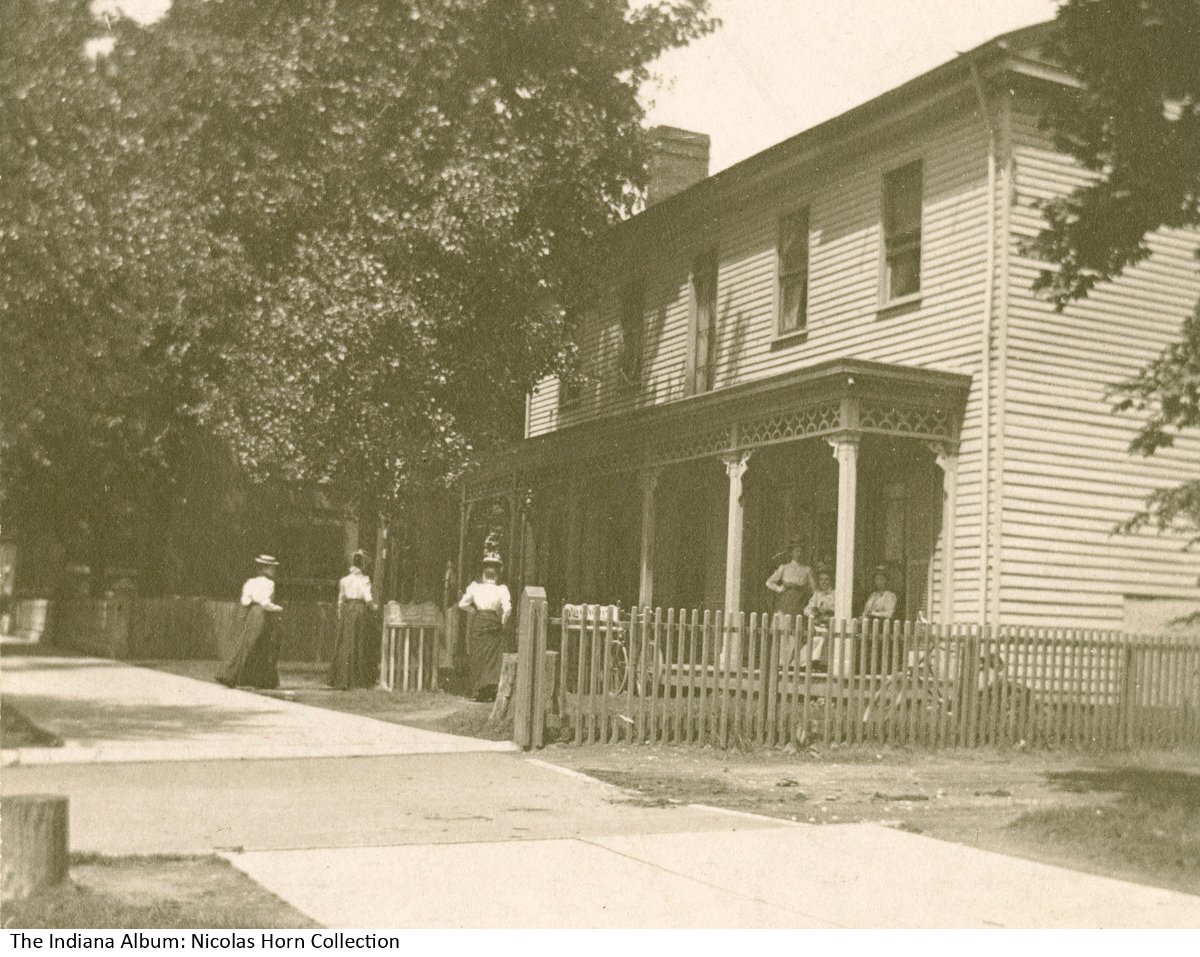
Indianapolis chapter of Young Womens Christian Association holds first meeting
The Indianapolis YWCA is established to promote the “physical, intellectual, social, and spiritual advancement of young women.” It later affiliates with the national YWCA, which is founded in 1906 as a nonsectarian Christian organization.
Pictured: Women at the Y. W. C. A. headquarters, ca. 1899
Credit: The Indiana Album: Nicolas Horn Collection
View Source
Reverend Henry L. Herod arrives at Second Christian Church
Reverend Henry L. Herod, a native of Kentucky, serves the congregation for 37 years, during which time he also is superintendent of Flanner House and a local political leader. He works to promote better race relations and creates a massive choir made up of 500 adults and 40 children.
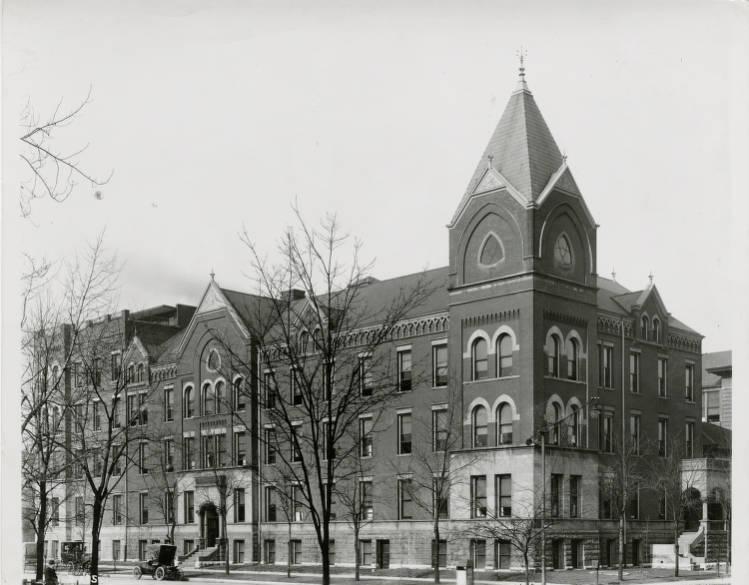
Deaconess Hospital founded
The German Evangelical Church organizes the Deaconess Hospital and first operates out of a home near the corner of Senate and Ohio streets. A new hospital facility opens next door at 200 North Senate in 1899. Unable to withstand the economic hardships of the Great Depression, it closes in 1935.
Pictured: Deaconess Hospital, 1907
Credit: Bass Photo Co Collection, Indiana Historical Society
View Source

Methodist Hospital plans established
Following a proposal from the International Convention of the Epworth League of the Methodist Episcopal Church, the Indiana Secretary of State’s office files the Articles of Association for Methodist Hospital. The hospital becomes one of the largest in the state and currently is part of IU Health.
Pictured: Methodist Hospital, 1908
Credit: Bass Photo Co Collection, Indiana Historical Society
View Source
St. Phillip’s Episcopal Church organized
With the sponsorship of the rector of the St. Paul parish, 25 African Americans establish St. Phillip’s Episcopal, which had begun as a mission church of African Americans after the Civil War.
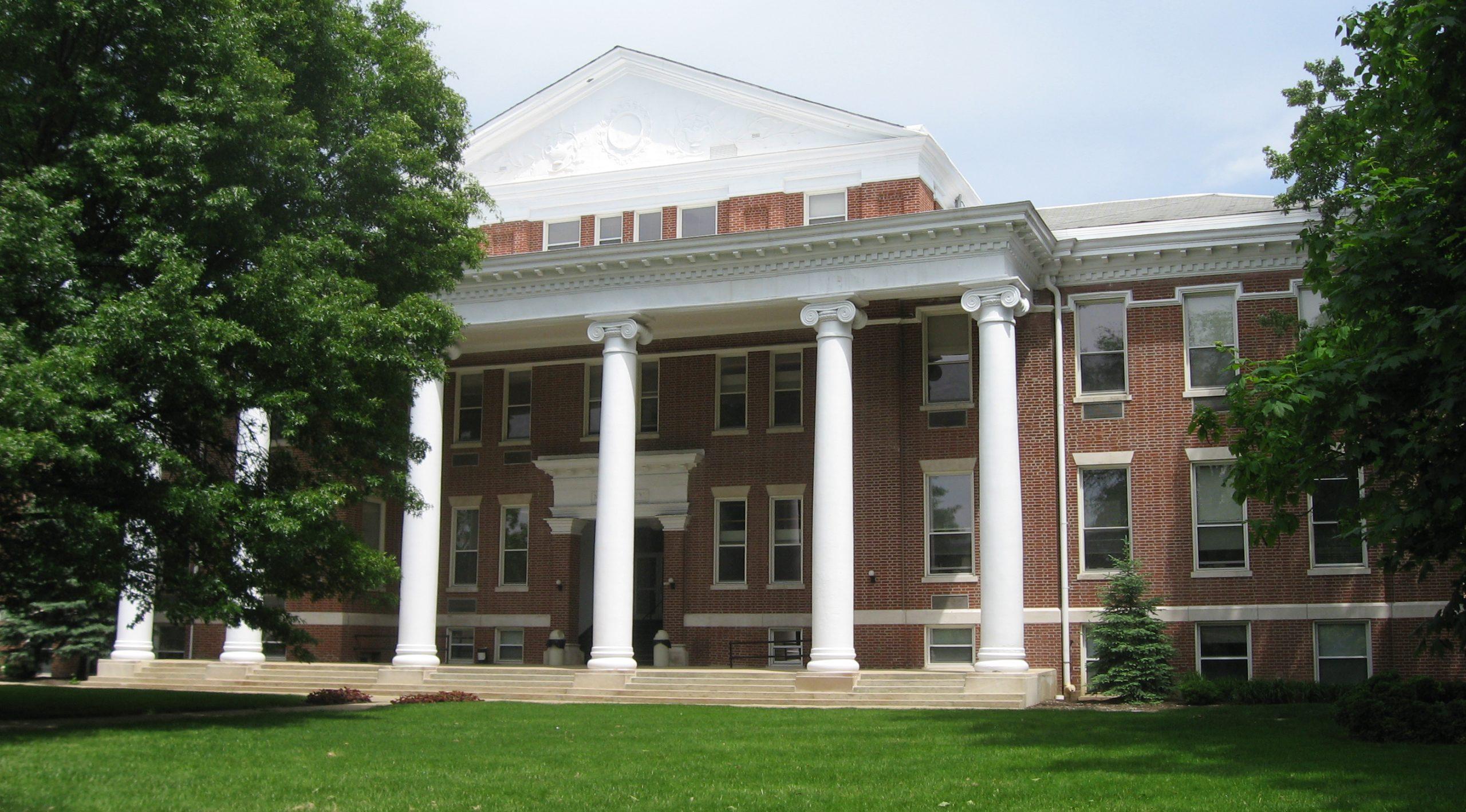
Indiana Central College established
The United Brethren Church selects the citys south side for a new school of higher education, Indiana Central College. The schools name is changed to the University of Indianapolis in 1986.
Pictured: Good Hall, University of Indianapolis, 2010
Credit: Nyttend, Public domain via Wikimedia Commons
View Source
Indiana Seventh-day Adventist Academy opens
The Seventh-day Adventists open a school, which is first known as the Boggstown Manual Training Academy, in Shelby County. In the 1940s, it moves to Cicero in Hamilton County and is renamed the Indiana Academy of Seventh-day Adventists. The school continues to operate at this location.
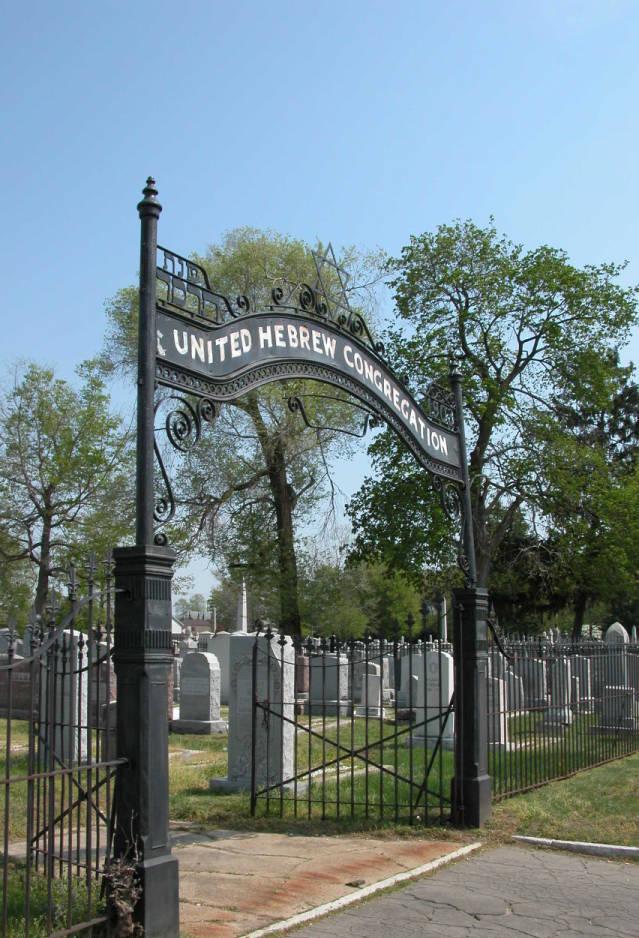
United Hebrew Congregation established
To overcome ethnic divisions, the United Hebrew Congregation forms. It becomes the largest and most influential Orthodox congregation in the city and state.
Pictured: United Hebrew Congregation Cemetery, 2005
Credit: Indiana Department of Natural Resources, Division of Historic Preservation and Archaeology
View Source
First Presbyterian dedicates a new building
First Presbyterian opens a new building at 1505 N. Delaware Street after construction of a new federal courthouse forces its move from the corner of Pennsylvania and New York streets. Plymouth Church also leaves its building at Pennsylvania and Ohio streets with construction of the courthouse.
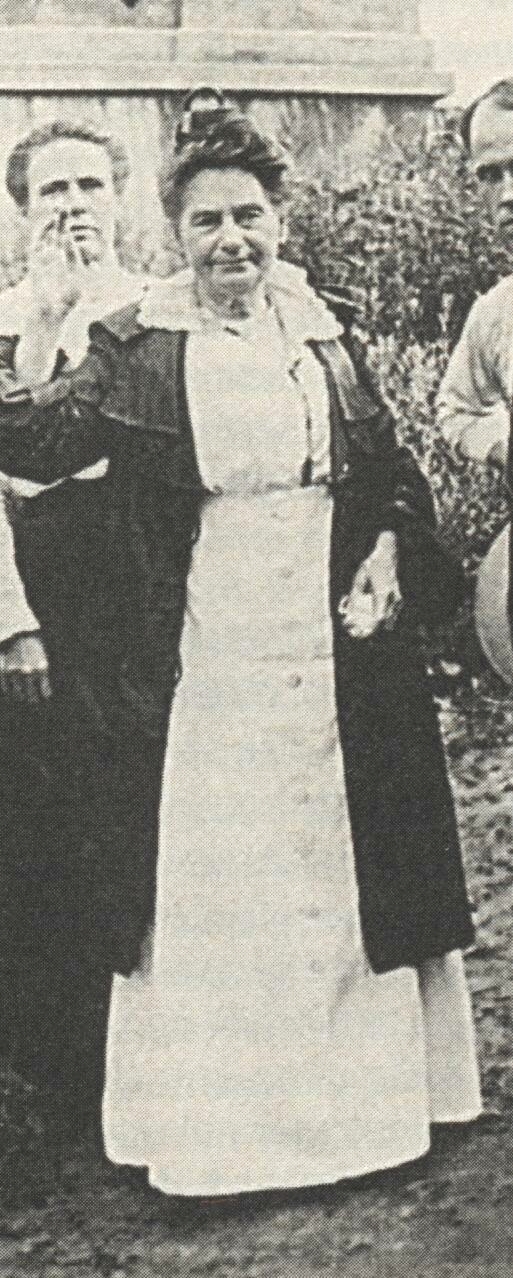
Maria Beulah Woodworth-Etter launches Pentecostal revivals
Maria Beulah Woodworth-Etters series of revivals on the citys south side leads to the establishment and growth of Pentecostalism in Indianapolis. A healing evangelist from Ohio, in 1918 the revivalist helps to found what is today the Lakeview Church on Beachway Drive.
Pictured: Maria Beulah Woodworth-Etter launches Pentecostal revivals, n.d.
Credit: Public domain via Wikimedia Commons
View Source
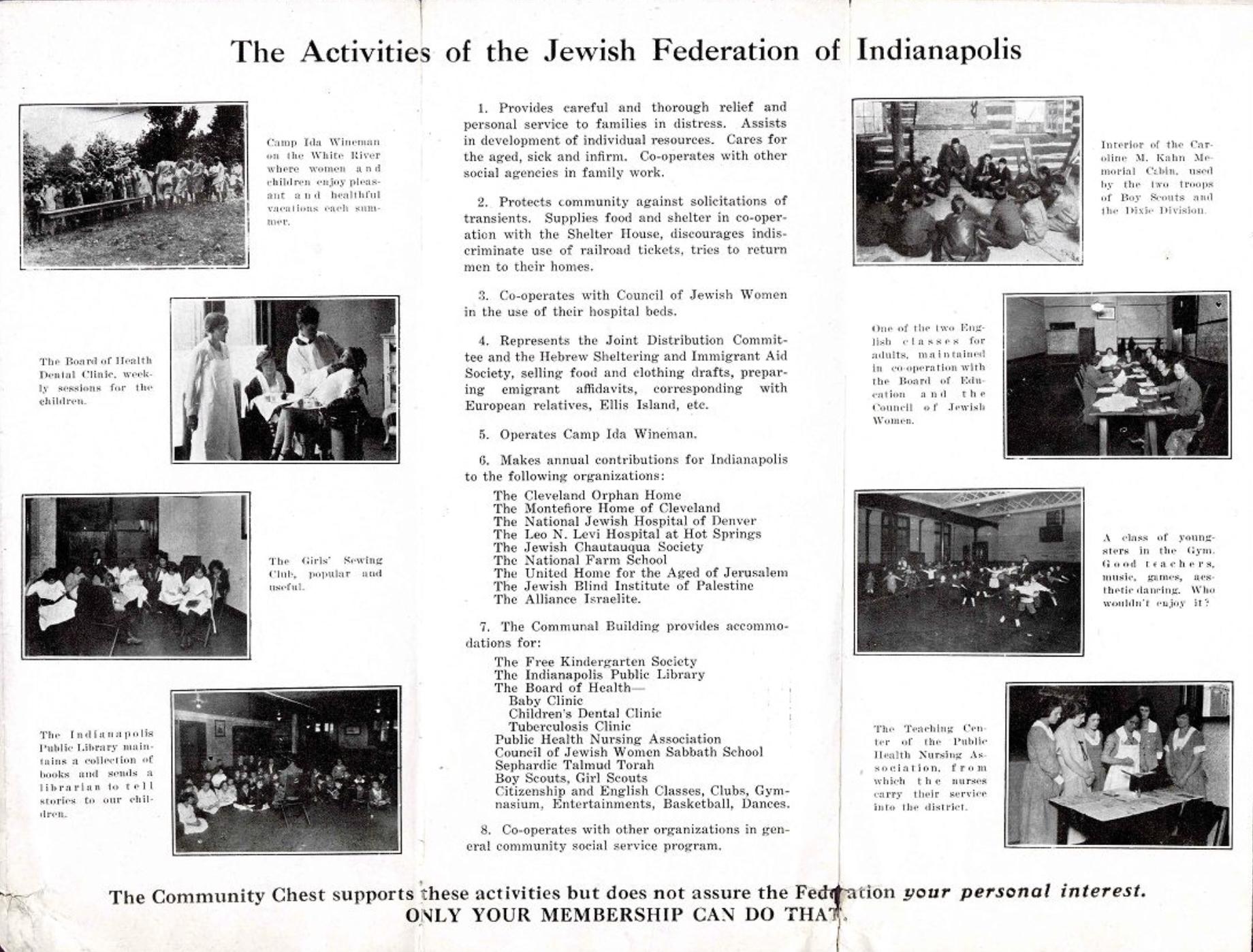
Jewish Federation of Indianapolis forms
Local Jewish leaders, primarily immigrants of German origin, establish the Jewish Federation to coordinate efforts to serve new Jewish immigrants from eastern Europe who were fleeing virulent anti-Semitism.
Pictured: Activities of the Jewish Federation of Greater Indianapolis, n.d.
Credit: Indiana State Library View Source
Dedication of the Cathedral Church of SS. Peter & Paul
The Cathedral Church of SS. Peter & Paul is dedicated for the Catholic Diocese of Indianapolis. The campus will eventually include offices, a school, and a residence in addition to the cathedral.
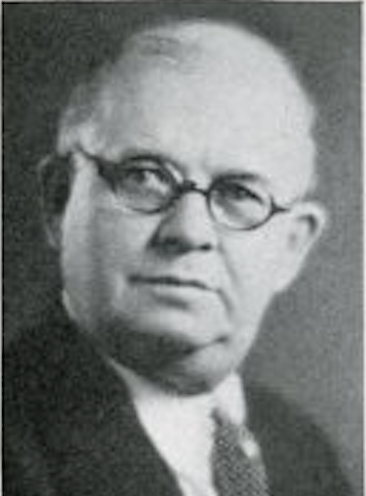
Reverend Edward S. Shumaker becomes leader of Indiana’s Anti-Saloon League
Shumaker, a Methodist minister, becomes a leader in the fight for statewide prohibition. Indiana goes “dry” on Apr. 2, 1918, nearly a year before the Eighteenth Amendment is ratified.
Pictured: Reverend Edward S. Shumaker, ca. 1926
Credit: The Indiana Album: Joan Hostetler Collection
View Source
Holy Trinity established
The Slovene community, which previously worshipped at St. Patricks, opens the Holy Trinity Church in the Haughville neighborhood.
Methodists call for dry counties
Governor J. Frank Hanly, a staunch member of Meridian Street Methodist Church, rails against the dangers of demon rum and pushes for a county option law. Over 70 of Indianas counties go dry as a result.
Altenheim opens
Members from Zion Evangelical Church (later United Church of Christ denomination), establish the organization to care for the elderly. The Altenheim, now located at 3524 East Hanna Street, offers independent living, assisted living, and health care but is no longer affiliated with the United Church of Christ.
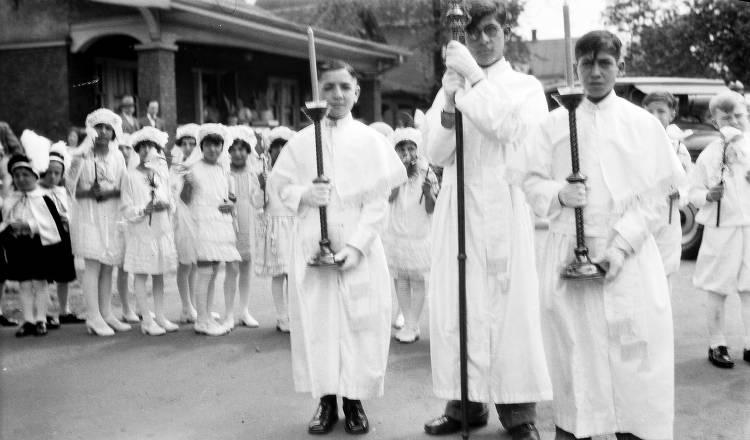
Holy Rosary church established
Bishop Francis Silas Chatard authorizes the formation of a new Catholic congregation, Holy Rosary, for the citys Italian community.
Pictured: Holy Rosary Confirmation Parade, ca. 1925
Credit: Indiana Historical Society
View Source
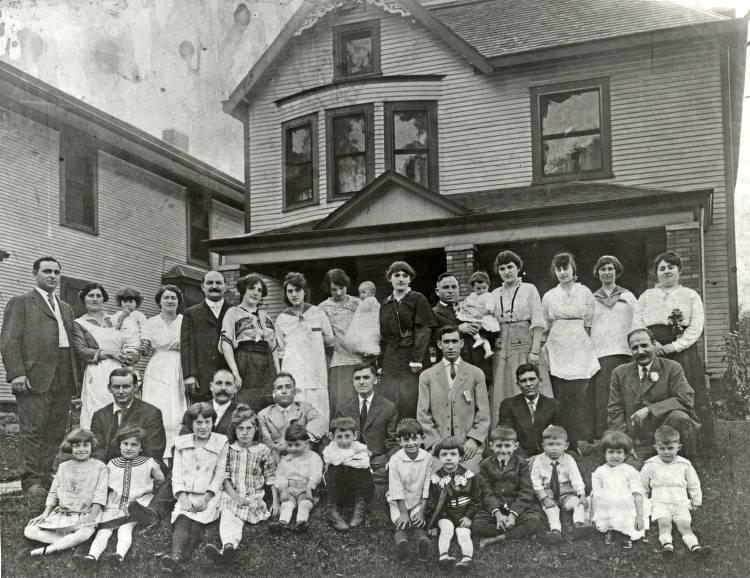
Holy Trinity Greek Orthodox Church formed
Early Greek immigrants to Indianapolis meet for services at 27 South Meridian Street and then purchase a house at 213 North West Street, before building their first church at 231 North West Street in 1920.
Pictured: Members of Holy Trinity Greek Orthodox Church in front of the church’s first permanent structure, 1915
Credit: Indiana Historical Society View Source
Dedication of Romanian Orthodox Church
Newly arrived Romanian immigrants form the SS. Constantine and Elena Orthodox Church. The congregation constructs its first building at 635 West Market Street.
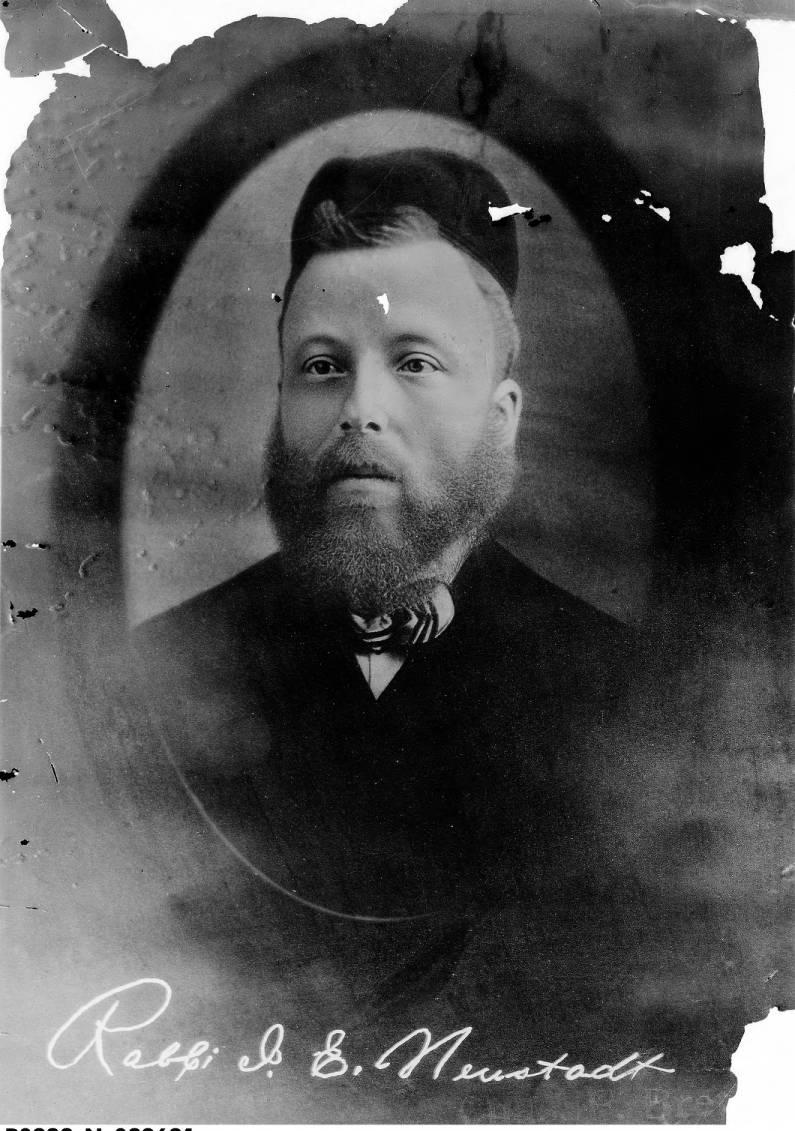
United Hebrew Schools opens
Congregations Sharah Tefilla, Ohev Zedeck, Knesses Israel, and United Hebrew Congregation cooperate to establish the school. Its afternoon classes take place at Sharah Tefilla synagogue on the south side. It becomes Hasten Hebrew Academy, a day school, at B’Nai Torah in 1971.
Pictured: Rabbi Isaac E. Neustadt established the United Hebrew School of Indianapolis in 1911.
Credit: The Bretzman Collection, Indiana Historical Society
View Source
Indianapolis Church Federation organizes
The Indianapolis Church Federation is founded and led by First Baptist’s minister, Reverend Frederick E. Taylor. Many of the leading Protestant churches in the city join to coordinate their various reform efforts. It also creates a committee that seeks to regulate the location of Protestant congregations to lessen competition.
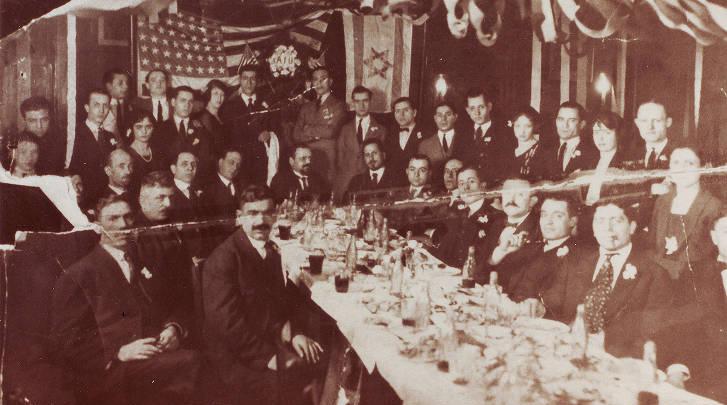
Sephardic immigrants establish synagogue
Members of the Sephardic community organize their own synagogue, Congregation Sepharad of Monastir, which is renamed Etz Chaim Congregation in 1919. The congregation moves into a former church at the corner of 64th Street and Hoover Road in 1963 and dedicates a new building at 6339 Hoover Road in 2005.
Pictured: Original Founders of Etz Chaim, ca. 1930’s
Credit: Indiana University Indianapolis
View Source
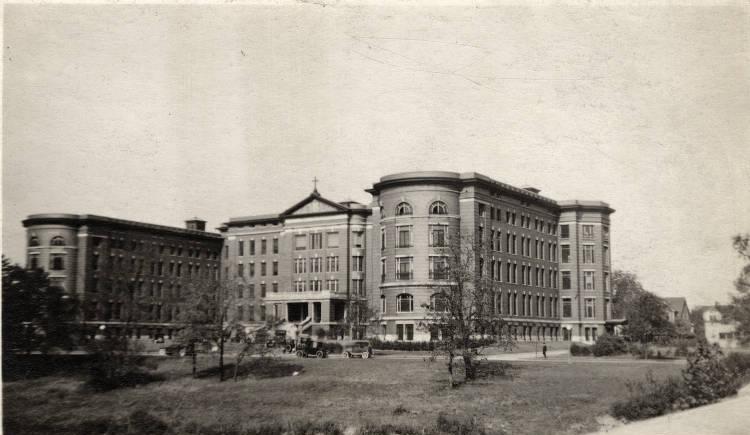
St. Vincent Hospital opens
St. Vincent Hospital, founded by the Catholic Daughters of Charity of the St. Vincent de Paul Society in 1881, opens on Fall Creek Parkway. St. Vincent moves to West 86th Street in 1974, and Ivy Tech takes over the site to create its Fall Creek Parkway campus in 2008.
Pictured: St. Vincent’s Hospital, 1920
Credit: Indiana Historical Society
View Source
National Convention of Methodist Men in Indianapolis
A national gathering of Methodist leaders meets in Indianapolis to set the agenda for the denomination. Attendance at the three-day event totals 3,200, and Methodists create a program of worldwide evangelization with the goal of increasing its membership at a rate of 350,000 per year.
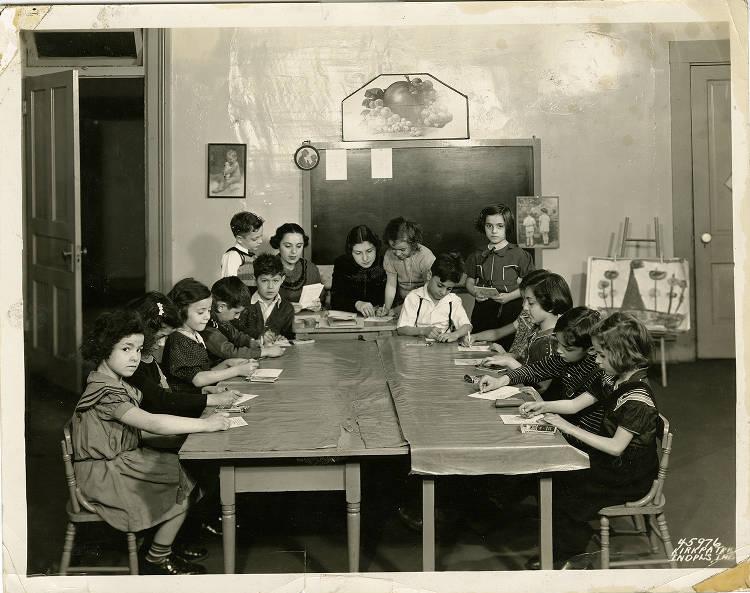
Jewish Community Center opens
The Jewish Community Center is established as part of the Jewish Federation to provide social and educational programs for everyone of the faith but especially for newly arrived immigrants.
Pictured: Sunday school class, Jewish Community Center, November 1937
Credit: Indiana Jewish Historical Society Collection of the Indiana Historical Society View Source
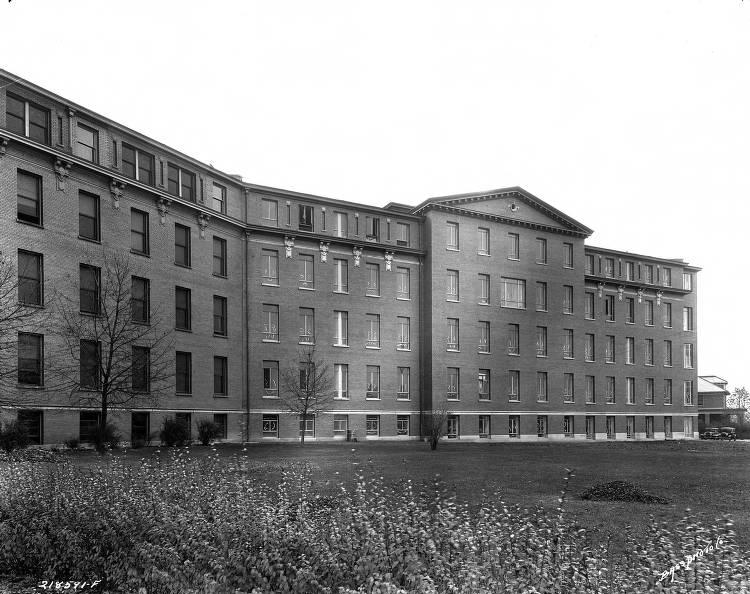
Dedication of St. Francis Hospital
St. Francis Hospital, first organized in 1909 by the Sisters of St. Francis, is dedicated in Beech Grove and becomes an important health care facility for the south side of Indianapolis. St. Francis opens a new hospital on the southeast corner of Emerson Avenue and Stop 11 Road in 1995 and abandons its Beech Grove facility in 2012.
Pictured: St. Francis Hospital, 1930
Credit: Bass Photo Co Collection, Indiana Historical Society
View Source
St. Stephen’s Bulgarian Eastern Orthodox Church opens
Macedonian and Bulgarian immigrants establish the St. Stephen Bulgarian Orthodox Church, which first resides on Blackford Street in downtown Indianapolis.
Pentecostal Assemblies of the World moves headquarters to Indianapolis
Pentecostal Assemblies of the World, an evangelical denomination in which whites and Blacks worship together, leaves Portland, Oregon, and establishes its headquarters in Indianapolis.
St. John’s Missionary Baptist Church established
Beginning with three members, the African American congregation constructs its first building at 17th Street and Martindale Avenue in 1926.
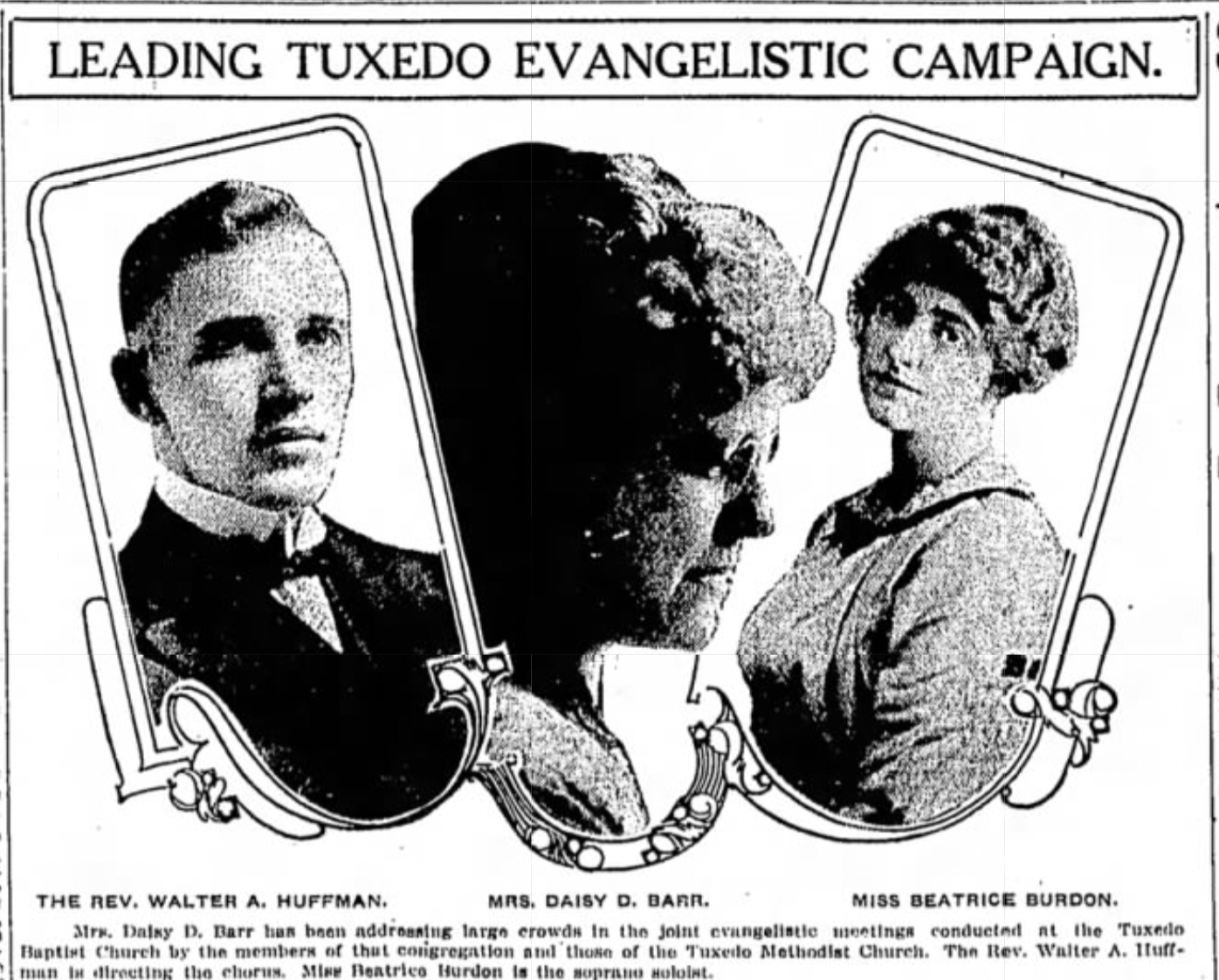
Congregations hold evangelistic campaigns in unison
The Church Federations Indianapolis Plan of Evangelism enlists all congregations to hold their annual evangelistic campaigns at the same time and to join in a citywide publicity blitz. The campaign ends on Easter Sunday, April 8, 1917.
Pictured: Announcement for evangelistic campaign at Tuxedo Baptist Church, 1916
Credit: IndyStar
View Source
World War I spurs English-language services in German American churches
With U.S. entry into World War I, pressure mounts on members of the German American community to prove their loyalty. In response, German religious congregations begin performing services in English.
Ministers mobilize churches to support U.S. in World War I
Governor James P. Goodrich initiates a conference to optimize the efforts of all Indiana congregations in support of the war. Congregations rally to the cause via sermons and fundraisers for the YMCA and Red Cross.
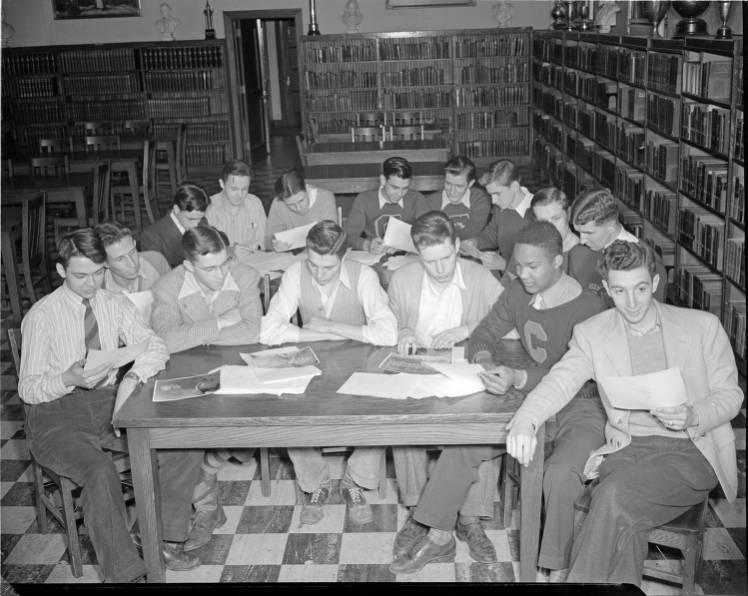
Bishop Joseph Chartrand establishes Cathedral High School
The all-boys school begins with 90 students in temporary quarters on the second floor of the Cathedral grade school. The school moves into a new million-dollar facility at 14th and Meridian streets in 1927.
Pictured: Boys in Cathedral High School Library, 1942
Credit: Indiana Historical Society
View Source
St. Rita Catholic Church, the diocese’s first African American parish, dedicated
Established by Bishop Joseph Chartrand, the African American church is located at 19th and Arsenal streets in the Martindale neighborhood. A small school also opens in the parish to serve the citys Black Catholic children.
Catholic Charities opens
Under the direction of Father Maurice O’Connor, Catholic Charities of the Diocese of Indianapolis is established as a local community center at 124 W. Georgia Street. The center offers a day nursery, a cafeteria, and provision of food and clothing for the poor. Women comprise a large proportion of its staff.
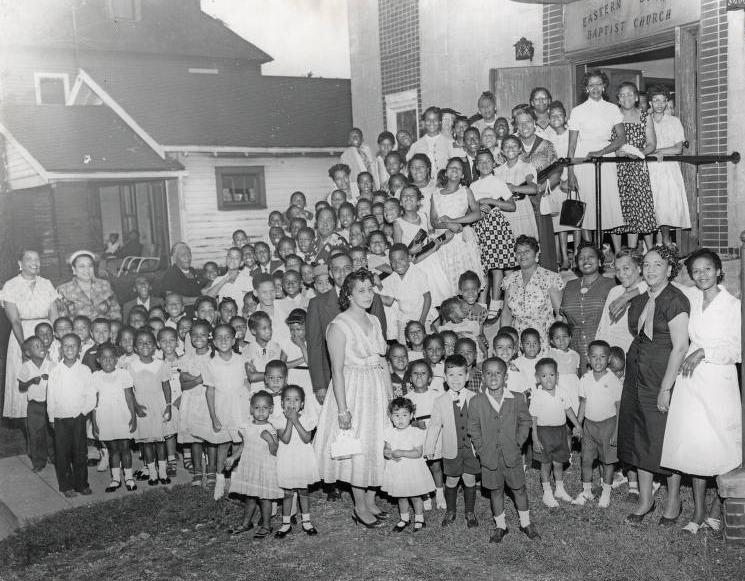
Eastern Star Missionary Baptist Church established
Originally organized as a mission of 12 people, the church opens at the corner of 22nd Street and Columbia Avenue. By the late 20th century, it becomes the largest predominantly African American congregation in Indianapolis.
Pictured: Vacation Bible School at Eastern Star Baptist Church, ca. 1960s
Credit: Indianapolis Recorder Collection, Indiana Historical Society View Source
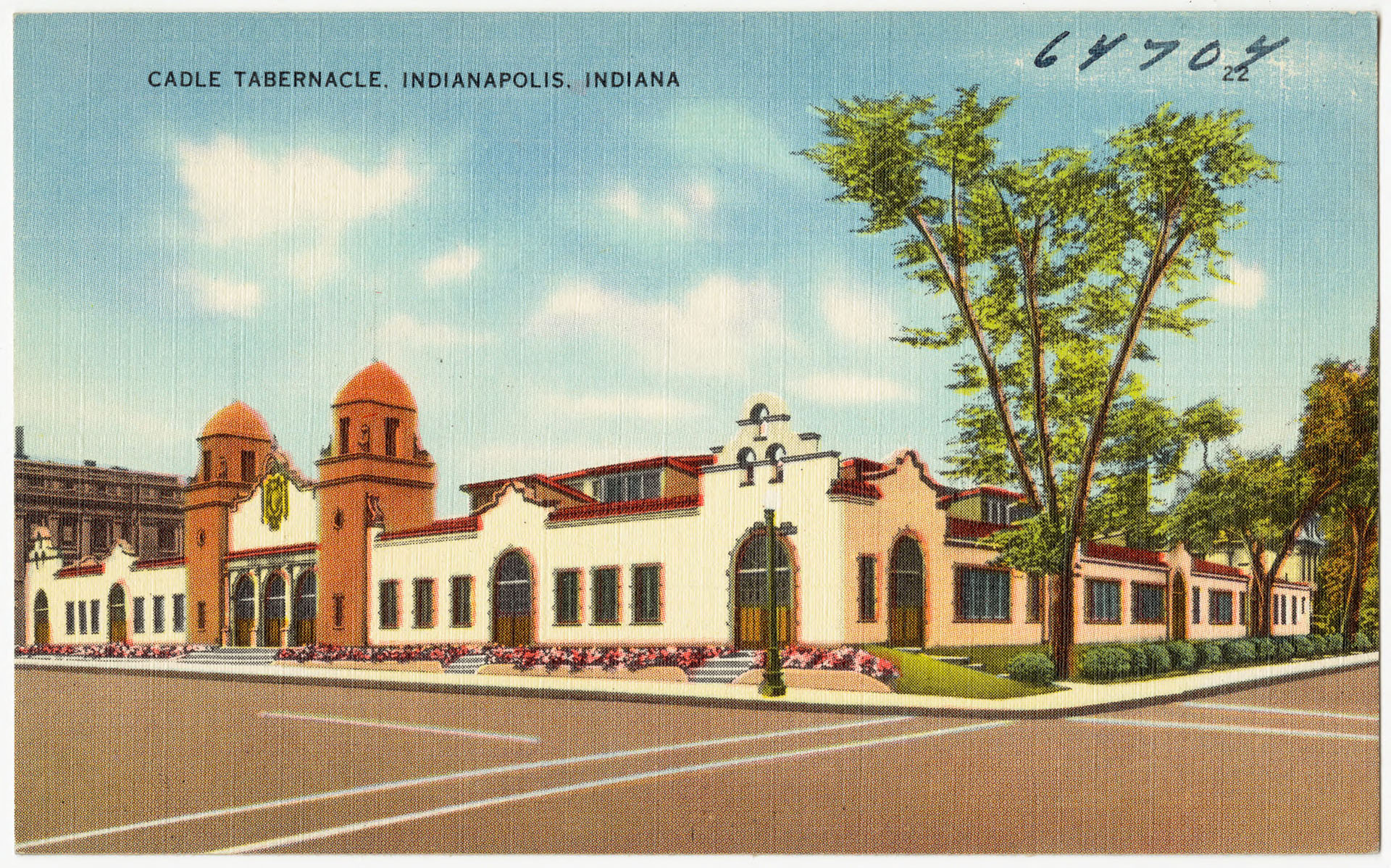
The Gypsy Smith Revival and the birth of Cadle Tabernacle
English evangelist Gypsy Smith runs a city-wide revival. The temporary tabernacle constructed for the revivals headquarters inspires E. Howard Cadle, a Christian evangelist, to create a permanent tabernacle with seating for 10,000.
Pictured: Cadle Tabernacle, ca. 1930
Credit: Public domain via Wikimedia Commons
View Source
Rise of the Ku Klux Klan
By repurposing messages of support for anti-Catholicism, Prohibition, and 100 percent Americanism, the Ku Klux Klan, led by D. C. Stephenson, dominates Indiana. The Klan boasts a large membership among Indianapolis residents, most of them Protestant.
Central Hebrew Congregation established
A group of Orthodox Jews, who move to the city’s north side, establish the Central Hebrew Congregation, first located at Central Avenue and 21st Street.
Englewood Christian pastor protests KKK event
Pastor F. E. Davison protests a KKK event held at Englewood’s meeting hall. The Englewood congregation forces him to resign because of his stance.
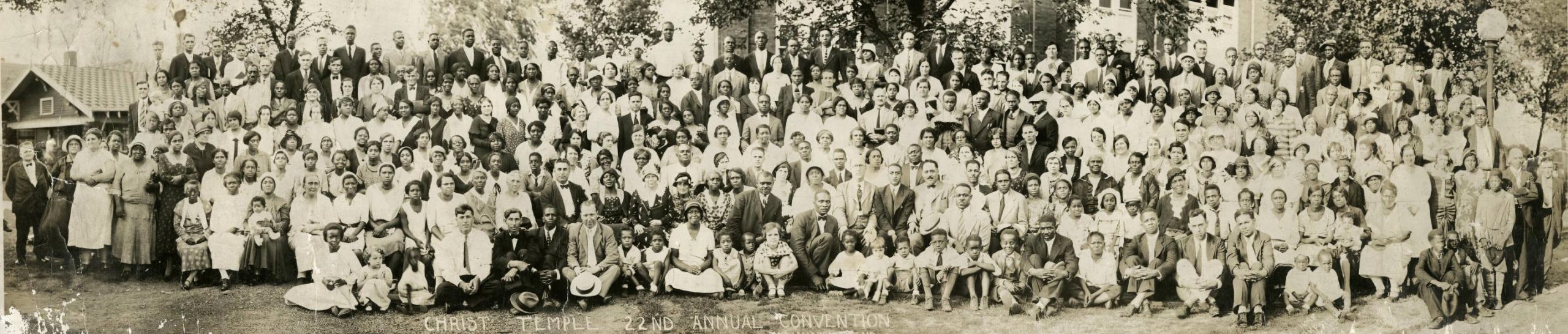
Christ Temple moves to accommodate growth
Reverend Garfield T. Haywood moves Christ Temple to 430 West Fall Creek Parkway. The new location provides more space for the growing integrated congregation of over 1,000 Black and white members.
Pictured: Christ Temple 22nd Annual Convention, 1932
Credit: Indiana Historical Society View Source
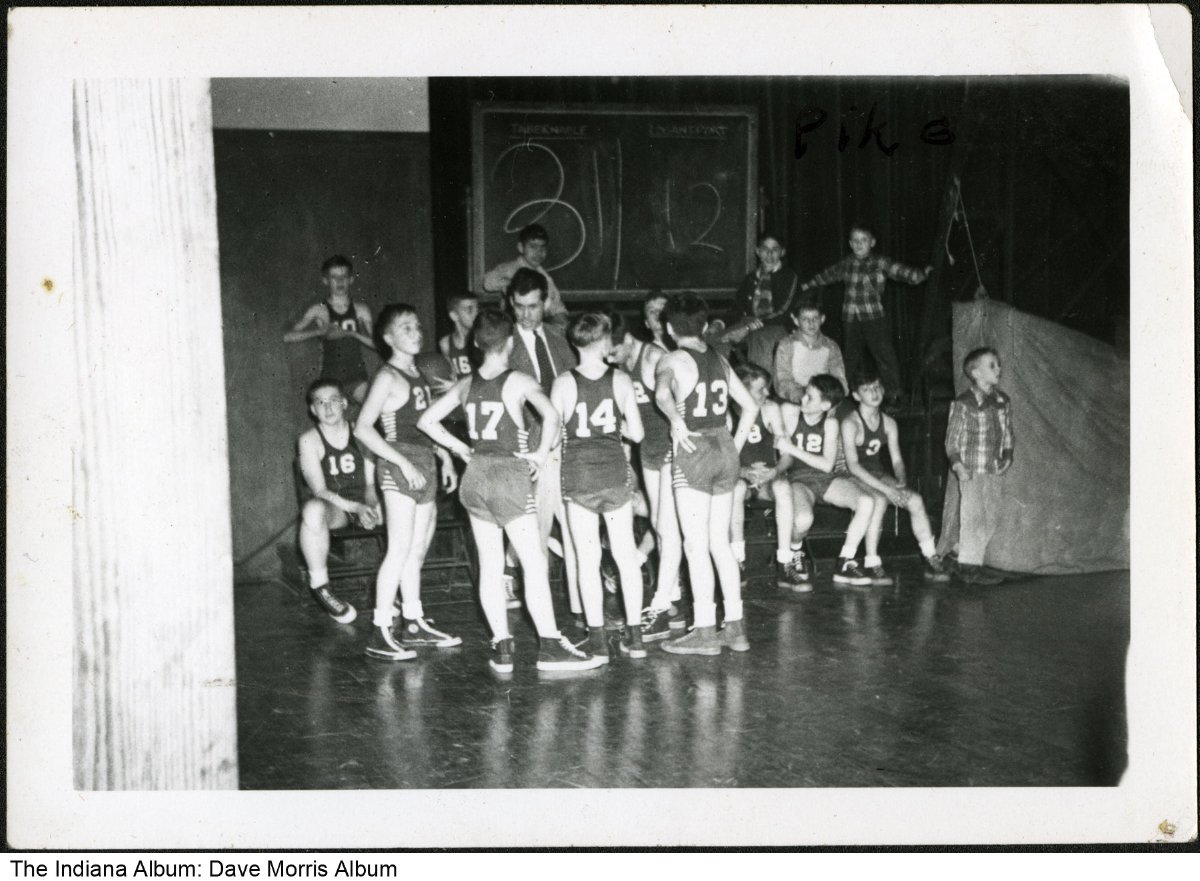
Tabernacle Presbyterian establishes a recreation program
Tabernacle Presbyterian creates its recreation program, with a $50 gift, to help meet the needs of children of the church and community. It is one of the first church recreation outreach programs established in the U.S.
Pictured: Tabernacle Presbyterian Jets basketball team, 1949
Credit: The Indiana Album: Dave Morris Album
View Source
Mt. Vernon Missionary Baptist church begins
Reverend C. C. Bates organizes a Sunday school that becomes Mt. Vernon Missionary Baptist Church. The congregation opens the doors of its first church in 1929.
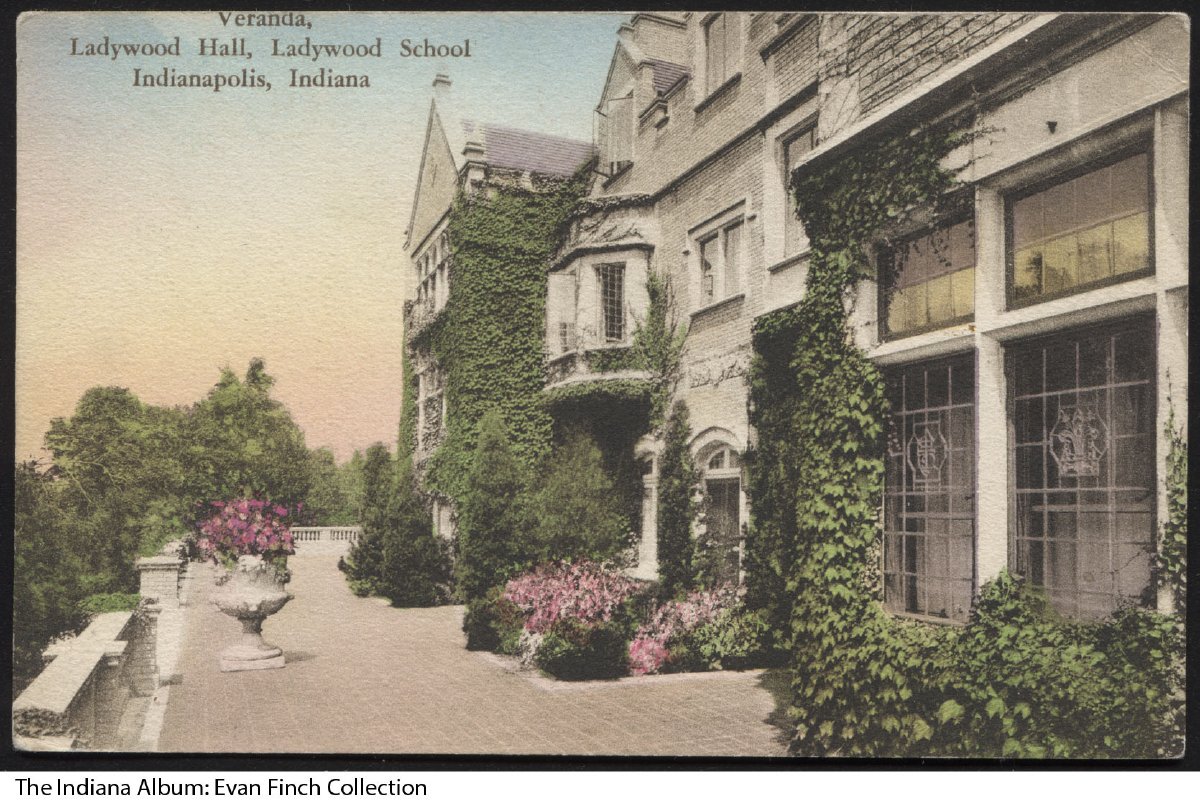
Sisters of Providence establishes Ladywood School for Girls
The Sisters of Providence purchase property owned by Stoughton A. Fletcher II and open Ladywood School for Girls with six students. After the Sisters of Providence close the school, the property becomes the new campus of Cathedral High School in 1976.
Pictured: Ladywood School for Girls, ca. 1930
Credit: The Indiana Album: Evan Finch Collection
View Source
Ahmadi Mission is the first Indianapolis Muslim organization
Following the teachings of Punjab, India, religious leader Ghulam Ahmad, who emphasizes the peaceful nature of Islam and rejects polygyny, the mission attracts African American converts.
Jewish Community Center separates from the Jewish Federation
The Jewish Community Center separates from the Jewish Federation and uses a bequest from Raphael Kirshbaum, a wealthy German Jewish immigrant, to move north to the Kirshbaum Center at 2314 N. Meridian Street.
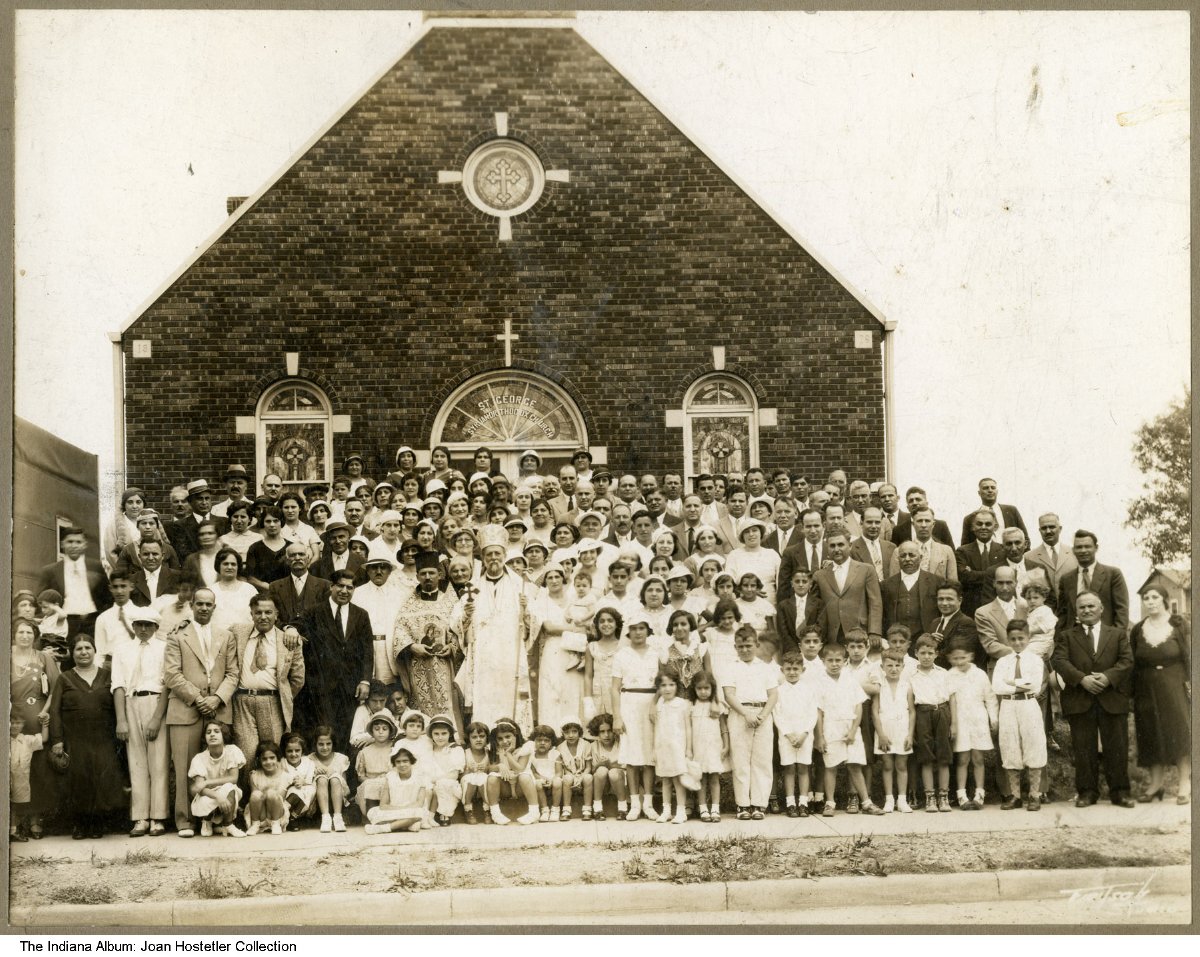
Dedication of St. George Syrian Orthodox Church
The church, associated with the Antiochian branch of Orthodox Christianity, opens as the first Arabic-speaking religious congregation in the city. It provides a place of worship for Syrian and Lebanese Orthodox Christian immigrants.
Pictured: Congregation at St. George Syrian Orthodox Church, 1934
Credit: The Indiana Album: Joan Hostetler Collection View Source
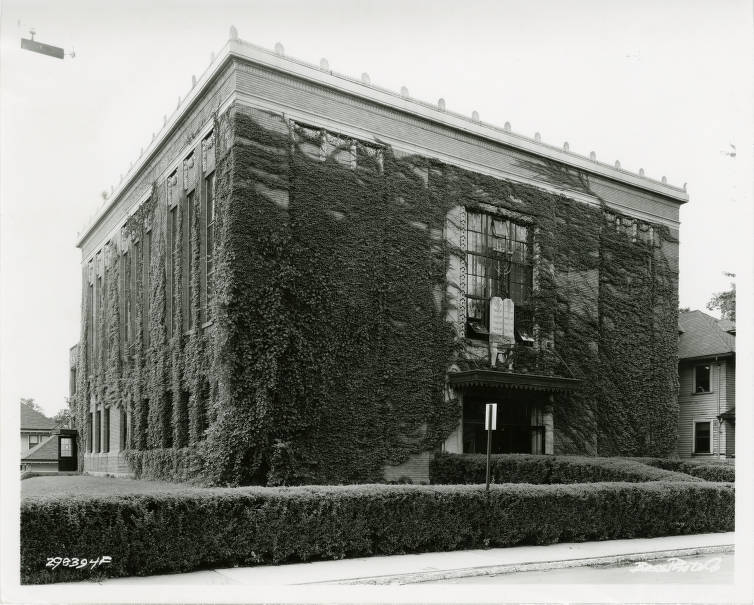
Congregation Beth-El Zedeck established
Resulting from a merger of Congregation Beth-El and Congregation Ohev Zedeck, the new Reconstructionist/Conservative congregation is “hospitable” to all Jewish traditions, revealing a melding of the community as immigration slows and German and Eastern European Jews begin to intermarry.
Pictured: Beth-El Zedeck, 1958
Credit: Bass Photo Co Collection, Indiana Historical Society View Source
Moorish Science Temple of America, No. 15 established
First located on Indiana Avenue, the Indianapolis Temple is part of a new brand of Islam founded after World War I and the first established and operated by African Americans.
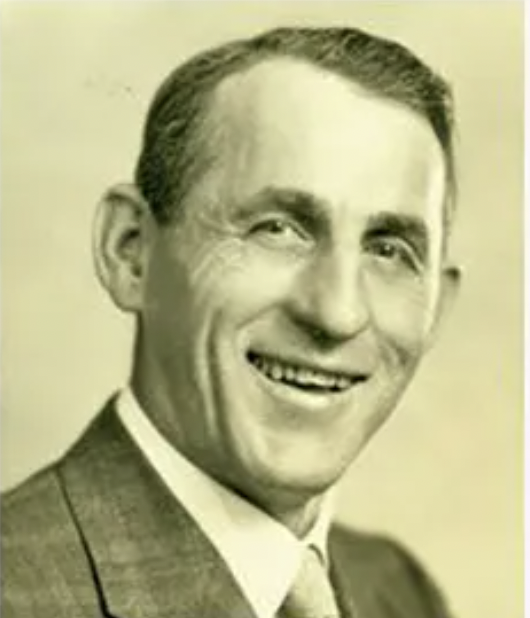
Cadle returns to the Tabernacle
After a decade away, E. Howard Cadle retakes control of the Cadle Tabernacle. Under his direction, the venue continues to host evangelists and becomes home to “The Nation’s Family Prayer Period” radio program.
Pictured: E. Howard Cadle, n.d.
Credit: IndyStar
View Source
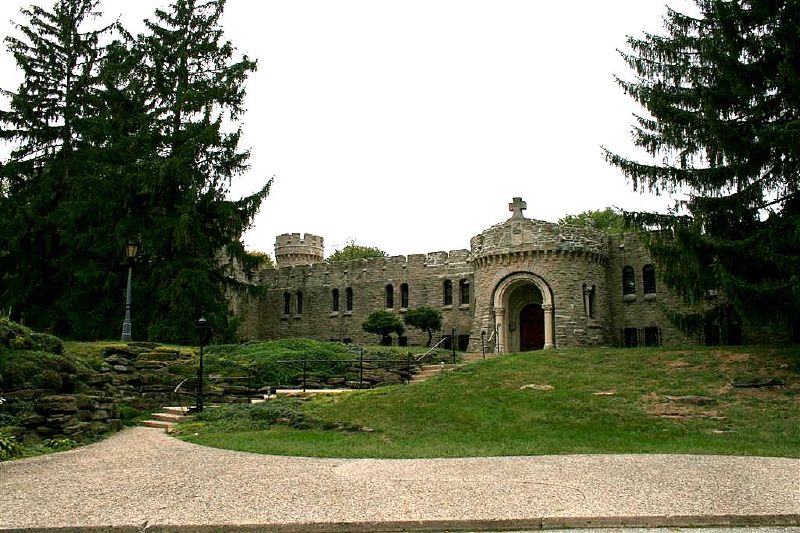
Carmelite Monastery opens on Cold Spring Road
A cloistered order of nuns, the Carmelite Monastery takes up residence in a medieval-style, castle-like convent. The nuns remain on the property until the facility closes in 2008.
Pictured: Carmelite Monastery, 2007
Credit: Paula Henry via Wikimedia Commons View Source
Reverend Robert Hayes Peoples comes to Second Christian Church
As senior pastor of Second Christian, Hayes leads the growth of the congregation and promotes “Brotherhood Sundays,” where he exchanges pulpits with a white minister.
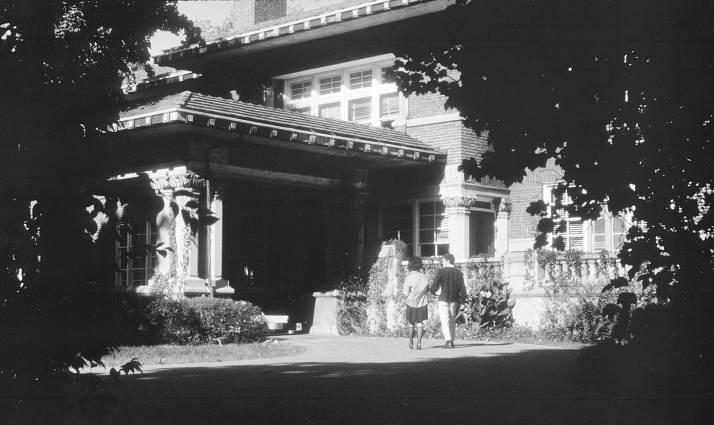
Marian College forms from merger
Two schools run by the Sisters of Saint Francis in Oldenburg, Indiana, merge under the name Marian College to become the citys first Catholic institution of higher learning. The campus relocates to the Allison estate on the west side of Indianapolis. The college becomes Marian University in 2009.
Pictured: Marian College, Allison Mansion, 1972
Credit: W.H. Bass Photo Company Collection, Indiana Historical Society View Source
Bishop Joseph Ritter ends school segregation in Catholic Diocese of Indianapolis
Ritter announces his decision to end segregation in the city’s Catholic schools. He meets opposition not only from groups like the Ku Klux Klan but also from members of his own clergy.
Arrival of R. T. Andrews at Mt. Zion Missionary Baptist Church
R. T. Andrews’ leadership results not only in the expansion of the church and its ministries but also in a daycare, 108-bed geriatric center, three senior apartment buildings, and a Well Baby Clinic by the 1970s.
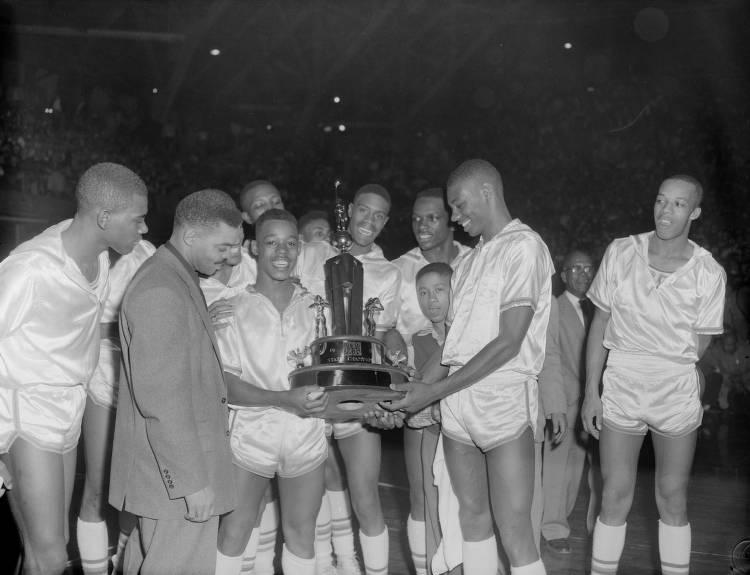
Indiana High School Athletic Association admits parochial schools
The Indiana General Assembly passes legislation, introduced by African American state senator Robert Lee Brokenburr, that allows Black and parochial schools to participate in the organization for the first time.
Pictured: Crispus Attucks win the IHSAA State Basketball Champions, 1956
Credit: William Palmer/Indianapolis News, Indiana Historical Society View Source
Jewish Community Relations Council formed
Created to alert the broader community about Nazism and the Holocaust, the organization seeks to protect Jewish rights and to promote interfaith activities and good relations between Jews and non-Jews.
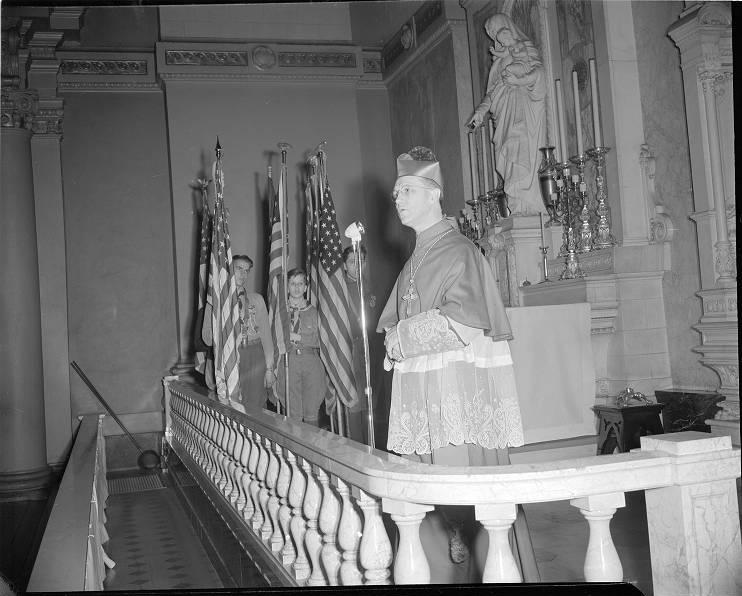
Indianapolis becomes a Catholic archdiocese
With the Vatican’s announcement that Indianapolis has been elevated to this status, Joseph E. Ritter becomes the city’s first archbishop.
Pictured: Bishop Ritter, 1942
Credit: Indiana Historical Society
View Source
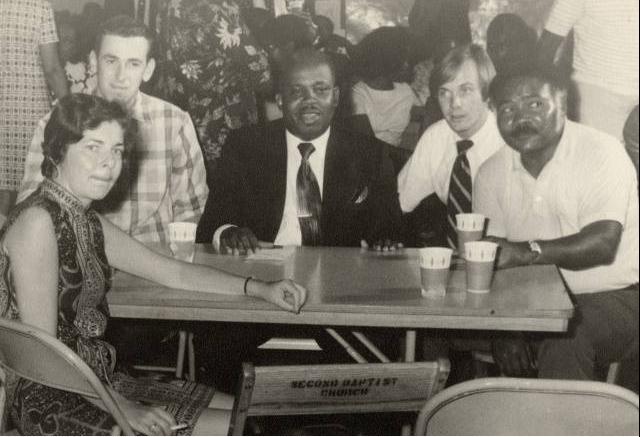
Andrew J. Brown arrives at St. John’s Missionary Baptist Church
Under Browns leadership, St. Johns congregation becomes one of the largest and most progressive African American churches in the nation. Brown also becomes an important civil rights leader. In 1986, the city renames Martindale Avenue to Andrew J. Brown Avenue in his honor.
Pictured: Andrew J. Brown (center), pastor of the St. John’s Missionary Baptist Church and leader of the Indianapolis chapter of the Southern Christian Leadership Conference, 1969
Credit: Indianapolis Recorder Collection, Indiana Historical Society View Source
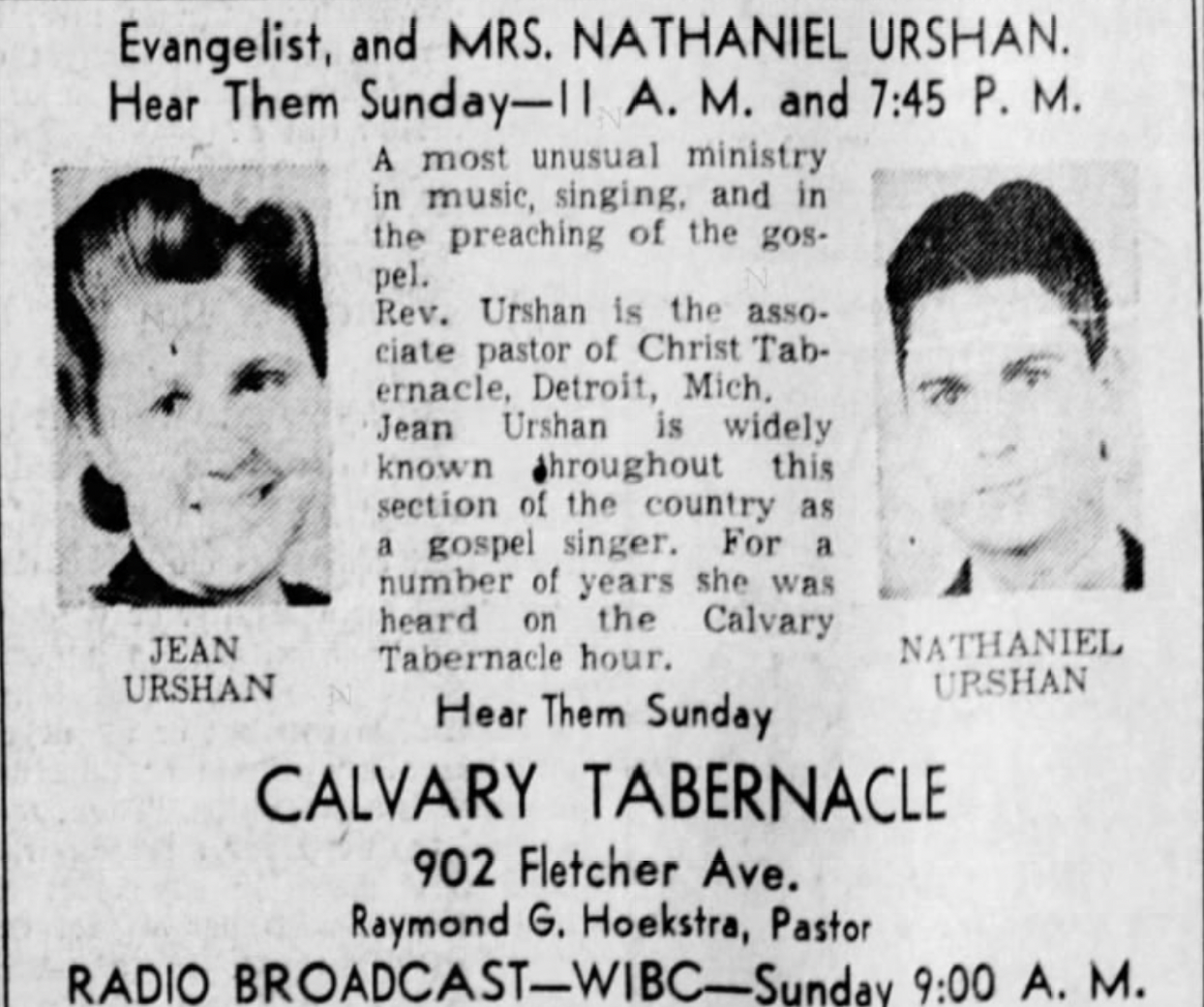
Calvary Tabernacle welcomes the Urshans
Calvary Temple, the largest congregation of the United Pentecostal Church, welcomes Nathaniel Urshan as its new minister. He and his wife Jean launch a radio ministry on WIBC and increase church membership.
Pictured: Jean and Nathaniel Urshan performance announcement, 1944
Credit: IndyStar
View Source
Serbian Orthodox Church established
The first services of the St. Nicholas Serbian Orthodox Church are held at the Yugoslav National Home at 3626 West 16th Street.
Indianapolis Baptist Temple organized
Reverend George Young and his wife establish the Indianapolis Baptist Temple to serve new residents from Appalachia who practice conservative Protestantism. New Southern Baptist, Assemblies of God, and Nazarene congregations also form in response to this population movement.
Rev. Charles Oldham founds Lighthouse Mission
The small gospel mission begins operations on East Washington Street as a nonprofit, Christian, nondenominational rescue mission caring for poor men of the inner city.
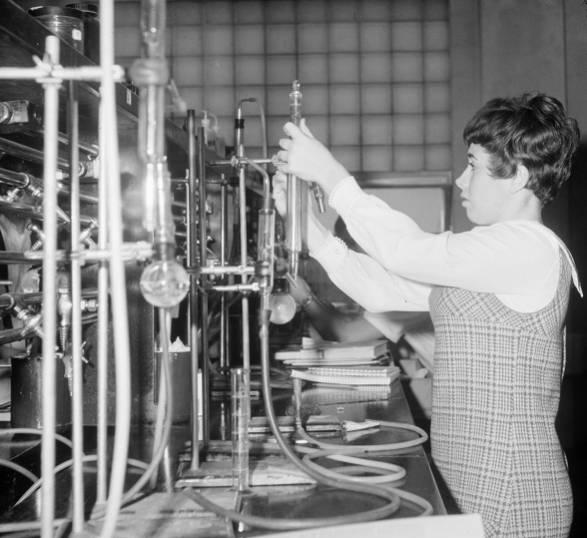
Marian College becomes the first coeducational Catholic college
The school is the first coeducational Catholic college in the state as well as one of only five in the nation. The school also introduces varsity athletics.
Pictured: A female student works with laboratory equipment in a classroom at Marian College, 1972
Credit: W.H. Bass Photo Company Collection, Indiana Historical Society.
View Source
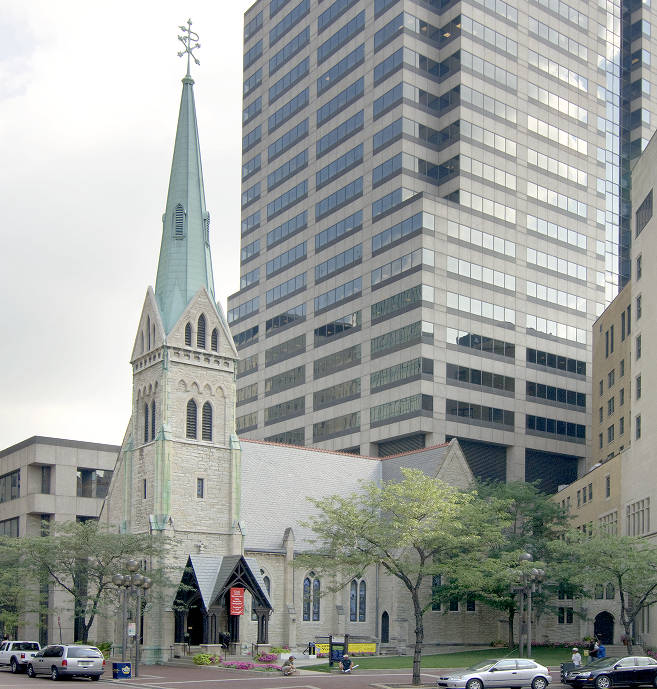
Christ Church designated diocesan pro-cathedral
Christ Church becomes the pro-cathedral, a parish church used as a cathedral, of the Episcopal Diocese of Indianapolis, officially making it Christ Church Cathedral.
Pictured: Christ Church Cathedral, 2008
Credit: Indiana Historical Society View Source
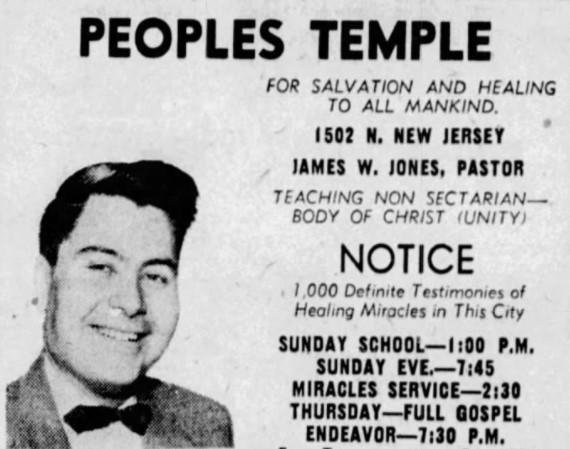
Peoples Temple established
Reverend Jim Jones founds the Wings of Deliverance, a Pentecostal church later known as the Peoples Temple. The congregation is integrated and made up of working-class residents of the city’s south side. Jones later moves the church to San Francisco and then to Guyana, where he leads 900 members to commit mass suicide.
Pictured: People’s Temple advertisement, April 1955
Credit: Indianapolis News
Our Lady of Grace Catholic Convent and Academy opens
Established at the invitation of Catholic Archbishop Paul Clarence Schulte, the order creates a school and home for the elderly at its Beech Grove location.

Congregation Bnai Torah established
Central Hebrew Congregation and United Hebrew Congregation merge to become the largest Orthodox Jewish congregation on the south side of Indianapolis. A year later, the congregation moves to the new Jewish Community Center campus on the city’s far north side.
Pictured: Graduating Class at B’nai Torah, 1961
Credit: Indiana University Indianapolis
View Source
Christ Church Cathedral integrates
Christ Church Cathedral baptizes three African American children. The baptisms mark ongoing efforts to integrate the parish.
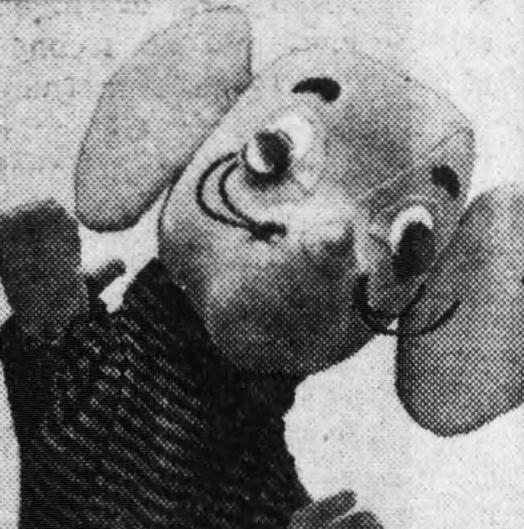
Church Federation launches children’s television program
The Indianapolis Church Federation launches a television program aimed at children called “Timothy Church Mouse,” later renamed “Time for Timothy.” The program airs on local stations until 1999.
Pictured: Timothy Churchmouse, 1982
Credit: IndyStar
View Source
Dedication of new Jewish Community Center
The Jewish Community Center moves to a 40-acre campus located at 6701 N. Hoover Road, following the migration of the city’s Jewish population.
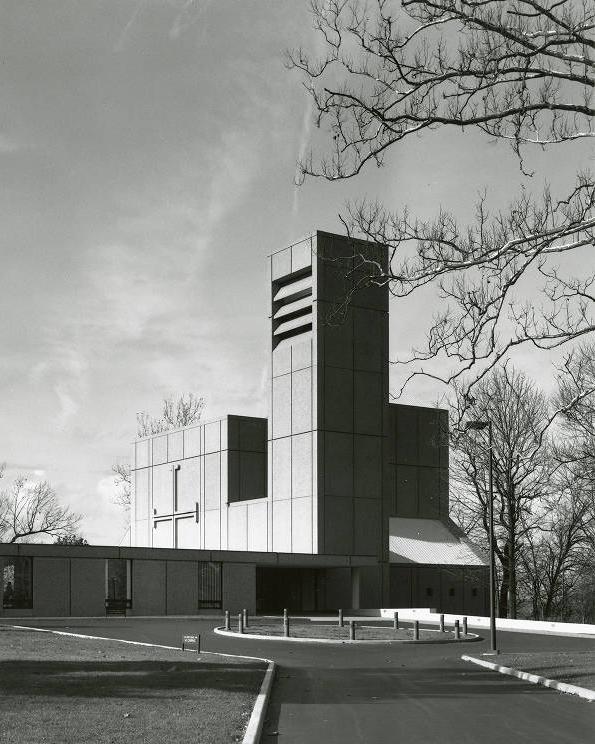
Christian Theological Seminary established
Butler University separates from its School of Religion. The school is renamed Christian Theological Seminary and becomes affiliated with the Disciples of Christ. In 1966, it begins occupying a campus near the university at 1000 West 42nd Street.
Pictured: Sweeney Chapel at Christian Theological Seminary, ca. 1990s
Credit: Indiana Historical Society View Source
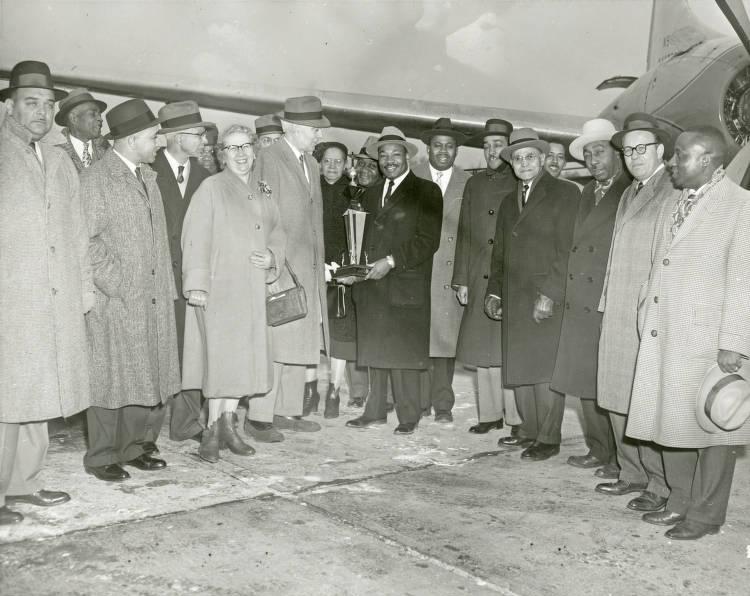
Dr. Martin Luther King Jr. speaks in Indianapolis
Reverend Martin Luther King Jr. holds a speaking event at the Cadle Tabernacle in his first address in Indianapolis. He returns to the city on June 26, 1961, to speak at Mt. Zion Missionary Baptist Church.
Pictured: Martin Luther King Jr. (center) appeared at an Indianapolis YMCA “Monster Meeting,” 1958
Credit: Indianapolis Recorder Collection, Indiana Historical Society
View Source
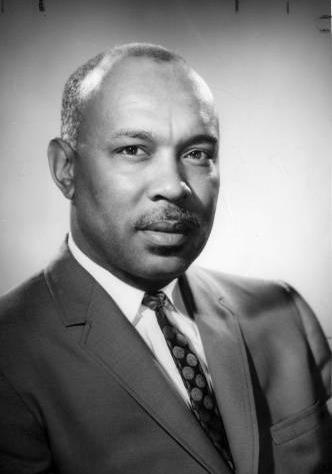
Reverend Mozel Sanders arrives at Mt. Vernon Missionary Baptist Church
Under Sanders’ leadership, the congregation grows significantly. He launches a radio ministry on WTLC, a job training program, and, in 1974, an annual citywide Thanksgiving dinner. The dinner, renamed the Mozel Sanders Thanksgiving Dinner, continues as a major civic effort with over 40,000 meals prepared each year.
Pictured: Rev. Mozel Sanders, 1965
Credit: Indianapolis Recorder Collection, Indiana Historical SocietyView Source
Second Presbyterian leaves downtown
With the 30-year development of Indiana War Memorial Plaza finally concluding, Second Presbyterian opens at 77th and Meridian streets. First Baptist follows with the purchase of land at 86th Street and College Avenue.
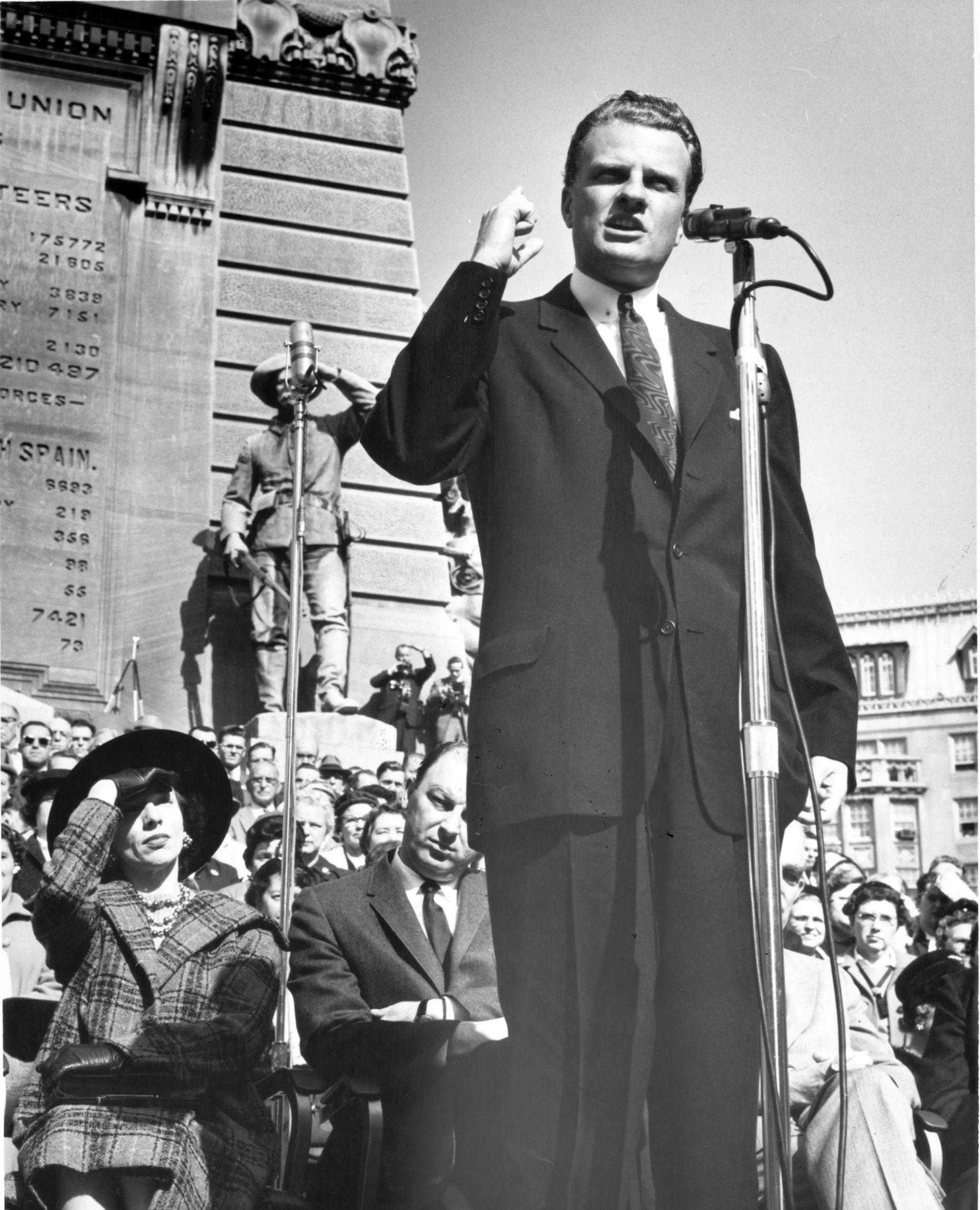
Billy Graham Crusade comes to Indianapolis
Sponsored by the Indianapolis Church Federation and other faith communities, Reverend Billy Graham comes to Indianapolis, preaching nightly for a month at the Indiana State Coliseum. He returns on May 2, 1980 and June 30, 1999.
Pictured: Evangelist Billy Graham presents a sermon at Monument Circle, Oct. 29, 1959
Credit: Bob Doeppers, Indianapolis News
View Source
Concerned Clergy group established
Reverend C. V. Jetter, Reverend Andrew J. Brown, and Reverend Mozel Sanders launch Concerned Clergy. The ministers are active in the national civil rights movement and work to end Jim Crow laws.
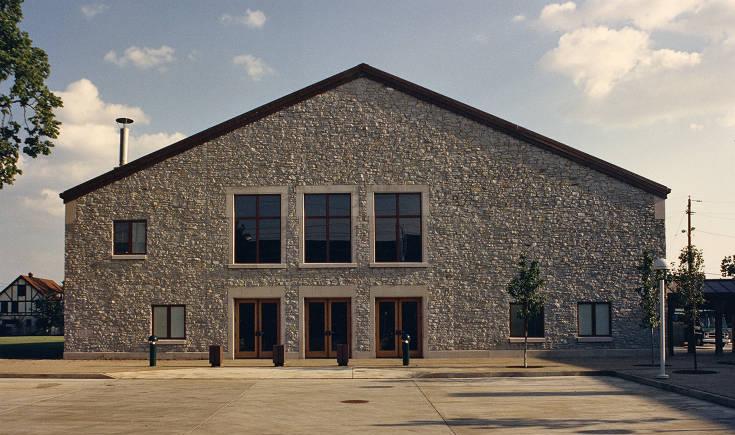
St. Richard’s Episcopal School opens
Affiliated with Trinity Episcopal Church, St. Richard’s opens as Indiana’s only independent Episcopal day school.
Pictured: St. Richard’s School at Trinity Episcopal Church, ca. 1980s-1990s
Credit: Indiana Historical Society View Source
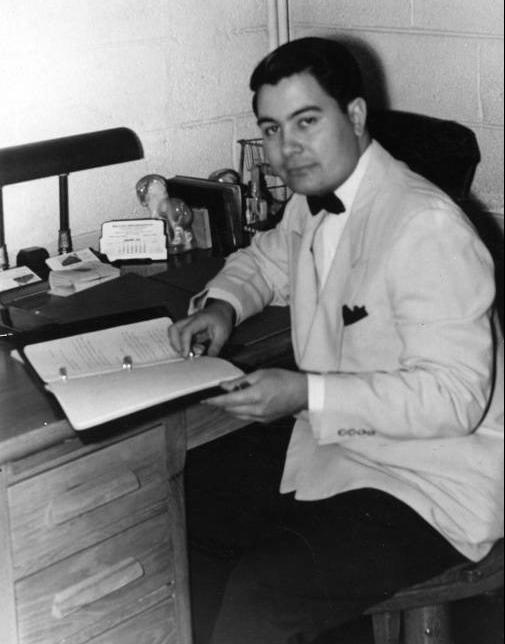
Mayor appoints Reverend Jim Jones to human rights commission
Mayor Charles Boswell appoints the People’s Temple’s pastor, the Reverend Jim Jones, to direct the city’s human rights commission because of his commitment to civil rights for African Americans.
Pictured: Rev. Jim Jones, 1956
Credit: Indianapolis Recorder Collection, Indiana Historical Society View Source
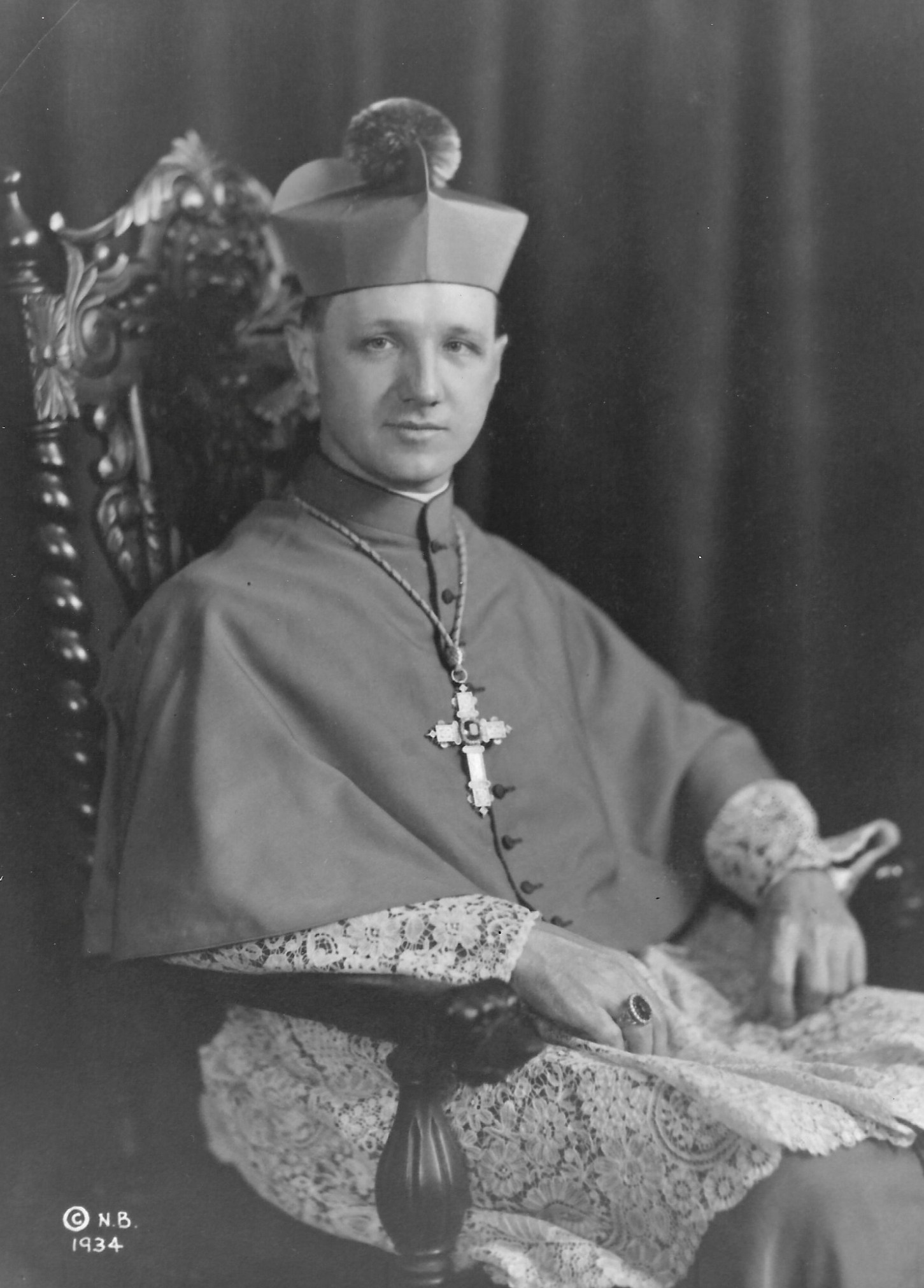
Pope John XXIII names Archbishop Joseph Ritter as Cardinal
At the Vatican, Ritter participates in the election of Pope Paul VI and attends the Second Vatican Council.
Pictured: Archbishop Joseph Ritter, 1934
Credit: Jasper Public Library via Indiana State Library
View Source
Indiana State Supreme Court allows construction of St. Luke’s Catholic Church
The court overrules a decision of the Town of Meridian Hills zoning board that prevented the construction of the church and upholds the right of the freedom of worship. The ruling comes after zoning disputes in Meridian Hills regarding the relocation of religious institutions, including the First Congregational Church and Second Presbyterian, to the area.
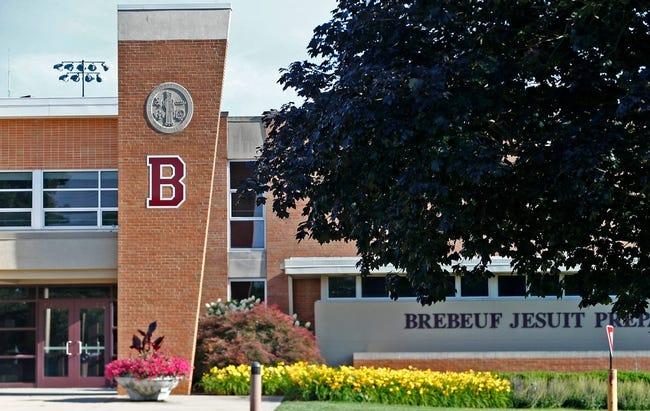
Brebeuf Jesuit Preparatory School groundbreaking ceremonies
Archbishop Paul C. Schulte officiates the groundbreaking ceremony. Brebeuf Preparatory School, the first Jesuit secondary school in Indiana, officially opens on September 4, 1962.
Pictured: Brebeuf Jesuit Preparatory School, 2019
Credit: Kelly Wilkinson/IndyStar via Imagn Content Services, LLC
View Source
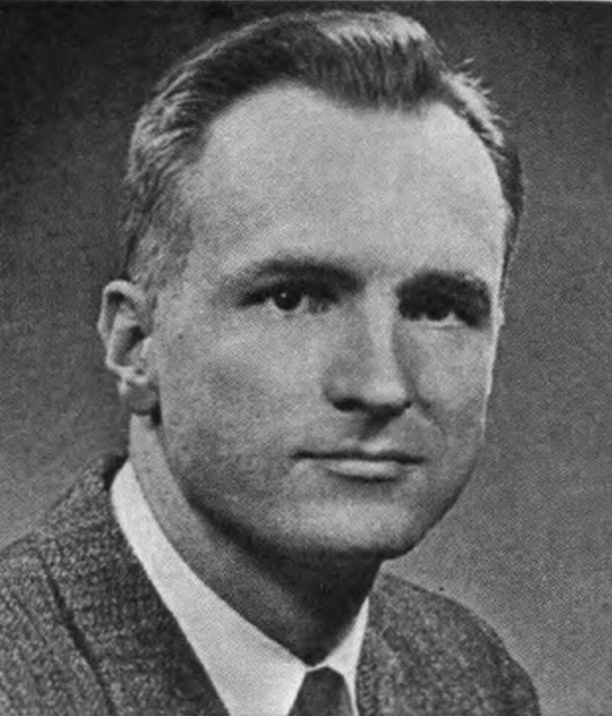
Hudnut approved to become pastor for Second Presbyterian
Reverend William Hudnut moves to Indianapolis to become the pastor for Second Presbyterian. He proclaims that racial segregation will not be tolerated in the congregation. Upon leaving the pastorate in 1972, Hudnut becomes a one-term US congressman and four-term mayor of Indianapolis.
Pictured: William Hudnut III, 1973
Credit: US Congress, Public domain via Wikimedia Commons
View Source
Exodus of the People’s Temple
Reverend Jim Jones announces that he will be moving his congregation to California. At least 145 Hoosiers agree to make the move with Jones, dividing some families. Jones is later responsible for the Jonestown mass-murder suicide in 1978.
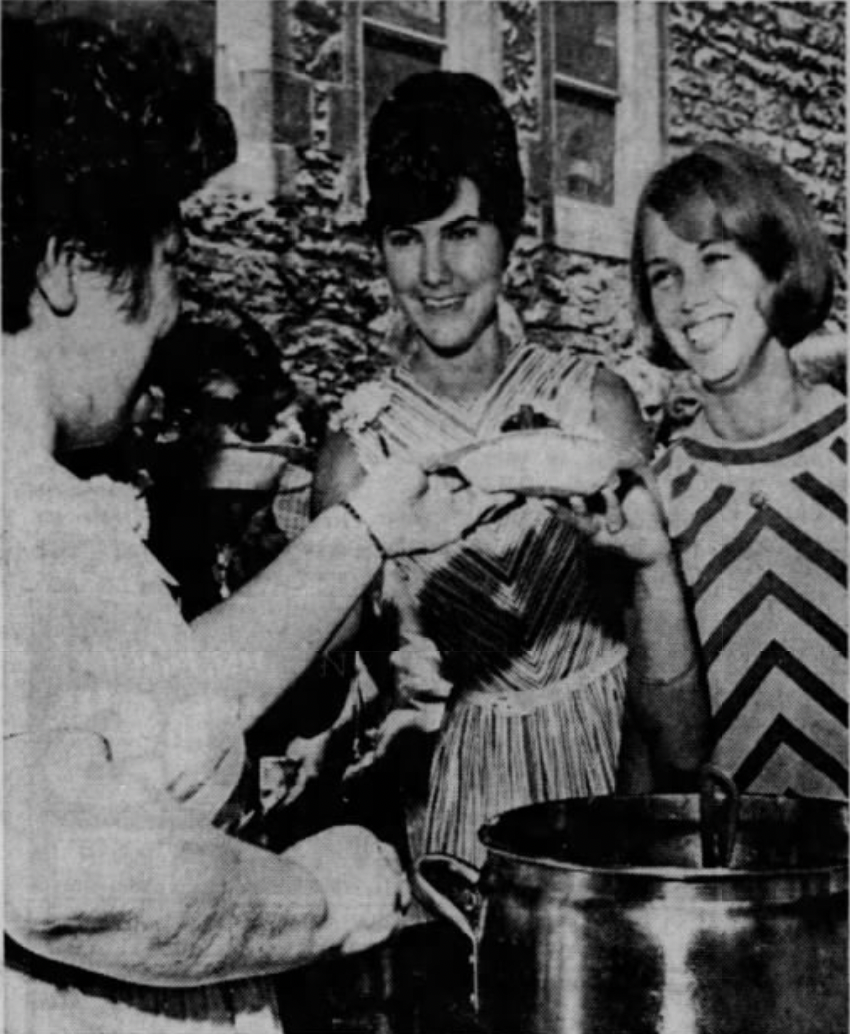
Christ Church Cathedral hosts first annual Strawberry Festival
The Cathedral Women of Christ Church Cathedral organizes the Strawberry Festival to raise funds for charity. The women sell 100 homemade strawberry shortcakes during the festival, selling out in two hours.
Pictured: Christ Church Cathedral Strawberry Festival, 1967
Credit: Indianapolis News
View Source
Heritage Christian School established
The private, interdenominational school opened with 159 pre-kindergarten through ninth-grade students at Victory Baptist Church. The school gets a permanent home in 1966 at Binford Boulevard and 75th Street.
St. Mary’s Catholic offers Sunday mass in Spanish
As the Hispanic population in Indianapolis grows, St. Marys offers Sunday mass in Spanish. The parish becomes the center of the Archdiocesan Hispanic Apostolate, serving the needs of Spanish-speaking Catholics in the city.
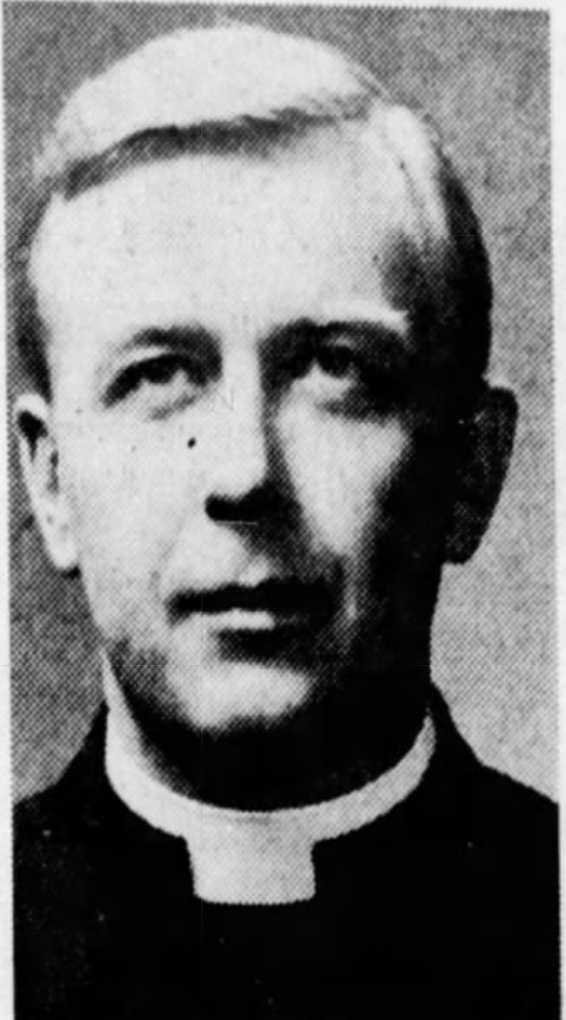
Clash over Vietnam at Christ Church Cathedral
Members of Christ Church Cathedral leave the congregation after Reverend Peter Lawson holds a forum about the Vietnam conflict, preaches a sermon against the war, and takes part in protests.
Pictured: Reverend Peter Lawson, ca. 1960s
Credit: IndyStar
View Source
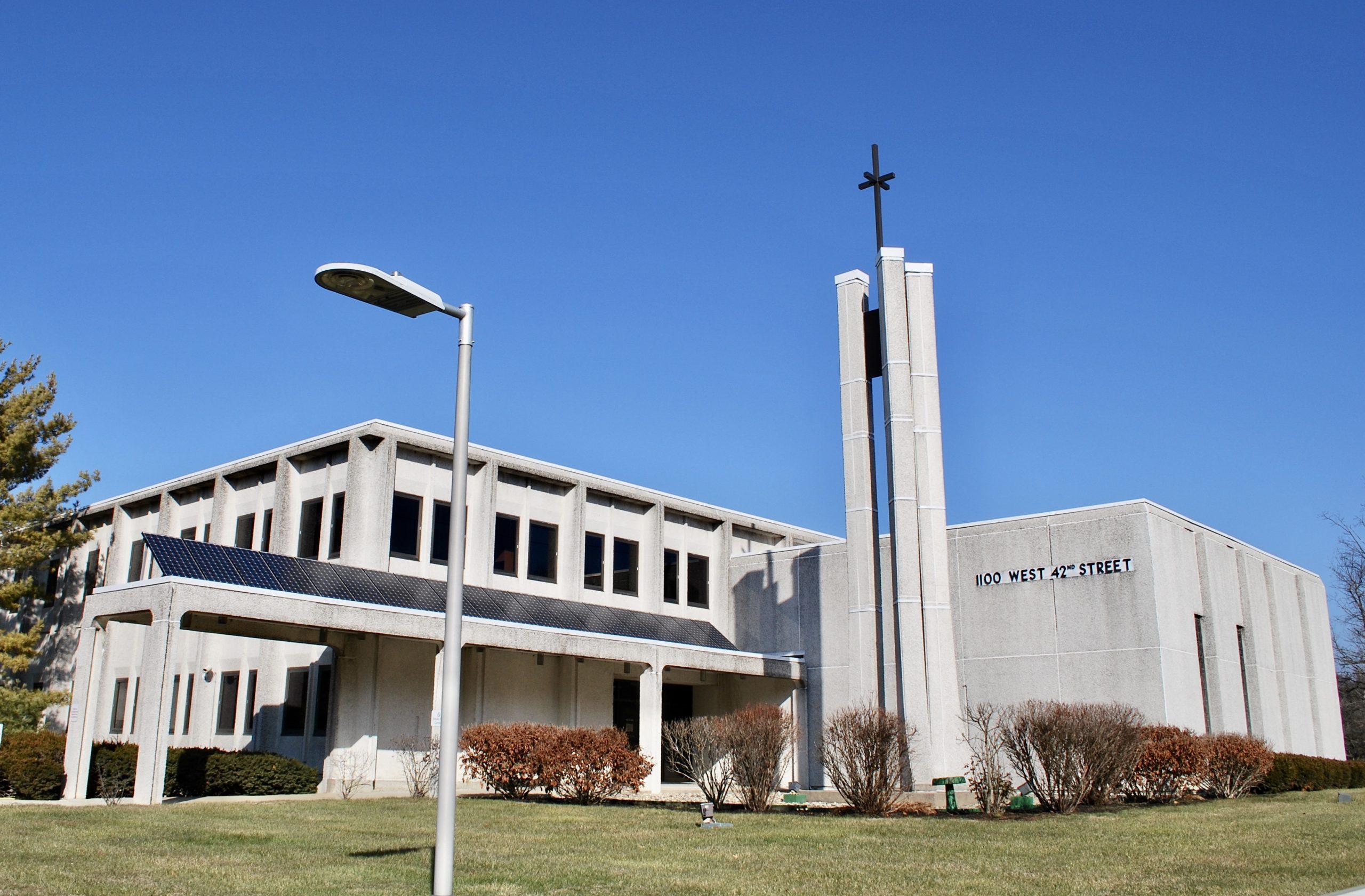
New home for Indianapolis Church Federation
The Indianapolis Church Federation moves into the Indiana Interchurch Center at 42nd and Michigan roads. The new building also becomes the offices of several denominational headquarters.
Pictured: Indiana Interchurch Center, 2020
Credit: Kara Chinn.
View Source
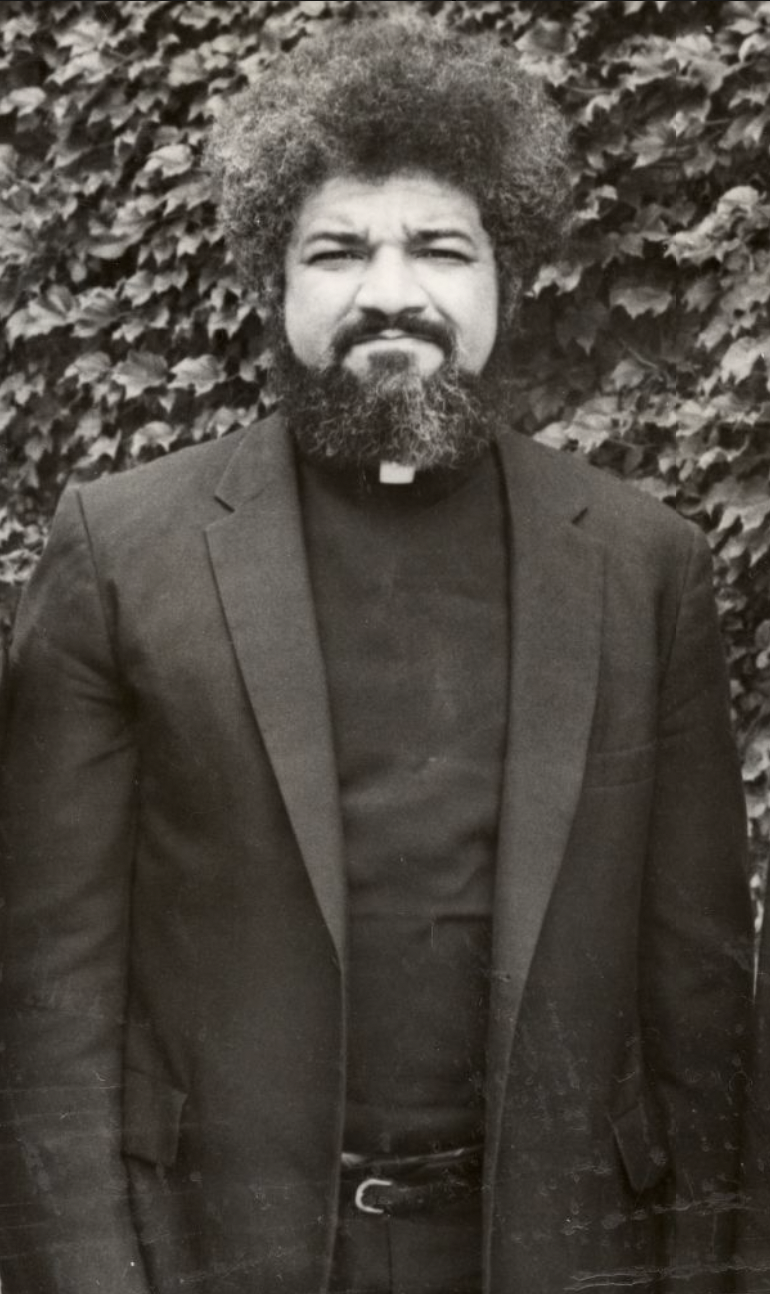
Father Boniface Hardin leads opposition to I-65 construction
Father Boniface Hardin, assistant pastor of Holy Angels Catholic Church, emerges as a civil rights activist when he leads opposition to I-65 construction through his parish in the United Northwest Area. He later establishes the Martin Center, which becomes Martin University.
Pictured: Father Boniface Hardin, 1971
Credit: Indianapolis Recorder Collection, Indiana Historical Society
View Source
Indiana Interreligious Commission on Human Equality formed
Founded in Indianapolis and composed of members of the Jewish, Catholic, and Protestant faiths, the Commission designs and implements programs to promote social and racial justice and interreligious dialogue. It remains in operation through 1998.
Sikh Satsang of Indianapolis established
The congregation is the first Sikh place of worship, or gurdwara, in Central Indiana. As other gurdwaras open across the city, it becomes the leader in Sikh community outreach efforts and commitment.
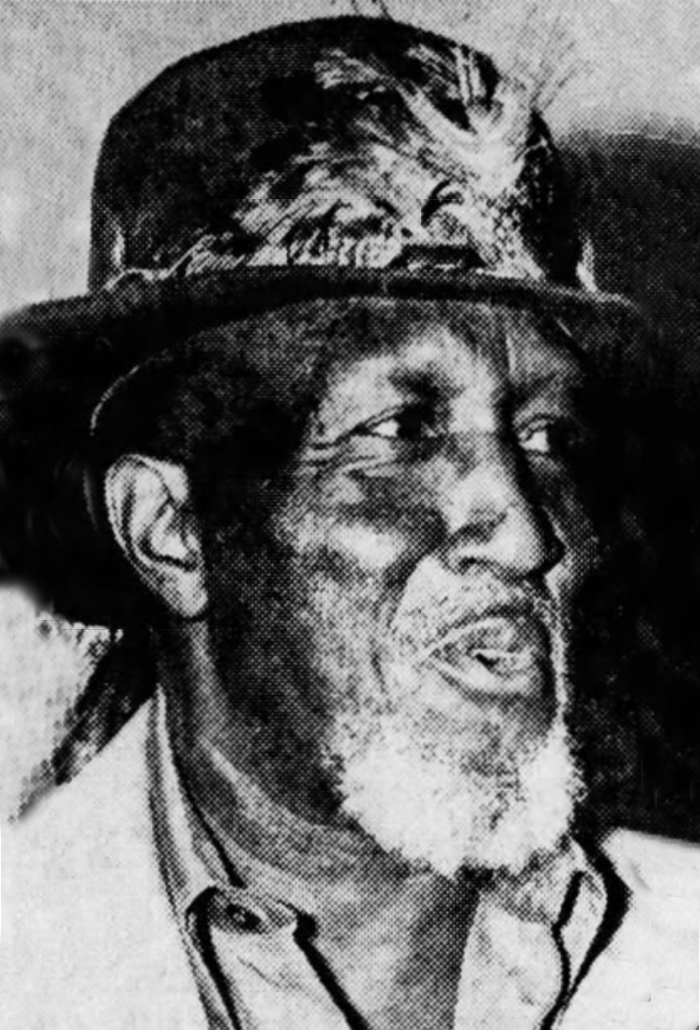
Black Manifesto calls for congregations to pay reparations
Members of the Black Radical Action project, led by Charles “Snookie” Hendricks, interrupt services at local churches to read the Black Manifesto. The Manifesto, which originates in Detroit during the National Black Development Conference, calls for congregations to pay reparations to African Americans as compensation for their ancestors’ enslavement.
Pictured: Charles Hendricks, ca. 1980s
Credit: Indianapolis NewsView Source
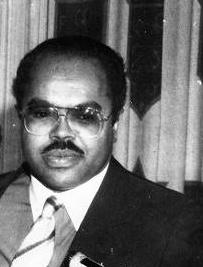
Reverend T. Garrott Benjamin arrives at Second Christian Church
As pastor of Second Christian Church, T. Garrott Benjamin prioritizes the expansion of its interdenominational initiatives as well as the uplift of young African American men. The church becomes Light of the World Christian Church in 1984, with Benjamin named as bishop.
Pictured: Dr. T. Garrott Benjamin, 1984
Credit: Indianapolis Recorder Collection, Indiana Historical Society
View Source
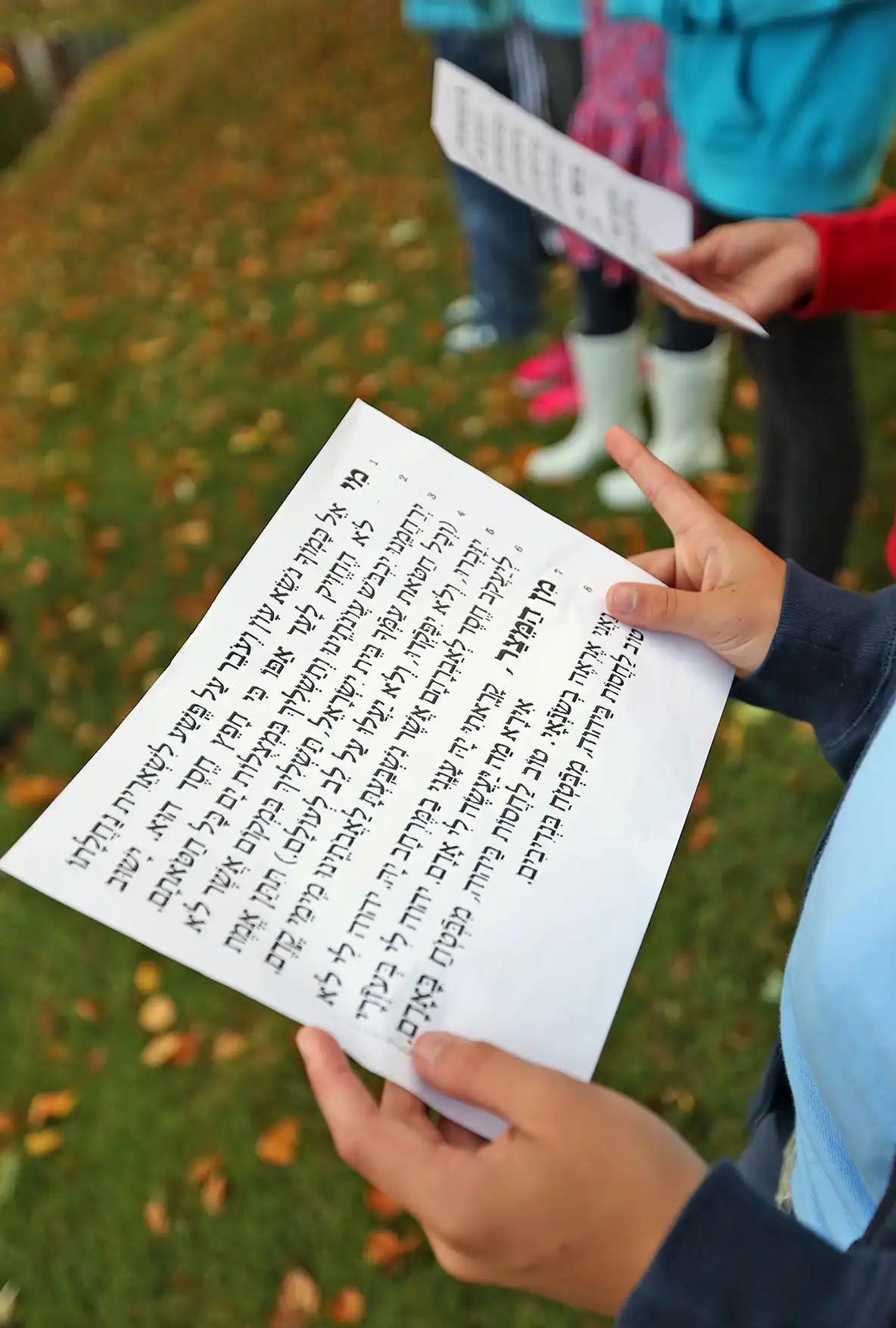
Hasten Hebrew Academy opens
The school opens at B’nai Torah and coincides with the national movement to reestablish Jewish day schools. The school moves to its own building on North Hoover Road on the Jewish Community Center campus in 1977.
Pictured: Hasten Hebrew Academy of Indianapolis fifth graders participate in a tashlich ceremony, 2014
Credit: Kelly Wilkinson, IndyStar
View Source
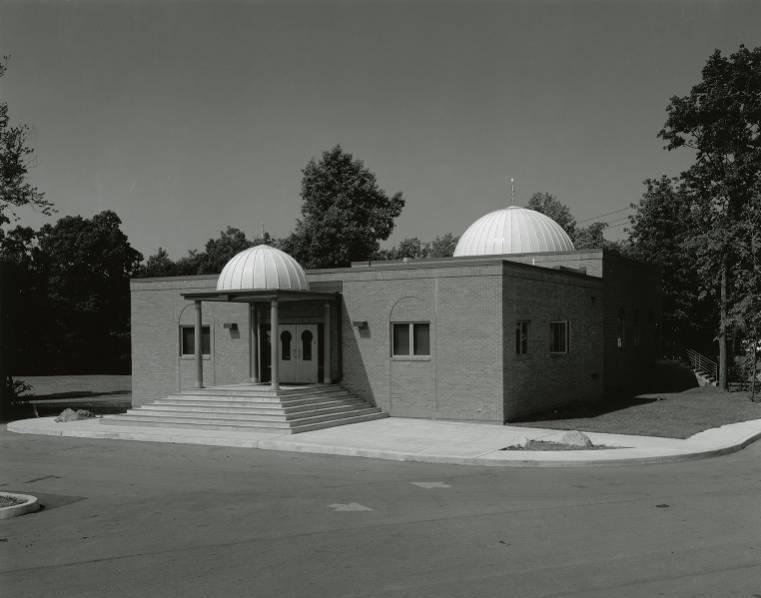
A Sunni Muslim congregation forms
The first traditional Muslim congregation in Indianapolis, the group eventually builds Al-Fajr (Morning) mosque on Cold Spring Road.
Pictured: The congregation built the the Masjid Al-Fajr Mosque in the 1990s.
Credit: Indiana Historical Society
View Source
Chinese Community Church of Indianapolis established
The congregation, which began as a Bible study in 1968, worships at Meridian Street Methodist Church before moving to 56th and Broadway in 1982 and then to Carmel in 1999.
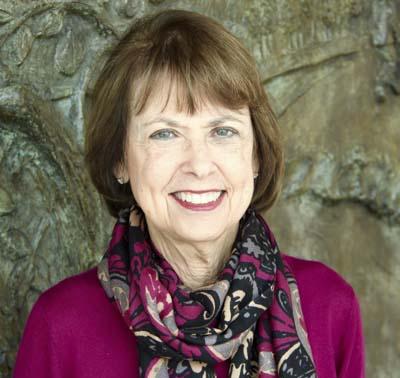
Sandy Sasso becomes first female rabbi in Reconstructionist Judaism
Sandy Sasso is the first woman ordained by the Reconstructionist Movement and the second woman rabbi in the United States. She and her husband Dennis Sasso become the first married rabbinical couple in world Jewish history in 1977.
Pictured: Sandy Sasso, ca. 2010s
Credit: IUPUI View Source
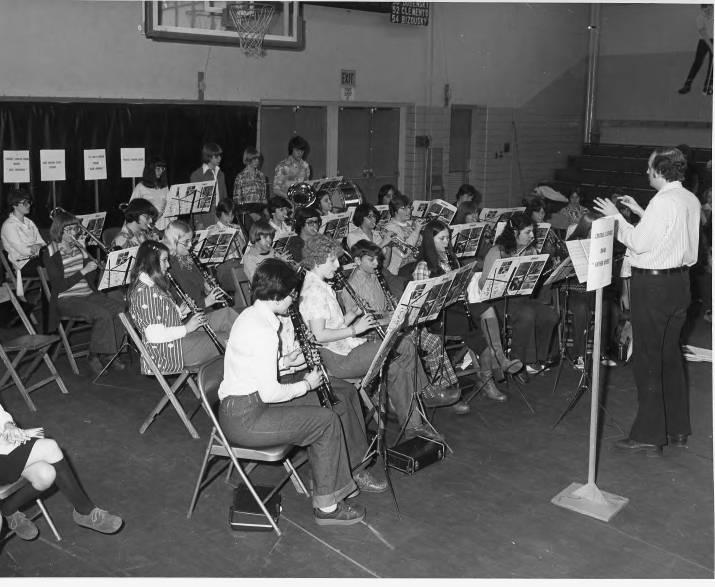
Declining enrollment leads to consolidation of Catholic schools
St. James, St. Patrick, Sacred Heart, Holy Rosary, and St. Catherine parish schools merge to form one education complex. Central Catholic School first locates on the grounds of St. Catherine of Siena.
Pictured: Central Catholic High School Band, 1977
Credit: Indiana University Indianapolis
View Source
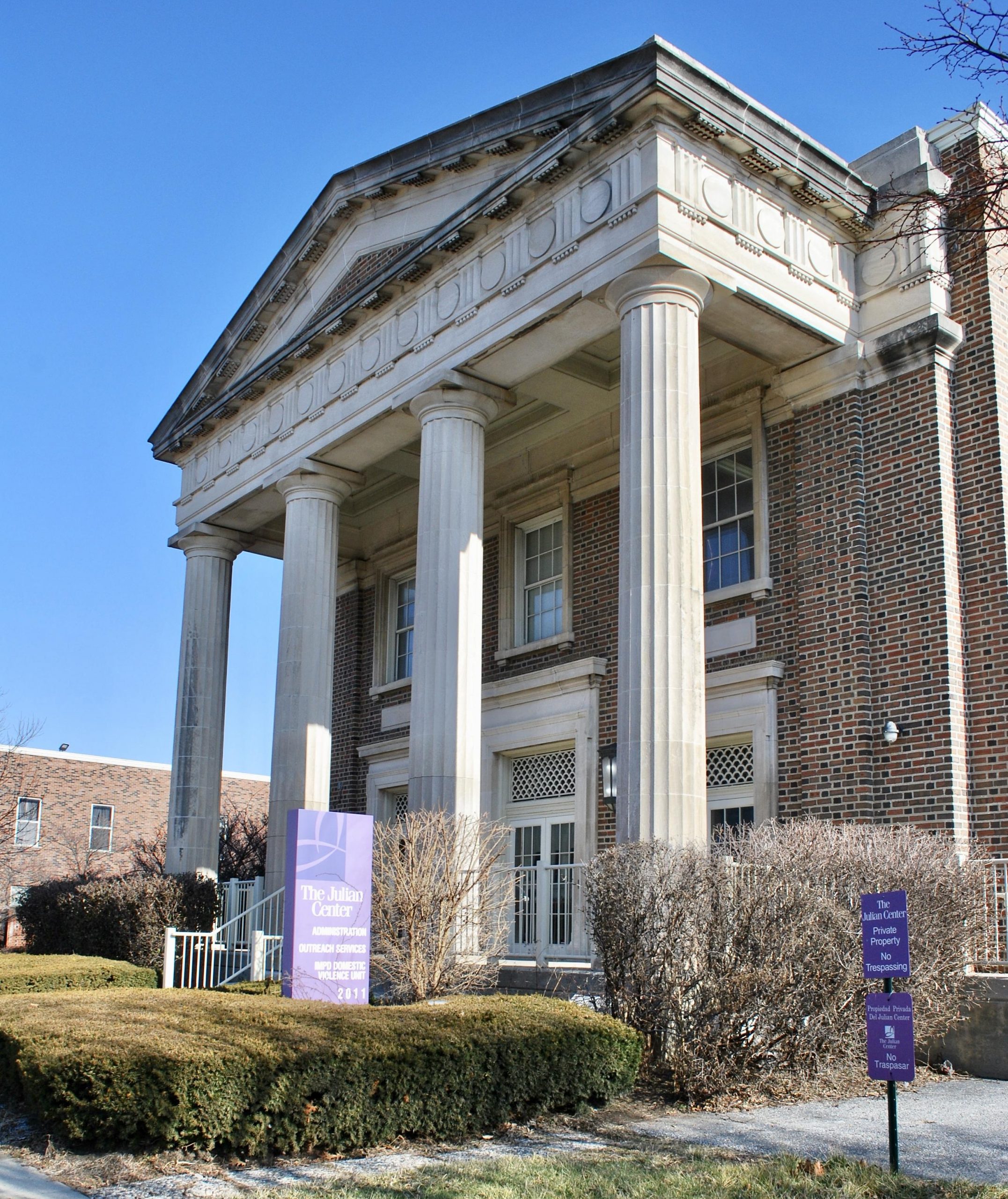
Julian Center opens
The Episcopal Diocese launches the Julian Mission (now Julian Center) to provide information and referrals to women and children of domestic violence.
Pictured: The Julian Center building, 2021
Credit: Kara Chinn
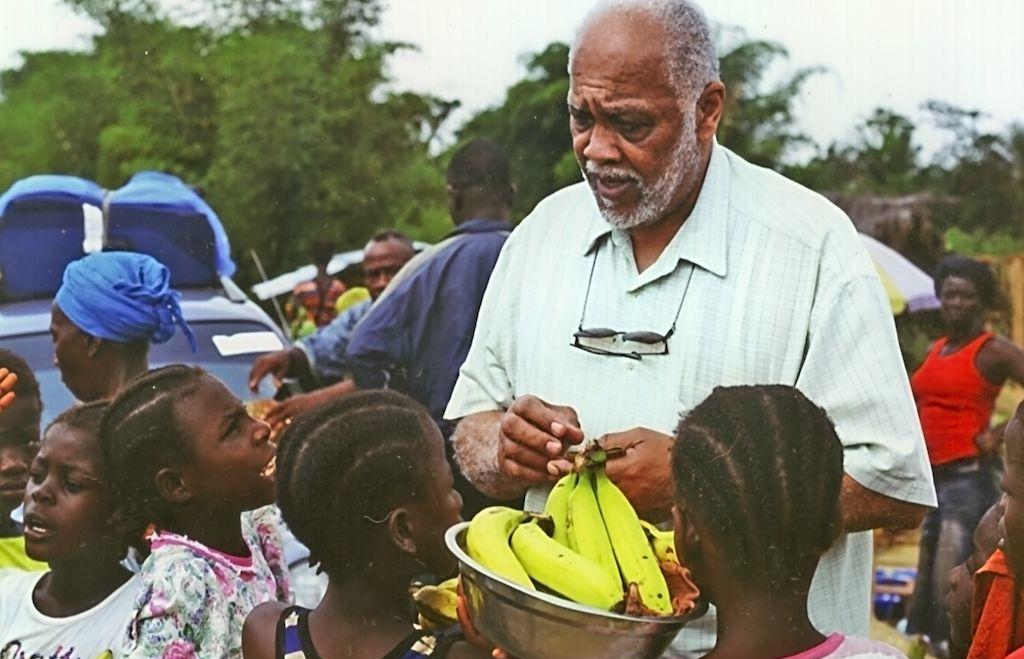
Reverend Frank Alexander named pastor of College Avenue Baptist Church
College Avenue Baptist Church (now Oasis of Hope Baptist Church) welcomes Reverend Frank Alexander as its pastor. He uses his role to engage and foster community in Martindale Brightwood, with the church building apartments and engaging in economic development.
Pictured: Pastor Frank Alexander working with children in Liberia as part of the nonprofit he started, Oasis Mission for Orphans, Disabled and Unaccompanied Children, ca. 1990s
Credit: Indianapolis Recorder
View Source
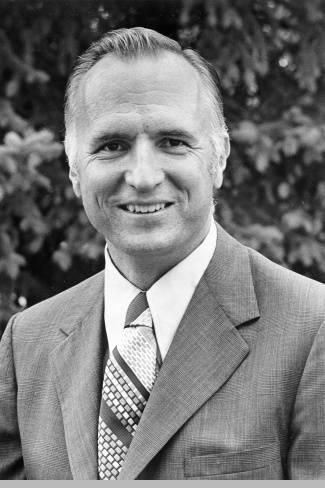
Indianapolis elects a “Minister Mayor”
After leaving the pulpit of Second Presbyterian Church and serving one term in Congress, Hudnut becomes mayor, vowing to transform the city from “India-no-place” to a first-rate city.
Pictured: William H. Hudnut, ca. 1970s
Credit: Indianapolis Recorder Collection, Indiana Historical Society
View Source
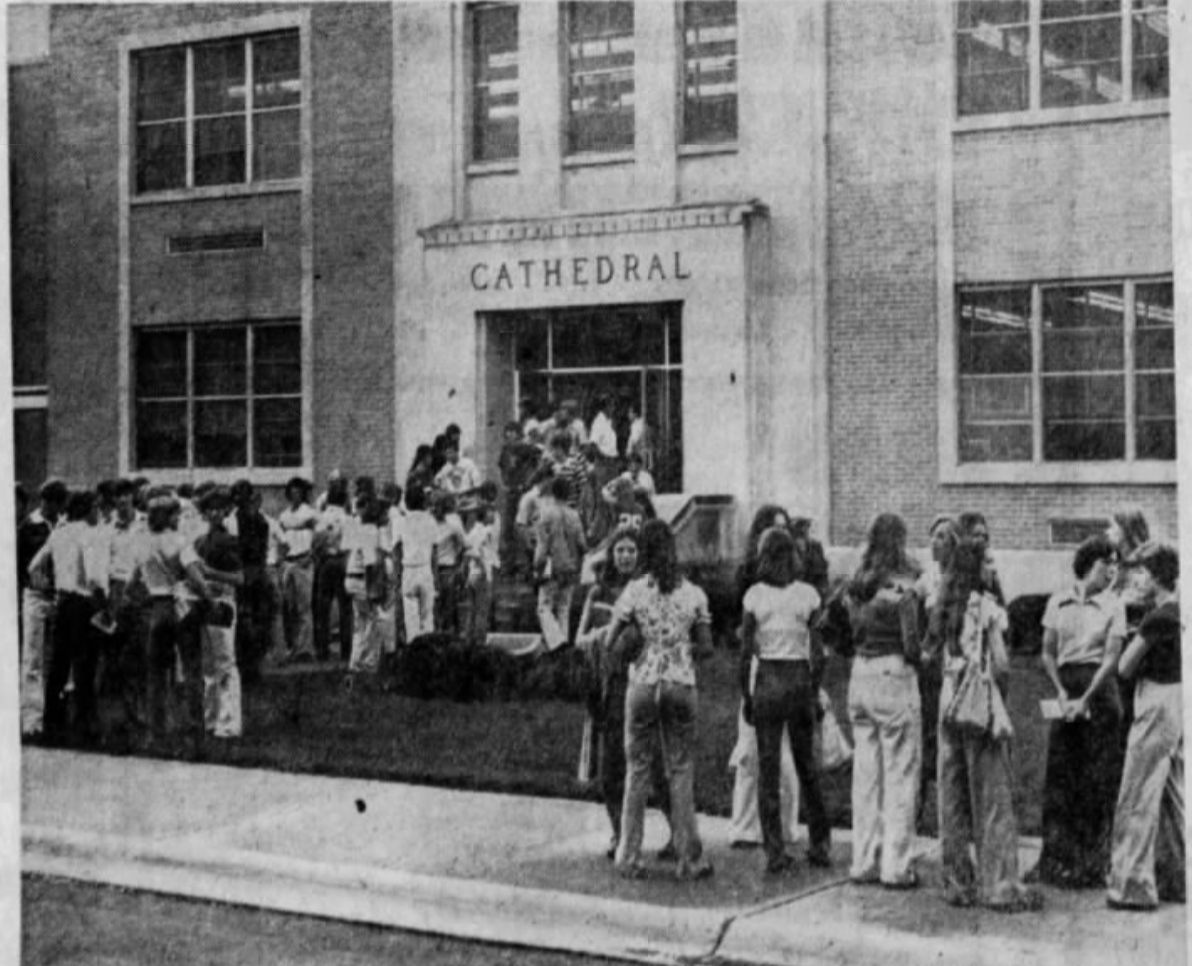
Cathedral High School becomes co-ed and moves to the former site of Ladywood School
Cathedral High School moves to the site of the former Ladywood school at 56th Street and Emerson Way. For the first time, girls are included in its student body.
Pictured: Cathedral High School, 1976
Credit: Indianapolis News
View Source
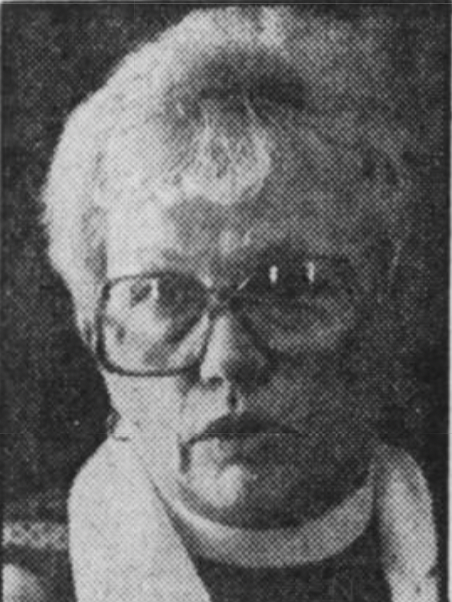
Jacquelyn Means becomes the first woman ordained as an Episcopalian priest
The Diocese of Indianapolis becomes the first Anglican body in the world to ordain a woman priest, Jacqueline Means, at All Saints Church. She is joined days later by Tanya Vonnegut Beck.
Pictured: Rev. Jackie Means, ca. 1980s
Credit: Indianapolis News
View Source
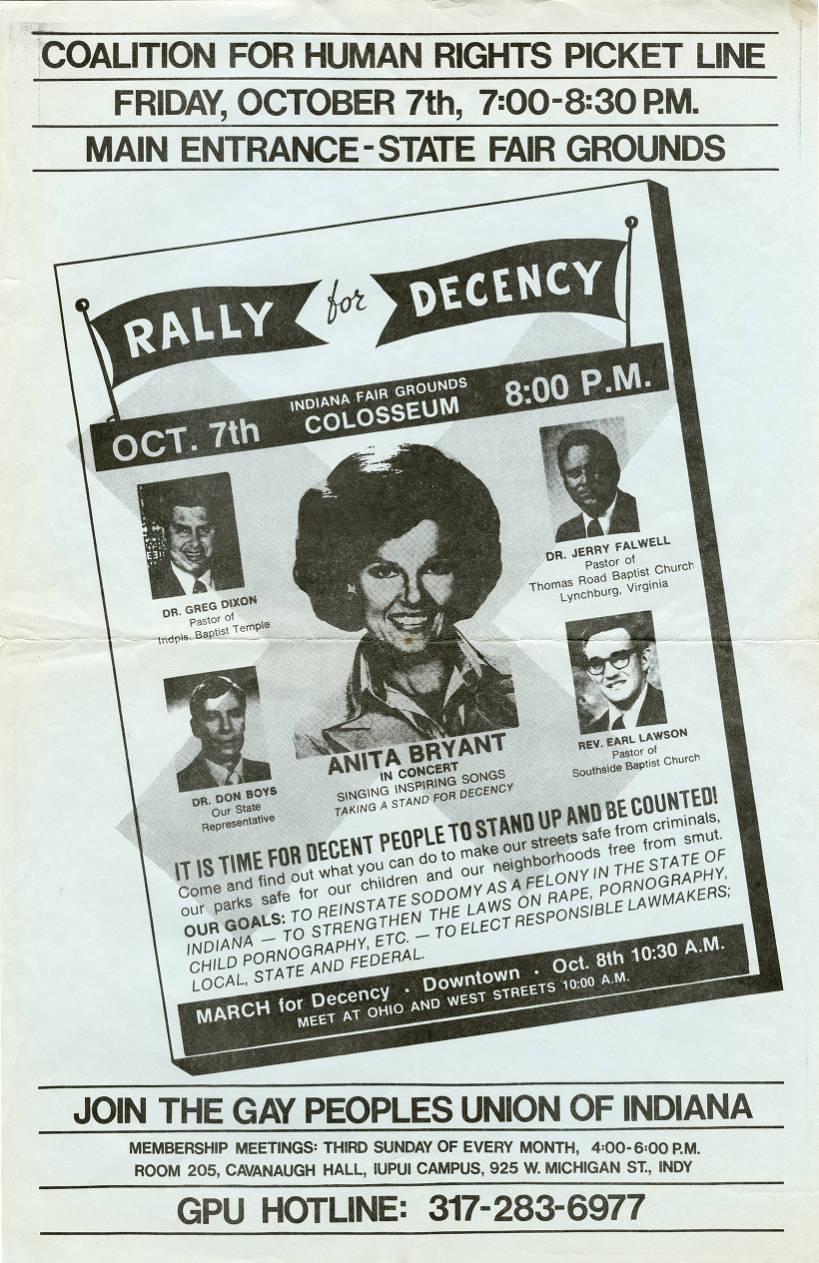
Anita Bryant holds Rally for Decency at the Indiana Fair Grounds
Evangelical pop singer and Florida orange juice spokesperson Anita Bryant visits Indianapolis for the Rally for Decency, a national conservative Christian-centered campaign to deny equal legal protection for gay Americans.
Pictured: Coalition for Human Rights Picket Line, October 7, 1977
Credit: Bohr/Indy Pride/Gonzalez Collection, Indiana Historical Society View Source
Butler University severs ties with the Disciples of Christ
Butler officially ends its connection with the Disciples of Christ after over 30 years of gradual secularization.
East 91st Street Christian Church dedication
Under the direction of Russel F. Blowers, the Independent Christian Church moves from its location on 49th Street and takes its new name, 91st Street Christian. It becomes one of the city’s first true megachurches, with a membership of well over 2,000.
Northview Church established in Carmel
Thirty people meet in the cafeteria of Carmel Elementary School to plan the new Northview Church. It would get its first permanent home three years later, and by 2020, it would grow to become a megachurch with 13 campuses.
Korean Presbyterian Church is established
The Korean Presbyterian Church of Indianapolis is organized. The church not only conducts services in Korean but also establishes a Korean school.
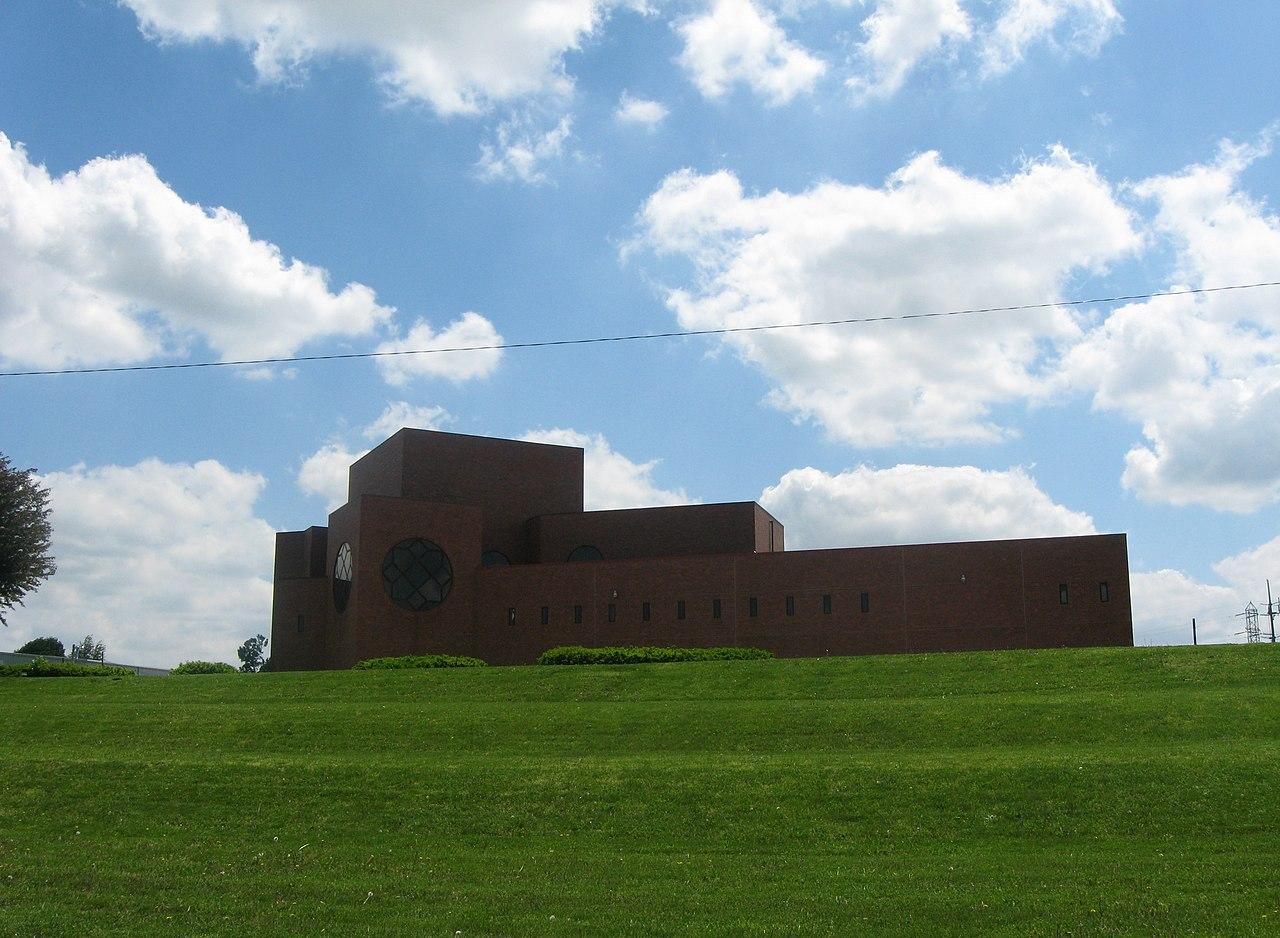
The Islam Society of North America establishes headquarters in Plainfield
The Society, which becomes the largest dues-paying Muslim organization in North America, provides training and other services to large numbers of new mosques in the U.S. It organizes the first Muslim library in the United States in 1981.
Pictured: The Islamic Society of North America (ISNA) building, 2008
Credit: Baxter1961 via Wikimedia Commons View Source
St. Francis de Sales Roman Catholic Church closes
St. Francis de Sales Church, founded in the Brightwood Neighborhood in 1881, closes along with its school because of years of decline in membership tied to the construction of I-70 through the area.
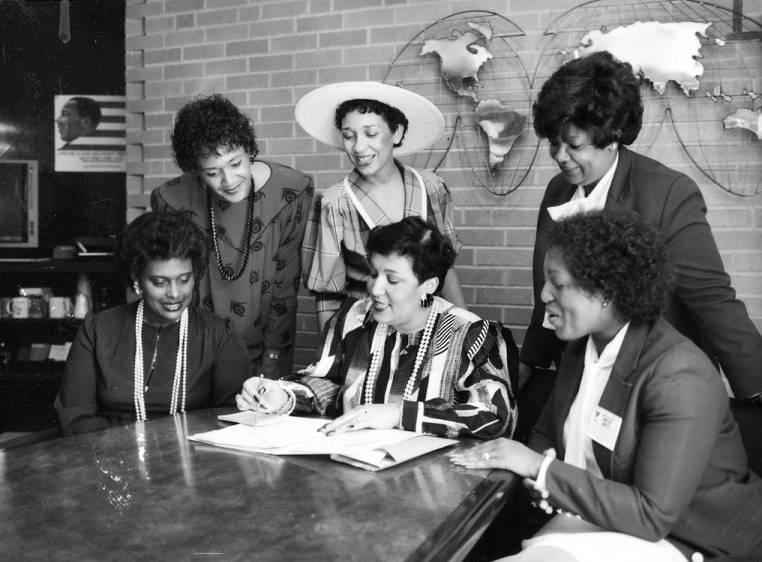
Second Christian gets a new name
After moving to a new building located at 5640 East 38th Street, Second Christian Church, one of the fastest-growing congregations in the city, becomes Light of the World Christian Church.
Pictured: Ladies of the Light of the World Christian Church, 1984
Credit: Indianapolis Recorder Collection, Indiana Historical Society View Source
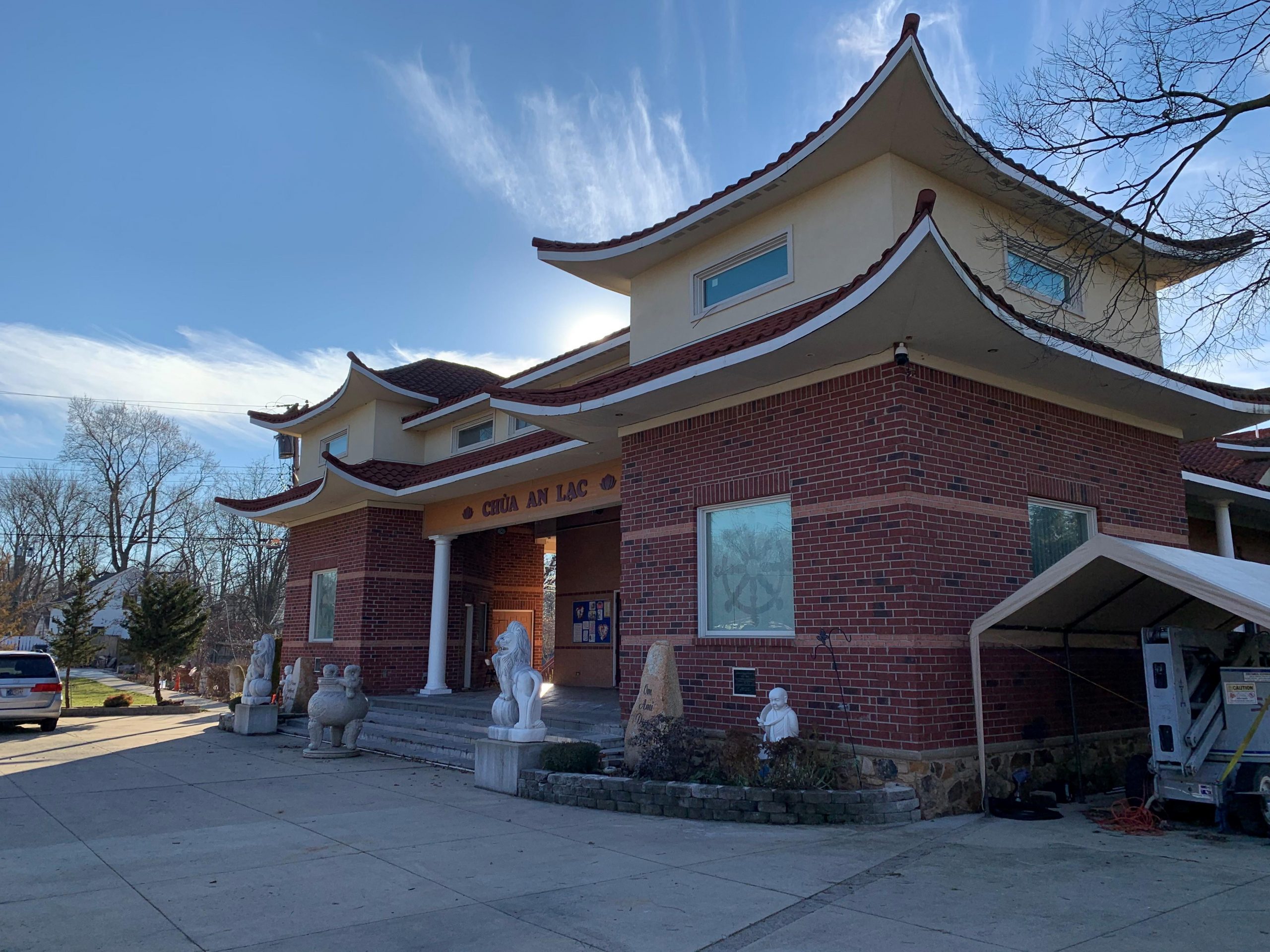
An L?c Buddhist Temple founded
A group of Vietnamese Americans establishes the Chùa An L?c, or the An L?c temple, in two adjacent homes to have a space to practice its form of Buddhism.
Pictured: Front view of the Chùa An Lḁc Vietnamese Buddhist Temple, ca. 2010s
Credit: Chad Bauman
Catholic Archdiocese of Indianapolis establishes a Korean mission
The archdiocese recognizes a Korean mission, which opens as the Korean Catholic Community Church of Our Lady of Holy Rosary in a former Jehovah’s Witness building in 1988.
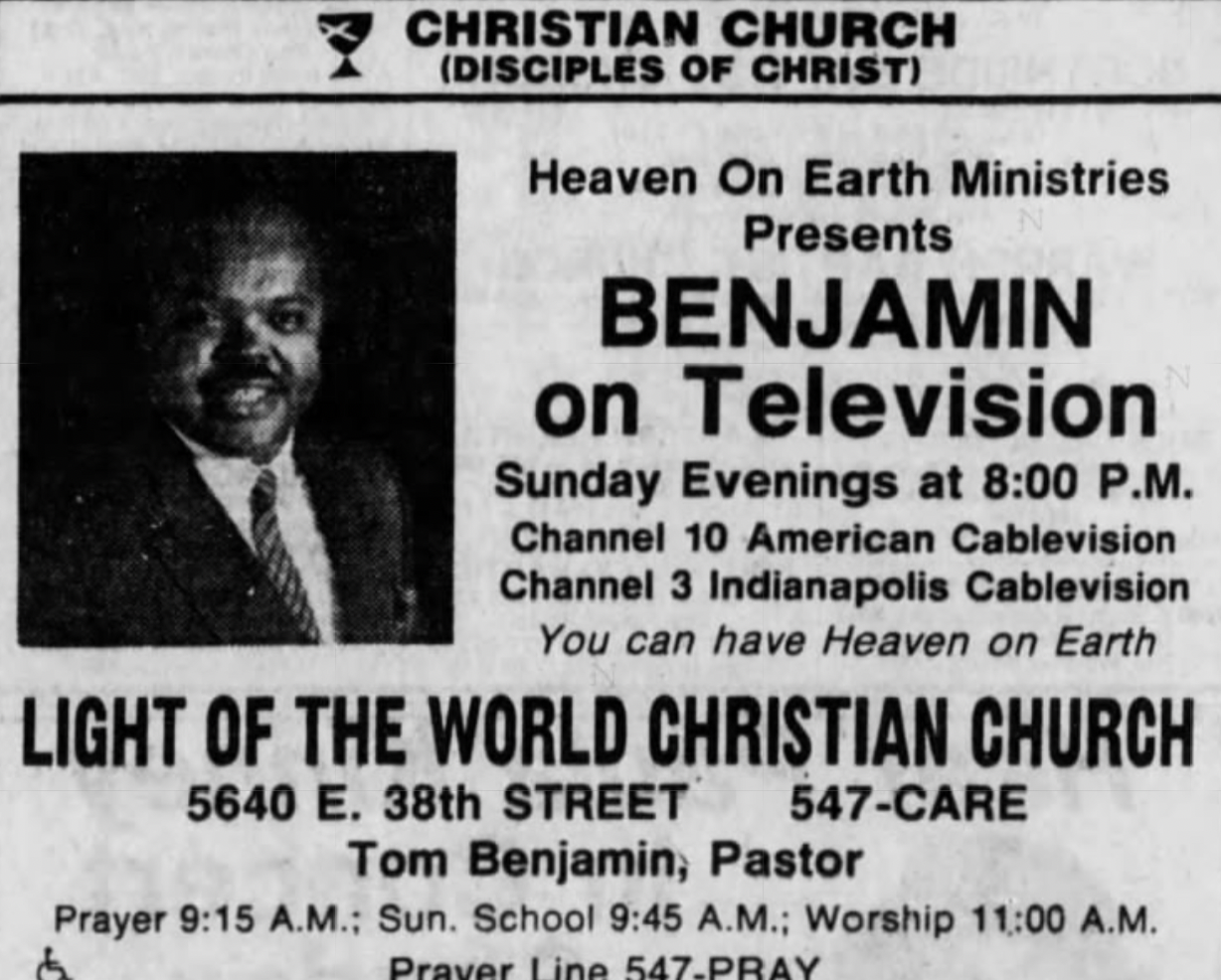
Light of the World Christian Church launches a television ministry
Reverend T. Garrot launches Heaven on Earth Ministries, a television ministry program. By its third year on air, the televised sermons were accessible on the Black Entertainment Network, the Trinity Broadcasting Network, and the Armed Forces Network.
Pictured: Heaven on Earth Ministries advertisement, 1986
Credit: IndyStar
View Source
The Wesleyan Church announces move to Indianapolis
The Wesleyan Church decides to relocate its world headquarters to Indianapolis from Marion, Indiana. The offices of the Holiness Church denomination opens on the northeast side the following year.
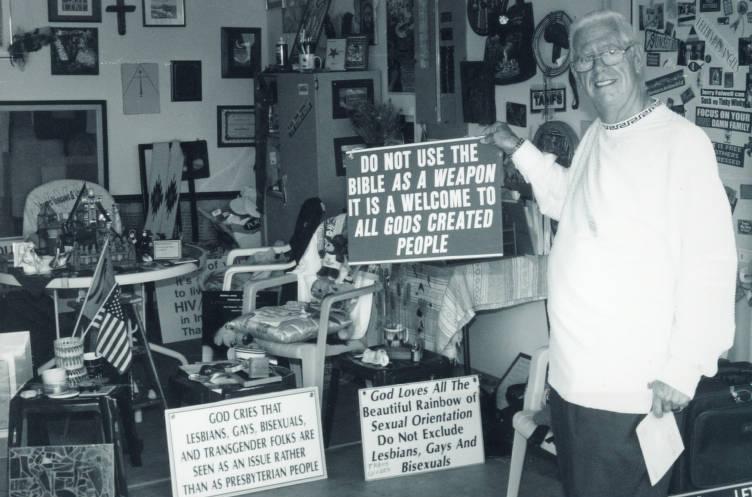
Damien Center opens
Christ Church Cathedral and SS Peter and Paul Catholic Cathedral work together to create the Damien Center, which offers support services to those dealing with HIV and AIDS.
Pictured: Reverend Howard Warren, a Presbyterian minister, stands among signs that advocate inclusivity for the LGBT community in the Christian faith. He came out as gay and having AIDS in 1987.
Credit: Mark A. Lee LGBT Photo Collection, Indiana Historical Society View Source
First Islamic School
MTI School of Knowledge, a K-12 school, becomes the first Islamic school in Indiana.
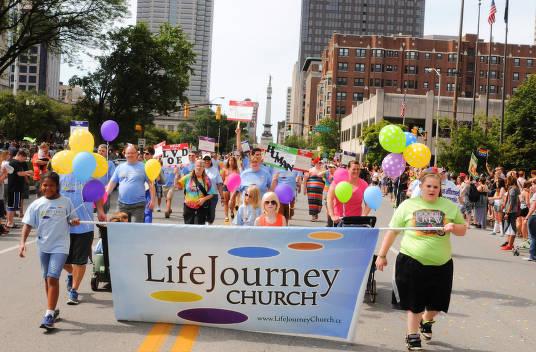
LifeJourney Church becomes the citys first predominantly LGBTQ+ congregation
First known as Jesus Metropolitan Community Church, LifeJourney becomes a leading advocate for legal equality and religious rights within the Indianapolis LGBTQ+ Community.
Pictured: LifeJourney Church at the Pride Parade, 2014
Credit: Mark A. Lee LGBT Photo Collection, Indiana Historical Society.
View Source
Free Methodist World Ministries Center dedicated
The Free Methodists relocate their international headquarters to Indianapolis. The center holds the Holiness Church denomination’s business offices and archives.
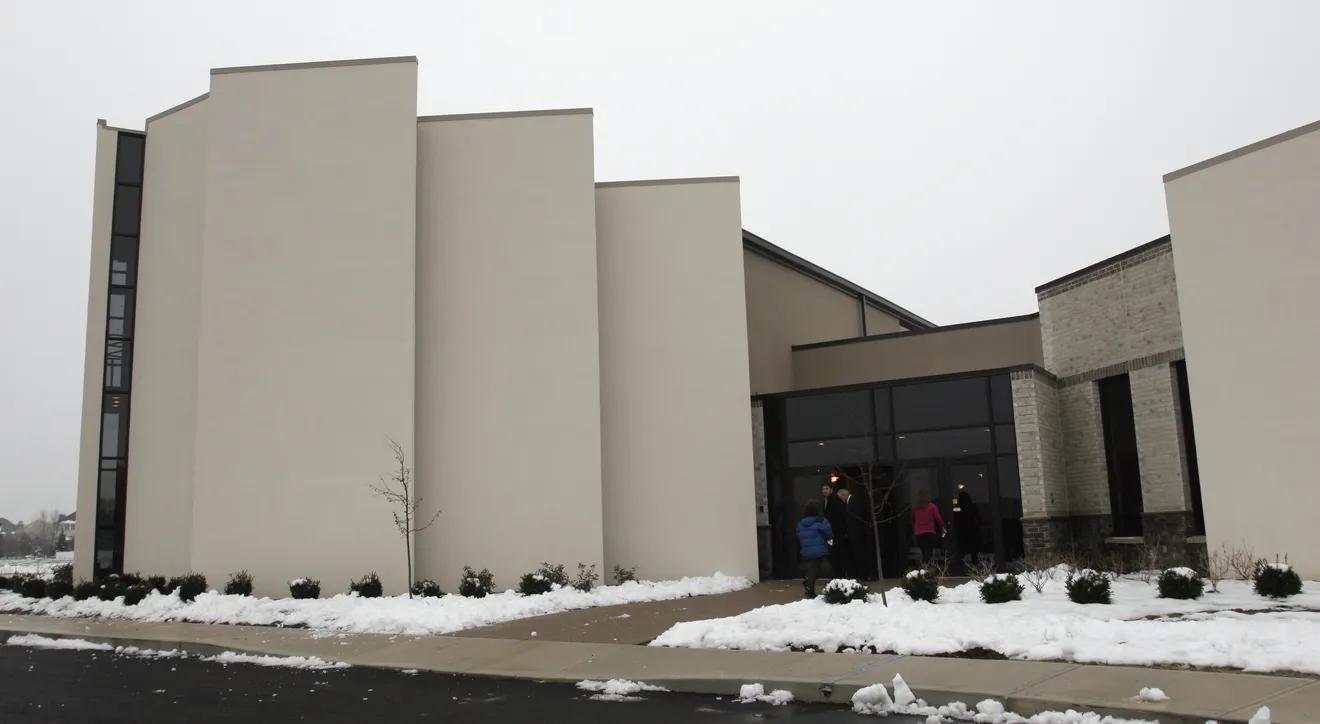
Congregation Shaarey Tefilla forms
A group of 40 people assemble in Carmel, Indiana, and forms a new Conservative Jewish congregation where members could lead services and read Torah. In 1999, the congregation grants equal participation to women and, in 2007, moves to Carmel.
Pictured: Congregation Shaarey Tefilla, 2007
Credit: IndyStar
View Source
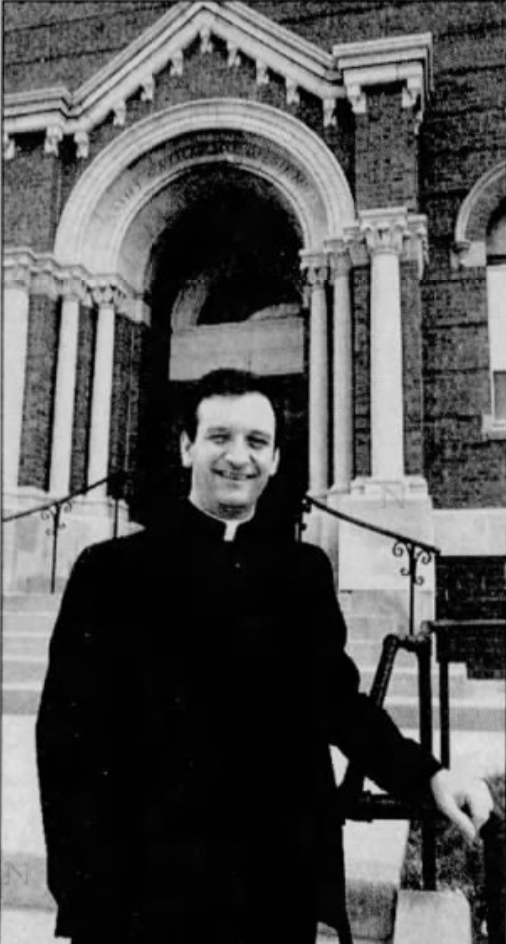
St. Catherine and St. James Catholic parishes merge to become Good Shepherd Parish
Due to the decline in Catholic membership in urban parishes, St. Catherine of Siena and St. James parish consolidate to become Good Shepherd parish.
Pictured: Rev. Thomas Clegg of the combined churches, 1993
Credit: Indianapolis News
View Source
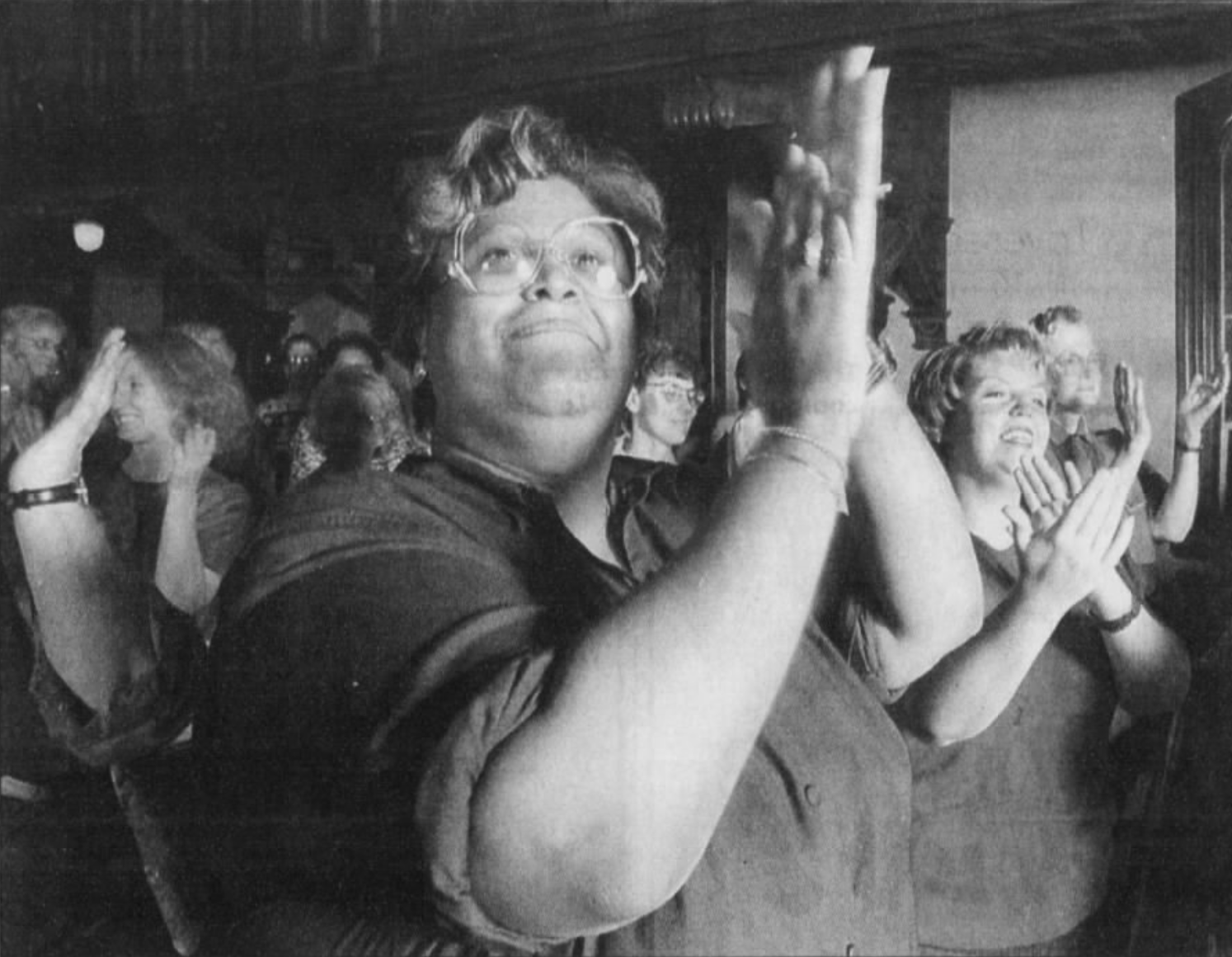
Celebration of Hope
The Church Federation organizes a Celebration of Hope service, bringing together different faith communities to counter a Ku Klux Klan rally. The service becomes an annual event intended to better race relations.
Pictured: Fourth Annual Celebration of Hope, 1997
Credit: IndyStar View Source
Tabernacle Presbyterian Church establishes Raphael Health Center
Challenged to address the health concerns of its neighborhood, members of the church who are also health care providers begin to offer free medical care at the newly formed health center.
Catholic Archdiocese closes St. Bridget parish
St. Bridget closes as membership declines with the movement of the Black population away from the near west side. The church reappears as an independent Catholic church, holding services at St. Phillips Episcopal Church.
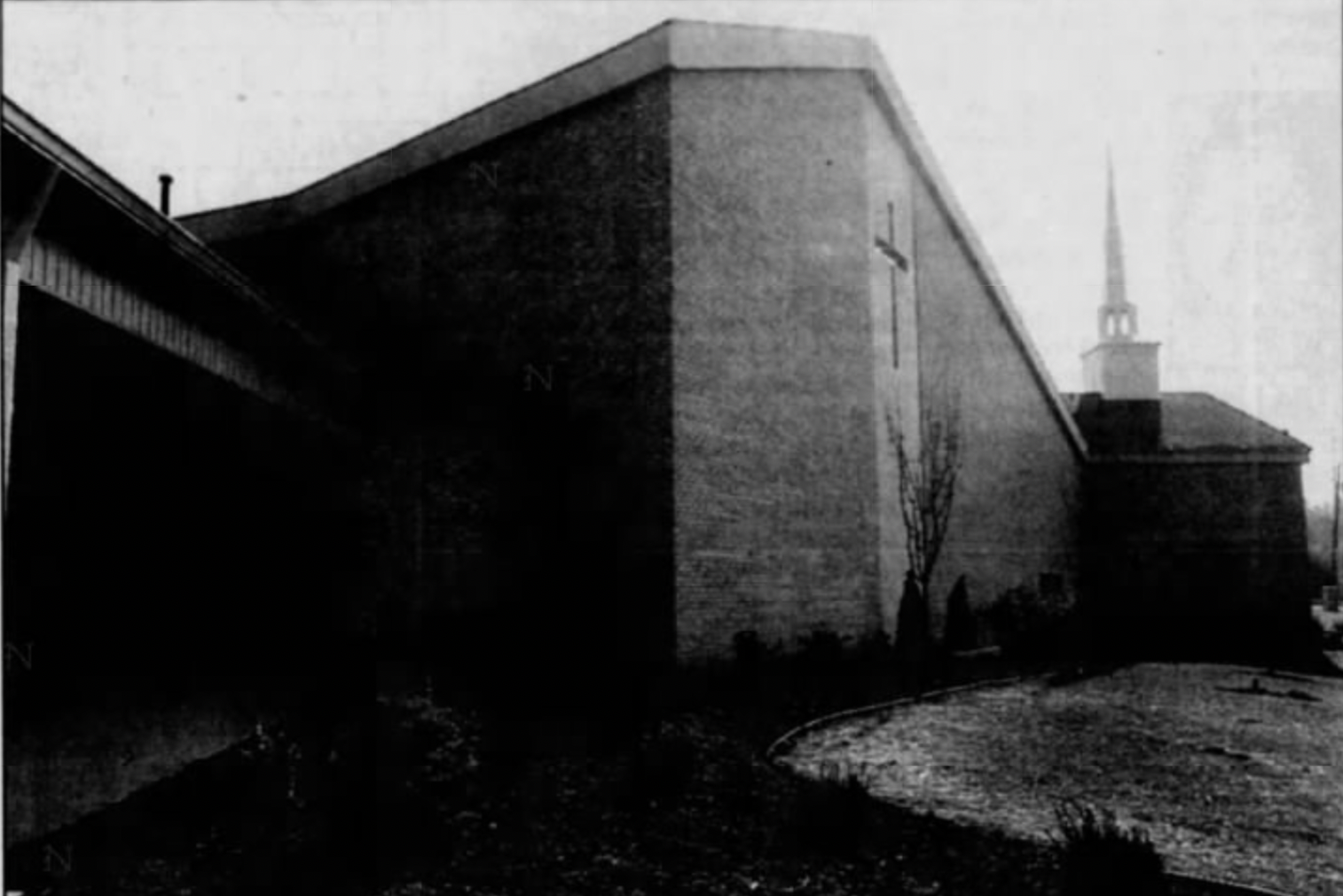
New Eastern Star Church building dedication
Eastern Star Church holds its first service in its new building at 5750 E. 30th Street, which is constructed to accommodate a membership that has increased from 900 to 4,000 people.
Pictured: Eastern Star Church, 1994
Credit: IndyStar
View Source

Spirit & Place Festival launches
The Spirit & Place Festival springs from the Project on Religion and Urban Culture, an initiative of The Polis Center at IUPUI. It brings together the arts, humanities, and religion to frame programs that address issues of concern to Indianapolis. The first festival features a conversation between John Updike, Kurt Vonnegut, and Dan Wakefield at Clowes Hall.
Pictured: Spirit & Place Festival event at Clowes Hall, 2008
Credit: Indiana University Indianapolis
View Source
The Center for Congregations opens
Funded through the Lilly Endowment, Inc., the Center helps religious congregations in Indiana through no-cost consulting, low-cost educational opportunities, and a variety of grant programs. Rev. John Wimmer, chief of staff at the University of Indianapolis, becomes its founding director.
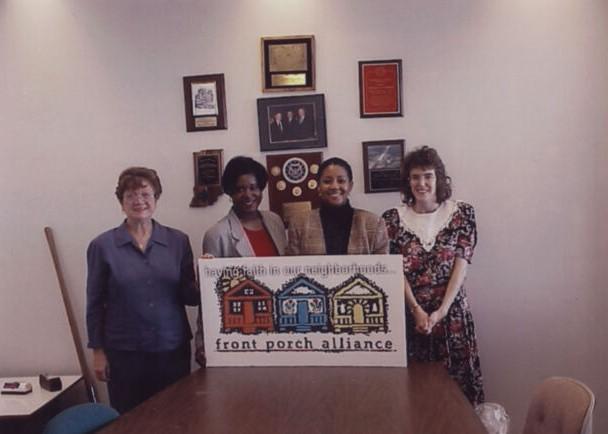
Mayor Stephen Goldsmith’s Front Porch Alliance
Mayor Stephen Goldsmith enlists religious organizations to his Front Porch Alliance, an initiative intended to address neighborhood issues and foster a better sense of community. The Alliance stemmed from a national trend to use faith-based partnerships to provide government-funded services.
Pictured: Women with Front Porch Alliance Sign, ca. 1990s
Credit: University of Indianapolis
View Source
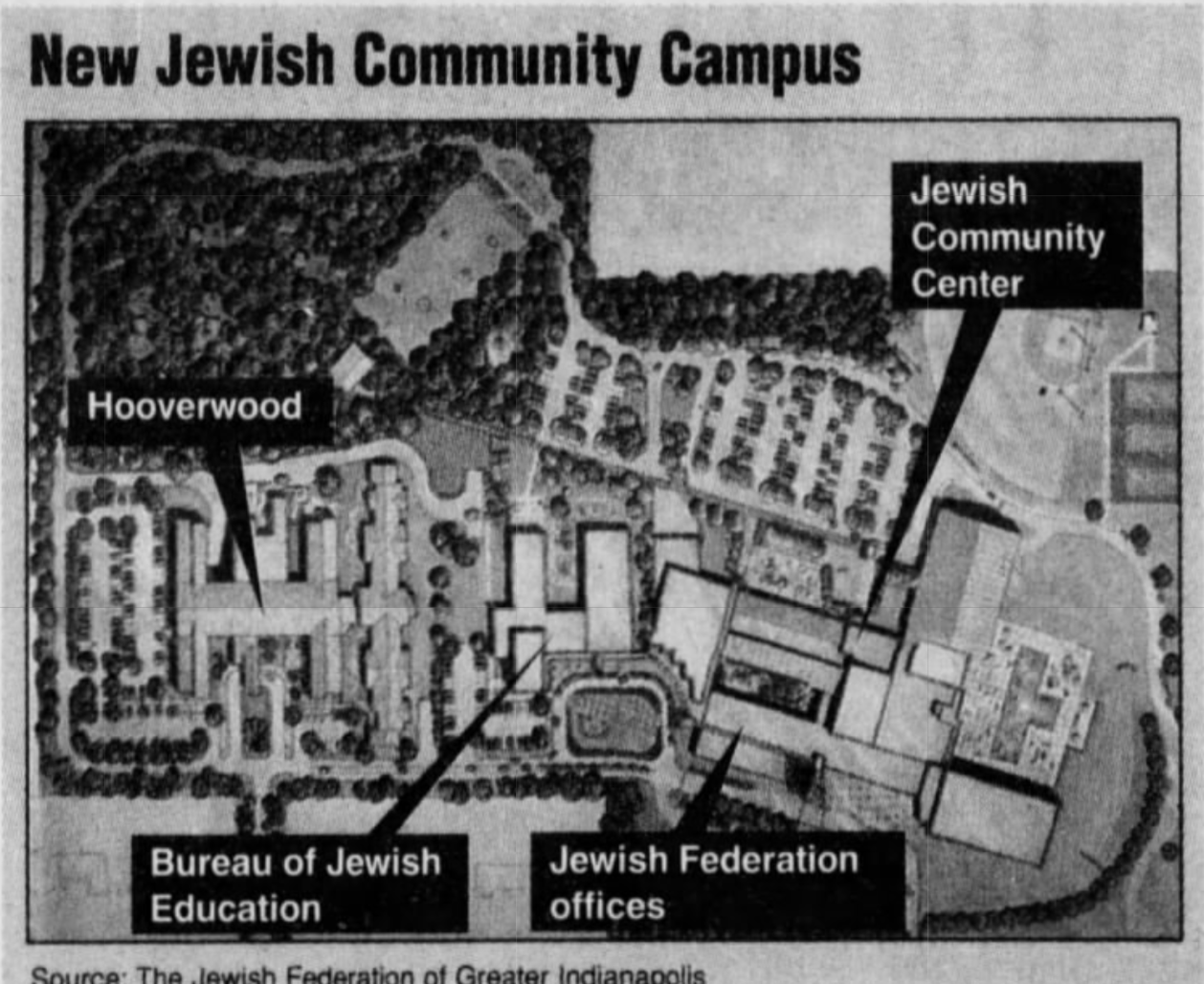
Dedication of the new Jewish Community Campus
For the first time, all agencies affiliated with the Jewish Federation of Greater Indianapolis are united on one campus, including the Jewish Community Center, the Jewish Community Relations Council, the Hooverwood retirement community, and the Jewish Education Bureau.
Pictured: Jewish Community Campus map, 1997
Credit: IndyStar
View Source
Tabernacle Presbyterian Church establishes Oaks Academy to revitalize neighborhood
Members of Tabernacle Presbyterian Church found Oaks Academy with the aim of providing quality education and an anchor for the revitalization of the congregation’s surrounding Fall Creek neighborhood.
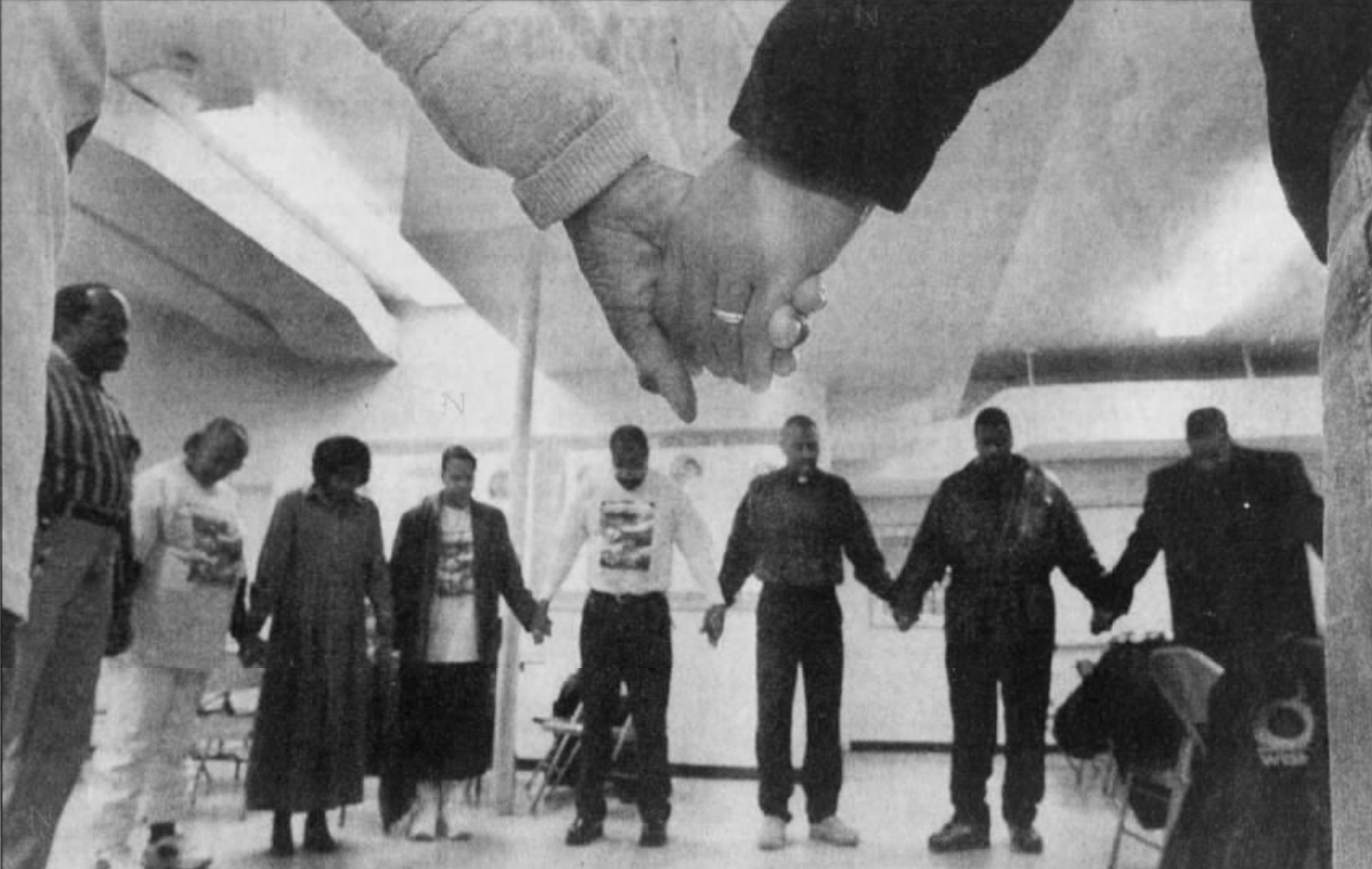
Indianapolis Ten Point Coalition is established
Clergy groups in the city found the Indianapolis Ten Point Coalition to help curb youth violence by building bridges among communities, police officers, and juvenile courts.
Pictured: Ten Point Coalition group in prayer, 2000
Credit: IndyStar
View Source
Central Avenue United Methodist closes
With a membership that has dwindled to 30, Central Avenue United Methodist Church, once one of the most active congregations in the city, abandons its building and merges with Lockerbie United Methodist Church. The building later becomes Indiana Landmarks Center.
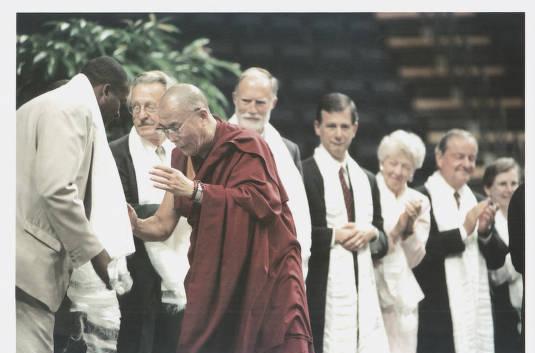
Dalai Lama speaks in Indianapolis for the first time
The Dalai Lama gives a public address during a welcoming ceremony at Market Square Arena. He returns to Indianapolis on May 14, 2010, and June 25, 2016.
Pictured: The 14th Dalai Lama, Tenzin Gyatso at Market Square Arena, 1999
Credit: Indiana University Indianapolis
View Source
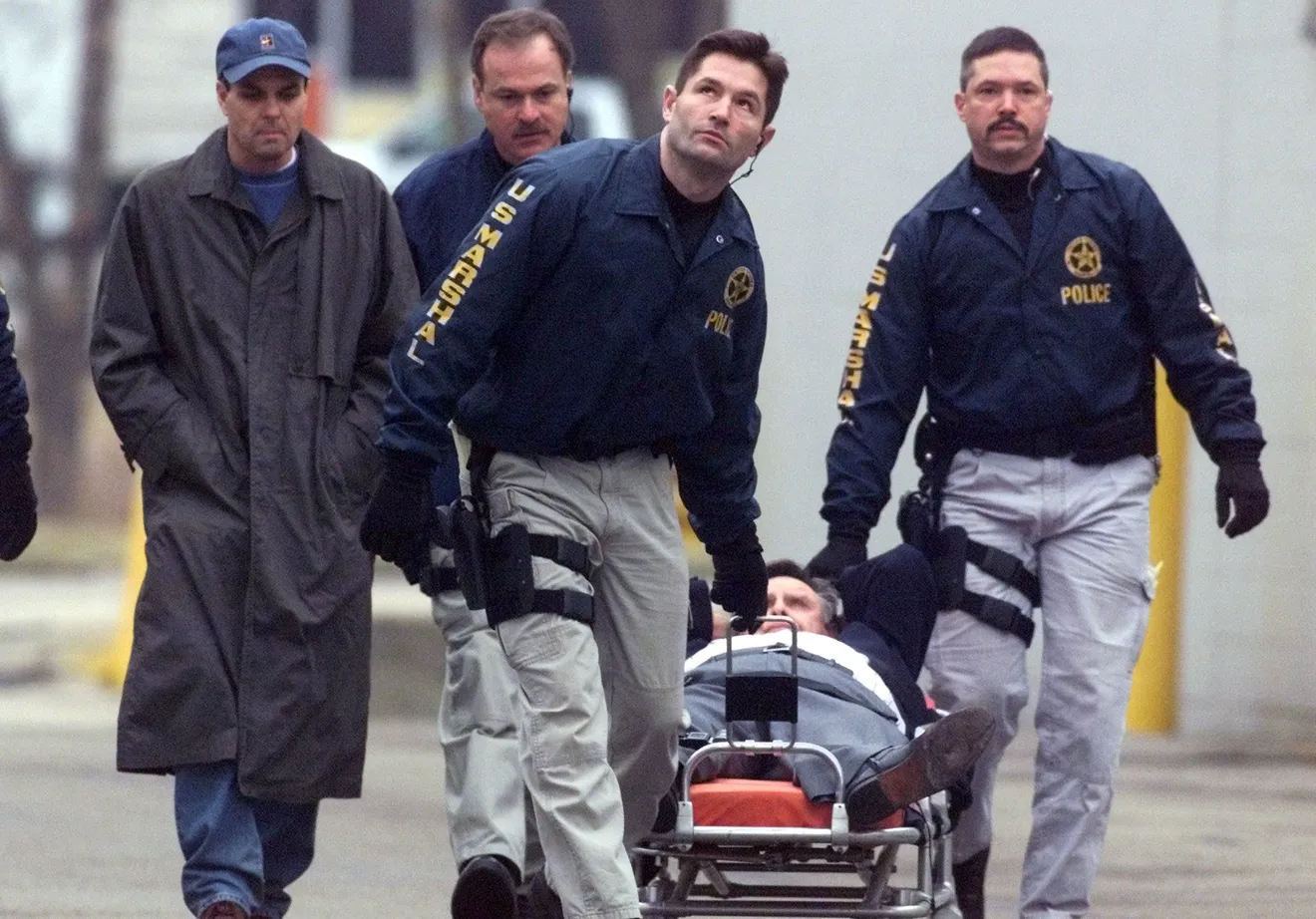
Federal Marshals seize Indianapolis Baptist Temple
The federal government seizes the Indianapolis Baptist Temple, after years of the church evading payment of taxes for its employees. Indianapolis Baptist Temple pastors Greg Dixon Sr. and Jr. contend that the church is governed only by God’s law and is not subject to any form of taxation.
Pictured: Gregory Dixon is wheeled away from the Indianapolis Baptist Temple on a stretcher by Federal Marshals, 2001
Credit: Robert Scheer, IndyStar View Source
Eastern Star expands with New Life Worship Center
Eastern Star Missionary Baptist Church expands with the New Life Worship Center. The church then adds a Fishers campus (2003) and goes on to open two more churches, New Beginnings Fellowship Church (2004) and New Horizons Church (2006).
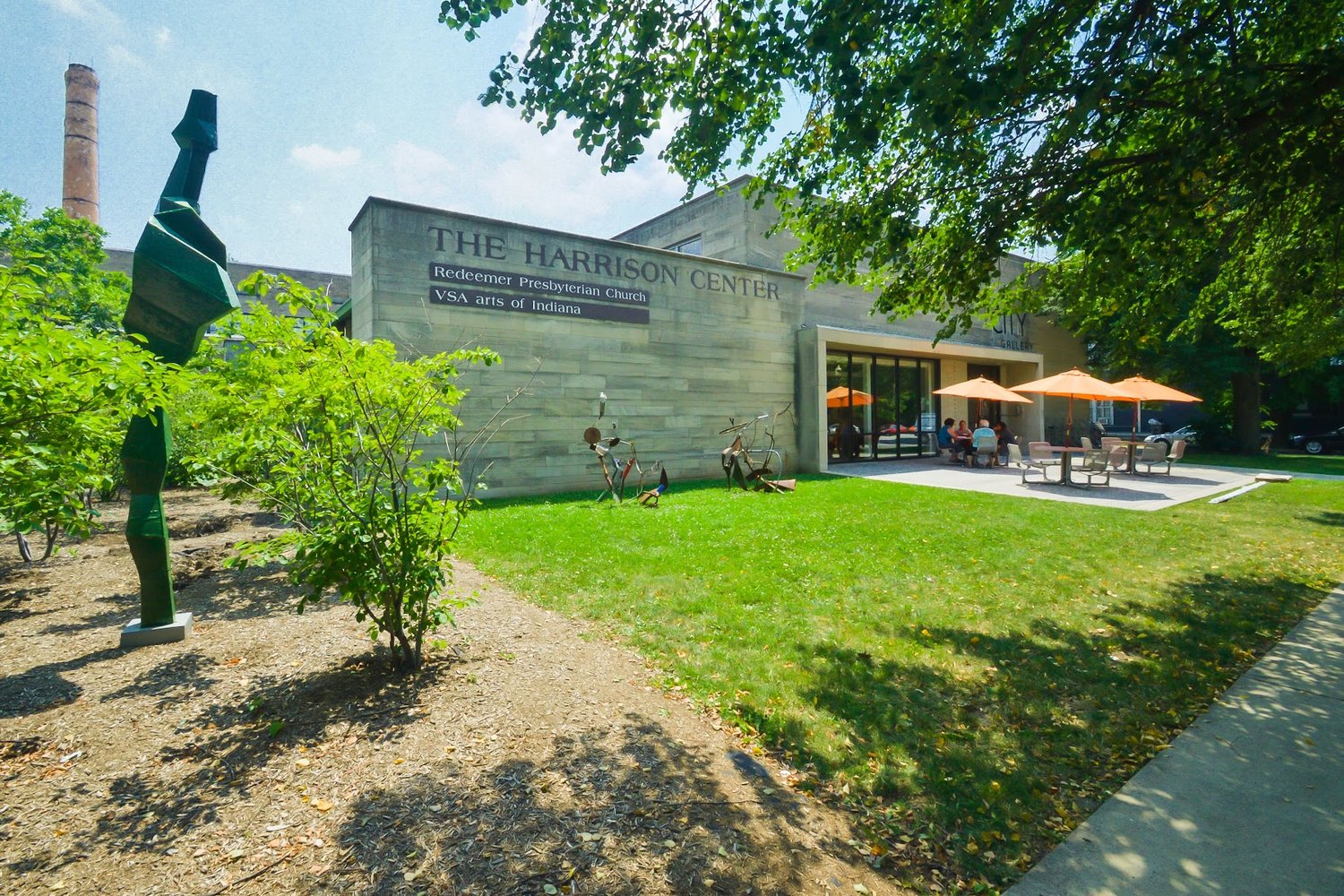
Redeemer Presbyterian establishes Harrison Center for the Arts
Redeemer Presbyterian Church, formed in 1998, purchases the former First Presbyterian Church building to use as its home and organizes the Harrison Center for the Arts as a nonprofit that provides artists studio and gallery space.
Pictured: Harrison Center, 2020
Credit: Harrison Center View Source
Muslim Alliance of Indiana founded
Following the terrorist attacks of 9/11, leaders of the Muslim community create the Muslim Alliance to counter misinformation about members of the Muslim community, encourage civic engagement, establish interfaith alliances, and connect with intra-faith communities.
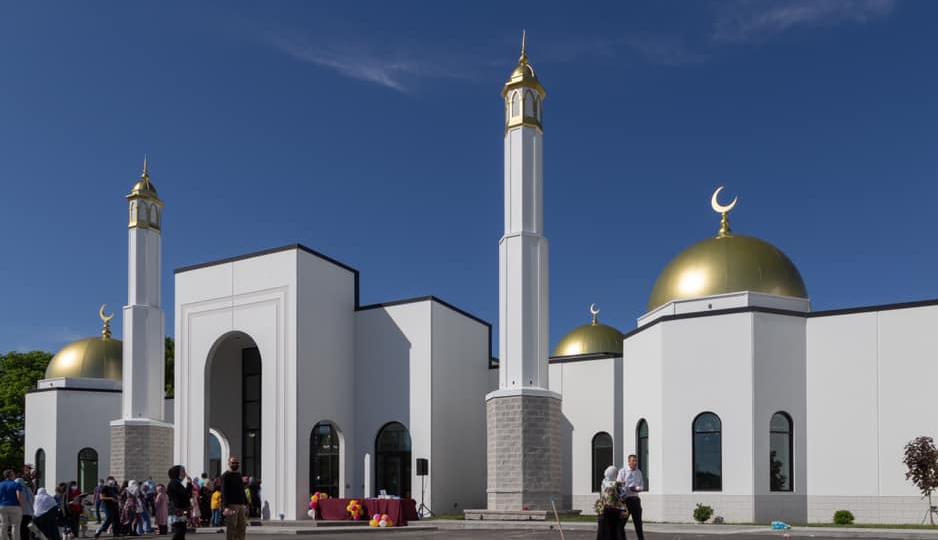
Al Huda Foundation organizes in Fishers
Al Huda Foundation is incorporated to serve Muslims in Fishers, Carmel, Noblesville, and northern portions of Indianapolis. It grows to become the largest congregation of Muslims in Indiana.
Pictured: Al Huda Foundation opened its mosque and community center in Fishers, June 2021.
Credit: WFYI View Source
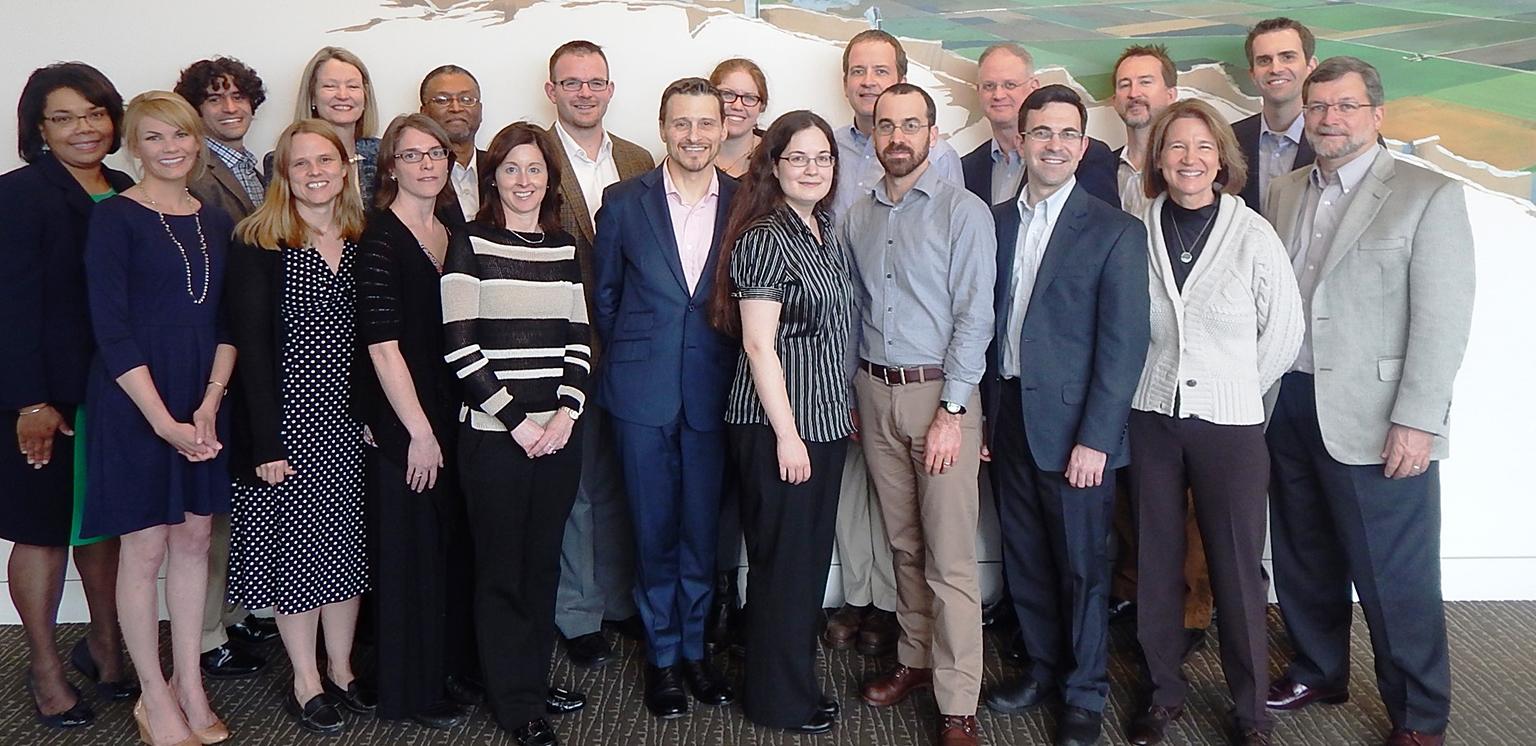
Lake Institute on Faith and Giving established
Housed at the Indiana University Lilly Family School of Philanthropy, the Lake Institute fosters a greater understanding of how faith inspires and informs giving through research, education, and public conversation.
Pictured: Lake Institute Network of Emerging Scholars (LINES), 2015
Credit: Lilly Family School of Philanthropy, IUPUI
View Source
St. Mary’s priest organizes Indiana Justice for Immigrants Coalition
St. Marys Church becomes a focal point of support for Latino civil rights when Father Thomas Fox creates the coalition over concerns that lawmakers are moving to keep illegal immigrants from receiving public assistance and medical treatment.
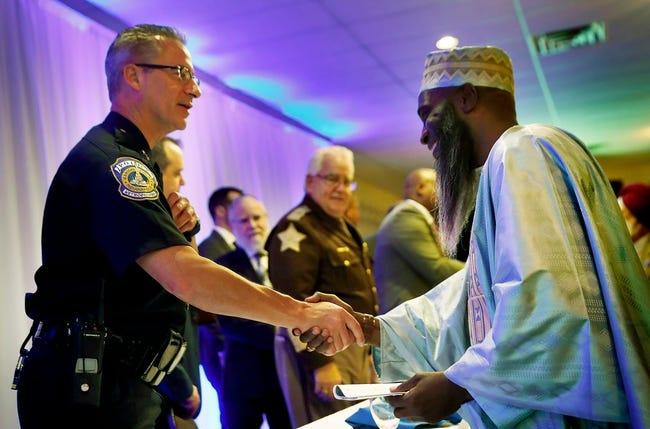
Al-Haqq Foundation established
Iman Muhammad Ndiaye, who came to Indianapolis from Senegal in 2001, establishes the Al-Haqq Foundation as the first Qur’an school in Marion County.
Pictured: IMPD Chief Bryan Roach, left, with Imam Muhammad Ndiaye, of the Al-Haqq Foundation, after the luncheon meeting for the Indianapolis launch of the nationwide One Congregation One Precinct initiative, 2018
Credit: Kelly Wilkinson/IndyStar, Indianapolis Star via Imagn Content Services, LLC
View Source
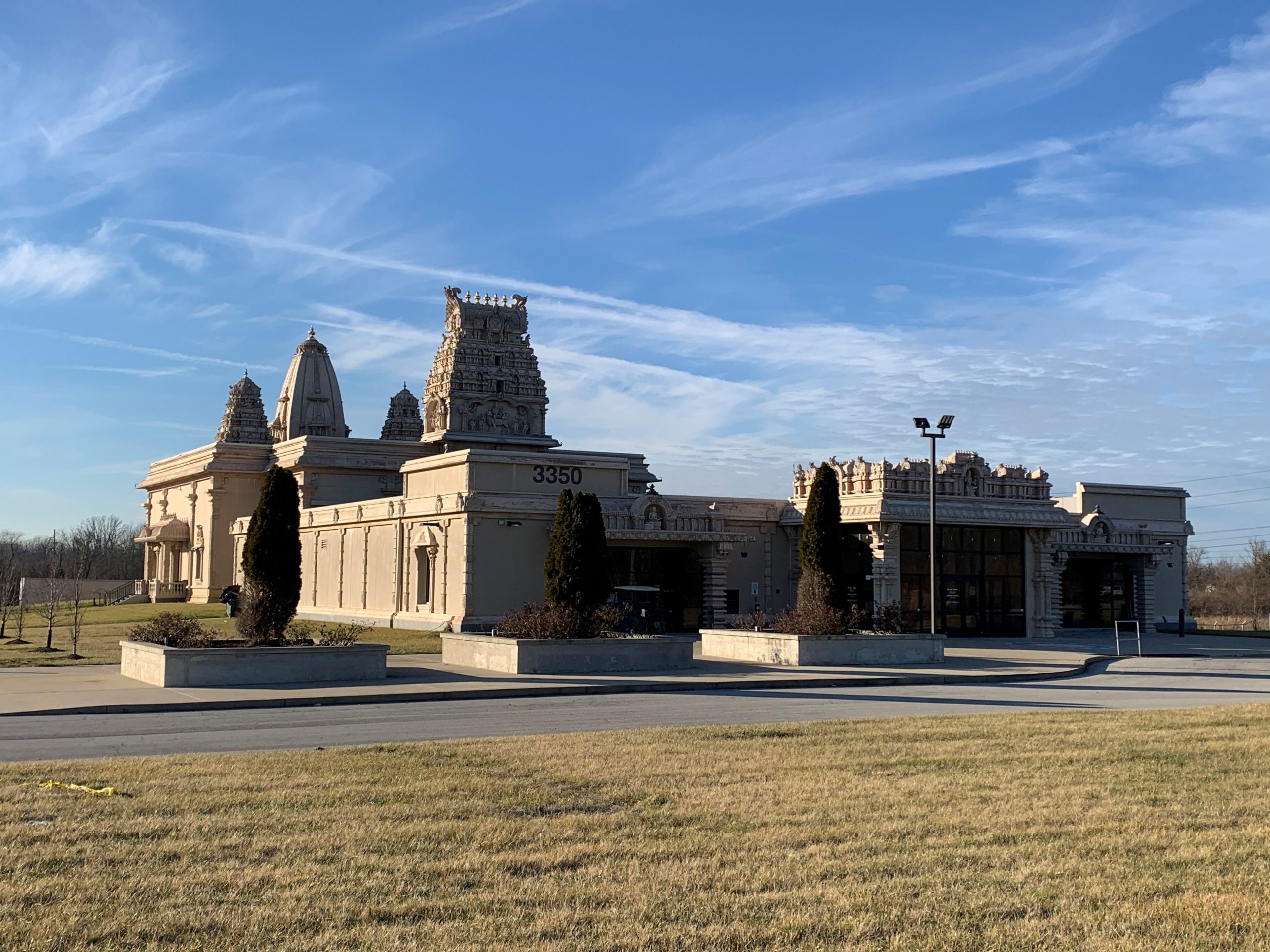
Hindu Temple of Central Indiana opens to worshipers
Created to serve the growing Hindu population, the Hindu Temple of Central Indiana is the first traditional Hindu temple in Indiana.
Pictured: Hindu Temple of Central Indiana, ca. 2020
Credit: Chad M. Bauman
An L?c Temple Buddha Hall opens
Functioning as a worship and cultural center, the An L?c temple moves to a large, Vietnamese-style Buddha Hall, led by a community of Buddhist nuns.
Pictured: Front view of the Chùa An Lḁc Vietnamese Buddhist Temple, ca. 2010s
Credit: Chad Bauman
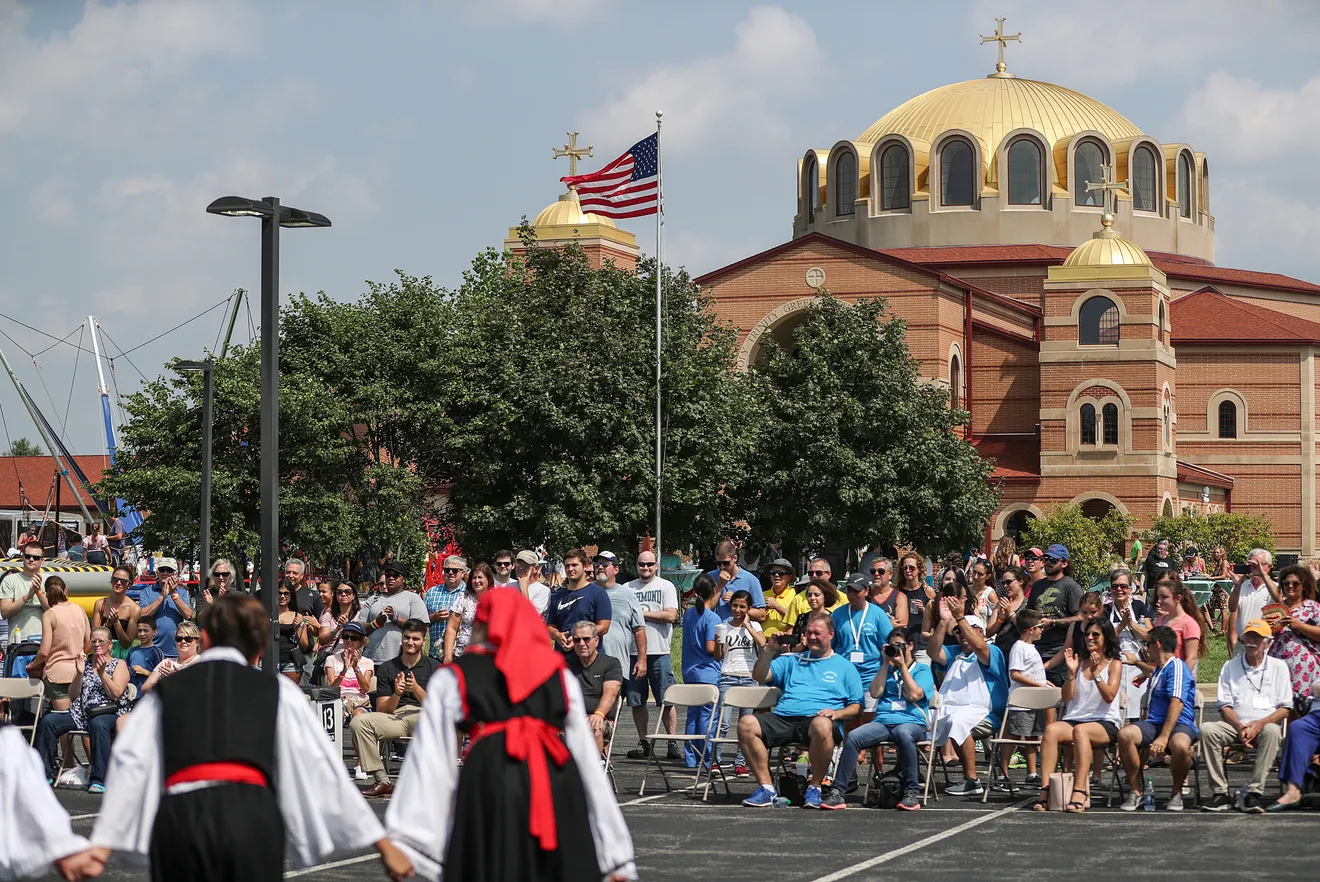
Greek Orthodox Cathedral opens in Carmel
Trinity Greek Orthodox Cathedral carries the distinction of being the first Triad Byzantine-Design church constructed in over 1,400 years.
Pictured: Greek Fest at Holy Trinity Greek Orthodox Church, 2018
Credit: Jenna Watson, IndyStar View Source
Center for Interfaith Cooperation established
Growing out of the International Interfaith initiative, the center works to build partnerships among diverse faith congregations to explore religious differences and similarities to help solve common social problems.
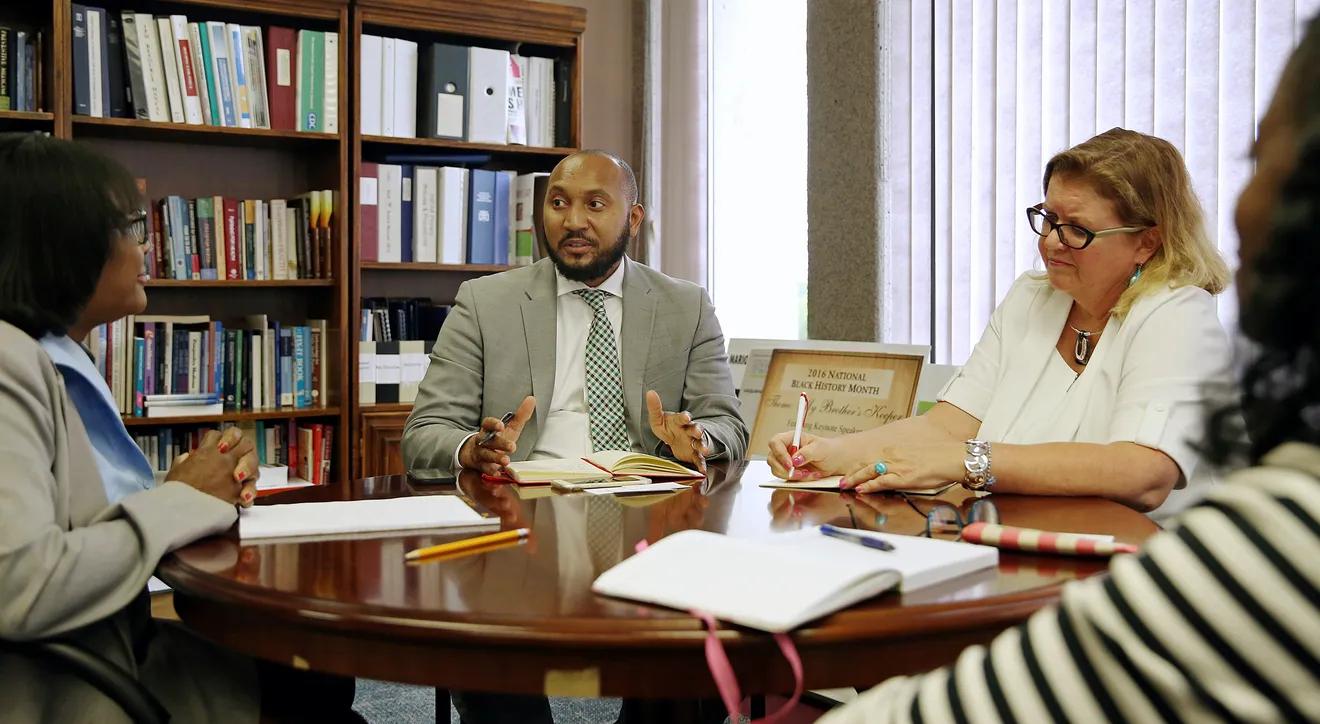
New ministry begins at Light of the World
Reverend David A. Hampton becomes pastor of Light of the World Christian Church and moves the congregation into social justice and civil rights conversations. His work leads to a position as deputy mayor for neighborhood engagement.
Pictured: Reverend David A. Hampton at a Marion County Department of Health meeting, 2016
Credit: Jenna Watson, IndyStar
View Source
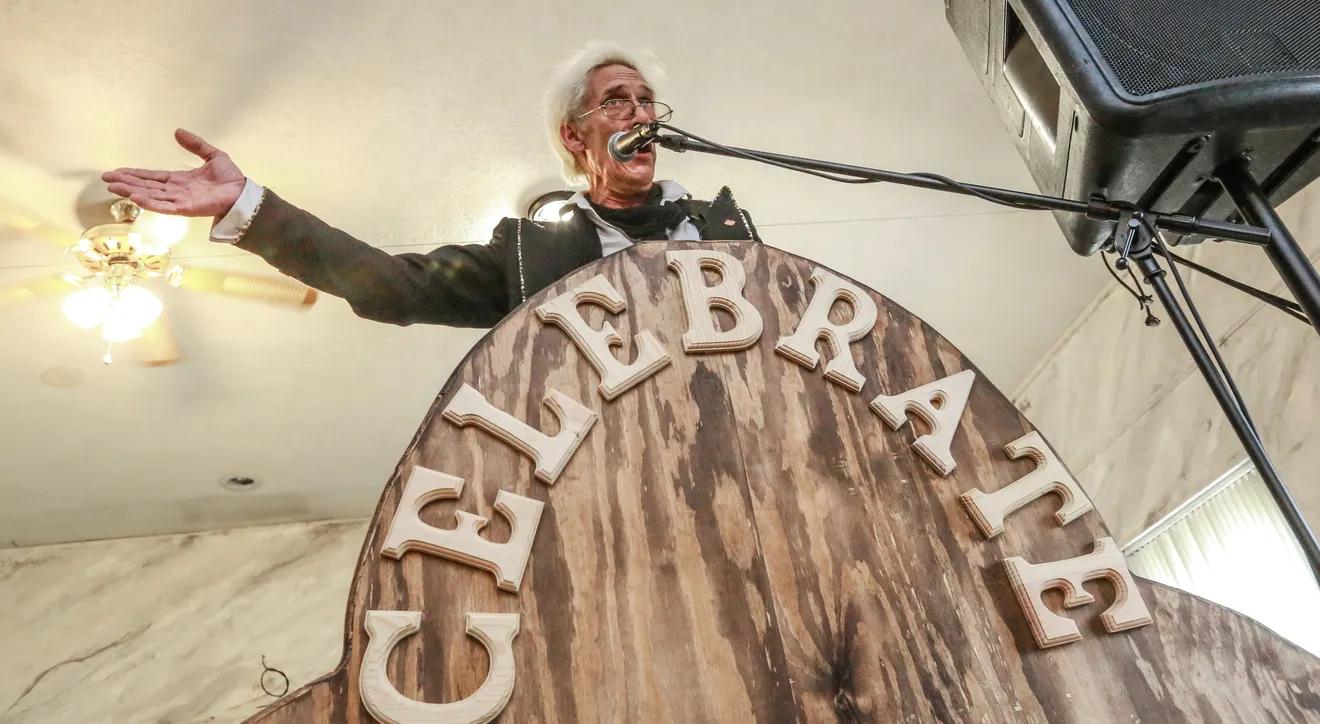
First Church of Cannabis forms
Claiming protection under the Religious Freedom Restoration Act (RFRA) Bill Levin founds the First Church of Cannabis. The courts grant the church protection under RFRA, but legal authorities do not approve the use of cannabis as a sacrament.
Pictured: Bill Levin at the First Church of Cannabis’ first service, 2015
Credit: Michelle Pemberton, IndyStar
View Source
Indianapolis business and political leaders oppose state’s Religious Freedom Restoration Act (RFRA)
The “religious freedom” bill prohibits the government from impeding a person’s ability to exercise their religion. Pence signs the bill into law despite intense opposition from the city’s business and political leaders over concerns that the bill allows discrimination against the LGBTQ community.
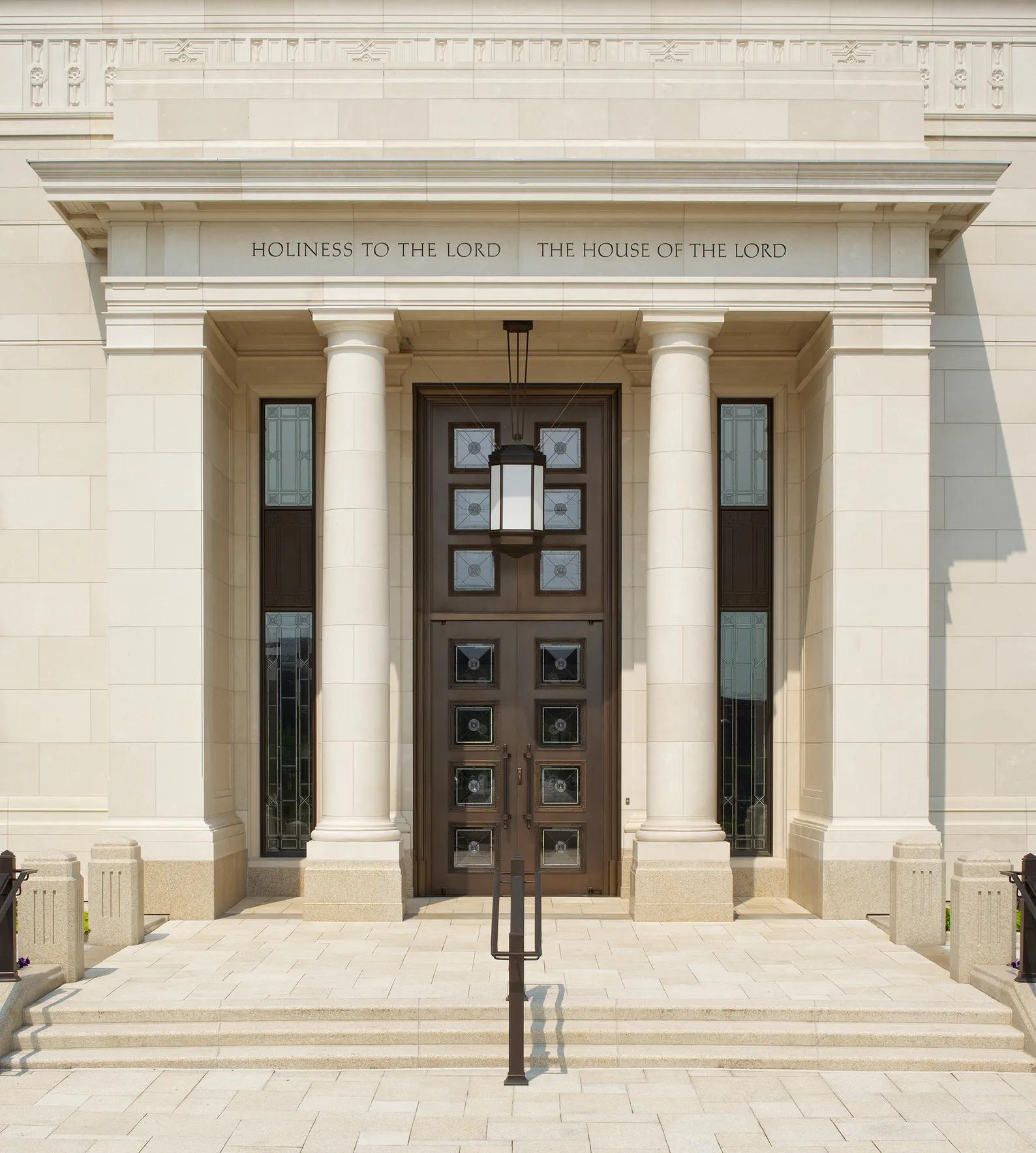
Dedication of Indianapolis Mormon Temple
Located in Carmel, the Indianapolis Temple becomes the 148th Mormon temple in operation. The temple serves Mormons in Indiana and eastern Illinois.
Pictured: Mormon Church’s Indianapolis Temple, 2015
Credit: The Church of Jesus Christ of Latter-day Saints via IndyStar.
View Source
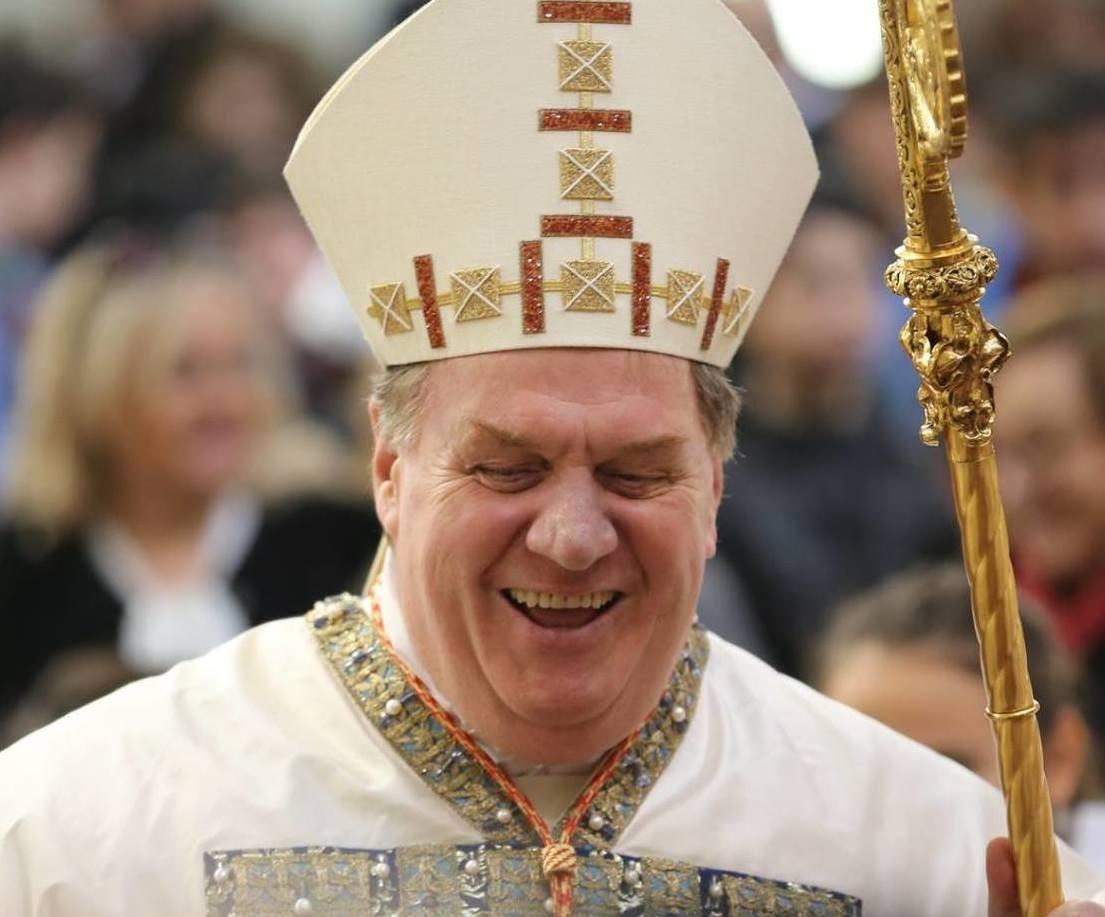
Catholic Archbishop Joseph W. Tobin welcomes Syrian refugees in opposition to Gov. Mike Pence
Although Gov. Pence halts state funding for resettlement of Syrian refugees, Tobin uses money available through Catholic Charities and resettles a Syrian refugee family in Indianapolis.
Pictured: Joseph W. Tobin, 2017
Credit: Adsderrick via Wikimedia Commons
View Source
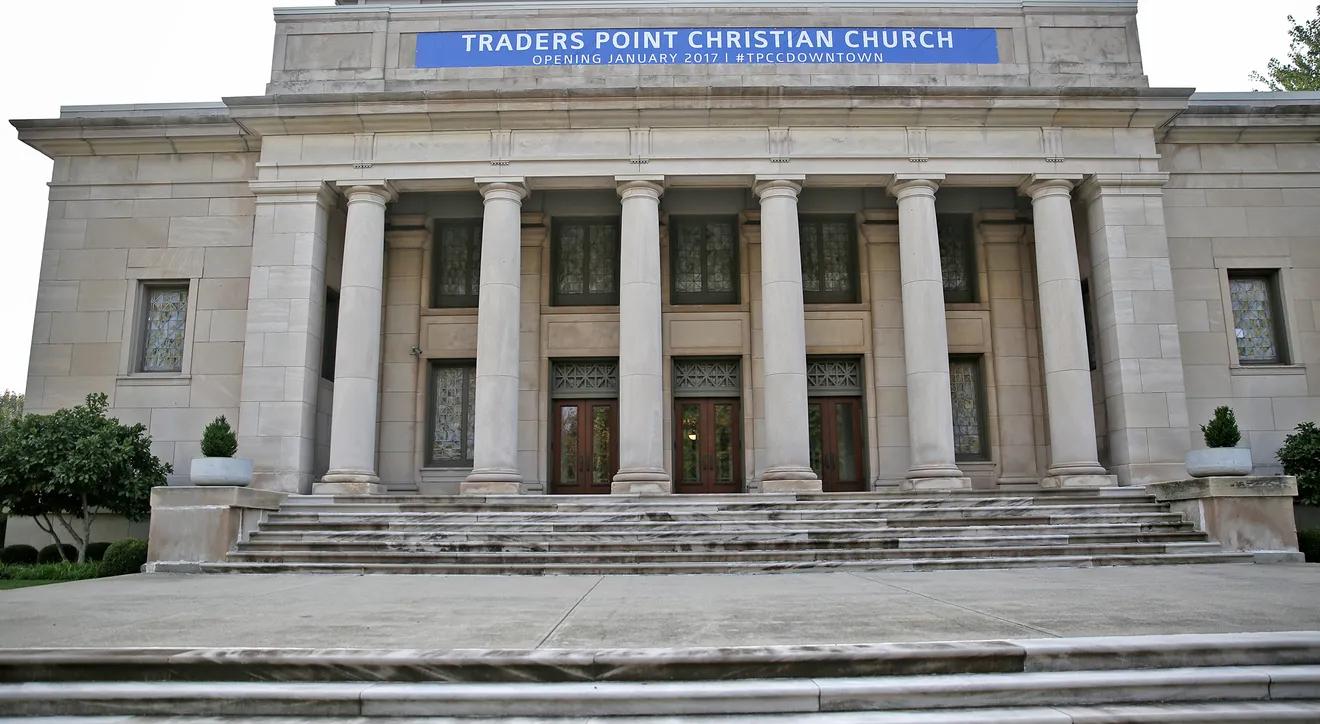
Traders Point Christian Church becomes a multi-site congregation
Traders Point Christian Church (TPCC), located in Whitestown, opens a second site in Carmel. TPCC soon establishes four more campuses. Other independent Christian megachurch congregations, including Grace Church, College Park Church, Northview Church, and Common Ground Church, also establish multiple sites.
Pictured: Traders Point Christian Church on North Delaware St., 2017
Credit: Kelly Wilkinson, IndyStar
View Source
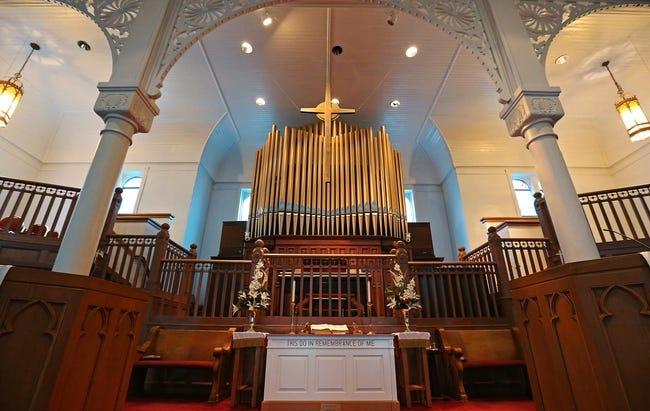
Bethel AME sells its historic building
SUN Development, a management corporation, purchases the 180-year-old church property of Bethel AME, the oldest African American religious congregation in Indianapolis. It turns the location at 414 W. Vermont Street into a hotel while preserving much of the churchs facade. Bethel moves to a new building in Pike Township.
Pictured: The sanctuary of Bethel African Methodist Episcopal Church is shown in 2016, the year it was sold.
Credit: Jenna Watson/IndyStar, Indianapolis Star via Imagn Content Services, LLC
View Source
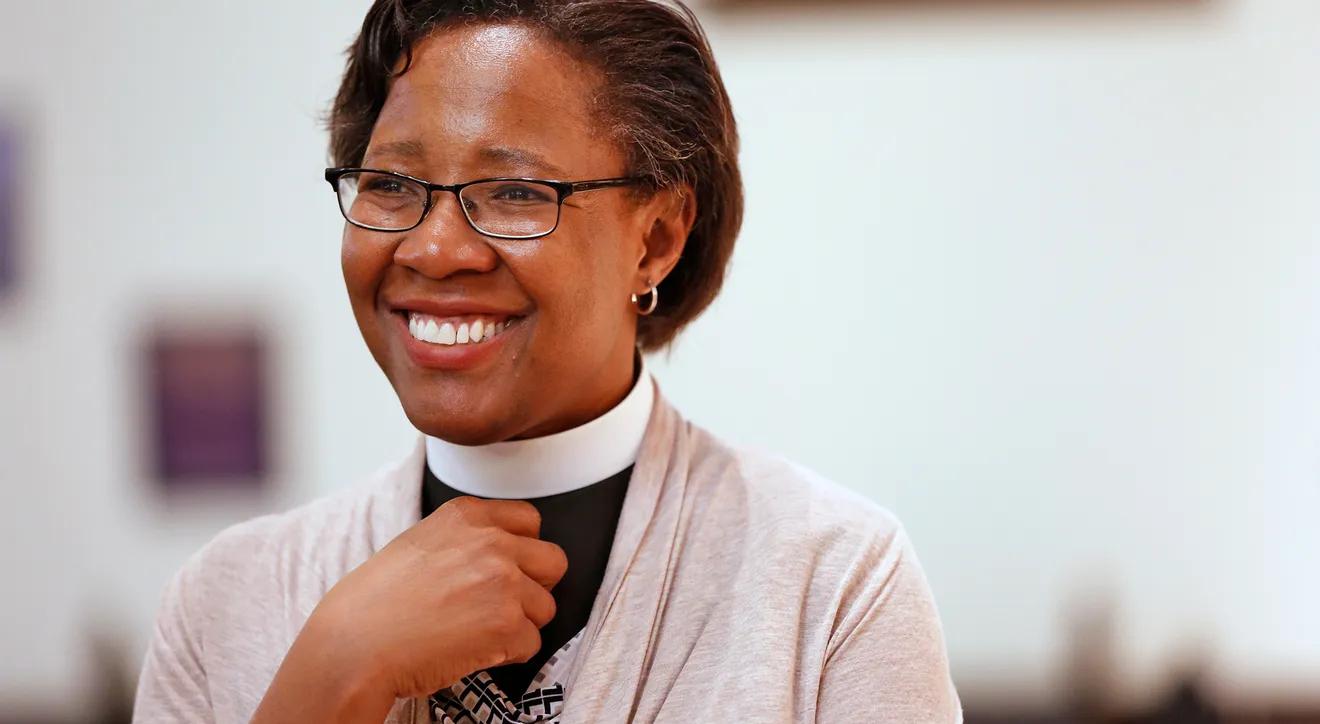
Jennifer Baskerville-Burrows first Black woman elected an Episcopal diocesan bishop
Jennifer Baskerville-Burrows is the 11th bishop diocesan of the Episcopal Diocese of Indianapolis. Prior to this appointment, she worked in various roles for the Episcopal Church throughout the country.
Pictured: Jennifer Baskerville-Burrows, 2017
Credit: Kelly Wilkinson, IndyStar
View Source
Anti-Semitic vandalism at Congregation Shaarey Tefilla
Anti-Semitic graffiti, a pair of Nazi flags and iron crosses, are discovered on a shed at the Carmel, Indiana, synagogue. The incident is part of a trend of increased anti-Semitism in the Indianapolis area.
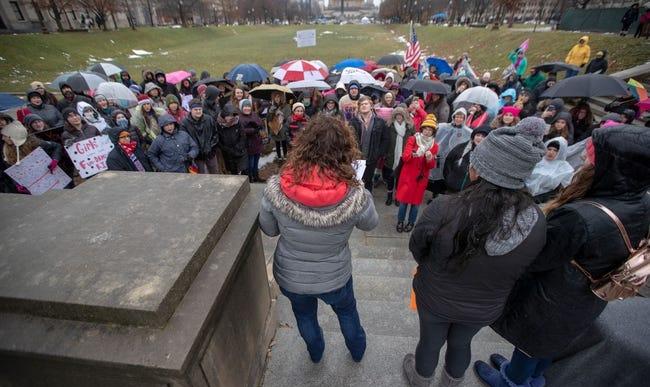
Catholic Archdiocese suspends Roncalli High counselor for same-sex marriage
Shelly Fitzgerald’s suspension from her job as a counselor at Roncalli becomes the first of three highly publicized cases involving the issue of gay marriage and religious liberty among employees of the city’s Catholic schools. In July 2022, the U.S. Seventh Circuit Court of Appeals upholds the suspension declaring that “religious groups have a constitutional right to hire individuals who believe in their faith ideals and are committed to their religious mission.”
Pictured: Shelly Fitzgerald, a Roncalli High School counsellor who had been placed on administrative leave, speaks during the Women’s March, 2019
Credit: Robert Scheer/IndyStar
View Source
Catholic Archdiocese of Indianapolis releases list of clergy involved in sex scandal
Archbishop Charles C. Thompson reveals that in Indianapolis, between 1940 and 2019, 19 priests and 4 members of religious orders had at least one credible abuse allegation against them.
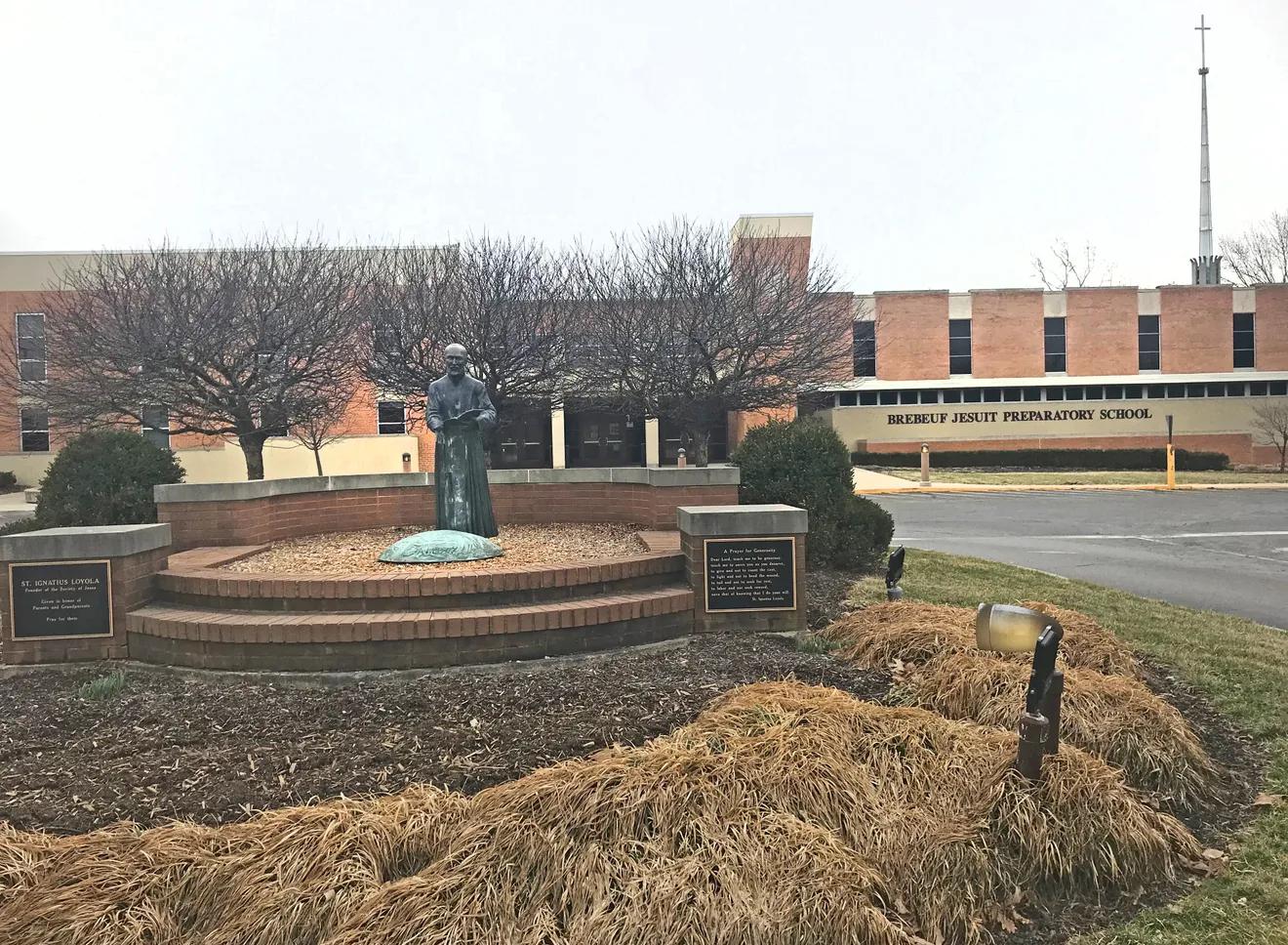
Catholic Archdiocese cuts ties with Brebeuf Jesuit Preparatory School
The Archdiocese of Indianapolis fires a gay Cathedral High School teacher and ends its relationship with Brebeuf Jesuit when the institution refuses to terminate the employment of the Cathedral teacher’s spouse.
Pictured: Brebeuf Jesuit Preparatory School, ca. 2019
Credit: Natalia Contreras/IndyStar View Source
Proposed division of United Methodists
Members of the United Methodist Church begin discussion of a denominational split as they wrestle with the idea of same-sex marriage, which contradicts existing doctrine. One proposal, called the “Indianapolis Plan,” introduces the idea of dividing United Methodist assets for the use of various new denominations.
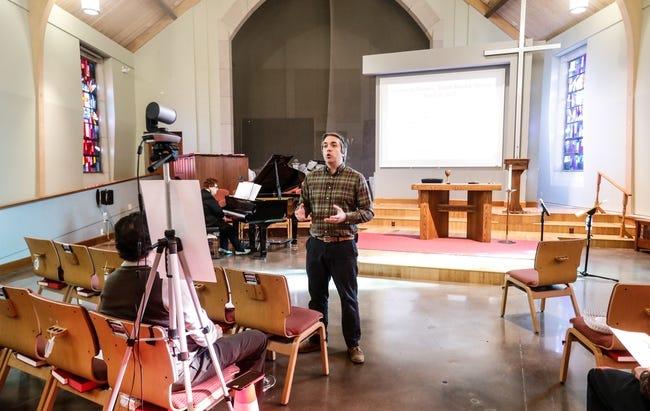
Religious worship goes virtual
With the arrival of the COVID-19 pandemic, worship services are halted. Social media platforms allow congregations to stay together and continue services virtually.
Pictured: Pastor Trey Flowers holds Sunday services online for those affected by the Coronavirus, or who have chosen to social distancing to stay safe, at Downey Avenue Christian Church, 2020
Credit: IndyStar-USA TODAY NETWORK via Imagn Content Services, LLC
View Source
First Arab Muslim elected to Indiana Senate
Indianapolis resident Fady Qaddoura is elected to represent the 30th district in the Indiana Senate, making him the first Arab Muslim lawmaker in the states history.
Pictured: Sen. Fady Qaddoura, 2022
Credit: Kelly Wilkinson/IndyStar / USA TODAY NETWORK
View Source
Religion integral to debates about passage of near-total abortion ban
Members of the Indiana General Assembly invoke Christ and the Bible when they pass a near-total abortion ban. Opponents of the ban from many differing religious backgrounds express their concern that it violates religious freedoms.
Islamic Life Center breaks ground on new facility in Carmel
The Islamic Life Center, near West 141st Street and Shelborne Road, is the citys first mosque. The Al Salam Foundation began the process to build the center in 2018. They were met with opposition from Carmel residents despite having the support of the city and religious leaders.
Pictured: People gather at a ground breaking ceremony for the Islamic Life Center, 2022
Credit: Grace Hollars/IndyStar / USA TODAY NETWORK
View Source

Help improve this entry
Contribute information, offer corrections, suggest images.
You can also recommend new entries related to this topic.