Prince Hall Freemasonry in Indianapolis is a local set of fraternal organizations (or lodges) and practices, which are part of the larger Prince Hall masonic order. The Prince Hall masonic tradition was founded as an African American branch of , which originated in England in 1717. Prince Hall members, who are referred to as Masons, ascribe to the same four core values for self- and community-improvement as their white masonic counterparts: building character, fostering brotherhood, contributing to society, and valuing people despite differences.
In Indianapolis, Prince Hall Freemasonry dates to August 1, 1849, when the city’s oldest masonic lodge for African Americans, the Prince Hall Union Lodge No. 5, received its charter from the Colored Grand Lodge of Ohio Free and Accepted Masons (CGLO F&AM). The Indianapolis lodge remained under CGLO F&AM’s jurisdiction until 1856, when an Indiana governance council, the Independent Union Grand Lodge of Indiana Free and Accepted Masons (IUGLI F&AM), was organized.
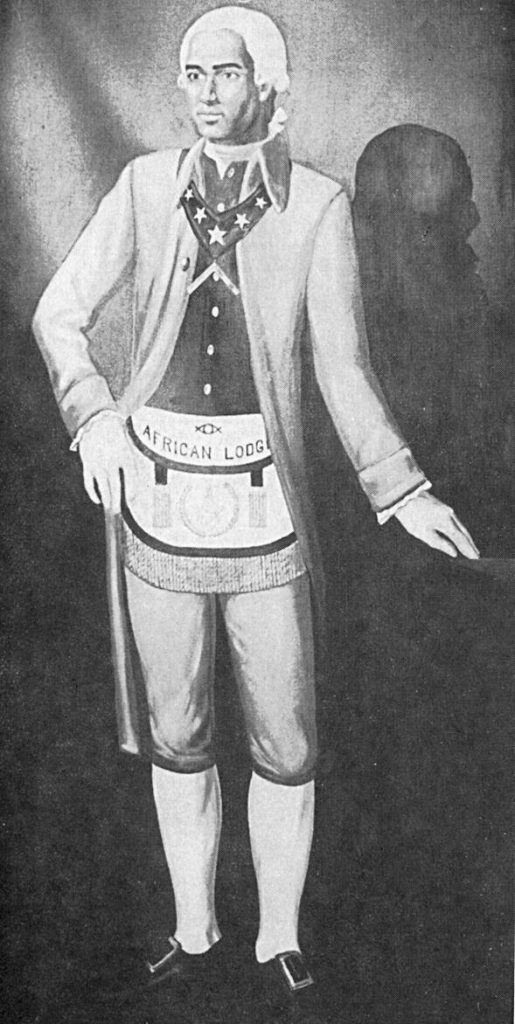
The Prince Hall Masons organization was established in Boston on March 6, 1775, by Prince Hall, a free man of color, and 14 other Black men. These men were initiated into the Continental Army’s traveling Masonic Lodge No. 441 before successfully petitioning the Grand Lodge of England for a charter to organize the first US “colored” Freemason lodge, Boston’s Prince Hall Freemason Lodge 459. The lodge expanded across the US and made its way to Indianapolis, leading in 1849 to the organization of Prince Hall Union Lodge No. 5.
By mid-1856, Ohio’s CGLO F&AM had chartered five Prince Hall lodges in Indiana under its jurisdiction, and these lodges joined the IUGLI F&AM upon its formation in September of that year. Because of this transfer, Prince Hall Union Lodge No. 5 changed to No. 1. The members of the IUGLI F&AM elected John Britton, a community leader and representative at the 1851 Indiana Constitutional Convention, as their first Grand Master. He held this role until 1859, then serving as the organization’s Grand Lecturer until the 1880s.
Hoosier African Americans used Freemasonry as a vehicle for racial uplift, a strategy for addressing racial inequality that emphasized education, economic success, cultural and moral advancement, and community building. With African Americans facing exclusion from all-white organizational life due to Jim Crow policies and practices, Freemasonry provided one of many parallel, autonomous institutions for exercising leadership, constructing communal identities, and critiquing racist practices.
On June 25, 1873, the IUGLI F&M changed its name to the Most Worshipful Independent Union Grand Lodge of Indiana (MWIUGLI). With this name change, Prince Hall Union Lodge No. 1 of Indianapolis merged with the Gleaves Lodge No. 2 of Indianapolis to become Prince Hall Central Lodge No. 1.
During the late nineteenth century, the number of Prince Hall lodges in Indiana multiplied, while coming to include affiliate groups called the Scottish Rite Masons, focused on deepening the philosophical understanding of Freemasonry, and Prince Hall Shriners, focused on promoting philanthropic causes. Despite the growth of Prince Hall Masonry and its affiliates in Indiana, the state’s governing council for white Masonic groups, the Grand Lodge for the State of Indiana Free and Accepted Masons (GLSI F&AM), in 1899 denied the legitimacy of the state’s Prince Hall Masons. Nonetheless, Indiana’s African American Masonic leaders continued their expansion, with the state recording 68 chartered Prince Hall lodges and a total membership of more than 1,000 by 1900. By 1930, Indianapolis alone had 13 Prince Hall Masonic lodges.
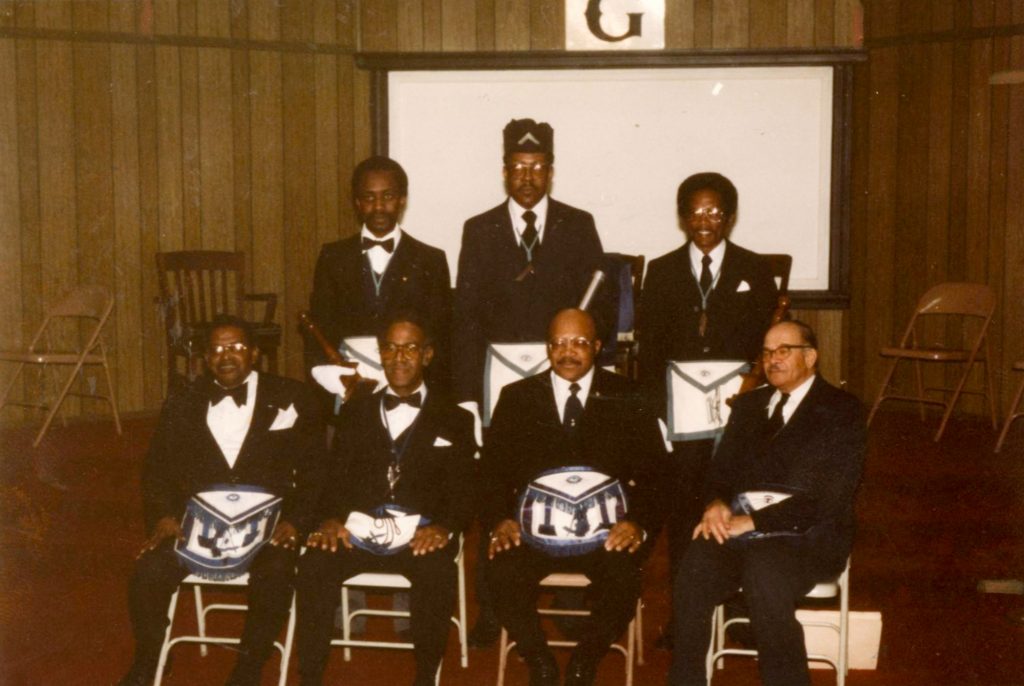
The recognition of Prince Hall Masons by their all-white counterpart Grand Lodges came about partly due to interventions by an Indianapolis Prince Hall leader, local physician . In 1946, while serving as Most Puissant Sovereign Grand Commander of the Scottish Rite of Indianapolis, Furniss persuaded the historic and all-white Grand Lodge for the State of Massachusetts to recognize the legitimacy of that state’s Prince Hall Masons. Afterward, other all-white Grand Lodges across the US slowly acknowledged the validity of Prince Hall Masons. However, in Indiana, the white GLSI F&AM leadership refused for decades to follow suit, belatedly granting recognition of the legitimacy of Prince Hall Masonic groups only in 1998.
Several Indianapolis residents have achieved wider recognition within Prince Hall Masonic circles. These figures included Furniss, who by 1898 was an active Mason. From 1921 to 1949, he held the position of Most Puissant Sovereign Grand Commander of the United Supreme Council for the Ancient and Accepted Scottish Rite of Freemasonry, and he is widely recognized as one of Prince Hall Freemasonry’s most influential participants. In 1946, Indianapolis legislator received his 33° in Masonry, one of 22 Masons throughout the nation to receive the honorary degree that year. In 1956, Indianapolis civil rights activist served on a committee to educate Indianapolis’s African American Freemasons about the order’s founder at the Prince Hall centennial celebration.
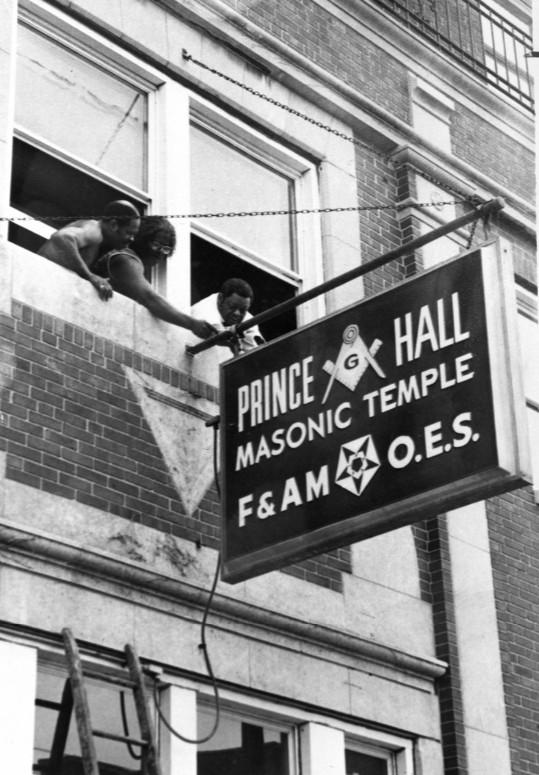
In the twenty-first century, the tradition of Freemasonry among both whites and African Americans has become more precarious. The Prince Hall Freemasons have confronted the same declining membership, maintenance issues at historic lodges, and financial pressures as faced by historically white Freemason groups. Though the Prince Hall Masons of Indianapolis have owned the Indianapolis Prince Hall Masonic Temple at 22nd Street and Central Avenue since 1983, the building is used predominantly for storage rather than for fellowship activities. The members, dispersed throughout the city, began efforts in 2024 to save the historic structure. The twenty-four existing lodges in Indiana, ten of which are in Indianapolis, celebrate their 170th anniversary in 2026.
FURTHER READING
- Prince Hall Grand Lodge of Indiana. “About Us.” Accessed April 17, 2026. https://mwphglin.org/about-us/.
CITE THIS ENTRY
APA:
Phillips, Easton & Verderame, J. A. (2026). Prince Hall Freemasonry in Indianapolis. Encyclopedia of Indianapolis. Retrieved Oct 24, 2026, from https://indyencyclopedia.org/prince-hall-freemasonry.
MLA:
Phillips, Easton and Jyoti A. Verderame. “Prince Hall Freemasonry in Indianapolis.” Encyclopedia of Indianapolis, 2026, https://indyencyclopedia.org/prince-hall-freemasonry. Accessed 24 Oct 2026.
Chicago:
Phillips, Easton and Jyoti A. Verderame. “Prince Hall Freemasonry in Indianapolis.” Encyclopedia of Indianapolis, 2026. Accessed Oct 24, 2026. https://indyencyclopedia.org/prince-hall-freemasonry.

Help improve this entry
Contribute information, offer corrections, suggest images.
You can also recommend new entries related to this topic.