Photo info ...
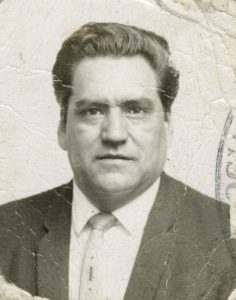
Feliciano “Félix” Espinoza was a merchant and civic leader in Indianapolis. In 1960, he opened what was possibly the city’s first Mexican grocery store, El Nopal Mexican Market. His political activism helped marshal the local Latino community’s support for Indianapolis mayoral candidate in 1967. Later, in 1969, he and other area Latinos organized the Hispano-American Association with the help of Mayor Lugar and his staff. Espinoza remained civically active throughout his life, co-founding the Hispano-American Multiservice Center in 1971 and hosting a Spanish-language radio show, La Voz Latina, on WIAN-FM from 1974 to 1989.
Born in Pharr, Texas, on October 20, 1927, Espinoza met and married Maria Balli there in 1950. Espinoza came to Indianapolis in 1951 after hearing about job opportunities with the . He expected to stay only six months before returning to Texas; however, Espinoza remained and sent for his wife and daughter to join him in Indianapolis. After living initially on Indianapolis’s west side, the family eventually took residence in an apartment at Market and Pine streets on the city’s near east side, in a neighborhood known as . Later, Espinoza and his wife purchased a house on East North Street, still in El Barrio, where they raised eight children.
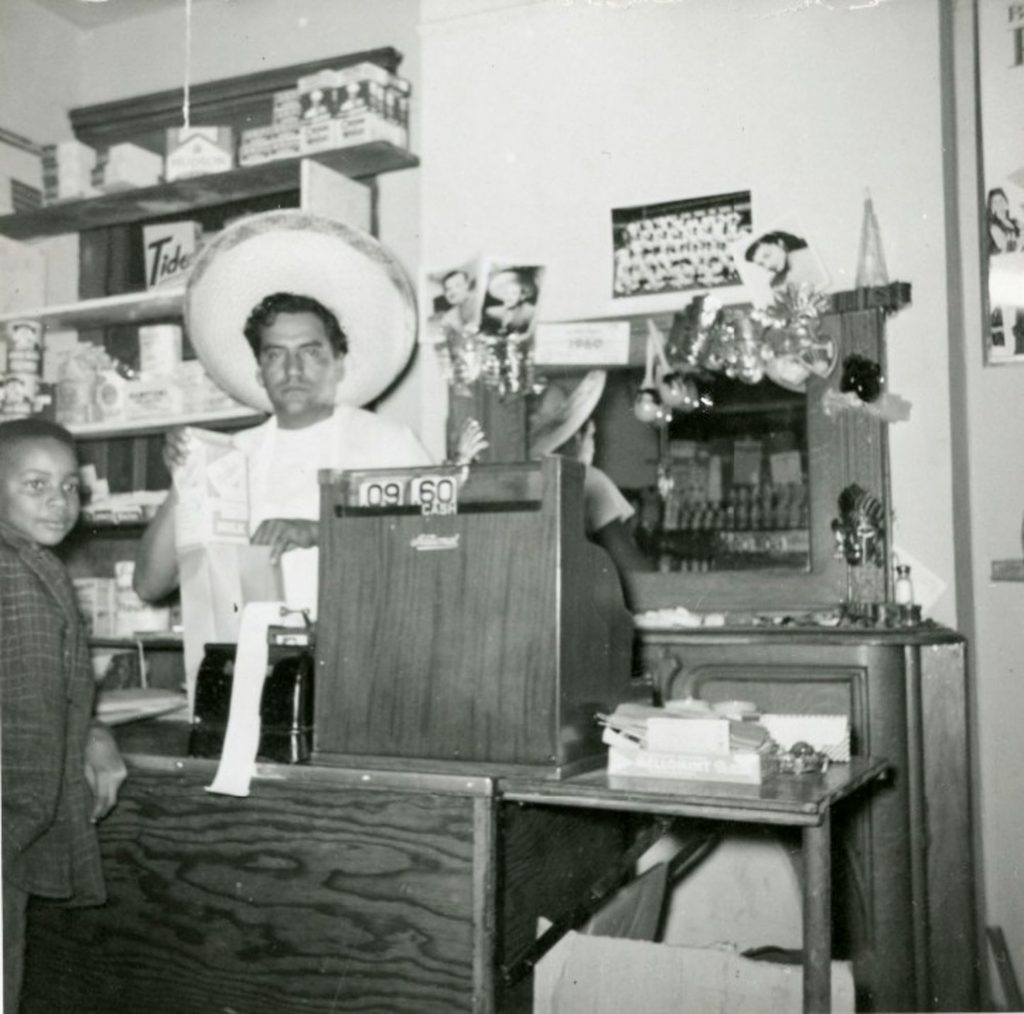
The mid-twentieth century uptick in Indianapolis’s Latino population spurred Espinoza’s civic involvement and entrepreneurship. He served as the first secretary of the Club Social Mexicano, established in 1958 to serve the needs of Indianapolis’s growing Mexican and Mexican American community.
He and his wife also opened El Nopal Mexican Market out of their home in 1960. Espinoza’s wife oversaw daily operations, while Espinoza prepared baked goods and constructed piñatas to sell. He also traveled to migrant farmworker communities in Elwood and Marion, Indiana, selling Spanish-language records, tortillas, and produce. In 1969, the City of Indianapolis used eminent domain to force the residents of El Barrio and other areas of the city out of their homes to make way for new highway construction projects. Espinoza relocated his grocery store to for a brief period.
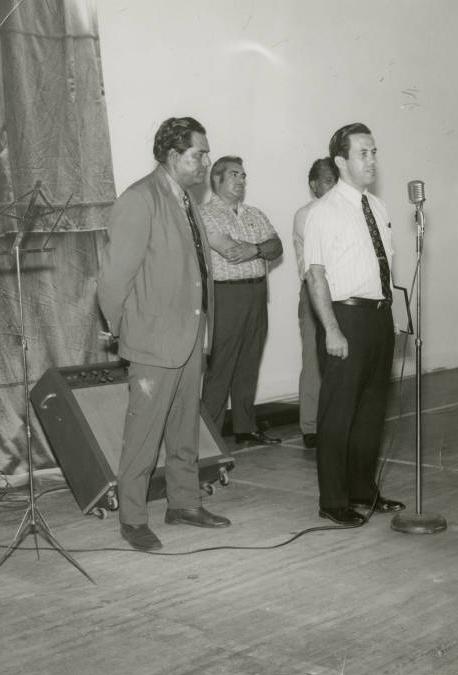
Alongside his entrepreneurship, Espinoza became politically active locally. Through his retail work, Espinoza had become a well-known figure in the Latino community. He used his influence to encourage the city’s Latino constituents to vote for Indianapolis mayoral candidate Richard Lugar in 1967. Espinoza campaigned locally in 1968 for US presidential candidate Richard Nixon, resulting in his and his wife’s attendance at Nixon’s first inauguration.
In 1969, Espinoza, Fred Bowman, Tony Dominguez, and Tulio Guldner organized the Hispano-American Association in Indianapolis. Two years later, Espinoza and Guldner worked with Mayor Lugar’s administration and several local churches to establish the Hispano-American Multi-Service Center located in the Police Athletic League building, formerly home to the defunct St. Joseph Church. The Association used this venue to provide essential services to the Latino community such as a daycare, English language classes, health care, immigration counseling, and job assistance. After a 1991 name change to , the institution merged with several other Latino service organizations to form in 2004. The merged organization remains Central Indiana’s oldest and largest nonprofit entity dedicated to serving Latino community members.
In 1974, Espinoza co-founded and hosted the state’s first Spanish language radio show, called La Voz Latina. The program aired for fifteen years on the WIAN public radio station, which later became . Espinoza continued working for Conrail (formerly the Pennsylvania Railroad) until his retirement in 1988. Afterward, Espinoza briefly served on Indiana governor Frank O’Bannon’s first Commission of Latino Affairs in 2000, as a community liaison. Espinoza died in Indianapolis on February 18, 2007.
In 2023, a local mural, featuring Espinoza’s image along with those of forty-two other Hoosiers with significant roles in Indianapolis history, was unveiled to the public. Painted by Chicago-based artist Anna Murphy, the Bicentennial Unity Plaza Mural, officially called LEGENDARY, affirms Espinoza’s civic impact both within and beyond Indianapolis’s Latino community.
FURTHER READING
- Quigley, Barbara. “Feliciano and Maria Espinoza Family Collection 1927, CA. 1950S–1976, 2019.” Collection Guide. Indiana Historical Society, 2023. https://indianahistory.org/wp-content/uploads/feliciano-and-maria-espinoza-family-collection.pdf.
CITE THIS ENTRY
APA:
Martinez-Legrand, N. (2026). Feliciano “Félix” Espinoza. Encyclopedia of Indianapolis. Retrieved Oct 14, 2026, from https://indyencyclopedia.org/felix-espinoza/.
MLA:
Martinez-Legrand, Nicole. “Feliciano “Félix” Espinoza.” Encyclopedia of Indianapolis, 2026, https://indyencyclopedia.org/felix-espinoza/. Accessed 14 Oct 2026.
Chicago:
Martinez-Legrand, Nicole. “Feliciano “Félix” Espinoza.” Encyclopedia of Indianapolis, 2026. Accessed Oct 14, 2026. https://indyencyclopedia.org/felix-espinoza/.

Help improve this entry
Contribute information, offer corrections, suggest images.
You can also recommend new entries related to this topic.