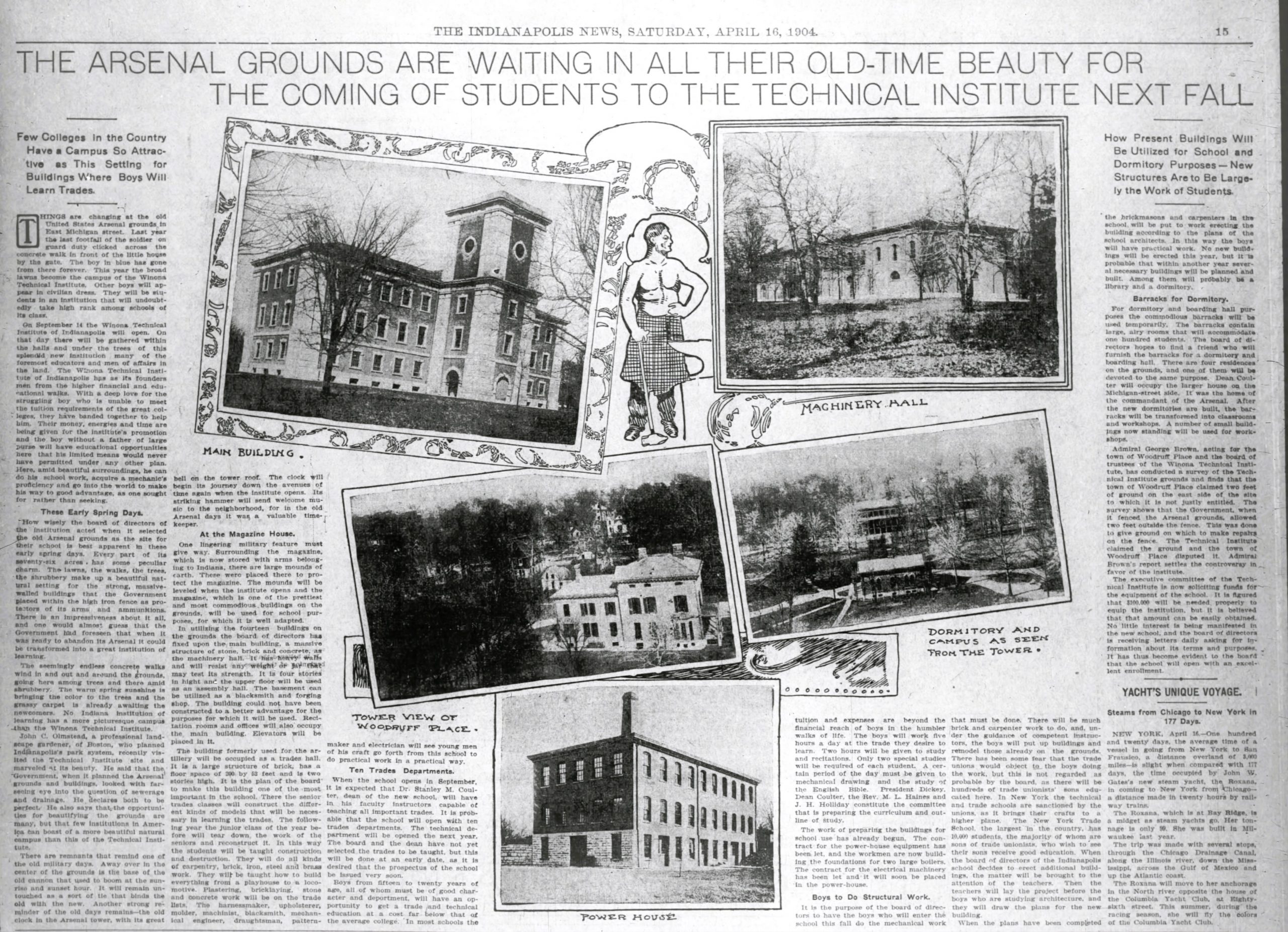
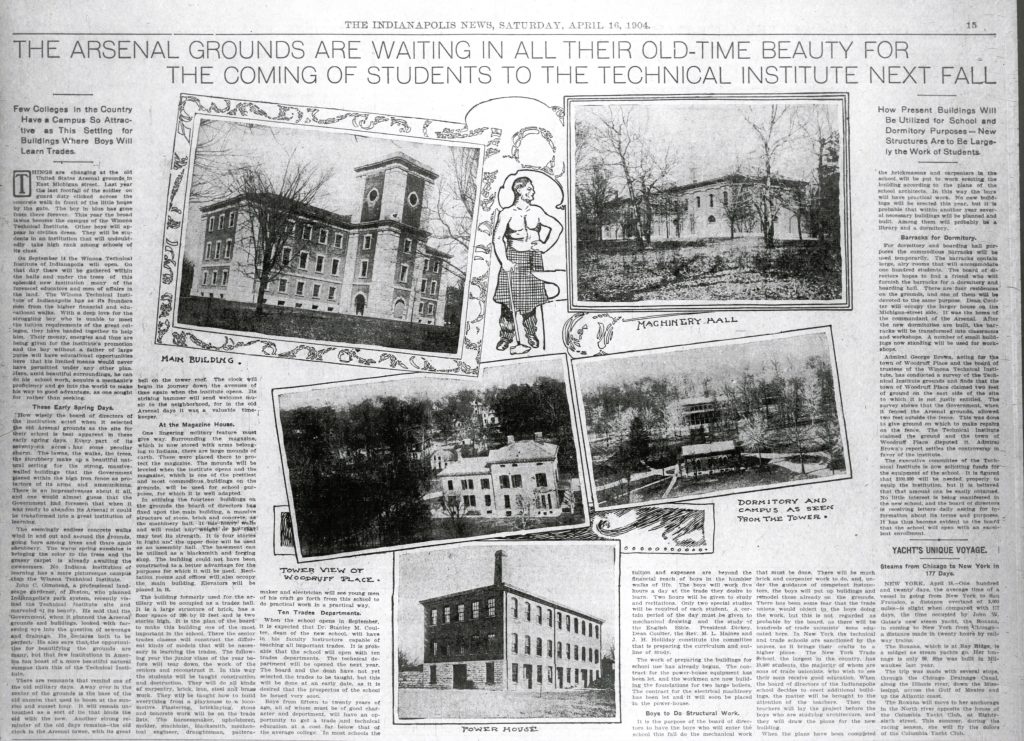
The Winona Technical Institute was a short-lived trade school, established in 1904 on the grounds of the former –era at Indianapolis. Its aim was to provide education in the trades to male students from 15 to 20 years old.
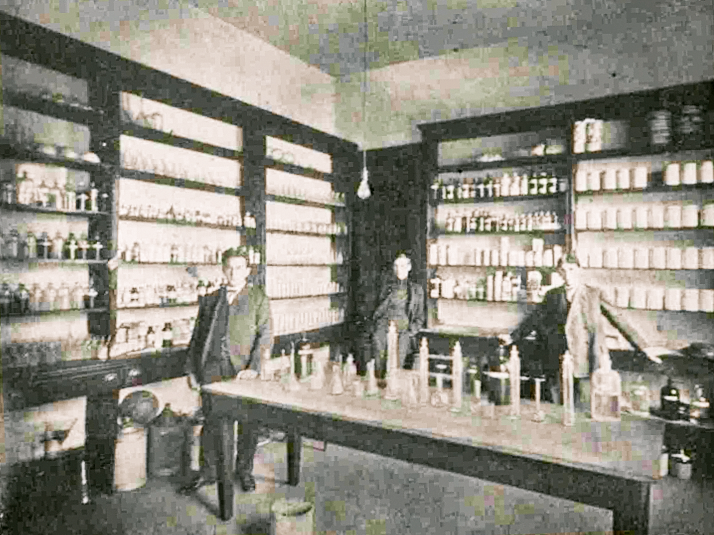
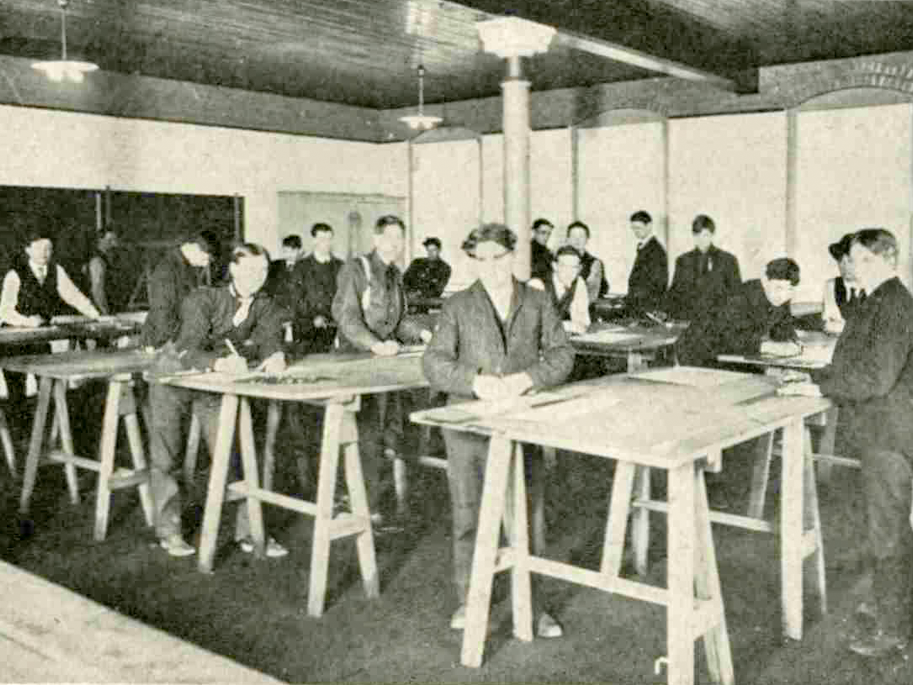
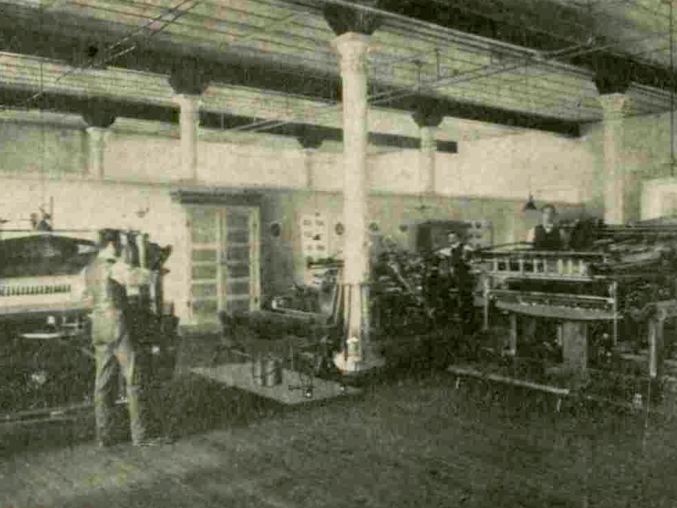
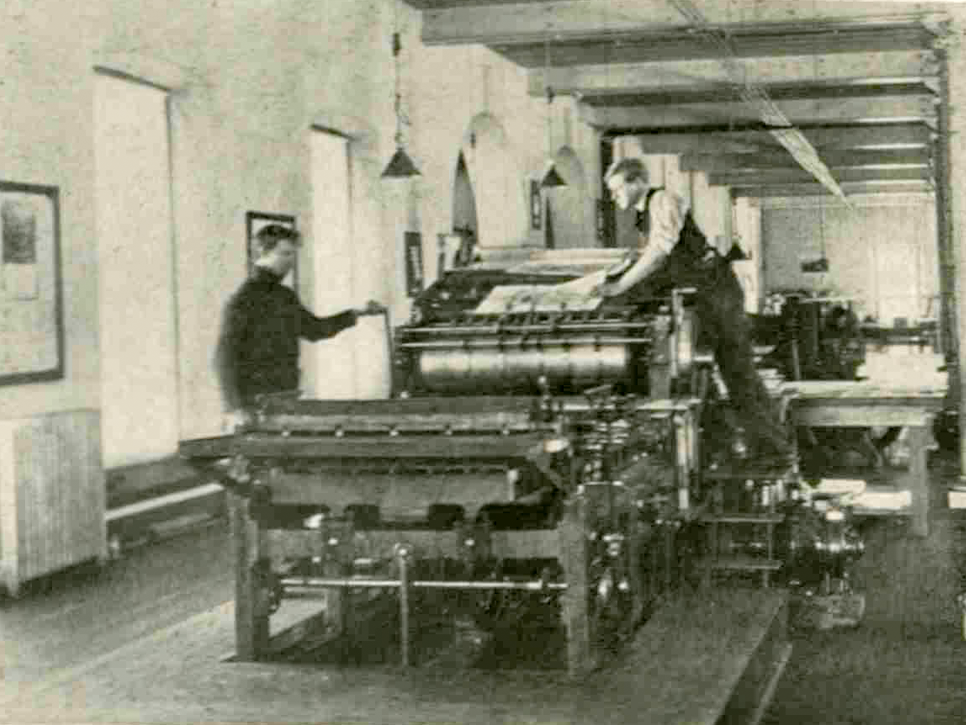
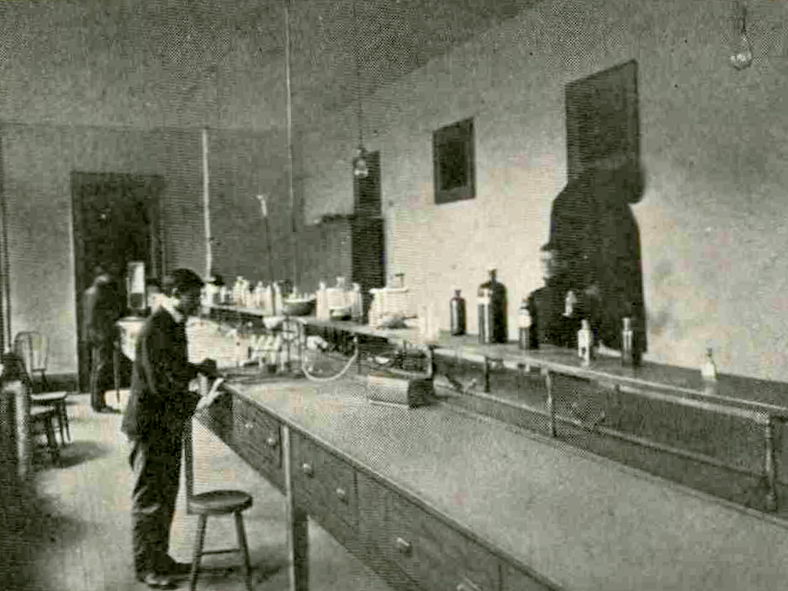
During its existence, the Winona Technical Institute offered programs in pharmacy, librarianship, chemistry, electrical work, lithography, house and sign painting, carpentry, tile setting, bricklaying, machinery, applied science, and foundry operation. In its first year, 483 students enrolled, with 197 graduating from six programs of study within the first two years. Though the Institute educated teenage boys in manual trades that business and labor leaders deemed necessary for continued state and national economic growth, the rapid increase of competing trade programs and a lack of financial stability contributed to the school’s dissolution in 1912.
The idea behind the school originated from the Chautauqua Movement, which began as a summer training program for Sunday School teachers at Chautauqua Lake, New York, in 1874. It expanded to bring culture and education to communities through lectures, concerts, and theater. Indianapolis businessman Sol C. Dickey brought the movement to Indiana in 1895, adding Bible studies and calling it the Winona Chautauqua Movement. Dickey established the Winona Assembly, a conference center for Bible conferences at Winona Lake, Indiana. Alongside prominent figures including H. J. Heinz, John Studebaker, and J. Wilbur Chapman, Dickey also established the Winona University College at Winona Lake. The founders were animated by a conviction that all boys deserved the right to learn a trade in a school setting, since the old apprenticeship-style route toward skill acquisition was on the decline in the US, and not all boys had the prowess or desire to attend university for academic learning. At this school, young male students would receive lessons in morality and industry along with technical skills, per the Chautauqua Movement educational model.
The Winona University School included five programs of study: a normal (or teacher-training) school, a girls’ school, a boys’ school, a music school, and the Winona Agriculture and Technical Institute. Its success motivated Dickey to expand to Indianapolis. From 1902 to 1903, he promoted a scheme to bring a technical arm of Winona University College to the grounds of the US Arsenal in Indianapolis. This site was owned by the Indianapolis Public Trust, which aimed to sell it, but only for use as a school or park. Trustees of the Winona Agricultural and Technical School program of the Winona University School entered an agreement on March 27, 1903, to purchase the Arsenal grounds for $154,000, issuing a check for $15,400 as a down payment. The trustees would receive the property deed as soon as the remainder of the purchase price was paid. According to the agreement, the trustees would then hold the deed for the subscribers to the Institute fund until the Boards of Directors of the Winona Assembly and the Technical Institute fulfilled their promises to establish, maintain, and endow a national technical institute on the property. The deed would then transfer to the Institute.
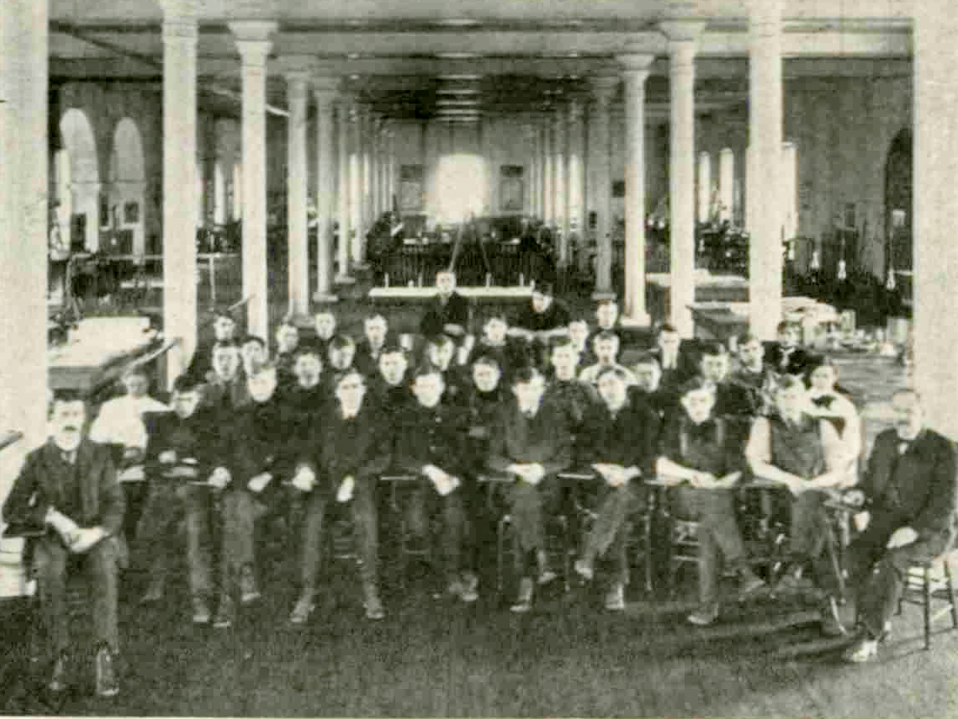
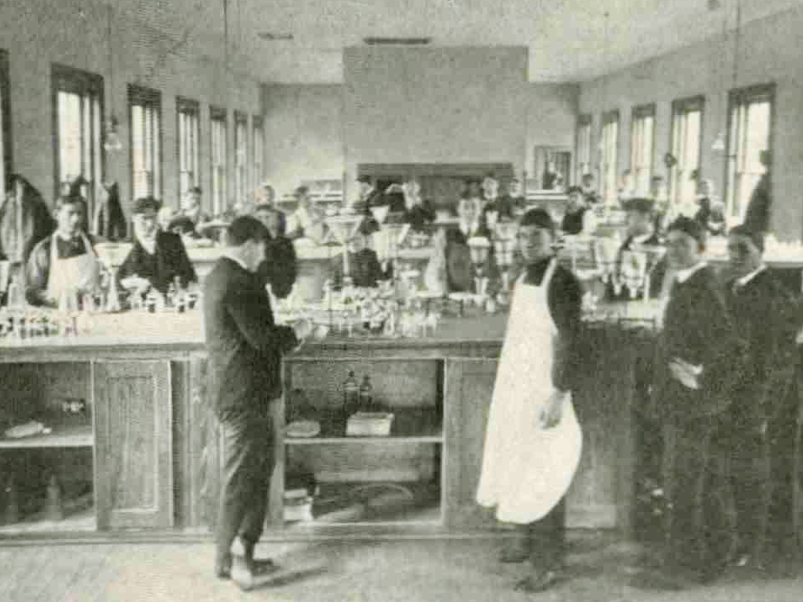
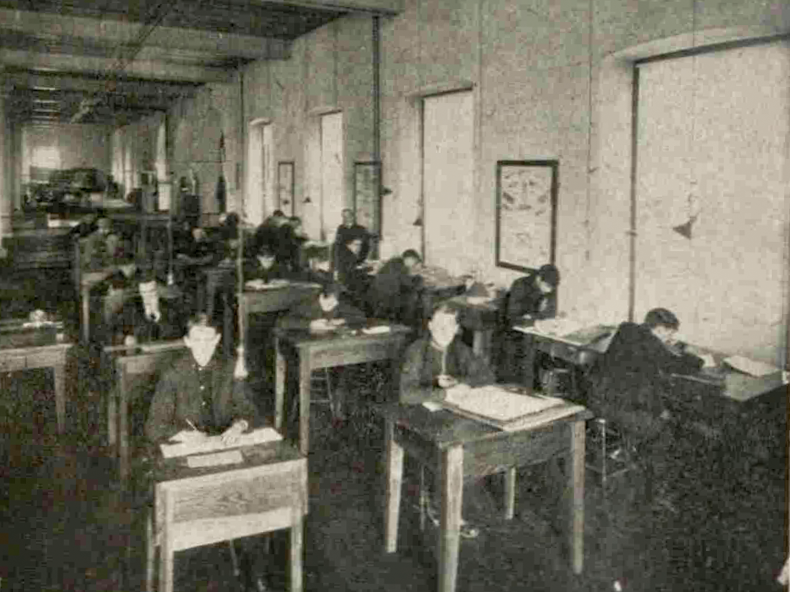
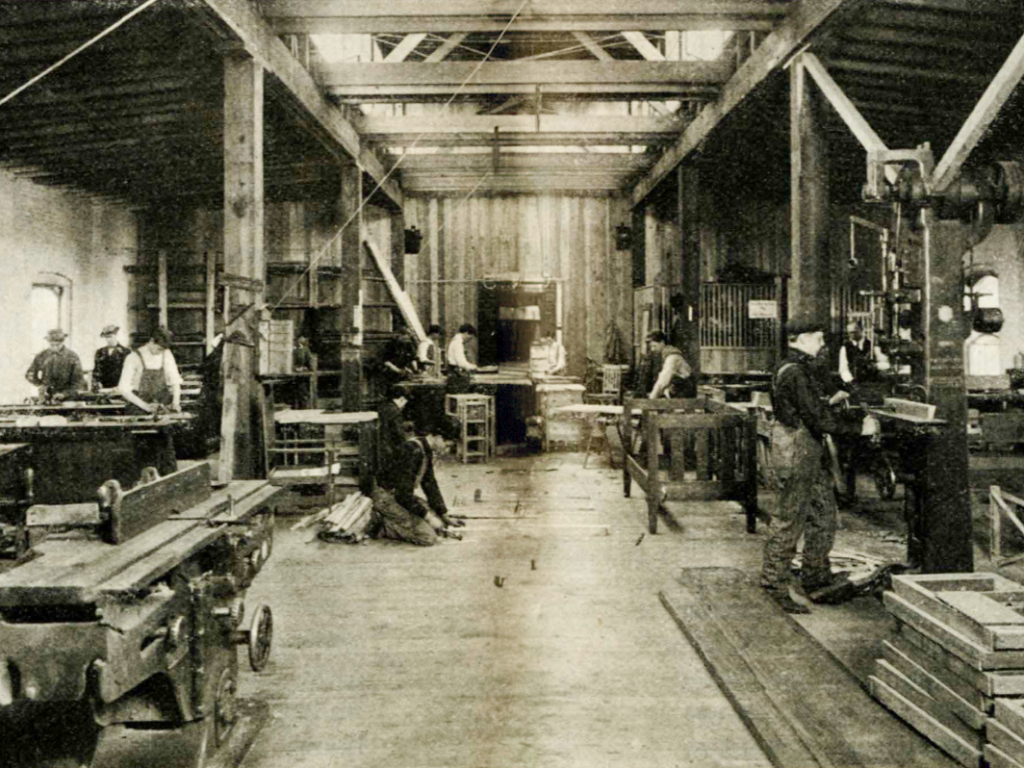
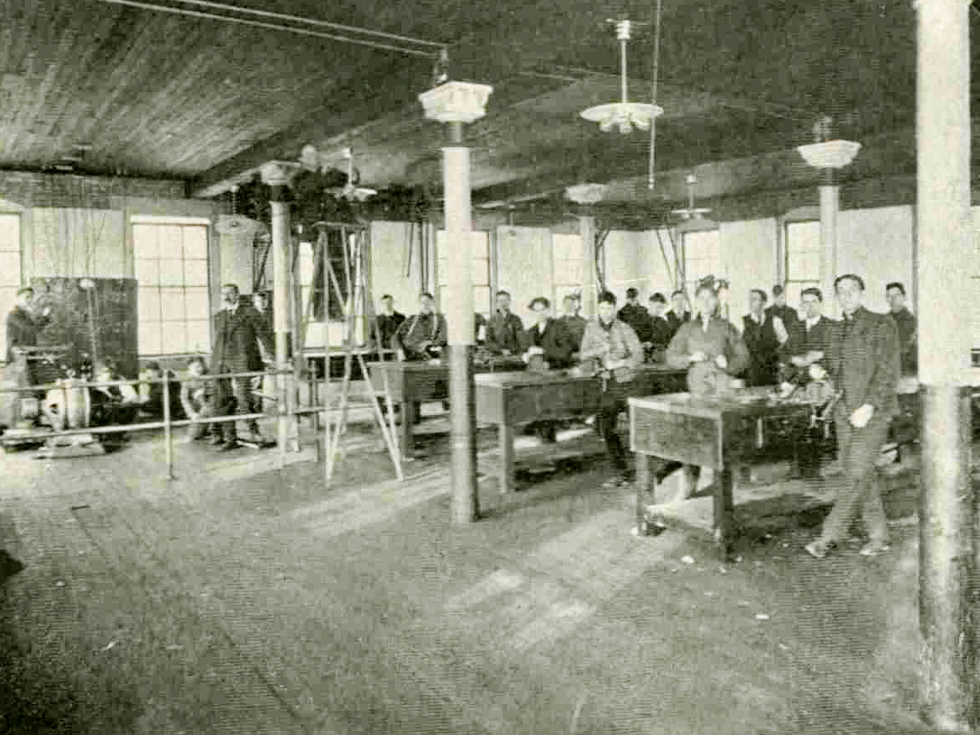
Five Indianapolis businessmen served as the Executive Committee of a 47-member Board of Directors for the Winona Technical Institute at Indianapolis. The board members raised the remaining $138,600 from more than 6,000 individual subscribers to complete the purchase of the Arsenal property and to support the new Winona Technical Institute at Indianapolis. Dickey was installed as president of the school, which opened its first nine-month term on September 21, 1904.
Early enrollment successes at the Winona Technical Institute encouraged its leaders to coordinate with national trade organizations to develop new trade-program offerings. In 1904, Indianapolis businessman encouraged the National Printer’s Association to initiate a printing trade program at the school. In 1909, a training school for hotel employees opened at the Institute, becoming the first of its kind in the US. Common outside the US but rare domestically, training programs in hotel-related trades experienced increased demand with the era’s growth of superior-quality hotels in the US, allowing the Winona Technical Institute to convince the International Stewards Association to locate its training school at the Institute.
Despite the Institute’s expanding program offerings, Dickey resigned as president in January 1910 after the Board of Directors had still not raised funds for an endowment. Soon, the Indianapolis Public Trust conducted an investigation into the school’s finances and discovered the Institute’s insolvency. Disclosure of this fact spurred five separate groups to file suit against the school: the five-member Executive Committee holding the deed to the school, former Indianapolis mayor and Winona booster Charles A. Bookwalter, Addison Harris as representative of small donors, seven donors who had given significant sums to the school, and the creditors of the Institute. The first three litigants wanted the property to stay intact as a school, operated either by Winona or the city of Indianapolis. The last two litigants wanted the property sold to pay off debts and creditors.
In 1911, the Institute fell to the receivership of Bookwalter on the grounds that the school was unable to pay the salaries of the instructors. Bookwalter devised a plan to save the property for the city of Indianapolis. He worked out an agreement with all creditors to accept 80 percent of the debts owed to them. The debts of the school would be paid through a special bond. The city would hold the mortgage to the property and establish a new school there, named the National Trade Schools and Technical Institute of Indianapolis
In January 1912, the Indiana Supreme Court turned the Winona property over to the city for use as a school. That month, the city’s Board of School Commissioners took over the Winona site, buildings, and equipment.
In 1916, after years of litigation, the (IPS) received the title to the site, though the IPS had already been leasing it and operating the National Trade Schools and Technical Institute of Indianapolis since 1912.
Upon dissolution of the Institute, the pharmacy program went to Butler University, and the library program went to Indiana University. An editorial in the November 11, 1916, Indianapolis News suggested renaming the new school as . By fall of 1917, the suggested name had been adopted. As of 2025, Arsenal Technical High School still used the old Arsenal buildings as classrooms and continued to operate some of the Winona Technical Institute programs.
FURTHER READING
- Lorentz, Lisa. “Friday Favorite: Winona Technical Institute.” Historic Indianapolis, June 6, 2014. https://historicindianapolis.com/friday-favorites-winona-technical-institute/.
CITE THIS ENTRY
APA:
Verderame, J. A. (2025). Winona Technical Institute. Encyclopedia of Indianapolis. Retrieved Mar 27, 2026, from https://indyencyclopedia.org/winona-technical-institute/.
MLA:
Verderame, Jyoti A. “Winona Technical Institute.” Encyclopedia of Indianapolis, 2025, https://indyencyclopedia.org/winona-technical-institute/. Accessed 27 Mar 2026.
Chicago:
Verderame, Jyoti A. “Winona Technical Institute.” Encyclopedia of Indianapolis, 2025. Accessed Mar 27, 2026. https://indyencyclopedia.org/winona-technical-institute/.

Help improve this entry
Contribute information, offer corrections, suggest images.
You can also recommend new entries related to this topic.