The Meals on Wheels of Central Indiana (MOW) program is a medically tailored home-delivery food program serving residents of Marion County and parts of Boone, Hamilton, Johnson, and Morgan counties who are homebound due to age, disability, or chronic illness. While once geared specifically toward senior citizens, the Central Indiana program has more recently broadened its mission to support the health and well-being of a greater range of individuals who are homebound or in recovery residences, regardless of age.

In Indianapolis, the first food delivery program was developed in 1964 as a service of the . Concerned about cancer patients who either lived alone, did not have cooking facilities, or had to wait until someone came with food at the end of the day, “the agency adopted the meals-on-wheels project” modeled on a World War II–era program from Britain. During the London Blitz from 1940–1941, the Women’s Volunteer Service for Civil Defence had begun a meals-on-wheels initiative, serving food to the ill and elderly who were unable to care for themselves. In Indianapolis, Little Red Door volunteers delivered to cancer patients food that had been prepared in the food kitchen at Indiana University Medical Center. The program was discontinued in the late 1960s due to the expense and a lack of clients.
By the time the Little Red Door halted its MOW program, the (NCJW) had successfully managed MOW programs for the Jewish community in several US cities. In 1968, the Indianapolis Section of the NCJW was chosen by the national organization to conduct a feasibility study for a home-delivered food program for Indianapolis’s Jewish community. Volunteers delivered kosher meals, prepared at the Bornstein Home for the Aged, to recipients who faced difficulties in cooking for themselves. The success of the pilot program led to citywide implementation of the project, with funding from the Commission on Aged and Aging and a grant from the .
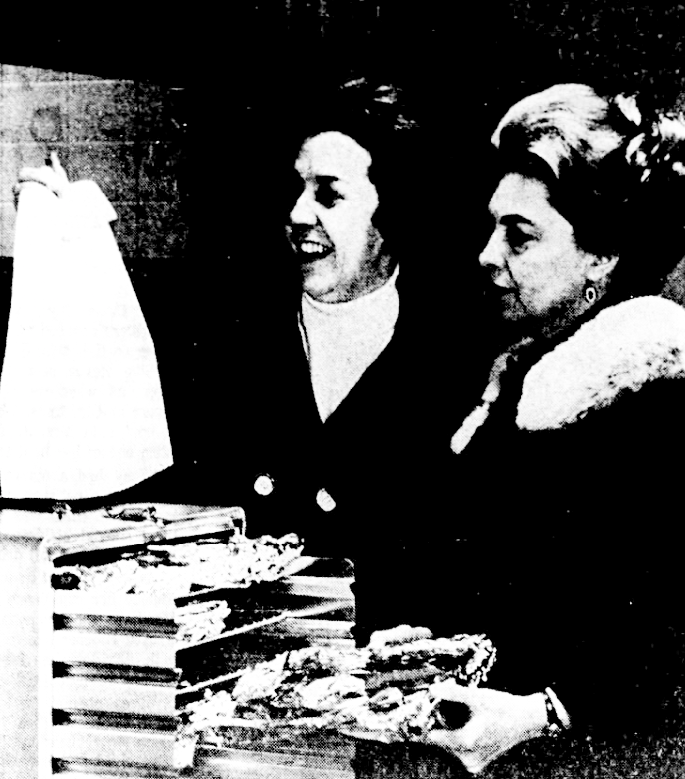
The expanded Indianapolis program, now called Meals on Wheels Inc., began in March 1971. Dorotha Baxter served as the first executive director, and Marge L. Jacobs served as the first president of the board of directors and chair of the Meals on Wheels program. (Jacobs would remain honorary chair until her death in 1997.) With co-sponsor Technical and Managerial Services (TAMS), set up in 1969 by executives of companies seeking to address community problems, members of the NCJW helped program volunteers to extend MOW service beyond the Jewish community to include “the elderly and those unable to do their own cooking” across the city. Meal delivery first spread to Indianapolis’s south side, where 10 volunteers served meals, prepared at University Heights Hospital, to six people. By 1972, approximately 275 volunteers were delivering meals, now prepared by the Americana Nursing Home dietetic staff, University Heights Hospital, and Methodist Hospital, across Marion County. The program’s early growth relied on steady volunteer recruitment through churches, the Marion County Medical Society Auxiliary, and word of mouth.
In 1971, Meals on Wheels Inc. established its headquarters in a leased office space at 3620 Washington Boulevard. Meals on Wheels Inc. changed its name to Meals on Wheels of Central Indiana (MOWCI) in 2006. The new name reflected the organization’s decision to participate in food delivery services beyond the boundaries of Marion County and into adjacent rural areas. The organization remained in its Washington Boulevard headquarters until 2012, when it purchased a 20,000 square foot building in the historic neighborhood. The organization also began to rent out the facility as an event center to supplement its programming revenue.
The one millionth meal was delivered April 19, 1983. First Lady of Indiana Judy O’Bannon delivered the four millionth meal on July 28, 1999, and Indiana Governor Mitch Daniels delivered the six millionth meal in 2009.
During the 21st century, MOWCI continued to broaden its definition of meal-eligible recipients. In 2016, MOWCI joined the Food is Medicine Coalition (FIMC), a national volunteer service and advocacy association that started in the 1980s for people battling HIV and AIDS. In 2017, the Indiana State Department of Health (ISDH) asked MOW to design a medical nutrition program for Indiana residents living with HIV. Naming the program Ryan’s Meals for Life, in honor of , who lost his battle with AIDS in 1990, MOWCI began providing medically tailored meals to eligible individuals living with HIV in Indiana. MOW also partnered with on the Embrace Cancer program, which provides medically tailored meals and shelf-stable pantry boxes at no cost to low-income cancer patients undergoing treatment at Eskenazi Health.
Likewise, the MOWCI NO Limits to Recovery program began in 2024 for people living with substance abuse disorders during their first 90 days of recovery. This initiative supplied nourishing, medically tailored meals, pantry items, and cooking classes to enhance the long-term wellness of eligible individuals entering recovery residences.
FURTHER READING
- “History.” Meals on Wheels of Central Indiana, n.d. https://mealsonwheelsindy.org/home/about/history/.
CITE THIS ENTRY
APA:
Sassore, R. & Renshaw, B. (2025). Meals on Wheels of Central Indiana. Encyclopedia of Indianapolis. Retrieved Mar 25, 2026, from https://indyencyclopedia.org/meals-on-wheels-central-indiana/.
MLA:
Sassore, Randy and Barb Renshaw. “Meals on Wheels of Central Indiana.” Encyclopedia of Indianapolis, 2025, https://indyencyclopedia.org/meals-on-wheels-central-indiana/. Accessed 25 Mar 2026.
Chicago:
Sassore, Randy and Barb Renshaw. “Meals on Wheels of Central Indiana.” Encyclopedia of Indianapolis, 2025. Accessed Mar 25, 2026. https://indyencyclopedia.org/meals-on-wheels-central-indiana/.

Help improve this entry
Contribute information, offer corrections, suggest images.
You can also recommend new entries related to this topic.