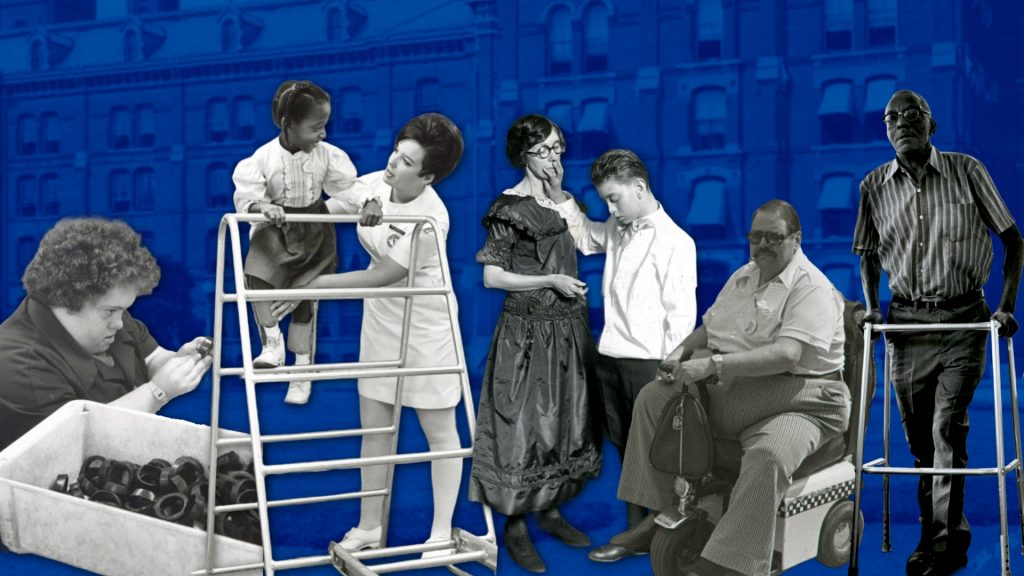
From Asylums to Advocacy:
The Evolution of Disability in Indianapolis
Courtney Wallace & Norma Erickson | 2026
Introduction
Over the past two centuries, the experiences of people with disabilities have transformed radically. Indianapolis’s history with disability shows neglect and exclusion but also community action and self-advocacy. While this history has been shaped by national policies and movements, it is also unique to this city. Local institutions, organizations, and leaders have played an important role in deciding who had access to education, healthcare, employment, and public life.
A wide range of groups in Indianapolis have been part of this history, including medical professionals, policymakers, families—and, of course, people with disabilities themselves. Each contributed to how services developed and were provided, as well as who had the power to make decisions. The history of disability in Indianapolis includes both the institutions that shaped the lives of people with disabilities and the people and communities who challenged those institutions and advocated for change. Together, these stories show the city’s successes and failures—and the work yet to be done—in making Indianapolis more inclusive and accessible for everyone.
What do we mean by disability?
What is considered a disability is not only defined by a person’s physical, cognitive, or sensory conditions. It is also shaped by how society responds to and accommodates access needs, who is included or excluded from social opportunities and structures, and what meanings are attached to specific conditions. This view of disability as a social construct has shaped both the experiences of Indianapolis disability communities and how those communities have been understood over time
Institutional Control
Institutionalization and Early Systems (1840s–1940s)
In the mid-nineteenth century, Indianapolis became Indiana’s central hub for institutional approaches to disability care. Prominent among such efforts was the establishment of Central State Hospital (1844), the Indiana School for the Deaf (1844), and the Indiana School for the Blind (1847). In their early days, these institutions reflected a broader national movement to relocate individuals with disabilities from jails and poorhouses into structured environments intended to provide treatment and supervision.
National reformers such as Dorothea Dix promoted institutional care as a more humane alternative. In Indianapolis, leaders implemented this approach through the development of large-scale facilities designed to organize and manage disability within designated spaces. While considered progressive at the time, these institutions also reinforced the separation of their patients or students from the broader public life of the city.
As in parallel institutions elsewhere, disabled individuals were excluded from leadership roles. Instead, decision-making authority remained largely in the hands of nondisabled administrators. Such governance structures limited opportunities for disabled individuals to influence the systems that governed their lives.
Additional organizations in Indianapolis expanded disability services during this period. Groups such as the Indiana Society for Mental Hygiene and Crossroads Rehabilitation Center developed in concert with national trends toward rehabilitation and vocational training. However, these efforts largely operated within a paternalistic framework, positioning disabled individuals solely as recipients of care rather than also as participants in decision-making.
Notably, this period of institutional growth also coincided with the national rise of the eugenics movement, a discriminatory pseudoscience that aimed through selective breeding to improve the human gene pool, often using policies including involuntary sterilization. In Indiana, eugenic policies were codified into state law in 1907. These policies targeted individuals labeled to be “unfit,” including people with disabilities, for sequestration or sterilization. Meanwhile, eugenic ideas were reinforced through public events such as “Better Babies” contests. In Indianapolis, expanded institutional care options, exclusionary leadership practices, and broader eugenic aspirations existed simultaneously, creating the landscape of opportunities and barriers that future advocacy efforts would seek to address.
Click each section below to learn more about three early Indianapolis Institutions.
Central State Hospital
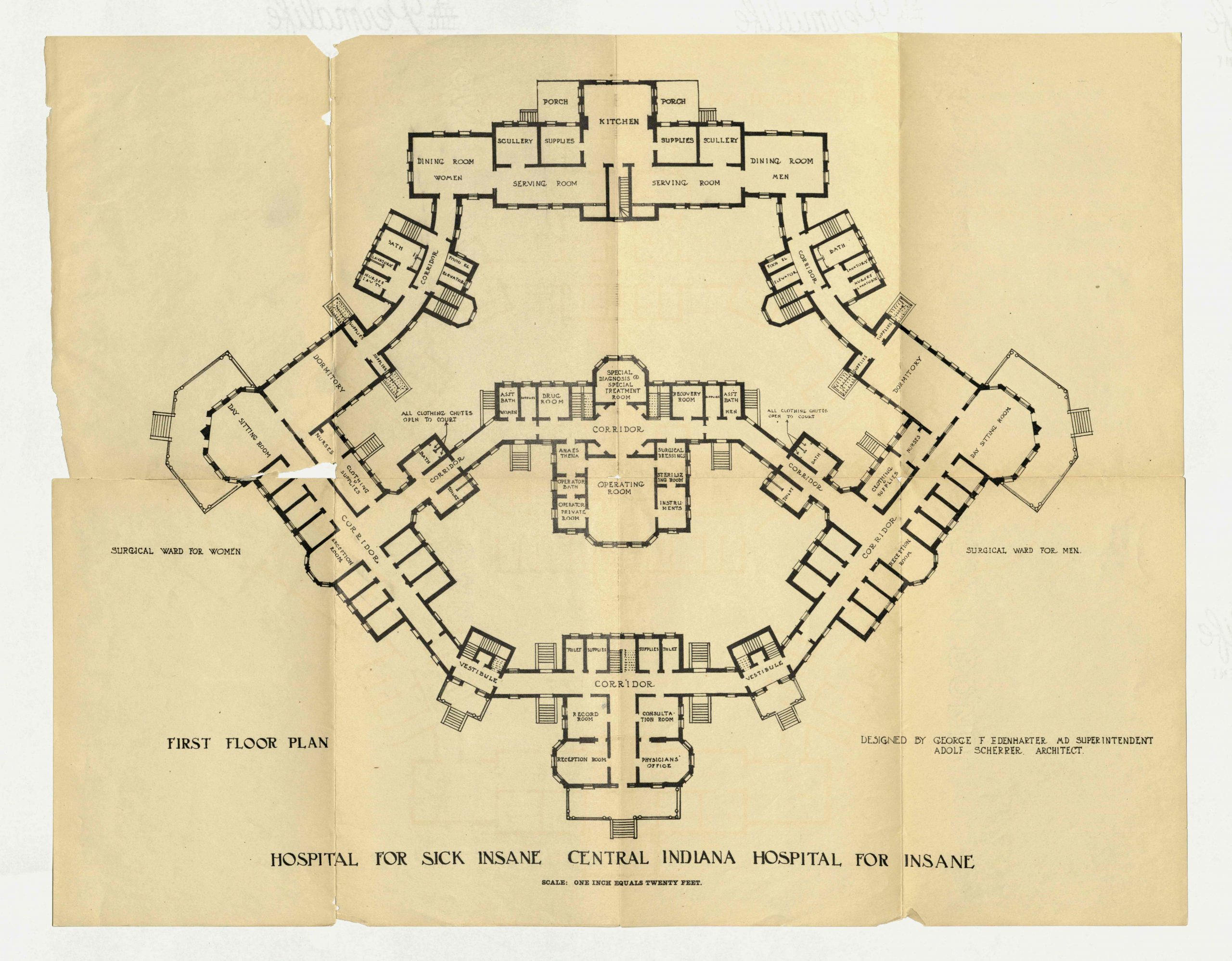
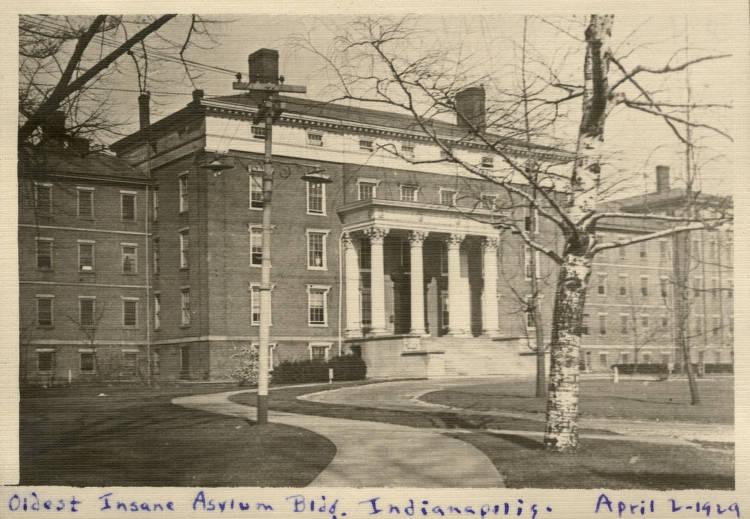
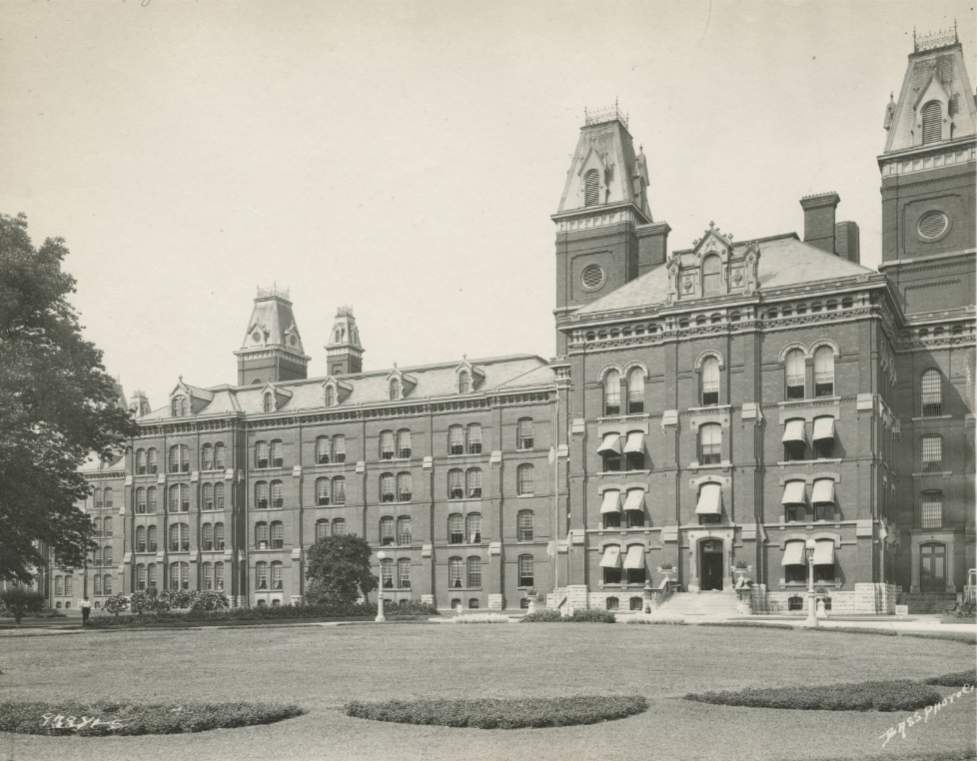
Central State Hospital opened in 1848, four years after Indiana state legislators approved funding for a “State Lunatic Asylum” near Indianapolis. Central State was chronically underfunded and poorly staffed. Initially, the institution was committed to “moral therapy,” a care practice that aimed to replace intolerance and brutality with patience and compassion. But as the hospital grew, its doctors increasingly relied on drugs to calm patients and replaced individualized treatment plans with standardized approaches to managing conditions based on broad classifications of behavioral severity or physical ailments.
Throughout the 20th century, periodic newspaper exposés shocked the Indianapolis community but produced few reforms. Hence, the problems of patient abuse, overcrowding, and inadequate therapies continued. During the “deinstitutionalization” movement of the 1960s, Central State Hospital discharged many of its long-term patients and became involved in a range of mental health programs. After several patient deaths in the early 1990s, the hospital once again became the subject of public notoriety, and it closed in 1994.
Indiana School for the Deaf
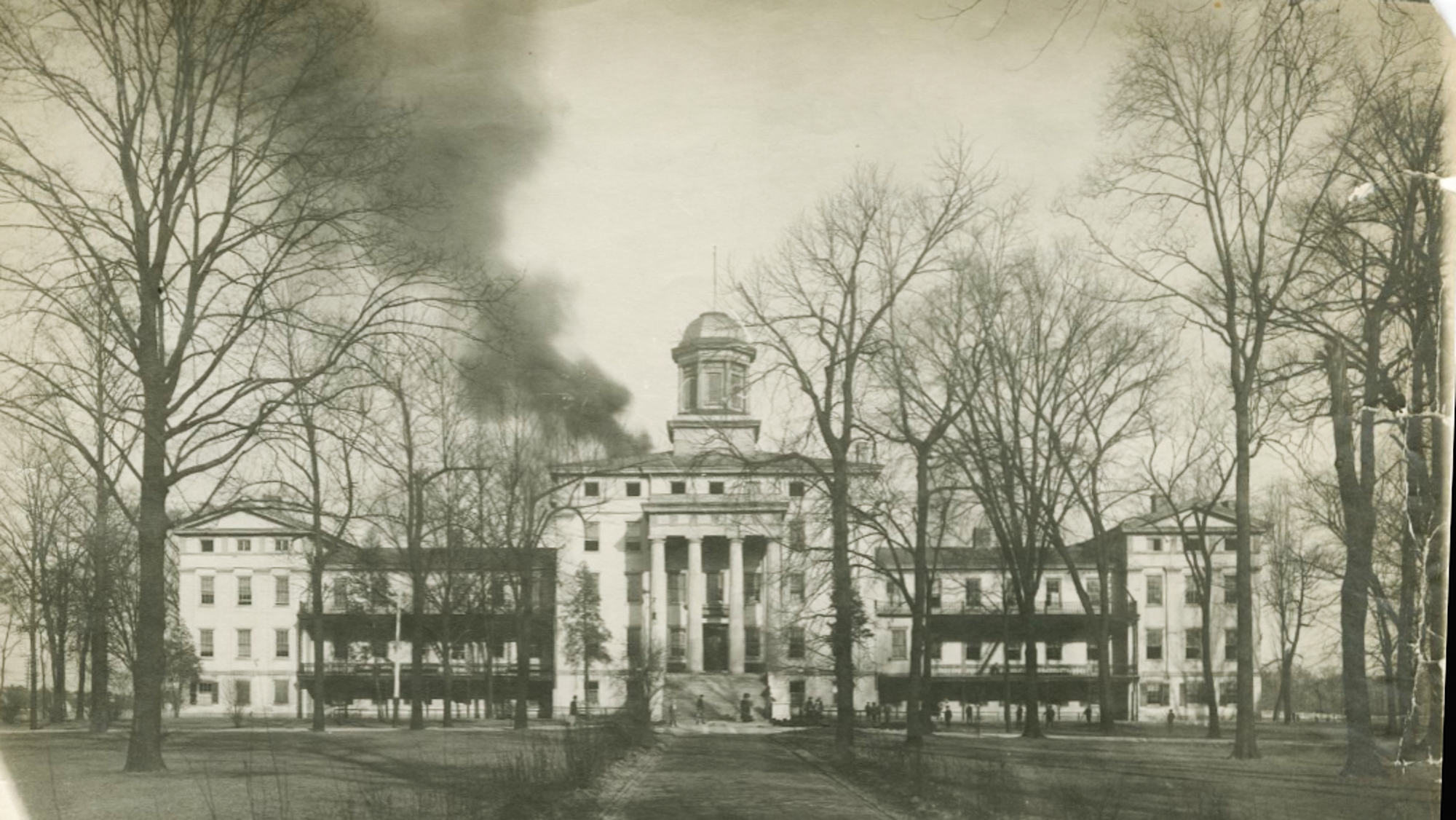
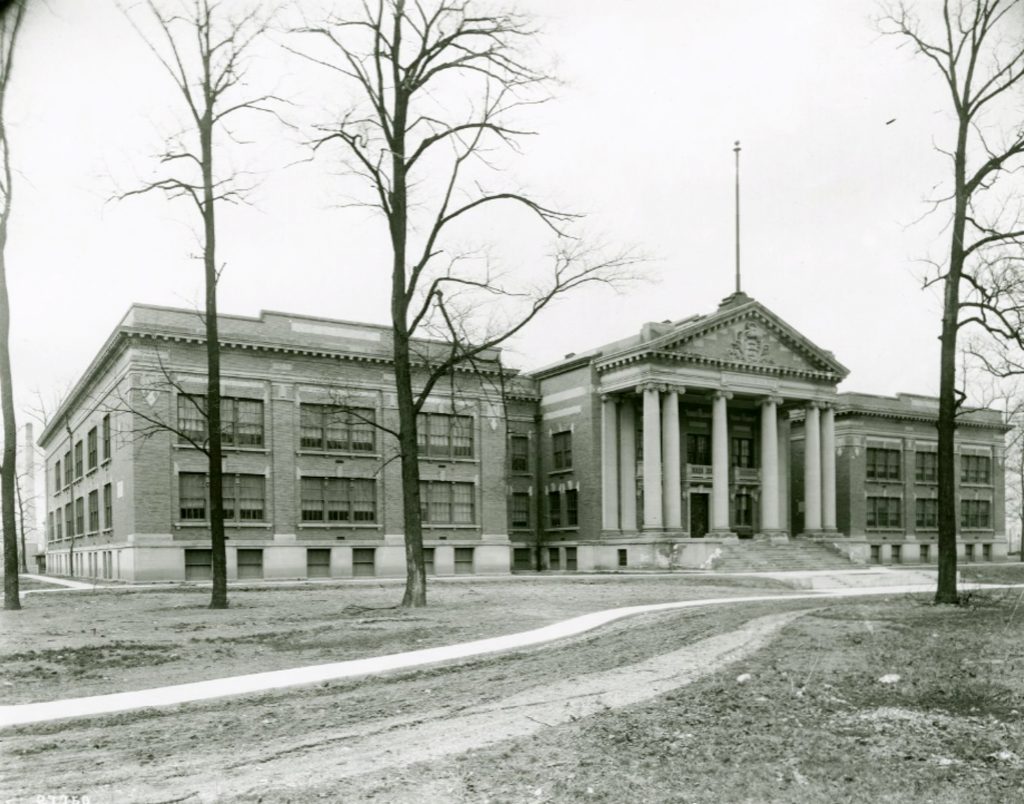
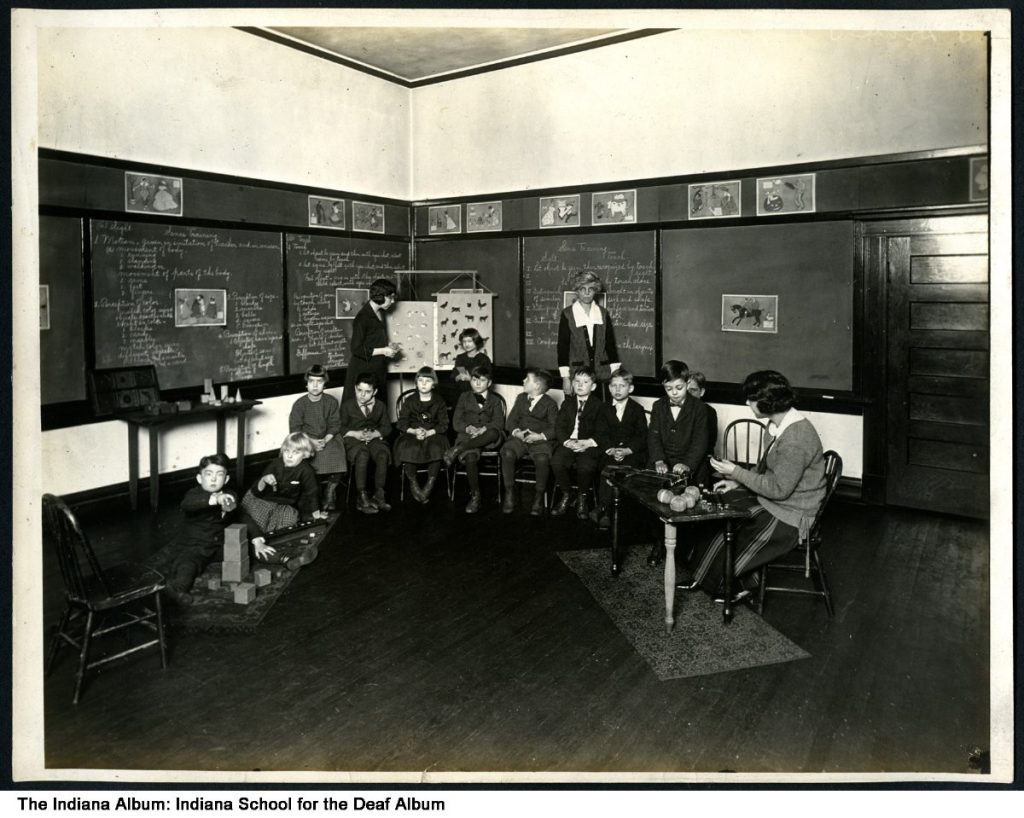
Founded in 1843 by Deaf educators William and Eliza Willard, the Indiana Asylum for the Deaf and Dumb became a state institution in 1844 and was the first US school for Deaf students to offer free tuition. William Willard served as the school’s first principal, while his wife served as a Deaf instructor. Despite early legislative discrimination against Deaf leadership, which led to Willard’s replacement with James S. Brown, the school expanded steadily. A permanent campus opened in 1850 that later emphasized both traditional academic subjects and vocational training. By 1907, growing enrollment led to the construction of a modern campus, completed in 1911, along with adoption of a new name, Indiana State School for the Deaf. The removal of the term “Dumb” from the institution’s title reflected criticisms by disability advocates of that descriptor, which had recently begun to take on offensive connotations about a person’s intellectual abilities. After World War II, the school, responding to educational reforms, embraced Deaf‑centered instruction along with bilingual and bicultural education. In 2022, plans were approved to move the school to a shared campus with the state’s school for the blind, Indiana School for the Blind and Visually Impaired.
Indiana School for the Blind

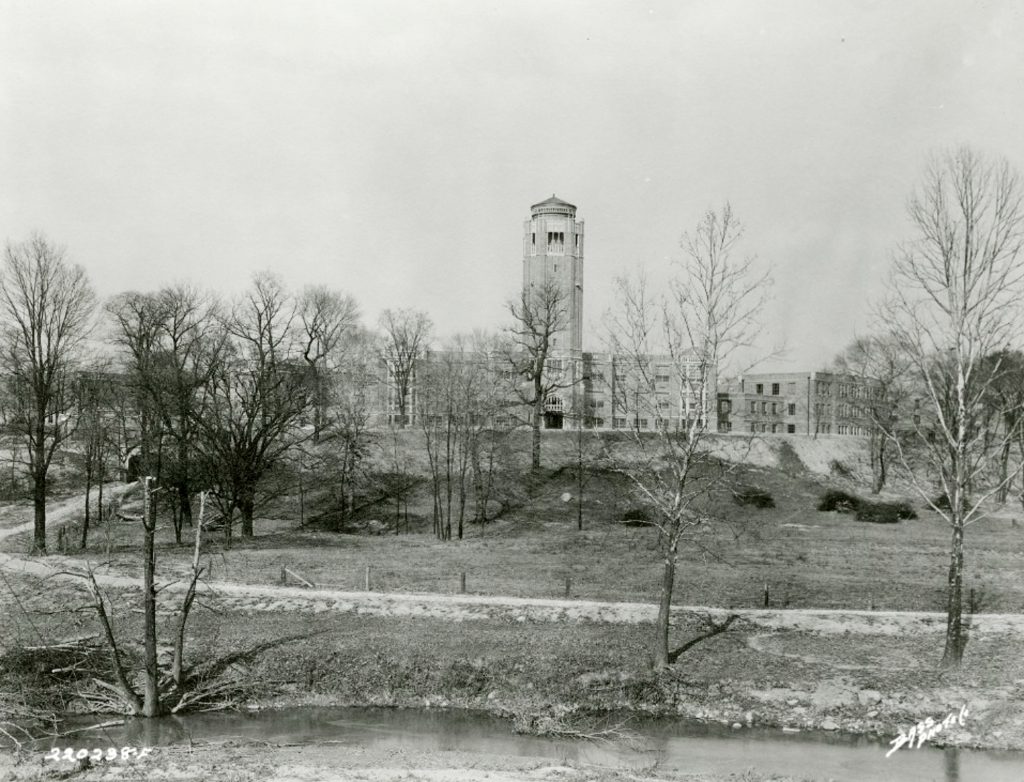
The Indiana Institution for Education of the Blind, later renamed the Indiana School for the Blind and Visually Impaired, opened in 1847. Early efforts to create an academic institution were hindered by limited resources. Lacking basic instructional materials such as embossed books and illustrative models, the school operated on an asylum model where students were taught industrial skills such as chair caning and broom making. For its first century, the school was governed by a board of directors, but oversight shifted in the 1950s to the Indiana State Department of Health, reflecting the rising dominance of a medical model for interpreting disability. In 1999, governance changed again when responsibility was transferred to a school board appointed by the state governor. From its difficult early years, marked by legislative interference and administrative discrimination against Deaf leadership, the institution over recent decades has become a national leader in education for students with visual impairments.
Quiet Resistance
Families Push Back (1940s–1970s)
Meaningful change in Indianapolis began with families who challenged institutional norms. Disability became more visible following World War II due to the number of wounded veterans returning to the US and Indianapolis. At the same time, many families rejected recommendations to institutionalize their children and instead sought alternatives that drew upon local, familial, neighborhood, and nonprofit resources. This shift transpired amid a broader national movement toward community-based care and inclusion. As elsewhere, families in Indiana advocated for education, services, and opportunities that allowed individuals with disabilities to remain connected to their existing social networks.
Locally, this trend in advocacy led to the creation of organizations focused on support, education, and independence. The group Noble of Indiana, founded in 1953 by families who had been advised to institutionalize their children, became a leading provider of community-based services for individuals with intellectual and developmental disabilities. Its emphasis on empowerment helped to heighten expectations for what was possible beyond institutional care.
Family-led advocacy also laid the groundwork for expanded access to education and community resources, including specialized institutions such as the Indiana School for the Deaf and the Indiana School for the Blind and Visually Impaired, as well as broader support systems that would continue to evolve in later decades. Organizations such as the Autism Society of Indiana and Easterseals Crossroads continued this work, providing resources and advocacy for families navigating complex systems of care.
By the 1960s, broader policy changes began to provide support for these local efforts. National legislation, including the Community Mental Health Act of 1963, encouraged the development of community-based services. Local implementation, however, remained uneven, highlighting ongoing gaps between policy and practice.
Noble / The Arc of Greater Indianapolis
Noble was founded in 1953 by parents of children with developmental disabilities. Founders believed their children could learn and contribute to society, despite medical advice favoring institutionalization. Beginning as the Noble School, the organization expanded as public schools became more inclusive, adding services for preschoolers and adults along with employment programs. As of 2026, Noble serves 23 counties in central and eastern Indiana through employment training, day programs, therapies, camps, respite care, and advocacy. Noble also serves as The Arc of Greater Indianapolis, a local branch of the largest national community-based organization representing individuals with developmental disabilities before all levels of government.
Image Info
Noble School students, 1955–1968
Credit: Indy Star, 5/22/1955; Indianapolis News, 5/14/1968; Indianapolis News, 5/25/1967
Easterseals Crossroads
Easterseals Crossroads began in 1936 after Sarah Gavin and Louise Steffe Mallory organized an informal group of twelve teenagers with disabilities to socialize. In 1939, the group formally organized as a program for disabled teenagers under the leadership of the Indiana Society for Crippled Children and became an affiliate of the National Easter Seal Society in 1940. Over the decades, the organization expanded its offerings, moving from an early emphasis on vocational workshops into services including therapy, education, assistive technology, employment training, and ADA consulting. Today, Easterseals Crossroads is one of central Indiana’s most comprehensive disability service providers, offering programs that promote independence and inclusion for children and adults with disabilities and their families.
Image Info
Easterseals Crossroads services and staff, 1970s–1990s
Credit: Indianapolis Public Library View Source
Bradford Woods
Bradford Woods, an education and camping center of Indiana University (IU), opened in 1953 to provide outdoor education and recreation for children with physical challenges. Camp Riley for Youth with Physical Disabilities, operated by the Riley Memorial Association (later renamed Riley Children’s Foundation) in partnership with IU, opened two years later to provide an inclusive summer camp experience designed for young people with disabilities. The camp continues to operate today alongside many smaller specialized outdoor recreation camps at Bradford Woods serving children with medical conditions or disabilities.
Image Info
Children at Camp Riley in Bradford Woods, 1955
Credit: Indianapolis News, 08/02/1955
Self-Advocacy
The Rise of Self-Advocacy (1970s–1990s)
The late twentieth century marked a shift toward self-advocacy, as individuals with disabilities began to play a more active role in shaping the systems that affected their lives. Locally, this transition aligned with the national Independent Living movement, which emphasized autonomy, access, and self-determination. Disability was increasingly reframed as an issue of civil rights rather than limitation, positioning individuals with disabilities as leaders within their own communities.
Local organizations helped advance these principles by focusing on empowerment and independence. Established in 1987 as the Indianapolis Resource Center for Independent Living, accessABILITY was founded by individuals with disabilities who advocated for greater autonomy. Through peer support, skills training, and advocacy, the organization reflected the core principles of the independent living movement and its focus on full community participation.
At the same time, advocacy efforts expanded beyond community-based organizations into broader civic and policy spaces. Indianapolis initiatives such as the Mayor’s Advisory Council on Disability, founded in 1976, signaled a growing recognition of disability as a public issue. This contributed to increased attention to accessibility as a goal for city planning projects and public infrastructure.
Advances during this period also laid the foundation for further self-advocacy in the decades that followed. Organizations such as Self-Advocates of Indiana have built on this legacy by supporting individuals with disabilities in leadership development and civic engagement. Participants aimed to create a sustained movement for self-determination and full participation in community life.
accessABILITY
accessABILITY is Indianapolis’s Center for Independent Living and a leading organization in the city’s disability rights movement. Founded in 1987 as the Indianapolis Resource Center for Independent Living (IRCIL), it was created by disability self-advocates seeking greater control over decisions affecting their lives. As part of the national Independent Living Movement, accessABILITY shifted disability services from a charity-based model toward consumer-directed advocacy, peer support, and community inclusion. Through advocacy, education, and independent living services, the organization has helped advance equal access and self-determination for people with disabilities in Indianapolis and central Indiana.
Image Info
Nina McCoy of the Indianapolis Resource Center for Independent Living, 1988
Credit: Jerry Clark, Indianapolis Star, Mar. 13, 1988
Mayor’s Advisory Council on Disability
Established during the administration of Mayor William H. Hudnut III in 1976, the Mayor’s Advisory Council on Disability (MAC-D) created a formal avenue for people with disabilities to participate in Indianapolis municipal government. The council advises city leaders on accessibility, transportation, housing, employment, and civic participation while serving as a bridge between local government and the disability community. MAC-D helped institutionalize disability representation in city decision-making. Its creation reflected a growing recognition that people with disabilities should have a voice in policies and decisions affecting their daily lives.
Image Info
Mayor Hudnut with group from Mayor’s Council on the Handicapped, ca. 1977
Credit: University of Indianapolis View Source
Self-advocates of Indiana (SAI)
Founded in 1990, Self-Advocates of Indiana (SAI) is a statewide organization led by people with intellectual and developmental disabilities. Headquartered in Indianapolis, SAI helped to advance the principle that individuals with disabilities should speak for themselves rather than rely solely on allies or providers without disabilities to represent their interests. Through leadership development, education, and advocacy, the organization strengthened Indiana’s self-advocacy movement and expanded opportunities for people with disabilities to participate in civic decision-making and community life. engagement. Its work reflected a broader disability rights movement emphasizing both independence and meaningful participation in decisions affecting one’s care and living conditions.
Image Info
Board of Directors of Self-Advocates of Indiana (SAI), 2002
Credit: Indiana Disability History Project, Indiana University View Source
Civic Accessibility
ADA and Modern Advocacy (1990–Present)
The passage of the federal Americans with Disabilities Act (ADA) in 1990 established a new baseline for accessibility, reflecting a broader national commitment to civil rights for individuals with disabilities. The law required equal access to public spaces, employment, and services, shaping how accessibility would be addressed across US cities, including Indianapolis.
Implementation in Indianapolis has varied across environments and institutions. While concrete advances have taken place, the implementation of accessibility goals have often depended on specific locations and available resources. Accessible features are present in major venues and public systems; however, these efforts frequently reflect minimum compliance rather than fully equitable access. For example, accessible seating in large venues remains limited in proportion and can vary in location, cost, and availability, while transportation options are not always consistent or comprehensive enough to meet user needs.
Local organizations and government entities have played a role in interpreting and applying ADA standards within the city. Established in 2000, the municipal Office of Disability Affairs coordinates accessibility efforts across Indianapolis city government, working to improve access to programs, services, and public spaces while promoting inclusion and compliance with disability-related policies.
Today, advocacy continues to evolve across multiple sectors, including healthcare, education, housing, and transportation. These efforts reflect a broader shift toward prioritizing usability and inclusion from the outset, while ongoing work continues to address both longstanding and emerging barriers.
The Gregory S. Fehribach Center
Established in 2019 at Eskenazi Health, the Gregory S. Fehribach Center expanded opportunities for college students with physical disabilities to enter the workforce. Building on an internship partnership launched in 2011 between Eskenazi Health and Ball State University, the center connects students with employers throughout Indiana and beyond. Named for Indianapolis attorney and disability advocate Gregory S. Fehribach, the center reflects a broader shift in disability advocacy from access and accommodation toward employment, professional development, and economic inclusion. Its work has helped advance opportunities for individuals with disabilities to pursue careers on equal footing with their nondisabled peers.
Image Info
Indiana University senior Paige Moore, an intern with the Gregory S. Fehribach Center, ca. 2023
Credit: Chris Meyer/Indiana University, via WFYI View Source
Autism Society of Indiana
The Autism Society of Indiana (ASI) is a statewide nonprofit organization dedicated to advocacy, education, and support for individuals with autism and their families. Based in the Indianapolis metropolitan area and affiliated with the Autism Society of America, ASI reflects the growing recognition of autism as an important educational, social, and public policy issue in Indiana. Through advocacy and public education, ASI has contributed to broader efforts to expand participation in schools, workplaces, and community life.
Image Info
Respite caregiver from the Autism Society of Indiana, Bianca Merrill walks with DJ and Constance Barnwell, 2015
Credit: Kelly Wilkinson / The Star View Source
Office of Disability Affairs
Established in 2000, the Office of Disability Affairs coordinates accessibility efforts across Indianapolis city government. The office works to improve access to programs, services, and public spaces while promoting inclusion and compliance with disability-related policies.
Image Info
Mayor’s Advisory Council on Disabilities Access and Inclusion awards winners, 2014
Credit: Indianapolis Office of Disability Affairs View Source
Where We Are Now and What Comes Next
In Indianapolis, disability is increasingly understood as both an identity and a framework for evaluating how communities are designed. This perspective reflects broader national conversations while remaining grounded in local experience.
The history of disability in Indianapolis is not complete. Barriers continue to exist across systems, spaces, and attitudes. However, ongoing advocacy and innovation continue to shape a more inclusive future.
In Indianapolis, the focus has shifted from simply providing access to rethinking how systems are built. This evolution reflects an ongoing effort to ensure that accessibility is not treated as an afterthought but as a fundamental part of community design.
Learn More
Dive deeper into the history of disability in Indianapolis with these additional resources.
Websites
- Indiana Disability History: https://www.indianadisabilityhistory.org/
- Indiana Institute on Disability and Community: https://www.iidc.indiana.edu/
- Finder—Indiana Disability Resource: https://www.indianadisabilityresourcefinder.org/
Archival Collections
- Indiana School for Deaf Collection at Indiana University Indianapolis: https://library.indianapolis.iu.edu/digitalcollections/ISD
- Indiana School for Deaf Collection at Digital Indy: https://www.digitalindy.org/digital/collection/isd
- Easterseals Crossroads Collection at Digital Indy: https://www.digitalindy.org/digital/collection/esc
Continue Exploring
Discover related stories and resources in the Encyclopedia of Indianapolis.