←ⓘ Jump to a preselected date. Or, scroll down to view more.
First Baptist Church organizes choir
The First Baptist chorus is the first documented vocal group in the city.
First theatrical production
A traveling theatrical group presents the first theatrical production on New Year’s Eve, “The Doctor’s Courtship” and “Jealous Lover.” The performances take place in the dining room of Thomas Carter’s tavern, the Rosebush Tavern.
Society for Cultivation of Church Music founded
The Society for Cultivation of Church Music becomes the first voluntary organization to promote the arts in Indianapolis.
Indiana State Library opens
The state library opens with the secretary of state acting as librarian. The General Assembly establishes it to provide library service to the legislature, state government officials, and other governmental personnel.
Indianapolis Handelian Society performs first concert
The society forms as the city’s first secular music group. It includes singers and instrumental musicians.
Indiana Historical Society established
Meeting in Indianapolis, Indiana civic leaders organize the society to ensure that the history of the state is preserved and shared.
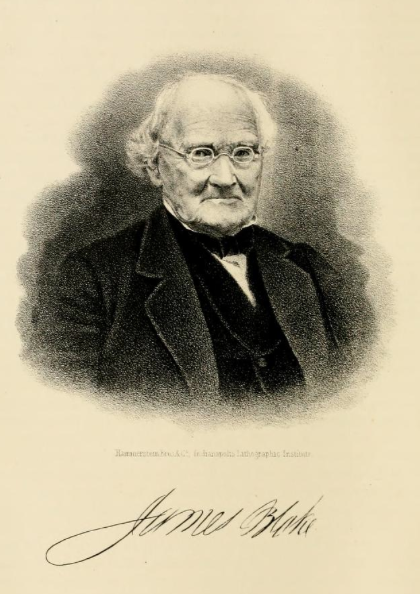
First piano arrives in Indianapolis
James Blake presents the piano to his new wife Eliza. She gives small concerts in her home.
Pictured: James Blake, n.d.
Credit: ddeedavis via Find A Grave View Source
First annual fair of the Marion County Agricultural Society
After forming in June, the Marion County Agriculture Society plans the first Marion County fair, which is held on October 30–31 at the Courthouse Square.
William Lindsay & Company theatrical performance
The troupe of actors travels from Cincinnati to perform in the first plays to appear in Indianapolis since 1823.
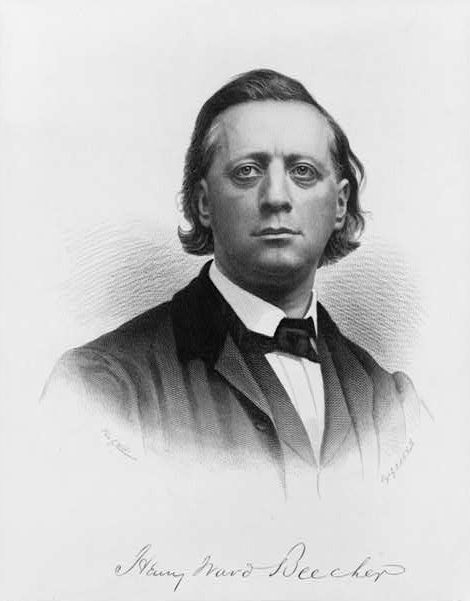
Second Presbyterian establishes music school
Under pastor Henry Ward Beecher, the church organizes a music school and sponsors a small orchestra to accompany the congregation’s choir.
Pictured: Henry Ward Beecher, ca. 1866
Credit: Library of Congress View Source
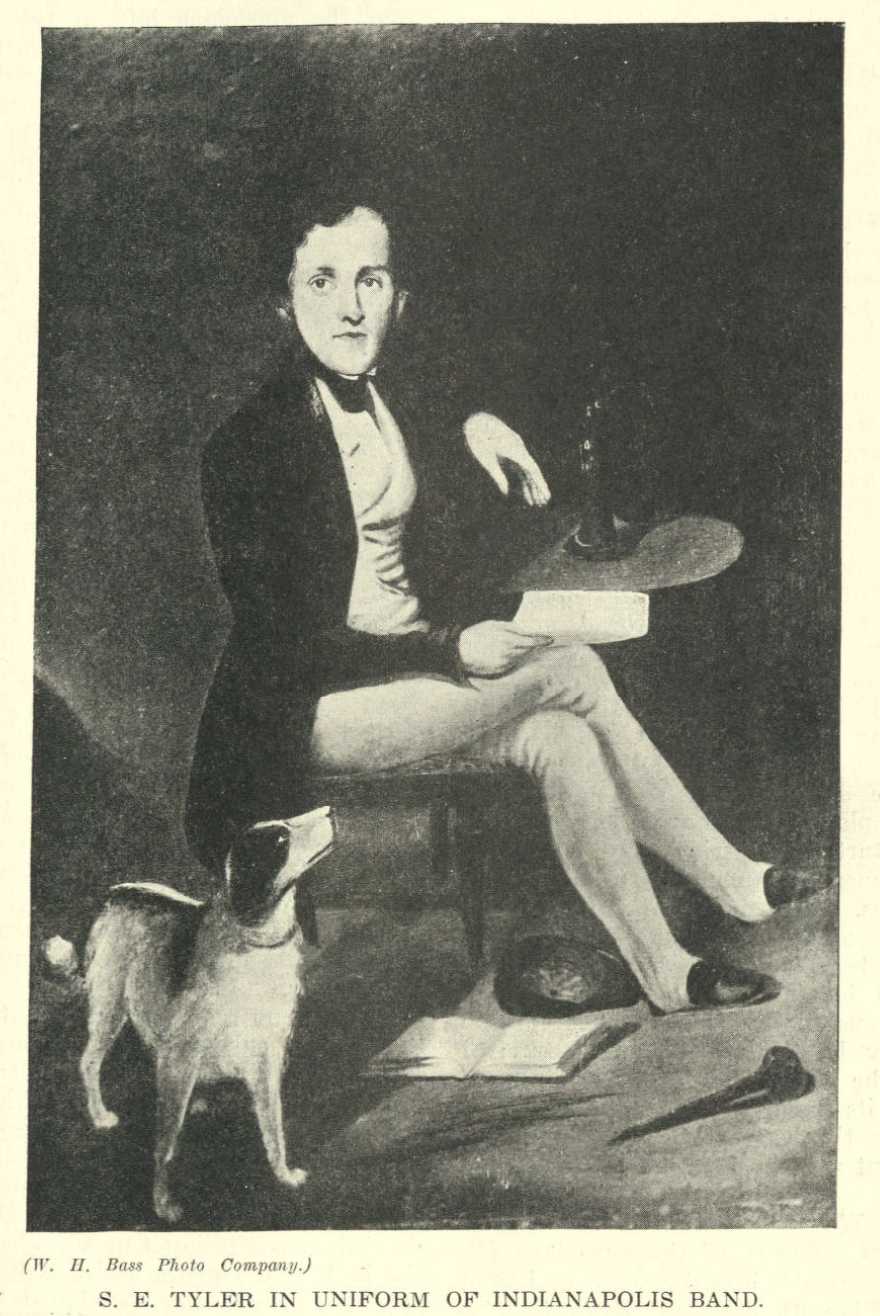
Indianapolis Band forms
The band becomes the first secular musical group that performs regularly. It folds in 1845.
Pictured: S. E. Tyler in uniform of the Indianapolis Band, n.d.
Credit: Indianapolis Public Library
View Source
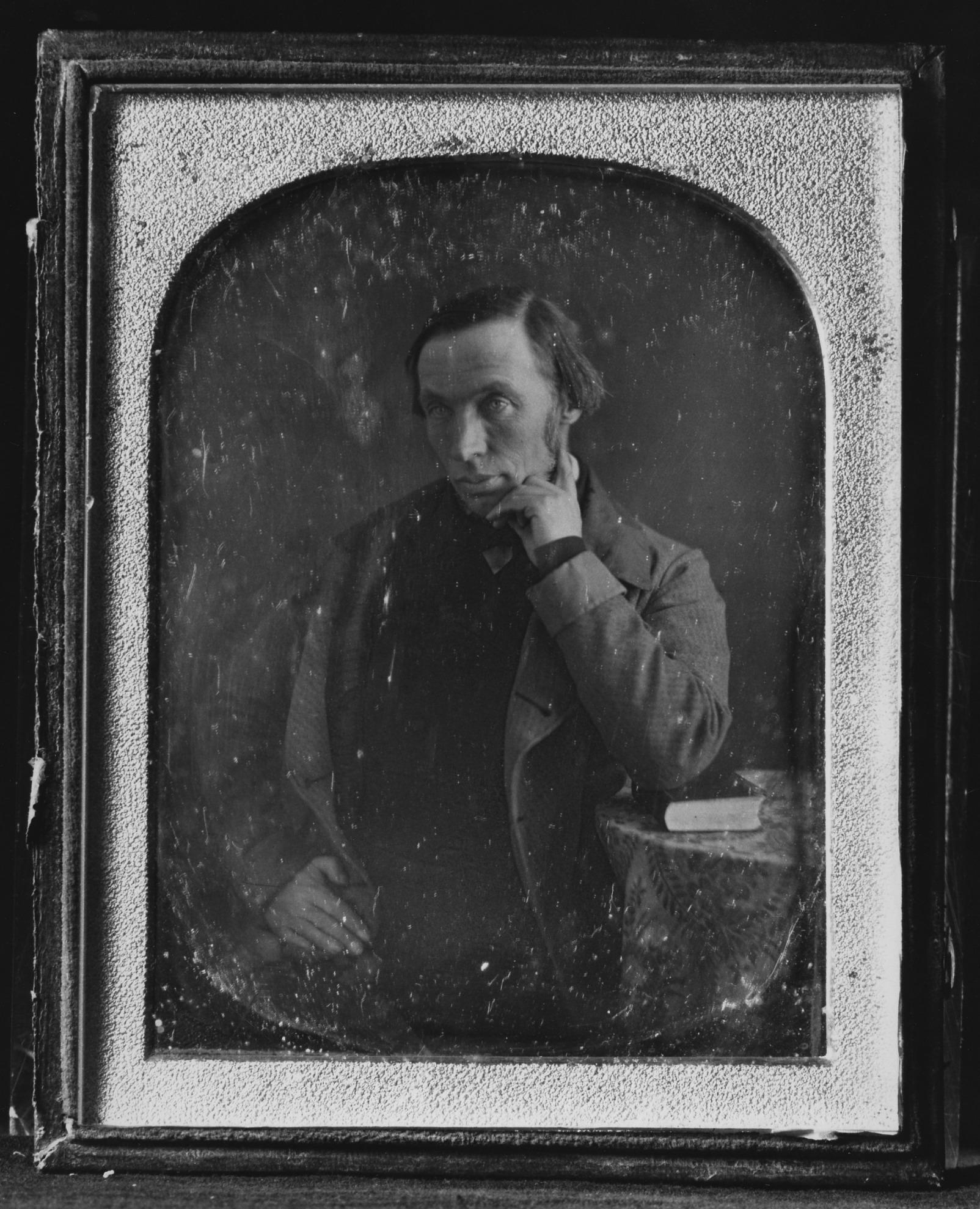
First amateur theatrical group
Called the Indianapolis Thespian Corps, the community theater company first performs Pocahontas by social reformer, author, and Indiana statesman Robert Dale Owen.
Pictured: Robert Dale Owen, ca. 1840s
Credit: Smithsonian Institution Archives
View Source
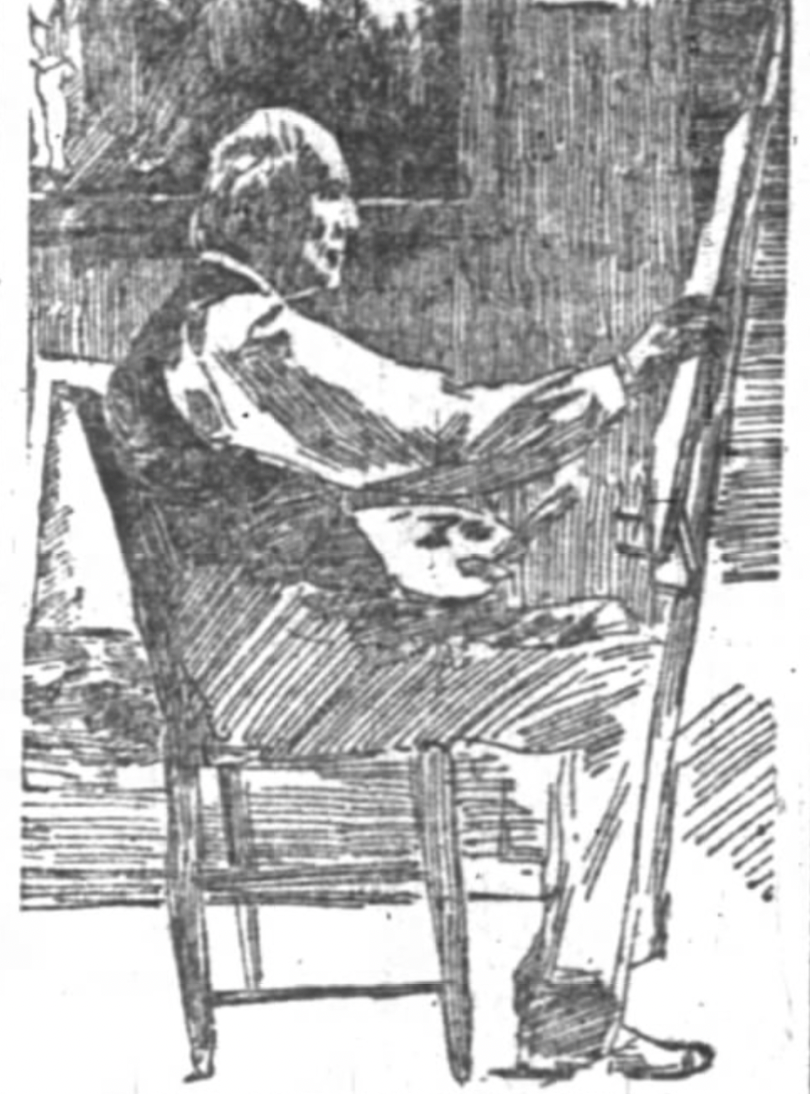
Jacob Cox becomes first art teacher
The painter maintains a studio in the city for over 50 years and is the major figure in the early development of the visual arts in the city.
Pictured: Drawing of Jacob Cox, ca. 1890
Credit: Indianapolis NewsView Source
Marion County Library forms
The Marion County Library forms as a subscription library under the provisions of the 1816 Indiana constitution. It is housed in the basement of the county courthouse.
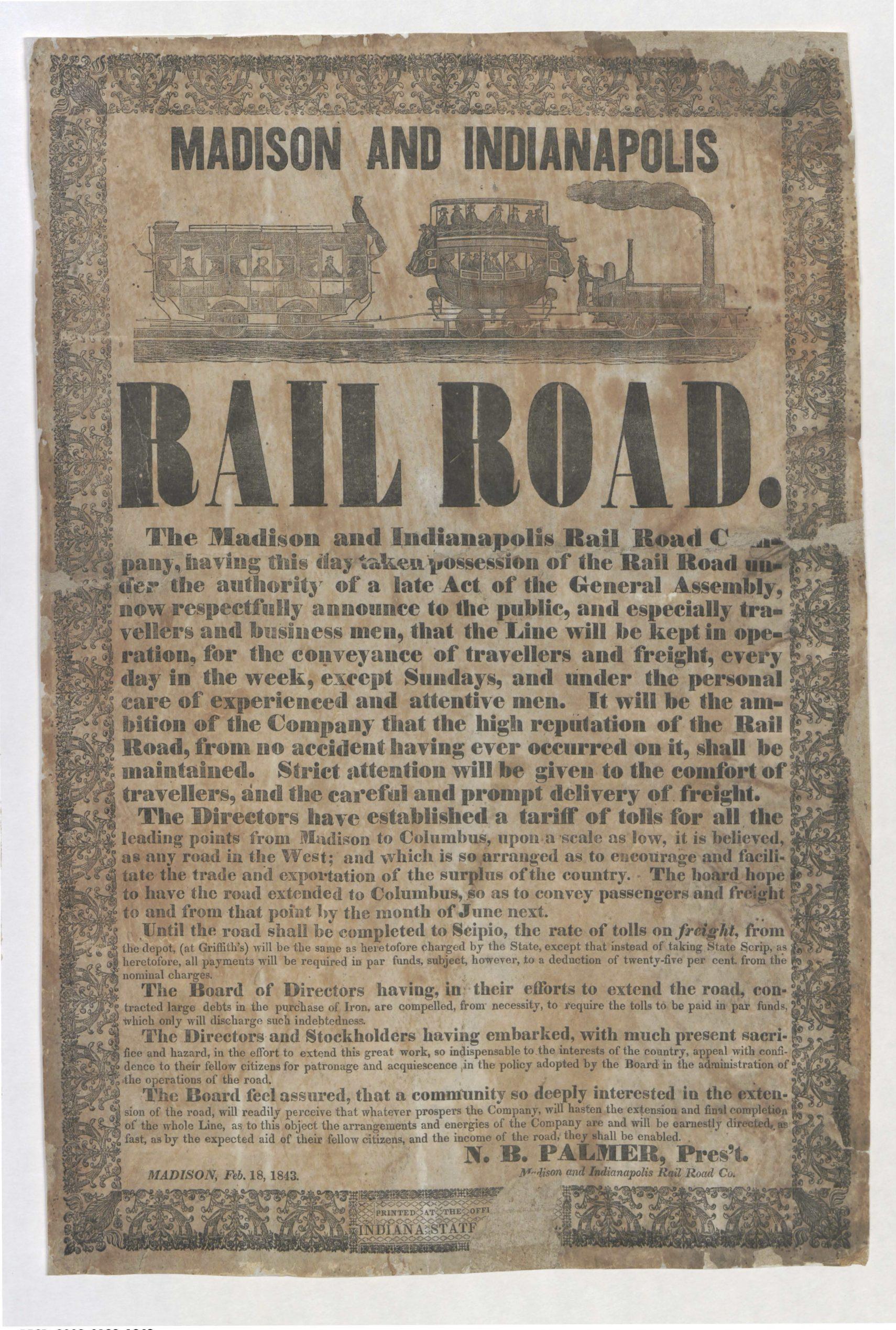
Indianapolis enters the national entertainment circuit
With the completion of the Madison and Indianapolis Railroad, musicians and actors begin coming to the city regularly from other parts of the country to perform.
Pictured: Madison and Indianapolis Railroad announcement, 1843
Credit: Indiana Historical Society
View Source
Indianapolis Turngemeinde opens
Located on West Washington Street, the Indianapolis Turngemeinde promotes physical fitness, freethought, liberal politics, and German language and culture.
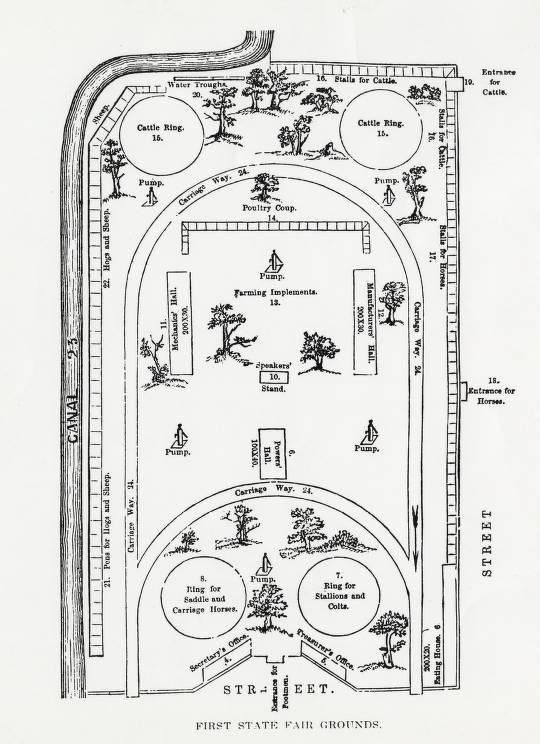
First Indiana State Fair opens at Military Park
Created as a venue for exchanging ideas to improve agricultural productivity, the state’s first fair runs October 20-22. Around 30,000 people pay admission to see exhibits featuring agricultural products.
Pictured: Layout of Indiana’s first state fair held at Military Park, 1852
Credit: Bass Photo Co Collection, Indiana Historical Society View Source
First lecture on Indianapolis history
Nathaniel Bolton, the state librarian, delivers what may have been the first lecture on Indianapolis history. It is not published until 1897.
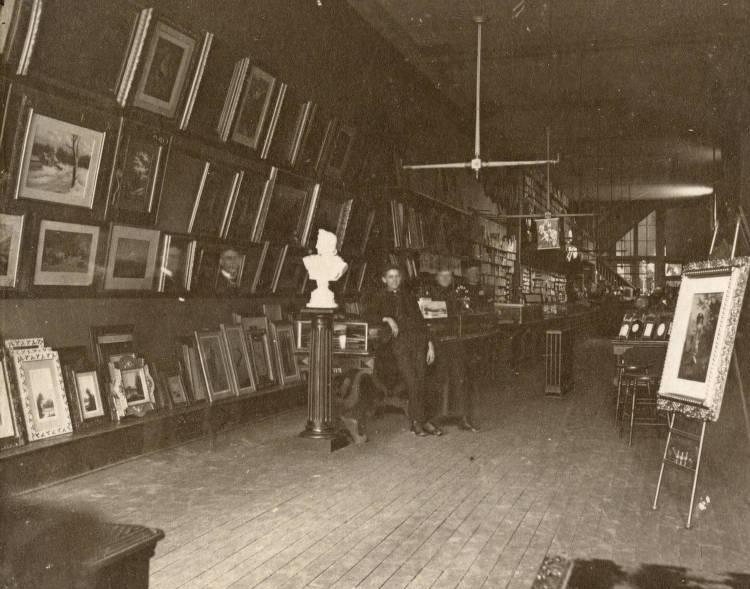
Herman Lieber founds the H. Lieber Company
Although Lieber starts the business for stationery and bookbinding, he later includes an art gallery, which becomes important for mounting art exhibitions.
Pictured: Interior View of the H. Lieber Art Emporium, ca. 1890
Credit: Indiana Historical Society View Source
Maennerchor Singing Society organizes
Seven young German American men who enjoy singing organize the Maennerchor. The group develops into an amateur music society of distinction, influencing the musical culture of Indianapolis.
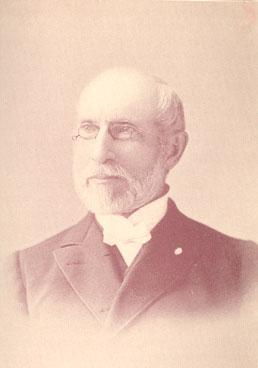
First music convention
Professor George Root organizes the four-day event devoted to instruction and performance.
Pictured: George Frederick Root, 1910
Credit: Public domain via Wikimedia Commons
View Source
Ignatius Brown publishes the first history of Indianapolis
Local attorney Ignatius Brown publishes a history of the city, which appears in the 1857 city directory. It was the first historical sketch of Indianapolis.
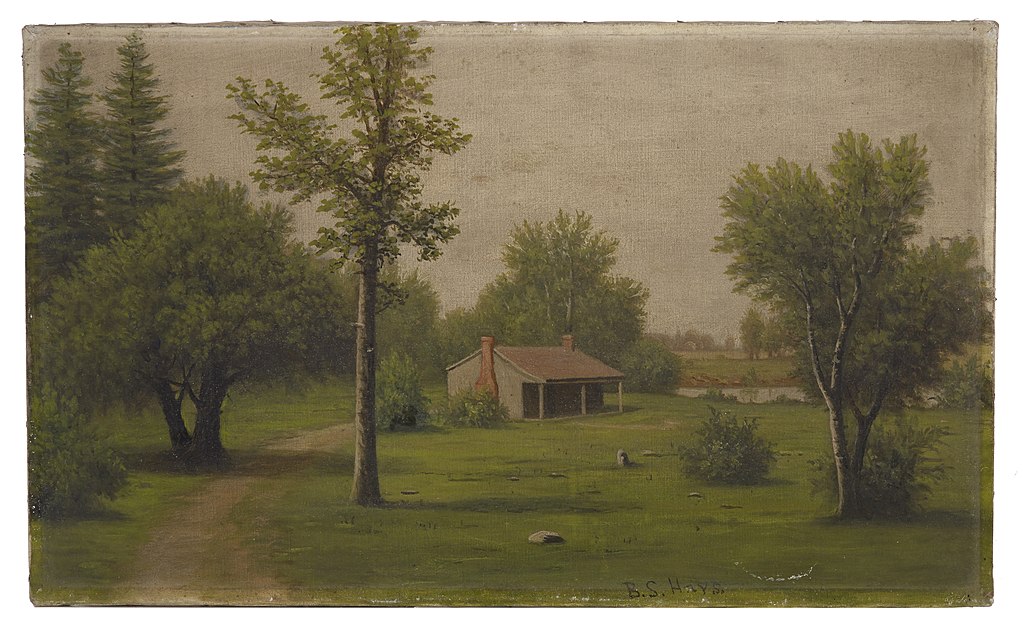
Artist Barton S. Hays moves to Indianapolis
Hays, a painter and early photographer, becomes the teacher of nationally known artist William Merritt Chase and painter John W. Love, who founds the city’s first art school.
Pictured: Barton Stone Hays painted this oil landscape, which is owned by the Indianapolis Museum of Art at Newfields.
Credit: Barton S. Hays, Public domain via Wikimedia Commons View Source
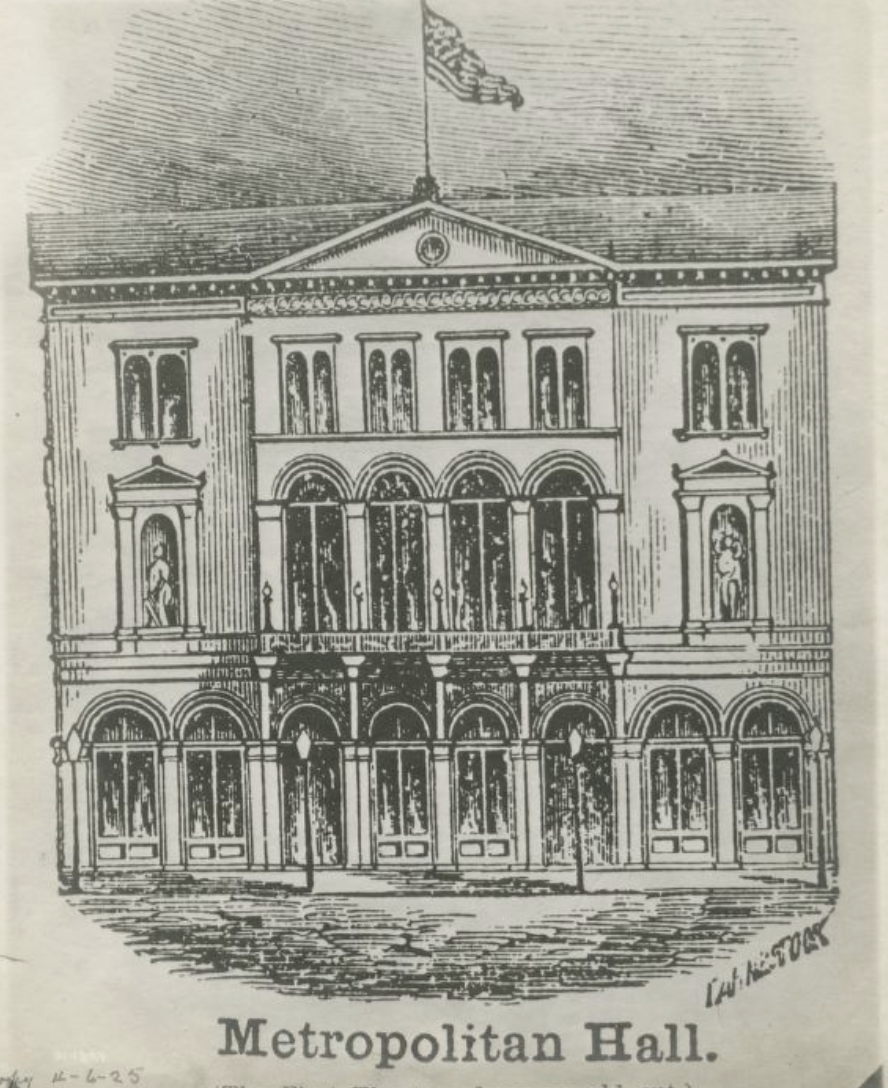
First theater opens
The Metropolitan opens as Indianapolis’ first purpose-built theater complete with gallery, vaulted ceilings, and frescoes. It is later renamed the Park.
Pictured: A drawing of the Metropolitan theater building.
Credit: Bass Photo Co Collection, Indiana Historical Society
View Source
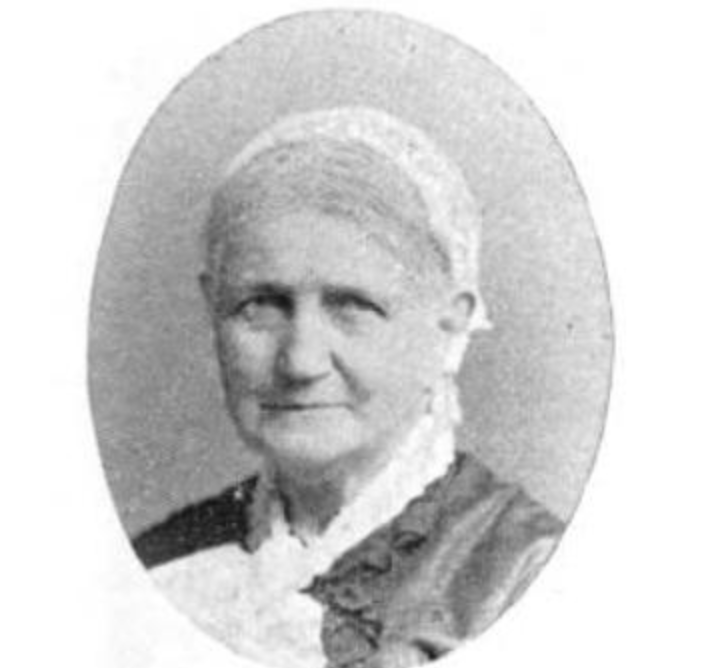
Eunice Beecher publishes From Dawn to Daylight
Eunice Beecher, the wife of influential Presbyterian pastor Henry Ward Beecher, sets her autobiographical novel principally in Indianapolis. Her depiction of the city is so unflattering that local schools and libraries ban it.
Pictured: Eunice Beecher, n.d.
Credit: Public domain via The World’s Congress of Representative Women
View Source
Philarmonic Society forms
Directed by Max Leckner, a pianist and a leader of the Maennerchor German Singing Society, the Philharmonic begins offering weekly concerts.
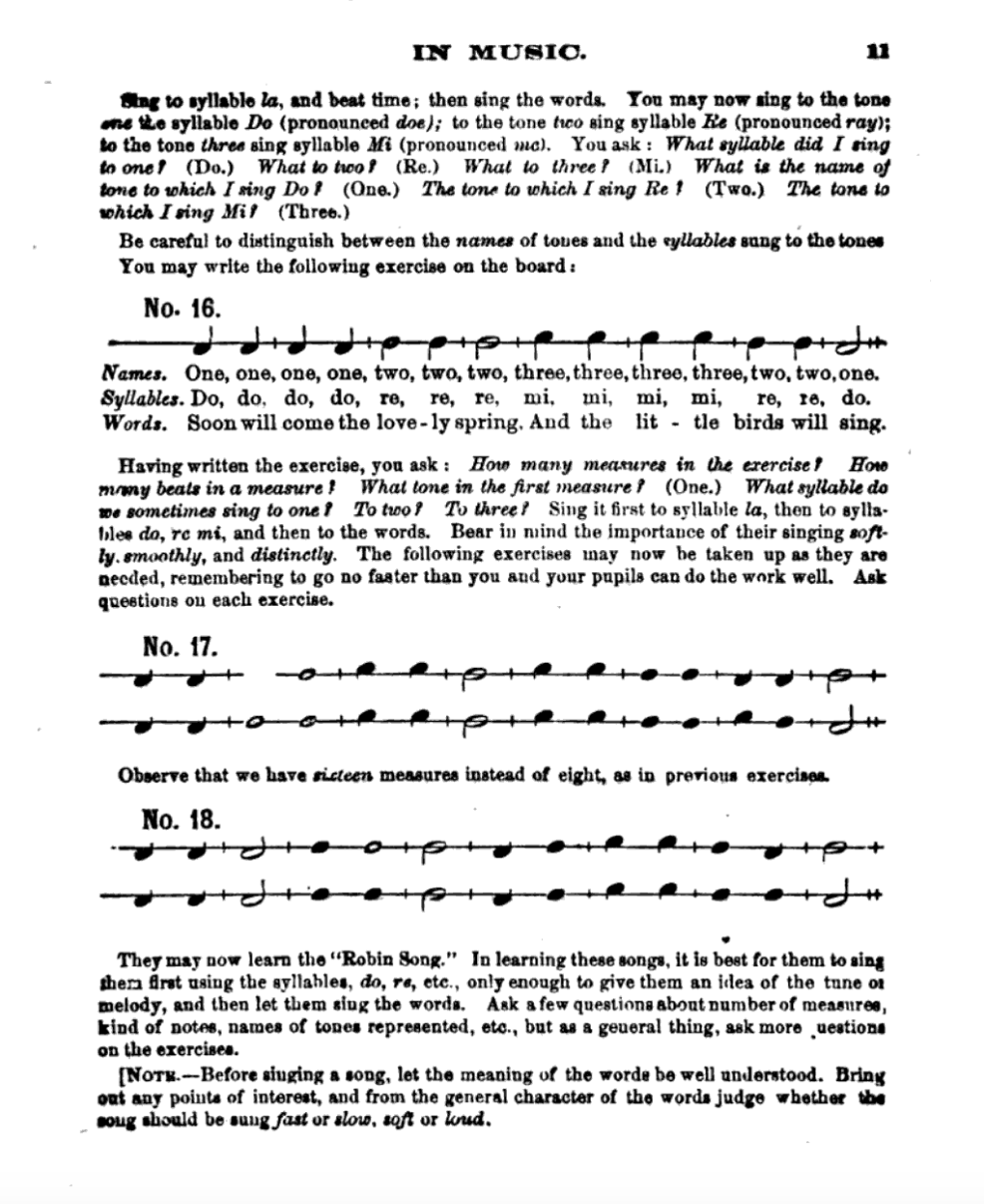
Music enters public school curriculum
George Loomis begins teaching public school students music and creates his own teaching manual, Progressive Music Lessons, because no published instructional materials exist.
Pictured: Page from Progressive Music Lessons, 1875
Credit: Progressive Music Lessons: a course of instruction prepared for the use of public schools
View Source
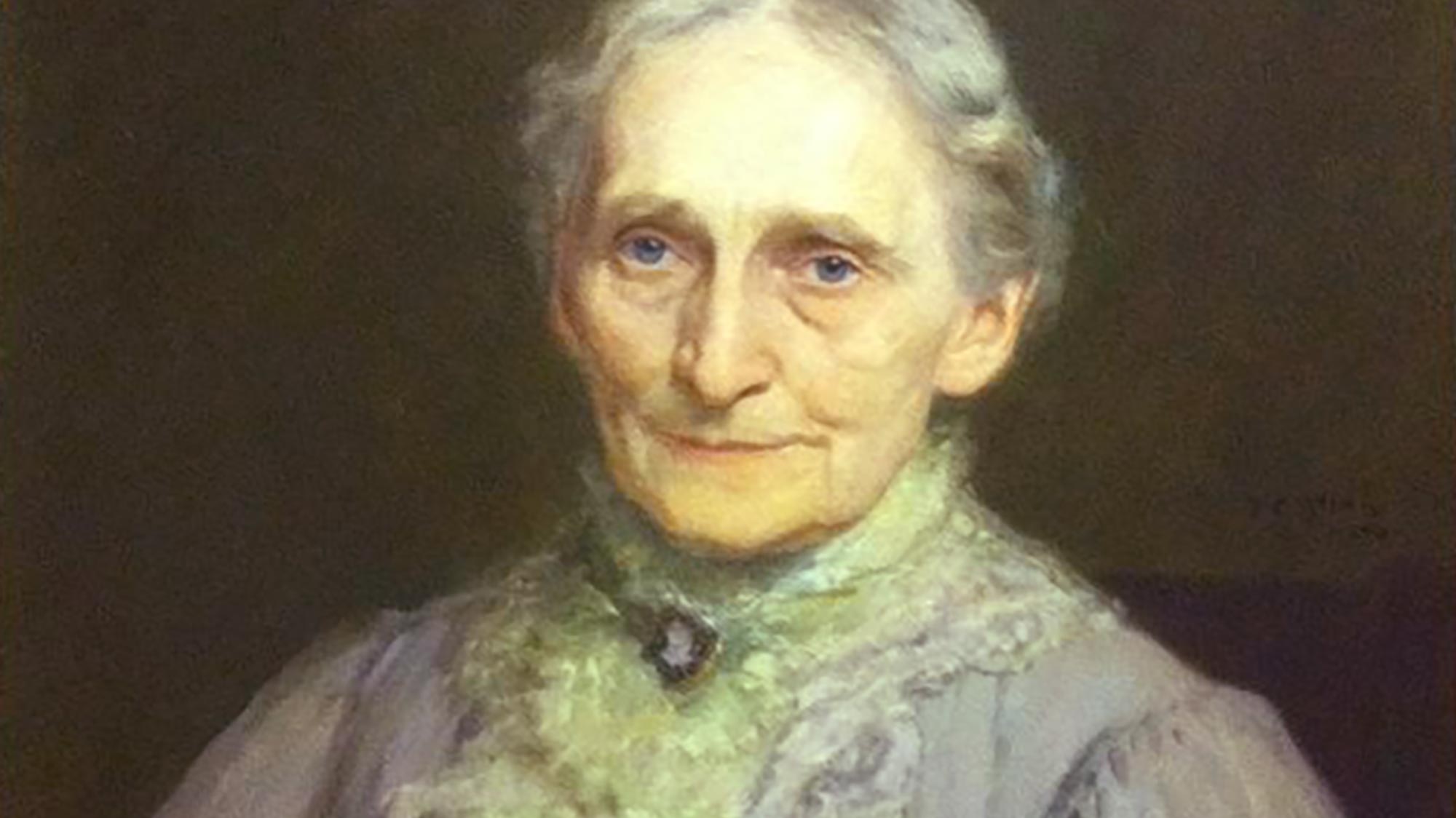
Catharine Merrill publishes The Soldier of Indiana in the War for the Union
Governor Oliver P. Morton recruits Merrill to write the history of Indiana’s soldiers in the conflict, considered the most comprehensive history of the state’s military partcipation in the Civil War.
Pictured: T. C. Steele portrait of Catherine Merrill, 1890
Credit: Butler UniversityView Source
Maennerchor hosts the National Saengerfest
The North American Saengerbund’s 15th National Saengerfest begins in Indianapolis. It lasts for four days and includes three concerts, a parade, a grand ball, and a picnic.
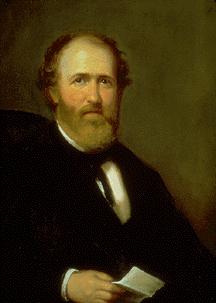
Conrad Baker creates the Governors’ Portrait Collection
Governor Baker commissions portraits of Indiana governors. The collection grows to include portraits of nearly all Indiana governors.
Pictured: Portrait of Conrad Baker, ca. 1869
Credit: Indiana Historical Bureau
View Source
Central School of Music established
Carl Weegman, the first director of the Maennerchor German singing society, organizes the school and operates it until his death in 1900.
Liederkranz organizes
The merger of the male singing sections of two German secret fraternal organizations, the Druiden Lodge and the Rothmaenner (“Red Men”) creates the Indianapolis Liederkranz.
Indianapolis Library opens
Located in one room of the high school building at the northeast corner of Pennsylvania and Michigan streets, the library begins with 12,790 volumes ready for 500 registered borrowers.
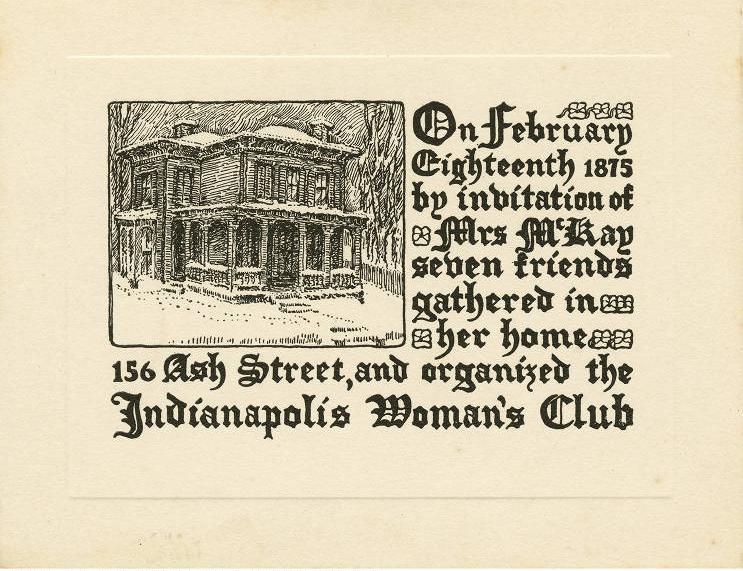
Indianapolis Woman’s Club founded
Suffragist May Wright Sewall, along with other socially prominent women, organizes the club to offer women the opportunity to enjoy social interaction and intellectual actvities outside the home.
Pictured: Indianapolis Woman’s Club 60th anniversary commemorative card, 1935
Credit: Indiana Historical Society View Source
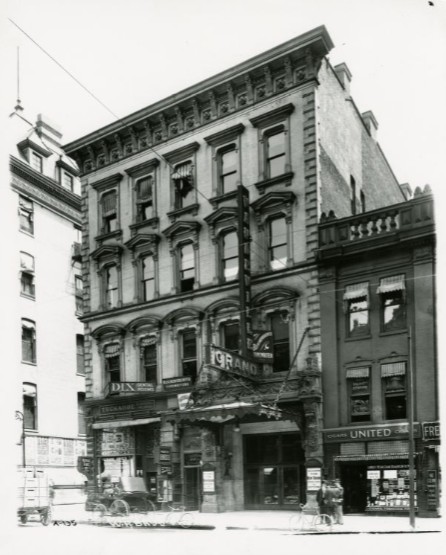
Grand Opera House opens
The Grand replaces the Park Theater as the preeminent venue for serious theater and variety acts. It closes in 1964.
Pictured: Grand Opera House, 1907
Credit: Bass Photo Co Collection, Indiana Historical Society View Source
Indianapolis Literary Club organizes
Six men establish the Indianapolis Literary Club . They model the club after the Chicago and Cincinnati men’s literary clubs and the Indianapolis Woman’s Club.
Indiana School of Art opens
Indiana artists John W. Love and James F. Gookins found the professional art school, which folds in 1879 because of a lack of funding.
Indianapolis Matinee Musicale founded
Nine young women gather in a parlor to spend a musical afternoon together. They establish the Indianapolis Matinee Musicale, an organization for the study and performance of music.
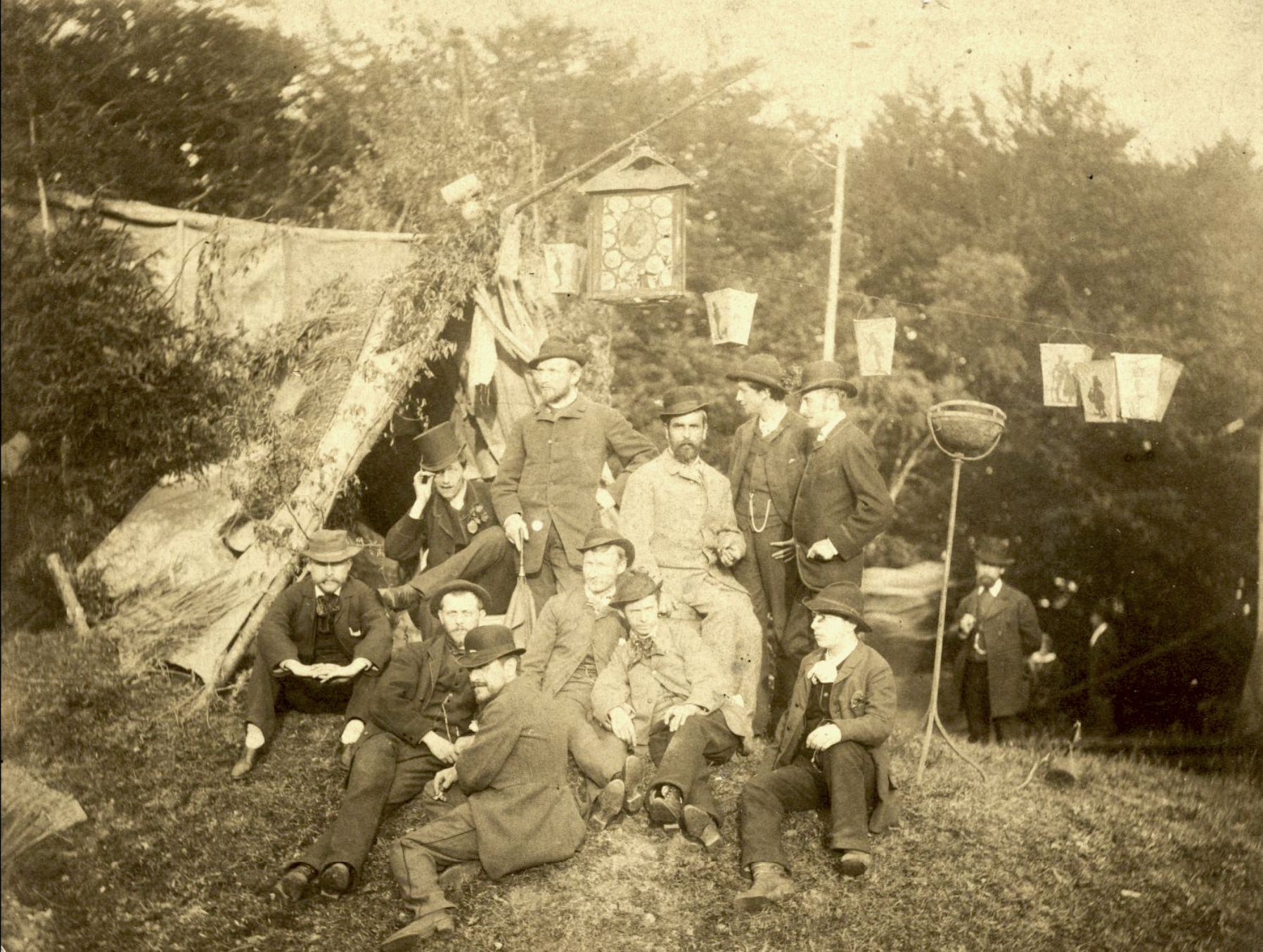
Bohe Club forms
After the first Indiana School of Art closes, some of its former students, including painter William Forsyth, create the Bohe Club, short for Bohemian, to pursue sketching and etching.
Pictured: William Forsyth is pictured (seated on the ground, second from right) as a young man with other artist friends, possibly the Bohe Club, sometime around 1885.
Credit: Indiana Historical Society
View Source
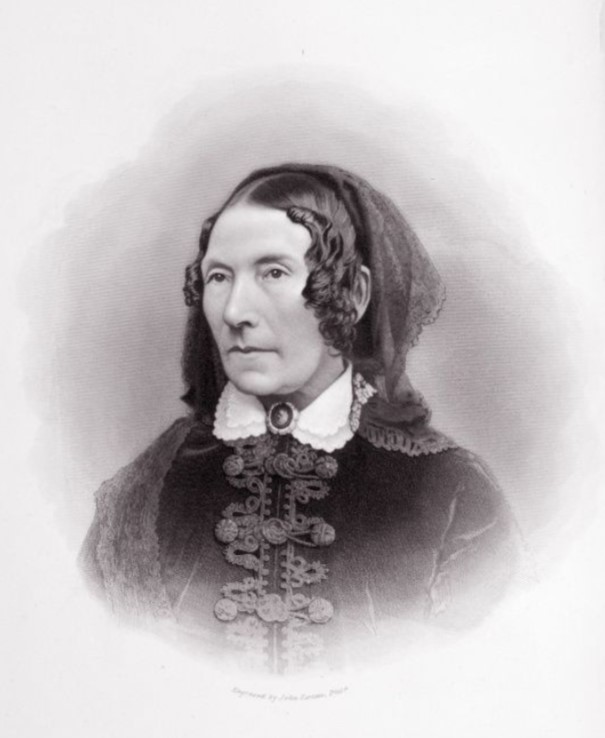
Sarah Bolton publishes The Life and Poems of Sarah T. Bolton
Wife of state librarian and publisher of the Indianapolis Gazette Nathaniel Bolton, she describes the early landscape and life of Indiana in her work.
Pictured: Sarah Tittle Barrett Bolton, 1880
Credit: Indiana Historical Society View Source
Painters T. C. Steele and J. Ottis Adams leave to study art in Munich
Herman Lieber, owner of the H. Lieber Company, the Fletcher family of bankers, and others sponsor the artists for study at the Royal Academy of Painting in Munich. William Forsyth follows them there in December 1881.
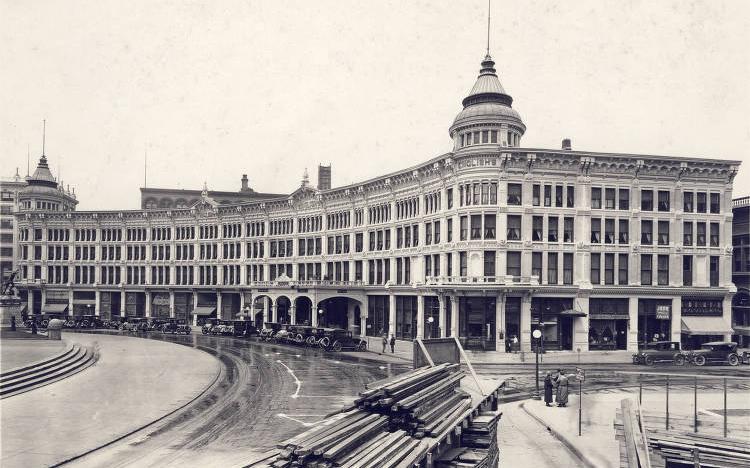
English Opera House opens
Hamlet is the theater’s premiere production. The first section of the hotel, constructed around the theater, follows in 1884 and a second section in 1896.
Pictured: English Hotel, 1923
Credit: Indiana Historical Society View Source
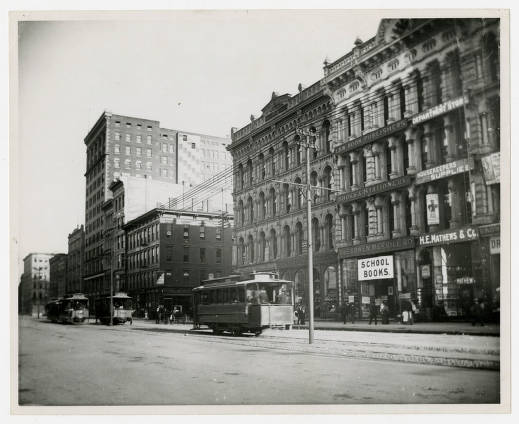
Bowen-Merrill and Company reprints James Whitcomb Riley’s first book of poems
Printing the second edition of the Hoosier poet’s The Old Swimmin’-Hole and ‘Leven More Poems launches the Indianapolis publishing firm’s recognition on the national scene.
Pictured: Bowen-Merrill Company, 1898
Credit: General photograph collection, Rare Books and Manuscripts, Indiana State Library View Source
Christ Church Cathedral Choir established
First comprised of only men and boys, the choir through the years earns an international reputation for musical excellence.
Art Association of Indianapolis mounts its first exhibition
Shortly after the organization is incorporated in October, the association holds an exhibition of 453 works by 137 artists. It runs for three weeks at the English Opera House and establishes the Art Association on the city’s cultural scene.
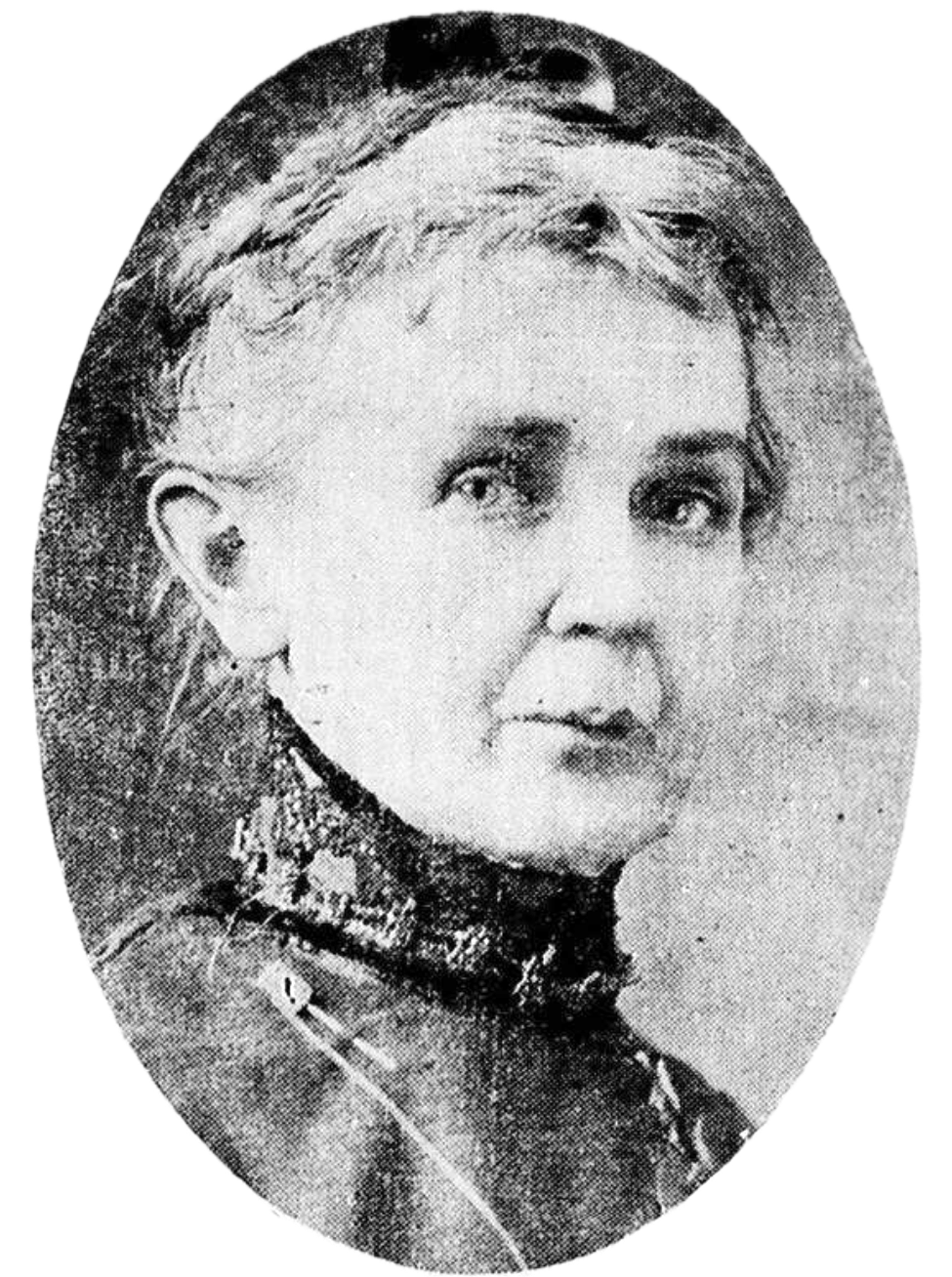
Indianapolis High School establishes an Art Department
Roda E. Selleck, an artist and educator, begins offering courses in drawing at the high school. The Art Department expands to include other media, as well as art history and appreciation.
Credit: Indianapolis Public Library
Berry Sulgrove publishes History of Indianapolis and Marion County, Indiana
Sulgrove, editor of the Indianapolis Journal, publishes the comprehensive political and biographical narrative.
German tradesmen found the Indianapolis Saenger Chor
Dedicated to the goals of the labor reform movement in the late 19th century, the tradesmen establish the group to sing songs of solidarity and justice for the working classes.

Dedication of Tomlinson Hall
The hall, which adjoins the City Market, opens as an important public meeting place with the Grand Army of the Republic Music Festival. The festival raises $5,000 for construction of the Soldiers and Sailors Monument on the Circle.
Pictured: Tomlinson Hall, 1893
Credit: Indiana Historical Society
View Source
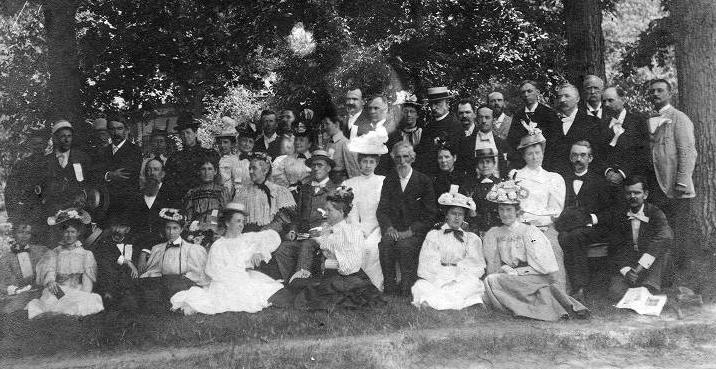
Western Association of Writers organizes
A group of writers convenes at Plymouth Church to establish the organization and elects Crawfordsville novelist Maurice Thompson president. The association remains active until 1907.
Pictured: Western Association of Writers Group Photograph, Winona Lake, ca. 1896
Credit: Indiana Historical Society View Source

Construction begins on the Indiana State Soldiers and Sailors Monument
Construction officially begins on the Civil War Memorial using the design submitted by German architect Bruno Schmitz and funds that the General Assembly appropriated for this purpose in 1887.
Pictured: Soldiers and Sailors Monument, 1888
Credit: Indiana Historical Society
View Source
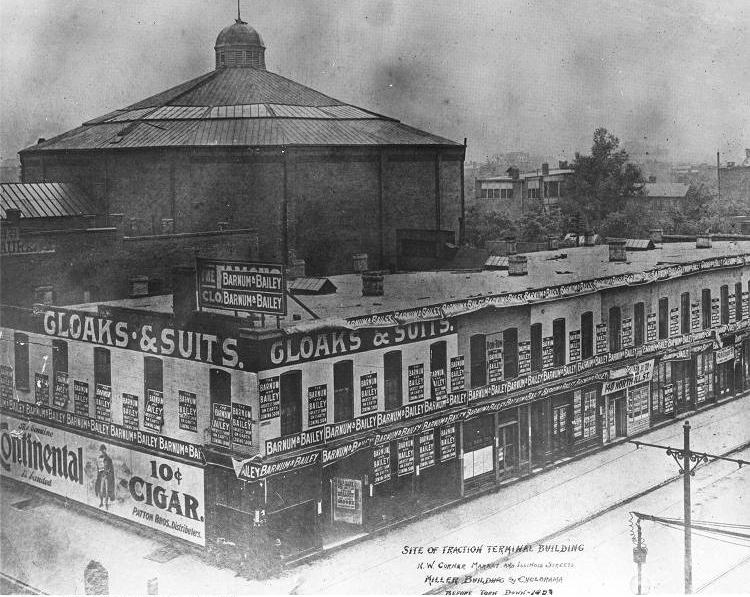
Indianapolis joins Cyclorama trend
Located on the north side of Market Street just west of Illinois Street, the Cyclorama building exhibits life-size Civil War murals and later serves as a zoo.
Pictured: Cyclorama Building on West Market Street, ca. 1890
Credit: Bass Photo Co Collection, Indiana Historical Society View Source
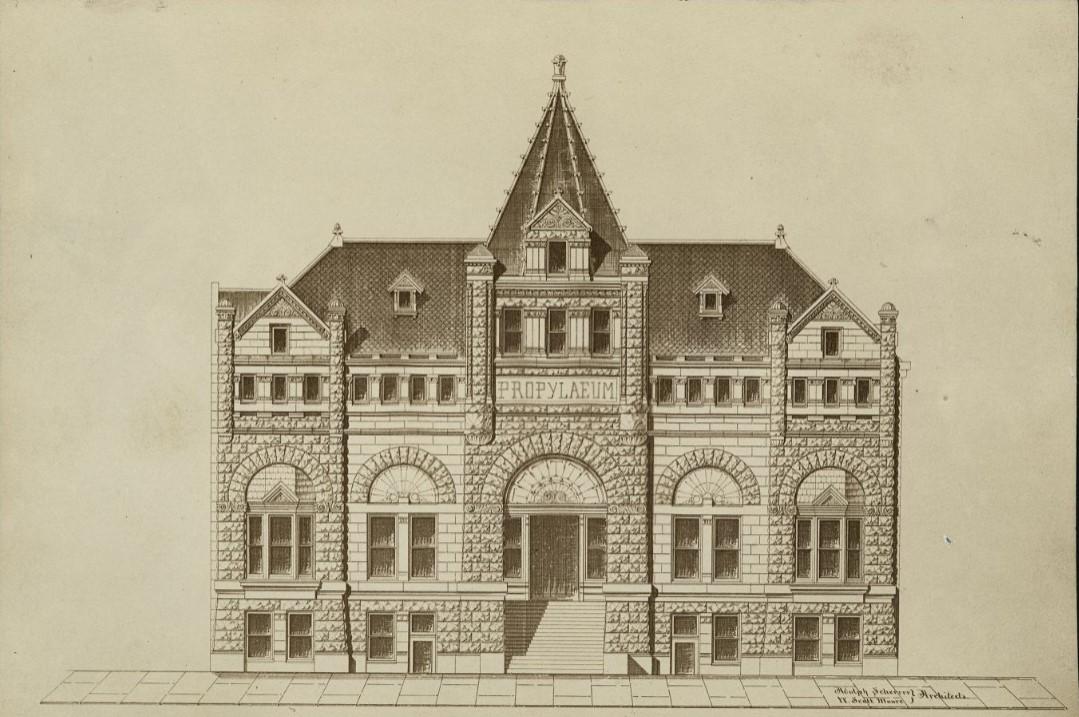
Indianapolis Propylaeum incorporates
The Propylaeum’s Articles of Association provides that stock is acquired, purchased, and held only by women. The building is to be used for cultural and educational pursuits, particularly for women.
Pictured: Architectural drawing of the original Propylaeum located at 17 East North Street, ca. 1900
Credit: Indiana Historical Society
View Source
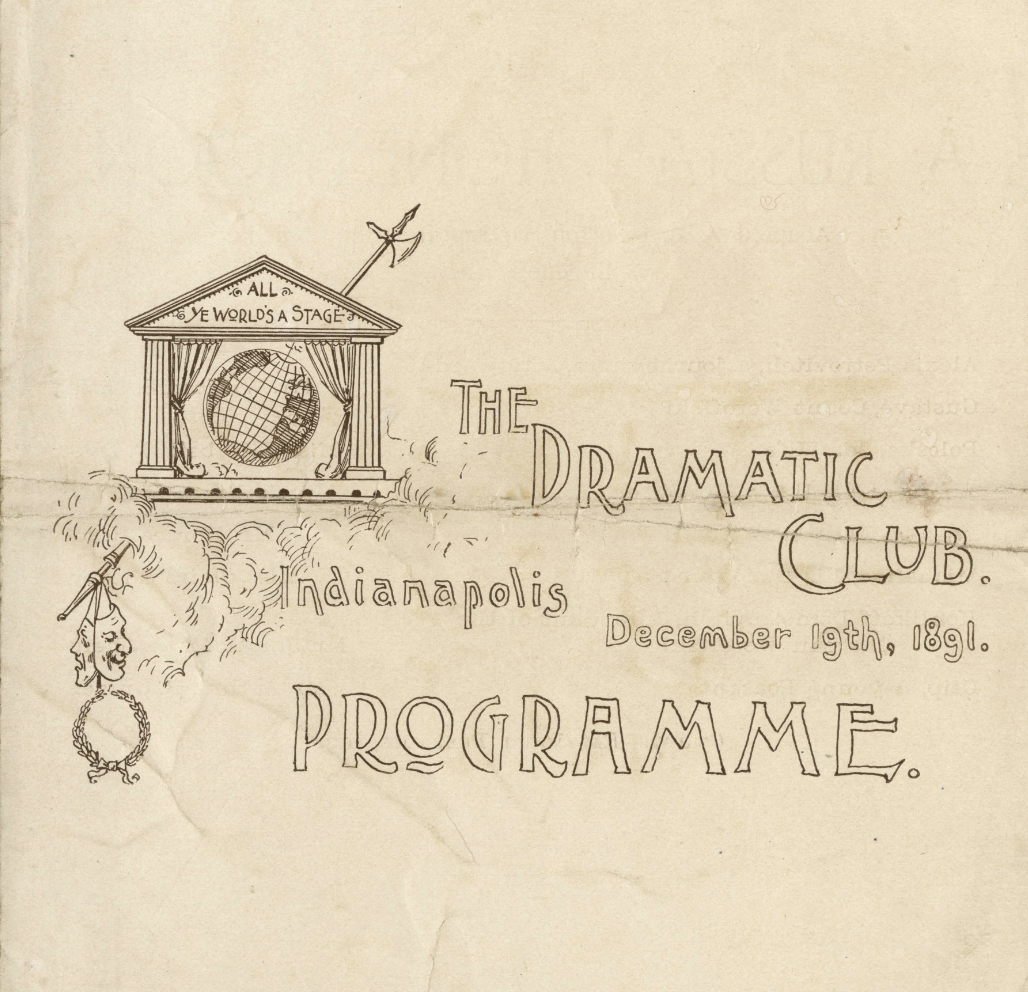
Precursor to Dramatic Club forms
Young women join the amateur theater group, first known as the Matinee Club. It reorganizes as the Dramatic Club in 1890 with the addition of male members.
Pictured: The Dramatic Club Programme, December 19, 1891
Credit: Indiana Historical Society View Source
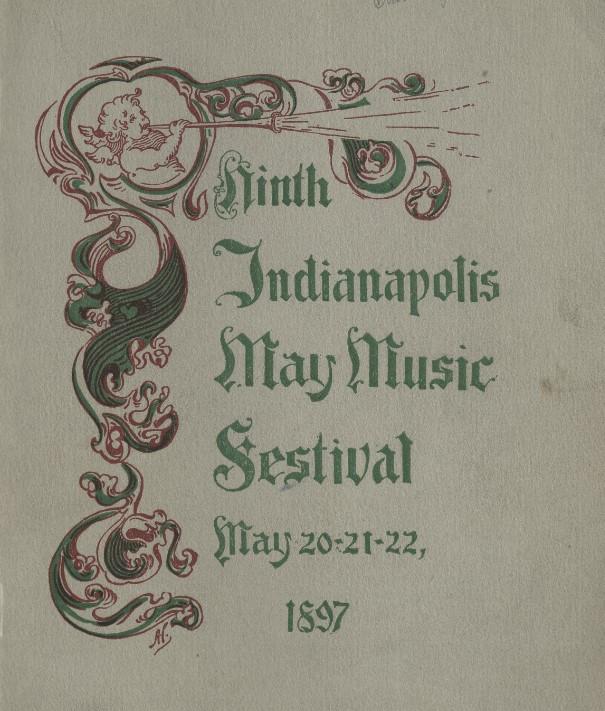
May Music Festival
The event follows the success of an 1886 music festival held for the dedication of Tomlinson Hall. It takes place annually until 1898.
Pictured: Ninth Annual May Music Festival program, 1897
Credit: Indiana State Library
View Source
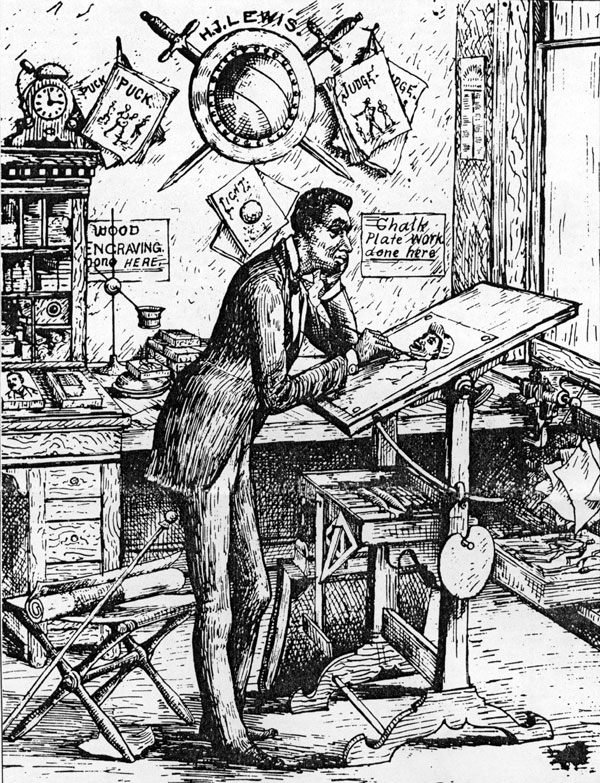
Work of artist Henry Jackson Lewis appears in the Indianapolis Freeman
Lewis becomes the first African American in the U.S. to work as an editorial illustrator and cartoonist.
Pictured: H. J. Lewis in the offices of The Freeman in Indianapolis, ca. 1890
Credit: H. J. Lewis via Wikimedia Commons View Source
The Grand Opera House uses electric lighting
Following a trend begun in the U.S. in Boston in 1882, the theater becomes the first in the city to use electric lighting, Most theaters switch to electric lighting during the 1890s.
Local artists establish the Portfolio Club
Mary Lakin Steele, the first wife of painter T. C. Steele, sparks the idea of forming a club to discuss the arts in Indianapolis. It promotes active participation in and support of the arts in all its forms.
Pictured: Front page of the Portfolio Club constitution, 1890
Credit: Indiana Historical Society
View Source
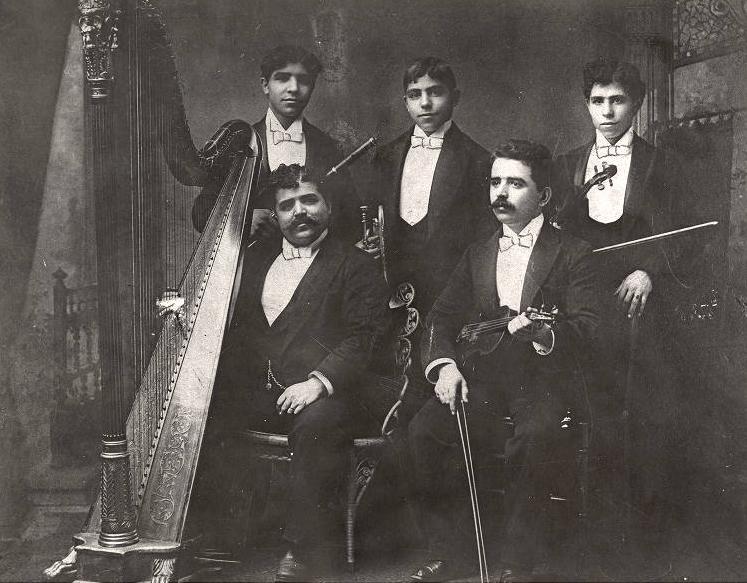
Indianapolis Protective Union organizes
Guy and Domenico Montani, local Italian musicians, help organize the city’s first musicians’ union and the third such union in the country.
Pictured: Montani Brothers Orchestra, 1904
Credit: Indiana Historical Society View Source
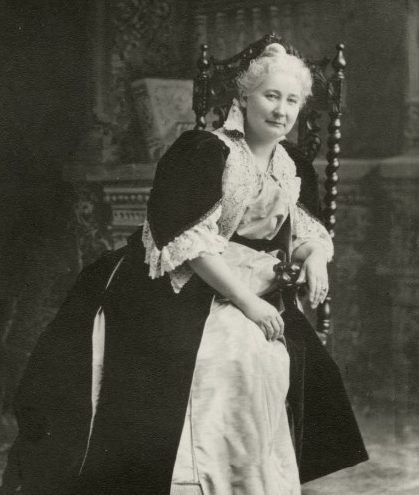
First meeting of the Contemporary Club of Indianapolis
Organized in the home of suffragist May Wright Sewall, the Contemporary Club cultivates intellectual pursuits and explores pressing social issues and concerns.
Pictured: May Wright Sewall, 1902
Credit: Indiana Historical SocietyView Source
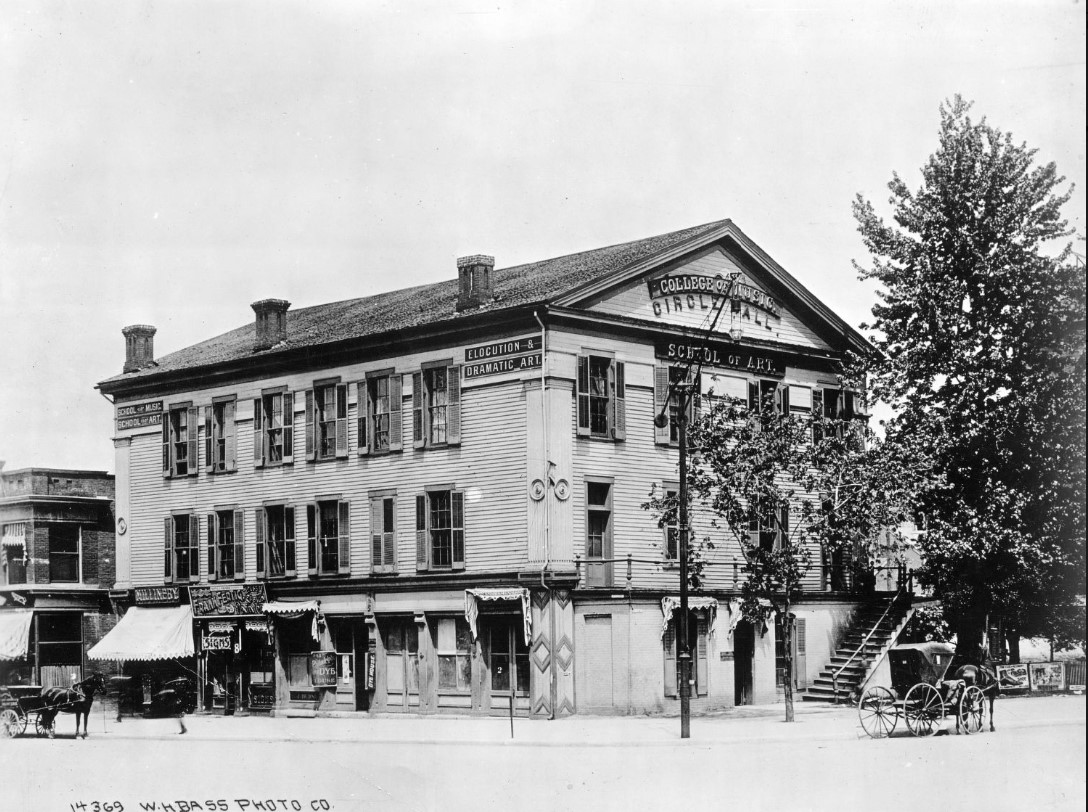
Second Indiana School of Art incorporates
The Art Association of Indianapolis incorporates the art school, which T. C. Steele opened in 1889. The school closes in 1897.
Pictured: Indiana School of Art in the Circle Hall Building on Monument Circle, ca. 1890s
Credit: Bass Photo Co Collection, Indiana Historical Society View Source
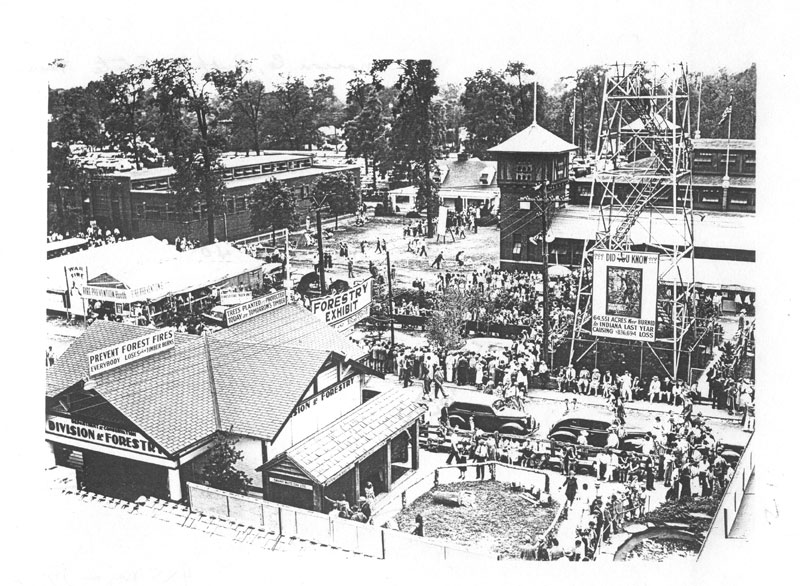
Indiana State Fair opens at new site
The Indiana State Fair opens at its present site at East 38th Street and Fall Creek Parkway with 72 buildings, a mile racetrack, and a 6,000-seat grandstand.
Pictured: Indiana State Fair, ca. 1940s
Credit: Indiana University Indianapolis
View Source
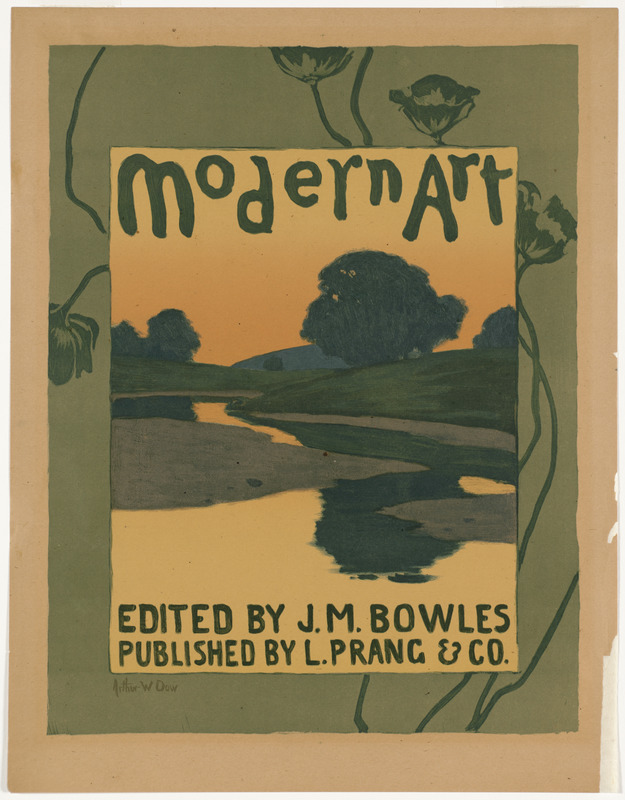
Joseph Bowles publishes Modern Art
Bowles, an artist and employee of the H. Lieber Company, founds the avant-garde art journal, the first magazine in its field. Hollenbeck Press prints the publication in Indianapolis until 1895.
Pictured: Modern art edited by J. M. Bowles, 1895
Credit: Public domain via Boston Public Library
View Source
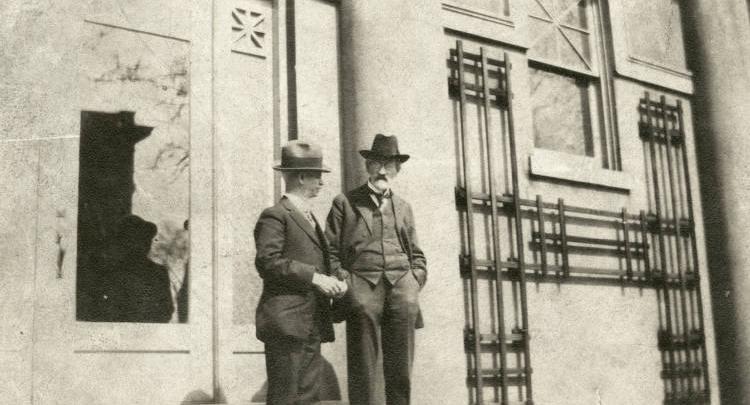
Hoosier Group forms
The Central Art Association brings together the works of J. Ottis Adams, William Forsyth, Richard B. Gruelle, Otto Stark, and T. C. Steele in a show in Chicago, titled “Five Hoosier Painters.”
Pictured: William J. Forsyth and T. C. Steele outside the John Herron building, ca. 1915
Credit: Indiana Historical Society View Source
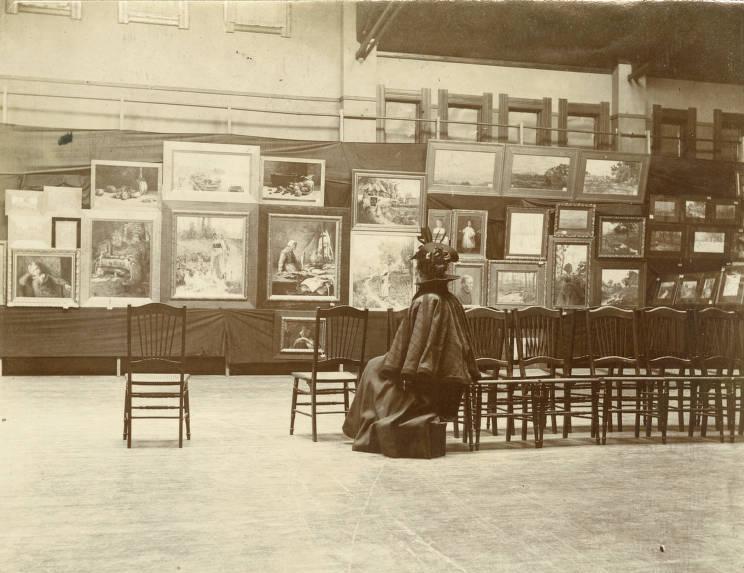
John Herron bequeaths funds to establish a museum and art school
Herron bequeaths $250,000 to the Art Association of Indianapolis with the stipulation that the funds be used to build a museum and art school bearing his name.
Pictured: Interior of the Herron Galleries, ca. 1900s
Credit: Indiana Historical Society View Source
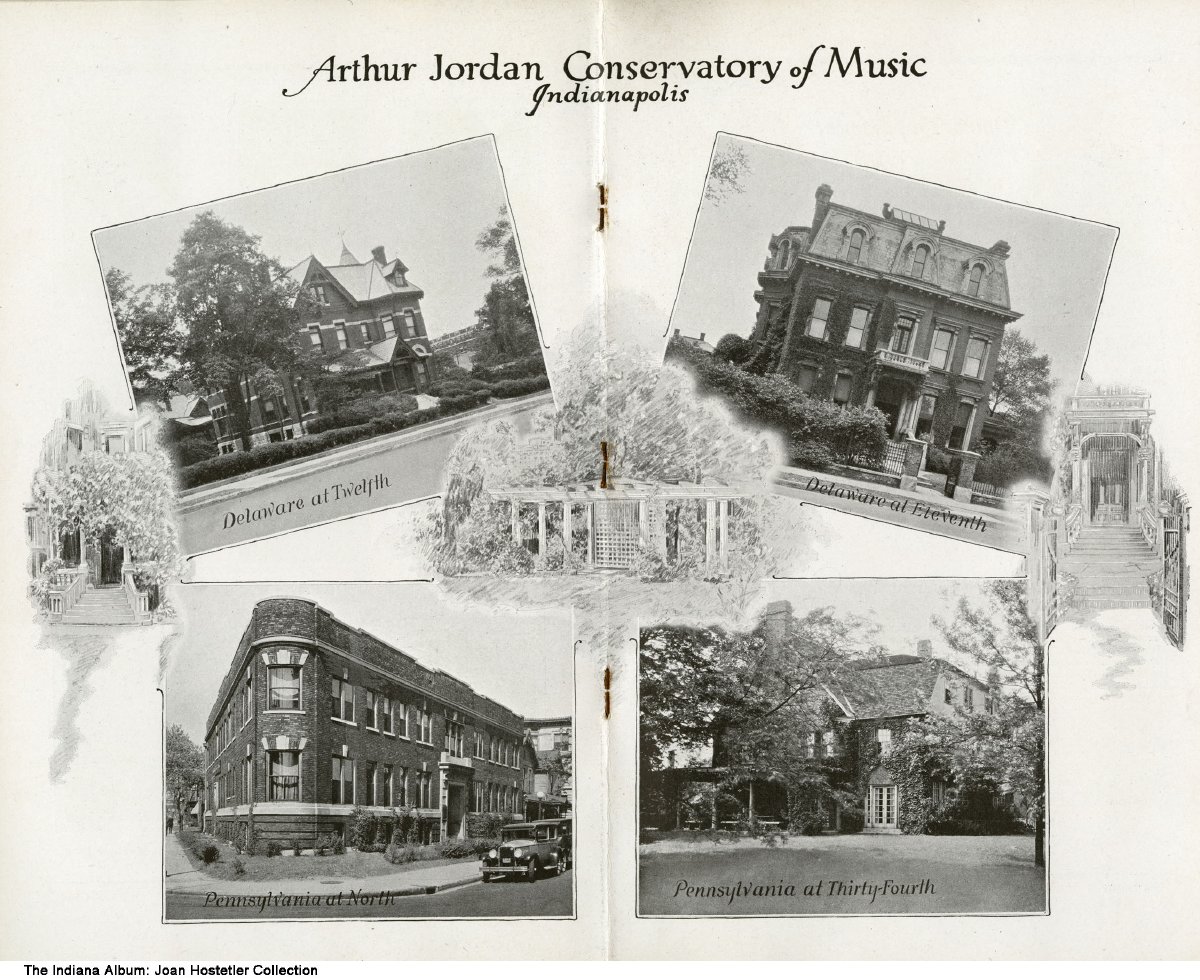
Local musicians found the Metropolitan School of Music
Four private music teachers establish the school, which merges with the Indiana College of Music and Fine Arts in 1928 and is renamed the Arthur Jordan Conservatory of Music. The conservatory becomes part of Butler University in 1953.
Pictured: Arthur Jordan Conservatory of Music buildings, ca. 1935
Credit: The Indiana Album: Joan Hostetler Collection View Source
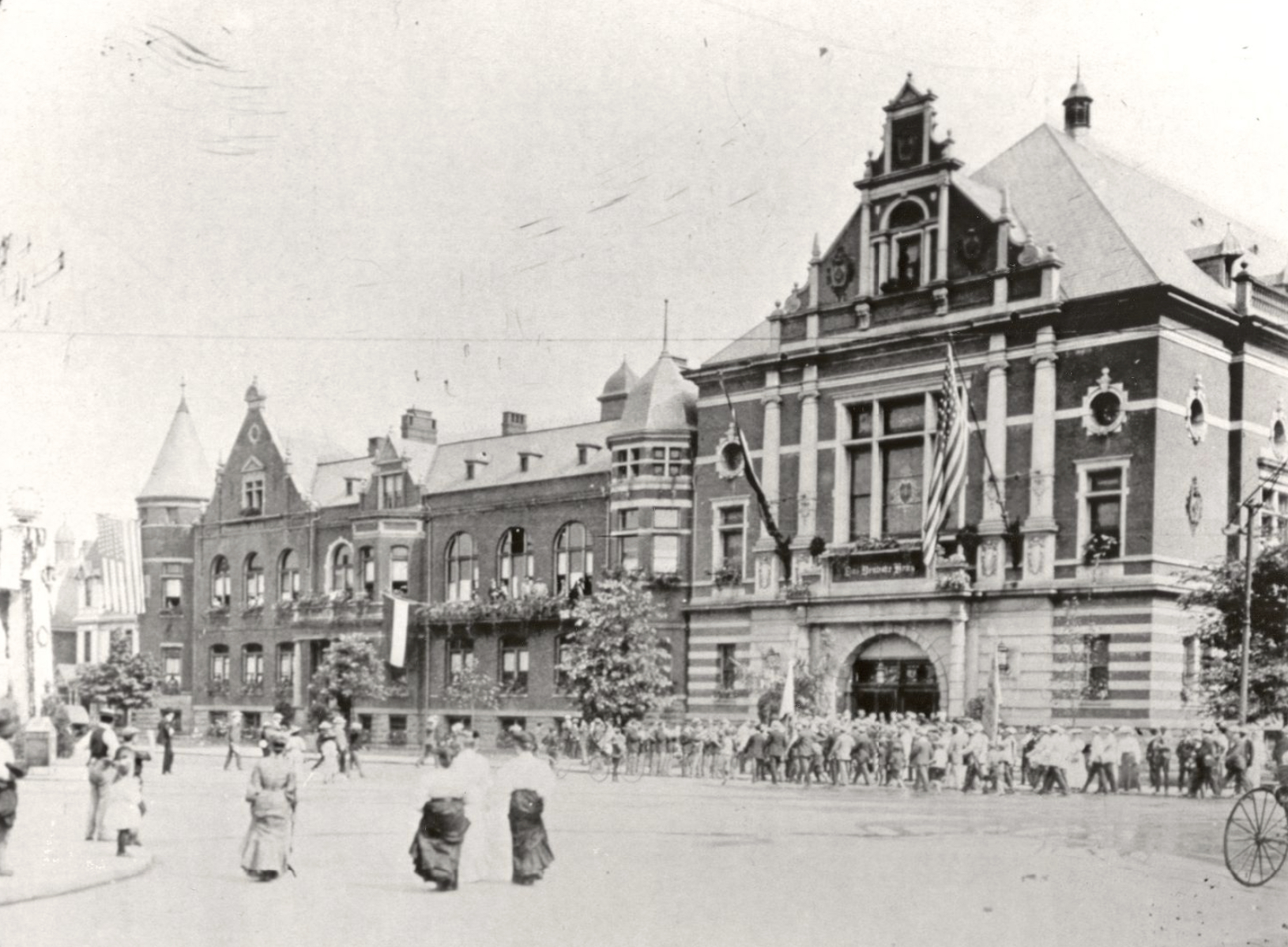
Das Deutsche Haus opens
Herbert Lieber gives the dedication speech, lauding the structure as the “embodiment of the Americanizing process.” Designed by Bernard Vonnegut, the building becomes the center of German American culture.
Pictured: Das Deutsche Haus/Athenaeum, 1905
Credit: Indiana Historical Society View Source
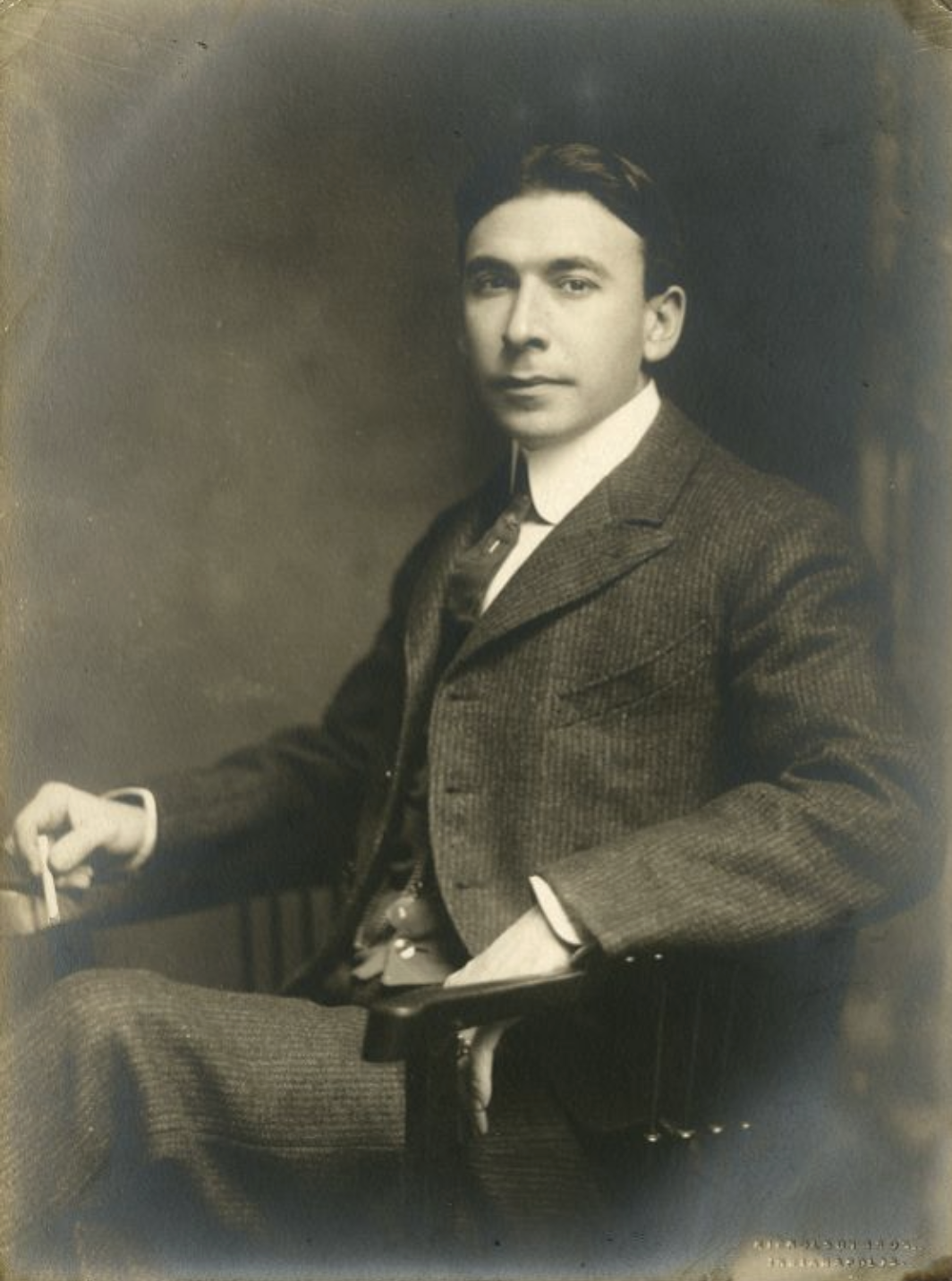
Booth Tarkington publishes The Gentleman from Indiana
The book propels Tarkington, an Indianapolis native, into the national limelight. In Indianapolis, the book is less well received, with residents feeling mocked.
Pictured: Booth Tarkington as a young adult, ca. 1895
Credit: Indiana Historical Society
View Source
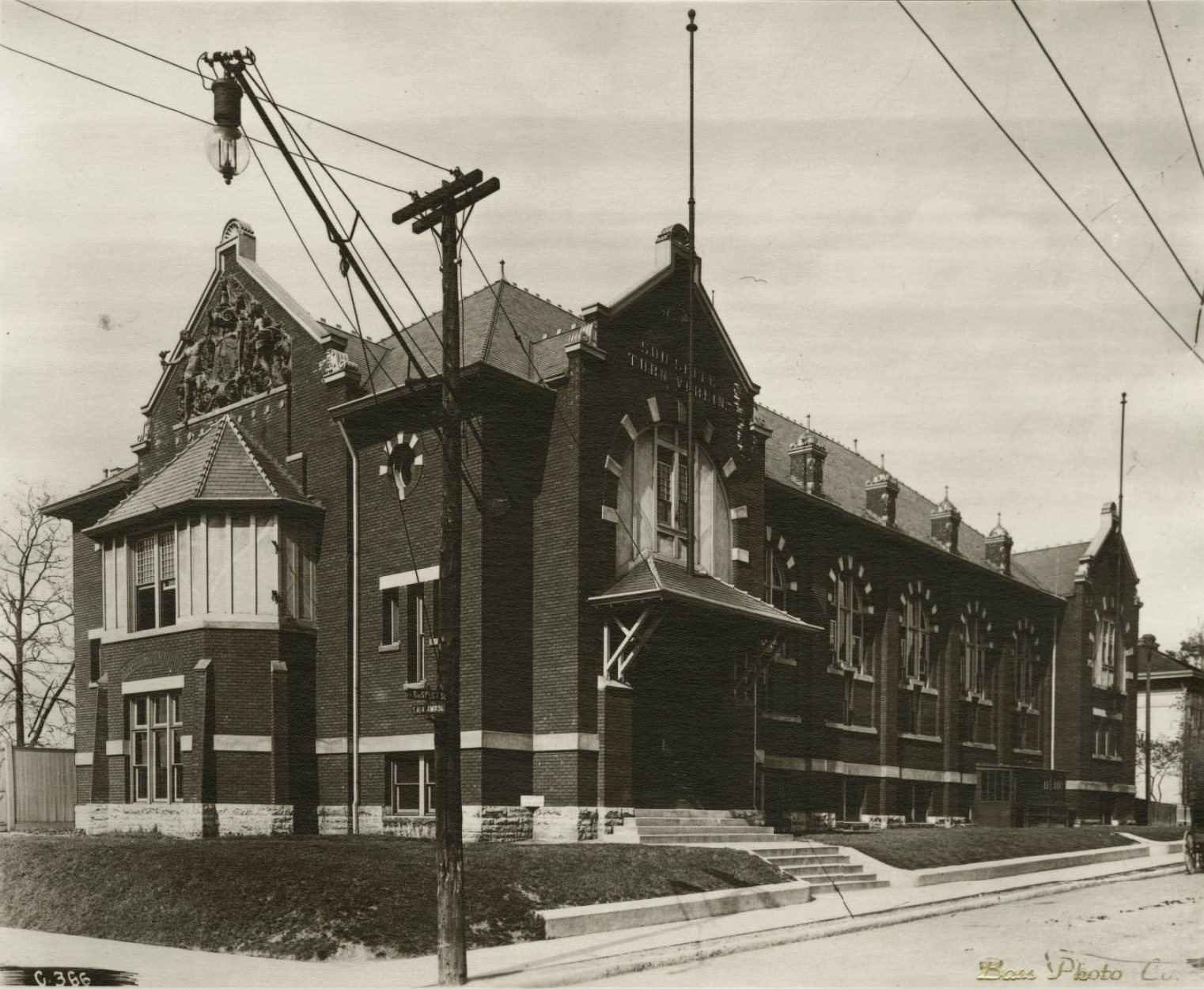
Southside Turnverein Hall opens
The hall, designed by Vonnegut & Bohn and completed in November 1900, contains a gym bordered by a proscenium stage and a bowling alley. The building serves the group of Turners that broke away from the Socialer Turnverein to form its own organization in 1893.
Pictured: Southside Turnverein, 1908
Credit: Bass Photo Co Collection, Indiana Historical Society View Source
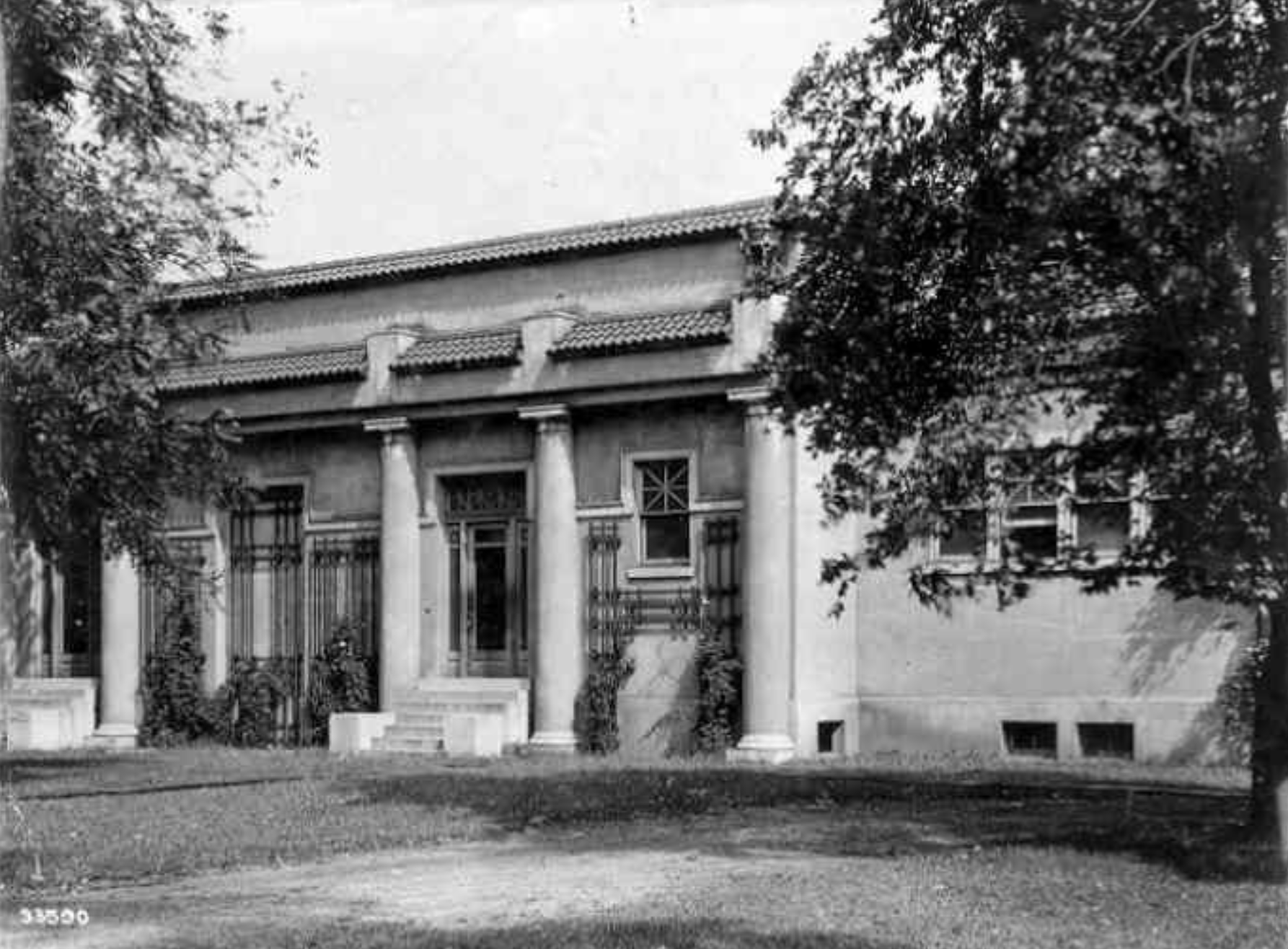
John Herron Art Institute opens
Using a bequest left by John Herron, the Art Association of Indianapolis establishes the Institute to operate an art school and museum. The art school opens with 10 pupils and 5 teachers on Talbott Street at T. C. Steele’s former home.
Pictured: The Herron building was built in 1906 and torn down in 1928.
Credit: Indiana State Library
View Source
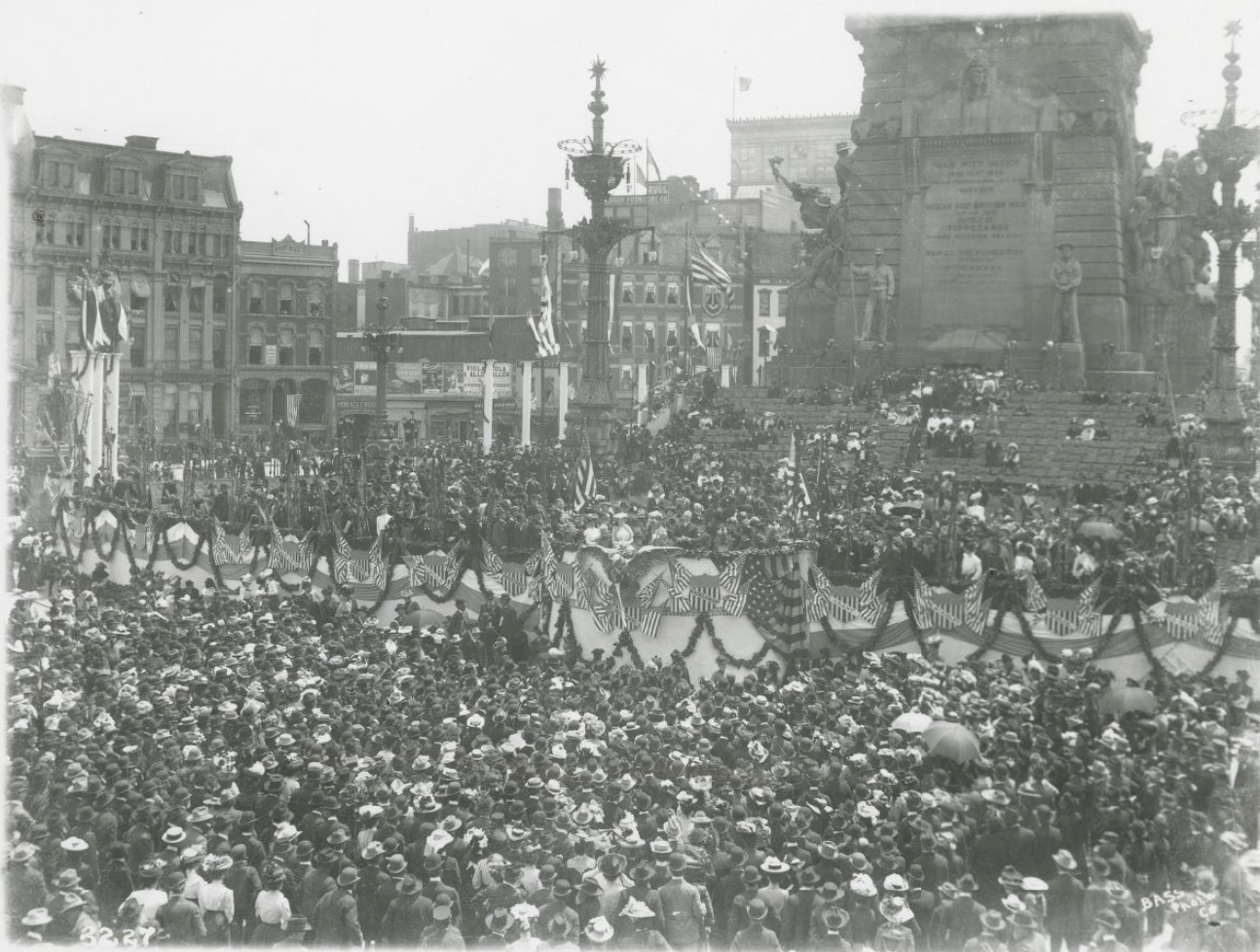
Indiana Soldiers and Sailors Monument dedication
At the gala event, Civil War general and author Lew Wallace serves as master of ceremonies, and Hoosier poet James Whitcomb Riley recites a poem that John Philip Sousa transformed into a march.
Pictured: After nearly 14 years of construction, the Soldiers and Sailors Monument was officially dedicated with a grand event and thousands of spectators.
Credit: Bass Photo Co Collection, Indiana Historical Society
View Source
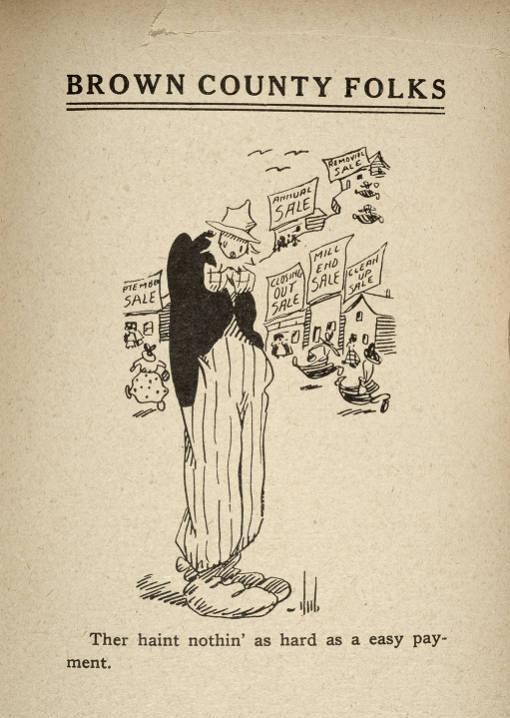
Kin Hubbard’s character Abe Martin appears in the Indianapolis News
Hubbard creates the folksy character, who spouts country wisdom, during the 1904 presidential election. The character becomes the basis of Hubbard’s nationally syndicated newspaper column. Books featuring the character begin publication in 1906.
Pictured: Brown County Folks featuring Frank McKinney “Kin” Hubbard’s cartoon character, Abe Martin, 1910
Credit: Indiana Historical Society View Source
Meredith Nicholson publishes The House of a Thousand Candles
The Indianapolis author publishes the national bestseller and his most famous novel. The novel is set in Indiana.
A People’s Concert Association forms
The association organizes low-cost concerts that are accessible to a wider audience.
George Cottman publishes Indiana Magazine of History
Cottman, a historian, establishes the Indiana Magazine of History and serves as its editor, publisher, printer, and author until the Indiana Historical Society takes it over in 1907.
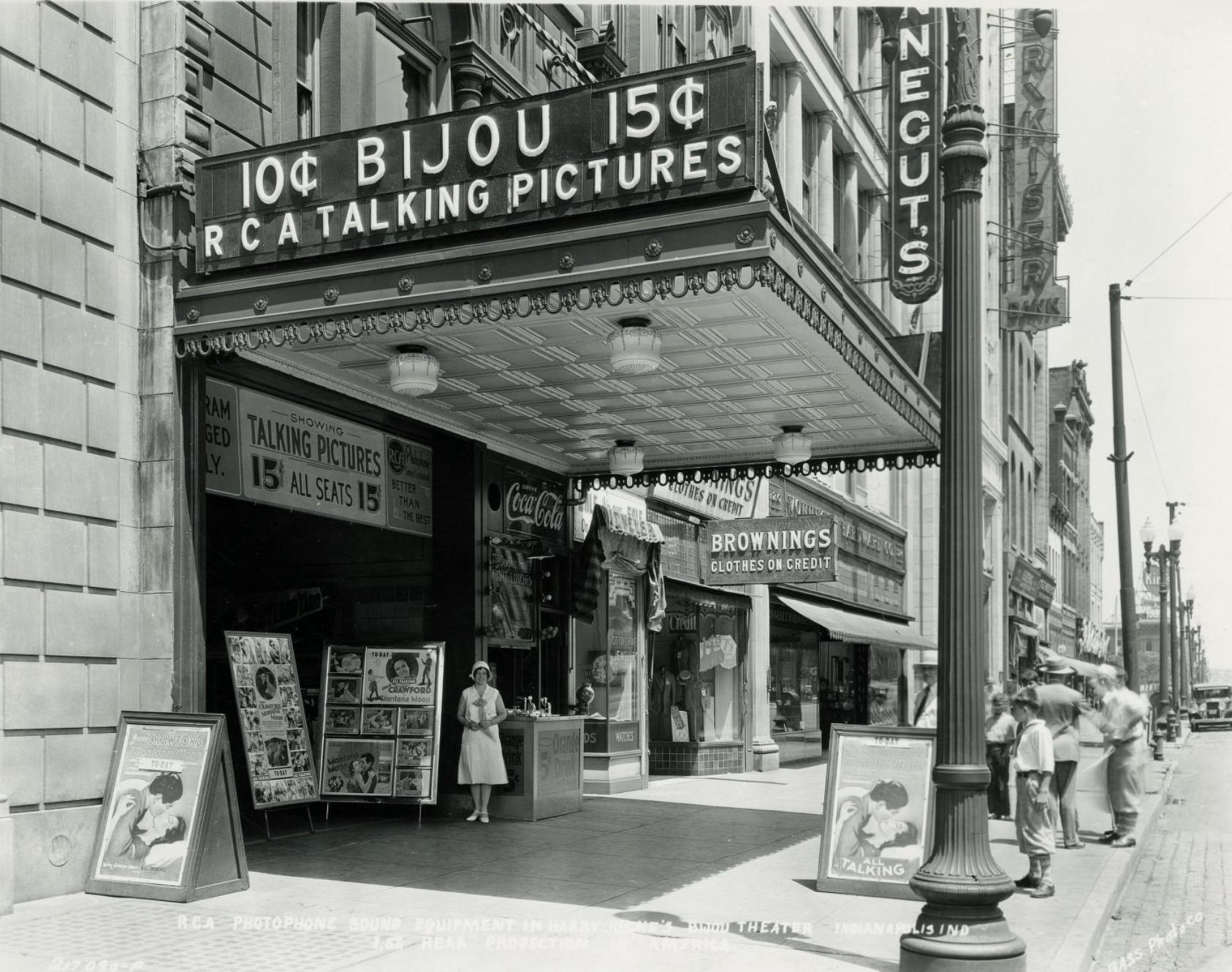
First movie theater opens
The city’s first movie theater—the Bijou, a converted vaudeville house—opens on East Washington Street. Bijou shows half-hour films viewed during the lunch hour.
Pictured: Bijou Theatre, 1930
Credit: Bass Photo Co Collection, Indiana Historical Society
View Source
Indiana State Archives created
Founded as part of the Indiana State Library and housed in the State House, the archives collect and preserve state government records of value.
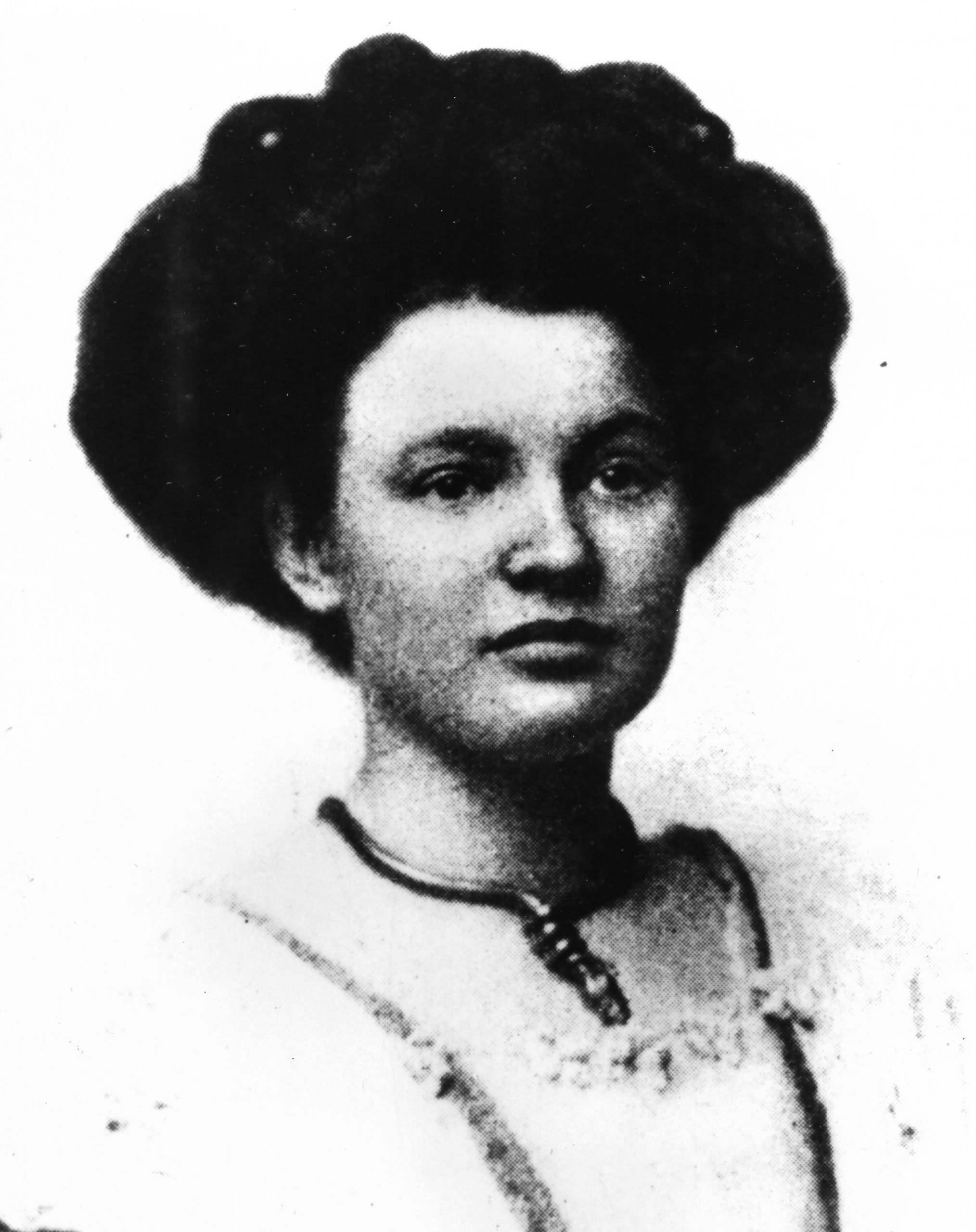
May Aufderheide publishes her first ragtime composition
The Indianapolis ragtime pianist-composer publishes “Dusty Rag” in May. She publishes 19 pieces between 1908 and 1912, several of which are financial successes.
Pictured: May Frances Aufderheide, n.d.
Credit: Fair use via Wikimedia Commons View Source
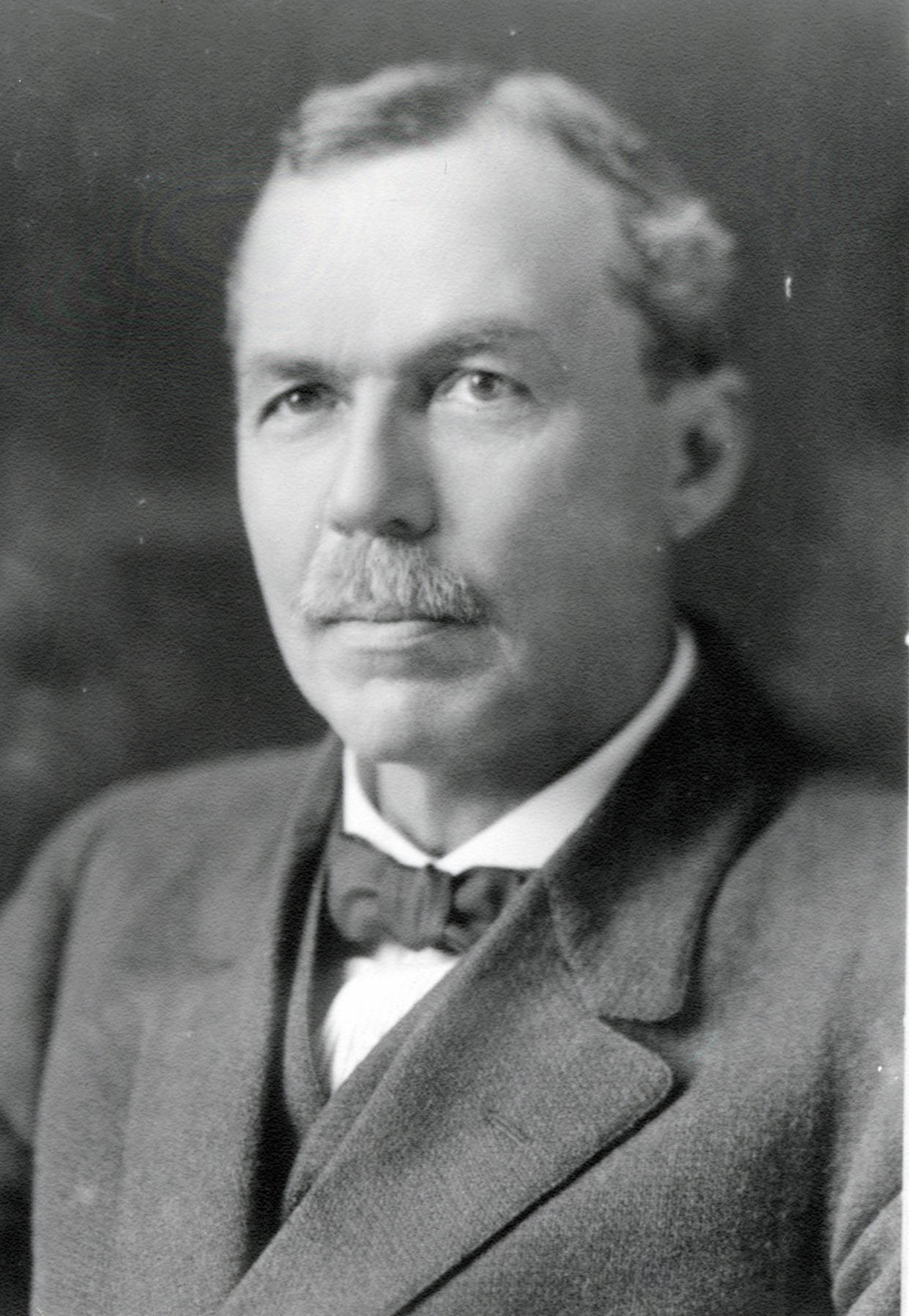
Jacob Piatt Dunn publishes Greater Indianapolis
Dunn’s two-volume work serves as the definitive resource on early Indianapolis history.
Pictured: Jacob P. Dunn Jr., ca. 1900
Credit: Indiana Historical SocietyView Source
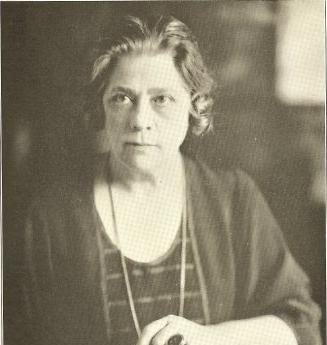
Ona B. Talbot establishes her Fine Arts Association
Ona Bryant Talbot begins her own organization aimed at bringing internationally known music artists to Indianapolis audiences.
Pictured: Ona B. Talbot, n.d.
Credit: History of Indiana from Its Exploration to 1922, Volume 4View Source
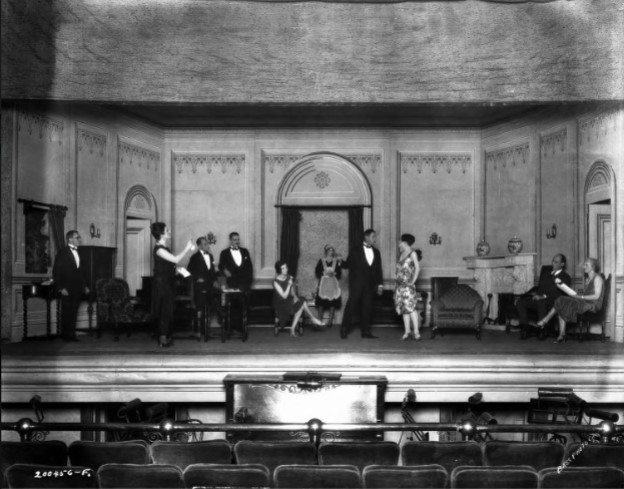
Murat Temple adds theater
The Shuberts, important U.S. professional theater owners and operators, lease the theater from 1910 to 1930 and bring in a variety of events and shows, including Broadway musicals. It serves as a home for the Indianapolis Symphony Orchestra from 1930 to 1962 and is renamed Old National Theatre in 2014.
Pictured: Dramatic Club, Murat Theater Stage, 1926
Credit: Bass Photo Co Collection, Indiana Historical Society View Source
First Indianapolis Symphony Orchestra forms
The orchestra, composed primarily of German musicians, produces seven seasons of concerts. It folds in November 1917 because of World War I, anti-German sentiment.
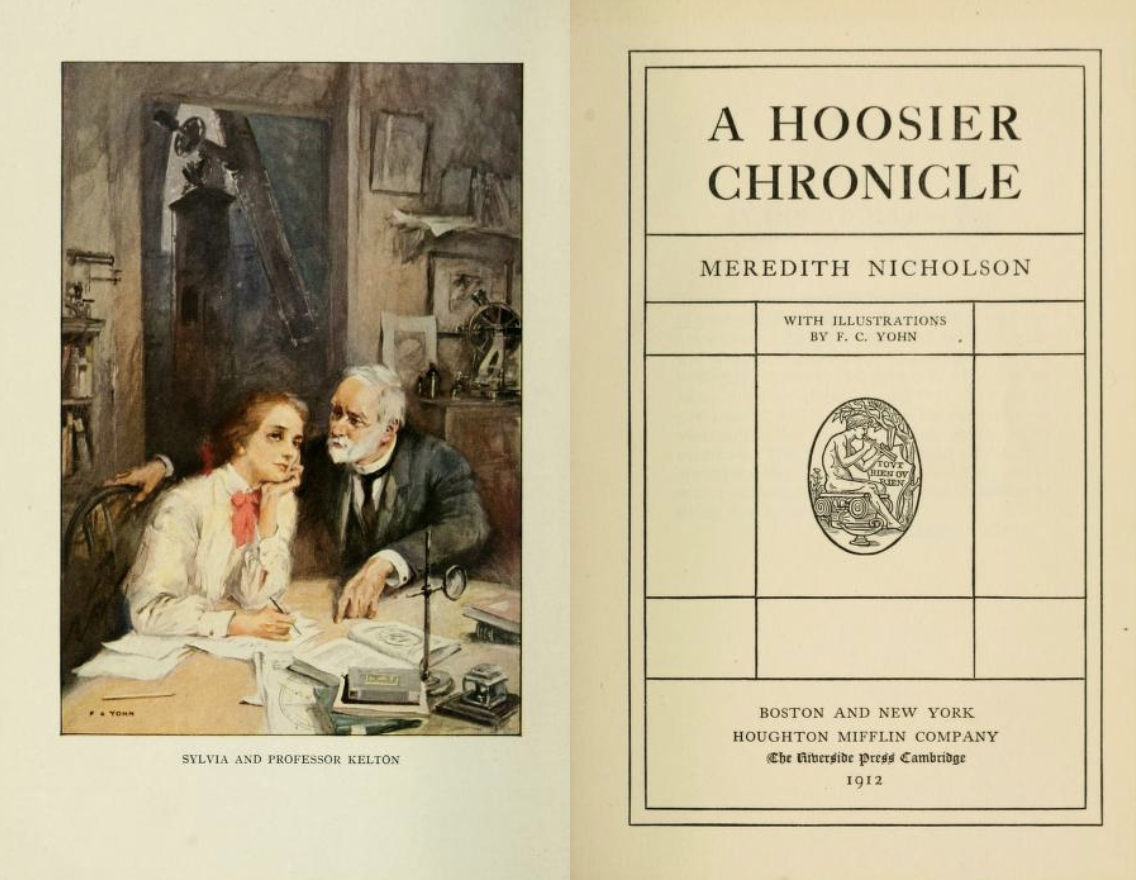
Publication of A Hoosier Chronicle
A Hoosier Chronicle, a novel written by Indianapolis author Meredith Nicholson, explores politics and society in central Indiana, particularly Indianapolis, in the early 20th century.
Pictured: The title page of A Hoosier Chronicle, 1912
Credit: Internet Archive View Source
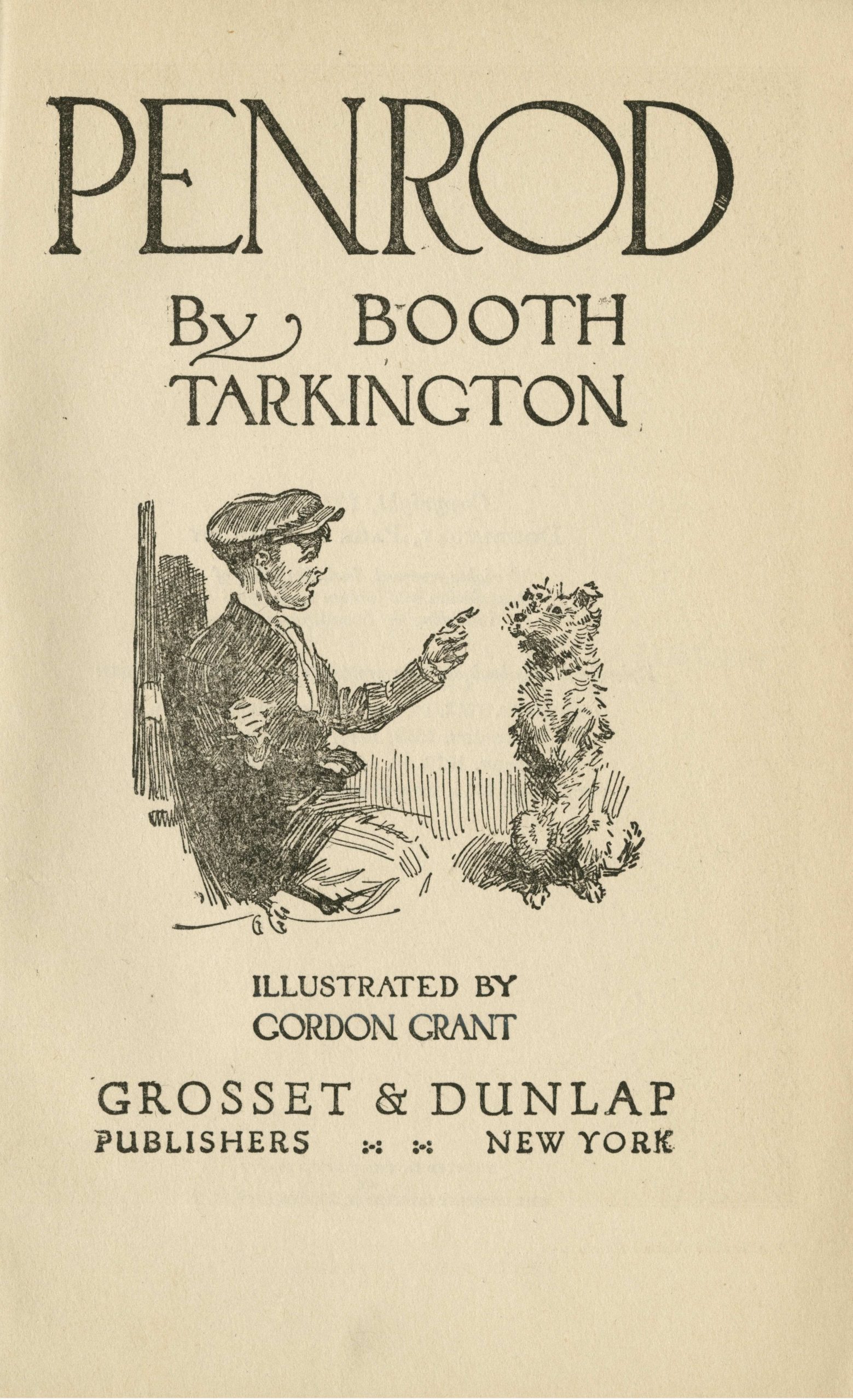
Booth Tarkington publishes Penrod stories
Tarkington bases his juvenile Penrod stories upon his own experiences growing up in Indianapolis. First serialized in magazines in 1913, the stories are collected and published in book form and followed by two other collections.
Pictured: Title Page of Penrod by Booth Tarkington, 1914
Credit: Indiana Historical Society View Source
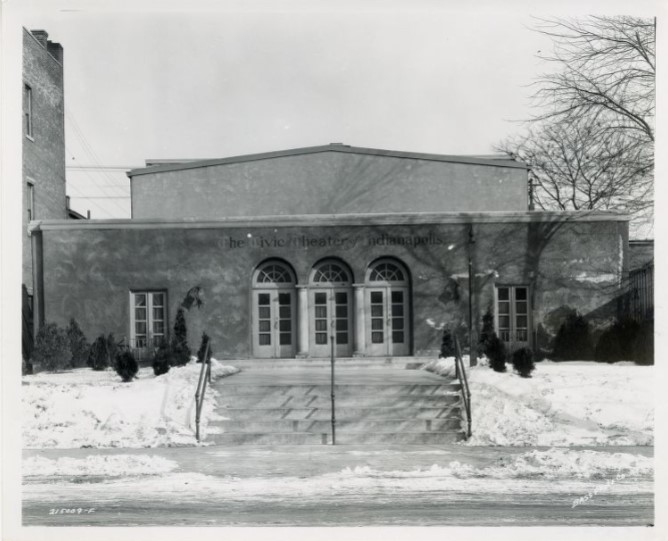
Little Theatre Society of Indiana forms
Founded as the first community theater in the city, it becomes known as Civic Theatre of Indianapolis in 1929 and then Booth Tarkington Civic Theater when it moves to Carmel in 2011.
Pictured: Civic Theatre building (originally named the Little Theatre Society), 1930
Credit: Bass Photo Co Collection, Indiana Historical Society
View Source
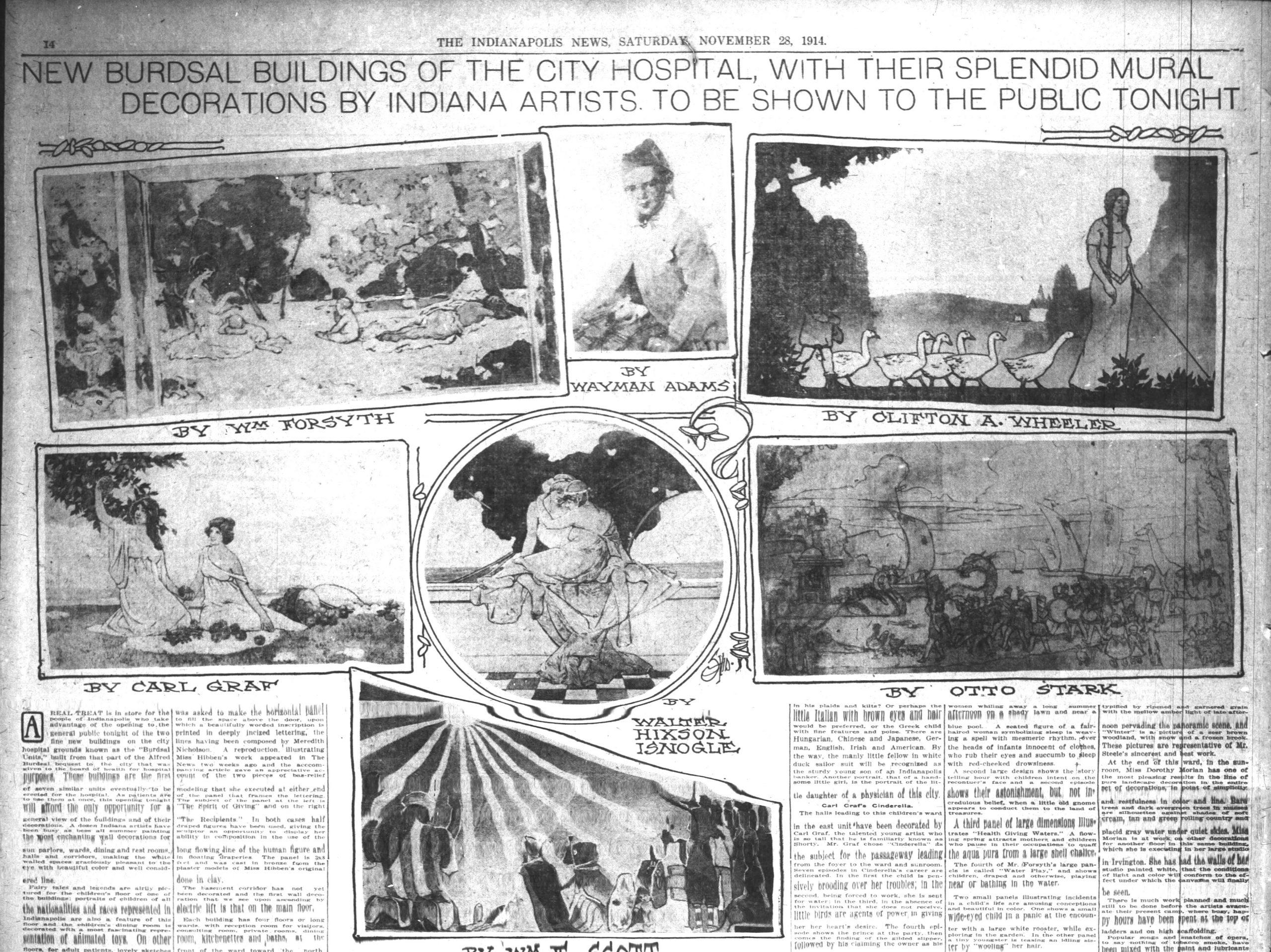
City Hospital mural project
St. Margaret’s Hospital Guild provides funding to beautify City Hospital’s new Burdsall Unit. Sixteen Indiana artists create large-scale murals to cover the units’ interior walls.
Pictured: Newsclipping featuring some of the artwork for the mural project, 1914
Credit: Indianapolis News
View Source
Free summer concerts begin at Indianapolis parks
The Indianapolis Parks Department starts its annual free summer concert series at Garfield Park.
Indianapolis Foundation promotes humanities
The publicly supported philanthropic institution is created to promote the welfare of residents of Indianapolis including human services, education, libraries, arts and culture, and community development.
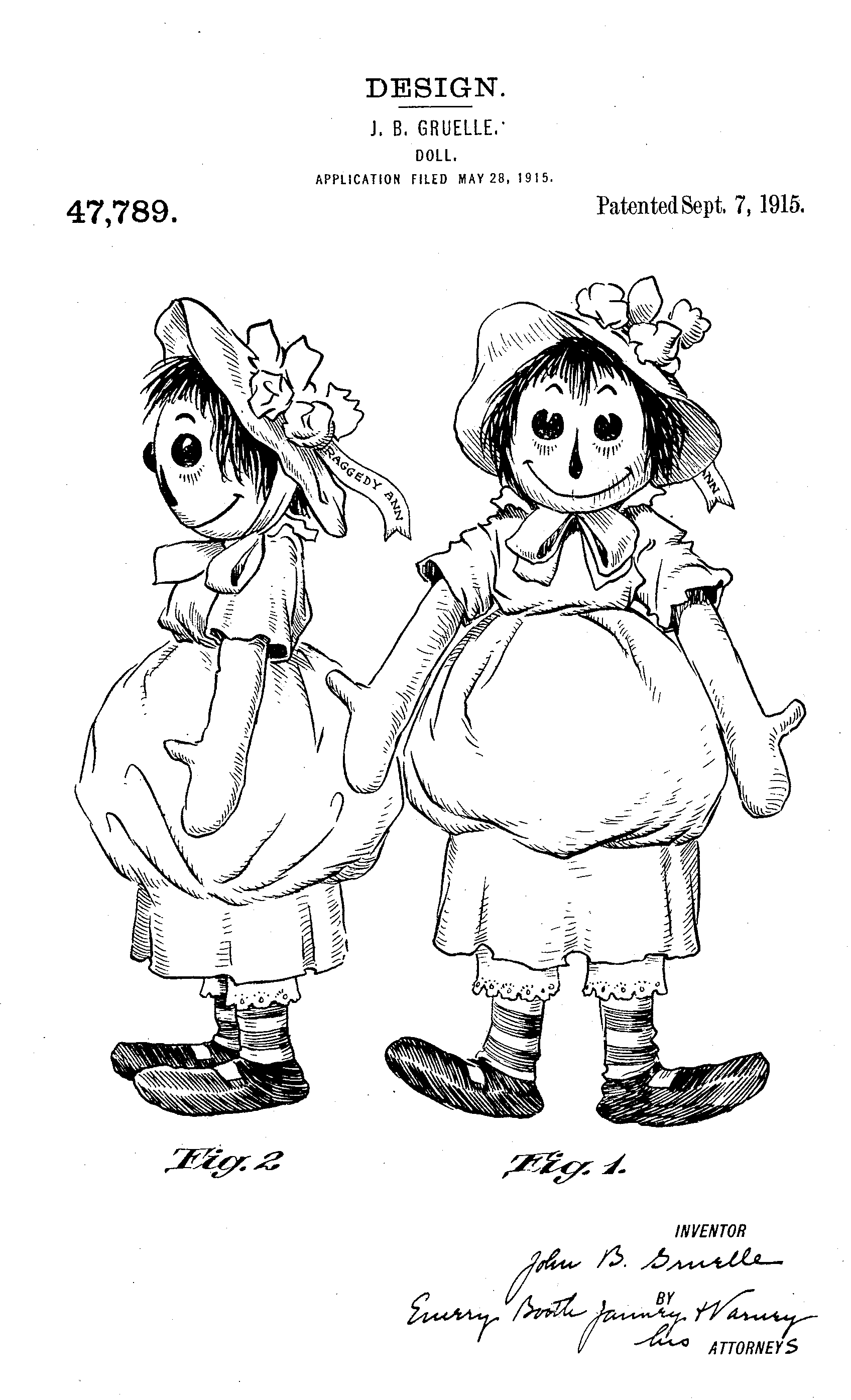
John Barton Gruelle receives patent for Raggedy Ann doll
Former cartoonist John Barton Gruelle patents his Raggedy Ann doll. Three years later, he publishes Raggedy Ann Stories, followed by a Raggedy Andy volume.
Pictured: Raggedy Ann doll patent, 1915
Credit: Public domain
View Source
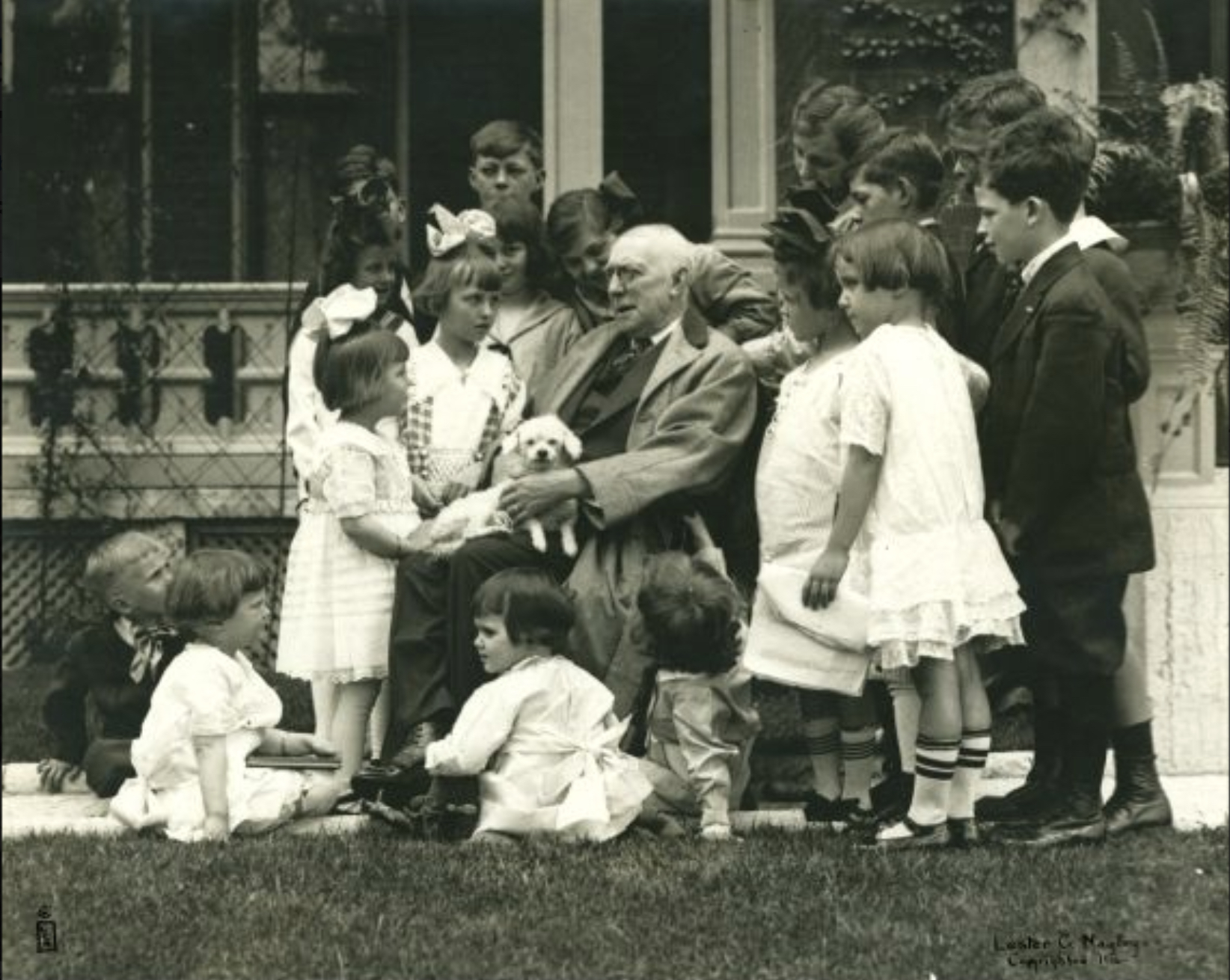
Riley Day observed nationwide
U.S. Secretary of the Interior Franklin K. Lane calls for the national observance of poet James Whitcomb Riley’s birthday. Locally, the full day of events celebrating Riley includes national dignitaries and literary figures,
Pictured: An iconic photo of James Whitcomb Riley surrounded by children, 1916
Credit: Indianapolis-Marion County Public Library Riley Collection, 1835-1960, Indiana Historical Society View Source
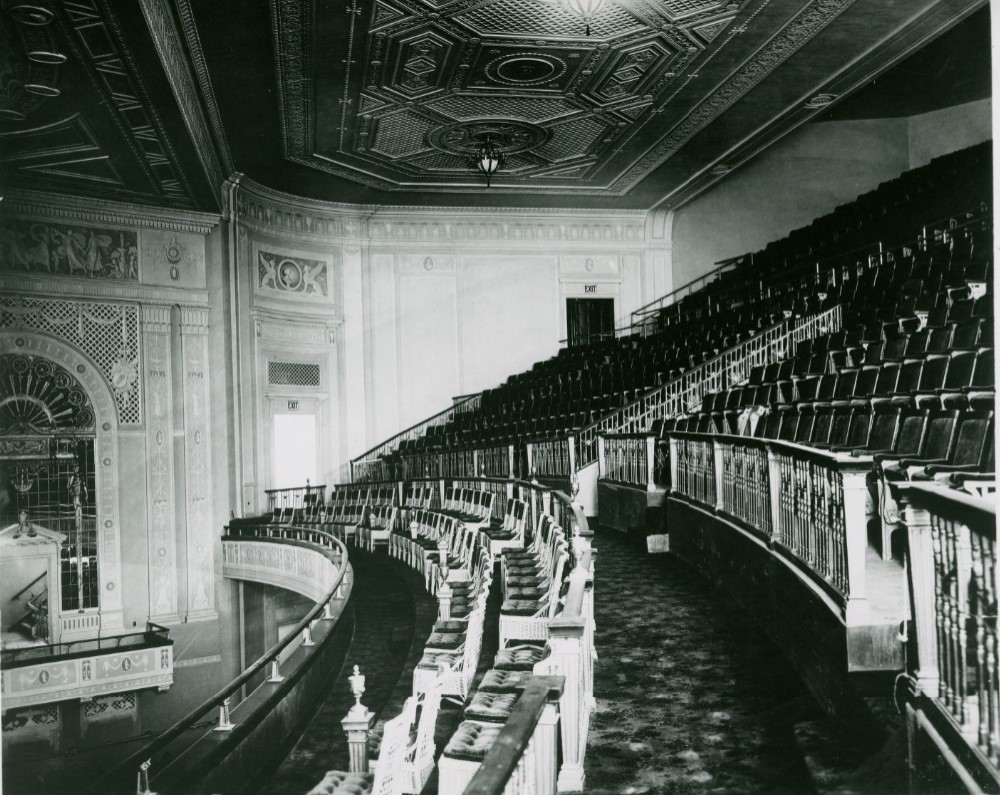
Circle Theatre opens
Led by A. L. Block and Robert Lieber, investors contribute over $500,000 to build a new theater. Circle Theatre opens as Indianapolis’ first building constructed specifically for feature-length motion pictures.
Pictured: View of the Circle Theater Balcony, 1916
Credit: Bass Photo Co Collection, Indiana Historical Society
View Source
Centennial Jubilee
The Centennial Jubilee for the state is held October 2-15 in Indianapolis. The city hosts expositions, parades, athletic contests, concerts, drama and dance programs, and commemorative addresses by politicians, including President Woodrow Wilson.
Local artists establish Indiana Artists Club
Forty-six prominent artists, including T. C. Steele, Carl Graf, and Marie Goth, found the club. It sponsors statewide exhibitions, lectures, demonstrations, and workshops.
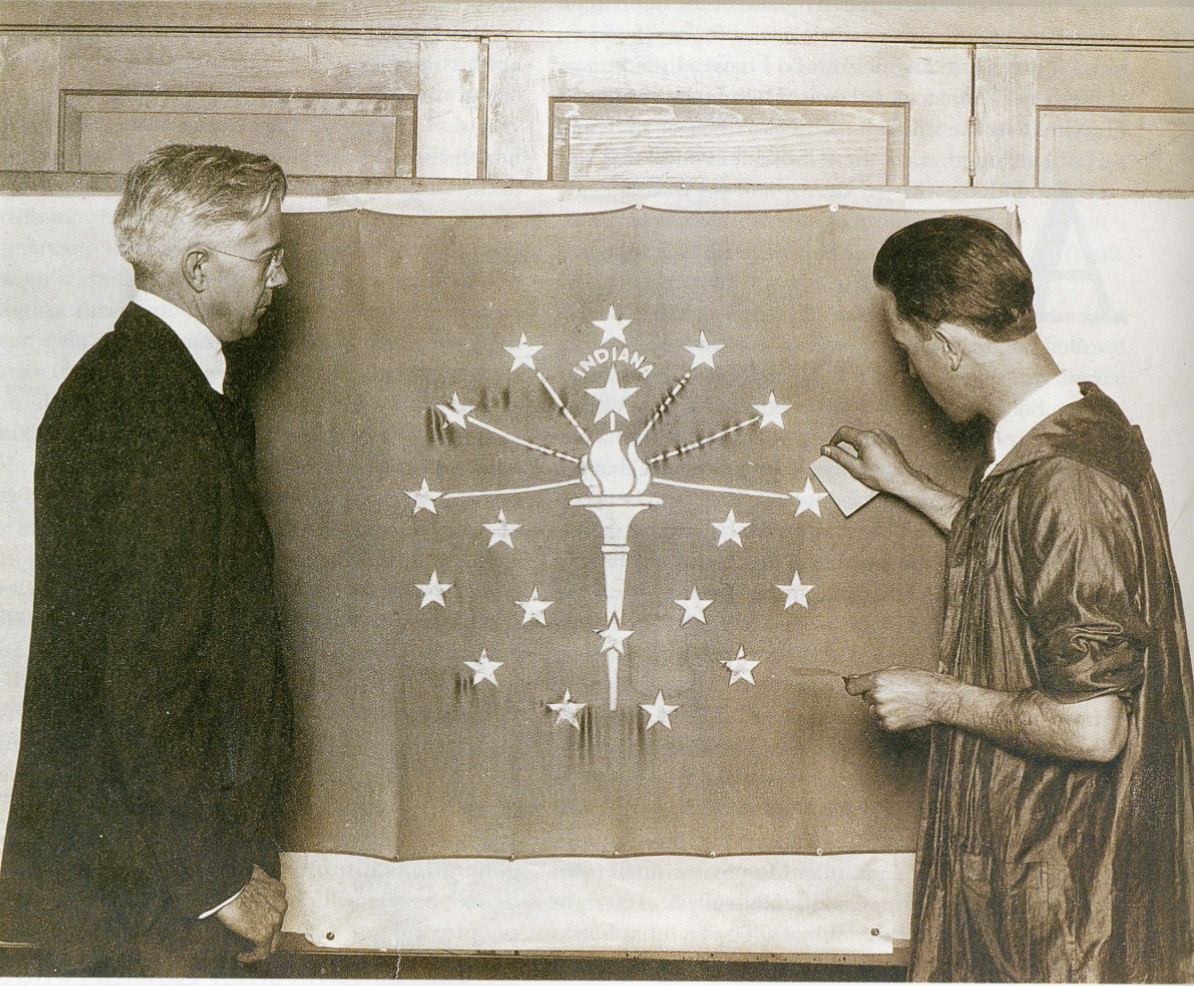
Indiana adopts Paul Hadley’s state flag design
After winning the top prize in the Indiana Daughters of the American Revolution-sponsored juried flag competition held for the state’s centennial in 1916, Hadley’s design becomes the official state flag.
Pictured: Paul Hadley, designer of the Indiana state flag, looks on as a Herron Art Institute student applies gold leaf to the original flag presented to the state, ca. 1923
Credit: Indiana Historical Society View Source
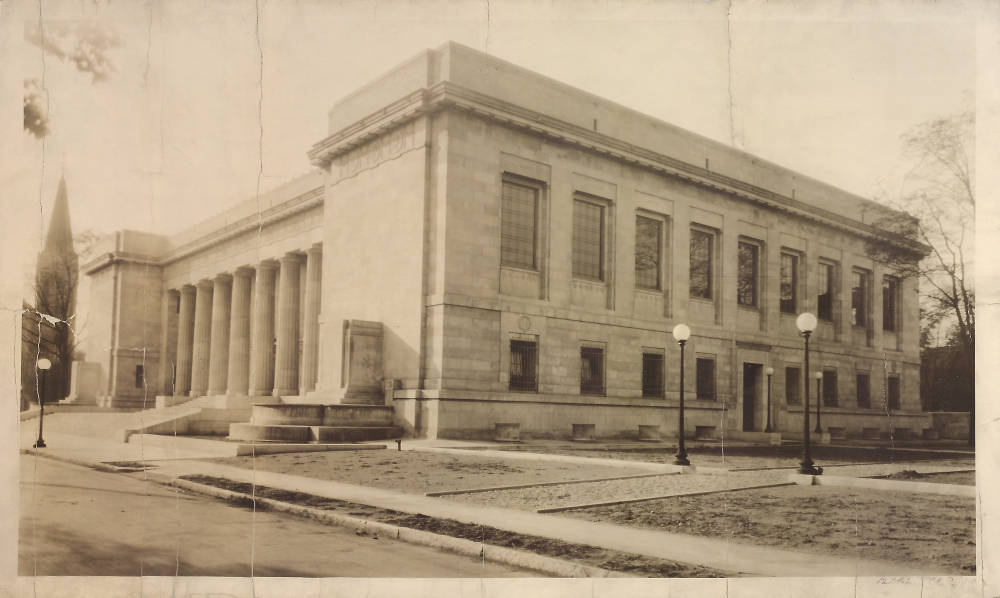
Central Library opens
The new building, constructed on St. Clair Street between Meridian and Pennsylvania streets, becomes the anchor of the library system.
Pictured: Central Library building, 1918
Credit: Indianapolis Public Library
View Source
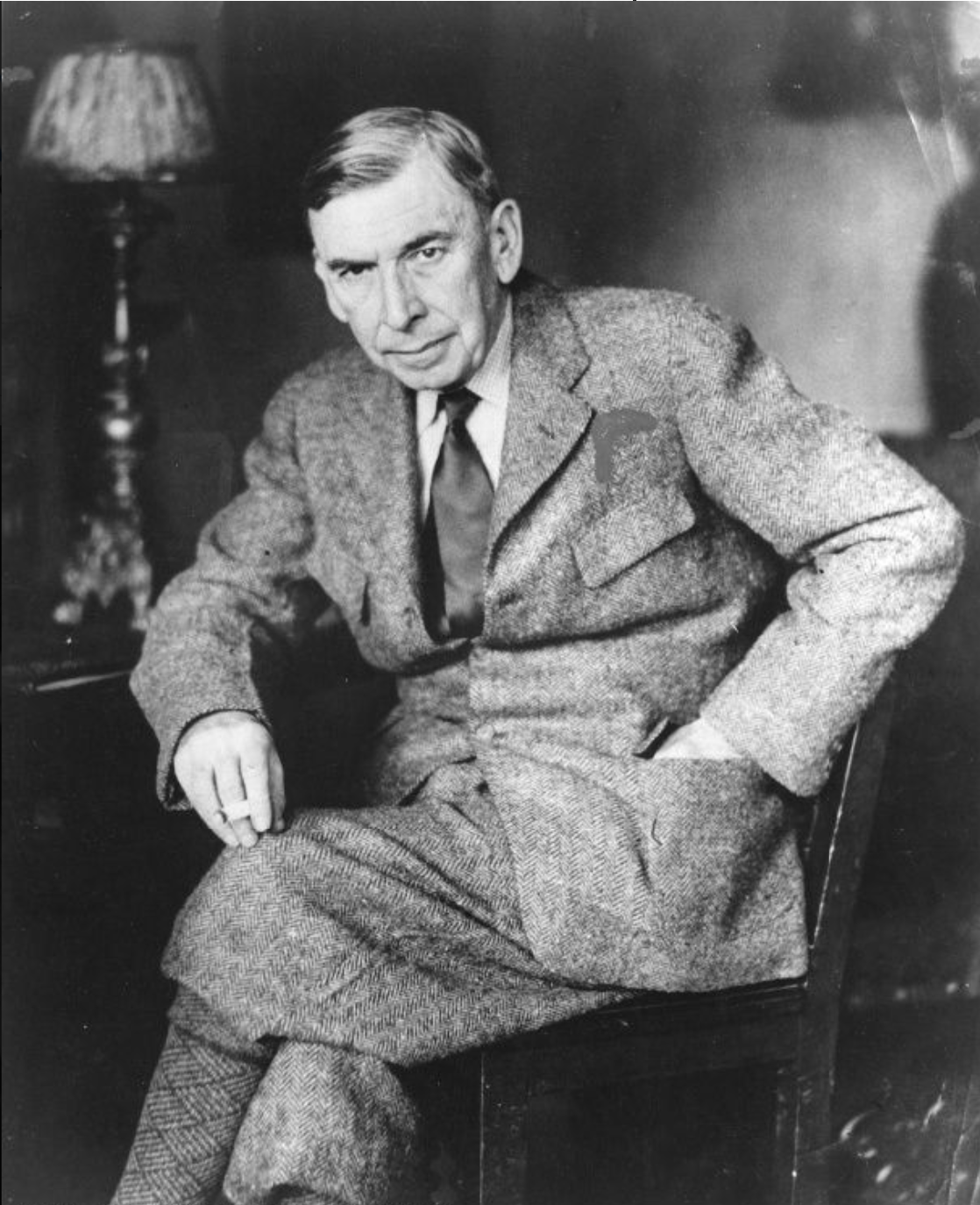
Booth Tarkington wins first Pulitzer Prize
The Indianapolis author wins the prize for the Magnificent Ambersons, set in the thinly disguised Indianapolis Woodruff Place neighborhood. He wins a second Pulitzer in 1922 with his novel Alice Adams, also based on life in the city.
Pictured: Newton Booth Tarkington, n.d.
Credit: W. H. Bass Photo Collection CollectionView Source
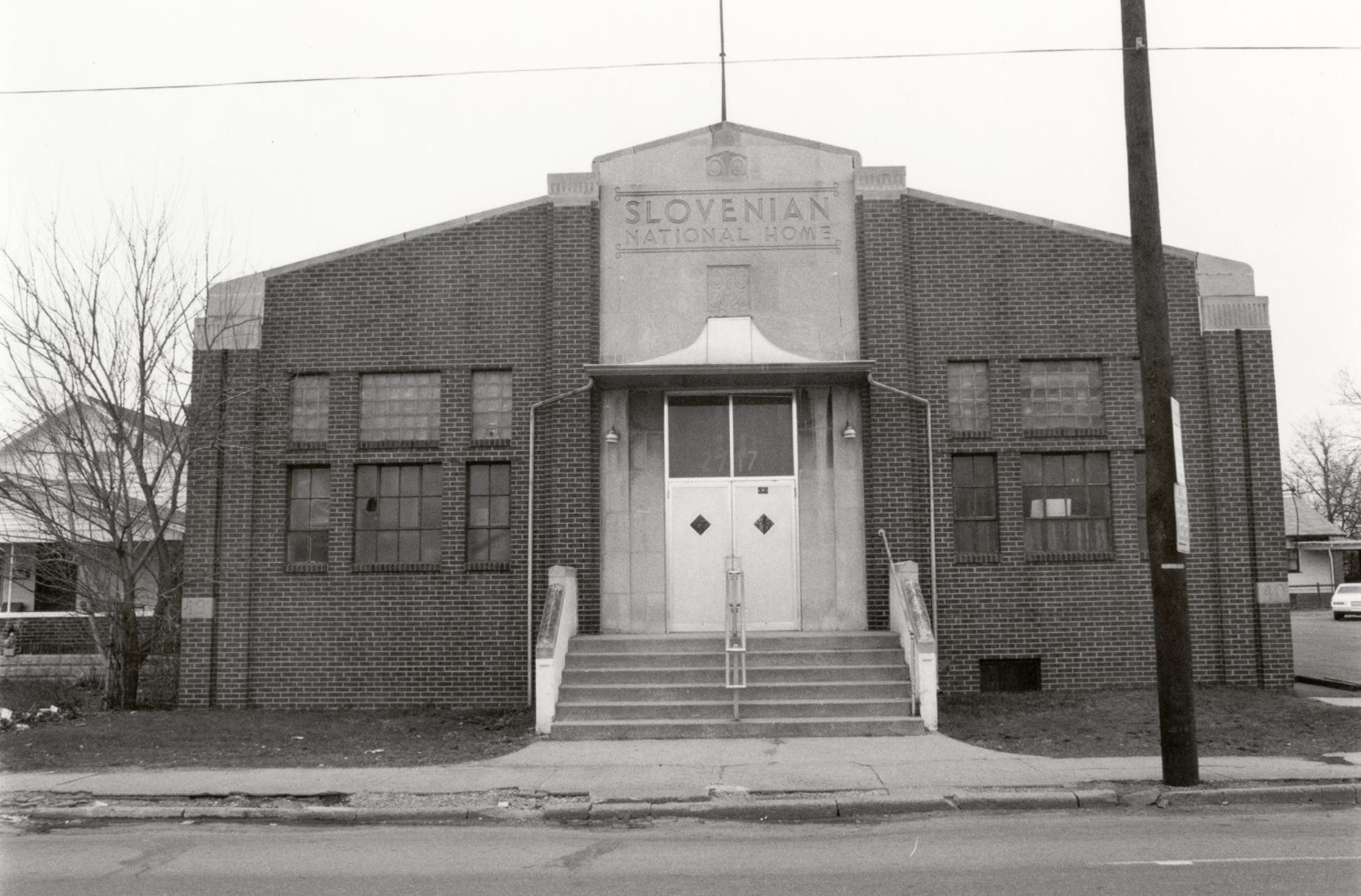
Slovenian National Home opens
The club serves as the center of Slovene community activities.
Pictured: The Slovenian National Home, ca. 1940
Credit: Indiana Historical Society View Source
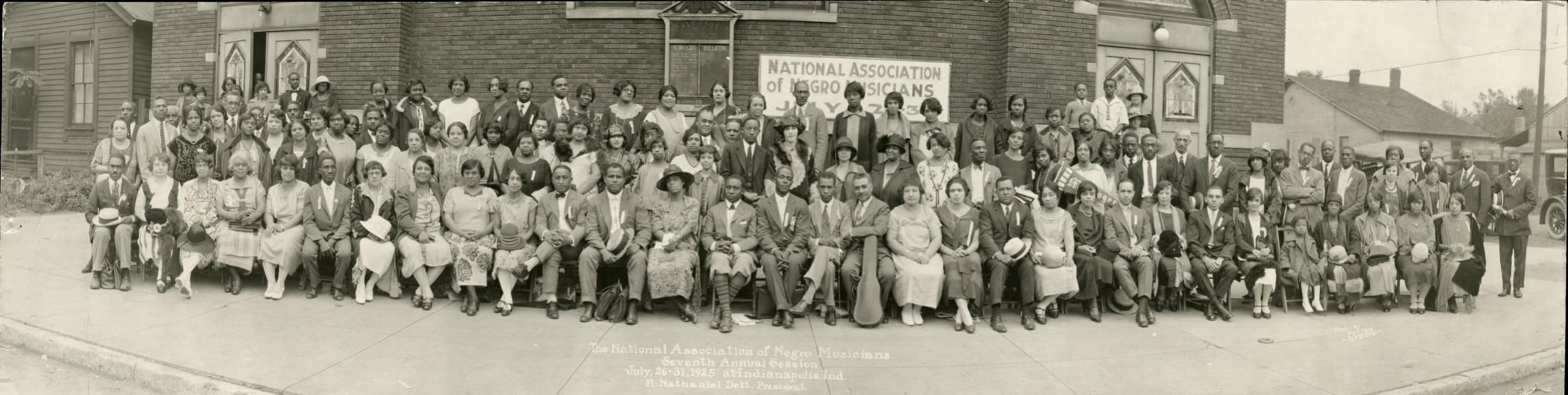
Local African Americans establish the Indianapolis Music Promoters Club
A branch of the National Association of Negro Musicians, the club works to identify and to develop the musical talent of young African Americans.
Pictured: Members of the National Association of Negro Musicians, later known as the Indianapolis Music Promoters Club, 1925
Credit: Indiana Historical Society View Source
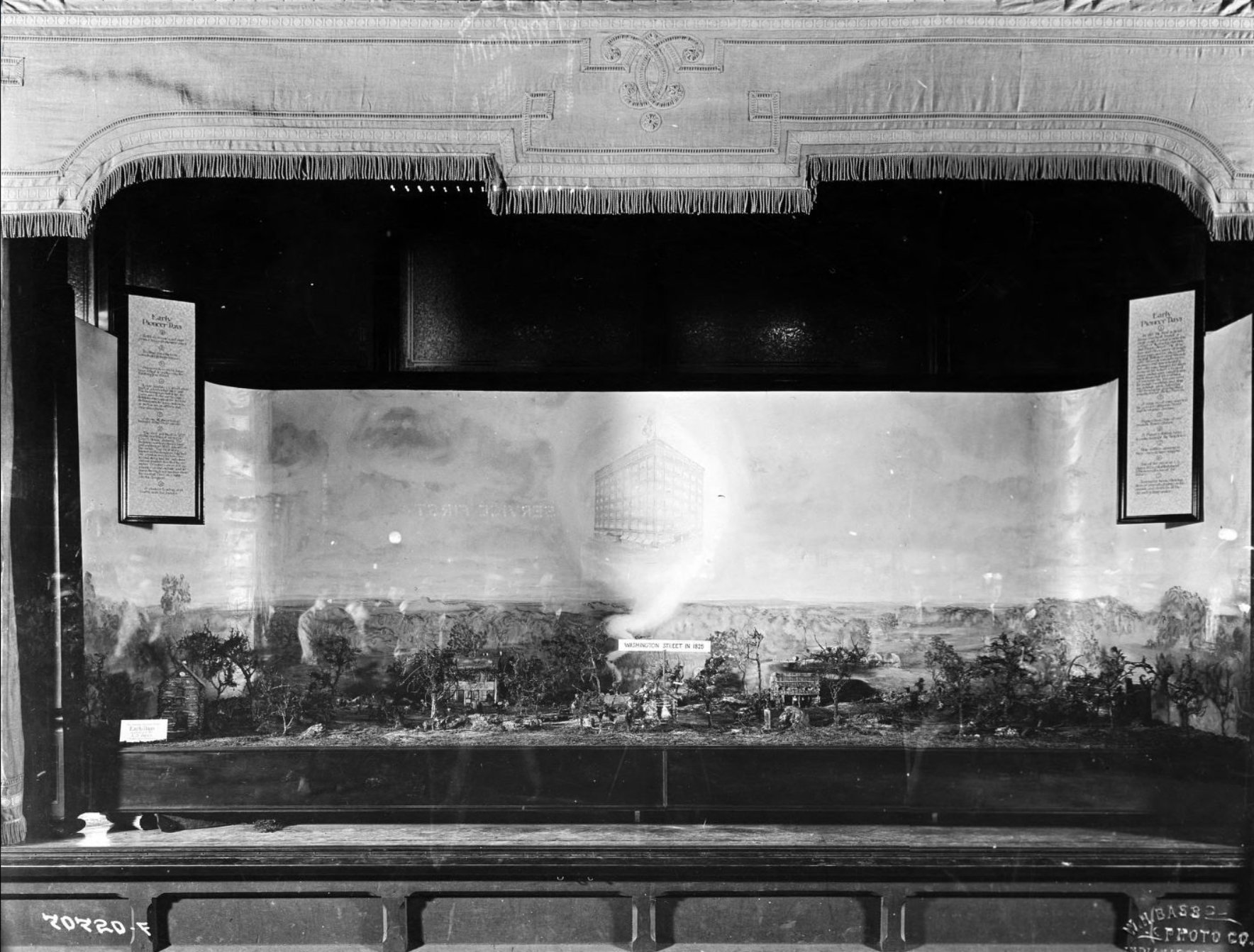
City celebrates centennial
The centennial celebration takes place June 5-10. Festivities begin with a mass meeting at Tomlinson Hall. Other events include musical performances, a street parade, a pageant, and a riverboat display.
Pictured: L.S. Ayres celebrates the Indianapolis centennial with an elaborate window display showing Washington Street as it was in 1825.
Credit: W. H. Bass Photo Company Collection, Indiana Historical Society
View Source
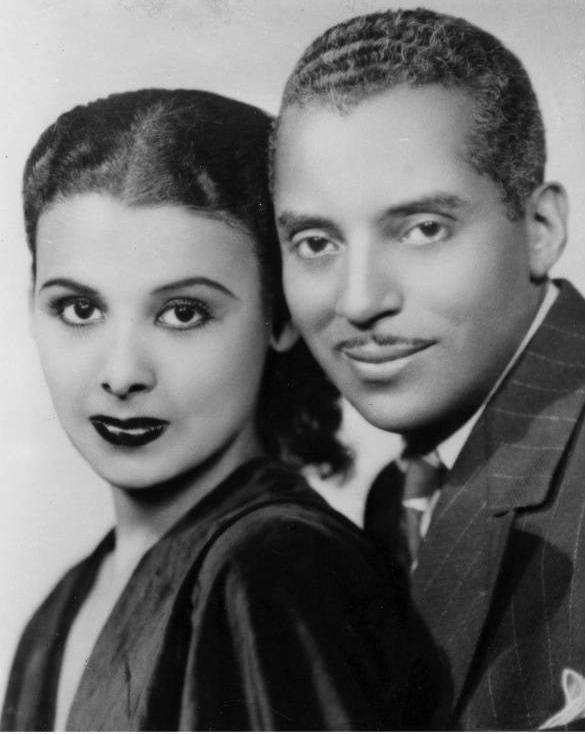
Premiere of Shuffle Along, a musical
Indianapolis native Noble Sissle writes and produces the musical with three other musicians. It marks the revival of African American folk humor, jazz dance, and Ragtime.
Pictured: Noble Lee Sissle with Lena Horne, ca. 1920s.
Credit: Indiana Historical Society View Source
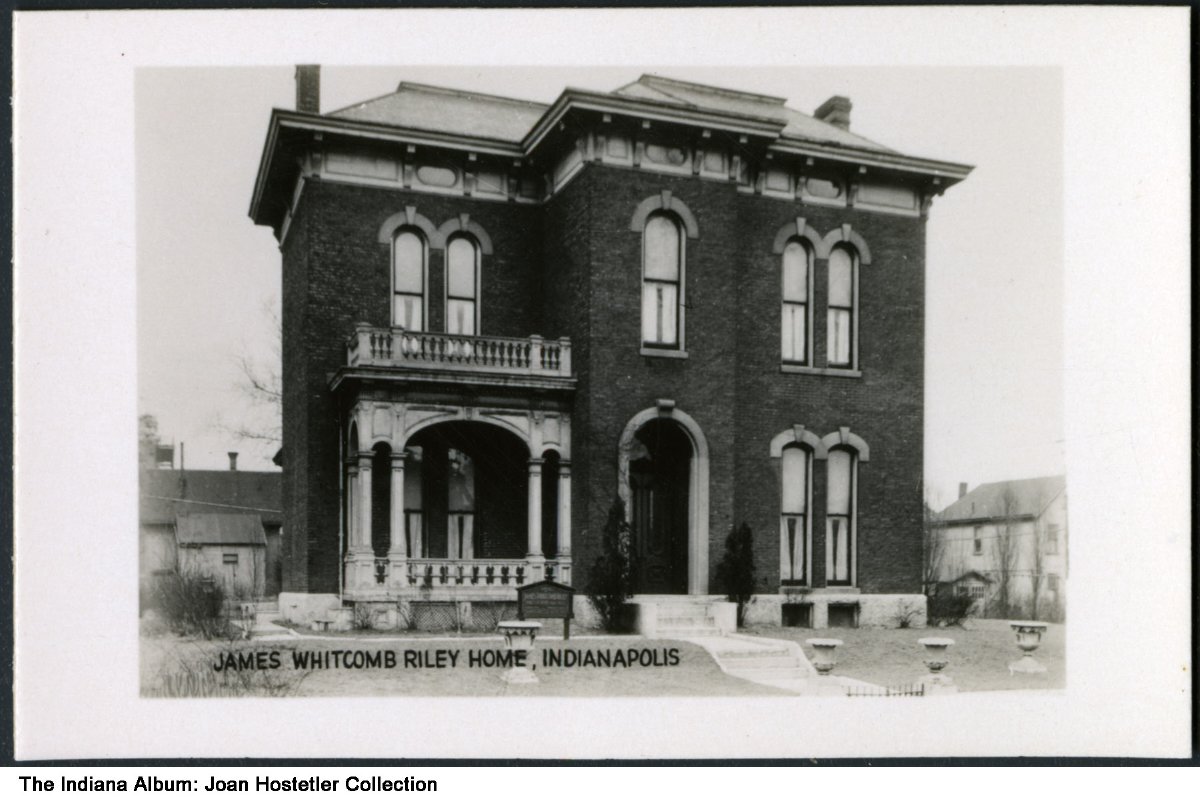
James Whitcomb Riley Museum Home dedicated
The James Whitcomb Riley Museum Home on Lockerbie Street opens as a fundraiser for the construction of Riley Hospital for Children.
Pictured: James Whitcomb Riley Home, ca. 1936
Credit: The Indiana Album: Joan Hostetler Collection
View Source
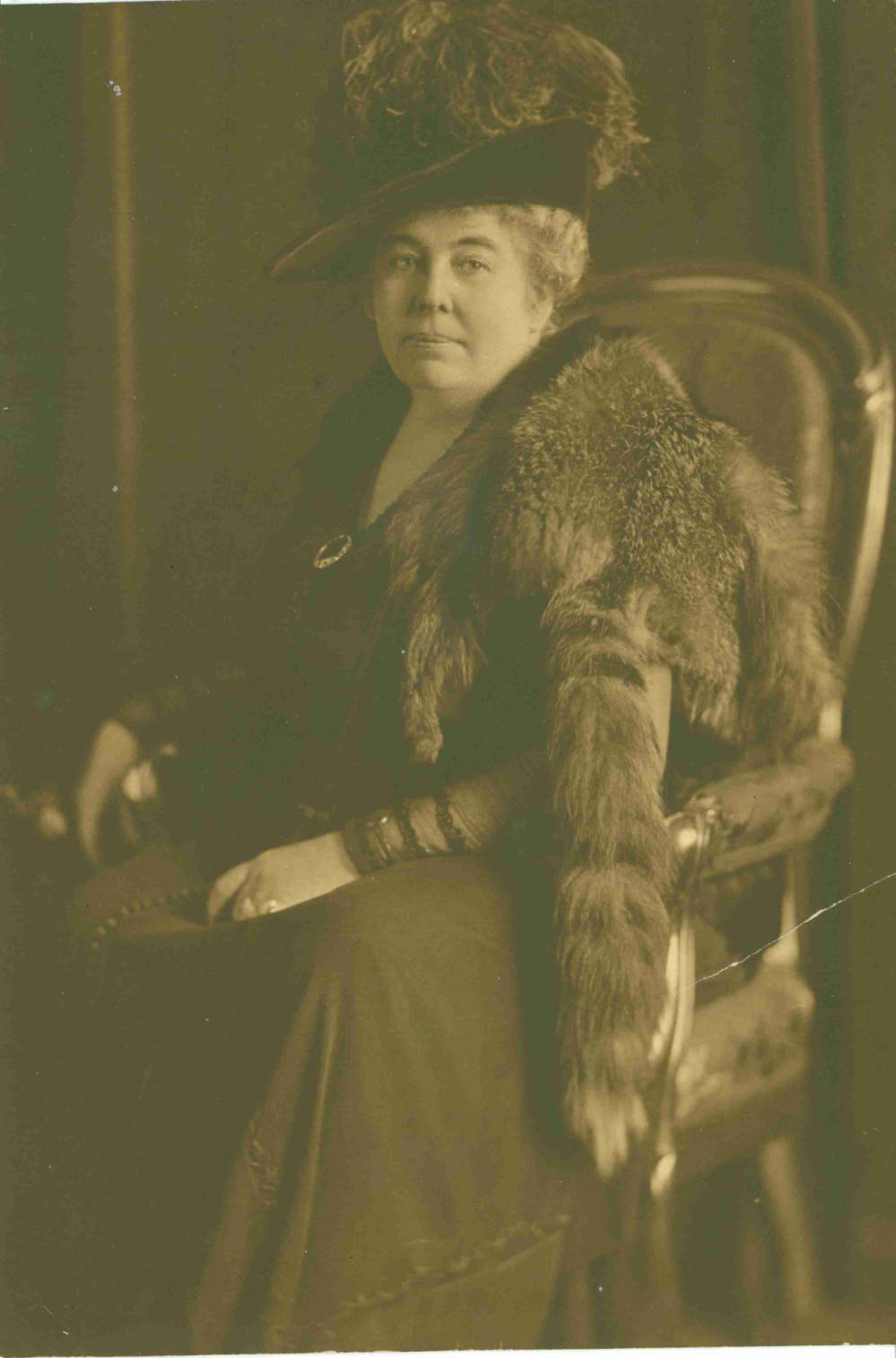
Mary Stewart Carey founds The Children’s Museum of Indianapolis
Carey and several other civic leaders found the museum in the Propylaeum’s carriage house. Children and their families donate to its collections.
Pictured: Mary Stewart Carey, ca. 1930s
Credit: Indianapolis Public LibraryView Source
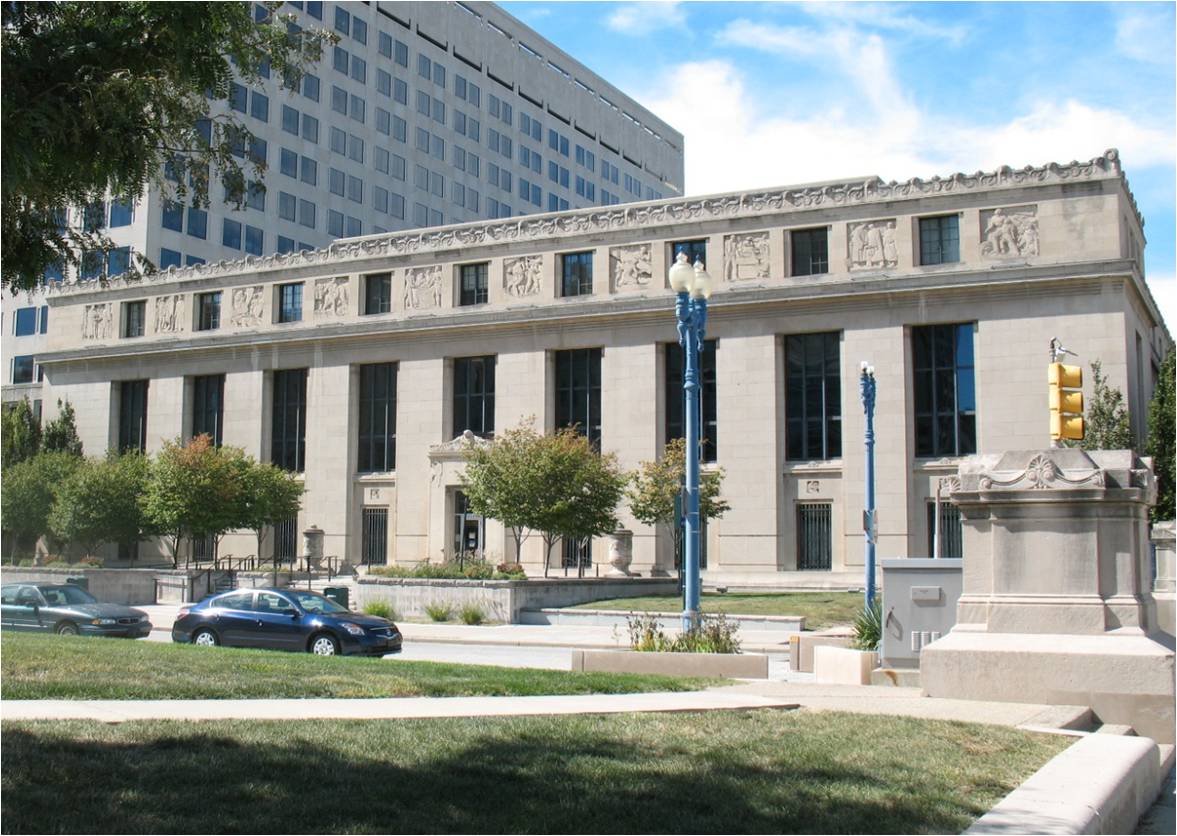
Indiana Historical Commission establishes the Indiana Historical Bureau
The Indiana Historical Bureau promotes the study of Indiana history by providing resources to aid citizens in learning about the state and its people.
Pictured: Indiana State Library and Historical Bureau, Indianapolis, Indiana
Credit: Indiana State Library View Source
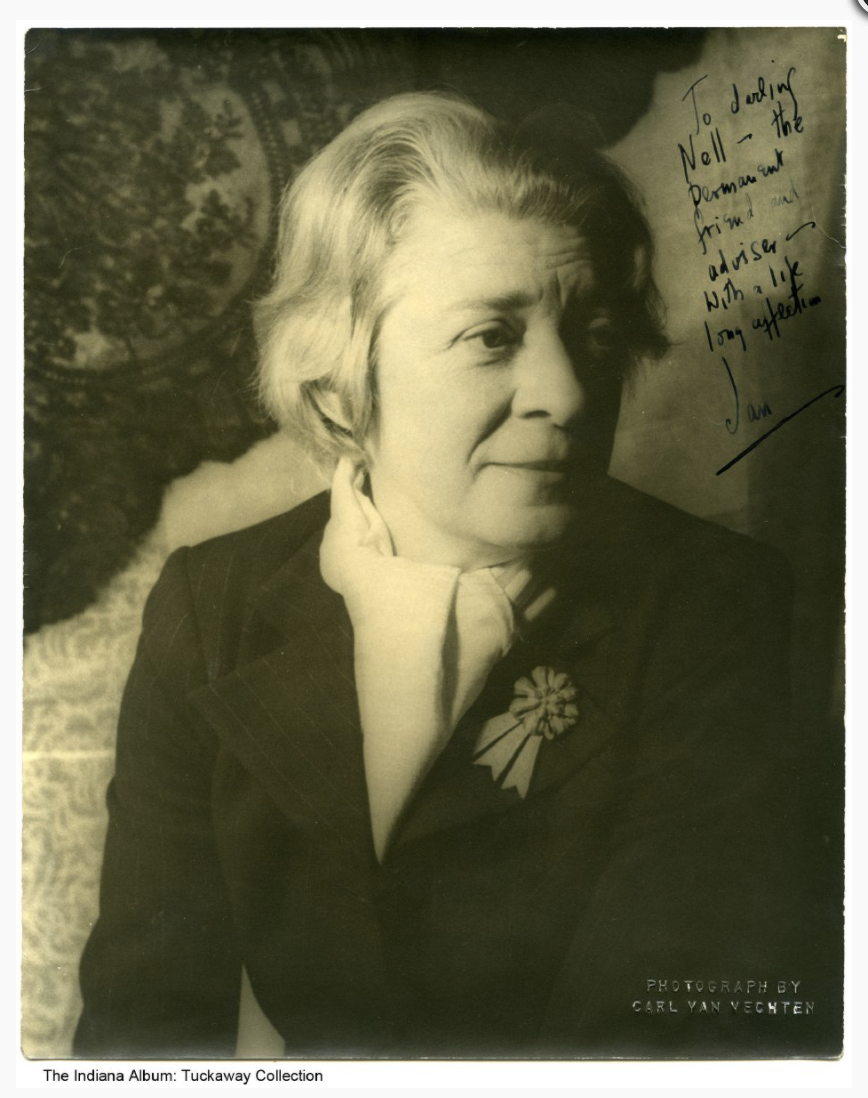
Janet Flanner begins writing for the New Yorker Magazine
A member of the interwar period “Lost Generation” Paris group of authors, the Indianapolis native begins her 50-year career writing for the New Yorker with the appearance of her first semi-monthly “Letter from Paris.”
Pictured: Janet Flanner, ca. 1920s
Credit: The Indiana Album: Tuckaway House Collection View Source
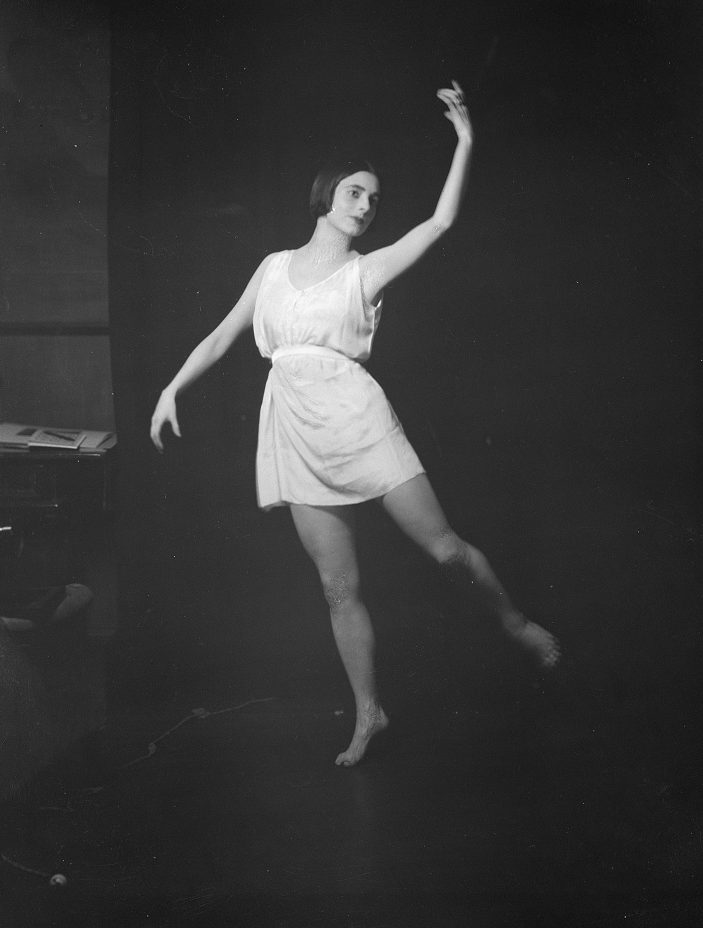
Indianapolis native performs at the Metropolitan Opera
Ruth Page, a ballet dancer, makes her Metropolitan Opera debut in Smetana’s The Bartered Bride. She most likely is the first Indianapolis native to appear on the Metropolitan Opera stage. As a choreographer, she pioneers the use of American themes in the Russian-dominated field.
Pictured: Ruth Page, May 29, 1923
Credit: Library of CongressView Source
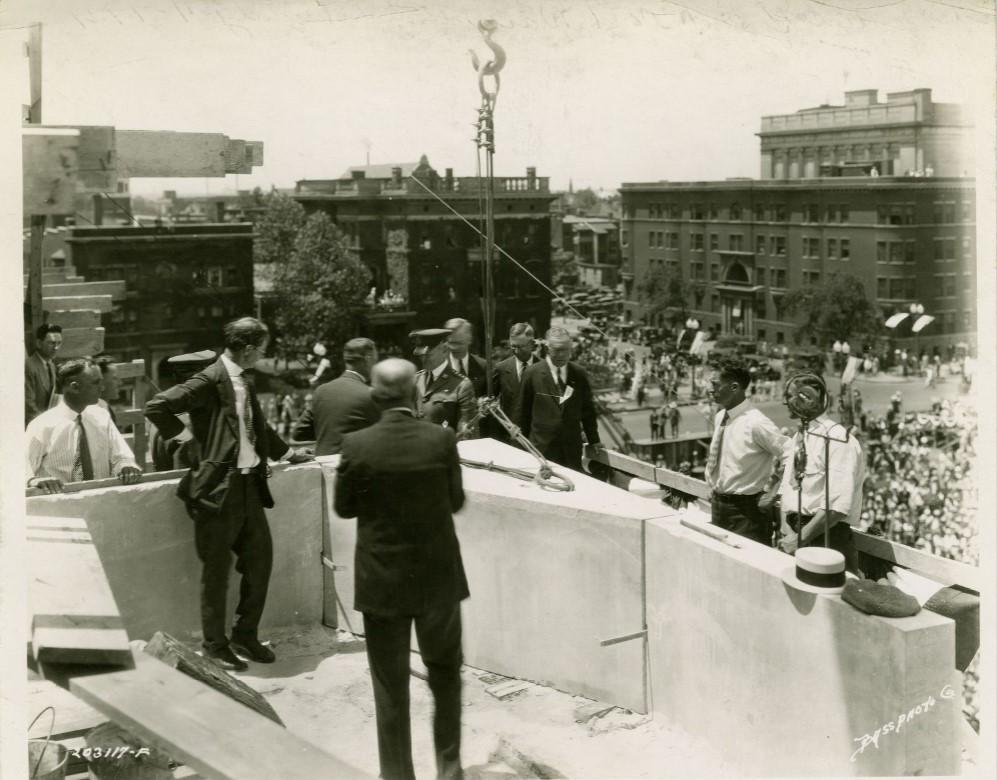
Indiana World War Memorial cornerstone laid
General John J. Pershing, commander of the American Expeditionary Forces in Europe during World War I, attends the event and lays the memorial’s cornerstone.
Pictured: Indiana World War Memorial, cornerstone laying, with General John Pershing, 1927
Credit: Bass Photo Co Collection, Indiana Historical Society
View Source
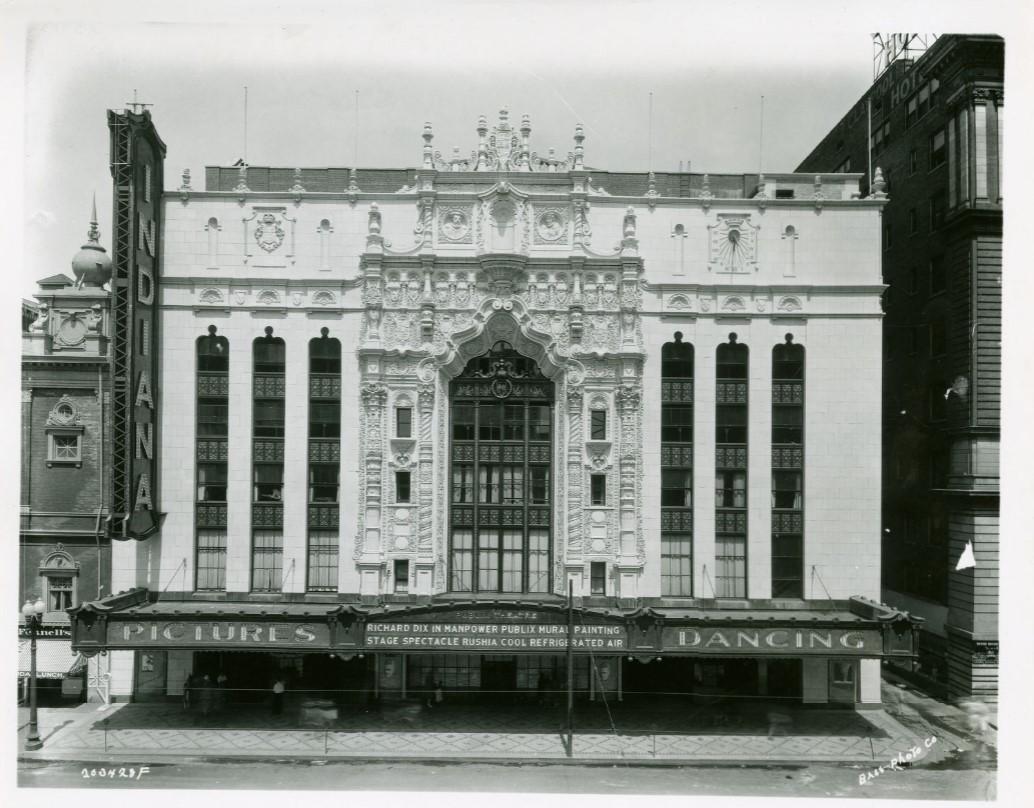
Indiana Theatre opens
The state-of-the-art movie palace is the largest in the state. It also includes the Roof Ballroom, where some of the most famous musicians of the big band era perform, including Tommy Dorsey, Louis Armstrong, and Cab Calloway.
Pictured: Indiana Theatre, 1927
Credit: Bass Photo Co Collection, Indiana Historical Society
View Source
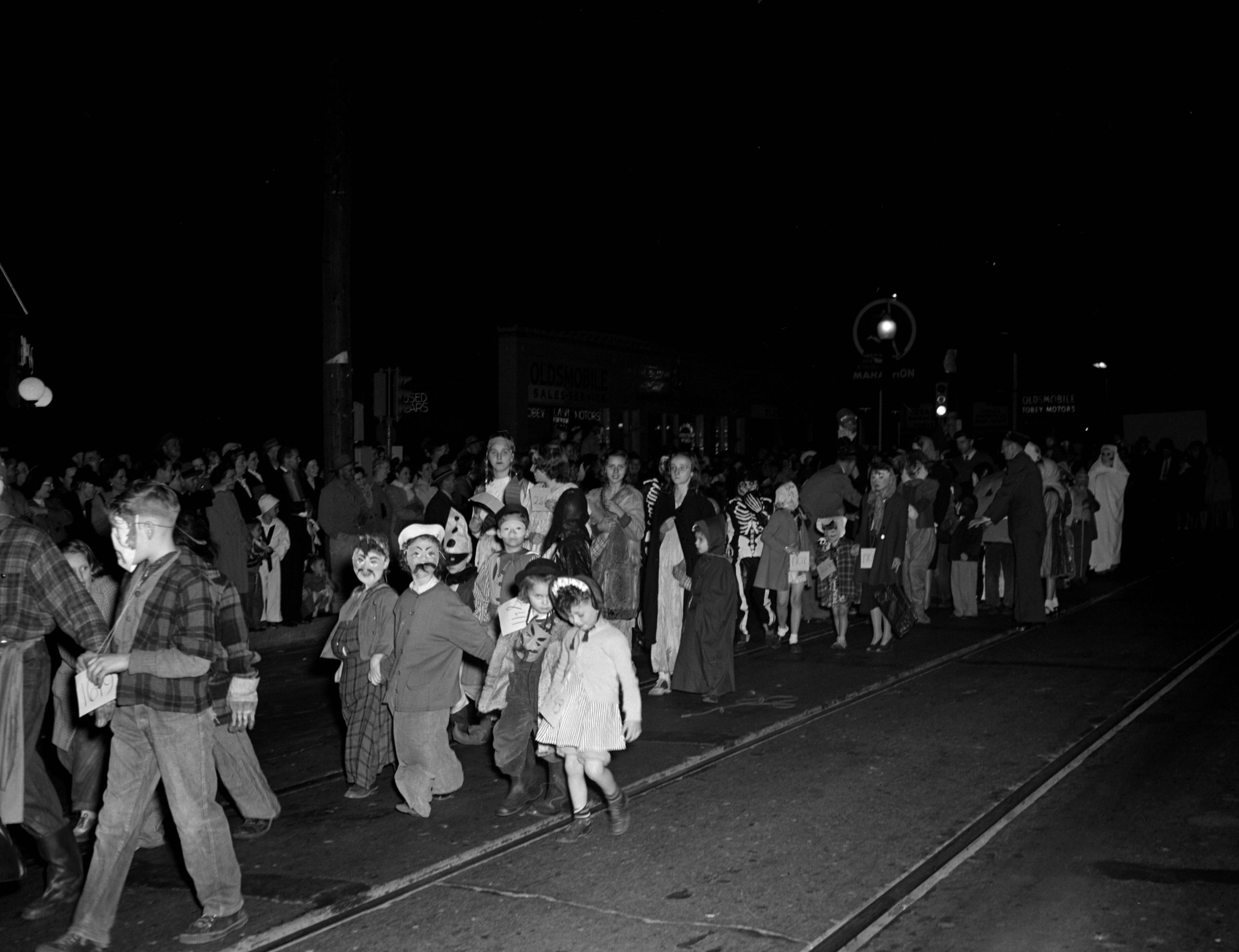
First Irvington Halloween Festival
Irvington holds its first Halloween festival, celebrating the holiday with a costume parade and contest, decorated streets and storefronts, and a street dance.
Pictured: Irvington Halloween Festival parade, 1947
Credit: Indiana Historical Society
View Source
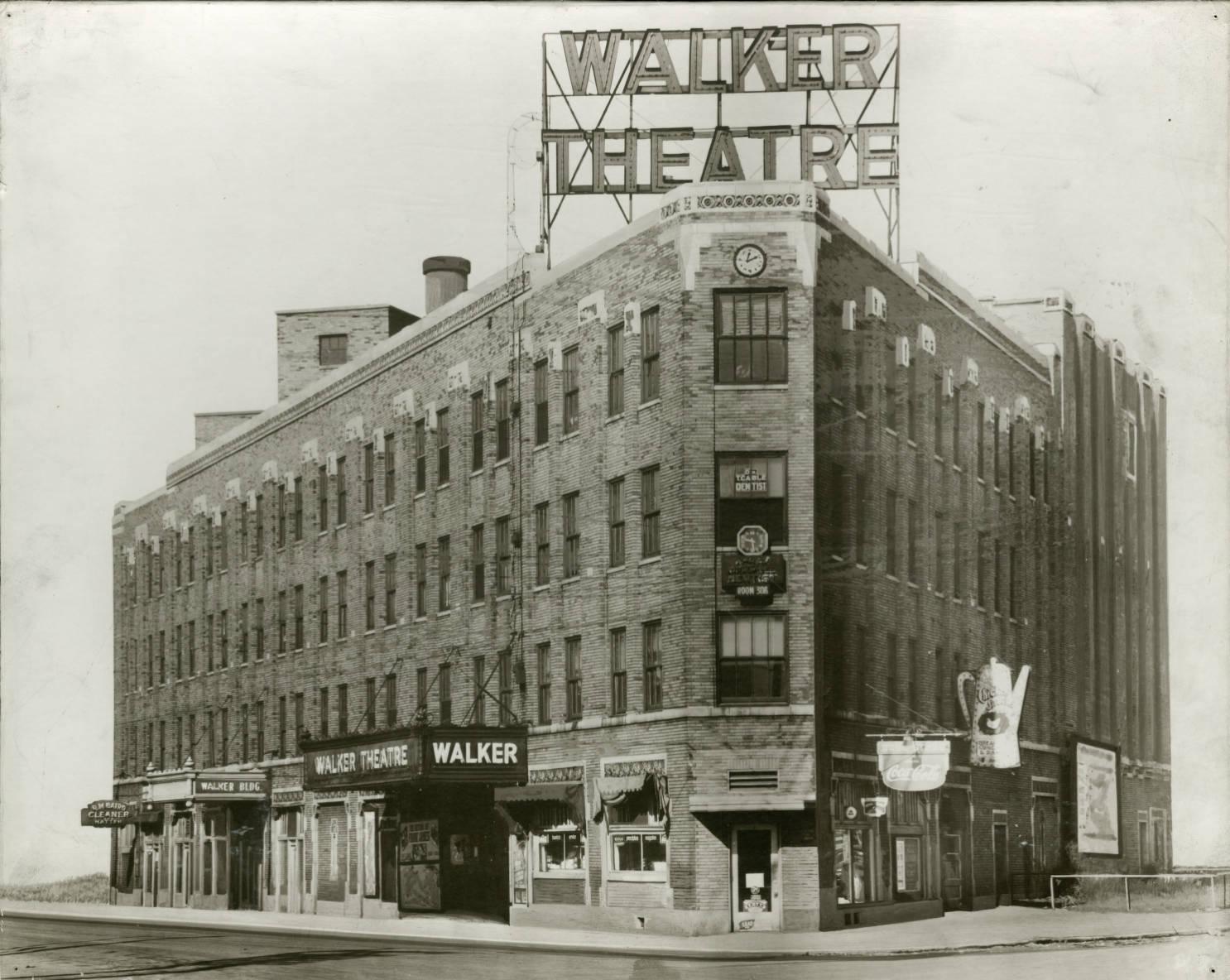
Walker Theatre initial opening
Completed eight years after the death of Madam C. J. Walker, the finished segments of the theatre building open during Christmas week. The entire building opens in August 1928 during the annual Madam Walker Convention.
Pictured: Madam C. J. Walker Building, n.d.
Credit: Madam C.J. Walker Collection, Indiana Historical Society View Source
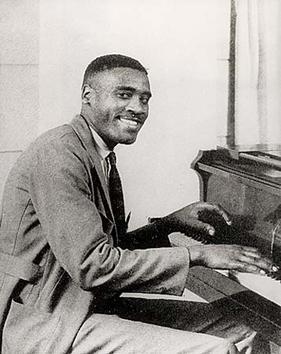
Jazz musicians Francis Blackwell and Leroy Carr record as a duo
The duo’s first recording, “How Long, How Long Blues,” sells hundreds of thousands of copies and establishes the pair as innovators in the newly emerging urban blues style.
Pictured: Leroy Carr, n.d.
Credit: Fair use via Wikimedia CommonsView Source
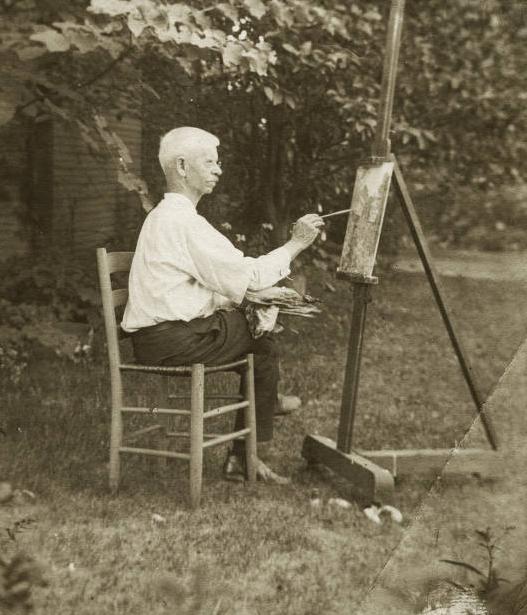
First Irvington Group exhibitions
A colony of Irvington artists begins holding exhibitions featuring their works along with lectures, gallery talks, and art demonstrations. It takes place annually until 1937.
Pictured: William Forsyth painting outdoors, possibly at his home in Irvington, ca. 1927
Credit: Indiana Historical Society View Source
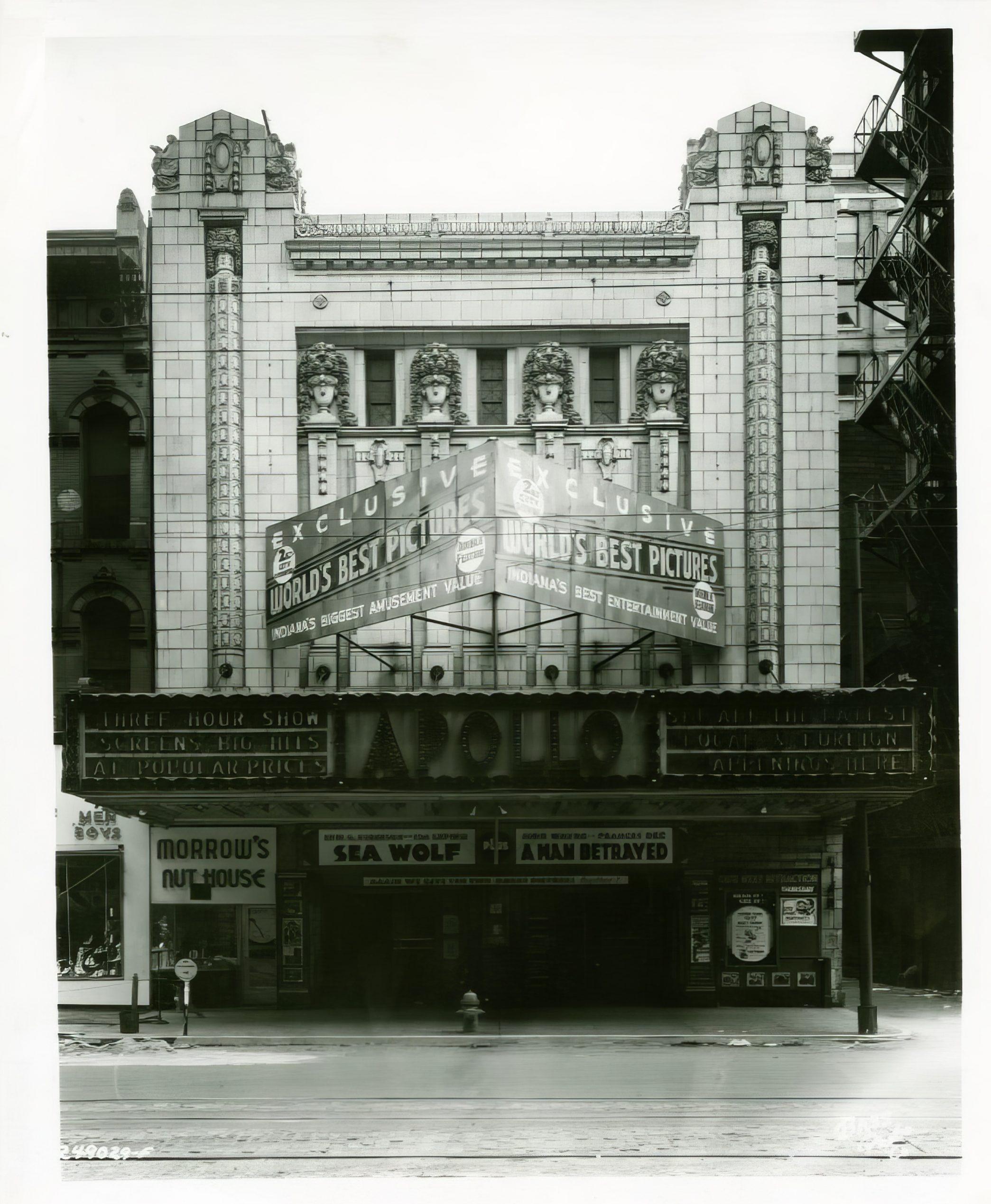
Apollo Theatre wires for sound
Following the release of the first talkie, The Jazz Singer, in 1927, the Apollo Theatre installs the first permanent movie sound equipment in the city and shows its first regular sound feature. By 1930, most major movie theaters are wired for sound.
Pictured: Apollo Theatre, 1941
Credit: Bass Photo Co Collection, Indiana Historical Society
View Source
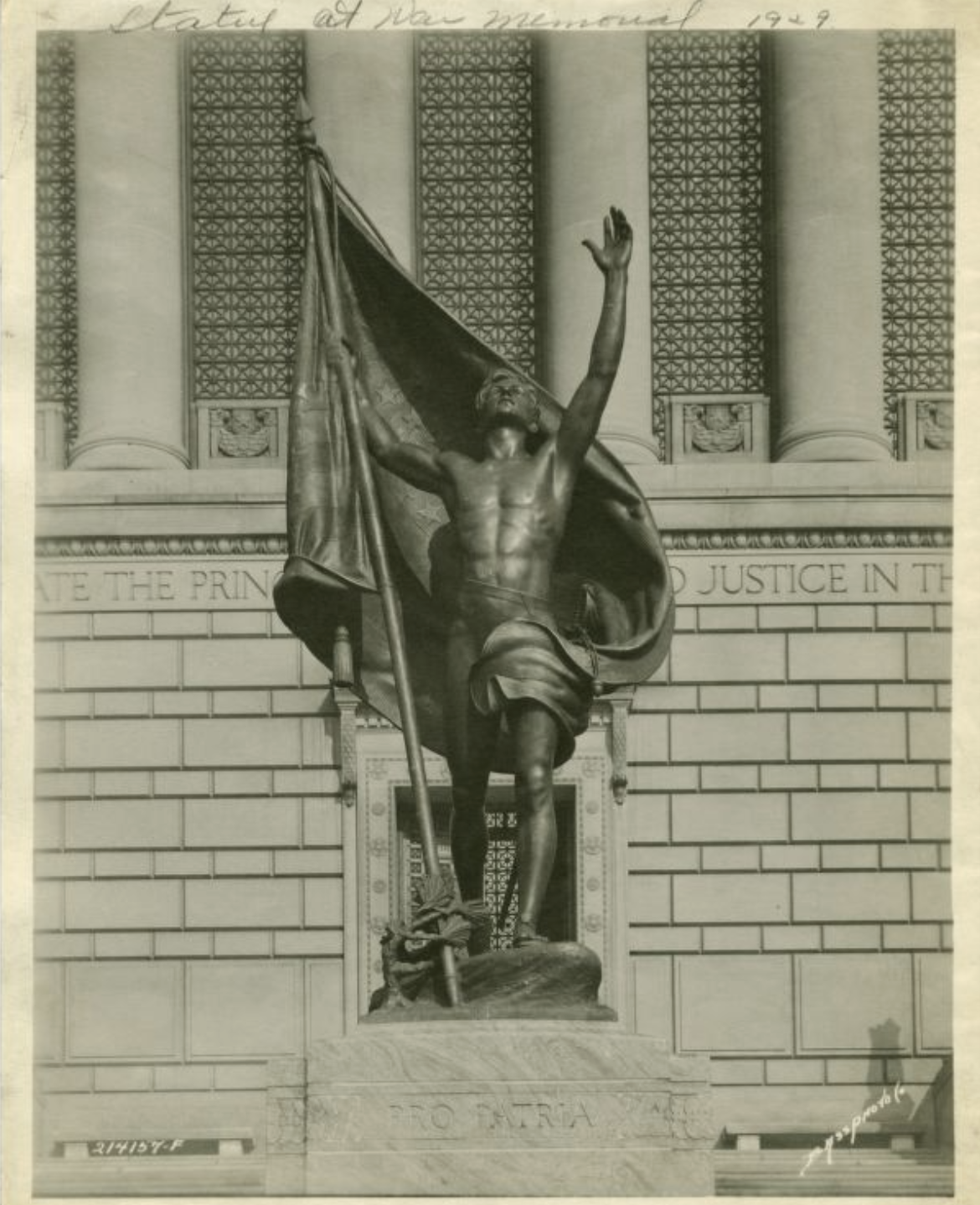
Bronze statue added to steps of Indiana World War Memorial
Pro Patria, the 25-foot-tall, seven-ton statue, is created by New York artist Henry Herring. The work is reputed to be the largest sculptured bronze casting made in America at the time.
Pictured: “Pro Patria” presents the heroic figure of a soldier carrying the flag to victory.
Credit: Bass Photo Co Collection, Indiana Historical Society
View Source
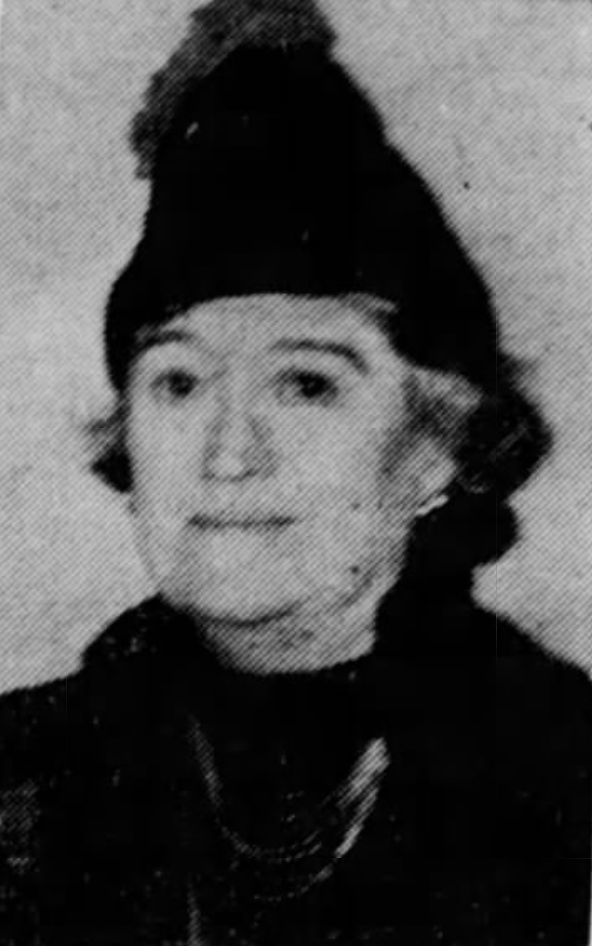
Nancy McCann Martens establishes Marten’s Concerts
Martens creates the company to help local music artists and to bring a steady stream of classical music and dance performers to Indianapolis.
Pictured: Nancy McCann Martens, ca. 1940s
Credit: IndyStar View Source
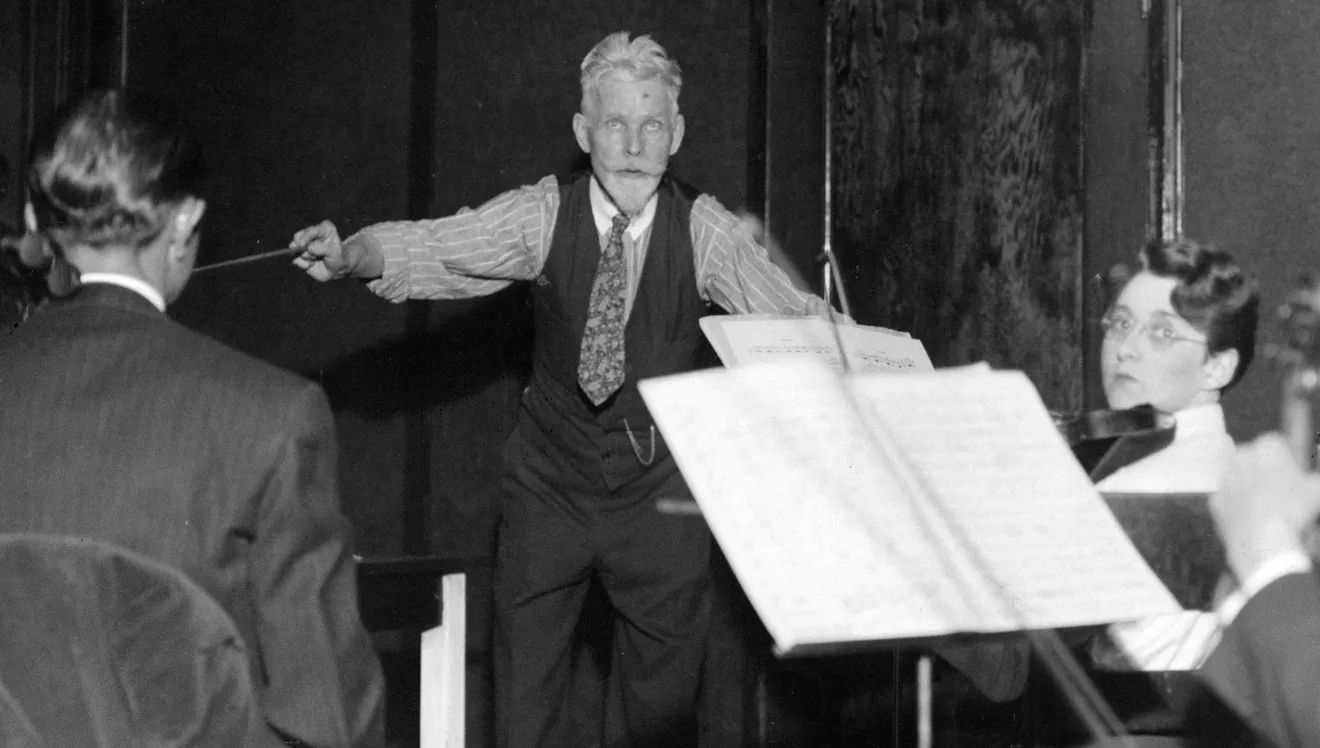
Indianapolis Symphony Orchestra performs first concert
Ferdinand Schaefer begins the Indianapolis Symphony Orchestra and serves as the orchestra’s conductor until the 1937–1938 season. The first concert takes place at Shortridge High School.
Pictured: Ferdinand Schaefer rehearses with the Indianapolis Symphony Orchestra for a spring festival concert in 1934.
Credit: IndyStar View Source
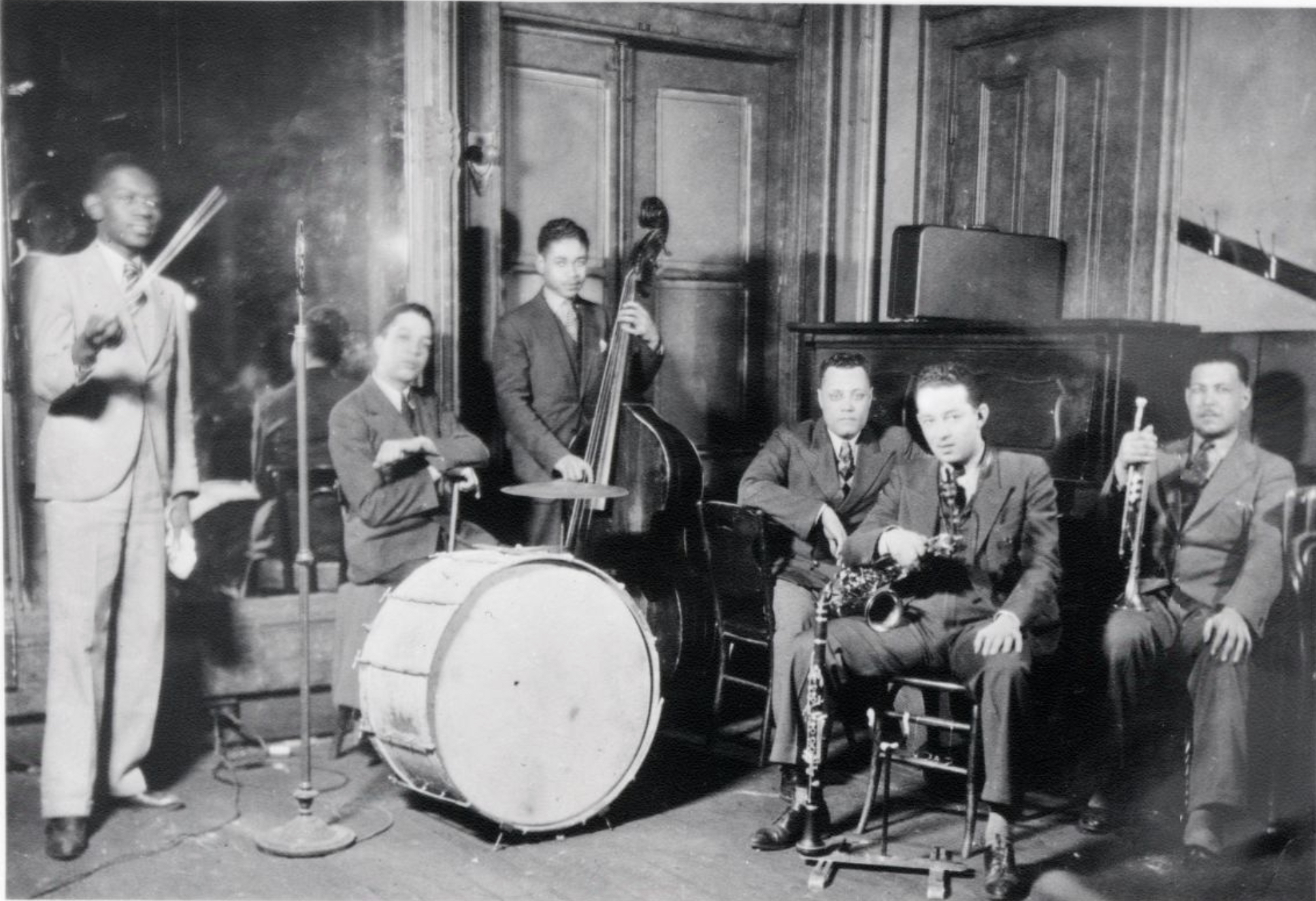
Ferguson Brothers builds jazz club empire
Denver and Sea Ferguson, African American leaders in the jazz and entertainment scene, open the Trianon Ballroom at 244 West Vermont Street, followed by the Cotton Club, also on Vermont Street, in 1933. In 1937, they open the Royal Palm Gardens and Sunset Terrace Ballroom on Indiana Avenue.
Pictured: Wisdom Brothers Band at the Cotton Club, ca. 1950s
Credit: Indiana Historical Society
View Source
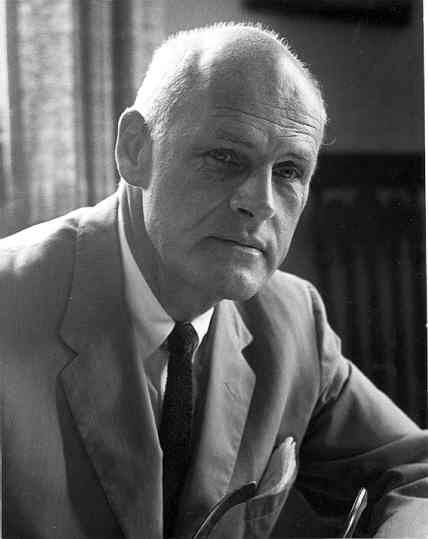
Faculty shake up at Herron
Painter and educator, Donald Mattison becomes the head of Herron and replaces many of the faculty members to boost the school’s national reputation.
Pictured: Donald M. Mattison, Dean of the Herron School of Art, 1933-1970
Credit: Indiana University IndianapolisView Source
First Italian Street Festival
Members of Holy Rosary Catholic parish create the event to celebrate Italian heritage, raise funds, and increase church membership.
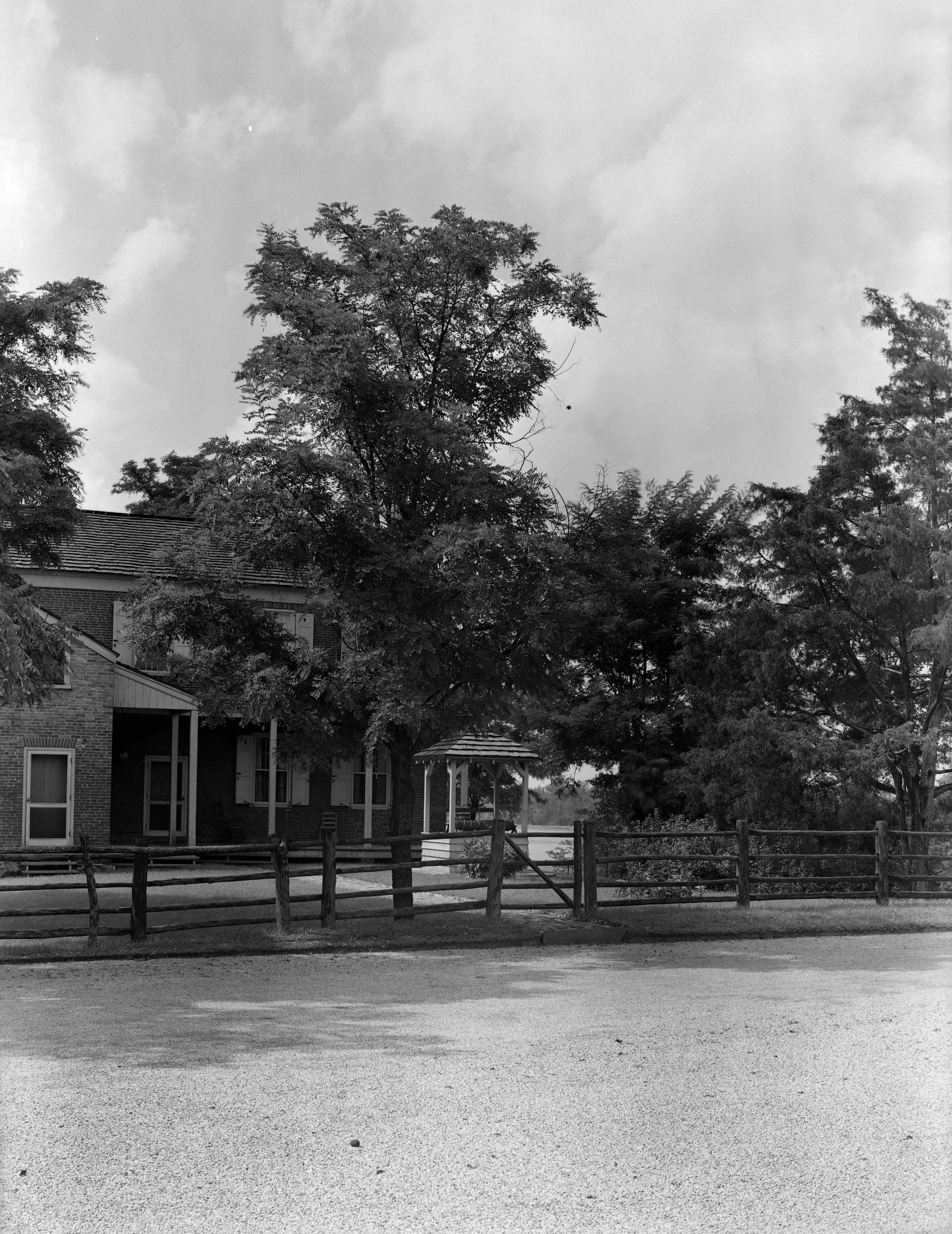
Eli Lilly purchases Conner House
The pharmaceutical entrepreneur and philanthropist purchases the William Conner house in Hamilton County to preserve the site where state capital commissioners first met in 1820 and to recreate pioneer Indiana for the visiting public.
Pictured: Conner House, 1945
Credit: Indiana Historical Society
View Source
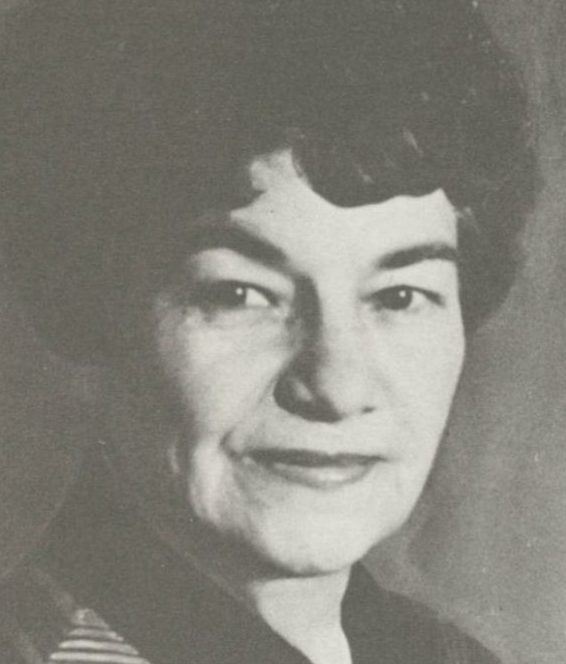
Printmaker Evelynne Bernloehr Mess Daily founds the Indiana Society of Printmakers
The Society of Printmakers is the first outlet for the work of artists of the genre in the state.
Pictured: Evelynne Mess Daily, ca. 1970s
Credit: Indiana Historical SocietyView Source
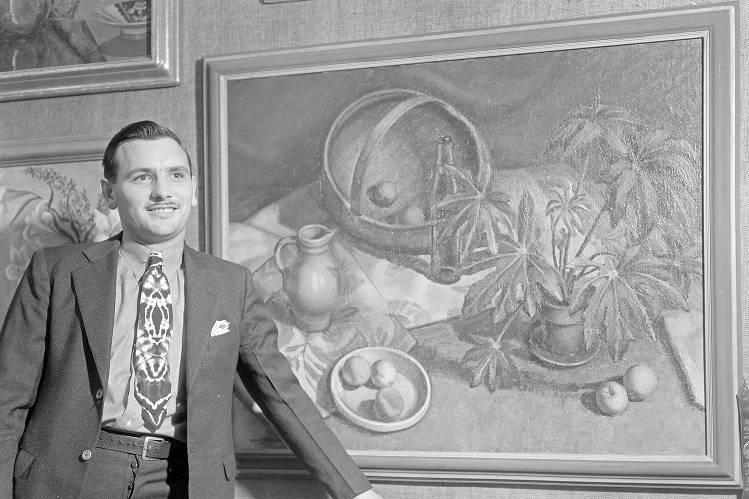
Indianapolis Art League forms
Ten women form the Indianapolis Art Students’ League with commercial artist and fine arts painter William F. Kaeser as their first teacher. The organization incorporates in 1938 and changes its name to Indianapolis Arts Center in 1996.
Pictured: William F. Kaeser, a founder of the Indianapolis Art Students’ League, the forerunner of the Indianapolis Arts Center, 1936
Credit: Indiana Historical SocietyView Source
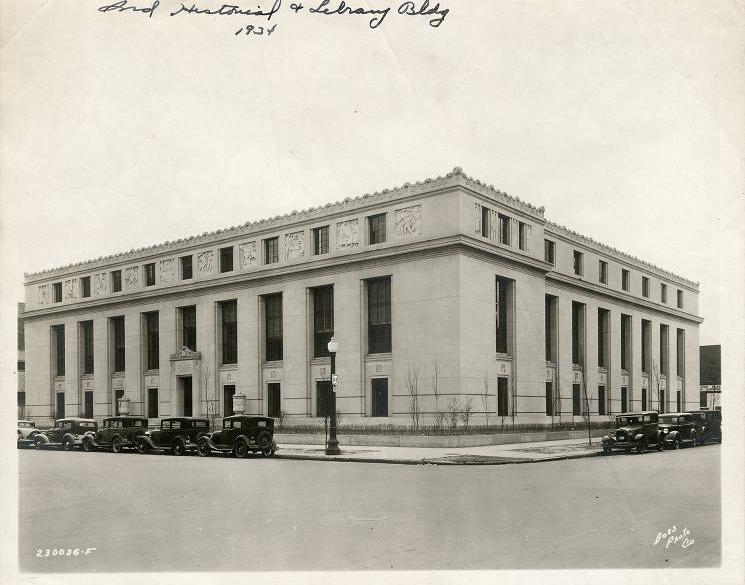
Dedication of the Indiana State Library and Historical Building
Designed by Indianapolis-based architecture firm Pierre & Wright, the building is the first permanent home of the Indiana State Library, Indiana Historical Bureau, and Indiana Historical Society.
Pictured: Indiana State Library Building, former home of the Indiana State Archives, 1934
Credit: Bass Photo Co Collection, Indiana Historical Society View Source
Lilly Endowment, Inc. founded
Pharmaceutical executives J. K. Lilly Sr., Eli Lilly, and J. K. Lilly Jr. establish the foundation that provides support to many arts and culture organizations. Its gifts to such institutions as the Indianapolis Symphony Orchestra and the Children’s Museum help build their reputations on a national scale.
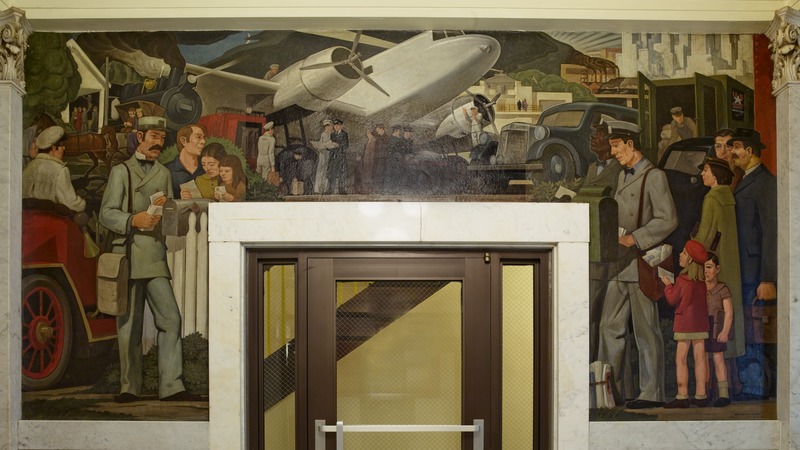
Mural installation at the Indianapolis post office
Grant Wright Christian paints Early and Present Day Indianapolis Life and Mail—Transportation and Delivery as part of a Works Progress Administration project.
Pictured: Mail, Delivery and Transportation, 1936
Credit: Carol M. Highsmith, Public domain, via Wikimedia Commons
View Source
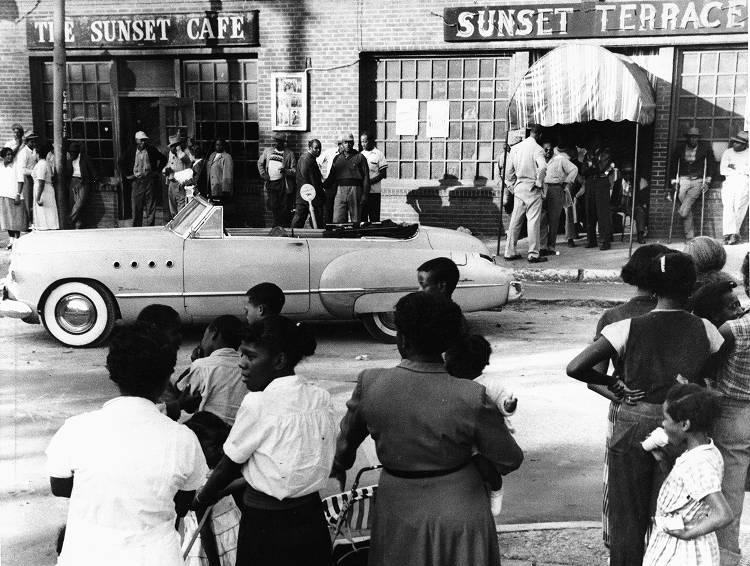
Sunset Terrace opens
Entertainment entrepreneur Denver Ferguson opens Indiana Avenue’s Sunset Terrace that attracts some of the nation’s most prominent Black performers.
Pictured: The Sunset Terrace on Indiana Avenue owned by brothers Denver and Sea Ferguson, ca. 1953
Credit: Indiana Historical Society View Source
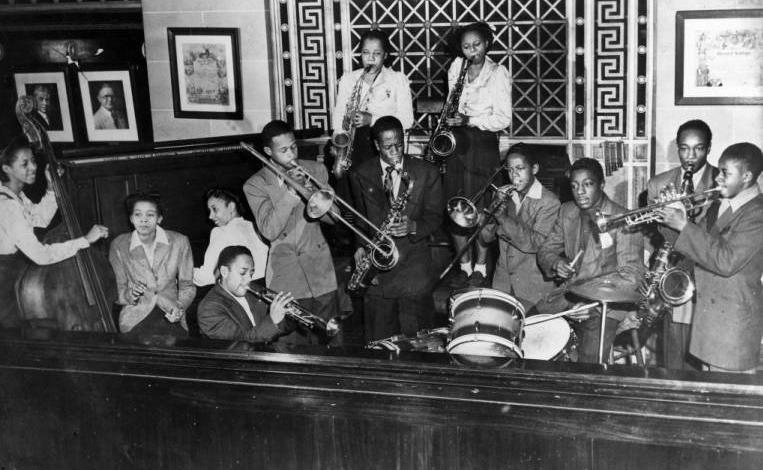
The Hampton family of jazz musicians moves to Indianapolis
After a successful engagement at the Sunset Ballroom on Indiana Avenue, the family moves to Indianapolis and establishes a jazz family dynasty that includes the Hampton Family Band and the Hampton Sisters (Virtue, Aletra, Carmelita, and Dawn).
Pictured: Duke Hampton Family Band, ca. 1938-1950s
Credit: Indiana Historical Society View Source
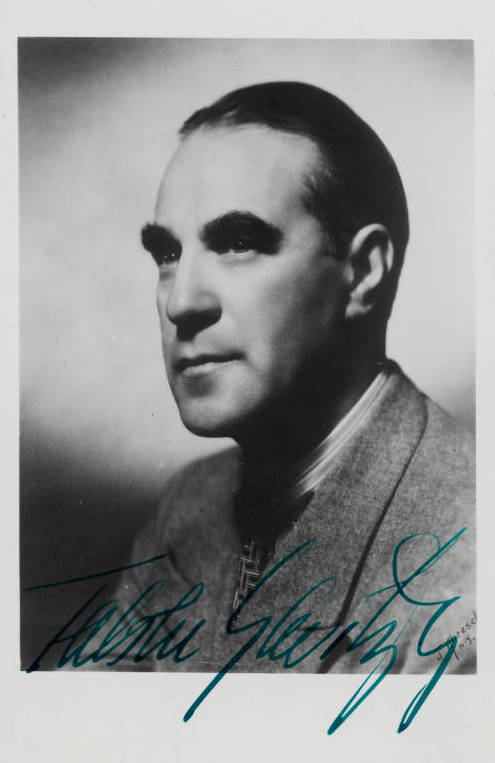
Indianapolis Symphonic Choir debuts
Pictured: Fabien Sevitsky, ca. 1937
Credit: Indiana Historical SocietyView Source
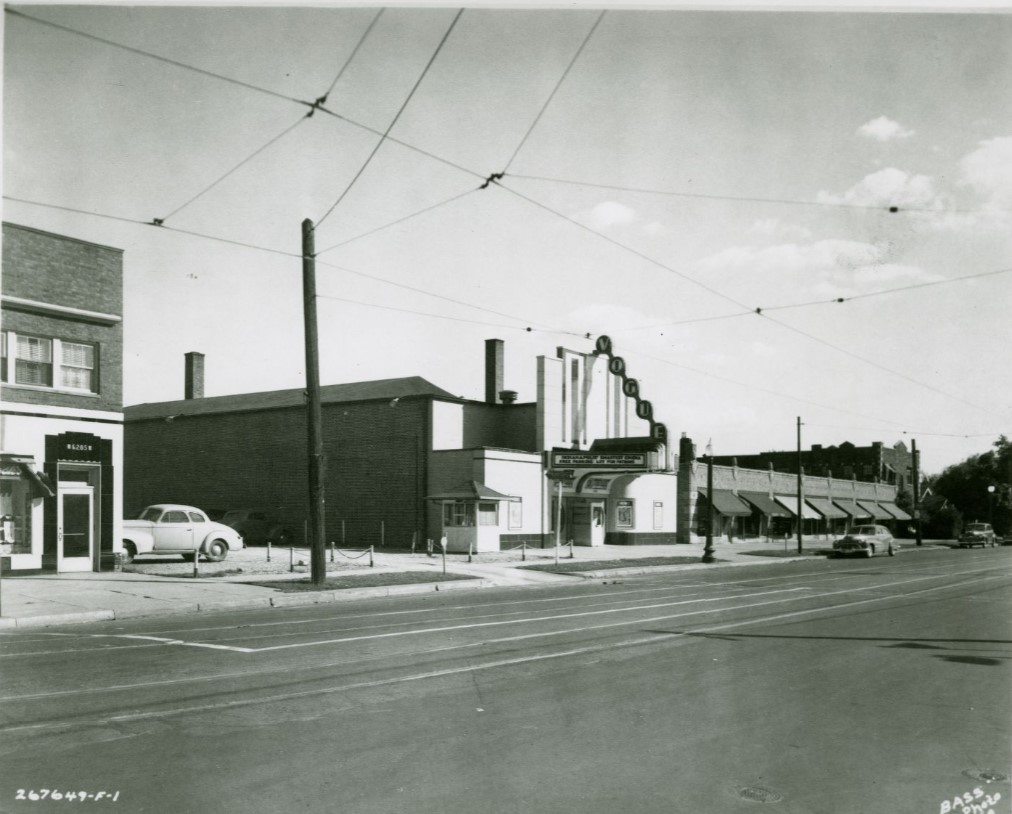
Vogue theater opens in Broad Ripple
The upscale theater opens with much fanfare, attracting 28 Hollywood stars. In 1977, the space is remodeled into a nightclub and music venue.
Pictured: Vogue Theater, 1946
Credit: Bass Photo Co Collection, Indiana Historical Society View Source
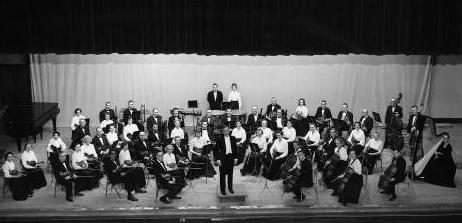
Philharmonic Orchestra of Indianapolis founded
Former Indianapolis Symphony Orchestra percussionist Herman H. Rinne establishes the ensemble as a community orchestra.
Pictured: Philharmonic Orchestra of Indianapolis with conductor Wolfgang Vacano, 1960
Credit: Philharmonic Orchestra of Indianapolis via Indianapolis-Marion County Public Library View Source
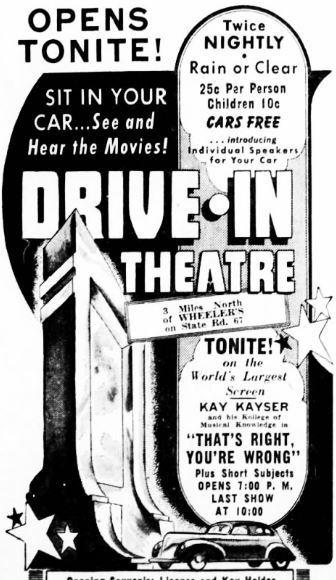
City’s first drive-in theater, the Pendleton Pike, opens
Located in the Lawrence Township district, the drive-in can accommodate 500 cars. The theater opens with two showtimes of That’s Right, You’re Wrong.
Pictured: Pendleton Pike drive-in grand opening ad, 1940
Credit: Cinema Treasures
View Source
Hoosier Salon moves to Indianapolis
The annual art exhibition moves from Chicago to Indianapolis and is held at William H. Block Company.
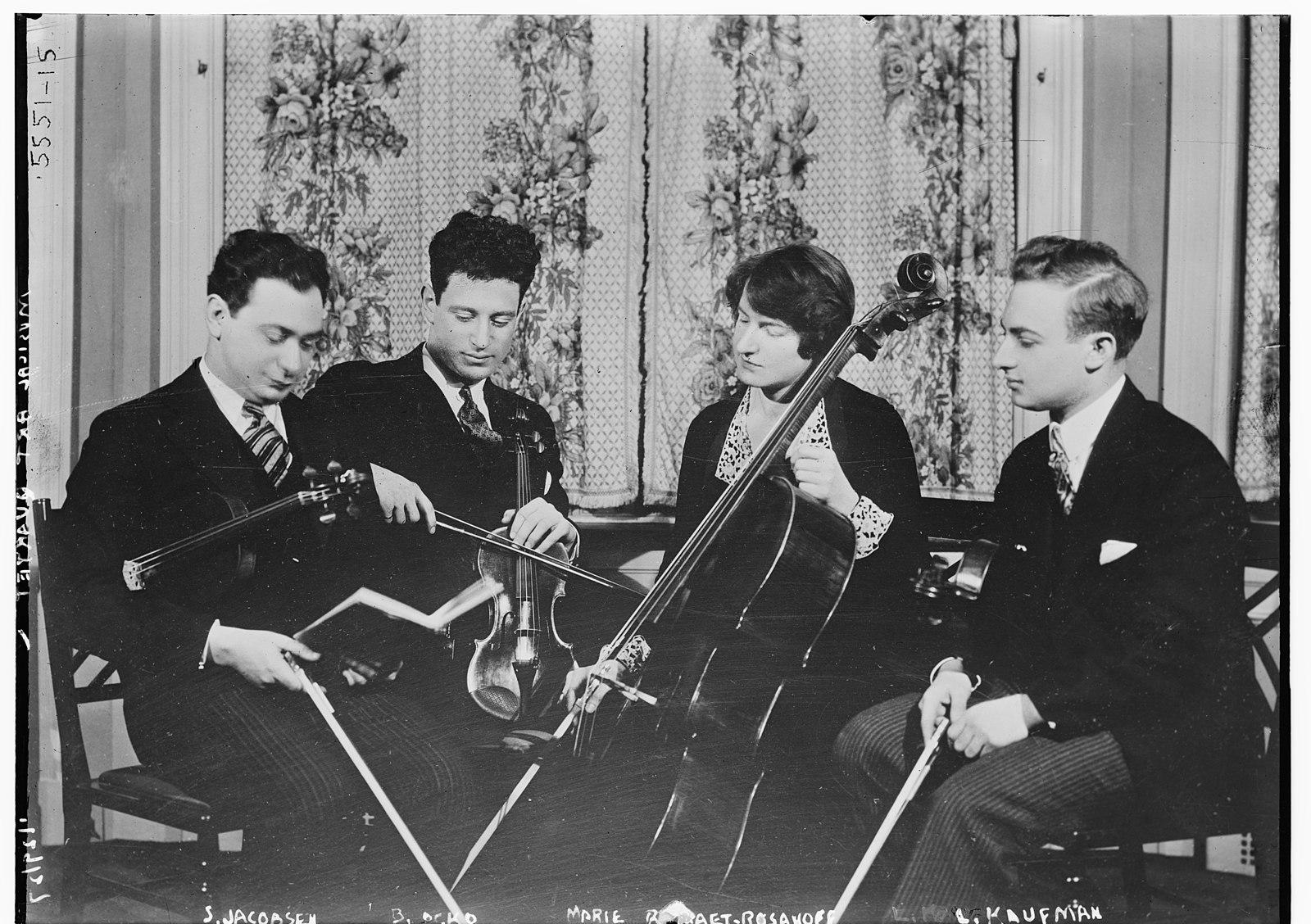
Ensemble Music Society organizes to encourage public presentations of chamber music
Amateur violinist Leonard Strauss and a core of local music enthusiasts presents the society’s first concert on April 12, 1944, with the Musical Art Quartet. The concert attracts nearly 500 attendees.
Pictured: The Musical Art Quartet is comprised of S. Jacobsen, Bernard Ocko, Marie Roemaet-Rosanoff, and L. Kaufman.
Credit: Wikimedia Commons
View Source
Starlight Musicals debut performance
A production of Gilbert and Sullivan’s Pirates of Penzance, staged at Garfield Park, marks the beginning of Starlight Musicals.
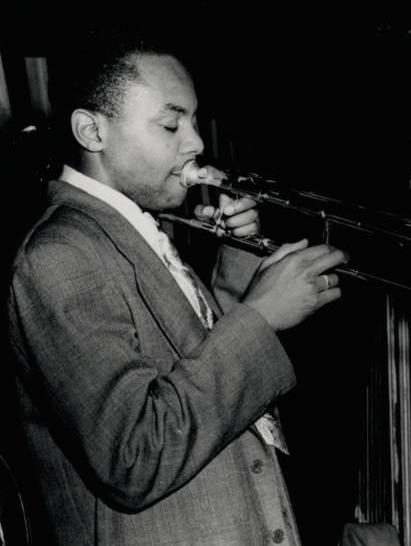
Jazz trumpeter J. J. Johnson tours with Count Basie
National legend Basie recognizes Johnson’s talent, and the trumpeter, who honed his skills at Indiana Avenue clubs, spends a year touring and recording with the jazz musician’s band.
Pictured: J. J. Johnson, 1950
Credit: Indiana Historical Society
View Source
Eli Lilly makes first gifts of Chinese art to the Indianapolis Museum of Art
The pharmaceutical entrepreneur and philanthropist makes additional gifts of Chinese art to the museum through 1961. The Lilly collection, one of the most significant of its kind, forms the core of the museum’s Asian collections.
James Franklin Baskett receives Academy Award
Baskett, an Indianapolis native, is awarded an honorary Oscar for his controversial portrayal of Uncle Remus in Song of the South.
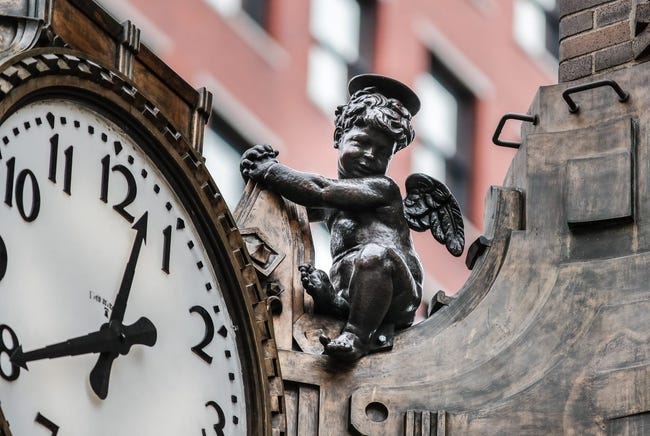
L. S. Ayres iconic cherub statue debuts
David Kresz Rubins, a sculptor and faculty member at the Herron School of Art, creates the 3-foot-tall bronze sculpture. Ayres employees place it on the building’s clock the day before Thanksgiving, sparking a new tradition.
Pictured: The holiday cherub on the L.S. Ayres Clock at the intersection of Meridian and Washington streets, 2020
Credit: Michelle Pemberton/IndyStar via Imagn Content Services, LLC View Source
The Clowes Fund established
Philanthropists George and Edith Clowes create the fund to support education and the literary, performing, and visual arts.
Indianapolis Symphony Orchestra Pops series premiers
The Indianapolis Symphony Orchestra’s new programming featuring light semiclassic and popular music debuts at the Indiana Theatre Roof Ballroom
The Indianapolis Symphony Orchestra ranks top in nation
The Indianapolis Symphony Orchestra is listed in the top 10 of the nation’s orchestras.
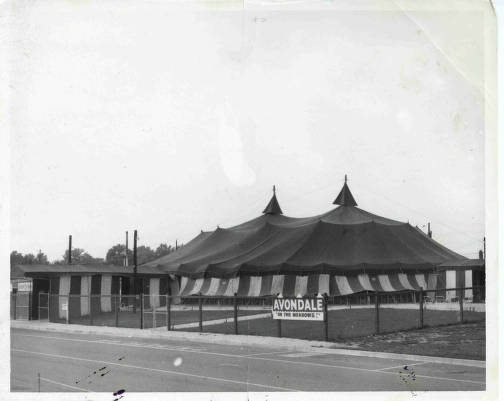
Theatre group establishes Avondale Playhouse
The summer stock theater contracts nationally recognized stage and screen personalities to headline casts composed largely of local talent.
Pictured: Avondale Playhouse, later known as the Avondale Theatre, ca. 1960s
Credit: Indianapolis Public Library View Source
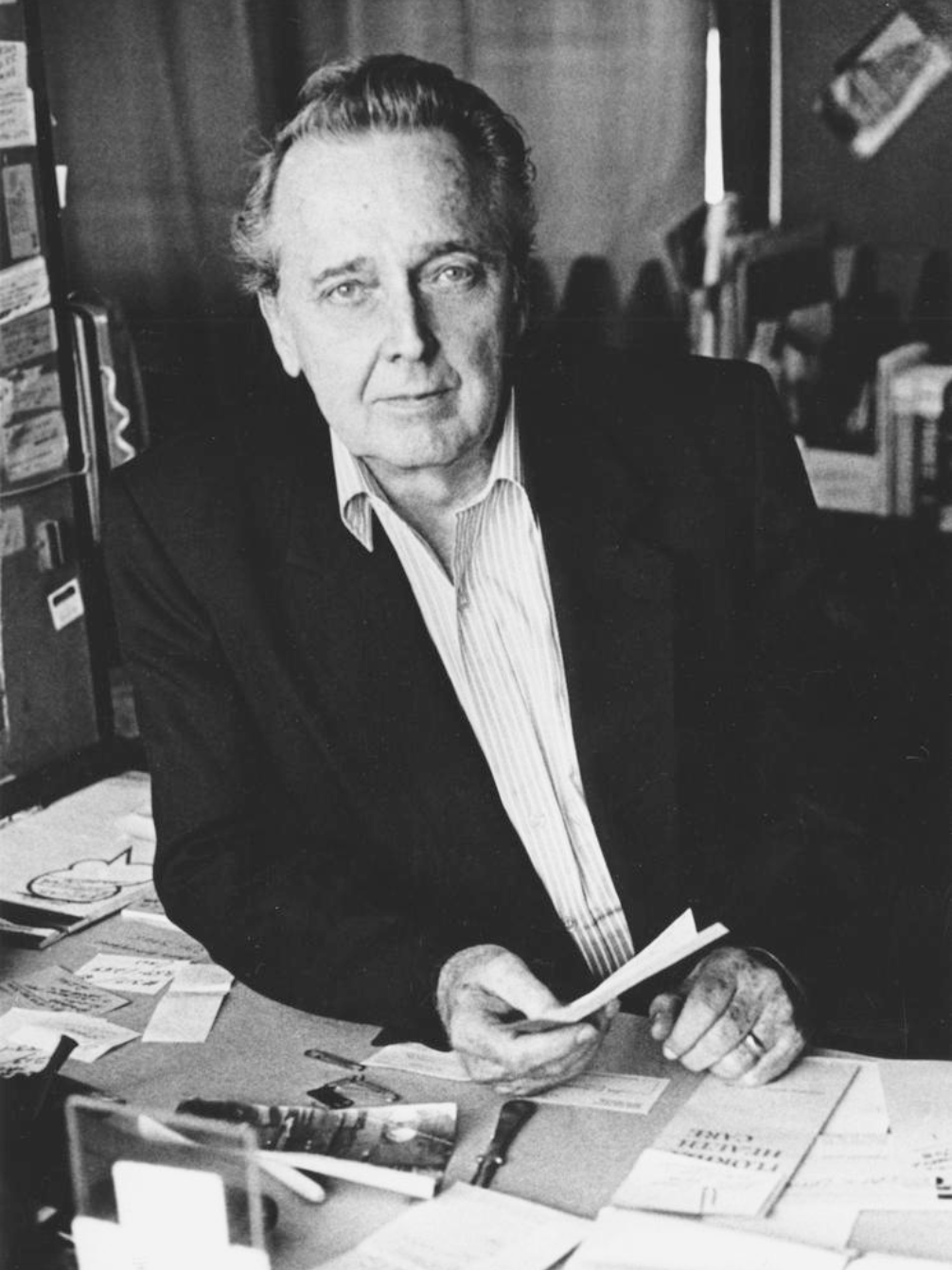
Joseph Hayes publishes The Desperate Hours
The Indianapolis native’s thriller novel is well received and adapted into both a play and a film a year later.
Pictured: Joseph Hayes, ca. 1980
Credit: Indiana University View Source
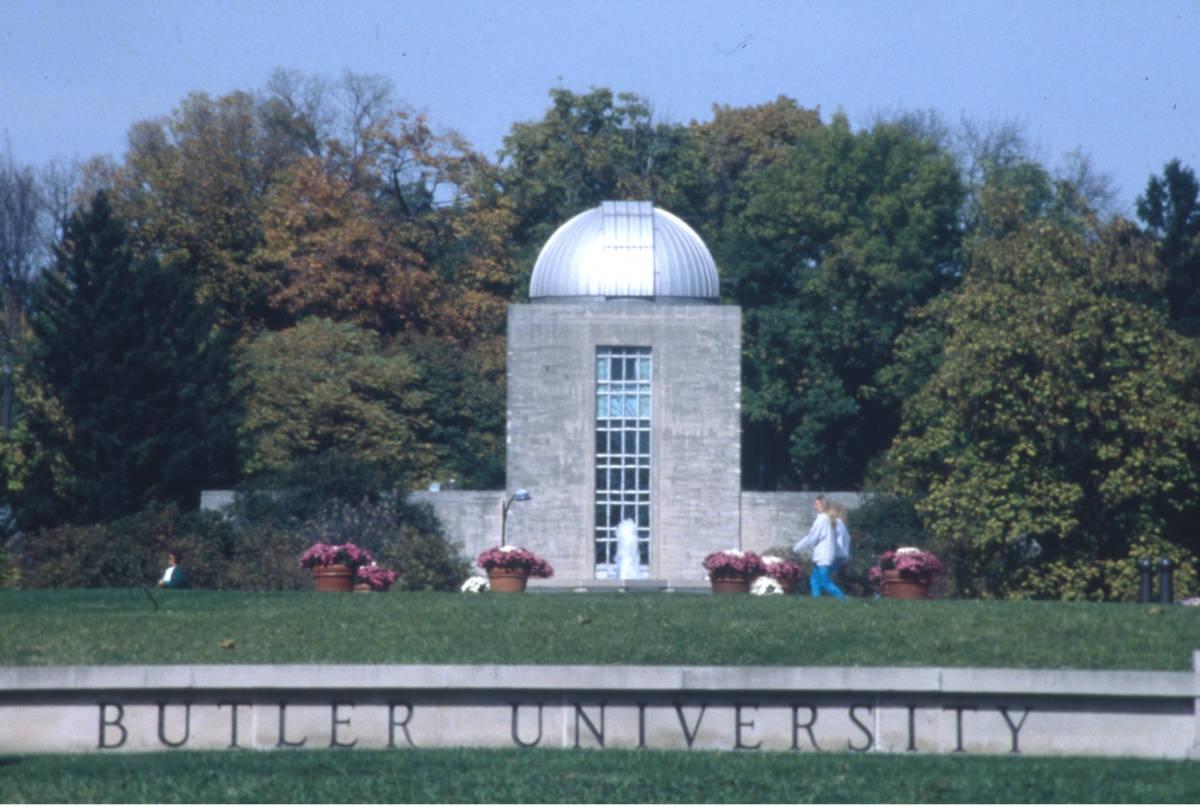
Holcomb Observatory and Planetarium dedicated
Indiana architect Robert Frost Daggett serves as architect for the building on the Butler University campus, which houses the largest telescope in Indiana.
Pictured: Front view of the Holcomb Observatory at 4600 Sunset Avenue on Butler University Campus, n.d.
Credit: Indiana Historical Society
View Source
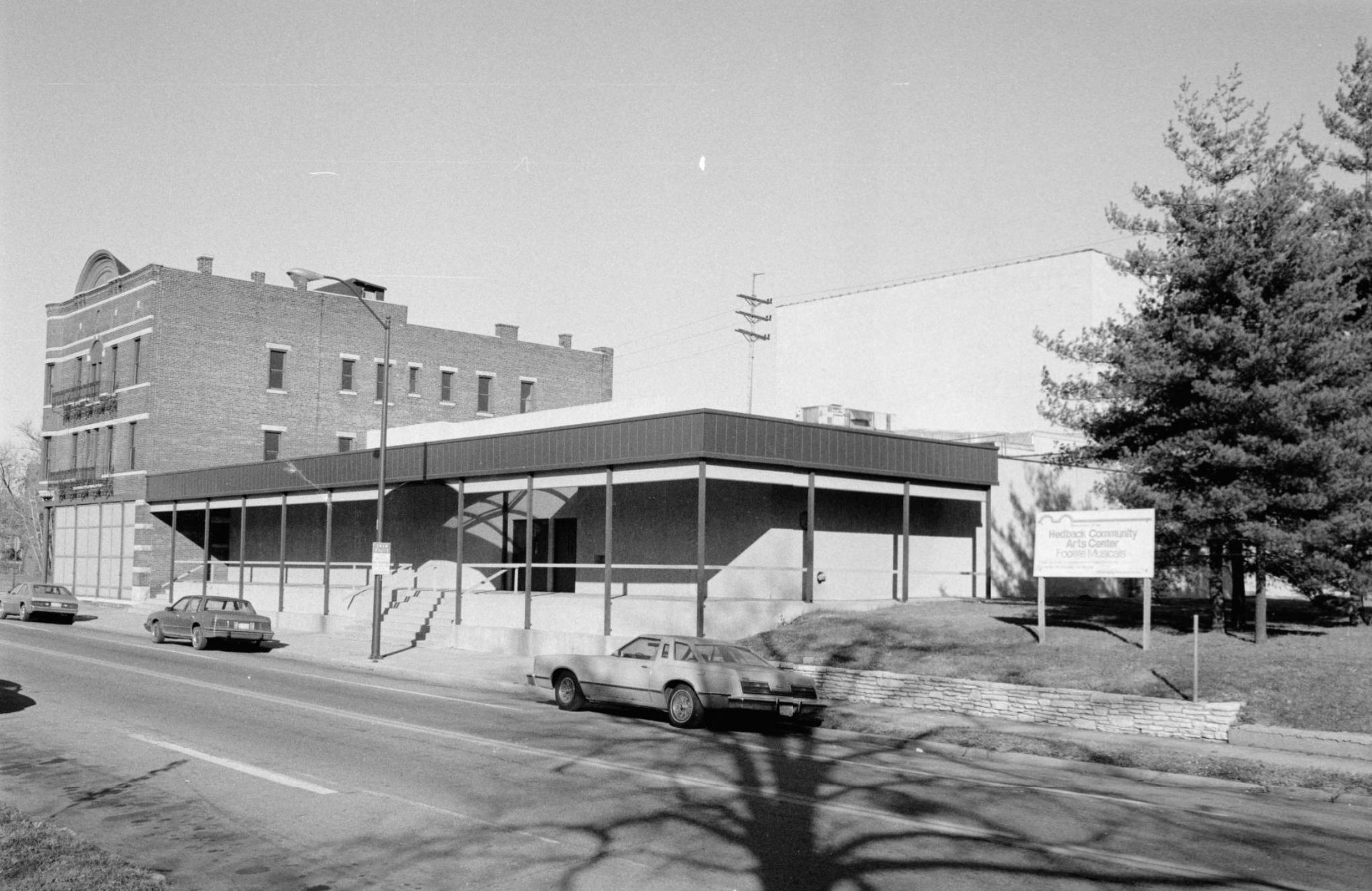
Volunteer group establishes Footlite Musicals
The all-volunteer nonprofit organization produces musicals and other programs to provide education and training to nonprofessionals in the theater.
Pictured: Hedback Theater, Footlite Musicals, 1986
Credit: Indiana University Indianapolis
View Source
Starlight Musicals finds permanent home
The open-air Hilton U. Brown Theatre located on the south side of the Butler Bowl becomes the permanent home of Starlight Musicals. The theater remains in operation until 1993.
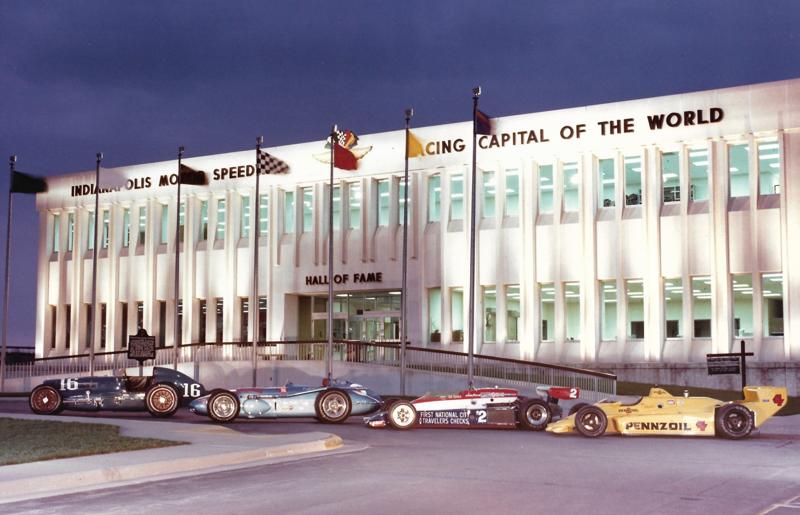
Indianapolis Motor Speedway Hall of Fame Museum opens
Tony Hulman, the track’s owner, creates the museum along with Karl Kizer, who becomes its first director, to house the Speedway Hall of Fame and a collection of vintage racing cars.
Pictured: The Indianapolis Motor Speedway Hall of Fame Museum, 1985
Credit: Indiana State Library
View Source
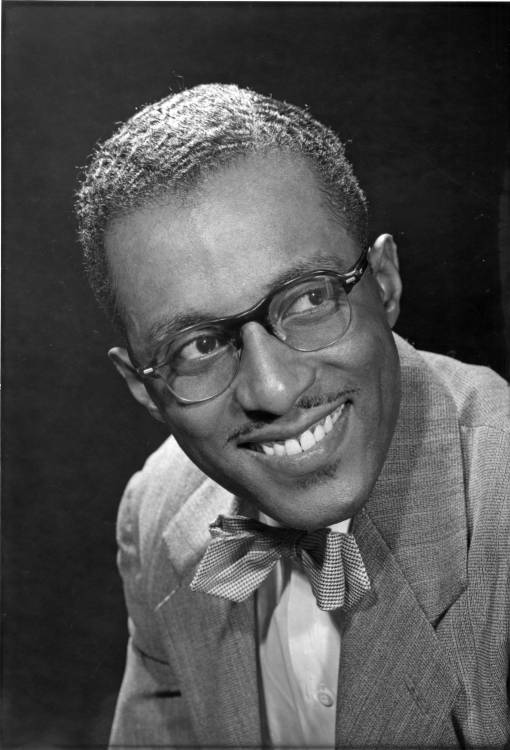
Emmett Brown establishes photography studio
Brown works for the Indianapolis Recorder, documenting African American life in the city.
Pictured: Portrait of Emmett I. Brown, Jr., ca. 1950s
Credit: Indiana Historical Society
View Source
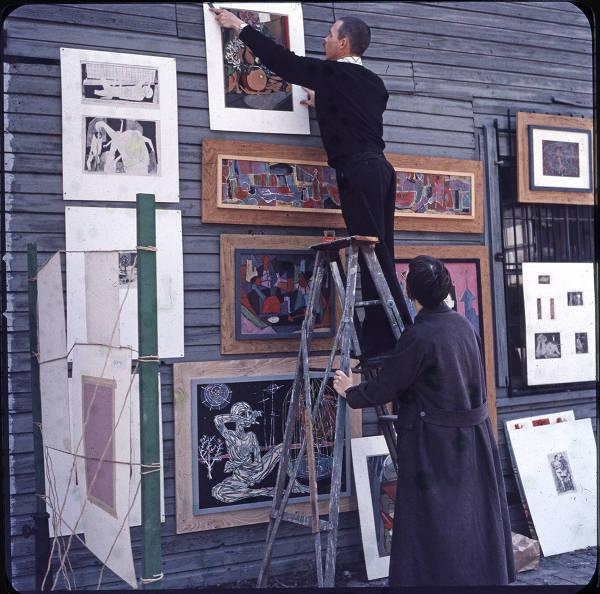
First Talbot Street Art Fair
A group of students from the Herron School of Art initiate the first Talbot Street Art Fair, located in the Herron-Morton Place neighborhood.
Pictured: Paintings that were exhibited at the first Talbot Street Art Fair in 1956.
Credit: Indiana Historical Society View Source
1444 Gallery opens on the Old Northside
A nonprofit group of artists and art patrons organize the gallery to encourage the development of contemporary art and design in the city.
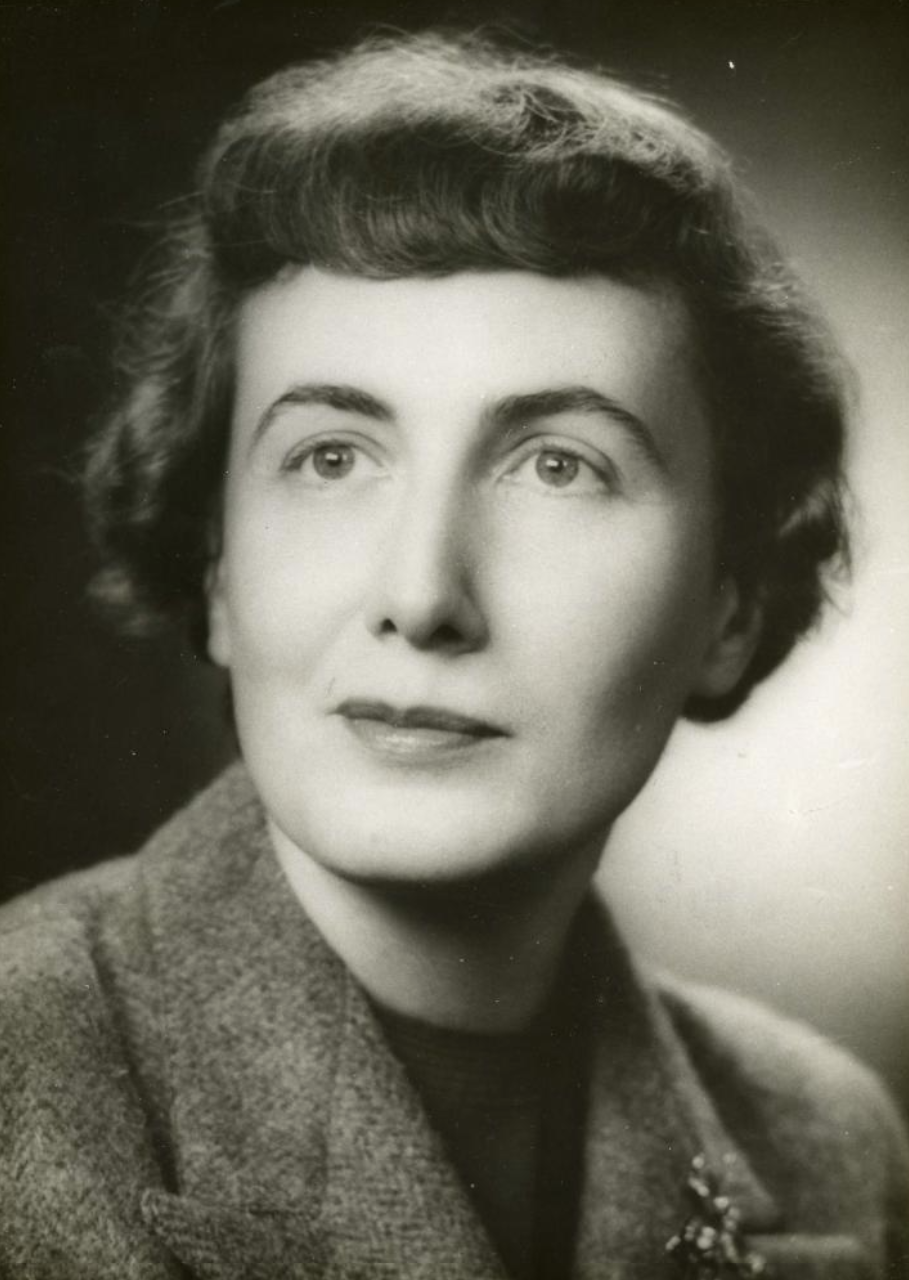
Historian publishes The Negro in Indiana before 1900
Emma Lou Thornbrough’s book sets the standard for histories of the Black experience in northern states.
Pictured: Emma Lou Thornbrough, ca. 1950s
Credit: Butler UniversityView Source
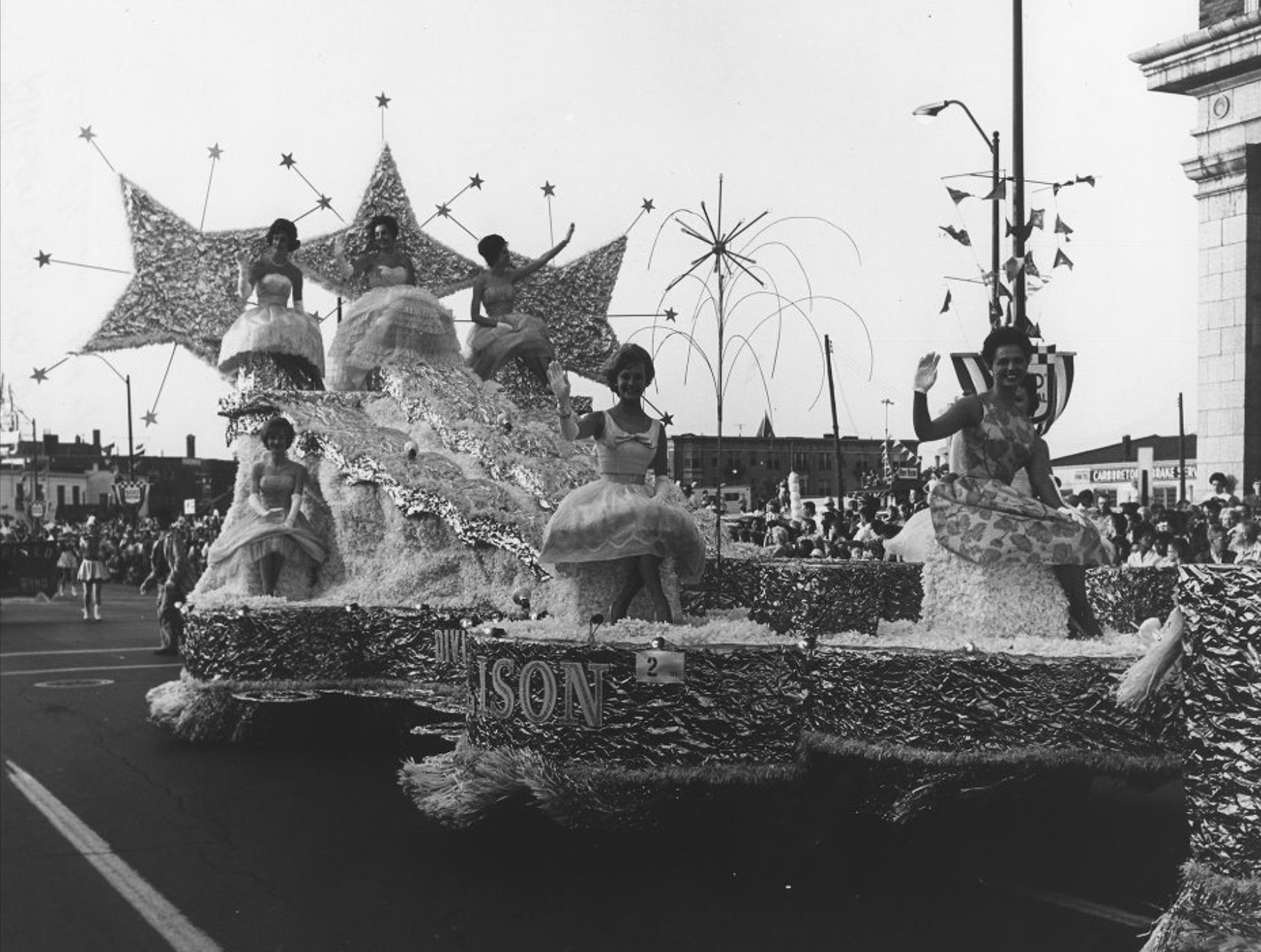
First 500 Festival
Four civic-minded individuals create the first 500 Festival in just 60 days, which includes a parade, ball, and square dance. This community-led endeavor celebrates sports, health, and education.
Pictured: The Allison Division of G.M. parade float makes its way down the street during the Indianapolis ‘500’ Festival Parade in 1957.
Credit: Indiana University Indianapolis
View Source
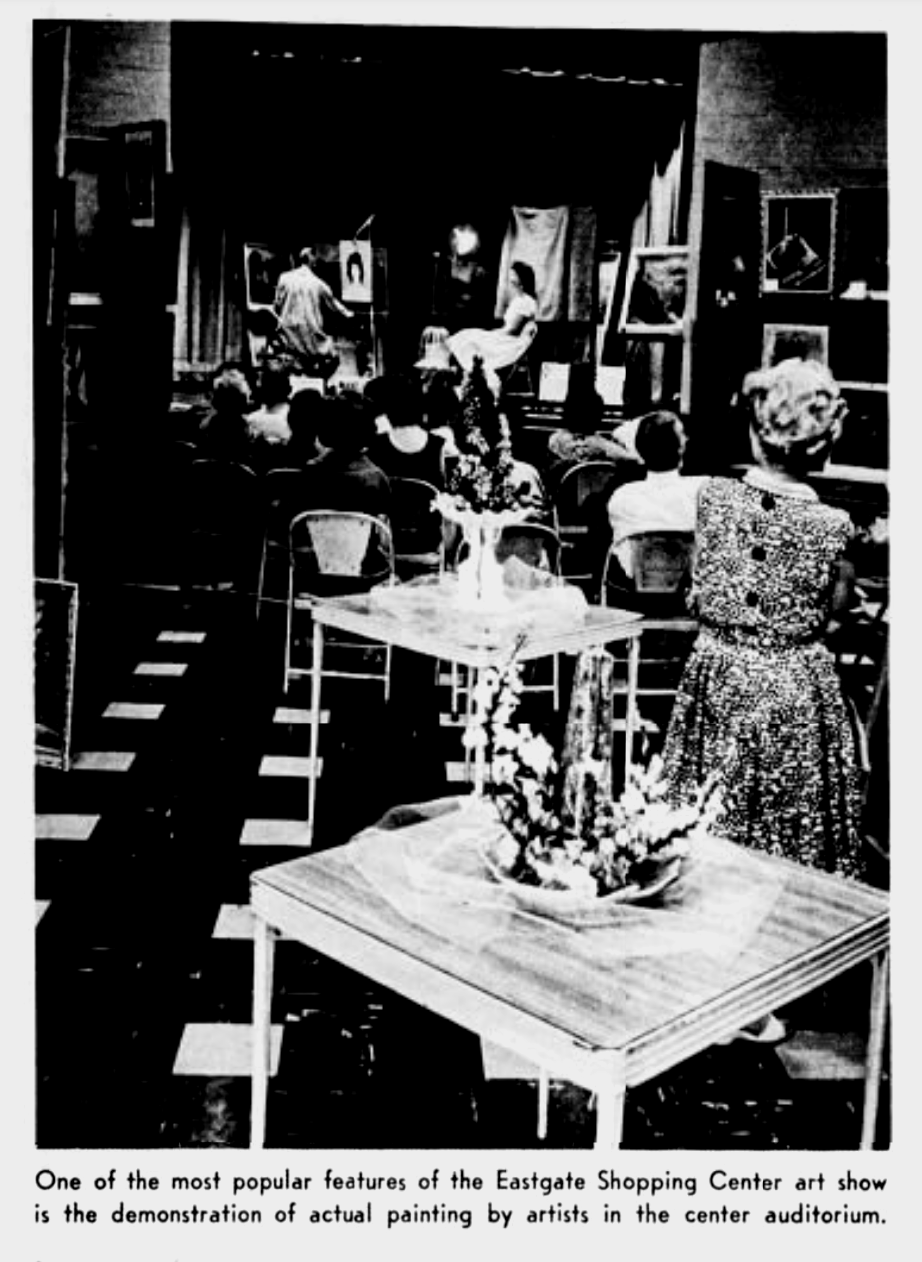
Eastgate Mile of Art
The Eastside Art Center organizes the art show, which is likely the first in the nation to take place in a shopping mall.
Pictured: Eastgate Mile of Art scene, ca. 1960s
Credit: IndyStar
View Source
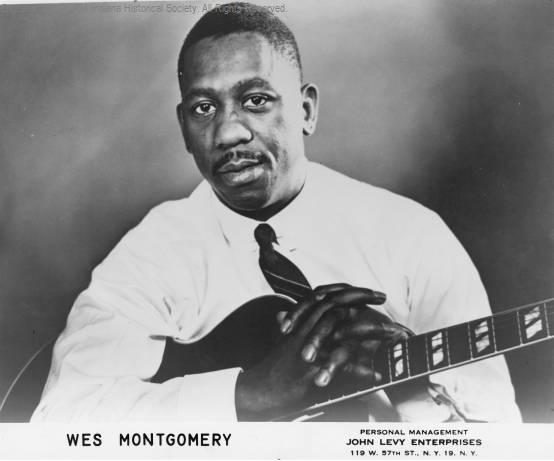
Jazz guitarist Wes Montgomery releases first album
Montgomery makes a name for himself while playing in clubs on Indiana Avenue. He records his first album with brothers Monk and Buddy on the Riverside record label.
Pictured: Wes Montgomery, 1964
Credit: Indianapolis Recorder Collection, Indiana Historical Society
View Source
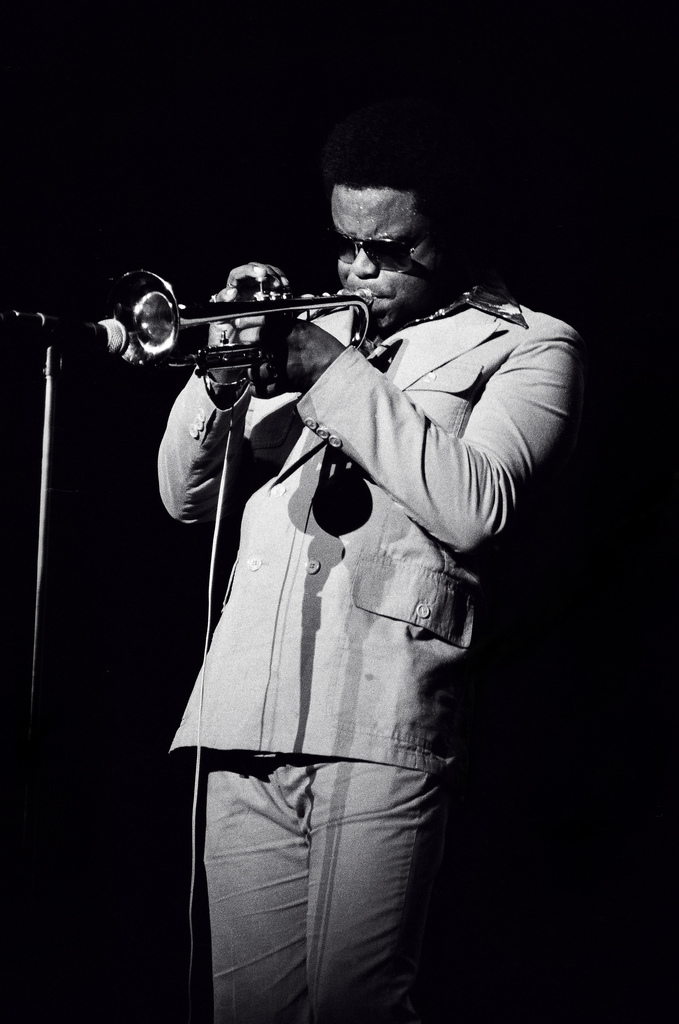
Jazz trumpeter Freddie Hubbard records debut album
Blue Note record company signs Hubbard for his debut album, Open Sesame. During the next year, he releases three more recordings—“Goin’ Up,” “Hub Cap,” and “Ready for Freddie.”
Pictured: Freddie Hubbard, 1976
Credit: Tom Marcello Webster, New York, USA via Wikimedia Commons View Source
Liberty Fund founded
Created by Pierre Frist Goodrich, the fund emphasizes liberal education and the “Great Books” tradition. It publishes scholarly and accessible editions of classic works.
Volunteer group establishes Indiana Landmarks
Founded as Historic Landmarks Foundation of Indiana, Indiana Landmarks grows from an all-volunteer group, which includes Eli Lilly, Calvin Hamilton, and H. Roll McLaughlin, to become the largest, nonprofit statewide preservation organization in the U.S.
Filipino immigrants found Barangay Club of Indiana, Inc.
A group of Filipino students and professionals interested in promoting the arts and culture of their country of origin form the club.
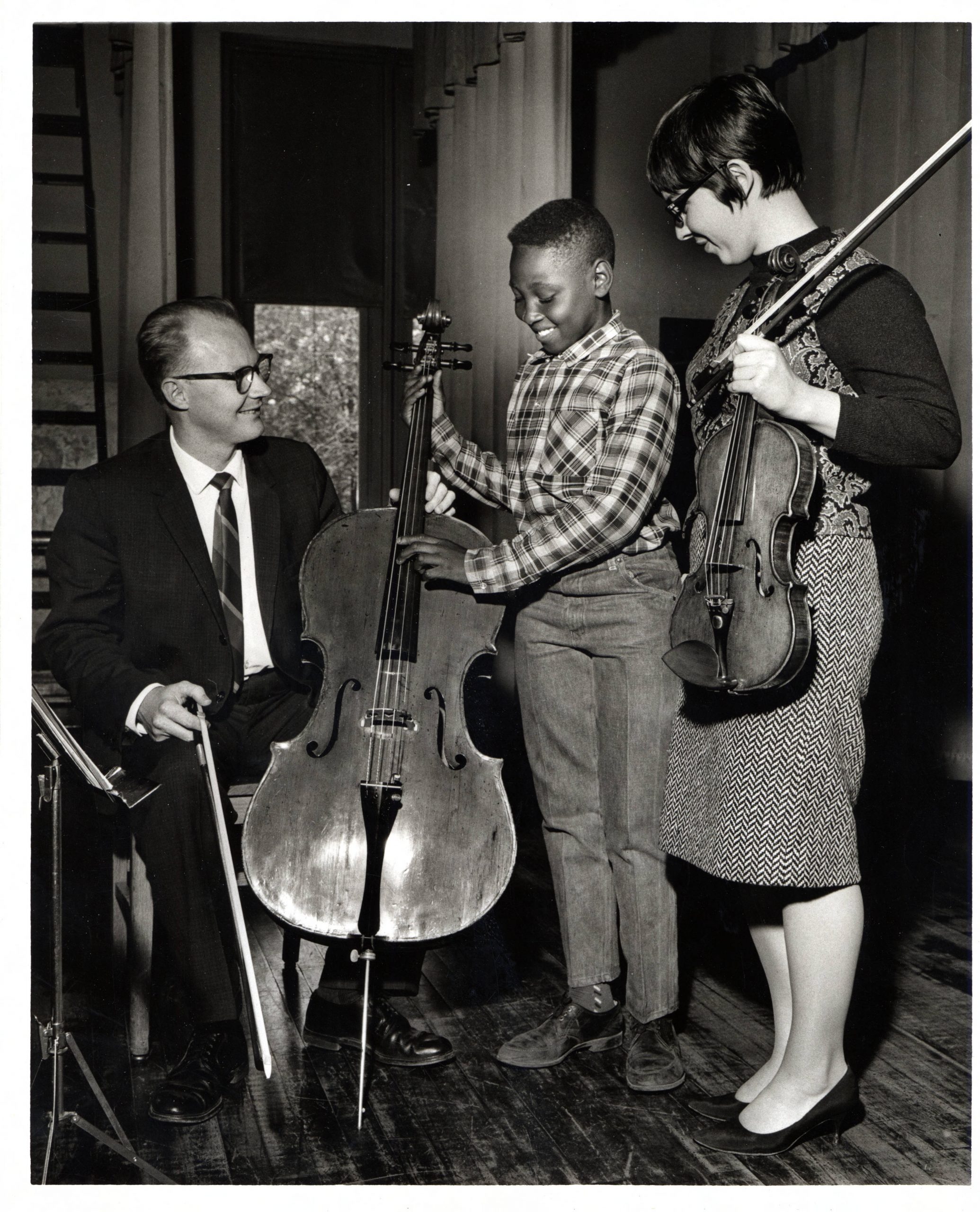
Young Audiences Arts for Learning establishes affiliate group in Indianapolis
Arts for Learning, a community-based arts education program, educates school-age children about the arts. It is the largest and oldest provider of professional arts programs for children in Indiana.
Pictured: Arts for Learning participants, ca. 1960s
Credit: Indianapolis Public Library
View Source
Marion County Historical Society founded
Community leaders and local historians establish the society to collect and preserve local history materials, mark historic sites, and promote the preservation of historic structures in Indianapolis.
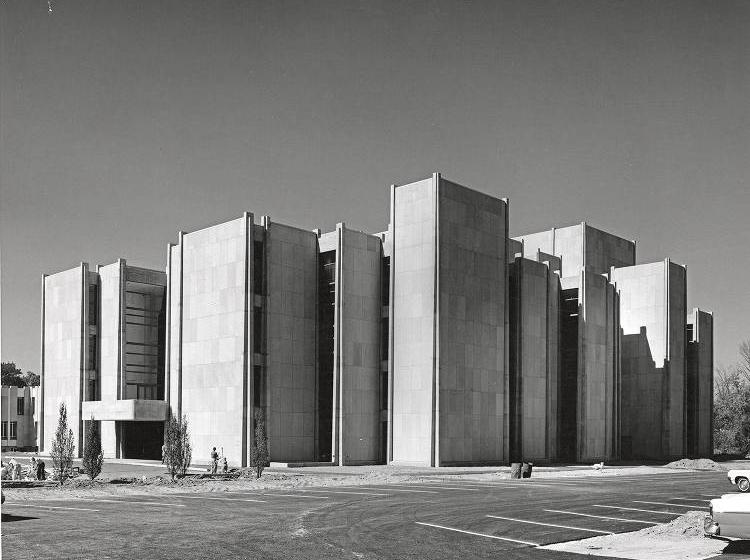
Clowes Memorial Hall opens
Compared to New York City’s Lincoln Center, Clowes Hall provides a world-class venue for the Indianapolis Symphony Orchestra until 1984 and hosts a variety of musical performances, including traveling Broadway shows.
Pictured: Clowes Memorial Hall at Butler University at the time that it opened, 1963
Credit: Indiana Historical Society View Source
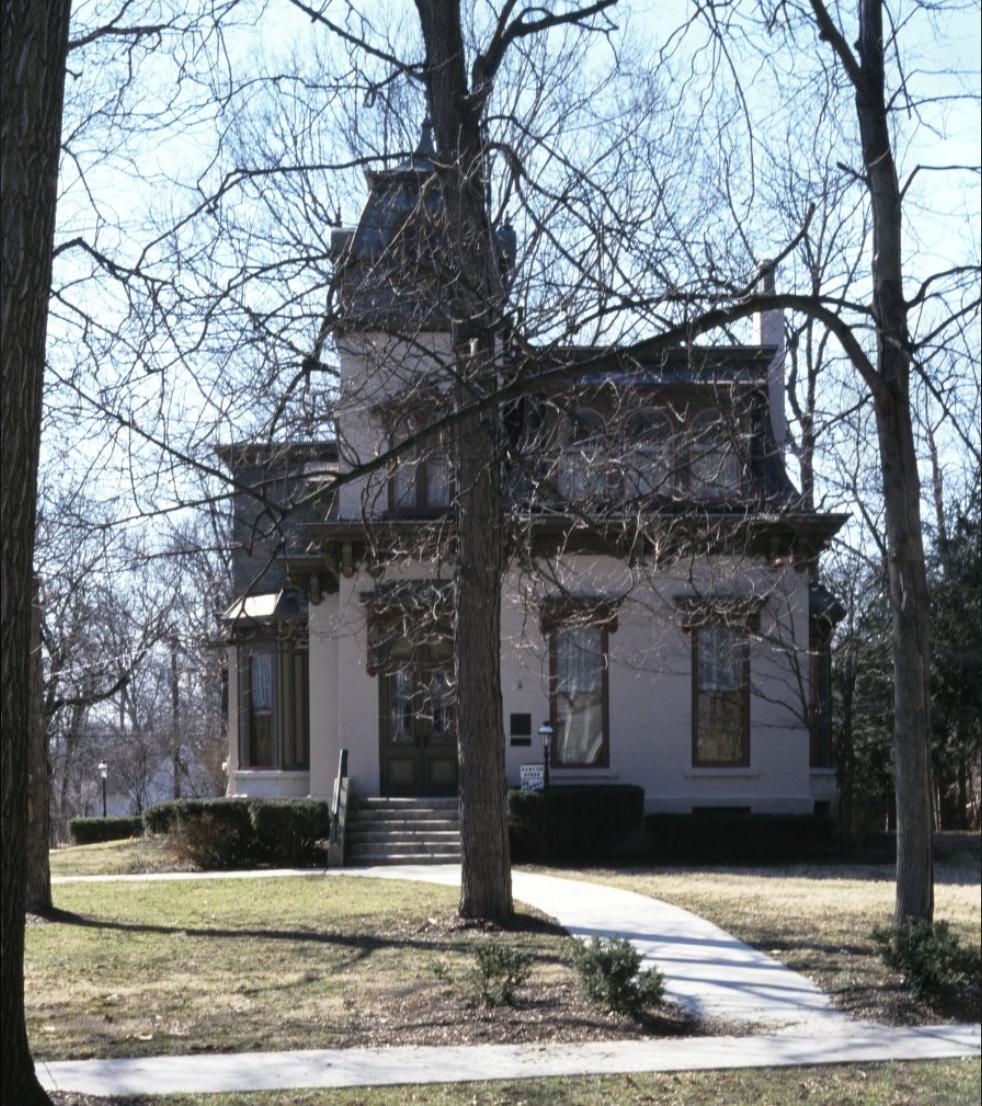
Volunteers establish Irvington Historical Society
The Irvington Historical Society is created to document and collect the history of the east side neighborhood.
Pictured: Benton House, ca. 2005
Credit: Indiana University Indianapolis
View Source
Eli Lilly gifts Earlham College Conner Prairie
Lilly makes Earlham College the owner of the living history museum. Earlham operates the farm and opens it up to school groups, clubs, and historical organizations.
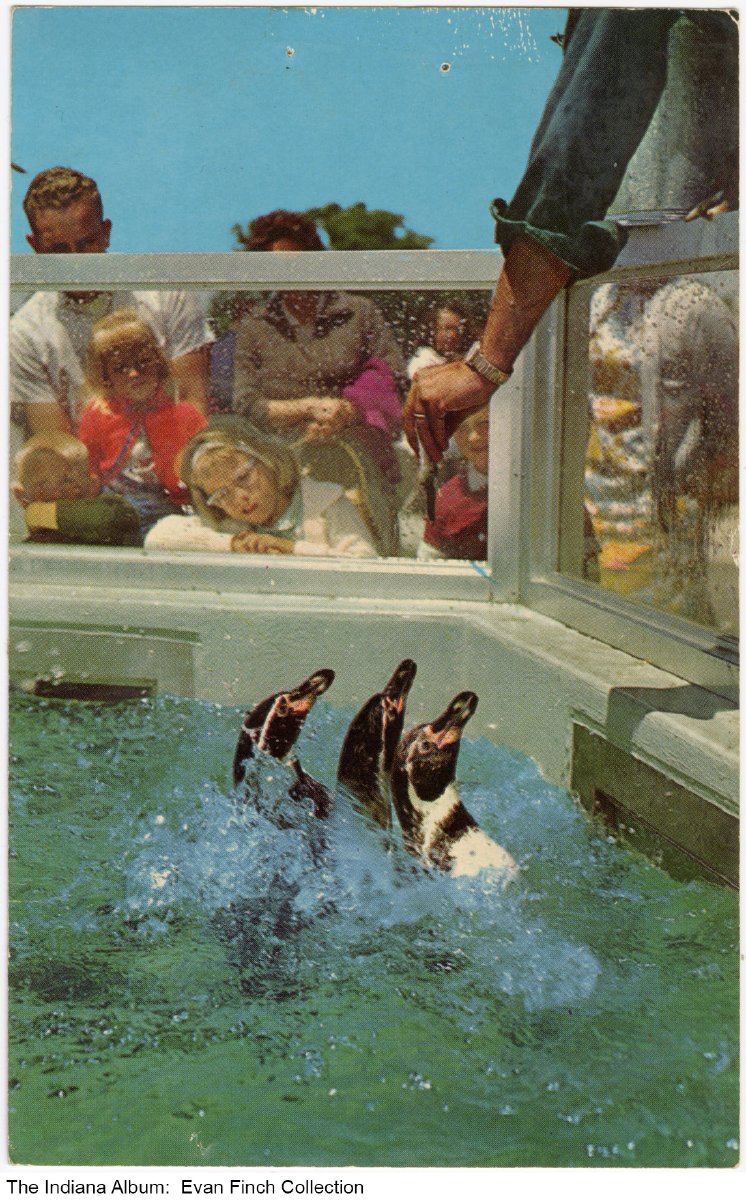
Indianapolis Zoological Society establishes city’s first zoo
The effort to establish a zoo, initiated 20 years earlier by newspaper columnist Lowell Nussbaum, finally succeeds. The zoo is located in Washington Park on East 30th Street.
Pictured: Penguins at the Indianapolis Zoo, ca. 1964
Credit: The Indiana Album: Evan Finch Collection
View Source
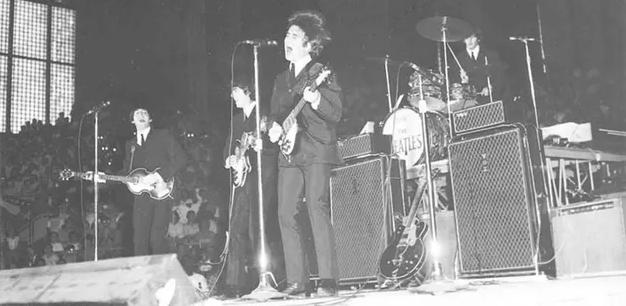
Beatles perform in Indianapolis
The Beatles play two shows at the Indiana State Fair, one at 6 p.m. in the Coliseum and the second at 9:30 in the Grandstand.
Pictured: The Beatles at the State Fair Coliseum, 1964
Credit: Indiana State Archives via IndyStar
View Source
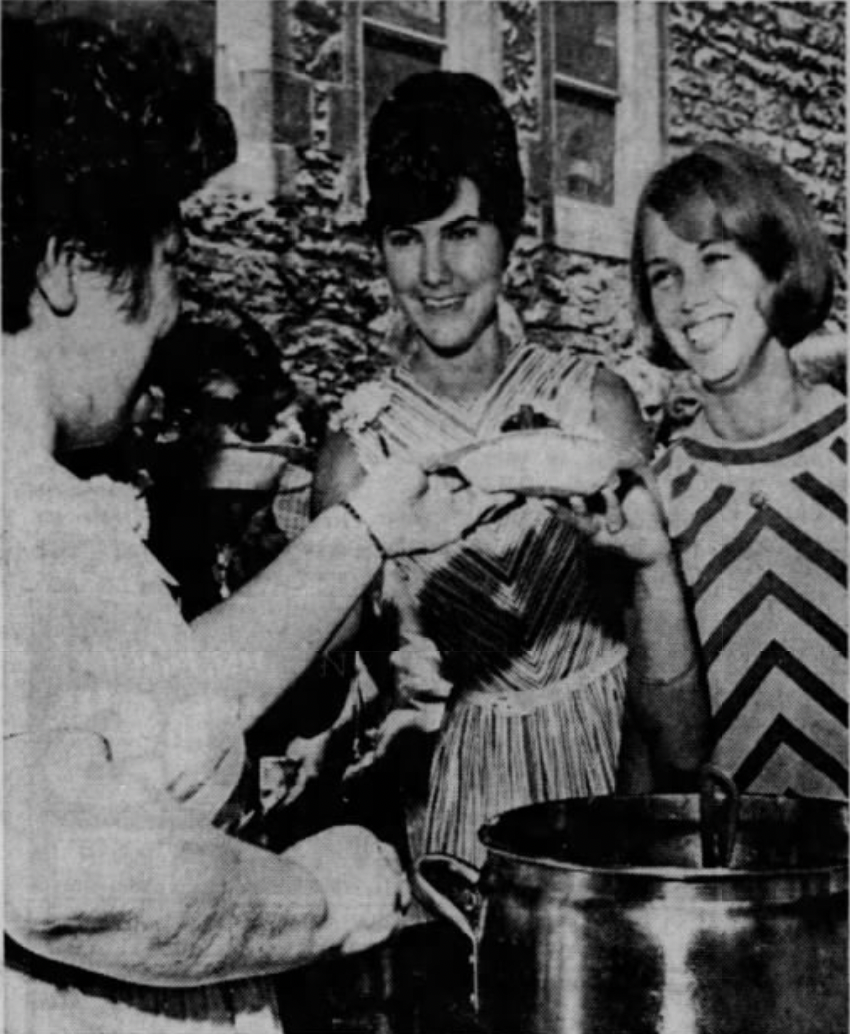
Christ Church Cathedral hosts first annual Strawberry Festival
The Cathedral Women of Christ Church Cathedral organizes the Strawberry Festival to raise funds for charity. The women sell 100 homemade strawberry shortcakes during the festival, selling out in two hours.
Pictured: Christ Church Cathedral Strawberry Festival, 1967
Credit: Indianapolis News
View Source
Janet Flanner wins National Book Award
The Indianapolis native and author earns the National Book Award for Arts and Letters for Paris Journals, 1944-1965.
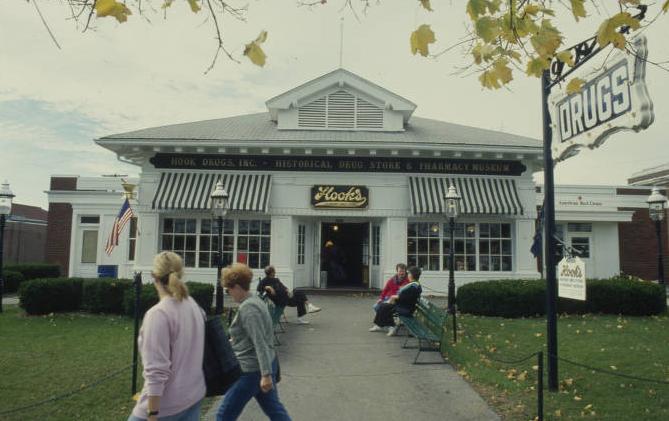
Hooks Historical Drug Store Museum opens
Located in the Indiana State Fairgrounds, the museum opens as part of Hook’s Drug Stores’ commemoration of the 150th anniversary of Indiana’s admission to the Union.
Pictured: The Hook’s Historical Drug Store and Pharmacy Museum, located on the grounds of the Indiana State Fair, 1989
Credit: Indiana Historical Society View Source
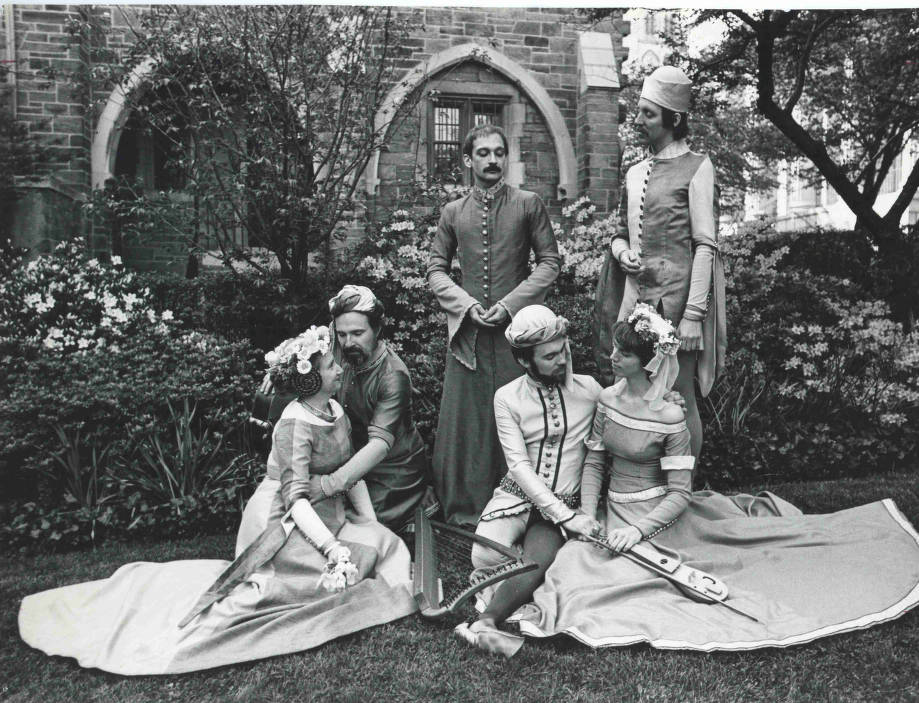
Indianapolis Early Music established
First known as the Festival Music Society, the group promotes early classical music through educational opportunities and performances. The organization holds its first Early Music Festival in 1967.
Pictured: Indianapolis Early Music ensemble in costume, ca. 1970s
Credit: Indianapolis-Marion County Public Library View Source
Indianapolis Historic Preservation Commission forms
The commission is a government agency that functions in cooperation with the City of Indianapolis to preserve both the character and fabric of historically significant areas and structures in Marion County.
First Christmas at the Zoo
The Indianapolis Zoo becomes the first zoo in the U.S to initiate a holiday event featuring light shows and family activities.
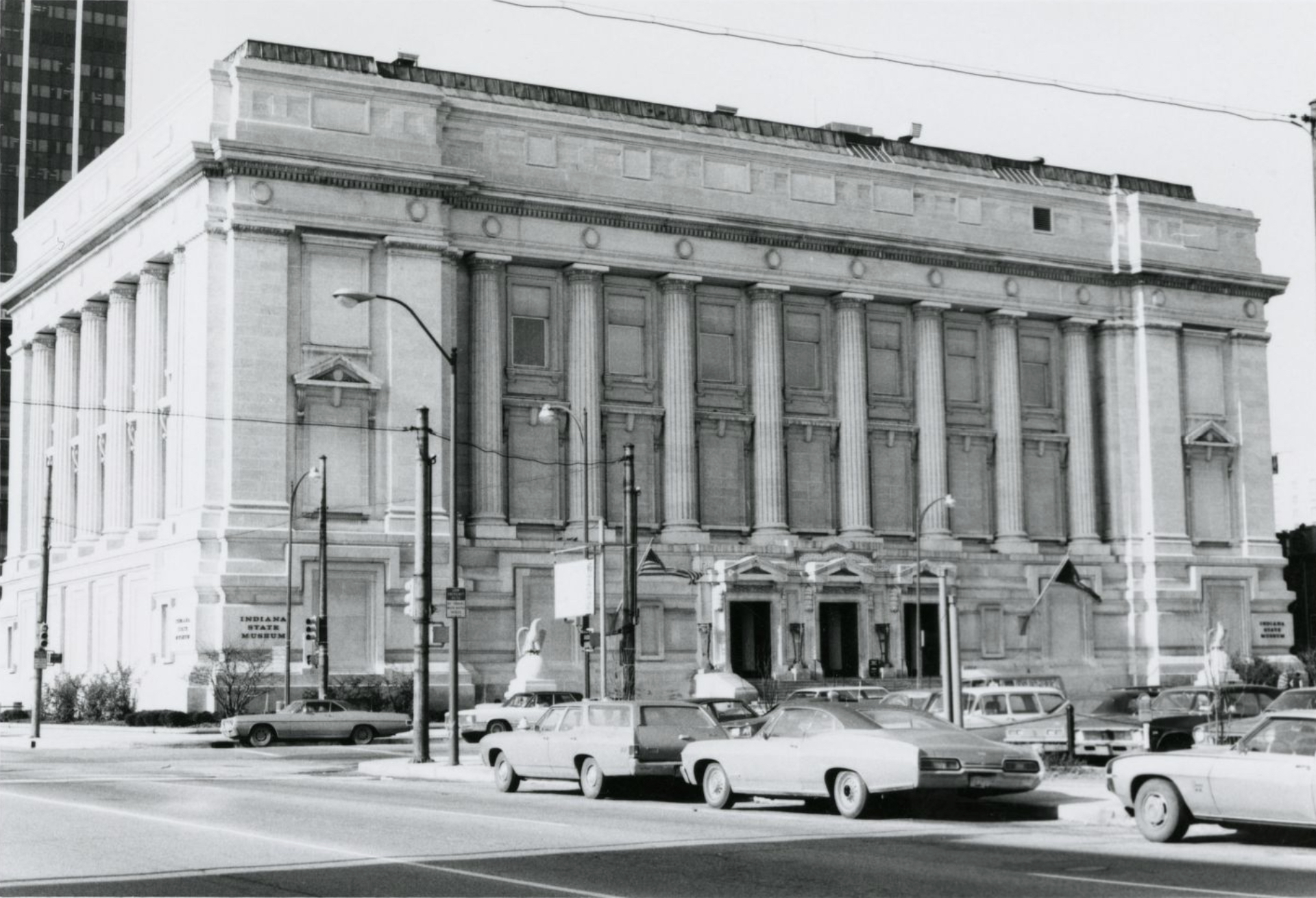
Indiana State Museum opens
Previously housed in various locations, including a basement, the museum finally has its own building—the renovated former Indianapolis City Hall at Alabama and Ohio streets.
Pictured: Indiana State Museum at the former City Hall, ca. 1970s
Credit: City of Indianapolis, Department of Metropolitan Development, Indiana Historical Society
View Source
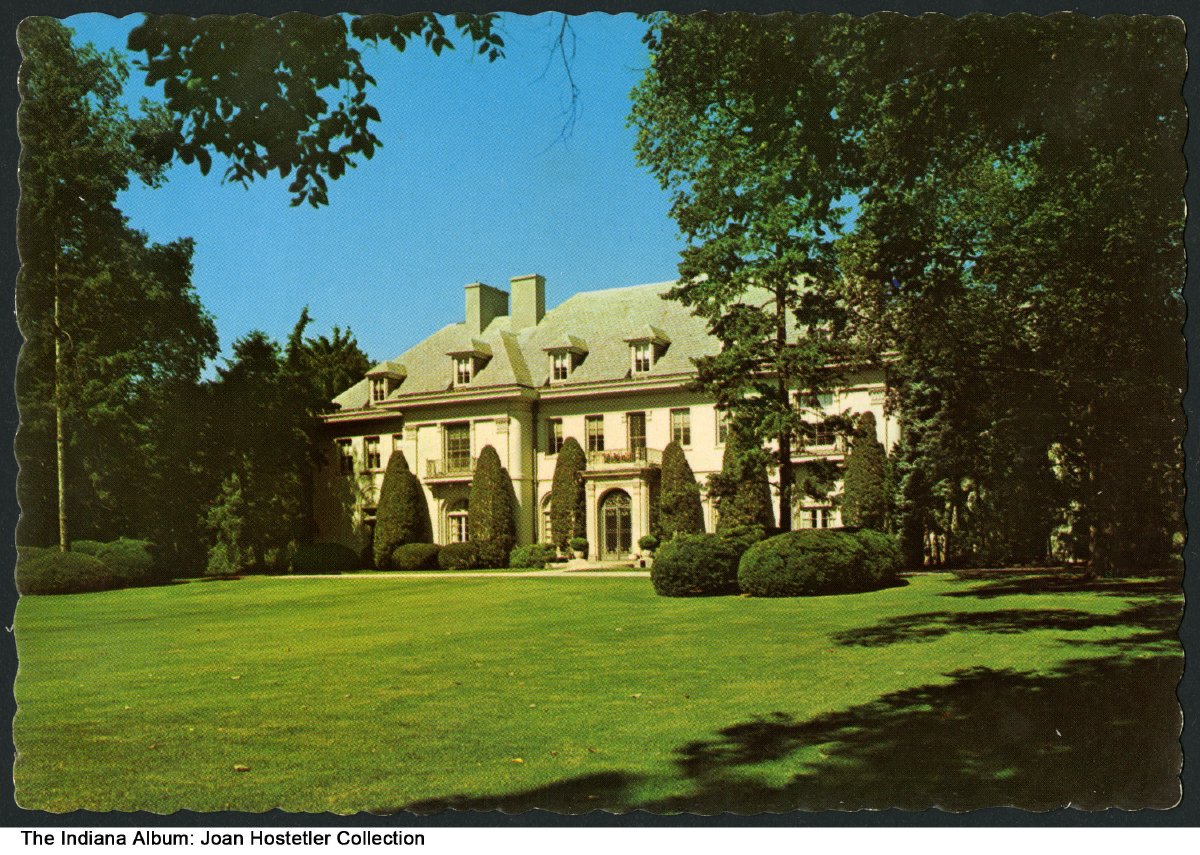
Herron School of Art and Museum split
The Herron School of Art becomes part of Indiana University, and the Art Association of Indianapolis makes plans to move the museum to Oldfields, the former estate of J. K. Lilly Jr. The Art Association becomes the Indianapolis Museum of Art in 1969.
Pictured: Exterior of Oldfields, Museum of Decorative Arts, ca. 1970
Credit: The Indiana Album: Joan Hostetler Collection
View Source
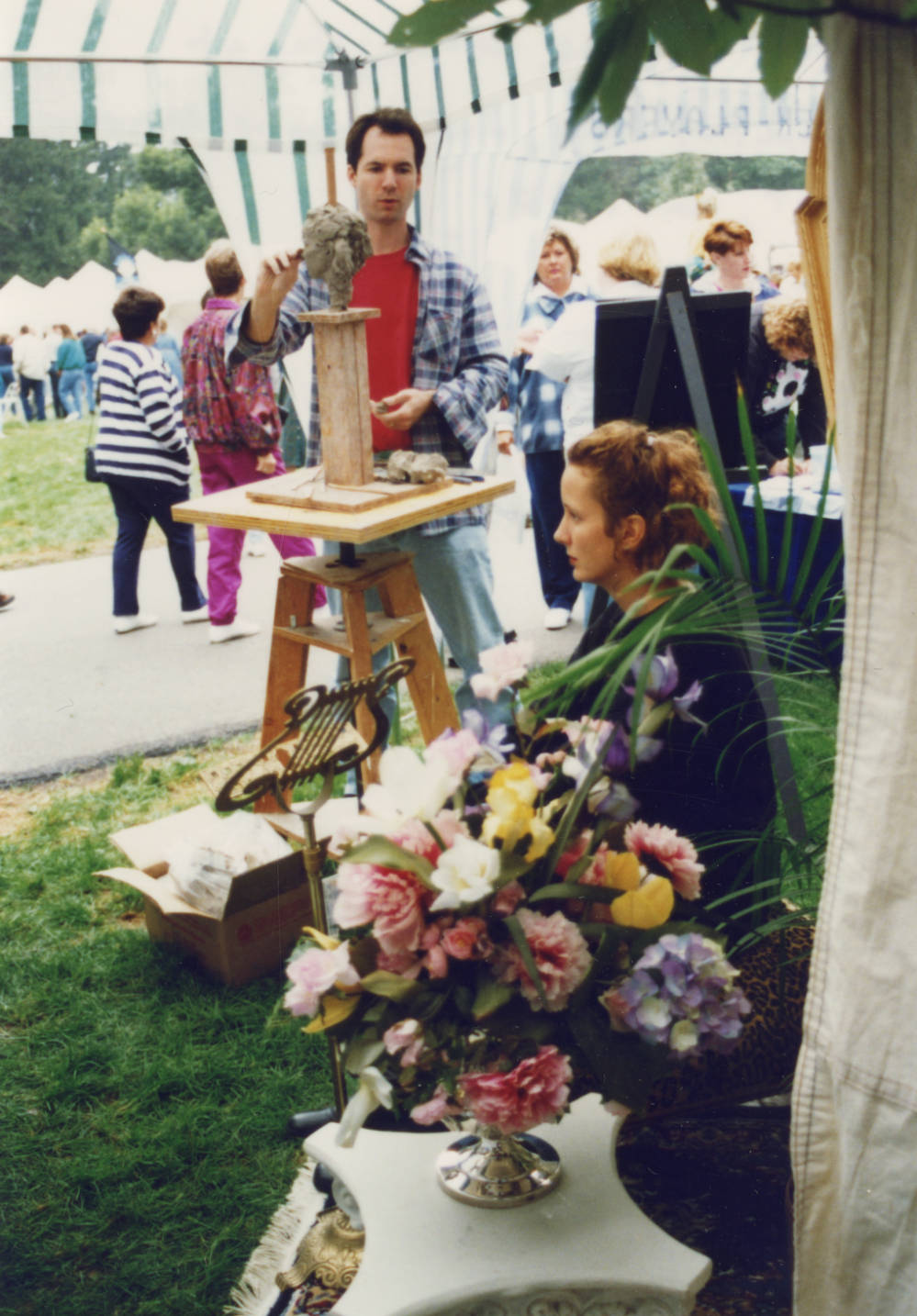
First Penrod Arts Fair
The Penrod Society, established earlier this same year, holds its first art fair. The fair goes on to become one of the largest single-day arts fairs in the country.
Pictured: Herron tent at Penrod Art Fair, ca. 1990s
Credit: Indiana University Indianapolis
View Source
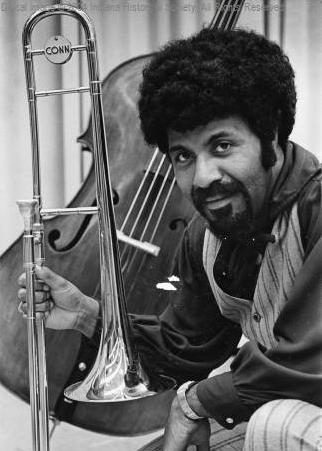
David Baker establishes Jazz Studies program at Indiana University
An Indianapolis native, trombonist, and composer, Baker establishes one of the first jazz studies programs at an American university. It becomes a highly respected and internationally recognized academic jazz program.
Pictured: Jazz musician David Baker, 1970
Credit: Indianapolis Recorder Collection, Indiana Historical Society View Source
Fine Arts Society established
Eli Lilly and Company research scientist Norbert Neuss, along with other Lilly colleagues, forms a corporation to broadcast classical music to the radio listeners of Indianapolis. It becomes known as Classical Music Indy in 2013.
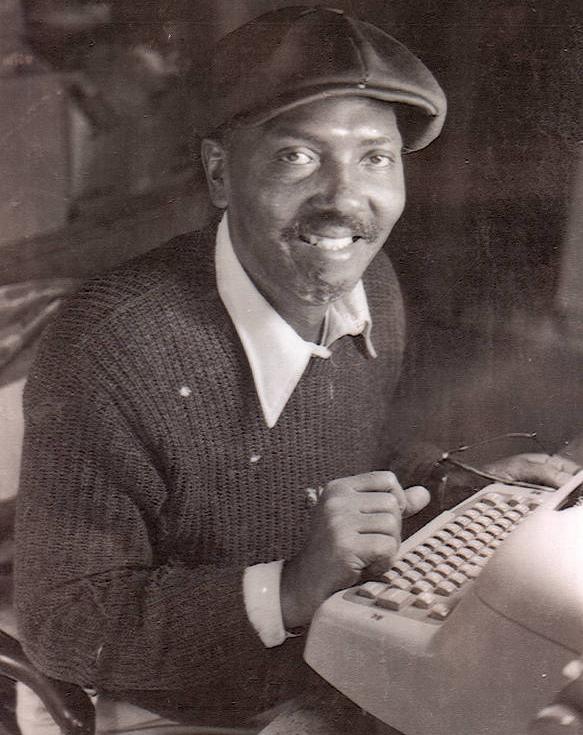
Etheridge Knight publishes Poems From Prison
In his first book, Knight focuses on his experiences in the Indiana State Prison after his arrest for robbery. It establishes him as a poet of the national Black Arts Movement, in which artists embrace and celebrate their African American heritage.
Pictured: Etheridge Knight, ca. 1960s
Credit: Indiana Historical Society View Source
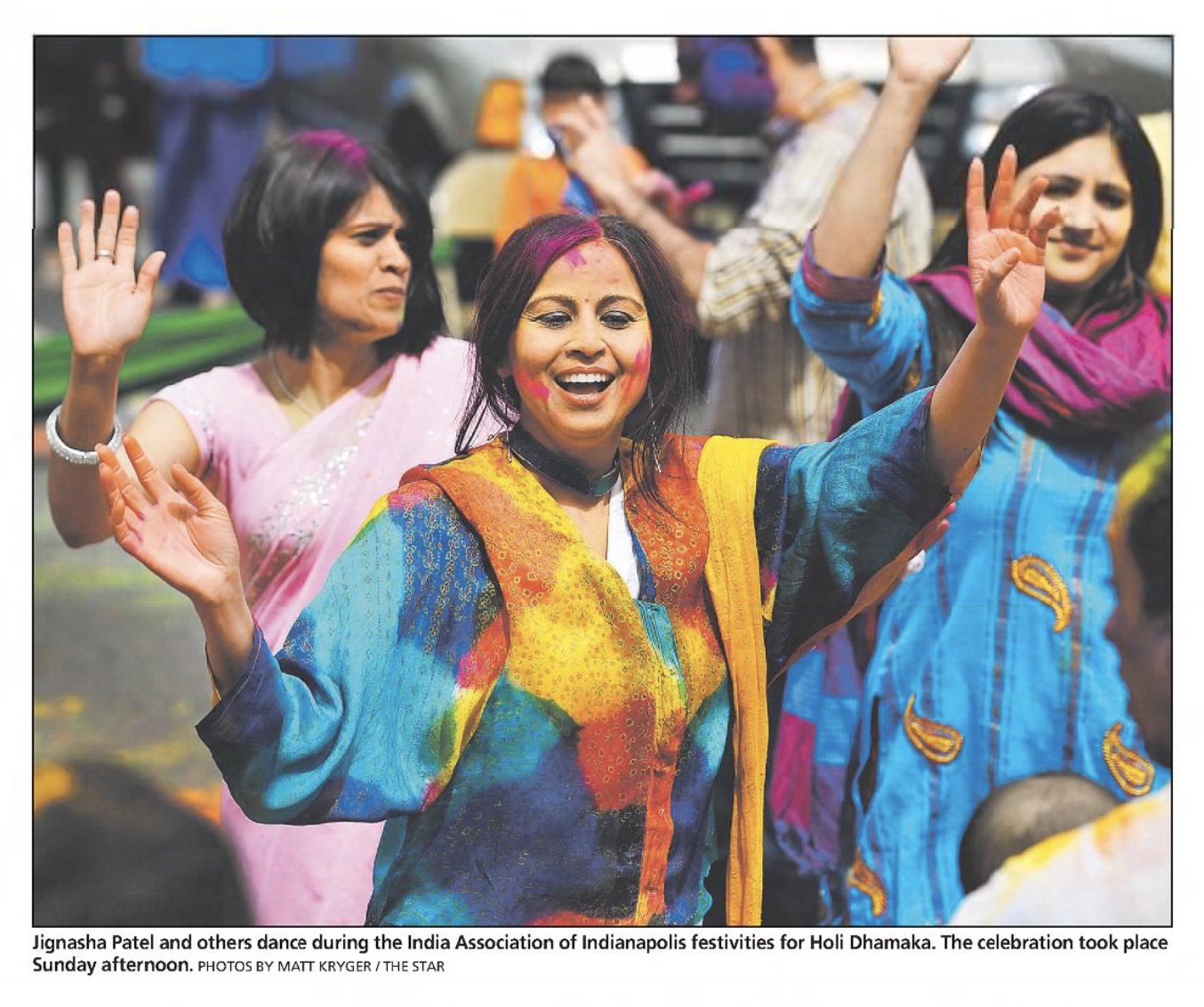
India Association of Indianapolis organizes
Established by the first Indian families that come to the city, the India Association of Indianapolis promotes the cultural activities of India, fosters cultural exchange, and carries out educational and charitable activities.
Pictured: India Association of Indianapolis Holi celebration, 2013
Credit: Matt Kryger, IndyStar
View Source
Indiana Arts Commission begins operations
The Indiana General Assembly and the National Endowment for the Arts funds the statewide arts agency that provides leadership for the public stewardship of artistic resources for all the state’s citizens.
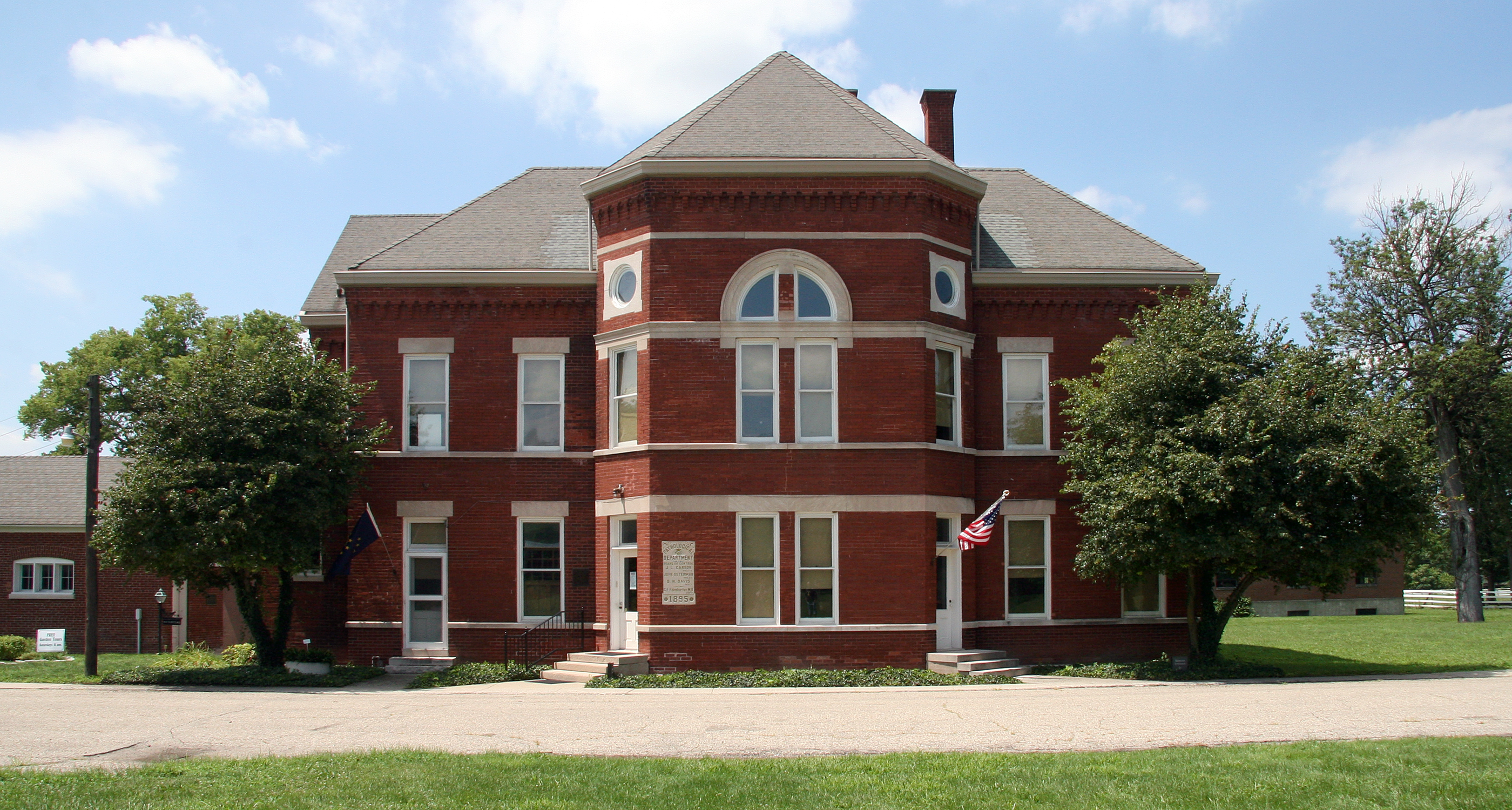
Indiana Medical History Museum incorporates
Housed in the Old Pathology Building at Central State Hospital, the museum preserves the building and collects artifacts related to the history of medicine.
Pictured: Indiana Medical History Museum, formerly the Pathology Building of the Central State Hospital, 2010
Credit: Huw Williams (Huwmanbeing), Public domain, via Wikimedia Commons View Source
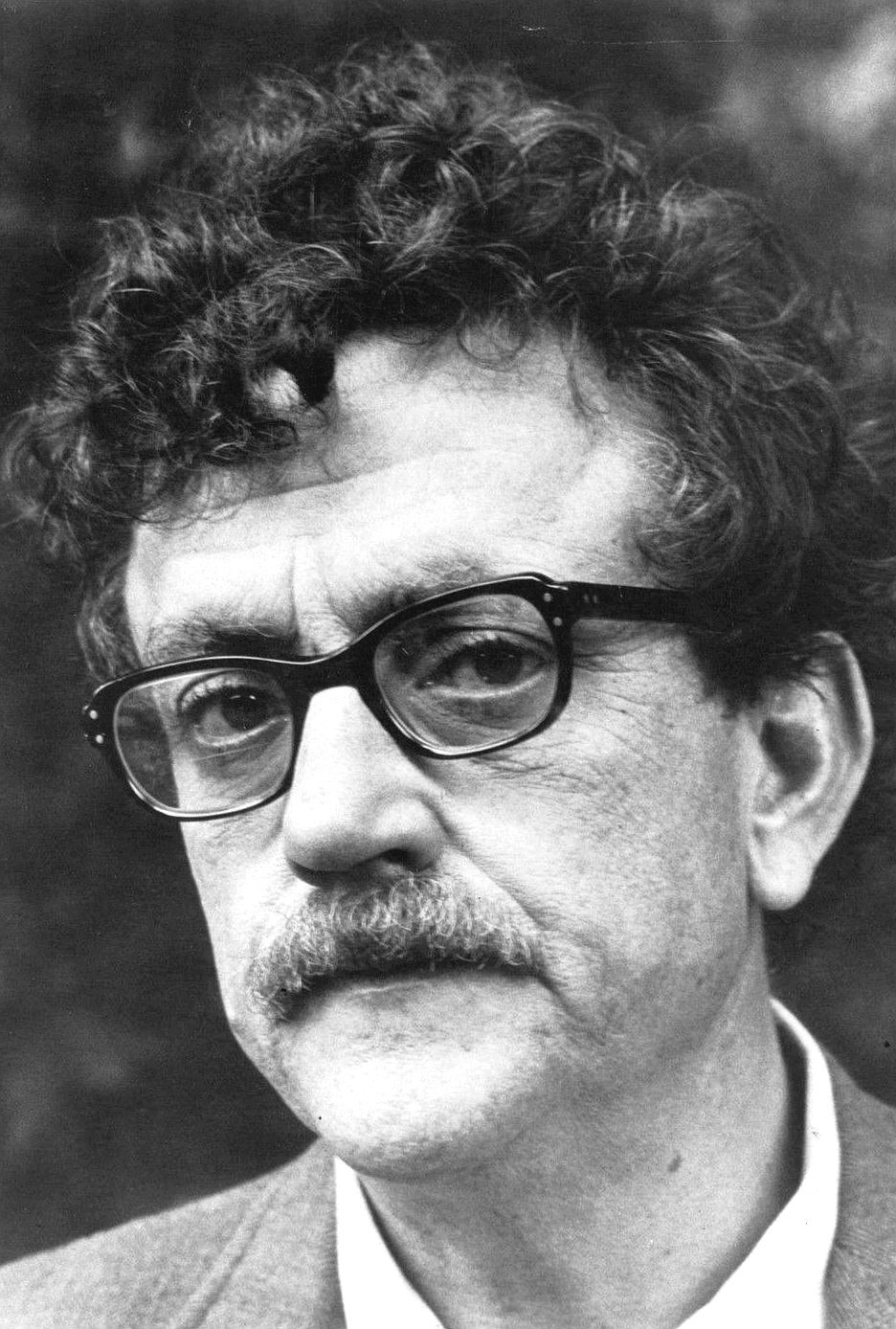
Kurt Vonnegut publishes Slaughterhouse-Five
Vonnegut, an Indianapolis native, suddenly becomes famous with the release of his anti-war book, based on his experience in surviving the firebombing of Dresden during World War II. The book becomes a bestseller and instant classic.
Pictured: Kurt Vonnegut Jr., 1972
Credit: WNET-TV/ PBS, Public domain, via Wikimedia Commons View Source
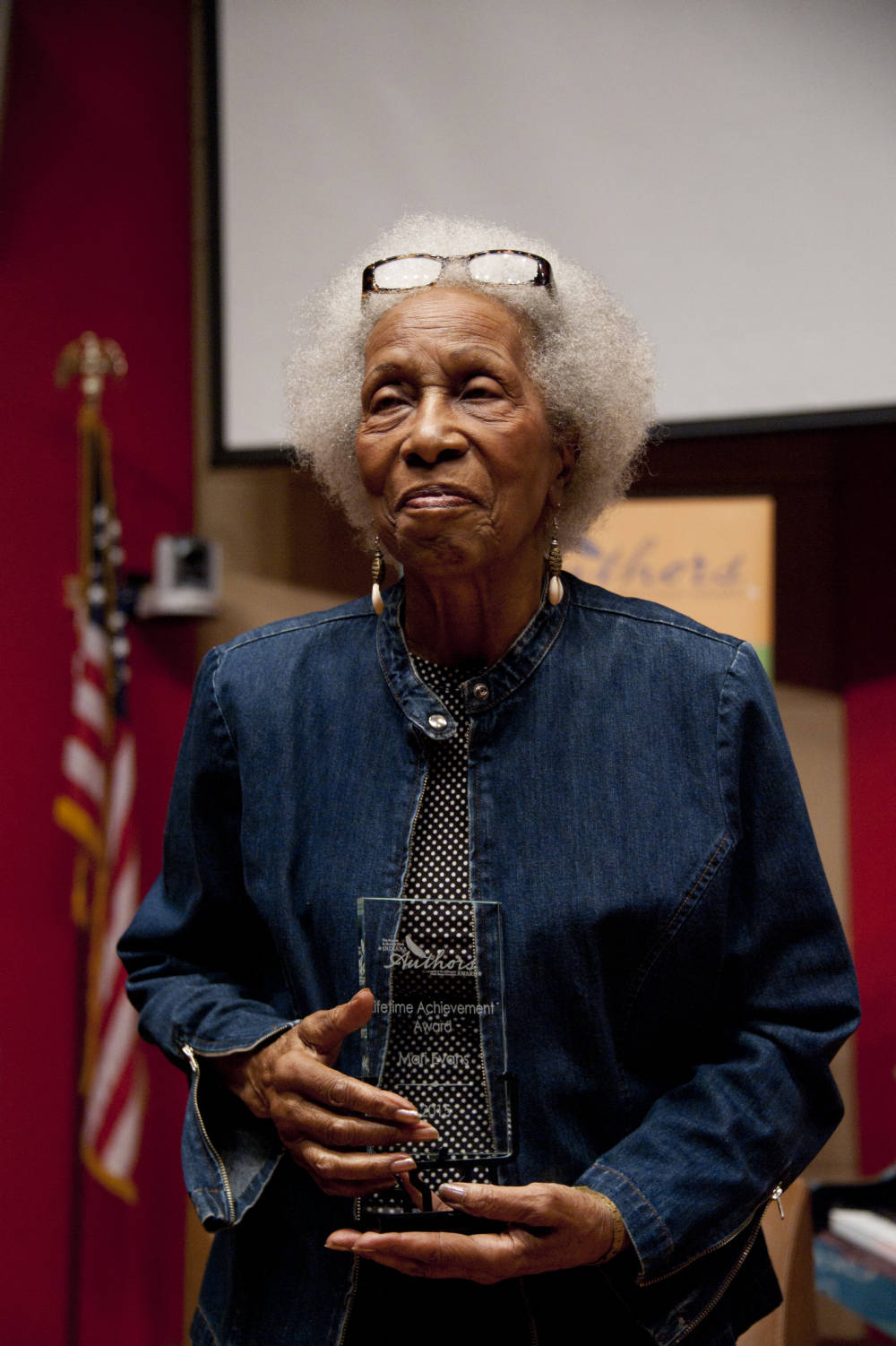
Mari Evans publishes I Am a Black Woman
In the poetry collection, Evans asserts the role of Black women in creating African American culture and instilling resiliency in the community.
Pictured: Mari Evans with her Indiana Authors Award, 2015
Credit: Indianapolis Public Library
View Source
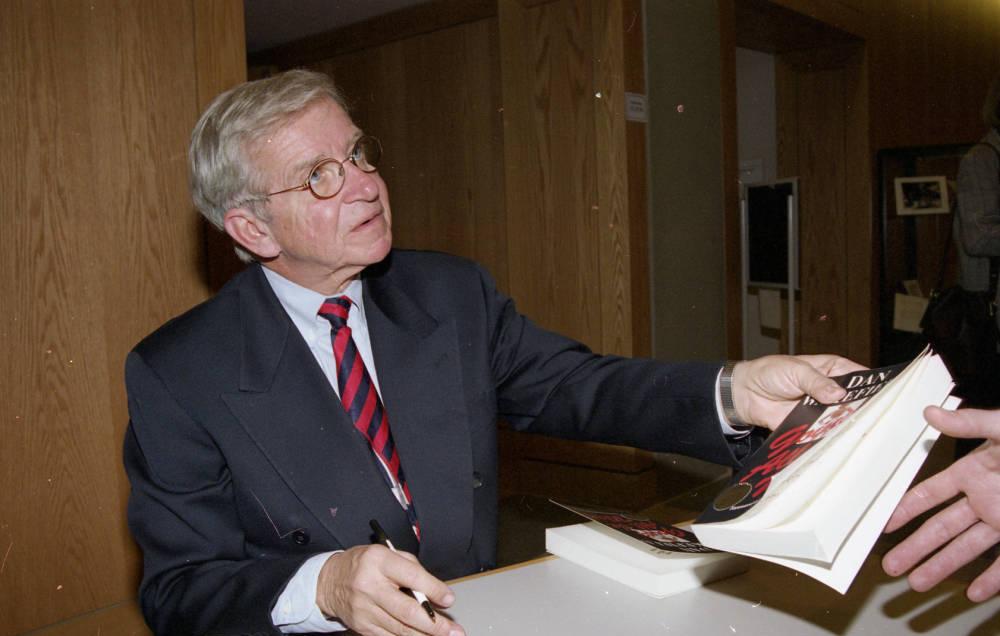
Dan Wakefield publishes Going All the Way
The novel explores the narrow-minded and confining attitudes of Indianapolis during the 1950s. Despite being poorly received in Indianapolis, it quickly climbs the bestseller list.
Pictured: Dan Wakefield signing a copy of Going All the Way, 1997
Credit: Indiana University Indianapolis
View Source
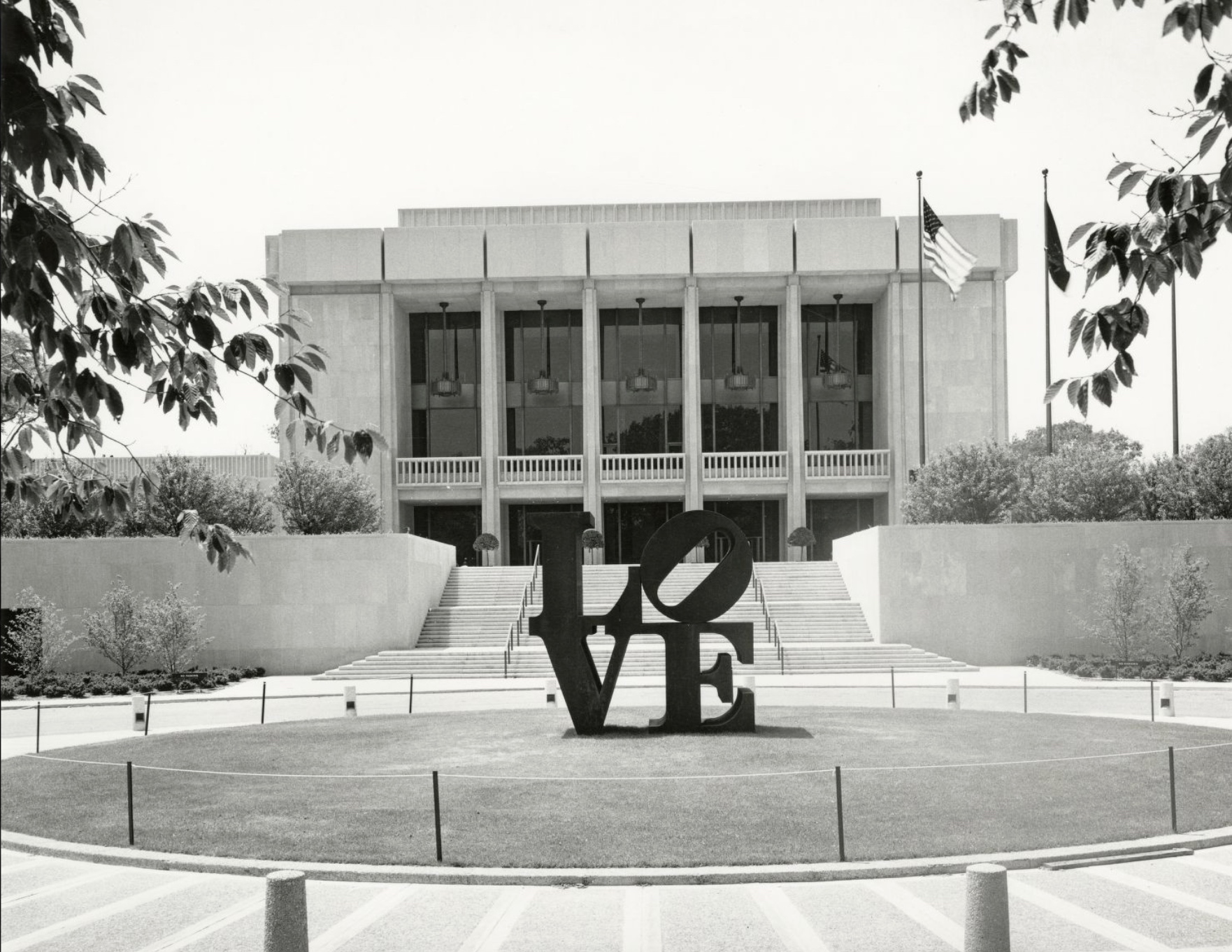
Indianapolis Museum of Art opens at new location
The institution, formerly known as the Herron Art Museum, opens at Oldfields, the former estate of J. K. Lilly Jr., with the new Krannert Pavilion.
Pictured: Indianapolis Museum of Art, 1970
Credit: The Bretzman Collection, Indiana Historical Society
View Source
Sunshine Promotions founded
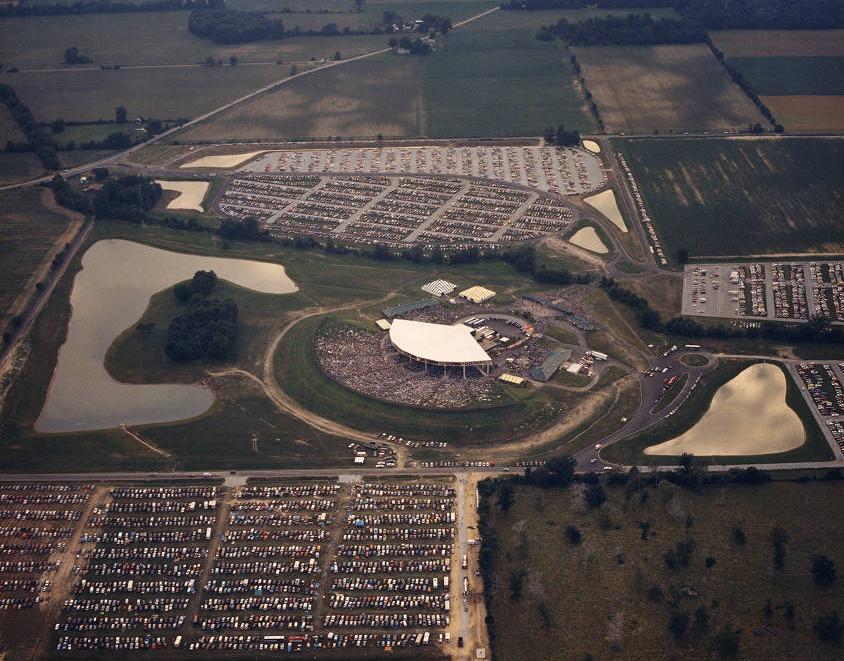
Dave Lucas and Joe Halderman establish Sunshine Promotions to promote local rock concerts in Indiana. The company later builds Deer Creek Music Center, now Ruoff Music Center, a 20,000-capacity amphitheater in Hamilton County.
Pictured: Deer Creek Music Center, ca. 1990s
Credit: Indiana Historical Society View Source
El Centro Hispano/The Hispanic Center opens
The Hispano-American Association, responding to the needs of the city’s Hispanic population, opens El Centro Hispano/The Hispanic Center with funding and support from the government and several churches.
Year-long sesquicentennial celebration begins
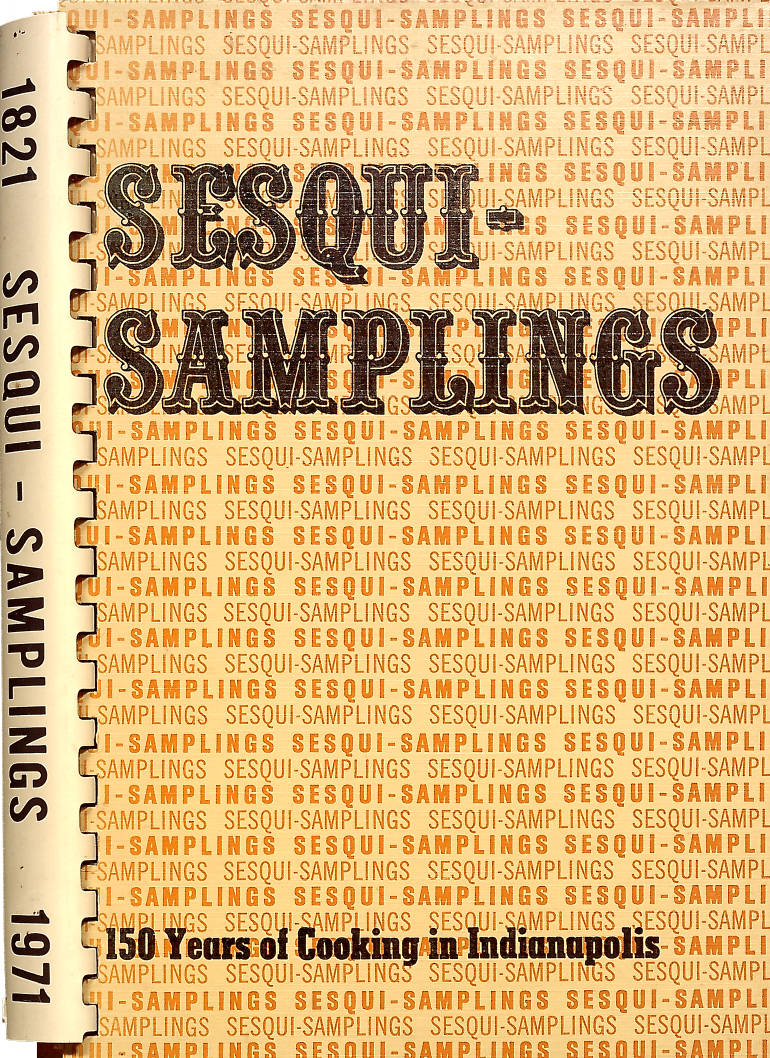
Celebrations to mark the 150th anniversary of the city’s founding begin in January and continue throughout 1971. Mayor Richard G. Lugar launches the festivities at an evening performance of “We Celebrate Our City,” based on Edward Leary’s narrative history.
Pictured: Sesqui-samplings: 150 years of cooking in Indianapolis, 1971
Credit: Indiana University Indianapolis View Source
First Broad Ripple Art Fair
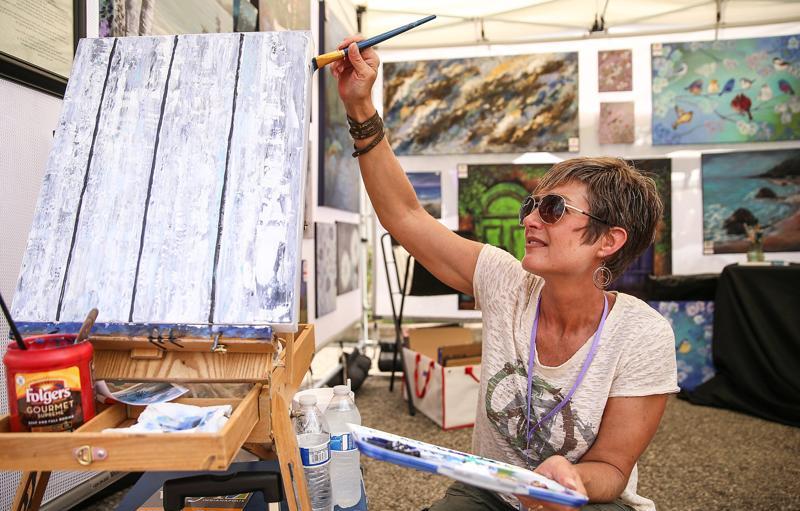
The Indianapolis Art Center and the Broad Ripple Village Association cosponsor the event to highlight the work of local artists. Approximately 100 artists participate in the first fair.
Pictured: Artist working on a painting in front of her booth at OneAmerica Broad Ripple Art Fair, May 20, 2018
Credit: Jenna Watson, IndyStar View Source
Indiana Black Expo begins
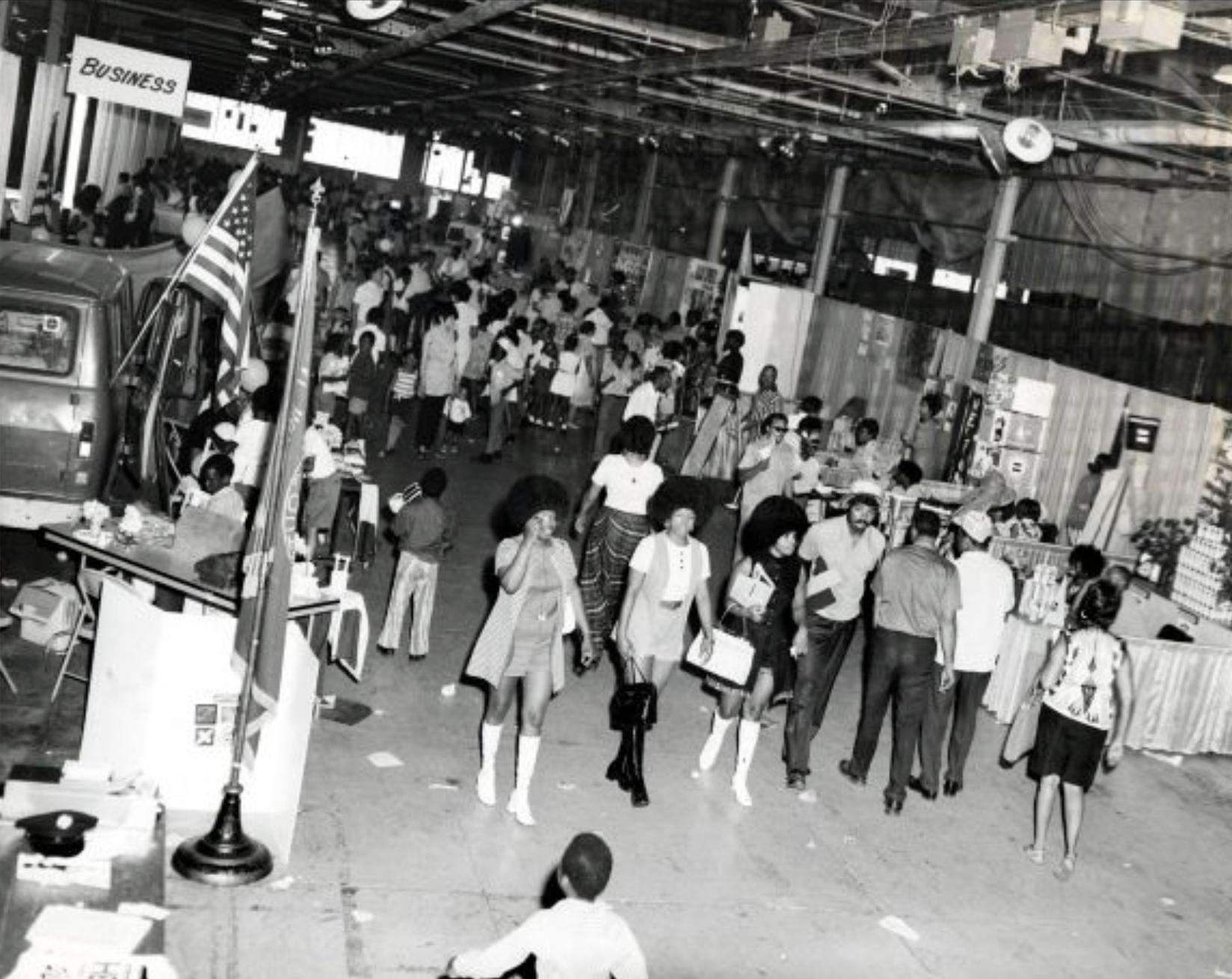
The annual exposition holds its inaugural event, a one-day gathering, at the Indiana State Fairgrounds. It aims to highlight the talents and achievements of African Americans and identify and address their challenges.
Pictured: Crowd at First Indiana Black Expo at the Indiana State Fairgrounds, 1971
Credit: Indianapolis Recorder Collection, Indiana Historical Society View Source
Edyvean Repertory Theatre incorporates
In residence at the Christian Theological Seminary, it is the only seminary-sponsored community theater in the U.S. It remains in operation until 2002.
Indiana Convention Center opens
The Indiana Convention Center increases the city’s capacity to host large meetings and events for the tourism industry. It helps revitalize downtown Indianapolis and sets the city on a path to become a major convention site.
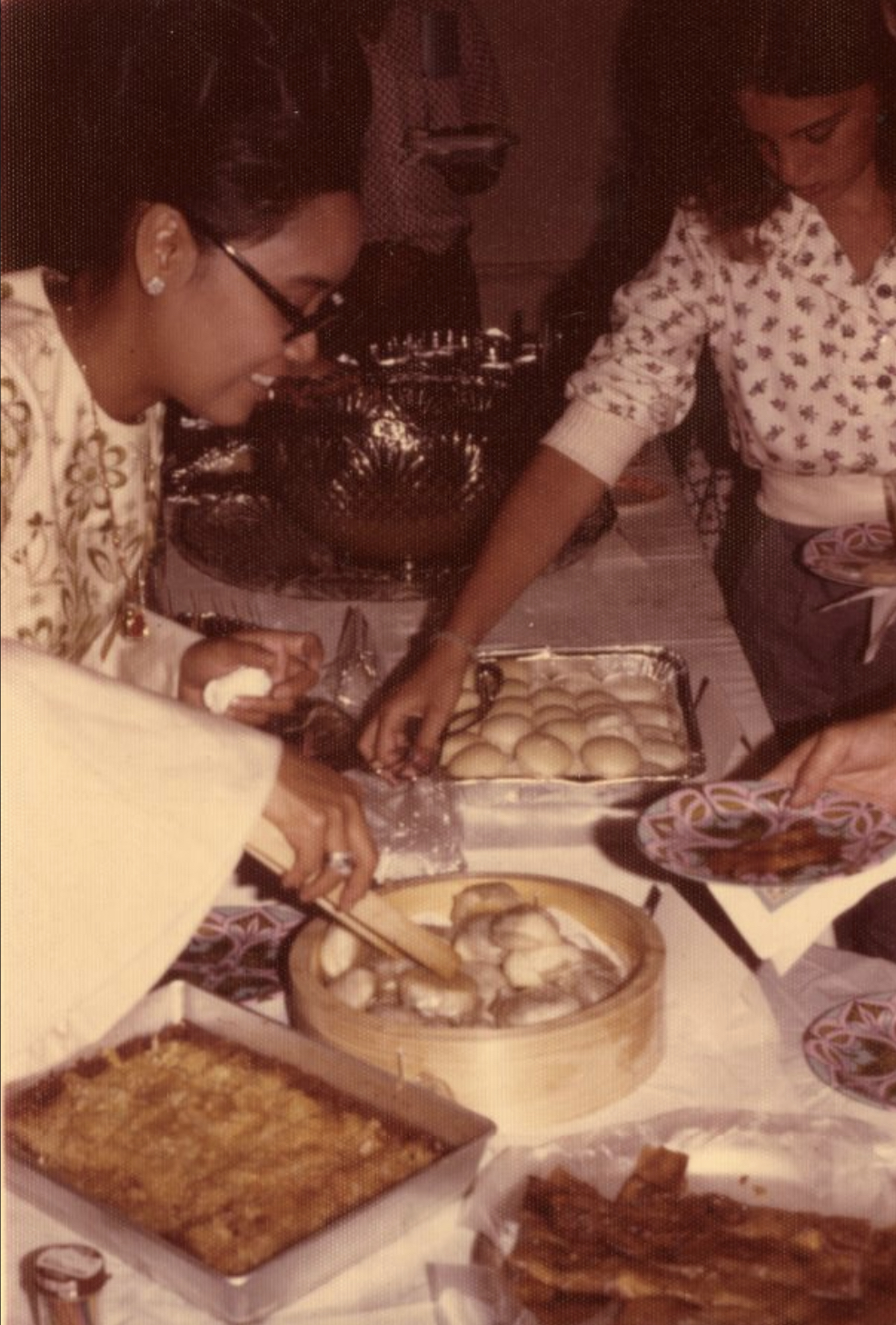
Mayor Lugar establishes International Center of Indianapolis
The need for interpreters and translators for the North Atlantic Treaty Organization (NATO) Conference of Mayors in 1973 sparks the formation of the International Center. It later grows to provide services to local ethnic groups.
Pictured: Food and culture meet during one of the programs at the International Center of Indianapolis, 1974
Credit: Indiana University Indianapolis
View Source
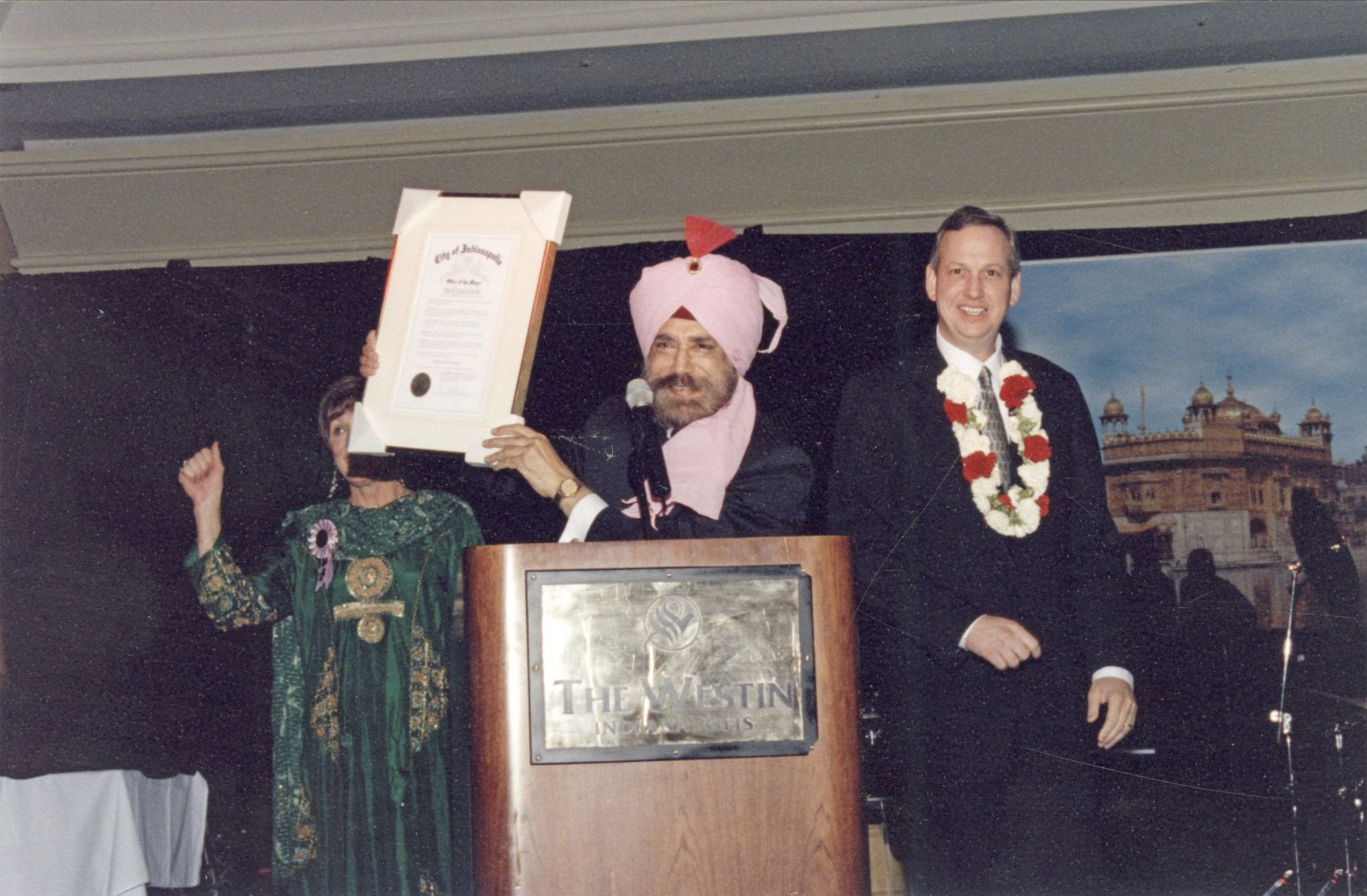
K. P. Singh Designs created
Well-known as a community leader, Indian immigrant K. P. Singh establishes his business to market his hand-drawn drawings and prints of Indianapolis landmarks and other buildings across the world. His artwork is featured in many public and private collections.
Pictured: K.P. Singh, and Mayor Bart Peterson at the Westin Hotel, 2002
Credit: K.P. Singh, Indiana Historical Society View Source
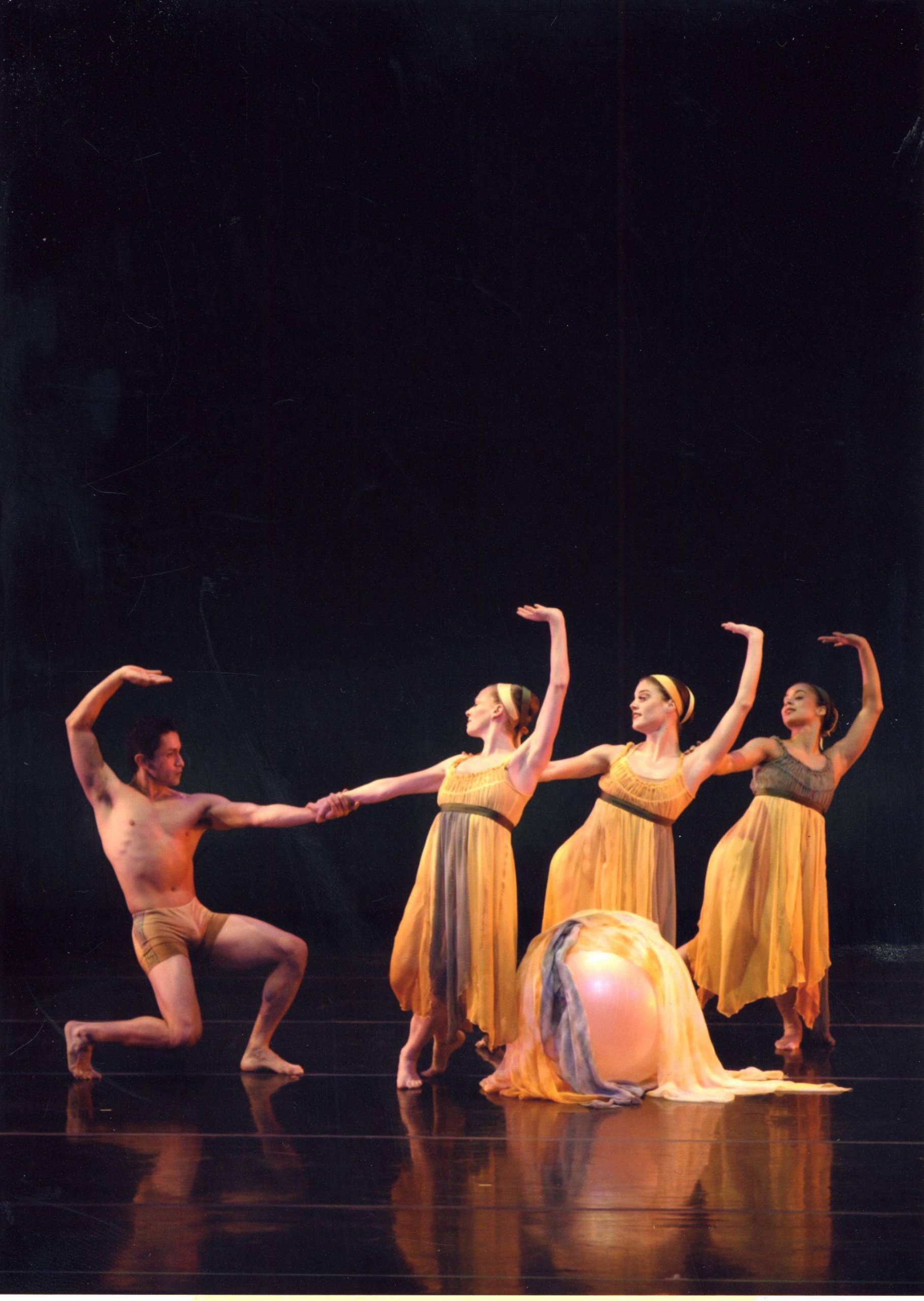
Dance Kaleidoscope forms
The equity dance company brings dance into public schools. The group holds its first concert in 1978.
Pictured: Dance Kaleidoscope of Afternoon of the Faun, 2008
Credit: Indianapolis Public Library
View Source
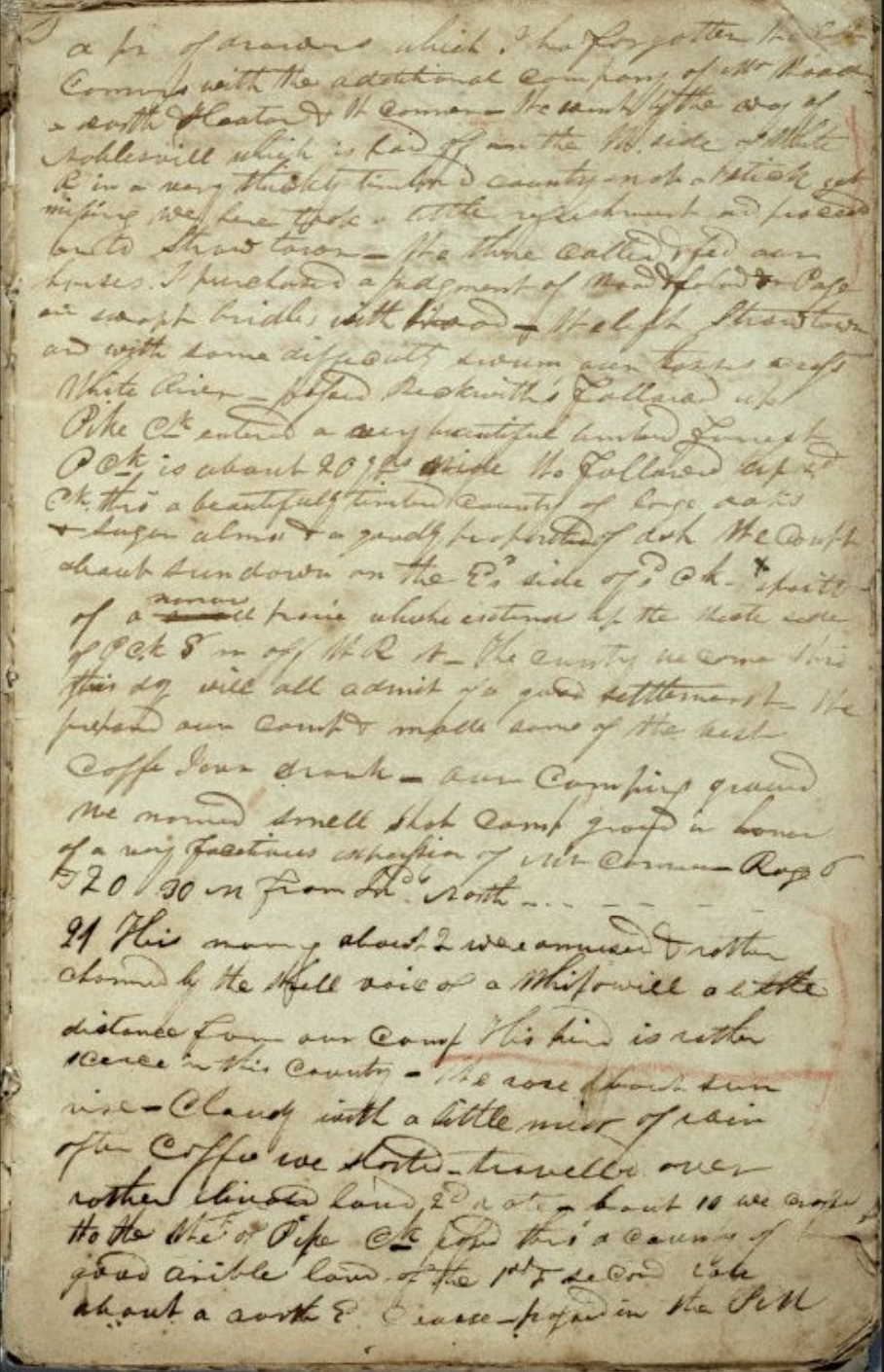
The Indiana Historical Society publishes Calvin Fletcher’s diaries
Covering the period from 1817 to 1866, Fletcher’s multi-volume diaries document the early history of the city.
Pictured: Calvin Fletcher diary, 1821-1866
Credit: Indiana Historical Society
View Source
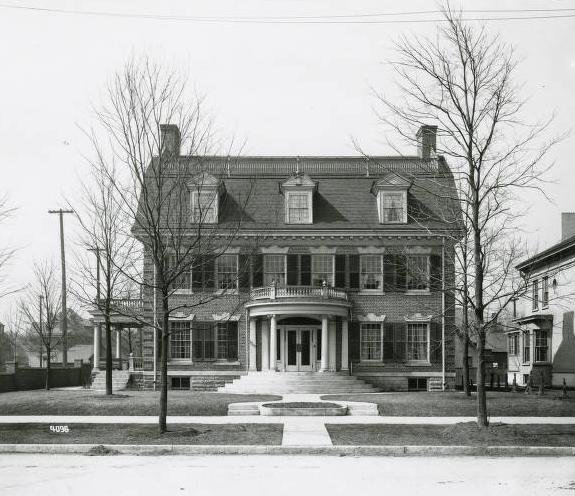
Indiana Humanities established
The National Endowment for the Humanities collaborates with a group of five Indiana residents to establish the nonprofit to help carry out its work in the Hoosier State.
Pictured: The house of Indiana author Meredith Nicholson has served as the home to Indiana Humanities since the 1980s.
Credit: W.H. Bass Photo Company Collection, Indiana Historical Society View Source
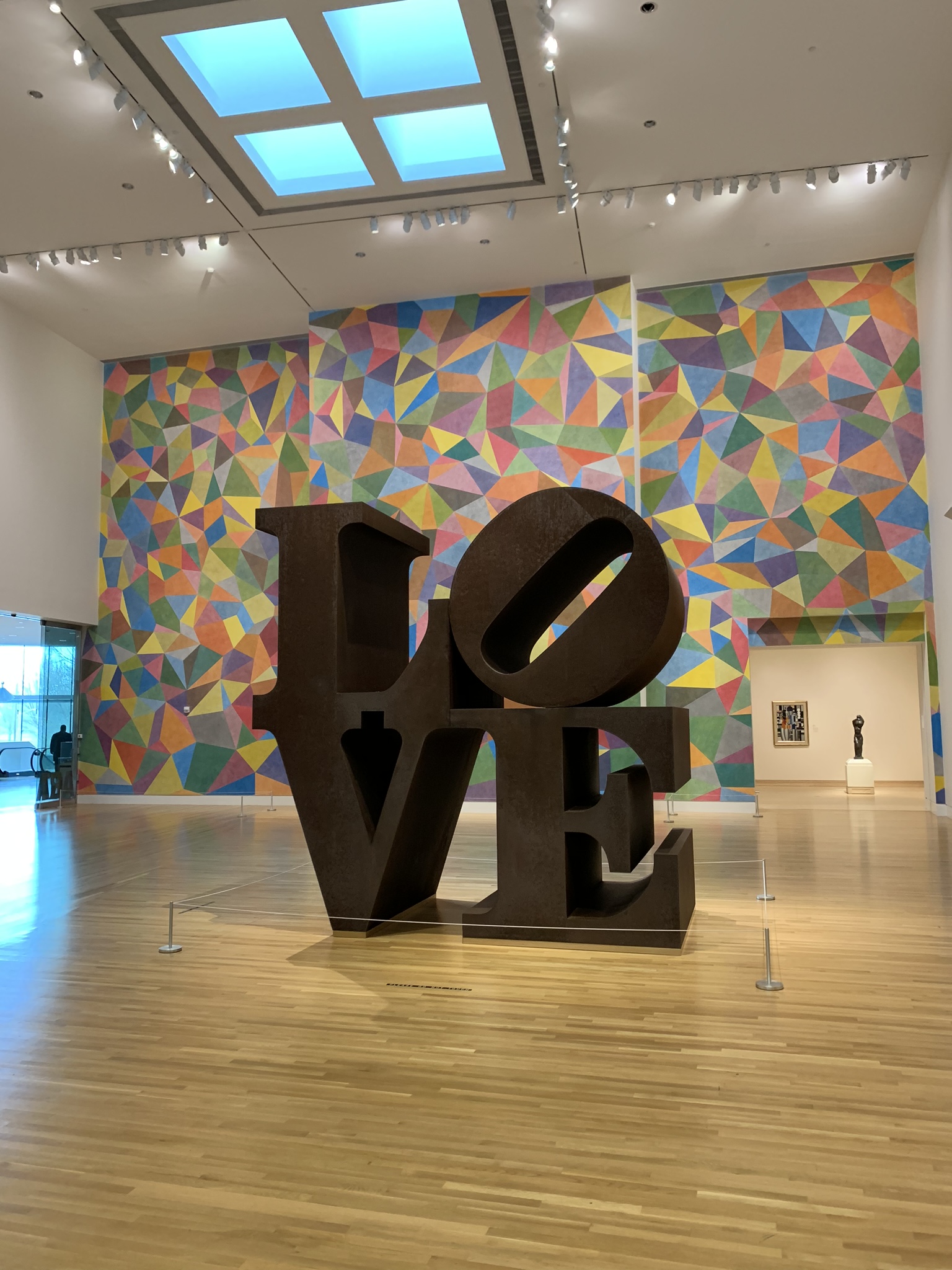
Robert Indiana’s Love sculpture moves permanently to the Indianapolis Museum of Art (IMA)
After coming to Indianapolis for IMA’s opening in 1970, the iconic Robert Indiana sculpture becomes a permanent museum installation.
Pictured: The original LOVE statue by Robert Indiana as displayed in the main foyer of the Indianapolis Museum of Art at Newfields in 2019.
Credit: Cerebral726 via Wikimedia Commons
View Source
Woodruff Place becomes a city Historic District
The subdivision is the first of the city’s neighborhoods to be placed on the National Register of Historic Places. The Indianapolis Historic Preservation Commission approves plans for it to become a protected city historic district in 2001.
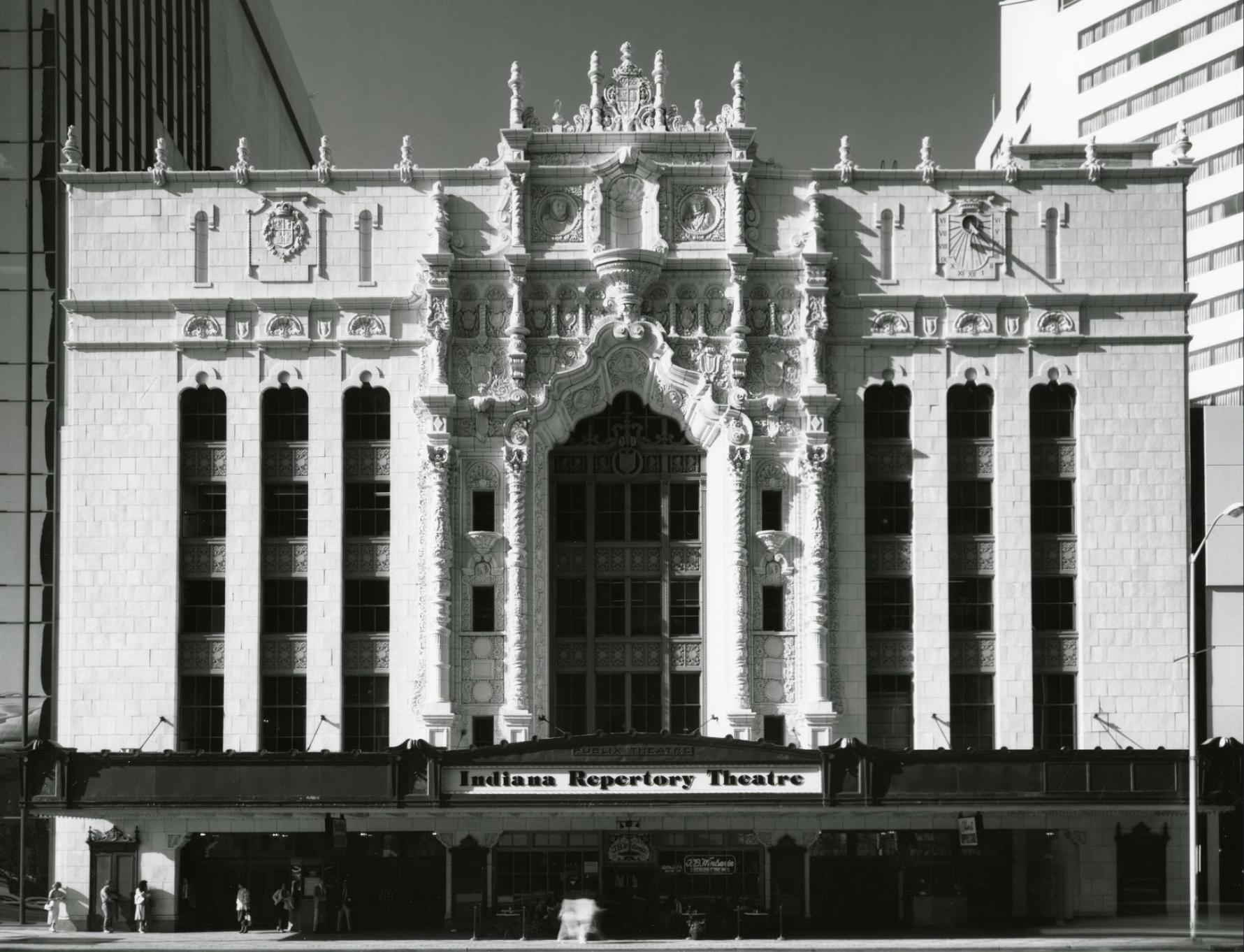
Indiana Repertory Theatre premiers first production
The theater company first resides at the Athenaeum. In 1980, the company moves to its present location, the Indiana Theatre on Washington Street.
Pictured: Indiana Repertory Theatre, ca. 1980s
Credit: Bass Photo Co Collection, Indiana Historical Society
View Source
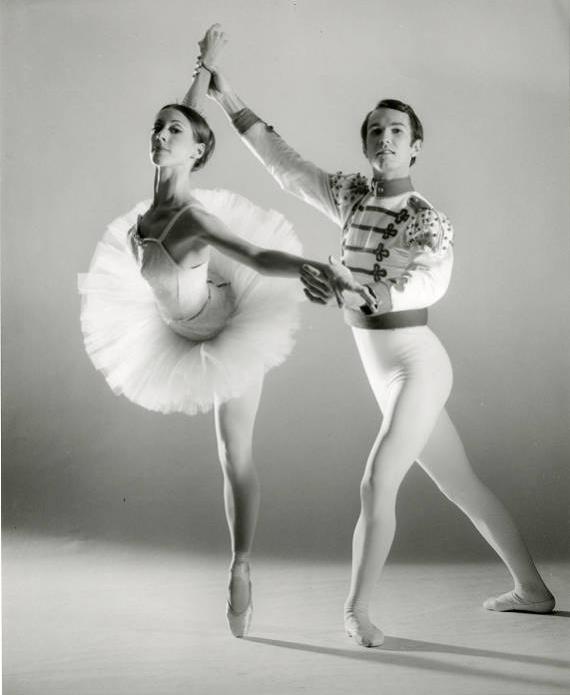
Indianapolis Ballet Theatre established
Indianapolis Ballet Theatre forms as an outgrowth of the Civic Ballet Society of Indianapolis. Initially performing only for Indianapolis Public School audiences, the ballet programs prove successful and expand.
Pictured: Elaine Bauer and David Brown of the Indianapolis Ballet Theater, performing as part of the Civic Ballet Society of Indianapolis, its forerunner, in 1969.
Credit: The Bretzman Collection, Indiana Historical Society View Source
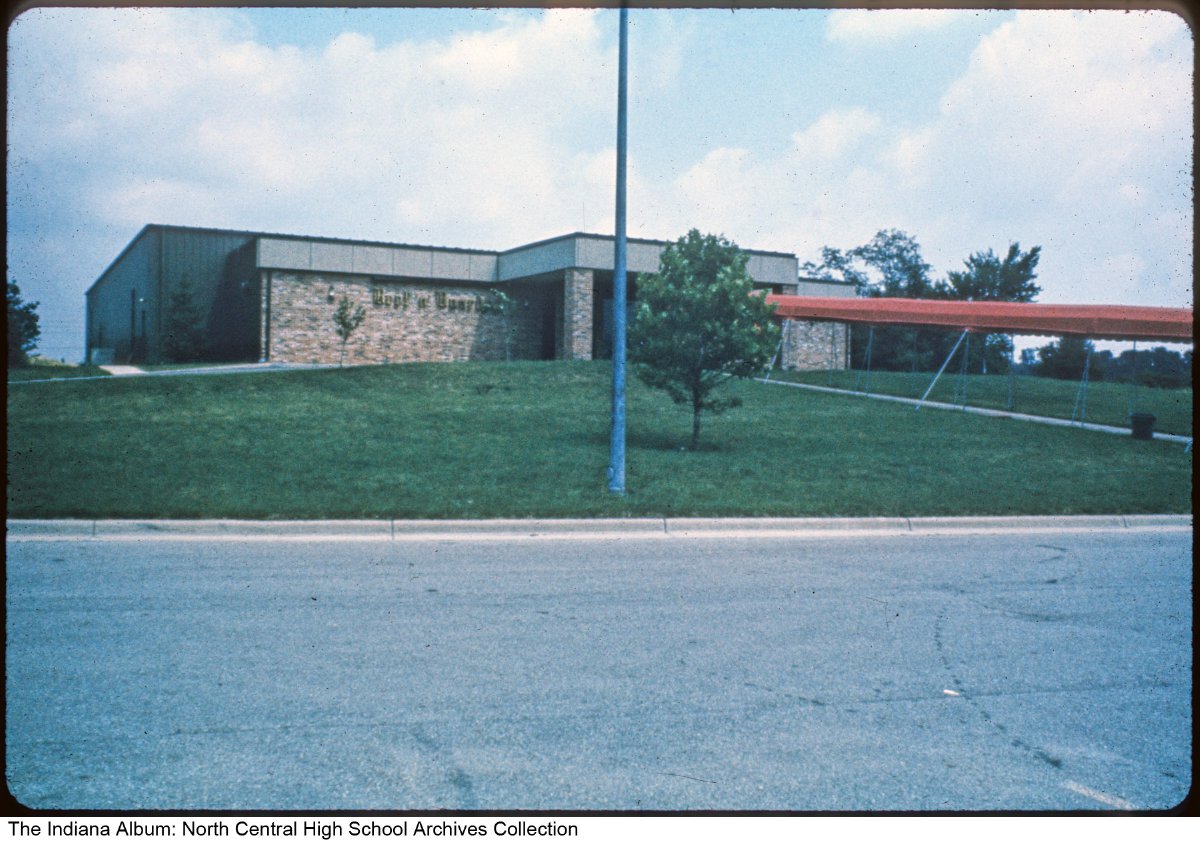
Beef & Boards Dinner Theatre opens
Beginning as part of a chain of dinner theaters, Beef & Boards becomes a privately owned venue that produces professional Broadway shows and plays featuring its own resident acting company.
Pictured: Beef ‘n Boards Dinner Theater, ca. 1975
Credit: The Indiana Album: North Central High School Archives View Source
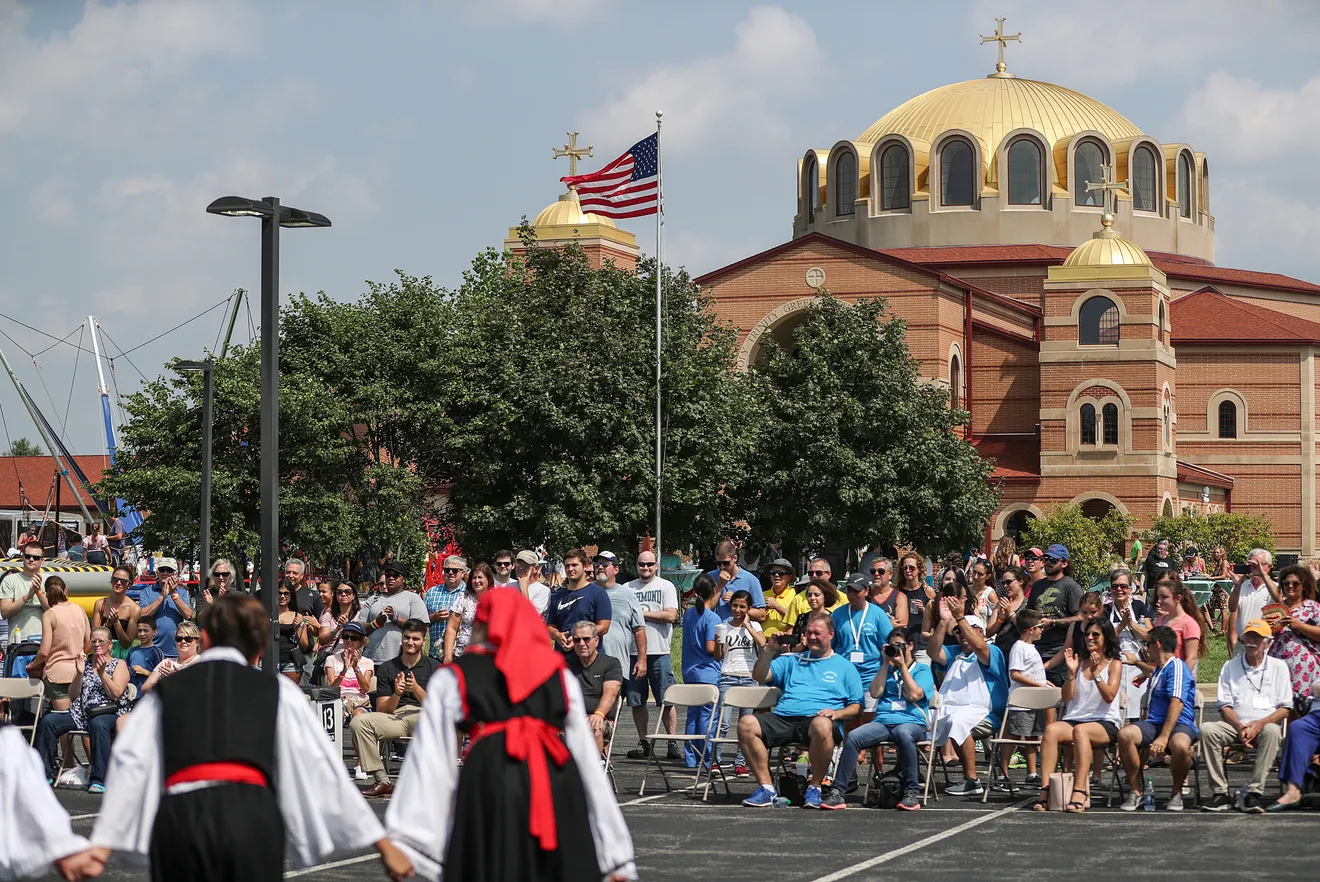
First Indy GreekFest
Holy Trinity parish begins hosting Indy GreekFest, a festival aimed at celebrating and sharing Hellenic heritage and the Orthodox Christian faith.
Pictured: Greek Fest at Holy Trinity Greek Orthodox Church, 2018
Credit: Jenna Watson, IndyStar View Source
Lockerbie Place becomes an official historic district
Lockerbie Place is listed on the National Register of Historic Places. The Indianapolis Historic Preservation Commission approves plans for the neighborhood to become a protected city historic district in 1987.
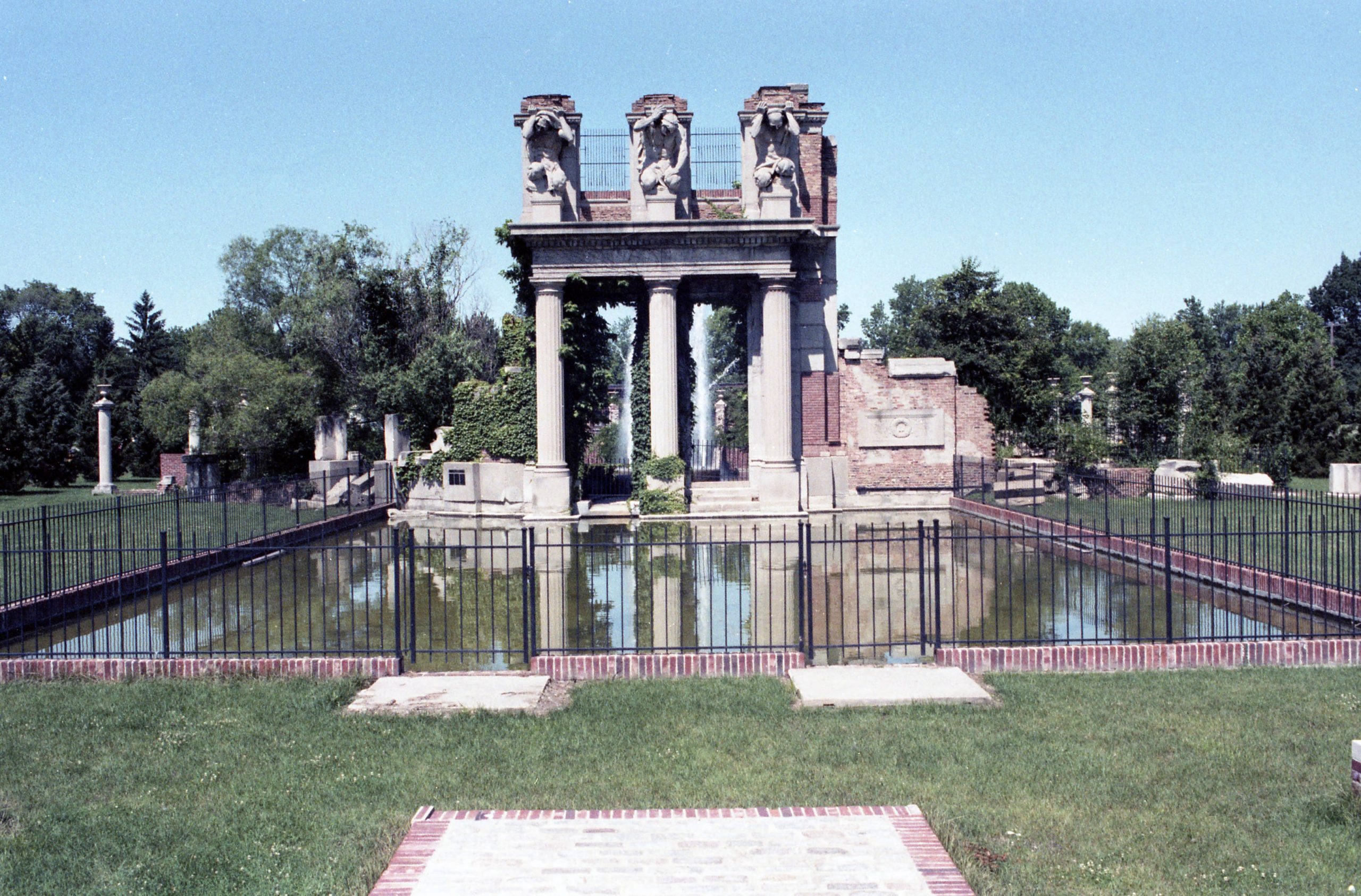
“The Ruins” dedication at Holliday Park
Artist Elmer Taflinger designs the piece to display sculptor Karl Bitter’s “Races of Mankind,” which had been created in 1896 for the St. Paul Building in New York City.
Pictured: The Ruins, 1981
Credit: Indianapolis Public Library View Source
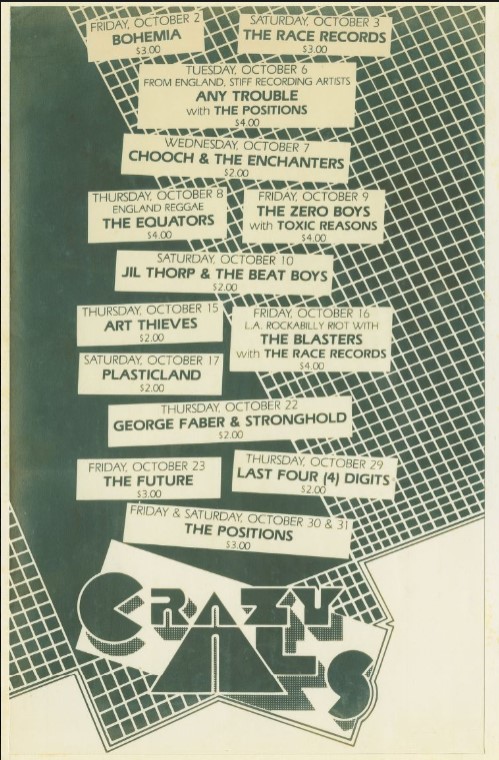
Crazy Al’s opens
Al Finch establishes the restaurant and music venue on College Avenue in South Broad Ripple. The restaurant has an eccentric vibe and features alternative music, including new wave and punk as well as other genres.
Pictured: Crazy Al’s October lineup flyer, 1981
Credit: Rick Wilkerson, Indiana Historical Society View Source
The Indianapolis Association of Chinese Americans organizes
The association provides a sense of community to the Chinese in the city. It offers opportunities to showcase Chinese culture and heritage and to integrate with American society.
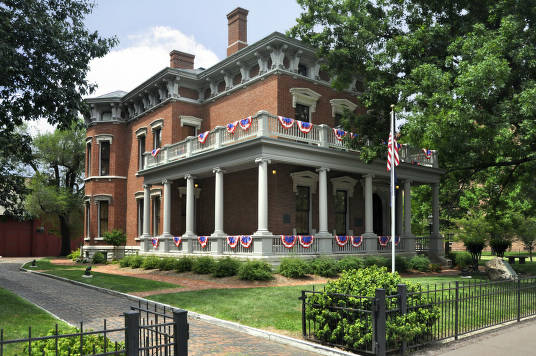
Benjamin Harrison home opens as museum
Following a complete renovation, the entire home of the Indianapolis U.S. president opens as a house museum with regular hours.
Pictured: President Benjamin Harrison Home, ca. 2000s
Credit: Copyright by Lee Lewellen. All rights reserved. View Source
Conner Prairie dedication
Former Indiana governor Roger D. Branigan presides over dedication of the living history museum’s 1836 pioneer village.
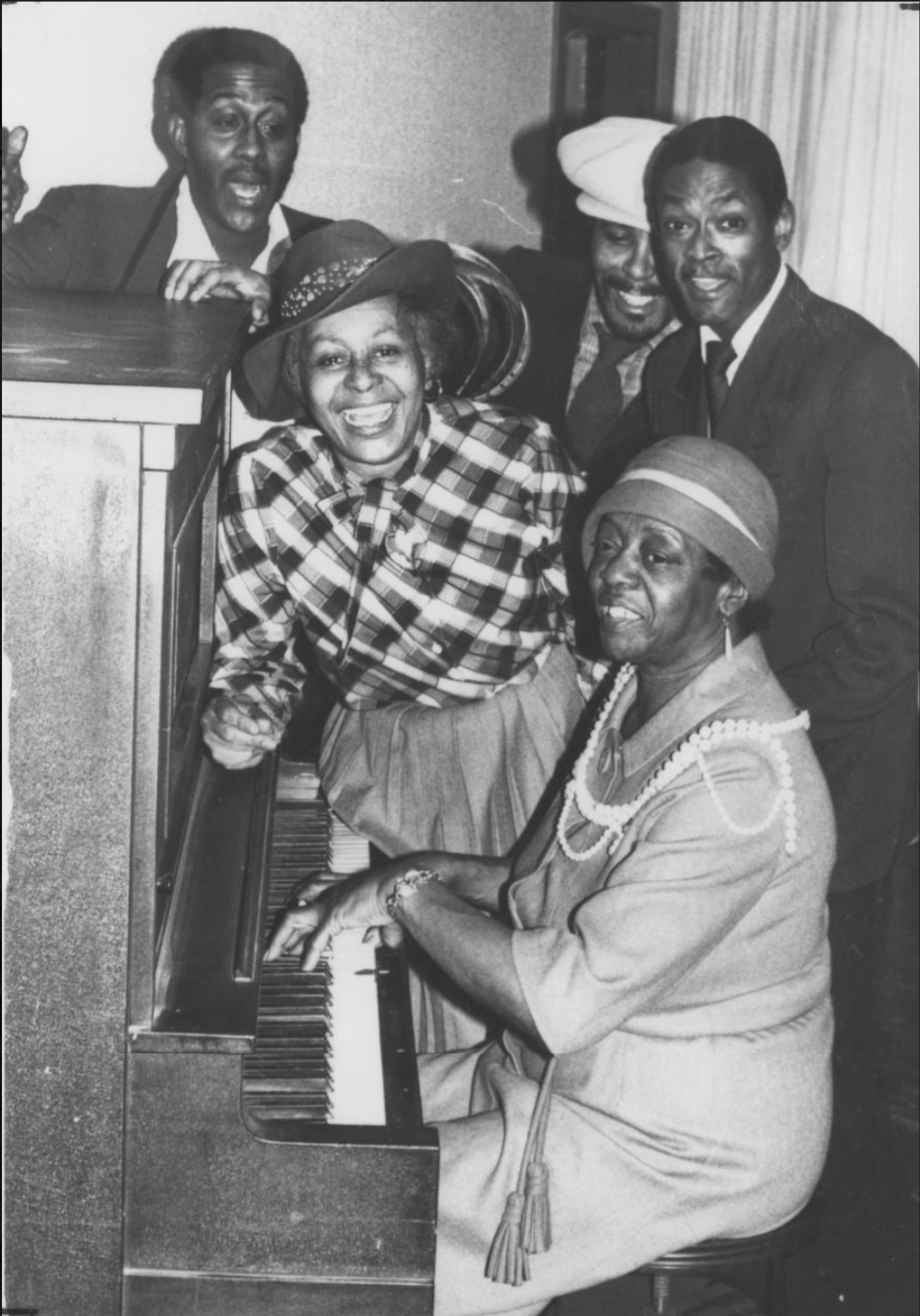
Helen Whitelowe establishes Soul People Repertory Company
One of the first African American acting companies in Indianapolis, Soul People introduces actors and audiences to theater from a Black perspective.
Pictured: Soul People Repertory Company held a rent party at Pearl’s Lounge to raise funds for their spring production (Johnny Williams, Helen Whitelowe, Bernie Hall, Glenn White, and Vera Mae Swanigan), 1981
Credit: Indianapolis Recorder Collection, Indiana Historical Society View Source
Latvian immigrant founds Carmel Symphony Orchestra
Viktors Ziedonis, an immigrant from Daugavpils, Latvia, organizes the ensemble that becomes the orchestra in residence at the Palladium at the Center for the Performing Arts in 2011.
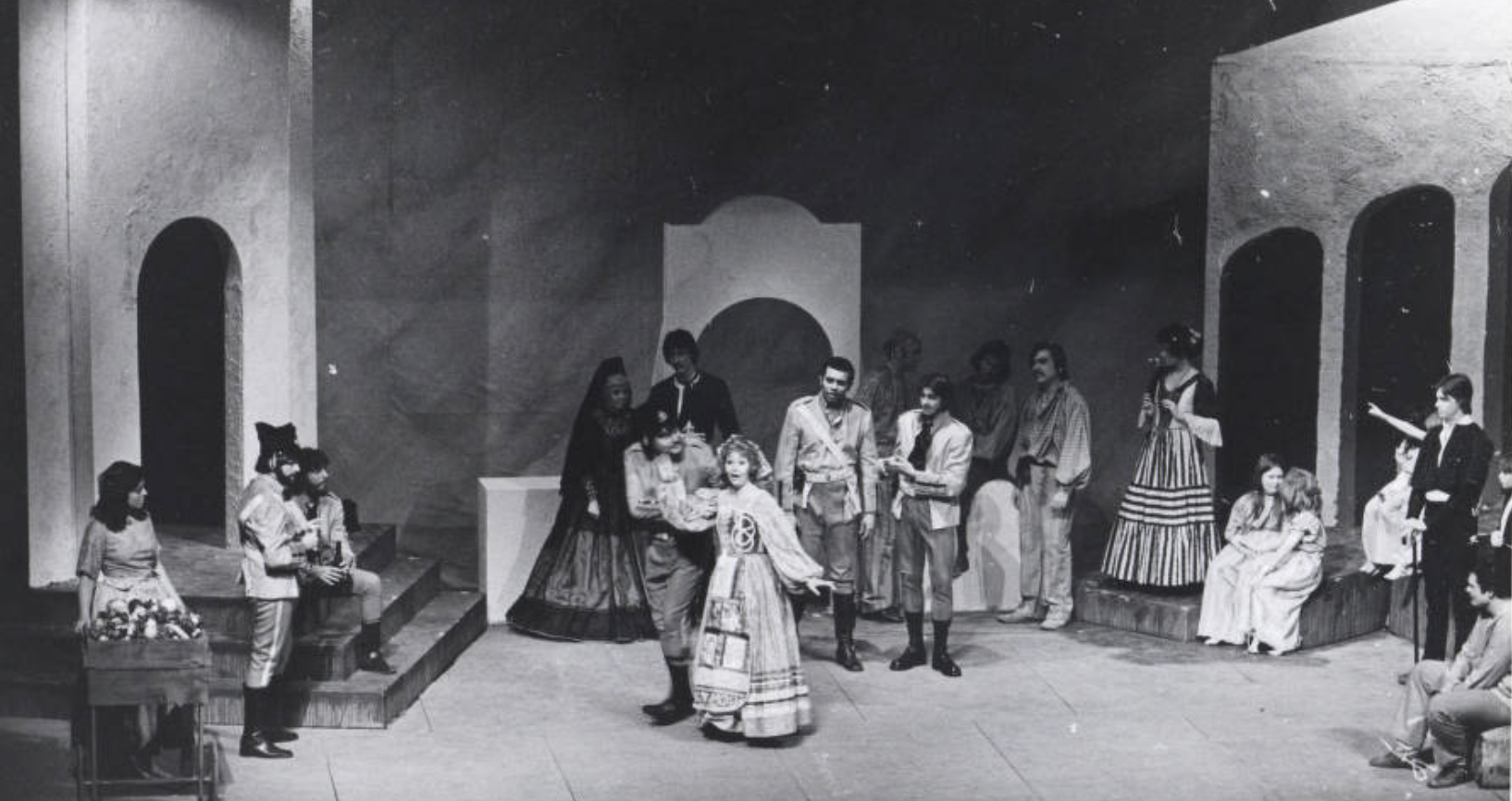
Indianapolis Opera forms
Opera enthusiasts organize the new opera company as a nonprofit corporation. Its first season is limited to a one-night performance of two short works.
Pictured: Indianapolis Opera actors performing in Carmen, 1977
Credit: Indianapolis Public Library
View Source
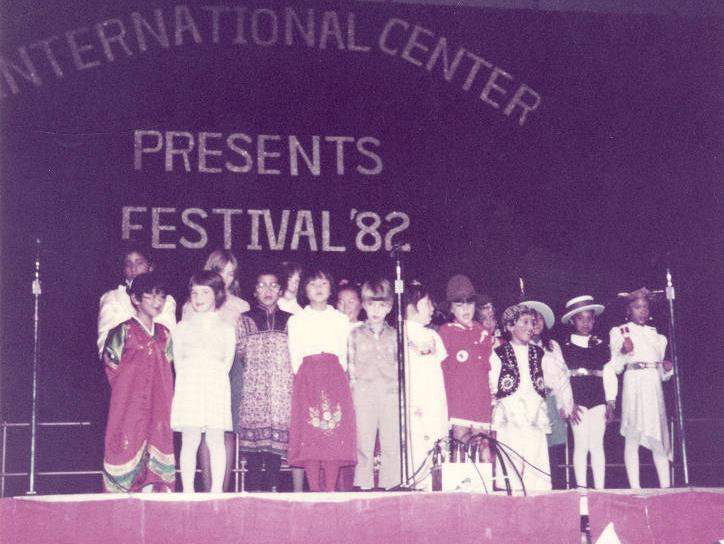
International Festival begins
Under the management of the International Center, the festival begins as part of the nation’s bicentennial. It provides a platform for various ethnic groups to showcase their contributions to the culture, history, and economy of Indiana.
Pictured: The International Festival, 1982
Credit: Jill Kramer, Indiana Historical Society View Source
Local actress Charlotte Kaufman founds Young Actors Theatre
The organization provides classic theater training to children. It is refounded in 2005 with a new focus on “Self-Empowerment Theatre.”
The Polish Cultural Society of Indiana forms
The Polish Cultural Society of Indiana organizes to heighten awareness of the contributions of residents of Polish descent to Indianapolis and the state.
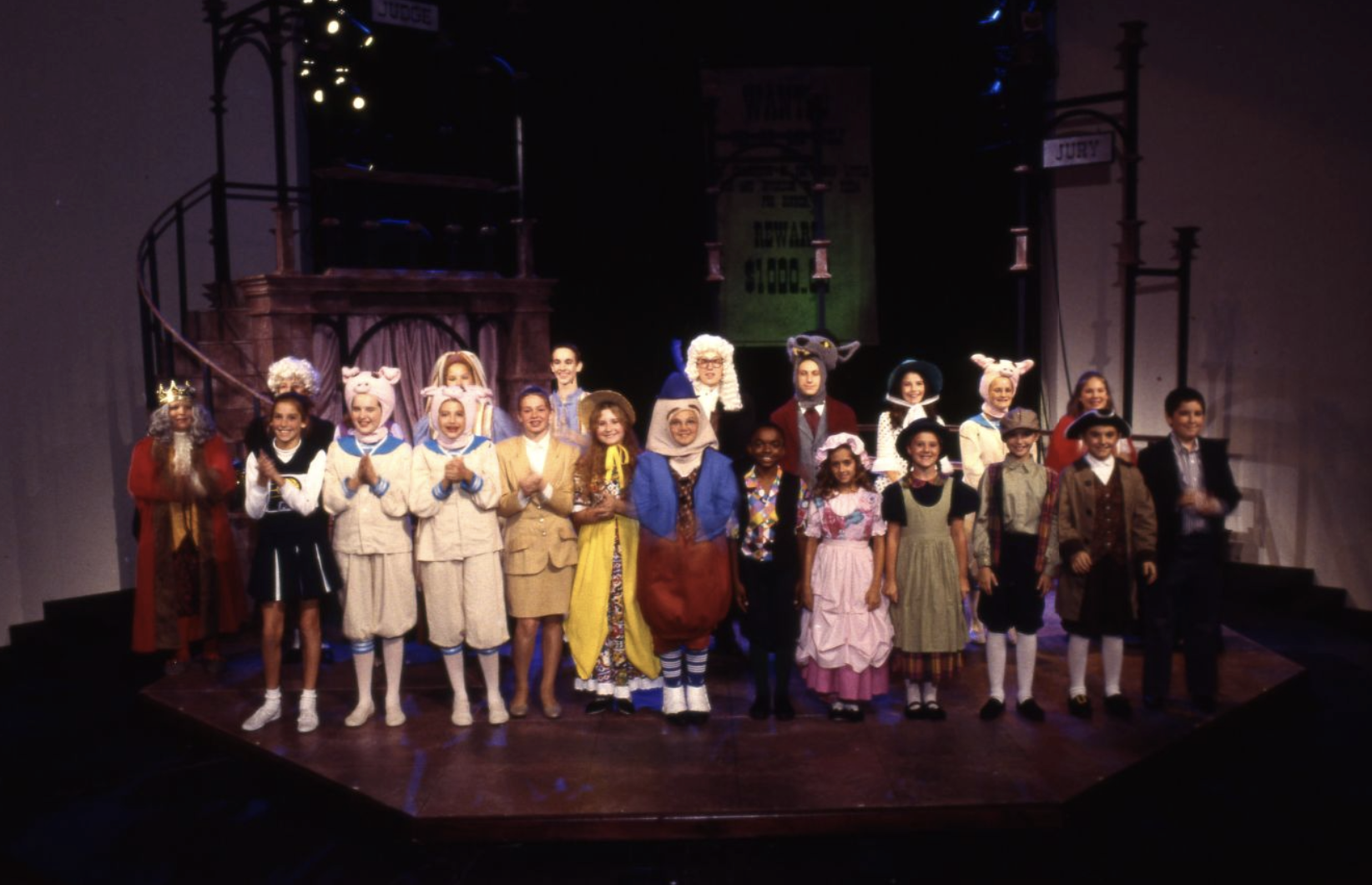
The Children’s Museum of Indianapolis becomes the largest in the world
New facilities for the Children’s Museum open with visits from U.S. First Lady Betty Ford and other dignitaries. It includes five floors of exhibit space, the Ruth Allison Lilly Theater, classrooms, and administrative offices.
Pictured: Youth performing Princess & the Pea in the Lilly Theater, n.d.
Credit: Indiana University Indianapolis
View Source
Elvis Presley performs his last concert
At Market Square Arena, Presley performs all his hits to a crowd of 18,000 fans. The show receives mixed reviews, and the star takes a break from touring. Presley dies six weeks later.
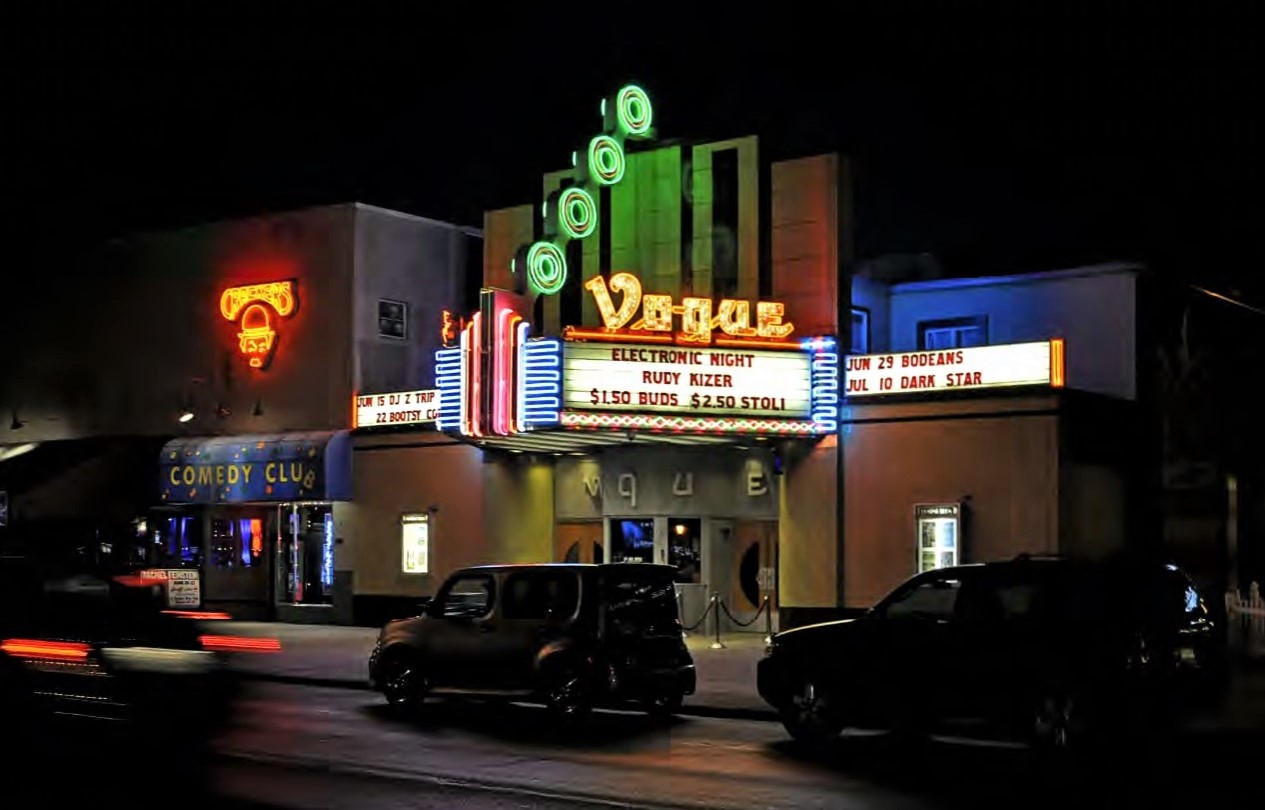
The Vogue reopens as a music venue
The Broad Ripple movie theater, which opened in 1938, becomes a successful music venue, featuring local and national bands.
Pictured: Vogue Theatre, ca. 2000s
Credit: Lee Lewellen via Indiana State Library View Source
Indiana Writers Center established
Writer and teacher Jim Powell founds the Indiana Writers Center to support local writers. The organization quickly grows from a small community group into a professional nonprofit organization.
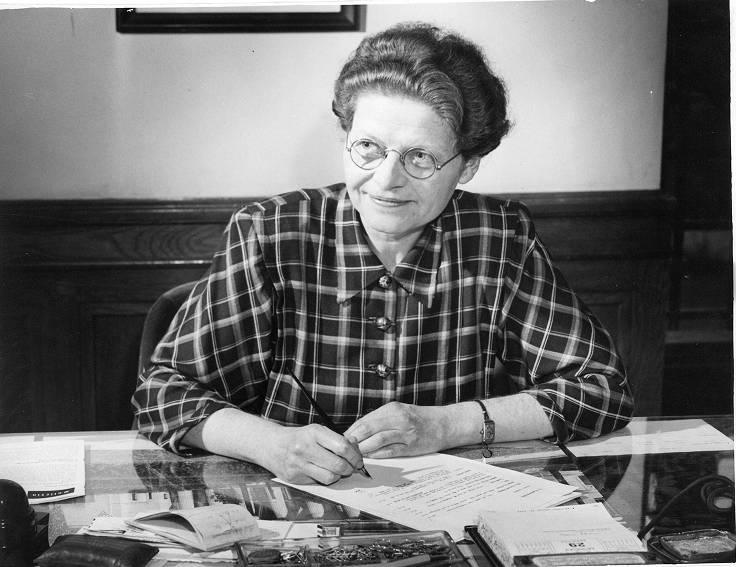
First Marian Mcfadden Memorial Lecture
The Indianapolis Public Library Foundation establishes the author lecture series to recognize Marian McFadden, director of the Indianapolis Public Library from 1944 to 1955 who left over $150,000 to the library.
Pictured: Marian McFadden, 1948
Credit: Indianapolis Marion County Public Library View Source
First production of Epilogue Players
The theater group, primarily made up of actors 50 years or older, presents its play in the Ruth Allison Theatre at The Children’s Museum of Indianapolis.
The Old Northside becomes an official historic district
The Old Northside is added to the National Register of Historic Places. The Indianapolis Historic Preservation Commission approves plans for the neighborhood to become a protected city historic district in 1979.
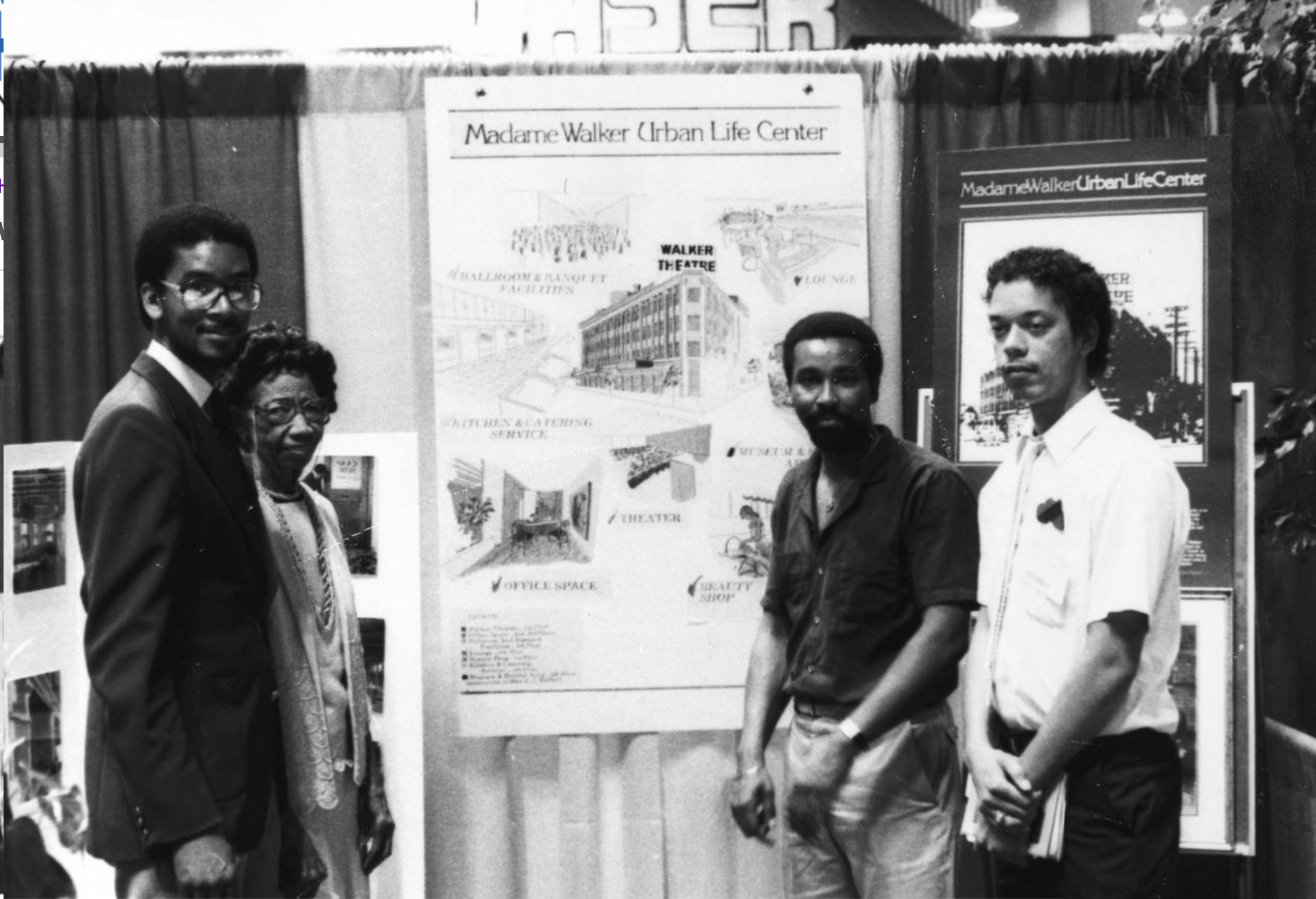
Madam Walker Urban Life Center created
Created as a nonprofit organization, the Madam Walker Urban Life Center, Inc., begins work to save the historic Walker Building from deterioration and demolition.
Pictured: An artist’s rendition of the interior for the Madame Walker Urban Life Center, 1983
Credit: Indianapolis Recorder Collection, Indiana Historical Society
View Source
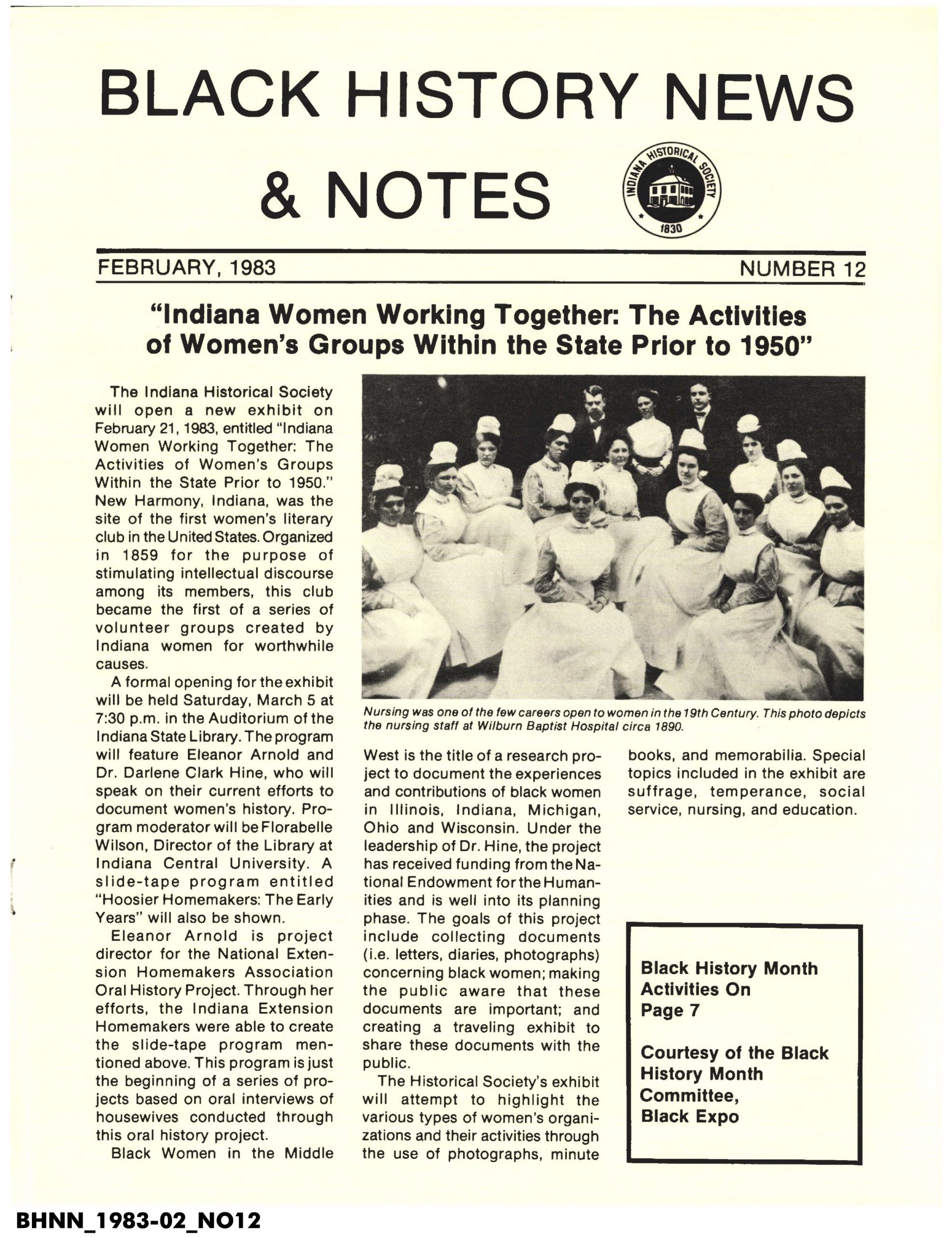
Indiana Historical Society publishes Black History News and Notes
The free quarterly newsletter from the Indiana Historical Society includes articles on the political, social, and cultural history of Black people in Indiana.
Pictured: Black History News and Notes, 1983
Credit: Indiana Historical Society
View Source
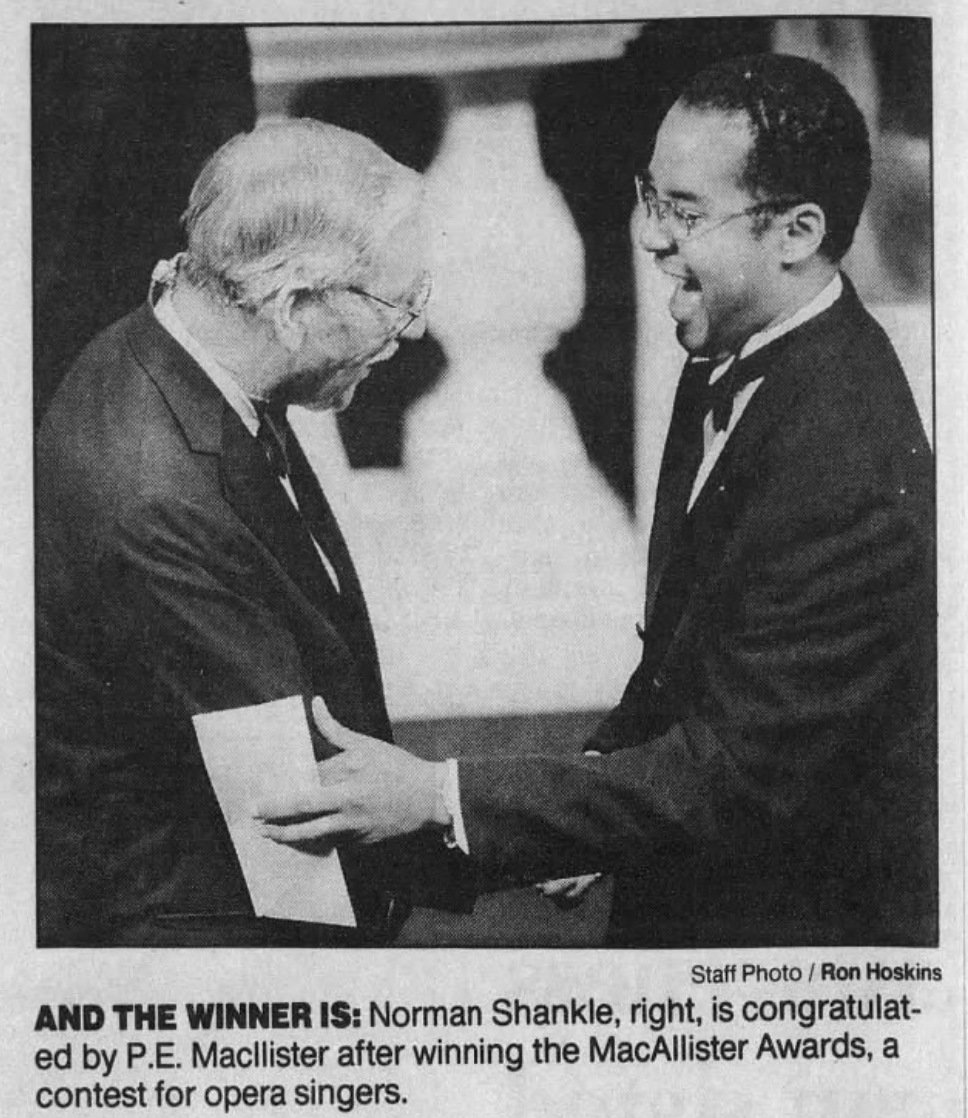
P. E. MacAllister founds the MacAllister Award competition
Named for P. E. MacAllister, Indianapolis businessman and philanthropist, the competition brings together young opera singers nationwide to compete in Indianapolis for the largest nonrestricted monetary awards in North America.
Pictured: Norman Shankle, right, is congratulated by P. E. MacAllister after winning the 1998 MacAllister Awards.
Credit: Indianapolis News
View Source
Fletcher Place becomes a protected city historic district
The Indianapolis Historic Preservation Commission approves plans for the neighborhood to become a protected city historic district, and it is listed on the National Register of Historic Places in 1982.
Chatham Arch becomes an official historic district
Chatham Arch is listed on the National Register of Historic Places. The Indianapolis Historic Preservation Commission approves plans for Chatham Arch and Massachusetts Avenue to become a protected city historic district in 2006.
Indiana Opera Theatre emerges from split
The Indiana Opera Theatre forms as a split with Indianapolis Opera, and the nationally recognized MacAllister Awards for aspiring opera singers becomes part of its operations. The company ceases to exist in 2002.
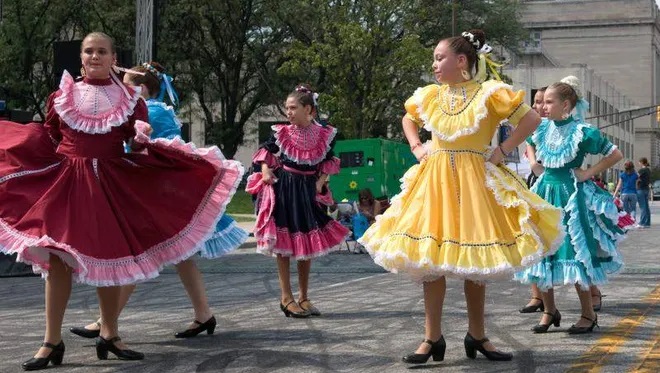
First FIESTA Indianapolis festival
The first annual festival to celebrate the Latino community is a day-long event that takes place at the Indiana World War Memorial Plaza. It becomes part of La Plaza, Inc. in 2004.
Pictured: Anderson Ballet Folklorico at Fiesta Indianapolis, 2008
Credit: Jammy Straub, IndyStar View Source
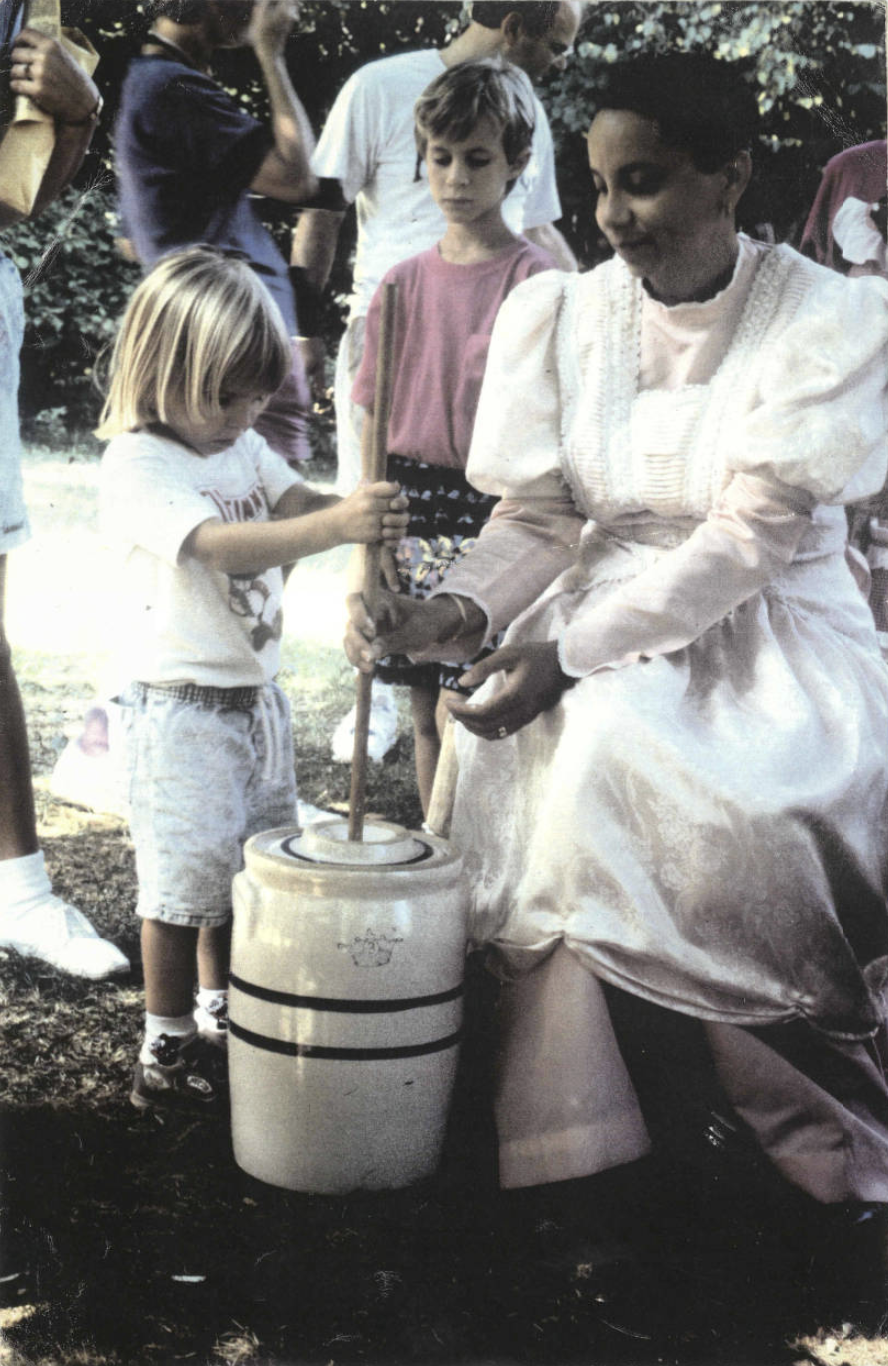
Freetown Village planning begins
Ophelia Wellington conceptualizes Freetown Village out of her desire to teach African American history. The organization begins as a live-action exhibit in the Indiana State Museum, portraying Black history. Freetown actors later travel the Midwest and recreate Indiana’s post-Civil War Black settlements.
Pictured: Freetown village costumed interpreter, ca. 1990s
Credit: Indianapolis Public Library
View Source
Indiana Puppetry Guild chartered
The guild is dedicated to educating residents of Indiana about the art of puppetry.
American Pianists Association move to Indianapolis
Founded in 1979 in New York City, the music fellowship organization moves to Indianapolis because of its central location and affordability.
Patrick King Contemporary Art gallery opens on Mass Ave
The gallery signals the birth of a contemporary downtown gallery district in Indianapolis. It sparks the growth of commercial art galleries in the area.
The Wholesale District becomes an official historic district
The Wholesale District is listed on the National Register of Historic Places. The Indianapolis Historic Preservation Commission approves plans for the area to become a protected city historic district in 1990.
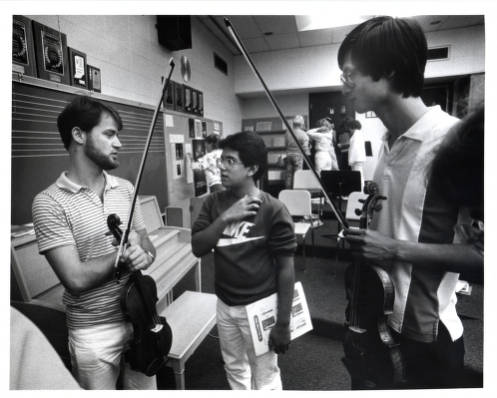
Indianapolis debuts the first International Violin Competition
Planning for the first quadrennial competition began in 1980 when Cathedral Arts asked Indiana University violinist and teacher Josef Gingold to be the founding jury president of a violin contest based in Indianapolis.
Pictured: Behind the scenes at the first International Violin Competition of Indianapolis, held in 1982.
Credit: Indianapolis Public Library View Source
Symphony on the Prairie
The summer, outdoor, annual Indianapolis Symphony Orchestra series debuts at Conner Prairie.
Three downtown neighborhoods become official historic districts
Lockefield Gardens, Herron-Morton Place, and Fountain Square are added to the National Register of Historic Places. The Indianapolis Historic Preservation Commission approves plans for Fountain Square and Lockefield Gardens to become protected city historic districts in 1984. Herron-Morton Place follows in 1986.
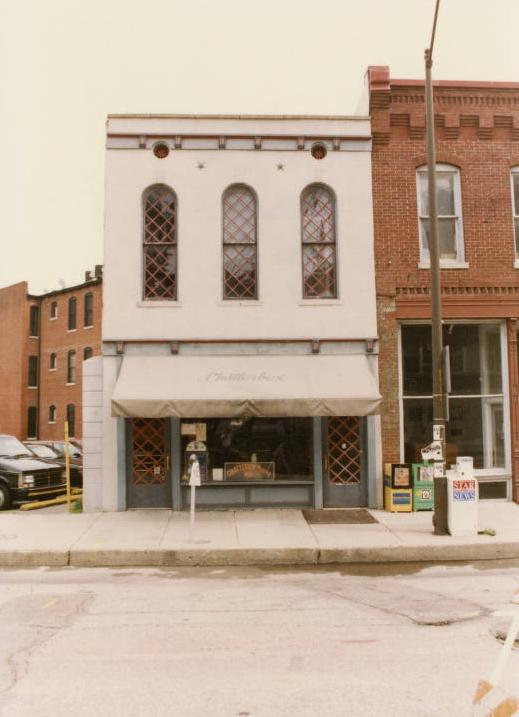
Chatterbox begins featuring jazz
Previously a small, Mass Ave bar serving first and third-shift factory workers, it expands to include a stage for jazz performances.
Pictured: The Chatterbox, 1990
Credit: City of Indianapolis, Department of Metropolitan Development, Indiana Historical Society View Source
First Waldo M. and Grace C. Bonderman National Youth Theatre Playwrighting Competition
Dorothy Webb, an IUPUI professor, initiates the competition that becomes known nationally for giving new playwrights opportunities to develop new works of theater for young audiences.
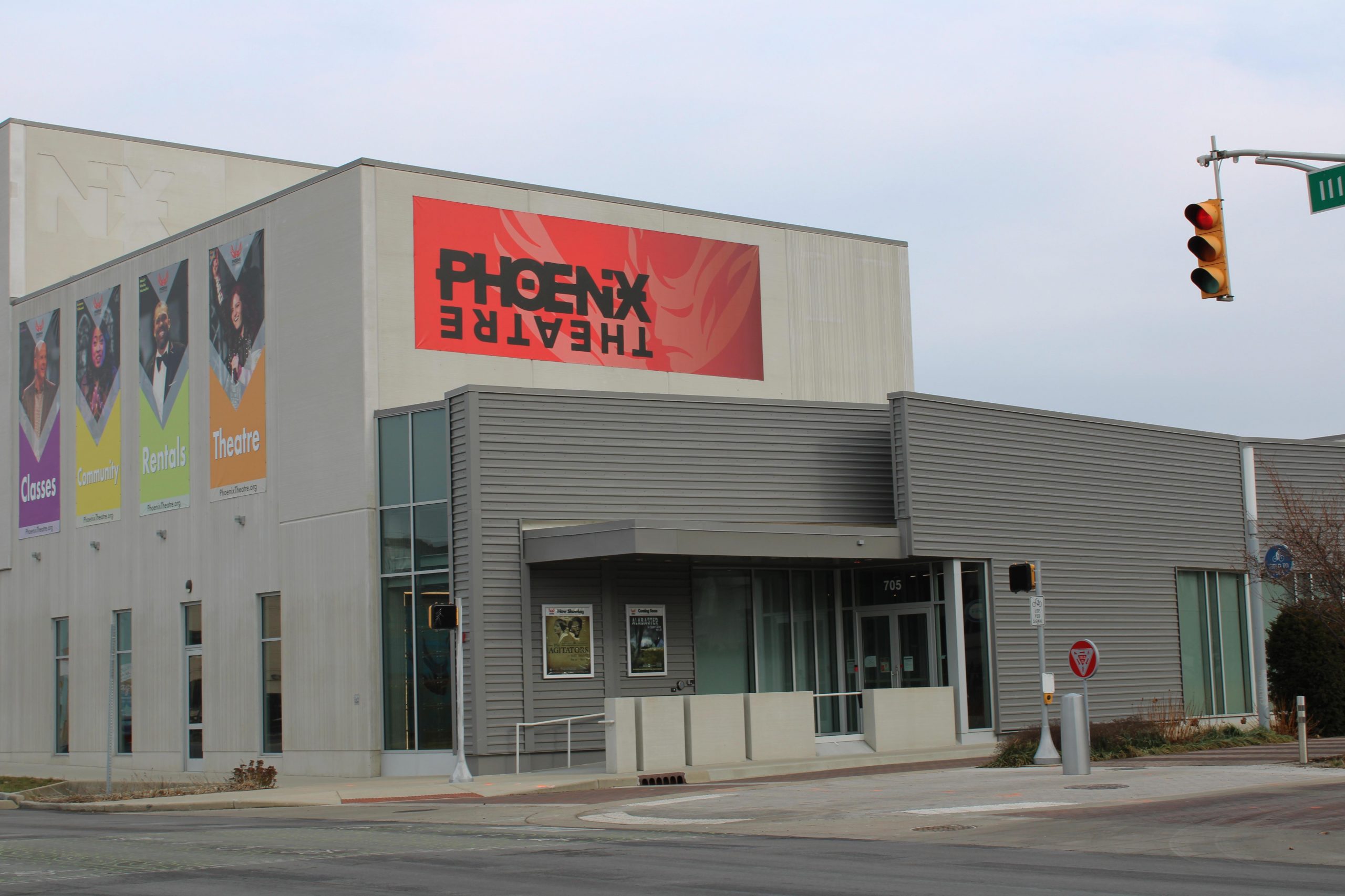
Phoenix Theatre established
The nonprofit theatre opens under the leadership of founding artistic director Bryan Fonseca. Actors and crew are local residents.
Pictured: Phoenix Theatre at 705 North Illinois Street, 2021
Credit: Jenna Auber
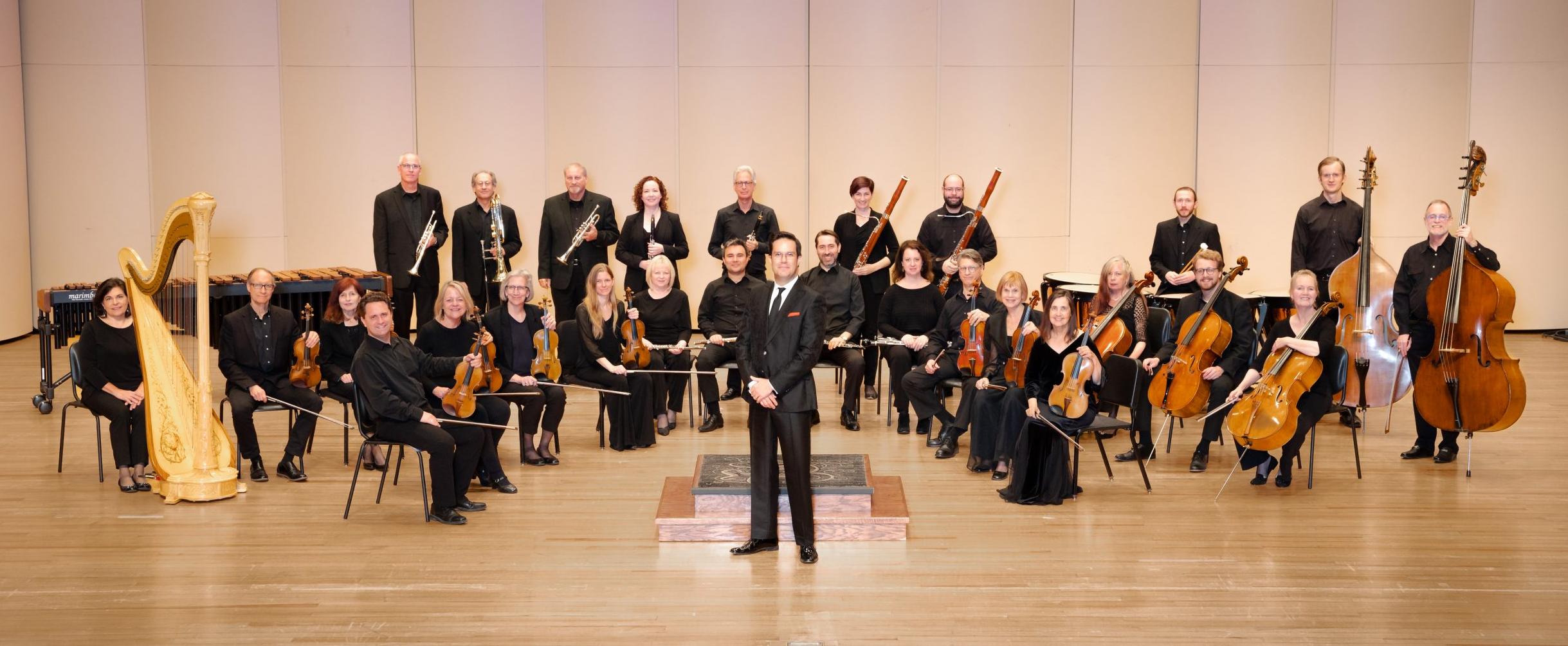
Indianapolis Chamber Orchestra forms
The orchestra plays its first concerts in the medieval cloister of Trinity Episcopal Church.
Pictured: Indianapolis Chamber Orchestra, n.d.
Credit: Indianapolis Chamber Orchestra View Source
Holy Rosary revives Italian Street Festival
Holy Rosary Catholic Church revives the annual festival, first established in 1934, to celebrate the Italian heritage of its surrounding neighborhood.
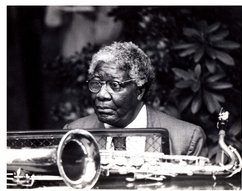
Errol Grandy Day
A benefit concert, featuring 14 leading Indianapolis jazz groups, highlights the day honoring Grandy’s jazz contributions.
Pictured: Erroll Grandy, ca. 1980s
Credit: Morgana via Find A Grave View Source
The Indianapolis Symphony Orchestra (ISO) presents premier performance at Hilbert Circle Theatre
ISO performs in the renovated movie palace for the first time. It becomes one of the few U.S. symphonies to own its venue.
Prelude awards initiated
The awards identify, encourage, and reward Marion County high school students who show great potential in dance, instrumental music, literature, theater, visual arts, and vocal music.
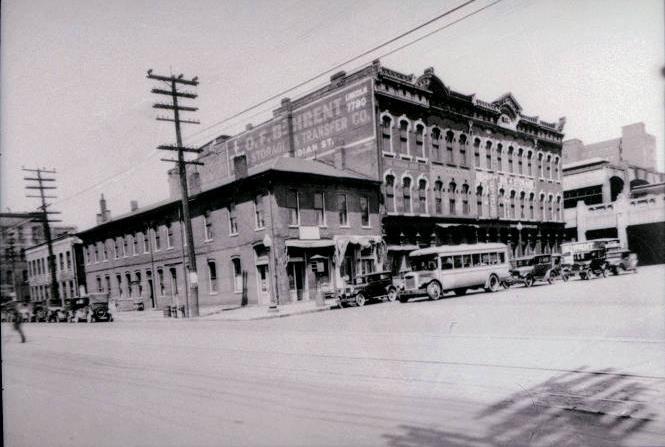
Slippery Noodle Inn becomes blues venue
Hal Yeagy Jr. transforms the city’s oldest continuously operating bar into a blues venue that gains national recognition.
Pictured: The Slippery Noodle Inn, 1940
Credit: Indiana Historical Society View Source
Bobbs-Merrill Company ends
The Bobbs-Merrill Company imprint, based in Indianapolis since the mid-19th century, ends with the sales of its backlists to the MacMillan Company.
Ruth Lilly Poetry Prize established
Ruth Lilly, niece of Eli Lilly, establishes the Ruth Lilly Poetry Prize, an annual $25,000 award for U.S. poets who warrant extraordinary recognition. The nation’s largest poetry prize is raised to $75,000 in 1993.
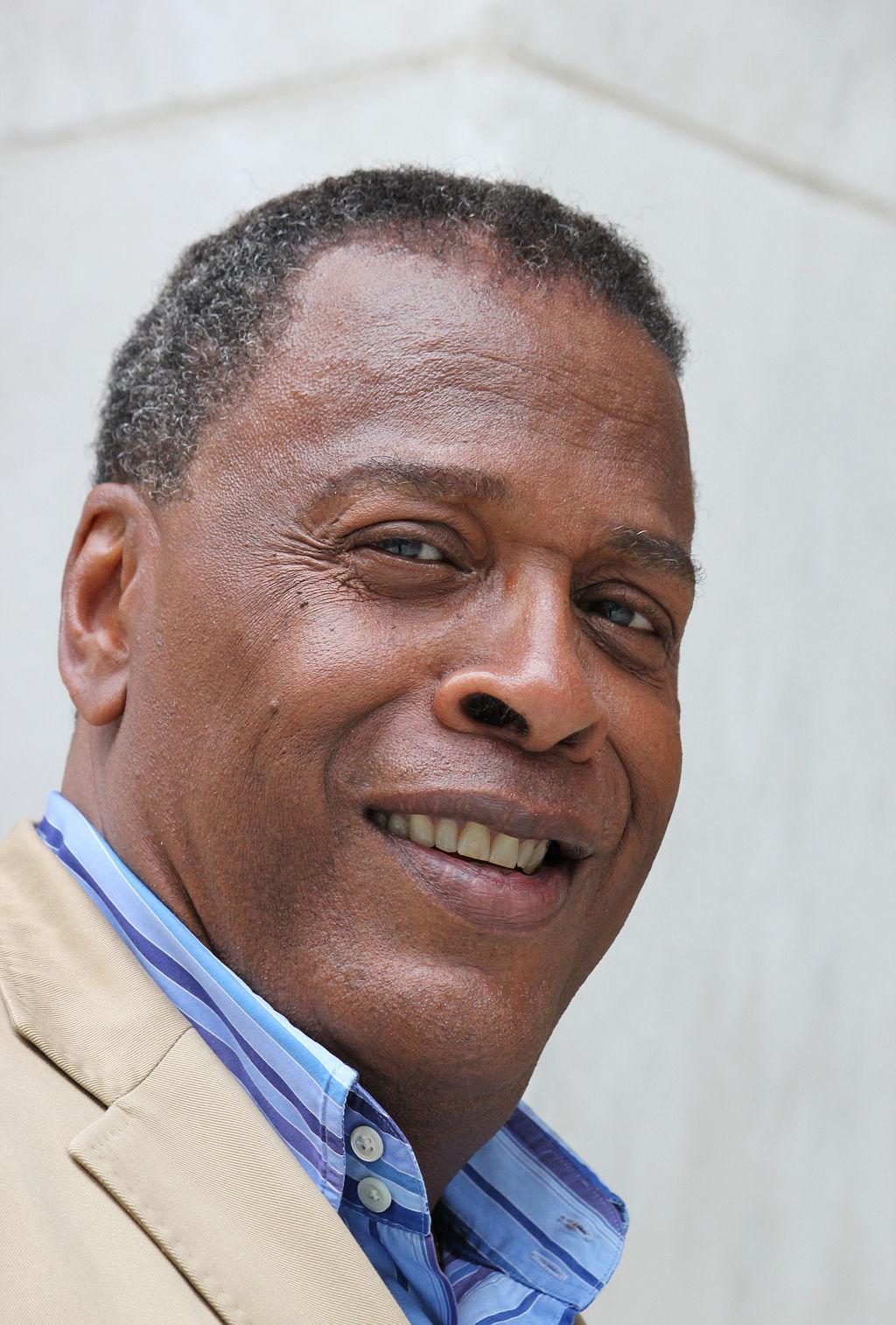
Meshach Taylor lands role in Designing Women
Taylor is cast in his most memorable role as Anthony Bouvier on the long-running CBS comedy series.
Pictured: Meshach Taylor, 2011
Credit: Lia Chang via Wikimedia Commons View Source
Indianapolis Children’s Choir forms
Performing at civic and cultural events in the city, in addition to its own concert series, the choir becomes one of the most admired youth choral programs in the country.
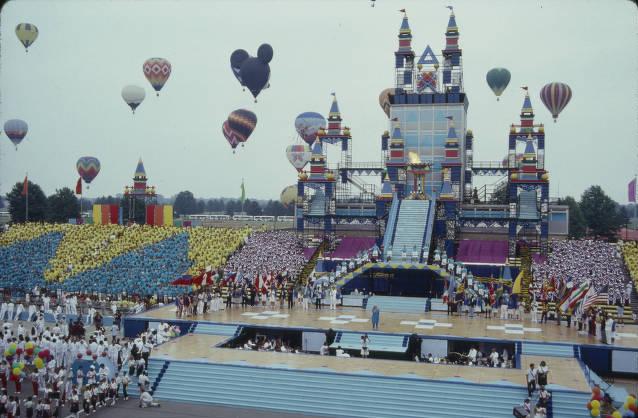
Pan American Arts Festival begins
The Pan American Arts Festival, which runs through the Tenth Pan American Games in August 1987, celebrates the arts in the Western hemisphere. The Arts Council of Indianapolis works with nearly 40 local arts organizations to produce 200 events.
Pictured: Pan American Games Opening Ceremonies at the Indianapolis Motor Speedway, August 7, 1987
Credit: Indiana Historical Society View Source
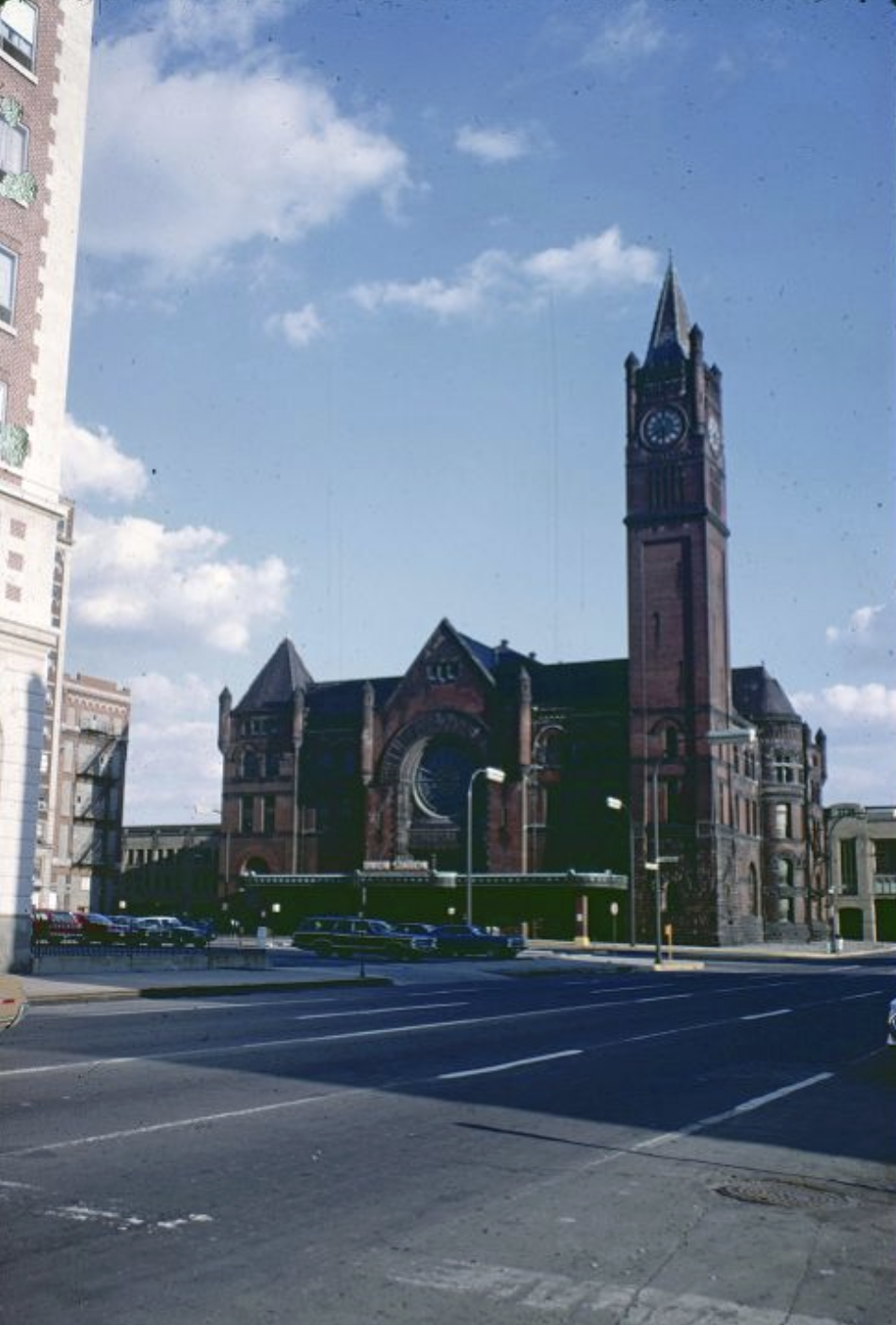
Renovated Union Station opens as a historic site and retail center
Preserving the most significant architectural elements, the $30-million restoration focuses on retaining the experience of a station in its conversion to over 100 restaurants and shops.
Pictured: Union Station, 1970
Credit: Indiana Historical Society. View Source

IndyBaroque Music forms
The ensemble performs and promotes music of the 17th and 18th centuries using period instruments and historically informed performance practices.
Pictured: Indianapolis Baroque Orchestra, in concert at the Ruth Lilly Performance Hall, Christel DeHaan Fine Arts Center, the University of Indianapolis.
Credit: Thomas Gerber, IndyBaroque Music, Inc. View Source
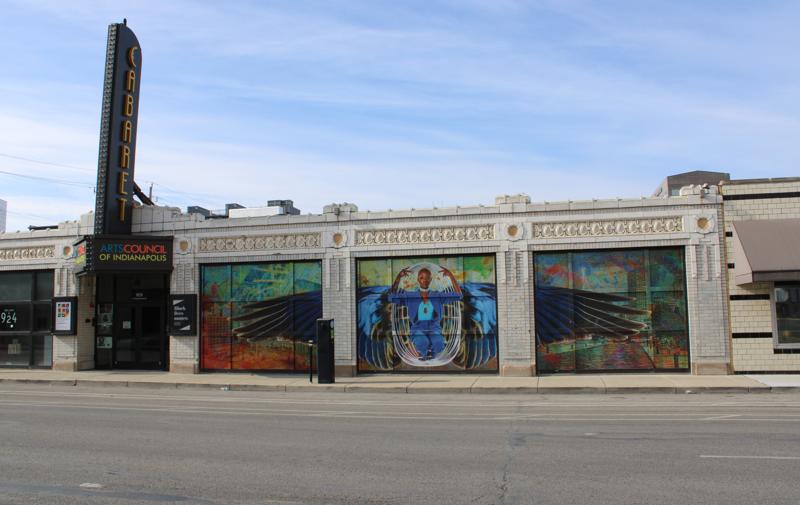
American Cabaret Theatre comes to Indianapolis
Founded in the 1970s in Connecticut, the theater group moves to Indianapolis and performs at the Hilton Hotel for two seasons before moving into the Athenaeum’s renovated ballroom in 1990.
Pictured: The historic Metzger Building, home of the Cabaret and Arts Council of Indianapolis, 2021
Credit: Jenna Auber View Source
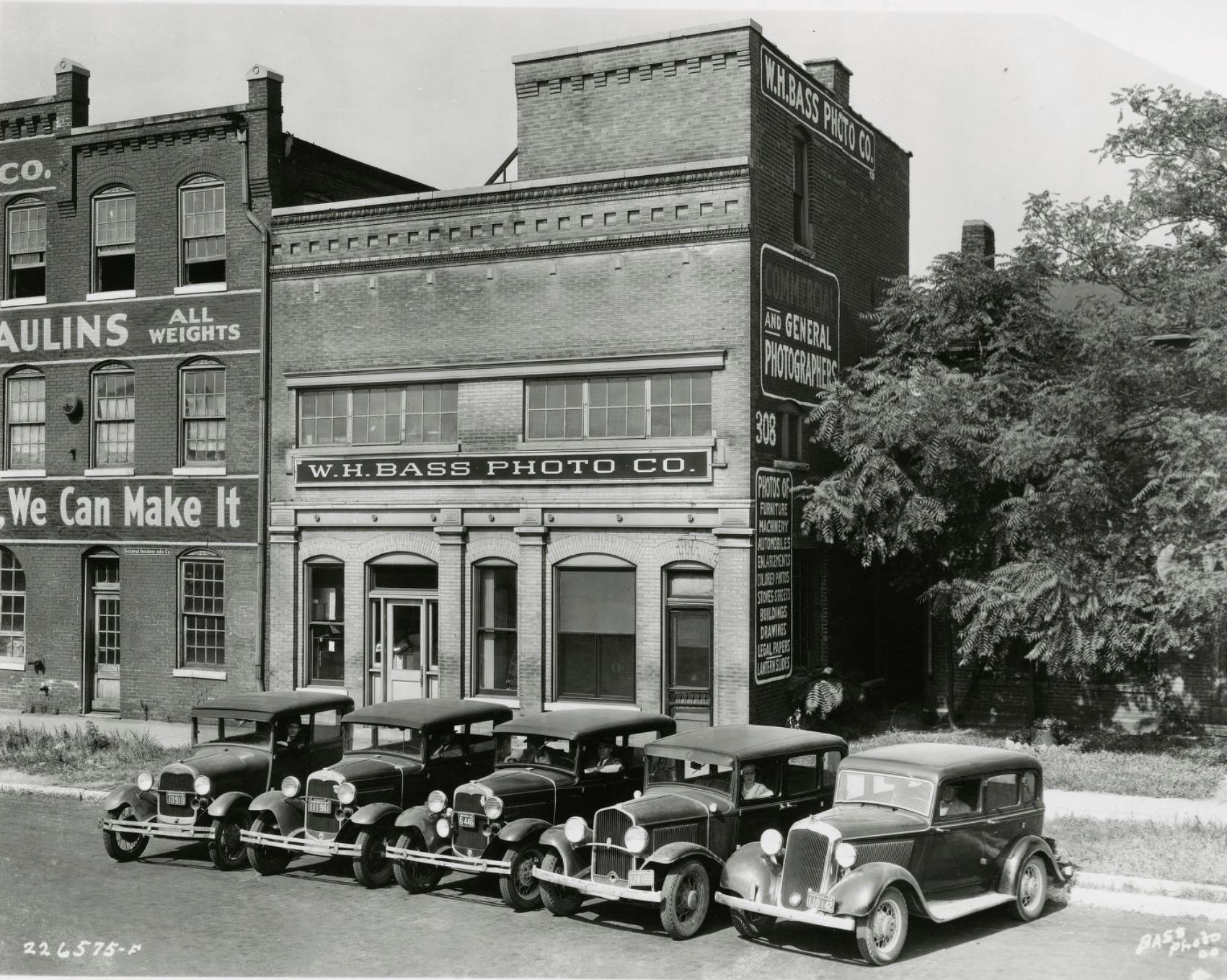
The Indiana Historical Society acquires the Bass Photo Collection
The Historical Society’s ownership of the W. H. Bass Photo Company Collection makes available to the public the largest surviving historic collection of photographs of 20th-century Indianapolis.
Pictured: W.H. Bass Photo Co., 1932
Credit: Bass Photo Co Collection, Indiana Historical Society
View Source
The City begins funding the arts
The City of Indianapolis contracts with the newly organized Arts Council of Indianapolis to grant $500,000 to local arts and cultural groups. The grant program becomes one of the Arts Council’s core functions each year.
Part of Irvington becomes an official historic district
The Irvington Historical District is listed on the National Register of Historic Places. The Indianapolis Historic Preservation Commission approves plans for the neighborhood to become a protected historic city district in 2006.
Arts Council of Indianapolis incorporates
The Greater Indianapolis Progress Committee organizes the Arts Council of Indianapolis as the city’s arts advocacy agency. It works to strengthen the relationship of the arts to economic development and the business community.
First Meet the Artists exhibition
Indianapolis Public Library artist-in-residence Anthony Radford organizes the showcase that highlights the works of the city’s top African American visual artists. It becomes an annual event.
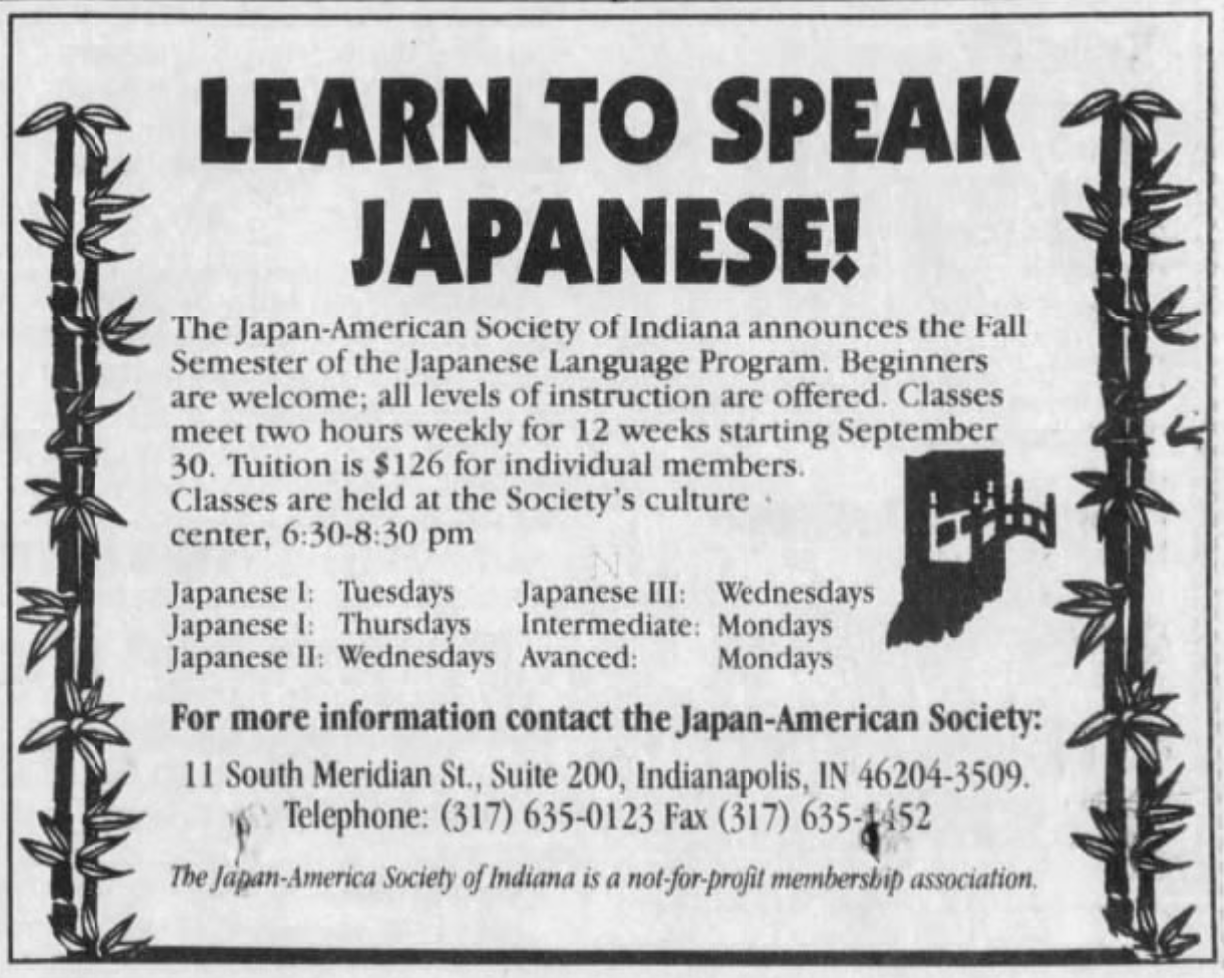
Japanese residents organize the Japan-American Society of Indiana
The cultural and educational organization fosters cultural exchange between Indiana and Japan.
Pictured: Advertisement for a Japan-American Society of Indiana Japanese language program, 1996
Credit: IndyStar
View Source
Theatre on the Square debut performance
Theater director Ron Spencer establishes the theater in Fountain Square to produce plays that address controversial issues. It moves to Massachusetts Avenue in 1993 and becomes known as The District Theatre.
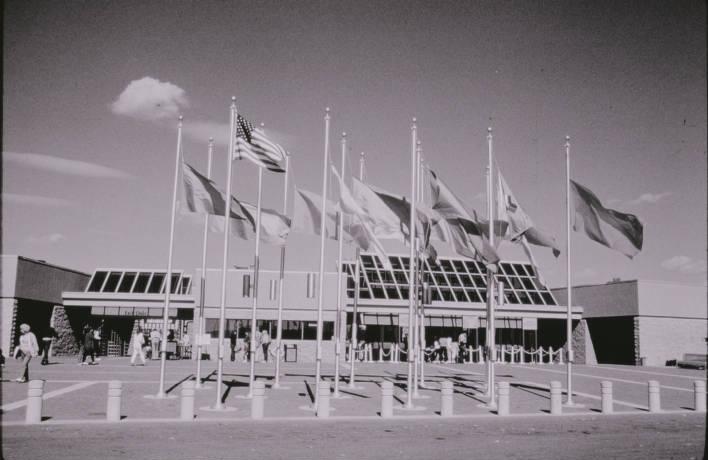
Indianapolis Zoo relocates along the White River
The Washington Park Zoo closes in November 1987 and by early December, the zoo’s 500 animals are transferred to the new facility in White River State Park.
Pictured: Indianapolis Zoo Entrance, ca. 1980s
Credit: Indiana Historical Society
View Source
Start with Art directory released
The Arts Council of Indianapolis releases its first comprehensive listing of all nonprofit arts and cultural organizations in Marion County.
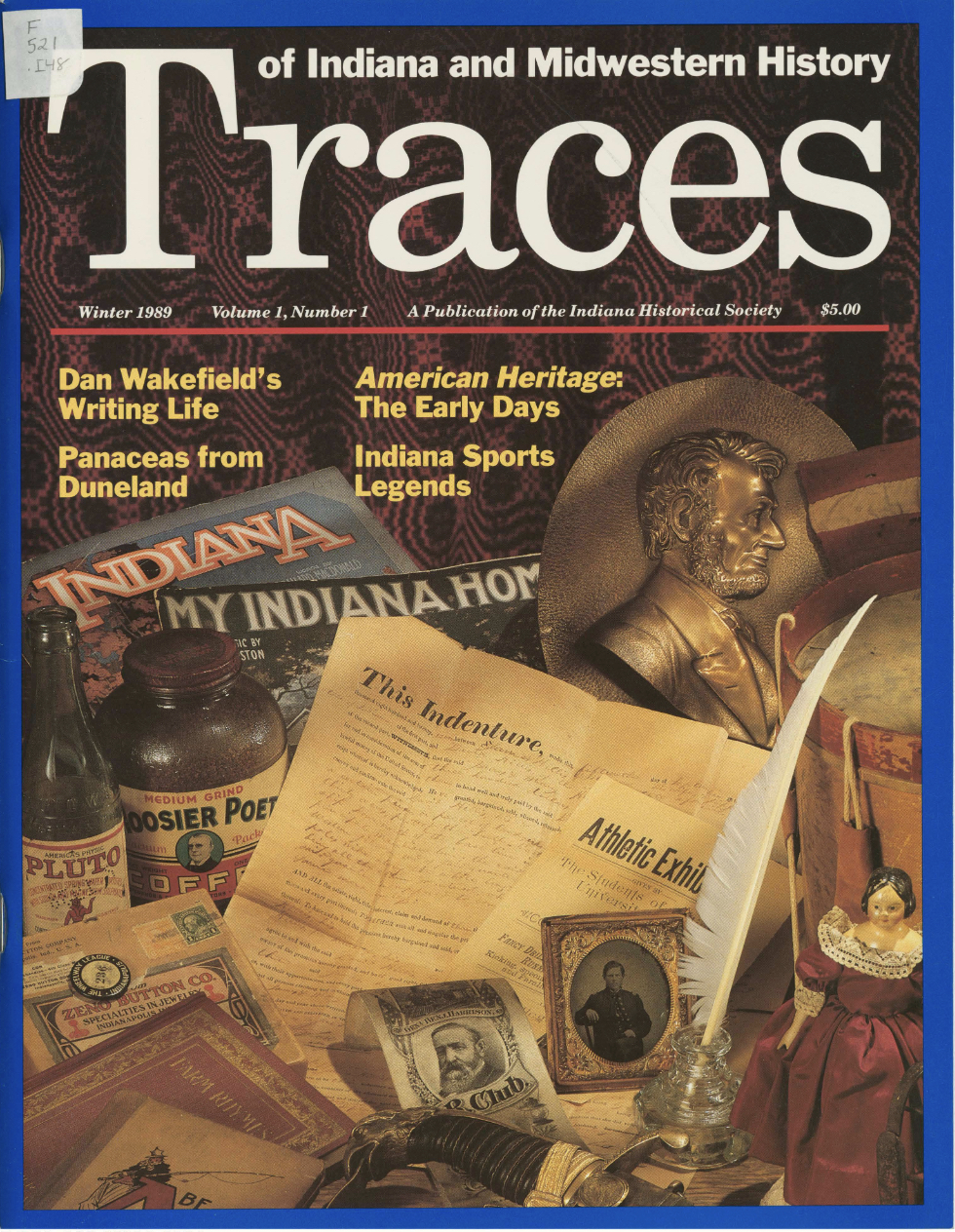
Indiana Historical Society publishes Traces of Indiana and Midwestern History
The Indiana Historical Society quarterly history magazine focuses on little-known people and events from Indiana’s past.
Pictured: First issue of Traces of Indiana and Midwestern History, 1989
Credit: Indiana Historical Society
View Source
New Augusta becomes a historic district
The Unigov included town is added to the National Register of Historic Places. The Indianapolis Historic Preservation Commission approves the area’s plans to become a protected city historic conservation district in 1999.
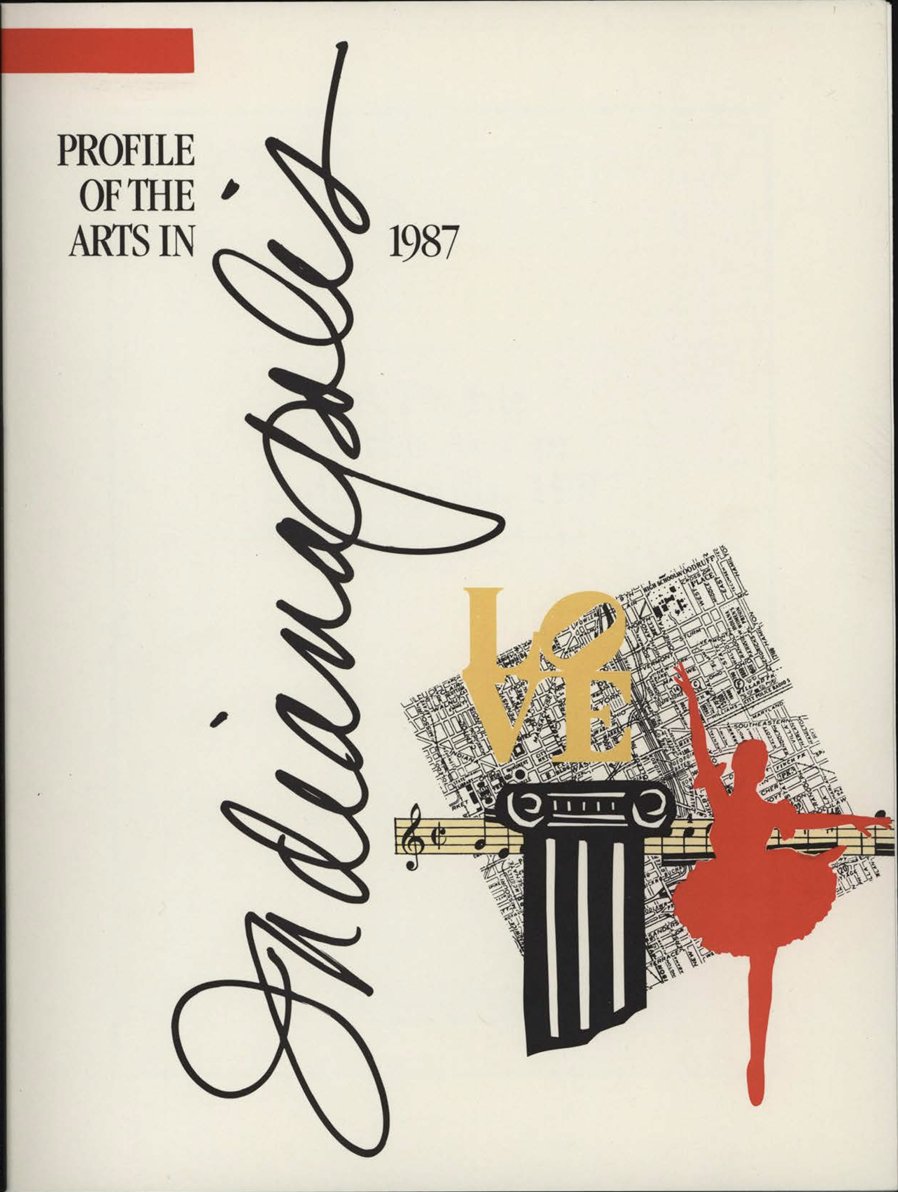
A Profile of the Arts in Indianapolis published
The Arts Council of Indianapolis (ACI) releases a study of arts organizations in the city, carried out immediately after its incorporation in 1987, with the aim of devising a plan to better serve members of the arts community.
Pictured: Profile of Arts in Indianapolis, 1987
Credit: University of Indianapolis
View Source
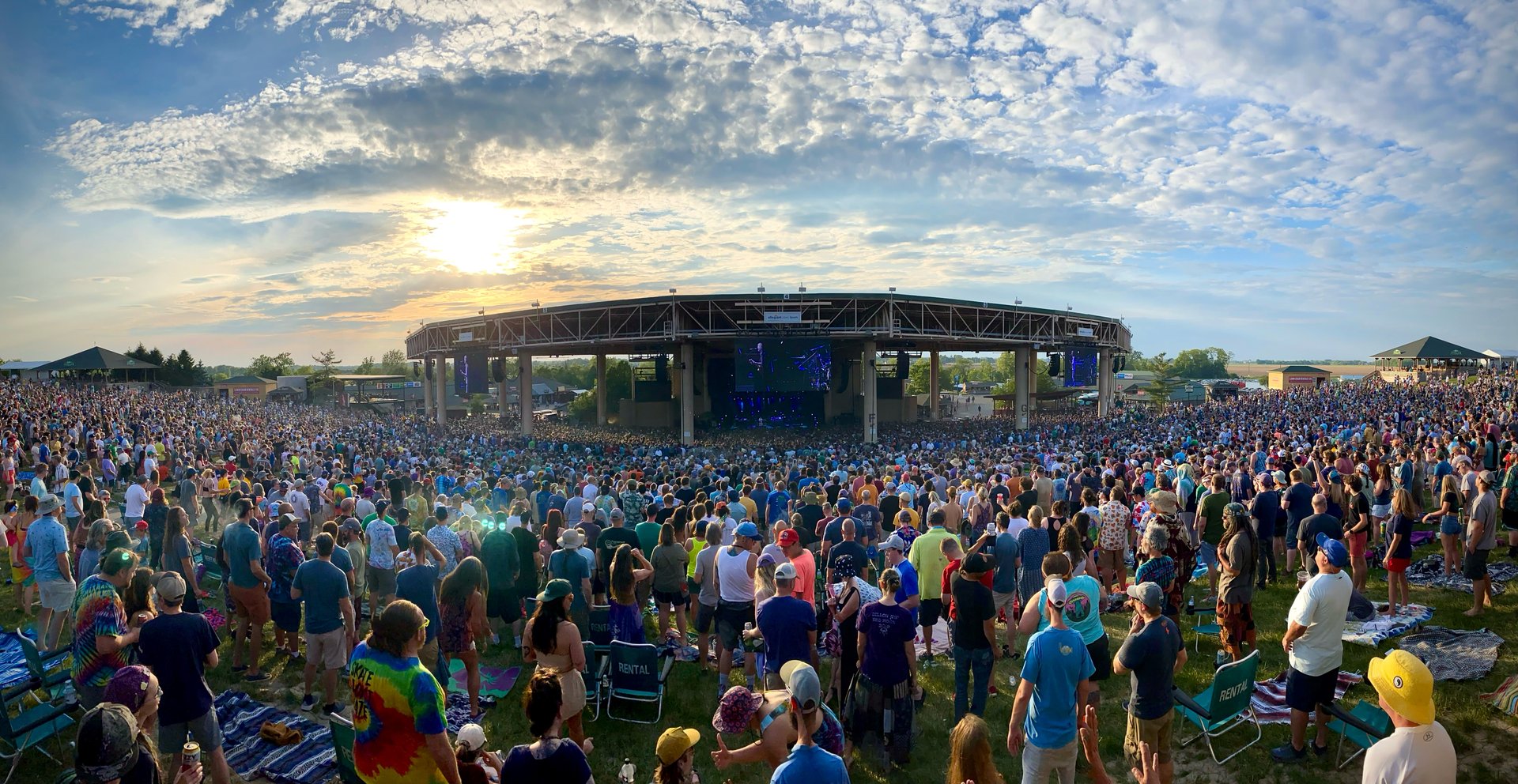
Deer Creek Music Center begins operation
Sunshine Promotions of Indianapolis opens the $12 million Deer Creek Music Center, now Ruoff Music Center, located near Noblesville. The first concert, a benefit event, features gospel singer Sandi Patti, an Anderson, Indiana, native.
Pictured: Deer Creek Music Center (later Ruoff Music Center), 2023
Credit: Visit Indy
View Source
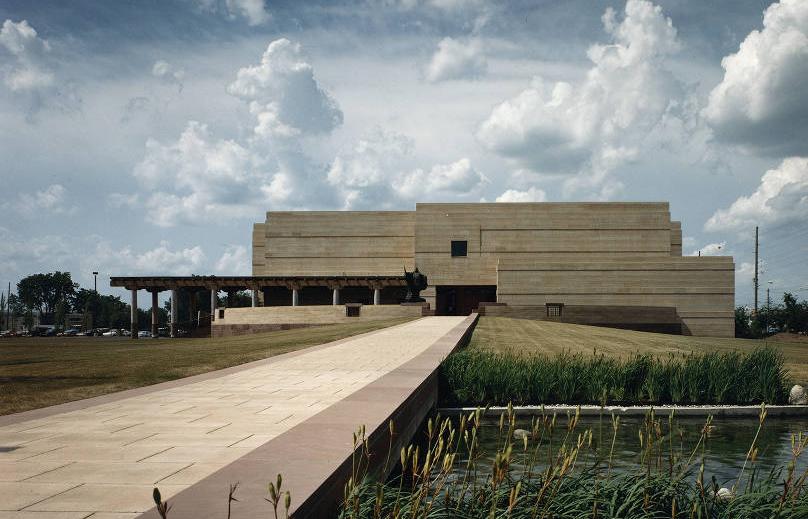
Eiteljorg Museum of American Indian and Western Art opens
Located in White River State Park, the museum showcases Native American art and Western American art. It is named for its founder, Harrison Eiteljorg.
Pictured: Eiteljorg Museum of American Indian and Western Art, ca. 1990s
Credit: Indiana Historical Society View Source
First ARTI Awards
The Arts Council of Indianapolis awards recognize the support of businesses for the arts.
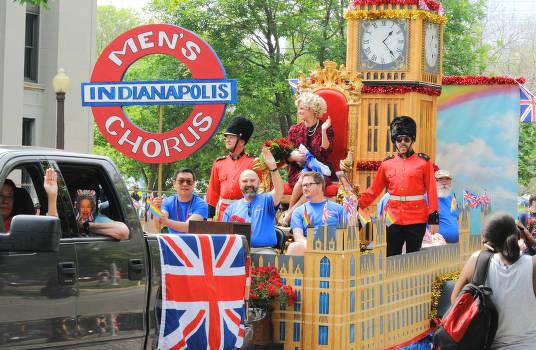
Crossroads Performing Arts establishes Indianapolis Men’s Chorus
The chorus gives Central Indiana audiences high-caliber concerts while representing the LGBTQ community.
Pictured: The Indianapolis Men’s Chorus at the 2013 Cadillac Barbie IN Pride Parade.
Credit: Courtesy of NUVO, Indiana Historical Society View Source
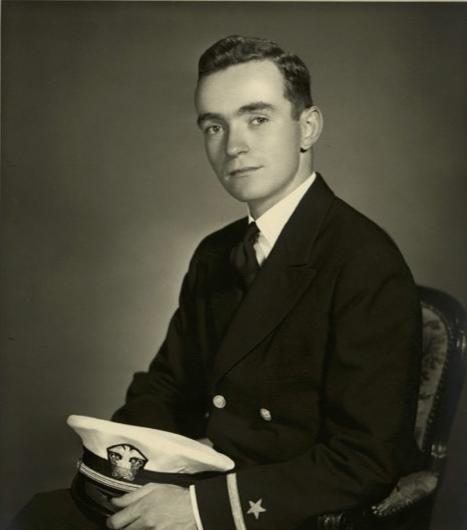
The Allen Whitehill Clowes Charitable Foundation incorporates
The foundation continues the legacy of philanthropist Allen Whitehill Clowes supporting charitable organizations that promote and preserve the arts and humanities.
Pictured: Allen W. Clowes, ca. 1943
Credit: Indiana Historical Society View Source
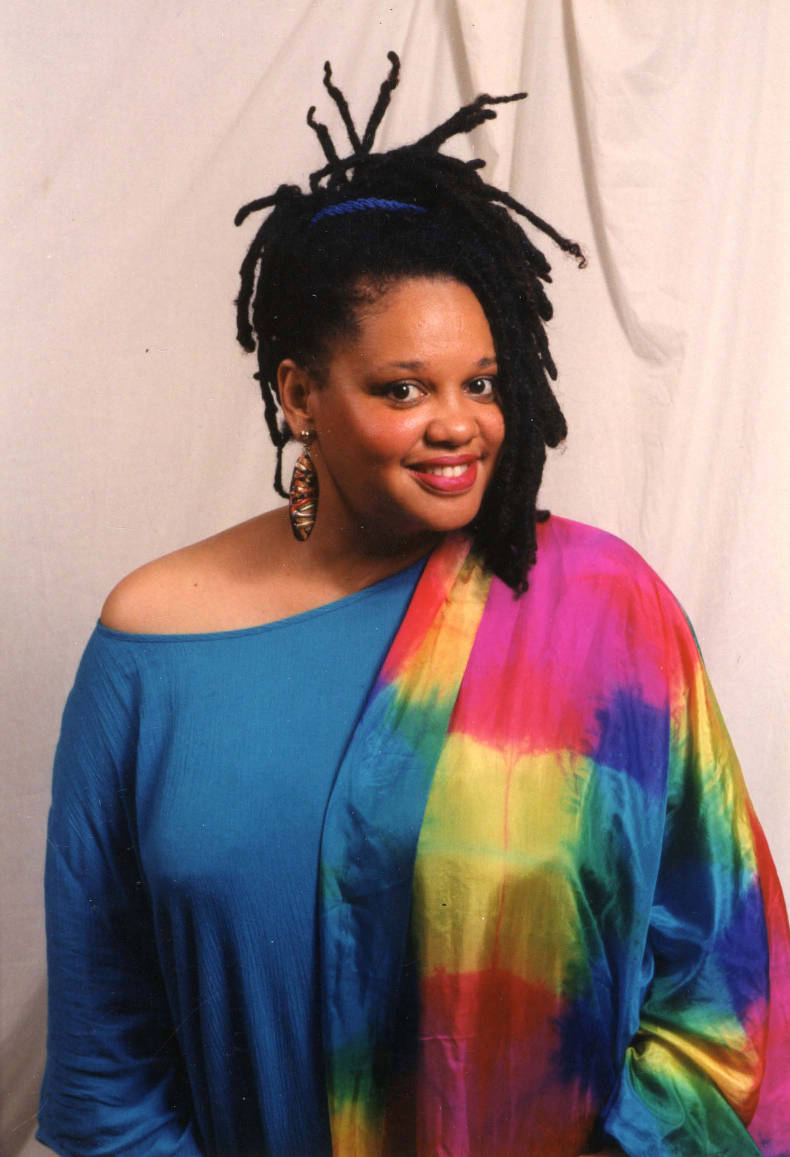
Deborah Asante establishes Asante Art Institute
Asante, a storyteller and performance artist, starts the African American children’s theatre, a community-based performing arts group.
Pictured: Storyteller and performance artist Deborah Asante, founder of the Asante Children’s Theater, 1998
Credit: Indianapolis Public Library African American History Committee View Source
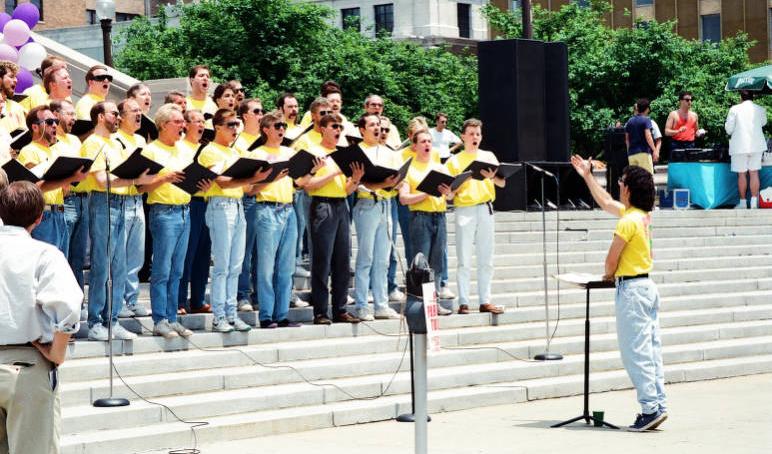
First Circle City Pride Festival kicks off
The Pride Festival takes place at Monument Circle. With 3000 attendees at the festival, it becomes the largest event centered on supporting and celebrating the LGBT community.
Pictured: The Indianapolis Men’s Chorus performed for the Indy Pride festival in 1992.
Credit: Mark A. Lee LGBT Photo Collection, Indiana Historical Society View Source
Cottage Home becomes an official historic district
The neighborhood is placed on the National Register of Historic Places. The Indianapolis Historic Preservation Commission approves plans for it to become a protected city historic conservation district in 2008.
New Arts Council of Indianapolis Financial Assistance Program
The Arts Council of Indianapolis launches its technical assistance mini-grant program using funds received through its first National Endowment for the Arts grant award.
National Art Museum of Sport opens in Bank One Tower
Founded in 1959 in New York City, the museum moves to Indianapolis because of the city’s growing reputation as a sports center. It subsequently moves to IUPUI in 1994 before transferring its entire collection to the Children’s Museum in 2018..
Pictured: The National Art Museum of Sport in the Efroymson Gallery at the Children’s Museum of Indianapolis, ca. 2018
Credit: The Children’s Museum of Indianapolis
St. Joseph Neighborhood becomes an official historic district
The Indianapolis Historic Preservation Commission approves the neighborhood’s plans to become a protected city historic district, and it is listed on the National Register of Historic Places.
Heartland Film Festival holds its inaugural event
Jeff Sparks, then executive director of a children’s home, founds the nonprofit organization to inspire “filmmakers and audiences through the transformative power of film.” Heartland curates and supports a variety of cinema from filmmakers and storytellers from around the world.
Pictured: 2013 Heartland Film Festival Guidebook
Credit: Indianapolis-Marion County Public Library View Source
New Arts Council of Indianapolis strategic plan
The Arts Council releases A Community Cultural Strategic Plan for the Arts in Indianapolis. The strategic plan compares the city’s arts culture and funding with that of 50 of America’s largest cities, showing that Indianapolis ranks in the middle for most categories studied. The plan sets eight long-range goals to increase the stature of the arts in Indianapolis.
First Balkan Fest
The St. Stephens Bulgarian and S.S. Constantine and Elena Romanian Orthodox Church partner with the St. Nicholas Serbian Orthodox Church to hold the festival that highlights the culture of these Balkan countries. St. Nicholas later sponsors the Serb Fest alone.
First Biennial American Jazz Piano Competition begins
The American Pianists Association holds the unique competition that spans 13 months every 2 years to find the best aspiring young American jazz pianists.
Darryl Pinckney wins award for High Cotton
In his thinly veiled autobiographical novel, Indianapolis native and acclaimed critic Pinkney writes about a young, middle-class Black man growing up in the northern suburbs of Indianapolis in the 1960s. It wins the prestigious Los Angeles Times Art Seidenbaum Award for First Fiction.
Pictured: Cover of Darryl Pinckney’s book, High Cotton
Credit: Fair Use
Ransom Place becomes an official historic district
Ransom Place is placed on the National Register of Historic Places. The Indianapolis Historic Preservation Commission approves plans for the neighborhood to become a protected city historic conservation district in 1998.
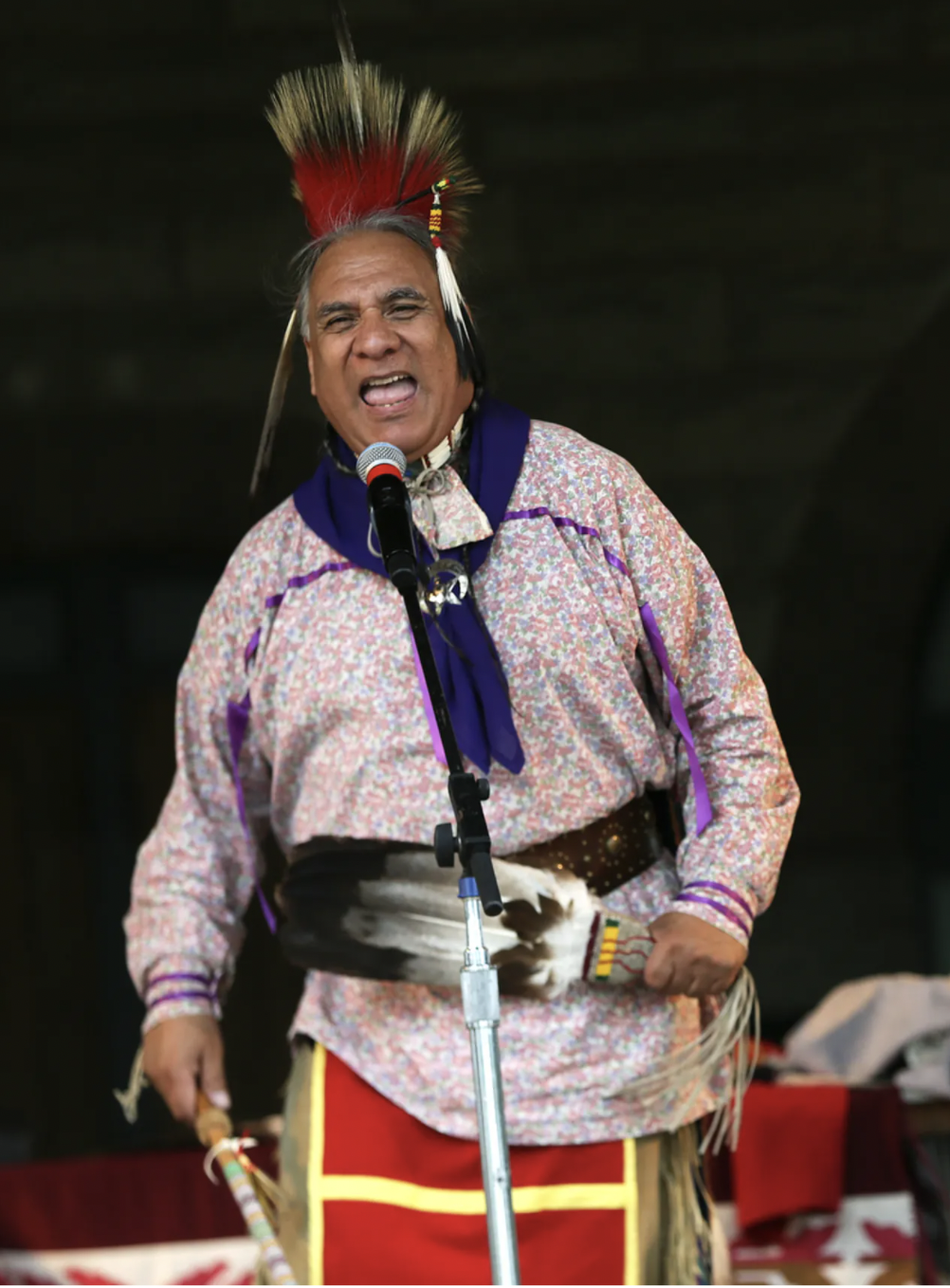
First Indian Market and Festival
The Eiteljorg Museum of American Indians and Western Art holds its first Indian market to build support for and interest in Native American arts and cultures.
Pictured: Leaf Arrow Storyteller, Joe Cross, during his performance at the annual Indian Market and Festival, 2015
Credit: Jenna Watson, IndyStar View Source
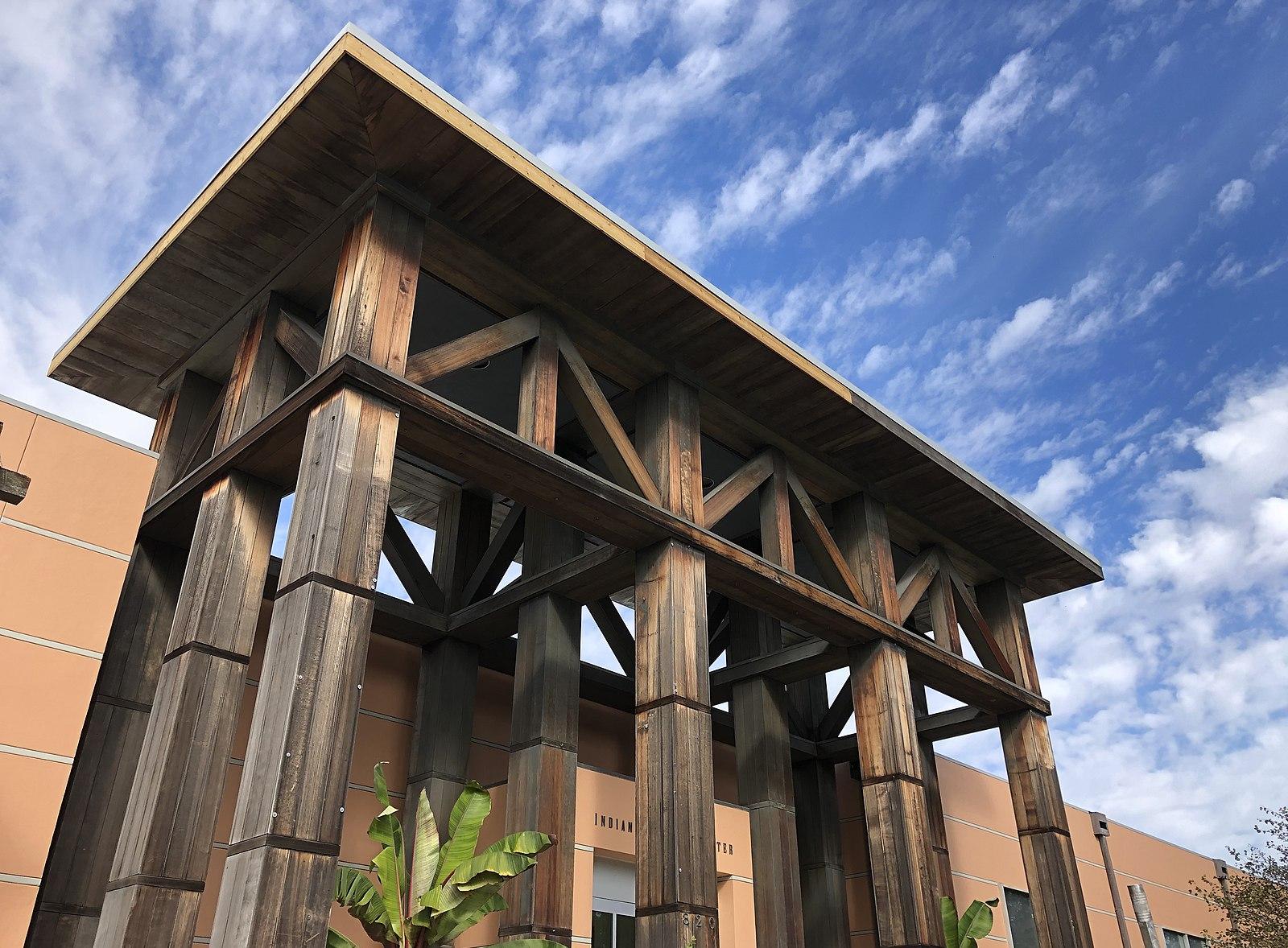
Construction begins on the Michael Graves-designed Indianapolis Arts Center building
With a growing demand for classes, exhibitions, and services, the Indianapolis Arts League builds a new 40,000 square-foot facility in Broad Ripple. The new building opens in 1996, and the League changes its name to the Indianapolis Art Center.
Pictured: Indianapolis Art Center front entrance, 2019
Credit: Momoneymoproblemz via Wikimedia Commons
View Source
University of Indianapolis builds Christel DeHaan Fine Arts Center
The educational and public arts facility houses the university’s Department of Music and its Department of Art and Design, It includes a 500-seat performance hall named for Ruth Lilly, state-of-the-art rehearsal halls, and art studios.
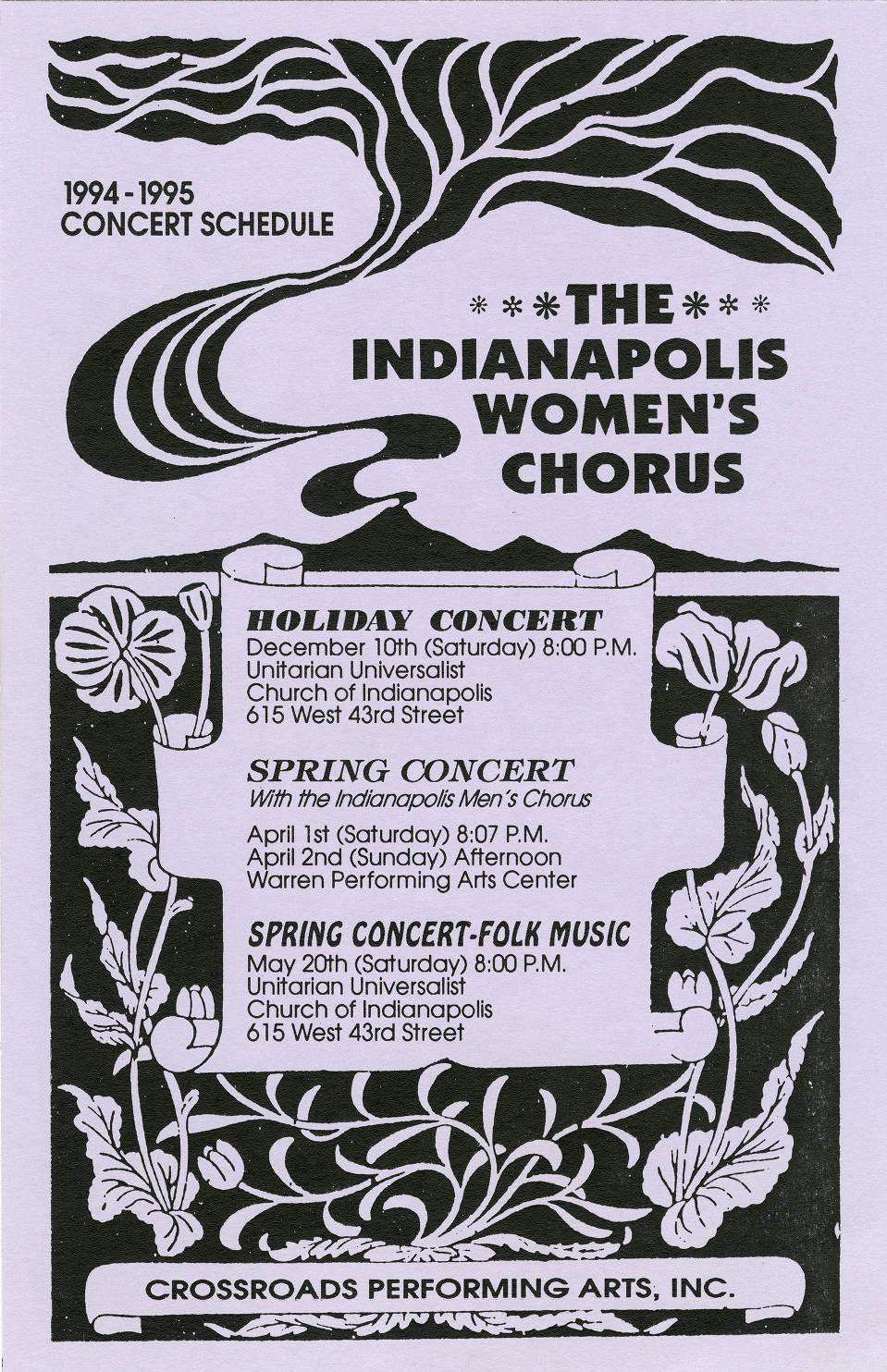
Crossroads Performing Arts founds Indianapolis Women’s Chorus
The chorus seeks to present the LGBTQ community in a positive light, promote a spirit of pride, and build bridges of understanding.
Pictured: Indianapolis Women’s Chorus Concert Announcement, 1994-1995
Credit: Mark A. Lee LGBT Photo Collection, Indiana Historical Society View Source
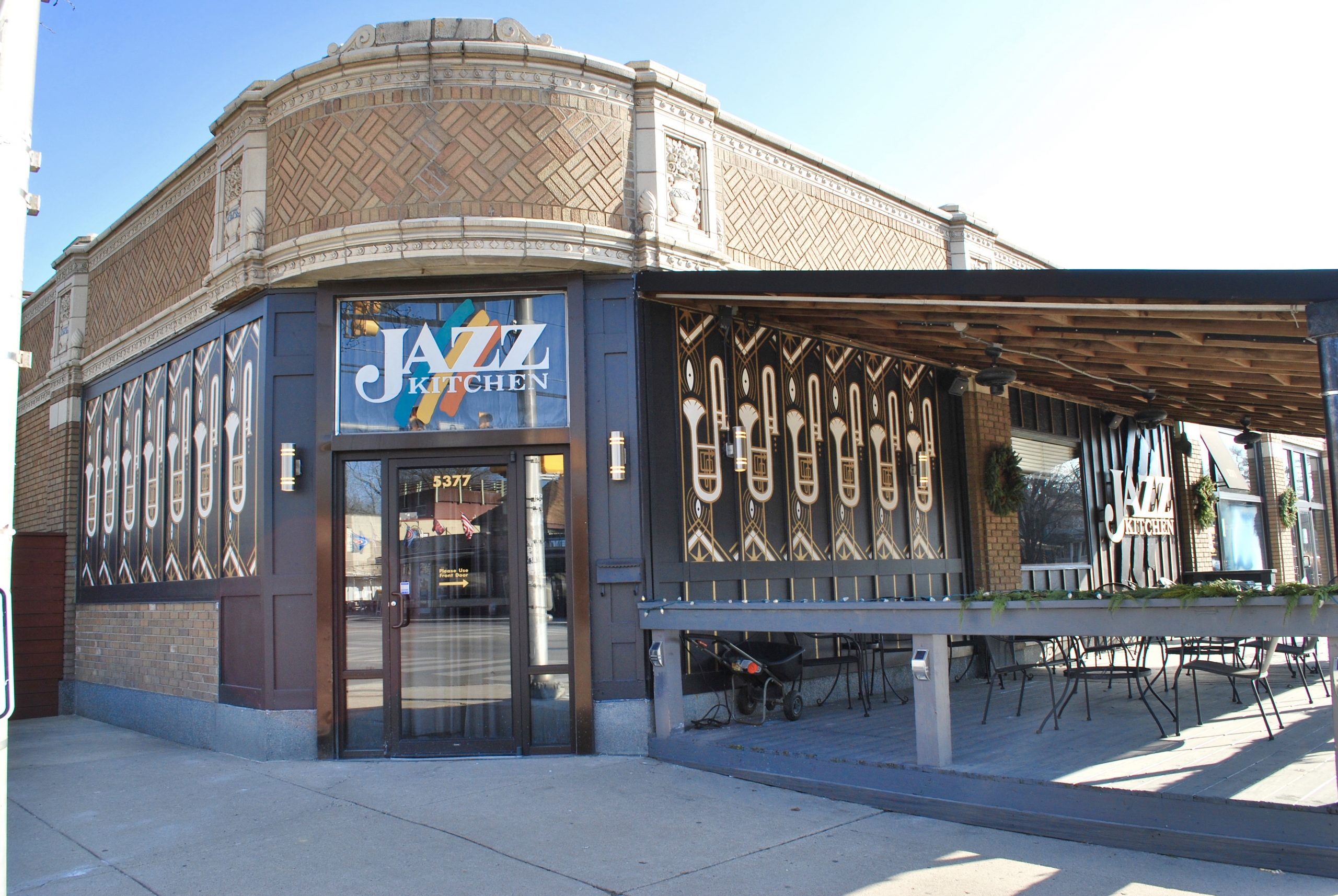
Jazz Kitchen opens
The jazz club and restaurant moves into the former home of Crazy Al’s—a punk and new wave venue. It quickly becomes a hotspot for Indianapolis jazz musicians.
Pictured: Renovated Jazz Kitchen, 2021
Credit: Kara Chinn
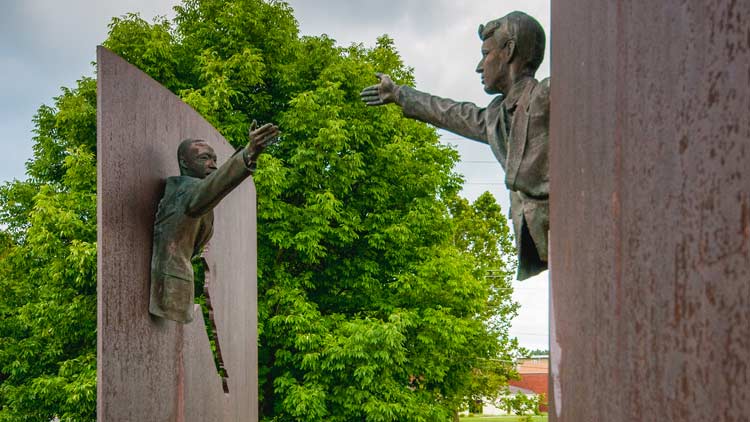
Groundbreaking for Kennedy-King Landmark for Peace memorial
President Bill Clinton and the families of Martin Luther King Jr. and Robert F. Kennedy attend the event for the memorial that commemorates the spot where RFK made his famous speech upon hearing the news of MLK’s assassination, April 4, 1968.
Pictured: Kennedy-King National Commemorative Site, ca. 2020s
Credit: Visit Indy View Source
Metropolitan Youth Orchestra incorporates
Incorporation of the Metropolitan Youth Orchestra formalizes the program that Betty Perry initiated to remedy the lack of classical music training for African American youth.
Pictured: Betty Perry, director of the Metropolitan Youth Orchestra, chats with Kevin Randolph, a former member, who helped with the group, 2006
Credit: Robert Scheer / USA TODAY NETWORK View Source
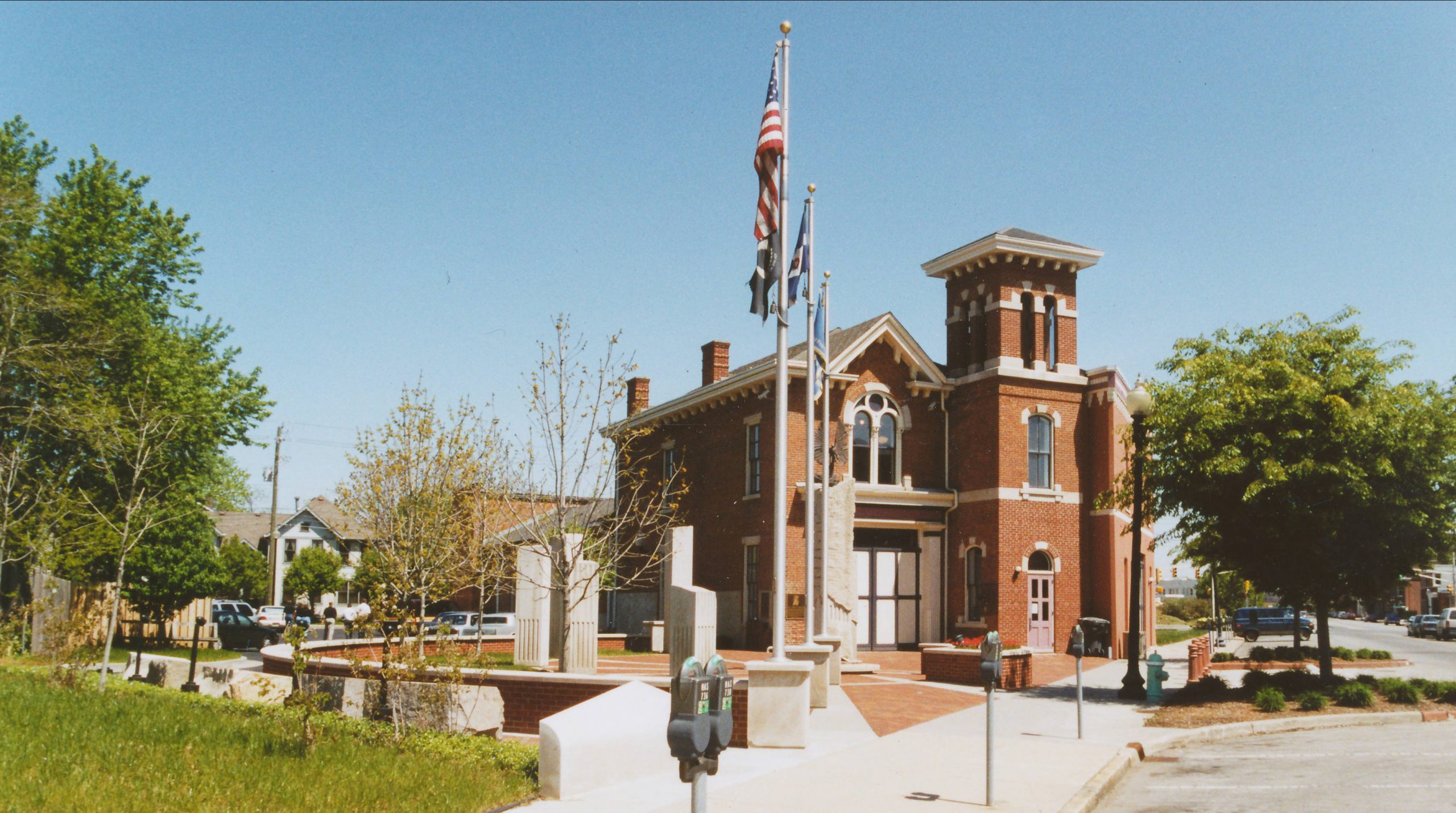
Indianapolis Firefighters Museum opens
The Museum celebrates and preserves the history and contributions of Central Indiana Fire Departments. The Museum opens in the remodeled Fire Station #2, the oldest remaining fire station building in the city.
Pictured: Indianapolis Firefighters Museum, 1996
Credit: Indianapolis Public Library
View Source
Fayette Street becomes an official historic district
The Indianapolis Historic Preservation Commission approves the neighborhood’s plans to become a protected city historic conservation district.
Baby Face Edmonds wins his first two Grammy Awards
Indianapolis native Kenneth Brian Edmonds wins two Grammy Awards, one for his R&B Song “I’ll Make Love to You” and the other for Male R&B Vocal Performance in “When Can I See You.” He goes on to win his 13th Grammy in 2024 for his work “Snooze” from SZA, tying him with Michael Jackson for most wins.
Pictured: Kenneth “Babyface” Edmonds, 2013
Credit: Angela George, via Wikimedia Commons
View Source
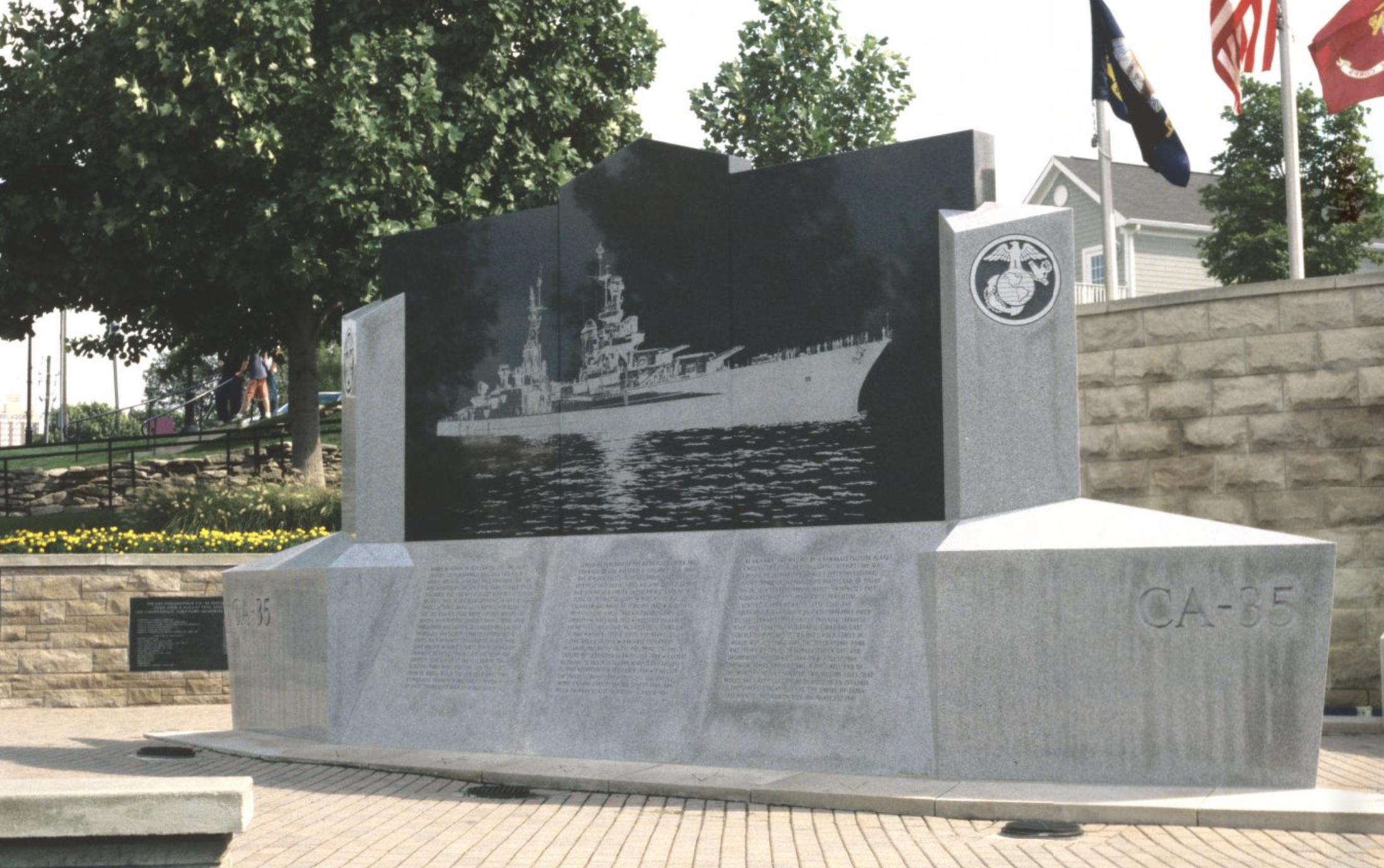
Dedication of USS Indianapolis Memorial
It takes decades before survivors of the USS Indianapolis raise enough money to erect a memorial, which is located at the north end of Canal Walk. The dedication takes place on the 50th anniversary of the tragedy.
Pictured: USS Indianapolis Memorial, Vermont Street, 2006
Credit: Indiana University Indianapolis
View Source
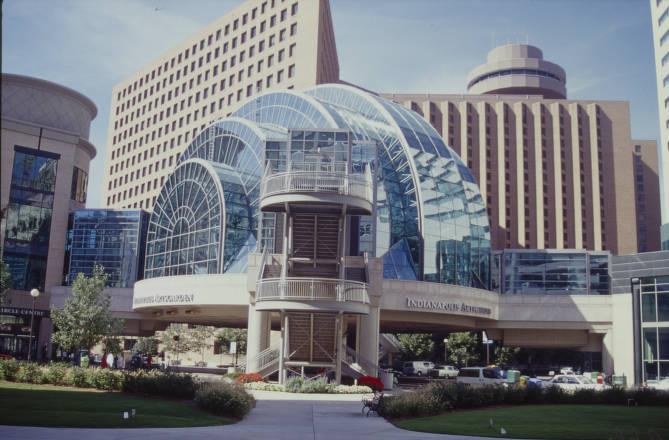
Indianapolis Artsgarden opens
The Arts Council of Indianapolis operates the Artsgarden, built with funds from Lilly Endowment, Inc., as a performance and exhibition space.
Pictured: The original entrance of the Artsgarden, ca. 1980s-1990s
Credit: Indiana Historical Society View Source
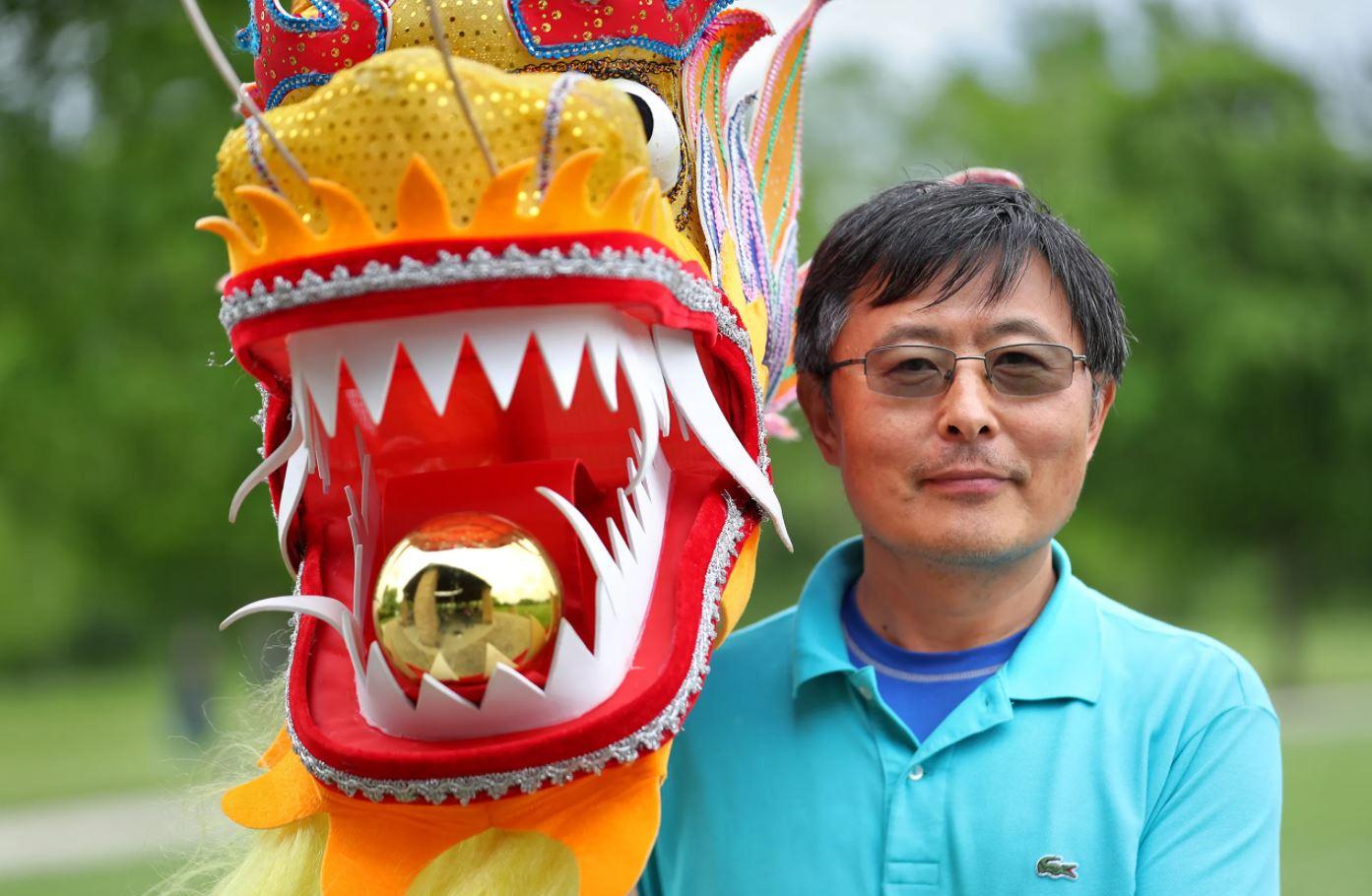
Indianapolis Chinese Community Center incorporates
The community center organizes to provide Chinese families in Indianapolis a place for children to learn Chinese language and culture. Its mission includes teaching Chinese to non-Chinese-speaking families and to promote Chinese culture and heritage.
Pictured: Dragon head of Chinese Dragon Group, at the Indianapolis Chinese Community Center’s annual Chinese School/community center picnic, May 19, 2019.
Credit: Kelly Wilkinson, IndyStar
View Source
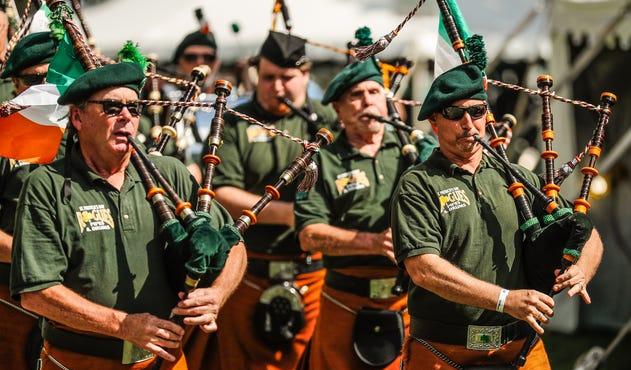
First Indy Irish Fest
The festival highlights Irish culture and the contributions Irish immigrants have made to the city.
Pictured: Indy Irish Fest, 2019
Credit: Michelle Pemberton, IndyStar View Source
Indianapolis Jazz Foundation Forms
The organization recognizes the rich jazz history of the city and provides support and resources for individuals and organizations working to promote jazz in the city. The Indy Jazz Fest, established in 1999, becomes its best-known program.

Spirit & Place Festival launches
The Spirit & Place Festival springs from the Project on Religion and Urban Culture, an initiative of The Polis Center at IUPUI. It brings together the arts, humanities, and religion to frame programs that address issues of concern to Indianapolis. The first festival features a conversation between John Updike, Kurt Vonnegut, and Dan Wakefield at Clowes Hall.
Pictured: Spirit & Place Festival event at Clowes Hall, 2008
Credit: Indiana University Indianapolis
View Source
Indiana Wind Symphony forms
The Indiana Wind Symphony includes wind, brass, and percussion players who are all volunteers, The group becomes one of the original resident ensembles at the Palladium at the Center for the Performing Arts in Carmel in 2011.
Gregory Hancock Dance Theatre founded
Artistic Director Gregory Hancock establishes the professional theatrical and contemporary ballet company, combining ballet and modern dance with world music into its programming. It becomes the resident dance company of the Center for the Performing Arts in Carmel in 2011.
Monument Circle becomes an official historic district
Monument Circle is listed on the National Register of Historic Places. The Indianapolis Historic Preservation Commission approves plans for it to become a protected city historic district in 2013.
Catherine Lucille Moore enters Science Fiction Hall of Fame
The award recognizes the Indianapolis author’s contributions to raise science fiction to a creditable literary field.
Pictured: Catherine Lucille Moore, n.d.
Credit: Fair Use via Wikimedia Commons View Source
Crispus Attucks museum opens
The Crispus Attucks Museum opens at Crispus Attucks Middle School to raise consciousness about the heritage of the school and African American life and culture.
Pictured: Crispus Attucks Museum, 2016
Credit: Indiana Historical Society View Source
Transfer of Clowes Collection of paintings to the Indianapolis Museum of Art
The Clowes Fund begins transferring ownership of the collection of European Masters paintings, valued at $55 million, to the museum.
City arts funding doubles
Mayor Stephen L. Goldsmith doubles arts funding to $1.5 million, using $750K from the Capital Improvement Board and $750K from the city budget.
Congressional Medal Of Honor Memorial opens
Designed by Eric Fulford and Anne Reed of Ninebark Studios, the memorial pays tribute to Indiana Medal of Honor recipients, dating to the Civil War. It is located on the north bank of Indiana Central Canal.
Pictured: Congressional Medal Of Honor Memorial, 2007
Credit: Rogerd via Wikimedia Commons
View Source
White River Gardens opens
Part of the White River State Park and the Indianapolis Zoo, the gardens showcase more than 16,000 plants, exotic and native. Many species are rare or historic in value.
Pictured: White River Gardens, ca. 1990s
Credit: Indiana Historical Society View Source
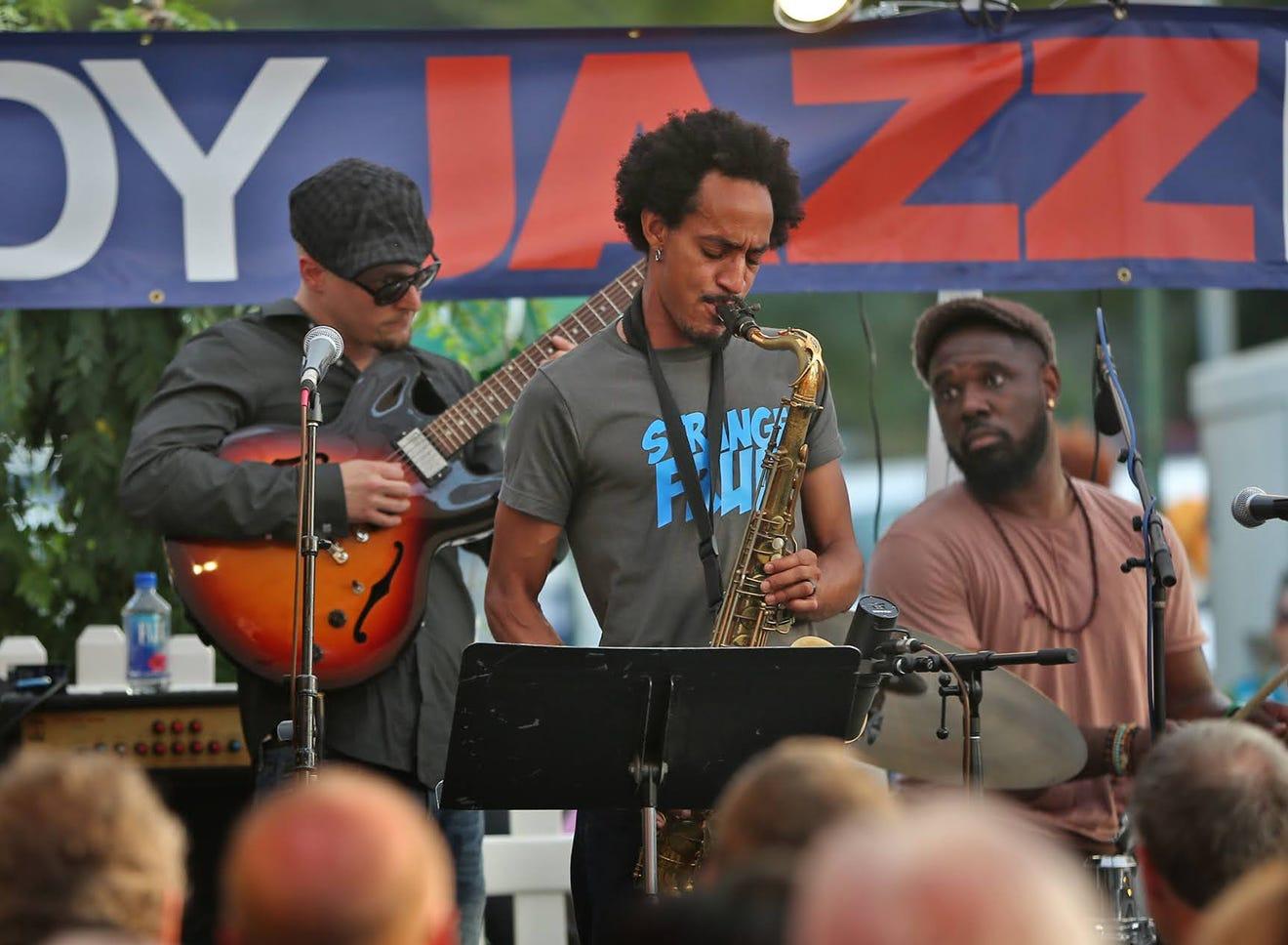
First Indy Jazz Fest
The Indianapolis Jazz Foundation establishes the annual Indy Jazz Fest—a community celebration of Indianapolis’ rich jazz legacy. The festival takes place over four days and features a long list of local and national jazz stars.
Pictured: Jared Thompson performs during an Indy Jazz Fest block party outside the Jazz Kitchen, 2016
Credit: Kelly Wilkinson, IndyStar View Source
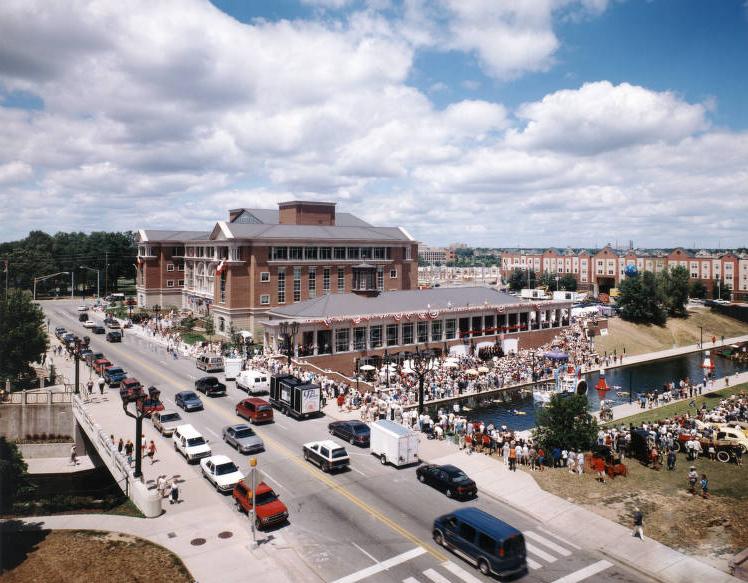
The Eugene and Marilyn Glick Indiana History Center opens
The Indiana Historical Society moves out of the Indiana State Library and into its own building along the Indiana Central Canal. The facility is complete with collections vault, conservation labs, a library, and experience spaces.
Pictured: Grand opening festivities of the Society’s new headquarters in downtown Indianapolis, 1999
Credit: Indiana Historical Society View Source
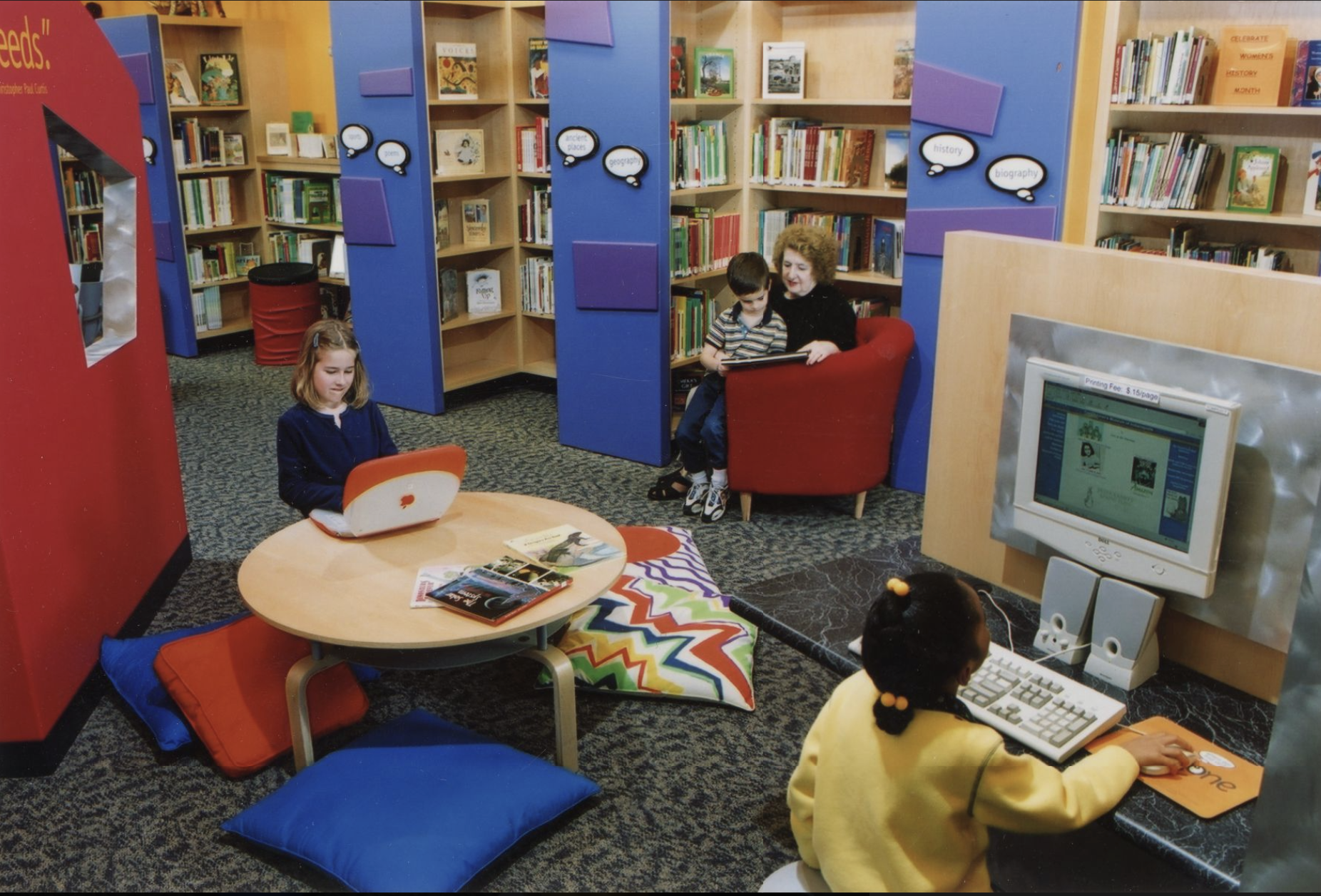
Infozone opens at the Children’s Museum
The Children’s Museum partners with the Indianapolis Public Library to create the first public library branch in a musem.
Pictured: Children enjoying the INFOZONE, 2001
Credit: Indiana University Indianapolis
View Source
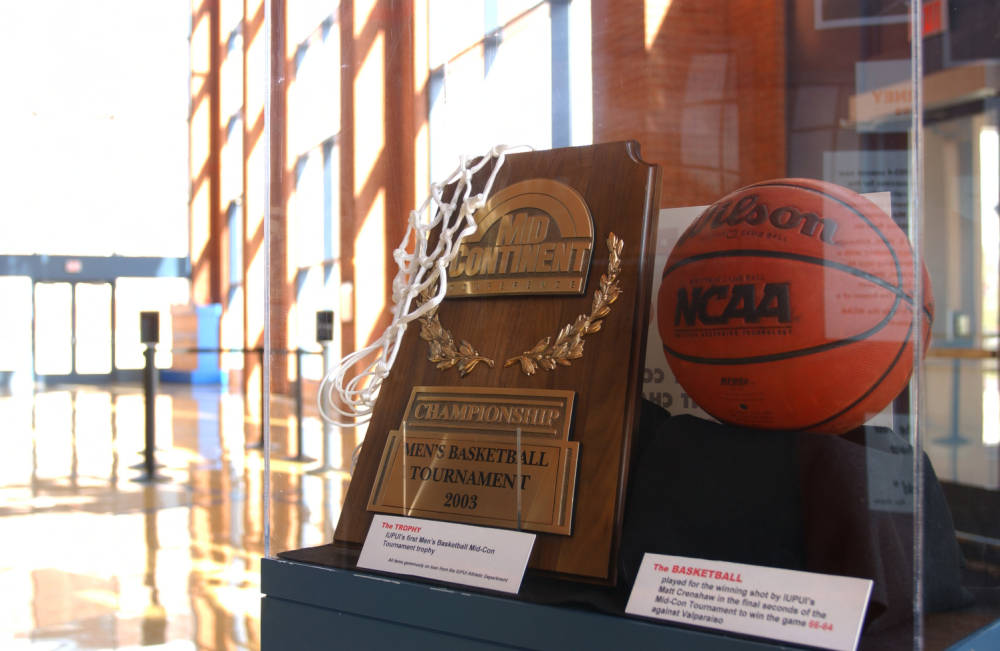
National Collegiate Athletic Association Hall of Champions opens
The Hall of Champions includes a grand hall honoring the heroics of past college athletes as well as a museum area with a theater and Exhibition Center.
Pictured: IUPUI men’s basketball exhibit at NCAA Hall of Champions, 2004
Credit: Indiana University Indianapolis
View Source
Part of Cumberland becomes a historic district
A portion of the Unigov town is listed on the National Register of Historic Places. The Indianapolis Historic Preservation Commission approves plans for it to become a protected city historic conservation district in 2005.
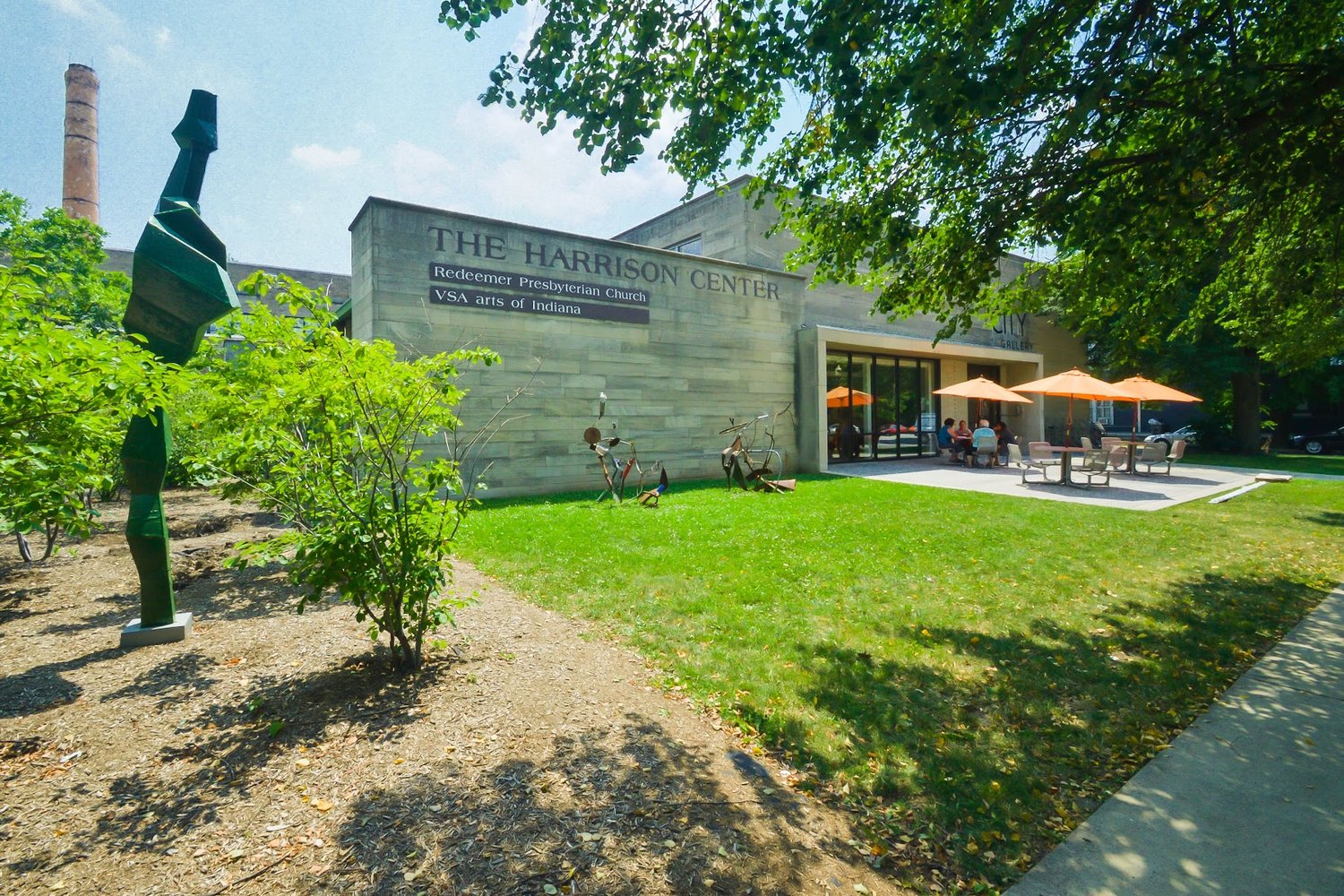
Harrison Center organizes
The nonprofit community arts center, cultural promoter, and neighborhood activist organization opens in the building that was originally First Presbyterian Church in the Old Northside.
Pictured: Harrison Center, 2020
Credit: Harrison Center View Source
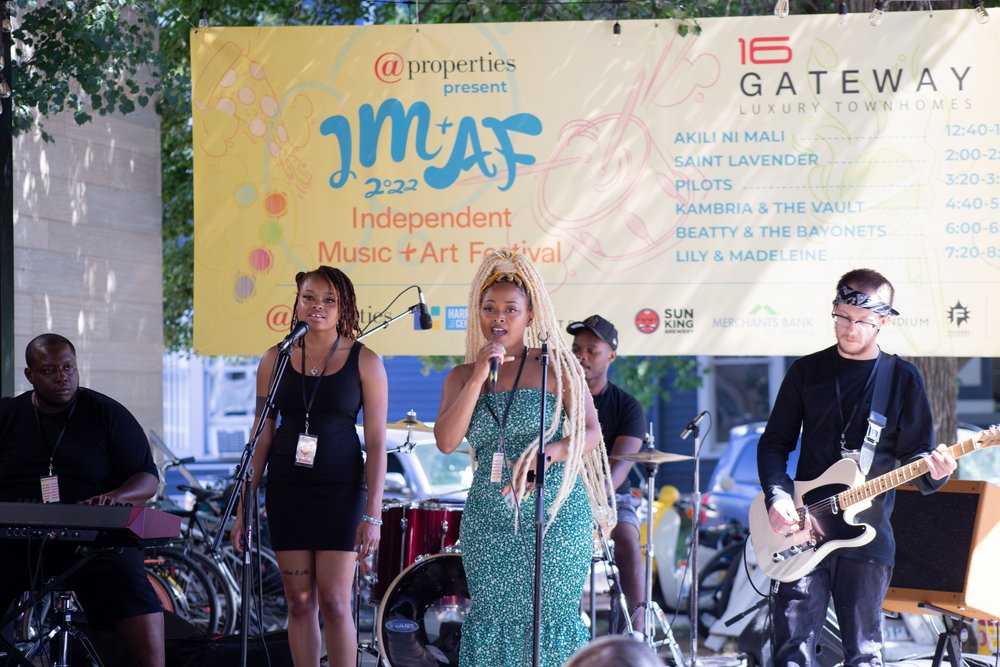
Bloombox Festival
The Harrison Center for the Arts hosts the festival (formerly First Independent Music + Art Festival) to showcase original works by local musicians, visual artists, and crafters.
Pictured: Performers at First Independent Music + Art Festival, 2022
Credit: Harrison Center
View Source
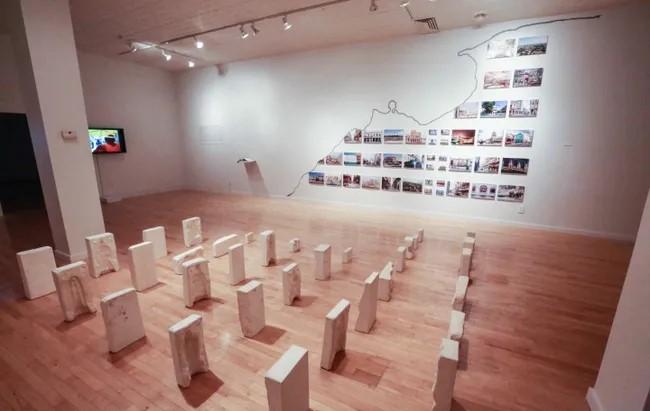
Indianapolis Museum of Contemporary Art brings modern art to Indianapolis
Created as a “museum without walls,” the contemporary art museum mounts exhibitions around Indianapolis to connect people to inspiring and innovative art.
Pictured: Transaction Boundries, by Artur Silva, was a solo exhibition at IMOCA’s Murphy Art Center space that opened in 2016.
Credit: Michelle Pemberton, IndyStar
View Source
Mayor Bart Peterson announces major arts initiative
The city and Lilly Endowment, Inc. plan to spend $10 million to lift the city’s arts and culture profile.
Local artists establish IDADA
The Indianapolis Downtown Artists and Dealers Association promotes art, artists, and art dealers within a 20-block square of the center of the city. The organization dissolves in 2017.
Pictured: IDADA First Friday at Circle City Industrial Complex, 2014
Credit: Circle City Industrial Complex via IndyStar View Source
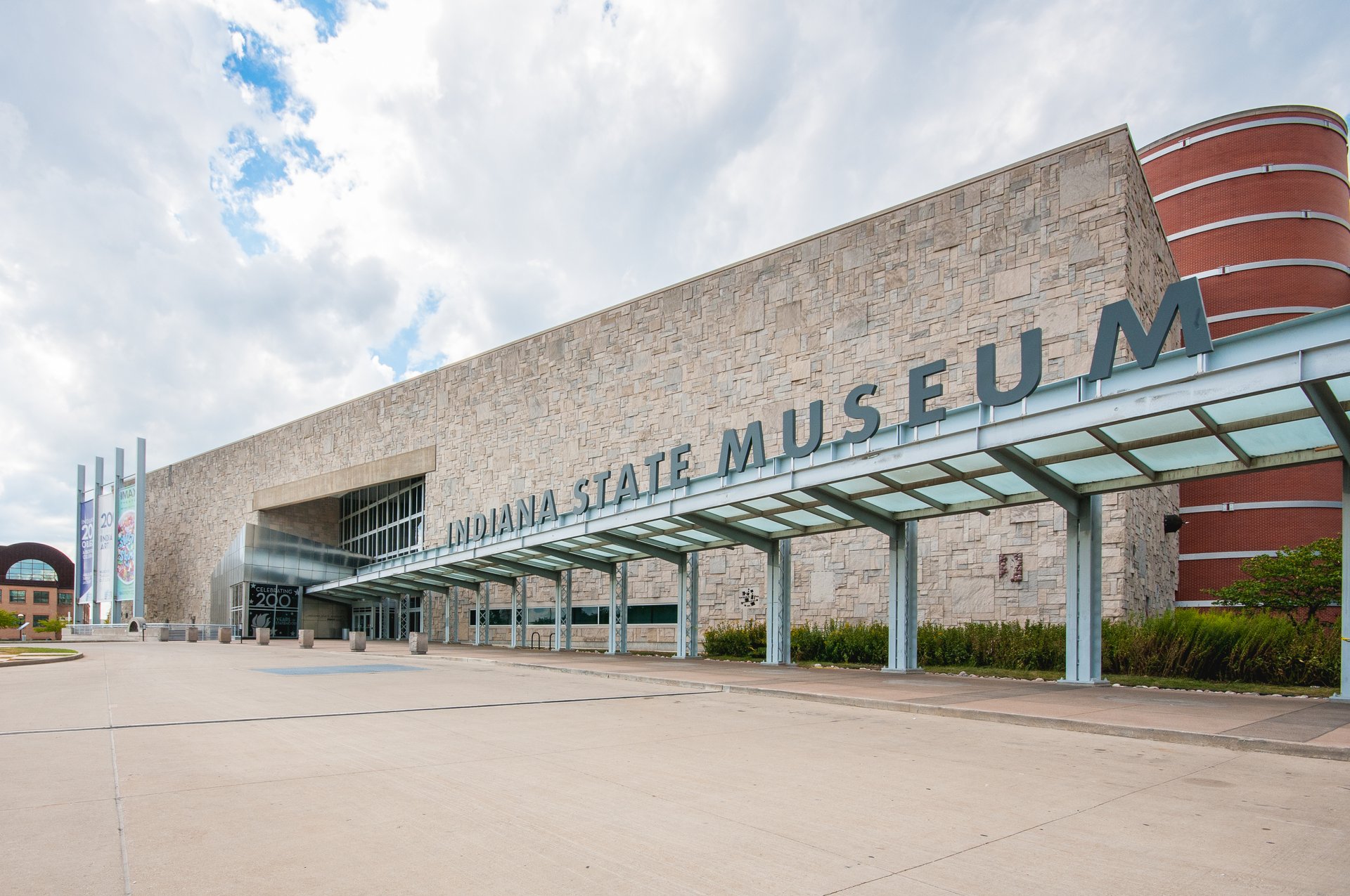
Indiana State Museum opens in White River State Park
Having outgrown its space at the old City Hall, the Indiana State Museum’s board approves a move to White River State Park. The museum’s new location adjoins a preexisting IMAX movie theater.
Pictured: Indiana State Museum, 2016
Credit: Visit Indy View Source
First official city cultural districts selected
A steering committee of the Indianapolis Cultural Development Commission designates Broad Ripple, the Canal and White River State Park, Fountain Square, Massachusetts Avenue, and the Wholesale District as official Indianapolis Cultural Districts.
Public Art Master Plan announced
The Art Council of Indianapolis (AIC) and the Cultural Development Commission announce that public art is a priority to position the city as a world-class art destination. AIC commissions Freeman Whitehurst Group of Phoenix, Arizona, to complete the plan.
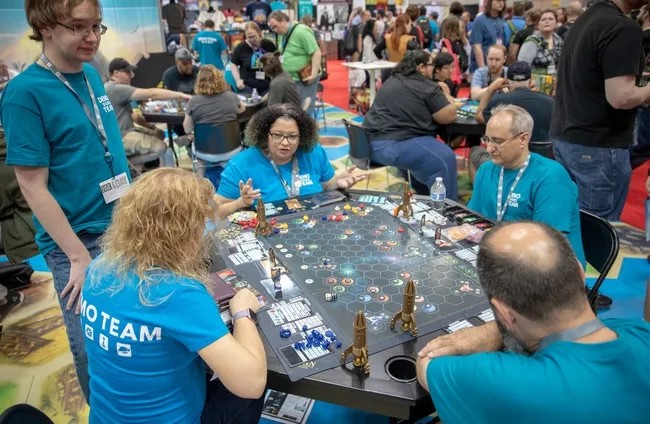
Gen Con moves from Milwaukee to Indianapolis
The tabletop gaming convention moves to the Indiana Convention Center in Indianapolis from Milwaukee to better accommodate the growing number of attendees. Gen Con soon becomes one of Indianapolis’ largest conventions.
Pictured: Gaming on the opening day of the 2019 Gen Con at the Indiana Convention Center in Indianapolis.
Credit: Robert Scheer/IndyStar via Imagn Content Services, LLC
View Source
Big Car Collaborative created
Jim Walker and wife Shauta Marsh cofound Big Car Collaborative, which focuses on socially engaged art and cultural community development. The studio and gallery space features monthly exhibits.
Pictured: Big Car founder Jim Walker at “The Tube” community art space, June 2015.
Credit: Matt Detrich, IndyStar
View Source
First Indy Film Fest
Originally named the Indianapolis International Film Festival, the event features films from around the world that provide challenging and new perspectives.
La Plaza forms
FIESTA Indianapolis, El Centro Hispano, and the Hispanic Education Center merge to become La Plaza, Inc.
Indiana Avenue becomes an official city cultural district
Already on the National Register of Historic Places (1987), the historic center of African American culture becomes a separate cultural district after area leaders appeal the decision that initially had made it part of the Canal and White River State Park District.
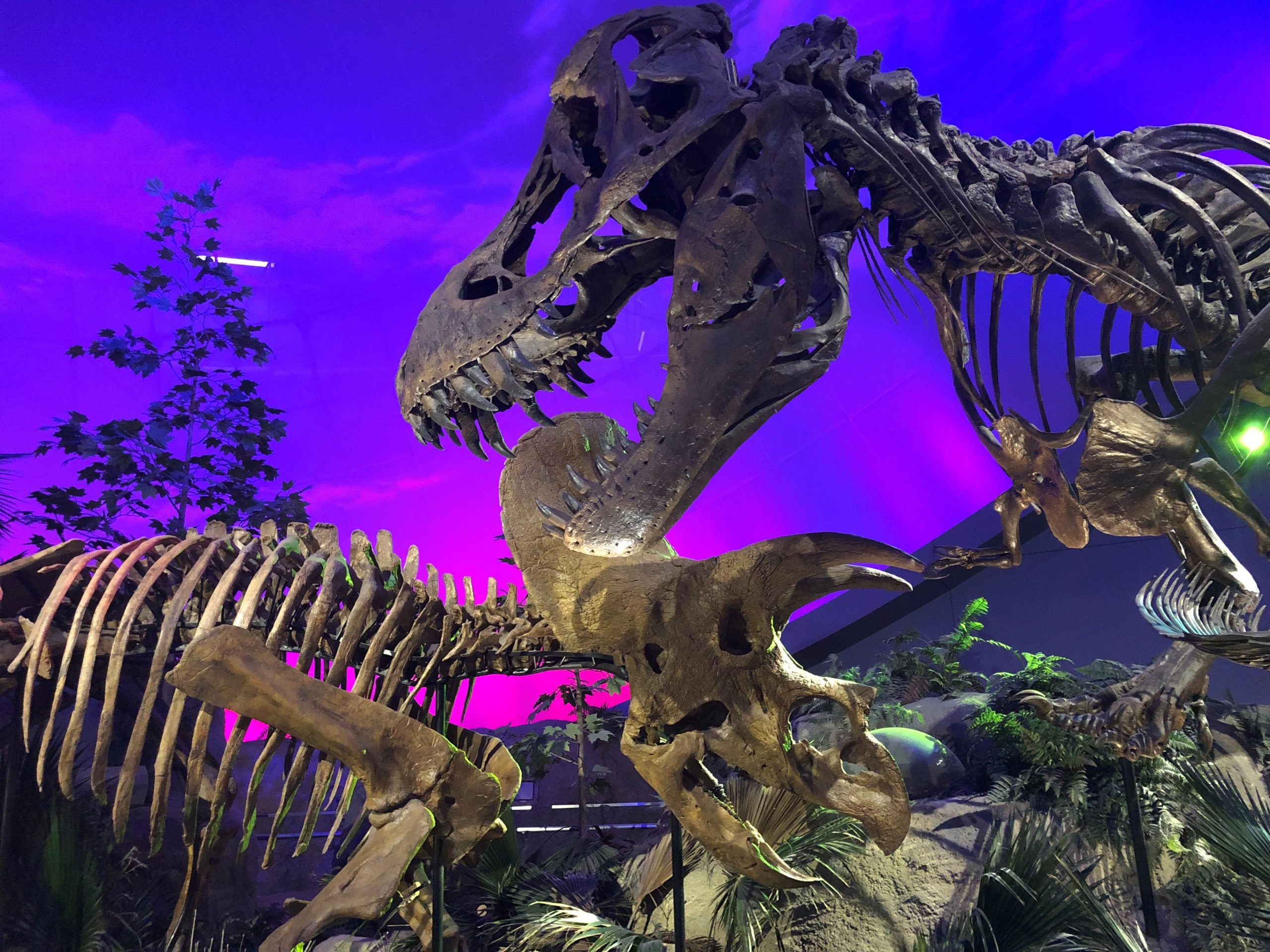
The Dinosphere opens at the Children’s Museum
In connection with the exhibit that transports museumgoers to the world of the dinosaurs, the museum also funds a $27.5 million project for paleontological research.
Pictured: The T-Rex in the Dinosphere, 2004
Credit: The Childrens Museum of Indianapolis View Source
Crispus Attucks graduate makes Metropolitan Opera debut
At the age of 40, Angela Brown, who finds her niche in classical music while in college, makes her Metropolitan Opera debut in the title role of Verdi’s Aida.
Pictured: Angela Brown sang at Yuletide Celebration, showcasing the Indianapolis Symphony Orchestra, at Hilbert Circle Theater in 2018.
Credit: Robert Scheer/IndyStar
View Source
Actors Theatre of Indiana founded
Artistic directors Don Farrell, Cynthia Collins, and Judy Fitzgerald establish the Actors Theatre of Indiana that becomes the resident professional theater company of the Center for the Performing Arts in Carmel in 2011.
Herron School of Art opens on the IUPUI campus
The art school moves into the newly built Eskenazi Hall, a facility that triples the amount of space available to Herron students and includes a library, auditorium, gallery space, and several computer labs. It marks the unification of all IUPUI schools in one location.
Pictured: Student in painting class in Herron, 2007
Credit: Indiana University Indianapolis
View Source
First major temporary public art exhibition begins
The Arts Council, in partnership with the Indianapolis Cultural Development Commission, creates and launches, Thomas Otterness in Indianapolis, which features 25 bronze sculptures of the famed public artist placed throughout the city.
Pictured: “Free Money” – Tom Otterness – Indianapolis
Credit: Brent Moore via Flickr
View Source
Indianapolis Museum of Art opens new expansion
As part of the 1999 new campus master plan, the art museum expands to feature the new Efroymson Family Entrance Pavilion, the Wood Gallery Pavilion, and Deer Zink Special Events Pavilion.
Pictured: Kinetic sculpture in the Efroymson Family Entrance Pavilion titled “Meadow” from the artist collective Studio Drift, 2019
Credit: Michelle Pemberton/IndyStar
View Source
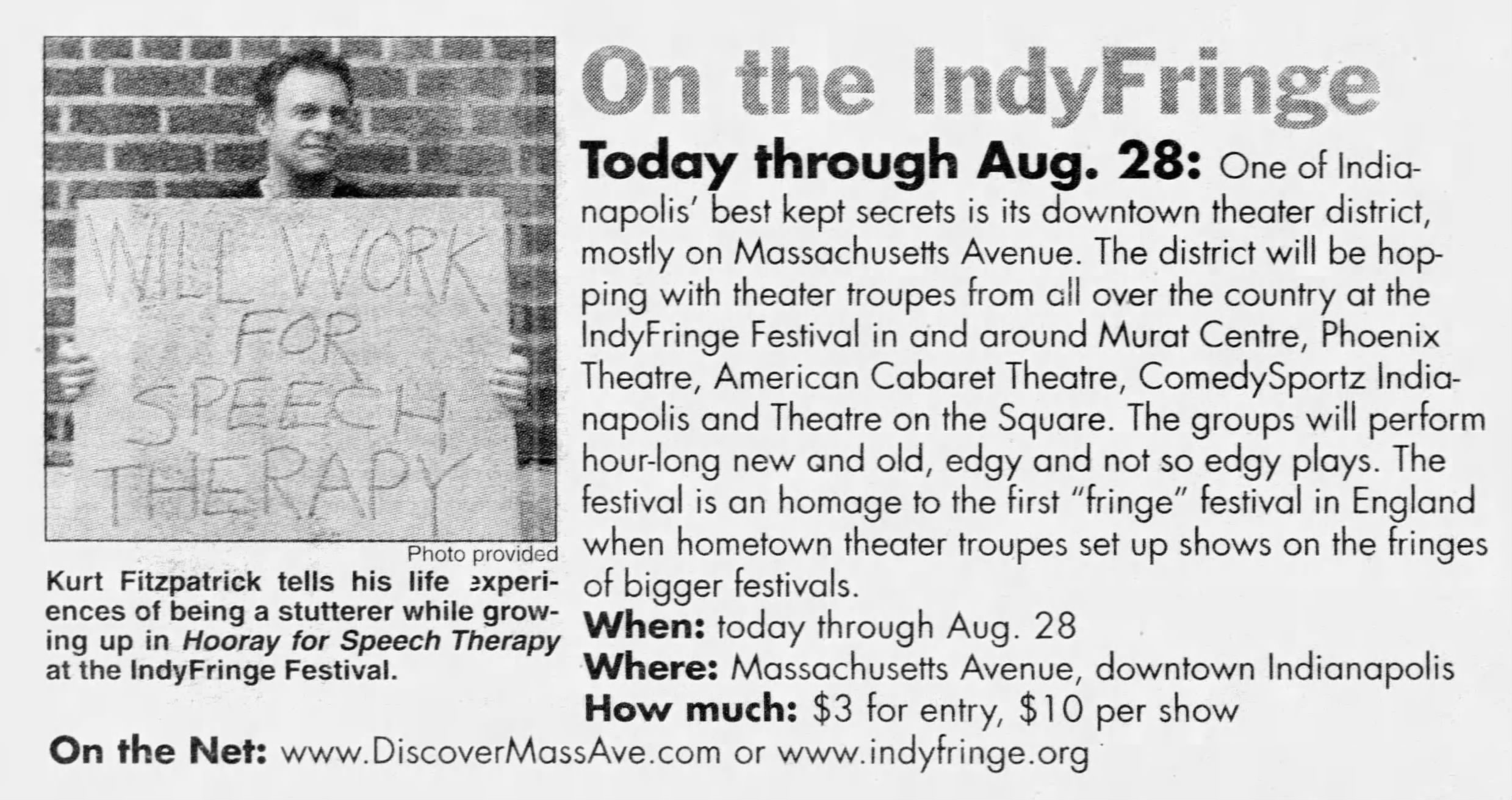
First IndyFringe Festival
IndyFringe’s inaugural theatre festival launches with over 100 shows performed over 10 days. The festival goes on to become an annual summer event featuring local and national performers.
Pictured: News clipping advertising the IndyFringe festival, 2005
Credit: Journal and Courier, Lafayette, IN
View Source
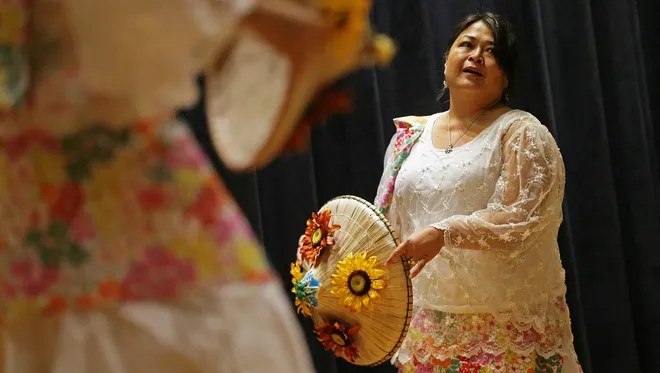
First Asian Fest
Hosted by the Asian American Alliance, Inc., Asian Fest celebrates the diverse Asian cultures of central Indiana.
Pictured: Gigi Thomas, of south side Indianapolis, performs during the eighth annual Asian Festival, 2015
Credit: Jenna Watson, IndyStar
View Source
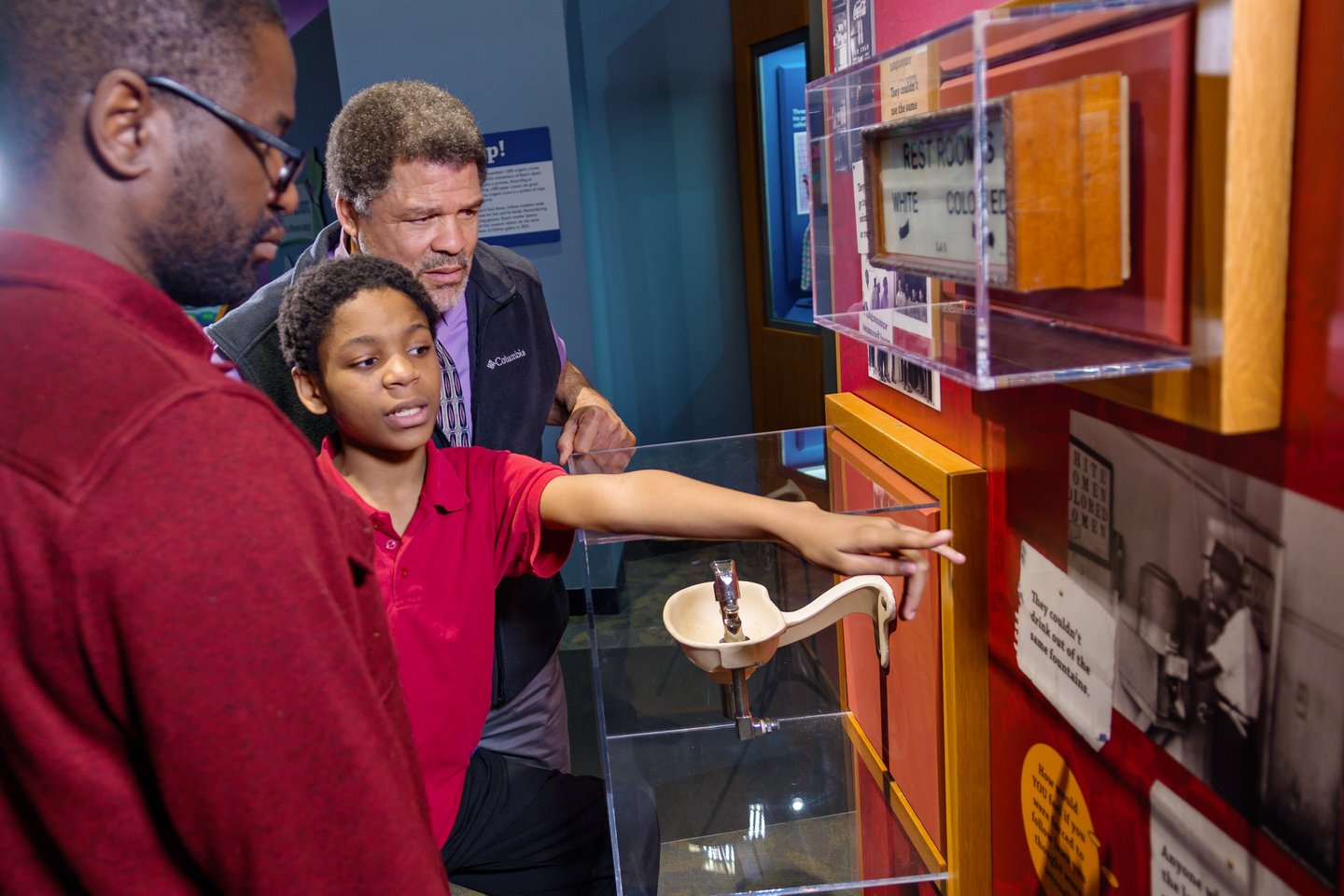
The Power of Children Making a Difference exhibit debuts
Building on its awards of the same name established in 2005, the Children’s Museum opens the award-winning exhibition that features local AIDS activist Ryan White, holocaust victim Anne Frank, and civil rights activist Ruby Bridges.
Pictured: Visitors at the Power of Children exhibit at The Childrens Museum of Indianapolis, n.d.
Credit: The Childrens Museum of Indianapolis
View Source
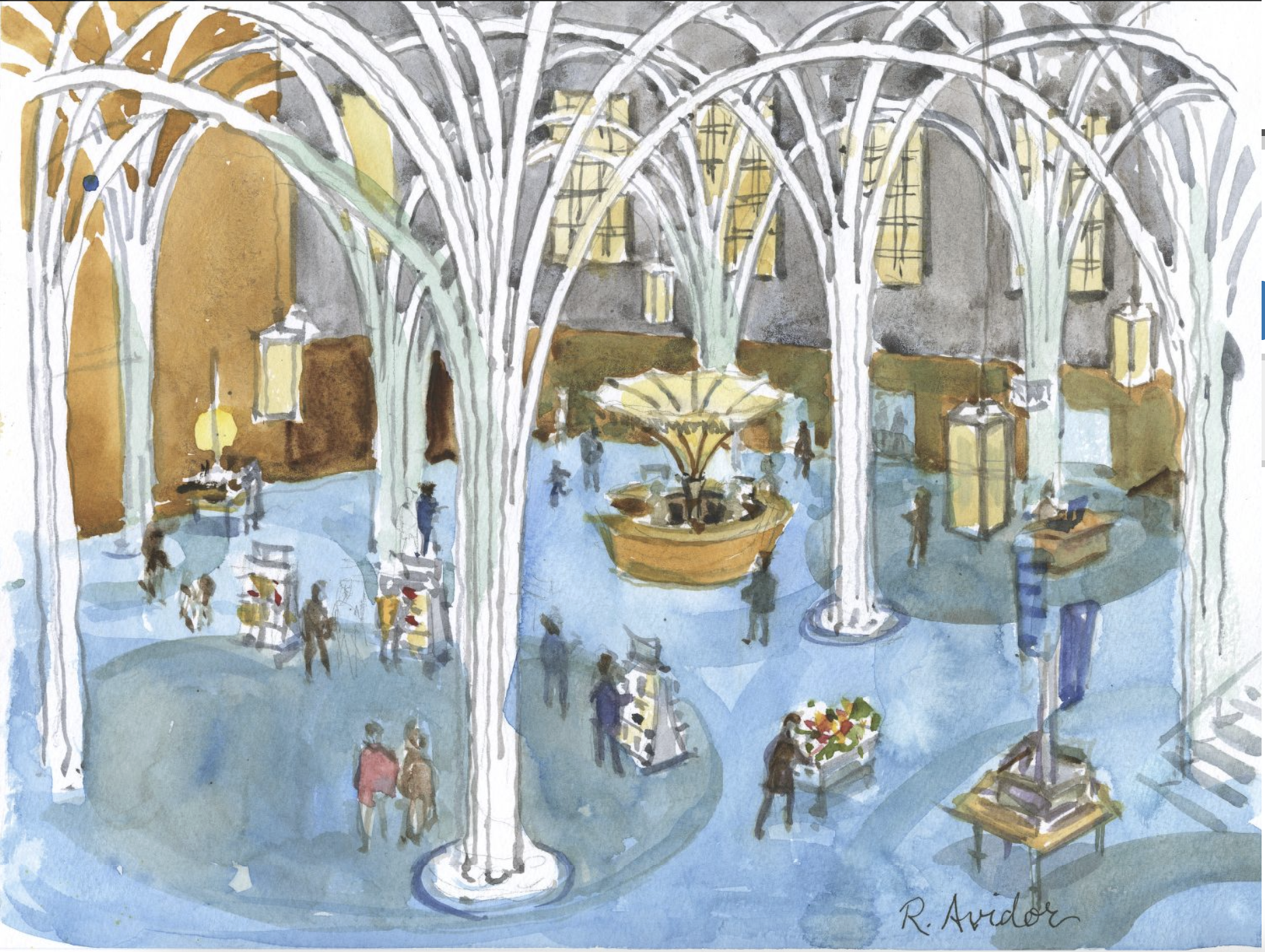
Indianapolis Public Central Library unveils its new atrium
Demolition of the mid-1970s annex and stacks makes way for the steel and glass tower that surrounds the historic 1917 building. The renovations double the size of the library.
Pictured: This sketch of the atrium of the Indianapolis Central Public Library was completed by Roberta Avidor, a local Indianapolis artist.
Credit: Ken and Roberta Avidor, Indiana Historical Society
View Source
American Cabaret Theatre becomes known as The Cabaret
Renamed The Cabaret, the professional nonprofit theater company leaves the Athenaeum and performs in a variety of venues. The Metzger Building, at 9th and Pennsylvania streets, becomes its permanent home for the 2018 season.
Pictured: The historic Metzger Building, home of the Cabaret and Arts Council of Indianapolis, 2021
Credit: Jenna Auber View Source
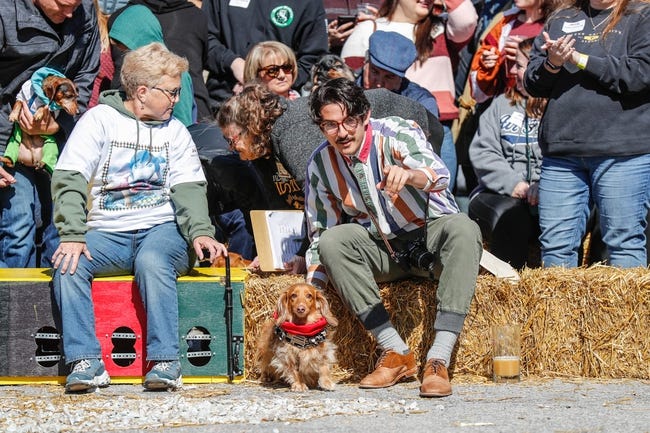
First GermanFest
The first annual GermanFest at the Athenaeum highlights the strong German heritage in Indianapolis and raises funds for the maintenance and care of the building.
Pictured: Wiener dogs race during German Fest at the historic Athenaeum building, 2019
Credit: Michelle Pemberton/IndyStar, Indianapolis Star via Imagn Content Services, LLC View Source
Great American Songbook Foundation moves to Carmel
Michael Feinstein created the foundation in 2007 to preserve and promote the music of the Great American Songbook. He moves it to Carmel when he becomes artistic director for the Center for the Performing Arts.
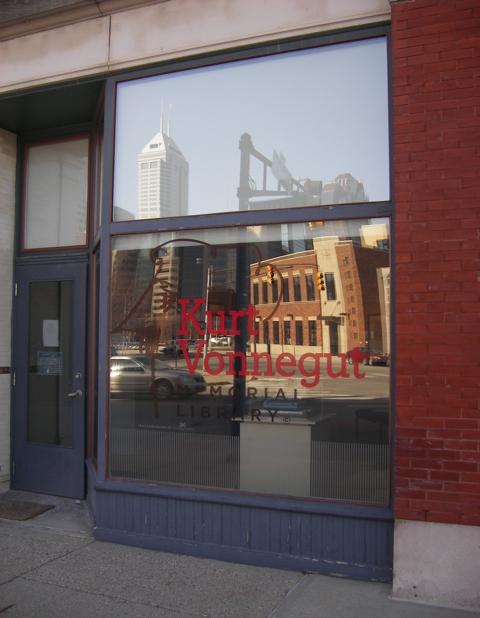
Kurt Vonnegut Museum and Library established
Julia Whitehead founds the museum to commemorate the life and work of critically acclaimed author and Indianapolis native Kurt Vonnegut. The museum opens in 2011 and moves to a new location on Indiana Avenue in 2019.
Pictured: Kurt Vonnegut Memorial Library, 2012
Credit: Rsfitzharris at English Wikipedia
View Source
First Glick Indiana Authors Award
Real estate entrepreneurs and civic leaders Eugene and Marilyn Glick provide funding for the award to honor the contributions of Indiana authors. The award moves from the Indianapolis Public Library Foundation to Indiana Humanities in 2020.
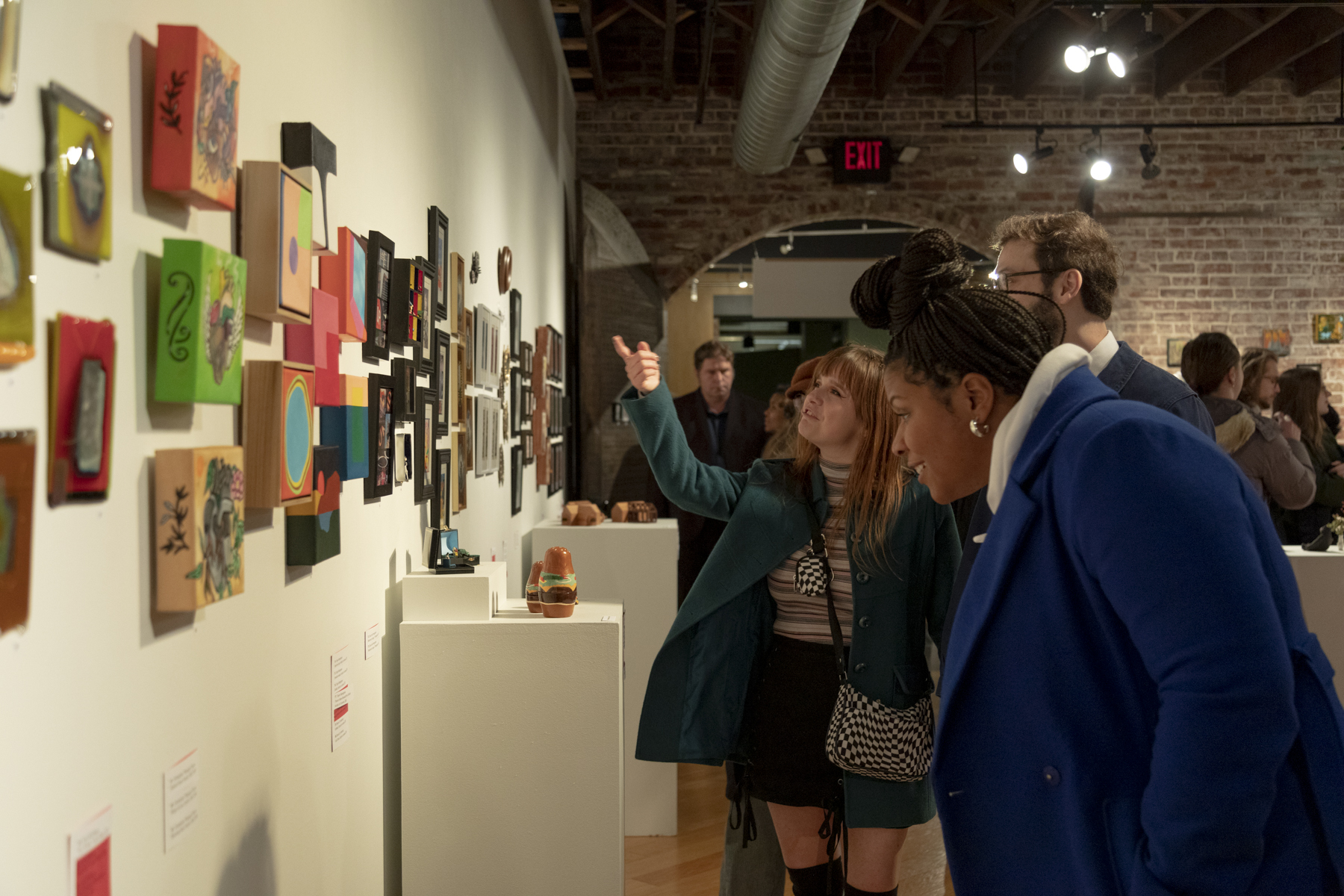
Gallery 924 organized
The Arts Council of Indianapolis creates Gallery 924 in response to the closure of 80 percent of the locally owned art exhibition spaces in the aftermath of the Great Recession.
Pictured: Visual arts on display at Gallery 924 as part of the annual Art & Soul celebration produced by the Indianapolis Arts Council, 2022
Credit: Mikaela Helane via Visit Indy
View Source
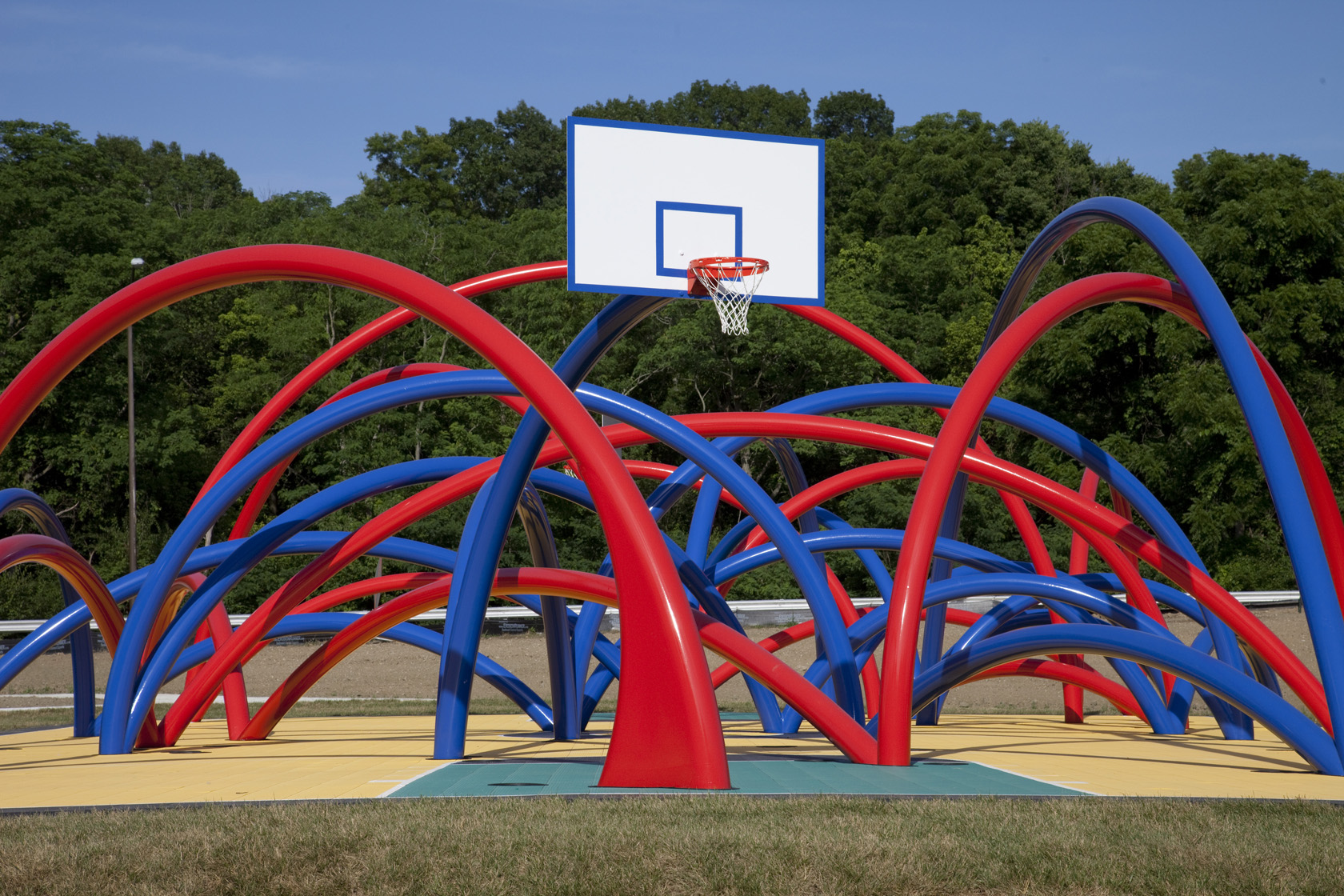
The Virginia B. Fairbanks Art & Nature Park: 100 Acres opens at the Indianapolis Museum of Art
The interactive art and nature park is one of the largest of its kind in the U.S. and includes art installations by national and international artists.
Pictured: “Free Basket” by Los Carpinteros
Credit: Visit Indy
View Source
First Onyxfest
The IndyFringe theater festival organization establishes Onyxfest as a separate event to expose theatergoers to new and emerging Black playwrights and to counter the lack of diversity on stage and in audiences.
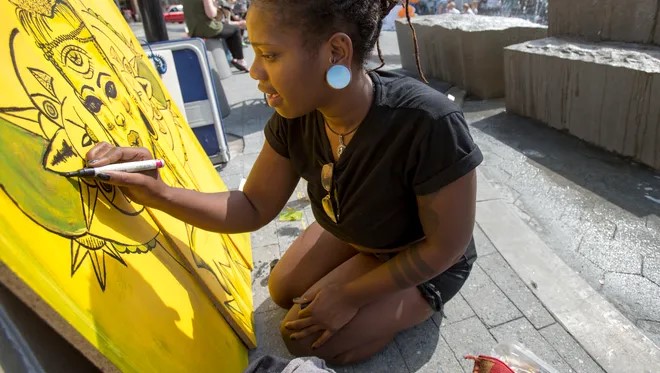
First Art Squared
The free celebration of art and music forms through the unification of three previously separate gatherings: Fountain Square Art Fair, Fountain Square Art Parade, and Masterpiece in a Day.
Pictured: Morgan Howard, Indianapolis, makes a piece of art during Art Squared, 2014
Credit: Robert Scheer, IndyStar
View Source
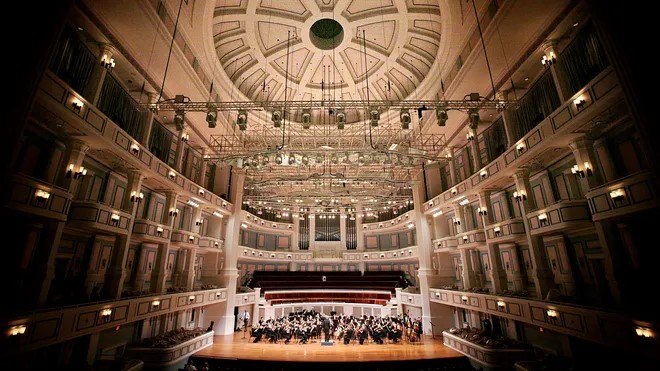
Carmel’s Palladium Concert Hall opens
The anchor of Carmel’s Center for the Performing Arts, the Pallaidium costs $126 million to complete. It includes 1,600 seats and boasts acoustic refinements throughout the hall.
Pictured: The main stage at the Palladium at the Center for the Performing Arts, 2010
Credit: Frank Espich, IndyStar
View Source
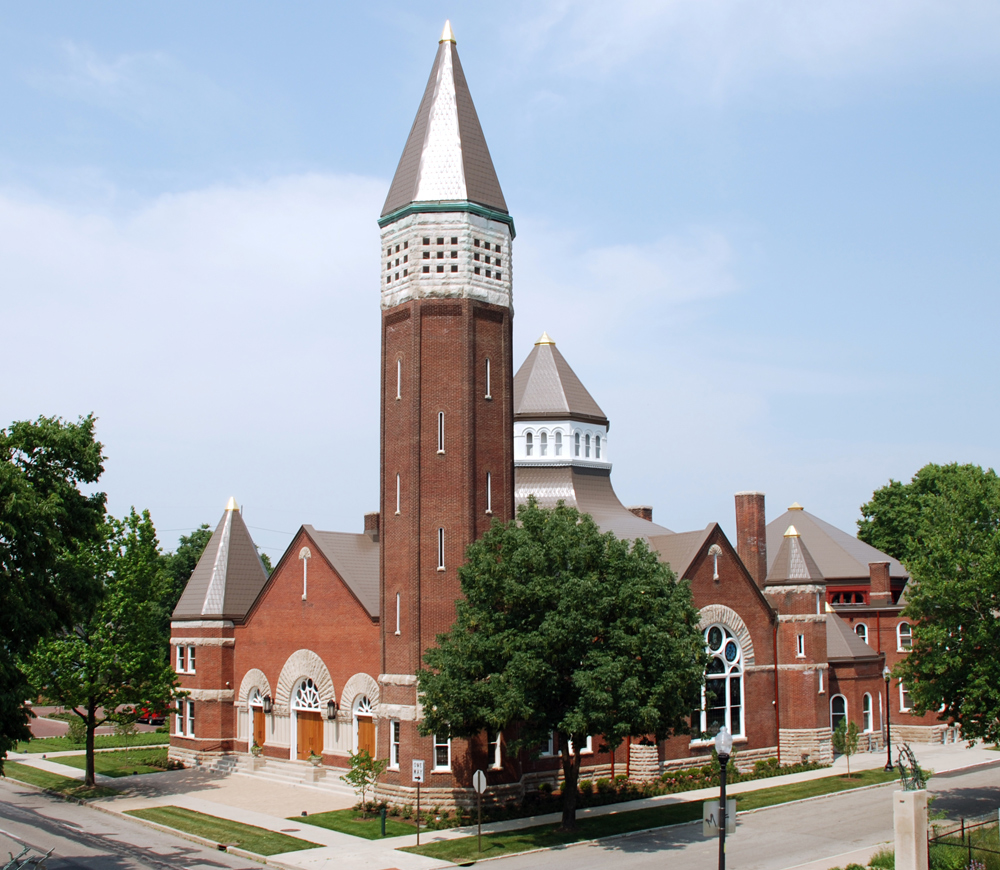
Indiana Landmarks Center opens
Following a major capital campaign to which the Cook family of Bloomington contributed $17 million, Indiana Landmarks moves to the center, which originally was the building for Central Avenue Methodist Church.
Pictured: Indiana Landmarks Center, 2016
Credit: MSWoolman via Wikimedia Commons View Source
Butler University breaks ground for the Howard L. Schrott Center for the Arts
The Schrott Center becomes the main performance venue for the Butler Theatre, Butler Ballet, and Butler School of Music.
Pictured: Schrott Center for the Arts stage, n.d.
Credit: Butler University View Source
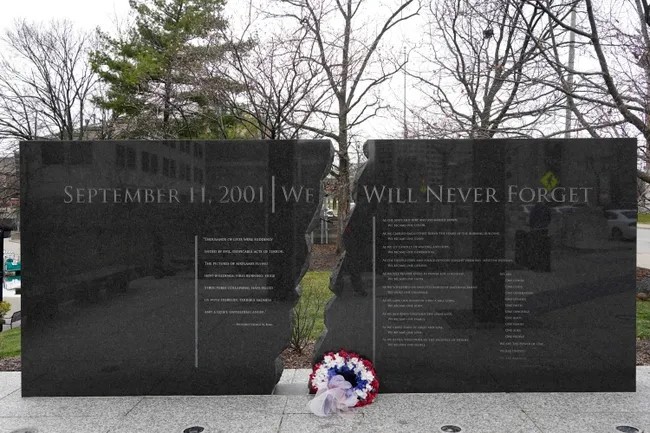
Indianapolis dedicates the Indiana 9/11 Memorial
The city commemorates the 10th anniversary of the tragedy with the dedication of the memorial. The structure contains two steel beams from Ground Zero in New York City.
Pictured: A general view of the Indianapolis Project 9-11 Memorial, 2021
Credit: Kirby Lee-USA TODAY Sports
View Source
Booth Tarkington Civic Theatre moves to Carmel
After calling Indianapolis home for nearly 100 years, the oldest area community theatre debuts in its new home at Carmel’s Center for the Performing Arts
Public art murals created for Super Bowl XLVI
The Arts Council of Indianapolis commissions 34 artists to create 46 new public murals for the Super Bowl throughout Marion County.
NOPAL Cultural established
The grassroots multicultural volunteer-operated organization forms with the goal of enhancing Latin-American art in the city.
Indy Arts Guide released
The Arts Council of Indianapolis launches its comprehensive arts and cultural calendaring and database system.
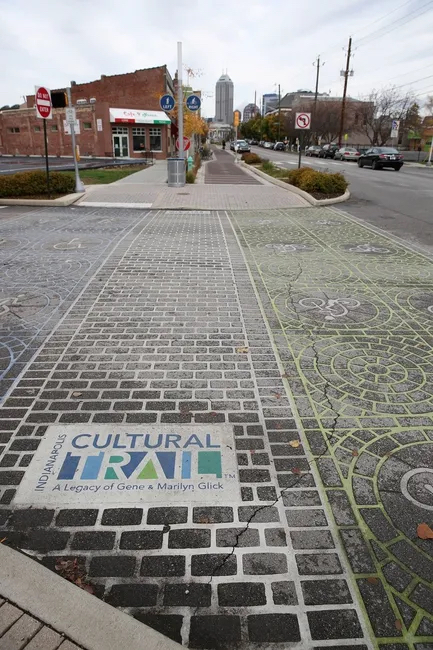
Indianapolis Cultural Trail opens
Six years after the groundbreaking ceremony, the Indianapolis Cultural Trail is complete. The 8-mile urban bike and pedestrian path in downtown Indianapolis connects neighborhoods, cultural districts, and entertainment amenities. It also serves as the downtown hub for central Indiana’s greenway system.
Pictured: Cultural Trail, 2020
Credit: Kelly Wilkinson / The Star, York Daily Record via Imagn Content Services, LLC View Source
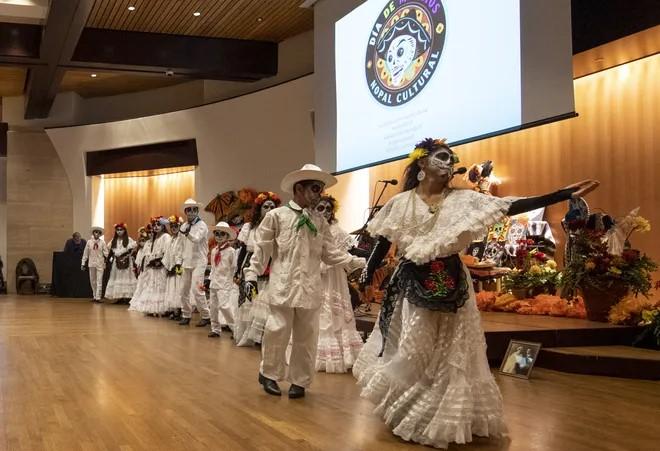
First Day of the Dead celebration
NOPAL Cultural launches its first Dia de Muertos event at Studio B Gallery on Massachusetts Avenue. The organization begins its partnersip with the Eiteljorg Museum for the event in 2014.
Pictured: Young performers with the Anderson Ballet Folklorico perform during the Día de Muertos event at the Eiteljorg Museum of American Indians and Western Art, 2019
Credit: Doug McSchooler, IndyStar
View Source
The Children’s Museum wins national award
The Children’s Museum receives the National Medal for Museum and Library Service for its commitment to its surrounding community.
The Murat Temple renamed
The venue becomes known as Old National Centre. In 2016, the entertainment company Live Nation purchases the building.

The Art Assignment premieres
The show, based in Indianapolis, is a weekly educational web series on YouTube that connects viewers to contemporary art through the artists who created it.
Pictured: John Green and Sarah Urist Green in The Art Assignment, ca. 2010s
Credit: The Art Assignment View Source
Market East designated a cultural district
The area surrounding the historic City Market becomes the city’s seventh cultural district.
The Fault in Our Stars premieres
The feature-length film adaptation of local writer John Green’s book The Fault in Our Stars premieres at the Seattle Film Festival. It later opens number one at the box office. Set in Indianapolis, it features several iconic city locations.
Pictured: Indianapolis premiere of The Fault in Our Stars, 2014
Credit: Brandon David Brungard
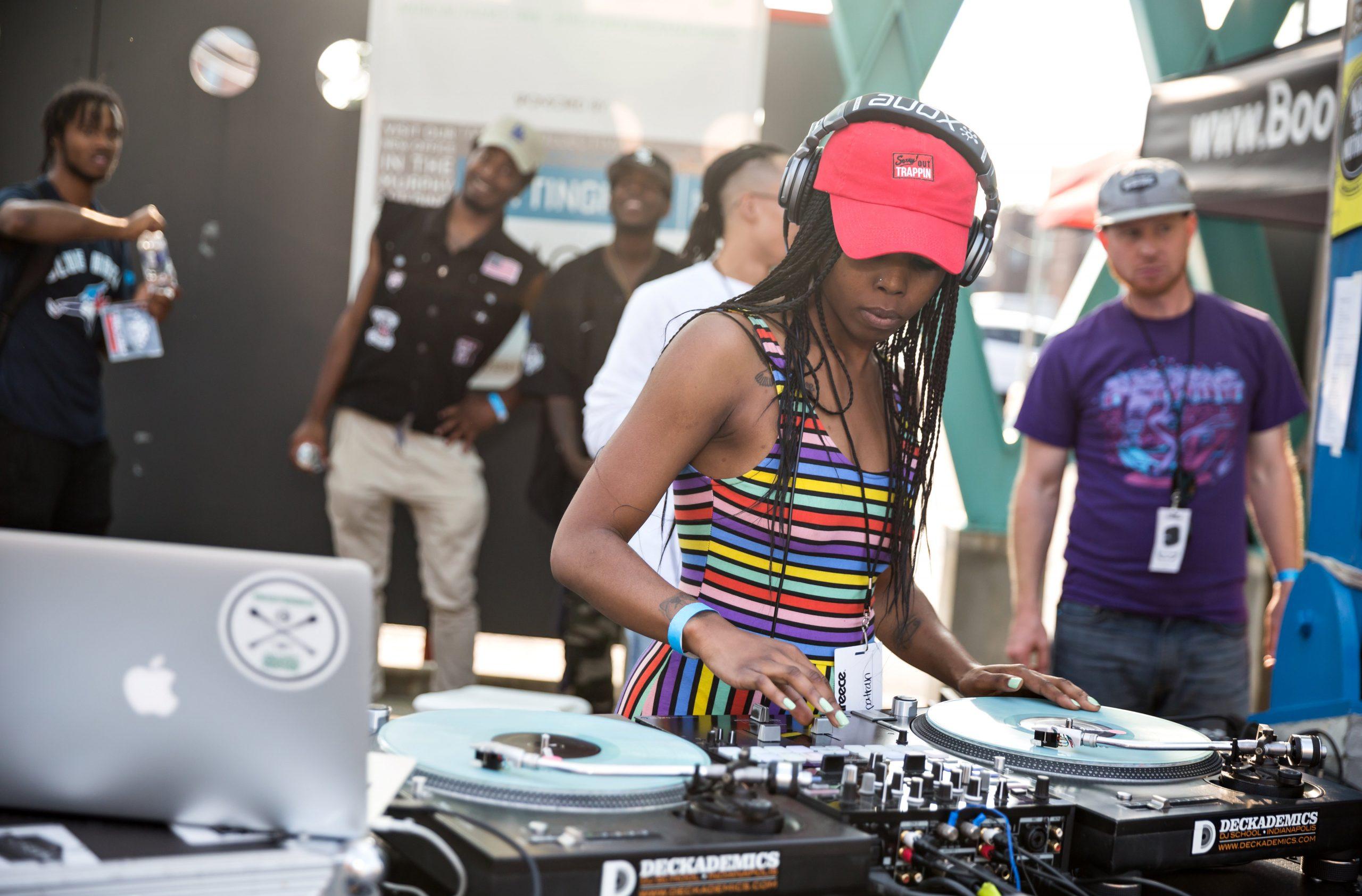
Oreo Jones founds Chreece hip-hop festival
Chreece, a combination of “cheers” and “peace,” is a single-day festival created to bring together and celebrate hip-hop artists from Indiana and the Midwest.
Pictured: Chreece hip-hop festival, 2017
Credit: Visit Indy
View Source
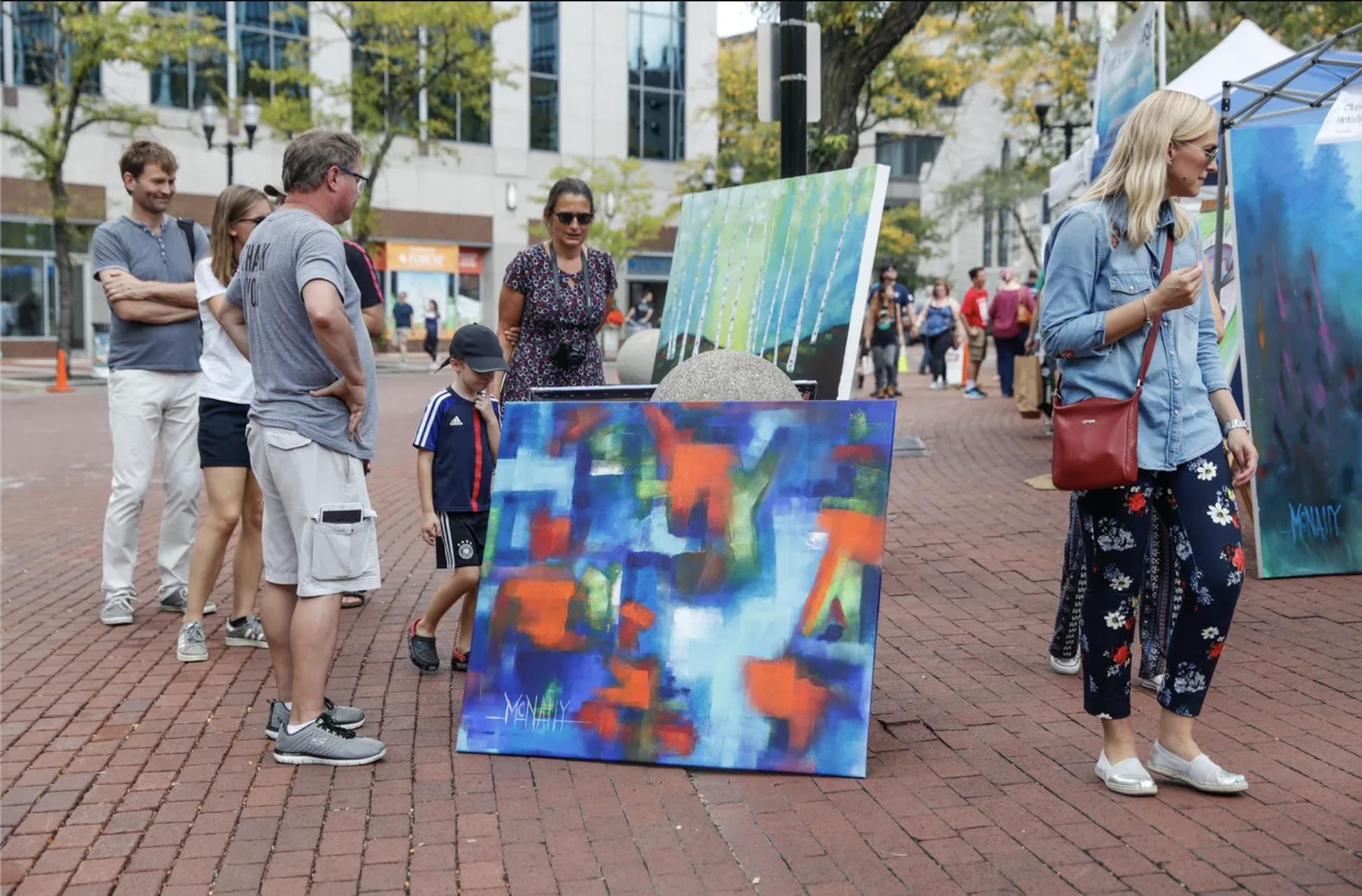
First Monument Circle Art Fair
The fair, held at the Soldiers and Sailors Monument, provides a forum for regional artists to showcase and sell their work in a historically artistic setting.
Pictured: Visitors look over work by artist Charles McNally during the 2018 Monument Circle Art Fair.
Credit: Michelle Pemberton, IndyStar
View Source
L. Steven Taylor cast in a leading role in Broadway’s The Lion King
Taylor, an Arsenal Tech High School alum, takes on the role of Mufasa in Broadway’s The Lion King. He has been a cast member in other roles in the musical since 2006.
Welcome Race Fans arts initiative
The Arts Council of Indianapolis and the Indianapolis Motor Speedway partner to celebrate the 100th running of the Indianapolis 500 by commissioning 33 artists to create original “Welcome Race Fans” artwork. The initiative continues as an annual event.
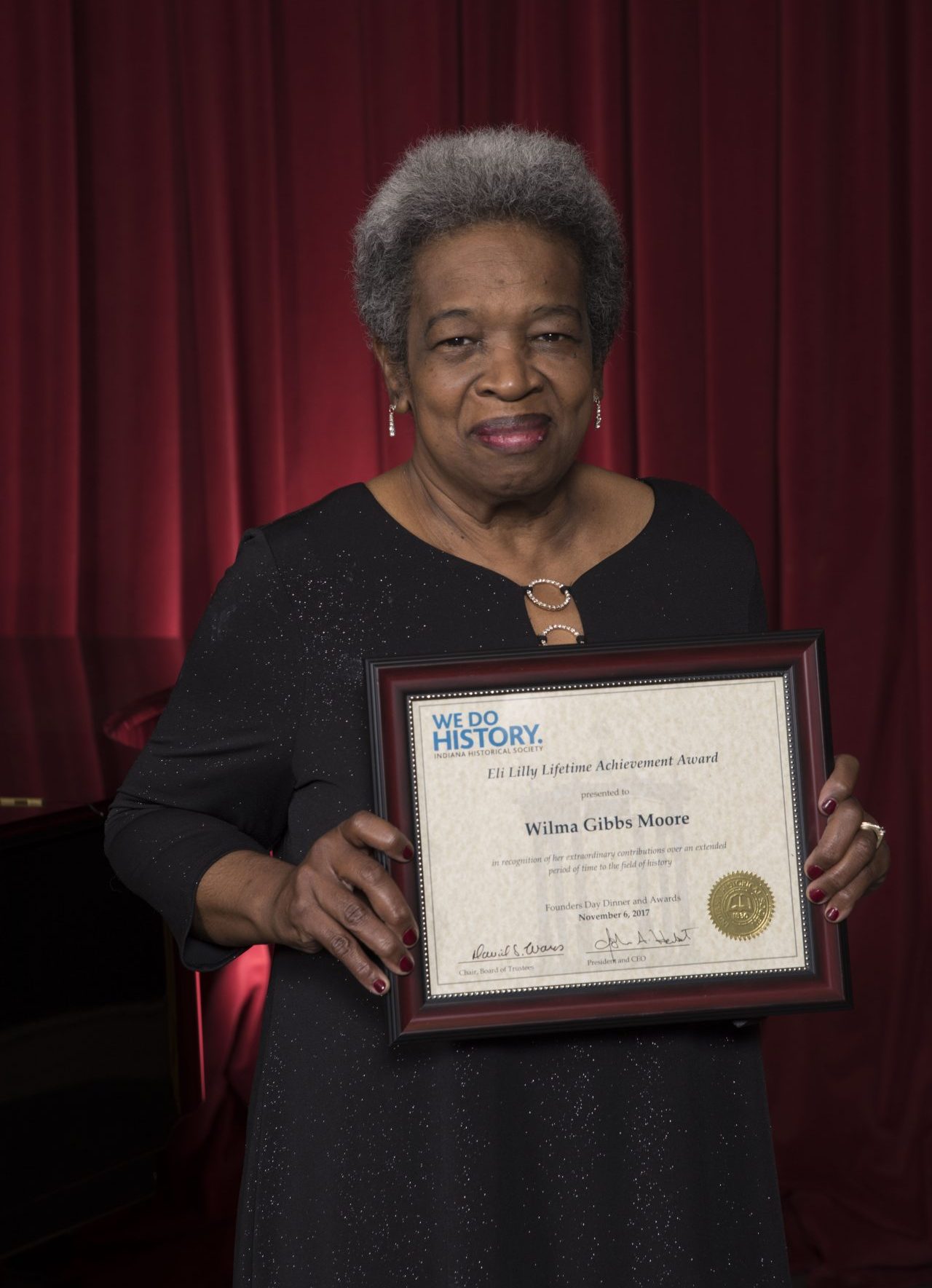
Wilma Gibbs Moore receives Eli Lilly Lifetime Achievement Award
The award recognizes the significant contributions she made to document Indiana’s Black heritage.
Pictured: Wilma Gibbs Moore, 2017
Credit: Indiana Historical Society View Source
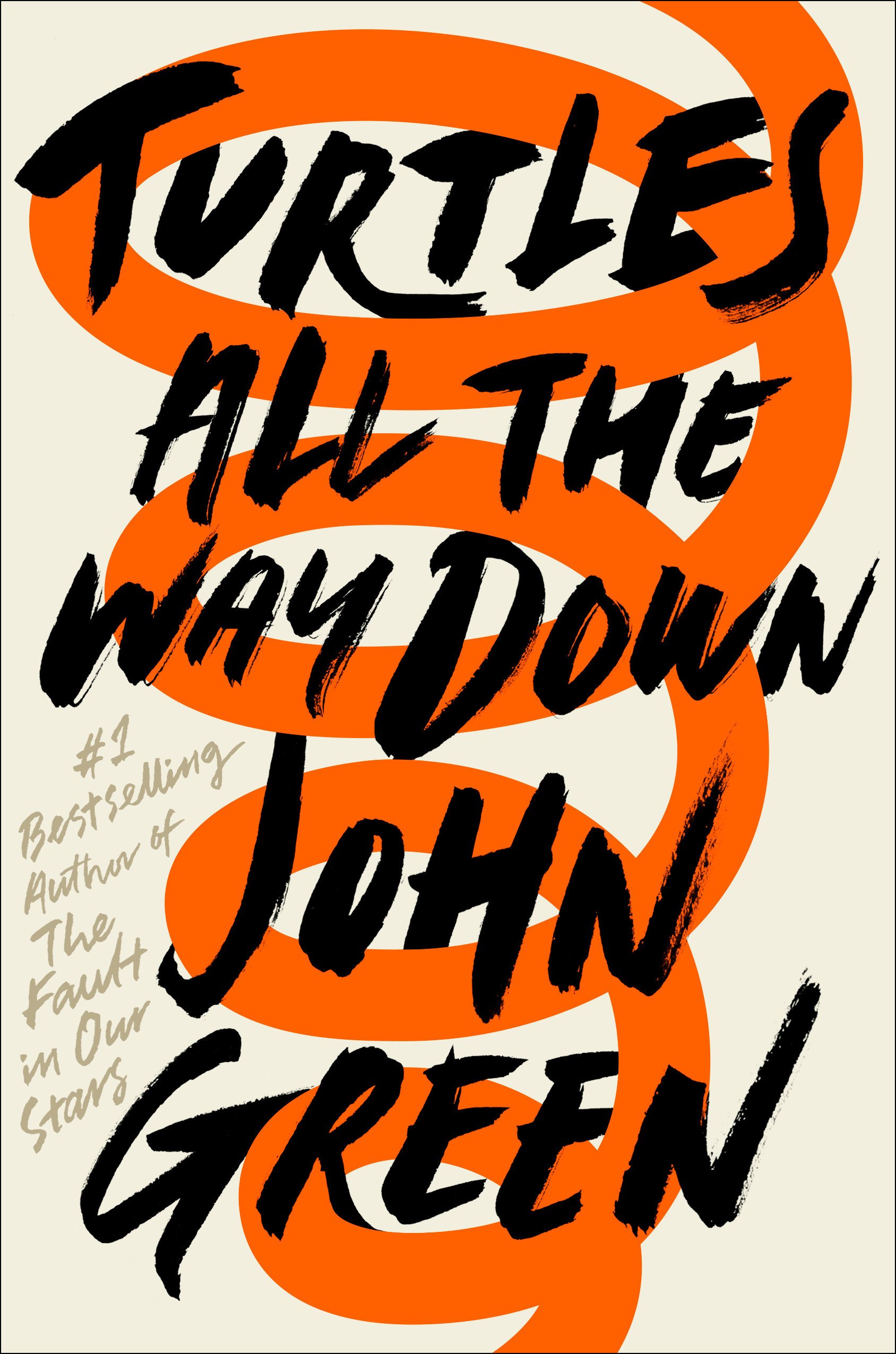
John Green’s Turtles All the Way Down published
The young adult teenage detective story is set in Indianapolis.
Pictured: Turtles All the Way Down, 2017
Credit: Fair use via Wikimedia Commons View Source
Indianapolis Museum of Art unites campus as Newfields
Newfields becomes the home for the Indianapolis Museum of Art, Fairbanks Park, The Garden, Lily House, and the Elder Greenhouse. Newfields’ Miller House and Garden extends the Newfields brand into southern Indiana.
Pictured: Newfields sign, 2018
Credit: Domenica Bongiovanni, IndyStar
View Source
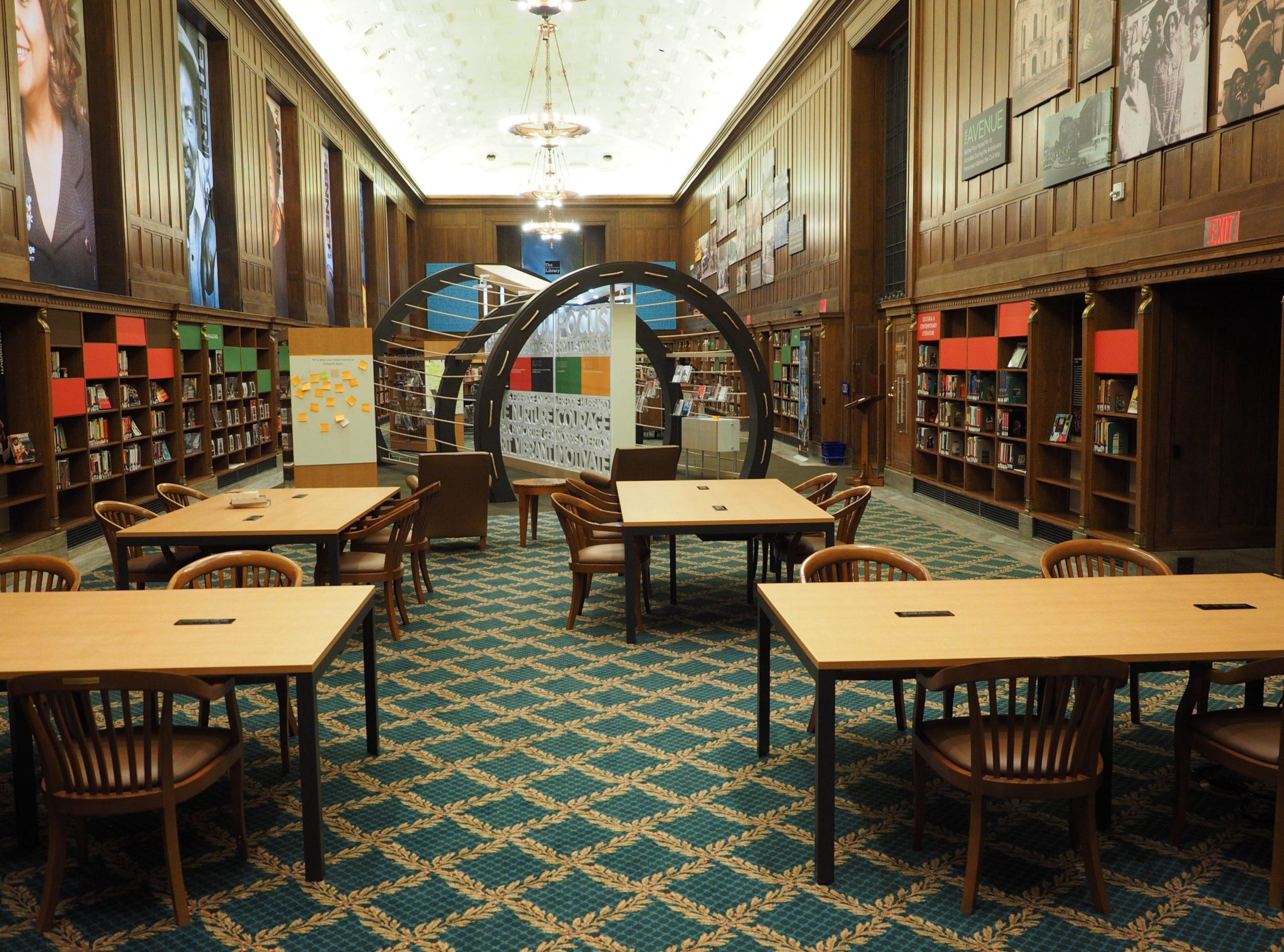
Indianapolis Public Central Library Opens Center for Black Literature And Culture (CBLC)
The center, located in the library’s West Reading Room, features a collection of books, interactive displays, and research tools to aid in exploring the Black experience in Indianapolis.
Pictured: Center for Black Literature & Culture, 2017
Credit: Indianapolis Public Library. View Source
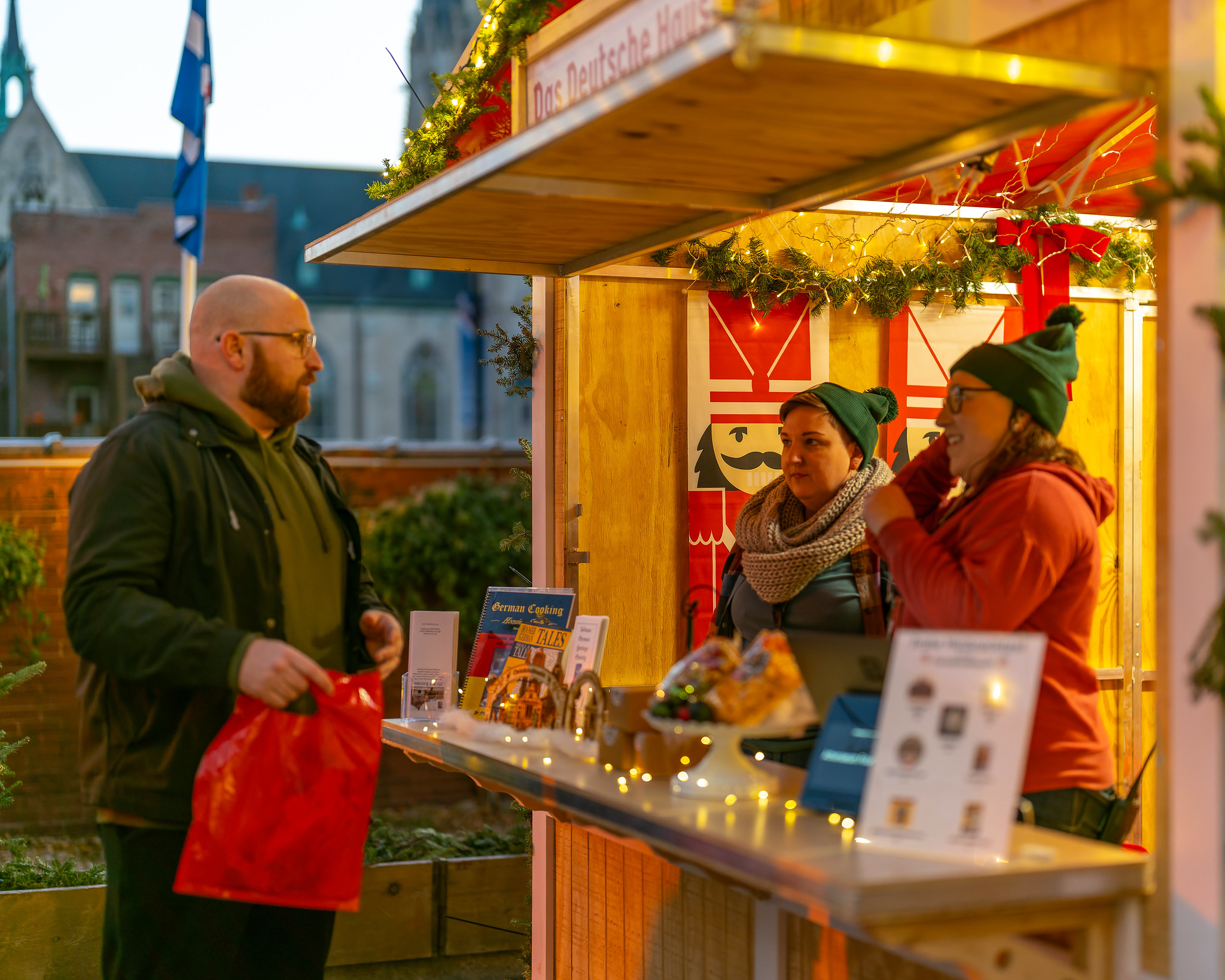
First Carmel Christkindlmarkt
Modeled after traditional German holiday markets, the Carmel holiday festival opens in center green at the Center for the Performing Arts.
Pictured: Christkindlmarkt at the historic Athenaeum building in downtown Indy, 2022
Credit: Visit Indy
View Source
Indianapolis Ballet established
Indianapolis Ballet becomes the first resident ballet company to be based in the city since the demise of Indianapolis Ballet Theatre, also known as Ballet Internationale, in 2005.
Artist Nancy Noel wins national recognition
The National Gallery of Art, in Washington, D.C., honors the popular painter for her artistic and philanthropic achievements.
Pictured: Nancy Noël, n.d.
Credit: N.A. Noël Studio, Inc. View Source
The Children’s Museum opens outdoor expansion
The museum partners with IU Health’s Riley Children’s Hospital for its 7.5-acre “Sports Legends Experience” designed to encourage families to be active together. The collection of the National Art Museum of Sport transfers to the Children’s Museum as part of the project.
Pictured: The Riley Children’s Health Sports Legends Experience, 2021
Credit: Kara Chinn
Landmark for Peace memorial designates the Kennedy-King National Commemorative Site
The Landmark for Peace memorial, site of Robert Kennedy Jr.’s famous 1968 speech upon the assassination of Martin Luther King Jr., is designated the Kennedy-King National Commemorative Site.
Pictured: Kennedy-King National Commemorative Site, ca. 2020s
Credit: Visit Indy View Source
Jiffy Lube of Indiana wins a national arts award
Americans for the Arts, the nation’s leading organization of advancing the arts and arts education, presents Jiffy Lube of Indiana with the Arts and Business Partnership Awards for its “Every Part Matters” murals painted on the exterior walls of nine oil change locations in Central Indiana.
Pictured: Indianapolis artist Carl Leck’s 3D mural creation on the Jiffy Lube off of Olivia Way in Fishers, 2020
Credit: Grace Hollars/IndyStar
View Source
COVID pandemic arts funding
The Arts Council of Indianapolis (AIC) begins its initiative to support nonprofit organizations and independent artists during the pandemic. By 2022, AIC raises more than $16 million to ensure #IndyKeeps Creating.
Arte Mexicano en Indiana established
Arte Mexicano en Indiana organizes as a nonprofit that encourages and promotes Mexican art, music, and culture throughout the state.
Indianapolis Contemporary ceases operation
A year after its relaunch, the board of Indianapolis Contemporary, formerly IDADA, decides to close the institution. Already at financial risk, Indianapolis Contemporary falls prey to the COVID-19 pandemic.
Murals for Racial Justice Project begins
The Murals for Racial Justice Project, an initiative of the Arts Council of Indianapolis, commissions 22 Black artists to create 24 temporary murals on boarded-up storefronts in downtown Indianapolis. The works are later recreated on banners displayed at the Central Library and available for educational use by the community.
Pictured: “I Can’t Breathe” by Michael “Kwazar” Martin, 2020
Credit: Indianapolis Public Library
View Source
Indy BLM street mural
A block party is organized by Indy10 BLM to celebrate the start of the Black Lives Matter street mural painted on Indiana Avenue between the Walker Theater and the Urban League. Funding for the project, which hires Black artists to complete each of the letters, is provided by the Indianapolis Urban League and the Central Indiana Community Foundation. The street will later be repaved, covering the mural, as part of the planned expansion of the Indianapolis Cultural Trail.
Pictured: Black Lives Matter mural on Indiana Avenue, 2020
Credit: Joe Tamborello & Stephen Beard/IndyStar Drone via Imagn Content Services, LLC View Source
Indianapolis Art Center launches exhibit, EIGHTEEN: Black Lives Matter
The exhibition features the work of the 18 artists that created the Black Lives Matter mural on Indiana Avenue.
Swish arts initiative
The Indianapolis Arts Council, in partnership with Indiana Sports Corp., develops the project with funding from Lilly Endowment, Inc. to highlight the city’s creative talent during the men’s NCAA basketball tournament. It employs artists who have lost income during the pandemic.
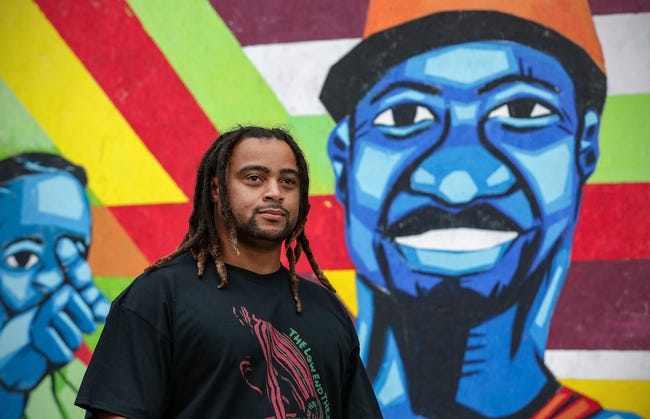
Several Indianapolis organizations host events to showcase Black Lives Matter artists
The Indiana State Museum opens “RESPONSE: Images and Sounds of a Movement,” which features six murals. The Arts Council of Indianapolis hosts “Art & Activism: One Year Later.” The Indianapolis Public Library holds a panel discussion with the previous summer’s mural artists and displays their work.
Pictured: Artist Israel Solomon stands in front of a mural he painted on boarded windows in the 300 block of Mass Ave in Indianapolis, 2020
Credit: Jenna Watson/IndyStar via Imagn Content Services, LLC View Source
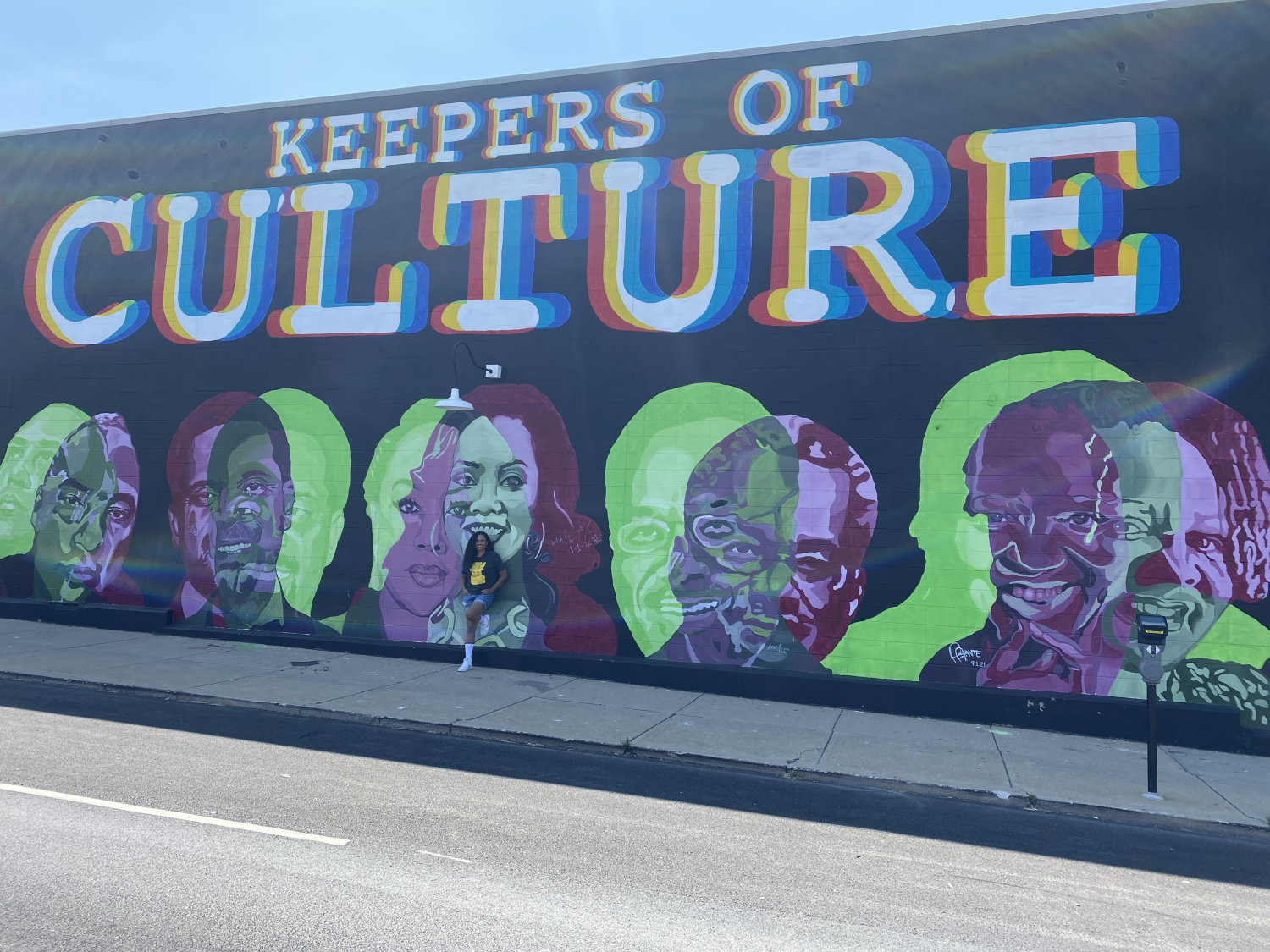
First BUTTER fine arts fair
Cultural development firm GangGang establishes the Black fine arts fair with the goal of making the city an arts destination while educating the public about Black fine art.
Pictured: Muralist and Painter Ashley Nora stands with the mural she created for the first BUTTER Fine Arts Fair in 2021.
Credit: WFYI News/Abriana Herron
View Source
Encyclopedia of Indianapolis website launches
A legacy project of the Indianapolis Bicentennial Commission, the digital Encyclopedia of Indianapolis updates and expands upon the original 1994 Encyclopedia of Indianapolis, adding new content to reflect developments in the culture and landscape of Indianapolis since 1994.
Pictured: Staff and volunteers of the Digital Encyclopedia celebrating the launch of the website, 2021
Credit: Beth Van Allen
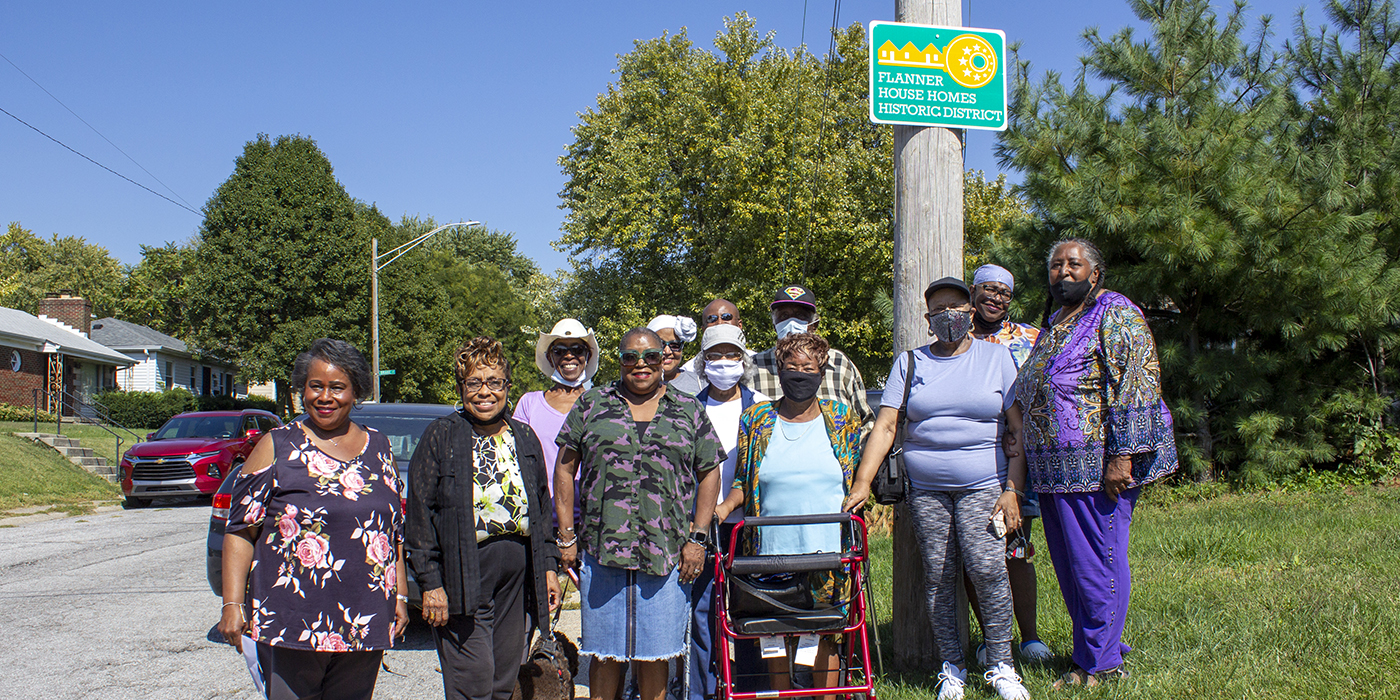
Indiana Landmarks launches Black Heritage Preservation Program
Landmarks expands the work of its African American committee to help identify, save, and celebrate historic African American sites throughout the state of Indiana.
Pictured: Black Heritage Preservation Program helped obtain new signage in the Flanner House Homes neighborhood, recognizing its historic district status.
Credit: Indiana Landmarks
View Source
Public art inventory published
The Arts Council of Indianapolis and the Indianapolis Bicentennial Commission partner with Rokh Research & Design Studio to complete an inventory that reveals 3,090 works of public art across Marion County.
Pictured: Joy by Ashley Nora at 870 Massachusetts Ave in Indianapolis, 2022
Credit: Michael Blackshire, IndyStar
View Source
Library adds Black authors’ names to Central Library engravings
The inclusion of 10 Black authors’ names whose works span pre-Civil War to the Civil Rights Movement and beyond are added to the walls of Central Library. The library aims to add additional names of authors of color in the years to come.
Pictured: Inside the Central Library the names of ten Black authors have been added to wall carvings, 2022
Credit: Michelle Pemberton/IndyStar / USA TODAY NETWORK
View Source
Local student Alyssa Gaines named National Youth Poet Laureate
The Park Tudor graduate and inaugural 2019 Indianapolis Youth Poet Laureate is chosen among 65 finalists to become the National Youth Poet Laureate.
Pictured: Alyssa Gaines, 2022
Credit: Kelly Wilkinson/IndyStar / USA TODAY NETWORK
View Source
Colette Pierce Burnette becomes first African American president and CEO of Newfields
Following the resignation of its CEO after controversy over its stance on issues of diversity and inclusion, Newfields chooses Burnette to lead an action plan that includes a $20 million endowment to acquire works from marginalized artists, increased diversity on its board, and the institution of antiracism training. On November 10, 2023, Burnette abruptly announces her departure from the organization. Newfields provides no explanation for the move.
District Theatre announces plans to bolster Black theater
District Theatre establishes a development hub for Black theater artists and technicians and supports the production of six plays by Black Indiana playwrights set around historic Indiana Avenue. Named Black Theatre, the company is independent of DT and is the second Black professional equity theater established in the city.
First Black-owned professional equity theater
Naptown African American Theater Collective, the first Black-owned professional equity theater in the city, debuts with Black Book, the 2019 winner of the Kennedy Center Outstanding New Work Production by award-winning playwright and actor Austin Dean Ashford. Phoenix Theater hosts the company’s first season.
Hamilton East Public Library Board suspends controversial book review process
The library system ends a book review policy that sparked weeks of intense controversy over the removal of local author John Green’s The Fault in Our Stars from its teen section.

Help improve this entry
Contribute information, offer corrections, suggest images.
You can also recommend new entries related to this topic.